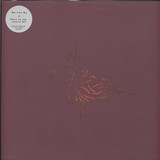
Reissue of the very first Birds Of Passage album from 2010. Minimalistic Lo-Fi Shoegaze meets experimental pop with drone influences.
For someone who thinks it's difficult to describe music in general, it's even more difficult to describe the soundscapes of BIRDS OF PASSAGE. The influences of Alicia Merz - the girl behind BIRDS OF PASSAGE - are her memories, breathless-inspiring cold winds, the smell and atmosphere of a spring day, smoking cigarettes, sunshine and shadows. As a mixture of all these elements plus a minimalistic experimental instrumentation you as well can describe her music: sometimes shy, sometimes more energetic ( fantastic frown') but always intensely and extremly private. Listening to her debut record "Without The World" is like sharing one long day with Alicia and her thoughts in the diverse landscapes of her home country New Zealand.
Alicia doesn't need the orotund spectacle of a band to evoke emotions - with the help of different, in a minimalistic way, used instruments combined with field recordings, she doesn't create specific songs - she builds up a mood. There's no typical song structure, there's no melody to chase after - but there's a development which absorbs you and which makes you start to think about elements you block out in your everyday life.
Search:patterns
Next to the entire All is an astonishing work by Danish experimental sound quartet We like We, consisting of Katrine Grarup Elbo (violin), Josefine Opsahl (cello), Sara Nigard Rosendal (percussion) and Katinka Fogh Vindelev (voice).
Although classically trained, all four share a desire for exploring, experimenting and shaping a sound of their own, something which is truly present on this album. Both instrumentation and composition feel glued together with an abundant sense of playfulness and vision. The record starts with the beautiful I'm not for More which sets the tone for the 10 pieces, hurling you back and forth in a whirlwind of sound and musical intuitivity.
Genre bending as the record can be, it can be seen as somewhat of a contrasting work - as much of northern folk traditions as of an avant-classical work in the spirit of György Ligeti and Meredith Monk. Forest Sketches, as an example, starts with minimal woodblocks and percussive rattling while slow building violins, cello and vocals pull themselves in through the unknown before bursting into a Pagan sounding wormhole of screams and looped cellos. The piece ends with minimal vocal sound scapes fading away into almost pure silence. It could be mirrored with a merger of both the opening and closing scene of Kubrick's classic movie 2001 - creating the sense of beginning of humanity versus the far future, with abstractation and the unknown.
Next to the entire All is both a mind bending and grounded piece of work fitting naturally next to other Sonic Pieces releases such as Hauschka & Hildur Gudnadottir's Pan Tone or Christoph Berg's Conversations, while adding a northern minimalism. A record as hard to shake off as it is to describe.
New Flesh Records 19 Ever wonder what would happen at the first minuts of an Alien in-vasion Answer can be found on Geometric Vision', the debut EP of Hungarian electro don Norwell on French New Flesh Records. Real name Balázs Semsei, Norwell has turned out a steady stream of releases on labels like Dalmatia Daniel, Pinkman, Chabu Recor-dings, Seagrave and his own Farberwechsel imprint until now, always coming on strong with a personal artistic vision plus a sense of drama.
Across four craftily cuts on Umwelt's label, he revisits his own dystopian universe made of sonic frequencies fused into rich atmosphere with a strong array of emotions. From the haunting opener Geometric Vision' to the explosive final Conversation Patterns', Nor-well signs one of his best release to date.
Fascinating synth melodies supported by raw drums and insane electro textures compose this must have 12'' and an essential addition to the New Flesh catalog. Heavy electro darkness for serious heads, this is a soulful EP full of depth, impossible to ignore!
Debut album of Manchester post-punk band."When I was first told about Duds, it came with the considered opinion that the guys were far from what you'd call 'careerists'. 'They don't take themselves too seriously' was another comment. I could have taken this as a warning that they weren't in it for the right reasons—but that couldn't be further from the truth. From my perspective Duds simply won't bend over backwards to 'get on'. They do what they do and you can take it or leave it. I took it—with both hands...with a vice-like grip. They have the invention and urgency of Edinburgh legends The Fire Engines. The Post-Punk ethic. Short songs, short sets = short album.They're one of the most thrilling bands I've seen in years—and the fact that they're releasing this brilliant piece of work on the Castle Face label adds the last piece of a perfect 'outsider' jigsaw puzzle. Duds sitting alongside Oh Sees, Ty Segall, White Fence, Useless Eaters, et al. There is a god!" —Marc Riley, June 2017
DJ and producer, co-founder of the legendary London club night Lost, Steve Bicknell returns to the fray with a brilliant new 12", 'Modes of Thought'. Comprising three full tracks and six locked grooves, the record represents the debut release on Bicknell's brand new label, 6dimensions. Art by Harumasa Kono.
Throughout his career, Steve Bicknell has retained a true groundedness, with everything he's stood behind being indelibly marked by a progressive and uncompromising attitude. Sticking firm to ideals and principles, he has remained connected to the roots of techno, eschewing the mainstream to follow an unswerving, singular vision, guided by a deep and enduring devotion to the music that inspires him and a desire to present it in the purest way possible.
Stepping out here with new material and a new venture, Bicknell's trademark raw, minimal aesthetics and conceptual underpinning have clearly been retained. He describes new release 'modes of thought' as being founded upon "the awareness of thought processes, understanding the connection between the heart and the brain through vibrations that are created via the blood-stream." Essential floor gear, 'modes of thought' introduces three tracks of taught, lean minimal techno before handing creativity over to the DJ with the inclusion of six locked groove loops.
Lean and precise, with a beautifully controlled pallette, wide dynamics and rich level of sonic detail, the record flies out of the blocks with the pumping 'harmonious balance', described by its creator as a "reflection on hatred and furthering an understanding of hate and how acceptance induces balance". Continuing to unpack the work, 'the moment I stopped' is described as "a realisation of the importance of self-preservation to balance yourself in order to take care of others close to you"; whilst on the flip, 'messenger molecules' depicts "the flow of blood and how it feeds the brain of feelings through coded information".
Adrian Younge Presents The Electronique Void: Black Noise is Younge's first and only electronic album. An album that represents Younge's take on what Black electronic music would sound like in `72. Narrated by Jack Waterson, long a guitarist in Younge's band. Recorded and mixed by Adrian Younge at Linear Labs, the preeminent analog studio of Los Angeles, CA.
After making some massive claims regarding electronic music last year which caused a stir in the dance music community, Mat Zo had a lot to live up to with his long awaited second album "Self Assemble". What didn't help was the fact that his first album, "Damage Control" was critically acclaimed by many within dance music and is now considered a modern-day masterpiece with mesmerising tracks such as The Sky and the massive Easy with Porter Robinson.Blending genres and sounds in a way only Zo can achieve, this record flows incredibly well as the tracks move from one to the other almost telling a story of the different styles of electronic music. At times the album is reminiscent of Zo's incredible Essential Mix from back in 2013 in the way that it progresses and constantly surprises the listeners. A lot funkier than Damage Control, it's no less incredible.
Beginning with the beautifully atmospheric "Order out of Chaos" which starts with an absolute wall of sound that boggles the mind in how Zo even went about designing something so complex, this sets the tone for the rest of the record in a cracking way. The melody soon crescendos and we're introduced in to the meat of the album with "The Enemy". Bringing out all the good funky vibes on this track, again Zo exhibits his insane production talents which are a staple of the album. Featuring vocals from the wonderful Sinead Egan, this is a great uplifting tune that'll no doubt have you dancing in your chair or in the club.
'Sinful" acts to continue the funky good-time vibes and transports us to a cool summertime drive. It has us yearning for happier times and again the guest vocals from I SEE MONSTAS go a long way in getting across this happy vibe. Featuring an uplifting almost french house inspired bassline and squelch synths that wouldn't look out of place on a Daft Punk or Madeon record, this is another stunning track from the record. "Patterns Emerging" feels like a bridge into the next section of the album and is unfortunately short. The orchestral element really brings out the emotion on this track and we only wish it was longer. "Killing Time" has those classic chopped up vocals that Zo uses to great effect and some nicely programmed drums that could be a nod to the drum and bass he used to put out under MRSA.'Smacked up on Jack" features some cool middle eastern sounds and a wacky vocal sample that helps to progress the album and keep the listener interested, again though we feel like it's a bit too short and are left wanting more. The next tune "Ruffneck Bad Boy VIP" is an absolute mammoth and one of our favourites off the record. Opening with an immense rhodes melodic sequence and after some nice vocals, the track rips into the electro house and dubstep infused banger that it really is. Some dirty, dirty sound design and drum production will have the dance floors going wild and shows us again why Zo is so good, it's a far cry from the funkier elements of the earlier stuff on the album and shows how Zo can show off a range of electronic sounds. "Lights Out" is a straight up hard hitting electro banger with an infectious vocal sample that only needs to be heard to be understood. Not much more needs to be said about it! Coming into the last section of the record, "Soul Food" returns us to the groove with an astonishing house beat and bass line that have us questioning how Zo makes it so hard not to smile listening to this album."Stereo no Aware" starts sounding like it's taken straight from a space movie epic and soon transforms into a goose bump inducing melody with a driving growling bass line that bring back the epic dubstep we all used to love a couple of years ago. Skrillex eat your heart out. Finishing off this record on a more emotional note, "Too Late" starts off like a guitar ballad and then transforms into something totally different. Egan's melancholic vocals enhance this track to great effect and is all backed by Zo's lovely downbeat production until we're treated to a monster of a climax around half way through the track which will surely blow the cobwebs right off you. Zo says goodbye to us with the phenomenal "The Last Transmission" and what a way this is to close out an incredible sophmore album for the English producer. The melancholic piano chords are a subtle and pleasing way to close out this journey of a record. Mat Zo really has outdone himself here and we're really looking forward to hearing some of these bombs dropped live. Surely a contender for album of the year at such an early stage, yet again it's only the best delivered by Mat Zo.
Latest album, Damage Control was Grammy-nominated for Best Dance/Electronic Album last year
“One foot out the door, another in the otherworld…”
So begins Hannah Lew’s debut, self-titled solo record, soaked in imperious, wide-eyed pop songwriting and a girl-group/post punk aesthetic that belies the artist’s history in the U.S. underground. A towering, hook-laden album, it’s infused with an optimism and surrealism that conversely deals with the times we find ourselves in.
Recorded at home in Richmond, CA and in The Best House studio with Maryam Qudus in Oakland CA, with the assistance of a crack team of West Coast musicians, this album sees Hannah Lew stepping out from behind the legacy of her two groups Grass Widow and Cold Beat. While musically bearing similarities with her previous work, “Hannah Lew” is a bold leap into direct pop territory, making ample use of a vocal style that teases out the inherent melancholy in her melodies. Mastered by Sarah Register, each song is a perfectly honed nugget that frequently pulls the heart in two directions at once.
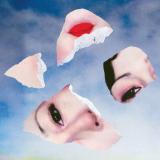
Themes of change, breaking up, shattering old ways of being are shot through the record. For the front cover, a photograph of the artist’s face was printed, ripped up and re-assembled, resembling the creative process embarked upon by Lew for her first “solo” material. The album feels instinctual, almost dream-like in its assemblage of sweeping synths and pulsating, propulsive drum machine beat patterns with Lew’s vocal performances sensitive and caressing over the top. Increasingly relying on the subconscious and dreams to guide her creative process, Hannah Lew frequently abandons literal interpretations or linear narratives, the songs seeming to exist in a swooning, effortless flow-state while remaining emotionally hard hitting.
On an album where every song could be a single, there are kaleidoscopic shades and varying emotional tones in abundance. First single Another Twilight is carried along a pumping, Italo-disco-style 4/4 beat and mono-synth bass line, the low end pulling at the heart and body. Lew’s vocal melody teases the track before swan-diving into a gorgeous chorus as she sings “it’s all over baby and I don’t mind… in decline, I take my time…” The album is suffused with moments like this. On slow builder Damaged Melody, an arpeggiated synth elongates the verse before a cascading synth showers down melodic glitter. The stunning Replica uses dual swirling synth patterns before a driving, synthpop chorus for the ages carries Hannah Lew’s vocal into the stereo field, sailing in on a high register singed with the embers of a break up.
In a departure from previous groups, her solo songs are guided by dreams and free association inspired by Dada and the Surrealist movement and sculpted afterwards. As such, the songs reveal themselves on repeated listens, revealing traces of heartbreak inspired by both personal and global elements - Hannah Lew regards the album “a wartime album.” On Move In Silence, Lew intones “there’s a war outside, just out of view,” revealing the dichotomy at play throughout. With the songs evolving naturally and in a flow state, the pressures and sadnesses of the modern age bleed through, mixed in with Lew’s inherent love, sensitivity and fractured-but-intact optimism. On the swooning, sublime Sunday layers of Numanoid synths open up for the commanding vocal performance pontificating on grief, love, pain as she “feels the ache on Sunday…” As the chorus builds and Lew’s call-and-response vocal adds to the emotional tension, it almost feels like too much to take.
Elsewhere, there are echoes of Hannah Lew’s previous work. On Time Wasted a bass guitar comes in with a heavy, punk attack before the synths and vocal harmonies reminiscent of later Cold Beat elevate everything. The glassy, sweetly resigned closer The Clock sounds like so classic it could be cover, a sweetened Jesus & Mary Chain tune perhaps, before it erupts into volcanic chorus that could only come from Hannah Lew in 2026.
Niagara return to Discrepant with Buxtehude, a new work bending the legacy of Dietrich Buxtehude into their own fractured, electro-organic language.
Rather than a tribute, Buxtehude feels like an abstract dialogue with the Baroque composer’s sense of structure and flow—reimagined through Niagara’s raw synth work, off-grid rhythms and subtly warped melodic cycles. The trio let the music grow from the inside out: patterns expand and contract, harmonies tilt slightly off their axis, and small details accumulate until each piece reveals its own internal gravity.
There’s a clarity to Buxtehude that feels carved rather than composed. Tracks move with a quiet insistence, like mechanical organisms finding coherence through repetition and drift. Melodic fragments surface briefly, disappear, then return transformed, lending the album a strange balance between austerity and warmth.
With Buxtehude, Niagara continue to refine their unmistakable approach—playful yet rigorous, minimal yet full of life— remaining entirely their own.
A guitar stands alone in Wedding, that metropolitan biotope in the western center of Berlin, caught in constant transformation between idyll and abyss. It lets its gaze wander, unsettled, almost shy, until it encounters a trumpet, with which it begins a cautious, then ever more intimate pas de deux.
Welcome to the second studio album by the Berlin-based band Conic Rose.
The album title Wedding is no coincidence. The story of Conic Rose is closely intertwined with the Berlin neighborhood that gives the record its name. The band's studio is located here, and both studio albums were created in the immediate vicinity of the small river Panke. This place settles over the music like a warming patina. The album feels as though the musicians and the neighborhood have invited one another to get to know each other. Not least because Wedding also means marriage. These marriages between a band and an urban landscape, a fading past and an emerging future, fear and hope - unfold in every single song on Wedding.
For their second album, Conic Rose repositioned themselves completely. Not in terms of personnel, but in the question of how to move forward. Conic Rose still sound like Conic Rose; their distinctive blend of cinematic jazz, ambient textures and guitar-led contemporary music remains untouched. And yet Wedding is, in many ways, the conceptual counterpart to their debut album Heller Tag. Where the debut documented movement within an urban setting, Wedding describes a state of being. Behind every piece seems to hover a large question mark.The group opens up its palette, allowing more influences, becoming at once more subtle, more profound, more filigree. It is less about definition than about the spaces in between. The most immediately striking difference from the previous album is the strong presence of the guitar. In Bertram Burkert's playing, many voices seem to converge. His yearning openness forms an equal counterpoint to Döben's trumpet and flugelhorn. Blurred and layered sounds occasionally make the ground seem to slip away beneath one's feet, while Döben's gliding lines create both closeness and distance. Together, the band express in a deeply subtle way a sense of life that corresponds precisely to our time. Something lurks in the background, omnipresent yet still unnameable. Conic Rose need no words to convey this feeling of uncertainty with remarkable eloquence. Perhaps this has something to do with Wedding being a place of confrontational introspection, but Conic Rose confront the escape from escape itself. With the recording and release of Wedding, this process is far from complete. The seed only begins to grow in the listener's ear. With every listen and the echo it leaves behind in memory, the studio bud continues to bloom. The album is merely the point of departure. What ultimately matters is what it sets in motion within those who encounter it.
Italy via Atlanta, say hello to Titino and “Sun Splicer”, the latest release on The Comfort. Three separate ideas connect this EP across 4 tracks. It toys with the expectations of its listener — core features morph as tracks progress, stable kick patterns turn to breaks and in reverse, simple stabs progress to melodic junctions. Acid permeates this record, not as a clear motif but a tinged essence. And it’s sincere, both to the setting of these pieces and where they’ll be listened to and what it honors.
“Shblasted” — a back-and-forth groove machine filled with dub sirens and stepped up acid. Clubby introduction meant for sacred dance floors.
“Ouachita” on the A2 is controlled chaos, snares fly around, synth lines seem to want to escape their own confines and it just bursts onto the listener. Then the keys come in, the groove stabilizes, pads become bigger and new life is given.
The B-side is playful. “Sun Splicer” is perhaps most aptly categorized by a now notorious idea of ‘electro house’, and the pure aggressive euphoria this track carries just might be that, but as we all know the Italians do it differently — it’s a heady dark excursion. “Existenz” is all-smiles no matter how menacing its first contact, a hook of a track that reimagines the weirder side of Italian trance — think Interactive Test at its most wonderful. The dusty snares feel like a balancing tool instead of an homage.
The Fuga compilation returns to Token with its seventh installment by a fresh batch of artists emphasizing the cryptic sound of the Belgian record label. The V/A displays urgency as its focal point, expanding and contracting its acoustic space throughout to channel instability. With eight contributions, Fuga VII sifts through nail biting arpeggios, frenzied percussion, and obscure ambiance to recalibrate techno's current soundscape.
Opening the compilation is contemporary techno mainstay Rene Wise with his debut contribution to the record label 'Rough Rider'. In this A1, Wise plays to his strengths by blending deep techno influences with hyper-focused rhythmic work. With a hint of tribalism, he conjures up synthwork from far off to whip motion into heavy drum patterns. Following this first track, STIPP and Sandrien take control in presenting 'Corrie', a sequence-forward groover that slides through drum programing to streamline rhythm. A shrill pad comes in at the halfway mark, completely lifting the energy of 'Corrie' to strain the track's obscurity with an ethereal counterweight. The brief passage of these kinds of elements provides a lot of dynamic to what would otherwise be a powerfully straightforward piece. Diving deeper, Red Rooms unveils 'Limited Sensory' as the next chapter of the compilation. Always swift and exact, the German artist continues to push into the ultra immersive with a web of elements that whiz by for a peaktime lock in. Cold in attitude, Red Rooms tunnels through 'Limited Sensory' with quick drumsand far-off percussive hits that rumble through the track. Stepping up afterwards is Lindsey Herbert with 'Oscillations in Space' - an appropriately named recording that experiments with mania as a tool for the dancefloor. Fast and spiraling, Herbert keeps her hands on the arpeggio's filter to contain tension through thunderous reverb transitions, balancing panic with pace. AgainstMe then stretches out the followup with the commanding 'Phase Shift' to double down on weight. Textural intimidation and stomping percussion is given the space it needs to perform on heavy weight sound systems, making it an austere middle point for Fuga. MAL HOMBRE then guides the listener to more elastic sound design in 'Critical Velocity', in a most appropriate Token fashion. Snowballing in intensity halfway through, MAL HOMBRE pushes the cutoff of his melody and programs snare rolls for vintage craze through the second section. Bells clash with ringing hats to fly the track along its course without looking back or letting go. Conor Wall takes control with 'The Strategy' that focuses on pace rather than melody, weaponizing metallic texture for a deep dancefloor experience. The ambiance does a lot of story telling here, marking breaks and riding through drops to provide grit to an already substantial record. This leads us to the final contribution in Fuga VII - 'Ad Libitum'. Here, Porteix emphasizes the conclusion of the compilation with mystery. The synths slither around pulsating rhythm, creating uninterrupted motion throughout the track's entirety. Porteix draws the curtains on an inquisitive note, keeping the suspense high until the next Fuga compilation comes around.
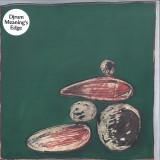
Djrum's first release since 2019, the Meaning’s Edge EP is an introduction to a whole new world. For the artist also known as Felix Manuel, it was created in the final stretches of six rather traumatic years work. Having carefully honed his techniques and aesthetics, and learned some hard-won emotional lessons over this time, finally he began to work in a quicker, lighter fashion – and to cleanse his palate a little by bringing in a fresh ingredient: his own flute playing. For listeners, though, it will serve as an appetiser, a way into the delights and complexities of this new phase of his creativity.
It’s a serious work in its own right, mind. The use of flutes – including Bansuri, Shakuhatchi, Western Classical, and synthesised all blending and blurring into one another – gives it a coherence and a sense of airiness that unites the five tracks over half an hour, however divergent their beats get. And as in all his music, Felix’s whole life is in here. Ethnomusicology studies, untold hours of DJing everywhere from the gnarliest squat raves to the most rarefied deep house clubs, explorations of his own neurological and emotional makeup, and the technical finesse of someone who is never not creating music or art, all roll into an experience that’s dazzling, delightful and keeps on giving.
Just the opening track ‘Codex’ alone touches on OG dubstep, Aphex Twin-like braindance, post-classical exploration, movie themes and more. The gentle tones and melodies that rise up out of it perfectly conjure Felix’s running theme of a protective bubble that provides a sense of safety and tranquillity even as the beats and acid gurgles and spurts all around it conjure up the slings and arrows of life’s difficulties.
The tone set, the EP moves through ultra-rarefied glass-like percussion in an almost ambient setting, hints of grime’s counterintuitive patterns, and even more hectic patterns influenced by Tanzania’s hyperspeed singeli style of dance music – but always with that perfect balance of chaos and control, unpredictability and protection. It rewards playing and replaying endlessly, it’s a profound and often joyous experience… and it’s only just the beginning. This is the return of a master craftsperson more focused than ever on his vision and vocation and ready to blow your mind all over again.
Mastered and cut on 140g black vinyl by legendary mastering engineer Matt Colton at Metropolis Studios, London. Pressed at optimal media, Germany.
- Land Of Eternal Delight
- Teleportation
- Black Hole In, White Hole Out
»Cosmogonical Ears« is Amosphère's first album for Hallow Ground. Following her contribution to the Swiss label’s »Epiphanies« compilation and her 2021 full-length debut »More Die of Heartbreak« on 33-33, it features three expansive pieces. The Paris-based composer and multidisciplinary artist delves deeper into themes of time, space, cosmology, human perception, and psycho-physical effects, crafting profound sonic meditations. Drawing on a minimalist approach while blending electronic and acoustic elements, Amosphère’s long-form compositions are living, breathing entities whose sonic richness and evocative power unfold gradually over time, putting »Cosmogonical Ears« in direct kinship with previous Hallow Ground releases by artists such as Kali Malone and FUJI|||||||||||TA.
The album opens with its longest piece, »Land of eternal delight,« composed for the Buddha10 exhibition at the Museo d'Arte Orientale in Turin. Written during three years of isolation—a period in which Amosphère explored meditation practices and diverse belief systems—it merges mythology with personal transcendental experiences, reflecting on a challenging time for humanity. »By blending Buddhist philosophy and sculpture with my own meditation practices, I sought to explore a way for people to transcend the boundaries of space and time—not as a believer, but as an observer,« she explains. Featuring handmade ceramic instruments and recorded by Thomas Lefevre, the piece combines Amosphère’s electronic organ with Marc Lochner’s flute contributions, creating a sound that is simultaneously minimalist and expansive.
The concept of teleportation and how it challenges traditional notions of time and space serves as the foundation for the second piece. »Recent advances in quantum physics suggest that teleportation might be possible through quantum entanglement,« Amosphère notes. »What if science fiction is becoming reality—or has already existed in ancient times?« Drawing inspiration from theories proposed by physicists such as Roger Penrose, Amosphère again worked together with flutist Lochner, this time using her VCS 3 synthesizer. »Teleportation« weaves single notes into intricate, non-linear patterns that defy conventional logic, creating a complex auditory tapestry. The last piece »Black hole in, white hole out« was recorded on Corsica and features Miao Zhao’s bass clarinet drones alongside Amosphère’s church organ. It imagines the possible sound of crossing a black hole while also suggesting the study of its theoretical exit and its potential applications for large-scale time and space travel.
The questions posed by »Cosmogonical Ears« do not yield straightforward answers. Instead, Amosphère’s restrained yet intricately layered compositions require full immersion and concentration from the listener. As expressed by the album’s title—which envisions the birth of a new universe through listening—»Cosmogonical Ears« offers an experimental approach to auditory perception as a tool for seeking truth, freedom, and harmony between the outer world and the inner self.
When a Russian missile struck the ground not far from my studio in Kyiv, I vividly remember how my body reacted to the explosion, milliseconds before my mind did. That traumatic explosion reduced my essence to a primal state. There existed nothing but dread—the kind that, in scripture, accompanies the appearance of angels announcing, ’Be not afraid’.
The visions of Abbess, composer and mystic Hildegard von Bingen were preceded by bright, excruciating flashes of light. Modern medicine reduces them to cluster migraines, one symptom of which is the retinal aura, often accompanied by blurred vision and blind spots. Hildegard’s music can place great demands on the bodies of its performers, emphasizing uncomfortable intervals and the wide distance between the lowest and highest pitch. In comparison, Gregorian chant, the liturgical standard of the time, represents a tempered attempt to grasp God intellectually; indeed, Hildegard’s music was once described as a stick of dynamite thrown into a Gregorian chant.
This album is not a historically informed performance. Hildegard’s persona and music are a starting point—a distant mirror, akin to the shield of Perseus, used to reflect Medusa. It allows us to reflect, comprehend, externalise, and transcend traumatic wartime experience, reinstating the embodied origins of Christianity, which contained suffering but also offered the promise of transcendence. Andriana-Yaroslava Saienko emphasises this physical aspect of Hildegard’s music by drawing on authentic Ukrainian folk singing, a form that survived despite efforts by the Soviet occupation to replace it with a simulacrum that is naive, harmless, and devoid of contradictions—an attempt to ‘civilise’ the body by disembodying it.
The musical approach is also informed by my ongoing practice of reimagining early music in modular synthesis. I accompany Andriana-Yaroslava’s fiery singing with drones—extended sounds that also occurred in medieval music. The drones alternate with improvisations, one taking its starting point in medieval polyphony, the other working with the concept of the interchangeability of sound and light, referring both to Hildegard’s visions and the space in which we recorded the album: the Cistercian abbey of Sylvanès in Occitania, known for contemporary stained glass windows whose patterns reference the dispersion of acoustic waves inside the church.
The album features two compositions by Hildegard von Bingen: O Ignis Spiritus Paracliti (O Fire of the Spirit and Defender), dedicated to the Holy Spirit, and O Tu Suavissima Virga (O Sweetest Branch), in honour of the Virgin Mary. Both pieces are performed radically slower than usual, expanding in time and space. On vinyl, the compositions are designed to reflect one another and can be listened to in either order. In the digital edition, there is a bonus track titled Zelenaia Dubrovonka (The Green Oak Grove). Based on a Ukrainian folk song from the Polissia region, Andriana Yaroslava adapted the lyrics to reflect our contemporary reality. The green oak grove does not rustle with the wind; instead, it resonates with a different sound—perhaps the missile that struck near my Kyiv studio.
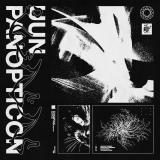
Fresh off an EP on Semantica and an album on MORD, Uun returns to his imprint Ego Death with the Panopticon EP. Uun showcases his range on these 6 tracks, running the gamut from dissonance to chord driven grooves.
The A side focuses on intensity. “Aesthetic Descent” features dual synth lines, slipping between melody and atonality. The straightforward percussion allows the listener to focus on the everchanging dynamics in the leads. “Structural Obedience” begins with a chugging groove, out of which a buzzsaw synth emerges. This track is a display of Uun’s ability to walk the line between minimalism and maximalism.
The B side focuses on the interplay between melody and groove. “Ralph’s Track” channels the dub chords of Basic Channel while applying a modern edge. “The Hidden System” features the lone vocal on the EP, sampled from the work of the late great David Lynch. The interplay between the 7⁄8 lead synth and 4/4 percussion creates a feeling of anticipation, where the patterns develop in unpredictable ways.
The digital exclusive tracks go into more experimental territory. “Queen’s Chamber” is a broken beat dirge, consisting of reverb drenched percussion and synths reminiscent of Dead Can Dance. The final track, “Shokunin”, is the counterpoint to Aesthetic Descent, closing out the release on a crushing yet hopeful note.
Pressed onto a unique custom turquoise and black hand poured color mix record inside a full printed jacket. The evocative artwork was created by Minneapolis based graphic designer Ryote.
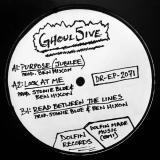
Texas-raised, NYC-based Ben Hixon continues to be one of deep house's most essential new voices. His dusty, lo-fi take on the genre feels instinctive and raw but always carries serious emotion under the surface. After a fine outing announced already on NDTAL this month, he's back on his own Dolfin with another crucial three tracker. 'Purpouse (Jubilee)' is a swinging sound with classic Midwestern vibes, 'Look At Me' spins out into high-paced juke and footwork drum patterns with eerie pads and 'Read Between The Lines' is a low-lit, low-key basement house groove with conscious mutterings adding serious depth. Another doozy from Hixon.
Xerrox Vol. 3 is the eighth solo studio album by German electronic artist Alva Noto, released in 2015 as part of the ongoing Xerrox penthalogy, which began with Xerrox Vol. 1 (2007) and Xerrox Vol. 2 (2009).
Inspired by formative influences such as Andrei Tarkovsky's 1971 film Solaris, La Isla Misteriosa y el Capitán Nemo by Juan Antonio Bardem, and Henri Colpi, Carsten Nicolai exchanges austerity for cinematographic lushness in the remarkably widescreen third volume of his Xerrox series.
In line with the series' focus on "using the process of copying as a basis," the eleven compositions of this volume can be heard as copies of memories, exploring emotional data patterns that are reflected as melodic vectors and noise.
This remastered version will be reissued on NOTON in 2026
Tracklisting
---------------------------------------------------------
Medium: 1 // Side: A // Track: 1
Artist: Alva Noto
Title: Xerrox Atmosphere
Playtime: 00:01:22
Explicit Lyrics: No
ISRC: DE1N62500026
(P): 2025 NOTON
Country: Germany
Composer: Carsten Nicolai
---------------------------------------------------------
Medium: 1 // Side: A // Track: 2
Artist: Alva Noto
Title: Xerrox Helm Transphaser
Playtime: 00:06:45
Explicit Lyrics: No
ISRC: DE1N62500027
(P): 2025 NOTON
Country: Germany
Composer: Carsten Nicolai
---------------------------------------------------------
Medium: 1 // Side: A // Track: 3
Artist: Alva Noto
Title: Xerrox 2ndevol
Playtime: 00:03:44
Explicit Lyrics: No
ISRC: DE1N62500028
(P): 2025 NOTON
Country: Germany
Composer: Carsten Nicolai
---------------------------------------------------------
Medium: 1 // Side: A // Track: 4
Artist: Alva Noto
Title: Xerrox Radieuse
Playtime: 00:06:00
Explicit Lyrics: No
ISRC: DE1N62500029
(P): 2025 NOTON
Country: Germany
Composer: Carsten Nicolai
---------------------------------------------------------
Medium: 1 // Side: B // Track: 5
Artist: Alva Noto
Title: Xerrox 2ndevol2nd
Playtime: 00:05:04
Explicit Lyrics: No
ISRC: DE1N62500030
(P): 2025 NOTON
Country: Germany
Composer: Carsten Nicolai
---------------------------------------------------------
Medium: 1 // Side: B // Track: 6
Artist: Alva Noto
Title: Xerrox Isola
Playtime: 00:08:07
Explicit Lyrics: No
ISRC: DE1N62500031
(P): 2025 NOTON
Country: Germany
Composer: Carsten Nicolai
---------------------------------------------------------
Medium: 2 // Side: C // Track: 7
Artist: Alva Noto
Title: Verrox Solphaer
Playtime: 00:06:08
Explicit Lyrics: No
ISRC: DE1N62500032
(P): 2025 NOTON
Country: Germany
Composer: Carsten Nicolai
---------------------------------------------------------
Medium: 2 // Side: C // Track: 8
Artist: Alva Noto
Title: Xerrox Mesosphere
Playtime: 00:05:55
Explicit Lyrics: No
ISRC: DE1N62500033
(P): 2025 NOTON
Country: Germany
Composer: Carsten Nicolai
---------------------------------------------------------
Medium: 2 // Side: D // Track: 9
Artist: Alva Noto
Title: Xerrox Spark
Playtime: 00:06:10
Explicit Lyrics: No
ISRC: DE1N62500034
(P): 2025 NOTON
Country: Germany
Composer: Carsten Nicolai
---------------------------------------------------------
Medium: 2 // Side: D // Track: 10
Artist: Alva Noto
Title: Xerrox Spiegel
Playtime: 00:03:32
Explicit Lyrics: No
ISRC: DE1N62500035
(P): 2025 NOTON
Country: Germany
Composer: Carsten Nicolai
---------------------------------------------------------
Medium: 2 // Side: D // Track: 11
Artist: Alva Noto
Title: Xerrox Exosphere
Playtime: 00:03:47
Explicit Lyrics: No
ISRC: DE1N62500036
(P): 2025 NOTON
Country: Germany
Composer: Carsten Nicolai