For the 10th Shaw Cuts release, Lazarus and Farron join forces on their new collaboration project Pollaar, defying Pai Mei and his alliance with the ruling Manchurian Court who aim to quash the revolutionary rebels. Crane and tiger techniques vs. the seemingly invincible versatile villain and his squad.
The story begins when Pai Mei and his entourage raid the shaolin temple where the rebels have found refuge. Only a few rebels and students escape the attack, among them, Hung Hsi-Kuan. "Haslam" and its blasting drum patterns paired with bright sounding synth fragments help Hung Hsi-Kuan and his copartners to safety. They finally find a safe haven with a traveling opera group. Along the way, Hung encounters the fair Ying Chun, herself a master of the crane technique. They fall in love and have a son, Wen-Ting. Hung could not forget though, and dedicates himself to mastering the art of the tiger style for the next ten years, to finally compete against Pai Mei. The superiority of Pai Mei in the following clash is accentuated by the vigorous drum punches and spacial undertone of "Bonucci Unit". But Pai Mei spares the wounded Hung's life, letting him go. While Ying Chun teaches her son the crane style, Hung devotes himself to relentless tiger style training for seven more years, to challenge Pai Mei once again.
"P-9" and its forceful breakbeat punches, energizing pads and resonant percussion, sets the tone of the duel resulting in Pai Mei's victory and Hung's death. Wen-Ting vows vengeance and continues to tirelessly perfecting his crane style while still dedicated to learning the tiger style. Both combined is the only way to defeat Pai Mei. One year later, Wen-Ting is ready and embarks on the journey to Pai Mei's temple. The menacing and gritty atmosphere of "Compound" and its spellbinding groove filled with abstract machine sounds pushes Wen-Ting to his limit. The white-bearded master has been vanquished, but is he gone forever? Judge for yourself...
quête:patterns
- A1: Haruna Ishola & His Apala Group - Ewure Ile Komoyi Ode
- A2: Adebukonla Ajao & Her Group - Aboyin Ile
- A3: Rapheal Ajide & His Apala Group - Adura Fun Osiwowo
- A4: Haruna Ishola & His Apala Group - Orin To Mo Gbon Wa
- A5: Ra Tikalosoro & His Group - Agilinti Lomu
- B1: Adebukonla Ajao & Her Group - Abd Alawiye
- B2: Haruna Ishola & His Apala Group - Asa Ko Gbodo Wole Gbeiyele
- B3: Adeleke Aremu & His Group - Egbe Arowolo
- B4: Haruna Ishola & His Apala Group - Rufai Baolgun
- B5: Ra Tikalosoro & His Group - Kiniun Kuro Leran Amu Sere
- C1: Haruna Ishola & His Apala Group - S Aka
- C2: Adebukonla Ajao & Her Group - Lekele Bale
- C3: Kasumu Adio & His Apala Group - Odale Ore
- C4: Ayisatu Alabi & Her Group - Oko Lolomo
- D1: Jimoh Agbejo Bo Ogun & His Group - Oriki Ibeji
- D2: Ayisatu Alabi & Her Group - Omo Olobi
- D3: Rapheal Ajide & His Apala Group - Orin Aje
- D4: Adebukonla Ajao & Her Group - Sunday Babayemi
Soul Jazz Records new ‘Apala: Apala Groups in Nigeria 1964-69’ is the first ever collection of Apala music ever to be released outside of Nigeria. The album focusses on a wide selection of recordings made in Nigeria in the 1960's, a time when Apala music was at the height of its popularity. Apala is a deeply rhythmical, hypnotic and powerful
musical style that combines the striking nasal-style vocals and traditions of Islamic music, the Agidigbo (thumb piano), and the equally powerful drumming and percussion rhythms and
techniques of the Yoruba of Nigeria.
The most significant figure in Apala music is undoubtedly Haruna Ishola who features throughout this album. Ishola holds an almost mythological status in his role as populariser of Apala music in
Nigeria. Ishola’s singing was believed to be so powerful that, without proper restraint, it could kill the recipient of his music.
Apala is a popular music that also functioned as a form of cultural resistance – Apala music involved no western instrumentation and is sung in the Yoruba language, its aesthetic an implicit cultural
rejection of the British Empire’s colonial rule over Nigeria which lasted from 1901 until independence in 1960. Apala music was popular and widely accepted in Nigeria due to its philosophical and profound
lyrical content alongside the complex rhythmic patterns of this heavily percussive style, which highlighted many of the percussion instruments of south-west Nigeria.
He's one of a number of popular urban styles of music that came out of Nigeria in the 20th century and sits alongside the more well-known (in the West) styles of Fuji, Highlife, Juju and Afrobeat. Of these modern forms Apala remains perhaps the most ‘roots’ style (sometimes described as ‘neo-traditional’) due to the authenticity of its sound. It has similar Islamic roots to other neo-traditional styles of Nigeria – including Waka and Sakara – examples of which are also
included on this collection contextualising the music of Apala.
These recordings were originally made and released locally by Decca and EMI Records as well as a variety of independent labels in Nigeria and have never been released outside of the country before. Soul Jazz Records are releasing this album as a deluxe double gatefold vinyl (download code), CD, slipcase and booklet, both containing full text and photography.
'All Human - No Conditions" is the first solo EP by the French producer Itako. The opener "The Country That Does Not Exist" is a slow burning and bass-driven tune in which hypnotic synth and acid lines merge with North African vocal pieces. Thereafter, Itako shows with "Freehands Desire" his darker side. A mid-tempo composition with massive drum patterns and forward-moving melodies. On the flip side, "Groove That Dust" is screwing the tempo back down. Six minutes based on a 90s Hip-Hop sample with an irresistible groove where we assume no one can stand still. The release is rounded off with a remix by MR TC. The Glasgow based musician stretched "The Country That Does Not Exist" into a tribal workout with breaks in which he lets the machines speak for themselves.
The new album by Robert Piotrowicz does not fit any category. What this multicoloured electronic instrumentation aims to channel is the acoustic experience and energy of the performing musician. As a result of a wide range of creative means used, the narrative language of the compositions bursts withtension and mystery.
The album includes slow hypnotic passages of stone electronics (“To Fleh”), vigorous tempos and circular repetitions (“Euzo Found Gitar”), sprawling artificial soundscapes, back-to-origins ethnicity (ethnical subsoil and elements) liberated from any geographical identity (“Ocarina Wars”), as well as dreamlike minimalism with unpretentious cinematographic traits (“Flares Et Wasser Hole”). Some of these unusual melodic patterns may resemble the corporality of the animal throat rather than any human-created instrument (“Electros Spong”).
Although Euzebio was recorded with synths, the final shape of individual tracks and the album’s overall acoustic image go far beyond any electronic genre. The instruments have not become a goal in itself. They were merely a building block, a tool that helped achieve the album’s extended structure - a diverse whole with rich spatial features.
All sounds performed and recorded by Robert Piotrowicz on Buchla and Serge synthesizers at EMS Elektronmusikstudion in
Stockholm 2013/2014. composed, mixed and premastered by Robert Piotrowicz artwork and photos: Robert Piotrowicz design
and layout: Lasse Marhaug special thanks: Ocarina Jones and Tomasz Gil mastered and cut by Rashad Becker at D&M Berlin
Produced by Musica Genera
"I'm always looking for ways to be surprised," says composer and multi instrumentalist Jeff Parker as he explains the process, and the thinking, behind his new album Suite for Max Brown, released via a new partnership between International Anthem and Nonesuch Records.
"If I sit down at the piano or with my guitar, with staff paper and a pencil, I'm eventually going to fall into writing patterns, into things I already know. So, when I make music, that's what I'm trying to get away from-the things that I know." Despite its musical departures, in presentation Suite for Max Brown is an informal companion piece to The New Breed, Parker's debut release on International Anthem, which was honored as one of the "Best Albums of 2016" by New York Times, Observer, and Los Angeles Times.
"I made The New Breed based off these old sample-based compositions and mixed them with improvising," Parker says. "That's in a nutshell how I make a lot of my music; it's a combination of sampling, editing, retriggering audio, and recording it, moving it around and trying to make it into something cohesive... With Max Brown, it's evolved." Though Parker collaborates with a coterie of musicians under the group name The New Breed, theirs is by no means a conventional "band" relationship.
Parker is very much a solo artist on Suite for Max Brown. His accompanists are often working alone with Parker, reacting to what Parker has provided them, and then Parker uses those individual parts to layer and assemble into his final tracks. The process may be relatively solitary and cerebral, but the results feel like in-the-moment jams-warm-hearted, human, alive. Suite for Max Brown brims with personality, boasting the rhythmic flow of hip hop and the soulful swing of jazz.
We are happy to finally introduce our label newcomer and multi-instrumentalist Lopal with his debut EP. Teasingly and with great finesse Lopal (@lopalmusic) intertwines powerful chords, twinkling melodies and a snugly baseline towards distant climaxes, which seem near and yet far away as he unhastily stacks up hypnotic patterns.
2024 Repress
Red Vinyl
Born and raised in the Techno capital of Berlin, Opal merges experimental and forward stepping electronic music with an unique touch. His latest "Dominator" EP coming via Voxnox is no exception.
Following his industrial steps from his last productions, the opener and title track "The Dominator" brings raw, yet pushing heat for your infamous dancing pleasure by combining a shouting vocal rip with an ever growing groove - eventually turning things to a dominating level. Netherlands native Remco Beekwilder delivers the A-side remix by not only keeping this vibe, but with even extending it with his own synthesiser symbiosis in order to move things to a deeper level.
"New World Order" represents the EP's flip side, focusing on the good old rave experiences we all remember very well. An ever marching kick teams up with mysterious patterns and evolving drums to blurry your mind the right way. Inhalt Der Nacht remixing this track can only mean an ecstasy of emotions and power, perfectly rounding off this release.
Vinyl Only
Obrani Records goes back to business with the new release "Test" EP from label's founder Kristina and TC80's remix. Starting with references to the vintage sound, - through some psychedelic patterns and haunted beats to a delicate surreal tech landscape. It may bring you to a parallel reality of hidden cyber worlds, so don't miss the opportunity to join this fascinating trip of twisting groovy house, minimal, techno, and electro into exciting new forms.
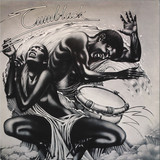
A truly special reissue of a fantastic and incredibly rare Afro-disco 12” from 1978, Tumblack - 'Caraiba/Invocation'. Originally released on the seminal French disco label Barclay, you'd be hard pressed to even find an original copy in the UK, let alone for a reasonable price, so it's high time an officially licensed, remastered reissue came around.
Taking the A side of this EP Stefano Ritteri provides a “Spaziale Version” of 'Caraiba' that seamlessly blends elements of African, Afrobeat, Funk and Disco styles, with segments that continually morph and evolve into new tracks. Irresistibly funky and percussive drumming patterns and melodies hypnotise the listener, with only the occasional outbreak of African chanting breaking up the grooves.
The B-side contains the original version of “Invocation” that is effectively one long drum track broken down into 7 segments that never drop a beat alongside the original version of 'Caraiba' in all it's glory. As EP's go, this really does take the listener on a journey to Africa, via 1978 New York, and is a true one of a kind. And for all those sample-spotters out there, there's no end of complex drum patterns and basslines to dive into.
Amadeo Savio is next up on Vigenere, the label that has thus far presented a whole host of unknown names in the field of minimal techno all bound together by a shared classiness in their production style. Savio's approach is deep and dubby on opening cut "Isolat", one primed for the after hours. "Trance Later" has a slightly more forthright approach, but there's still plenty of mellow delights to be found in the synth department to keep you chilling. "Encor" heads into more typically minimal pastures, while "Kassion" explores broken beat patterns and fragmented samples with scintillating results.
Bathurst is pleased to announce the return of The Motion Orchestra with their new single Sonorous taken from their forthcoming album All One set for release in 2020.
Formed in 2017, this studio project consists of Alexander Bednasch on Double-Bass, Mark Matthes on Violins, Andy Sells on Drums and David Hanke on electronics and production. Though influenced heavily by Neo-Classical and Jazz sensibilities they occupy a musical space that sits in neither sphere, with a compositional style that deftly fuses the orchestral and electronic worlds.
Their debut single – All One was a gorgeous piece inspired by the notion that everything comes from the same source, the same starting point. And it was well received, garnering support from BBC 6Music and Bandcamp Weekly.
Second single Sonorous is just as elegant as their first offering and looks set to continue the upward trajectory the band are currently on. Starting witha repeated electronic motif, it incorporates piano chord harmonics, tasteful bass notes, and swirling jazz drum patterns that interplay wonderfully with beautiful string arrangements, altogether creating a truly captivating character.
The release is comprised of both the original version as well as a the arrangement without the drums. The Motion Orchestra is currently in the process of producing their live show for performances of the debut album.
Clear Vinyl.
Raime explore exquisitely honed rhythmic instincts with scintillating results on the 2nd release on their RR label.
Where the London duo’s 2018 EP and RR debut ‘We Can’t Be That Far From The Beginning’ evoked a meditative mood from the info overload of their home city that left acres of space to the
imagination, the ‘Planted’ EP rejoins the dance with four tracks that icily acknowledge strong influence from Latin American and Chicago footwork styles in a classically skooled mutation of hardcore British dance music.
In four fleetingly ambiguous dancefloor workouts they carry on a conceptual theme exploring the digital subconscious with persistently invasive, alien ambient shrapnel - half-heard voices, aleatoric prangs, and tag-covered signposts - woven into and thru their tightly coiled and reflexive drum programming.
UPTOWN, ’Num’ flexes tendons and hips like a Leonce riddim that danced all the way from NOLA and ATL to the wintery dawn of a LDN warehouse, while the lip-biting tension of minimalist 160bpm jungle/ footwork patterns and jibber-jawed vocals in ‘Ripli’ suggests the Alien film’s protagonist lost in a mazy rave space, chased by H.R. Giger-designed face huggers (or gurning energy vampires).
DOWNTOWN, ‘Kella’ then catches them on a grimy dubtech bounce, cocked back and straining at the harness, before ‘Belly’ shuts down the dance with invasive, demonic motifs exploding over dark blue chords and palpitating jungle subs with impeccable darkside style.
Kobza Vajk is a Hungarian self-taught psychedelic folk musician who has been playing the oud and other obscure stringed instruments, like kithara or the lute for more than 15 years.
His main influences are folk and ancient music of all kinds, what brings these together is his contemporary approach of composing and the oriental technique he plays his instruments with.
This release focuses on his original work from the late 2000's with a few reinterpretations coming from established e-music producers.
The title track is a live recording from 2008, perfectly setting the mood for the whole EP: psychedelic shaman music with powerful oud chords and a hypnotic Middle Eastern atmosphere.
In his remix Dutch producer, Perdu keeps one of the main patterns of the original but by adding some extra percussion he turns it into an entranced tribal banger.
Next up is Multi Culti boss, Dreems, who revisited one of the most famous Hungarian folk songs creating a uniquely interesting piece with dubish subs and the twisted main melody.
The final track is a more carefully tempered yet driving remix by Hungarian producer and Budabeats staple, Bete (aka Suhov).
Renowned techno artist Jon Hester returns to Rekids Special Projects with a thundering fourtrack release, aptly entitled ‘Momentum’. Since his previous Rekids appearance, the Berlin-based Minneapolitan has continued delivering a steady stream of club ready cuts on labels like Transmat, LET and Deeply Rooted. Following a busy summer playing at the likes of Rex Club, Tresor and Hï Ibiza, Hester now returns to Radio Slave’s Rekids Special Projects techno imprint in fine form. ‘Accelerator’ opens with solid, overdriven kicks, deep chords, electrifying synth patterns and saturated claps followed by ‘Beatwave’ which features rhythm-led vocal sampling, upbeat Arp stabs and sparking cymbals. On the flip, ‘Zoned’ thunders with low-end frequencies, emphasised by a flying groove with snappy hats, subtle claves and white noise hits when to finalise ‘Part 4’ bounces with distant congas and tribal percussion, tight hi-hats, floating pads and a punchy kick.
After stand out releases this year on Version and Wisdom Teeth Piezo returns to Ansia with a new 2 track EP Art Attack Gone Wrong / perccssszzzz. As has been evident with past records Piezo has always had a strong ear for using interesting sounds which have been expertly sculpted to create a unique sound universe.While releasing on other labels has allowed him to work closely with his peers the freedom of having his own label allows for him to explore his influences from the Italian rave scenes in a more direct manner. For ANSIA004 these influences are streamlined into a techno orientated sound palette with traditional four-on-the-floor beat patterns but with an approach more related to the sounds of Diagonal than Berghain.With 'Art Attack Gone Wrong' the milanese producer merges dancefloor efficiency with a playful approach to distortion, melody and sound design, while on the flip you will find 'perccssszzz', a no-frills heavy-swinged drum workout which, as the names suggests, refuses to include pretty much anything else than percussive elements. This time Ansia goes dark for the vinyl edition with white-ink stamped Tweetie on black label - and last but not least, 180gr vinyl cut deep and loud!
Julio Victoria is a name that needs no introduction in Colombia's electronic music scene. One of the most influential DJs to emerge from South America over the last decade, Julionow presents Astrolabe, his new EP and first vinyl release. It is also his debut for South East London based label, Church.
The vinyl, composed of three portentous tracks, found its inspiration in an elaborate old fashioned instrument, historically used by astronomers and navigators to identify new stars and planets. Perhaps that's the reason why "Astrolabe" immerses the listener into a celestial state of relaxation and contemplation. A dance ritual that never ends. "Evasión" introduces a more percussive lead groove that carries hypnotic top lines of fuzzy synth patterns that ease across the duration of the track. "Tres" closes the collection with groove inducing hats and a pulsing bass line that partners perfectly with more reverb-soaked swells of filtered chords and showers of twinkling & expanding melodies.
Astrolabe will have a solid run of launch events across Colombia, as well as in Asia and Europe, which will include Seoul, Tokyo, Hong Kong, London, Zurich and Dublin.
Repress
For the seventh release on their main catalogue Keepsakes and Jaded Nineties Raver are once again working with Ireland's top up-and-comer in the world of ridiculous techno bangers, Tommy Holohan, for the second release in his "Skull Crushing Techniques" series. Following on from the success of his debut vinyl release on Haven last year, this release is just as banging, but represents a new turn in the young producer's sound with greater focus on hardcore euphoria.
The A1 begins the record with "Unedeuxtrois", where the skill of Tommy's rolling drum programming shines through alongside cheeky sampling of French TV and the bliss of his new-found melodic pad work. This is followed by "Fear What You Don't Understand" on the A2 - featuring the same impressive drum skills propelled forward by a true ear-worm vocal sample that will see this track gracing many a dance floor. The B-side kicks off with "Trancegression' and it's euphoric pads and tight rhythmic patterns in another perfect hardcore-inspired smasher. This is followed with a cheeky jungle number on the B2 with "Father" - containing hectic breaks, uplifting pads and piano stabs to make for the perfect recipe for a rowdy 160bpm banger. The EP ends with the ambient exploration of "Mega.D", with emotional and slowly evolving melodies creating the ideal wind-down to an EP filled with addictive dance floor fodder.
All tracks produced and mixed by Tommy Holohan
Mastered by Simon at The Exchange Vinyl
Club Internacional dig deep to launch their new global reissue series in style with two long lost cuts from Rio-based label Top Tape. First up is Jose da Silva aka Zeca Do Trombone.
A massively respected instrumentalist, he has worked his trade over the years with many of Brazil's leading artists such as Tim Maia, Milton Nascimento, Elizeth Cardoso, Beth Carvalo, Martino Da Vila, Gonzaguinha and Carlos Dafe amongst others.
He also produced a very much sought after LP in 1976 alongside Roberto Sax which was finally re-released this year on Mad About Records. Tema Do Brisa dates from a few years later in 1978 and is Zeca's only solo 45 single. Never released on digital and never reissued on vinyl before, it is with great pleasure that Club Internacional re-launch this psychedelic jazz and heavily funk influenced gem with its still stunningly fresh sounding drum patterns to a new generation of listeners. Fans of jazz, funk, rare groove and Brazilian music in general will appreciate the strong vibes of this original track and be delighted to finally have this record in their hands. The track represents a unique moment in the career of a great musician fully in control of his instrument and more than willing to test its musical boundaries. Zeca continues to play out as an artist regularly in Brasil right up to the present time.
On the flip side, Sambacanas, or Os Sambacanas as they were sometimes also known, were a group of Samba musicians recorded by the Sao Paulo based producer Julio Nagib.
Although they were mostly known for a samba covers LP entitled 'Sucessos Da Juventude Em Tempo De Samba' (re-released in the UK under the title 'Fly Me To Brazil'), this song, Panga, Danga, Panga, was the A side of their only 45 single release for Top Tape which came out in 1976. Again this track has never been re-released before in its 45 single version, and has not been made available digitally. A beautiful example of raw and simple Batucada-style Brazilian samba music infused with Latin funk vibes, it features excellent vocals and percussion including the berimbau and cuica. Club Internacional hopes you enjoy this journey back to rediscover these very different, but wonderful, long lost sounds of Brazil on this limited edition vinyl 45 pressing to add to your record collection. Each Club Internacional edition may take some time, but it will be worth the wait!
Nuova Musica Ostinata is the new Ep by Nordic/Mediterranean duo N.M.O.
This new Ep follows the N.M.O. heritage of merging acoustic drums with synthetic sounds in their self-called Military Space Music, as heard on past releases on labels such as Diagonal,The Death Of Rave and Anòmia, exploring fresh and undiscovered territories.
All three tracks are a lysergic caleidoscope of sound collage, dancehall, militaristic marches and kuduro, in a playful superimposition of patterns at 160 bpm and 128 bpm at the same time.
Nuova Musica Ostinata does exactly what it promises in its title, going head down into new directions, where white galleries and dark sweaty dancefloors coincide.
It might sound far fetched but here goes: Circadian Rhythms aka Dj Deg brought techno to Belgium before anyone was ready for it. The 1990s collective “Bad Woofers Posse” formed with lifelong friend Mike DMA and their “PK” warehouse parties served as fertile ground for the young producer.
Steeped in this new atmosphere, Deg locked himself up in his bedroom studio at his parents’ place and started developing his interpretation of the freshly imported techno/house sound. In the Belgian way. Combining emotional synth play with neck-breaking drum patterns, sequenced like dreams forever chasing the climax.
BM11 collects six unreleased takes from this almost forgotten period (1989 – 1994).