As three souls plunge down from the heavens, death and destruction can be felt hanging in the air like a foul stench. Red clouds swirl around a black sun that never sets and an erratic clock ticks off-tempo, moving faster and slower before rewinding and starting anew.
“Let me paint you a picture…” vocalist Mikey Arthur sings, welcoming listeners with a dramatic opening scene. It takes a skillful guide to navigate the darkest depths of hell. And, as The Gloom In The Corner depict in their second full-length album Trinity, death is merely the beginning of the series of chilling adventures
Purposefully aligning their song count with unlucky number thirteen – a reoccurring symbol in the ever-unfolding Gloom Cinematic Universe or GCU – it comes as little surprise to longtime fans that each of the Australian quartet’s enticing tracks intertwine to form an interlocking tale; this time centered around the appropriately labeled unholy trinity.
Comprised of previously deceased characters Rachel Barker, Ethan Hardy, and Clara Carne, the group’s bloody battle is woven throughout the album as the anti-heroes determinedly claw their way back to Earth from the Rabbit Hole dimension, slashing, shooting, and extinguishing anyone who dares to oppose their quest. Yet, for the Girl of Glass, Ronin, and Queen of Misanthropy, there is clearly more to the story than what can be contained within a single package.
Projecting a wide and complex web of lore, plot twists, and tongue and cheek humor, frontman Mikey Arthur, guitarist Matt Stevens, bassist Paul Musolino, and drummer Nic Haberle, have been producing highly detailed concept releases since their formation. And, consistently filling in more missing pieces of the puzzle with every body of work, the band equate each new record to a fresh season of The Umbrella Academy dropping on the streaming service of your choice. Because, just as a great TV series captivates viewers with its music and storytelling, the quartet’s work provides a complete experience designed to allow fans to check in with their favorite characters, all the while enjoying a cinematic new soundtrack.
For those just joining the GCU, as well as those looking for a quick refresh, 2016 debut album Fear Me introduced listeners to main protagonists Julian “Jay” Hardy, a Section 13 agent consumed by anger over his girlfriend Rachel’s death, and Jay’s gloom (later known as Sherlock Adaliah Bones), a demonic entity who at times takes over Jay’s body as a host vessel. 2017 EP Homecoming tells the tale of Jay’s brother Ethan, a war veteran suffering from PTSD, who upon discovering his brother’s struggle, kills himself as part of a Dante-style rescue mission to bring Rachel back to life. In 2019 EP Flesh and Bones, we’re introduced to Clara Carne, a past witness to one of Jay and Sherlock’s crimes, who instead of taking revenge, began a twisted love story with Sherlock, only to be murdered by his forced hand. And 2020’s Ultima Pluvia EP where we finally learn of Sherlock’s past as an ancient warlord under the tyrannical King Baphicho, and see Sherlock and Jay’s deaths ushered in by Section 13 opponent and New Order leader Elias DeGraver and his gloom Atticus Encey.
After 2016’s Fear Me, the band admit that their original intention was to jump straight into the events of Trinity before pivoting to create Homecoming, Flesh and Bones, and Ultima Pluvia. However, upon reflection, primary storywriter Mikey Arthur believes that pushing the timeline back actually provided greater opportunity for the group to properly flesh out the songs and plotlines for their sophomore studio record.
Indeed, while Trinity re-introduces the three central “heroes” of this new arc, it’s important to understand that while familiar, the characters are not carbon copies of who they were earlier in the story. And neither is the band who brought them to life.
Fully embracing the weird and whacky has never been a struggle for The Gloom In The Corner. Rather, it’s together with this attitude that the group come away with special moments such as the fascinating old and new dynamic between neighboring tracks “Red Clouds” – a song whose initial version predates the formation of The Gloom In The Corner as an official band – and “Gravity” in which a demo intended for future material was adjusted to fit the sonic drop.
Mirroring this evolution in the band’s musical approach, a sense of growth can also be seen projected in the characters and story that the quartet chronicle across the thirteen tracks.
Classifying their individual sound as an intricate form of “cinema or theater-core” due to the depth and breadth of their musical approach, features, samples, symphonic elements, and conceptual nature, The Gloom In The Corner continue to prove that they’re more than just a simple concept band.
In fact, similar to character theme music in movies and video games, the group seamlessly play off their diverse sonic story in a variety of ways. Continuing to breathe new life into older staples from their catalog, the quartet reworked their infamous “Oxymøron” breakdown from Fear Me into an impactful moment in Trinity’s “Nor Hell A Fury” and sprinkled audio easter eggs of this sort all throughout their new music for fans to discover.
Listeners are also brought further into the world of the GCU with the help of what The Gloom In The Corner call their “casting process.” Like picking actors for a musical, the band meticulously selected eleven different vocal features and several additional voice actors to bring the album and characters to life. Described as a 50/50 split between notable talents such as Ryo Kinoshita (Crystal Lake), Joe Badolato (Fit For An Autopsy), and Lauren Babic (Red Handed Denial), as well as talented friends and family like Elijah Witt (Cane Hill) and Mikey’s sister Amelia Duffield, each featured artist brought their own touch and realistic spark to the characters they portrayed.
For in the end, as much as Trinity and it’s cast live within the confines of their own supernatural worlds, themes such as falling out of love (Gatekeeper), battling depression (Obliteration Imminent), and standing behind women’s empowerment (Nor Hell A Fury), are ones that many can relate to or understand. And, while most individuals may avoid drowning their woes by way of transforming into full-on egotistical murderers like the Queen and King of Misanthropy and the gang, The Gloom In The Corner have illustrated that time and time again, life’s a little more fun when you can crack a smile. Taking a page from the trinity’s playbook: try to avoid the end of the world. But if you can’t…at least spend it with a killer soundtrack.
Поиск:paul force
Все
restock coming...
Last Year, Dub Techno Veterans Paul St Hillaire And Rhauder Joined Forces For A Superb Collaborative Debut Album, Decoded. Sushitech Has Wisely Chosen To Breathe New Life Into Their Soulful, Dubbed-out Exploits By Handing Over The Parts To A String Of High Profile Remixers. The First Of Three Reconstructed Eps Begins With Cobblestone Jazz's Peak-time Take On "skank", Where St Hillaire's Patois Vocals Ride A Metronomic Techno Backing Track Rich In Restless Late Night Stabs, Delay-laden Woodblock Hits And Bleeping Electronics. Flip To The B-side For A Warmer And Hazier Take On "control" By Amorf. Sitting Somewhere Between Bass-heavy Tech-house And Head-in-the-clouds Deep House, It's Something Of A Hypnotic Delight.
restock coming...
Last Year, Dub Techno Veterans Paul St Hillaire And Rhauder Joined Forces For A Superb Collaborative Debut Album, Decoded. Sushitech Has Wisely Chosen To Breathe New Life Into Their Soulful, Dubbed-out Exploits By Handing Over The Parts To A String Of High Profile Remixers. Part 3 Features The Talents Of Soulphiction, Leonel Castillo, & The Thibideau Brothers (mark & Matt).
What Are People For? make the perfect kind of dystopic dance music for our times. Born from a collaboration between artist Anna McCarthy and musician/producer Manuela Rzytki, the band could be the illicit lovechild of Tom Tom Club and Throbbing Gristle, displaying the ideal balance of hip shaking vibes and dark provocative content.
On their collaborative debut, McCarthy and Rzytki share songwriting duties. The album was produced by Rzytki herself. They are joined by Paulina Nolte on backing vocals and Tom Wu on drums, while Keith Tenniswood mastered the record.
The whole project stems from a publication and exhibition by McCarthy laying the foundations for the content and lyrics of the album, which is humorous, poetic and political. As a lyricist, McCarthy uses her storytelling ability to explore anxieties and desires, digging into free surreal word associations reminiscent of Su Tissues’ tongue in cheek experiments with Suburban Lawns, but also explosive and gripping like a Kae Tempest rap.
Rzytki’s precise sonic palette and talent at penning structured bangers perfectly complement McCarthy’s playful and subversive language manipulations. Rzytki's beats are rooted in old school Hiphop loop principles and an authentic love for the analog. Her use of an array of synthesizers and other "real" instruments adds to WAPF's depth, soul and sincerity.
The album opens with a joyful anthem, full of energy and melodic hooks. The audience is confronted with the quintessential titular question What Are People For? and told that they are just a mere disposable commodity. Throughout the album, lyrical themes revolve around underground aspects of society, violence, political ideologies, sexuality and mysticism. The content is deep but the album is as danceable as it is biting.
73, with its drum machine hysteria and hypnotic synth basses is a a text collage written on the 73 bus through London, consisting of situations and conversation snippets encountered along the way. Drones indulges in the narrator’s paranoia as they feel they are being watched by cigarette machines, whilst the haunting choir is half spoken, half sung, ending on the orgasmic chanting of the word “mummy”. Nursery Rhyme brings more soothing incantations. There is definitely an affinity for fairytales, albeit adult ones and especially the anarchistic ones such as The Moomins, who were a consistent influence on the band. The artwork for the record, created by McCarthy, is a beautiful children's book-style painting of the group in a forest, seemingly about to engage in a magical encounter to which we are invited.
WAPF? have absorbed and digested a variety of influences. Trip hop, Punk and Techno are rubbing shoulders on Party Time. 1977 was coined “Summer of Hate” in the UK and unsurprisingly in WAPF?’s Summer of War, ethereal singing alternates with a powerful marching Garage/Grime chorus reminiscent of street protests and UK culture.
Mz. Lazy starts like an invitation to meditation and references Gertrude Stein’s book Ida in which she develops the idea that publicity is a new religion and people are now famous for being famous. Repressed anger explodes into violence and freedom at the end of the song as our heroine eventually grabs an axe to destroy her oppressors.
Fantasize, on its part, is raw, sexual and liberating while the closing track Bring Back the Dirt is a welcome hymn into a world that is becoming more and more sanitised.
While exploring deep subject matters throughout their album, WAPF? manage to remain satirical, exciting and funny. Each and everyone of their songs have a cathartic quality.
The visual identity of the band is intrinsic to their appeal. Live, they are eccentric, wild and unapologetic, wearing see-through costumes, bright miniskirts and intricate headpieces while delivering their songs with sharp intensity. Their performances radiate queer sexiness and transcend B52's thrift store aesthetics, creating a space for collective dreaming.
WAPF? is a rare combination of contemporary punk energy, irresistible groove, absurdist dry humour and astounding depth of field. They have the mighty power to create a party with their music and soon you will find yourself lifting your arms as if controlled by an external force, to chant: WAPF? WAPF? WAPF?
– Marie Merlet (Malphino, Little Trouble Girls, London)
The origins of Cos date back to the second half of the sixties when Daniel Schell joined forces with Jean-Paul Musette, Pascale Son and Robert Pernet to form Classroom. When Classroom split, Daniel Schell and Pascale Son moved ahead and formed Cos together with Charles Loos, Alain Goutier and Bob Dartsch. They produced an experimental jazz rock sound linked to the influences above mentioned, but without being mere copycats since they always managed to keep to their own personality.
Viva Boma was their second LP, originally issued in November 1976, and added some African influences to the mix, including the cover which, designed by Alain Goutier upon a concept by Daniel Schell, depicted a trio of hipopotamus that made reference to Boma, a portuary city at the banks of the river Congo, and Bomma, Belgian word for grandmother (hence the title appearing either with one or two m's on different parts of the artwork).
The Wah Wah reissue comes housed in a
Master’s second album recorded by Scott Burns at Morrissound Studios! Classic 1990’s Death Metal! One of the problems with looking back on a musical genre from a perspective years or decades removed from the core of the movement itself is that subsequent developments tend to obscure both a genres origins and threads within a tradition that died out without offspring. As a result, interesting and deserving albums often get lost in the shuffle as reviewers reflect on those albums most “influential” upon later achievements. Death metal pioneers Master are among those who have been shortchanged as a result of that phenomenon, and their 1990 masterpiece “On the Seventh Day, God Created... Master” remains a fascinating exploration both of the genre’s roots and of spaces it might have occupied had different paths been taken. There are a couple of things that leap out immediately to even the casual listener. The first is the seeming primitivism of the music, with songs consisting of relatively brief, bludgeoning pieces driven by relentless rhythms, cyclic riffs and simple melodic hooks. The second is the realization that someone is playing some seriously insane, brilliantly constructed leads. In this case, that someone is Paul Masvidal, far exceeding anything he ever achieved with Cynic. Beneath the surface simplicity, lies a creative spirit that at once recalls the primal birth of death metal (which Master was both present for and very much a driving force behind) and points the way to what the genre might have become. Very apparent are the genre’s hardcore roots, Master here eschewing the Slayer-derived technical architecture that came to dominate most “modern” death metal in favor of structures that would not have been out of place on Discharge’s landmark “Hear Nothing See Nothing Say Nothing” release (there are even a few appearances of the infamous D-beat). Within the unrelenting storm of brutal repetition, the music’s core meaning is encoded, a sheer primal rage dripping from thunderous cycles of power chords and the open throated roar (again the hardcore influence) of vocalist and chief songwriter Paul Speckman.
Ali Farka Touré trekked the world, bringing his beloved Malian music to the masses. Dubbed "the African John Lee Hooker," one could hear strong connections between the two; both employed a bluesy style of play with gritty textures that elicit calm and fury in equal measure. While the influence of Black blues music prevailed, Touré created a West African blend of 'desert blues' that garnered Grammy awards and widespread reverence. Though he transcended in 2006, Ali's musical legacy lives on through his son, Vieux aka "the Hendrix of the Sahara," an accomplished guitarist and champion of Malian music in his own right. On Ali, his collaborative album with Khruangbin, Vieux pays homage to his father by recreating some of his most resonant work, putting new twists on it while maintaining the original's integrity. The result is a rightful ode to a legend. Ali isn't just a greatest hits compilation. It's a lullaby, a remembrance of Ali's life through known highlights and B-sides from his catalog. It is a testament to what happens when creativity is approached through open arms and open hearts. "To me, music is magic, it is spontaneous, it is the energy between people," Vieux says. "I think Khruangbin understands this very well." The genesis of the album dates back to 2019, when Khruangbin, coming off their breakthrough album Con Todo el Mundo, was beginning to playto bigger crowds. The record was finished in 2021, as a global pandemic shuttered businesses and forced us to take stock of what Earth was becoming. Indirectly, Ali captures this as a moment of peace within a raging storm, a conversation between past and present without allegiance to suffering. Now, given Khruangbin's reach as a unit with legions of fans (including the likes of Jay-Z and Paul McCartney), they're poised to bring Malian music to broader groups of listeners. Ali is a masterful work in which the love surrounding it is just as vital as the music itself, driving it to unforeseen places; Vieux and Khruangbin are spreading the good word to a completely new generation. "I hope it takes them somewhere new, or puts them in a place they haven't felt or heard," Lee says. "It is about the love of new friendship and making something beautiful together," Vieux continues. "It is about pouring your love into something old to make it new again. In the end and in a word it is love, that's all."
- A1: Nothing's Going To Happen
- A2: Luck Or Loveliness
- A3: All My Hollowness To You
- A4: Maybe
- A5: Pictures On The Floor
- A6: Clover
- A7: Paul's Place
- B1: The Brain That Wouldn't Die
- B2: Walking Home
- B3: Beauty
- B4: Turning Brown & Torn In Two
- B5: Crush
- B6: Shade For Today
- C1: Pretty Poison
- C2: Carpetgrabber
- C3: Sleet
- C4: Burning Blue
- C5: Woman (Live)
- C6: Road & Hedgehog
- C7: Attack Of The Munchies
- D1: The Slide
- D2: Waltz Of The Good Husband
- D3: Can't
- D4: Dog
- D5: The Winner
- D6: Bodies
- E1: Sign The Dotted Line
- E2: Rorschach
- E3: Pirouette
- E4: Wings
- E5: Lowlands
- E6: Oatmeal
- E7: Think Small
- F1: Life Is Strange
- F2: We Bleed Love
- F3: More 54
- F4: Entropy
- F5: Bee To Honey
- F6: Self-Deluded Dreamboy (In A Mess) (In A Mess)
- G1: The Green, Green Grass Of Somone Else's Home
- G2: The Severed Head Of Julio
- G3: Two Minds
- G4: Jesus The Beast
- G5: Albumen
- G6: Cruising With Sochran
- G7: Fatty Fowl In Gravy Stew
- G8: The Ugly Mire Of Deep Held Feelings
- H1: Gluey, Gluey
- H2: Round These Walls
- H3: Room To Breathe
- H4: Time To Wait
- H5: Baby It's Over
- H6: We Are The Chosen Few
- H7: The Fatal Flow Of The New
- H8: Over The Hill
4 LP set is for Indies only until further notice. Unravelled: 1981–2002 shines a loving light on lo-fi pioneers Tall Dwarfs, the prized New Zealand duo of Chris Knox and Alec Bathgate. The collection, available as a 4-LP or 2-CD box set, compiles songs from Tall Dwarfs' two decades of recordings. The vinyl edition includes a 20-page collector's booklet of photos, comics, posters, and other ephemera. The songs on Unravelled: 1981–2002 were curated by Alec Bathgate, who also designed the box set packaging; Chris Knox suffered a debilitating stroke in 2009 just as they had started work on a new album. The collection captures the different sides of the Tall Dwarfs in 55 songs. Though the band was an excuse for two good friends who lived in different cities to get together, drink beer, watch shitty old movies, and do some recording and drawing, Tall Dwarfs created music unlike anyone else. Capturing the initial excitement of creation and taking pride in what they did, Knox and Bathgate showed a whole generation of musicians what could be done at home on a 4-track and what magic could be made if you mixed pop melodies and hooks galore with homemade sounds. After a failed flirtation with success in their previous band Toy Love, Knox and Bathgate formed Tall Dwarfs in 1981, opting to record themselves on a 4-track reel-to-reel. New Zealand’s AudioCulture wrote of the duo’s project: “Early live performances were a ramshackle work in progress. Knox described them in an interview with American magazine Forced Exposure as ‘two minutes of song followed by five minutes of fucking around,’ and they dismayed many Toy Love fans—but the pair had no interest in a career spent in pubs cranking out ‘Pull Down the Shades.’” Tall Dwarfs was meant to be a one-off, but after the founding of their New Zealand label Flying Nun, they continued to record music for the next 21 years, releasing seven EPs and six albums. Their process was spontaneous, with songs being recorded as they were written. Typically, Bathgate would work up something on guitar while Knox provided vocals, lyrics, and tape loops. Then they added any sounds that seemed necessary to finish a song, using whatever was lying around: pans, chairs, baby rattles. Though Tall Dwarfs could be weird, they were never too experimental; Knox and Bathgate both loved melody too much (“Beatlesque” appeared more often than any other adjective in their reviews).
The long-running Kompakt imprint will release an EP by German DJ and producer Sascha Funke in September. Sharing five tracks that traverse quirky house and techno, Treets marks Funke’s monumental return to Kompakt since his Zug um Zug two-tracker in 2014.
Speaking about Treets, Funke says he is "very happy to be back on the mothership Kompakt" after an eight-year break. As one would expect with Funke, the EP fits the cosmic world of Kompakt to a tee. The title track conveys a weird, tripped-out atmosphere as an alien-like vocal burbles between an acid bassline and squeaky percussion. It's a tantalising glimpse of Funke's freaky underworld. E_Plus follows a similar wonked-out vein, only this time, the vibe is ominous. Funke pairs an orchestral vocal with bleepy pads and signature acid-drenched melody — a solid offering oddball of energy. On Alles Paletti, a 2-step drum pattern and string of bright claps create a sunny soundscape, complemented by a robust bassline and ethereal synth notes. It's fairytale house music, the kind only Funke can produce. The penultimate track Haus More is subdued, as chugging drums slither between a wobbly melody. The Other Version feels futuristic, as Funke goes full-force electro. Extra-terrestrial vocals return, but the pace is cranked up by strident sound FX and thudding drums. An eccentric end to an eccentric EP.
Sascha Funke is a Berlin-based producer and DJ with two decades' worth of releases building his back catalogue. BPitch Control, Turbo Recordings, Endless Flight, Running Back, and several more esteemed imprints have released his work. Today, he continues to create sleek sounds that weave various genres from house, techno, disco, Krautrock, wave, electro and unclassified anomalies. As a DJ, Funke is just as free-wheeling as his productions. He's played E1 in London, Caos in São Paulo and Renate in Berlin, amongst others, displaying his sweeping sound to a worldwide audience. Having been exposed to euro-dance pop as a youngster, you can hear flashes from the genre stitched throughout his work but blended in a way that's quintessential to Funke. Never one to change his sound according to the latest trend, Funke stays true to his creative vision — one of the most significant challenges for producers today.
Das traditionsreiche Kompakt-Imprint wird im September eine EP des deutschen DJs und Produzenten Sascha Funke veröffentlichen. Mit fünf Tracks, die sich durch schrulligen House und Techno auszeichnen, ist “Treets” Funkes monumentale Rückkehr zu Kompakt seit “ Zug um Zug” im Jahr 2014.
Im Gespräch über Treets sagt Funke, er sei "sehr glücklich, nach acht Jahren Pause wieder auf dem Mutterschiff Kompakt zu sein". Wie bei Funke nicht anders zu erwarten, passt die EP hervorragend in die kosmische Welt von Kompakt. Der Titeltrack vermittelt eine seltsame, abgedrehte Atmosphäre, wenn eine außerirdisch anmutende Stimme zwischen einer Acid-Bassline und quietschenden Perkussionsinstrumenten dahinplätschert. Es ist ein verlockender Einblick in Funkes freakige Unterwelt. “E-Plus” geht in eine ähnliche Richtung, nur dass dieses Mal die Stimmung bedrohlich ist. Funke paart einen orchestralen Gesang mit bleepigen Pads und seiner typischen Acid-getränkten Melodie - ein solides Angebot voller Energie. Auf “Alles Paletti” schaffen ein 2-Step-Drum-Pattern und eine Reihe heller Claps eine sonnige Klanglandschaft, die durch eine robuste Bassline und ätherische Synthesizernoten ergänzt wird. Das ist märchenhafte House-Musik, wie sie nur Funke produzieren kann. Der vorletzte Track Haus More ist zurückhaltend, da tuckernde Drums zwischen einer wackeligen Melodie schlittern. “Treets (The Other Version)” fühlt sich futuristisch an, weil Funke hier voll auf Elektro setzt. Der außerirdische Gesang kehrt zurück, aber das Tempo wird durch schrille Soundeffekte und stampfende Drums angezogen. Ein exzentrisches Ende für eine exzentrische EP.
Sascha Funke ist ein in Berlin ansässiger Produzent und DJ mit einem Backkatalog von zwei Jahrzehnten an Veröffentlichungen. BPitch Control, Turbo Recordings, Endless Flight, Running Back und einige andere angesehene Labels haben seine Arbeiten veröffentlicht. Heute kreiert er weiterhin geschmeidige Sounds, die verschiedene Genres wie House, Techno, Disco, Krautrock, Wave, Electro und unklassifizierte Anomalien miteinander verweben. Als DJ ist Funke genauso freizügig wie seine Produktionen. Er hat unter anderem im E1 in London, im Caos in São Paulo und im Renate in Berlin aufgelegt und seinen mitreißenden Sound einem weltweiten Publikum vorgestellt. Da er schon als Jugendlicher mit Eurodance in Berührung kam, sind in seiner Arbeit immer wieder Anklänge an dieses Genre zu hören, die aber auf eine Art und Weise vermischt werden, die ganz typisch für Funke ist. Niemals verändert Funke seinen Sound nach dem neuesten Trend, sondern bleibt seiner kreativen Vision treu - eine der größten Herausforderungen für Produzenten heutzutage.
When Rey Sapienz was eight years old, the Democratic Republic of Congo was plunged into the Second Congo War. The conflict last five years and was the bloodiest since World War II, leaving an indelible mark on East Africa and creating mass displacement and loss of life. But Sapienz endured, cutting his teeth as a young rapper at twelve, first performing to celebrate Congo's independence day. When he finished school, he headed to nearby Kampala to hone his craft and collaborate with local producers. But civil war broke out back home and he was forced to extend his stay in Uganda. Since then, Sapienz has established himself as a force to be reckoned with, co-founding the Hakuna Kulala label, teaching his Ableton Live skills to Kampala's young producers and releasing two acclaimed EPs. For his debut album, Sapienz embarks on an ambitious project that travels beyond the avant beatscapes of his early material. Alongside traditional percussionist, vocalist and dancer Papalas Palata and rapper Fresh Doggis, he has formed The Congo Techno Ensemble, utilizing their skills and experience to offer a statement that speaks to the past, present and future of the DRC. On "Eza Makambo", the trio channel rich musical traditions and historic tension, evolving electronic and traditional forms into boundless sci-fi mutations. The track breaks open the stories all three artists accumulated in the DRC, augmenting radioactive techno-dancehall beats with radical, open-hearted words and rhymes. "Eza Makambo" is a heady cocktail of stylistic futurism and harsh reality that could be compared with Zizou Bikaye's seminal "Noir et Blanc or Danis Mpunga & Paul K.'s genre-breaking electronic experiments. But marked by the DRC's recent scars, it's a critical work that stands painfully alone.
On High Flying Man, the third LP by Matt Berry’s pseudo-eponymous project The Berries, loss and desire take center stage. Berry delves deep into 21st century malaise, crafting densely layered songs which project an unshakable yearning for deliverance from the world’s shortcomings. Each track extends an outstretched palm towards universal connection, blending a complex of mix of pop hooks, rock swagger, and psychedelia into dejected populist anthems. Faced with the perils of an isolating world, High Flying Man reignites the tradition of great American songwriting, speaking in the voice of the longing masses. At heart, Berry demands more life, rejecting both arty cynicism and nostalgic escapism.
Berry cut his teeth at a young age playing in the bands Happy Diving (Topshelf Records) and Big Bite (Pop Wig), and has since regularly served as a touring member for bands like Angel Dust and Dark Tea. His early work with Happy Diving and Big Bite solidified his position as an upcoming star in the world of fuzzed-out indie rock, earning him tours and opening slots with the likes of Turnstile, Dinosaur Jr., Nothing, The Swirlies, and The Coathangers. With The Berries, however, Berry turns the Big Muffs down (although not off), creating sonic space to stretch his wings as a burgeoning pop songwriter. The psychedelic-surrealist textures of his earlier output are not gone, per say, but rather find themselves folded into more expansive, rock-oriented arrangements, becoming accoutrements as opposed to the driving force of each song itself.
High Flying Man follows The Berries’ previous releases, 2018’s Start All Over Again and 2019’s Berryland. While longtime listeners will undoubtedly recognize Berry’s disaffected drawl and melodic sensibility, High Flying Man’s complex arrangements and expansive sonic landscape place it well apart from its predecessors. Berry enlisted live band members Danny Paul (drums), Emma Danner (backing vocals), and Lance Umble (bass) during the recording of High Flying Man, as well as the mixing talents of Rob Schnapf (Elliott Smith, Beck, Guided by Voices), breaking from the self-produced home recording ethos of the previous Berries LPs. The collaborative nature of High Flying Man’s recording process is reflected in the quality of each song’s arrangement. Freed from the pressure of being individually responsible for every detail committed to tape, Berry was able to focus his attention more fully on the creative demands of constructing a dynamic and cohesive record. High Flying Man pivots away from any sort of obvious nod to Americana tropes, baggy British attitude, or Neil Young-esque riffing, leaning head on into a lush, idiosyncratic grandeur.
Each track evokes the irreverent and flashy style of a songwriting voice finding itself for the first time. Berry’s guitar heroics extend towards new heights, channeling the simple pop mastery of Lindsay Buckingham (“Prime”) and the wicked emotion of a 21st century “November Rain” (“High Flying Man”). Unusual stylistic juxtapositions give certain songs an almost timeless quality: Bert Jansch-esque crooning finds its counterpoint in sweeping, distortion-soaked riffs (“A Drop of Rain”), the primitive rhythms of Amon Duul are given an arena-sized, Britpop facelift (“Life’s Blood”). On High Flying Man, however, the ballad reigns supreme. “Down That Road Again” drips with sentimentality, powered by soft, undeniable pop melodies and pared-down chord progressions. Album-centerpiece “Eagle Eye” teeters between pure grace and extreme sorrow, unfolding into a massive, immediately memorable tide of melancholic beauty.
Lyrically, High Flying Man is both simple and direct. Although often bitter about the state of the world, Berry has no overtly political axe to grind. In some instances, he takes jabs at the moral laziness of aging millennials, expressing his yearning for a return to vitality and conviction (“Prime”). In other instances, Berry turns his criticism inwards, examining his longing for a better life and his repeated tendency to self-sabotage (“Down That Road Again”). These two poles balance each other out, creating a thematic tenor which is more so self-implicating and empathetic than critical. If anyone is to blame, it is the world we have been saddled with, not the people left to pick up its pieces. Although often personal, Berry’s words evoke a universal experience of continued belief in the face of loss. “High Flying Man” chronicles the growing distance between Berry and an old friend who has been shipwrecked by the weight of trauma, evoking the sorrow of trying to love someone who is no longer able to keep up with reality. Even the most somber passages of “Eagle Eye” (“long before I become aware of it, my friend/it’s 6 AM and I’m gonna die”) find their redemption in a burning devotion towards something worth living for (“If there’s one thing I can depend on/it’s my old friend/my shining light/my eagle eye”).
With High Flying Man, Matt Berry embraces undying love in the face of isolation. Daring to want more life becomes a spiritual rallying cry against a world that has failed to make life either meaningful or beautiful. At their core, these songs are not about revolution, but they are about the faith that gives something like revolution a purpose in the first place.
Paul Wise aka Placid is the driving force behind ‘We’re Going Deep’ – a thriving online community and record label that’s showing no signs of slowing down as we pop, dip and spin into the spring season. As a label owner, Paul’s mission couldn’t be clearer - releasing new music for heads of all persuasions. Fresh cuts aimed squarely at the dance floor, your front room or even just the headphones. Rather than staying too hung up on the past, he continues to focus on serving up the best in new Acid, Electro, Techno, Deep House alongside scintillating slices of Downtempo music.
Sticking to the trusted format of 4 superlative cuts from equally talented producers, the quality and talent on show does not disappoint on WGD 007. Starting the dance with 303 maestro and label legend Tin Man, A1 “I Said Acid” is a tantalising twist on the classic combination of a Roland TR-707 and SH-101. As a metronomic pulsating kick carves out a squarely hewn path, slow opening filtered lead and hauntingly repetitive “Acid” vocals exert maximal pressure to create a sheer moment of joy. Balanced out by the dreamy atmospherics of A2 “I’ll Meet You On The Dancefloor”. UK Deep House supremo Rai Scott exerts her perfected knowhow: blending organically tinged percussion with profound melodic touches that meander across the borderlines of your consciousness.
On B1 “Necessary Order”, the machine mastery of Sound Synthesis collides in perfect harmony as Keith Farrugia demonstrates his deft turns of the dials that are becoming more in demand. A sprinkle of stargazing soul is woven around light touch acidic tweaks and snappy drums, echoing the twinkling embers of the cosmos. Not to be outdone, Dutch born German bred producer Roger Van Lunteren takes control with the final slice on B2 “Le Dee Trois Trio Prends Trois”. A wince inducing, sawtooth heavy jam that should not be taken lightly. As the saying goes, this one’s only for headstrong.
Tape
Statique is the fifth full length album on Mille Plateaux and Force Inc. labels by Automatisme (the Canadian musician and conceptual artist William Jourdain active since 2011). Jourdain met the label owner Achim Szepanski in 2019 and did an album in solo (Alter-, Mille Plateaux, 2020) plus four others in collaborations (with iadema, Beyond Humans, Stefan Paulus and Viatorism in duo with Pheek). Automatisme now returns as a solo act on that label. The results are, on one side, an expanded vision of fast rhythmic clicks and cuts, like we heard on his Alter-Rate tracks and that are entitled Ultra-Rate on the Statique album. On the other side, it is the multiple Ultra-Scape tracks that are an augmented version of the granulized ambient dub techno he developed since the beginning of the Viatorism moniker. Jourdain adds elements of chaos and perturbation into algorithmic electronic music like static electricity is the presence of a disturbing body in a circuit.
He might be vocalist in bands such as Brighton-based progressive act Diagonal and psychedelic outfit Baron, but when it comes to his solo work Alex Crispin has typically worked in more wordless fields. Last year the songwriter, vocalist and producer released a triptych of ambient albums, consisting of two older albums in 'Idle Worship' and 'Open Submission', as well as new meditative work in 'Resubmergency'. On his new self-titled album, however, Crispin re-emerges from the cavernous soundscapes to – for the first time – put his vocal and song writing stamp on a record under his own name. “I personally find it easier to create more guarded, moody music, but I was at a point where I wanted to embrace a more universal, intimate and open side to what I might say” Crispin says. “Over time I’d got over certain blocks or preoccupations and so wanted to create something accessible and open hearted, which became a big driver for this record.” Pointedly self-titled to reflect the newfound confidence in his song writing away from the collective of a band, the album’s nine tracks are a warm embrace amidst troubled times. Musically there’s nods to everything from tropicalia and Brazilian MPB, to 80’s dusk pop balladeers The Blue Nile and Paul Simon’s explorations into African music. Lyrically aware of the snowballing turbulence that surrounds us, Crispin in reaction tries to see hope and looks around at the relationships and connections in his life that provide him strength. He opens 'Invisible (To Us)' with the words “Before the world did end, there was just one moment when, everybody thought there might be time, to look around again, to laugh to cry to sing.” Elsewhere, 'Listen & Learn' strikes at the heart of other underlying themes of the record, of the rarity of people opening up, taking on new ideas and allowing change. It’s accompanied with a rich, maximal sound palette of flute and sax that play around each other as Crispin’s vocal chips in with gentle encouragement. “One of the main markers on the album that I was aware of from the start, was to let myself express joy and positivity in the music” he says. “I have come to greatly prize the power of accessibility and universality over artistic 'coolness or trend', much in the same way that so often for me, the greatest pieces of art humans make nowadays are things like Pixar movies, with their combination of undeniable human talent and craft, alongside genuinely moving and accessible themes.” Indeed, there is a cinematic feel to much of Crispin’s own music, something brought over from his ambient creations – although his self-titled album possesses a panorama all of its own. Something like 'When I Reach The Ocean' has a hazy, pastoral feel to it like something out of the Canterbury Folk scene; there’s space between the notes though, which in turn pushes the track out to a greater expanse than the comparatively soft-edged and modest sound palette used to create it. Similarly, the likes of 'Effert' revel in the space afforded to them - in the case of the aforementioned in particular, Crispin lets his voice take a back seat and creates an open wash of sound that he allows the guitar to probe and explore within. “In making any music I am definitely conscious of trying to put in only what is effective” Crispin says. “It is so easy to clutter tracks without realising it, just having the ability to add stuff can just become addictive as it’s so easy to do with recording setups now.” The album started coming together at the end of 2020, with Crispin getting most of the songs to a concrete state, before starting recording in May 2021 with Diagonal bandmates Luke Foster (drums) and Daniel Pomlett (Bass), who put down rhythm tracks. Jazz saxophonist Rob Milne then added parts which would become the glue that held the whole organic aesthetic of the album together. There’s no doubt that lockdown played a part in proceedings, with a kind of forced focus resulting in a need for joyful expression. However, Crispin and his partner also suffered a bereavement which led to her travelling for large periods of time. “It was a very intense and difficult time and I think some of the intensity of emotion of that situation coupled with being alone must have inevitably contributed to the work itself” he says. It's perhaps why when even in moments of sheer happiness, such as the 'Sabu’s' breezily euphoric opener, Crispin ponders: “No-one really cares beyond this moment, and even when it's here, it's never here”. It’s the first of several bittersweet moments on the record that give the album its weight. On this new LP, Crispin recognises that sadness doesn’t mean throwing out hope, and that even in moments of joy there’s still a path ahead of you to take.
This EP is Justin Time doing what he does best! Making anthems that are instantly recognisable, uplifting vibes without the cheese. Sweet In Pocket is one of those tracks! No matter were you where in the club or rave, when you heard this coming in, you knew the dance floor was gonna rock. It is a close fought battle between this original and the DJ Force & The Evolution remix as to which is better, and either could win on any given day! Movin’ is another great track from Justin Time and on any other EP it could have been the A side title track but when on the flip to such monster track you are to be overshadowed for sure. Don’t let that distract you from its magnificence!
Club / DJ Support
Jay Cunning, Billy Bunter, the Fat Controller, Liquid, Hyper On Experience, Glowkid, Slipmatt, Dj Jedi, Dj Luna-C, Dj Brisk, Paul Bradley, Jimni Cricket, Bustin, Jimmy J, Doughboy, Lowercase, Dave Skywalker, Ponder and many others
“I’m closing a chapter in my life,” Barbie Bertisch says to me from a park bench in Greenpoint, “I spent the last four years working towards gaining confidence around my ideas and my creative perspective. This feels like a culmination of that process” The “this,” in question is Bertisch’s debut record Prelude, a collection of eleven songs that chronicle 5 years of Bertisch’s life. The legendary musician Anna Domino describes the record best: “Prelude is a record of layers and depths. The melting phases and soaring distances.”
Raised in Buenos Aires and Miami, Bertisch has called New York home for most of her adult life. When she started piecing together Prelude, she was in her Brooklyn kitchen. It was early quarantine. Stuck at home instead of DJing at clubs, she found the space to parse through the archives. What she previously considered unworthy of attention in the era of distractions, finally made sense as a whole once all the noise was turned down. Compiling a list of songs in various states of completion, Bertisch dreamed up an album, a chronicle in growth and healing frustrations of the past, an honest account of someone trying to find her own voice. That in and of itself was a journey. It took years for Bertisch to accept that she was an artist. “I felt like I was surrounded by men who ruled every space. I constantly felt like I had to ask permission to enter, always around bands but never the girl in the band” she says.
Prelude is an introspective record. It explores all of the valences of being and feeling. Some songs are chaotic and choppy. Others are soft and searching. There is rage and innocence, and moments of forced stillness, like capturing the aftermath of panic attacks, as in “After The Storm”. Bertisch also focuses on rhythm, bass guitar being her main instrument, and no stranger to the power of the beat. The record also draws on influences as varied as Kaitlyn Aurelia Smith, Cocteau Twins, Berlin School, and pioneering producer François Kevorkian. Both sonically and conceptually, Prelude is a portrait of who Bertisch is as a person.“Is This What You Wanted?” is fiery, a pointed provocation to domineering figures from her past. It’s full of strobing, strident synths, and heady lines of bass. It gives off the same vibe as a fire alarm, as a big room dance track that subverts your expectations of what it means to dance in a sea of bodies. “28,” the record’s opening track is more peaceful. It’s all languid keyboard arpeggios with the occasional flourish of a cascading synth effect.
Since most of the songs already existed in some form or another, Bertisch’s job on Prelude was to refine and reimagine music that had previously been private. She spent time rearranging, rewriting, adding elements newly available to her, such as the saxophone, and pushing the limits of the rough mixes to mold the universe she envisioned. Along the way, Bertisch grew more excited about her abilities as a musician. The resulting record is one that is inherently confident.
Prelude is also a homespun release. It’s coming out on Bertisch’s own label, Love Injection Records, which she runs with her partner Paul Raffaele. The two also DJ and make zines under the name, which started in 2015. Love Injection is a love letter to New York. Prelude is a word of encouragement to those struggling with self-actualization. The record was mixed by Justin Van Der Volgen and mastered by Walter Coelho. Love Injection Records holds the remix tradition in high regard, and they’ve enlisted reworks by some of Barbie’s favorite producers. It’s all a labor of love for Bertisch. Prelude is her: Barbie the musician.
©℗ Love Injection Records 2022
Gap/ Void is the first collaborative full-length album by Automatisme (the Canadian musician and conceptual artist William Jourdain) and Swiss field recordist, ambient musician, visual artist and writer/academic Stefan Paulus. Jourdain and Paulus first met through shared projects with Mille Plateaux/Force Inc, each contributing to the Ultrablack Of Music anthology and Paulus going on to make several videos for Automatisme tracks issued by the two labels. In early 2021, Paulus approached Jourdain with a proposal based on his field recordings made during numerous mountain expeditions in the Swiss Alps, the Caucasus, and north of the Arctic Circle _ documenting stormy weather, high alpine winds, avalanches, and sounds emanating from glaciers and from the insides of crevices and caves. Paulus created ambient noisescapes from these recordings by splicing and folding them into hundreds of layers of sound: an analog to the geological strata of their geographic sources. The resulting audio mixes, compounding a multiplicity of spatio-temporal excursions, were then further encased in drones using the natural tone series (the traditional zäuerli or wordless yodels of northeastern Switzerland), the monotonic standing drone of Lamonte Young's Dream Syndicate, and the mass chords of early 1970s Kosmische Musik as points of reference. Paulus sent these extended ambient/noise pieces to Jourdain as source material for the latter's bespoke Automatisme techniques, where variable tempo and glitch systems forge more overt minimal techno/IDM works. Gap/Void leads with five rhythmic tracks (cut to 33rpm LP) that feature Automatisme's trademark interstitial digital synthesis and elastic/erratic signal processing, in combination with his own crate-digging `expeditions' through obscure 1970s-80s disco 12-inches, deconstructing their scores and structures to bring these microsamples and sensibilities back to bear on Paulus' deterritorialized sedimental source material…
We've always done things our own way and without any outside pressure,” says Paul Isherwood of The Soundcarriers. “Making music like this keeps things fresh, you always lose something and gain something as you go along but I think of it as just another chapter.”
There have been many chapters in the life of the band to date and each one is defined by the singular approach and style of the group. Since forming in 2007 the band - comprised of Isherwood, Adam Cann, Dorian Conway and Leonore Wheatley - have released three albums that position them as a distinct and unique force in British music. Eschewing fads and trends that come and go, they have instead focused on honing their own sonic world that glides between woozy psychedelia, immersive grooves, subtle pop and rich, enveloping soundscapes. They’ve consistently moved at their own pace and on their own terms and on their fourth album, Wilds, they return after seven years since their last. “The sessions started in a cottage in the wilds so there's a literal meaning,” Isherwood says of the title. “But figuratively we've pretty much been in the wild for the last few years as far as a lot of people are concerned.”
The recording was staggered over a few different locations, from cottages to primary schools, before finishing in an art gallery. “The beauty of recording in non-studio studios is you have the time for the unexpected to happen,” says Isherwood. “Which is really what keeps you coming back for more.” As a result of the timeframe of the album, it’s one that has changed and grown a lot over the years. “The record has been through a lot of stages,” says Isherwood. “It's almost been circular. We started off wanting to do an album of more shorter, concise tracks and then sort of sidestepped into some more spacey ambient ideas so in a way the album is kind of a synthesis of the two phases, overall carrying on with many of the themes and influences of the first three but with a more focused approach.”
The opening ‘Waves’ leaps out the gate with an infectious hook kissed by a touch of French pop before leaping into a devilishly catchy chorus and into a mini prog-like flute breakdown. It sets the tone for an album that is rich in adventure and unpredictability that manages to balance experimentation with accessibility. ‘At The Time’ is almost unrelenting in its grinding charge, managing to create a groove that cracks and pulses at the same time, ‘Wilds’ is a gorgeously floating piece of music that skips along with strutting bass as Wheatley’s vocals merge melody with texture magically. The closing ‘Happens Too Soon gently stirs to life with an almost pastoral folk air to it, as it slowly builds into swirling psych pop rich in texture before reaching a rousing crescendo. “I feel this album sums up a lot of our influences,” says Isherwood. “There’s a strong folk influence in the sense of the actual songwriting but musically we wanted to create songs that were like those rare oddities you find on a bizarre charity shop record. A collection of "one offs" capturing a moment rather than trying to make a hit song.”
This sense of it being an album of unique songs is clearly apparent throughout but it also maintains a natural flow and cohesion. This is something that stems from the band’s approach to songwriting for the record. “A lot of the tracks started with a feel or groove,” says Isherwood. “Then building it into a more concise arranged piece. We were conscious that we didn't want the recording to sound too over-polished so although a lot of the tracks were quite painstaking in how they evolved we wanted the actual recording to be quite raw and not be reliant on cutting things up or overly editing things. We wanted it to sound natural rather than perfect.”
A new hub solely for the Icelandic talent’s unreleased material, BJARKI will also serve as a platform to launch a wealth of forthcoming audiovisual projects in the coming months, with the label logo designed by Paul Nicholson, NUMBER 3, and all artwork designed by Thomas Harrington Rawle - the creative behind the Care More project. Operating and creating its own storyline with every release, intertwining projects between Harrington Rawle and Bjarki across various mediums, the imprint will also drop a series of offshoot white label releases while being reactive and unveiling random drops across its upcoming schedule. Delivering his first solo release since ‘Oli Gumm’ on трип in 2018, late-February marks the first release on the new label as he unveils his four-track ‘I Wanna Go Home’ EP.
“I want to share more of my unreleased works, especially the tracks that I have created specifically for parties in each city I play. People impact my work a lot, and I would like to share this music directly before or after the show. I don’t see any other way than to set up my own channel or label where I can share all these ideas. Next year will be a lot about sharing stuff and being in direct contact with the audience.” - Bjarki
Opening the label with authority, ‘I Wanna Go Home’ welcomes a quartet of cuts showcasing the genre-spanning polymath at his best, delivering a medley of serious yet playful productions which arc back to previous material while also looking ahead to the future. A creative force with an unrelenting swathe of experimental ideas, influences and directions, this new eponymous imprint looks set to home some of Bjarki’s finest and most unpredictable material to date.
On a balmy Brazilian night in February, 1981, a crowd gathered in Rio de Janeiro's Gávea neighbourhood under the iconic dome of the city's Planetário (Planetarium). Alongside musicians like Helio Delmiro and Milton Nascimento (who were in the audience that night), they were there to see the great "Bruxo" (sorcerer) Hermeto Pascoal live in concert, with his new band formation which would become known simply as "O Grupo" (The Group).
Growing up on a farm in Brazil's northeastern state of Alagoas, Hermeto has always been deeply in tune with, and inspired by nature. In his youth he would make his own flutes to play call and response with the birds and frogs. He would build scrap-metal instruments in his blacksmith grandfather's forge, and sit for hours by the lake listening to the sounds of nature. On the Planetário Da Gávea recordings though, Hermeto is cast as the "sorcerer" or the "cosmic emissary" (as the great Brazilian guitarist Guinga once called him), exhibiting an intuitive sense of harmony and melody beyond that of our own world.
"Tudo e Som" (All is Sound). It's a phrase Hermeto regularly returns to, and it points to the fact that not only can music be made from anything, but also alludes to something much more profound. It's an understanding of the universe as being in a state of constant movement, forever vibrating at the quantum level, like the string of a guitar, or a saxophone's reed. "Tudo e Som" is a declaration of the mystical and spiritual power of sound, as a fundamentally vibrational force.
The series of concerts at the Planetário marked the birth of "O Grupo" which would last with the same line-up (apart from Zé Eduardo Nazário) for the next eleven years. Every member of O Grupo was a phenomenal musician in their own right. It was one of saxophonist/flautist Carlos Malta's first gigs with the group, and the concert unusually featured two drummers, Zé Eduardo Nazário and Marcio Bahia. Nazário, from São Paulo, had played with Hermeto during the mid-70s (as well as with Milton Nascimento, Egberto Gismonti and Toninho Horta, to name a few). Bahia though had just joined the group. Acclaimed keyboard player Jovino Santos Neto was on keyboards, piano and organ, and the great Itiberê Zwarg (who remains in Hermeto's band to this day), played bass. Rounding the group off was the percussionist Pernambuco. During this period (up until the early 90s) the group would rehearse for hours on end, virtually seven days a week, with a total dedication to music and Hermeto's musical vision.
Most of the compositions performed that night at the Planetário had never been recorded before, and many are unique to this album, including the wild 'Homônimo Sintróvio', the exaltant 'Samba Do Belaqua', 'Vou Pra Lá e Pra Cá' and 'Bombardino', which features Hermeto's wonderfully absurd call and response mouthpiece soliloquy. Then there's the stunning 7/4 Samba 'Jegue' which builds with inventive dissonance, before releasing yet another celestially colourful, celebratory refrain. The show also features the first recorded performances of 'Era Pra Ser e Não Foi' and 'Ilza na Feijoada' (inspired by Hermetos' wife Ilza's famed black bean and meat stew), which Hermeto later recorded on his 1984 studio album "Lagoa Da Canoa Município De Arapiraca".
Dubbed by Miles Davis as "one of the most important musicians on the planet", a Hermeto Pascoal live show was (and still is) an experience like no other. Across the recording of the Planetário concert, wild improvisation meets groovy, virtuosic vamping on progressive, extended psychedelic jams. The tracks are generally built around a beautiful, transcendent melody; instantly recognisable as being Hermeto's, and for the most part, the musicians then solo over extended two chord vamps. There's a plethora of powerfully delivered rhythms, wild solos and the performances are punctuated by Hermeto's unpredictable, at times comical sonic antics.
Over forty years since this historic happening, Far Out Recordings is overjoyed to release this magical recording of Hermeto Pascoal e Grupo Live at Planetário Da Gávea, on double vinyl LP, CD and digitally for a February 4th 2022 release.
Paul Wise aka Placid is the driving force behind ‘We’re Going Deep’ – a thriving online community and record label that’s showing no signs of slowing down as we start the new year. Born out of a lifelong affair with the many shades of electronic rhythm and an obsession for collecting records that first started in 1988.
As a label owner, his mission couldn’t be clearer: releasing new music for heads - old and new. Fresh cuts aimed squarely at the dance floor, your front room or even just the headphones! Rather than staying too hung up on the past, he’s very much focused on serving up the best in new Acid, Electro, Techno, Deep House along with the odd slice of Downtempo goodness.
Sticking to the trusted format of 4 different producers, all serving up high grade electronic explorations, WGD 006 launches with another stellar line up. Headed up by the foreboding sounds of Versalife with “Omikron” on A1, spacious atmospherics and half-step beat usher in a gnarled bassline that simply won’t let go. As delicately placed melodic touches light up an otherwise pitch black soundscape and open up the spaces in between, it’s a superb reminder of the Dutchman’s majestic talent. Accompanied with an outing from Belgium’s rising talent Mariska Neerman, snappy percussion and machine pulses greet you from the off on A2 “Twin”, evolving into a fully emotive and uplifting ride. Leading with layered synths, Neerman demonstrates her sparkling knowhow for drenching you in heart warming pads and strings that harmoniously sing.
Written under his Analogue-1 alias, head to B1 for the legendary sounds of James Zeiter shimmering through on “Counterpoint”. A subtle and stripped back 4/4 trip into the lighter side of acid inspired grooves that shuffles out into the unknown: tweaking all the way as the intensity build. Powerful stuff at the right moment, do not underestimate the alchemy at work here. Last but not least, newcomer Morthen Kiang leaves us on a punchy 909 driven martian inspired work out, that fully summons the vibe of our Red Planet friends. A perfect ending note packed full of machine oscillations and cosmic waves.
By All Means (Feat. Herbie Hancock, Freddie Hubbard,
Lee Ritenour, Seawind Horns)
Reissue of Alphonse Mouzon's killer 1981 album 'By All Means', featuring
Herbie Hancock, Freddie Hubbard and Lee Ritenour - the album is a
classic of the period, blending funk, disco, and improvisational creativity
At the time of his death in 2016 at the age of 68, drummer, composer and multiinstrumentalist Alphonse Mouzon had for decades been a major force within the
jazz, fusion, R&B and pop arenas. The early eighties was a time when Mouzon
toyed with disco and channelled funk. His musical amalgam was a far cry from
the Saturday Night Fever brand – he brought more funk, more soul, more
spontaneous creativity into the mix.
For 'By All Means', Mouzon brought together musicians who were masters in
virtually any musical style. The rhythm section belonged to the who's who of the
LA studio scene. Electric bassist Scott Edwards had worked with such stars as
Stevie Wonder, Smokey Robinson & Aretha Franklin. 21- year- old guitarist Paul
Jackson Jr. was just beginning his stellar career, had recorded with Aretha
Franklin and within a few years he would participate in Michael Jackson's Thriller
and Bad and would go on to work with the likes of Elton John, George Duke, Al
Jarreau, and Marcus Miller. Lee Ritenour began playing and recording with
Mouzon in 1974. At the age of 17, Ritenour first worked with Tony Bennett. He
was also brought in to put a little more rock in the rock 'n roll of a couple of takes
on Pink Floyd's seminal "The Wall". Over the years he has recorded with many of
the giants of pop, rock, and jazz, and his own recordings have had a slew of
Grammy nominations.
Herbie Hancock stands beside Mouzon as the other major presence on the
recording. Like Mouzon, at the beginning of the eighties he delved into disco,
adding danceable grooves to the mix. During this period Mouzon was Herbie's
drummer on four of Hancock's albums, so it seems appropriate that these two
like- minded musicians came together for this recording. The Seawind Horns
provide the last needed ingredient in this tasty musical concoction. Guesting on
the title track, trumpet great Freddie Hubbard's contributes a flashy solo.
By All Means, get out on your private dance floor and get up with it.
Over the last twenty years Comeback Kid have been hailed as one of the major counterparts when it has come to shaping and pioneering both the Canadian and international modern punk and hardcore sound and scene alike.
After having released their first demo in 2002, before quickly drawing the attention of Facedown Records for the release of their debut, Turn It Around, the last twenty-one years have seen the band produce some of the most acclaimed records within the genre. Signing to Victory Records (Thursday, Refused) for 2005’s career defining records, Wake The Dead and Broadcasting, the five piece have undoubtedly over the years been able to balance a DIY ethos and dependability, with that of a humanitarian ethos, and genre defining musicianship which has broken down the boundaries of hardcore, and transcended the genre onto a global stage. With a back catalogue that would produce some of the most seismic and influential anthems to transverse across both punk and hardcore, 2017’s signing to Nuclear Blast Records (Hatebreed, Madball, Slayer) saw the release of powerhouse heavy hitter, Outsider.
Arguably noted as a record and turning point in both sound and the band’s career, this release would be a definitive moment in pioneering a new path of which an entire generation of new artists within the genre would follow, thus solidifying Comeback Kid next to the likes of NOFX, Terror, and Converge as both major headliners, and forefathers to set the course for what it means to be one of the most adverse punk bands of the 21st century. “We’re a hardcore band, but we don’t feel like we belong to any particular sect of that,” states Neufeld alongside band members, Jeremy Hiebert (guitar), Stu Ross (guitar), Chase Brenneman (bass), and Loren Legare (drums). “We don’t want to be limited in any sense and prefer to work on our own terms.”
Now one of the most volatile leaders within the global heavy music community and continuing to break down boundaries and champion new territories, Comeback Kid’s seventh studio album, Heavy Steps is solidifying the band’s revolutionary status.
Returning to their roots, literally, by recording in Winnipeg and co-producing with John Paul Peters (Cancer Bats, Propagandhi) as well as collaboration with prominent mixer Will Putney (Knocked Loose, Every Time I Die, Four Year Strong), Heavy Steps is no longer a prerequisite to realizing Comeback Kid’s influence on modern punk, but a delivery of pure anthemic chaos, sheer speed and force. It is a statement of intent. “It’s about hitting the ground running, not knowing when or where the ground could break from underneath you.” summarizes Neufeld. “It's heavy steps on thin ice. Heavy steps on hollow ground.”
- KF61: Cru-L-T - Baby / Oh Yeah / Baby Breaks
- KF62: Kingsize & Vibena - Got To Have It / Hot Temptation / Now My Selecta
- KF63: Luna-C - I Got This / I Need You / The Light
- KF64: Luna-C, Jimmy J & Cru-L-T, Dj Ham - Piano Progression (Scott Brown Remix) / Ool Lortnoc (Ant To Be Remix) / It Would Be (Luna-C Remix)
- KF65: Dj Force & The Evolution, Future Primitive, The Trip - Fall Down On Me (Bunter & Sanxion Remix) / Ban This (Nicky Allen Remix) / The ‘Erb (Scartat Remix)
- KF66: Alex Jungle - The Need In Me / 5Th Season / I Cant Explain / Elevated
- KF67: Luna-C, Scartat, Gothika Shade - Ammo Bag (Luna-C Remix), Grave Of Fireflies (Luna-C Remix), Piano Possession, Technical Shmecnical
- KF68: 2 Croozin, Dj Poosie, Alk-E-D, Dj Force & The Evolution - Code Red (Fat Controller Remix) / Its Gonna Be (Justin Time Remix) / Shining Bright (Dj Jeph Remix) / High On Life (Saiyan & Cru-L-T Remix)
- KF69: Luna-C, Cru-L-T, Richie Whizz - Free As The Sky (Hyper-On Experience Remix) / Snow In Summer (Alex Jungle Remix) / Song Of Angels (Shadowplay Remix)
- KF70: Sanxion, Nicky Allen, Tno Project, Mannik - Waiting On My Feelings / All The Time / The Orphanage / Sounds From Hell
- KF71: Luna-C - Into Insanity / Back To Cause Mayhem / Black Static / Alice
- KF72: Idealz - Run The Tune / Icebreaker / War On Jungle
- KF73: Mannik - I Need A Man / Dream Logic / Computers Are Taking Over The World / Everything Is Getting Dark
- KF74: Alex Jungle - Dance & Hover / Believe In It / Mutant Effect / What Are You Made Of
- KF75: Future Primitive - Right Now / Double Axle / Safety Catch (Alex Jungle Remix) / Yellow Twinkie No 6 (Luna-C Remix)
- KF76: Shadowplay - Calling Me / I Need Time / Born Again / Angel
- KF77: Sanxion - Gettin It / The Science Of The Clams / Always Waiting / Scopin For Love
- KF78: Dj Ham - Most Impressive / The Chicken Tune
- KF79: Shadowplay, Ant To Be, Luna-C & Saiyan, Paul Bradley - 1234 / Demomorgon / My Kinda Rush / Fat Hands
- KF80: Luna-C & Saiyan - I Need You / No Errors / Old Skool Heaven
The Kniteforce Complete Collection Volume 4 does exactly what it says on the box, giving you the full Kniteforce Vinyl releases of the tracks from KF61-KF80, fully remastered, in both Wav and MP3 format. These tracks have NEVER been released on the digital stores, and until now have never been avaialbel in any digital format. All the tracks here are from the beginning of the new vinyl era, and as such feature some of the names that have made themselves in recent years, such as Mannik, Nicky Allen and Shadowplay, not to mention tracks from old skool masters such as Hyper-On Experience, Billy Bunter and The Fat Controller, right beside Kniteforce’s legendary roster of Dj Ham, Dj Force & The Evolution, Luna-C, Alk-e-d and many more…
Club / DJ Support
Jay Cunning, Ray Keith, Nookie, El Hornet, Billy Bunter, the Fat Controller, Liquid, Hyper On Experience, Glowkid, Slipmatt, Dj Jedi, Dj Luna-C, Dj Brisk, Jimni Cricket, Bustin, Sc@r, Doughboy, Saiyan, Dave Skywalker, Ponder and many others
What happens when you put four of the most creative musicians from the Norwegian jazz scene in lockdown? They create. In march 2020, when the corona pandemic forced Norway into lockdown, Flukten found their oasis. Flukten springs out of one thing - the will to create music. Flukten consists of musicians from some of the most critically acclaimed jazz groups in Norway: Hanna Paulsberg Concept, Atomic, Moskus, GURLS, Wako, Espen Berg Trio, Hullyboo, Skadedyr and Trondheim Jazz Orchestra.After Flukten's debut concert last year one music critic wrote: "if there is one band debut that really has left their mark in soul and heart, it is this".With a musical reference library filled with the likes of John Scofield, Joe Lovano, Per "Texas" Johansson, Salif Keita and Paul Motian, they take detours through hip hop, soul and folk music from all over the world. Here, all spontaneous whims can be cultivated and explored. Flukten gives you dirty jazz that makes you move, and soft, fine tuned jazz that makes you think. This is music that celebrates life and embraces the unbelievable. In February 2021, the four musicians entered the recording studio with the same open attitude as when they first jammed together. On Flukten`s debut album you hear saxophonist Hanna Paulsberg's eternal vocabulary and multifaceted tone unfold completely without compromises. You hear guitarist Marius Klovning somewhere in the middle of John Scofield, sharp soul, western and Norwegian folk music. Hans Hulbækmo's drumming is tempting to compare with the playing of a solo pianist in his melodic repertoire. Bassist Bárdur Reinert Poulsen drives everything with his punchy, hard swinging hand, but also provides us with emotional solos.Together, Flukten are an explosion of joyful playing from some of Norways most talented musicians. The songs of Flukten's debut album span from playful melodies to dissonant harmonies. Sometimes it's a composition based on a voice memo of someone humming. Other times we hear snapshots from improvisations in the vivid studio atmosphere. The music dances, other times it is like a soft caress. Suddenly they fly into ecstasy. This album is the sonic equivalent to jumping from a hot sauna and into cold water. The music wakes you up. This is music that could only appear this exact moment from these exact musicians. Maybe you spend hours lying on the floor, lost in a book. Maybe you get drunk, or you run into the woods? We all need to escape now and then.
Written, programmed, recorded and produced throughout 2019/20 by Ed Wynne in ‘Blue Bubble Studios’ by the sea, this exploratory and diverse musical adventure comprises seven new tracks spanning 45 minutes.
Inspired by the Scottish hills, valleys and beaches surrounding his studio, Wynne feels that lockdown in a strange kind of way has provided ‘Space For The Earth’ to breathe for a while and for people to rediscover its resonant healing frequency. ‘This is space music for people from the Earth to enjoy’.
Ozrics’ synth player Silas Neptune and drummer Bal zs Szende join forces again with Wynne on the album which also features special guest appearances from former members synth player Joie Hinton, drummer Nick Van Gelder, flautist Champignon and percussionist Paul Hankin. Psychedelic voyager Gracerooms also contributes additional synth layers.
The album ebbs and flows through blissed-out soundscapes featuring incendiary guitar solos, space grooves and ambient atmospheres. Wynne plays his recently revived Ibanez Jem, a new 8-string guitar, all kinds of synths and bass. Van Gelder uses the original snare he played on the first six cassette albums and early live Ozric performances. One tune features Champignon playing kaval, a traditional wooden Balkan flute.
The album artwork was inspired directly by these seven tracks and realised by arboreal artist Kitty (Twisty-Trees) with help from Ed and cosmic artist Ivy.
One of the most influential bands to emerge from the UK’s festival scene, Ozric Tentacles formed during the solstice at Stonehenge Free Festival 1983 going on to become psychedelic staples at Glastonbury and other festivals. The creative vision of multi-instrumentalist Ed Wynne, the Ozrics’ uniquely trippy soundscapes connect fans of progressive rock, psychedelia and dance music culture.
‘Space For The Earth’ represents the next harmonic step in the unfolding Ozric
journey.
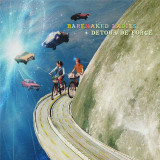
Barenaked Ladies return with their first new album in four years, ‘Detour de Force’. The 14-track effort is the result of both pre- and post-lockdown recording sessions. The band spent five weeks at vocalist/guitarists Ed Robertson’s cabin outside Toronto pre pandemic writing and recording in a makeshift studio. During pandemic lockdown, they decided they wanted to polish things up a bit. They returned to a Toronto studio when the lockdown lifted to rework the tracks resulting in ‘Detour de Force’. The Barenaked Ladies are Ed Robertson: Guitar, Vocals Jim Creeggan: Bass, Vocals Kevin Hearn: Keyboards, Guitar, Vocals Tyler Stewart: Drums, Vocals Over the course of their remarkable career, Barenaked Ladies have sold over 15 million albums, written multiple top 20 hits (including radio staples “One Week,” “Pinch Me,” “If I Had $1,000,000”), garnered 2 GRAMMY nominations, won 8 JUNO Awards, had Ben & Jerry’s name an ice cream after them (“If I Had 1,000,000 Flavours”), participated in the first-ever “space-to-earth musical collaboration” with astronaut Chris Hadfield, and garnered an international fan base whose members number in the millions. In 2018, the band were inducted into the Canadian Music Hall of Fame and Toronto Mayor John Tory declared October 1st “Barenaked Ladies Day.”
- 1: Spencer Krug - Red Dress
- 2: The Besnard Lakes - Good Morning, Captain
- 3: They Hate Change - The Seeming And The Meaning
- 4: Angel Olsen - Cold Blooded Old Times
- 5: Bruce Hornsby - Feel The Pain
- 6: Jamila Woods - Fast Car
- 7: Nap Eyes - Car
- 8: S. Carey - Weight Of Water
- 9: Pink Mountaintops - The Concept
- 10: Cut Worms - One For The Catholic Girls
- 11: Okay Kaya - Nightswimming
Midway through his long, earnest and often very, very
funny essay on the role playing game ‘Dungeons &
Dragons’ in the September 2006 issue of The Believer,
writer Paul La Farge proposes that ‘Dungeons & Dragons’
is not a game at all but rather a ritual. La Farge notes the
marked difference between game and ritual. Whereas a
game seeks to demonstrate how unequal or distinct
players / teams are from one another, rituals seek to do
the very opposite.
And so, across the 25-year history of Jagjaguwar - an
independent record label curiously named using a
‘Dungeons & Dragons’ name generator - we find this idea
of ritual as a conjoining practice. We see it early on when
Jagjaguwar join forces with a midwestern label called
Secretly Canadian for a powerful fusion. We see it in
familial relationships and collaboration among Jagjaguwar
artists and the ways those artists’ most treasured
collaborators make their ways to the Jagjaguwar game
board.
‘Join The Ritual’, a piece of Jagjaguwar’s 25th Anniversary
celebrations, looks to pay homage to the labels and artists
that, whether they know it or not, invited Jagjaguwar to the
table, to this wild, dark magic ritual of music. We’re talking
about independent titans like Drag City, Too Pure, K
Records and Touch & Go. We’re talking about heroes like
R.E.M., Slint, Stereolab and Tracy Chapman. These songs
captured the imaginations of founders Darius Van Arman
and Chris Swanson - and ultimately, opened up worlds to
them.
Vol.3[21,30 €]
Exceptional recordings by this New age maestro. Only recently re-discovered by his friend JD emmanuel & the band Sun Araw. Originally released on cassette in 1983 and now for the first time vailable on 180g Vinyl. For fans of Joanna Brouk, JD Emmanuel and Pauline-Anna Strom.
Randall McClellan was a founding member of the electronic music studio at the Eastman School of Music in 1967 where he later received a Ph.D. in Composition, Theory and Musicology. A growing interest in North Indian music and vocal technique prompted him to develop his personal compositional practice into an active platform for inducing altered states of mind. He constructed his concerts to be spaces for harmonization of mind and body through a musical practice informed by his esoteric studies of ancient mystery schools and sacred geometry, believing these to be primarily teachings on intentional resonance.
These performances were given between 1977 and 1983 in semi-darkened spaces that allowed listeners to relax on carpeting while being enveloped by sound. Each improvisation lasts from twenty-five to forty-five minutes. An entire performance is up to three hours and is designed to provide an environment of meditative sound. They gained in popularity and were soon attended by larger audiences. His final live performance took place at New York City's Alternative Museum in October, 1983.
The “Music of Rana” Enviromental Series uses synthesizers, drone box, tamboura, voice and tape delay to create an environment of continuously evolving multi-layered melody. Described as subtle, graceful and of other worlds. The name RANA, meaning “Sunbreath”, has its origin in ancient philosophical concepts that recognized vibration as the fundamental creative force and central principle of the many esoteric mystery schools of the ancient world. It is now evident that the use of music for its ability to alter mind states and for its effectiveness as a therapeutic aid was music’s original purpose and an important concept of these mystery schools. In the broadest sense, the practice of music for its healing ability may well stand as our oldest continuous musical tradition.
This album is the first volume in the series, previously issued as a cassette in 1983, and part of the cassette box set published by Sun Ark in 2013. This music is based on principles outlined in Randall’s book, The Healing Forces of Music: History, Theory and Practice. These compositions are selected for their meditational and healing abilities. EQ settings of treble and bass levels determine the music's effect upon you. Please explore until the most comfortable settings are found.
FACT MAG: "These deeply meditative pieces are an expert take on how subtleties and concentrated listening go hand-in-hand. There is inherent beauty here, but it’s the deeper aspects that make the biggest impact."
Exceptional recordings by this New age maestro. Only recently re-discovered by his friend JD emmanuel & the band Sun Araw. Originally released on cassette in 1983 and now for the first time vailable on 180g Vinyl. For fans of Joanna Brouk, JD Emmanuel and Pauline-Anna Strom.
Randall McClellan was a founding member of the electronic music studio at the Eastman School of Music in 1967 where he later received a Ph.D. in Composition, Theory and Musicology. A growing interest in North Indian music and vocal technique prompted him to develop his personal compositional practice into an active platform for inducing altered states of mind. He constructed his concerts to be spaces for harmonization of mind and body through a musical practice informed by his esoteric studies of ancient mystery schools and sacred geometry, believing these to be primarily teachings on intentional resonance.
These performances were given between 1977 and 1983 in semi-darkened spaces that allowed listeners to relax on carpeting while being enveloped by sound. Each improvisation lasts from twenty-five to forty-five minutes. An entire performance is up to three hours and is designed to provide an environment of meditative sound. They gained in popularity and were soon attended by larger audiences. His final live performance took place at New York City's Alternative Museum in October, 1983.
The “Music of Rana” Enviromental Series uses synthesizers, drone box, tamboura, voice and tape delay to create an environment of continuously evolving multi-layered melody. Described as subtle, graceful and of other worlds. The name RANA, meaning “Sunbreath”, has its origin in ancient philosophical concepts that recognized vibration as the fundamental creative force and central principle of the many esoteric mystery schools of the ancient world. It is now evident that the use of music for its ability to alter mind states and for its effectiveness as a therapeutic aid was music’s original purpose and an important concept of these mystery schools. In the broadest sense, the practice of music for its healing ability may well stand as our oldest continuous musical tradition.
This album is the first volume in the series, previously issued as a cassette in 1983, and part of the cassette box set published by Sun Ark in 2013. This music is based on principles outlined in Randall’s book, The Healing Forces of Music: History, Theory and Practice. These compositions are selected for their meditational and healing abilities. EQ settings of treble and bass levels determine the music's effect upon you. Please explore until the most comfortable settings are found.
FACT MAG: "These deeply meditative pieces are an expert take on how subtleties and concentrated listening go hand-in-hand. There is inherent beauty here, but it’s the deeper aspects that make the biggest impact."
The greatest diva of the Netherlands, Fay Claassen, joins forces with gifted
Belgian singer-composer-lyricist and longtime Parisian David Linx on ‘And
Still We Sing’, a magnificent collaboration with the WDR Big Band,
conducted by Magnus Lindgren.
The title of this reunion of Claassen and Linx (they sang together on 2005’s
‘One Heart, Three Voices’) is a paraphrase of one of Maya Angelou’s most famous poems: “...And Still I Rise.” Claassen brings her crystal clear delivery and
adventurous scatting chops to the program, blending beautifully and organically with Linx, a singular talent who has gained notoriety throughout Europe
while still flying under the radar on the United States jazz scene.
Produced by WDR tenor saxophonist (and Claassen’s husband) Paul Heller, ‘And
Still We Sing’ features stellar big band arrangements by Heller, Lindgren, Bob
Mintzer and Michael Abene.
When Rey Sapienz was eight years old, the Democratic Republic of Congo was plunged into the Second Congo War. The conflict last five years and was the bloodiest since World War II, leaving an indelible mark on East Africa and creating mass displacement and loss of life. But Sapienz endured, cutting his teeth as a young rapper at twelve, first performing to celebrate Congo's independence day. When he finished school, he headed to nearby Kampala to hone his craft and collaborate with local producers. But civil war broke out back home and he was forced to extend his stay in Uganda. Since then, Sapienz has established himself as a force to be reckoned with, co-founding the Hakuna Kulala label, teaching his Ableton Live skills to Kampala's young producers and releasing two acclaimed EPs. For his debut album, Sapienz embarks on an ambitious project that travels beyond the avant beatscapes of his early material. Alongside traditional percussionist, vocalist and dancer Papalas Palata and rapper Fresh Doggis, he has formed The Congo Techno Ensemble, utilizing their skills and experience to offer a statement that speaks to the past, present and future of the DRC. On "Eza Makambo", the trio channel rich musical traditions and historic tension, evolving electronic and traditional forms into boundless sci-fi mutations. The track breaks open the stories all three artists accumulated in the DRC, augmenting radioactive techno-dancehall beats with radical, open-hearted words and rhymes. "Eza Makambo" is a heady cocktail of stylistic futurism and harsh reality that could be compared with Zizou Bikaye's seminal "Noir et Blanc or Danis Mpunga & Paul K.'s genre-breaking electronic experiments. But marked by the DRC's recent scars, it's a critical work that stands painfully alone.
Silent Room, the duo formed by Enzo Carniel and Filippo Vignato is a conversation.
Between the piano of the first and the trombone of the second, two living forces of the
European jazz scene; between France and Italy; between acoustics and electronics. A
patient dialogue initiated on the benches of the conservatory in Paris, which was nourished
by the music of German trombonist Albert Mangelsdorff (to whom the duo paid homage for a
concert at the Cité des Arts in 2014), musical moments shared as a group (Enzo Carniel's
sextet at the Jazz à la Villette festival in particular) and in pairs - for numerous concerts
given on both sides of the Alps - before perfecting their common grammar, giving birth to
their own repertoire, creating their own space.
This first album, Aria, released on the Franco-Japanese label MENACE, was recorded in the
setting of the Villa Cicaletto in Tuscany, whose Silent Room the duo made their own in
September 2019. Carniel had just released Wallsdown, the third elegiac disc of his House of
Echo project (Jazz & People, 2020) and Vignato of an intense live duo recorded with
American cellist Hank Roberts (Ghost Dance, on CamJazz in 2019).
The album is carried by simple melodies, tenuous threads on which the two improvisers who
have slowly got to know each other crisscross and let their voices express themselves. Aria
can refer to the opening of Bach's Goldberg variations, to sung opera arias, but above all to
any expressive melody that develops the imagination. Aria is also the air in Italian: the air
that comes from the breath, the air that fills the room, the air that vibrates and is transformed
into sound. The repertoire is therefore this collection of Arias composed by Enzo Carniel and
Filippo Vignato.
If the duo advocates with this album its jazz heritage - that of improvisation and
conversation, of freedom and virtuosity - and claims to be Carla and Paul Bley, Keith Jarrett,
Gary Valente, Albert Mangelsdorff, Ornette Coleman or John Surman; it also explores the
contemporary colors of electronic music, ambient and Japanese minimalism. The use of the
prepared piano, Fender Rhodes and synthesizers colors the sound space of the acoustic
piano and trombone. The eponymous composition that opens the album in acoustic, closes
it in an electronic version, illuminating the path of the duo between the two universes.
In the almost plant-like composition "In All Nilautpaula", Enzo Carniel evokes the water lily
(in Sanskrit) coming to purify the water around him. On "Babele", Filippo Vignato invokes the
great question of language: thanks to Arias, and therefore melodies, language becomes
universal through music, and only the sensory experience counts.
Born from Carniel and Vignato's desire to create a sound space that would be filled with as
many melodies as silence, a place for listening, dialogue and meditation, Aria is one of those
rare records that contain entire worlds.
Kalita are proud to announce the first ever official re-release of Mpharanyana & The Peddler's 1979 South African disco and funk recordings 'Disco' and 'Freak Out With Botsotso', backed by a devastating extended edit of 'Disco' courtesy of Amsterdam-based DJ and producer Jamie 3:26. Cut on a loud 12" single and accompanied by an extended edit of 'Disco' courtesy of Jamie 3:26, this truly is another no-brainer from the Kalita camp.
Born on 15th November 1949 in Kattlehong, South Africa, Jacob ‘Mpharanyana’ Radebe was one of South Africa’s greatest ever musicians, releasing a canon of legendary soul, jazz and disco albums before his untimely death in August 1979 at the age of just twenty-nine.
Here, Kalita select his highly sought-after disco and funk recordings ‘Disco’ and ‘Freak Out With Botsotso’, both selected from his 1979 invisible final album, ‘Hela Ngwanana’, re-releasing them for the first time in forty years. Including Paul Simon and Herbie Hancock session musician Bakithi Kumalo on bass and Themba Mokena of Dick Khoza ‘Chapita’ fame on lead guitar, the recordings feature some of the country’s top contemporary musicians joining forces to glorious effect.
With the original album currently fetching eye-watering prices on the rare occasion that they turn up for sale, the time is now ripe to share this masterpiece with the world once more.
Paul Haslinger,Ben Frost,Jon Opstad,Will BatesandDanny Cocke
Rainbow 6 Siege: Fifth Anniversary Collection
Ubisoft and Laced Records have joined forces to create a special double soundtrack vinyl in celebration of the fifth anniversary of Tom Clancy’s Rainbow Six Siege.
Before there was PUBG and Fortnite, tactical multiplayer shooter Siege enjoyed a quiet launch in mid-2015. The tense Attackers versus Defenders break-and-clear gameplay saw players doing as much tactical planning in advance as reactive shooting in the moment. Thanks to rock solid gameplay, consistent developer support and a rabid core fanbase, the game grew and grew to become one of the most popular shooters in the world with 10s of millions of players and a thriving esports scene.
Initial lead composers Paul Haslinger (formerly of Tangerine Dream) and Ben Frost (TV show Dark) delivered a taught and atmospheric electronic score for the game on launch. They were later joined by Jon Opstad, Will Bates and Danny Cocke, who contributed score music for the five subsequent years of content.
Gordon Koang, South Sudan’s enigmatic superstar and ceaseless fountain of infectious, upbeat pop music, kick starts 2021 by revealing a series of remixes from his recent Unity album, this time partnering with two of the undisputed leaders of electronic music in his adopted home city of Melbourne, Australia - Sleep D and Andras.
Stranded overseas after civil war tore apart their country over six years ago, Gordon and his cousin Paul Biel Kueth, who were on tour performing to expatriate communities in Australia, were forced to apply for humanitarian protection and made the heartbreaking decision to leave their families stranded at home, on the chance that citizenship would be granted and reunification made possible.
After languishing on the outskirts of Melbourne’s suburbs for many years, Gordon met the Music in Exile label, a not-for-profit run by members of Melbourne’s flourishing music scene in order to create more opportunity for the city's numerous refugee and migrant musicians. He immediately assembled a band and tracked his eleventh full-length album, Unity (his first recorded album featuring performances in English and made widely available).
In the midst of a successful run of singles and festival performances around Australia, the Covid-19 pandemic hit, derailing Gordon’s newfound success and growing status as the darling of Melbourne’s vibrant music scene. Forced to find alternatives, Gordon reached out to some of his newfound friends in that city’s community. The result - this set of startling remixes by some of the finest voices in electronic music today.
Gordon, who was born blind in a small village in South Sudan’s Upper Nile Valley, began composing on the thom, a five-stringed instrument sometimes referred to as a Sudanese banjo, He started busking on the streets of Juba, accompanied by his cousin Paul Biel, who would sell homemade cassettes and CD’s. His anthems of peace, love and unity struck a chord, and before long Gordon found himself as something of a folk hero and a voice for peace in a country torn by ongoing conflict.
Now resettled in Australia, Gordon records and releases music in order to support his family back home in East Africa. He still awaits Australian citizenship, and forges on in the hope that this may one day be granted, allowing him to reunite with his wife and family in his newfound home.
Unity is Gordon’s eleventh full-length album and first to be recorded in Australia. It was produced by Stefan Blair and Liam Parsons of Melbourne lo-fi legends Good Morning, and features an ensemble cast of Australian performers. South Sudan and Y Dah are taken from the album, reimagined here by Andras and Sleep D. The remixes were a gift to Gordon and his family, with no fees paid or royalties due - all proceeds go directly to Gordon to help him reunite with his family.
DEVIL SOLD HIS SOUL (London, UK) blend huge soundscapes, earth-shattering riffs and soaring melodies.
DEVIL SOLD HIS SOUL begin a new chapter in their highly-acclaimed career, signing to metal heavyweights Nuclear Blast Records. 2021 will see the band release their fourth studio album ‘Loss’, their first with the dual vocal attack of Ed Gibbs and Paul Green.
DEVIL SOLD HIS SOUL burst onto the UK underground metal and hardcore scene in 2004 growing a cult following from their first record, ‘Darkness Prevails’ EP released through Visible Noise (BRING ME THE HORIZON) in 2005. Their debut album, ‘A Fragile Hope’ saw the band take their position as one of the most respected underground bands in the UK with their visceral and captivating live shows. DEVIL SOLD HIS SOUL’s sophomore album, ‘Blessed and Cursed’, elevated their sound and audience to new heights, voted into RockSound Magazine’s top 10 albums of 2010.
In 2012 the band unleashed their self-produced third album, ‘Empire Of Light’. Received to critical acclaim across the board, the album cemented their position as one of the UK’s most respected and revered metal acts.
With Ed Gibbs departing the band early in the year, 2013 saw the first new material featuring singer Paul Green with single ‘Time’, followed by 2014’s ‘Belong Betray’ EP and 2016’s ‘The Reckoning’. After welcoming Gibbs back to sing on the 2017 ‘A Fragile Hope’ anniversary tour, the band asked Gibbs to continue the dual vocals with Green for the remaining festivals and tours that year, with the line-up then becoming a permanent fixture.
2018 saw the band travel beyond Europe with their first touring in Asia, they also began to put the foundations down on what would become their new record ‘Loss’. Written about the grief and struggles faced in recent years, ‘Loss’ treads old ground and explores exciting new territories for DEVIL SOLD HIS SOUL, including for the first time the dual vocals of Gibbs and Green on record. Recorded, engineered and mixed by guitarist Jonny Renshaw at his UK based Bandit Studios, DEVIL SOLD HIS SOUL have poured heart and sincerity into every atom of this their fourth album, with songwriting elevated to new levels.
Having toured with the likes of CULT OF LUNA, ARCHITECTS, NORMA JEAN, BRING ME THE HORIZON, UNDEROATH, GALLOWS, ENVY and EMMURE, as well as headlining a stage at DOWNLOAD FESTIVAL l (UK) and numerous European festival appearances including SUMMER BREEZE and WITH FULL FORCE (Germany) and PUKKELPOP (Belgium), DEVIL SOLD HIS SOUL have built a huge reputation for their captivating live shows, over 16 years:
Classic black vinyl, including DLC with estra track. "Here lies our ancient future, Deep England: our hope and compassion in the chokehold of power and glory.Hand in hand, here we cry our rage: summoning a lament into the ether, a divine androgynous force, a transcendental purge of the dizzying chaos of post-truth Britain." - Gazelle Twin & NYX. Gazelle Twin & NYX: electronic drone choir have announced details of their debut release, Deep England, an 8-track album out on vinyl, CD and digitally on 19 March 2021 via NYX Collective Records.Rooted in English pagan and sacred music, Deep England is an electronic-choral expansion of Gazelle Twin's 2018 album Pastoral (Anti-Ghost Moon Ray). Here, tracks from Pastoral, an album whose political themes have only intensified since its original release, are radically reworked and presented alongside original compositions by NYX, Paul Giovanni and William Blake.Gazelle Twin (aka Elizabeth Bernholz) and NYX, the electronic drone choir reshaping the role of the traditional female choir, originally created Deep England for live performance with Movement Director Imogen Knight, Sound Associate Peter Rice and Designer Chloe Lamford. The performance, described by The Times in their 4* review as a "spellbinding febrile techno-pagan pageant", premiered at the Queen Elizabeth Hall in November 2019. Deep England was transferred to the studio soon after, and the resulting album shows a powerful and often dreamlike Jarman-esque depiction of a country divided by its many selves. The performers are Adélaïde Pratoussy, Cecilia Forssberg, Elizabeth Bernholz, Natalie Sharp, Ruth Corey, Shireen Qureshi and Sian O'Gorman. The album was co-produced by Marta Salogni, Sian O'Gorman (NYX) and Elizabeth Bernholz (Gazelle Twin) with mix and additional programming by Marta Salogni, and mastering by Heba Kadry.