- A1: Keep Your Feet Firm And Even
- A2: Show Not Yourself Glad (At The Misfortune Of Another)
- A3: Maintain A Sweet And Cheerful Countenance
- A4: Go Not Thither
- A5: Orderly And Distinctly
- A6: If You Soak Bread In The Sauce
- A7: Let Thy Carriage
- A8: Conscience Is The Most Certain Judge
- A9: Spark Of Celestial Fire
- A10: George Washington Rules
Поиск:paul gilbert
Все
- A1: Let It Snow! Let It Snow! Let It Snow!
- A2: Frosty The Snowman
- A3: Hark! The Herald Angels Sing
- A4: The Christmas Song
- A5: Rudolph The Red-Nosed Reindeer
- A6: I Saw Three Ships
- B1: Every Christmas Has Love
- B2: Three Strings For Christmas
- B3: Have Yourself A Merry Little Christmas
- B4: We Wish You A Merry Christmas
- B5: Silver Bells
- B6: Winter Wonderland
Paul Gilbert have announced the release of a new seasonal offering titled 'TWAS. Gilbert’s 17th solo album features a dozen recordings, two of which are new, original compositions.
Gilbert shares, “Many will agree that in recent times, challenging events have been pouring down upon our heads like an Exploding Waterfall of Molasses. At least it sometimes feels like that to me. But while I was jamming Christmas songs with my friends, playing an assortment of red, green, and white Ibanez electric guitars, I felt like life was THE BEST. I hope that this music can put a smile on your face as well. Merry Christmas to all. And to all, a good night.”
The track listing features “Let It Snow! Let It Snow! Let It Snow!,” “Frosty The Snowman,” “Hark! The Herald Angels Sing,” “The Christmas Song,” “Rudolph the Red-Nosed Reindeer,” “I Saw Three Ships,” “Every Christmas Has Love” (original), “Three Stings For Christmas” (original), “Have Yourself a Merry Little Christmas,” “We Wish You a Merry Christmas,” “Silver Bells,” and “Winter Wonderland.” On the Japanese release of ‘Twas The Guitar Before Christmas, there will be a bonus track titled “Down the Chimney Blues” (original).
Gilbert offers, “Ten of the songs are classics. I was inspired by the Christmas recordings of Nat King Cole, Loretta Lynn, Stevie Wonder, Barbra Streisand, Johnny Mathis, Ella Fitzgerald, and The Ventures. And of course, inspiration came from my guitar heroes, Eddie Van Halen, Alex Lifeson, Johnny Winter, Robin Trower, Frank Marino, Pat Travers, Jimi Hendrix, and Jimmy Page, to name a few. I also wrote some of my own new Christmas songs. As I have been doing recently, I begin with lyrics and a melody. Then I let my guitar take over, as it sings better than I do.”
- A1: Evangelina - Hoyt Axton
- A2: Lady Love - Lou Rawls
- A3: Castles In The Air - Don Mclean
- A4: Why Have You Left The One You Left Me For - Crystal Gayle
- A5: Lost In Love - Air Supply
- A6: Danny's Song - Anne Murray
- B1: Train In The Distance - Paul Simon
- B2: The Bargain Store - Dolly Parton
- B3: We're Gonna Change The World - Matt Monro
- B4: Run Like The Wind - Barbara Dickson
- B5: Stumblin' In - Suzi Quatro & Chris Norman
- B6: Matrimony - Gilbert O'sullivan
- C1: You Belong To Me - Carly Simon
- C2: The Best Is Yet To Come - Clifford T Ward
- C3: Daylight Katy - Gordon Lightfoot
- C4: Deeper Than The Night - Olivia Newton-John
- C5: Warm Feeling - Lindisfarne
- C6: The Danger Of A Stranger - Stella Parton
- D1: Who What When Where Why - Dionne Warwick
- D2: 99 Miles From La - Art Garfunkel
- D3: Calypso - John Denver
- D4: Old And Wise - The Alan Parsons Project
- D5: Theme From 'Taxi' (Angela) - Bob James
Bob Stanley’s latest compilation “Wednesday Morning 6AM” literally turns back the clocks.
In the late 70s and early 80s, there was a parallel world of hits that people only heard when their clock radio went off. BBC Radio 2 had little time for the Top 40 music played by Radio 1 and beamed into living rooms by Top Of The Pops. Radio 2 effectively created a chart of its own playing singles or album tracks that their DJs enjoyed and wanted to share with their listeners. These tracks were given multiple plays on rotation and became earworms for millions of listeners.
“Wednesday Morning 6AM” is the warming soundtrack of eating breakfast or driving to school or to work in the cold and dark early hours to the sound of Art Garfunkel’s ‘99 Miles From LA’, Dolly Parton’s ‘The Bargain Store’, Hoyt Axton’s ‘Evangelina’, Paul Simon’s ‘Train In The Distance’ and Air Supply’s ‘Lost In Love’.
Other featured artists include Gilbert O’Sullivan, Crystal Gayle, Carly Simon, John Denver, Lou Rawls, Lindisfarne, Bob James, Stella Parton and Dionne Warwick.
The 2-LP version includes the bonus track ‘Danny’s Song’ by Anne Murray.
- A1: Les Masques - Il Faut Tenir (1969)
- A2: Isabelle Aubret - Casa Forte (1971)
- A3: Christianne Legrand - Hlm Et Ciné Roman (1972)
- A4: Jean Constantin - Pas Tant D'chichi Ponpon (1972)
- A5: Billy Nencioli & Baden Powell - Si Rien Ne Va (1969)
- B1-: Marpessa Dawn - Le Petit Cuica (1963)
- B2: Jean-Pierre Sabar - Vai Vai (1974)
- B3: Sophia Loren - De Jour En Jour (1963)
- B4: Isabelle - Jusqu’à La Tombée Du Jour (1969)
- B5: Sylvia Fels - Corto Maltesse (1974)
- C1: Frank Gérard - Comme Une Samba (1972)
- C2: Ann Sorel - La Poupée Des Favellas (1971)
- C3: Charles Level - Un Enfant Café Au Lait (1971)
- C4: Andrea Parisy - Les Mains Qui Font Du Bien (1970)
- C5: Audrey Arno - Quand Jean-Paul Rentrera (1969)
- C6: Aldo Frank - T’as Vu Ce Printemps (1970)
- D1: Christianne Legrand - Cent Mille Poissons Dans Ton Filet (1972)
- D2: Clarinha - Lemenja (1970)
- D3: Hit Parade Des Enfants - Aquarela (1976)
- D4: Jean-Pierre Lang - Tendresse (1965)
- D5: Magalie Noël - Une Énorme Samba (1970)
- D6: Françoise Legrand - La Lune
Ever since the late 1950s bossa-nova revolution, Brazil’s influence on French music has been undeniable. Pierre Barouh, Georges Moustaki and a vast array of lesser known artists, all made the Musica Popular Brasileira (MPB) an axis of promotion at the service of a cool and metaphysical, modern and mixed Brazilian lifestyle. Some were seduced by the poetic languors of the bossa, some were looking for fun, and others just loved the American hybridization of jazz-bossa, jazz-samba.
What is bossa nova? One of its creators, Joao Gilberto said: "Its style, cadence, everything is samba. At the very start, we didn't call it bossa nova, we sang a little samba made up of a single note - Samba de uma nota so .... The discussion around the origins of bossa nova is therefore useless”. It is nevertheless useful to remember that these magnificent Brazilian songs, which the guitarist describes as samba, were shifted and balanced around improbable chords. "I like things that lean, the in-betweens that limp with grace," said Pierre Barrouh, quoting Jean Cocteau.
With emotion, arrangements for violin and supple guitar licks, bossa nova rapidly changed. A transformation that can be heard in the Tchic, tchic, French Bossa Nova 1963-1974 compilation, the result of a cultural reappropriation, which traveled through the United States and supplemented itself in France.
A musical revolution that has remained significant, bossa nova was born in Rio. From 1956 to 1961, Brazil lived through its golden years. In five years, the country had invented its modernist style. Elected president in 1956, Juscelino Kubitschek de Oliveira, an elegant man with a broad forehead, brandished a promising slogan: "Fifty years of progress in five years". He quickly got to work. Not worried about increasing debt, he launched the project for a new federal capital, Brasilia, designed by the communist architect Oscar Niemeyer. Volkswagen opened state-of-the-art factories and created the “fusquinha”, the Beetle. In Rio, the Vespa made its first appearance. The Arpoador Surf Club crew run into the “girl” from Ipanema, Helô Pinheiro - the tanned garota ("chick"), between a flower and mermaid, who at 17 walked by the Veloso bar, where the fiery author and composer, Tom Jobim and Vinicius de Moraes, were getting drunk on whiskey. From then on, bossa symbolized cool.
In 1958, Joao Gilberto recorded Chega de Saudade, which the directors of Philips denied, calling it "music for fagots". The marketing director, who believed in it, secretly pressed 3000 78-inch vinyls and distributed them at schools around Rio, creating a tidal wave.
American jazzmen then took over. In particular, trumpeter Dizzy Gillespie and guitarist Charlie Byrd. In November 1962, the Brazilian Ministry of Foreign Affairs funded a "Bossa-Nova" concert at Carnegie Hall in New York, inviting the genre’s pioneers. Unprepared, the show soon turned to disaster. But the troupe was invited to the White House by Jackie Kennedy. The first lady loved "the new beat" and in particular Maria Ninguem, a song by Carlos Lyra, later covered by Brigitte Bardot.
In Brazil, the 1964 military coup quickly ended this euphoria. The destructive atmosphere that ensued pushed many Brazilian musicians to leave, if not to exile. Thus, Tom Jobim, Sergio Mendes and Joao Gilberto arrived to the United States. In New York, Joao Gilberto met saxophonist Stan Getz. At the time, he was married to the Bahianese Astrud Weinert Gilberto, who had a German father. She had never sung before, but she knew how to speak English. Getz therefore asked her to replace her husband on The Girl From Ipanema. The Getz/Gilberto record with Tom Jobim on piano, was released in March 1964. Phil Ramone, the "pope of pop" was in charge of sound.
Bossa nova arrived in Paris through the classic “guitar-voice” channel (Pierre Barouh, Baden Powell, Moustaki…) But France loved jazz and Paris had already welcomed its American contributors. All these good people were to pass through Saint-Germain-des-Prés. The cabaret l'Escale became the Mecca of Latin American sound where one could find Pierre Barrouh and his friends, such as the Camara Trio, samba-jazz aces, whose only record was published by the Saravah label. With a band strangely called Les Masques (a band that included Nicole Croisille and Pierre Vassiliu, among others), the Camara Trio recorded an interesting Brazilian Sound, including the track Il faut tenir which is present on this tasty compilation of rarities.
Other enlightened musicians can also be found on the compilation, such as Jean-Pierre Sabar (songwriter for Hardy, Auffray, Leforestier ...) and the French pop rock organist Balthazar. In 1975, Sabar recorded Aurinkoinen Musiikkimatka on a Finnish label, which featured the crazy Vai, Vai, included on this record. We are now following the footsteps of Brazilian electronic musicians such as Sergio Mendes, Eumir Deodato or Marcos Valle who created funk and disco sounds on their keyboards and synthesizers. A style that influenced Véronique Sanson when she wrote Jusqu’à la Tombée de la nuit in 1969 for Isabelle de Funès, the niece of Louis and a great friend of Michel Berger - Sanson did end up singing this track on her 1992 Sans Regret record.
The pinnacle of exoticism and travel, Sylvia Fels’ Corto Maltese includes bongos, sea mist and ocean sounds. The title was taken from Jacky Chalard’s concept album written in 1974, Je suis vivant, mais j’ai peur (I am alive, but I am scared), based on Gilbert Deflez’s science fiction novel.
However, bossa nova extended the scope of popularity. "In the 1970s, I was a fan of Sergio Mendes, Getz / Gilberto. I fell in love with this music that I knew because I had been an orchestral singer, " explained Isabelle Aubret, who in 1971 delivered a composite record of covers by the very funky Jorge Ben, Orfeu Negro, Tom Jobim, Vinicius de Morais and Jean Ferrat. "I recorded this album for Meys Records in Paris, far from Brazil, with wonderful musicians, François Raubert, Roland Vincent, Alain Goraguer...". The latter wrote the arrangements for Casa Forte, a very percussive title borrowed from Edu Lobo, one of the initiators of the bossa who spent time in California. "Jazz and bossa came together and produced very rhythmic music. I love singing, it allows me to dream, to have fun, to feel a high on stage, and these songs brought me joy, made me swing, my singing felt like a dance.”
The world tours of French singers and their desire for the tropics, often brought them to Rio with its hills, forests, caipirinhas and tanned bodies. There are surprises though, like this Iemenja (Iemenja is the goddess of the sea in the Afro-Brazilian candomblé religion). Not unlike the composer and musician Jean-Pierre Lang, based in Sao Paulo, Claire Chevalier taught Brazil to Brazil. In 1970, the singer and painter published a 45-inch vinyl, Mon mari et mes amants (My husband and my lovers), under the improbable pseudonym of Clarinha (little Claire). She was then living in Rio, with her husband, Joël Leibovitz, who founded a band called Azimuth, and who owned a record label specialized in "sambas enredos" songs for samba school parades.
For its B side, she asked Pierre Perret to come up with lyrics for a song composed by Carlos Imperial: "Oh goddess of the sea, o goddess Iemenja, I bring a white rose to adorn your long hair ..." . "Perret came to see us, and we had fun, remembers Joël Leibovitz. We wrote Lemenja for fun, we recorded it at the Havaí studio, behind the Central do Brasil the central station. Erlon Chaves, the arranger who worked with Elis Regina, joined us" adding his share of Afro-Brazilian percussions and funky brass to the mix.
There is a common misunderstanding in Franco-Brazilian history: that bossa, admittedly hedonistic, is perceived as funny, even though the poets who wrote the texts are often philosophizing on the human condition. Its French interpreters pull it towards a carnival inspired universe, far removed from its fundamental essence. Thus, Jean Constantin covered the famous Samba da minha terra, an ode to the art of samba written by the classic Bahian composer Dorival Caymmi, renaming it with the enticing title of Pas tant de tchi tchi pompon: "On your pier there is no tchi tchi / when you arch your back, you know everything is alright ”(lyrics by Gérard Calvi). This expedited bossa aims for the absurd, but retains a certain elegance.
Indeed, Jean Constantin was not an idiot, the rather large man had a huge mustache and liked fantasy, (Les pantoufles à papa, Le pacha, inspired by cha-cha-cha-cha, salsa and jazz) but he was also the lyricist of Mon manège à moi interpreted by Edith Piaf, the composer of Mon Truc en plume by Zizi Jeanmaire and the soundtrack of François Truffaut’s 400 Blows. Le Poulpe, published in 1970, from which this bossa is extract, was arranged by Jean-Claude Vannier, an accomplice of Serge Gainsbourg’s Melody Nelson. In short: "There is enough of samba / By looking at the parasol / Because my poor cabeza / Is going to die in the sun".
Even the American actress Marpessa Down, who was at the heart of the bossa nova revolution with her role as Euridyce in Marcel Camus’ film Orfeu Negro, winner of the 1959 Cannes Palme d'or, fed the clichée with Je voudrais parler au petit cuica - "Tell me how you manage to always make people want to dance / It's true, I must admit that I cannot resist your magic" - in consequence, once can hear the cuica, a little drum inherited from the Bantu.
But bossa nova had many angles. Societal, of course, pushing actresses who were symbols of women's liberation like Brigitte Bardot, Jeanne Moreau, or Sophia Loren to engage in the exercise of accelerated bossa. In February of 1963, Sophia Loren made a record in French in Rome, Je ne t'aime plus, featuring the song De jour en jour, a bossa written by two Italians, Armando Trovajoli and Tino Fornai, which was released a little later by Barclay. Bossa accompanied the 1960s, a decade of moral liberation. Ann Sorel, who interpreted La Poupée des favellas, caused a sensation with L’amour à plusieurs, a provocative song written by Frédéric Bottom and Jean-Claude Vannier. As for the actress Andrea Parisy, she displayed her bourgeois cheekiness in Marcel Carné's Les Tricheurs before interpreting Les mains qui font du bien. And Magalie Noël, the friend of Boris Vian, who sung Johnny fais-moi mal, was hired to sing Une énorme Samba, composed by Alain Goraguer (arranger to Gainsbourg, Bobby Lapointe and Jean Ferrat) with lyrics by Frédéric Botton.
But in the end, of what wood is bossa nova made of? The answer is given by Christianne Legrand, daughter of Raymond the conductor, and sister to Michel the composer: "With me, with jà" - jà means "immediately" in Portuguese. In 1972, the singer, an expert in vocal jazz and a member of the Double Six, published Le Brésil de Christianne Legrand. Two songs included on the Tchic Tchic compilation that demonstrate how bossa, jazz, funk, rock, etc. work like a swiss army knife: the music is used to denounce broken systems, or miracles, HLM et ciné roman, Cent mille poissons dans ton filet, two songs from the O Cafona soundtrack, a successful telenovela broadcast, at the time in black and white, on TV Globo. The first was adapted in French by the fighter and friend of the Legrand tribe, Agnès Varda. The second is content with a play on words, jostling them into a summer fun.
Véronique Mortaigne
- A1: S–O S–O Paulo 3 29
- A2: Curso Intensivo De Boas Maneiras 2 58
- A3: Glória 3 20
- A4: Namorinho De Port–O 2 35
- A5: Catecismo, Creme Dental E Eu 2 44
- A6: Camelô 2 15
- B1: N–O Buzine Que Eu Estou Paquerando
- B2: Profiss–O De Ladr–O 2 35
- B3: Sem Entrada E Sem Mais Nada 2 40
- B4: Parque Industrial 3 16
- B5: Quero Sambar Meu Bem 3 50
- B6: Sabor De Burrice
In 1968 Tom Zé; moved from Salvador Bahia to Sao Paulo where he hung out and wrote with his friends Gilberto Gil and Caetano Veloso. Although initially part of theTropicalia movement, Zé was so independent he was determined to forge his own musical path. He started by recording Grande Liquidacao, a hyperactive pop album backed up by two incredible psychedelic rockbands: Os Brazoes and Os Versateis. Tom Zé's material on this album includes traditional Brazilian Tropicalia laced with crazy vocal melodies and samples a multitude of genres from funk to psychedelic rock and bossa nova creating in the process a sort of unheard pop exotica. This is especially apparent on the track šGloria› with its changing tempos, bubbling instrumentation and off-the-wall harmonies. The pace of the album, considering it was the 60™s, is brutal so Zé takes a break between songs to address the listener before resuming his zigzag trajectory. The album also includes the fantastic šParque Industrial› which was later recorded by Gal Costa, Gilberto Gil and Caetano Veloso on the Tropicalia: Panis et Circenses album. Tom Zé was also arguably the creator of the first sampler. In the mid 1980's David Byrne pulled one of his albums out of the samba section of a Rio de Janeiro record store which led him to bringing Zé to worldwide attention by releasing numerous albums on the Luaka Bop label.
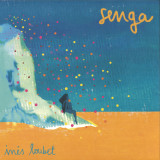
avigating vibrant influences of Latin-jazz, Tropicália and joyful grooves; multi-instrumentalist, songwriter, singer and producer Inês Loubet presents her utterly gorgeous debut album ‘Senga’. The album covers Inês’ experiences over the past five years, originating in Portugal, travelling through Brazil, before finding home in London.
Previously, Inês co-wrote and performed on Caravela’s album 'Orla' on None More Records, which was praised by the likes of Gilles Peterson and The Line of Best Fit. Her music has been played on Jazz FM, BBC 6 Music, BBC Radio 3, NTS and Soho Radio. A relentless live performer, she’s played alongside Brazilian legends Gilberto Gil & João Bosco, graced the stage of The Royal Albert Hall, Union Chapel, and O2 Shepherds Bush, around UK and international tours.
The album explores a range of profound themes including nature, travel, grief, unconditional love, separation, family dynamics, and the nuanced experience of womanhood in contemporary society. Dedications to the music, philosophy and revolutionary history of samba (‘Sambo Mesmo Sem’), everyday observations of joy (‘Guri’), and motivating generational change for the better (‘Sab Sabim’); glide across romantic harmonies and the Brazilian rhythms at the melodic heart of the album.
“I started writing whilst living in Salvador da Bahia, Brazil, in February 2020”, says Inês. “I was shy and hadn't written fully composed tracks before then. During lockdown I received support from The Arts Council’s DYCP, started making demos, gained confidence and started playing them live”. In October 2022 Inês was presented with the Drake YoLanda award and went to Giant Wafer studio in Wales for three days, before recording the final vocals at her home studio and mixing and mastering in Porto, Portugal.
Inês is joined on the album by a band of close friends. Percussionist and long-time collaborator Jansen Santana from Salvador da Bahia brings the soul of the drums, the tambor. “I always have the Bahia drums present in my mind when I write a new composition. I studied Latin percussion at University and then lived in Salvador absorbing all that heritage and knowledge”. Playing four different stringed instruments on the album, Greg Sanders is a long-time friend and collaborator from London “I met him in a samba band in 2015 and he was the first person I ever showed my songs to and played with”. The band is completed by Ruta Sipola on flute, Jake Burgess on tenor sax, Peu Meurray who recorded a lot of the percussion and lead vocals, and bassist Julio de Castro from Sao Paulo. “I was blown away by his bass playing, his swing and creativity, his ton of experience and professionalism but also his voice - he's an amazing singer and I believe that adds a lot to the magic”.
Inês concludes, “Last year, I had a show in London and I asked everyone in the audience to write down what they felt when they listened to the music. These are some of the things they wrote: wholesome, refreshing, lifted, moving, joyful, happy, nostalgic, warmth, force, goosebumps, emotional, togetherness, transported, rooted”. ‘Senga’ captures all of these feelings and more in a memorable first impression from a highly talented musician.
- A1: Dreams (Feat Xênia França&Zé Leônidas)
- A2: Kismeti (Feat Matthias Schriefl)
- A3: Asase (Feat Eric Owusu)
- A4: Sábado (Feat Zé Leônidas)
- A5: Carrossel (Feat Zé Leônidas)
- B1: Caio & Eric (Feat Eduardo Camargo)
- B2: Ndiyakhangela (Feat Bongani Givethanks &Amp; Mpho Nkuzo)
- B3: Agôra (Feat Matthias Schriefl)
- B4: Oblique Sunshine (Feat Rebekka Ziegler)
Global pointing Brazilian jazz trio releases their new album Agôra, that sparkles with electric funk and Herbie-esque eclecticism. It features a myriad of guest vocalists and musicians including Brazilians Xênia França and Zé Leônidas, Jembaa Groove's Ghanaian singer Eric Owusu and South African artists Bongani Givethanks & Mpho Nkuzo
Re-wiring the concept of 'fusion' for 2023, Agôra is Brazilian trio Caixa Cubo's resurgent new record with the title referring to 'now', based upon the intuitive and fluid nature of the trio's method, and this inspired recording. With shoots to black music culture, from Brazil to Brooklyn, Ghana and South Africa, Agôra is the group's ninth album yet is their first where they've invited guests, mainly singers, onto each track and follows their last, Angela from 2020, released on Heavenly Records, which won a BBC 6 Music Album of the Year (Huey Morgan's selection) granting them much deserved international recognition.
The core musical elements of Caixa Cubo are Henrique Gomide (keys), João Fideles (drums) and Noa Stroeter (bass), all from São Paulo, Brazil and where they met as teenagers and would continue their friendship and musical bond at the Royal Conservatory in The Hague, Netherlands. Now all in their mid thirties, João and Noa live back in the city where it all started but Henrique has settled in Cologne, Germany where the recording of Agôra took place, over the course of 3 days, at the home cum studio of Chris 'Dusty' Doepke, their friend and owner of the label they signed to, Jazz & Milk.
In line with all their creations where flow and energy provide the magic, allowing what the moment provides, the album shines not only for its virtuosity but for its minimalism, the depth of space, and for the first time, the ability to figure in and outside of the jazz fold, as the trio decided, for the first time, to bring in singers and add a new aesthetic to their sound.
"Agôra is a wake-up call to reality, a reminder that the infinite possibilities of technological progress should not disconnect us from the earth, from eye-to-eye relationships, and from moments lived in person" the band are keen to point out. "And that we must not be consumed by greed, for all we truly possess.... is the NOW."
Turning hope and metaphor into music, the debut single Sábado, an electrified future- jazz-fizz reflects perfectly the spontaneity that permeated the entire recording of the album. "When we got to the studio, we had no idea what we were going to record. We started playing a groove, kind of inspired by Gilberto Gil's 80s albums, and our drummer João started singing this funny song 'Sábado Barrigudão' (Big Belly Saturday) alongside the bass groove and that was that". Inspired by their city of birth, São Paulo, it features long time collaborator and vocalist Zé Leônidas, with cuicas, tamborim, agogo and shakers providing the most obvious Brazilian affect from the album.
Dreams is the band's first foray into R'n'B melding the group's simple and sporadic instrumentation of drums, keys and bass into a Jill Scott inspired song that could have been born in Brooklyn yet sung by Brazilian singer and Grammy nominated Xênia França and Zé Leônidas in both English and Portuguese. Xênia recently performed online for hip-to-it website Colors and it's her latest collaboration with Caixa Cubo, having first met in 2009 for a series of live performances.
South African artists Bongani Givethanks & Mpho Nkuzo come to the record with a wholly different approach on Ndiyakhangela, providing spoken word and vocal refrains on top of an Afro-Brazilian percussion jam with a delivery and verse in Xhosa, Zula and Ndebele. Asase is the album opener and features vocals of Eric Owusu who is part of highlife pioneer Pat Thomas's live band and most recently, co-leader of Jembaa Groove, an Afro-soul band from Berlin. It's a synth wig out with djembe grooves and offers a brand new take on Afro-soul-jazz.
Other contributions come from Cologne based jazz singer Rebekka Ziegler (Oblique Sunshine), São Paulo based guitarist Eduardo Camargo (Caio & Eric) and trumpet player Matthias Schriefl on Kismeti, a gorgeous and rolling number that ebbs and flows, exemplifying the group's effortless ability to craft a sound energised by a belief in one-self and the idea of having faith without the need to look at each other for verification.
As drummer and percussionist João Fideles perfectly surmised upon arriving for the recording session, "What drums do you have? Whatever you have, I'll use it". Agôra is testament to nearly 20 years of camaraderie, friendship and most importantly, trust.
- A1: Arsen Dedić - Onaj Dan
- A2: Zdenka Vučković - Bosonoga
- A3: Bogdan Dimitrijević - O Barquinho
- A4: Nino Robić - Jedna Nota (Samba De Uma Nota Só)
- A5: Milan Bačić - Hō-Bá-Lá-Lá
- B1: Beti Jurković - Ljuljačka
- B2: Elda Viler - Senca Tvojega Nasmeha (The Shadow Of Your Smile)
- B3: Arsen Dedić - Često Te Sretnem
- B4: Bogdan Dimitrijević - Hershey Bar
- B5: Zdenka Vučković - Izgubljeno (Desafinado)
- C1: Drago Diklić - Moja Draga
- C2: Krunoslav Kićo Slabinac - Tko Si Ti
- C3: Plesni Orkestar Rtz - Plava Krizantema
- C4: Gabi Novak I Radojka Šverko - Za Mene Je Sreća (Samba Da Rosa)
- C5: Dubrovački Trubaduri - Ljuven Zov
- D1: Vikica Brešer - Sunčano Ljeto
- D2: Drago Diklić - Nitko Na Svijetu
- D3: Višnja Korbar - Subotnje Veče
- D4: Arsen Dedić - Večeras
- D5: Jimmy Stanić & Glenn Rich Orchestra - The Girl From Ipanema
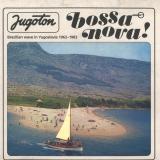
Rich musical history of Yugoslavia reveals a long-lasting love for the music of Latin America.
Entwined in Afro-Cuban rhythms, ballrooms were shakin', swayin' and swingin', gathering musicians who were heavily into jazz bands and orchestras, most notably in Ljubljana, Zagreb, and Belgrade. Jazz could be heard on the streets of Split way back in 1919 when dancing became a symbol of freedom. Radio was the most loved household item, newest sheet music was in demand and collecting records was hip like today. In the aftermath of Second World War, jazz went underground but little by little, things changed and Ella, Satchmo, Dizzy and Miles came to visit, among others. Music festivals shaped the music for entertainment and variety of popular styles showed influences from all over the world. In the early sixties, one particular rhythm crashed on the coast of the Adriatic Sea: the rhythm of bossa nova!
In the whirlwind of various musical styles, Latin American music still played important part of the scene in the early sixties Yugoslavia. Beguine, tango, rhumba, samba, calypso, mambo and cha-cha-cha all found their place on the festivals inspired by famous Sanremo, festival of Italian popular song that largely shaped the musical taste of Europe. It was the era of instrumental rock, R & B and rock'n'roll - sounds of "imperialist America" now played freely on imported and hand-made electric guitars. While dancing halls had been turning into concert venues, bossa nova has come! Eydie Gorme with Blame It on the Bossa Nova and Paul Anka with Eso Besso (That Kiss!) tried to make us learn some new dance moves but it was Joao Gilberto's gentle singing and his new way of playing samba songs, along with Tom Jobim's modern dissonant harmonies and poetry of Vinicius de Moraes that created the magic. When American alto saxophonist and flautist Bud Shank visited Zagreb and Ljubljana in 1963 (with Boško Petrović in his quintet) "it was the first time we heard bossa nova!" remembers Stjepan Braco Fučkar. Jugoton, the biggest record company in Yugoslavia, released 4-track EP Bossa Nova by Bogdan Dimitrijević and his ensemble that same year! While not being fully accepted or understood completely, the archives of Jugoton reveal to us various interpretations of this new trend from their vast catalogue.
- Venus Weeks
- Badger
- Butterfly
- What I Dream At Night
- Joy Will Find You
- First Day Of Eternal Spring
- November
- Winter In Vegas
- Mountain
Jetzt, wo der Spätsommer/Herbst langsam ausfadet, denkt man, Herr Jemine, jetzt kommen sie wieder, die kalten dunklen Tage, eigentlich wollte ich doch nie mehr frieren. Also, aber genau jetzt, zur rechten Zeit, kommt Paul mit einer neuen Platte um die Ecke, die sich um dich legt wie eine wärmende Decke, tröstet und dich sanft mit in den in den Herbst nimmt. 9 klassische Pop Songs, die sich Zeit lassen und Ruhe ausstrahlen, mit grossen Melodiebögen und aufgeräumten, eleganten Arrangements. Sie handeln von Abschieden, neuen Freunden, sind Melancholie und Zuversicht. Das Ende des Sommers musikalisch umgesetzt. Brian Wilsons Surfs Up und die grossen europäischen Chansonballaden eines John Cale oder Gilbert O'Sullivans und der One Man Beatles Pop von Emitt Rhodes kommt einem in den Sinn und doch schreibt nur Paul Abbrecht diese ganz besonderen Sloe Paul Songs, die es eben nur hier gibt.
Phylipe Nunes Araújo's songs are as rich and varied as the diverse landscapes they were written in. The hills of Pernambuco, the lagoons of Alagoas, and the beaches of Bahia are all woven into his stripped-back, folk-inspired Brazilian songwriting. As part of a wider movement of musicians originating from Brazil's Northeast, Phylipe sees the process of music-making as the search for beauty itself.
Collaborating with fellow Northeastern artists Bruno Berle, Batata Boy and Nyron Higor among others, Phylipe's debut album represents the latest flowering of this exceptionally talented community's creative search.
The Northeast holds an almost sacred importance in Brazil's collective cultural imagination. The region bore witness to the brutal histories of Portuguese colonization and the African slave trade, while simultaneously amalgamating the diverse cultures, religions and traditions of those who have called it home. Countless Brazilian music greats - Gilberto Gil, Caetano Veloso, Hermeto Pascoal, Djavan and Luiz Gonzaga - have emerged from this vast cultural melting pot.
Born in Caruaru, Pernambuco state, and raised in the city of Santa Cruz do Capibaribe (famed for its textiles industry), Phylipe describes his music simply as "Brazilian music from the Agreste of Pernambuco". His masterful compositions thread together regional rhythm, folk poetry and sophisticated harmony.
Phylipe's musical foundations were laid in youth, listening to the local elders rehearsing their forrós, attending São João street parties in front of his house and watching the Junina Quadrilhas dance through his neighborhood. At street fairs he would read the Literatura de Cordel (handcrafted pamphlets of Brazilian folk literature), and watch the rhyme battles between cantadores, violeiros, and repentistas, who improvise verses on daily life, social commentary and philosophy. This tradition of Northeastern folk poetry proved particularly formative for Phylipe as a lyricist. "I always try to write things as simply as possible. I believe that beauty must be easily understood. If I can facilitate the path to the message, there's no reason not to. It's something I learned from the traditional poetry here: it's more beautiful if everyone understands."
At the age of 11, Phylipe first got access to the internet. As he explains: "Still in adolescence I was also able to discover things like The Beatles and Nick Drake - I started to get to know music from the rest of the world and later to correlate that with my local musical experiences." Rich with extended chords and artful dissonances, it's clear from his compositions that jazz and bossa nova also took hold, but he's quick to eschew stereotypes. "Inevitably, people associate a Brazilian musician playing a nylon-string guitar with bossa nova..." "But the foundation is another story," he asserts, "It's the Northeast."
On the guitar Phylipe experiments with the binary rhythms inherent in traditional Northeastern music. Coco, frevo, maracatu and baião are recontextualised, placed alongside Brazilian popular music (MPB), gentle lullabies and stunning ballads. "In these 10 songs, I am experimenting with making pop music on a nylon-string guitar with my foundation in the Northeastern songbook."
The contemporary musical community which Phylipe belongs to developed initially in Pernambuco's neighbouring state Alagoas. Phylipe lived in its capital Maceió for three years, where he built friendships and musical bonds with Bruno Berle and Batata Boy who together produced his album. Bruno also sings in unison with Phylipe on the duet "Valise", a song Phylipe wrote aged just 15.
In recent years, Phylipe, Bruno and Batata have migrated south to São Paulo, where the majority of the album was recorded. Other collaborators on the album include Alici, who provides vocals for the ebb and flow of "Temperim", Nyron Higor who plays drums on lead single "Asa" and the sweet indie moment "Ziz"", bassist Meno Del Picchia who plays on the mystical baião "Bixin" and the propulsive "Subindo a Ladeira", and Raphael Coelho who joins Bruno and Batata on percussion for "Santa Cruz", Phylipe's hypnotically powerful portrait of his hometown.
"Taking influence from the pioneers of Música Popular Brasileira, Wolfgang Pérez has crafted an exquisite album of summery experimental pop music that encapsulates the beauty and chaos of modern Brazil. A must-listen for fans of Tom Zé, Gilberto Gil, Kiko Dinucci, Negro Leo, Ricardo Dias Gomes, and João Gilberto.
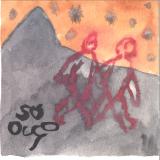
Genre-blending songwriter, arranger, and guitarist Wolfgang Pérez is set to release his highly anticipated new album Só Ouço in July 2025 on Hive Mind. Known for his unique fusion of influences, the German-Spanish artist first captured attention with his 2021 debut WHO CARES WHO CARES (Fun In The Church), followed by the critically acclaimed Spanish-language album AHORA (BAUMUSIK, 2024).
Só Ouço is the fruit of an 18-month creative residency in Rio de Janeiro, where Pérez collaborated with a group of young Brazilian musicians. Deeply inspired by the city's sounds and rhythms, the album marks an exciting chapter in Pérez’s evolving artistic journey.
In 2022, Wolfgang Pérez arrived in Rio de Janeiro on a university exchange to study composition, and quickly found himself immersed in the city’s rich musical landscape. Introduced early on to Rio icons like Thiago Nassif, Arto Lindsay, and Ana Frango Elétrico, what began as a semester turned into a transformative three-semester stay. Pérez absorbed the city's contrasts - it's beauty, its people, it's chaos and violence, all it's contradictions and life - while deeply studying Brazilian music at UFRJ/UNIRIO under the guidance of masters Josimar Carneiro, Marcello Gonçalves and Almir Cortes.
Wolfgang spent the first 6 months or so soaking in as much as possible, going to shows, to the baile funk parties, walking the streets, hiking the mountains in and around Rio, listening to music, making friends, learning where to go and where not to, learning the language, learning the slang, incorporating the culture. He used the time to forget himself in the vibrance of the city.
After this the band came together through a series of chance encounters and happy accidents...some loose jam sessions led to shows around Rio, where Wolfgang, alongside Luis Magalhães (bass), Pedro Fonte (drums) and Paulo Emmery (electric guitar), started to flesh out some of Wolfgang's compositions. At a show at Audio Rebel they met Angelo Wolf (owner of Wolf Estúdio and engineer for artists such as Bala Desejo, Dora Morelenbaum, Zé Ibarra, Marcos Valle, Antonio Neves and Ana Frango Elétrico); moved by the music, Wolf offered Pérez residency and studio time at Wolf Estúdio, providing the foundation for Só Ouço. Angelo was a catalyst for the production of Só Ouço, his openness and generosity helping to shape the sound of the record. Carol Maia, a young guitarist, lyricist and singer brought a sensitivity and tenderness to the songs, while Antonio Neves helped to pull together the brass and woodwind players who would complete the lush sound of the album.
Meticulously arranged, and beautifully composed, Só Ouço is a joy to listen to and surprising at every turn. Classic songwriting and cutting edge production blend to produce an album that is by turns tender and gentle, abrasive and unsettling, a joyful celebration of life in all its complexity."
- A1: I Wish I Could Go Travelling Again, Songwriter – Jim Tomlinson, Kazuo Ishiguro
- A2: Bonita, Songwriter – Antonio Carlos Jobim, Gene Lees, Ray Gilbert
- A3: Craigie Burn, Songwriter – Jim Tomlinson, Kazuo Ishiguro
- A4: Les Voyages, Songwriter – Raymond Lévesque
- A5: American Tune, Songwriter – Paul Simon
- B6: Tango In Macao, Songwriter – Jim Tomlinson, Kazuo Ishiguro
- B7: Blackbird, Arranged By – Art Hirahara, Songwriter – Lennon-Mccartney
- B8: My Ship, Songwriter – Ira Gershwin, Kurt Weill
- B9: Imagina, Songwriter – Antonio Carlos Jobim, Chico Buarque
- B10: Landslide, Songwriter – Stevie Nicks
- A1: Elton John - "Goodbye Yellow Brick Road
- A2: Paul Mccartney & Wings - "Live & Let Die
- A3: Slade - "Cum On Feel The Noize
- A4: T Rex - "20Th Century Boy
- A5: Sweet - "Blockbuster
- A6: Mud - "Dyna-Mite
- A7: Wizzard - "See My Baby Jive
- A8: 10Cc - "Rubber Bullets
- B1: John Lennon - "Mind Games
- B2: Bruce Springsteen - "Blinded By The Light
- B3: Billy Joel - "Piano Man
- B4: Carly Simon - "You're So Vain
- B5: Paul Simon - "Take Me To The Mardi Gras
- B6: Stealers Wheel - "Stuck In The Middle With You
- B7: Elvis Presley - "Always On My Mind
- C1: Roberta Flack - "Killing Me Softly With His Song
- C2: Marvin Gaye - "Let's Get It On
- C3: Harold Melvin & The Blue Notes - "If You Don't Know Me By Now" (Feat Teddy Pendergrass)
- C4: The Spinners - "Could It Be I'm Falling In Love
- C5: The O'jays - "Love Train
- C6: The Temptations - "Papa Was A Rollin' Stone
- C7: Ike & Tina Turner - "Nutbush City Limits
- D1: Dawn - "Tie A Yellow Ribbon Round The Ole Oak Tree" (Feat Tony Orlando)
- D2: Gilbert O'sullivan - "Get Down
- D5: Simon Park Orchestra - "Eye Level" (Theme From The Tv Series Van Der Valk)
- D6: Shirley Bassey - "Never Never Never
- D7: Diana Ross - "Touch Me In The Morning
- D8: Billy Paul - "Me & Mrs Jones
- D9: Gladys Knight & The Pips - "Help Me Make It Through The Night
- E1: Paul Mccartney & Wings - "My Love
- E2: Kiki Dee - "Amoureuse
- E3: Fleetwood Mac - "Albatross
- E4: Electric Light Orchestra - "Roll Over Beethoven
- E5: Thin Lizzy - "Whiskey In The Jar
- E6: Free - "Wishing Well
- E7: Faces - "Cindy Incidentally
- E8: Bob Dylan - "Knockin' On Heaven's Door
- F1: Sweet - "The Ballroom Blitz
- F2: Suzi Quatro - "Can The Can
- F3: Alvin Stardust - "My Coo Ca Choo
- F4: Mott The Hoople - "Roll Away The Stone
- F5: Roxy Music - "Street Life
- F6: David Essex - "Rock On
- F7: Wizzard - "I Wish It Could Be Christmas Everyday
- F8: Slade - "Merry Xmas Everybody
- D3: Olivia Newton-John - "Take Me Home Country Roads
- D4: Peters & Lee - "Welcome Home
- A1: Porto Feliz (Mozar Terra)
- A2: Janeiro (Ion Muniz)
- A3: Serena (Steve Sacks
- B1: A Chegada (Dom Salvador)
- B2: Para Ana (Ricardo Dos Santos)
- B3: Pra Nova (Aloisio Aguiar)
- B4: Constelação (Alfredo Cardim)
- C1: Ascensão (Mozar Terra)
- C2: Clodes (Alfredo Nascimento)
- C3: Naquela Base (Guilherme Vergueiro)
- D1: Atlantico (Ricardo Dos Santos)
Gatefold 2LP
Far Out Recordings proudly presents a landmark discovery in Brazilian jazz: the long lost album by drumming pioneer Edison Machado. Recorded in New York City in early 1978 but never released, Edison Machado & Boa Nova captures a pivotal figure in Brazilian music history at the height of his artistic powers.
Combining North and South American jazz traditions with Machado's revolutionary samba innovations, Edison Machado & Boa Nova represents a triumph against the odds. After facing persecution under Brazil's military dictatorship and being forced to sell his drum kit in 1976, Machado found renewed creative purpose in New York with the Boa Nova ensemble. The resulting album captures the essence of his genius - sophisticated yet wild, controlled yet daring, leading an ensemble of some of the best jazz, samba and bossa nova players of the day.
At just fifteen years old, Machado revolutionized Brazilian music through an accident that would change everything - when his snare drum broke during a performance, he began playing samba rhythms on the cymbal. This innovation, known as "samba no prato" (samba on the cymbals), brought new layers of dynamism to samba and proved instrumental in the development of bossa nova alongside contemporaries like Antonio Carlos Jobim and João Gilberto.
A complex and passionate figure, Machado was notorious for his militant perfectionism and "attacking" style of drumming. Having spent some years of his youth in the Brazilian army, musicians often remarked that he played as if he were at war. But his innovative style, while exhibiting complete control and sophistication, somehow so often danced right on the edge of chaos and wild abandon.
After making his name in Rio's legendary Beco das Garrafas (Bottles Alley) in the 1950s and early '60s, Machado went on to form Bossa Três - the world's first instrumental bossa nova group. His influence spread internationally through collaborations with Stan Getz, Sergio Mendes, Antônio Carlos Jobim, Milton Nascimento, and Chet Baker, while his 1964 album Edison Machado É Samba Novo stands as a masterpiece of Brazilian jazz.
At 80 minutes in length, Edison Machado & Boa Nova, the lost 1978 New York sessions, is a singular achievement in Brazilian jazz. The format itself is a rarity in the canon. It’s packed full of exceptional technical precision and creative vitality, with sophisticated arrangements and masterful improvisation from its exceptional sextet of Brazilian and US musicians: Paulinho Trompete (flugelhorn/trumpet), Ion Muniz (tenor saxophone), Steve Sacks (baritone saxophone), Mozar Terra (piano), and Ricardo dos Santos (double bass).
The album features unheard compositions by Brazilian masters Dom Salvador (Salvador Trio, Harry Belafonte, Edu Lobo), Guilherme Vergueiro (Raul De Souza, Leon Ware, Joyce), Aloisio Aguiar (Arthur Verocai, Airto) amidst the plethora of captivating original material by the members of the Boa Nova ensemble.
Born in Recife, Brazil, and currently residing in Lisbon, Sam Nóbrega is a singer-songwriter, multi-instrumentalist, arranger, and producer.Influenced by the Brazilian melodies his parents sang and listened to at home and on the radio, and driven by his love for Brazilian folk songs, street culture, and genres and movements like samba funk, forró, Ijexá, Manguebeat, and Bossa Nova, Sam embarked on a journey of musical self-discovery. In 2017, he took the stage with his first shows presenting his original music, performing at the Misturada festival in Florianópolis, southern Brazil, and at renowned venues in his hometown. However, it was in 2019 that Sam Nóbrega unveiled his debut single, "A Vida Vai e Volta," showcasing his instrumental prowess in a live video on top of a building. Subsequent releases like "Ruas Desertas," an independent release during the pandemic, demonstrated Sam's versatility.
His debut album "Ponta de Dois Lados," produced by Sam and Pedro Diniz, is slated for release by the British label Freestyle Records late November 2024. It is a rich sonic tapestry of Brazilian culture, blending traditional and popular elements with an indie and contemporary touch, creating an intriguing fusion of old and new sounds. Influences from João Donato, Marcos Valle, Milton Nascimento, Jorge Ben, Gilberto Gil, Novos Baianos, to the Manguebeat, Tropicalismo, and Vanguarda Paulista movements.
Pique is the sensational debut solo album from Dora Morelenbaum, one of the key talents spearheading Brazil’s new musical wave. A member of the Latin Grammy award-winning band, Bala Desejo, Dora showcases a new side to her solo productions on this special LP. Whereas Dora’s first solo EP, Vento de Beirada, was a leap of faith, Pique sees her soaring as one of Brazil’s standout stars, emboldened, emphatic but ever elegant. Building bridges between past and present, it’s a funkier, more groove-based affair, weaved together with those signature, slower, celestial tracks. Touching on disco, MPB, soul, R&B and jazz, the album is enriched with an indie pop aesthetic courtesy of fellow Brazilian star and co-producer, Ana Frango Elétrico.
With an ethereal, enveloping air few can match, Dora’s gift shines through both the serene and the spirited songs contained within. The blissful, sun-soaked ‘Não Vou Te Esquecer’ opens, before the funk-fuelled, feel-good ‘Venha Comigo’ and ‘Sim, Não.’ give a glimpse of the creativity bursting from the production partnership between Dora and Ana Frango Elétrico. Elsewhere, the album reclines into hazy lean-back realms via ‘A Melhor Saída’ and ‘Petricor’, virtuoso jazz funk in the form of ‘VW Blue’ and radiant MPB through the album’s title track ‘Pique’.
The drumming is tight, fresh and swung, the horns and strings deftly arranged, as funk-driven basslines and strutting guitars mesh with playful production touches that give an added vibrancy to the record. It is an album that exhibits every side of Dora and one she has been involved in from the ground up, from the songwriting, singing, arrangement and production to booking the studio time and sourcing the artwork designer, Maria Cau Levy.
An exchange of musical ideas powers every great scene and Rio’s contemporary landscape is no different - a family of interconnected musicians and friends that collaborate on each other’s productions. Pique is graced by a wealth of these leading Brazilian lights including her Bala Desejo bandmates Lucas Nunes, Julia Mestre and Zé Ibarra, as well as Guilherme Lirio, Alberto Continentino and Tom Veloso to name just a handful. This exchange crosses generations merging tradition with modernity. In a full circle moment, Dora’s parents Paula and Jaques Morelenbaum, who featured in countless recordings from Tom Jobim's Nova Banda and Ryuichi Sakamoto to Gal Costa and Gilberto Gil, join on the album through backing vocals and arrangement.
Pique sees Dora embrace a freedom through fresh forms, showcasing the depth and diversity of her creative artistry. An infinitely listenable release that nods to Brazilian greats like Gal Costa, Banda Black Rio and Lincoln Olivetti, fused with the indie pop edge of Ana’s production. The result is truly unique and sure to be a future Brazilian classic.
Pique is the sensational debut solo album from Dora Morelenbaum, one of the key talents spearheading Brazil’s new musical wave. A member of the Latin Grammy award-winning band, Bala Desejo, Dora showcases a new side to her solo productions on this special LP. Whereas Dora’s first solo EP, Vento de Beirada, was a leap of faith, Pique sees her soaring as one of Brazil’s standout stars, emboldened, emphatic but ever elegant. Building bridges between past and present, it’s a funkier, more groove-based affair, weaved together with those signature, slower, celestial tracks. Touching on disco, MPB, soul, R&B and jazz, the album is enriched with an indie pop aesthetic courtesy of fellow Brazilian star and co-producer, Ana Frango Elétrico.
With an ethereal, enveloping air few can match, Dora’s gift shines through both the serene and the spirited songs contained within. The blissful, sun-soaked ‘Não Vou Te Esquecer’ opens, before the funk-fuelled, feel-good ‘Venha Comigo’ and ‘Sim, Não.’ give a glimpse of the creativity bursting from the production partnership between Dora and Ana Frango Elétrico. Elsewhere, the album reclines into hazy lean-back realms via ‘A Melhor Saída’ and ‘Petricor’, virtuoso jazz funk in the form of ‘VW Blue’ and radiant MPB through the album’s title track ‘Pique’.
The drumming is tight, fresh and swung, the horns and strings deftly arranged, as funk-driven basslines and strutting guitars mesh with playful production touches that give an added vibrancy to the record. It is an album that exhibits every side of Dora and one she has been involved in from the ground up, from the songwriting, singing, arrangement and production to booking the studio time and sourcing the artwork designer, Maria Cau Levy.
An exchange of musical ideas powers every great scene and Rio’s contemporary landscape is no different - a family of interconnected musicians and friends that collaborate on each other’s productions. Pique is graced by a wealth of these leading Brazilian lights including her Bala Desejo bandmates Lucas Nunes, Julia Mestre and Zé Ibarra, as well as Guilherme Lirio, Alberto Continentino and Tom Veloso to name just a handful. This exchange crosses generations merging tradition with modernity. In a full circle moment, Dora’s parents Paula and Jaques Morelenbaum, who featured in countless recordings from Tom Jobim's Nova Banda and Ryuichi Sakamoto to Gal Costa and Gilberto Gil, join on the album through backing vocals and arrangement.
Pique sees Dora embrace a freedom through fresh forms, showcasing the depth and diversity of her creative artistry. An infinitely listenable release that nods to Brazilian greats like Gal Costa, Banda Black Rio and Lincoln Olivetti, fused with the indie pop edge of Ana’s production. The result is truly unique and sure to be a future Brazilian classic.
Ein neu aufgenommenes 12-Track-Album mit einer klassischen Sammlung der stärksten Songs aus Gilberts umfangreichem Katalog der letzten 55 Jahre - darunter auch der brandneue Titel "A Kiss is A Kiss", aufgenommen im Lafayette, King's Cross, Ende 2023. Die Idee zu Songbook entstand nach O'Sullivans Barbican-Show im Jahr 2022 (bei der Tim Burgess von "The Charlatans" mit ihm "Nothing Rhymed" im Duett performte). BMG hatte die Idee und schlug O'Sullivan vor, das Album so aufzunehmen, dass es die Instrumentierung und das Zusammenspiel zwischen ihm und dem Gitarristen Bill Shanley gekonnt einfängt. Gilbert O'Sullivan, der als "Songwriter der Songwriter" beschrieben wird, hat sich bei seinen musikalischen Kolleg*innen eine große Fangemeinde erspielt, darunter; Paul Weller, Elton John, Nina Simone, Mick Hucknall, Ron Sexmith, The Lemon Twigs, Michael Bublé und Diana Krall.
Instrumental rock is alive is the motto of the VAL EXPERIENCE BAND, the new project from
rock-metal guitarist and composer Valéry Granson (aka Val). As a fan of instrumental rock,
which reached its peak in the 80s and 90s and still fascinates him, he decided to record his
first solo album, OSMIUM.
His major influences lie somewhere between Joe Satriani, Steve Vai, Andy Timmons, Joey
Tafolla , Ritchie Kotzen, Jeff Beck , Jimi Hendrix, Paul Gilbert, Eric Johnson, Santana, Queen,
Frank Zappa and many others. Instrumental rock is alive...
The VAL EXPERIENCE BAND is a project worth discovering, whether on album or in concert,
for an experience that will not leave you indifferent.
Repress!
Far Out Recordings Proudly Presents The 1975 Self-titled Debut Album From Brazilian Vocalist And Bossa Nova Luminary Emilio Santiago. Nicknamed 'the Nat King Cole Of Brazil', Santiago Was A Master Bossa Balladeer And A Top-class Crooner. But He Is Known Equally For His Brazilian Funk, Soul And Boogie Classics. One Of His Best Know Is Album Opener 'bananeira', A Party-starting Version Of The Song Originally Written By Joao Donato And Gilberto Gil. 'brother' Is A Smooth-grooving Killer With Great Horn Arrangements And A Huge Backing Choir, While 'la Mulata' Is A Soulful, Swinging Salsa Stepper.
Originally Released On The Cid Label, The Album Showcases The Full Range Of Emilio's Talents, While Paying Homage To Some Of Brazil's Greatest Composers, Including Jorge Ben, Marcos And Sergio Valle And Ivan Lins Among Others.
The Credits On The Album Are A 'who's Who' Of Brazil's Greats, With João Donato On Keys, Wilson Das Neves, Ivan 'mamão' Conti And Paulinho On Drums, Durval Ferreira, Carlos Roberto Rocha And Helio Delmiro On Guitar, Ariovaldo, Orlandivo, And Chacal On Percussion, Danilo Caymmi On Flute, A Brass Section Featuring Victor Assis Brasil, Edson Maciel And Jesse Sadoc, And Backing Vocals From Jaime And Nair, Lúcia Lins, Jurema And Marcio Lott.
Die Multi-Platin-Rockband MR. BIG veröffentlicht ihr zehntes Studioalbum mit dem treffenden Titel "Ten"! Inmitten ihrer letzten Tournee - THE BIG FINISH - wollten sich MR. BIG, inspiriert von den unzähligen Fans, die im vergangenen Jahr ihren Abschied mit ihnen teilten, mit einem brandneuen Studioalbum verabschieden. Nach mehr als drei Jahrzehnten musikalischer Partnerschaft zünden Martin,
Gilbert und Sheehan mit Hilfe des Newcomers Nick D'Virgilio noch einmal den Funken und nehmen mit dem kommenden "Ten" eine neue Form an.
Das gesamte Album wurde sowohl live im Studio als auch im Tourbus aufgenommen. Die erste Single und das dazugehörige Video aus "Ten", "Good Luck Trying", ist ein lauter, rauer 70er-Jahre-Blues-"Rock"-Song, der Einflüsse von MR. BIGs frühesten musikalischen Inspirationen, gefolgt von dem aus der Feder von Paul Gilbert stammenden Up On You" - ein geradliniger Stomp-Rocker!
As mood changers go, this track is up there with the best. Last year whilst DJing with miche at Shapes festival in the snow-capped mountains of Switzerland, a breathtaking yet ominous Alpine sky suddenly became a picture postcard moment. The clouds parted and a double rainbow formed, as miche dropped Studio Rio's bossa nova remake of Bill Withers’ all-time classic 'Lovely Day'. From there, the dancefloor shifted gears and morphed into full-swing feel-good vibes, in a beautiful, spontaneous moment nobody could have planned for.
Mr Bongo now proudly presents a reissue of this brilliant, bossa-channelling Bill Withers reinterpretation from Studio Rio’s 2014 release ‘The Brazil Connection’. Masterminded by the German Grammy award-winning Berman Brothers, the project was born out of their deep love of Brazilian music. “Our goal was to bring the Brazilian joie de vivre to iconic performances by well-known artists. What would these classic songs sound like had they been recorded in the studios of Rio de Janeiro in the first place, with the best Brazilian musicians and arrangers?” the brothers reflect.
Capturing the life force of Brazil, the beating heart that is its music, they set out to find the musicians who would fit best with their concept. Landing in Rio in 2013 a series of coincidences led to them being introduced to their idols Marcos Valle and Roberto Menescal, who both agreed to come on board. The Berman Brothers also wanted to find some of the musicians who recorded with one of Brazil’s most influential composers Tom Jobim. “Fifty years after Jobim made the music that really defines bossa nova, we found that many of his sidemen were still active, including Paulo Braga of Jobim’s famed rhythm section. It was magic; everything just fell into place.”
There's no question that the original of ‘Lovely Day’ is up there as one of the most feel-good, spirit-lifting anthems of all time. Here the brothers, with the help of a whole host of Brazil’s finest musicians, rework Bill’s soul-fuelled groove into a bossa nova slice of sunshine. With the blessing of Bill and Sony, they were given access to the original multitracks so they could incorporate Bill’s vocals perfectly into the new arrangement.
Joy-injected horns and bouncing double bass blend with the smile-inducing samba flavour of Pretinho da Serrinha’s cavaquinho playing. Tying it all together Torcuato Marinao who worked with the likes of Gal Costa, Gilberto Gil and Caetano Veloso, completes the line-up as arranger of the songs.
The perfect end-of-the-night track, mood lifter or soul warmer, remakes don’t get much better than this.
- Fred Astaire - Cheek To Cheek
- Louis Armstrong & His Orchestra - When You're Smiling
- Nat "King" Cole - My Baby Just Cares For Me
- Vic Damone - Let's Fall In Love
- Tony Bennett - I'm A Fool To Want You
- Gene Kelly - Singin' In The Rain
- Chet Baker - I Fall In Love Too Easily
- Frank Sinatra - I've Got You Under My Skin
- Perry Como - Papa Loves Mambo
- Sammy Davis Jr. - Something's Gotta Give
- Frankie Laine - I Can't Give You Anything But Love, Bab
- Johnny Mathis - Wonderful! Wonderful!
- Cab Calloway - Minnie The Moocher (Theme Song)
- Bing Crosby - Autumn Leaves
- Dean Martin - Sway (Quien Sera)
- Harry Belafonte - Day O (The Banana Boat Song)
- Bob Mcfadden & Dor - The Beat Generation
- Paul Anka - Put Your Head On My Shoulder
- Bobby Darin - Beyond The Sea
- Joao Gilberto - Chega De Saudade
- Mark Murphy - Firefly
- Oscar Brown Jr - Dat Dere
- Louis Prima, Sam Butera, Gia Malone & The Witnesses - S
- Mel Tormé - Comin' Home Baby
- Andy Williams - Moon River
- Leon Thomas - Song For My Father
- Brook Benton - Love Me Or Leave Me
- Bobby Cole - A Perfect Day
- A1: Antonio Carlos Jobim& Roberto Paiva - Um Nome De Mulher
- A2: Maysa - Outravez
- A3: Carlos Lyra - Ciúme (Dá Um Geito)
- A4: Sérgio Ricardo - Maxima Culpa
- A5: Silvia Telles - Sóemteusbraços
- A6: João Gilberto - Brigas, Nuncamais
- A7: Lúcioalves - A Sobrinha Da Judite (On The Sunny Side Of The Street)
- A8: Johnny Alf - Rapaz De Bem
- A9: Elizete Cardoso &Moacyrsilva -Palhaçada
- B1: Paulo Alencar & His Brazilian All-Stars - Ideas
- B2: Laura Villa - Corcovado
- B3: Walter Santos - Samba Só
- B4: Agostinho Dos Santos - A Felicidade
- B5: Shorty Rogers & His Giants - Chega De Saudade (No More Sadness)
- B6: Stan Getz & Charlie Byrd - O Pato
- B7: Sérgio Ricardo - Pernas
- B8: Lalo Schifrin - Bossa Em Nova York
The Music Lovers collection brings you a cool selection of Bossa Nova hits for our greatest plaisure!
- A1: Samba De Orfeu
- A2: Manha De Carnaval
- A3: Nosso Amor
- A4: Felicidade
- B1: Cast Your Fate To The Wind
- B2: Moon River
- B3: Alma-Ville
- B4: Since I Fell For You
- C1: Samba De Orfeu (Short Version: Take 1, Set 3, Previously Unreleased)
- C2: Samba De Orfeu (Long Version: Take 1, Set 3, Previously Unreleased)
- C3: Manha De Carnaval (Take 1, Set 3, Previously Unreleased)
- C4: Manha De Carnaval (Take 2, Set 3)
- D1: Nosso Amor (Take 1, Set 3, Previously Unreleased)
- D2: Nosso Amor (Take 2, Set 4, Previously Unreleased)
- D3: Felicidade (Take 2, Set 2)
- D4: Felicidade (Take 4, Set 3 Previously Unreleased)
- E1: Cast Your Fate To The Wind (Take 2, Previously Unreleased)
- E2: Cast Your Fate To The Wind (Take 3)
- E3: Cast Your Fate To The Wind (Take 5, Previously Unreleased)
- E4: Alma-Ville (Take 2, Previously Unreleased)
- E5: Since I Fell For You (Take 3, Previously Unreleased)
- F1: Jitterbug Waltz (Take 1, Previously Unreleased)
- F2: Jitterbug Waltz (Take 1A, Previously Unreleased)
- F3: Jitterbug Waltz (Take 2A, Previously Unreleased)
Diese luxuriöse 3-LP erweitert das bahnbrechende Werk des Vince Guaraldi Trios, zu dem auch der Grammy®-gekrönte Hit ”Cast Your Fate to the Wind” gehört, erweitert um 16 Bonustracks, darunter
alternative Takes und bisher unveröffentlichte Musik und neue Linernotes.
Die Aufnahmen wurden von Plangent Processes übertragen und von Paul Blakemore neu gemastert. Die Sammlung enthält außerdem
neue, ausführliche Liner Notes des Jazz-Autors Andrew Gilbert (San Francisco Chronicle, San Jose Mercury News, KQED Arts).
Auch ohne sein Lied ”Cast Your Fate to the Wind”, ein echter und allzu seltener Instrumentalhit, war Guaraldis Album ”Jazz Impressions of Black Orpheus” von 1962 ein Meilenstein, der ein Trio mit einem
einzigartig verführerischen Sound vorstellte. Die Kombination aus geschliffener Lyrik, rhythmischer Subtilität und exquisiter dynamischer Kalibrierung zeichnete es aus, aber die Wirkung der Gruppe ergab sich auch aus ihrem Repertoire.
Guaraldi war nicht der erste amerikanische Jazzkünstler, der sich mit dem brasilianischen Liedgut auseinandersetzte.
Aber Jazz Impressions war ein früher Vorbote der allgegenwärtigen, beispiellosen und dauerhaften Übernahme des Bossa Nova (was auf Portugiesisch ”neue Sache” oder ”neue Welle” bedeutet) durch die Jazzszene.
A joint release between Discos Nada & Litoral. Alcides Neves’ unique second LP ‚Des (Trambelhar) Ou Não’ is reissued for the first time on vinyl, alongside his first release ‚Tempo de Fratura‘.
Somewhat of a concept album, this LP was conceived as having a predominantly experimental A-side and a more folky B-side, with songs influenced by Alcides’ native Northeastern Brazil. Alcides chose to release his second record independently as well, owing to the risk-averse nature of the labels at the time. Indeed, rather than adapting to the demands of the labels and making more romantic or commercial music, Alcides went in the opposite direction and released the most experimental record of his career.
The result is an album with distinct identities on each side but with an experimental bent throughout. The LP’s sounds are reflected by its striking cover, which collates some of Alcides’ artistic heroes - Frank Zappa, Gilberto Gil, Jimi Hendrix, Arnold Schönberg, Igor Stravinsky (to whom he also dedicated a song on the LP) among others, above an artwork in the style of Northeastern Brazilian folk art.
By blending traditional regional Northeastern elements with an experimental approach and influences from 20th century classical music, Alcides Neves crafted one of the most unique Brazilian records.
Carefully remastered by Paulo Torres with updated original artwork, the record is reissued in a gatefold sleeve including a promotional image from the time of release. This LP furthermore includes an insert with a text written by the journalist and researcher Bento Araujo, editor of the bimonthly publication ‚Poeira Zine‘ and author of the ‚Lindo Sonho Delirante‘ series of books.
'Tempo Sem Tempo' is the fifth studio album by São Paulo based clarinet player, singer and composer Joana Queiroz, now available on vinyl for the first time outside of Brazil.
It is indeed a timeless record. A cocooning blend of looped reeds and low-key electronics holding melodies and lyrics.
When Joana sings, it's with noble restraint and grace, as can be heard on four songs including Gilberto Gil's 'Seu Olhar' and 'Dois Litorais' by her friend and Quartabê band mate Mariá Portugal.
Standing out on 'Tempo Sem Tempo' is a wistful beauty that makes it easy to immerse oneself in the intimate vastness of this album.
- 1: Love Casualty
- 2: Blue Anchor Bay
- 3: Let Bygones Be Bygones (Featuring Mick Hucknall)
- 4: Body And Mind
- 5: What Are You Waiting For
- 6: Let Me Know
- 7: Take Love (Featuring Kt Tunstall)
- 8: Back And Forth
- 9: If Only Love Had Ears
- 10: You Can't Say I Didn't Try
- 11: You And Me Babe
- 12: Hey Man
- 13: Don't Get Under Each Other’s Skin
Black Vinyl[27,10 €]
Gilbert O’Sullivan, one of the greatest singer-songwriters of his generation will return in 2022 with his new studio album, following the release of his Ethan Johns-produced, self-titled 2018 album which was awarded four-stars in MOJO and Q Magazine as well as rave notices in Uncut and the Sunday Times.
Gilbert’s twentieth studio album finds him working with a new producer, the revered Andy Wright (Simple Minds, Simply Red, Eurythmics and Jeff Beck) recording with a full band at London’s famous RAK Studios. The direction of the album is an organic and raw affair, featuring a mix of ballads as well as upbeat songs, all written by an inimitable master craftsman. In a unique addition to this new album, Gilbert O’Sullivan has collaborated on duets with Mick Hucknall (Simply Red) and KT Tunstall.
Gilbert O’Sullivan’s unique blend of melodic craftsmanship, witty wordplay, topical acuity and surrealist humour has given him an enduring and endearing career. His song writing knack has outlived and transcended fashion, global million-sellers, critical acclaim, and an occasional tendency to reclusiveness. Now recognised as one of our great singer-songwriters, he’s been championed in recent years by everyone from Paul Weller, Nina Simone, Mick Hucknall, Squeeze’s Difford & Tilbrook, Neil Diamond to Gary Barlow (whose Crooner Sessions Gilbert duetted on earlier this year), Empire Of The Sun, Boy George and The Charlatans’ Tim Burgess whose acclaimed The Listening Party recently featured Gilbert’s Himself and Back To Front albums.
Gilbert O’Sullivan’s career has spanned 50 years. His first single success Nothing Rhymed was released in 1970 and almost overnight it achieved Top 10 status In the UK and Europe charts.
His debut album Himself was littered with the most perfect examples of his art and craftsmanship. His second 1972 “Back To Front” firmly cemented Gilbert amongst the world’s best. Top 10 singles and no. 1’s around the world including the classic “Alone Again (Naturally)” which topped the US charts for six weeks and earned him three Grammy nominations.
British recognition soon followed with the songs Clair and Get Down reaching the summit of the UK singles charts and his LP Back To Front topping the album charts. In the same year at the 18th Ivor Novello Awards Gilbert was named ‘Song Writer of the Year’. To date he has won three Ivor’s and in recent times performed alongside other artists at BBC Proms in the Park. He has also made three appearances at Glastonbury including the main stage, and toured extensively throughout the UK, Ireland, Europe, Japan and Australia.
- 1: Love Casualty
- 2: Blue Anchor Bay
- 3: Let Bygones Be Bygones (Featuring Mick Hucknall)
- 4: Body And Mind
- 5: What Are You Waiting For
- 6: Let Me Know
- 7: Take Love (Featuring Kt Tunstall)
- 8: Back And Forth
- 9: If Only Love Had Ears
- 10: You Can't Say I Didn't Try
- 11: You And Me Babe
- 12: Hey Man
- 13: Don't Get Under Each Other’s Skin
Clear Vinyl[30,67 €]
Gilbert O’Sullivan, one of the greatest singer-songwriters of his generation will return in 2022 with his new studio album, following the release of his Ethan Johns-produced, self-titled 2018 album which was awarded four-stars in MOJO and Q Magazine as well as rave notices in Uncut and the Sunday Times.
Gilbert’s twentieth studio album finds him working with a new producer, the revered Andy Wright (Simple Minds, Simply Red, Eurythmics and Jeff Beck) recording with a full band at London’s famous RAK Studios. The direction of the album is an organic and raw affair, featuring a mix of ballads as well as upbeat songs, all written by an inimitable master craftsman. In a unique addition to this new album, Gilbert O’Sullivan has collaborated on duets with Mick Hucknall (Simply Red) and KT Tunstall.
Gilbert O’Sullivan’s unique blend of melodic craftsmanship, witty wordplay, topical acuity and surrealist humour has given him an enduring and endearing career. His song writing knack has outlived and transcended fashion, global million-sellers, critical acclaim, and an occasional tendency to reclusiveness. Now recognised as one of our great singer-songwriters, he’s been championed in recent years by everyone from Paul Weller, Nina Simone, Mick Hucknall, Squeeze’s Difford & Tilbrook, Neil Diamond to Gary Barlow (whose Crooner Sessions Gilbert duetted on earlier this year), Empire Of The Sun, Boy George and The Charlatans’ Tim Burgess whose acclaimed The Listening Party recently featured Gilbert’s Himself and Back To Front albums.
Gilbert O’Sullivan’s career has spanned 50 years. His first single success Nothing Rhymed was released in 1970 and almost overnight it achieved Top 10 status In the UK and Europe charts.
His debut album Himself was littered with the most perfect examples of his art and craftsmanship. His second 1972 “Back To Front” firmly cemented Gilbert amongst the world’s best. Top 10 singles and no. 1’s around the world including the classic “Alone Again (Naturally)” which topped the US charts for six weeks and earned him three Grammy nominations.
British recognition soon followed with the songs Clair and Get Down reaching the summit of the UK singles charts and his LP Back To Front topping the album charts. In the same year at the 18th Ivor Novello Awards Gilbert was named ‘Song Writer of the Year’. To date he has won three Ivor’s and in recent times performed alongside other artists at BBC Proms in the Park. He has also made three appearances at Glastonbury including the main stage, and toured extensively throughout the UK, Ireland, Europe, Japan and Australia.
FOR FANS OF:
Airto Moreira, Gilberto Gil, Chick Corea, George Duke, Jorge Ben, Sabrina Malheiros, Hermeto Pascoal, Chico Buarque, Stanley Clarke, Jaco Pastorius, Carlos Santana, Jose Neto, Dizzy Gillespie, Stan Getz, Milton Nascimento
First new studio album in over 15 years by the “Queen Of Brazilian Jazz” Musician line-up includes Airto Moreira, Jose Neto, Diana Purim and Celso Alberti.
One of the all-time greats of Brazilian jazz fusion, Flora Purim, returns with her first studio album in over 15 years, ‘If You Will’, released on Strut on 29th April.
Conceived as a celebration of her music and collaborations, the album explores new compositions alongside fresh versions of Flora’s favourite personal songs and positive lyrics from across her varied career. Title track ‘If You Will’ reprises a song from her inspired collaborations with George Duke: “You will find... good love, real joy, so much peace of mind, if you will…”; the resilient ‘This Is Me’ updates an Airto jam band tune ‘I Don’t Wanna Be Myself Again’; ‘500 Miles High’ marks the heyday of the late Chick Corea’s Return To Forever band and ‘Zahuroo’ interprets a song by Claudia Villela about “a shapeshifting animal creature, a messenger who acts as a bridge between our thoughts and the universe.” A family affair recorded primarily in Curitiba and Sao Paulo, ‘If You Will’ brings together many of Flora’s closest circle of musicians including Airto Moreira, guitarist José Neto, her daughter Diana Purim on vocals and percussionist Celso Alberti.
The album is the latest chapter in Flora’s long, illustrious and varied career. As well as her celebrated partnership with Airto and her early days with Quarteto Novo, Flora has worked with Stan Getz, Gil Evans, Miriam Makeba, George Duke, Chick Corea (as an original member of Return To Forever), Dizzy Gillespie’s United Nation Orchestra, Uruguayan band Opa and many more. Her solo albums on Milestone remain true jazz fusion classics.
‘If You Will’ is released on CD, LP and digital, supported by a full international PR and marketing campaign worldwide. The album was co-produced by Flora Purim and Roberta Cutolo with package photos by Mel Gabardo in Brazil and cover illustration by Gabriela Barbalho.
FOR FANS OF:
Airto Moreira, Gilberto Gil, Chick Corea, George Duke, Jorge Ben, Sabrina Malheiros, Hermeto Pascoal, Chico Buarque, Stanley Clarke, Jaco Pastorius, Carlos Santana, Jose Neto, Dizzy Gillespie, Stan Getz, Milton Nascimento
First new studio album in over 15 years by the “Queen Of Brazilian Jazz” Musician line-up includes Airto Moreira, Jose Neto, Diana Purim and Celso Alberti.
One of the all-time greats of Brazilian jazz fusion, Flora Purim, returns with her first studio album in over 15 years, ‘If You Will’, released on Strut on 29th April.
Conceived as a celebration of her music and collaborations, the album explores new compositions alongside fresh versions of Flora’s favourite personal songs and positive lyrics from across her varied career. Title track ‘If You Will’ reprises a song from her inspired collaborations with George Duke: “You will find... good love, real joy, so much peace of mind, if you will…”; the resilient ‘This Is Me’ updates an Airto jam band tune ‘I Don’t Wanna Be Myself Again’; ‘500 Miles High’ marks the heyday of the late Chick Corea’s Return To Forever band and ‘Zahuroo’ interprets a song by Claudia Villela about “a shapeshifting animal creature, a messenger who acts as a bridge between our thoughts and the universe.” A family affair recorded primarily in Curitiba and Sao Paulo, ‘If You Will’ brings together many of Flora’s closest circle of musicians including Airto Moreira, guitarist José Neto, her daughter Diana Purim on vocals and percussionist Celso Alberti.
The album is the latest chapter in Flora’s long, illustrious and varied career. As well as her celebrated partnership with Airto and her early days with Quarteto Novo, Flora has worked with Stan Getz, Gil Evans, Miriam Makeba, George Duke, Chick Corea (as an original member of Return To Forever), Dizzy Gillespie’s United Nation Orchestra, Uruguayan band Opa and many more. Her solo albums on Milestone remain true jazz fusion classics.
‘If You Will’ is released on CD, LP and digital, supported by a full international PR and marketing campaign worldwide. The album was co-produced by Flora Purim and Roberta Cutolo with package photos by Mel Gabardo in Brazil and cover illustration by Gabriela Barbalho.
“One of the vital pieces in the jigsaw puzzle of ’90s British rock music.” Pat Gilbert, Mojo magazine While his own name has yet to grace an album front cover, for more than a twenty years Gem Archer has been a key contributor to some of the UK’s highest profile guitar bands, beginning with Oasis in 2000, Beady Eye in 2009 and the touring version of Noel Gallagher’s High Flying Birds since 2015.
Before all that there was Heavy Stereo, caught up in the mid ‘90s music maelstrom where their only album ‘Déjà Voodoo’ took its place alongside Paul Weller’s ‘Stanley Road’, The Charlatans’ ‘Telling Stories’, Super Furry Animals’ ‘Fuzzy Logic’, Supergrass’s ‘I Should Coco’, The Boo Radley’s ‘Giant Steps’, Ride’s ‘Carnival Of Light’ – and, of course, ‘Definitely Maybe’ and ‘(What’s The Story) Morning Glory?’ by Oasis. It is easy to understand why any album could get overlooked in such exalted company. ‘Déjà Voodoo’ and the four singles – ‘Sleep Freak’, ‘Smiler’, ‘Chinese Burn’ and ‘Mouse In A Hole’ – all display Gem’s deeply held affection for old-school rock’n’roll values. In 1994/95, the outside world came into sync with his fondness for The Jam, Sly Stone, Hendrix, The Beatles, the Stones, The Small Faces, Motown, Stax, glam rock, punk rock and all other points on the compass of rock’n’roll cool, which coalesced into what became known as Britpop. And while those influences are in ‘Déjà Voodoo’ for all to hear, the album is far from derivative; this is a collection of well-constructed pop songs that still retain their swagger and zest.
Unavailable since it was first released on Creation Records in 1996, this new 25th anniversary 180g clear vinyl edition is a faithful recreation of the original 12-track LP.
- A1: Fred Astaire - Cheek To Cheek
- A2: Louis Armstrong & His Orchestra - When You're Smiling
- A3: Nat King Cole - My Baby Just Cares For Me
- A4: Vic Damone - Let's Fall In Love
- A5: Tony Bennett - I'm A Fool To Want You
- A6: Gene Kelly - Singin' In The Rain
- A7: Chet Baker - I Fall In Love Too Easily
- B1: Frank Sinatra - I've Got You Under My Skin
- B2: Perry Como - Papa Loves Mambo
- B3: Sammy Davis Jr - Something's Gotta Give
- B4: Frankie Laine - I Can't Give You Anything But Love, Baby
- B5: Johnny Mathis - Wonderful! Wonderful!
- B6: Cab Calloway - Minnie The Moocher (Theme Song)
- B7: Bing Crosby - Autumn Leaves
- C1: Dean Martin - Sway (Quien Sera) (Quien Sera)
- C2: Harry Belafonte - Day O (The Banana Boat Song) (The Banana Boat Song)
- C3: Bob Mcfadden & Dor - The Beat Generation
- C4: Paul Anka - Put Your Head On My Shoulder
- C5: Bobby Darin - Beyond The Sea
- C6: Joao Gilberto - Chega De Saudade
- C7: Mark Murphy - Firefly
- C8: Oscar Brown Jr - Dat Dere
- D1: Louis Prima, Sam Butera, Gia Malone & The Witnesses - Shadrack
- D2: Mel Torme - Comin' Home Baby
- D3: Andy Williams - Moon River
- D4: Leon Thomas - Song For My Father
- D5: Brook Benton - Love Me Or Leave Me
- D6: Bobby Cole - A Perfect Day
- A1: Minibus
- A2: Dentist
- A3: Sekt Um 12
- A4: Tacken
- A5: Hood Feat Jackson
- A6: Riny
- A7: Hyena Dancehall
- A8: Butlin’s Minehead Interlude
- A9: Bangface
- 10: 00 Kicks
- A11: Puls
- A12: Soda
- A13: Paradiso
- A14: Kupfer
- A15: U8
- A16: Ohm
- A17: The Germs
- A18: Stadtschloss
- A19: Disc
- A20: Movement Feat Paul St Hilaire
- A21: Keller
- A22: Mean
- A23: Klangkrieg
- A24: Cthulhu Drums
- A27: Devotion Is Such A Strong Word
- A25: Bilbao
- A26: Lockdown
Über zwei Jahre nach der Veröffentlichung von "Who Else" meldet sich das Berliner Duo Modeselektor mit einem ausschließlich aus eigenen Stücken bestehenden Mixtape "Extended" aus 27 neuen Tracks mit einer Gesamtlauflänge von rund 66 Minuten zurück. Angesiedelt im Spannungsfeld von Future Bass, Electro, Techno und Hip-Hop, widmen sich Gernot Bronsert und Sebastian Szary der Dekonstruktion von Musik-Genres, zerlegen diese in ihre atomaren Einzelteile und fügen sie nach Lust und Laune wieder neu zusammen. Als Gäste wirken Jackson & His Computerband sowie der legendäre Dub-Sänger Paul St Hilaire auf zwei Stücken mit. "Extended“ erscheint als CD und Tape. Darüber hinaus werden drei EPs ab Ende April im monatlichen Rhythmus veröffentlicht, die sich jeweils einem Track des Mixtapes mit Gesangsbeiträgen, Neuinterpretationen und Remixen widmen. Zudem hat der Tänzer Corey Scott-Gilbert eine choreografierte Interpretation von "Extended" kreiert, die in Zusammenarbeit mit Krsn Brasko und Tobias Staab in dem 60-minütigen Tanz-Video "Work" mündete, das begleitend zum Release des Mixtapes veröffentlicht wird.
Les Disques du Crepuscule presents Subway, a collection of singles by cult NYC duo Thick Pigeon, originally released on Crepuscule, Factory and Factory Benelux between 1981 and 1991.
Comprised of vocalist Stanton Miranda and instrumentalist Carter Burwell, Thick Pigeon emerged from the downtown New York artrock scene which also spawned Glenn Branca, Bush Tetras, DNA, Arthur Russell and Sonic Youth. Like their chosen name, the duo were typically atypical: Miranda was previously a dancer with the Marthe Graham ballet company, and Carter a film animator and Harvard fine arts/architecture graduate. Very much a studio project, the ‘group’ hardly ever performed live.
Poised and subtle debut single Subway appeared on Crepuscule in January 1981, a connection forged by Miranda’s partner Michael Shamberg. Dog followed a year later, along with wry Christmas single Jingle Bell Rock, before the duo switched to Factory Records, recording debut album Too Crazy Cowboys in Manchester with Stephen Morris and Gillian Gilbert of New Order producing. Released simultaneously on Factory and Factory US in 1984, the album was billed as “a walk through the civilisation of you soul”.
Having now embarked on a career scoring movies (becoming the Coen brothers’ composer of choice), Carter was absent from the next TP project, 1986 dance single Wheels Over Indian Trails, although Morris and Gilbert remained on board as guest musicians. However Miranda and Carter would reunite for a second (and final) leftfield pop album, Miranda Dali, issued by Crepuscule in 1991.
As well as singles Subway, Dog, Jingle Bell Rock, Jess + Bart and Wheels Over Indian Trails, TWI 351 also includes b-sides (Sudan, Tracy + Pansy), album highlights (Crime, Riding) and a second festive track, Blue Christmas, previously issued only on cassette as part of a Factory Christmas card in 1986.
Alongside Stephen Morris and Gillian Gilbert, the stellar cast of guests include Fred Szymanski (of Ike Yard), Ikue Mori (DNA), remixer John Robie, and even artist and event designer Jean-Paul Goude on backing vocals.
Limited to just 500 copies, Subway (Singles) is newly remastered and pressed on transparent violet vinyl, reflecting the original 1981 sleeve artwork by legendary Crepuscule designer Benoit Hennebert. The album includes a free digital copy (MP3).
- A1: John Foxx A Jingle #1
- A2: Thomas Dolby Airwaves
- A3: Repetition Stranger
- A4: Harold Budd Children On The Hill
- A5: The Durutti Column Sleep Will Come
- A6: Martin Hannett The Music Room
- A7: ? The Names Cat
- A8: ? Michael Nyman A Walk Through H
- A9: ? Interview With Brian Eno
- A10: ? John Foxx A Jingle #2
- B1: Un Entretien Avec Jeanne Moreau
- B2: Richard Jobson Armoury Show
- B3: Bill Nelson The Shadow Garden
- B4: The Durutti Column Piece For An Ideal
- B5: A Certain Ratio Felch (Live In Nyc)
- B6: Kevin Hewick & New Order Haystack
- B7: Radio Romance Etrange Affinite
- B8: Gavin Bryars White’s Ss
- B9: Der Plan Mein Freunde
- B10: Bc Gilbert & Graham Lewis Twist Up
- B11: John Foxx A Jingle #3
The cassette (TWI 007) is a faithful reproduction of the 1980 original, complete with PVC wallet, 16 page booklet and tracklist insert.
Les Disques du Crepuscule is proud to present newly remastered vinyl and cassette editions of iconic compilation album From Brussels With Love, which was the very first release on the Crepuscule label back in November 1980 – and is now celebrating its 40th anniversary.
Originally released as a deluxe cassette/book package in a PVC wallet, From Brussels With Love featured 21 exclusive tracks from the international avant-garde and new wave, as well as contributions from the celebrated Factory Records roster. Then, as now, the featured artists include A Certain Ratio, Gavin Bryars, Harold Budd, Thomas Dolby, Dome, The Durutti Column, John Foxx, Martin Hannett, Richard Jobson, The Names, Bill Nelson, Kevin Hewick + New Order, Michael Nyman and Der Plan.
Running for 78 minutes, the cosmopolitan ‘cassette journal’ was curated by Michel Duval, Annik Honore and Wim Mertens, and also includes extended interviews with Brian Eno and legendary French film actress Jeanne Moreau. The cover art by Jean-Francois Octave, with additional graphics by Benoit Hennebert, Marc Borgers and Claude Stassart in the booklet.
From Brussels With Love quickly sold 6000 copies around Europe, earning rapturous reviews in the UK music press. “This is a reminder – without really trying, without being obvious – that pop is modern poetry. Is the sharpest, shiniest collection of experiences. Is always something new” (Paul Morley, NME). More recently, Dan Fox of art magazine Frieze described TWI 007 as “a masterpiece of distinctly northern European post-punk eclecticism.”
To mark the 40th anniversary of From Brussels With Love, Crepuscule will issue 3 remastered editions.
There is also a deluxe 2xCD ‘earbook’ edition (TWI 007 CD) presented as a 10-inch square hardback book, with two full length audio CDs and 60 page book including rare images, posters, sleeve designs and period ephemera, plus a detailed history of the Crepuscule label between 1979 and 1984.
Following the release of Milton Nascimento’s Maria Maria, Far Out Recordings proudly presents Nascimento’s 1980 follow up. With the success of Maria Maria in 1976 behind them, Nascimento reunited with his writing partner Fernando Brant in 1980 to produce another ballet, ‘Ultimo Trem (Last train)’. This time, they chose to tackle a more contemporarily relevant subject, the impact of the closure of a train line that connected certain towns and cities in the North East of Minas Gerais to the coast. “The military government shut down the route and the whole region began to fade away,” explains Milton. “I love train rides” adds the composer, “But today there are almost no trains to Brazil. So when I go to the US and Europe, any time I can, I go by train. The longer the journey the better.”
Featuring much of the same all-star line-up as Maria Maria – including legendary Brazilian musicians Naná Vasconcelos, João Donato, Paulinho Jobim and members of Som Imaginário, amongst many others, like Maria Maria, the album holds what Milton himself considers to be the definitive versions of some of his most beloved tracks, including 'Saídas E Bandeiras' and 'Ponte de Areia'.
The title track, ‘Ultimo Trem’ – performed exquisitely by Zezé Mota with a choir and piano – is a mournful lament about the human consequences of the axed line. The ballet brought great media attention to the campaign against closure. “Most of Fernando’s lyrics have some political tone,” says Milton, “This one helped the area a lot because the politicians grew concerned about the subjects.”
Fernando’s and Milton’s shared passion for the sounds, smells and memories of trains, inspired the soundtrack for the production which premièred in 1980. ‘A Viagem (The trip)’, launched with a train’s steam whistle, sees Milton’s guitar moving to a train’s rhythm. In contrast to the usual lyricism, ‘Bicho Homen (Beastly man)’ and ‘Decreto (Degree)’ are atypically upbeat and funky, their vocals a mesh of wordless male voices resembling the then fashionable Swingles Singers’ renderings of Bach. ‘E Daí? (And so what?)’, and ‘Olho d’Agua (Water’s Eye)’ were both drawn from ‘Clube Da Esquina’. ‘Olho d’Agua’ is mellow and delicate and Milton’s homage to the great voices of Brazil whilst ‘E Daí? (And so what?)’ is a stunning mosaic of voices. The unusual ‘O Velho (The Old Man)’ conjures up an image of an old shaman singing alone into the wind against the cries of nature. Perhaps the most affecting songs are Nascimento’s ‘Itamarandiba’ and ‘Oração (Prayer)’. The latter is a cry for a change in the situation whilst ‘Itamarandiba’ ends with an upbeat, whirling Hammond organ and guitar timepiece. The closing track ‘Ponta de Areia (Sand Edge)’, was based on one of Fernando’s newspaper stories and became one of Milton’s most famous pieces, covered by musicians across the planet, including Wayne Shorter and Earth, Wind and Fire. It reappeared as a ghostly 45-seconds memory on the ‘Milton e Gil’ album, his millennial collaboration with Gilberto Gil.
After 27 years of being locked inside contracts and record company legalities, these sublime songs were finally released in 2003 as a double CD package, along with Maria Maria. Set for its first ever vinyl release for this year’s Record Store Day, on limited edition red vinyl, Ultimo Trem sounds as fresh and relevant now as when Brazilian music was still a South American secret.
To call Marcos Valle 'a legend' of Brazilian music is much more than just easy press-release hype. As singer, writer, musician and record producer, Marcos has played an integral role shaping the sound of the country’s music from the 'golden era' of the 60's and 70's, through to the modern day. Alongside his brother, Paulo Sergio Valle, they have penned a huge catalogue of classic songs, not just for themselves but for other greats such as Elza Soares, Astrud Gilberto, Claudia to name a few.
‘Braziliance!’ takes things back to the early heady days of Marcos’ career with the bright and optimistic sound of Rio's Bossa Nova scene. It includes an instrumental version of ’Crickets Sing For Anamaria’ or 'Os Grilos’ in Portuguese, which would also be re-recorded with vocals. Though only in his early twenties at the time, ‘Braziliance!’ depicts very sophisticated production for a musician so young. Recorded in 1966, produced by Louis Oliveira and Ray Gilberts with arrangements by the very talented Emir Deodato, the album was released on Warner Bros. Records.
The artwork presents a very clean-cut, wholesome looking Marcos but darker things were around the corner for Brazil. The ‘Tropicalica’ movement was on its way and about to shake thighs up both musically and politically.
Unlike some of his Bossa Nova contemporaries, Marcos continued to stay relevant, surfing the changes and adapting to the musical developments that culture and society projected and needed, without comprising his art. Under exclusive license to Light In The Attic Records & Distribution, LLC | Mr Bongo Records.
Born in Cagliari (Sardinia, Italy) in 1975, Irene Nonis started playing the guitar at the age of 13 and wrote her first songs at 17. Her influences come from the American soul, with variations towards jazz and bossa (Sade, Paul Weller, Astrud Gilberto, Johnny Marr). Her voice shines in the two new tracks included in this 7'': "This Love" is a blue-eyed soul track that moves between Northern Soul and Motown, while "Night Stuff" has more of a 70's London nocturnal atmosphere, with a great bass line.