Tangerine Dream haben die elektronische Musik grundlegend beeinflusst, seit Edgar Froese die Band 1967 in West-Berlin gründete. Sie legten den Grundstein für mehrere elektronische Musikgenres wie Ambient und Electronica, inspirierten Musiker und andere Kunstformen und wurden für sieben Grammys nominiert. In den letzten Jahren wurde ihre Musik in beliebten Fernsehserien wie "Stranger Things" und Videospielen wie "Grand Theft Auto" verwendet.
Nach dem Tod von Froese im Jahr 2015 halfen die verbleibenden Bandmitglieder Thorsten Quaeschning, Ulrich Schnauss und Hoshiko Yamane bei der Umsetzung von Edgars Vision eines Konzeptalbums, das versucht, Quantenphysik und -philosophie in Musik zu übersetzen: "Quantum Gate" wurde 2017 unter großem Beifall der Kritiker veröffentlicht.
In neuer Besetzung haben sich Thorsten & Hoshiko mit dem in Berlin lebenden Keyboard-Virtuosen Paul Frick verstärkt. Das Trio hat das Jahr 2021 in seinem Berliner Studio mit der Arbeit an "Probe 6 - 8" verbracht, einem ersten Vorgeschmack auf das kommende komplette Tangerine Dream-Studioalbum, das Anfang 2022 erscheinen soll.
Probe 6 - 8" sieht die klassischen Studioproduktionen und nächtlichen Echtzeit-Kompositionen der Gruppe als Blaupause für sich langsam entwickelnde Ambient-Strukturen, wobei der Sequenzer-getriebene Sound der Band an die frühen 1970er Jahre erinnert und sich mit einer üppigen, kristallinen Glückseligkeit der 1980er Jahre verbindet. Das Trio komponierte und produzierte 'Probe 6 - 8' mit vollem Zugriff auf Edgar Froeses Cubase Arrangements und Otari Tape Archive mit Aufnahmen aus den Jahren 1977 - 2013.
Der erste Track 'Raum' ist eine Anspielung auf die frühen Live-Studio-Performances 'Zeit' und 'Phaedra' der Band, wobei ein markanter schwerer Moog-Bass den Anfang und das Ende dieses 15-minütigen Einführungsstücks markiert. Diese neuen Aufnahmen enthalten auch zwei Remixe - die in Berlin lebende Komponistin und Produzentin Grand River (Aimée Portioli) hat "Raum" ihren unverwechselbaren Sound verliehen und "Continuum" wurde von Berghain Resident und Leisure System Mitbegründer Sam Barker neu abgemischt.
Search:paul west
All Quiet On The Western Front (Im Westen Nichts Neues) is a 2022
German epic anti-war film based on the 1929 novel of the same name by Erich Maria Remarque. All Quiet on the Western Front received positive reviews from critics, with praise directed towards its tone and faithfulness to the source material’s anti-war message.
Set during World War I, it follows the life of an idealistic young German soldier named Paul Bäumer. After enlisting in the German Army with his friends, Bäumer finds himself exposed to the realities of war, shattering his early hopes of becoming a hero as he does his best to survive. The film adds a parallel storyline not found in the book, which follows the armistice negotiations to end the war.
All Quiet On The Western Front received a leading 14 nominations at the 76th British Academy Film Awards (winning seven, including Best Film and Best Original Score) and 9 at the 95th Academy Awards, including Best Picture, Best Adapted Screenplay, and Best International Feature, and Best Original Score.
The score of All Quiet On The Western Front is available as a limited edition of 2000 individually numbered copies on smoke coloured vinyl. The package includes a 4-page booklet with movie stills.
All Quiet On The Western Front (Im Westen Nichts Neues) is a 2022
German epic anti-war film based on the 1929 novel of the same name by Erich Maria Remarque. All Quiet on the Western Front received positive reviews from critics, with praise directed towards its tone and faithfulness to the source material’s anti-war message.
Set during World War I, it follows the life of an idealistic young German soldier named Paul Bäumer. After enlisting in the German Army with his friends, Bäumer finds himself exposed to the realities of war, shattering his early hopes of becoming a hero as he does his best to survive. The film adds a parallel storyline not found in the book, which follows the armistice negotiations to end the war.
All Quiet On The Western Front received a leading 14 nominations at the 76th British Academy Film Awards (winning seven, including Best Film and Best Original Score) and 9 at the 95th Academy Awards, including Best Picture, Best Adapted Screenplay, and Best International Feature, and Best Original Score.
The score of All Quiet On The Western Front is available as a limited edition of 2000 individually numbered copies on smoke coloured vinyl. The package includes a 4-page booklet with movie stills.
Ghost Producer aka Badawi (aka Raz Mesinai aka Bilal ibn Yakub al-Badawi) is a prolific producer and artist who has been on the forefront of underground experimental jazz and electronic music scenes around the world for over thirty years, with a catalog of albums on labels as ROIR, Asphodel and Tzadik under various monikers dating back to the late 1980s.
Ghost Producer released his first albums starting in the late 80’s under the monikers Psy Co. and Ruff Riddim Productions, selling his cassette tapes in NYC. He produced, on average, at least one album per week since 1988 until today. One of the twenty or so monikers was Badawi, later being signed to ROIR Records and releasing the seminal experimental dub, punk albums »Bedouin Sound Clash« and later »The Heretic of Ether« on Asphodel. Spending time as a child between Occupied Jerusalem, the West Bank (Balata) and New York City (Rock Steady Park) during the height of the B-Boy era in the 70s and 80s informed Ghost Producer’s singular sound of heavy driving Sufi rhythms, sonic experiments, percussion, piano playing and sound design which has connected him to a wide variety of artists ranging from Maryanne Amacher to John Zorn, to added elements of darkness to music by such artists as Hanz Zimmer (Black Hawk Down) and rappers Danny Brown (Pneumonia) and Skepta and Double D (Don) among many others.
At age 14, Ghost Producer was discovered by visionary jazz and rock musician, Juma Sultan (Jimi Hendrix) whom later trusted Ghost Producer with producing the archive of over 2000 hours from recordings from »Studio We« and the Free Jazz Loft Movement in NYC in the 60s and 70s. As a composer, he has worked with Kronos Quartet and has had premiers at Carnegie Hall (Cross Fader, The Echo of Decay) and Lincoln Center (String Quartet For Four Turntables). In addition, Ghost Producer has released several albums on John Zorn’s Tzadik label, where he explored producing to the books of Franz Kafka (Before The Law, Resurrections for Goat Skin, Cyborg Acoustics)
As a composer for film, he coined the term »score design» to describe his work in conceiving and producing scores for films with particularly demanding needs, working on such films as A Late Quartet (director Yaron Zilberman composer: Angelo Badalamenti), The Fountain, Black Swan and The Wrestler (Darren Aronofsky/Clint Mansel), Black Hawk Down (Ridley Scott/Hans Zimmer) and many more. In 2014, he was awarded as a fellow in the Sundance Composers Lab.
In 2015, Ghost Producer formed the Underground Producers Alliance, a unique program for developing producers, performers and composers, with co-founders Scotty Hard (Wu Tang Clan, Medeski Martin and Wood, De La Soul), HPrizm aka High Priest (Anti Pop Consortium), Honeychild Coleman (the 1865, The Slits) and Prince Paul (Jungle Brothers, De La Soul), where Ghost Producer produces entire albums with student participation in his master course.
This album, »The Book of Jinn«, is one of many productions done within the course, featuring players/mentors Juma Sultan (percussion), Chandenie (voice) and Shahzad Ismaily (electric bass), with additional student participation from Adam Culbert and Jonah Sollins (aka Goodnight 1500) on synths and percussion as well, then all remixed and rearranged by Badawi into what you hear here, The Book of Jinn.
- A1: Cherie Vico
- A2: Kavudu
- A3: Ejie
- A4: Staring Into The Blues
- A5: Sweet Rainbow
- A6: On My Own
- A7: La Petite
- A8: Je E Moi Le Piano
- A9: Bonne Annee
- A10: Birds Go Die Out Of Sight
Eine Entdeckung für Fans von klassischem World- und Folk-Pop a’la Paul Simon, Van Morrison u.a. „Come Back To Me“ ist nach langer Pause das Album-Comeback von Peter One, in den 1980er Jahren
Folk-Pop-Star in Westafrika. Er spielte er in großen Arenen und erreichte mit TV- und Radioshows ein riesiges Publikum. Anfang der 1990er Jahre entschied er sich, in die USA auszuwandern. Unter dem
Eindruck der damaligen Krise des Musikgeschäftes wechselte er in einen Job in der Krankenpflege, schrieb allerdings weiterhin Songs und spielte Gitarre.
Seine Berühmtheit holte ihn in den USA wieder ein, als dort ein Album von 1985 neu aufgelegt wurde und zur Wiederentdeckung seiner Musik führte. „Come Back To Me“ ist jetzt das offizielle Comeback von
Peter One, mit eingängigen neuen Songs in Englisch, Französisch und Peters afrikanischer Muttersprache.
- Introduction By David Kapralik / My Name Is Barbra
- Much More
- Napoleon
- I Hate Music
- Right As The Rain
- Cry Me A River
- Value
- Lover, Come Back To Me
- Band Introductions
- Soon It's Gonna Rain
- Come To The Supermarket (In Old Peking)
- When The Sun Comes Out
- Happy Days Are Here Again
- Keepin' Out Of Mischief Now
- A Sleepin' Bee
- I Had Myself A True Love
- Bewitched, Bothered And Bewildered
- Who's Afraid Of The Big Bad Wolf?
- I'll Tell The Man In The Street
- A Taste Of Honey
- Never Will I Marry
- Nobody's Heart Belongs To Me
- My Honey's Lovin' Arms
- I Stayed Too Long At The Fair
Every Aspect of the Production Personally Supervised by Barbra Streisand
Mixed by Jochem van der Saag from the Original Analogue Session Tapes & Mastered in 24 bit/96 kHz by Paul Blakemore
Lacquer Pressing Master Created by Bernie Grundman
Pressed at RTI
Tip-On Gatefold Jacket
Deluxe 12-Page Booklet Featuring Barbra's Recollections, the Recording's History & Production, and Performance Photos
The Premiere New York City Nightclub Event of 1962! The Most Anticipated Live Album of 2022!
In the fall of 1960, New York City wasn't the same urban mecca it is today. Neither was eighteen-year old Barbra Streisand, who emerged on the Greenwich Village club scene at a small, cozy venue on West 8th Street called the Bon Soir, where she received rave reviews and wooed the crowd with her incredible performances. Within two years Streisand, whose magnificent interpretations of both standards and quirky, obscure cabaret tunes was a nationwide sensation, was knocking audiences dead with her nightly performance as Miss Marmelstein in David Merrick's I Can Get It For You Wholesale on Broadway.
Sixty years, multiple Grammy, Emmy, Oscar, Tony and Golden Globe awards and nearly two hundred million record sales later, Barbra has for the first time authorized the release of a major portion of her Bon Soir performances, as captured in 1962 by Columbia Records. IMPEX Records - in conjunction with Sony Music Entertainment - is proud to present the audiophile 180-gram vinyl LP and SACD editions of the most sought-after recordings in Barbra's legendary career: Live at the Bon Soir: Greenwich Village, NY - November 1962. This gorgeous album features twenty-four brilliant performances personally selected by Barbra Streisand from the original Bon Soir master tapes and expertly mixed and mastered by Paul Blakemore and Jochem van der Saag, under the supervision of producers Barbra Streisand, Martin Erlichman and Jay Landers.
IMPEX RECORDS has created two versions of this noteworthy release: a two-LP vinyl edition and a 24 bit / 96 kHz SACD. To achieve the best fidelity possible, engineer Paul Blakemore transferred the original three-track session tapes to high-resolution 96/24-bit digital files, which were then mixed by Jochem van der Saag. For mastering, Blakemore used an all-analog signal-processing chain in order to maintain the warmth of the original analogue recordings. To master the vinyl LP edition, IMPEX engaged Bernie Grundman, who has mastered many of Barbra's albums over the last sixty years, to create the lacquer pressing master.
Rich with the club's atmosphere, these historic, essential recordings present a warm, charming portrait of a truly important moment in New York City history and American pop culture. Several years removed from Manhattan's flourishing jazz nightclub scene, tiny clubs such as the Bon Soir began popping up, and served as both a forum and launching pad for some of the finest vocalists and musicians the east coast had to offer.
Because of Barbra's success there, Columbia Records A&R rep David Kapralik decided that the first album from his newly-signed artist would emanate from a setting in which she had become most comfortable: the small stage at the Bon Soir. Producer Mike Berniker and recording engineers Roy Halee and Adjutor "Pappy" Theroux set up the mics and recorders, and for three nights harnessed the electrifying show that Barbra had crafted.
"The recordings we did at the Bon Soir were so authentically 'Barbra.' I produced her first three albums at Columbia, and while they were wonderful accomplishments, I thought that what she did each night at the Bon Soir transcended anything we ever did in the studio." - Mike Berniker
Columbia ultimately decided to bring Barbra into the studio to record her first album, and except for the inclusion of several tracks on compilations through the years, the Bon Soir tapes laid dormant in the vault. Now, through this extraordinary release, everyone can at last enjoy the early sound and style of an icon in-the-making: the same brilliant artist whose performances at the Bon Soir were lauded by everyone from actress Helen Hayes to lyricists Alan and Marilyn Bergman. We invite you to join us for an evening at the fabled Bon Soir. Take a seat, order a drink and revel in the magic that is Barbra. You will not be disappointed!
BBE Music are proud to reissue one of the most elusive and sought-after Afro-Funk LPs of all time: SON OF AFRICA, by REMI KABAKA.
Now a proud 85 years of age and enjoying retirement in America, Remi was the cornerstone of British West African music in the 50s, 60s and 70s, along with Ginger Oloronso Johnson, Fela Kuti and others. But while Ginger played mambo and cha cha cha in Soho clubland and Fela released his early ‘highlife jazz’ records on the Melodisc label, Remi Kabaka was fully ensconced in the UK Rock world, playing sessions and live shows with The Rolling Stones, Paul McCartney, Ginger Baker, Steve Winwood and countless others.
As the 60s became the 70s, Kabaka developed yet another string to his bow: the development of a UK based West African Funk scene, that found its genesis in the legendary Osibisa, but with an influence and an inspiration that spilled over into every contemporary Brit Funk band from Cymande and the Equals to The Average White Band, Matata and beyond.
SON OF AFRICA was originally released by Chris Blackwell’s Island records in 1976, to little acclaim, very few reviews, and with almost no promotion. African music was a hard sell when the 70s Black British record market wanted reggae first and foremost, and with Bob Marley on the books, Island understandably had other priorities at the time. The record disappeared. Until it reappeared in the early 2000s, as a £700-plus collectors’ item.
It’s barely 30 minutes long. But every single minute is drenched with sinuous, spare funk: no spacey psych rock, no disco, no boogie, no over-the-top production: just 90-110 BPM grooves that go straight to the body.
So: whether you’re a turntablist, a hip hop sampler, or just an honest-to-goodness African Funk lover, catch this limited reissue (with full, updated liner notes) while you can. There won’t be another chance.
On Garden Party, Rose City Band"s country psychedelic rock evokes the wide-open spaces of the American west and free spirits who call it home. Led by acclaimed guitarist and vocalist Ripley Johnson, Rose City Band are some of the best players in contemporary rock: pedal steel guitarist Barry Walker, keyboardist Paul Hasenberg, bassist Dewey Mahood (aka Plankton Wat), drummer Dustin Dybvig, and features Sanae Yamada of Moon Duo on Synthesizer. Garden Party is both a celebration of summer and all it brings: friends gathering at backyard BBQs, cold beers on a hot porch, 12-foot sunflowers, and an exaltation of the value and respite of a moment of calm; the pleasures of time in the garden to appreciate the beauty of a contorted carrot, or a morning on a stoop watching a hummingbird. Freedom, contentment, and joy were the sources for the songs; they certainly bring the listener right there. From the soaring guitar solos to the driving rhythms, the elegant pedal steel lines to the organ grooves, Garden Party has a live band"s energy captured in exquisite detail. Garden Party is an invitation, a welcoming hand extended, and a joyous ride. Like all great music, the album taps into the listeners" emotional center and takes them to their happy place - their sunny spot. Recorded at Center for Sound, Light, and Color Therapy in Portland and mixed by John McEntire, the band"s sounds surround and embrace you. Garden Party"s last two tracks feature special guest Sanae Yamada (Moon Duo) who added some synth magic to the final two tracks. Ripley says it best "I always like when an album starts in one place and ends in another" What a beautiful journey it is!
- 01: Eisenhower To The West Side
- 02: Do You Feel Fine?
- 03: Guillotine
- 04: Same
- 05: Money's Ran Off
- 06: Pray To Christ In Heaven
- 07: No Man For No Home
- 08: Last July
- 09: Sister Say
- 10: Dirt
- 11: I Tried
- 12: Summer City
- 13: Jess
- 01: Stay In Line
- 02: Get Your Fix
- 03: On Fear
- 04: Momma's Way
- 05: Herculean House Of Cards
- 06: The Leaving
- 07: In Between - Live
- 08: Ain't Nobody's Fault - Live
- 09: Fool's Gold - Live
- 10: Even Jesus Christ Had Died - Live
- 11: Eisenhower To The West Side (Ballad Reprise) - Live
- 12: Hammer Out The Edges
Gold Vinyl[35,84 €]
Trey Gruber's posthumous debut double LP Herculean House of Cards. A compilation of early demos, studio demos, and live recordings. A tortured songwriter and struggling addict who jolted the tired Chicago DIY scene with his own brand of primal despair, Trey Gruber and his band Parent were on track to join the ranks of Twin Peaks, Mild High Club, and Whitney. His death in 2017 at the age of 26 brought it all to a halt. In his final years Trey wrote and recorded hundreds of previously unheard demos, dandelions in the cracked concrete of 21st century disconnect, an alphabet's worth of which have been compiled by his family and friends for his only album: Herculean House Of Cards. The 26-song 2xLP covers years of material, from home tape recordings, sessions at Mathew Roberts (Mild High Club) & Paul Cherry's home studio, to a studio session with Charles Glanders (Whitney) at Chicago's Foxhall Studios, along with audio taken at The Hideout during his last live performance, among others. Though Gruber was an unrelenting perfectionist who was constantly self-deprecating about his best demos, Herculean House of Cards is a wholly comprehensive and accurate reflection of his infectious charisma and raw songwriting. He had a charmingly distinct way with words but also could be disarmingly vulnerable. Like he was in life, Gruber never shied away from being open with his struggles with alcoholism and addiction. On the vivid opener "Eisenhower to the West Side," he sings in painstaking detail of, "A jail-skin cell, a junkies fight/Corner-boys full of grace/And Jesus Christ full of spite." He told then-future bandmate flautist Rebecca Ridge, "It's not some Lou Reed glorification of drugs _ `makes me feel like a man'_ I talk about the disconnect and the ugliness. They're sad pop songs." But even with the pain and the darkness in his lyrics, Gruber's songs had an unmistakable sense of hope and catharsis.

- A1: Eisenhower To The West Side
- A2: Do You Feel Fine?
- A3: Guillotine
- A4: Same
- A5: Money's Ran Off
- A6: Pray To Christ In Heaven
- A7: No Man For No Home
- A8: Last July
- B1: Sister Say
- B2: Dirt
- B3: I Tried
- B4: Summer City
- B5: Jess
- C1: Stay In Line
- C2: Get Your Fix
- C3: On Fear
- C4: Momma's Way
- C5: Herculean House Of Cards
- C6: The Leaving
- D1: In Between - Live
- D2: Ain't Nobody's Fault - Live
- D3: Fool's Gold - Live
- D4: Even Jesus Christ Had Died - Live
- D5: Eisenhower To The West Side (Ballad Reprise) - Live
- D6: Hammer Out The Edges (Bonus Track)
Black Vinyl[35,84 €]
Trey Gruber's posthumous debut double LP Herculean House of Cards. A compilation of early demos, studio demos, and live recordings. A tortured songwriter and struggling addict who jolted the tired Chicago DIY scene with his own brand of primal despair, Trey Gruber and his band Parent were on track to join the ranks of Twin Peaks, Mild High Club, and Whitney. His death in 2017 at the age of 26 brought it all to a halt. In his final years Trey wrote and recorded hundreds of previously unheard demos, dandelions in the cracked concrete of 21st century disconnect, an alphabet's worth of which have been compiled by his family and friends for his only album: Herculean House Of Cards. The 26-song 2xLP covers years of material, from home tape recordings, sessions at Mathew Roberts (Mild High Club) & Paul Cherry's home studio, to a studio session with Charles Glanders (Whitney) at Chicago's Foxhall Studios, along with audio taken at The Hideout during his last live performance, among others. Though Gruber was an unrelenting perfectionist who was constantly self-deprecating about his best demos, Herculean House of Cards is a wholly comprehensive and accurate reflection of his infectious charisma and raw songwriting. He had a charmingly distinct way with words but also could be disarmingly vulnerable. Like he was in life, Gruber never shied away from being open with his struggles with alcoholism and addiction. On the vivid opener "Eisenhower to the West Side," he sings in painstaking detail of, "A jail-skin cell, a junkies fight/Corner-boys full of grace/And Jesus Christ full of spite." He told then-future bandmate flautist Rebecca Ridge, "It's not some Lou Reed glorification of drugs _ `makes me feel like a man'_ I talk about the disconnect and the ugliness. They're sad pop songs." But even with the pain and the darkness in his lyrics, Gruber's songs had an unmistakable sense of hope and catharsis.
Darling West decamped for a tiny island on Norway’s west coast to begin writing what was to become Cosmos, their fifth studio album. For the first time, the band’s core – married couple Mari and Tor Egil Kreken – have included band members Thomas Gallatin and Christer Slaaen in the songwriting and production process. As a larger united, Darling West has really evolved. Cosmos is indeed the sound of expansion. West coast, cosmic folk, americana… Call it what you will – there are even hints of afro blues on here – but where the band once fit firmly in the folk/americana category, you might as well just call it pop these days. Cosmos was recorded and produced in its entirety by Darling West. Vocal guests on the album include Matthew Logan Vasquez (Delta Spirit) and Jarle Bernhoft, while David Wallumrød, Lars Horntveth and Torjus Vierli all excel on keys. Finally, the one and only Rob Moose (Paul Simon, Bon Iver, Sufjan Stevens, Phoebe Bridgers) provides strings on “Till Night Turns to Day” and “Old Man”. The listener is also awarded plenty of what we’ve come to love from Darling West: Mari Kreken’s gorgeous voice and Tor Egil Kreken’s incredibly versatile playing (guitar, bass, banjo, etc.) playing. The sum of these parts makes up a magical record, with songs and melodies that will stay on your mind for the unforeseeable future. While many struggled to keep their heads up during the pandemic, the band did their best to contribute positively, and came out on the other side with a growing, dedicated fanbase, due to their incredibly popular “Family Sessions” on Youtube. A recurring concept where they featured a host of friends and other artists, thus creating a community – or family – which is still going strong. The music on Cosmos searches outward, while the lyrics look inward. The resulting record includes elements of pop, while it pushes the envelope for what Norwegian americana can sound like. Cosmos is also about loving yourself, and there are of course a handful of love songs about shaky relationships – as we’ve come to expect from Darling West. The band continues to develop their unique musicianship and Cosmos is indeed another masterstroke from the band.
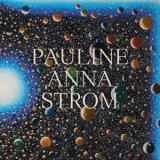
The Well & The Gentle, two of the major works of Pauline Oliveros, are presented here in a first time reissue on double vinyl in a gatefold sleeve with extensive liner notes.
If Oliveros had followed a more conventional path she may have, all social obstacles aside, been considered among the major composers of her time. However, Oliveros approached composition in a more egalitarian manner. She wrote music for musicians to interact with or, in the composers words, she wished to create "an inclusive and interdependent and unfolding world of relationships."
Oliveros' propensity towards inclusion is part of what makes this work so remarkably distinctive. The Well & The Gentle is carefully crafted, allowing performers to participate in the creation of the work. Players are asked to collaborate, focus, react and make imaginative choices. Only then can the performers "pass through stages of awakening to the possibilities inherent in making music, working together, leading to the essence of what can shape musical impulses and individual freedom simultaneously."
Unlike most major composers of the era, Oliveros' work focuses on collaboration and improvisation. For Oliveros, the processes involved in making music are as fundamental as the music itself. Oliveros creates, as Arthur Sabatini put it so eloquently in the liner notes, "A world in which sound and the practices entailed in making music merge; become, at once, source and atmosphere, energy and essence, presence and dynamic."
Pauline Oliveros was an electronic music pioneer, accordionist, composer and educator who resided in Kingston, New York. Her instrument was tuned in Just Intonation and she often included it in her meditative improvisational music. Her music is not meditative in the sense that it is intended for listening to while meditating, rather each piece is a form of meditation, such as her aptly titled Sonic Meditations.
A central figure in post-war electronic art music, Oliveros is one of the original members of the San Francisco Tape Music Center (along with Morton Subotnick, Ramon Sender, Terry Riley, Steve Reich and Anthony Martin), which was the resource on the U.S. West coast for electronic music during the 1960s. The Center later moved to Mills College, where she was its first director, and is now called the Center for Contemporary Music. Oliveros often improvised with the Expanded Instrument System, an electronic signal processing system she designed, in her performances and recordings.
Brazilian psych soul wunderkind, producer and singer Tagua Tagua has joined the Wonderwheel Recordings family with a tender selection of cuts on his second album Tanto.
Recorded in the rural outskirts of Sao Paulo there is a sense of yearning that permeates throughout the set list of ten unapologetic love songs that fly between lush psychedelic pop to warm, beat-laden neo-soul with Brazilian flavor. The album maneuvers subtly between the different dynamics, and purposefully so, as it was 'a vibe' that Tagua Tagua AKA Felipe Puperi wanted to instill from start to finish - channeling soul heroes past and present like Bill Withers, Shuggie Otis & Sault.
The album title and first single Tanto translates to Portuguese as 'so much', and Felipe sees the track and entirety of the album as "a feeling of falling in love for the sake of falling in love". The track is a slice of horizontal soul music and possesses a sweet, almost drug induced fervor, simple on arrangements. Felipe sings in a melismatic tenor, at times tipping into falsetto, with subtle effects enriching his delivery.
Based in the city of São Paulo, Felipe previously fronted the group Wannabe Jalva and has an extensive musical resumé, having played at Lollapalooza Brazil, supported shows for Pearl Jam and Jack White, and created a name for himself as one of the most promising breakout acts in Brazil. Yet there was a break-out moment of self discovery, a re-connection with his language that led to a personal and musical revolution culminating in his debut solo album in 2020, Inteiro Metade.
Whereas his previous longplayer had changing musical personalities from tropical psychedelic to funk and soul, Tanto only flirts outside of the mellow psychedelic soul prism and whilst there are ebbs and flows, it delights in its sparse and sweet minimalism. "Pra Trás" opens proceedings, and aptly, as Tagua Tagua moves from one album to the next, it's about leaving things behind. There are strings and orchestrations, a killer guitar hook and Tagua Tagua's seductive delivery. "Colors" is full throttle future-soul, squelchy synths pulsed by a lazy, yet insistent shuffler of a beat. Further dreamlike timbres are found in "Barcelona", a journey of a song and Brisa, perhaps the body-mover of the collection, with silky synths and a chorus you're sure to repeat.
All songs were written and recorded by Felipe himself, mixed by fellow Wannabe Jalva band member Tiago Abrahão, and mastered by Brian Lucey (The Black Keys, Chet Faker). Recently, Tagua Tagua toured Europe and played several shows at SXSW and along the West coast in the US.
- 1: Clifford Brown & Max Roach Quintet - Yesterdays
- 1: 2 Bob James - Sign Of The Times
- 1: 3 Herb Alpert & The Tijuana Brass - The Lonely Bull (El S
- 1: 4 Doris Day - Que Sera, Sera (Whatever Will Be, Will Be)
- 1: 5 Nina Simone - Rags And Old Iron
- 1: 6 Billie Holiday - God Bless The Child
- 1: 7 Ella Fitzgerald With Paul Weston & His Orchestra - Russ
- 1: 8 Burners Feat. Kylie Auldist - This Girl
- 1: 9 Little Willie John - I'm Shakin
- 1: 0 Dinah Washington With Quincy Jones & His Orchestra - Is
- 1: Harry Belfonte - Jump In The Line
- 1: 2 Frank Sinatra - High Hopes
- 1: 3 Chris Connor - Time Out For Tears
- 1: 4 Thelonious Monk - Black And Tan Fantasy
- 2: 1 Ella Fitzgerald - All Through The Night
- 2: Johnny Mathis - Someone
- 2: 3 Cal Tjader - Walk On By
- 2: 4 Gil Scott-Heron - Home Is Where The Hatred Is
- 2: 5 Mongo Santamaria - Watermelon Man
- 2: 6 Peggy Lee - I'ts A Good Day
- 2: 7 Ferrante & Teicher - Theme From Exodus
- 2: 8 Quincy Jones - Soul Bossa Nova
- 2: 9 Ahmad Jamal - Angel Eyes (Live At The Alhambra)
- 2: 10 Charlie Parker & Miles Davis - A Night In Tunisia
- 2: 11 Les Brown Feat. Doris Day - You Won't Be Satisfied (Unt
- 2: 1 Cab Calloway - The Hi-De-Ho Man (That's Me)
- 2: 13 Glenn Miller - Doin' The Jive
- 2: 14 Louis Armstrong & His Hot Seven - Weary Blues
Crayons is the seventh studio album by the Queen of Disco, Donna Summer. It was her first full-length studio album in fourteen years. Summer worked with a number of different producers and songwriters on the album, including Greg Kurstin (Adele, Paul McCartney, Pink & Foo Fighters a.o.), J.R. Rotem (Bad Bunny, Linkin Park & Rihanna a.o.), Wayne Hector (Nicki Minaj, One Direction & Westlife a.o.), and Toby Gad (John Legend, Fergie & Beyonce a.o.) and Lester Mendez (Shakira & Nelly Furtado a.o.).
Crayons debuted and peaked at #17 on the Billboard 200. The album included four singles in total, “I’m A Fire”, “Stamp Your Feet”, “It’s Only Love” and “Fame (The Game)”. The title track contains a guest performance by Ziggy Marley.
Crayons is available on vinyl for the first time as a 15th anniversary edition of 2000 individually numbered copies on translucent pink coloured vinyl and includes a 4-page booklet.
- A1: Release Date
- A2: Symphony In X Major (Feat. Dr Dre)
- A3: Multiply (Feat. Nate Dogg)
- A4: Break Yourself
- B1: Heart Of Man
- B2: Harder (Feat. The Golden State Project)
- B3: Paul
- B4: Choke Me, Spank Me (Pull My Hair)
- B5: Losin' Your Mind (Feat. Snoop Dogg)
- C1: Bk To La (Feat. M.o.p.)
- C2: My Name (Feat. Eminem & Nate Dogg)
- C3: The Gambler (Feat. Anthony Hamilton)
- C4: Missin' U
- C5: Right On
- D1: Bitch Ass Niggaz (Feat. Eddie Griffin)
- D2: Enemies
- D3: My Life, My World
- D4: What A Mess
- D5: (Hit U) Where It Hurts
"I was 27 when this album came out, LA was a whole different animal. I was going back and forth from NY to LA, touring a lot and trying to make progress for me and my close friends and family.
Oct 1 2002 seems like it was yesterday... The day we released the album, I got a call from Nas, completely caught me off guard. He complemented me on the writing of “Release Date” the first track on the album. Those are some of the moments I think of when I reminisce about dropping this project. It was such a turning point in my life, I was coming off of a huge push with “Restless” and the follow up had to be a smash, at the same time I was still finding my standing as a man, a young father, and an artist. It was always my dream to work with the people I’ve now been able to work with and I can listen to this album and remember exactly where I was and who I was with, it’s like time travel.
Fast forward 20 years later and I am thrilled to be able to share this body of work with you and more generations to come.
Thank you for rockin' with me for all this time.
Enjoy the 20th Anniversary Edition of MAN VS MACHINE,
From its dramatic intro, "Release Date," to the thundering West Coast march "Enemies," Xzibit's fourth and mythical album, Man vs. Machine produced by no less than Dr Dre, spent a total of 19 weeks on the "Billboard" 200 chart and was certified gold only a month after its release with over 500,000 copies sold.
The legendary album that features a heavyweight cast of featurings with the likes of Snoop Dogg, Eminem, M.O.P, Nate Dogg, DJ Premier and Dr Dre himself is now available for the first time since its original release, to celebrate its 20th anniversary!
[q] D3. My Life, My World [Bonus Track]
[r] D4. What a Mess [Bonus Track]
[s] D5. (Hit U) Where It Hurts [Bonus Track]
Detroit based 3-piece combining a blend of industrial, deathrock, drum machines, gothic elements, soundtrack scapes, spaghetti western guitars and a thick, rumbling bass tone. Features new mixes by Adam Stilson, mastering by Rafael Anton Irisarri and a re-imagining of the original artwork by Chris Samuels. The vinyl & CD packaging includes a 12-page booklet of photos, lyrics and images from the original release date, (2012/2013). The story of Ritual Howls begins in a southwest Detroit basement in the early winter of 2012. Singer/guitarist Paul Bancell had been writing and performing solo as well as in several bands and was looking for collaborators for a new project. Ben Saginaw (bass) and Chris Samuels (synths, drums, drum machines) were acquatances that became natural fits. With the help of a friend (Jeff Navarre), they recorded their first full-length in Ben's art studio using a laptop. Paul tracked vocals at home in his bedroom and, not wanting to relinquish control, mixed and mastered the album himself. A formidable introduction to the band's haunting, cinematic blend of twangy industrial rock, their self-titled album established the band as a unique force in the landscape of dark music, both past and present. Separated by a decade, four LPs, two EPs later, Ritual Howls is an impressively cohesive first effort and testament to the band's vision that, even in its infancy, forged a distinct sound that has only matured with perfection over time. Past support from outlets like Stereogum, FACT, Tiny Mix Tapes, Self-Titled, Paste, Post-Punk, CVLT Nation + more. Track listing: 01. The Year Of Fear 02. Cemetery Guards 03. Keep Those Stones Up 04. L’Atalante 05. Rosabelle Believe 06. Anchorites 07. Hell Fuck 08. The Mark 09. Sacred Awe
1200 x Signed Prints
“Mrs Wibbsey, you may have done something absolutely catastrophic!”
For the first time on limited edition vinyl, Demon Records presents a second series of unique audio adventures
starring Tom Baker as the Doctor, following the success of Doctor Who - Hornet’s Nest.
Once again every copy includes an exclusive, frameable portrait of the Fourth Doctor, hand signed by Tom Baker
himself - just one of the treats inside this stunningly designed package.
An intricately die-cut, removable outer sleeve reveals a Demonic lidded box, inside which are 10 individual, beautifully
illustrated LP sleeves featuring full cast and credits for each of the five stories.
The Time Lord’s encounters with the mysterious Demon are detailed in The Doctor’s Journal, a large 16-page full
colour booklet featuring notes and illustrations from this epic pursuit through Time.
Presented across 10 x 140g alternating Red and Black vinyl discs, this full-cast audio adventure by Paul Magrs stars
Tom Baker as the Doctor, with Susan Jameson as Mrs Wibbsey and Richard Franklin as Mike Yates.
The supporting cast includes Nigel Anthony, Samuel West, Jan Francis, Trevor White, Lorelei King and Finty Williams,
and original sound design accompanies the familiar Doctor Who theme from the BBC Radiophonic Workshop.
LP 1&2: The Relics of Time
LP 3&4: The Demon of Paris
LP 5&6: A Shard of Ice
LP 7&8: Starfall
LP 9&10: Sepulchre
When key components from the TARDIS are stolen in exchange for a bag of strange curios, the Doctor and his
housekeeper Mrs Wibbsey are reunited in adventure. Each object leads the unlikely friends, along with the trusty
Mike Yates, to a place and time where danger awaits them. As their pursuer’s net closes around the Doctor, he
realises that the mysterious Demon is in thrall to a much higher power…
- A1: Would? - Performed By Alice In Chains 3:26
- A2: Breath - Performed By Pearl Jam 5:05
- A3: Seasons - Performed By Chris Cornell 5:45
- B1: Dyslexic Heart - Performed By Paul Westerberg 4:28
- B2: Battle Of Evermore - Performed By The Lovemongers 5:40
- B3: Chloe Dancer / Crown Of Thorns - Performed By Mother Love Bone 8:15
- C1: Birth Ritual - Performed By Soundgarden 6:05
- C2: State Of Love And Trust - Performed By Pearl Jam 3:47
- C3: Overblown - Performed By Mudhoney 2:58
- C4: Waiting For Somebody - Performed By Paul Westerberg 3:25
- D1: May This Be Love - Performed By Jimi Hendrix 3:09
- D2: Nearly Lost You - Performed By Screaming Trees 4:06
- D3: Drown - The Smashing Pumpkins 8:16
The Singles soundtrack was released in early 1992, a full three months before the film opened, and it was an instant hit, eventually selling over two million copies. It's the perfect snapshot of Grunge, Seattle at a certain place and time.
Recorded in the summer of 2020 whilst the world was in flux, the album is drenched with a feeling of freedom as Garwood and drummer Paul May sheltered from the world outside. It was, Garwood explains, “a heat soaked fever dream of our soul nectar in sonic form”. Recalling the past, gathering the elements from the present, the two artists – whose knowledge of one another’s playing is apparent throughout – work together with exquisite tones and percussive detail in this intimate recording. Garwood expands, “In the deep summer heat wave of ‘20, when everything was closed and people were hiding, I hit the road West to join my brother in music in his place, bungalow magic. We knew we had to play - for our souls, for the soul of humanity, to bring down the machine and tyranny, to invite the angels in, to save ourselves from insanity. Play we did, the guitars detuned until bee’s wings would make the strings sing. We began with the drum, and the things that shake and rattle, the drones of the heat, we sweated and we worked it until the night calmed us.This is not a lock down album, for we were free in our spirits when this was created, free from any desires to conquer and fill our pockets with the booty of success.”
Whilst most of the North swung to the right in the 2019 General UK Election, the North West held onto their hope and long standing heritage of voting for what imagines itself to still be the ‘Left’. It’s 2022 and there are no political choices left, but to rise up and revolt to Stop the Rot. T.S. Warspite channel their message through a unique musical recipe that answers the question no one asked: What if Bad Religion grew up in Manchester in the 2000s? Made up of some long standing and productive members of the local scene, this sounds like friendship and experience, and some refreshing as fuck hardcore. Singer Marco Abbatiello weaves expertly through scenes of pulp reality where everything is fleeting and only some things stick. What’s left is a farcical montage of things that have rushed past you with no real sense of direction. Personally and politically, it’s all the same wretched soup of societal collapse and the rise of the technocracies. Do yourself a favour, and play this through your Tesla microchip whilst throwing a molotov at No.10. Members of Violent Reaction, Payday, Firearm, Arms Race, Rated X. T.S. Warspite is Paul Morgan, Tom Howard, Marco Abbatiello, Tom Pimlott and Miles Livingstone-Todd. Recorded and Mixed by James ‘Atko’ Atkinson at The Stationhouse. Mastered by Will Killingsworth at Dead Air Studios. Art by Chio. Photos by Meline Gharibyan
Favorite Recordings proudly present a new series of 7" reissues with a simple concept: each side dedicated to one French funky track coming with its original artwork. You just have to flip it!
Starting with "Funky Baby Love" by Paul Fathy, it could not get funkier! The French boogie track originally compiled by Charles Maurice on French Disco Boogie Sounds Vol. 3, is your perfect tool for the dancefloor. It brings together all the ingredients of a great production with irresistible disco strings, a catchy chorus supported by beautiful backing vocals and its final climax will bring the dancers to a point of no return.
On the other side, you get an exclusive reissue of West-Indies band Corail', with their song "Karukera C'est Comme Ça" taken from their eponymous album. This under-the-radar, zouky and funky track will surprise every listener with its appealing arrangement and lyrics: "Ça va danser / Sur l'île aux oiseaux". Soon, you won't be able to get it out of your head. The bass is groovin', the rhythmic guitar is infectious and digital keyboards are on point: we're pretty much sure this one will become sooner or later a banger of its own.
Cassette[20,97 €]
Self-recorded indie experimentalist from the Pacific Northwest. For fans of Grouper, The Microphones, Unwound’s Leaves Turn Inside You. Features Madeline Johnston (Midwife), Alex Kent (Sprain), Lula Asplund, a chamber ensemble and more. In 2019, Drowse’s Kyle Bates set out to produce a self-recorded new album. Marked by moving across state lines, long-distance relationships, and deaths in the family, the following years proved to be metamorphic. Now, three years later, he’s emerged with Wane Into It, continuing a distinctly Pacific Northwestern tradition of self-recording indie experimentalists (Grouper, The Microphones, Unwound’s Leaves Turn Inside You). One of the most impactful moments came during the looming passing of a family member. With death expected, the choice was made to conduct a bizarre “living-wake” gathering—with the soon-to-be1deceased in attendance. Shortly after, Bates found himself disturbed, preoccupied with the abstraction of memory. The experience led him to reassess the tool one uses to curate our selective memories: the internet. The internet, which creeped into even more aspects of life during the pandemic, serves as our self-made digital link to the past. Its uncaring presence layered over humbling thoughts of death and his own childhood memories of the Oregon Coast as he worked on Wane Into It; life’s hyperreal texture sank into the recordings as he felt his body age and wane. Big sounds were captured in bedrooms, hallways, practice spaces, forests, and on highways throughout West Coast vibraphones chime over black metal guitars, a mellotron drones under degraded samples, violins splinter against granular field recordings. In the process of documenting these aural moments Bates completed an MFA at Mills College, coloring the album with shades of avant electronic and minimalist composition (Pauline Oliveros, Terry Riley, Maryanne Amacher, Sarah Davachi etc…). To realize this scope Drowse collaborated with Madeline Johnston (Midwife), Alex Kent (Sprain), Lula Asplund, a chamber ensemble and more. Bates’s songwriting and production have never been more lucid; sounds flicker as he sings with fragile intensity. The record, Drowse’s third for The Flenser, impressionistically distills loss, distance, mystery, prescription drugs, the preservation of memory via recording, and ambient anxiety through its titular act: to Wane Into It, to disappear awaiting the next moon phase, water returning to sea before reemerging as a wave. Track Listing: 1. Untrue In Headphones 2. Mystery Pt. 2 3. (Ashes Over The Pacific Northwest) 4. Wane Into It 5. Telepresence 6. Gabapentin 7. Blue Light Glow 8. Three Faces (Cyanoacrylate) 9. Ten Year Hangover / Deconstructed Mystery
Black Vinyl LP[34,41 €]
Self-recorded indie experimentalist from the Pacific Northwest. For fans of Grouper, The Microphones, Unwound’s Leaves Turn Inside You. Features Madeline Johnston (Midwife), Alex Kent (Sprain), Lula Asplund, a chamber ensemble and more. In 2019, Drowse’s Kyle Bates set out to produce a self-recorded new album. Marked by moving across state lines, long-distance relationships, and deaths in the family, the following years proved to be metamorphic. Now, three years later, he’s emerged with Wane Into It, continuing a distinctly Pacific Northwestern tradition of self-recording indie experimentalists (Grouper, The Microphones, Unwound’s Leaves Turn Inside You). One of the most impactful moments came during the looming passing of a family member. With death expected, the choice was made to conduct a bizarre “living-wake” gathering—with the soon-to-be1deceased in attendance. Shortly after, Bates found himself disturbed, preoccupied with the abstraction of memory. The experience led him to reassess the tool one uses to curate our selective memories: the internet. The internet, which creeped into even more aspects of life during the pandemic, serves as our self-made digital link to the past. Its uncaring presence layered over humbling thoughts of death and his own childhood memories of the Oregon Coast as he worked on Wane Into It; life’s hyperreal texture sank into the recordings as he felt his body age and wane. Big sounds were captured in bedrooms, hallways, practice spaces, forests, and on highways throughout West Coast vibraphones chime over black metal guitars, a mellotron drones under degraded samples, violins splinter against granular field recordings. In the process of documenting these aural moments Bates completed an MFA at Mills College, coloring the album with shades of avant electronic and minimalist composition (Pauline Oliveros, Terry Riley, Maryanne Amacher, Sarah Davachi etc…). To realize this scope Drowse collaborated with Madeline Johnston (Midwife), Alex Kent (Sprain), Lula Asplund, a chamber ensemble and more. Bates’s songwriting and production have never been more lucid; sounds flicker as he sings with fragile intensity. The record, Drowse’s third for The Flenser, impressionistically distills loss, distance, mystery, prescription drugs, the preservation of memory via recording, and ambient anxiety through its titular act: to Wane Into It, to disappear awaiting the next moon phase, water returning to sea before reemerging as a wave. Track Listing: 1. Untrue In Headphones 2. Mystery Pt. 2 3. (Ashes Over The Pacific Northwest) 4. Wane Into It 5. Telepresence 6. Gabapentin 7. Blue Light Glow 8. Three Faces (Cyanoacrylate) 9. Ten Year Hangover / Deconstructed Mystery
Reissue of the oud / viola virtuoso SIMON SHAHEEN's interpretations of pieces by one of the Middle East's most important 20th Century composers, MOHAMED ABDEL WAHAB. Produced by BILL LASWELL, remastered for vinyl at D&M Berlin.
MOHAMED ABDEL WAHAB (1902-1991) was "a giant in the world of Middle Eastern entertainment" (Al Jadid Magazine) - as singer, actor and composer – and is commonly considered "the father of modern Egyptian song". After a visit to Paris, he revolutionized the film industry by introducing the genre "musical film" to the Arabic world, the movie "The White Rose" in which he starred broke all records and to this day is frequently presented in Cairo's cinemas. But in 1950, WAHAB left the film industry to focus on singing and composing – he wrote over 1800 songs (among others for Umm Kalthoum, an iconic artist in the Arabic music in her own right) that were deeply rooted in classical Arabic music but also laid the foundation for a new era of Egyptian music as WAHAB was open to Western elements such as waltz rhythms or even rock'n'roll in Abdel Halim Hafez's song "Ya Albi Ya Khali". He also composed several national anthems (Tunisia, Oman, Libya, United Arabic Emirates) and re-composed the Egyptian national anthem "Belady Belady Belady", based on the original by Sayed Darwish. WAHAB received several decorations of Arabic states, and at his death in 1991, Egypt honored its famous son with a huge military funeral at the Rabia al-Adawiya Mosque in Cairo, the six-horse carriage procession carrying his coffin was actually led by the prime and foreign ministers, followed by the ministers of defense, interior and culture!
SIMON SHAHEEN (born 1955) is the perfect choice for WAHAB's compositions. Born into a family of gifted musicians, he learned playing the oud at the age of 5 and the violin shortly thereafter. He earned degrees in Arabic literature and music performance at the Tel Aviv University, and later pursued further studies at Hebrew University of Jerusalem and after his emigration to the USA (in 1980) at the Manhattan School of Music and Columbia University. SHAHEEN lives in New York where he founded the Near Eastern Music Ensemble and Qantara, a formation that blends traditional Arabic Music with elements of Jazz and classical music, and he also has been organizing the Annual Arab Festival of Arts called Mahrajan al-Fan since 1994. The same year he received a National Heritage Fellowship from the National Endowment for the Arts at the White House. Solo albums like Saltanah (Water Lily Acoustics), Turath (CMP) or Taqasim (Lyrichord) underline his importance as one of the most significant Arab musicians, performers, and composers of his generation. His work incorporates and reflects a legacy of Arabic music, while it forges ahead to new frontiers, embracing many different styles in the process. SHAHEEN has participated in many cross-cultural musical projects with artists as diverse as Henry Threadgill, Vishwa Mohan Bhatt, or the Jewish klezmer ensemble The Klezmatics, contributed to the soundtracks for The Sheltering Sky and Malcolm X and composed the entire score for the United Nations sponsored documentary, For Everyone Everywhere, celebrating the 50th anniversary of the United Nations Human Rights Charter. SHAHEENS biggest success was the Qantara album Blue Flame (2001) which has been nominated for eleven Grammy Awards.
Besides all his activities as performer, he dedicates a good part of his time to working with schools and universities, including Julliard, Columbia, Cornell, Princeton, Brown, Harvard, Yale, University of California in San Diego, University of Michigan in Ann Arbor and many others.
The Music Of Mohamed Abdel Wahab was originally released in 1990 on Axiom, the record label curated by iconic producer and bass player Bill Laswell, and has been carefully remastered for this vinyl reissue at D&M, Berlin.
Press quotes:
"Master oud player and composer Simon Shaheen finds the perfect mix on this collection of Mohammed Abdel Wahab's pieces … seven wonderful interpretations sparkling with oud and strings interplay." Stephen Cook / AllMusic
"Shaheen's violin soars over a slicing string section and a bed of percolating percussion, while accordion, oud, finger cymbals and a chorus of singers weave in and out. Produced with sparkling clarity by Bill Laswell … this record opens a new world of harmonic and melodic possibilities to ears accustomed to Western pop." Greg Kot / Chicago Tribune
Musicians:
Simon Shaheen: Oud, Violin, Viola
Najib Shaheen: Oud
Sheikh Taha: Accordion
Anton Hajjar: Ney
Paula Bing: Flute
Ramzi Bisharat: Tabla
Hanna Mirhige: Mizhar
Michael Baklouk: Daff
Bobby Farah: Sagat
Ibrahim Salman: Quanoun
Artemis Theodos, Gabriel Palka, Nessim Dakwar, Kamil Shajrawi: Violin
Mike Richmond: Double Bass
Michael Finkel, Vladimir Greenberg: Cello
Laura Shaheen, Louise Salman, Maurice Chedid, Nermine Rawi,
Simon Shaheen, Youssef Kassab: Chorus
repress
Levon Vincent returns with his fourth full-length studio album Silent Cities a striking departure from his previous records. This, his first release experimenting with the cassette format, Silent Cities is a kind of mixtape through more private moods and personal pitches (literally given Levon’s non-standard tunings).
While Levon has always pro
duced dance floor jams with the intention of raising people’s heart rates, Silent Cities began with 72 bpm: his average resting heart rate, and the concept of tuning the music he was making to his own body rather than increasing anything. This brought the tempos down to 72 bpm or even half of that, at 36bpm. Programming the record during the empty cityscape of Berlin lockdowns, this is the first time Levon’s created an album for the home stereo or for headphone listening whilst navigating through a city. A mixtape specialist in his youth; he was always wanted to play with the cassette format. The results are sure to delight any listener, with the ever-present ambient, krautrock, shoegaze, hip-hop and electro influences coming to the foreground on this work.
“I was expanding further along the lines of a surprise favourite from my previous LP, a song called She Likes To Wave To Passing Boats which was not a 4 on-the-floor piece to play in clubs but a more impressionistic piece of music that I wrote to expound some emotions one day” says Levon. “It was a song written using just intonation. I really love how warm the pure 4ths sound, so when working on the new LP Silent Cities I decided to use my own tunings”.
Historically, the use of just intonation has meant that such instruments could sound "in tune" in one key but at the expense of more dissonance in the other keys. None of the songs on Silent Cities use standard Western equal temperament, Levon created his own scale designs coupled with the ancient ratios found in just intonation.
Born in Houston in 1975, Levon’s life changed dramatically when his parents moved their family to New York in 1981, uprooted from what he knew, the shock, the change from Houston to New York at 6 years old, is referred to constantly in Levon’s Musical output over the years. Levon's family moved houses in and around NYC from 1981 -2010, never more than a mile or two from the WTC. He lived on the Lower East Side during his teenage years and early 20s. This time period and this locale are also a big theme recurrent in his music as he tries to convey how the "downtown" lifestyle and culture-melding affected him so much at a tender age. He cut his teeth working in record shops around lower Manhattan, and while working at the Halcyon Record shop in Brooklyn he (alongside DJ Jus-Ed) was instrumental in creating the wave that came to be known as the "NYC House Renaissance" circa 2010. During the Y2K years he studied 20th C post-minimalism at Purchase college of New York under James McElwaine (who tangentially produced Man Parrish’s Self-Titled proto-hip-hop debt LP). Levon was fortunate to study theory with avant-garde composer Dary John Mizelle and orchestration under conductor Joel Thome. He undertook masterclasses with Philip Glass and also served as intern for John Kilgore, engineer for Steve Reich, where he was present for notable mix sessions such as “Violin Phase.”
Post-minimalism clearly remains an influence not to mention the early sampler stars of 80s freestyle and synth pop. Mixing such far-reaching influences is something Levon executes tremendously well. The first track Everlasting Joy moves at a head nodding 96 BPM tempo, reflecting formative influences like Paul Hardcastle’s Rainforest or Art Of Noise’s Moments in Love. “Those types of songs were a big eye opener for me as a youth, because it was where I realised songs in popular culture didn’t have to be kept to just 3 minutes, and they didn’t require vocals either. So, Everlasting Joy is a song with that intention, one that might be radio-friendly, despite the long arrangement and without vocals. You could say it was inspired by 107.5 in NY because that was a station I listened to a lot in the 1980’s.”
The majority of demos on Silent Cities were recorded before Covid-19 hit the world - when Levon had found a studio space outside of home in his adopted city of Berlin. It was a career first - working on music outside the bedroom. This riding the train or bicycling ‘going to work’ in Berlin opened up a new mood in his music, using the time back and forth to be inspired - commuting as an NYC transplant who still feels as a tourist in Berlin, with a pair of headphones, looking out the window on the train, or stopping on bridges and parking his bike to enjoy Berlin's skyline and horizon. Then, the pandemic struck and “work” came to a halt. Levon had recorded so much material during that year in the studio out of house it seemed like an inflection point for him to lighten the burden of the possessions he was carrying.
“People close to me have watched me give away synths and hardware regularly and I have given away my record collection every few years for my whole life. As a struggling artist in my 20s who had worked in record stores that whole time, I learned that moving constantly with 12k records just wasn't the way to live. So, in light of the pandemic, I set up a shop online, and sold all my music equipment. I also created a separate shop for all my sneakers and clothes. Easy come, Easy go. This provided me with a slow drip type of income that carried me quite well through the pandemic and it allowed me to focus on my own art and music. Getting rid of all my possessions felt like a weight being lifted from my shoulders and I was able to stay the course and remain committed to the music. I needed a further 2 years to mix and arrange the LP. If it weren’t for the pandemic, I would not been able to make this type of LP, so in light of everything, I was able to turn a depressing time in to something lasting and musically very positive.”
You can hear how his approach to a cassette release retains the "Medium is the Message." ethos. Silent Cities is a spooling, warm piece about life memories and embodiment.
A1. Clifford Brown & Max Roach Quintet - Yesterdays
A2. Bob James - Sign Of The Times
A3. Herb Alpert & The Tijuana Brass - The Lonely Bull (El Solo Toro)
A4. Doris Day - Que Sera, Sera (Whatever Will Be, Will Be)
A5. Nina Simone - Rags And Old Iron
A6. Billie Holiday - God Bless The Child
A7. Ella Fitzgerald With Paul Weston & His Orchestra - Russian Lullaby
B1. Cookin' On 3 Burners Feat. Kylie Auldist - This Girl
B2. Little Willie John - I'm Shakin'
B3. Dinah Washington With Quincy Jones & His Orchestra - Is You Is Or Is You Ain't My Baby
B4. Harry Belfonte - Jump In The Line
B5. Frank Sinatra - High Hopes
B6. Chris Connor - Time Out For Tears
B7. Thelonious Monk - Black And Tan Fantasy
C1. Ella Fitzgerald - All Through The Night
C2. Johnny Mathis - Someone
C3. Cal Tjader - Walk On By
C4. Gil Scott-Heron - Home Is Where The Hatred Is
C5. Mongo Santamaria - Watermelon Man
C6. Peggy Lee - I'ts A Good Day
C7. Ferrante & Teicher - Theme From Exodus
D1. Quincy Jones - Soul Bossa Nova
D2. Ahmad Jamal - Angel Eyes (Live At The Alhambra)
D3. Charlie Parker & Miles Davis - A Night In Tunisia
D4. Les Brown Feat. Doris Day - You Won'T Be Satisfied (Until You Break My Heart)
D5. Cab Calloway - The Hi-De-Ho Man (That's Me)
D6. Glenn Miller - Doin' The Jive
Delta Spirit has been making music for nearly 17 years and with five
albums under their belt they are set to release their follow up record to
2020's What Is There - One Is One was recorded in southern Vermont and
mixed in Texas by Matt Pence (Jason Isbell, Nikki Lane, Paul Cauthen)
The album has a distinctly anthemic quality with songs like "Villians" "One Is One"
and "What's Done is Done" inducing goosebumps upon the first listen. Other
tracks like "Lottery", "Ghost of Caddo" and "Thoughts on Seneca" are more quiet in
sound and song structure but deliver heavy lyrical messages that capture the
listeners attention. One Is One is made for the headphones and the live concert
experience.Packaging: CD Digit Wallet with an insert
Ali Farka Touré trekked the world, bringing his beloved Malian music to the masses. Dubbed "the African John Lee Hooker," one could hear strong connections between the two; both employed a bluesy style of play with gritty textures that elicit calm and fury in equal measure. While the influence of Black blues music prevailed, Touré created a West African blend of 'desert blues' that garnered Grammy awards and widespread reverence. Though he transcended in 2006, Ali's musical legacy lives on through his son, Vieux aka "the Hendrix of the Sahara," an accomplished guitarist and champion of Malian music in his own right. On Ali, his collaborative album with Khruangbin, Vieux pays homage to his father by recreating some of his most resonant work, putting new twists on it while maintaining the original's integrity. The result is a rightful ode to a legend. Ali isn't just a greatest hits compilation. It's a lullaby, a remembrance of Ali's life through known highlights and B-sides from his catalog. It is a testament to what happens when creativity is approached through open arms and open hearts. "To me, music is magic, it is spontaneous, it is the energy between people," Vieux says. "I think Khruangbin understands this very well." The genesis of the album dates back to 2019, when Khruangbin, coming off their breakthrough album Con Todo el Mundo, was beginning to playto bigger crowds. The record was finished in 2021, as a global pandemic shuttered businesses and forced us to take stock of what Earth was becoming. Indirectly, Ali captures this as a moment of peace within a raging storm, a conversation between past and present without allegiance to suffering. Now, given Khruangbin's reach as a unit with legions of fans (including the likes of Jay-Z and Paul McCartney), they're poised to bring Malian music to broader groups of listeners. Ali is a masterful work in which the love surrounding it is just as vital as the music itself, driving it to unforeseen places; Vieux and Khruangbin are spreading the good word to a completely new generation. "I hope it takes them somewhere new, or puts them in a place they haven't felt or heard," Lee says. "It is about the love of new friendship and making something beautiful together," Vieux continues. "It is about pouring your love into something old to make it new again. In the end and in a word it is love, that's all."
Content:
- Softcover: 300g/m² raw cardboard, granular lamination, open spine binding
- 352 pages: Neon CMYK print on Lessebo Smooth Natural 90g/m² and Galaxi ArtSamt 115g/m²
- Dimensions: 22,0 x 30 x 2,2cm (1,4kg)
Tresor: True Stories is the first printed excavation of Tresor’s legendary history. Digging deeply into its rich
archives, the venerable institution has unearthed countless treasures from its over three-decade old history.
Over 400 never before seen photographs, flyers, faxes and other artefacts illustrate a story that intersects
with the most important social and musical trend in the modern history of Berlin. The story is told with the
voices of those that were there - over 40 protagonists share their first-hand reminiscences of the ‘big bang’
that launched techno into the world. Through the story of Tresor, the book charts the heady days of 80s West
Berlin through to the explosion of new energy that midwifed in the new social reality of reunified Germany.
This is a unique and essential printed monument to the institution that changed electronic music forever,
and the city that allowed it to exist.
Chapters:
I. Dada at the End of the World
II. The Wild Years
III. Tresor Never Sleeps
Editors:
Harry Glass, Paul Reachi, Sven von Thülen
Authors:
Dimitri Hegemann, Paul Hockenos, Regina Baer
Interviews and transcriptions:
Felix Denk, Jeannette Goddar, Jürgen Laarmann, Ruro Efue
Digitization:
Felix Moser, Rüdiger Müller
Translations, proofreading and copyediting:
Edessa Malke, Paul Fleischmann, Paul Sabine
Photography:
Gustav Volker Horst
Oliver Wia
Tilman Brembs
Wolfgang Brückner
Additional photography:
Anja Rosendahl
Carlos Alberto Heinz
Carola Stoiber
Daffy
Eberle & Eisfeld
Ernst Stratmann
Jan Hillebrecht
Jo?rg Blank
Helge Birkelbach
Helge Mundt
Marie Staggat
Martin Holkamp
Norbert Smuda
Susanna Kubernus
Susanne Deeken
Uwe Reineke
Concept, layout and design: onlab
Vanja Golubovic, Matthieu Huegi, Thibaud Tissot
8 rue des Vieux Grenadiers, 1205 Geneva, Switzerland
Lithography, printing and binding: Druckerei zu Altenburg GmbH
Gutenbergstrasse 1, 04600 Altenburg, Germany
In the spring of 2020, Willem Ardui and Jean-Valéry Atohoun of blackwave. found themselves in a difficult creative and personal period and in need of a change of scenery to recharge. They find their peace in the cosmopolitan melting pot of Los Angeles, the City of Angels, and for Ardui and Atohoun also a city of dreams. A dreamworld in which they rediscover themselves as artists and as individuals.
The spark from which blackwave. had emerged in 2016 caught fire again during their 20-day trip to the American West Coast. With renewed passion, inspiration and vision, the duo writes and works on new music, as if in a daze, day and night, with no limits to the creative process. With about thirty demos in their pocket, Ardui and Atohoun fly back to Belgium. Three days later, the first covid-lockdown hits them cold and the regained enthusiasm slowly ebbs away. Another period of uncertainty began, and at one point it was even doubted whether the group would continue to exist...
But the towel is not thrown in the ring. blackwave. starts polishing the American demos and distills 11 tracks from them. These now make up 'no sleep in LA', their second full-length album and follow-up to 2019's successful 'ARE WE STILL DREAMING?' 'no sleep in LA' is about the highs and lows of the past years, the insights they have gained, the difficulties and the beautiful moments. Everything about the record feels a lot more mature as a result. Existential themes are explored more and more deeply. Doubt and uncertainty, depression, grief and loss, dreams and ambitions, nostalgia, love and desire, no stone is left unturned.
The album also exudes maturity on a musical level: it is more compact in length than its predecessor, but the instrumentation is more in-depth. Strings, horns, backing vocals and other session musicians enrich the genre-transcending sound of blackwave. Everything is arranged to perfection without being delineated. The common thread is the thoughtful and lively lyrics of the two frontmen, and the layered production of Willem Ardui. To this end, Ardui received help on a number of tracks from the likes of Paul Meany (Twenty One Pilots), MiSCHiEF BOY (Cantrell), Spencer Petersen (Sego), Tobie Speleman (incidentally mixer of the entire record), and even his younger brother Remco Ardui.
Celebrated guest features include Lute (signed to Dreamville, J.Cole's label), Abhi The Nomad (artist from Austin, Texas who met the duo in LA) and Caleborate (a good friend and old friend to blackwave. fans). Kirby, who has already collaborated with the likes of Beyoncé and Kanye West, co-wrote the song "I Miss" on the album.
On High Flying Man, the third LP by Matt Berry’s pseudo-eponymous project The Berries, loss and desire take center stage. Berry delves deep into 21st century malaise, crafting densely layered songs which project an unshakable yearning for deliverance from the world’s shortcomings. Each track extends an outstretched palm towards universal connection, blending a complex of mix of pop hooks, rock swagger, and psychedelia into dejected populist anthems. Faced with the perils of an isolating world, High Flying Man reignites the tradition of great American songwriting, speaking in the voice of the longing masses. At heart, Berry demands more life, rejecting both arty cynicism and nostalgic escapism.
Berry cut his teeth at a young age playing in the bands Happy Diving (Topshelf Records) and Big Bite (Pop Wig), and has since regularly served as a touring member for bands like Angel Dust and Dark Tea. His early work with Happy Diving and Big Bite solidified his position as an upcoming star in the world of fuzzed-out indie rock, earning him tours and opening slots with the likes of Turnstile, Dinosaur Jr., Nothing, The Swirlies, and The Coathangers. With The Berries, however, Berry turns the Big Muffs down (although not off), creating sonic space to stretch his wings as a burgeoning pop songwriter. The psychedelic-surrealist textures of his earlier output are not gone, per say, but rather find themselves folded into more expansive, rock-oriented arrangements, becoming accoutrements as opposed to the driving force of each song itself.
High Flying Man follows The Berries’ previous releases, 2018’s Start All Over Again and 2019’s Berryland. While longtime listeners will undoubtedly recognize Berry’s disaffected drawl and melodic sensibility, High Flying Man’s complex arrangements and expansive sonic landscape place it well apart from its predecessors. Berry enlisted live band members Danny Paul (drums), Emma Danner (backing vocals), and Lance Umble (bass) during the recording of High Flying Man, as well as the mixing talents of Rob Schnapf (Elliott Smith, Beck, Guided by Voices), breaking from the self-produced home recording ethos of the previous Berries LPs. The collaborative nature of High Flying Man’s recording process is reflected in the quality of each song’s arrangement. Freed from the pressure of being individually responsible for every detail committed to tape, Berry was able to focus his attention more fully on the creative demands of constructing a dynamic and cohesive record. High Flying Man pivots away from any sort of obvious nod to Americana tropes, baggy British attitude, or Neil Young-esque riffing, leaning head on into a lush, idiosyncratic grandeur.
Each track evokes the irreverent and flashy style of a songwriting voice finding itself for the first time. Berry’s guitar heroics extend towards new heights, channeling the simple pop mastery of Lindsay Buckingham (“Prime”) and the wicked emotion of a 21st century “November Rain” (“High Flying Man”). Unusual stylistic juxtapositions give certain songs an almost timeless quality: Bert Jansch-esque crooning finds its counterpoint in sweeping, distortion-soaked riffs (“A Drop of Rain”), the primitive rhythms of Amon Duul are given an arena-sized, Britpop facelift (“Life’s Blood”). On High Flying Man, however, the ballad reigns supreme. “Down That Road Again” drips with sentimentality, powered by soft, undeniable pop melodies and pared-down chord progressions. Album-centerpiece “Eagle Eye” teeters between pure grace and extreme sorrow, unfolding into a massive, immediately memorable tide of melancholic beauty.
Lyrically, High Flying Man is both simple and direct. Although often bitter about the state of the world, Berry has no overtly political axe to grind. In some instances, he takes jabs at the moral laziness of aging millennials, expressing his yearning for a return to vitality and conviction (“Prime”). In other instances, Berry turns his criticism inwards, examining his longing for a better life and his repeated tendency to self-sabotage (“Down That Road Again”). These two poles balance each other out, creating a thematic tenor which is more so self-implicating and empathetic than critical. If anyone is to blame, it is the world we have been saddled with, not the people left to pick up its pieces. Although often personal, Berry’s words evoke a universal experience of continued belief in the face of loss. “High Flying Man” chronicles the growing distance between Berry and an old friend who has been shipwrecked by the weight of trauma, evoking the sorrow of trying to love someone who is no longer able to keep up with reality. Even the most somber passages of “Eagle Eye” (“long before I become aware of it, my friend/it’s 6 AM and I’m gonna die”) find their redemption in a burning devotion towards something worth living for (“If there’s one thing I can depend on/it’s my old friend/my shining light/my eagle eye”).
With High Flying Man, Matt Berry embraces undying love in the face of isolation. Daring to want more life becomes a spiritual rallying cry against a world that has failed to make life either meaningful or beautiful. At their core, these songs are not about revolution, but they are about the faith that gives something like revolution a purpose in the first place.
Repress 22.11.22 !
A STUNNING RHYTHMIC FUSION OF LATIN AND JAZZ WITH A UNIQUE SPIRITUAL PULSE.
If ever a record called be called a lost masterpiece then this record more than deserves that epithet. First released on an obscure French label in the 1970's it might have sunk further into obscurity and left no trace of it's passing but somehow a handful of copies turned up in various Jazz shops in London where it was snapped up by DJ Paul Murphy who was then playing to the embryonic jazz dance scene, based at the very first Jazz Room club: The Horseshoe in London's Tottenham Court Road, a decaying, seedy, sticky carpeted old West End ballroom that had seen better days. This and a select few records in a similar vein were being played to an appreciative audience who demanded tough raw percussive rhythms overlaid with some furious jazzy soloing and whenever this record hit the turntable it left even the most demanding groover sated.
It's a really fantastic collection from this barely known reedman and his excellent band which also features a guest appearance by American Legend Horace Parlan who is best known for his Afro-Cuban session "Headin' South" on Blue Note Records.
Superbly produced by drummer Peter Schmidlin, who has conjured up a spiritual modal mixdown of Afro-Cuban & Jazz extended percussive workouts that are uncompromising in their groove and which manage to sound both timeless and modern. The record is being re-released with the original striking artwork, guaranteed to be a talking point.
Under the name Delicate Steve, guitarist extrodinaire Steve Marion has
spent the better part of the last decade establishing himself as one of the
most wildly innovative and widely revered players in the game.He's
recorded with Paul Simon, been sampled by Kanye West, toured in the
Black Keys, and released four critically acclaimed albums of genrebending instrumental music
He's your favorite musician's favorite musician, a virtuoso songwriter, producer,
and performer who occupies a lane entirely his own in the modern indie
landscape, but he's never liked the sound of the electric guitar? "I've tried
everything under the sun to get away from it," he explains. "Until now."Written and
recorded on a white 1966 Fender Stratocaster that reignited his love for the
instrument, Delicate Steve's warm and captivating new album, After Hours, marks
a first for Marion, an earnest, easygoing collection that revels in the simple joys of
plugging in and playing. The songs are sweet and breezy here, pairing vintage
soul grooves with mesmerizing, wordless melodies, and Marion's production work
is subtle and restrained, stepping back in all the right places to let the album's
masterful performances speak for themselves. In another first, Marion teamed up
with outside musicians on the record, bringing in renowned bassist Shahzad
Ismaily (Yoko Ono, Marc Ribot) and famed Brazilian percussionist Mauro Refosco
(David Byrne, Atoms For Peace) to help flesh out the arrangements and stretch
his sonic boundaries.
The result is a dreamy, introspective album built for late night comedowns and
deep dive soul searching, a cinematic, escapist fantasy for the wee hours of the
morning that draws on everything from Bill Withers and Sly Stone to Pharoah
Sanders and Salvador Dali as it explores memory and nostalgia, instinct and
intuition, serenity and transcendence.
WRWTFWW Records and MEG Museum (Geneva) are honored to present the first new solo album by renowned Japanese percussionist Midori Takada (Through The Looking Glass) in 23 years, Cutting Branches From A Temporary Shelter, available on vinyl LP, housed in a 350gsm sleeve, with OBI, and liner notes, as well as on digipack CD.
Recorded in a live setting and played with instruments conserved in the collections of the MEG Museum, Cutting Branches For A Temporary Shelter is Midori Takada’s very own rendition of "Nhemamusasa", a traditional work emblematic of the musical repertoire for mbira of the Shona of Zimbabwe, well known worldwide, thanks notably to its version by Paul F. Berliner included on the famed 1973 album The Soul of Mbira.
The choice of this title by Midori Takada evokes the links between traditional African and contemporary music which are the foundation of this work, and it also translates the resolutely multicultural vision of the artist.
Midori Takada explains: "African music is remarkable for its polyrhythms. Not only are there simultaneously several rhythmic motifs, sometimes as many as ten, but furthermore it may be that the part played by each musician has its own starting point and its own pace, all combining to form a cycle. All the cycles progress at the same time according to a single metrical structure which functions as a reference point, but which is not played by any one person from beginning to end. The structure emerges out of the multi-level parts, all different. With the Shona, the musical system is based on the polymelody: one performs simultaneously several melodic lines which are superimposed, each having its own rhythmic organization. It is truly captivating. In Western classical music, one four-beat rhythm induces some precise temporal framework and regular reference points, which come on the strong beats 1 and 3. But in the logic of the Shona musical system, and in other African music, the melody can begin in the very middle of the cycle and be continued up to some other place in an autonomous manner, as if it had its own personality. It’s very rich."
The album comes with in-depth liner notes that include an interview by Midori Takada, a point of view by Zimbabwean scholar, musician and activist Forward Mazuruse, and background information on the project by Isabel Garcia Gomez and Madeleine Leclair from MEG Museum.
The sleeve features an artwork by celebrated Zimbabwean painter Portia Zvavahera.
Part of the budget for the album was donated to Forward Mazuruse’s Music For Development Foundation whose aim is to identify, nurture, and record young but underprivileged musicians in Zimbabwe.
The album is released in conjunction with Midori Takada and Shomyo of Koya-san's You Who Are Leaving To Nirvana, also available on LP and CD on WRWTFWW Records.
Greek genius Christos Chondropoulos’ stunning debut for The Death of Rave finally lands on vinyl - an incredibly imaginative masterwork rich with quartertone melody and meticulously chiselled production, shaped into a future-folk songbook that deeply expands on his wonders for 12th Isle and The Wormhole. Highly recommended if yr into Paul DeMarinis, Rashad Becker, Ryuichi Sakamoto, Kara-Lis Coverdale's 'Aftertouches', Jonathan Bepler’s soundtracks for Matthew Barney, Black Sabbath or Aphex Twin. Floors us every time!
Continuing Christos’ singular fascination with, and reappraisal of, Ancient Greek modes, ’Relics’ further excavates the deeptime topography of Greek music prior to the ban of “oriental” or 1/4 tone microtonal modes nearly 100 years ago.
Clandestine, euphoric, hyperreal and otherworldly; it takes shape as faintly familiar forms of new age folk, avant-techno and metal musicks, but with an alien appeal that treats the past almost like another planet, never mind a foreign land. Christos studiously raids the past for lost treasure, navigating his tuned instincts as an improvising percussionist, and lover of non-Western composition, to create a uniquely absorbing soundworld that resembles an AI’s dreams after ingesting encyclopaedia entries on thousands of years of Greece prior to 1936. In the process, the album acutely questions his and our relationship to the past, and what has become lost in translation with reliance on prelaid templates and the “wisdom” of elders.
Bursting to life with the iridescent arps and new age AI chorale of ‘First Love Fereter’, and concluding with bone-clacking raverie of ‘Jungle X’, the album offers a stunning advance of the themes and aesthetics in Christos' previous records, from the self-released free jazz of ‘Fingerpainting’ (2013) to 2021’s 12th Isle released ‘Athenian Primitivism.’
Thanks to meticulous detailing, ‘Relics’ allows a finer play of textured light and almost tangible - yet entirely generated - voices into his music: most strikingly on the sublime songcraft of ‘Regret’ and ‘I Dream Of You’, while the likes of ‘Asham’ are bathed in deeply uncanny atmosphere, and his percussive proprioceptions are most heightened in the delirious battery of ‘War Horns’ and ‘Sacrifice’, with ‘Cyber Crust’ calling up demonic, cthonic pagan spirits resembling Black Sabbath undergoing regression therapy.
It's dark in the forest. Especially in the »northwest«. You have to adjust all your senses. But once you have, the forest will take you in his arms. The forest will protect you. Just like Daniel Herrmann's first album for Live At Robert Johnson will protect you.
Herrmann is far from being unknown in the world of music - let alone in the art or photography world. In the music field, he is probably much more known under his Flug 8 moniker where he released five albums on Disko B, Doxa Records, Ransom Note, and Acid Pauli's Smaul Recordings. Under his given name, Daniel Herrmann's relationship with LARJ's label boss Ata Macias goes way back. As an artist and photographer Herrmann was the only one allowed to take pictures inside Ata's ROBERT JOHNSON club, thus creating an iconic series of pictures of clubbers and club life in general. Herrmann’s pictures of the partying punters themselves were presented as wallpaper all over Robert Johnson back in 2002.
With »Enroute« Herrmann enters new territory: It is his most ambient work up to today. And yes, it is a piece of work created during the lockdown. Herrmann's studio is situated in the outskirts of Frankfurt, near the forest - a quite remote place already in-between the Taunus mountain range. Imagine life during the lockdown in such a place … This is where Herrmann set up his former basement studio in the large living room with a variety of instruments besides a cozy fireplace spending warm light and warmth. A warmth that despite its seemingly rather "cold" atmosphere can be heard all over »Enroute«. Once you soak in the sounds (or get soaked into the sounds) of the first tracks like album opener »northwest«, »Fly By Wire« or the 11min »Dark Trace« you might feel this warmth too. A cold warmth you could say, yet a warmth that only modular systems and synthesizers can create.
There is a change of mood with »Intercontinental« - literally as it seems that Herrmann indeed is on an intercontinental journey here despite the strolls and long walks in silence through the Taunus forest. This is also the place where Herrmann took many photographs of the forest and its trees (to be seen on his Instagram account) - and the picture on the cover: This spooky yet fragile high seat in the mist in front of those trees. Yet darkness alone is not dominating this album. Even during these dark days, there was a bit of light at the end of the tunnel. And it shows in the beauty of »Bouncing Rays«.
»Enroute« is done all alone and in total isolation. And one can hear it. But it also invites the listener to be a part of this lonely world. And we all know that being lonely is made easier with someone on your side - »Enroute« to a better place. A place that isn't lonely at all.
PS: For all digital music lovers we have included two bonus tracks: The GLOK remix of »Bouncing Rays« and Herrmann's clattering and creaking tune »Economy« - enjoy!
Following up the first release quickly with Detroit native Paul Alan, who now resides on the sunny west coast. Paul Alan aka DTCHPLNES, delivers the smooth latin driven car cruiser "Provider" and the sun blissed slow skate vibes of "Charlevoix", which also sounds great on 45. The two track 7 inch is wrapped in a treasure map jacket with a compass foil stamp and includes a postcard