The 1st solo album Indigo by RM of BTS is officially available for the first time on vinyl. Indigo includes different tracks in collaboration with various artists that portray RM's prevailing thoughts. Contents of the album include a 12-inch Vinyl, Outer Jacket, 3 Premium Photo Boards, Booklet, Folded Lyric Poster, Instant Photo and Photo Card.
Cerca:paul k
PUTAS VAMPIRAS Vol.1 is the debut release of PUTAS VAMPIRAS, a DJ and producer who is an icon of Sao Paulo's queer underground scene.
As the organizer and mother of the infamous VAMPIRE HAUS raves and its community of vampires, her work is a celebration of DIY culture, resistance and an unapologetic commitment to inclusion and the freedom of the Brazilian LGBTQIA+ community.
Over the last decade VAMPIRE HAUS has become much more than a rave, its an aesthetic, a mind-set and a movement that spans across the whole of Latin- America. After almost 10 years, it is finally debuting as a record label.
In this first release, PUTAS VAMPIRAS reimagines post-punk attitudes and the frenzied energy of a rock and roll mosh pit through the lens of the queer Sao Paulo underground. The album's tracks were built to withstand the heat of the VAMPIRE HAUS raves, and to satisfy the legions of dissident ravers, drag monster queens, techno lovers, and "vampiras" from all around the world. She describes her sound as VAMPIRE TECHNO, the perfect soundtrack to a kinkier and queerer alternative reality version of Tony Scott's "The Hunger" movie.
All the tracks on this compilation are anthems at the VAMPIRE HAUS raves and part of PUTAS VAMPIRAS' live performances in recent years, with the track "Puta Vampira Bixa Loka" becoming the soundtrack of LGBTQ freedom and empowerment in Sao Paulo.
Using a hybrid setup of analog drum machines, modular synths and vinyl during her performances, PUTAS VAMPIRAS made thousands of "vampiras" dance like there was no tomorrow.
She has performed on BOILER ROOM and extensively toured across the world, playing amongst many places in the UK, USA, India, Turkey, Ukraine, Chile, and Paraguay and being the first Brazilian to perform a hardware live set on the main floor of Berghain.
PUTAS VAMPIRAS has become a household name and a symbol of LGBTQ+ empowerment, liberation, and resistance and her music will carry the VAMPIRE TECHNO spirit into more corners of the world.
Der Score zum vielbeachteten Film von Regisseurin Charlotte Wells starring Paul Mescal und Frankie Corio.
Mit seinen Kompositionen - einer glühenden Form von Ambient-Musik - ist es Cellist, Komponist und Electronic Music Producer Oliver Coates gelungen, der Kinematographie emotionale Farbe zu verleihen.
Leichter und zarter als seine frühere Arbeiten, steht Coates' Score für die Erinnerung im Film, für das wachsende Bewusstsein, dass der Film eine Erinnerungsreise sein könnte, die versucht, dem erlebten Trauma einen Sinn zu geben. Der Score gibt dem Film das Gefühl, dass er beginnt, sich seiner selbst bewusst zu werden, wie ein Film im Film. Mit der Zeit entfaltet sich die Musik und hilft dem Zuschauer, über das Naturalistische und Diegetische hinauszugehen. Sie besteht aus einfachen Elementen, alten Synthesizern, umgekehrten und verlangsamten Streichern. Diese, so erklärt der Komponist, "enthüllen allmählich die Trägheit in Calums (Paul Mescal) Auftreten und suggerieren, dass etwas über ihm schwebt".
Enthalten auf dem Score ist auch 'One Without', das vieldiskutierte Musikstück, das in der Schlussszene und im Abspann zur Verwendung kommt, noch lange nachhallt und laut Coates auch als Blaupause diente für den gesamten Score.
In addition to his day job transforming pop music with his own records, as well as those of Gastr del Sol, Loose Fur and Sonic Youth over the past few decades, Jim O"Rourke has been contracted for several dozen film scores over the years as well. It makes sense - his abilities as an improviser, composer and producer allow him to interpret cinematic moments with a unique understanding for their construction and how they work. It doesn"t hurt that Jim"s a well-versed cineaste, a complete and total fan of watching films, which has given him a preternatural understanding of the role of music in movies. What doesn"t make sense is how Hands That Bind is the first film soundtrack of Jim"s to ever receive worldwide release! He"s worked with filmmakers of international repute, like Olivier Assayas, Allison Anders, Werner Herzog and Kôji Wakamatsu! He served as music consultant on Richard Linklater"s 2003 laff-fest, School of Rock! He"s played in ensembles of award-winning documentaries and films alike! Throw the guy an internationally-promoted soundtrack LP every more often, why doncha? It was left to the "suits" of Drag City Records to innovate, once again, by taking a leap on an O"Rourke work. Made for an indie film that"s been seen by festival audiences and not enough others, the soundtrack for Hands That Bind is a moody, atmospheric delight. Jim"s roots in composition via tape-editing have evolved into a sophisticated assembly of found-and-processed sounds that achieve highly musical, near-orchestral majesty as they hang in the very air of the drama that unfolds in Kyle Armstrong"s Hands That Bind. Described as a "slow-burn prairie gothic drama" set in the farmland of Canada"s Alberta province, and starring Paul Sparks, Susan Kent, Landon Liboiron, Nicholas Campbell, Will Oldham, and Bruce Dern, Hands That Bind is a spellbinding trip to the existential bone of rural working life in North America. As conflict rises over the hard-worked patches of land that provide a mere and mean existence, a desperate air settles in, as a series of mysterious, often supernatural occurrences rock the small community. O"Rourke"s vaporous, serpentine musical backdrops and atmospheres reflect the obsessions and distractions of the film"s principles; moods of all sorts seen or otherwise implied. Additionally, the music highlights cinematographer Mike McLaughlin"s closely observed accounting of the farmers" environment, as well as the striking widescreen images of the big sky country with unnerving flair. For fans of Jim"s ongoing steamroom series as well as collectors of soundtracks, Hands That Bind will provide hours of engrossing listening. And if you get a chance, see the movie projected in a movie house, please - farmers aren"t the only ones struggling these days!

Die Apart Demos wurden zwischen 1980 und 1984 in verschiedenen Kellern und professionellen Studios in Chicago aufgenommen und dokumentieren 12 intime und reduzierte Skizzen, Demos und unveröffentlichte Tracks von Andre Gibson und der Universal Togetherness Band, als sie sich auf ihre Solokarrieren zubewegten. Von tief empfundenen Huldigungen an die Liebenden, die von einem seidigen Fender Rhodes verziert werden, bis hin zu Disco-Party-Startern über spirituelle Dankbarkeit - Andre Gibson lässt uns in sein Herz blicken und bringt am Ende alles zusammen. Die Universal Togetherness Band aus Chicago, verband in ihrem eklektischen Sound Funk-, Soul-, Disco-, Jazz-, Rock- und New-Wave-Einflüsse mit intelligenten und fantasievollen Texten. 1978 gegründet und geleitet von Andre Gibson, mit seinem Bruder Arnold Gibson (Schlagzeug, Bass), dem ehemaligen Colorvision-Mitglied Fred Misher (Bass, Hintergrundgesang) und Freds Bruder Leslie Misher (Leadgitarre), während Andre die Keyboards, das Vibraphon und den Leadgesang übernahm. Obwohl die Gruppe mehrere Jahre lang in den Clubs von Chicago auftrat und gelegentlich größere Auftritte absolvierte (vor allem als Vorgruppe von Peter Gabriel), hatte sie Mühe, ein größeres Publikum für ihre anspruchsvolle R&B-Melange zu finden. Zwischen 1979 und 1982 nahm die Band Dutzende von Sessions auf, die Gibsons weitreichende Vision als Komponist und Bandleader dokumentierten. Während Gibsons Zeit am Columbia College kamen Paul Hanover (Mundharmonika und Klavier) und Louis Sanford (Schlagzeug) zu den ursprünglichen vier Multiinstrumentalisten hinzu. Nachdem sich die ursprüngliche Besetzung der Universal Togetherness Band schließlich Mitte der 1980er auflöste, nahm Andre Gibson weiterhin mit einer Besetzung mit Frank Alexander (Schlagzeug), Allen Burroughs (Gitarre), Art Love (Bass) und Michael Young (Saxophon) auf. 2015 veröffentlichte Numero Group eine erste Zusammenstellung mit unveröffentlichten Aufnahmen mit dem schlichten Titel Universal Togetherness Band.
The supremely swinging pianist Sonny Clark hit the Blue Note scene in 1957 with a burst of creativity recording three albums in three months including the sublime Sonny Clark Trio, a six-song set of bebop themes and standards featuring bassist Paul Chambers and drummer Philly Joe Jones.
This stereo Tone Poet Vinyl Edition was produced by Joe Harley, mastered by Kevin Gray from the original analog master tapes, pressed on 180g vinyl at RTI, and packaged in a deluxe gatefold tip-on jacket.
A bit of skanking, space disco for you from mystery outfit Outtaface. The bass line is the ride on this clubbed-out big dipper to the far reaches of the dancefloor. Epic breakdowns make for a superb journey into house.
DJ Support:
Kryder, Eelke Kleijn, Sophie Francis, Mark Knight, Lost Frequencies, Jamie Jones, MING, Vanilla Ace, Neal McClelland, Joe T Vannelli, Chris Lake, Nic Fancuilli, Alec Monopoly, Christian Homan (RTE Radio), Colin Dale, Paul Roberts and Don Diablo
Valentine Lover Red Vinyl. Die Apart Demos wurden zwischen 1980 und 1984 in verschiedenen Kellern und professionellen Studios in Chicago aufgenommen und dokumentieren 12 intime und reduzierte Skizzen, Demos und unveröffentlichte Tracks von Andre Gibson und der Universal Togetherness Band, als sie sich auf ihre Solokarrieren zubewegten. Von tief empfundenen Huldigungen an die Liebenden, die von einem seidigen Fender Rhodes verziert werden, bis hin zu Disco-Party-Startern über spirituelle Dankbarkeit - Andre Gibson lässt uns in sein Herz blicken und bringt am Ende alles zusammen. Die Universal Togetherness Band aus Chicago, verband in ihrem eklektischen Sound Funk-, Soul-, Disco-, Jazz-, Rock- und New-Wave-Einflüsse mit intelligenten und fantasievollen Texten. 1978 gegründet und geleitet von Andre Gibson, mit seinem Bruder Arnold Gibson (Schlagzeug, Bass), dem ehemaligen Colorvision-Mitglied Fred Misher (Bass, Hintergrundgesang) und Freds Bruder Leslie Misher (Leadgitarre), während Andre die Keyboards, das Vibraphon und den Leadgesang übernahm. Obwohl die Gruppe mehrere Jahre lang in den Clubs von Chicago auftrat und gelegentlich größere Auftritte absolvierte (vor allem als Vorgruppe von Peter Gabriel), hatte sie Mühe, ein größeres Publikum für ihre anspruchsvolle R&B-Melange zu finden. Zwischen 1979 und 1982 nahm die Band Dutzende von Sessions auf, die Gibsons weitreichende Vision als Komponist und Bandleader dokumentierten. Während Gibsons Zeit am Columbia College kamen Paul Hanover (Mundharmonika und Klavier) und Louis Sanford (Schlagzeug) zu den ursprünglichen vier Multiinstrumentalisten hinzu. Nachdem sich die ursprüngliche Besetzung der Universal Togetherness Band schließlich Mitte der 1980er auflöste, nahm Andre Gibson weiterhin mit einer Besetzung mit Frank Alexander (Schlagzeug), Allen Burroughs (Gitarre), Art Love (Bass) und Michael Young (Saxophon) auf. 2015 veröffentlichte Numero Group eine erste Zusammenstellung mit unveröffentlichten Aufnahmen mit dem schlichten Titel Universal Togetherness Band.
- A1: George Michael - Too Funky
- A2: The Shamen - Ebeneezer Goode
- A3: U2 - Even Better Than The Real Thing (The Perfecto Mix)
- A4: Annie Lennox - Why
- A5: Richard Marx - Hazard
- A6: Bon Jovi - Keep The Faith
- B1: The Klf - America What Time Is Love?
- B2: The Cure - Friday I'm In Love
- B3: Heaven 17 - Temptation (Brothers In Rhythm Remix)
- B4: Electronic - Dissapointed
- B5: Boy George - The Crying Game
- B6: Marc Almond - The Days Of Pearly Spencer
- B7: Elton John - The One
- C1: Bruce Springsteen - Human Touch
- C2: Sophie B. Hawkins - Damn I Wish I Was Your Lover (Radio Version)
- C3: Patty Smyth & Don Henley - Sometimes Love Just Ain't Enough
- C4: Manic Street Preachers - Motorcycle Emptiness
- C5: Paul Weller - Uh Huh Oh Yeh! (Always There To Fool You!) (Always There To Fool You!)
- C6: Simple Minds - Love Song
- C7: Tears For Fears - Laid So Low (Tears Roll Down) (Tears Roll Down)
- D1: Snap! - Rhythm Is A Dancer
- D2: Dr. Alban - It's My Life
- D3: Charles & Eddie - Would I Lie To You?
- D4: Shanice - I Love Your Smile (Driza Bone Remix)
- E3: Tori Amos - Crucify (Remix)
- E4: Crowded House - Weather With You
- E5: Ten Sharp - You
- E6: Simply Red - For Your Babies
- E7: Lisa Stansfield - All Woman
- F1: Jimmy Nail - Ain't No Doubt
- F2: Take That - Coult It Be Magic (Rapino Radio Mix)
- F3: Kylie Minogue - Give Me Just A Little More Time
- F4: Roxette - How Do You Do!
- F5: Go West - Faithful
- F6: Wet Wet Wet - Goodnight Girl
- F7: Vanessa Williams - Save The Best For Last
- F8: Whitney Houston - I Will Always Love You
- D5: En Vogue - My Lovin' (You're Never Gonna Get It) (You're Never Gonna Get It)
- D6: Cece Peniston - Finally
- D7: Dina Carroll - Ain't No Man
- D8: Lionel Richie - My Destiny
- E1: Shakespears Sister - Stay
- E2: Tasmin Archer - Sleeping Satellite
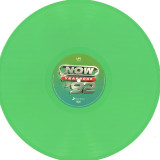
NOW Music is proud to present the next instalment in our ongoing ‘Yearbook’ series – and our first to celebrate the ‘90s, NOW – Yearbook 1992; 79 tracks from a brilliant year in Pop! Available as a Special Edition CD housed in ‘hard-back-book’ packaging, including a 28-page booklet featuring a summary of the year, a track-by-track guide, a quiz, and original singles artwork, a standard 4CD package, and a Limited edition 3-LP set pressed on green vinyl.
This record is named after Vedyanta, an ancient philosophy based on the Vedas, the sacred scriptures of India. The music, originally composed and produced by Joseph S Joyce and later remixed by Sebastian Mullaert of Minilogue, was greatly inspired, after reading commentaries from Swami Rama Tirtha's biography "The Scientist & Mahatma" - Chapter 1 - Vedanta and The Secret of Success. Now, some nine years later, it gets served up as a remix EP.
There's a dark El Choop Reconstruct, a gorgeous ambient version from Sebastian Mullaert, a minimal headscape from Van Bonn, Federson SF goes warm and dubby and then a crisp, tech-edged vibe from Paul 90 ends the EP in style.
The turbocharged Boosted EP from Washington DC's Jackson Ryland drops in Peach Discs. Inspired by the multi-faceted work of hyper-prolific producers such as Paul Johnson, Heiko Laux, K-Hand, Aubrey & Cari Lekebusch, Boosted's four tracks highlight the various layers that make up Jackson's sound, and confirm him as a thrilling and versatile producer whose deep understanding of dance music's history informs his firmly present approach to production.
Recorded between 2018 and 2022, Boosted splits the difference between the booming drums and trippy synth patterns of "Glass Cut" and "Hyp Gruuv," and the complex, evolving textures of "Boosted" and "Lip," the latter representing a side not often heard in Jackson's output to date. Taken as a whole, the EP fits into the long lineage of DC-based music - one defined by an effortless flexibility to flip between emotions while never forsaking the groove.
This is the 2nd release of the year on Shanti Celeste and Gramrcy's Peach Discs.
Third in a trilogy of LPs of Library Music miniatures from composer and multi-instrumentalist Daniel O’Sullivan (Æthenor, Ulver, This is Not This Heat, etc) following 2020’s Electric Māyā and 2021’s Fourth Density. For heads, the term “Library Music” in 2021 might evoke dodgy Italian gray market LPs and crate diggers hunting for “funky breaks” - but London’s venerable KPM Music is working with groundbreakers like Daniel to open up new avenues for composers to experiment. The 15 tracks on “The Physic Garden” are fully-formed and orchestrated compositions, which would be highlights on anyone’s LP, never mind as incidental music. Of the music, Dan says: “The Physic Garden is an album of diverse instrumentals inspired by a swathe of verdant vistas from manicured gardens and follies to urban common land, overgrown and forgotten. Convalescent memories in the shape of psychedelic auditory botanics.”
Key tracks include the droning acoustic folk of the title song; the Canterbury-esque rolling horn and woodwind melody of “Return the Heart” (with expert drum kit from Frank Byng); The prog-ish odd meter interlude “Buttercup Tea”; The quiet ambience and delicate melody of “Dusty Feather:”; and the Eno-like drift of “Vapourer Larvae.”
“Library music. Akasha. Here you accept that music behaves like a thing to accentuate another thing, seemingly unrelated. A beautiful, shining blankness. Not passive. An opportunity to wade. A brief encounter with an open-ended destiny. As in, you never know who or what it will be partnered with. With library music the emphasis tends to be on functionality and less on sonic self-portraiture. So it compels you to be concise, like what is the function of this work? The distance is liberating. It’s less “What Am I? and more “What Is This?”. It compels you to be brief, each little cell is a world of its own in an assemblage of miniatures all vibrating in their collective identity. Then there is the occult nature of library music which is fetishized by many for its ability to induce time travel, often to send us back to some televisual memory. However, despite its broad-brush strokes, the library can be so profoundly alien, especially when experienced independently of the televisual realm; an unruly chimera of genre mutations, compositional curiosities and the deepest wallpaper you ever laid ears on. Perhaps the observances of library music can help unshackle us from our artistic insecurities and delusions, where one is drawn to the shape of music as a whole instrument unto itself; as a vehicle carrying our intention and consisting of everything we have to give at that moment; so things that are seemingly unrelated are ultimately connected.” – Daniel O’Sullivan
- A1: The Limit Of A Man
- A2: The Light In Us (Feat. Laville)
- A3: Now That You Want Me Back (Feat. Melba Moore)
- A4: Deeper Love (Feat. Paul Weller)
- A5: Next Time Around
- B1: Beverley
- B2: Carry The News
- B3: Season Of Change (Feat. Bettye Lavette)
- B4: Hold On To Love (Feat. Durand Jones)
- B5: Your Balloon Is Rising (Feat. Paul Weller)
- C1: Summer Feeling
- C2: Standing On The Top
- C3: Echoes Of Joy
- C4: Let The Light
- C5: To Find The Spirit
- C6: The Night Teller (Feat. Graham Parker)
- D1: Strange People (Feat. William Bell)
- D2: B What U R (Feat. Shirley Jones)
- D3: Pushing Your Love
- D4: Tracing Paper (Feat. Nolan Porter)
- D5: Outside Looking In (Edit)
- D6: Back In The Game (Feat. Paul Weller)
Clear Vinyl[34,41 €]
UK soul stalwarts Stone Foundation celebrate 25 years and 10 studio albums together with a career retrospective. The tracklist includes their biggest collaborations (Paul Weller, Durand Jones, Graham Parker, Melba Moore, William Bell, Bettye LaVette, Nolan Porter, Mick Talbot and many more) alongside their best known tracks plus 2 brand new songs.
- A1: The Limit Of A Man
- A2: The Light In Us (Feat. Laville)
- A3: Now That You Want Me Back (Feat. Melba Moore)
- A4: Deeper Love (Feat. Paul Weller)
- A5: Next Time Around
- B1: Beverley
- B2: Carry The News
- B3: Season Of Change (Feat. Bettye Lavette)
- B4: Hold On To Love (Feat. Durand Jones)
- B5: Your Balloon Is Rising (Feat. Paul Weller)
- C1: Summer Feeling
- C2: Standing On The Top
- C3: Echoes Of Joy
- C4: Let The Light
- C5: To Find The Spirit
- C6: The Night Teller (Feat. Graham Parker)
- D1: Strange People (Feat. William Bell)
- D2: B What U R (Feat. Shirley Jones)
- D3: Pushing Your Love
- D4: Tracing Paper (Feat. Nolan Porter)
- D5: Outside Looking In (Edit)
- D6: Back In The Game (Feat. Paul Weller)
Black Vinyl[31,05 €]
UK soul stalwarts Stone Foundation celebrate 25 years and 10 studio albums together with a career retrospective. The tracklist includes their biggest collaborations (Paul Weller, Durand Jones, Graham Parker, Melba Moore, William Bell, Bettye LaVette, Nolan Porter, Mick Talbot and many more) alongside their best known tracks plus 2 brand new songs.
- A1: Civil - Sombras Na Calçada (Def Dub Mix)
- A2: Rev N Ldj - Happy
- B1: La Luna - Come To Me (Ven Aqui) (Vocal Ethno Techno Mix)
- B2: Trippi T - Open Space (Outer Space Remix)
- C1: Lorena - Tu Eres Igual Que Los Demás (De Luxe Dub)
- C2: Paulette Lassitter - X - Rated (Throb Solo Mix)
- D1: Friction Feauturing Squeaky G - Reach Out ( Percussion Mix )
- D2: Las Vegas - Soleil Dance
- D3: Dj Raffa And Dj Leandtronik - Tecnology Tecno Mix
There are still some pearls of dance music from the late 80's to early 90's that have remained in obscurity and have gone unnoticed or at least there has been no special attention, so Jose Manuel has dug deep as he already did in the first chapter of the compilation " Milagros del Ritmo ".
Among the annals of releases between '89 and '93 Jose has found pearls that he wanted to encapsulate in the second chapter of " Milagros Del Ritmo II ".
Nine tracks among which we find : Come To Me (Ven Aqui) by La Luna produced by Erik Kupper, where percussion and Latin influences dominate over a house beat, then there is Teknology by Dj Raffa, a well known Brazilian Dj, followed by Lorena with Tu Eres Igual Que Los Demás (De Luxe Dub), where the beat vaguely recalls Los Niños Del Parque by Liaisons Dangereuses.
This second volume of "Milagros Del Rirmo II " cannot be missed by DJs who love and play the retro sound.
- A1: Stompin' At The Savoy
- A2: Flying Home
- A3: Practising, Practising, Just Great
- A4: Relaxing At Camarillo
- B1: Blackbird - White Chicks
- B2: Cool Blues
- B3: You Go To My Head
- B4: If I Should Lose You
- B5: My Ship
- A1: Long Ago (And Far Away)
- A2: Good Morning Heartache
- A3: Never Let Me Go
- A4: Roy Haynes (Reprise)
- A5: Airto
- B1: Roll 'Em Charlie
- B2: What's New
- B3: Take The "A" Train
Charlie Watts “Anthology” is an affectionate retrospective and a reflection of just how frequently Watts was able to exercise his jazz muscles between Rolling Stones commitments to create a bespoke discography of his own. Including 3 unreleased tracks.
The names of Charlie's jazz heroes fell from his lips like a superfan turning the pages of a personal scrapbook. Charlie Parker, Gerry Mulligan, Chico Hamilton, Dave Green, Stan Tracey, Peter King, Courtney Pine, Gail Thompson, Brian Lemon, Gerard Presencer, the Red Rodney group and collaborator Jim Keltner. He knew every player, every session, every album, every outfit they wore on the cover, and he spoke about them with a deep and genuine reverence. He may have been a globally loved hero in the biggest band in the word, but he swatted away any compliment or comparison with his musical favourites. He counted himself their admirer, never their equal.
The Anthology includes an extended essay by Paul Sexton which documents Charlie Watt’s jazz career and the essential albums covered in the collection.
Selected by Jim O’Rourke for his Tone Glow list of 25 albums that “never got their due”, Org was founded in the early 90’s by Espen Jensen and Kjetil D Brandsdal who would later go on to variously record as Elektrodiesel, Noxagt and Ultralyd in the swirl of the highly active Norwegian underground. “Org" was the only album the pair recorded as a duo, pressed in a meagre edition of just over 100 copies which disappeared almost as soon as they were made, lodged in the memory of the select few who have managed to hear it in the years since.
Made up of three long tracks, the near 20-minute ‘001’ opens the album with an extended organ zone-out matched with scraping factory machinery saturated into a dense cloud of harmonic fuzz. There's something transcendental about the sound that intersects with microtonal Alice Coltrane (particularly the unfairly maligned organ-only edition of "Turiya Sings"), as well as Pauline Oliveros and Ramleh. It’s music that pulls you in subconsciously; before you know it, you're fixating on the uncomfortable grind of metal on metal, buried mechanical rhythms and liturgical organ vamps that wind between industrial cacophony and sacred ritual music. For its last few seconds, we go into a full death metal tearout that fades out before it takes full flight, a glorious wtf.
‘002’ connects between minimalist drone styles and shoegaze, distorting fuzzed organ into pliable, dreamlike warbles that end up sounding like Kevin Shields' ‘Loveless’-era glides, or even Sunn O))) at their most devotional. Never losing the numbing overdriven mettle, its a piece that sounds spiritually entwined with Matthew Bower's Skullflower - a minimalist re-reading of high-contrast guitar music that takes all the psychoacoustic power and none of the annoying posturing.
For ‘003’, subaqueous organ is joined by synth and drum machine, sounding like the inspirational spark for Religious Knives' screwed 'n chopped cosmic psychedelia. The choice of sounds links it to Antena's foundational electro samba recordings too, but the overwhelming drone - a constant on all three compositions - connects the music to minimalist spirituals that have simmered beneath the DIY/avant garde for decades.
‘Org’ sits heavy on the nerves with overproof levels of mulched amp worship and ungodly, palms-down organ chords and wheezing, bezonked lines of melodic thought. 25 years out of sight and marinading in the archives, with the benefit of hindsight we can better understand the role these sounds played in the development of music in the contemporary sphere. It’s an important piece of the puzzle, one that makes valuable connections that, over time, have looked progressively more faint.
International super group Bokanté, led by Grammy-winning Snarky Puppy founder Michael League, are set to release a brand-new studio album, History, via Real World Records consisting of nine tracks celebrating black history, global unity and the futility of war. The first single “Adjoni” is out today and you can watch the song’s official video below.
Consisting of members from five countries and four continents, different genders, races and generations working in harmony and celebrating individuality, Bokanté are united in the belief that music should be a voice for the voiceless. Recalling rhythms from West Africa as well as those of Guadeloupe’s drum-centric Gwo ka, lead single “Adjoni” is a story of a life on the spectrum and of brilliance in the margins; the lyrics of “Iliminé” speak to the protective properties of love, offer a mantra to keep us joyful regardless.
History finds them exploring further, dressing folkloric instruments including the Arabic oud, West African ngoni and North African guembri, the bass lute favored by Morocco’s Gnawa maalems, in western clothes. Interweaving layers of percussion with all the nuanced skill expected of four percussion maestros: André Ferrari of Swedish folk renegades Väsen. Ex-Berklee music professor Jamey Haddad (Sting, Paul Simon). Nagasaki-raised, New York-based Keita Ogawa (Cecile McLorin Salvant). Ghanaian-New Orleanian drum king Weedie Braimah (Christian Scott), a special guest on What Heat, a vital band member now.
The apartheid boycott In the 80s, the world – rightly - stepped up its boycott against South Africa’s apartheid government. But this had unexpected and sometimes adverse consequences for South Africa’s music professionals and consumers. Musicians still needed to work live shows both at home and abroad, and to make and sell records. The youth still aspired to clubbing and partying at the weekend after hard, poorly paid jobs under the thumb of an oppressive government. Music was their sanctuary: specifically, African- American inspired soul, jazz, boogie, disco and funk. Unique diversity Producing musical excellence was nothing new for South Africa, even in the 80s: both traditional and jazz music of various genres had been performed, showcased and recorded for decades with the assistance of some of the most skilled and ingenious sound-engineers and producers in the world, the jazz players rivalling their American peers in many cases. But what makes Mzansi 80s popular music unique is that it had to – and for the most part, did- appeal to a multi-ethnic, multilingual population almost like no other in the world, for its geographical size. There may have been many tribal and political differences between Zulu, Sotho, Xhosa, Tsonga and others day-to-day, but when it came to the weekend, those differences often melted away for a while on the dancefloor. Paul Ndlovu had kwaZulu fans as well as Shangaan followers; Black Moses and the Soul Brothers had followers and fans with everyone..and so on. And everyone- detractors and lovers alike- were content to settle on the monicker ‘Bubblegum’ as a general description. Mzansi took disco- and slowed it down a bit.. ..exactly as 90s and early 2000s South African DJs and mixers took House- and slowed it down a bit to develop Kwaito, Gqom and – later – Amapiano. The Roland TR-707 sampler came along in 1985- at just the right time for the flowering of Mzansi disco and boogie. And in the artful hands of arrangers, engineers and producers such as Peter “Hitman’ Moticoe, whose work figures on several of the tracks here, it became something unique to South Africa. 'Yebo! Rare Mzansi Party Beats from Apartheid's Dying Years' compiled by John Armstrong is out BBE Music on x3 vinyl set in a gatefold sleeve, CD, and across digital platforms for download and streaming.