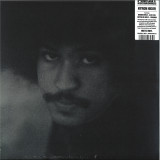
When João released “Quem é Quem” in 1973, he had already been in the music industry for over 20 years, gaining national and international recognition. Nevertheless, the album marked the beginning of a new phase in his career: the surprising multi-instrumentalist included lyrics in his songs for the first time. It is one of his most important albums, which now returns to shelves on 180-gram vinyl as part of the “Classics on Vinyl” collection from Polysom.
The album was produced by Milton Miranda and Marcos Valle, with arrangements by João Donato, Maestro Gaya, Lan Guest, Laércio de Freitas, and Dory Caymmi. It features 12 tracks, the vast majority of which are authored by him, with collaborators such as Geraldo Carneiro, Lysias Ênio, Paulo Cesar Pinheiro, Caetano Veloso, and João Carlos Pádua. The only exception is the song “Cala Boca Menino” by Dorival Caymmi.
Поиск:paulo
Все
Renowned DJ, Producer and House music aficionado, Giles Smith, returns to Eglo Records with his highly anticipated ‘I Can Change Your Life’ EP. A deep and soulful outing, that nods to the classic House sounds of Chicago, New York and Detroit. Evoking the spirit of late-night underground parties, the record captures the essence of House music’s soulful pulse.
Title track - I Can Change Your Life - features the immaculate tones of singer LaAriel. Who elevates the track into a bouncing, soul filled, bop, certified to get your dance floor moving correctly. Smith also delivers a deeper, teckier, jazzed out dub mix on the flip, alongside Paulo’s Keys, a prescription style instrumental track that mixes the rough with the smooth.
Previously known as one half the legendary Secretsundaze, this EP marks a new chapter for Giles Smith. Already a highly respected figure, his expansive knowledge, paired with his deep passion for DJ’ing and love of clubland make him an ever more important figure within dance music culture. His evolution, passion and dedication is evident and can be heard in the fabric of this essential EP.
- 1: Airport Scene 03:8
- 2: Blackbird 05:15
- 3: Dropouts 02:56
- 4: Free Form Future 02:30
- 5: Higher Path 0:3
- 6: Kill All Indies 04:35
- 7: Naked West 05:14
- 8: Oleo Skull 04:11
- 9: The Cat 05:48
Brazilian Psychedelic Rock Artist Firefriend via Cardinal Fuzz and Little Cloud Records announce a first time vinyl pressing for the classic - “999 to 666 ts Street” Prepare to take the long way through the void — Brazilian sonic architects Firefriend present the searing “999 to 666 TS Street”, a full-length LP that bends time, bleeds color, and dives deeper into the cracked corridors of psychedelic rock. With roots tangled deep in the underground of São Paulo and their eyes forever fixed on the cosmic unknown, Firefriend has carved out a space uniquely their own — a distorted dreamscape where shoegaze meets fuzz, noise folds into melody, and every track is a doorway. “999 to 666 TS Street” is a concept record that navigates a haunted psychogeography: an address etched between realities, where spiritual unrest collides with dystopian daydreams.
A Journey Through Sound and Shadow Drenched in fuzzed-out guitars, whispered vocals, analog synths, and pulsing rhythms, this LP sees the trio — Yury Hermuche (guitar/vocals), Julia Grassetti (bass/vocals), and Cacau Bandeira (drums) — begin to forge the fearless vision they seek. From the opening surge to the final fractured lullaby, “999 to 666 TS Street” is both a destination and a transmission: a call to the wanderers, the outsiders, and the seekers. But Firefriend's mission isn’t just sonic — it’s political.
As proudly left-wing artists with an internationalist vision, the band channels the disillusionment and resistance of a generation watching the world teeter. Their music radiates both critique and hope, connecting the dystopia of late capitalism with a dream of liberation. Whether playing São Paulo basements or European festivals, Firefriend brings an urgent message beneath the haze: solidarity is louder than silence. "This album is a street you can't find on any map — it's the place your mind goes when you turn the lights off," says frontman Yury Hermuche. "It's noise, beauty, and a little bit of danger." "We wanted to build a record that feels like a fever dream on vinyl," adds bassist Julia Grassetti. "Something physical, something that glows in the dark." About Firefriend Known for their hypnotic live shows and cult international following, Firefriend has shared stages with underground legends and graced the grooves of multiple celebrated independent releases.
They’ve become essential listening for fans of Spacemen 3, The Brian Jonestown Massacre, and The Velvet Underground — yet remain wholly, defiantly themselves. “999 to 666 TS Street” marks the start and is another milestone in their prolific catalog, pushing the limits of psychedelic rock while remaining anchored in the beautifully bleak emotionalism that defines their sound. Beneath the distortion lies a worldview — anti-authoritarian, borderless, and defiantly alive.
- A1: Wake Me Up
- A2: Cry For Me
- A3: I Can't Fucking Sing
- A4: São Paulo
- A5: Until We're Skin & Bones
- A6: Baptized In Fear
- A7: Open Hearts
- B1: Opening Night
- B2: Reflections Laughing
- B3: Enjoy The Show
- B4: Given Up On Me
- B5: I Can't Wait To Get There
- C1: Timeless
- C2: Niagara Falls
- C3: Take Me Back To La
- C4: Big Sleep
- C5: Give Me Mercy
- D1: Drive
- D2: The Abyss
- D3: Red Terror
- D4: Without A Warning
- D5: Hurry Up Tomorrow
Der mehrfach mit Platin und siebenmal mit Diamant ausgezeichnete R&B- und Popstar The Weeknd kommt mit seinem Album „Hurry Up Tomorrow“ zurück. Nach seinem 2020 erschienenen Erfolgsalbum „After Hours“, welches auch das am häufigsten gestreamte R&B-Album aller Zeiten ist, und dem 2022 veröffentlichten Album „Dawn FM“ bringt The Weeknd die Trilogie mit „Hurry Up Tomorrow“ zu ihrem Höhepunkt. Dieses Album hebt seine künstlerischen Erzählungen auf ein neues Level und fängt existenzielle und selbstreferenzielle Themen des Sängers ein. Titel wie „Dancing In The Flames“, „Timeless“ mit Playboi Carti und “Sao Paulo” mit Anitta werden bereits seit dem Sao Paulo Konzert von den Fans gefeiert. Im Jahr 2023 wurde The Weeknd vom Guinness-Buch der Rekorde zum „Beliebtesten Künstler der Welt“ ernannt.
Der mehrfach mit Platin und siebenmal mit Diamant ausgezeichnete R&B- und Popstar The Weeknd
kommt mit seinem Album „Hurry Up Tomorrow“ zurück.
Nach seinem 2020 erschienenen Erfolgsalbum „After Hours“, welches auch das am häufigsten gestreamte
R&B-Album aller Zeiten ist, und dem 2022 veröffentlichten Album „Dawn FM“ bringt The Weeknd die
Trilogie mit „Hurry Up Tomorrow“ zu ihrem Höhepunkt. Dieses Album hebt seine künstlerischen Erzählungen auf ein neues Level und fängt existenzielle und selbstreferenzielle Themen des Sängers ein. Titel
wie „Dancing In The Flames“, „Timeless“ mit Playboi Carti und “Sao Paulo” mit Anitta werden bereits
seit dem Sao Paulo Konzert von den Fans gefeiert. Im Jahr 2023 wurde The Weeknd vom Guinness-Buch
der Rekorde zum „Beliebtesten Künstler der Welt“ ernannt.
nun erscheint Ltd. Score CD und Score LP
A true embodiment of Brazilian Boogie, this is the first official reissue of Brylho's album, founded in Rio de Janeiro in 1978 as Brylho da Cidade. The group was influenced by the Black Rio movement of Tim Maia, Cassiano, and others. Members included Arnaldo Brandão (vocals/bass), Paulo Roquette (guitar), Cláudio Zoli (guitar/vocals), Robério Rafael (drums), Bolão (percussion), and Ricardo Cristaldi (keyboard). Claudio Zoli stands out as an important funk artist of the 1980s, during a time when Pop Rock bands dominated the Brazilian music scene. This album features one of the biggest hits of 1983: the soulful reggae groove "Noite do Prazer." Often described as Rio de Janeiro's answer to George Benson's "Give Me the Night," it's a timeless classic that bridges funk, soul, and Brazilian grooves. On "Se Você For a Salvador," a sun-soaked, feel-good boogie track, younger generations have embraced a new term to describe the sound: Brazilian City Pop. The record also delivers dancefloor heat like the stomping "Jóia Rara," the vibrant soul-reggae fusion "Destrava Maria," the ahead-of-its- time rap-funk hybrid "Cheque Sem Fundo," and the electrifying samba-reggae "Pé de Guerra," rich with Bahian rhythms and energy. Closing out the album are two under-the-radar jazz-funk gems: "Meditando" and "171." Though often lumped into the boogie category, these tracks lean more toward the sleek 1980s jazz-funk sound, reminiscent of UK acts like Level 42.
Guilherme Granado & Bruno Abdala Unite in FILHOS, a long-awaited collaboration between the two Brazilian musicians.
After years of friendship and sporadic live collaborations, Granado (São Paulo) and Abdala (Goiânia) have finally brought their creative synergy into a full-fledged project. Despite the geographical distance, a collaboration was inevitable — and now, it has become a reality.
The creative process moved swiftly once the exchange of ideas and files began. While the exact timeline is a blur, the inspiration remains clear: life itself. Musical influences are ever-evolving, shaped by experiences and time, but the essence of this project remains rooted in a deep connection to existence.
The sonic landscape is built from an eclectic palette: samplers, bells, synthesizers, drums, marimba, vibraphone, bass, violas, and more to create an elegant tapestry of sound that pays homage to the past while forging new paths forward.
At its core, this project is a tribute to tradition and lineage, hence Filhos (Sons). We are all products of what came before us, and through music, we strive to honor that legacy—carrying it forward into the future.
Distortion and feedback on Brazilian classics? Only these Sao Paulo mutants dared to reinterpret the standards of the giants of Música Popular Brasileira. Exceptionally talented, curious, and inventive, Os Mutantes infused tropicália with a generous dose of psychedelia. While some listeners were outraged at the time, they stood firm, and their debut album went on to become one of the gems of Brazilian music. Don"t miss their delightfully eccentric coversof "Tempo No Tempo"(The Mamas and The Papas) and "Le Premier Bonheur du Jour" (Françoise Hardy). A true treasure.
- A1: Mamaoism
- A2: Berumba
- A3: Anna De Amsterdam (Interlude)
- A4: Praca Da Republica
- A5: Papaya
- B1: Brasilian Sugar
- B2: Sao Paulo Nights
- B3: Xibaba
- B4: Upa Neguinho
- C1: Casa Forte
- C2: Amazon Stroll
- C3: Berimbau
- C4: Anna De Amsterdam (Reprise)
- C5: Waiting On The Corner
- D1: Tijuca Man
- D2: Nao Tem Nada Nao
- D3: Sunset At Sujinho
- D4: Segura Esta Onda
Madlib Invazion reissues Madlib’s collaboration with legendary Brazilian drummer Ivan “Mamao” Conti, propellant for lauded jazz fusion archetypes Azymuth. 5000 pressed for worldwide. Debuts on Black Friday. First released in 2008 on CD by the US based Mochilla imprint with vinyl being issued only in Europe on the Kindered Sprits label. Both formats are out of print with vinyl unavailble since its initial run. Alternate cover artwork, photography by B+. When Madlib went to Brazil in 2002 with Mochilla to participate in the production of Brasilintime his one mission was to meet Ivan “Mamao” Conti the drummer of the legendary trio Azymuth. Madlib had made an Azymuth tribute record he wanted to play for him. On a rainy night in Rio Mamao and Madlib went in the studio. Several hours later the rhythm tracks that make up Sujinho were laid and the process began. Featuring the music of Madlib, Mamao, Edu Lobo, Chico Buarque de Hollanda, Luiz Eca, Baden Powell, Vinicius De Moraes, Marcos Valle, Joao Donato, Dom Um Romao, Airto Moreira and even George Duke… and with guest vocals by Thalma De Freitas — Jackson Conti is a unique and classic record. Filled with the angularity and edge of a Madlib production and underwritten by the polyrhythmics of Mamao — Sujinho takes Brazilian music into places it has never been, bringing oft forgotten classics like Upa Neguinho to 21st century ears.
- A1: Mamaoism
- A2: Barumba
- A3: Anna De Amsterdam Interlude
- A4: Praça Da Republica
- A5: Papaia
- B1: Brasilian Sugar
- B2: Sao Paulo Nights
- B3: Xibaba
- B4: Upa Neguinho (Feat. Thalma De Freitas)
- C1: Casa Forte
- C2: Amazon Stroll
- C3: Berimbau
- C4: Anna De Amsterdam Reprise
- C5: Waiting On The Corner
- D1: Tijuca Man
- D2: Nao Tem Nada Nao
- D3: Sunset At Sujinho
- D4: Segura Esta Onda (Feat. Mamao On Vocals)
When Madlib went to Brazil in 2002 with Mochilla to participate in the production of Brasilintime his one mission was to meet Ivan “Mamao” Conti the drummer of the legendary trio Azymuth. Madlib had made an Azymuth tribute record he wanted to play for him. On a rainy night in Rio Mamao and Madlib went in the studio. Several hours later the rhythm tracks that make up Sujinho were laid and the process began. Featuring the music of Madlib, Mamao, Edu Lobo, Chico Buarque de Hollanda, Luiz Eca, Baden Powell, Vinicius De Moraes, Marcos Valle, Joao Donato, Dom Um Romao, Airto Moreira and even George Duke… and with guest vocals by Thalma De Freitas — Jackson Conti is a unique and classic record. Filled with the angularity and edge of a Madlib production and underwritten by the polyrhythmics of Mamao — Sujinho takes Brazilian music into places it has never been, bringing oft forgotten classics like Upa Neguinho to 21st century ears.
- A1: Lulacruza Uno Resuena (Chancha Via Circuito Remix)
- A2: Kaleema Velo (Chancha Via Circuito Remix)
- A3: Lagartijeando El Nogal De Las Pampas (Chancha Via Circuito Remix)
- A4: Ape Chimba Niña Del Mas Allá (Chancha Via Circuito Remix)
- A5: Lum Pantera (Chancha Via Circuito Remix)
- B1: Perotá Chingó Reverdecer (Chancha Via Circuito Remix)
- B2: Fuel Fandango La Grieta (Chancha Via Circuito Remix)
- B3: El Búho Tecolotín (Chancha Via Circuito Remix)
- B4: Nickodemus Do You Do You? (Chancha Via Circuito Remix)
- B5: Nicola Cruz Cocha Runa (Chancha Via Circuito Remix)
Chancha Via Circuito - Remixes is a new compilation from the Argentine producer Chancha Via Circuito, who has been a key player in the Latin electronic music scene. The album brings together some of his top remixes from the past 11 years, now available for the first time on vinyl. This is Chancha's first physical release since his 2022 album La Estrella, and it features remixes with artists like El Búho, Nickodemus, Fuel Fandango, and Lagartijeando.
Chancha is known for blending cumbia with electronic sounds, a style he pioneered in Buenos Aires' vibrant digital cumbia parties. His music often mixes South American folk influences with environmental sounds. Over the years, he's built a global following, performing in cities like London, New York, Paris, Berlin, Sydney, and São Paulo, where he's played at some of the biggest clubs and festivals.
Based in São Paulo and formed in 2017, TaguaTaguais lead by songwriter and producer FelipePuperi. Felipe, having fronted space groove rock band WannabeJalvafor several years, has an extensive indie resume. Having played at Lollapalooza Brazil, supported shows for Pearl Jam and Jack White. He's also been featured on KCRW, NY Times, Stereogum, Brooklyn Vegan and WFUV.
Tagua Tagua's 3rd full length LP and 3rd release on Wonderwheel following 2024's Todo Tempo EP and 2023's Tanto LP
Upcoming tour plans include SXSW and Lollapalooza Brasil in March 2025
Lead singleLado a Ladofeatures James Petralli frontman of the Austin, TX based rock band White Denim
White Denim were founded in 2008 and have shifted through genres like post-punk, soul, garage, and psychedelic rock and have released music on labels such as Bella Union, City Slang, and Downtown
2024 was a big year at radio as Tagua Tagua filmed and recorded a live sessions for NPR's World Cafe (US) and Gilles Peterson's Brownswood Basement on Worldwide FM (UK)
Embarked on a 10 date Brazilian tour in Spring of 2024 playing to capacity crowds each night in 400-500 cap rooms
Recent tour history includes two stints in the US for New Colossus Festival in NYC and SXSW March 2024 and November of 2024 in Miami, New York, and Philadelphia as well as a headline tour throughout Europe in September and October of 2024
Significant press coverage from publications like NPR Alt Latino, Remezcla, FIP, Bandcamp, and Sounds & Colours to name a few
Huge worldwide radio support from stations like KEXP, KCRW, KUTX (US) Inter, FIP, Nova (FR), RinseFM, Soho Radio, Worldwide FM (UK), 3RRR, 2SER, RTR (AU), RTP Antena 3, TSF Rádio Notícias, Rádio Oxigénio (PT) iCat, Radio 3 (ES) RBB Radioeins (DE) and many more
Reissued here for the first time, "Cartão Postal" is one of the best and most sought-after Brazilian funk-soul albums from the early ’70s. It includes some outstanding uptempo gems like Marcos and Paulo Sergio Valle’s ‘Que bandeira’, and the stellar ‘Esperar Prá Ver’, co-written by Evinha’s brother Renato Corrêa who also happened to be a member of the Golden Boys. This is a classic Brazilian soul-funk title, right up there with all the greatest albums of the genre. Remastered from the original tapes and pressed on 180g vinyl. This release is part of a new reissue series that will include many other outstanding Brazilian classics. "Cartão Postal" was originally released on Odeon Brazil in 1971, a few years after Evinha started her solo career. From 1961 to 1968 she was a member of Trio Esperança, alongside her brothers Mário and Regina. In 1969 Evinha won first prize at the Festival Internacional da Cançao Popular and her discography for Odeon took off. "Cartão Postal", her third solo album, comprises some outstanding gems. Songs like ‘Que bandeira’, by Marcos Valle, Paulo Sérgio Valle and Mariozinho Rocha, that moves between funk/soul and bossa/MPB grooves; the stellar ‘Esperar Prá Ver’, co-written by Evinha’s brother Renato Corrêa who also happened to be a member of the Golden Boys, is a mid-tempo funk soul number that features stunning arrangements and an epic bassline that is hard to be forgotten… ‘Só Quero’ emanates samba soul sounds while songs like ‘Por Mera Coincidência’ or ‘Rico Sem Dinheiro’ resemble what Trio Esperança was doing at the time: vocal-driven groovy jams spiced with celestial strings arrangements and heavy-duty drums and basslines, which is not surprising since they both worked with the same producers and arrangers, as they were all Odeon artists. Ridiculously rare and expensive now, and at the top of many collectors’ wants lists for decades, it’s finally reissued here after years unavailable.
- Mercenarias
- Trashland
- Meus Pais
- Policia
- Honra
- Da Do
- Vietna
- O
Born in the vibrant alternative scene of 1980s Sao Paulo, Mercenárias is an iconic band in the history of Brazilian punk and post-punk. Formed by Sandra Coutinho (bass and vocals), Rosália Munhoz (vocals), Ana Machado (guitar), and Edgard Scandurra (drums), the group stood out for their rebellious attitude, incisive lyrics, and raw sound that blended punk, post-punk, and experimental elements. Mercenárias is an iconic band in the history of Brazilian punk and post-punk. They gained global recognition after being included in several compilations outside Brazil. Their debut album, "Cadê as Armas?" (1986), is considered one of the most important records in Brazilian music history. Three years earlier, they recorded their first demo tape at the studio of the funk/pop band Placa Luminosa. The recording turned out great, it's the best you can wait from a Brazilian punk record: raw, aggressive, yet catchy, well-played and produced. Recommended for fans of The Slits, DNA, Malaria!, Kleenex, and Minutemen, this early recording by Mercenárias is more punk than their albums, but still super catchy. It has been remastered from the original tape and includes an insert with previously unseen photos and a short text by Edgard Scandurra.
- Poder
- Danaçao
- Liminha
- Eu Nao Consigo Mais Dormir
- Nada De
- Ouço Passos
- Do Deserto
- Lucidez
- Crime Incontido
- Ontem
- Trashland
- Meu Pais
- Policia
- Santa Igreja
- Inimigo
- Honra
- Me Perco
- Ha Dez Anos Passados
- Imagem
- Açao Na Cidade
Mercenárias is an iconic band in the history of Brazilian punk and post-punk. They gained global recognition after being included in several compilations outside Brazil. Born in the vibrant alternative scene of 1980s Sao Paulo, Mercenárias is an iconic band in the history of Brazilian punk and post-punk. Formed in 1982 by Sandra Coutinho (bass and vocals), Rosália Munhoz (vocals), Ana Machado (guitar), and Edgard Scandurra (drums), the group stood out for their rebellious attitude, incisive lyrics, and raw sound that blended punk, post-punk, no wave and experimental elements. Their debut album, "Cadê as Armas?" (1986), is considered one of the most important records in Brazilian music history. Recommended for fans of The Slits, DNA, Malaria!, Kleenex, and Minutemen, the group stood out for their rebellious attitude, incisive lyrics, and raw sound that blended punk, post-punk, no wave and experimental elements. This is a compilation of rare tracks from 1983 to 1987. On the A side, there are 10 amazing songs that didn't make it onto their two albums. On the B side, there is a great live recording at the legendary Sesc Pompéia during their early days, as well as a "lost" studio session featuring some of their classic songs recorded for the cult film Vera. It has been remastered from the original tapes and includes an insert with previously unseen photos and a short text by Edgard Scandurra. .
"Zopelar makes his debut on the Clone Royal Oak series with a 4 track Ep, delivering some of his unique blend of house grooves firmly rooted in the 90's Chicago, New York and Detroit house traditions. Pedro Zopelar is a musical wizard from Sao Paulo and is twisting the classic sounds and production methods into a fresh sonic Brazilian Caipirinha cocktail."
Guilherme Granado makes his first solo appearance on the Keroxen label under the guise of his Goat Unity project, the result of a plethora of collaborations with musician friends and foes.
A São Paulo native, Guilherme has been quietly building a reputation for being the go-to guy for loop based beats and groovy basslines. He has played and recorded with Mauricio Takara in Hurtmold (4 albums) and he’s also part of São Paulo Underground (also with Takara and Rob Mazurek). He also performs, produces, and records under the name Bodes & Elefantes and has toured extensively through South America, US and Europe with São Paulo Underground, Prefuse 73 et al. With Ghost Parades Guilherme goes deep into his beat based deviations whilst somehow managing to connect the dots between the Wu-Tang Clan and the Sun Ra Arkestra, adding an healthy dose of tropicalismo for good measure.
Guilherme’s Ghost Parades does an impeccable job at showcasing the multi instrumentalist composition skills filled with dubby rhythms, addictive bass lines along with celestial and hazy chants. Its a smooth journey to take here, avoiding all the obvious pit holes of the genre and keeping the listener guessing where we’re going at every turn. A spacious, open ended listening experience where loops effortlessly intertwine with live jam instrumentation.
Organic, natural beats for atypical people.
Over the last ten years, Brazil’s Millos Kaiser has cultivated a reputation as a top-ranking selector passionate about bringing his home country’s underappreciated music to the world. After starting as a punk and indie musician in Niterói, Rio de Janeiro, he turned his hand to DJing in the late 2000s and relocated to Sāo Paulo. There, he spent the 2010s rocking city squares, warehouse parties and street parties with DJ Trepanado in the Selvagem duo before cofounding the celebrated Selva Discos label in 2017.
Since 2019, Millos’s focus has shifted to his solo DJ career and ventures as an edit maker, reissue compilation curator, audiophile bar co-owner, and now producer. Planet Trip Records has been very good friends with Millos for a long time and is very pleased to present his first original release, the Te Quero Perto (I Want You Close) EP, available in vinyl and digital formats.
Assembled like a DJ-friendly 12” for late 20th-century nightclub specialists, Te Quero Perto kicks off with Millos’ original ‘club mix’ and an accompanying ‘instrumental’ version (digital.only). Driven by an uptempo machine beat straight out of the mid-'80s, rave pianos, 303 acid bass, and an explosive Brazilian pop vocal sung by Juju Bonjour, it’s an absolute belter of a tune and a masterclass in in-period styling.
Elsewhere on the EP, Millos’s European friends Lipelis & Orion Agassi turn in an equally belting Latin Freestyle remix in vocal, dub and instrumental mixes (instrumental is digital only). Rounding things out, fellow Rio de Janeiro producer Paco Cabana throws the tune into a cocktail shaker before pouring a sunkissed, percussion-heavy reimagining for us to sip on. Front to back, it’s an all-killer, no-filler debut from a generational talent.
Now and again, an album project with no home comes along out of the blue, demanding to be licensed and shared with the world.
It was unearthed on one of Paper's digging trips. BOM's album sounded like nothing else out there, only the future. Shrouded in mystery and country-of-origin unknown, Africa runs through its DNA, but sometimes mysteries are best left...
Ase - a Yoruba philosophy signifying the power that makes things happen and produces change; given to Gods, ancestors, spirits, humans, animals, plants, rocks, rivers, songs and prayers.
BOM takes influence from all corners of Africa and its diaspora, blending them with 25 years of Western electronic music into a melange of forward facing, leftfield afro futurism.
The album features one of Africa's brightest rising stars, Luka Productions (from Mali), cosmic poet Sirius Rush (UK) and master drummer & vocalist Felix Ngindu (DRC/Liverpool) for a journey into kaleidoscopic Afro-tech funk. Gqom, Shangaan electro and township funk rub shoulders with hip-hop, bass, deep house and dub for a psychedelic celebration of collaboration and possibility.
As geographical and musical barriers are broken down, BOM's 'Ase' album is leading the charge; London to Lagos, Lisbon to Sao Paulo, Bamako to Berlin, BOM captures the sound of the underground.
Two records came out in 1988 that forever changed the perception of "experimental" or "serious" music produced in Portugal. These were "Plux Quba" by Nuno Canavarro and "Música de Baixa Fidelidade" by Tózé (António) Ferreira. Both were released by the same label - Ama Romanta -, an influential independent imprint closely linked to avantgarde pop band Pop Dell'Arte. Because those records appeared in what could be perceived as an "alternative pop" framework, they rescued this difficult music from Academia. It helps that Canavarro played in a successful new wave pop band (Street Kids) during the period 1980-83. By association, being a friend since 1976, António was in close contact with many of the musicians and bands that were part of the equally celebrated and detested Portuguese Rock Boom (roughly 79-82).
He was not a musician then but through his friendship with Canavarro, who had the means to acquire electronic equipment, António became involved with that equipment and shared Canavarro's passion for experimentation and curiosity for knowledge. They tried to get hold of as many technical magazines as possible and learn while testing ideas. In 1983, Street Kids were about to break up, young lives drafted into the Army and maybe, in Canavarro's case, a whole new passion for challenging music similar to his bandmate Nuno Rebelo, by then in the process of discovering a wide range of "other" music mainly through Jorge Lima Barreto. Barreto, who had started Telectu with Vítor Rua, possessed a huge book and record collection and, like Rua before them, Canavarro, Rebelo and Ferreira became fascinated by the pool of knowledge they now had access to by frequenting Barreto's house in Lisbon. He was roughly a decade older, had published several books and other writings throughout the 1970s, cultivated an anarchic stance and a penchant for cultural indoctrination. Rebelo was the first to be introduced via his contact with Rua (who had invited him to play in his other band GNR).
Overwhelmed, he felt the need to share his enthusiasm with friends and eventually took a few to the house in true pilgrimage fashion. To see the Light. Among the few he led there was even João Peste, founder of Ama Romanta. Canavarro and Ferreira preceded him.
Ferreira recalls an exciting learning process added to his experiments with Canavarro's array of synths such as the Korg Ms 20, Korg polysix, ARP Axxe, Roland SH-01, the Ensoniq Mirage sampler... He read in a magazine article about someone who had studied at the Institute of Sonology (then in Utrecht, Netherlands) and went there during a vacation trip in the Summer of 1983. He became excited by the prospect of studying at the Institute but money was a problem. Canavarro, on the other hand, was admitted there in the following year. Back in Portugal, Ferreira eventually abandoned his Chemical Engineering studies in Lisbon's Technical Institute in favour of a more focused music practice. He collaborated with Telectu during 1984 and 85 as a sort of technical engineer, implementing some recording solutions and background tapes and went to work at a thermoelectric power plant in Sines, hoping to make enough money to fund his musical studies. He did and proceeded with the paperwork for admission at the Institute of Sonology, now based in The Hague. António studied there in 1986-87 and the present album includes two compositions developed at the Institute: "More Adult Music" and "This Is Music, As It Was Expected", both featuring the voice of Rodney Waschka II. Among other activities and talents, Rodney is an expert in computer music and to António his voice sounded similar to Robert Ashley's, whose work he admired.
What happened at the Institute was a systematization of António's self-taught practice. Computer software, Musique Concrète, noise and silence, organisation of abstract ideas and sounds. The original notes on the back sleeve of the LP give some indication of process and thinking, but a more detailed account was given by António in the liner notes of the CD reissue in 2002, which are also included in this 2025 LP reissue.
The music sounds deep and detailed, despite the fact of António calling it low-fi ("Baixa Fidelidade"). It flows like an improvised performance where several musicians might be responding to each other, respectful of their mutual space. Drama occurs, as a natural emotional connection is sought by the listener. Piano, bells, drone, processed voices, even the clear narrative of Rodney Waschka II, contribute to create a sort of alternative perceptual reality. The sounds are almost tangible, more a part of the physical world than ethereal manifestations and thus it would not be correct to invoke "ambient music" as a selling point. But although "physical" and distinct, this music is still alien, more so in Portugal's 1988 environment. In March, helped by Canavarro, António set up a home studio and there he recorded the remaining material for this album: "Algumas Pessoas Olharam O Sul E Viram Deserto", "Um Som, Seguido De Uma Cena Negra E Malva" and "O Verão Nasceu Da Paixão De 1921".
"Música de Baixa Fidelidade" stands not only as a proof of great resilience but as one of those magnificent works of art coming from someone who balanced technical inclination and emotional sensibility. Because of that, Tózé Ferreira is able to decode the phantom world of sound for anyone who cares to experience the sensation of inhabiting a version of the Future. First ever vinyl reissue, reproduction of the original artwork with an additional insert. Made in collaboration with the artist and the support of Paulo Menezes (Plancton Music), who provided valuable assistance. Remastered by Taylor Deupree.
Slum Dunk Music is proud to re-release Tropical Punk - a 12" EP by Brazilian mutant punk funk duo Tetine formed by Sao Paulo-born artists/musicians Bruno Verner & Eliete Mejorado, originally released in 2010 - and featuring 4 warm dance punk numbers taken from their the album "From A Forest Near You". The opener "Tropical Punk (Mutant edit)" comes with a brand new mutant funk re-edit with more percussion, more analog synths, warm drum machines, and a funky bassline. The result is a mid-tempo South American cannibalistic disco-pop with catchy lyrics & beautiful half-sang/half-spoken melodies. "Yr Daugther Lies" is a cosmic, experimental/new wave piece with plenty of old school synths, processed vocals, percussive drum machine & spooky live electronics flying around in the mix. It marks Tetine's first collaboration with L.A. electronicists Howardamb. On the B side, "Shiva" comes as a percussive tropical mutnat punk-funk number led by a swinged bassline & Eliete Mejorado's distinct post-feminist spoken word vocals on sordid domesticity set against organic drum beats, dissonant soundscapes, a lost trumpet & some great interplay of raw guitars. The last track "O Espaco" is a relaxed 6-minute cosmic disco piece of Brazilian tropical punk funk on the dangers & delights of being lost in the jungle - sang in Portuguese by Bruno & Eliete - & permeated by a discordant interplay of ultra-funky guitars, abstract synth-bass plus all sorts of FX & live electronics. Tropical Punk finds Tetine celebrating their art-punk roots back to the underground of Sao Paulo with a collection of wild & raw unconventional dance tracks.
SAUCY LADY's groove-infused 4th LP highlights her signature blend of funk, disco, & boogie that has funkdafied listeners since 2011. 7 soulful tracks feat. top drummers JAY MUMFORD (DU-RITES) & DERRICK MCKENZIE (JAMIROQUAI), and a duet with MIDNIGHT RIOT maestro YAM WHO?. Full pic sleeve.
Brazilian artist Acid Asian steps up to Charlotte de Witte's KNTXT imprint with his Deep Soul EP, which explores the many different facets of his sound from rap and trap to techno and psytrance.
Fábio Seiki is São Paulo-based and started this project in 2020 during the pandemic. Since then he has made an impact with his fresh blend of influences and love of his 303. In 2022 he was the first artist to release on Charlotte de Witte's sub label, RPM, with his Break Into Acid EP and followed it up last year with The Night EP.
On Deep Soul EP, he says: "The title track is one of my favourites because it represents me 100%. Focusing on the acid line with this mantra vocal, I wanted to express something more deep to this track. 'Space Colors' is a track with which I wanted to express this new hard techno era using the hardstyle's kick but keeping my style. 'Ain't Nobody Like Us' is my background from rap/trap and 'Humans' is my psytrance background, it's an off-beat track.”
Charlotte de Witte adds: “Acid Asian is back! From his first release with us in 2022, it's been such a pleasure to see him grow and gain respect in the techno scene. We've played many shows together and he's one of the most talented, most instinctive producers out there. Playing Space Colors as the closing track at the main stage of Tomorrowland Brazil where Fábio was dancing in the crowd, was a very wholesome moment. These four tracks are absolute bombs and also show the variety he has to offer as a producer. I'm very excited about this release and I hope you are too!”
Opener 'Deep Soul' is hard and fast with a hypnotic vocal and gurgling acid lines that shoot through the mix to electrifying effect. 'Space Colors' has slamming drums that are lit up with bright, shiny trance chords and underpinned by a rugged bassline that is sure to raise the roof. There is a fantastic rhythm to 'Ain't Nobody Like Us' with its fresh drum patterns and funky edge, narcotic trap vocals and trippy synths. 'Humans' shuts down with ghoulish vocal sounds and squelchy synths all stuffed into a driving, unrelenting hard techno groove.
This is a wonderfully expressive new EP from Acid Asian.
Back in stock due to popular demand, the 12th release in our signature Brazil 45’s series saw a reissue of two certified classics from Brazil’s rich musical tapestry.
On the A side, Brazilian Samba luminary Elza Soares, covers Jorge Ben’s classic ‘Mas Que Nada’. Originally featured on her brilliant 1970 Sambas & Mais Sambas LP on Odeon, it’s tougher drums, punchy piano and Elza’s stunning vocal tones make this a perfect dancefloor heater. With over 34 albums to her name in a career that spanned 60 years, Elza is a certified legend of Brazilian music.
Little is known about the artist responsible for the B side track, Elizabeth. Nicknamed ‘Gatinha do Mato’ (loosely translated as ‘Jungle Cat’) she was involved in the Jovem Guarda movement that fused rock n roll and youth culture with Brazilian styles in the ‘60s.
‘Vou Falar-Lhe Francamente’ is a majestic, horn-infused number laced with emotion, that we originally found at one of our favourite, now defunct, spots ‘Tony’s Hits’ in Sao Paulo. The record was originally released on 7” on RGE in 1970.
Mischievous festa punk meets astral steppas, kalaedoscopic free ambient meets harsh noise, scattered amen breaks with IDM and free jazz trumpets meets the earthly plod of digidub. It can only be Felinto from Sao Paulo.
UTOPIA MILHÃO honors the life forces that allow us to transform the darkness where dreams reside. The album brings a new moment of intimacy for Felinto's musical expression flowing through dirty, raw, dense and brilliant dub fractals, ready to transform unexpectedly into a new shape then another, and another, and another... featuring collaborations with magical people: Sarine (Deafkids), Douglas Leal (Deafkids), Guizado (Afrobombas), Sandra X, Paula Rebellato (Rakta), Lorena Hollander, Yao Bobby, Kiko Dinucci, Paulo Papaleo, Cint Murphy, Rodrigo Lima.
Felinto is a political agitator and musician at the heart of the São Paulo underground - a movement that confronts the various effects of the capitalist system of racial, sexual, ,,,,, and 22222 lawand material oppression.
His provocations range from yoga for children and parenting studies (SACYOGA), theatre (PROJETO CRIOULOS and PROJETO JAMES BALDWIN), web series highlighting the black presence in electronic music in São Paulo (MODULAÇÃO PRETA), reflective groups on gender violence and masculinities, occupation of public spaces for political art q(Coletivo Sistema Negro), artistic curatorship (Residência SOMSOCOSMOS) and studies with sound as a tool in conflict mediation practices. Felinto composes for film, theatre and immersive installations such as MEGACITIES presented at the National Gallery of Victoria, Canada in 2023.
He is currently researching - as part of a masters project in clinical psychology - the collectivised dream realities of black people. A field of action that contemporary anthropology, psychoanalysis and psychology call ONIROPOLITICA.
His interest in affinity groups, autonomous networks of micro-political articulation and penal abolitionism led him to the questions: what do black people dream about within the permanent context of civil war and state violence (like the one in Brazil)? How does this experience create dreams and how does the dream affect the construction of identities beyond the boundaries established by the capitalist unconscious?
- White Violence
- Last Day
- Blind Science
- Welcome To The Army
- Time To Change
- Ratrace
- The Lungs Of The Earth
- Just A Matter Of Time
- In The Mirror
Vulcano gelten als einer der Begründer der südamerikanischen Extrem-Metal-Szene und wurde 1981 in São Paulo, Brasilien, ins Leben gerufen. Mit einer nicht vorhandenen Infrastruktur für diese Art von Musik kämpfend, veröffentlichte die Band 1983 ihre Debüt-EP „Om Pushne Namah“, welches auf Portugiesisch gesungen wurde, gefolgt von „Live!“ im Jahr 1985, dem ersten Metal-Live-Album, das jemals in Brasilien veröffentlicht wurde. 1986 veröffentlichte die fünfköpfige Band ihr erstes Album „Bloody Vengeance“, das innerhalb von 24 Stunden von Vulcano selbst aufgenommen und abgemischt wurde. Das Album, das es in puncto Wildheit sogar mit den damaligen Vorreitern Slayer und Kreator aufnehmen konnte, wurde schnell zu einem Underground-Klassiker und hat diesen Status bis heute gehalten. Es ist daher nicht verwunderlich, dass High Roller Records, die bereits die 2004er LP „Tales from the Black Book“ der Gruppe 2012 auf Vinyl veröffentlicht haben, die ultimative Wiederveröffentlichung von „Bloody Vengeance“ vorbereitet haben, originalgetreu restauriert und remastered von Patrick W. Engel, der laut Band „all die Hörbarkeit gebracht hat, die 1986 bereits hätte da sein sollen“. „Bloody Vengeance“ wurde im Laufe der Jahre mehrfach wiederveröffentlicht und war in jeder Hinsicht minderwertig, vor allem was den Sound anbelangt. Erlebe es endlich so, wie es ursprünglich gedacht war!
- Dominios Of Death
- Spirits Of Evil
- Ready To Explode
- Holocaust
- Incubus
- Death Metal
- Voices From Hell
- Bloody Vengeance
Purple Vinyl[27,31 €]
Vulcano gelten als einer der Begründer der südamerikanischen Extrem-Metal-Szene und wurde 1981 in São Paulo, Brasilien, ins Leben gerufen. Mit einer nicht vorhandenen Infrastruktur für diese Art von Musik kämpfend, veröffentlichte die Band 1983 ihre Debüt-EP „Om Pushne Namah“, welches auf Portugiesisch gesungen wurde, gefolgt von „Live!“ im Jahr 1985, dem ersten Metal-Live-Album, das jemals in Brasilien veröffentlicht wurde. 1986 veröffentlichte die fünfköpfige Band ihr erstes Album „Bloody Vengeance“, das innerhalb von 24 Stunden von Vulcano selbst aufgenommen und abgemischt wurde. Das Album, das es in puncto Wildheit sogar mit den damaligen Vorreitern Slayer und Kreator aufnehmen konnte, wurde schnell zu einem Underground-Klassiker und hat diesen Status bis heute gehalten. Es ist daher nicht verwunderlich, dass High Roller Records, die bereits die 2004er LP „Tales from the Black Book“ der Gruppe 2012 auf Vinyl veröffentlicht haben, die ultimative Wiederveröffentlichung von „Bloody Vengeance“ vorbereitet haben, originalgetreu restauriert und remastered von Patrick W. Engel, der laut Band „all die Hörbarkeit gebracht hat, die 1986 bereits hätte da sein sollen“. „Bloody Vengeance“ wurde im Laufe der Jahre mehrfach wiederveröffentlicht und war in jeder Hinsicht minderwertig, vor allem was den Sound anbelangt. Erlebe es endlich so, wie es ursprünglich gedacht war!
- Dominios Of Death
- Spirits Of Evil
- Ready To Explode
- Holocaust
- Incubus
- Death Metal
- Voices From Hell
- Bloody Vengeance
Black Vinyl[25,17 €]
Vulcano gelten als einer der Begründer der südamerikanischen Extrem-Metal-Szene und wurde 1981 in São Paulo, Brasilien, ins Leben gerufen. Mit einer nicht vorhandenen Infrastruktur für diese Art von Musik kämpfend, veröffentlichte die Band 1983 ihre Debüt-EP „Om Pushne Namah“, welches auf Portugiesisch gesungen wurde, gefolgt von „Live!“ im Jahr 1985, dem ersten Metal-Live-Album, das jemals in Brasilien veröffentlicht wurde. 1986 veröffentlichte die fünfköpfige Band ihr erstes Album „Bloody Vengeance“, das innerhalb von 24 Stunden von Vulcano selbst aufgenommen und abgemischt wurde. Das Album, das es in puncto Wildheit sogar mit den damaligen Vorreitern Slayer und Kreator aufnehmen konnte, wurde schnell zu einem Underground-Klassiker und hat diesen Status bis heute gehalten. Es ist daher nicht verwunderlich, dass High Roller Records, die bereits die 2004er LP „Tales from the Black Book“ der Gruppe 2012 auf Vinyl veröffentlicht haben, die ultimative Wiederveröffentlichung von „Bloody Vengeance“ vorbereitet haben, originalgetreu restauriert und remastered von Patrick W. Engel, der laut Band „all die Hörbarkeit gebracht hat, die 1986 bereits hätte da sein sollen“. „Bloody Vengeance“ wurde im Laufe der Jahre mehrfach wiederveröffentlicht und war in jeder Hinsicht minderwertig, vor allem was den Sound anbelangt. Erlebe es endlich so, wie es ursprünglich gedacht war!
- White Violence
- Last Day
- Blind Science
- Welcome To The Army
- Time To Change
- Ratrace
- The Lungs Of The Earth
- Just A Matter Of Time
- In The Mirror
Vulcano gelten als einer der Begründer der südamerikanischen Extrem-Metal-Szene und wurde 1981 in São Paulo, Brasilien, ins Leben gerufen. Mit einer nicht vorhandenen Infrastruktur für diese Art von Musik kämpfend, veröffentlichte die Band 1983 ihre Debüt-EP „Om Pushne Namah“, welches auf Portugiesisch gesungen wurde, gefolgt von „Live!“ im Jahr 1985, dem ersten Metal-Live-Album, das jemals in Brasilien veröffentlicht wurde. 1986 veröffentlichte die fünfköpfige Band ihr erstes Album „Bloody Vengeance“, das innerhalb von 24 Stunden von Vulcano selbst aufgenommen und abgemischt wurde. Das Album, das es in puncto Wildheit sogar mit den damaligen Vorreitern Slayer und Kreator aufnehmen konnte, wurde schnell zu einem Underground-Klassiker und hat diesen Status bis heute gehalten. Es ist daher nicht verwunderlich, dass High Roller Records, die bereits die 2004er LP „Tales from the Black Book“ der Gruppe 2012 auf Vinyl veröffentlicht haben, die ultimative Wiederveröffentlichung von „Bloody Vengeance“ vorbereitet haben, originalgetreu restauriert und remastered von Patrick W. Engel, der laut Band „all die Hörbarkeit gebracht hat, die 1986 bereits hätte da sein sollen“. „Bloody Vengeance“ wurde im Laufe der Jahre mehrfach wiederveröffentlicht und war in jeder Hinsicht minderwertig, vor allem was den Sound anbelangt. Erlebe es endlich so, wie es ursprünglich gedacht war!
Mariano Melo, also known as Marian Sarine, is a Brazilian multi-instrumentalist based in Sao Paulo, specialising in percussion and drums. His latest album, Asas Terenas, is his first under this name and started with organ recordings made with Felipe Pato in late 2019 and was completed with additional instruments added in the years that followed. Asas Terenas features a mix of rhythmic improvisations built on modal scales, combining dynamic interplay between notes and percussion. Drawing inspiration from artists like Charanjit Singh, who merged traditional North-Indian ragas with electronic music, and African organists like Hailu Mergia, it combines old and new sounds, merging spiritual elements with energetic rhythms. As Sarine himself says, Asas Terenas is a sonic mixture that moves the feet and lifts the soul, creating an experience that is both pristine in sound and transcendental on the dancefloor.
Repress!
For number 93 in the Brazil45 series, we present two favourites from the Harmony Cats. A female vocal quintet (who later became a trio) from São Paulo. They formed in 1976 and were most prolific in the disco period.
'Harmony Cats' Theme' from 1976 is probably the group best known track outside of Brazil. Owing a lot to Rhythm Heritage's version of 'Barretta's Theme (Keep Your Eye On The Sparrow)’ it's wonderfully spacey breakbeat and percussive production with lush, floaty vocals makes it a real crossover classic record.
'Seja Como Nos (De Pe No Chao)' is instantly recognisable. Tucked away on the b-side of their 1979 single 'Tem Dinheiro Nisso' on Young Records, it is a beast of a cover version of The Jacksons' classic ' Shake Your Body (Down To The Ground)'. Nothing subtle or sophisticated here. Just a song of pure disco joy, enhanced with awesome Brazilian production and the Cats' trademark vocal arrangements. A get-of-jail-free card for any DJ that finds themselves stuck with an empty dance-floor, but also one that will put smiles on the faces of the more discerning leftfield club crowds.
- Next installment in BRAZIL45 Series.
- Features cover of The Jacksons ‘Shake Your Body (Down To The Ground)’.
- 2 tracks of pure disco joy.
Having spent their formative years in São Paulo Brazil, as a teenager, Lau Ro found themself uprooted from their home. Moving with their family to Europe in search of a better quality of life, their story was like that of many immigrants in the same position. Lau Ro's parents found work in factories and cleaning jobs, for the first few years in the North of Italy and then in Brighton on England's Southern coast. "We never managed to visit back home, so my connection to Brazil became largely made up of childhood memories and my fascination with all the 60s and 70s music I could find from there."
In Brighton, the young non-binary singer and composer would immerse themself amongst the city's vanguard of free-thinking artists and musicians. Lau Ro formed Wax Machine whose prefigurative, psychedelic community provided a glimmer of countercultural hope amid a backdrop of national political decline. From 2020-23, Wax Machine birthed three cult-favourite albums in as many years; indebted in part to their British psychedelic forebears from progressive folk, rock and jazz yore. But the kernel of Lau's Brazilian sound was already beginning to blossom across Wax Machine's releases. Now, taking root deeper still, Lau Ro steps forward with their debut album: Cabana.
Named after the small wood cabin at the bottom of their garden where the album was recorded, Cabana is a deeply personal record of memory, self-discovery and imagination. Melancholy and hope combine across ten tracks of dreamy bossa, ambient folk, fuzzy tropicalia and majestic MPB. The music is swathed in masterful string arrangements and trippy electronics in equal part, while Lau Ro's delicate, yet quietly confident voice takes acerbic aim (in both English and Portuguese) at polluted city life, while dreaming of a utopia, rich with nature and wildlife.
Like the musical equivalent of semantic drift, Lau Ro's displacement led to the creation of another Brazil. A mythic place in Lau's soul, as they put it, "where the sunshine and joy of my childhood remained untapped." Lau continues: "It's music that might sound as if it came out of a parallel universe Brazil, rather than its modern day landscape. I am nowadays rediscovering Brazil, going back as often as I can and trying to stay connected to these different parts of the world and myself."
Blue vinyl repress
With a voice of pure gold and a startling sensitivity for heartfelt pop songwriting, on No Reino Dos Afetos (In the Realm of Affections), Berle firmly embraces earnestness, through starry-eyed Brazilian love songs, ambient vignettes, warm, home-cooked beats and gentle strokes of MPB genius.
Maceió, the capital of Brazil’s Alagoas state on its sprawling east-coast, is home to pastel coloured colonial houses, white sand beaches and a brilliant young composer, poet and multi-instrumentalist named Bruno Berle.
With a voice of pure gold and a startling sensitivity for heartfelt pop songwriting, on No Reino Dos Afetos (In the Realm of Affections), Berle firmly embraces earnestness, through starry-eyed Brazilian love songs, ambient vignettes, warm, home-cooked beats and gentle strokes of MPB genius.
“It’s an album that was built from my desire to find beauty”, Berle explains - his simple, graceful words mirroring the graceful simplicity in his music. But amongst the simplicity, the compositions, arrangements and productions on No Reino Dos Afetos tingle with nuance and detail.
On the contemporary R&B inspired lead single “Quero Dizer” - produced by Berle and longtime friend and collaborator Batata Boy - the swirling, lo-fi, kalimba and guitar-fronted beat is turned into a feel-good hit by the ingenuity of Berle’s honey-soaked vocal melody.
Powerfully intimate, “O Nome Do Meu Amor” (My Love’s Name) is a guaranteed tearjerker, with Berle’s stunning voice soaring over gently plucked acoustic guitar and the textural flutter of soft movement, as if we hear him writing the song in the moment.
Drawing upon a close-knit, collaborative scene of Maceió artists and musicians, (of which Berle and Batata Boy are vital members), Berle also recorded some of his friends songs on the album, including João Menezes’ “Até Meu Violao”, the album’s beautifully laid back sunshine soul opener, which has all the charm of early-70s João Donato.
Having cut his teeth in soft-rock group Troco em Bala, and more recently finding himself embedded in both Rio and Sao Paulo’s contemporary music scenes - collaborating with the likes of Ana Frango Eletrico, who took the photo for the album cover - No Reino Dos Afetos is as musically diverse as Bruno himself. It’s hazy indie rock (“É Preciso Ter Amor”), calming ambient and field recording (“Virginia Talk”) as well as Berle’s own take on West African High Life (“Som Nyame”).
Instantly recognisable as a truly special artist, Berle’s character fills every corner of the sound, which is unsurprising considering he played most of the instruments.
No one has lived a life quite like Marcos Valle. He became an overnight international sensation, fled a military dictatorship, dodged the Vietnam war draft, had his music sung by Homer Simpson, made enemies with Marlon Brando, and became an unsuspecting fitness guru for multiple generations. But to truly understand the great Brazilian composer, arranger, singer and multi instrumentalist, one must listen to his music.
Lead Single (Life Is What It Is) : Between the release of his first album in 1962 and today, Marcos Valle has released twenty-two studio albums traversing definitive bossa nova, classic samba, iconic disco pop, psychedelic rock, nineties dance and orchestral music. He has also had his songs recorded by some of the all time greats, including Frank Sinatra, Sarah Vaughn, Sergio Mendes, Elis Regina, and (last but not least), Emma Button of the Spice Girls. He has also had his music sampled by Jay-Z, Kanye West, Pusha T and many more.
With his twenty-third studio album Túnel Acustico, Valle set out to bring it all together.
“I believe my music is many things. It goes in different directions. I have many different ways of writing music, sometimes it’s melodies and harmony, sometimes the groove is the focus. But all the music I have made over my sixty year career is unified. It is all natural and it is all sincere. And this is what I wanted to bring to my new album.”
A prominent feature of Valle’s career has been his dual residence between Brazil and the USA. Originally moving over in the mid-sixties on the back of bossa nova’s international proliferation, Valle toured with Sergio Mendes and became hugely in demand as a composer and arranger. But the Vietnam War loomed and the threat of being drafted saw him return to Brazil. He spent the following years in Rio writing music for TV and film, as well as four cult favourite albums in collaboration with some of Brazil’s most groundbreaking musicians including Milton Nascimento, Azymuth, Som Imaginario and O Terco.
By 1975, Brazil's military dictatorship was at its most oppressive, making living and working increasingly difficult. Valle moved back to the US where he would reside in LA, writing songs for, and collaborating with the likes of Eumir Deodato, Airto Moreira, Chicago, Sarah Vaughn and Leon Ware, amongst others.
Túnel Acústico features two songs originally conceived during Valle’s time on the West Coast: “Feels So Good”, a stirring two-step soul triumph written in 1979 with soul icon Leon Ware, and the sublime AOR disco track “Life Is What It Is”, composed around the same time, with percussionist Laudir De Oliveira from the group Chicago.
Built around an unfinished demo Marcos found on a shelf in his house 44 years after it was made, the “Feels So Good” demo was restored with the help of producer Daniel Maunick, who also utilised AI stem-separation to remove the placeholder vocal ad-libs. Valle added Portuguese lyrics to sit alongside Ware’s vocal hook, as well as extra keyboards and percussion.
Also written in late seventies LA, “Life Is What Is It” was co-penned by Laudir De Oliveira from the band Chicago and first released on the bands’ Chicago 13 album with lyrics by Robert Lamb. Another nod to his good times in LA, Valle recorded his own version for Túnel Acústico, upping the tempo and deepening the groove for a blast of irresistible summer soul.
On Túnel Acústico, Valle's core band features two members of the renowned Brazilian jazz-funk group Azymuth: Alex Malheiros on bass and Renato Massa on drums. The rhythm section is completed by percussionist Ian Moreira, with additional contributions from guitarist Paulinho Guitarra and trumpeter Jesse Sadoc.
The contemporarily composed music on Túnel Acústico features an impressive lineup of guest lyricists, including renowned Brazilian artists: Joyce Moreno (Bora Meu Vem), Céu (Nao Sei), and Moreno Veloso (Palavras Tão Gentis) as well as Valle's brother Paulo Sergio Valle (Tem Que Ser Feliz).
The album closes with "Thank You Burt (For Bacharach)", a tribute to the legendary composer who passed away in 2023.
Túnel Acústico will be released on 20th September 2024 via Far Out Recordings. Valle is set to tour Europe and America in support of the album.
Time It Was Always Time, the debut duo release from Berke Can Özcan & Jonah Parzen-Johnson on We Jazz Records, is a refreshing and full-throated expression of joy and curiosity. In a year when 76 countries hold national elections and we find ourselves in an existential battle against apathy and cynicism, this effortlessly authentic album offers an innocent reminder that the antidote to stagnation is curiosity and the fuel for change is the joy of building something transformative together.
“Deus É Mulher” was recorded between the Red Bull studios (São Paulo) and Tambor (Rio de Janeiro), produced by Guilherme Kastrup and co-produced by Romulo Fróes, Marcelo Cabral (bass and bass synth), Rodrigo Campos (cavaquinho and guitar), and Kiko Dinucci (guitar, synthesizer, and sampler). Reinforcing the album's feminine energy, the recordings featured Mariá Portugal (drums, percussion, and MPC) and Maria Beraldo (clarinet and clarone).
The album contains 11 new tracks, written by names such as Tulipa Ruiz, Pedro Luís, Alice Coutinho, and Rodrigo Campos, among others. Elza had a special appearance by the singer Edgar on “Exú nas Escolas” (Kiko Dinucci/Edgar), and the group Ilú Obá de Min contributed percussion and vocals on “Dentro de Cada Um” (Luciano Mello/Pedro Loureiro) and “Banho” (Tulipa Ruiz).