Includes insert Featuring covers of iconic cinematic scores Performed with the London Symphony Orchestra Limited edition of 1000 numbered copies on purple coloured vinyl 2CELLOS explore the magic of cinema and television in their new album Score, r eimagining the most beloved film and TV melodies with their distinctive sound.
2CELLOS have forged a signature style that breaks down the boundaries between genres of music, from classical and film music to pop and rock. Score is available as a limited edition of 1000 numbered copies on purple coloured vinyl and includes an insert.
INSOMNIAC verschmelzen wie ein drittes Auge, das sich zum Jenseits öffnet, ihre bewusstseinserweiternde psychedelische Schwere balanciert zwischen Bewusstlosigkeit und Träumen. Zwischen dieser Welt und der nächsten treibend, abgestimmt auf den Rhythmus des Universums, geben sich INSOMNIAC dem Äther hin und hinterlassen eine mitreißende, schwere Brillanz. Wie ein drittes Auge, das sich zum Jenseits öffnet, beleuchtet der transzendente, bewusstseinserweiternde Psych-Doom ihres Debütalbums die seltsame Schönheit zwischen Bewusstlosigkeit und Träumen. Fans von REZN, King Buffalo, Pelican und Dead Meadow, macht euch bereit, mit INSOMNIAC die Grenzen der Wahrnehmung zu überschreiten! High Qualitiy Heavy Stoner Doom Digipak-CD sowie mehrfarbiges Vinyl!
Pickle Darling has always existed just outside of the periphery. In a heightened time of fast music, algorithmic consumption and rapid virality, Lukas Mayo (they/them) has remained focused on the album. Their discography is a reflection of their creative evolution, and they deliberately look for ways to push sonic boundaries from release to release. Since debuting with Bigness in 2019 followed by Cosmonaut in 2021, Mayo has curated a catalog that is deeply personal and strangely tactile, where tiny, unexpected details_an off-kilter loop, a whispered aside, the warmth of an old Casio_become as crucial as melody itself. Their 2023 LP Laundromat was a precise and polished expansion of that world, a record that felt like it had been carefully placed behind glass. Their forthcoming fourth album, Battlebots, by contrast, is unruly and full of static: a collection of songs that feel like they could only ever exist on scratched CD-Rs passed between friends. Self-recorded in their home studio in Christchurch, New Zealand, it finds Mayo taking a scalpel to their own songwriting. Songs were stretched, chopped, reversed. Some ideas started as "unlistenable garbage" before morphing into something unexpectedly beautiful. If a song felt too straightforward, Mayo had to mess it up. That friction of old and new, organic and digital, melody and noise is what drives Battlebots. Drawing inspiration from a strange, scattered lineage: Four Tet's Rounds, The Books, Neneh Cherry's Broken Politics, The Wrens' Three types of reading ambiguity, but also the emotional directness of 2000s pop like Madonna's Ray of Light and Robyn's Body Talk, the result is an album that feels like a glitch in the system, pushing against past constraints while embracing the weird, beautiful mess of making something new.
Das fünfte Album von THE COATHANGERS, ,Nosebleed Weekend", greift genau die anziehende Scheißegal-Haltung und die zackige Instrumentierung ihres Debüts auf, schmückt sich jedoch mit einer neuen Songwriting Disziplin und einer Chemie, die sich so nur über ein Jahrzehnt entwickeln konnte. ,Nosebleed Weekend" startet mit ,Perfume", einem Song, auf dem heißblütiger Popgesang so auf harte Gitarrenriffs treffen, dass Ann und Nancy Wilson stolz sein dürften. Es wäre unmöglich, dass die COATHANGERS in ihren frühen Jahren einen derart eingängigen Song geschrieben hätten, doch im Jahr 2016 passt der Song wie das fehlende Puzzlestück zum Rest ihres Kanons. Von dort aus geht es weiter mit ,Dumb Baby", der an den kantigen Neo Garage Rock von den MURDER CITY DEVILS erinnert. Alte Fans, die auf den rotzigen Post Punk warten, werden mit ,Squeeki Tiki" beglückt. Und nach dem Laut-Leise-Lärm von ,Excuse Me?" ist es kein Wunder, dass KIM GORDON ein großer Fan der Band ist. ,Nosebleed Weekend" ist ein eklektisches Album, das sich vom Leben auf Tour, dem Verlust geliebter Menschen und dem Umzug von Gitarristin/Sängerin Julia Kugel nach Südkalifornien beeinflussen lässt. ,Wir sagen immer, dass jedes Album eine Momentaufnahme ist", sagt Kugel. ,Was den Stil angeht.das ist das, was in diesem Moment aus uns herauskommt. Ob das nun der Garage Rock des Titeltracks, der Post-Punk Groove von ,Burn Me", der minimalistische Pop von ,I Don't Think So" oder der dynamische Grunge von ,Down Down" ist - THE COATHANGERS performen alle ihre Songs mit Ernsthaftigkeit und Leidenschaft.
Nach dem ausgiebig gefeierten Meisterwerk ,Slave Ambient" (2011) erscheint nun zwei Jahre später - im März 2014 - das dritte Album der aus Philadelphia stammenden Band THE WAR ON DRUGS. "Lost in the Dreams" heißt das neue Glanzstück der Band um Adam Granduciel, deren Gründungsmitglied Kurt Vile mittlerweile solo unterwegs ist. Mit der Veröffentlichung des letzten Albums ,Slave Ambient" gelang der Band der langersehnte und verdiente Durchbruch. Daraufhin tourte die Band zwei Jahre lang von North Carolina bis New York City durch alle Rockclubs, spielte auf unzähligen Festivals und in Late Night-TV-Shows, die Amerika so zu bieten hat. Mit dieser Erfahrung im Gepäck tüftelte Granduciel gemeinsam mit dem Produzenten Jeff Zeigler (Lymbyc Systym, Kurt Vile u.a.) am neuen, dritten Album. Die Band komplett machen außerdem Dave Hartley (Bass) und Robbie Bennet (Piano u.a.), die auch im privatem Leben zu Granduciels engstem Umfeld gehören. Er sagt selbst zu seinem neuen Werk: ,Ich wollte, dass es ein Projekt unter Freunden wird. Jeder einzelne in der Band nimmt unser Projekt ernst. Davon handelt auch unser Album - Freundschaft, Erwachsen werden, das Leben leben und einander zu helfen." Diese persönliche und berufliche Weiterentwicklung ist auch im Sound der Band zu hören. Nicht zuletzt ist Granduciel nicht nur Kopf einer Indie-Rockband, sondern hat auch eine unverkennbare Stimme, um sich der Welt mitzuteilen.
CRYSTAL STILTS haben zum ersten Mal mit ihrer selbstbetitelten EP 2005 und dem Nachfolger "Alight Of Night" aufhorchen lassen - ein kleines Vorbeben der Welle von fuzzigen, Hall-orientierten Bands, die ihnen auf dem Fuße folgen sollten. In den Jahren, die seitdem ins Land gezogen sind, hat sich die Band weiterentwickelt und 2011 das kräftige ,In Love With Oblivion" und die ,Radiant Door"-EP veröffentlicht. Gegründet von Sänger Brad Hargett und Gitarrist JB Townsend haben sich CRYSTAL STILTS mit Andy Adler am Bass, Keegan Cooke am Schlagzeug und dem Organisten Kyle Forester zu einer kompletten Band gemausert. Dementsprechend wurde das neueste Album der Band, ,Nature Noir", vom Quintett eingespielt. Aufgenommen im Frühjahr 2013 weiten CRYSTAL STILTS ihre Soundpalette aus und spielen mit Streichern, Percussion und Synthies. Auf Tracks wie ,Star Crawl" und ,Sticks And Stones" verfügt der Gesang von Hargett über eine brillante Klarheit und Gefühlstiefe, während die musikalischen Arrangements eine Gewandtheit bezeugen, die die überraschen wird, die CRYSTAL STILTS bisher in die Lo-Fi-Schublade gesteckt hatten.
Wenn es darum geht, seinem eigenen Meister zu folgen, haben die PSYCHIC ILLS aus New York das seit ihren Anfängen 2003 perfektioniert. In den frühen Jahren gab es einige Veröffentlichungen bei Social Registry, und die Band verbrachte seitdem viel Zeit auf der Straße und kollaborierte mit so unterschiedlichen Künstlern wie Gibby Haynes von den BUTTHOLE SURFERS und Sonic Boom (SPACEMEN 3 / SPECTRUM). 2011 machte sich ,Hazed Dream", die erste Platte für Sacred Bones, über verdrehte Synthesizer her und wurde zu einer Platte sonnenverbrannten Psych Pops voller warmer Töne und Blues Songwriting. 2012 erledigte die Band zwei komplette US-Touren inklusive eines Stops auf dem Austin Psych Fest und einen Trip nach China. PSYCHIC ILLS nahmen ,One Track Mind", ihr viertes komplettes Album, im Herbst 2012 auf. Das Album wartet mit Kollaboration und Produktion von Neil Michael Hagerty von ROYAL TRUX und THE HOWLING HEX auf. ,One Track Mind" ist das direkteste Rockalbum, das die PSYCHIC ILLS jemals aufgenommen haben.
Connection is the new ten song LP from Los Angeles powerhouse Orgone featuring collaborations with Cyril Neville, Kelly Finnigan, Pimps of Joytime, and more. The album is the inaugural release on 3 Palm Records, distributed by Colemine Records and Secretly Distribution. A spiritual follow up to fan favorite Bacano, Connection is gritty, lean, and tight soul and funk at its best. It explores the invisible threads that bind us all, spiritually, emotionally, and artistically. Much like the collage that adorns the cover, this hard hitting collection of songs illuminates the essence of Orgone: a musical pastiche of different vocalists, heavy riffs, vintage production, and a core rhythm section that never disappoints. The synergy created in these songs demonstrates that the whole is truly greater than the sum of all the individual parts and players.
"Kein Hinterfragen, kein Überdenken. Ich möchte mein Leben so leben, dass ich die Dinge tue, die mir wichtig sind, und ich denke, dass jeder so leben sollte", sagt Mei Semones über ihr gestärktes Selbstvertrauen. Die 24-jährige Songwriterin und Gitarristin aus Brooklyn hat sich durch die kontinuierliche Verfeinerung ihrer unverwechselbaren Mischung aus Indierock, Bossa Nova, Jazz und Kammerpop, die ihre technischen Fähigkeiten auf der Gitarre unterstreicht, schnell als innovative musikalische Kraft etabliert. Seit der Veröffentlichung ihrer hochgelobten "Kabutomushi"-EP im Jahr 2024, einer Reihe von üppig instrumentierten Reflexionen über die Liebe in ihren vielen Phasen, ist Mei ausgiebig durch die USA getourt, hat sich dort eine treue Fangemeinde aufgebaut und ihr mit Spannung erwartetes Debütalbum "Animaru" geschrieben und aufgenommen. Animaru bedeutet ,Tier' auf Japanisch und ist die Verkörperung von Meis tieferem Vertrauen in ihre Instinkte - eine Sammlung von musikalisch beeindruckenden Tracks, die Mei abenteuerlicher, verletzlicher und selbstbewusster klingen lassen als je zuvor. Meis neues Selbstbewusstsein ist zum Teil auf die Erfahrungen des vergangenen Jahres zurückzuführen, denn 2024 war ein Jahr der Veränderung für die Band Mei Semones. Sie traten unter anderem mit Liana Flores, Elephant Gym und Kara Jackson auf, und Mei ging dazu über, Vollzeit Musik zu machen. Inmitten der häufigen Tourneen nahmen Mei und ihre fünfköpfige Band das Album im Sommer 2024 in der Ashlawn Recording Company auf, einem Farmstudio in Connecticut, das von ihrem Freund Charles Dahlke betrieben wird. Zu diesen Sessions brachte sie eine Reihe von Stücken mit, die, nicht anders als Kabutomushi, raffinierte Erklärungen einer nicht-romantischen Liebe sind: Liebe zum Leben ("Dumb Feeling"), Liebe zur Familie ("Zarigani"), Liebe zur Musik und zu ihrer Gitarre ("Tora Moyo"). Animaru veranschaulicht Meis bezaubernde Bandbreite als Songwriterin und Musikerin und enthält einige der anspruchsvollsten und einfachsten Lieder, die Mei je geschrieben hat. Die schlichteren Momente auf Animaru sind ebenso fesselnd wie wenn Mei auf der Gitarre schreddert oder ihre Bandkollegen ein kompliziertes Arrangement ausführen. "Donguri", eine reduzierte Jazz-Duo-Performance zwischen Akustikgitarre und Kontrabass, ist der einfachste Song, den Mei je geschrieben hat. Er wird von Mei zum Leben erweckt, indem sie auf süße Weise (meist auf Japanisch) beschreibt, wie sie sich das Leben als Waldbewohner vorstellt. Das vorletzte Stück des Albums, das helle, spritzige "Zarigani", ist eine nostalgische Liebeserklärung an ihre Zwillingsschwester, in der Mei singt: "We'll always have each other / I love you like my guitar / I love you like no other". Obwohl "Animaru" ein Statement für Meis Autonomie und Selbstvertrauen an diesem Punkt in ihrem Leben ist, sind es die verschiedenen Lieben, mit denen sie sich umgibt - ihre Familie, ihre Freunde, ihre Band, ihre Musik - die sie dazu befähigen, Dinge zu tun, die sie sich wünscht.
The latest by Andrew Clinco's acid punk alias VR SEX takes its title from an architectural phrase but more importantly refers to the warped, wicked underworld the songs both chronicle and condemn. Donning the moniker Noel Skum - an acerbic anagram of Elon Musk - Clinco vents his scorn for and fascination with the seedy, surreal margins of low-life Los Angeles, doomed to dead ends of vanity, lust, and technology. Although initially launched as an outlet for "heavier sounds" beyond Clinco's duties in new wave fantasists Drab Majesty, the project has ripened into a compelling exercise in world building, weaving themes of gritty city neofuturist sleaze within a framework of driving, distorted guitars and cathode-blasted synths. Echoes of Chrome, Wire, Minimal Man, and Sisters Of Mercy ripple through the collection but ultimately Rough Dimension charts its own twisted vision of "our unforgiving reality." Written and demoed across two weeks alone in a Marseille flat using his prized 1980's Gibson "Invader" and a laptop, Clinco then took the tracks to Strange Weather studios in Brooklyn to record with Ben Greenberg (Uniform, The Men) who helmed 2019's debut, Human Traffic Jam. The results are notably ripping, refined, and riveting. Riffs in alternate tunings chug and churn over mid-tempo drums punctuated by spikes of sci-fi electronics while the vocals swagger and spit venom ("where we walk is also where we shit / but if we bark at our reflections are we hypocrites? / impulses bleed right into our seed / where hate culminates the apple rotted on the tree"). It's a bristling mix of the melodic and the macabre, absurdist observations of fast living and desperate measures, the clock of youth ticking towards midnight as dreams unravel in Babylon. VR SEX's specialty is making these cautionary tales of psychic decay and tainted love a thrill rather than a drag. There's a sunglasses at night glamor to Clinco's choruses and solos, a wit to his black leather judgements ("what is the answer / to cancerous people / walking in my line of sight?"). The music's milieu tends towards parasites and predators but its mood skews refreshingly accelerated and amused, cruising the strip with a cigarette, watching goths and limousines crawl in gridlock beneath digital billboards. The Rough Dimension may be a cesspool, but it's home.
In the smoggy orange light of a new millennium, the young Deb Demure would take the bus, once a week, from his home in crumbling Hollywood to his grandmother's apartment, nestled in the pastel pristineness of Beverly Hills. During these visits, Deb couldn't help but notice the disconnect between the glow of his grandmother's temple, and the downtrodden, alienated figures that populated the seats of the mass transit that took him there. Week after week, he would observe these characters: fading B-movie starlets, leisure-suited alcoholics and forgotten civil servants. But one fateful commute home, as the twilight waned to the purple Los Angeles night, he realized these figures were not as lost as they appeared - there was a nobility in their failure, reflective of the dignity of the city's vanishing golden era. They were survivors, in need of a voice: a spokesperson for every color of hope and hopelessness, transcendent of gender and time; Drab Majesty became Deb's musical podium for this undertaking. Raised in a music-centric household, Deb would find the time to teach himself to play his father's right-handed guitar upside down and left-handed; an unorthodox fashion from where his earliest understanding of chords and harmony were conceived. Exploring the bins of discarded vinyl in his neighborhood thrift stores, his toolkit expanded with the subterranean sonic gems of the recent past. Influences range from the virtuosic arpeggiated guitar work of Felt's Maurice Deebank and the grittier pop progressions of Red Lorry Yellow Lorry's Chris Reed as well as Steve Severin from Siouxsie and The Banshees. He also studied the harmonic oscillations and utilization of the occult power of vibratory frequency present in New Age sounds of Greek artist, IASOS. In terms of orchestration, he consciously culls from the seaside maximalism of Martin Dupont and mechanized grooves of early Depeche Mode. Like a dualistic pendulum, his vocals swing from a preistly baritone to a choir boy's falsetto reflecting the sepulchral ambiance of church visits with his grandmother. Currently the drummer for Los Angeles lo-fi rock ensemble Marriages and having honed an unorthodox home recording style, Deb sources his sounds from a repository of "mid-fi" synthesizers and other lesser-quality instruments. Following the release of his debut cassette EP, "Unarian Dances", he also shared a split 12" with synth pop forefathers, Eleven Pond. During the Spring of 2015, Drab Majesty signed with Dais Records and released his first single, Unknown to the I, as a introduction for his first initial foray into the album format, romantically titled Careless. Written over the course of 2 years, "Careless" is a compendium of songs that have outlasted a malicious burglary of his studio, his struggles with substance addiction, and most recently, the death of his beloved grandmother.
Gastr del Sol"s second album returns at last to the vinyl format - its first physical manifestation in well over a decade. Once again, a drop of the needle may ignite any number of queries, summed simply in one: What IS this music? Such is the potent energy of Crookt, Crackt, or Fly, retaining its otherworldly qualities some 32 years and countless musical movements since. Crookt, Crackt, or Fly expands upon The Serpentine Similar"s minimalist stance in unexpected ways, imposing further austerity in the soundscape but for an unpredictable expansive quantity periodically overflowing, waves of blood sluicing through the elevator doors. This is partially due to a change within the group dynamic: the departure of bassist Ken "Bundy" Brown and the arrival of a new partner for guitarist and singer David Grubbs - guitarist and sound fuckerer Jim O"Rourke. O"Rourke"s initial work with Gastr involved editing and recomposing recordings of the Grubbs-Brown-&-sometimes-John-McEntire lineup, producing an utterly outré collage of cut-ups and other types of tape processing. This became the "20 Songs Less" single, after which he was invited to play with the group. It was a time of flux; Brown recalls playing a Gastr show at the Metro around this time featuring himself, John McEntire, Grubbs and O"Rourke - and one of the pieces played was a Tortoise song! Throughout these shifts, Gastr del Sol"s music was never less than fully considered and composed, even in moments redolent with the suggestion of the random and the non-sequitur. Grubbs and O"Rourke made no attempt to replicate Serpentine"s arrangement of thick, scaly drones and hypnotic song-visions in their own partnership, finding Crookt, Crackt,"s sound instead in spiny, gamelan-like interactions between their (mostly acoustic) guitars, played precisely in and out of formation with bright, fleet-fingered abandon. O"Rourke"s fondness for field recordings and his capacity for tape manipulation intersected with Grubbs" sensibilities, edifying his evolving song style: written with increased sharpness and sly surreal humor, sung closer to silence. Halfway into "Work from Smoke", the sudden collapse of the sound-walls around us signals Crookt, Crackt"s major departure. From the thicket of guitars, a swell of drones and free-jazz squeals, made up of bass clarinet, vibraphone and organ, pulls the listener into an entirely other acoustic space. "Every Five Miles" derails in similarly tactile fashion: a guitar duet boils up thunderously, then fragments and spirals apart. As a free electric guitar part crops up, improbably holding the center, the acoustic space around it continues to disintegrate in ambient stereo. A wedding of folk music idioms to classical, improvised and modern compositional modes (including Gastr"s own formative post-punk mode), Crookt, Crackt, or Fly is a song-based reality steadily giving way to its alternative alchemies playing out within.
Back from the undead in the fresh (because we believe in upgrades & afterlifes!) is this new pressing of the first of all Gastr del Sol records, The Serpentine Similar. It is one of several distinct initiators of a definitive musical drift in the 1990s, and a drift all of its own, to boot! At the time, this album was largely heard within an underground whose boundaries were clearly defined - but if today"s sound-pool of "commercial" music is deeper and wider than it was back then, it is without a doubt due to the cracking open of certain doors of perception by Gastr del Sol, alongside their esteemed others. The year was 1992. After a bruising run of tour dates the year before, the final lineup of Bastro, a power-trio of David Grubbs, Ken (Bundy) Brown and John McEntire, retired, exhausted. Shortly thereafter, they were rebirthed, sans drums, via a new set of ideas composed in the cut-down configuration of Grubbs on guitars, keyboards and vocals and Brown on bass. Playing in duo format opened up sound and intention, leaving the need for speed (and the stock in rock) out, while letting in an expanse of brooding, droning acoustic space that highlighted the songs" serpentine shapes. This was something so radically different as to require a new calling card: henceforth, Gastr del Sol. Signing to Teen Beat, Gastr del Sol completed The Serpentine Similar in late 1992 for release the following year (the DC reissue came in "97). In the final rendering, Serpentine"s roof-rent, white-sky execution was attenuated with several percussion appearances from the prodigal John McEntire. Over the next five years, his cameo presence was a constant in Gastr del Sol"s steadily-evolving tradition of significant breaks from tradition at every turn. There would be an even more significant tradition-breaker onboard for all this; following the release of The Serpentine Similar, Jim O"Rourke joined Grubbs in Gastr as Brown exited (to focus on Tortoise, with McEntire et al). For the new Gastr duo, a world of new directions in music awaited, the future became the past, and the music of Gastr del Sol emerged from the thin air, then returned there. Now, The Serpentine Similar has been returned to vinyl from the temporal streams of contemporary music listening, a glorious rematerializing of all its spatial details on LP for the first time in 20 years.
Forming in 2014, Fury established themselves quickly, releasing both a demo on Washington, D.C.'s Mosher Delight Records and the "Kingdom Come" EP on Boston's Triple B Records in the same calendar year. They built on the melodic legacy of Orange County by way of heavy, rhythmic, start-stop guitars and Stith's wordy and referential lyrics. Then, in 2016, came their debut LP on Triple B Records, "Paramount," which was met with respect from the hardcore community and praise from outsider critics."Failed Entertainment" documents the work, both personal and creative, undertaken since the release of "Paramount," a period of time marked by as many difficulties as successes. Stith said, "I've asked myself `Why have I done this?' and `Why do I continue to do this?' more times in the last two years than the rest of my life combined." Those eternal, existential questions form the thematic foundation of the new songs, which look past the superficial concerns about status and popularity that preoccupy so many musicians, focusing instead on life's inevitable, inescapable problems and the ways in which they can be compounded by the banal realities of art-making _ the isolation of being on tour, the pressure of being expected to somehow transform that universal angst into nice, catchy songs that provide simple lessons.
Nestled away in the UKs quiet, picturesque east coast town of Ipswich, the lads in Basement are conflicted between the comfort of the beautiful familiar and the allure of escape. This duality pervades the band's existence. As frontman Andrew Fisher's gravelly yowl skips and stretches over driving rhythms and poignant guitar melodies, its clear Basement expertly walk the line between the contrasts of heartrending pop and gruff post-hardcore. When working through a slow-burning mid-tempo or pounding out driving punk, Basement has a quiet layer of jagged desperation weaving songs together under the smooth melodic surface. Much like a coming of age, the songs are toiling, torn and bursting at the seams.
Kasse Mady Diabate, a key figure in Malian music, left his mark on history with his gentle yet powerful voice, earning him the nickname "the golden voice of Mali". A respected Mandingo artist, he was known for his ability to touch souls with melodies and texts steeped in depth and tradition. As a griot, he carried the musical heritage of his people with dignity and talent. The album title song, Toumaro (A bientôt), written by his daughter Hawa Kasse Mady Diabate, is part of this heritage, celebrating love and gratitude. After Kasse Mady"s sudden death in 2018, Hawa continued the album her father had started, offering a poignant tribute to his legacy and a beautiful way to connect with him spiritually through music. Hawa herself is an iconic figure on the Malian music scene, particularly as a member of Trio Da Kali, the griot "super-group" whose album Ladilikan with the Kronos Quartet was a true masterpiece. Toumaro is a testament to the richness of the griot tradition, carried on by artists such as Hawa as well as Lassana Diabate and Madou Kouyate. Their collaboration on Toumaro with renowned musicians underlines the importance of passing on cultural and musical values, while renewing the genre through contemporary arrangements.
Through the album trilogy Misanthropical House, Algorithm and Blues and Research and Destroy, The Good The Bad and The Zugly have limped their way through midlife crises and pubescent antics. Loud-mouthed and bitter, we have embraced our fate as mediocre losers on the narrow and winding Scandirock path. Haunted by a constant bad conscience over the outcome of our miserable lives, which in addition to bitterness, have resulted in substance abuse, pettiness, greed, spiritual lethargy, bastard offspring, excessive self-confidence, understated self-awareness, and of course - bodily decay. In breif; A urinal without a drain. The question has always been nagging: Why us? Why have we, since the dawn of time, been made to curse the day we were born? Well, the truth shall set you free, as they say.
Limited pink vinyl. Through the album trilogy Misanthropical House, Algorithm and Blues and Research and Destroy, The Good The Bad and The Zugly have limped their way through midlife crises and pubescent antics. Loud-mouthed and bitter, we have embraced our fate as mediocre losers on the narrow and winding Scandirock path. Haunted by a constant bad conscience over the outcome of our miserable lives, which in addition to bitterness, have resulted in substance abuse, pettiness, greed, spiritual lethargy, bastard offspring, excessive self-confidence, understated self-awareness, and of course - bodily decay. In breif; A urinal without a drain. The question has always been nagging: Why us? Why have we, since the dawn of time, been made to curse the day we were born? Well, the truth shall set you free, as they say.
Jesper Munk – Claim (10th Anniversary Edition) | Streng Limitierte Yellow Coloured VinylZum 10-jährigen Jubiläum seines bahnbrechenden Albums "Claim" aus dem Jahr 2015 präsentiert Jesper Munk eine streng limitierte Anniversary Edition auf leuchtend gelbem Vinyl! Diese exklusive Auflage, weltweit auf nur 500 Einheiten begrenzt, ist ein absolutes Sammlerstück für Fans und Vinyl-Liebhaber. Das Highlight: Persönliche Liner Notes von Jesper Munk selbst gewähren faszinierende Einblicke in das Making Of von "Claim".
Anlässlich des hundertjährigen Jubiläums von Sergei Eisensteins legendärem Stummfilm Battleship Potemkin wird der gefeierte Soundtrack von Tennant und Lowe (Pet Shop Boys) bei Parlophone Records veröffentlicht – als remasterte Einzel-CD und erstmals als Doppel-LP auf Vinyl.
Two years after Jazz N Palms served up his sumptuous Ses Rodes album, the Ibiza-based Italian is back with a series of 'Revisades', which means reviews in local language. Each track on this double 12" takes the original instrumentals into fresh realms with new mixes, new drum arrangements and the recovery of old takes not used on the original album.
The Jazz N Palms label and producer is Riccio, an artist who makes lush jazz-fusion, jazz dance, Balearic and downtempo instrumental music. Ses Rodes was inspired by the quiet, organic, slower side of Ibiza. It was written with young, talented local musicians, Riccio met at a jazz night at the famous Pikes hotel, and the record harks back to the island's beautiful natural charms that have been captivating visitors for hundreds of years. ‘They didn't ask me, but I did it anyway,’ he says of these magical new Revisades.
The reworks kick off with a smooth but busy broken beat rework of 'Manana', which is doused in romantic chords. 'Mediodia' becomes a jazz-funk gem, 'Tarde' picks up the pace with silky disco licks and 'Noche' glows warm with dreamy pads and soft focus vibraphone. The gentle grooves of 'Mar' are led by a sexy sax line and intimate interplay between funky bass and jazzy keys, 'Playa' is loved-up, sun-down bliss, 'Bosque' is an irresistible invitation to dance and 'Cielo' is a rich tapestry of horns, keys and percussive patter to soothe the soul.
With its deeper textures and looser grooves, Ses Rodes (Revisades) is a love letter to Ibiza’s slower side and healing spirits.
out of Stock
Last delivered 4 months ago available to reorder, subject to availability
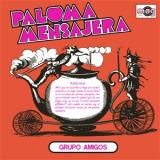
"Paloma mensajera" (featuring members of New Juggler Sound / Laghonia) shows the shift that was taking place within Peruvian rock away from psych and hard rock which had predominated during the early 70s. The style adopted by Grupo Amigos (and other bands and artists during this period) highlights the influence of soft rock, UK, US and Latin American folk rock and, above all, the desire to keep the melodic greatness of The Beatles alive. This reissue includes bonus tracks and extensive liner notes. DESCRIPTION "Paloma mensajera" (featuring members of New Juggler Sound / Laghonia) shows the shift that was taking place within Peruvian rock away from psych and hard rock which had predominated during the early 70s. The style adopted by Grupo Amigos (and other bands and artists during this period) highlights the influence of soft rock, UK, US and Latin American folk rock and, above all, the desire to keep the melodic greatness of The Beatles alive. The positive reception albums by artists such as We All Together, Telegraph Avenue and Zulu garnered between 1972 and 1975, marked a change of paradigm and in preferences within the Peruvian rock scene. Eclecticism gained new ground, to the detriment of the sectarian and orthodox, while melody grew more present and visible, moving away from the progressive experimentation that typified underground Peruvian rock up to the beginning of the 70s. For their first single on MAG, included on this reissue, the band adopted a formula in which Beatles harmonies converged symmetrically with folk motifs. 'Dirty Girl' was a hit on the radio. A full album followed but only a fairly small number of copies of the album were pressed, which seems to have been the main reason for omitting it from the historical accounts of Peruvian rock music from the late 90s onwards. In "Paloma mensajera" all compositions were penned by the group, after several years during which cover versions were a staple. Some of the musical resources that the band had at their disposal in terms of composition and arrangements are striking and even surprising, considering that they were a debut band, whose members were under the age of 20. The arrangements included the clever use of a Moog synthesizer which had just arrived at the MAG studio. The success achieved by the Beatles tribute performances played by the members of Grupo Amigos for decades have eclipsed the songs that Edmundo, Andrés Da Ros and Simón Ames composed with youthful enthusiasm and energy between 1972 and 1973 to the point where they have almost been forgotten. This re-release of "Paloma mensajera" should help rectify this major injustice. It includes bonus tracks and extensive liner notes.
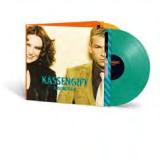
25 Jahre „Kassengift“ – Die exklusive Jubiläumsedition von ROSENSTOLZ!
Seit über drei Jahrzehnten zählen ROSENSTOLZ zu den erfolgreichsten und prägendsten Acts der deutschen
Popgeschichte. Mit zahlreichen Nr. 1-Alben, Millionen verkauften Tonträgern und etlichen Gold- und
Platin-Auszeichnungen haben sie Musikgeschichte geschrieben.
Im September 2000 erschien mit „Kassengift“ ihr erstes Nummer-1-Album – ein Meilenstein, der den
endgültigen Durchbruch markierte. Jetzt, 25 Jahre später, feiert das Kult-Album sein großes Comeback –
in einer limitierten Sonderedition auf Vinyl, wie es sie noch nie gegeben hat!
Die Highlights der Jubiläumsausgabe:
Erstmals kommt die Edition auf farbigem Vinyl in edlem Transparent-Orange und Petrol.
Mit einem ausgestanztem Schriftzug des Albumtitels und dem Bandnamen – ein echter Hingucker.
Dies als Limitierte Sammlerauflage – nur solange der Vorrat reicht.
Am 5. September erscheint zum ersten Mal seit fast 25 Jahren eine brandneue Sammlung der beliebtesten
Songs von Yusuf / Cat Stevens aus seiner fast 60-jährigen Karriere. ”On The Road To Find Out: The
Greatest Hits wird in mehreren Produktformaten veröffentlicht und präsentiert einen der größten britischen
Künstler und sein phänomenales Werk, das von Titeln wie ”The First Cut Is The Deepest”, ”Where Do The
Children Play?”, ”Wild World”, ”Moonshadow”, ”The Hurt” und ”Father and Son” geprägt ist. Außerdem
sind weitere zahlreiche Songs enthalten, angefangen bei seinem Debüt ”Matthew & Son” bis hin zu ”King
Of A Land” aus dem Jahr 2023.
Die einzigartige Sammlung erscheint weltweit als 1CD,2CD,2LP und 4LP und bietet in Remaster Qualität mit jeweils 24 Songs und 78 Minuten ein besonderes Hörerlebnis.
Außerdem dazu ein Booklet mit allen Lyrics zu den zeitlosen Songs sowie Notizen von Yusuf Cat Stevens
selbst.
Die perfekte Ergänzung für jede Plattensammlung!
Am 5. September erscheint zum ersten Mal seit fast 25 Jahren eine brandneue Sammlung der beliebtesten
Songs von Yusuf / Cat Stevens aus seiner fast 60-jährigen Karriere. ”On The Road To Find Out: The
Greatest Hits wird in mehreren Produktformaten veröffentlicht und präsentiert einen der größten britischen
Künstler und sein phänomenales Werk, das von Titeln wie ”The First Cut Is The Deepest”, ”Where Do The
Children Play?”, ”Wild World”, ”Moonshadow”, ”The Hurt” und ”Father and Son” geprägt ist. Außerdem
sind weitere zahlreiche Songs enthalten, angefangen bei seinem Debüt ”Matthew & Son” bis hin zu ”King
Of A Land” aus dem Jahr 2023.
Die einzigartige Sammlung erscheint weltweit als 1CD,2CD,2LP und 4LP und bietet in Remaster Qualität mit jeweils 24 Songs und 78 Minuten ein besonderes Hörerlebnis.
Außerdem dazu ein Booklet mit allen Lyrics zu den zeitlosen Songs sowie Notizen von Yusuf Cat Stevens
selbst.
Die perfekte Ergänzung für jede Plattensammlung!
Blah Blah Blah is the 1996 debut album by Brooklyn-based hip hop duo Blahzay Blahzay, composed of DJ P.F. Cuttin' and rapper Outloud. Their big breakthrough was the single "Danger", which was issued as the lead single of their 1996 album Blah Blah Blah. The single contains many samples, including Beastie Boys and Q-Tip "Get It Together", Gwen McCrae "Rockin' Chair", and Jeru The Damaja "Come Clean". It reached #4 on the Billboard Hip Hop Chart and #46 on the Billboard Hot 100. The tracks "Pain I Feel", "Good Cop/Bad Cop" and "Danger, Pt. 2" also gained traction. The album featured guest performances by Dark Man, Smoothe Da Hustler and Trigga Tha Gambla.
In the smoggy orange light of a new millennium, the young Deb Demure would take the bus, once a week, from his home in crumbling Hollywood to his grandmother's apartment, nestled in the pastel pristineness of Beverly Hills. During these visits, Deb couldn't help but notice the disconnect between the glow of his grandmother's temple, and the downtrodden, alienated figures that populated the seats of the mass transit that took him there. Week after week, he would observe these characters: fading B-movie starlets, leisure-suited alcoholics and forgotten civil servants. But one fateful commute home, as the twilight waned to the purple Los Angeles night, he realized these figures were not as lost as they appeared - there was a nobility in their failure, reflective of the dignity of the city's vanishing golden era. They were survivors, in need of a voice: a spokesperson for every color of hope and hopelessness, transcendent of gender and time; Drab Majesty became Deb's musical podium for this undertaking. Raised in a music-centric household, Deb would find the time to teach himself to play his father's right-handed guitar upside down and left-handed; an unorthodox fashion from where his earliest understanding of chords and harmony were conceived. Exploring the bins of discarded vinyl in his neighborhood thrift stores, his toolkit expanded with the subterranean sonic gems of the recent past. Influences range from the virtuosic arpeggiated guitar work of Felt's Maurice Deebank and the grittier pop progressions of Red Lorry Yellow Lorry's Chris Reed as well as Steve Severin from Siouxsie and The Banshees. He also studied the harmonic oscillations and utilization of the occult power of vibratory frequency present in New Age sounds of Greek artist, IASOS. In terms of orchestration, he consciously culls from the seaside maximalism of Martin Dupont and mechanized grooves of early Depeche Mode. Like a dualistic pendulum, his vocals swing from a preistly baritone to a choir boy's falsetto reflecting the sepulchral ambiance of church visits with his grandmother. Currently the drummer for Los Angeles lo-fi rock ensemble Marriages and having honed an unorthodox home recording style, Deb sources his sounds from a repository of "mid-fi" synthesizers and other lesser-quality instruments. Following the release of his debut cassette EP, "Unarian Dances", he also shared a split 12" with synth pop forefathers, Eleven Pond. During the Spring of 2015, Drab Majesty signed with Dais Records and released his first single, Unknown to the I, as a introduction for his first initial foray into the album format, romantically titled Careless. Written over the course of 2 years, "Careless" is a compendium of songs that have outlasted a malicious burglary of his studio, his struggles with substance addiction, and most recently, the death of his beloved grandmother.
Nicolás Ibarburu is a prominent figure in Uruguayan music. Renowned for his exceptional guitar skills since his teenage years, he has also established himself as a talented songwriter. In La Ruta de la Seda, he showcases a unique blend of personal songwriting, Latin fusion rhythms, pop sensibility, and deep-rooted Uruguayan musical influences. From his teenage years, Nicolás Ibarburu has become a prominent figure in Uruguayan music. Renowned for his exceptional guitar skills, he quickly gained recognition, performing alongside his brothers, Martín and Andrés, in various projects. Ibarburu's mastery of the guitar has led to collaborations with legendary figures from both Argentina and Uruguay, including the iconic Luis Alberto Spinetta, Jaime Roos, Fito Páez, and Rubén Rada. As his career evolved, Ibarburu expanded his influence beyond performance, establishing himself as a talented songwriter with a captivating solo career. His latest album, La Ruta de la Seda, showcases his unique blend of personal songwriting, Latin fusionrhythms, pop sensibility, and deeprooted Uruguayan musical influences. With his signature guitar sound and lyrics that explore the magic of artistic creation and the poetic depths of the subconscious, Ibarburu continues to push the boundaries of his artistry.
Established in 2022, Warm Exit is a post-punk quartet hailing from Brussels, Belgium. Their violently frontal music is an explosive blend of sonic intensity that sets them apart as one of the country's most electrifying and raucous acts. Drawing inspiration from Krautrock, Punk, and Noise, their relentless rhythmic prowess is a testament to their diverse influences. Channeling the spirit of iconic 1970s bands like Wire, The Fall, and Public Image Limited, Warm Exit ventures into the shadowy realm of post-punk with their latest EP. Here, they seamlessly oscillate between fast and slow tempos, high and low energy levels, and vocals that span from tense whispers to unbridled screams. This journey takes the listener through a landscape of discordant riffs, haunting groans, evocative spoken word passages, and industrial undertones. Over the past three years, Warm Exit has cultivated a devoted following both locally and internationally, thanks to their electrifying live performances that leave audiences in awe. Carrying the reputation of a striking live band, they are eager to storm the stage at any and every given opportunity.
Why the Eye is an experimental masked quartet from Brussels that propels bodies into trance during its live performances. All instruments are DIY and played in real time, without loops or sequencers. Fans of The Residents, Société Étrange, Autechre, Boards Of Canada, The Meridian Brothers and Fulu Miziki could easily relate to their sound. On the recording of 'Inspirex', Damien Magnette who produced the album says, "The album is live music based on energy. It has a chaotic side. How do you convey the chaotic, wild, animal energy of live music on record? My point of view is that to achieve this energy, you have to do exactly the opposite in the studio. A lot of layering. Lots of overdubs that we can't do live. It's all these elements that give the album its wildness."
First part of second album! Originating from Normandy, France, psychedelic noise-pop quartet You Said Strange presents a unique blend of indie rock that incorporates elements of psych pop-rock, shoegaze, and proto-grunge. The band recorded their first album, Salvation Prayer, in 2018 in Portland (USA), with Peter G. Holmstrom from The Dandy Warhols, which saw release via Fuzz Club Recirds. In 2022, the band shared their LP Thousand Shadows Vol. 1. Mythomaniac kings, the Mediterranean, the colors of mourning _ these are the detailed subjects, described against a backdrop of psychedelic pop, proto grunge, and shoegaze. The first part of a powerful, reverberant, melodious second album, drawing its inspiration and production stem from encounters during their 2022 European and North American tours, between Normandy, New York, and Oregon. Most recently, You Said Strange shared the second part of their sophomore release, a follow-up to Vol. 1 entitled Thousand Shadows Vol. 2.
Second part of second album! Originating from Normandy, France, psychedelic noise-pop quartet You Said Strange presents a unique blend of indie rock that incorporates elements of psych pop-rock, shoegaze, and proto-grunge. Thousand Shadows volume 2, a second chapter was needed to highlight the many shadows that still linger everywhere. The shadows that linger on the borders, hiding the violence of the fights for them. The shadows that time has on the relationships and their persistence, because the shadows move. Plato's cave, modern version, would be the one of toxic relationships, antidepressants and the acceptance of the regression of freedom and/or the vision of a dying world... Between shoegaze, noise pop and psychedelic rock, You Said Strange absorbs its time to incant a music in which melancholy, love and the search for plenitude meet. The band recorded their first album, Salvation Prayer, in 2018 in Portland (USA), with Peter G. Holmstrom from The Dandy Warhols, which saw release via Fuzz Club Recirds. In 2022, the band shared their LP Thousand Shadows Vol. 1. Mythomaniac kings, the Mediterranean, the colors of mourning _ these are the detailed subjects, described against a backdrop of psychedelic pop, proto grunge, and shoegaze. The first part of a powerful, reverberant, melodious second album, drawing its inspiration and production stem from encounters during their 2022 European and North American tours, between Normandy, New York, and Oregon. Most recently, You Said Strange shared the second part of their sophomore release, a follow-up to Vol. 1 entitled Thousand Shadows Vol. 2.
Bendik Giske’s Beatrice Dillon-produced 2023 album gets an addendum with reworks from Carmen Villain, aya, Hanne Lippard, Hieroglyphic Being, Wacław Zimpel and Dillon herself.
Giske’s clearly got his ear to the ground; his last remix record was an invitation for Laurel Halo to put her stamp on »Cruising«, while 2018’s »Adjust EP« roped in Deathprod, Total Freedom, Lotic, and Rezzett. Now comes this new LP of remixes and it’s one of the best we’ve heard in aeons. Carmen Villain boots things off with a remix of »Slipping«, following her excellent (and way, way too underrated) »Nutrition EP« with a giddy, subtle roller that sounds as if it’s been constructed using only Giske’s raw stems. His breaths and leathery key presses – already amped up by Dillon’s detailed recording – are magicked into a dubby concrète groove that’s enhanced with the sparest melodic elements: echoing rainforest-at-night horn blasts, and lopped off decay trails that help fuel the momentum.
aya’s revision of the same track takes a different approach, forming forceful overlapping polyrhythms from Giske’s clanks, using the gamelan-like arpeggios for melodic weight and repetition. The result is a constantly shifting, hypnotic trancer that’s achingly organic – more Raja Kirik than Paul Van Dyke. Polish clarinetist and producer Wacław Zimpel, meanwhile, supplements his trippy recent collaboration with James Holden on a similarly levitational wrinkle of »Slipping« that twists Giske’s quivering sequences with microtonal synth prangs, and gusty echoes. But it’s Jamal Moss who plays fastest and loosest with Giske’s source material, calling back to April’s psy-house stunner »Dance Music 4 Bad People« with a powdery, sexualised banger that buries the breathy »Start« stems underneath neon synths, and brittle drum loops.
»I’m a digital nomad,« Lippard deadpans over Giske’s »Not Yet«. »I’m addicted you know that.« It’s a typically dry treatment from the conceptual artist that unexpectedly amps up the hypnotic qualities of Giske’s original, adding her circuitous charm to his concertina-ing sax sequences. And to tie things up perfectly, Beatrice Dillon returns with her diaphanous remix of »Rise and Fall«, built to emphasise the radically different approaches of each artist.
Bernadette Price, wife of the late, legendary Sean Price, steps into the spotlight with her solo debut album, A Widow’s Cry. This deeply personal project features hard-hitting production from some of hip-hop’s finest producers, including Khrysis, Da Beatminerz, Stu Bangas, and more.
A Widow’s Cry not only honors Sean Price’s legacy but amplifies it, featuring collaborations with fellow Boot Camp Clik members Smif-N-Wessun, Ruste Juxx, Rockness Monsta, along with a rare, never-before-heard verse from Sean Price himself—a true gem for longtime fans.
More than just a tribute, this album is Bernadette Price’s bold statement that she’s here and ready to make her mark.
Los Angeles trio Faetooth sophomore album Labyrinthine is a deeply felt exploration of emotional weight: grief, memory, uncertainty, and the quiet work of growing around your own wounds. Following the band's 2022 debut Remnants of the Vessel, which introduced the band’s signature blend of heaviness and mysticism, Labyrinthine pushes further inward. True to its name, the album winds through a maze of feeling and form, where meaning is never handed over easily. It’s rooted in self-discovery through disorientation, the idea that understanding comes not from escape, but from getting lost. Ari May (guitars and vocals), Jenna Garcia (bass and vocals), and Rah Kanan (drums) manage to stay grounded in the immediate in parallel with fantasy themes of the band's namesake. Labyrinthine holds space for this contradiction; tenderness and intensity, restraint and release. The band's self-branded “fairy doom” sound fits between shoegaze, doom, and grunge. It isn’t just texture; it’s a framework for navigating the unsaid. Like the myth that inspired its title, Labyrinthine doesn’t end in victory, but in confrontation—not with escape, but with the Minotaur. Only here, the Minotaur isn’t a monster. It’s something quiet and more familiar: unresolved feelings, old memories, and sadness that refuse to stay buried. The album winds like a maze, sometimes heavy, sometimes hushed, always intentional. Faetooth isn’t chasing catharsis. They’re creating space to reflect, to feel, and maybe to get a little lost along the way.
Artist quote: "White Noise" emerged from a diary entry, and is a relentless and intense reflection on inner turmoil. We’re often drawn to the familiar, even when we don’t realize we’re reaching out for it. It is an emotional upheaval, carrying harsh truths that weigh heavily on the heart. Guitarist, Ari May mentions, “Performing the song always takes me back to a specific place, even if just for a moment.”
“Riffs and melodies brimming with loneliness and longing… this band’s incantations affect my mood the whole day after listening.” — The Sleeping Shaman
“Bringing otherworldly hazy doom goodness… dreamy clean vocals, echoing harsh vocals, entrancing riffs, meditative shoegaze melodies.” — Nine Circles
“Slow, lumbering behemoths of great weight… couched in a melancholy atmosphere and explosions of crushing heaviness.” - Where Strides The Behemoth
Los Angeles trio Faetooth sophomore album Labyrinthine is a deeply felt exploration of emotional weight: grief, memory, uncertainty, and the quiet work of growing around your own wounds. Following the band's 2022 debut Remnants of the Vessel, which introduced the band’s signature blend of heaviness and mysticism, Labyrinthine pushes further inward. True to its name, the album winds through a maze of feeling and form, where meaning is never handed over easily. It’s rooted in self-discovery through disorientation, the idea that understanding comes not from escape, but from getting lost. Ari May (guitars and vocals), Jenna Garcia (bass and vocals), and Rah Kanan (drums) manage to stay grounded in the immediate in parallel with fantasy themes of the band's namesake. Labyrinthine holds space for this contradiction; tenderness and intensity, restraint and release. The band's self-branded “fairy doom” sound fits between shoegaze, doom, and grunge. It isn’t just texture; it’s a framework for navigating the unsaid. Like the myth that inspired its title, Labyrinthine doesn’t end in victory, but in confrontation—not with escape, but with the Minotaur. Only here, the Minotaur isn’t a monster. It’s something quiet and more familiar: unresolved feelings, old memories, and sadness that refuse to stay buried. The album winds like a maze, sometimes heavy, sometimes hushed, always intentional. Faetooth isn’t chasing catharsis. They’re creating space to reflect, to feel, and maybe to get a little lost along the way.
Artist quote: "White Noise" emerged from a diary entry, and is a relentless and intense reflection on inner turmoil. We’re often drawn to the familiar, even when we don’t realize we’re reaching out for it. It is an emotional upheaval, carrying harsh truths that weigh heavily on the heart. Guitarist, Ari May mentions, “Performing the song always takes me back to a specific place, even if just for a moment.”
“Riffs and melodies brimming with loneliness and longing… this band’s incantations affect my mood the whole day after listening.” — The Sleeping Shaman
“Bringing otherworldly hazy doom goodness… dreamy clean vocals, echoing harsh vocals, entrancing riffs, meditative shoegaze melodies.” — Nine Circles
“Slow, lumbering behemoths of great weight… couched in a melancholy atmosphere and explosions of crushing heaviness.” - Where Strides The Behemoth
Los Angeles trio Faetooth sophomore album Labyrinthine is a deeply felt exploration of emotional weight: grief, memory, uncertainty, and the quiet work of growing around your own wounds. Following the band's 2022 debut Remnants of the Vessel, which introduced the band’s signature blend of heaviness and mysticism, Labyrinthine pushes further inward. True to its name, the album winds through a maze of feeling and form, where meaning is never handed over easily. It’s rooted in self-discovery through disorientation, the idea that understanding comes not from escape, but from getting lost. Ari May (guitars and vocals), Jenna Garcia (bass and vocals), and Rah Kanan (drums) manage to stay grounded in the immediate in parallel with fantasy themes of the band's namesake. Labyrinthine holds space for this contradiction; tenderness and intensity, restraint and release. The band's self-branded “fairy doom” sound fits between shoegaze, doom, and grunge. It isn’t just texture; it’s a framework for navigating the unsaid. Like the myth that inspired its title, Labyrinthine doesn’t end in victory, but in confrontation—not with escape, but with the Minotaur. Only here, the Minotaur isn’t a monster. It’s something quiet and more familiar: unresolved feelings, old memories, and sadness that refuse to stay buried. The album winds like a maze, sometimes heavy, sometimes hushed, always intentional. Faetooth isn’t chasing catharsis. They’re creating space to reflect, to feel, and maybe to get a little lost along the way.
Artist quote: "White Noise" emerged from a diary entry, and is a relentless and intense reflection on inner turmoil. We’re often drawn to the familiar, even when we don’t realize we’re reaching out for it. It is an emotional upheaval, carrying harsh truths that weigh heavily on the heart. Guitarist, Ari May mentions, “Performing the song always takes me back to a specific place, even if just for a moment.”
“Riffs and melodies brimming with loneliness and longing… this band’s incantations affect my mood the whole day after listening.” — The Sleeping Shaman
“Bringing otherworldly hazy doom goodness… dreamy clean vocals, echoing harsh vocals, entrancing riffs, meditative shoegaze melodies.” — Nine Circles
“Slow, lumbering behemoths of great weight… couched in a melancholy atmosphere and explosions of crushing heaviness.” - Where Strides The Behemoth
The album introduced a lush, complex dream world that the singer, composer, and producer created and inhabited largely on her own. She produced all the songs, and wrote and performed everything on the self-released collection outside of a re-imagined cover of Pink Floyd’s “Green is the Colour” and 2 other tracks (“The Time,” “Give It Back To You”), which started as instrumentals written by Survive’s Kyle Dixon (who composed the Stranger Things soundtrack with his bandmate Michael Stein), to which Ainsworth wrote melodies and added lyrics. Ainsworth, who’s relocated to Los Angeles from Toronto since 2017’s Darling of the Afterglow, explains that the collection revealed itself to her “as a play taking place in Mother Nature’s vanishing home,” aka Phantom Forest, and that she’s singing from 3 perspectives: herself, Mother Nature, and Greek Chorus. For instance, of the album’s opener, “Diamonds Cutting Diamonds,” she explains: “The Greek Chorus sets the scene, narrating and offering direction on how to enter Phantom Forest. It’s my hope that the listener will imagine the narration to be directed to them as well, as they begin the journey of the album.” You’ll get a sense of this from the collection’s edenic cover art and the playful, pastoral video for the album’s first single, “Can You Find Her Place.” Its inspiration came from Ainsworth’s love for Italian Renaissance painter Botticelli’s 15-century masterpiece “Primavera,” an allegorical representation of the burgeoning fertility of the earth in spring. She notes: “The video features the Greek gods of the painting in a choreographed Baroque style dance.” Keeping with the personal feel of the collection, her sister Abby Ainsworth directed the clip. In line with the classical and historical depths of Phantom Forest, Ainsworth, who holds a Masters Degree in film scoring composition from NYU and studied composition as an undergrad at McGill, notes that although the album might be considered pop, she approached it as an orchestrator. “Even if I’m dealing purely with synths,” she says, “The songs are like a score, each one an evolving journey. I love to use strings so I’ve included my string arrangements on ‘Tell Me I Exist’ and ‘Can You Find Her Place.’ I recorded live musicians on drums, bass, and guitar on ‘Edge of the Throne,’ ‘The Time,’ and ‘Floating Dream,’ and wove those live elements into my programmed elements.” Phantom Forest is a beautiful, vast collection that mixes the historical and the hands on, with hooks about the apocalypse and people obsessively using face-recognition software to see what paintings their face match with, in search of some kind of connection. It’s a journey that holds up to close listening (and lyric reading) and to dance floors, but that can also exist on a purely emotional plane. In all cases, it asks that you listen, and take some kind of action.
"Laurel Hell" ist ein Soundtrack zur Transformation. Eine Landkarte für den Ort, an dem Verletzlichkeit und Widerstandsfähigkeit, Trauer und Freude, Fehler und Transzendenz in unserer Menschlichkeit Platz finden und als würdig angesehen werden können - um letztendlich anerkannt und geliebt zu werden. "I accept it all," verspricht MITSKI. "I forgive it all." Auf "Laurel Hell" festigt MITSKI ihren Ruf als Künstlerin, die die Kraft besitzt, unsere wildesten und zwiespältigsten Erfahrungen in ein heilendes Elixier zu verwandeln. "I wrote what I needed to hear. As I've always done." Nach der Veröffentlichung von "Be The Cowboy", einem der meistgelobten Alben des Jahres 2018, das von Outlets wie Pitchfork (u.a.) zum Album des Jahres gekürt wurde, stieg MITSKI vom Kultliebling zum Indie-Star auf. Mit spürbaren Folgen: Die Schinderei des Tourlebens und die Fallstricke die mit der erhöhten Sichtbarkeit einhergingen, beeinflussten ihre Musik ebenso wie ihren Geist, die sich in der ersten Single "Working For The Knife" niederschlägt. Ein Song, wie ein Prüfstein für das Gesamtgefühl von "Laurel Hell": "I start the day lying and end with the truth / That I'm dying for the knife." "Be The Cowboy" wurde von weiblicher Stärke und Trotz angetrieben, lebte jedoch von seinem Spiel mit Masken. Wie der Berglorbeer bzw. die "laurel hell", nach dem das neue Album benannt ist, kann die öffentliche Wahrnehmung, wie das berauschende Prisma des Internets, eine verlockende Fassade bieten, hinter der sich eine tödliche Falle verbirgt. Die sich immer enger zieht, je mehr man sich anstrengt. "I got to a point, where I just knew that if I kept going this way, I would numb myself to completion." Erschöpft von diesem verzerrten Spiegel und unserer Sucht nach falschen Binaritäten, begann MITSKI, Songs zu schreiben, die die Masken abstreifen und die komplexen und oft widersprüchlichen Realitäten dahinter offenbaren. MITSKI dazu: "I needed love songs about real relationships that are not power struggles to be won or lost. I needed songs that could help me forgive both others and myself. I make mistakes all the time. I don't want to put on a front where I'm a role model, but I'm also not a bad person. I needed to create this space mostly for myself where I sat in that gray area." Die daraus entstanden Songs verkörpern genau diesen Raum. Wie die zweite Single des Albums, "The Only Heartbreaker", die gemeinsam mit Dan Wilson geschrieben wurde und der erste Song dieser Art in ihrer Diskografie ist. "The Only Heartbreaker" verbindet treibenden 80er-Pop mit einem trügerisch einfachen Text, dessen aufrichtiger Refrain ins Ironische kippt, sobald dieser "the person always messing up in the relationship, the designated Bad Guy who gets the blame," beschreibt und sich zugleich fragt, ob "the reason you're always the one making mistakes is because you're the only one trying." MITSKI schrieb viele Songs für "Laurel Hell" während und teilweise vor 2018. Das Album wurde allerdings erst im Mai 2021 final abgemischt. Es ist die längste Zeitspanne, die MITSKI jemals für ein Album gebraucht hat und für die Musikerin inmitten einer radikal veränderten Welt endete. MITSKI nahm "Laurel Hell" mit ihrem langjährigen Produzenten Patrick Hyland in der Zeit der Isolation während der Pandemie auf, als einige der Songs "slowly took on new forms and meanings, like seed to flower." Das Album als Ganzes entwickelte sich "to be more uptempo and dance-y. I needed to create something that was also a pep talk" erklärt MITSKI. Die Spannung, die zwischen ihren raffinierten, aber wehmütigen Texten und dem sprudelnden Pop-Sound der 1980er Jahre entsteht, ist eine dringend benötigte Infusion in Zeiten wie diesen und das Werk einer reifen wie unwiderstehlichen Künstlerin, die auch zu fröhlich ansteckenden Dance-Beats immer noch etwas Profundes beizutragen hat.
20th Anniversary Edition of «The Creep» by Slomo, this ambient doom masterwork is available on vinyl for the first time via Ideologic Organ. This is a storied album of verbal history, and emerged from a figurative long barrow deep within a virtual space of great depth and contemplation, an inverted framing of acoustic space with heavy floors ranging from the wake of COIL to the heaviest Japanese fire of psychedelia to the monuments of drone coagulating in the early ‘aughts. A first CDR edition in 2005 garnered focus of heavyweights like SUNN O))), Julian Cope, the esoteric legendary record store Aquarius, and the Wire.
Ideologic Organ are honoured to have been tasked to bring this to a limited LP for the very first time, and collaborated with mastering genius Rashad Becker to create a 61 minute single LP in a perfect cut.
Highly Ritualised Somnambulant Glumbient Downer band from Yorkshire, UK.
‘Slomo is a 2-piece made up of myself, Holy McGrail, and Howard «Iron Man» Marsden. Our debut album THE CREEP was released in a run of 100 copies on FUCK OFF & DI in 2005, after attracting a great buzz in its earlier promo form. THE CREEP is a single 1-hour-long track recorded live with minimal overdubs & zero eye-contact. Malnourished musical structures flourish, flounder and flag in virtual stasis.