X-Coast unveils 9-track 2xLP The Riviera Collection on his label Riviera Records.
Hot on the heels from remixing instant dance hits such as Shygirl's '4eva' and DJ Gigola's 'La Batteria' and spotted in the studio with adored vocalists Eartheater and Miss Bashful, Serbian-born, NYC-based DJ/producer X-Coast returns with a collection of signature tracks that feel like the lost treasure chest of his dance island.
X-Coast is your favorite DJ's favorite producer, whose tracks you’ve undoubtedly danced to, whether on a massive festival stage or at an intimate, underground rave. Over the past decade, he has quietly but consistently shaped the pulse of dancefloors worldwide, with a distinctive style that traverses genres like house, techno, electro, drum and bass, and trance. This rare versatility has led X-Coast to release on the likes of Mall Grab’s Steel City Dance Discs, Diplo’s Higher Ground, Anetha’s Mama Told Ya and DJ Haus’s Unknown To The Unknown, to name a few.
What sets X-Coast apart is not just his ability to move fluidly between styles but the unique character embedded in every track. His productions have an undeniable warmth and authenticity, often evoking the raw, euphoric spirit of the 90s and 00s rave era. This nostalgic yet forward-thinking approach makes his music feel timeless, effortlessly blending old-school rave energy with modern production techniques. It's a quality that has made him a go-to for DJs across the board, whether they’re playing peak-time techno sets or deep, groovy house sessions.
On The Riviera Collection, released on his own label, Riviera Records, X-Coast opens the vault to reveal a diverse range of tracks that showcase his deep connection to multiple eras of electronic music. This collection reflects the breadth of his eclectic DJ sets, where various sounds and styles converge into a cohesive journey. Each track feels like a contemporary reimagining of a classic moment in dance music history.
From the early 2000s tribal influences layered with X-Coast’s signature chord work on ‘Neapolis,’ to the soaring, synthetic trance energy of ‘Desert Storm,’ and the infectious, camp vibe of the diva house ‘Hold Me Baby,’ the collection takes us on a nostalgic trip back to the origins of rave culture. It echoes a time when DJs crafted a journey through genres, playing everything from house to trance to techno in one seamless night.
The collection’s first hidden gems and long-awaited singles are “Da Boing Boing Trak” and "Put Your Hands Together". Both staples in his sets at iconic venues and festivals like Pitch Music & Arts, fabric, Circoloco, AVA Festival, Melt!, and Intercell, this track has been in high demand among fans, finally seeing its release. With The Riviera Collection, X-Coast continues to cement his status as a versatile producer capable of bridging the gap between past and present, while delivering music that moves crowds everywhere.
Cerca:peak
Len Faki continues to expand the Hardspace series with a new release of personal edits crafted for use in his own DJ sets. This latest addition shows Faki’s meticulous approach to reworking tracks that have shaped his sets, blending classic vibes with his signature style.
On the A-side, Faki revisits Dubspeeka’s Mod 3 and Mod 4, released in 2017. The Harspace reworks pick up on the brooding atmosphere of the original productions and build upon the dark, cinematic vibes. Faki also considerably tweaks the energy level on both tracks, ramping up not only in speed but also adding his trademark percussive pummeling to tailor these tools for peak-time play.
Flipping to the B-side, he turns his attention to Fanon Flowers’ Chicago-Detroit Part 1 and Part 3. These cuts first appeared on Studio Sound in 2010, as part of a series that paid homage to the pioneering sounds of Chicago house and Detroit techno. Both cuts exhibit extremely raw machinist grooves with a sparse analogue jam charme. Embedding the originals’ gritty textures and melodic nuances into his edits, Faki highlights their jacking qualities and infuses both tracks with a renewed sense of urgency, creating tension and release as you would expect from one of his sets.
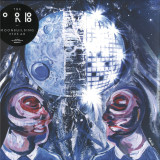
The long-awaited new full-length from legendary electronic pioneers THE ORB with cover design from iconic graphic wizards THE DESIGNERS REPUBLIC • A fascinating sonic journey over four epic tracks, constantly switching between psychedelic flourishes and beat-driven focus
Veritable pioneers of electronic music, iconic act THE ORB returns to Kompakt with the new full-length MOONBUILDING 2703 AD - another major slice of psychedelic synth bliss, obscure loops and deep ambient textures tossed in swinging breakbeats and powerful basslines. Installing a forward momentum rather unusual for a genre-defying project like this, the latest effort from masterminds Alex Paterson and Thomas Fehlmann follows their 2005 album success on Kompakt, the cheekily named "Okie Dokie It's The Orb On Kompakt" (KOMPAKT CD 45), as well as several contributions to our Speicher and Pop Ambient series - but more importantly, it finds the legendary duo at the peak of its creativity, ringing in another essential phase in what can only be called a ground-breaking career.
True to form, the new offering MOONBUILDING 2703 AD features a small track list, but turns each one of its four cuts into a mini epic in its own right. Opener GOD'S MIRRORBALL hits the ground floating, employing a handful of cozy statics to great effect before finally discharging into an intricate mosaic of atmospheric melodic sketches and gripping rhythms. With a hypnotic runtime of more than 14 minutes, it immediately establishes a blueprint for the other album tracks to follow, perfectly illustrating the vast extent of the artists' vision and their impressive skills in luring in listeners - welcome to THE ORB's sonic labyrinth, where nothing is what it seems and the unexpected waits just around the corner.
Likewise, follow-up track MOONSCAPES 2703 BC presents itself as a uniquely versatile affair sitting comfortably between ambient flourishes and beat-driven focus, holding as many twists and turns as a caper movie, but carefully grounding every single one of its cliffhangers in its impeccable flow. With a runtime of approximately 9 minutes, LUNAR CAVES is the shortest jam of the bunch - and also the most ethereal, keeping its rhythmic content to a bare, pulse-like minimum and opting for enticing, freewheeling synth textures instead. Album closer and title cut MOONBUILDING 2703 AD introduces a surprisingly jazzy vibe mingling rather well with the wealth of electronic tricks up its sleeve - even indulging in abrasive bass sweeps and a breathtaking multitude of different rhythm sections constantly switching places. It's a fitting closing act for a full-length as multifaceted as this, as idiosyncratic as possible and as muscling as needed.
• Das langerwartete neue Album der legendären Elektronikpioniere THE ORB mit einem Coverdesign der gefeierten Graphikschmiede THE DESIGNERS REBUBLIC • Eine faszinierende Klangreise über vier epische Tracks hinweg, permanent zwischen psychedelischen Schlüsselreizen und beatgetriebenem Fokus changierend
Mit THE ORB kehren echte Pioniere der elektronischen Musik zu Kompakt zurück - der Langspieler MOONBUILDING 2703 AD präsentiert erneut einen grossen Wurf in Richtung psychedelischen Synthie-Segens, obskurer Loops und porentiefer Ambient-Texturen, geschwenkt in schwungvollen Breakbeats und wirkmächtigen Basslines. Mit einem für genresprengende Projekte wie diesem hier eher unüblichen Vorwärtsdrang beerbt das neue Album von den Großmeistern Alex Paterson und Thomas Fehlmann ihren 2005er Erfolg auf Kompakt, das augenzwinkernd benannte "Okie Dokie It's The Orb On Kompakt" (KOMPAKT CD 45), sowie einige Beiträge zu unseren Speicher- und Pop-Ambient-Serien - viel wichtiger allerdings, daß wir das legendäre Duo auf der Höhe ihrer Schaffenskraft antreffen, eine neue wesentliche Phase einläutend in einer Laufbahn, die nur als bahnbrechend bezeichnet werden kann.
In bekannter Manier hat das neue Werk MOONBUILDING 2703 AD eine eher kleine Tracklist vorzuweisen, baut dafür aber jeden seiner vier Tracks zu Mini-Epen von eigenem Recht um. Der Eröffnungsakt GOD'S MIRRORBALL schwebt einem da vor Ohren, zuerst nur mit einer Handvoll gemütlichen Rauschens bewaffnet, später dann in ein feingliedriges Mosaik von atmosphärischen Melodieskizzen und mitreissenden Rhythmen explodierend. Mit einer hypnotisierenden Lauflänge von über 14 Minuten etabliert das Stück die Blaupause für die folgenden Ereignisse, perfekt die enorme Reichweite der künstlerischen Vision und ihre Fähigkeit zur massenhaften Verführung nichtsahnender Tänzer illustrierend - willkommen in THE ORB's Klanglabyrinth, wo nichts ist wie es scheint und das Unerwartete um jede Ecke lauert.
Ähnlich präsentiert sich der Folgetrack MOONSCAPES 2703 BC als einzigartig vielseitige Angelegenheit, bequem zwischen ambienten Ornamenten und beatgetriebenem Fokus sitzend und mit sovielen Drehungen und Wendungen wie ein Gaunerfilm - doch stets seine Cliffhanger im makellosen Flow erdend. Ein wenig über 9 Minuten lang, ist LUNAR CAVES der kürzeste Entwurf in der Gruppe - und auch der ätherischste, hält er doch die Rhythmusanteile auf einem puls-ähnlichem Minimum und optiert stattdessen für freilaufende Synthie-Texturen. Das letzte Kapitel des Albums schließlich ist auch der Titeltrack: MOONBUILDING 2703 AD besitzt eine überraschend jazzige Note, die sich ziemlich gut in den Reichtum an elektronischen Tricks einfügt, welche hier aus dem Ärmel geschüttelt werden - sogar in rauem Bass schwelgend und eine atemberaubende Vielfalt an Rhythmussektionen aufrufend, die ständig die Plätze tauschen. Es ist ein passender Abschluss für ein derart facettenreiches Album, so idiosynkratisch wie möglich und so anschiebend wie nötig.
- A1: On Green Dolphin Street
- A2: Fran-Dance
- B1: Stella By Starlight
- B2: Love For Sale
Mastered by Matthew Lutthans at The Mastering Lab from a new 30 ips quarter-inch stereo master tape transferred from the original 3-track session tapes. Plated and pressed at Quality Record Pressings for flawless production and superior fidelity! Stoughton Printing Old Style tip-on gatefold heavyweight jacket with scuff-resistant matte finish.
Miles Davis's Kind of Blue was the number-one jazz album in history. It totaled five songs. There are four more songs from that same historic group, recorded in the same time period and at the same studio. And here they are. These songs deserve to stand on their own with artwork to highlight the quality of the music and that matches the time period of the recording. This is a rare opportunity to have a smash follow-up to what many consider the greatest jazz record ever!
Through the years, these four remarkable performances — all from a single recording session in 1958 and all exemplary of the sound of Miles Davis' legend-loaded sextet of that year — have not been served well. They have been largely treated as add-ons for other compilations. Now, for the first time, Analogue Productions, the audiophile in-house reissue label of Acoustic Sounds, Inc., together with Quality Record Prssings, has deservedly given these tracks a stellar stand-alone release for jazz fans to savor!
The once-in-a-generation lineup that recorded these tunes is the very same that would be immortalized for the enduring classic they would record almost a year later, Kind of Blue. Davis played trumpet sublime with his ensemble sextet featuring pianist Bill Evans, drummer Jimmy Cobb, bassist Paul Chambers, and saxophonists John Coltrane and Julian "Cannonball" Adderley.
Undervalued since their recording, the tunes on this album reflect historial and musical significance. They offer early glimpses into the modal jazz that Kind of Blue would bring to the forefront. Using modes common in modern classical music, rather than the chords of popular songs, Miles had begun to experiment with the new approach on the Milestones recording sessions previously.
Analogue Productions is proud to present Birth of the Blue in an exclusive first-of-its-kind stand-alone release that reflects our reputation for meticulous production, capturing authentic sound with clarity, depth and fidelity that exceeds the audiophile standard.
For this release, we started with the original 3-track recording session tapes that were mixed down to a brand-new 30 ips quarter-inch stereo master tape by senior mastering engineer Vic Anesini at Battery Studios. From that stereo master tape, Matthew Lutthans at The Mastering Lab cut the lacquers at 33 1/3 RPM utilizing the legendary Doug Sax's custom all-tube system and cutting lathe. The lacquers were plated and pressed on 180-gram vinyl at Quality Record Pressings. Lastly, the Stoughton Printing tip-on gatefold jacket with a deluxe scuff-resistant matte finish is the highest quality available. The artwork has an incredible spot-on look to a 1959 Columbia records release!
Features:
• Pioneering Ensemble: Captured the same rare and short-lived alignment of jazz legends including Miles Davis, John Coltrane, Cannonball Adderley, Bill Evans, Paul Chambers, and Jimmy Cobb, as heard on the historic Kind of Blue.
• Innovative Sound: The session represented a crucial transition in jazz, blending elements of hard bop with early modal jazz influences, showcasing the ensemble's experimentation and forward-thinking approach.
• Undervalued Legacy: Despite its historical and musical significance, the session's recordings have been historically overlooked, often relegated to being add-ons in compilations rather than recognized as standalone masterpieces.
• Modal Jazz Precursor: Offered early glimpses into the modal jazz that would later be fully realized in Davis's groundbreaking album "Kind of Blue," laying the groundwork for future jazz innovation.
• Impact on Artists: Served as a critical point of development and confidence for the musicians involved, particularly Bill Evans, who noted the significant impact of this experience on his own identity and style.
• Historical Context: Occurred at a peak moment in Miles Davis's career, following his signing with Columbia Records and his critical and commercial successes with albums such as ‘Round About Midnight and Miles Ahead.
• Revealed backstory: Extensive liner notes by the Grammy Award-winning author Ashley Kahn, who also penned the estential book, Kind Of Blue — The Making Of The Miles Davis Masterpiece
- A1: Giving Up
- A2: A Song For You
- B1: Little Girl
- B2: He Ain't Heavy, He's My Brother
- C1: Magnificent Sanctuary Band
- C2: She Is My Lady
- D1: I Believe In Magic
- D2: Take A Love Song
- D3: Put Your Hand In The Hand
Speakers Corner[42,82 €]
Pressed at Quality Record Pressings. Tip-on old style gatefold double pocket jacket by Stoughton Printing
Donny Hathaway's second album, released in April 1971, can be considered the antithesis of a "sophomore slump." The collection of cover songs found the artist not only spotlighting his talent, but his tastes. Among the songs he chose to cover on the LP was Leon Russell's "A Song for You," taken from Russell's debut album which was barely a year old at the time. Hathaway's impassioned version is so strong that many listeners are still shocked to discover that the song is indeed a cover.
With songs by Billy Preston ("Little Girl"), Mac Davis ("I Believe in Music") and Van McCoy (Gladys Knight and the Pips' 1964 hit, "Giving Up"), the record didn't exactly ignite the charts, peaking at No. 73 for the week of July 24, 1971 (the No. 1 album in America that week: Carole King's Tapestry). Hathaway's second LP is so much more than its chart performance.
Atlantic producer Jerry Wexler took over most of the production duties, with Hathaway producing one track, the self-penned "Take a Love Song." One of just three solo studio albums Hathaway recorded before his tragic death in 1979, Donny Hathaway is a truly timeless classic that will never go out of style.
Pressed on 180-gram vinyl at Quality Record Pressings, and housed in a tip-on old style gatefold double pocket jacket by Stoughton Printing.
- A1: Fa-Fa-Fa-Fa-Fa (Sad Song)
- A2: I'm Sick Y'all
- A3: Tennessee Waltz
- B1: Sweet Lorene
- B2: Try A Little Tenderness
- B3: Day Tripper
- C1: My Lover's Prayer
- C2: She Put The Hurt On Me
- C3: Ton Of Joy
- D1: You're Still My Baby
- D2: Hawg For You
- D3: Love Have Mercy
Complete & Unbelievable: The Otis Redding Dictionary of Soul was the soul legend's 1966 album (and the last issued in his lifetime). The original album features mostly covers on side one and original compositions by Redding on side two.
The album features musical assistance from Booker T. & the M.G.'s-organist Booker T. Jones, pianist/guitarist Steve Cropper, bassist Donald "Duck" Dunn, drummer Al Jackson, Jr.-pianist Isaac Hayes, and the Memphis Horns, consisting of tenor saxophonist Joe Arnold, trumpeter Wayne Jackson, tenor saxophonist Andrew Love and baritone saxophonist Floyd Newman.
The Otis Redding Dictionary of Soul was released in October 1966 on the Stax label and peaked at No. 73 and at No. 5 on the Billboard 200 and the R&B LP charts respectively. The album produced two singles, "Fa-Fa-Fa-Fa-Fa (Sad Song)" and "Try a Little Tenderness." In 2,000 it was voted No. 488 in Colin Larkin's All Time Top 1,000 Albums. In 2012, the album was ranked No. 254 on Rolling Stone magazine's list of The 500 Greatest Albums of All Time.
Cut at 45 RPM, pressed on 180-gram vinyl at Quality Record Pressings, and housed in a tip-on old style gatefold double pocket jacket by Stoughton Printing.
Pressed at Quality Record Pressings. Tip-on old style gatefold double pocket jacket by Stoughton Printing
Donny Hathaway's second album, released in April 1971, can be considered the antithesis of a "sophomore slump." The collection of cover songs found the artist not only spotlighting his talent, but his tastes. Among the songs he chose to cover on the LP was Leon Russell's "A Song for You," taken from Russell's debut album which was barely a year old at the time. Hathaway's impassioned version is so strong that many listeners are still shocked to discover that the song is indeed a cover.
With songs by Billy Preston ("Little Girl"), Mac Davis ("I Believe in Music") and Van McCoy (Gladys Knight and the Pips' 1964 hit, "Giving Up"), the record didn't exactly ignite the charts, peaking at No. 73 for the week of July 24, 1971 (the No. 1 album in America that week: Carole King's Tapestry). Hathaway's second LP is so much more than its chart performance.
Atlantic producer Jerry Wexler took over most of the production duties, with Hathaway producing one track, the self-penned "Take a Love Song." One of just three solo studio albums Hathaway recorded before his tragic death in 1979, Donny Hathaway is a truly timeless classic that will never go out of style.
Pressed on 180-gram vinyl at Quality Record Pressings, and housed in a tip-on old style gatefold double pocket jacket by Stoughton Printing.
The first of three collaborative albums by Marvin Gaye and Tammi Terrell, United was released on August 29, 1967 on the Motown subsidiary label Tamla Records. It was the duo's as well as Marvin Gaye's most successful album of the 1960's, with sales almost reaching one million copies. It yielded four Top 100 Billboard chart hits, including the two Top 10 singles, "Your Precious Love," and "If I Could Build My Whole World Around You." United peaked at #69 on the U.S. Billboard 200 album chart and #7 on the U.S.
Billboard R&B albums chart upon its release. United received a 4 ½ star rating on AllMusic, with reviewer Andrew Hamilton stating that it "was the first of their three LPs, and quite possibly the best of the lot."
The eleventh studio album by American soul quintet The Temptations for the Gordy label, Puzzle People was released in 1969. Produced entirely by Norman Whitfield, it expanded on the psychedelic soul sound of Cloud Nine. Although a few soul ballads are present, the album is primarily composed of Sly & the Family Stone/James Brown-derived proto-funk tracks, such as the number-one Billboard Pop hit "I Can't Get Next to You." The album peaked into the Top 5 on the Billboard Pop Albums chart, and spent fifteen weeks at number one on the R&B Albums chart. According to AllMusic reviewer Mark Deming, this is "the work of a great vocal group firing on all cylinders and getting inspired support in the studio, one of the group's strongest late-60's efforts."
Vibes Addikt kicks off 2025 with an explosive first release: the new single from Samuel Sanders, "One D". A track that pays tribute to the sounds of 90s raves while infusing a resolutely modern and impactful energy.
Samuel Sanders, known for his incisive productions and contributions to prestigious labels like Ghoststyle, Invasion, and Kevlar, makes his grand return with a track that hits hard. "One D" draws direct inspiration from the old-school rave vibes, featuring deep basslines, acid synths, and a hypnotic atmosphere that sweeps the listener into an energetic, danceable spiral.
As a bonus, N.O.B.A. offers a remix that completely reinvents the track, amplifying its immersive and impactful dimension, perfect for energizing the most intense sets. His remix enhances the hypnotic aspect of "One D", while adding the brutal and modern touch that is N.O.B.A.'s signature.
The EP continues with "Azekor" (B2), a track that will literally take over the dancefloors. Designed for the peak moments of a night, "Azekor" is a hypnotic techno track with an unrelenting groove, ideal for those high-energy club moments.
With this first release on Vibes Addikt, Samuel Sanders makes a bold entrance into 2025. "One D" and "Azekor" are must-hear tracks, true anthems for fans of raw, hypnotic techno capable of taking over the dancefloors.
Early support from Dave Davis, Youri Parker, Furax, DJ HS, Franky Kloeck, Tom Leclercq…
Following that heavyweight debut release, we're thrilled to load up the second Upgrade weapons pack !!
Three cuts from Leeds DJ and label boss Buckley and one from  Pikes and Cafe Del Mar resident S/A/M...
All different in their own right from the bass heavy peak time action of 'I like', to the the more old school vibes of 'Nude Night' on the A Side.
Side two see's a cheeky upgrade with 'Daft Sandwich' and finishes with the heads down breaky affair of 'Real Man' from S/A/M.
In a continued disruption to the airwaves following releases from Bondo and Monde UFO, Quindi returns to the Californian noise rock scene-not-scene to dig on the gnarled riffs of Expose. On their new release, the LA outfit double-down on a unique blend of bloated guitar fuzz and grimy analogue synths, and come out with a curiously cosmic kind of kick-ass.
If there was a dreamy, sun-bleached quality to Bondo and Monde UFO, their label mates Expose sound more wrought from sweat-drenched jam sessions under halogen strip lights in grease-stained garages. But the guttural quality of their blown-out guitar tone is matched for vibrancy by the dexterity of their playing, bringing angular free jazz to post hardcore and sludge rock, capped off with the unearthly sonic possibilities of flamboyant synthesis.
This dual-layered wall of sound lends extra weight to the likes of shit-kicking 'Speed Dial', which thunders like a kosmische juggernaut with amped up leads and a dead-eyed vocal condensed into a visceral minute, all with enough time for a dramatic breakdown, synth eruption and a final thrust. Similarly scooped out of the trash compactor, 'Description' rides for longer with one foot pressed firmly on the fuzz pedal, letting the electronics squeal around the punked-up rush of the guitars.
But Expose are not a one-dimensional band constantly thrashing it out. By contrast, 'The Constant' hits a crushing emotional note in its more structured push and pull between delicacy and heaviness, hitting bittersweet notes along the way throughout the peaks and troughs of the arrangement. 'Self Terror' washes languid, discordant guitar strum into swirling FX accompanied by sax from Monde UFO's Ray Monde.
Smart as a whip, sharp as a tack and boiling over with an untameable urgency, Expose make their presence felt in brilliant, bruising form on this particularly fierce addition to the Quindi catalogue.
Dienne creates hazy pieces of music full of the melancholy of remembrance and loss combining analogue instruments with reverb-drenched vocals and shimmers of processed electronic sources. Her new album "Conducturis" emerges as a sensory exploration of the human spirit and the boundless horizons of artificial intelligence.
"Abundant in beauty and rich in disturbances" serves as the guiding principle for Belgian composer, Dienne, as she builds songs and soundscapes that portray the images and stories that play behind her eyes.
Combining analogue instruments like the oboe, the piano, and the flute with reverb-drenched vocals and shimmers of processed electronic sources, she creates hazy pieces of music full of the melancholy of remembrance and loss.
Her debut album Addio (2022) was released on Nicolás Jaar's Other People imprint. Addio is a 32-minute study on loss and mourning. Following the death of her grandmother due to Covid-19, and unable to say a proper goodbye due to travel restrictions, Dienne set out to give her "Addio" through musical form. The result is a deeply intimate work that channels classical instrumentation through foggy electronic experimentation.
Memories, biographies, and family histories merge in this simultaneously somber and optimistic work which plays out like a universal and comforting ode to lost loved ones. Her second album, Conducturis, accompanies an immersive film installation delving into speculative fiction, conceptualized by Mira Sanders and Cédric Noël. Conducturis will be released on Cortizona at the end of January 2025.
Conducturis is an immersive film installation project that delves into the realms of speculative fiction, employing the cinematic language of the road movie to envision the ramifications of constructing an artificial brain within the Swiss landscape.
Following their encounters with key figures in the Human Brain Project during an art research expedition in Geneva from 2019 to 2020, conceptualized by Cédric Noël & Mira Sanders, they stumbled upon a remarkable discovery: a hidden fiber-optic cable linking Geneva to Lugano.
Anchored at both ends by the Human Brain Project in Geneva and the CSCS (Centre Suisse de Calcul Scientifique) in Lugano, this conduit facilitated the transmission of intricate brain simulations from the imposing computational hub in Lugano to Geneva via a 'superconductor' cable.
While the nuances of this fiber network eluded the naked eye, Sanders & Noël meticulously pored over maps, gathered endless data, and traversed the terrain. In crafting "Conducturis", they chose to portray an immersive journey along this IT infrastructure connecting Geneva and Lugano, exploring the curious allure of dreaming about artificial landscapes.
The accompanying originalscore by Dienne invites audiences to delve into the intersection of human creativity and machine intelligence. Guided by the principle of being "abundant in beauty and rich in disturbances", Dienne embarks on a sonic exploration of the Swiss landscape, translating its ethereal beauty and technological wonders into evocative musical compositions.
"How can a human sound like a machine?"
This intriguing question lies at the heart of Dienne's artistic endeavor. For her, the soundtrack of "Conducturis'' transcends mere musical notes; it embodies a profound philosophical exploration into the essence of human creativity amidst the rise of artificial intelligence.
Similarly, "How can a human being compose like a machine?" serves as a pivotal inquiry guiding Dienne's creative journey. As she navigates the delicate boundary between human expression and machine cognition, she skillfully intertwines the pulsating rhythms of data transmission with the haunting melodies inspired by artificial landscapes.
Drawing inspiration from the cinematic aesthetics of the road movie genre, as envisioned by Sanders & Noël in their speculation on the construction of an artificial brain, Dienne weaves a sonic tapestry that transports listeners on a contemplative journey through mountains, lakes, and cities.
Each track for "Conducturis" becomes a testament to the fusion of brain and landscape, inviting audiences to ponder the limitless potential of human imagination.
As audiences immerse themselves in the evocative world of "Conducturis", Dienne's soundtrack serves as a guiding force and perfect companion, leading them through a transcendental experience where reality and imagination merge, and the symphony of human and machine harmonizes seamlessly.
"Conducturis" emerges as a sensory exploration of the human spirit and the boundless horizons of artificial intelligence. With Dienne's soundtrack as its heartbeat, this project invites audiences to embark on a voyage of discovery, where the echoes of human creativity reverberate across the digital frontier.
For the first time we are welcoming the Dracula himself Mr. Gastón Cabrera who is hailing to us from a coastal part of Argentina. The artist has been putting out solid string of releases recently on various labels for you to check out and now has landed a 12” vinyl with Exarde. The releases consist of 4 deep dark flavoured tracks ready for the peak times or the afterparties depends on the time and your mood of course. “Romance Electro” has brought some romance into the world which needs it more than ever, Gastón is here to stay and will continue bringing his art into it which we are all as listeners, dj’s, producers and music appreciators very much are excited to hear.
LP limited to 500 LP copies. Nina Garcia ’s first solo record widely available via international distribution. Nina has collaborated with artists like Stephen O’Malley, Sophie Agnel, Fred Frith, Antoine Chessex, Louis Schild, Leila Bordreuil, and supported for bands like Sonic Youth, SUNN O))). After a decade of performing concerts under the Mariachi guise, Nina Garcia has finally unveiled her unique approach in Bye Bye Bird, her first album under her name. Bye Bye Bird is her second solo album. With no pretence or demonstration, the album is a captivating blend of chiaroscuro, melodies, and raw emotion. Nina Garcia’s album takes on an almost documentary-like quality by adopting a simple approach to gesture and sound recording. It offers a candid portrayal of a moment, a lack, a state, and a breathtaking energy. With ostinato as her only credo, Nina Garcia’s music is an experiment in freedom, where the peaks answer the abysses, and the power of movement and the emotion of sound serves as her compass. From very short (01:28) to never very long (07:34), the eight tracks that make up this set explore a moment, a space, a mechanism, an intention or a way of doing things. As a common feature of almost all these pieces (all but one, the last), Nina Garcia explores a new technique. She adds to her instrumentation, reduced to the essentials (a guitar, a pedal and an amp), an electromagnetic microphone which, when held in hand, makes it possible to listen in on the exact zones where the vibration of the string creates a sound amid vast spaces of silence. The guitar is unplugged, and the body/instrument relationship changes in dimension. In this series of variations, you can get caught up in masses of noise seen from very, very close up, evocations of melodies in the making, feedback on ridgelines, pulsations that hold their own, modulations weakened by exhaustion and harmonic bursts that hint at better days to come. Neither hopelessly chthonic nor beatifically ethereal, Bye Bye Bird is a sum of musical pieces that make a whole and give voice to echoes of what has been, the presence of what is and the hope of what will be, a record movement in the form of flight and salvation. Since 2015, Nina Garcia has been researching and creating around the electric guitar, halfway between improvised music and noise. On numerous stages in Europe and North America, she has played occasionally with Stephen O’Malley, Sophie Agnel, Fred Frith, Antoine Chessex, Louis Schild or with Luke Stewart and Leila Bordreuil’s Feedback Ensemble, in addition to more regular formations in which she participates, such as the ensemble Le Un, mamiedaragon, Autoreverse (with Arnaud Rivière), duets with trombonist Maria Bertel and percussionist Camille Émaille, and the installation piece De Haut En Bas, De Bas En Haut Et Latéralement (with Christophe Cardoen, Jennifer Caubet, Etienne Foyer, Anna Gaïotti and Romain Simon). “Nina Garcia has been actively moving the art of noise guitar into surprising and intriguing new spaces. She has been at it for some time now, a bit of a secret weapon all the while hiding in plain sight. As I listen to her music and ruminate upon seeing her perform it brings me to a realization which I have with very few musicians: the ego inherent in making art can be transcended through a purity of direct action. At least that’s the feeling I have when experiencing Nina’s music which comes across as serious and radical and wholly engaged in the moment of its creative impulse.
While 1995's Washing Machine LP moniker was a thinly-veiled jab at the corporate aesthetic ("no, you cannot turn Sonic Youth into a household appliance brand", the band even considered changing its name to Washing Machine but settled on the album title instead), their major label relationship was indeed a curious buzzpoint of talk on the street after their intake to DGC in 1990. It wouldn't be fair to say that this state of existence propelled the band to reinforce its independent mindset by releasing a series of opaque-looking, French-language-dipping, highbrow-looking releases on their own that focused on the more abstract improv/compositional side of the band; in all truths they had been heavily steeped in self-releasing spillover material prior to that. But after a pressure pot of the early 90's indoctrination into a new operational mode for the band and its visibility, and the forces around it attempting to shape their direction, it seemed like a good time to create a strong show of radical concept.
The Anagrama EP became the first in a series of the SYR label's Perspective Musicales releases seemingly cementing Sonic Youth's connectivity to an increasing public awareness in experimental composers of the 20th century (French or otherwise). The irony was that many of those original avant composers being rediscovered by the indie audience (Partch, Neuhaus, Reich, Messaien) often found themselves on major labels anyway! So, perhaps this reverse approach was a necessary concept/comment given the music biz climate of the 90's. Regardless of how apples and oranges fell in Xenakian probability/theory, it was clear that both Sonic Youth's stature in progressive music, aided by now unlimited taperoll time thanks to a home base studio downtown established after their Lollapalooza stint, gave the band plenty of trailblazing time for their self examination of untraveled avenues.
"Anagrama" unfolds into nine minutes of delicate textures, starting with thick drone segueing into moments reminiscent of the post-crescendo flutter/comedown of "Marquee Moon's" trail-out; Thurston, Lee and Kim's guitars all circling round each other taking delicate pokes and stabs before drifting into some post-rock rhythmic moves tapered with delicate percussive guidance from Steve Shelley. "Improvisation Ajoutée" reaches further out into dissolve with whirring oscillations, guitars hissing and clanking radiator-style in a short blast format that continues into "Tremens" and a spooked-out landscape of gelatinous notes snaking up slowly. The sparseness of attack is colorful, textures emit and linger, silent spots shine, all flanked by tasteful drumming that provides the thread to all the abstraction. Shelley's approach here is interestingly sideways to any kind of usual rock action, it's tempered, mutant and metronomic simultaneously. The finale track "Mieux: De Corrosion" is a real pedal-palatte showcase. Here, Plutonian guitar wash flanges upwards to buoy a myriad of colorful eruptions of amp-spuzz, chopped up tone blasts and general confusion. Out of the blue, some metallic one-note choogle kicks in and threatens to explode into some Judas Priestly motion, before it all sputters into aural glass showers, clang, and finally a ferocious wave of more flange hiss that crashes down on a dime.
This initial foray into SY's Perspectives Musicales series continued onward with releases featuring other co-conspirators, peaking with the ambitious 2CD Goodbye 20th Century that finally connects the band into full-on interpretations of other composers' pieces (as well as displaying their own new ones). The whole series is not so much an outlet for another "side" of the band, but a run that went hand in hand building new approaches of songcraft onto their own, more overground direction which included Jim O'Rourke (who hopped on during SYR3), adding additional density to A Thousand Leaves and other LPs of his era. Fans of the '86 Spinhead Sessions as well as the recently-exhumed later jams of In/Out/In will take in the sounds of SYR1 with glee.
There was not a bigger, more contagious crossover radio smash in the autumn of 1991 than Naughty by Nature's "O. P.P.," a song that somehow managed the trick of being both audaciously catchy and subversively coy at the same time. The lead single off their eponymous album, it was one of the first rap songs to become a pop hit when it reached No. 6 on the US Billboard Hot 100 and No. 35 on the UK Singles Chart. It even named one of the 20 greatest singles of the 1990s by SPIN magazine. The third single off Naughty By Nature, "Uptown Anthem," is the b-side on this 7". Originally made for the soundtrack for the movie Juice, the song peaked at No. 27 on the Hot Rap Singles chart and No. 58 on the Hot R&B Singles chart.
- A1: Disco To Go
- A2: Warship Touchante
- A3: Nappy
- A4: Birdie
- B1: Just Like You
- B2: When You’re Gone
- B3: Amorous
George Clinton’s imagination knew no bounds and, defying normal music industry convention, by 1978 had five bands signed to three different record labels. One of these comprised of three Parliament / Funkadelic female backing singers working under the name of Parlet, whose debut single, ‘Pleasure Principle’ was released on Casablanca Records in March 1978.
It was Clinton’s idea that two other backing singers, Lynn Mabry and Dawn Silva, become the Brides Of Funkenstein, a character he invented for the 1976 Parliament LP, “The Clones Of Dr Funkenstein”. “I have to be honest – at first, I hated the name and I thought George was kidding,” Mabry told Blues & Soul, “But I have gotten to like it – especially just the Brides.”
Clinton got the Brides signed to Atlantic Records and their first single was ‘Disco To Go’ / ‘ When You’re Gone’. The A-side was written and produced by Clinton and Bootsy Collins and had originally featured in live shows by Collins’ live band. Clinton was asked by Black Echoes why the song was recorded by the Brides rather than Bootsy. “He could, and it would have been a smash too,” he replied. “But we thought it sounded too much like James Brown, so we gave it to the girls. Now it don’t sound like James Brown.” It certainly did not and this electronic bass and horn-powered banger – complete with an Old MacDonald nursery rhyme refrain – debuted on the Billboard Hot Soul Singles chart at #80 on 30th September 1978. By the time the P-Funk crew were flying across the Atlantic in early November it had peaked at #7. Sadly for UK fans, ‘Disco To Go’ was only available on import although a Black Echoes review stated it was a “Slow chunky handclapper. It sounds not unlike Funkadelic’s own ‘Coming Round The Mountain’”.
‘Disco To Go’, went gold in America selling over 500,000 copies. It was the perfect springboard for the Brides debut LP, “Funk Or Walk” which quickly climbed into the upper reaches of the R&B chart and even saw the duo embark upon a signing tour of record stores. All of the songs on “Funk Or Walk” were written by legends of P-Funk, such as Bootsy Collins, Rodney Curtis, Bernie Worrell, Gary Shider and Clinton. “George has got thousands of tracks,” Mabry told Black Echoes. “When we go into the studio he says, ‘Like this one?
DJ Support: ARTBAT, Tiësto, Above & Beyond, Nora En Pure, Hardwell, Lane 8, Korolova, Rüfüs Du Sol, Swedish House Mafia, Sam Feldt, Pete Tong, John Digweed, Sasha, Sarah Story, Markus Schulz, Kölsch, Gorgon City and many more.
Coming off the back of a run of breath-taking emotion-laden hits - 'Hi', 'Mantra' and 'Gira' - German duo, Monkey Safari, had actually crafted 'Safe' well before the world was turned upside down. 'We produced Safe as a message of unity, hope and love. When we came to release it, we realised it soundtracked our socially isolated emotions to perfection. Sharing emotions is one of our main motivations when producing music and DJing. Getting together, dancing together, smiling together.' As we navigated the summer's choppy dancefloor waters, 'Safe' became the anthem we all anticipated. Goosebump-inducing, chill-delivering. Sunset, peaktime or sunrise. It became the soundtrack to a brighter future. Fresh for '24 it returns, revisioned and remixed by none other than Spectrum boss Joris Voorn. Ready to comfort and lift us once again.