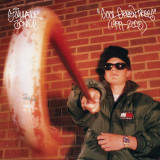
In May 2020 Cocoon Recordings released the third album of Harald Björk. With the club scene on Covid-hold , tours canceled and all of our favorite DJ’s locked up at home… not the optimal conditions to release an album on a nr.1 world wide club empire as Cocoon. How ever we decided not to let a virus kill our beloved culture, as Mr. Sven Väth put it „I would like to share with you the album of Harald Björk… which has soothed me and I hope will also give you a soundtrack for these uneasy days“. It felt right to release it.
The release was shrinked from a thought of vinyl box to a digital release with future plans on vinyl. However covid decided to stay and time went. The queue at the vinyl factories didn’t make the process easier… But at one point the dream factory of Kranglan Broadcast decided, enough! , the world has to keep on dreaming. And what is a better way to embrace dreams then to release a vinyl full of of dreamers, groundbreaking in their corners of the electronic umberella. Dreamers doing their thing not even looking at the norm or what’s the recent hype.
Aditional info:
Houndtooth finest Throwing Snow who Harald met in New York 2013 during their term at RBMA brings a bassdriven rollercoaster with the arpeggios from Spektrum bouncing like rubberballs through an impressive broken drum work. The remix came delivered with a text saying „I like my drums slamming“ and so do we.
Ada takes the eteric pads of Waldmeister and place them in a auditive dreamstate, an emotional hybrid of space and vacuum. Large feelings, yet so close. It builds, stretches and builds until we are shown the enlighted truth in the end of the tunnel. Harald is a long time fan and colector of Adas music which he got to know through the lovely label of Areal and has continued to love through the Pampa era. First remix from Ada on Kranglan was the epic remake of Sabor Latino, Sabor de Ada! We are delighted to have her art on the label once again.
The pandemic 2020 took away the most fun of beeing in the club scene, sharing stages with brilliant interesting dreamers showing and exchanging visions performing music. Under these strange conditions Molø and Harald ended up sharing a physical stage at the stream festival United We Stream. One thing led to the other and Harald took a deep dive in to Molø‘s great melodic techno universe. Some times you find gold in your own hometown. Molø’s take on Waldmeister build on the mellow arpeggio from the original track and brings them to a perfect chilled out afterhours. Imagine watching the sunrise to this beauty.
Swedes are a people of high integracy but as loyal citizens we allways attend formal events by the state. Skudge and Harald met at the Swedish National Radio price anouncement, both nominated for „electronic act of the year 2011“. It was an akward event with radio interviews and canapés, not very techno, the signum of Skudge. How ever Skudge won it all leaving both Avicii and Swedish House Mafia empty handed. Landberg, the swing king of Skudge is the kind of person that will tell you why the TR-909 has to be master clock to get the right groove in a techno performance, if you ask… which you do ??! If you’re looking for techno with groove look no further, Skudge is king! In his take on Walking Path he display the power of minimalistic dirty grooves, a 909 and a 303 what else do we need?
The 12“ vinyl comes with a fresh re-master of album single Medan Du Sov and an unreleased bonus track, Drifting, a balearic sundazed love story.
Suche:people you may know
One of my first record releases was on Traum Schallplatten in 2007. I was living in Berlin and Traum was at its peak launching acts like Extrawelt, Dominik Eulberg, Gabriel Anada, Minilogue, Fairmont… The era of melodic minimal…
The release of Luftlust hit the big DJ's like Sven Väth etc. And I was truly overwhelmed by the support. But the version on the 12" was actually pitched up 5 BPM. And in the end the mastering was not in my personal preference. Watering my feel of it, once or twice a year people actually ask me to do a remaster. Over the years it has been a track circulating the web and playlists, haunting me.
Last year I dug in the past and actually wrote a masters exam in philosophy about being a youngster in the techno scene and how to keep up creativity while working with record labels. Somewhere in that process I decided to face the old ghost and make it happen. Time was ready for the re-release of Luftlust, on my terms on my own label Kranglan Broadcast.
Justus Köhncke Remix
For a time frame of a decade I have asked Kompakt veteran and Whirlpool Productions legend Justus Köhncke to do a remix on my Kranglan imprint. Herr Köhncke to me (and to everyone who has followed Kompakt) is one of a kind! A punk soul, dead serious while smiling, always putting hooks and fragments out of music history on Kompakt sound plates with precise grace… The last years he have replied he's been busy in the studio with Can member Irmin Schmidt, working on soundtracks but... suddenly one day when I wrote the man he said "I love Luftlust, send me the stems".
Listening to Justus interpretation I was blown away… like riding a cabrio through the German landscape of fields and deciduous forests a sunny day in late May! And wait for that outro bridge at 5:56! Like being hugged by the warm mother autumn.
Özgur Can Remix
Anjuna Deep cofounder Özgur Can and I have known each other since high school. Özgur was the first DJ I ever booked to one of my early raves in the forests of Nacka. From releasing our first records with our common buddy Petter on Peter Van Halls label 'Deep' we have walked a parallel path in life, Özgur with a wider span of releases and 100's of nights at sweaty dance floors. No one does the deep driven heartfull arpeggios like Özgur. They swell and they swirl. A true Music lover and true talent!
Lust
Time has flewn since 2007, and that winter break in Barcelona 2006 hanging out with James Holden and the Border gang at Razmataz… the weekend when I actually started working on Luftlust…
Working on a re-release of Luftlust I just got hit by lust to work a version of it from the position where I am at, the 2021 me. I went with lust and it just happened a late summer night in Stockholm being by myself for a brief moment doing what I love the most, making music.
Luftlust Original 120BPM Version
And at last the never released original version of the title track. Correct tempo as it was written. Mastered by Andreas Lubich aka Lupo, the very person to master this type of music if you take a brief glimpse at his back folder! Finally!
I love this project, and I love making it happen at Kranglan Broadcast. Bringing together thoughts and people you have thought of bringing together for a long time. Lust KLN014 is here.
- A1: Fink - Covering Your Tracks
- A2: Alfa Mist - Mulago
- A3: Charlotte Day Wilson - Mountains
- A4: Moreton - Count A Heart (Feat Jordan Rakei)
- B1: Puma Blue - Untitled 2
- B2: Connan Mockasin - Momo's
- B3: C Duncan - He Came From The Sun
- B4: Oso Leone - Virtual U
- B5: Joe Armon-Jones - Idiom (Feat Oscar Jerome)
- C1: Snowpoet - Eviternity
- C2: Maro - Forever & Always
- C3: Homay Schmitz - Speak Up
- C4: Bill Laurance - Singularity
- D1: Jordan Rakei - Lover, You Should've Come Over (Exclusive Jeff Buckley Cover Version)
- D2: Cubicolor - Counterpart
- D3: Jordan Rakei - Imagination (Exclusive Original Piece)
- D4: Alejandro Gonzalez Inarritu - Imagination (Exclusive Spoken Word Piece)
Clear Repress[26,68 €]
“I wanted to try and showcase as many people as I knew on this mix. My idea of Late Night Tales was to distil a series of relaxing moments; the whole conceptual sonic of relax- ation. So, I was trying to think of all the collaborators and friends that I knew, who’d recorded stuff with this horizontal vibe. Plus, I was also trying to help my friends' stuff get into the world. I know the story of Khruangbin blowing up after appearing on the series (in fact, I think that's how I discovered them). So, the main idea was to create a certain atmosphere, but also to help some of my favourite collaborators and bud- dies to give their songs a little push out into the world. Hope you like it” Jordan Rakei
Due for release on 9th April, Late Night Tales celebrate their 20th anniversary with the release of multi-instru- mentalist, vocalist and producer Jordan Rakei’s majestic compilation. The 28-year-old modern soul icon effortlessly stamps his own jazz and hip-hop driven sound all over this gorgeous array of handpicked tracks. A beautifully layered blend that is mirrored in the music he’s made, itcomes as no surprise that such a supremely gifted songwriter should deliver a mix that is all about the song.
Rakei, born in New Zealand, but raised in Australia, moved to the UK in 2015; he released his debut album, Cloak, with Oz label Soul Has No Tempo, but his two subsequentLPs, Wallflower and Origin, came out on Ninja Tune, the former#2 in Album Of The Year for Gilles Peterson’s Worldwide poll, while Origin was nominated for Best Album at the AIM Awards. Jordan had this to say on his upcoming mix:
As Jordan says,there’s so much more to the song selection on Late Night Tales’latest outing than a random collection of artists. Many have some sort of personal connection, so just as Bonobo provided a platform for the breakout of Khruangbin on a previous LNT, this may have the same ef- fect for Rakei’s friends. After a soothing opener from Fink, good friend and big influence Alfa Mist (part of the Are We Live collective) delivers ‘Mulago.’ “I want to champion their sound and show the world how good he is, and I thought it’d be fitting to start the mix with family,” says Jordan.
Next up is Charlotte Day Wilson with ‘Mountains,’ followed by ‘Count A Heart’ from Moreton, an exclusive collab- oration with Jordan, who grew up on the same street in Brisbane, Australia. “She was the first artist I ever collabo- rated with, and one of the first artists to be involved in mycareer,” he explains. Elsewhere we hear Scottish producer and multi-instrumentalist C Duncan’s haunting ‘He Came from the Sun,’ Barcelona collective Oso Leone deliver a dreamy ‘Virtual U’ and Bill Lauren’s ‘Singularity,’ which evokes a striking sense of time and place.
Snowpoet’s ethereal ‘Evitenity’ is a “long mediative nar- rative over a beautiful soundscape,” which at times seems chaotic, nicely juxtaposed with undeniable beauty, and Maro’s kooky songwriting shines on ‘Always And Forever.’ Long-time buddy Armon-Jones contributes ‘Idiom,’ and Jordan’s exclusive cover version is a two-for-one, Radio- head’s ‘Codex’ merging with ‘Lover, You Should’ve Come Home’ by Jeff Buckley and another exclusive,original com- position by Jordan, ‘Imagination.’ The latter works as a piece with the spoken (Spanish) word voiced by movie director Alejandro González Iñárritu (Babel, Birdman, and The Reve- nant,) who is a big fan of Jordan’s. “He messaged me when I went to L.A and asked to come to my show. I was in such shock and we hung out after. I thought it would be nice to get him to do this in his native tongue, because I don’t think that’s been done yet on the series.” It certainly is a familyaffair. Not theblood is thicker than water kind, but certainly musical kindred spirits.
- 01: Glass Mask On
- 02: Celebrity Culture Simp Farm
- 03: Please Just Make It Stop
- 04: No Laughter Left In Me
- 05: Weaponizing My Failures
- 06: Unthinking My Every Thought
- 07: Insignificant Other
- 08: It Keeps On Stinging
- 09: I Took A Pill In Vilvoorde
- 10: Suffering In Technicolor
DOODSESKADER clearly haven’t had enough of redefining boundaries – they’ve only just gotten started. Tim De Gieter and Sigfried Burroughs return on April 3rd, 2026 with their third full-length album, The Change Is Me, a rollercoaster that can only be described as the unstable lovechild between witch house, hip-hop, industrial dream pop, and stadium rock that can’t decide if it wants to watch the world burn or shout from the rooftops that we need to save it. Their combination of grungy 90s melodies with distorted synths, sludgy bass, hard tuned vocals, rapping, singing, and explosions of undiluted rage at the current state of the world leave you wondering just exactly what it was you smoked last night, and if it was too much or not enough. The Change Is Me is an album that grabs you by the arm and asks if you’re ready to go on a grand adventure, then pulls you into its chaos before you can say “yes” or “no.”
Tim and Sigfried aren’t just breaking the boundaries between genres; they’re breaking out of their own Year cycle, a path they had laid out for themselves at the band’s inception in 2020. Up until now, the duo had set out to document their “journey to getting better” through writing one album each year: Year Zero (2020), Year One (2022), and most recently Year Two (2024). After spending eight months throughout 2024 and 2025 writing, recording, producing and mixing Year Three, the band scrapped the finished record entirely. Playing shows while simultaneously navigating the process of mixing Year Three created a sort of disconnect – the people that they were when they wrote that record and the people that playing shows made them become were no longer one and the same. “We’re people with faults and strengths, and we realized we needed to accept it. That’s equal parts bleak and liberating. If you’re so focused on self-improvement, you can’t even applaud yourself for how far you’ve come,” the band explains. “This project is meant to be a document of us and of the human condition, not a self-improvement handbook designed to keep us all stuck on what may or may not have happened to us or because of us in the past.”
DOODSESKADER chose instead to embark anew on a week-long creative journey in Tim’s own Much Luv Studio with one goal in mind: to make an album that captures who they are right now. Finally writing everything together in the same room for the first time in years, the process of bringing "The Change Is Me" to life was captured by Diana Lungu in their latest documentary, "Now I Know You See Me", out December 2nd, 2025.
"The Change Is Me" marks the beginning of DOODSESKADER’s shift into a more positive era, both musically and conceptually. Over the course of the 40-minute record we hear the two friends unite in a fight against a world that grows more and more disappointing, a concept made crystal clear in tracks like “Celebrity Culture Simp Farm,” “It Keeps On Stinging,” and of course the album’s epic closer “Suffering In Technicolor.” While their previous albums saw them trying to outrun their pasts and arrive at a better version of themselves, here the search for some external or internal revelation that will “make them better” is no more. It’s been replaced by the realization that change isn’t something we force: it’s gradual, and more importantly, it’s something that’s already there – we just need to reach out and accept it.
The band’s live appearances over the last several years have been instrumental in shaping their ideology. On stage is where the duo find connection; not only with the audience, but also with each other. Their sold-out release shows at Ancienne Belgique (2022) and VierNulVier (2024) have proven that they are one of Belgium’s must-see acts. Abroad, their energy has translated into a month-long EU/UK tour with French band Alcest in 2024, as well as appearances at festivals such as Roadburn Festival (NL), Eurosonic (NL), Hellfest (FR), Mystic Fest (PL), Jera On Air (NL), ArcTanGent (UK), Fluff Fest (CZ) and more.
"The Change Is Me" is out April 3rd, 2026 on DOODSESKADER’s own label, 45 Records.
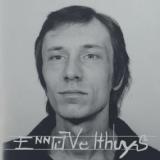
A collection of previously unreleased material (between '75 & '90) by Enno Velthuys.
Compiled by Hessel Veldman.
"Hello boys and girls, my name is Enno Velthuys and I am the idiot of the group (and also the
most intelligent, the most sensitive, the most artistic and he who has to carry the heaviest
load, because this boy's luggage, DAMN, it's pretty heavy).
Luckily, I had already been through a lot when I got this ‘knock in the head’. Sex, drugs, lots
of rock and roll and a sunny childhood with beautiful views I look back on with nostalgia.
Later on I lost my focus and I only thought about one thing: how to get out of it (that damn
problem, my shifted reality, my blind spot, that piece of poisoned apple of forbidden
knowledge choking my throat)!
But I can't think my way out of it, psychiatrists are just ordinary people, and very heavy pills
suppress everything (I'll just take my pills) FLASH!
You ask me what it takes to create music or art that is meaningful and tells a story. It’s hard
when you haven't had enough setbacks, nothing more than maybe a little blues. I'm not
saying it was the right path, but at least I've come a long way. And now I'm a fish in a pool.
Please understand that this is very disturbing. It's not my waterway. A fish belongs in a river.
And my star sign is fish. >))D
See you soon, EnnO"
- A1: Another Thought (02:16)
- A2: A Little Lost (03:18)
- A3: Home Away From Home (05:12)
- A4: Lucky Cloud (02:16)
- B1: This Is How We Walk On The Moon (04:42)
- B2: Hollow Tree (02:30)
- B3: See Through Love (04:46)
- C1: Keeping Up (06:20)
- C2: In The Light Of The Miracle (06:05)
- C3: Lucky Cloud (Return) (03:00)
- C4: Just A Blip (03:42)
- D1: Me For Real (04:55)
- D2: Losing My Taste For The Night Life (04:34)
- D3: My Tiger, My Timing (05:41)
- D4: A Sudden Chill (02:45)
2026 Repress
Another Thought was the first collection of Arthur Russell’s music to be released after his death in 1992. Released in 1993 on Point Music it marked the beginning of nearly 30 years of work to let the world hear the enormous archive of unreleased recordings Arthur left behind. Be With revisits this first compilation for a new gatefold double vinyl version and a triple-fold digipak CD reissue.
Both versions of Be With’s 2021 reissue of Another Thought have been mastered by Simon Francis and the vinyl cut by Pete Norman. The original artwork has been restored and tweaked at Be With HQ for the gatefold sleeve and the triple-fold digipak, with the essential help of Janette Beckman. Each version comes with an insert reproducing the liner notes and lyrics from the original CD release.
Together with Calling Out Of Context, Soul Jazz’s World of Arthur Russell, and much of the ongoing work of Audika, Another Thought is absolutely essential for even the most casual Arthur Russell collection. In fact we’d argue it’s essential for any fan of non-obvious pop music. This is the only place where you can hear some of Arthur’s most recognisable tunes and it’s an album that absolutely deserves to be kept in press.
We’ll assume that by now you’re all at least a little familiar with the story of Arthur Russell, the farm boy from Iowa who moved to 1970s New York. Arthur Russell the genuine musical genius who died just 40 years old, leaving behind a wealth of music that dwarfed the few 12"s and LPs that were released during his short life.
Although Arthur had been working on an album for Rough Trade during his last years, with the label no-longer operating it was Point Music (Philip Glass and Michael Riesman’s label set up together with Philips) who stepped in to help Arthur’s partner Tom Lee start working out exactly what Arthur had left behind.
Tom suggested that Arthur’s friend Mikel Rouse was the right person to make the first catalogue. Working in Tom and Arthur’s apartment he had only two weeks to go through what turned out to be around 800 tapes.
As Tom explained “at the end of each day he would generally wait for me to come home and I would, to the best of my knowledge, name and identify pieces in question from that day’s work. As he worked Mikel compiled about a dozen cassettes that he thought would present the most finished sounding songs for Don/Point to use. As Don listened he would then suggest and ask me and thus we collaborated on the choices.”
Don is Don Christensen, Another Thought’s producer. With a final selection of songs from recordings made between 1982 and 1990, including sessions with some of Arthur’s regular collaborators Peter Zummo, Steven Hall, Mustafa Ahmed, Elodie Lauten, Julius Eastman, Jennifer Warnes and Joyce Bowden, it was then Don’s job to turn these into a finished album.
Another Thought is a little different from the compilations of Arthur’s music that came out since. In our conversations with Steve Knutson (who founded Audika Records and who manages Arthur’s estate together with Tom), he explained that “more than any project released by Arthur during his lifetime or posthumously by Audika, ‘Another Thought’ is the most worked over. The material was significantly edited and rearranged from the original source tapes”.
If the aim was to release a comprehensive exploration of every facet of Arthur’s music, from the most avant-garde of his avant-garde compositions through to the most disco-not-disco of his disco-not-disco tunes then the project was a spectacular failure. But as a coherent album of non-obvious pop music Another Thought is wonderful.
Starting with the sparse voice-and-cello of the title track, A Little Lost adds some guitar along with the sneaking suspicion that we’re listening to something nowhere near as simple as it first sounds. By the time we get to This Is How We Walk On The Moon - it could be the moment you notice the congas, or the percussion that’s been building behind them, or maybe it’s that blast of trumpet and trombone - we realise we’ve gone from splashing around to being completely submerged in the musical world of Arthur Russell.
From here the album heads off on its journey around the sounds of the left-field contemporary classical music of the time, re-directed towards pop ears, with minor detours through the swirling woozy disco of the half-remembered night before on In The Light Of The Miracle and My Tiger, My Timing. Whether it’s just Arthur, his cello and some bleeps on Just A Blip, or whether he has some vocal help as he does on the bounding Keeping Up, this is difficult music made so, so easy. And through it all is Arthur’s voice and cello. Sometimes drowned in distortion and sometimes clear as a bell, but always there somewhere.
A Sudden Chill finally returns us to the calmer waters we started in and this last track closes the album with a melancholy that’s not surprising given how soon after Arthur’s death the album was put together.
Whilst Another Thought holds together with the consistency of a proper album, there’s still no getting away from the fact that this was put together from audio recorded in different ways, in different places, with different people at different times. Those with keen ears will hear traces of tape hiss, the occasional blown-out note and some digital fuzz, all fingerprints of those original recordings as well as of the 1990s digital equipment that was used to piece Another Thought together.
Add to this Arthur’s obvious pleasure in making music from the sort of sounds that can make microphones, speakers and ears uncomfortable, it’s no surprise that Another Thought isn’t glossy and pristine. Don Christensen’s productions have been careful to not scrub up those original recordings so much that they lose their original vibe, understandable given that Arthur wasn’t around as a guide. We’ve applied a similarly light touch with the mastering for these Be With versions, just working to make sure they sound like they should on both the vinyl and the CD.
Despite the Discogs rumours, Another Thought was never originally released as an LP. So when it came to the sleeve for this Be With vinyl version we took the original CD artwork as a starting point to come up with something that looks like it could have been in the record racks back in 1993.
We have to thank Janette Beckman for helping us reproduce her iconic photograph of Arthur in his newspaper boat hat. One of many photographs she took of Arthur, Janette shot this in her New York studio back in 1986 for a short article in the January ’87 issue of The Face Magazine. Those with eagle-eyes will notice we’ve used an ever-so-slightly different shot from the one that appeared in The Face and then again on the original cover of Another Thought. The original has long since been lost so we’ve worked with what is left in Janette’s archives. And we also have to thank Tom Lee for giving us permission to reproduce his liner notes from the original CD booklet, together with Arthur’s lyrics.
Waiting is the essence of travel. Patience is its own reward.
Two people. A Telecaster guitar with a few effect pedals. A drum machine. An audio interface is connected to a laptop. The ingredients are simple yet effective.
But any suggestion of four-track cassette machines and vintage bedsit productions is quickly dispelled by digital dubbiness and refined arrangements. A tail of reversed echos. The crystalline flourish of octave-pitched delays. Riddled hi-hats tickle and taunt. A bass drum asserts its space.
Winkler's guitar patterns have a fragmented, almost haphazard connotation. Searching in a shimmer of reverb. Until the beat, the framework, sets in to reveal structure. Intentionality. Reihse's programmed rhythms go just to the point of a groove, holding the moment of tension, knowingly delaying the gratification. Beats that have scratchy patina anda subtly playful edge; their crispness stands in contrast to the contemplative drift of the guitar. Is it a trance? Or a dance? Yes.
There are some apparent references here: a good portion of Les Disques du Crépuscule, some kraut-esque electronica, even a smidgen of Morricone / Spaghetti Western, blending into a kind of Musique Noir – yet these serve as a set of orientational coordinates, rather than quotations.
This is so far the most assured release by Periode, perhaps eschewing some of the naiveté that was wilfully cultivated in earlier output – there is no cheeky cover version this time. And no singing either. The nine pieces have the quality of a series, a variation on a mood, or a subset of moods. What emerges is an inviting swagger in the face of bleakness. There is a profound melancholy, but it is not the darker kind, and does not exclude humour.
First impressions may suggest that this is purely nocturnal music. Yet it equally evokes the harsh sunlight and baking summer heat. Or a rainy day. And transportation: the music suggests the motion of travel, even if that travel only happens within the mind. And waiting. Waiting while doing nothing much. Because that's all you can do. (Alexander Paulick)
Hiver completes a trilogy of EPs on Gudu with ‘Blue Hell’, another transmission of space-age machine funk from a duo who are truly shaping their own soundworld.
If you’ve followed Hiver, you should know the deal by now: they’ve spent the last decade honing a sound that draws heavily from dance music history – namely the starry-eyed synthesizer funk of classic techno and electro – that drips in colour and emotion without ever feeling retrograde. ‘Blue Hell’ is their third EP for Gudu, and maybe their most accomplished yet.
In Hiver’s words, “this EP was shaped by a mix of late night club energy and the more introspective, melodic ideas we’ve been exploring in the past years. A big part of it also comes from the tension between how people connect today. This constant, hyper-connected flow of networks, media, and online exchanges and our own way of creating music, which is very physical and personal. We’re always bouncing ideas through messages and files, but the real magic still happens when we meet in the studio, face to face. That contrast between digital connection and human presence became a sort of hidden theme behind the EP.”
“With Blue Hell, our third chapter on Gudu, we wanted to capture a moment of clarity, something direct yet still drifting. In a way, this release completes the excursion we began with the first two records: three points that trace the contours of the sounds we’re drawn to. Each track feels like a fragment of that journey, grounded in rhythm but always leaning toward depth and escape.”
- Somewhere, Nowhere
- Angles Mortz
- False Prophet
- Fluoride Stare
- The Void
- Ascension
- Just A Kid
- Host
- Landslide
- Renaissance
- 7: Am
- Blue In Grey
2026 Repress
Flickering in ultraviolet, there is an elusive place where blue pill meets red, ups become downs, and day merges with night. Those liminal spaces where anything is possible is where you’ll find Nightbus and their hypnotic debut album Passenger. Doom, uncertainty, and opportunity lurk in the shadowy corners of their murky existence with stops at disassociation, co-dependency, and addiction before reaching its final destination - a glimmer of hope.
The in-between of Nightbus’ own Gotham lies where Manchester’s city pulse meets Stockport’s outer realm. An audio-visual entity formed among a musical family of friends, freaks, and foes in messy mills and after hours on dancefloors alike, their sound bleeds from tension where collective creative forces are bound together and collide with the fallout of being torn apart. Before even playing a show, their So Young released single ‘Mirrors’ – a knowing nod of respect to some well-known gloomy Northerners - may have made old school indie heads shimmy at shows in Salford’s The White Hotel but also signalled the duo’s knack for offering listeners a Bandersnatch approach to hitchhiking their own personal Nightbus in whatever direction they choose to take. “Everyone can have their moment with our songs; the music is our response to who we are as young people, living in the city full of this energy right now,” they say.
Whilst reverb hefty melodies and dread-filled loops embody isolation from writing at each of their home studio set-ups, magic happens in the ether across 90s trip-hop, indie sleaze and electronica; Jake’s production layers Olive’s pop sentimentality with drums and samples whilst tales of a cast of faceless characters place Olive as puppet master; her severed self’s perspective manipulating their stringed limbs at arm’s length to see how their stories play out when scenes reflecting her own lie close to the bone. “It’s a bit fucked; like having this out of body experience with a made-up movie running through my head,” she says. “As I write I can see they’re all from a similar world, but they allow me to explore different feelings without giving away part of myself.”
Recorded at The Nave in Leeds with producer-engineer Alex Greaves (Heavy Lungs, Working Men’s Club), surprise and danger lies in every crevice. Brooding whispers turn to chants on 6-minute opus ‘Host.’ Improvised when performed live, its immersive shift in tempo leads to hefty dub courtesy of Jake’s pedals. Even then, you won’t know shit’s hit the fan until its mid-point reveal when ominous bass blasts a thunderous soundtrack as its protagonist defiantly walks away after committing the perfect crime. “It makes you wait, and more songs should have sirens,” Olive grins.
Leaning deeper into alter-egos via the video game-psychological horror of a Silent Hill dystopia, the band’s Fight Club moment ‘Angles Mortz’ turns its literal translation of death angles on its head as it reflects upon kink and internalised shame reincarnated as pride. Elsewhere the ice cool ‘Landslide’ is a Requiem for a Dream about the addiction of being in a band; ‘The Void’ explores co-dependency and estranged relationships; and carefully selected samples revive house track ‘Just A Kid’ from the band’s early incarnation. Passenger’s every direction is to face challenges head on. “That is what’s so great about horror; you can see through predictable patterns so when the unexpected occurs it's more realistic and uncomfortable… I want to own the dark stuff!”
As for Passenger’s first single, the pulsating ‘Ascension’ is a spiralling deep dive into death, suicide, and legacy around who or what we leave behind. A noughties club banger by way of NYC beats - ergonomically designed for those who like to stay out a little too often and too late - it throbs like a house party’s partition wall as the literal levelling up undergoes a neon transformation; blue glitching to pink, diffusing the white construct of the Nightbus Matrix. “It really does feel like the end of something and was purposely written that way,” they say, “the ascension is like a firework going off!”
With wheels in motion, Nightbus has become a movement surpassing sonic realms. Between shows from Porto to Brighton taking in The Great Escape, Rotterdam’s Left Of The Dial and Paris’ Supersonic; DJing; remixing; guesting (BDRMM’s Microtonic album); and even enlisting talented like-minds to craft a 3-part queer coming-of-age music video series which ties in with a new ‘hyperpop’ phase in the evolution of their popular Nightbus Soundsystem club night, heads are now being turned from sports brands to high-end fashion designers. “There are things we can’t reveal just yet,” tells Olive, “but we’re excited about the direction this beast we’ve created is heading.” As the album philosophises and asks one ultimate question; what does it truly mean to be ‘Passenger’? Nightbus may not claim to offer a definitive answer, but it might make you feel a bit better about those demons.
Gonzen, uminari or retumbos. Perhaps you've heard these sounds? They're known to occur all over the world and, as one might expect, humans have strained to offer various explanations for these unsettling emissions that materialise unbidden from the sky.
We like to say that we've understood what's happening so that we can move on. Tidy up the loose ends and don't scare the horses. Nothing wrong with that in good measure, but there's something to be said for the Haudenosaunee peoples' explanation. They pointed out that the Great Spirit hasn't finished their work of shaping the earth and is making a fair bit of noise while they're at it.
If you accept that many questions never truly get answered, in fact can or should never truly be answered, you may be able to tune your mind to this collection of lingering sonic detonations. If you accept that the work is ongoing, our labours seldom done, that there's not much point talking about the end of anything, you may be ready to join us. It's not our task to finish it, nor are we free to desist.
- Hangman's Daughter
- 12: Crosses
- Messiah Crawling
- They Reign
- The Stranger
- We Fall
- The Body
- I Will Wait
- Wicked Wounds
Wounds is the band's long-awaited fifth album - their first in six years, their most eclectic and ambitious work to date. As heavy as it is haunting, the record masterfully blends doom, post-punk, and driving krautrock in a dynamic, hypnotic maelstrom - pushing London's most exciting cult band into intoxicating new territory. "Wounds is a series of songs about the different ways people live with and process 'the wounds' of their lives," explains vocalist Maya. "A strange celebration of that formative pain we have all experienced in some way. The loss and joy of survival - the celebration of finding others like us, the gift of knowing life comes after fire." Wounds was recorded by Mike Bew, on location at Foel Studio. The band could be found working deep into the witching hours, experimenting with new sounds and filling the valleys with cantankerous wails of sound, bursting from amps borrowed from My Bloody Valentine. "The Welsh countryside has a mystical quality to it," says guitarist Adam. "We recorded in a deep, dark valley; misty days and shooting stars at night. You could wander through nearby woods and stone circles during breaks. Foel Studios is woven into this setting with a transcendence of its own - its storied history includes sessions by Electric Wizard, Hawkwind and The Fall." Synths on the album are arranged by Berlin-based Bow Church, an influential figure in the dark electronic scene and a longtime collaborator of the band. His work weaves icy and atmospheric textures into the album's tracks. While meticulously crafted, Wounds captures the visceral energy of Cold in Berlin's renowned live shows. The album's arrangements and raucous sound remain true to the unrelenting intensity and atmosphere of their stage performances - every track retains the sweat, urgency, and immediacy of a band performing in the moment.
STANDFIRST Titanic, the project spearheaded by Mabe Fratti and Hector Tosta (aka I. la Católica), return with a sumptuous and life-affirming new album.
In her sensational 1929 biography Tiger Woman, dancer and socialite Betty May claimed her ‘coster’s eye’ meant she liked to wear as many colours as possible. “Colours to me are like children to a loving mother. Each is my favourite, yet I can never bring myself to deny the others by preferring one.” May’s bold and inclusive strategy is one that manages to transfer itself, almost a century later, to Hagen, the new record by Titanic.
Many will know Titanic as the Mexico City-based brainchild of cellist and singer Mabe Fratti and multiinstrumentalist Hector Tosta who is now operating under the pseudonym, I. la Católica, (taken, rather unusually, from the name of the street the pair live on). With Hagen, and their previous release, Vidrio, (2023), the pair are creating a distinctive signature sound in modern alternative pop music. Nobody else sounds quite like them. Both records have an open hearted nature and simple, winning melodies that play off against a taste for drama, spectacular orchestration and a feeling of otherworldly mystery. Hagen is the more ambitious, sometimes more mystical effort. From the opening handclaps of ‘Lágrima del Sol’, (a wonderfully uptempo playground chant translating as a tear from the sun but, surely, not referencing the brand of pineapple wine?), the record dances its way through various mid-to-late-eighties inspirations, lush and widescreen passages of melancholy and vertiginous contrasts.
Mystery is often found in the simple but slightly odd song titles. English translations of various track titles give, ‘you swallowed the gum’, ‘leak’, ‘a tear from the sun’, ‘raising the trophy’ ‘digging dimensions’, ‘the owner’, ‘the decapitated hen’ and ‘the trap is exposed’. All denote striking images, metaphysical hints and emotional cues or simple, even childlike actions. Though Fratti and Tosta don’t reveal its provenance, the album’s title could even be a crafty play on words: the listener would be forgiven in thinking the moments of brash contrast and eyebrow raising theatricalism in the music constitute a musical nod to German punk chanteuse, Nina Hagen.
On Hagen, singer and cellist Mabe Fratti once again displays her brilliant knack of speaking to us directly. There is never the suspicion of her playing to the gallery, and the directness of many of the lyrics don’t allow it. Parallel to this, Fratti has an almost magical ability to give Hector Tosta’s melodies, and her and Tosta’s lyrics ones imbued with an insight and meaning that feels otherworldly. Tosta admitted it was “pretty wild to hear Mabe take the interpretations to a different place” and the listener can pick up on the delight Fratti takes in (literally) adding a voice to the many narratives.
Two examples can be shown here: ‘Gotera’ (Leak) uses harsh slashes of cello and tough, gunfire-like guitars and drums and multiple vocal lines that could be acting as a Greek chorus. They play off brilliantly against Fratti’s soft, slightly baleful vocal take that delivers lyrics such as: ‘nobody knows where the leak is / but I know where it is / they fight in front of the door and / nobody can go in’. With ‘La Gallina Degollada’ the somewhat blithe melody melody line, sung with what could be sarcastic brio by Fratti, plays against an itchting rhythm and rasping guitar part. The punch comes when you see that the song is about a chicken that has been decapitated and read lyrics such as: ‘I already saw it, it moved, the decapitated chicken’ / ‘could it be that I'm broken’ and ‘Two people hurt each other by thinking that they no longer agree’/ ‘Hours pass and the chicken represents what scares me’.
There may be death and fights to deal with, but there is also a quality of chirpy self-reliance about Hagen that is a key part of its nature. Like Betty May and her colourful outfits, Hagen’s sound often revels in its own sense of richness. Throughout, the record delivers vaulting string sections or glutinous guitar squeals that could, like the powerful, driving ‘Escarbo Dimensiones’ (Digging Dimensions) have come directly from a glossy 1980s TV series. Fratti sees this “glam sound” developed by Tosta on the aforementioned track and ‘Te Tragaste el Chicle’ (You Swallowed The Gum), as moments that were truly “revealing” for the album as a whole during its making.
What else? The thud and thump of ‘La Trampa Sale’ (The Trap is Exposed), and its sudden change of tempo and mood betrays a monstrously ambitious piece of music, the players almost greedily creating the sounds. Other moments are heart wrenching: ‘Libra’ ends on a poppy chord switch that cleverly ramps up the emotion inherent in the music’s notation. You could almost imagine a teenager in a bedroom forty years ago, rewinding the track over and over on a small, cheap cassette player, unable to get enough of that sugarsweet switch. Elsewhere, Oneohtrix Point Never adds stardust and an unearthly sense of space on the changeable, slightly moody meditation, ‘Pájaro de Fuego’ (Firebird). The record ends with ‘Alzando el Trofeo’ (Lifting the Trophy), a track that could soundtrack a state wedding, what with its beautiful cascading piano parts, a sugary vocal and short triumphal guitar riffs that add a rich patina to the overall sound. Fratti: “When I doubled those vocals on ‘Alzando el Trofeo’ I felt there was an epiphany happening, right at that moment.”
Making a good record is a team game. Tosta and Fratti recall seeing Randall from Circular Ruin Studios in NYC “tweak the drums in ‘Libra’ to make that amazing effect of the gated reverb”, or the shaping of ‘Gotera’, “when (recording engineer) Nate Salon added some synths to the track.” Drummer Eli Keszler, “an amazing and versatile player” had the songs down pat in a couple of days” and, according to Tosta, Oneohtrix Point Never “just came to one of the sessions and we hung out, and after all the recordings he and Nate were together in some studio and out of nowhere they sent us some beautiful tracks for ‘Pájaro de Fuego’! Fratti concurs. “He decided that he wanted to record because he was listening to the record (Nate works closely with him) and he really liked it! It was a total honour, indeed!”
Bedazzled by the playing, the skyscraping ambition in the arrangements and the giddy moments of contrast thrown up by Hagen, we could allow ourselves a brief moment of flippancy and state that Titanic’s new record is Yacht Rock meets Aeschylus, full-on. It’s also worth speculating that, in this hyper-sensitive, intemperate age, Titanic’s music has the power, however fleetingly, to heal hurts. Hagen is a brilliant showcase for a fresh and enriching form of pop music: displaying a magpie eye for what glints and plundering what has gone before.
Like Vidrio, Hagen was partially and additionally recorded at Fratti and Tosta’s house, aka Tinho Studios in Mexico City, as well as Golden Girl Studios & Circular Ruin Studios in New York City. Mixing was done by Santiago Parra in Pedro y el Lobo Studios, Mexico City and mastered by Rafael Anton Irisarri at Black Knoll Studios, New York City. The recording engineer was Nate Salon.
Hagen featured Mabe Fratti on cello, vocals & backing vocals, I. la Católica on guitar, keyboards, prepared piano, bass & backing vocals, drums by Eli Keszler and synths in ‘Pájaro de Fuego’ from Daniel Lopatin and Nate Salon.
All compositions on Hagen are written by I. la Católica, except ‘Escarbo Dimensiones’ & ‘Pájaro de Fuego’, which were composed by I. la Católica and Mabe Fratti. The record was produced by I. la Católica and co-produced by Nate Salon & Mabe Fratti. And all lyrics are by I. la Católica except ‘Escarbo Dimensiones’, ‘Gotera’, ‘Gallina degollada’ & ‘Pájaro de Fuego’, which were written by I. la Católica & Mabe Fratti.
STANDFIRST Titanic, the project spearheaded by Mabe Fratti and Hector Tosta (aka I. la Católica), return with a sumptuous and life-affirming new album.
In her sensational 1929 biography Tiger Woman, dancer and socialite Betty May claimed her ‘coster’s eye’ meant she liked to wear as many colours as possible. “Colours to me are like children to a loving mother. Each is my favourite, yet I can never bring myself to deny the others by preferring one.” May’s bold and inclusive strategy is one that manages to transfer itself, almost a century later, to Hagen, the new record by Titanic.
Many will know Titanic as the Mexico City-based brainchild of cellist and singer Mabe Fratti and multiinstrumentalist Hector Tosta who is now operating under the pseudonym, I. la Católica, (taken, rather unusually, from the name of the street the pair live on). With Hagen, and their previous release, Vidrio, (2023), the pair are creating a distinctive signature sound in modern alternative pop music. Nobody else sounds quite like them. Both records have an open hearted nature and simple, winning melodies that play off against a taste for drama, spectacular orchestration and a feeling of otherworldly mystery. Hagen is the more ambitious, sometimes more mystical effort. From the opening handclaps of ‘Lágrima del Sol’, (a wonderfully uptempo playground chant translating as a tear from the sun but, surely, not referencing the brand of pineapple wine?), the record dances its way through various mid-to-late-eighties inspirations, lush and widescreen passages of melancholy and vertiginous contrasts.
Mystery is often found in the simple but slightly odd song titles. English translations of various track titles give, ‘you swallowed the gum’, ‘leak’, ‘a tear from the sun’, ‘raising the trophy’ ‘digging dimensions’, ‘the owner’, ‘the decapitated hen’ and ‘the trap is exposed’. All denote striking images, metaphysical hints and emotional cues or simple, even childlike actions. Though Fratti and Tosta don’t reveal its provenance, the album’s title could even be a crafty play on words: the listener would be forgiven in thinking the moments of brash contrast and eyebrow raising theatricalism in the music constitute a musical nod to German punk chanteuse, Nina Hagen.
On Hagen, singer and cellist Mabe Fratti once again displays her brilliant knack of speaking to us directly. There is never the suspicion of her playing to the gallery, and the directness of many of the lyrics don’t allow it. Parallel to this, Fratti has an almost magical ability to give Hector Tosta’s melodies, and her and Tosta’s lyrics ones imbued with an insight and meaning that feels otherworldly. Tosta admitted it was “pretty wild to hear Mabe take the interpretations to a different place” and the listener can pick up on the delight Fratti takes in (literally) adding a voice to the many narratives.
Two examples can be shown here: ‘Gotera’ (Leak) uses harsh slashes of cello and tough, gunfire-like guitars and drums and multiple vocal lines that could be acting as a Greek chorus. They play off brilliantly against Fratti’s soft, slightly baleful vocal take that delivers lyrics such as: ‘nobody knows where the leak is / but I know where it is / they fight in front of the door and / nobody can go in’. With ‘La Gallina Degollada’ the somewhat blithe melody melody line, sung with what could be sarcastic brio by Fratti, plays against an itchting rhythm and rasping guitar part. The punch comes when you see that the song is about a chicken that has been decapitated and read lyrics such as: ‘I already saw it, it moved, the decapitated chicken’ / ‘could it be that I'm broken’ and ‘Two people hurt each other by thinking that they no longer agree’/ ‘Hours pass and the chicken represents what scares me’.
There may be death and fights to deal with, but there is also a quality of chirpy self-reliance about Hagen that is a key part of its nature. Like Betty May and her colourful outfits, Hagen’s sound often revels in its own sense of richness. Throughout, the record delivers vaulting string sections or glutinous guitar squeals that could, like the powerful, driving ‘Escarbo Dimensiones’ (Digging Dimensions) have come directly from a glossy 1980s TV series. Fratti sees this “glam sound” developed by Tosta on the aforementioned track and ‘Te Tragaste el Chicle’ (You Swallowed The Gum), as moments that were truly “revealing” for the album as a whole during its making.
What else? The thud and thump of ‘La Trampa Sale’ (The Trap is Exposed), and its sudden change of tempo and mood betrays a monstrously ambitious piece of music, the players almost greedily creating the sounds. Other moments are heart wrenching: ‘Libra’ ends on a poppy chord switch that cleverly ramps up the emotion inherent in the music’s notation. You could almost imagine a teenager in a bedroom forty years ago, rewinding the track over and over on a small, cheap cassette player, unable to get enough of that sugarsweet switch. Elsewhere, Oneohtrix Point Never adds stardust and an unearthly sense of space on the changeable, slightly moody meditation, ‘Pájaro de Fuego’ (Firebird). The record ends with ‘Alzando el Trofeo’ (Lifting the Trophy), a track that could soundtrack a state wedding, what with its beautiful cascading piano parts, a sugary vocal and short triumphal guitar riffs that add a rich patina to the overall sound. Fratti: “When I doubled those vocals on ‘Alzando el Trofeo’ I felt there was an epiphany happening, right at that moment.”
Making a good record is a team game. Tosta and Fratti recall seeing Randall from Circular Ruin Studios in NYC “tweak the drums in ‘Libra’ to make that amazing effect of the gated reverb”, or the shaping of ‘Gotera’, “when (recording engineer) Nate Salon added some synths to the track.” Drummer Eli Keszler, “an amazing and versatile player” had the songs down pat in a couple of days” and, according to Tosta, Oneohtrix Point Never “just came to one of the sessions and we hung out, and after all the recordings he and Nate were together in some studio and out of nowhere they sent us some beautiful tracks for ‘Pájaro de Fuego’! Fratti concurs. “He decided that he wanted to record because he was listening to the record (Nate works closely with him) and he really liked it! It was a total honour, indeed!”
Bedazzled by the playing, the skyscraping ambition in the arrangements and the giddy moments of contrast thrown up by Hagen, we could allow ourselves a brief moment of flippancy and state that Titanic’s new record is Yacht Rock meets Aeschylus, full-on. It’s also worth speculating that, in this hyper-sensitive, intemperate age, Titanic’s music has the power, however fleetingly, to heal hurts. Hagen is a brilliant showcase for a fresh and enriching form of pop music: displaying a magpie eye for what glints and plundering what has gone before.
Like Vidrio, Hagen was partially and additionally recorded at Fratti and Tosta’s house, aka Tinho Studios in Mexico City, as well as Golden Girl Studios & Circular Ruin Studios in New York City. Mixing was done by Santiago Parra in Pedro y el Lobo Studios, Mexico City and mastered by Rafael Anton Irisarri at Black Knoll Studios, New York City. The recording engineer was Nate Salon.
Hagen featured Mabe Fratti on cello, vocals & backing vocals, I. la Católica on guitar, keyboards, prepared piano, bass & backing vocals, drums by Eli Keszler and synths in ‘Pájaro de Fuego’ from Daniel Lopatin and Nate Salon.
All compositions on Hagen are written by I. la Católica, except ‘Escarbo Dimensiones’ & ‘Pájaro de Fuego’, which were composed by I. la Católica and Mabe Fratti. The record was produced by I. la Católica and co-produced by Nate Salon & Mabe Fratti. And all lyrics are by I. la Católica except ‘Escarbo Dimensiones’, ‘Gotera’, ‘Gallina degollada’ & ‘Pájaro de Fuego’, which were written by I. la Católica & Mabe Fratti.
- Vampirella
- Ghost Girl
- Wild Young Ways
- Little Flashes Of Yesterday
- How To Be Kind
- Go Home Stay Home
- All Hail The Daffodil
- In Praise Of Right Now
- With Wings We'll Soar The Heavens
- Gladwrap
- Life Said To The Boy
- Clean Hanky
- Left
If you're a serious music fan but not a native Kiwi, your first awareness of New Zealand's fab music scene may have come from the debut of The Chills' mesmerising Kaleidoscope World collection of early singles. Within a few years, a great number of NZ acts saw music released by various UK and US labels . . . generally to great praise and enthusiasm. That this occurred without any of these acts having to move abroad to further their chances was nearly as delightful a feat as the music itself. The exception to this was Dead Famous People, radical in a snap decision after a five-song 12" for Flying Nun, Lost Persons Area, to change hemispheres and make a go for it in London. It started well. Three London recordings were added to three from their Flying Nun EP and put out by Billy Bragg's Utility label - about as perfect a mini-album as there's ever been. Response was positive, more songs recorded, the group did a John Peel session and played out often, but the vaguely impoverished group began to fall apart. Singer and primary writer Dons Savage - determined to make it - had a near-miss at becoming Saint Etienne's singer on an early take of their 'Kiss And Make Up' cover, and there was a fine performance from her on The Chills' 'Heavenly Pop Hit' . . . but dismay had set in. Upon learning of her mum's passing back home, Dons returned to NZ and was quiet for decades. Most of their London recordings were later released later in minuscule quantities by very small labels, but these saw scant press or attention and enjoyed next-to-no sales. Their moment had passed, and the band has suffered the strange fate of being the least-known of the truly brilliant acts associated with Flying Nun. Listening to these `lost' songs, it seems unfathomable that they could have fallen by the wayside. No NZ songwriter comes as close to equalling Martin Phillipps' pop brilliance as Dons. Her superbly sweet vocals, delicious harmonies and sophisticated arrangements aside, the songs dealt perceptively with universal follies of youth and yearning in tandem with a then-unusual twist of lyrics dealing matter-of-factly with her sexuality at a time when `women's music' was seen as exclusionary (segregated into its own bin in shops, if it existed there at all), and the riot grrrl movement was years away, later breaking through due to its radical stance. Dons is a pioneer in myriad ways, the irony of her transcendent brilliance failing to propel a greater career may rest in the fact that she leapt to the head of the class too quickly for people to grasp it; a fate that's befallen so many musical geniuses acknowledged today but less in their time - something rather tragically acknowledged in old pal Martin Phillipps' song with The Chills, 'A Song For Randy Newman, Etc.' None of these thirteen songs fails to deliver something both immediate and unique. And we're proud to debut 'Vampirella"', a magical fantasy song of longing and intrigue - surely one of the most perfect tunes to ever sit around unreleased for decades! Dons is again busy conjuring new songs; in the meantime we're delighted to unveil these obscure gems from the past.
Issued in May 2000, Toploader’s debut album was a major success, reaching number four on the UK chart and going multi platinum within a matter of months. It was mostly written by lead singer and keyboard player Joseph Washbourn, with the exception of ‘Just Hold On’ and the huge worldwide hit ‘Dancing In the Moonlight’, which had been a success across the pond for King Harvest in 1972. A retro-sounding record upon release, with an impressive vitality and soulfulness, it remains a highly enjoyable experience; an album that evokes some of the best sounds of the 1970s and blends them all together with great skill.
- A1: Malavoi - Te Traigo Guajira
- A2: Los Caraibes - Donde
- A3: Tropicana - Amor En Chachacha
- A4: Ryco Jazz - Wachi Wara
- A5: Eugene Balthazar - Dap Pignan
- A6: Roger Jaffort - Oye Mi Consejo
- A7: Les Kings - Oriza
- B1: Les Supers Jaguars - Tatalibaba
- B2: Super Combo De Pointe A Pitre - Serrana
- B3: L'ensemble Abricot - Se Quedo Boogaloo
- B4: Henri Guedon - Bilonga
- B5: Les Aiglons - Pensando En Ti
- B6: Los Martiniquenos - Caterate
In Guadeloupe, many people think that jazz and ka music are like a ring and a finger. To some extent, the same could be said about so called Latin music and the music played in the French West Indies.
Both aesthetics were born in the Caribbean and bear so many connections that they can easily be considered cousins. In constant dialogue, there are lots of examples of their fruitful alliance and have been for a while. The English country dance that used to be practiced in European lounges came to be called kadrille in Martinique and contradanza in Cuba. They both featured additional percussion instruments inherited from the transatlantic deportation. Drawing from shared feelings about the same traumatized identity – later to be creolized – it would be hard not to assume that they were meant to inspire each other. The golden age of the orchestras that graced the Pigalle nights during the interwar period further proves the point. As soon as the 1930s, Havana-born Don Barreto naturally mixed danzón and biguine music in a combo based at Melody's Bar. In the following decade, Félix Valvert, a conductor who was born and raised in Basse-Terre in Guadelupe, also worked wonders in Montparnasse with La Coupole, which was an orchestra made up of eclectic musicians. Afro- Caribbean performers of various origins were often hired on rhythm and brass sections in jazz bands, which used to enliven the typical French balls of the capital. In the 1930s and onwards, Rico’s Creole Band was one of them.
Martinican violinist-clarinettist Ernest Léardée, who would become the king of biguine music as well as the main figure of French Uncle Ben's TV commercials (a dark stigma of post-colonial stereotypes), had musicians from the whole Caribbean sphere play at his Bal Blomet – and they all enchanted "ces Zazous-là" (according the words of Léardée's biguine-calypso piece). In les Antilles (French for French West Indies), music history started to speed up in the 1950s, when trade expanded and radio stations grew bigger. The Guadelupean and Martiniquais youth tuned in their old galena radio sets to South American and Caribbean music. As for the women traders, les pacotilleuses, they bought and sold goods across different islands (the "passing of items through various hands" was thought to be most pleasurable) and brought back countless sounds in their luggage. Such was the case of Madame Balthazar, who once returned from Puerto Rico with the first 45rpm and 33rpm to ever enter Martinique.
Out of this adventure was created the famous Martinican label La Maison des Merengues, a music business she opened and undertook with her husband and which proved to be a major landmark. At the end of the 1950s, in Puerto Rico, Marius Cultier competed in the Piano International Contest playing a version of Monk's Round 'Midnight. He won the first prize and this distinction foreshadowed everything that was to come. Cultier, the heretic Monk of jazz, was quickly praised for writing superb melodies, always tinged with a twist that conferred a unique sound to his music. It didn't take long for the gifted self-taught musician to get to play with Los Cubanos, making a name for himself thanks to his impressive maestria on merengues.
The rest is history. Besides, in the late 1950s, Frantz Charles-Denis, born into the upper middle class in Saint-Pierre and better known by his first name Francisco, went back home after working at La Cabane Cubaine – a club located rue Fontaine where he had caught the Latin fever. Francisco's music was therefore heavily marked by his Cuban cousins' influence, which gave the combos he led a specific style and also led to renewal. Things were swinging hard in La Savane, located in the main square in Fort-de-France. He set up the Shango club close by and tested out the biguine lélé there, a new music formula spiced up with Latin rhythms. Soon afterwards, fate had him fly to Puerto Rico and Venezuela.
As for percussionist Henri Guédon (percussions were only a part of his many talents), he was born in Fort-de-France in May 22nd 1944, the day marking the celebration of the abolition of slavery. As an old man, he could remember that in " his father's Teppaz, a lot of hectic 6/8 music was constantly playing...". In the opening lines of his Lettre à Dizzy, a small illustrated collection of writings published by Del Arco, he highlighted the huge impact that cubop had on him as a teenage boy, around 1960. He eventually turned out to be the lider maximo in La Contesta, a big band steeped in Latin jazz. He was also the one who originated the word zouk to describe music which brought the sound of the New York barrio to Paris. It was the culmination of a journey that started in Sainte-Marie: "a mythical place for bélé, the equivalent of Cuban guaguancó". In the early 1960s, the tertiary economy developed to the detriment of agriculture. Yet rural life was where roots music emerged in Martinique and in Guadeloupe.
Record companies played a major part in the process of Latin versions sweeping across the islands – before reaching everywhere else. Producer Célini, boss of the great Aux Ondes label, and Marcel Mavounzy, both the head of Émeraude records - a firm which was founded in 1953 - as well as the brother of famous saxophonist Robert Mavounzy, were big names to bear in mind. Although there were many of them - all of whom are featured on this record - Henri Debs was definitely the major figure in the recording adventure. He proved to be so influential that he even got compared to Berry Gordy. In the mid 1950s, when he acquired his first Teppaz, he worked on his first compositions: a bolero and a chachacha. Then, he became the one man who made people discover Caribbean music, from calypso to merengue. He was among the first ones to rush out to San Juan, Puerto Rico, to buy records and distribute them through a store run by one of his brothers in Fort-de-France. He had members of the Fania All Star come and perform there, which he was madly proud about. He was also the first one to pay attention to Haitian music, such as compas direct and various other rhythms which would soon flood the market. As a result, many of the combos hitting his legendary studio would end up boosted by widespread "Afro-Latin" rhythms. However, he never denied his identity: gwo ka drums were given a major role, although they were instruments which had long been banned from the "official" music spheres. The present selection bears witness to such a creative swarming. Here are fourteen tracks of untimely yet unprecedented cross-fertilization: all types of music rooted in the Creole archipelago have found their way, whatsoever, to the tracklisting. Whether originating from the city or being more rural, they all go back to what Edouard Glissant, in an interview about the place of West Indian music in the Afro-American scope, called "the trace of singing, the one which got erased by slavery." "It is so in jazz, but also in reggae, calypso, biguine, salsa... This trace also manifests through the drums, whether Guadelupean, Dominican, Jamaican or Cuban... None of them being quite the same. They all point to the idea of a trace, seeking it out and connecting to each other through it. This is the hallmark of the African diaspora: its ability to create something new, in relation to itself, out of a trace. It may be the memory of a rhythm, the crafting of a drum, a means of expression which doesn't resort to an old language but to the modalities of it." The opening track features one of the emblematic orchestras of this aesthetic identity, criscrossing many music types from the archipelago. The 1974 Ray Barretto guajira – Ray Barretto was a major New York drummer influenced by Charlie Parker and Chano Pozzo – is magnificently performed by Malavoi, a legendary Fayolais group (i.e from Fort-de-France). Additionally, the compilation ends on a piece by Los Martiniqueños de Francisco. It symbolically closes the circle as it is a genuine potomitan of Martinique culture which also functions as a tireless campaigner for Afro-Caribbean music. Practicing the danmyé rounds (a kind of capoeiria) to the rhythm of the bèlè drum, it delivers a terrific Caterete, a kind of champeta of Afro- Colombian obedience which was originally composed by Colombian Fabián Ramón Veloz Fernández for the group Wgenda Kenya. The icing on the cake is Brazilian Marku Ribas, who found refuge in Martinique in the early 1970s, bringing his singing to the last trance-inducing track. These two "versions" convey the whole tone of a selection composed of rarities and classics of the tropicalized genre, swarming with tonic accents and convoluted rhythms. It is the sort of cocktail that the West Indians never failed to spice up with their own ingredients. For instance, the Los Caraïbes cover of Dónde, a famous Cuban theme composed by producer Ernesto Duarte Brito, has a typical violin and features renowned Martinique singer Joby Valente and his piquant voice.
The track used to be – or so we think – their only existing 45rpm. The meaningful Amor en chachachá by L'Ensemble Tropicana, a band which included Haitian musicians among whom was composer and leader Michel Desgrotte, also recalls how Latin music was pervasive in the tropics in the mid-1960s. They were the ones keeping people dancing at Le Cocoteraie in Guadelupe and La Bananeraie in Martinique. Around the same time, another "foreign" band, Congolese Freddy Mars N'Kounkou's Ryco Jazz, achieved some success on both islands by covering Latin jazz classics – such as their adaptation of Wachi Wara, a "soul sauce" by Dizzy Gillespie and Chano Pozo whose interweaving of strings and percussions can have anyone hit the dancefloor. How can you resist Dap Pinian indeed, a powerful guaguancó by Eugene Balthazar, performed by the Tropicana Orchestra and published by the Martinique-founded La Maison des Merengues? It also acts as a symbol of the maelstrom at work. Going by the name Paco et L'orchestre Cachunga, Roger Jaffory used to play guaguancó too: his Fania-inspired Oye mi consejo is one example of his style. Baila!!!!! Dancing was also one of the Kings' focus points. Oriza is a Puerto Rican bomba and a "classic" originally composed by Nuevayorquino trumpeter Ernie Agosto, which reserves major space for brasses, giving it a special sheen.
Emerging from the New York barrios crucible was also La Perfecta, a Martinique group originating from Trinidad, whose name directly references the totemic Eddie Palmieri figure as well as his own band, also called La Perfecta. Here they borrow Toumbadora from Colombian producer and composer Efraín Lancheros and interpret it by emphasizing percussions, which set fire to the track even more than the wind instruments. The same goes for Martinique's Super Jaguars, who use Tatalibaba – a composition by Cuban guitarist Florencio "Picolo" Santana which was made famous by Celia Cruz & La Sonora Matencera – as a pretext for sending their cadences into a frenzy. In a more typically salsa vein, the Super Combo, a famous Guadelupean orchestra from Pointe-Noire that was formed around the Desplan family and had Roger Plonquitte and Elie Bianay on board, adapt Serana, a theme by Roberto Angleró Pepín, a Puerto Rican composer, singer and musician also known for his song Soy Boricua. Here again, their vision comes close to surpassing the original. In the 1970s, L'Ensemble Abricot provided a handful of tracks of different syles, hence reaching the pinnacle of the art of achieving variety and giving pleasure. They played boleros, biguines, compas direct, guaguancó and even a good old boogaloo - the type they wanted to keep close to their hearts for ever, "pour toujours", as they sang along together in one of their songs. Léon Bertide's Martinican ensemble excelled at the boogaloo which had been composed by Puerto Rican saxophonist Hector Santos for the legendary El Gran Combo.
Three years later, in 1972, Henri Guédon, with the help of Paul Rosine on the vibraphone, tackled the Bilongo made famous by Eddie Palmieri. Such a classic!!!!! And so were the Aiglons, the band from Guadelupe: choosing to execute Pensando en tí, a composition by Dominican Aniceto Batista, on a cooler tempo than the original, they noticeably used a wonderfully (un)tuned keyboard in place of the accordion. On the high-value collectible single – the first one released by Les Aiglons under the Duli Disc label – there is a sticker classifying the track under the generic name "Afro". Now that is what we call a symbol. Jacques Denis

- Black Lung
- Wolves On The Throne
- Ketamine & Cola
- Hold Fast
- Cue The Violions
- Live Like Yer Dyin
- Blacked Out
- Just The Way She Goes
- Eternal Debate
- Demons
- Ballroom Blitz
- Them Rats
Seattle punk rock 'n rollers The Drowns are proud to present their brand new live album Live At Rebellion, on Pirates Press Records. This is the band's first foray into recording a live performance, but it has been an idea on the table from very early on. While the band are rightfully acclaimed for their studio albums, the first thing anyone in the know talks about is their electrifying live shows. "Within the first year of starting the band, we saw the reactions we were getting from people live, and we had the idea to record a live album," says guitarist and singer Rev. "Almost a decade later now, we felt like the time was right." While a live album recorded during the first year may have captured the raw power of a hungry band kicking off their momentum, Live at Rebellion is the sound of a seasoned band playing in front of a veritable army of international fans on their largest festival stage at Rebellion Festival in Blackpool, UK - fans that they have earned one by one, sweating it out with relentless transcontinental touring. "Rebellion has always been a highlight of our year, and we love the performances there because the energy from the crowd is raw and visceral," explains Rev. "That's why we made the choice to do it there in Blackpool." While far from a "Greatest Hits Live" preserved in amber, the setlist features selections from every era of the band's career and was determined by the band's knowledge of what songs get their audiences fired up - all killer, no filler, as the saying goes! The gritty attack of "Them Rats" exemplifies the band's streetpunk influences and lyrical calls to unite against abusive authoritarian power. Meanwhile, the vital ass-shaking boogie of "Live Like Yer Dyin'" was a direct result of the band fully embracing their collective appreciation of the energetic joys of both 70s glam and original 50s rock 'n roll! Their choice of cover song - "Ballroom Blitz," - truly hits the Sweet spot, if you'll pardon the pun, as one of the foremost glam-proto-punk-bovver rock masterpieces. It is executed here in masterful hands by The Drowns. The band acknowledges Daz Russell & Daryl Smith, the organizers at Rebellion, for backing the making of the record. David Casey (Success, One Step Beyond) helmed the boards to capture the recording, mixing and engineering was done by Evan Douglas Foster (The Sonics, Boss Martians), and the final master was produced by Seattle legend Jack Endino (Nirvana, Mudhoney, Soundgarden), who also recently oversaw the re-master of The Drowns' debut album View From the Bottom. "This album was a cumulative effort between people who still believe in rock 'n' roll," sums up Rev. "We couldn't be more proud."
It’s very difficult to describe someone as prolific as Misha Panfilov. So, I feel the best way to define him is to think of a “Trivial Pursuit Playing Piece,” where each pie piece represents one of the bands he heads up, and each band has its own distinct style and genre. Yet, when looked at all together, create the whole musical persona of Misha. This is the lens I would like to view his latest endeavor, Days As Echoes.
The vibe on this sophomore release channels Krautrock philosophy and Library music, peppered with elements of jazz, Ethiopian, cinema, ambient and bits of everything between. This atmosphere is created from all the instruments Misha uses and the resulting compositions are heard as repetitive patterns that are forged from the multiple layering of melodies. Thus, creating six unique songs with emotional granularity, yet collectively encompass a genuinely positive “feel good” vibe…with a hint of nostalgia.
Moods of the day, moods like echoes say, A future of hope is yours, by following the Sun’s ray.
The opening track, “Days As Echoes,” is a dedication to a much simpler time when the sky was bluer and the snow was whiter…just like how you remember it when you were a child. A time when people honestly cared more about everything as a given, and not as a selfish accolade. A time when optimism seemed within reach. In other words, nostalgia marred by awareness.
…Leading to a path where the skies are not gray. Where dreams of castles in the air are the mainstay.
“In A Dream” has a style that pays homage to both spiritual jazz and ambient music. A simple theme is introduced and leads to the climax of this stormy dream, putting it all in perspective. That pivotal point when one realizes the truth by re-tracing the events, which led to the epiphany of how to find the answer while traveling within this airy soundscape.
…Diurnal or nocturnal, day or night, Traveling the path of truth must be done without fright.
One can’t help but feel a definite traveling vibe that comes from “Moonscape Waltz” To me, it has a dual-characteristic that can be visualized as a train trip, either at sunrise or sunset. Regardless, the time is not of major relevance, but the actual pursuit is. Lao Tzu said, “The journey of a thousand miles begins with that first step.” This track takes you beyond that initial step into this vast world toward your destination as you search for the truth.
…The unknown is real, but you know the deal. People need people to show which direction you point the wheel.
“Together” is the most peaceful and solo oriented compositions of this album. It shows how one cannot achieve happiness alone, but the importance of having someone special or a group of others to help along the way. Not only to help seek your goal, but also the ability to enjoy the scenery while on your journey
…The end of this tunnel has a light that’s so bright. Illuminating the trodden way, your destination, now in sight.
One is free from the chains of the unknown as you listen to a “Few Layers For Smith”, a dedication to a friend. A song that draws energy from the ECM works of Steve Reich, thats married with a primitive lo-fi basement setting. Its positive force breaks those encumbrances and gives you a glimpse of your prize. But you ruminate on this and come to the conclusion that the path that led you there is equally important as the goal itself. Question is, how do you share your realizations and experiences?
…The route was cast, the trials have passed. The glittering treasure you sought is yours now, at last.
“Ocean Song” meanders from the ritual rhythms of its shoreline to the crashing riptides of unbridled guitar feedback, creating this raging ocean atmosphere. However, its message is quite clear and states that people’s goals and experiences are not just meant for personal growth, but to be shared with
others, so that they too can live vicariously thru your story and somehow utilize it for their own.
…The prize has been won, but the journey is never done. You now have the responsibility to share everything under the Sun.
These six songs, each with its own sound, collectively comprise the vibe of this album. One cannot help but feel a sense of joy and fulfillment when listening to it. Each song has its own unique mood, yet together create an atmosphere of hope and happiness that has no choice but to spill out of the listener. I feel this was the ultimate goal of Misha’s on this record. Quite a challenge for the man who never sleeps, but is always searching for the perfect beat. One may not fully grasp his musical mind, but this album does give you a gateway into the moods and magic of Misha!
- Brent Sawicki
Repress!
In the mid-1970s, a force of nature swept across the continental United States, cutting across all strata of race and class, rooting in our minds, our homes, our culture. It wasn’t The Exorcist, Goodbye Yellow Brick Road, or even bell-bottoms, but instead a book called The Secret Life of Plants. The work of occultist/former OSS agent Peter Tompkins and former CIA agent/dowsing enthusiast Christopher Bird, the books shot up the bestseller charts and spread like kudzu across the landscape, becoming a phenomenon. Seemingly overnight, the indoor plant business was in full bloom and photosynthetic eukaryotes of every genus were hanging off walls, lording over bookshelves, and basking on sunny window ledges. The science behind Secret Life was specious: plants can hear our prayers, they’re lie detectors, they’re telepathic, able to predict natural disasters and receive signals from distant galaxies. But that didn’t stop millions from buying and nurturing their new plants.
Perhaps the craziest claim of the book was that plants also dug music. And whether you purchased a snake plant, asparagus fern, peace lily, or what have you from Mother Earth on Melrose Avenue in Los Angeles (or bought a Simmons mattress from Sears), you also took home Plantasia, an album recorded especially for them. Subtitled “warm earth music for plants…and the people that love them,” it was full of bucolic, charming, stoner-friendly, decidedly unscientific tunes enacted on the new-fangled device called the Moog. Plants date back from the dawn of time, but apparently they loved the Moog, never mind that the synthesizer had been on the market for just a few years. Most of all, the plants loved the ditties made by composer Mort Garson.
Few characters in early electronic music can be both fearless pioneers and cheesy trend-chasers, but Garson embraced both extremes, and has been unheralded as a result. When one writer rhetorically asked: “How was Garson’s music so ubiquitous while the man remained so under the radar?” the answer was simple. Well before Brian Eno did it, Garson was making discreet music, both the man and his music as inconspicuous as a Chlorophytumcomosum. Julliard-educated and active as a session player in the post-war era, Garson wrote lounge hits, scored plush arrangements for Doris Day, and garlanded weeping countrypolitan strings around Glen Campbell’s “By the Time I Get to Phoenix.” He could render the Beatles and Simon & Garfunkel alike into easy listening and also dreamed up his own ditties. “An idear” as Garson himself would drawl it out. “I live with it, I walk it, I sing it.”
But as his daughter Day Darmet recalls: “When my dad found the synthesizer, he realized he didn’t want to do pop music anymore.” Garson encountered Robert Moog and his new device at the Audio Engineering Society’s West Coast convention in 1967 and immediately began tinkering with the device. With the Moog, those idears could be transformed. “He constantly had a song he was humming,” Darmet says. “At the table he was constantly tapping.” Which is to say that Mort pulled his melodies out of thin air, just like any household plant would.
The Plantae kingdom grew to its height by 1976, from DC Comics’ mossy superhero Swamp Thing to Stevie Wonder’s own herbal meditation, Journey Through the Secret Life of Plants. Nefarious manifestations of human-plant interaction also abounded, be it the grotesque pods in Invasion of the Body Snatchers or the pothead paranoia of the US Government spraying Mexican marijuana fields with the herbicide paraquat (which led to the rise in homegrown pot by the 1980s). And then there’s the warm, leafy embrace of Plantasia itself.
“My mom had a lot of plants,” Darmet says. “She didn’t believe in organized religion, she believed the earth was the best thing in the whole world. Whatever created us was incredible.” And she also knew when her husband had a good song, shouting from another room when she heard him humming a good idear. Novel as it might seem, Plantasia is simply full of good tunes.
Garson may have given the album away to new plant and bed owners, but a decade later a new generation could hear his music in another surreptitious way. Millions of kids bought The Legend of Zelda for their Nintendo Entertainment System back in 1986 and one distinct 8-bit tune bears more than a passing resemblance to album highlight “Concerto for Philodendron and Pothos.” Garson was never properly credited for it, but he nevertheless subliminally slipped into a new generations’ head, helping kids and plants alike grow.
Hearing Plantasia in the 21st century, it seems less an ode to our photosynthesizing friends by Garson and more an homage to his wife, the one with the green thumb that made everything flower around him. “My dad would be totally pleased to know that people are really interested in this music that had no popularity at the time,” Darmet says of Plantasia’snew renaissance. “He would be fascinated by the fact that people are finally understanding and appreciating this part of his musical career that he got no admiration for back then.” Garson seems to be everywhere again, even if he’s not really noticed, just like a houseplant.
- A1: Pharoah Jones
- A2: Ghost Gospel
- A3: Ill Feeling
- A4: Capital Punishment
- A5: Do Not Adjust
- A6: Cool Green Trees
- A7: Chill Scratch
- A8: Poisonous Fumes
- A9: Welcome Aboard The Starship
- B1: Keep On Runnin
- B2: Sounds Impossible
- B3: Painted Faces
- B4: The Knew Style
- B5: Chicken Wing Blues Sauce
- B6: Kool Breeze
- B7: Sexx Bullets
- B8: Soul Child
- B9: Take Off Runnin
- B10: Centurian
- B11: Bozack
- B12: Church
- B13: Splash One
- B14: Hank
- B15: 73 Goatee
"Chasing the funky symphonies that filled my head and my dreams..."
December 25th, 2023 - an Instagram post. Stimulator Jones shared half a dozen FIRE tracks from his beat tape archive. We were immediately drawn to the rough hewn boom bap.
"I'd release that", Rob commented.
Hours of material was shared and the result is this: Cool Green Trees (1999-2005). A collection of beats and loops Stimulator Jones created between the ages of 14-20 at home in his basement, bedroom and computer room in Roanoke, Virginia.
You will not believe the profound soulful genius contained within these naive schoolboy melodies.
December 25th, 1998 - 25 years ago to the day and his much-coveted Yamaha SU10 sampler was finally bestowed upon young Stimmy AKA Sam Lunsford: "I immediately hooked up a CD Walkman to the input jack and looped the beginning two bars of Grover Washington Jr.'s "Mercy Mercy Me". I don't know what exactly was so thrilling about hearing two measures of music repeating over and over but it was so infectious and hypnotizing and enthralling to me. I'll never forget that ecstatic rush of making my first loop - an uncontrollable, gleeful smile plastered all over my face." When you hear the pocket breakbeat symphonies featured here on Cool Green Trees, you'll feel the same sense of frisson.
In the wake of his Stones Throw breakthrough - Exotic Worlds & Master Treasures - Stimulator Jones was pegged by many as a 90s throwback artist. However, he literally IS a 90s artist. He's been recording music most of his life and he's now 40. He created the bulk of Cool Green Trees as a teenager. Everything before 2004 was recorded when Sam was still in school. He was in 8th grade when he made the 1999 tracks - he didn't even have his learner's permit. This album is a snapshot of a young man in a simpler time. Things were still mysterious back then and he was flying blind, relying on his ears and having to figure things out for himself: "I had no road map for becoming a beatmaker. I have been collecting music since I was a kid, I am a lifelong digger and seeker of cool and interesting sounds. I was there in the golden age of Hip Hop, and while I may have been a suburban white kid in Roanoke, Virginia, I was tuned in and I bought so many classic albums when they came out. I was attracted to Hip Hop because of the musical and poetic quality. I was hypnotized by the rhythms, partially because I was a drummer. I didn't brag about collecting my breakbeat records or making beats - it was something I did in isolation. It wasn't something I generally wanted to bring attention to and it didn't really score me any cool points. I certainly wasn't flexing on social media about it."
Hell, he can do that now!
Opener "Pharoah Jones" was inspired by Yesterday's New Quintet and Madlib's ability to capture that classic 70s sound whilst playing all the instruments. Sam created this one stoned afternoon by laying down a 2 bar loop and a shaker loop on his Yamaha SU700 sampler. He hung a microphone from the ceiling and played his Yamaha Stage Custom drum kit over the top before adding ender Rhodes and playing his dad's Selmer tenor sax through an Electro Harmonix Memory Man echo pedal. Yes! Up next, "Ghost Gospel" utilises a dope loop from a gospel record and adds some soul-funk drums overtop, whilst working that filter knob. Says Sam: "The loop reminded me of something Ghostface would rap over. The sample was in 3/4 waltz time but I flipped it for a 4/4 groove, a technique I picked up from RZA. "Ill Feeling" uses sped-up pieces from a dusty old funk record and putting them over a classic NOLA drum loop; gain chopping up a slow, bluesy 3/4 time signature and bending it to a 4/4 groove. Classy shit. "Capital Punishment" features drums tapped in live, inspired by MF Doom's Special Herbs series. "Do Not Adjust" consists loops found on a compilation of 70s French music at Happy's Flea Market, a classic Roanoke digging spot.
The sublime, evocative title track, "Cool Green Trees" was created when Sam was still living at home. He dumped samples off his SU10 into the family desktop and arranged them in a demo version of Pro Tools: "This track was sort of my ode to the DJ Shadow style of sample based production. Super spacey, slow, and moody. The heavily filtered drums were inspired by Alec Empire's 'Low on Ice' album. I later added some scratches and sounds from a Spider Man storybook record." "Chill Scratch" snags the final bit of a bossanova record and pairs it with a drum loop before adding experimental scratching run through an Electro Harmonix Memory Man echo pedal. "Poisonous Fumes" was made using a sampler, mixer and a turntable; a kind of mixtape beat collage with added scratches and sounds from various records. Using dialogue from superhero records was a nod to Madlib. "Welcome Aboard The Starship" is dark, downtempo trip-hop with a spooky bent. Sam paired a slow, hard drum loop with a guitar sample grabbed off a psychedelic rock record. To finish, he added various backwards sounds and weird atmospheric effects and a little scratching. Swoon.
Side B opens with "Keep On Runnin", made on a borrowed Roland SP202 sampler. Having always loved the sound of the Lo-Fi filter on those machines, reminiscent of the Emu SP1200, Sam always imagined Del or another of the Hieroglyphics crew rapping over this beat. You can certainly hear why. "Sounds Impossible" sees Sam experimenting with layering multiple kick samples at different volumes to create patterns similar to those heard by Showbiz and Lord Finesse during their God-level 1995 period. "Painted Faces" was made by chopping up a REDACTED record which he had gotten from Happy's Flea Market and paired it with a REDACTED drum loop. By the time Sam recorded "The Knew Style", he had acquired a shitty old 1960s portable turntable off eBay. It didn't function properly when he bought it but his brother opened it up, cleaned it out and got it working: "I remember he told me that there was a bunch of sand inside of it when he opened it up, as if its previous owner had taken it to the beach. I would take that turntable on my Happy's Flea Market digs so I could preview records...that's how I found this loop."
"Chicken Wing Blues Sauce" loops up a classic blues joint and pairs it with some REDACTED drums. A bit of filtering and arranging et voilà! "Kool Breeze", from 1999, is one of Sam's oldest surviving beats, as is "Sexx Bullets". The Roots sampled the same record, leaving Sam frustrated yet vindicated. "Soul Child" was an early SU10 creation, looping a dusty old Soul Children 45 and pairing it with 70s rock drum loops to great effect. "Take Off Runnin" was another loop found digging with a portable turntable. Paired with some boom bap drums it makes for a hypnotic head-nod groove. "Centurian" was intended to be a little beat interlude a la Pete Rock. The sample is from a sun-dappled soft-psych record and it's paired with a Robin Trower drum loop that just happens to fit perfectly. Sometimes you slap things together kind of haphazardly and magic happens. "Bozack" was the first beat Sam made using Pro Tools, his first foray into using chopped sounds instead of loops, an exciting new world. "Church" is beat interlude using a Phil Upchurch loop with the "Long Red" drums - a favourite break of Dilla et al. Sam was really on a tear in late 2004, probably because he was unemployed and phoneless and able to just make beats all day. He made "Splash One" on a borrowed Yamaha SU700 and again was experimenting with tapping the drums in live with his fingers, instead of using a loop or sequenced pattern. Channeling 9th Wonder, Sam used a water splash sound effect from a Batman record as a percussive element, hence the title (also a 13th Floor Elevators reference). The main loop is a backwards portion of one of his favourite Roy Ayers songs.
"Hank" is another fun little beat interlude thing, created on a borrowed Roland SP202 sampler with the fantastic Lo-Fi effect that resembled the Emu SP1200 at a fraction of the price. "73 goatee", from 99, is another of his oldest surviving beats, created in his bedroom with his Yamaha SU10 and his brother's Vestax MR-300 4-track recorder: "This one will always feel special. I can remember having a feeling all the way back then on the night that I created it that this was a solid beat with a catchy loop. There was something in the Fender Rhodes melody that resonated with me emotionally, and I had never heard a producer sample that portion before. I felt like I had found my own unique sound, my own unique loop. It came from an Ahmad Jamal '73. I actually even recorded myself rapping and scratching over this beat way back then, I still have that version in all its imperfect sloppy glory."
Sam explains just how much these tracks mean to him: "They all have immense historical and sentimental value and I'm proud of them. These beats come from an innocent, simple time when I was just figuring out how to craft these sounds. They're something very personal to me. They are the initial part of a journey that I really was taking *alone*. There was no YouTube. I couldn't Google shit. I didn't even know any other beatmakers, producers or DJs in my town that could teach me anything. It was always just me, alone, in a room with some equipment - chasing the funky symphonies that filled my head and my dreams. What I was doing wasn't cool. Most of my peers thought I was a weirdo and couldn't care less. Creating these sounds was an anti-social endeavour. In a sense, I felt like it was me against the world, and all I had to instruct and assist me were the recordings produced by my heroes - RZA, DJ Premier, Erick Sermon, Beatminerz, Showbiz, Diamond D, Beatnuts, Prince Paul, The Bomb Squad, Pete Rock, Q-Tip, E-Swift, Mista Lawnge, DJ Shadow, Cut Chemist, Peanut Butter Wolf, El-P and so many more...I dedicate this collection to them, and to my older brother Joe who has always been a musical and technical guiding light for me.
This was a time before every kid was a self-described producer and beatmaker, before everyone had a DAW, before Kanye and "chipmunk soul", before Red Bull beat battles, before there was any social media beyond chat rooms and AOL Instant Messenger, before Soundcloud, before SP-404 mania, before lo-fi beats to study to, before Splice, before targeted ads for MIDI chord packs, etc. In 99 when I told people that I had a sampler and made beats I was mostly met with bewildered confusion and indifference. Kids and adults alike would wonder why I got this weird machine for Christmas instead of something worthwhile like a Playstation or a mountain bike or even a guitar for that matter because at least that could be used to make "real music". Back then, sampling was still not widely respected as an art form - it was seen as lazy, talentless and unoriginal at best and outright criminal theft at worst. I had gotten respect for playing drums and guitar and things of that nature but this was a step in the wrong direction in the eyes of many."
The cover photo is a picture of Sam standing on his back porch in the latter part of 1998, just before he got his first sampler. He was 13 years old, in 8th grade. His dad took the picture with his 35mm film camera: "I actually wanted to be pointing my dad's .22 pistol at the camera lens but he wouldn't let me. He gave me an old walking cane to use instead. The Tommy Hilfiger puffer jacket came from the lost and found at William Fleming High School where my mom worked as a secretary. I was thrilled when she brought it home because we never spent money on expensive name brand clothing like that - we were for the most part strictly a sale rack, bargain bin, thrift store, yard sale, flea market kind of family when it came to clothes. My watch is some cheap off-brand fake gold department store watch." Mastering for this vinyl edition was overseen by Be With regular Simon Francis and it was cut by the esteemed Cicely Balston at Abbey Road Studios to be pressed in the Netherlands by Record Industry.