Pressed On Limited Edition Black And White Vinyl! Available on 2LP, with the look of a silk-screened jacket we are excited to bring to you these Liquid Swords Instrumentals. There are many reasons why Wu-Tang Clan rapper GZA's second solo album Liquid Swords is considered one of the greatest hip-hop records of all time. Critics and historians point to GZA's raw, and starkly poetic lyrics which featured references to chess, crime and philosophy, as well as superb guest performances from his Wu-Tang Clan contemporaries. One can't comment on Liquid Swords' brilliance however without touching upon the production, courtesy of Wu-Tang's own mastermind RZA. Behind a hazy and murky backdrop of rare samples and classic boom-bap beats, RZA crafted a bleak atmosphere of urban dystopia for GZA's esoteric rhymes to flourish in,cribbing from a wide panoply of sources ranging from the dusty soul of The Bar-Kays and Ohio Players, the nostalgic jazz of Cannonball Adderley and Willie Mitchell, and even the experimental weirdness of Mothers Of Invention. In a retrospective 5-star AllMusic review of Liquid Swords, writer Steve Huey said of RZA’s production: “The Genius' eerie calm is a great match for RZA's atmospheric production, which is tremendously effective in this context; the kung fu dialogue here is among the creepiest he's put on record, and he experiments quite a bit with stranger sounds and more layered tracks.” These instrumentals, peppered with frequent interludes of dialogue from the classic samurai flick Shogun Assassin, became the core of the GZA’s acclaimed sophomore LP. The full Liquid Swords instrumentals are now available in a white and black vinyl pressing, a nod to the chessboard art synonymous with the album’s cover art. All tracks have been restored, with re-mastered audio from the original source tapes.
Search:performance
• 180g Picture Disc in Die-Cut Sleeve • Best of Bowie’s legendary performance from the Universal Amphitheater, Los Angeles • Broadcast on KMET-FM • Digitally remastered for greatly enhanced sound quality • Background liners
“Come out of the garden, baby”, and revel in the sounds of David Bowie’s spectacular Diamond Dogs Tour. Protus very proudly brings together the best of Bowie’s gig at the Universal Amphitheatre in Los Angeles, 5 September 1974, broadcast live by 'KMET' radio station, which featured an extraordinary set list showcasing work from several key Bowie albums including Ziggy Stardust and the Spiders from Mars, Aladdin Sane, Hunky Dory, and of course, Diamond Dogs.
One of the most expensive tours in popular music history, the tour and the album helped the star to crack the North American market.
David Bowie – Vocals
Michael Kamen – Electric Piano, Moog Synthesizer, Oboe
Mike Garson – Piano, Mellotron
Earl Slick – Guitar
Carlos Alomar – Rhythm Guitar
David Sanborn – Alto Saxophone, Flute
Richard Grando – Baritone Saxophone, Flute
Doug Rauch – Bass
Greg Errico – Drums
Pablo Rosario – Percussion
Gui Andrisano – Backing Vocals
Warren Peace – Backing Vocals
Ava Cherry – Backing Vocals
Robin Clark – Backing Vocals
Anthony Hinton – Backing Vocals
Diane Sumler – Backing Vocals
Luther Vandross – Backing Vocals
DJ Die Soon is a local legend and ongoing inspiration in the Berlin underground electronic music scene. Remaining largely unknown outside the city, with only a handful of releases and appearances to date, the man behind the mask delivers truly freakish beats built from chaos driven crushed drums and eerie horror style basslines.
KAPPA SLAP wrenches the Morphine catalog by the neck, takes it off it’s feet and slams it back unsteadily in front of the fans who loved the Container, Metasplice and Hieroglyphic Being output of the label. DJ Die Soon delivers extreme work here. The album is a mixture of instrumental pieces and vocal tracks featuring the talents of five contrasting MC's. Three Ugandan lyricists feature: there’s MC Yallah, with whom he worked during a residency for the Nyege Nyege Festival , Lord Spikeheart from the Duma hardcore pressure band, and the mighty ECKO BAZZ. Long time friend and collaborator Infinite Livez (Ninja Tunes) appears on the cosmic & eccentric Ranthworth, and finally there’s Japan’s MA, who recently dropped the incredible AMA album on the label. Incidentally, the pair (both Japanese) decided to collaborate after acclaimed performance at the Morphine Showcase Berlin’s Berghain in 2019.
KAPPA SLAP contains a lot of our favorite sounds all in one album. Stunningly, DJ Die Soon manages to paint the Morphine picture in one hard stroke.
Artwork courtesy of Lorenzo Mason Studio
“Miss Honey” by Moi Rene was an underground New York anthem during the early 90’s. While the artist and the song never fully got the acclaim it deserved, it’s originality and authenticity was strong enough to sustain its reputation as a must have track for any DJ who wanted to inject some raw and real NYC underground vibes into their set.
Through a series of memorable releases, the production team known as SRVD has emerged as one of the worldwide DJ community’s most original and innovative talents. Consisting of renowned producer Radio Slave and Performance arsist Partrick Mason, SRVD has done a remix that retains the New York-in-the-90’s edge of the vocal, while adding a techno – laced rocket fueled beat and synth that have made the track an immediate favorite of headlining DJ’s worldwide. Entitled Moi Honey, the SRVD remix package consists of a vocal and instrumental version.
Something is stirring in downtown Tucson. That's no great surprise perhaps: Calexico have been sending out missives from the desert for 20 years now, Giant Sand for even longer than that, and the Green on Red revival is surely overdue. Let us remind ourselves that this isn't a big city in the American sense, but that its hinterland is indeed as big as it gets. For an hour south, Mexico starts. And this is where things get interesting.
Born in Nogales, Arizona, raised in Nogales, Sonora, multi-instrumentalist and band-leader Sergio Mendoza grew up listening to the Mexican regional styles jostling for headspace in a young, music-mad mind - cumbia mainly, but mambo, rancheras and mariachi too. The border is always a fierce arena of exchange, both commercial and cultural, and so there was American music too. At one point 'rock and roll, the classics', as Mendoza himself deadpans, seemed to win out and he stopped playing those 'Latin styles' for a good decade and a half.
The return to those sounds was a strong one in 2012's Mambo Mexicano, co-produced by Mendoza and Joey Burns of Calexico - a band for which Mendoza has become an increasingly integral touring and recording member. While that record had a studied air, tentative in parts (as befits the renewal of an old love affair), ¡Vamos A Guarachar! is another beast entirely: by turns raucous ('Cumbia Volcadora', featuring Mexican electronic pioneer Camilo Lara), tender ('Misterio', surely Salvador Duran's finest moment with the band so far) and plain serious fun, as in 'Contra La Marea' and 'Mapache', it also bears a robust electronic edge, a keen pop sensibility and all the hallmarks of Mendoza's love of 60s rock, with the closing track, 'Shadows of the Mind', sure to be included if anyone decides to update the Nuggets collection for the 21st century. This is roundabout way of saying that it appears to have everything, but never too much of anything. Focused, fierce and beautifully executed by a superbly drilled set of musicians, it is a record that fully matches the band's explosive live performances.
You could, of course, take the trip to Tucson yourself, to the home of this essential set of field recordings. The scene hangs out together, so ... if the stars align and their frantic tour schedules permit, you might see any number of folks from Calexico, Giant Sand or up-and-coming cumbia rockers Xixa deep in conversation somewhere in town with a quiet young man in black. That's Sergio. Right now, in this endless game of Tucson tag, Orkesta Mendoza are IT.
"NOON" One of the most prominent and widely acclaimed polish producers, returns after a two-year break with the new album called "Nobody Nothing Nowhere".
The fifth solo work of NOON was released by his own label called "Nowe Nagrania". The idea of "Nobody Nothing Nowhere" is connected to the various places in Poland and Europe: from the first sketches recorded in Gdynia, through Warsaw and London, to the final recordings in Łódź. Alan Kamiński is responsible for the graphic design of the album, based on NOON's own photos.
The atmosphere of working on "Nobody Nothing Nowhere" is similar to the aura of "Gry Studyjne" LP - NOON's sophomore album. However, this time NOON puts emphasis on much greater advancement, devoting himself to work alone with one analog beat making machine called Elektron Rytm Mk2.
Mikołaj Bugajak on "Nobody Nothing Nowhere" is accompanied by excellent musicians and also his regular concert partners - drummer Marcin Awierianow, bassist Piotr Połoz (both from polish post-punk band Psychocukier) and violinist Tomasz Mreńca. It is worth mentioning that NOON's part's contained on "Nobody Nothing Nowhere" were programmed on the machine in the shape of live performances, which gave the LP additional element of dynamism and life.
"Album called "Nobody Nothing Nowhere" is an album about escape, which turns out to be impossible. All these struggles and attempts to change destiny resemble a spiral journey. The albums consists of three parts, and is summarized by the song called "Spektrum".
My fifth album is released less than two years after "Algorytm" premiere in terms of experiences that I wanted to share with the audience." (NOON)
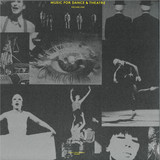
Music From Memory are happy to finally announce MFM045 - VA ‘Music For Theatre And Dance’ (EP).
This will be the first in a small series of EPs which will focus on music which was initially created for or inspired by dance and performance. Created as a dialogue with the avant-garde and highly experimental work in dance, theatre and art evolving at the time, the music was in turn at times greatly innovative.
That it was created for a dance or performance though means that such music was also often highly rhythmic and a number of pieces from this time stand out and seem greatly deserving of a new context.
Whether it’s more ambient or atmospheric works or whether it’s in the more rhythmic or percussive pieces, Music From Memory brings together a selection of tracks which aim to highlight this highly innovative direction in music.
In 2017 Brooklyn's Bryce Hackford spent a week at the PRAH Foundation in Margate (UK) recording rhythmic foundations and the environment around him. After his residency, eleven musician friends contributed their performances to what would become Safe (Exits). All of these contributions, however, were made in isolation and the task of mixing them together became the crux of the production.
Bryce's records largely explore improvisation with electronics, using recording as the compositional medium, and feature the occasional contributing musician. Eleven make Safe (Exits) more of a chance ensemble record, with players in unlikely combinations, from disparate backgrounds both personal and musical, pushing a collage aesthetic beyond sampling. The poetics of these sounds is the focus of this album.
Safe (Exits) attempts to create a rare space where rhythms get propulsive enough to make one dance yet become subtle enough to make them nod into the serene vistas of distant, contemplative waves.
Safe (Exits) is Bryce's first album since 2015 and second release with Spring Theory.
Featuring: Gabi AsFOUR, Brian Close, Matt Evans, Adrian Knight, Kiki Kudo, David Lackner, Frank Lyon, Camilla Padgitt-Coles, Bernardo Risquez, Viktor Timofeev and Justin Tripp
We instantly fell in love with Razen the first time we saw them live in September 2018. It was during a unique Sunday morning mass at the Friedenskirche (which translates literally to mean ‘the church of peace’), as part of the Meakusma Festival. Slightly sleep deprived and still euphorically intoxicated from the night before, their performance in front of a full mass of devotees had a biblical aura to it from the first note they played. They delivered a stunning set which was somehow, paradoxically, both relaxing and formidably tense.
Two years later and the group are now bringing their talent for restraint and slow tension-building to the fore on “Robot Brujo”. Each of the six improvisations on this double LP is made up of the barest of materials, with the three musicians relying on a limited combination of tones. They lay their focus on small variations in timbre, timing, articulation and vibration, which creates a narrowing of consciousness, and feels something a bit like staring meditatively at the minute changes of leaves blowing in the wind.
Recorded over two sessions, in what Razen themselves refer to as their detached playing style, "Robot Brujo" stands as an auditory magnifying glass of concentration, in all its uncanny and minimal glory.
It is yet another new step up from the deep listening ensemble from Brussels, after 10 years exploring music together.
Epic, panoramic, and intimate all at the same time, the legendary Toronto collective Broken Social Scene. An ideal artist to soundtrack an evening. Their live set was captured, mixed and mastered in real time via the world's only live venue and direct-to-acetate lathe cutting studio. Third Man are very excited to invite you all to be a part of this live recording in the only venue in the world where performance, art and tactile transcription methodologies converge... //// Third Man Records had the pleasure of hosting the legendary Toronto collective Broken Social Scene began as an ebbing and flowing collective of artists in the late 90s, collaborating to create a distinct strand of indie rock that is both perplexingly maximal and straight-up catchy. The band kicked off the set with emotive fan favorite "Cause = Time", then transitioning into "Stay Happy," the lead track from 2017's "Hug of Thunder," in all it's hypnotic, horn-driven grandeur. Then, on the flip side, the album's 2-song B-side wraps with the slow-build anthem "It's All Gonna Break," a song once described as "Bob Seger on acid." Really, how else would you want a show to close? With the release of this live album, Third Man is very excited to invite all to be a part of this special experience, Broken Social Scene's first commercially available live album.
First commercially available live album of Broken Social Scene's cathartic live show - Recorded Direct-to-Acetate, a hyper-direct analog recording method which is, globally, only available at Third Man Records - Features new hits (Stay Happy) and fan favorites (Cause = Time, It's All Gonna Break) Album Focus Track - Stay Happy (Live)
- A1: My Baby Just Cares For Me
- A2: Love Me Or Leave Me
- A3: I Love You Porgy
- A4: Little Girl Blue
- A5: Mood Indigo
- B1: Blue Prelude
- B2: Stomping At The Savoy
- B3: You've Been Gone Too Long
- B4: That's Him Over There
- B5: He's Got The Whole World In His Hands
- B6: African Mailman
- C1: Wild Is The Wind
- C2: The Other Woman
- C3: Summertime
- C4: Exactly Like You
- C5: I Don't Want Him, You Can Have Him
- C6: Fine & Mellow
- D1: Work Song
- D2: Just Say I Love Him
- D3: Do Nothin' Till You Hear From Me
- D4: Something To Live For
- D5: Can't Get Out Of This Mood
- D6: Solitaire
Nina Simone was an exceptional artist. She was gifted with a precocious talent and she played music at home and in church. Nina originally counted on becoming the first black female classical pianist ; her plans were thwarted and that frustration no doubt permeated almost her entire career. Yet she became a diva capable of combining the jazz world with those of the classics and soul, and among other titles she recorded are some of the most vibrant and moving performances of Wild is the Wind or You Can Have Him, I don’t Want Him.
She was one of the greatest artists of her time, and her fervour and rigorous demands concerning the quality of her music took her to the highest summits, whether in her compositions or in her vocal and piano performances. For all that, she never forgot her condition as a black woman in the America of the Sixties, and her active commitment to defending the rights of the black minority was exemplary - and at times even excessive, for which she was often reproached.
She has left us some of the most beautiful chapters in jazz and soul music, among them the 23 titles that appear in this album.
Originally released in the UK on 15th February, 1980 ‘ALABAMA SONG’ was initially written as a poem by Bertolt Brecht in 1925 and was put to music by Kurt Weill for the 1927 play Little Mahogany.
David Bowie was a longstanding Brecht fan and included the song in the setlist for his 1978 Isolar II tour. The studio version of ‘ALABAMA SONG’ on the A-side of this release was recorded on July 2nd 1978, the day after the final show of the European leg of the tour, at Tony Visconti’s Good Earth Studios in Soho, London.
The AA-Side features two previously unreleased tracks; A rendition of “Heroes” track ‘JOE THE LION’ recorded at the soundcheck of the tour’s final Earls Court show on the 1st July 1978. Though rehearsed for the Isolar II tour ‘JOE THE LION’ would not make its live debut until the Serious Moonlight tour of 1983.
The second track on the AA-side is a live version of ‘ALABAMA SONG’ also recorded July 1st 1978—a different performance than the one featured on the live album Welcome To The Blackout.
“We first performed this at the All Points East festival in Victoria Park in May 2019. The crowd reaction was so positive that I was inspired to do my first-ever bit of crowd-surfing (which I enjoyed so much that I have repeated it a couple of times since). We played the song throughout the summer & eventually recorded it after our final
performance of the year at the End of the Road festival on September 4th. “It’s a straightforward love song about someone stuck alone in the house whilst the object of their affections is out dancing to House music at a rave. “‘Everybody in the Place’ is the title of a Jeremy
Deller 2019 documentary on Rave Culture.”
The landmark 1980 album, representing a period of consolidation for Patrice Rushen. Her studio reputation as a go-to pianist and arranger among other artists and musicians was well established and was growing exponentially. Although never originally planning a career as a solo artist, she had built this side of her work through three Prestige albums and two sophisticated soul and disco albums for Elektra, 'Patrice' and 'Pizzazz'. "I was lucky to have a group of musicians that I knew well by the time of these recording sessions," remembers Patrice. "I had my pick of really incredible players because of all of the studio work I was doing. I also played with Lee Ritenour, Harvey Mason and others almost on a weekly basis at The Baked Potato club in L.A." Tracks include the singles 'Don't Blame Me', 'Look Up!' and 'Never Gonna Give You Up'. "'Never Gonna Give You Up' came out of playing ideas at home. Bassist Freddie Washington was living with my family while he tried to get a foothold in L.A.'s music scene and that groove came out of those jams. With 'The Dream', I had been listening to Minnie Riperton's 'Come To My Garden', one of my favourite albums. With Charles Stepney's arrangements, I saw that he didn't have to use large instrumentation to be orchestral in his approach. So, 'The Dream' was a homage to that kind of writing." "After 'Posh', we had a much better idea from the performance side what was important in our music and that informed my next album, 'Straight From The Heart'. We took a little break after 'Posh' was released, although I was still writing and working regularly on scores for film and TV. That had always been my main focus in my music."
- A1: Donde Esta The Donner Party?
- A2: How Many Contracts Do I Have, Linda?
- A3: Cannibal Cowgirl
- A4: How Many Fur Coats Do I Have, Edith?
- A5: Archetypal Unitized Seminar
- A6: How Many Head 'O Cattle Do I Have, Sally?
- A7: Gold Gush Epilogue
- B1: You Pay Rent On Your Brain
- B2: I Feel Like A Martian
- B3: Japanese Disease
- B4: I'm Hungry
Unreleased album from 1981, a collaborative project by David Behrman, Paul DeMarinis, Fern Friedman, Terri Hanlon and Anne Klingensmith recorded at Mills College in 1981.
Previously known only to cognoscenti through an obscure self-released three-track 7”, this is the first publication of the complete album, an outrageous confection that mixes art-song and theatrical monologue with live electronics. Starting life as a performance art piece described by the artists as ‘Western Performance Noir’, the record centres on a series of texts written by Friedman and Hanlon in which female narrators comically embody a series of iconic roles (The Recording Artist, The Former Movie Star, and The Rancher). Other lyrical themes include recurring references to the notorious cannibal pioneers, the Donner Party, an ironic take on Japanophilia, and the luscious “Archetypal Unitized Seminar,” a satirical poke at self-help culture, whose lyrics are rendered in Indian raga style to the accompaniment of electronic glissandi and toy noisemakers. Delivered by Friedman, Hanlon, Klingensmith and special guest Maggi Payne in forms ranging from spoken monologue to Country & Western waltz, the texts are accompanied by instrumental and electronic contributions by Behrman and DeMarinis. Musically, She’s More Wild is truly unique, demonstrating these two pioneers of live-electronic performance adapting their signature processes to something approaching a ‘pop’ format: we hear the gliding, frequency-sensitive electronics familiar from Behrman’s classic On the Other Ocean and the mutant hacked Speak n’ Spell heard on DeMarinis’ Songs Without Throats propelled by drum machines and twisted into song forms. Perhaps comparable only to the David Rosenboom and Jacqueline Humbert’s contemporaneous Daytime Viewing in its interweaving of performance art tactics, high-tech electronics and pop sensibilities, She’s More Wild is an essential document, both immediately gratifying and ultimately thought provoking.
Key Clef launches her own imprint Ipnotica Erotica with 'Mental Groove' EP
Key Clef is a Berlin based, italian dj and producer with strong passion for analogue instruments.
After experiencing the last years of the flourishing rave scene in Rome and accomplishing a degree in sound engineering her creative process evolved into different directions from club music, to performance art and electro acoustics.
In 2013 she released her first digital EP followed by releases on Love Blast, KKY, MinimalRome, BlackWater, DelirioRec e Mitten.
In her own world music is a continuous dialogue between styles and hybridation. Her music productions as well her live performances include synth, drum machines and analogue effects reflecting her ethereal trajectory while her dj sets show the full prism of her music taste and knowledge of the dance floor.
Key Clef sound doesn’t hit on surface instead aims to channel emotions and contact between her music and the listener. After maturing her sound over the years she is finally ready to launch her own imprint Ipnotica Erotica rec where she will soon release a new EP.
Dadub is a project synonymous with the deepest rhythms from the interior of the human psyche. Low-end mysticism. Tribalist periodic audio patterns. The Berlin-based Italian producers behind the project, now constructed of sonic warlock Daniele Antezza and performance artist Marco Donnarumma, supply an unmistakably unique vision of post-apocalyptic dub landscapes. Past, present, and future blend into one, backed by the supremely sublime BASS of creators who are light years ahead in their field. A Sun Called Moon is a superior first representation on Ohm Resistance, detailing their ongoing mission of creating bass-present music, regardless of dancefloor conformity. The Time You Killed opens as a psycho-acoustic audio film, depicting the unknown world from which the EP emanates. I Would Gladly Die… introduces the first heavy rhythmic patterns, completely alien to identified structures, while unmistakably pushing a groove that entrances hypnotically. Past Times Present Ruins lowers the tempo and continues extrapolating into new rhythmic territory – or is it ancient? It Was Too Soon follows with beat driven hednod, as influences from Scorn to Autechre are subsumed into the universal language that comprises Dadub. Feeling both familiar and foreign, both modern and eternal, Dadub’s first appearance on Ohm Resistance is a fascinating drama played out in 4 acts. Spliff recommended – subwoofer required. All tracks Written and Produced by Daniele Antezza and Marco Donnarumma Mixed by Daniele Antezza and Marco Donnarumma at Dadub Studio, Berlin Mastered by Xergio Cordoba @ Eternal Midnight Studio, Madrid Photography by Flora Schwartz Layout by MachineTM
It's been a long, winding road to Hailu Mergia's sixth decade of musical activity. From a young musician in the 60's starting out in Addis Ababa to the 70's golden age of dance bands to the new hope as an emigre in America to the drier period of the 90s and 2000s when he mainly played keyboard in his taxi while waiting in the airport queue or at home with friends. More recently, with reissue of his classic works and a re-assessment of his role in Ethiopian music history, Mergia has played to audiences big and small in some of the most cherished venues around the world. With 2018's critical breakthrough "Lala Belu" Mergia championed himself and consolidated his legacy, producing the album on his own and connecting with listeners through the sheer creative power of his version of modern Ethiopian music. His subsequent performances revealed an artist who is in no way stuck in the nostalgia for the "golden age" sound. The press agreed, including the New York Times, BBC and Pitchfork, calling his music "triumphantly in the present" in its Best 200 Albums of the 2010's list. Mergia's new album "Yene Mircha" ("My Choice" in Amharic) encapsulates many of the things that make the keyboardist, accordionist and composer-arranger remarkable_elements that have persisted to maintain his vitality all these years, through the ebb and flow of his career. The rock solid trio with whom he has toured the world most recently, DC-based Alemseged Kebede (bass) and Ken Joseph (drums), forms the nucleus around which an expanded band makes a potent response to the contemporary jazz future "Lala Belu" promised. "Yene Mircha" calcifies Mergia's prolific stream of creativity and his philosophy that there is a multitude of Ethiopian musical approaches, not just one sound. Enlisting the help of master mesenqo (traditional stringed instrument) player Setegn Atenaw, celebrated vocalist Tsehay Kassa and legendary saxophone player Moges Habte from his 70's outfit Walias Band, Mergia enhances his bright, electric band on this recording with an expanded line up on some songs. Mergia produced the album which features several of his original compositions along with songs by Asnakesh Worku and Teddy Afro. An artist still reinventing his sound every night on stage during his marathon live sets, this 74-year-old icon refuses to make the same album twice. The album feels as urgent and risky as his concerts can be, pushing the band to the outer limits of group improvisation and back with chord extensions during his exploratory solos. "Yene Mircha" captures this live experience and fosters an expansive view of what else could be in store for this tireless practitioner of Ethiopian music.
Following their first 7" in 2018 Budabeats Records is proud the release the debut LP of pioneering Hungarian Afrobeat supergroup, the Mabon Dawud Republic.
The band started out as the Fela Kuti tribute band for the very first Felabration event in Budapest.
In the past two years they created an impressive repertoire of their own tunes. The rawness you can hear on their early recordings transformed into a more mature and sophisticated sound, still deeply rooted in the traditions of West-African music.
They even toured in Ghana where they had the chance to record with highlife legend Pat Thomas, as you can hear on 'Gyae Abrabi'.
On 'Na Lie' they are joined by Fela's original Egypt 80 band member, keyboard player and singer Dele Sosimi.
Other guest performances include Ghanaian vocalist and kologo player Stevo Atambire (on 'Mawadioh' and 'Talk to Me') and vocalist Abate Berihun (on 'Nanu Nanu Neye').
Luz Azul is a group started by LA-based vocal and performance artist Anna Homler (aka Breadwoman) together with musicians Marcos Fernandes and Robert Montoya in 2007. On this record they compose their own mesmerising cosmic universe where the hypnotic speaking in tongue voice of Anna Homler blends mesmerising together with the sound of her found toys intensified by the shamanistic percussion of Marcos and the pulsating electronics of Montoya.
As fellow percussionists and sound artists, Marcos Fernandes and Robert Montoya's collaborations began in 1983 and ran the gamut from ambient to noise, rock to electronica to improvisation. Both were founding members of Trummerflora, a collective of creative musicians based in San Diego from 1999 to 2009.
All three artists were active in the improvised music scene in Southern California and met at Spring Reverb 2006, an annual festival of experimental music curated by the Trummerflra Collective. At the time, Fernandes was experimenting with processed percussion as well as phonography and samples while Montoyawas exploring improvisational possibilities on the computer.
Fernandes and Homler expressed their mutual interest in collaborating but it was not until the fall of 2007 that they performed a series of concerts together. Pleased with the results, they performed together again in the spring of 2008 with the addition of Montoya. There was chemistry and the trio promptly decided to enter the studio to capture their collective magic. The session yielded the music found on Luz Azul.
Anna Homler - voice, pocket theremin, sample sticks, whistles, assorted dry and squeaky objects, greeting cards, wood devil, tiny metals and motors and potato slicer
Marcos Fernandes - percussion & electronics
Robert Montoya - electronics