From his Saint Denis apartment, and with the help of his machines, Labelle has laid the foundations of an electronic maloya, modern and deeply rooted in its home territory: La Réunion. On 'univers-île' his latest album released in September 2017, the sound of the Creole Reunionese language played a key role. On 'Post-Maloya", Labelle release a fascinating EP of introspective trance music. Post-Maloya EP is characterized by vivid dream-like journey through which traces a path of exploration. Here you will find the maloya stamp, which is Reunionese traditional music, both in the rhythms and the instruments used, like the valiha. This traditional tubular harp from Madagascar is played by Vola on the track 'Jaojoby'. Vola was taught by Rajery himself, who is widely considered as master of this instrument. This track is an homage to Jaojoby, king of Salegy, a popular musician in Madagascar. The hypnotic sounds evoke distant dimensions and resonate like shamanic incantations whose aim is to gently lead us towards the trance. As the title suggests - 'Post-maloya' is the exploration of new musical processes mixed with the use of traditional maloya instrumentation. This is an appropriate name for this new opus, which is more electronic and percussive; carving an experimental path between electronic and traditional music. In parallel with the creation this EP, the Regional Conservatory of Réunion Island has given free reign to Labelle to create a series of live performances which he played all around the island last month, including an original creation linked to his expression of 'Post-maloya' supported by an ensemble of eleven musicians from Réunion Island's regional orchestra.
Suche:performance
Transit Valley is the debut release by Joe Coghill, a multi-disciplinary artist, musician and experimental publisher based in Edinburgh. His practice incorporates sound, video, performance, social sculpture, facilitation and media distribution. Borrowing from multiple spheres of influence, his scattered output operates from a liminal position. Coghill works in an improvised and often haphazard way, incorporating disparate field recordings, modular synthesis and other sonic ambiences to create unpredictable and ephemeral multi-layer audio-visual performances. Alongside this Coghill has been producing music recreationally in his various bedroom studios over the past 14 years.
HOGG returns to SCRAPES with a full-length recording made at Electrical Audio. Self-Extinguishing Emission captures the physicality and energy of a HOGG performance over the last several years, while the song-writing and production show a refinement and development that is uniquely HOGG. The songs are built around a spare foundation of heavy electronic pulses punctured by occasional stabs of distorted guitar, floor tom, and biological samples. Dueling vocals of diverse sonic and emotional quality render each song into a pleasurable exploration of internal conflict within a brutal psychological atmosphere
That Which Is Not Said is an album about learning to accept oneself within, and accept the reality of all that comes from without. It's an eponymous abstract exposition on navigating the realms of intimacy that the living world inevitably unveils and their equally inevitable fallout, the panic of abandonment and the loss of desire, and dragging oneself back up the hill once the lonely valleys lose their allure. Written and recorded over the course of two years in TWINS home studio in Atlanta with various synths, samplers, drum machines, and his very own flesh-and-muscle vocals, That Which Is Not Said is the result of countless studio sessions and experiments that were refined and distilled into the songs presented here, rigorously worked out through live performances and repeated critical overhaul. The material was all conceived more or less the same way: a mood or feeling would be channeled through whatever machines were plugged in at the time and eventually a foundation would be developed upon which a loose structure would be improvised. Experimenting and
throwing around vocals came next, making up phrases and lyrics on the fly until something clicked and a pathway cleared through the fog and mist.
Audio-visual artists Soundwalk Collective were granted exclusive access to the personal archive of the groundbreaking filmmaker and present their ambitious New Album and Remix EP: What We Leave Behind released on 18th & 25th May 2018.
The NYC and Berlin based group were invited to aurally explore the archive of the seminal French director Jean-Luc Godard and release their interpretations in an innovative new album What We Leave Behind. Drawing on Godard's personal collection of shot film, reel- to-reels and historical ephemera, the recordings reveal the moments before and after the camera rolls, from stage directions and on-set asides to rehearsals, false stars and outtakes.
'There are boxes filled with sounds, words, chaos, and also silence. For Godard sound is a musical composition and when I began listening to the tapes and heard his voice between takes, it was like little bits of life...each sound has its own value. It has always been part of our working practice to venture into untapped sonic territories, discover the poetics behind them, and explore how we (as humans) relate to it, it is part of a larger discourse.' - Stephan Crasneancki, Soundwalk Collective
Revealing much insight to the director's process and personality, the 6-track album will be followed by a remix EP, featuring unique reworks from Ricardo Villalobos, Jan Jelinek and Petre Inspirescu.
What We Leave Behind, and the subsequent remix EP, arrive 50 years to the day that the the Cannes Film Festival, 1968, was closed after Jean-Luc Godard, Francois Truffaut and Claude Lelouche, publicly announced their closing of the festival in solidarity with workers and students protesting across the country.
The LP features a conversation between Stephan Crasneanscki, of Soundwalk Collective, and Franc¸ois Musy, Jean-Luc Godard's sound engineer, printed on a translucent paper insert. The LP and Remix EP both contain imagery taken by Stephan Crasneanscki of the archives, which he has also filmed to create a series of mesmeric short music videos of original and remix tracks.
An international genre-bending group of artist-musicians with studios in New York City and Berlin, the three members of Soundwalk Collective (Stephan Crasneanscki, Simone Merli, and Kamran Sadeghi) formed in Manhattan to produce concept albums, sound installations, and live performances, and have worked with a diverse range of collaborators, from Nan Goldin and Patti Smith to Berghain and Zaha Hadid.
Coletivo Vandalismo kick-start a new 12" series for the Contort Yourself label. Hailing from the city of Porto the duo also DJ under the name GAM and released their debut LP on Lake Haze's Eye For An Eye label. Their music has an immediacy that seems to stem from a background in live performance as opposed to polished studio sessions - an improvisational punk aesthetic that manages to carry this EP so strongly. Wild, crashing fx and unrecognisable vocal distortions layer atop wonky 90bpm drum machine grooves and the pair even show off what may be their turntablism skills on 'Zombie Zombie'. There's a nod to early concrete on the closing track 'Black Sun's Demise' with whirring, mechanical noise motifs suddenly jolting us into punishing gabber-at-33-minus-8 territory. The DIY spirit is alive and well here and the feeling that things could fall apart at any minute just adds to the tension.
Since the early 1990s, keyboard player Jessica Lauren has been a familiar part of London's alternative music scene. Jessica's keyboard skills have augmented the live performances and studio recordings of world renowned artists such as Jean Carne, Tom Browne, Dexter Wansel and James Mason, Japan's United Future Organisation, and UK soul diva Juliet Roberts.
Her previous Freestyle album 'Jessica Lauren Four' (2012) highlighted Jessica's minimalist approach, something rare and refreshing in the jazz world: she instills her compositions and playing with a refined sense of space which makes her music as much about what she doesn't play as what she does.
The albums' opener - Kofi Nomad is a deeply percussive afrocentric epic, featuring the beautiful baritone saxaphone of Tamar 'Collocutor' Osborn, one of the most in demand woodwind players working today, underpinned by a powerful foundation of percussion courtesy of Richard látúndé Baker, Phillip Harper and drummer Cosimo Keita Cadore.
Jessicas' amazing skill for writing simple, understated yet superbly memorable and catchy hooks remains undiminished. Highlights in this new collection are almost too numerous to mention, but Amalfi is a breezy bossa, which conjures up images of easy living days and sun dappled Mediterranean coastlines, whilst the angular and brooding Simba Jike has something of an Eddie Harris style deep, dark groove over which Jessica riffs and solos beautifully on grand piano - and Tamar once again blows freely, whilst 'level' Neville Malcolms' upright bass figure roots the entire thing in a solid, almost primeval sound.
The albums closing statement Argentina is a masterpiece of pathos and perfectly demonstrates Jessicas' approach which is almost akin to a minimalist architecture style of composing and playing, such is the strength of its atmosphere and subtlety.
Local Talk are honoured to welcome Trevor Lawrence Jr. With a CV that reads the who's who in the music scene today, Lawrence's performance and recording credits include Herbie Hancock, Stevie Wonder and Quincy Jones to name a few.
Tiptoe is taken from Trevor's debut solo record, 'Relationships', released in 2017.
On this 7" - the very first on Local Talk - we're re-releasing the original together with a remix by DJ Spinna.
On the A side the Brooklyn legend applies his magic touch to 'Tiptoe', combining warm and soulful vibes with a house touch. A must-have for not only for the soulful house heads but also anyone that loves quality in music.
Strut presents the brand new album from cosmic jazz travellers The Pyramids, led by saxophonist Idris Ackamoor, 'An Angel Fell'. I wanted to use folklore, fantasy and drama as a warning bell,' explains Ackamoor. The songs explore global themes that are important to me and to us all: the rise of catastrophic climate change and our lack of concern for our planet, loss of innocence and separation... but positive themes too, the healing power of music, collective action and the simple beauty of nature.' Produced by Malcolm Catto of The Heliocentrics, the album was recorded during an intense week at Quatermass studios in London and is one of the deepest, richest works yet from a band reaching their highest creative peak since the early '70s. Some of the many highlights include the poignant title track depicting a fallen angel in purgatory, outrage and grief on the powerful, hard hitting 'Soliloquy For Michael Brown' and the lilting, beautiful album closer, 'Sunset'.
The Pyramids originally came together in 1972 at Antioch College, Yellow Springs, Ohio where teachers included renowned pianist, Cecil Taylor. After forming in Paris and embarking on a cultural odyssey' across Africa, the group recorded three independent albums, 'Lalibela' (1973), 'King Of Kings' (1974) and 'Birth / Speed / Merging' (1976) and became renowned for their striking live shows, mixing percussive, spiritual and space-age jazz with performance theatre and dance. After migrating to San Francisco, they disbanded in 1977. 35 years later, the band reunited in 2012 following growing demand for their music from vinyl collectors. German label Disko B released the freeform album 'Otherwordly' and in 2016, they released their first album for Strut, the acclaimed 'We Be All Africans'.
'An Angel Fell' is released on Strut on 11th May 2018 and features full hand-painted artwork by Lewis Heriz.
New concept album by leading cosmic jazz collective exploring global apocalypse, climate change and the healing power of music
Produced by Malcolm Catto of The Heliocentrics - Superb cover painting by Lewis Heriz
Full priority worldwide PR campaign and marketing
Release supported by major European tour dates in May and key Summer festivals
'Harnessed To Flesh' is the new release from Berlin based industrial project OPERANT (Instruments of Discipline's founder and sub, respectively, Luna Vassarotti & August Skipper). Since 2016's 'ZK-II' & 2017's 'Zero Knowledge' Operant have been consistently touring, enforcing their reputation as a live act, melding chaotic noise with a disturbed, euphoric techno.
With this new release Operant engage a sense of intimacy which encapsulates their live performance; there is the familiar sense of hypnotic rhythms and collaged sound seen in the earlier works but the duo's production and focus have evolved, opening up new spaces and textures to their sound.
The opening track, 'Also To The Inorganic World' reflects the more noise oriented moments of their live show, improvised fragments, contact mic's and metal sheets combine with soundtrack like synths that seek to bolster a sense of unreality and pervert lo-fi expectations, 'Be A Boy' is a slow build, punctuated by car-crash impacts with the most coherent, almost narrative driven vocal of the record, concluding with a jarring, rhythmic seizure. Side-A finishes with 'Chancellory', an underlying sense of being underwater pervades, choking vocal sounds straddle the line between disturbing and playful. The B-Side sees a more direct and aggressive approach, 'The Sacrifice of Meaning for Power' is a dance floor oriented storm of percussion and punishing snares, Luna's vocals violently penetrate at moments, creating a feeling of vertigo within the locked rhythm, 'Dead Realities VIII' closes the record, beginning with a gabber influenced, rhythmic groundwork that unravels into a dronescape where an already torn reality is utterly destroyed.
Since the release of their critically acclaimed debut album in 2013 on Names You Can Trust, La Mecánica Popular has quietly been contemplating the evolution of the group's sound, philosophy, and overall approach to making music. Band leader Efraín Rozas' experimental nature has continually pushed the boundaries of his own definition of not only Latin American music, but its broader relationship with music's global culture and history. The sound of "psychedelic salsa" that LMP helped capture in their debut was destined for further outside-the-box interpretations, and with the formation of a new quintet lineup over the last few years, LMP began to incorporate a more free, improvised and instrumental-focused performance of Rozas' increasingly radical compositions. The band subsequently took this liberated approach directly into the studio, recording Roza Cruz live, in its entirety. It was a cathartic experience, a necessary methodology for the new album's concept that embraced the intimate performance of its players and did away with standard techniques of isolation and overdubs.
The evolution of the band's sound on Roza Cruz brings forth a blend of styles rarely heard together, a touch reminiscent of electric-era Miles Davis or Eddie Palmieri at his most experimental, as the driving force of timbales and congas provide a bed for a wave of lush, analog amplification that mirrors the dueling leads of fuzz guitar and electric piano. But as far out as those instruments take the listener, the raw rhythm — the clave — always keeps it tethered to the earth and the dance, a cerebral yet visceral gift for the mind and feet.
Japanese vocal performer Hatis Noit will release her enigmatic EP Illogical Dance via Erased Tapes worldwide on 23rd March 2018.
The arresting 4-track record creates unique song-worlds with transcendent vocal interpretations that at once deconstruct and recombine Western Classical, Japanese folk and nature's own ambience atmosphere. Illogical Dance also features Björk-collaborators Matmos, who were so impressed with Hatis Noit's recordings, they volunteered to edit the lead track Illogical Lullaby.
Hailing from the distant Shiretoko, a small town in Hokkaido, which is the largest island in north Japan, Hatis Noit's accomplished range is astonishingly self-taught, inspired by everything she could find from Gagaku — Japanese classical music — and operatic styles, Bulgarian and Gregorian chanting, to avant-garde and pop vocalists. The sounds she created on Illogical Dance, co-produced by Haruhisa Tanaka and Matmos, bring to mind the experimental vocal patterns of Meredith Monk with the attentive production of Holly Herndon.
It was at the age of 16, during a trek in Nepal to the Buddha's birthplace, when she realised singing was her calling. While staying at a women's temple in Lumbini, one morning on a walk Hatis Noit heard someone singing. On further investigation it was a female monk singing Buddhist chants, alone. The sound moved her so intensely she was instantly aware of the visceral power of the human voice, a primal and instinctive instrument that connects us to the very essence of humanity, nature and our universe.
The name Hatis Noit itself is taken from Japanese folklore, meaning the stem of the lotus flower. The lotus represents the living world, while its root the spirit world, therefore Hatis Noit is what connects the two. For Hatis Noit, music represents the same netherworld with its ability to move and transport us to the other side, the past, a memory, our subconscious. It is the same for Illogical Dance, a set of transformative songs that taps into our most primal instincts.
The human voice is our oldest, most primal yet most powerful instrument. I use it to describe nature's many sounds, a language that isn't logical. Yet it forms a beautiful conversation that isn't restricted to words like the human language is. I want my music to remind us of that.' — Hatis Noit
Wanting to interpret and mimic the sounds Hatis Noit hears in nature, Illogical Dance is as unpredictable, beautiful and mysterious as the world around us. Each track is made up from multi layers of vocals, all improvised and without words, before being carefully pieced together. Astonishingly no samples are used throughout, even the sound of crushing leaves came from Hatis Noit's own vocal chords.
The result is a stunning array of sound sculptures that see her switching between multiple styles with great ease. From the sweet operatics on Illogical Lullaby, the manipulated vocal loops duplicating electronic production on Anagram c.i.y. to the primordial chanting call to arms of Angelus Novus, a 10-minute odyssey that features whispering and leaves crunching, it showcases Hatis Noit's full range and introduces a truly original artist.
Previously only available in Japan, Illogical Dance will receive a worldwide release on 23rd March 2018 including a first edition on 12' vinyl. After participating in a ceremony for memorial and appreciation tailored to the withdrawal of the evacuation area in Fukushima on 31st March 2017, Hatis Noit collaborated with renowned visual artist Nobumichi Asai on a project titled INORI (prayer) which they premiered live as part of an Erased Tapes showcase at Mutek Japan in Tokyo.
Having recently moved to London and performed a first string of UK shows, followed by a special live performance at the Milan Fashion Week and Mutek Japan appearance, Peter Broderick has invited Hatis Noit to support him at the Jazz Cafe on April 15th. She's also been announced as part of this year's Sea Change Festival line-up, and asked to participate in a workshop with the London Contemporary Orchestra.
Faitiche releases the album Improvisations And Edits, Tokyo 26.09.2001 on vinyl for the first time. For the original 2002 CD on Soup-Disk and Sub Rosa (Audiosphere), Jan Jelinek and the Japanese trio Computer Soup (Satoru Hori - trumpet, Osamu Okubo - toys & electronics, Kei Ikeda - toys & electronics) presented eight tracks all recorded one afternoon in the trio's living room in Tokyo. They are excerpts from a joint group improvisation that subsequently underwent rudimentary editing, on which Jelinek and Computer Soup worked separately.
Jelinek met the three musicians at his first concert in Japan in 2001, at Tokyo's Yellow club, where Computer Soup performed as the support act. Delighted by their free improvisation on pocket-sized electronic toys, trumpet and oscillators, he arranged to meet Hori, Okubo and Ikeda a few days later for a session at their apartment. The resulting three-hour recording, made on their living room floor, formed the basis for Improvisations and Edits. A few days later, Jelinek returned to Berlin. Over the following months, they separately chose passages from the recording that were then edited and assembled into an album.
Formed in Tokyo in 1996 as a quintet (including Shusaku Hariya and Daisuke Oishi), Computer Soup began by performing with acoustic instruments on the streets of Shibuya. Ikeda und Okubo soon switched instruments, and from then on the group's minimalistic but densely woven sound was defined by electronic toys, oscillators and Satoru Hori's trumpet. Their first album was released in 1997 on the Japanese label Soup Disk. Eight further releases followed.
From the reviews of Improvisations and Edits, Tokyo 26.09.2001 in 2003:
"The mind-blowing first track Straight Life is perhaps the best example of what the album has to offer. Jelinek's trademark smears and washes occupy the midrange, like ghosted images of Joe Zawinul's electric piano floating quietly in the wind. DSP jazz modes are set against a walking bassline (possibly computer generated) and a gently tooted trumpet complete with Harmon mute, a dead ringer for Miles Davis' Prestige-era ballads. The effect is something like a three-dimensional film, with different realities on each layer, images of what jazz was manage to interact with a real-time demonstration of all it could be."
pitchfork, 2003
"Improvisations and Edits is a warm and mellow Ambient release with beautiful glitch fragments, static noise bursts and real trumpet intersections. However, there are times where it is the exact opposite, mainly effect-laden, overdriven and bouncy with a lack of melodies and focus, so be aware of these specific tracks."
ambientexotica, 2003
"Often deliciously dreamy and hazy, Improvisations and Edits is like listening to an exceptional instrumental jazz performance while half-conscious or under some sort of chemical influence. Computerised blips and bleeps, loops and treatments and murky sonic skips curl up around desolate horn notes and scattered instrumental noises that culminate in elegant music."
exclaim.ca, 2003
Great return of the classic and pioneer band of the French Funk scene! After a long absence, Malka Family reformed, burned some scenes and composed a new album without changing anything to its magic formula. Recomposed with almost all original
musicians, they come back today with a new album, Le Retour du Kif. At the heart of a still popular and multicultural Marais area in Paris, young musicians gather to jam. This is where Malka Family is formed. Their first self-produced album, Malka On
The Beach, was released in 1991, and gigs were immediately chaining up all over France and Europe, famous for their eccentric costumed performance and after-parties. In 1992,
Warner France signs them for a second album Tous des Oufs, a real P-Funk space opera with guests such as Sidney, Dee Nasty, Marco Prince (FFF), or Juan Rozoff... They will then traveled France, Switzerland, Italy, Holland, Denmark, Namibia, Japan ...
And in 1994, the band becomes independent again and records an EP for Big Cheese Records, titled Fricassee de Funk. After a final tour for the third album, Fotoukonkass (BMG) recorded with Renaud Létang , the band finally broke up. At a time when Daft Punk is using funk artists to support their performance, when Bruno Mars & Mark Ronson's "Uptown Funk" continues to make the crowds dance, it's time for the original funkateers families to come back and teach a lesson to new generations. After the
band reformed and started touring again since 2015, they quickly decided to record a new album and to leave on the roads again...
Optimo Music is thrilled to release the new album from Jacob Yates. Not only is he one of our all-time favourite artists from Glasgow, but he is one of our favourite artists from anywhere. Criminally unknown except to a few who have been long transfixed by his recordings and performances, we hope this release will open a few more ears to his wondrous musical world.
The Hare, The Moon, The Drone' is the third album from Jacob Yates. This recording finds the band exploring dark hawthorn hedged lanes, moors and suburban, new build estates. There's something more earthy about the songs but the menace and darkness remains. Musically there is a big shift on this album, a field recording of a folk band from a dark, pine filled glen. The opener, The Car sets the scene for the rural side of the album, dank and stone cold. The tracks then shift through the woods, people turn into animals, we pass a sunlit glade, do you hear a love song Cassie Ezeji closes the side sweetly lamenting in Gaelic as the snow falls.
Side two is a more urban affair opening with despair in a bedroom in Belgium, we visit a faith healer and drop in on your lonely mother. Lovatt recounts the story of a karaoke addicted murderer before we finally go home to our new build just outside of town where the pylons tower over Michael and his sister Rachel. It's a journey you can go on, looking out of the window of the bus, glimpses of lives glide by, cards on seats promise to help you. Ding! It's time to get off.
Tape / Cassette
This is Essential Tremor's second and final album of all time. The band broke up after the recording of this record but still managed to play one final show before fully breaking up. The show was one of the most brutal things Nashville, TN has ever witnessed and lead singer Cole K was banished from Nashville forever following the performance. Essential Tremor's work never quite fit in with the rest of what was occurring in Nashville around the time these tracks were recorded, but we're sure that this tape will fit right in with the rest of your collection.
Aria Rostami and Daniel Blomquist are from San Francisco, CA, though Rostami has recently moved to Brooklyn, NY. Rostami and Blomquist's work occurs in two stages: the gathering/preparation of source material and the live performance. Rostami and Blomquist's source material primarily focuses on the exchange of information, repetition and decay, and surrendering aspects of creative control. The source material is either sampled and altered by Blomquist or composed and recorded by Rostami. Sometimes this material is repeatedly passed back and forth to be altered, others, it's barely touched.
Following prior albums on Glacial Movements and Jacktone, the duo return with their third full length, "Distant Companion" named after the multiple star Polaris. Comprised of Polaris Aa in orbit with Polaris Ab which in turn, are in orbit with a distant companion, Polaris B. Polaris, aka The North Star, was the star that American slaves followed to freedom. It carries with it a history of Civil Rights, a cosmic history of our origins, as all stars do, and a glimpse into the past as it floats light years away. The first two songs of "Distant Companion" were recorded during a protest performance at Grey Area Foundation of the Arts in San Francisco that featured artists representing communities, cultures and countries on the travel ban list (Executive Order 13769.) For this performance they sampled voice recordings of Persian poets Rumi, Hafez and Forough Farakhzad. Every generation seems to find, in their own way, that the pursuit for equality is not linear, but that we must know our pasts, be in tune with the present and have a will for a better future. This record stands on the shoulders of communities, artists and movements that have made art in protest of oppression, and we hope, in some way, to make a contribution to this conversation. All songs have been mastered for vinyl by George Horn at Fantasy Studios. Cover artwork features a collage by London-based artist Anthony Gerace, and each copy includes a postcard featuring a photo of the duo.
Forest Bathing, or Shinrin-yoku, is a term that means taking in the
forest atmosphere.' It was developed in Japan during the 1980s and has become a cornerstone of preventive health care and healing in Japanese medicine.
Taking in the forest atmosphere' became the inspiration for A
Hawk and A Hacksaw's newest album. Their forest bath of choice is the Valle De Oro National Wildlife Refuge in New Mexico. This new album features ten original compositions by Heather Trost and Jeremy Barnes. The opening track Alexandria' features Barnes on the Persian Santur, an ancient hammer struck dulcimer, and Trost's string and woodwind melodies. The composition evokes the long trader's route between what is now Bulgaria and the wealthy cities of Istanbul and Alexandria.
The band has always had a bird's eye view of this part the world—
looking for the connections between places and even eras: a belief in the power of music to reach across borders and unite.
The band is based on the idea of collecting music and inspiration
through travel. They are not of a place, but their music evokes places along a route. This is not urban music. It's rural: songs of the woods and roads where there are no sidewalks or street lamps to light your way.
While the bulk of the music heard on this record is played by Barnes and Trost, they do have some incredible guest performances, namely the clarinet virtouso Cüneyt Sepetçi, from Istanbul, Hungarian cimbalom master Unger Balász, and closer to home, Chicago trumpeter Sam Johnson, Deerhoof's John Dieterich and Noah Martinez, of the band Lone Piñon.
Kingswood Drive and Accidental Return were an early teaser of this new set, due in April. Displaying their signature analogue sounds and arpeggios, alongside broken beats and soul, you wouldn't be alone in hearing the influences of Dam Funk, Herbie Hancock or Bugz In The Attic coming through on these two.
Elsewhere more jittery, playful rhythms underpin Croydon Rooftop Café Culture. As well as in the calming and ethereal Prints On The Heath, a subtle tribute to mutual hero Prince, who passed away on the unusually prolific day this and two other, currently unreleased, tracks were written and recorded.Throughout the EP the duo nod at their London home from the "Heath" to Kingswood Drive and more obviously Croydon itself. The sound of South London is threaded throughout this record with pride.
Even down to the mechanical sunset sound of EP finale Thorns, capturing some of the essence of the studio view over London from their high point on the hill in Thornton Heath.
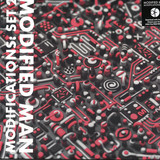
The first EP from Albert's Favourites co-founders and synth-production duo Modified Man focused on throwing out heavy editing, recording music with as few processes as possible and grabbing performances as single takes. Blending warped cassette recordings that touched upon early jazz-funk/brit-funk influences with the energy of broken beat and experimental electronica, won them support from Patrick Forge, Osunlade, Thris Tian, Yam Who and Titeknots to name a few.
Since that release they premiered new track Thorns live on Boiler Room, going on to deliver a full, three-hour live performance and DJ set for the infamous global community.They also provided remixes for Dele Sosimi, Amp Fiddler, Makadem & Behr and Hector Plimmer, meanwhile, busily preparing a series of four, six-track vinyl EPs which will be released over the next 18 months.
Do you like Love songs After spending a lifetime spent avoiding this subject in song, Joel Sarakula finally admits that he does. On his new album "Love Club" Sarakula relives the golden age of Soulful and Romantic Pop music and connects it with a modern aesthetic. While a deeper message of love and peace flows through the record, Joel Sarakula is no old fashioned hippie: ",Love Club' is about connecting to reality and re-framing the idea of romantic love and loss in the present, loveless age ". Featuring eleven songs touching all genres from disco to blues, from soul to soft-rock, Joel Sarakula's "Love Club" is a profound pop statement.
Joel Sarakula has travelled the world in search of his muse, experiencing everything from being a victim of Caribbean carjackings to performing in the remote fishing villages of Norway, via the dive bars of Europe and the US. It was the hodge-podge musical tapestry of England's capital that finally drew him to a settling point, in the wake of seemingly never ending run of shows. With personal tastes that span from the more avant-garde to soul and pop greats like Sly Stone, Todd Rundgren and Hall & Oates, there are clear nods to contemporaries like Unkown Mortal Orchestra, Erlend Oye and Toro Y Moi in terms of ambition and style.
With his last two albums "The Golden Age" and "The Imposter" collecting strong radio plays at BBC Radio 2, BBC 6, BBC London, XFM Joel Sarakula has been play-listed nationally in Europe including Flux FM, WDR 5, Radioeins, Bayern 2, Deutschlandfunk and Deutschland Kultur Radio in Germany as well as in Benelux and Italy and Spain. He is a regular fixture on the live festival and club circuit in the UK, Europe and internationally including appearances at SXSW, Primavera Sound, Glastonbury, The Great Escape, Liverpool Sound City, Scala London, Tallinn Music Week, V-ROX (Vladivostok) and Reeperbahnfestival Hamburg.
"Love Club" is Sarakula's bold and unashamedly emotional next step. In essence the album is a homage to the soulful singer & songwriter artistry of the Seventies filtered through a darker contemporary lens - fitting for these uncertain times. "I always shied away from generic love songs," the Sydney, Australia born songwriter admits, "but on this record I embraced the subject wholeheartedly... and intellectually, looking at themes of love, lust, loneliness and everything in-between." Take the first single "In Trouble", co-written with Michele Stodart of The Magic Numbers, as the best example for Joel Sarakula's unique, and honest approach to making music. "We Used To Connect" questions the changing nature of relationships in our social-media addicted world: 'We used to connect in the real world too, now the touch of your hand is a digital cue'.
"Coldharbour Man", on the other hand, examines the identity of the song's narrator and the artist vs. fan dynamic all wrapped up in a disco love song: "There's a lot going on in this particular track. I feel my writing has grown emotionally...", explains Joel Sarakula. "Just best to listen yourself and make up your own interpretation!: 'We met in a song come to life like some fantasy cliché, though I'm known for my moves in the dark you flooded sunshine on my day'. Then there's "Baltic Jam", capturing romantic love and loss in authentic 70s confessional singer & songwriter style and of course "Dead Heat", a song about how there is struggle in the most perfect relationship pairings as the match is so even: "I recall an ex-girlfriend of mine... when we first met, we thought we hated each other but we eventually flipped that emotion and realised we had a deep passion and love for each other, there just was a lot of underlying sexual tension!" : 'It's a battle we could only win, if we lose. We'd be stronger if these lonely ones became two'.
More than a year in the making, Joel Sarakula recorded "Love Club" in various studios around London and Berlin capturing soulful performances from his many musical comrades on vintage analogue equipment. "This record has truly been a labour of love. Recording and privately sharing these performances amongst my collaborators started to feel like a bit like a club - I guess that lead to the album title! I was surprised how much I actually enjoyed the 'love-making process' and I look so much forward to playing these new songs on stage with my band." We can't wait, Joel Sarakula.