quête:peri

Genres
Tout
Namasenda - Limbo LP

Namasenda

Limbo LP

12inchYR0211LP
YEAR0001
05.06.2026
  • Love Island
  • Madonna
  • Cola
  • Bad Love
  • Coquette
  • Miami Crest
  • Heaven
  • Clermont Twins
  • Romeo Must Die
  • Ultra Bomb
  • Alright

What began as a career in DIY bands has since evolved into a wholly solo endeavour, with her recent work in particular showcasing her prowess as both songwriter and performer. Through this, she defines a distinctly personal vision of pop creativity -- a "perishable good," as she calls it, meant to be shared when the moment calls for it.Limbo, her most personal and fully realised body of work yet, will be released this year on YEAR0001. A cathartic explosion of emotion through sound and substance alike, it's a record that finds Namasenda at her rawest, most vulnerable state. Limbo has blossomed from a relentless artistry that has been waiting to be unleashed for years.

pré-commande05.06.2026

il devrait être publié sur 05.06.2026

30,67
Koloah - You Can Get Me

Koloah

You Can Get Me

12inchMUSAR022
Musar Recordings
05.06.2026

MUSAR is proud to introduce Koloah, the newest voice in the family. Making his label debut with You Can Get Me EP, the Kyiv-born, Berlin-based artist arrives fully formed: three original tracks that move between restless grooves and expansive, immersive sound design, accompanied by a brain-melting remix from rising French star Binary Digit.

The EP opens with "You Can Get Me" - a UK-leaning groove anchored by a snaking acid line and fragmented vocal cuts that surface and dissolve, insistent and hypnotic, one of those tracks that lands fast and stays with you. "Get Me Close" follows, shifting the A-side into electro territory: harder edges, colder mechanics, but the atmosphere holds. Koloah keeps the tension tight and the space wide.
The B-side reaches further. The braindance producer Binary Digit takes "You Can Get Me" apart and rebuilds it in his own image - known for his deeply idiosyncratic approach to rhythm and texture, he turns the original into a real summer anthem, faster and focused, the same raw material carrying a completely different emotional weight
The EP closes with "Liminal Forest", a full IDM statement: intricate rhythmic programming, layered synthesis, and a sense of place that feels earned rather than constructed. Koloah signs off somewhere between the forest and the machine.
Recorded in Koloah's Berlin studio, the tracks were built in different periods - which is exactly why they breathe the way they do. Not a forced coherence, but a natural one.
"Atmosphere is the core of all my music and what I pay the most attention to."
- Koloah
This is the beginning of something. Welcome, Koloah.

pré-commande05.06.2026

il devrait être publié sur 05.06.2026

14,71
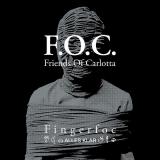
Friends Of Carlotta / F.O.C. - Fingerfoc / Alles Klar

In the early 1990s, as techno began to emerge from the shadows of New Beat and EBM, a number of tracks crossed over into wider club circulation, helping define the sound of a new era. Among them was “Fingerfoc” by Friends Of Carlotta, the project of German producer Volker Then.

Originally released in 1990 on ZYX Records, “Fingerfoc / Alles Klar” quickly achieved cult status. Both tracks are driven by punchy drum machine patterns, sharp synth stabs and looping vocal fragments, combining the rhythmic directness of New Beat with the emerging minimalism of techno. “Fingerfoc” stands out for its hypnotic repetition and stripped-down structure, while “Alles Klar” takes a slightly more playful, rhythmic approach. Together, they capture the raw, functional club aesthetic of the early 1990s.

Limited to 300 copies on black vinyl and 200 copies on crystal silver vinyl, this new edition of “Fingerfoc / Alles Klar” pairs the original mixes with two previously unreleased remixes and two previously unheard recordings, offering a broader glimpse into the project's output during this formative period.

pré-commande05.06.2026

il devrait être publié sur 05.06.2026

20,38
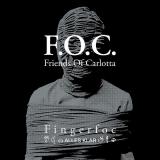
Friends Of Carlotta / F.O.C. - Fingerfoc / Alles Klar

In the early 1990s, as techno began to emerge from the shadows of New Beat and EBM, a number of tracks crossed over into wider club circulation, helping define the sound of a new era. Among them was “Fingerfoc” by Friends Of Carlotta, the project of German producer Volker Then.

Originally released in 1990 on ZYX Records, “Fingerfoc / Alles Klar” quickly achieved cult status. Both tracks are driven by punchy drum machine patterns, sharp synth stabs and looping vocal fragments, combining the rhythmic directness of New Beat with the emerging minimalism of techno. “Fingerfoc” stands out for its hypnotic repetition and stripped-down structure, while “Alles Klar” takes a slightly more playful, rhythmic approach. Together, they capture the raw, functional club aesthetic of the early 1990s.

Limited to 300 copies on black vinyl and 200 copies on crystal silver vinyl, this new edition of “Fingerfoc / Alles Klar” pairs the original mixes with two previously unreleased remixes and two previously unheard recordings, offering a broader glimpse into the project's output during this formative period.

pré-commande05.06.2026

il devrait être publié sur 05.06.2026

23,74
REALITY - Disco Party LP

REALITY

Disco Party LP

12inchMRBLP344
Mr Bongo
05.06.2026
  • 1: Reality
  • 2: Road
  • 3: Disco Party (Let's Have A)
  • 4: Welcome
  • 5: Movin' & Groovin
  • 6: Let's Party People
  • 7: You Keep Me Holdin' On
  • 8: Clap & Hustle

Mr Bongo presents a reissue of one of the rarest releases on the illustrious and now ultra-rare tax scam label TSG Records. A label with a checkered past, operated by Lloyd Price and with alleged ties to boxing promoter Don King. The album in question, Disco Party by Reality, is a stunning journey through ‘70s dancefloor-focussed funk into early proto-disco grooves. Back in mid-‘70s Manhattan, Dr. Otto Gomez and a group of fellow New York musicians including Tony Dixon, Norman Drayton, Tony Dupree, Al Jones and Fred Nanton were brought in for a recording session by songwriter and producer, Billy Nichols. Laying down one of Nichols' songs and a selection of the group's own, they were paid as session musicians and thought little of it. The tapes came to the attention of Lloyd Price who struck a deal with Nichols unbeknownst to Gomez and the rest of the band. Price then pressed the album and put it out in 1976 on a newly formed subsidiary label, TSG Records, that would later be documented as one of the US tax scam labels of the ‘70s. Such labels were created to exploit a loophole in the US tax system, running up inflated production costs / losses that investors or the parent label could write off against their tax bills. Releases on these labels were never intended to have commercial success. They would usually be produced in incredibly limited pressing numbers and have little to no promotion or distribution. As such many of these records instantly fell into obscurity, becoming mythical amongst DJs and record collectors. Sadly, this meant that artists like Dr. Otto Gomez and friends never had the chance for their record and their talents to shine at the time. In fact, it was only when Jazzman reached out for their 2022 reissue that Dr. Otto Gomez became aware that the album had ever been released and heard the story behind it. Disco Party is a time capsule where ‘70s instrumental funk edges and intertwines into an early disco sound. The sessions are for the dancefloor, minimalist and groove-based. The bass and drums are at the forefront, providing the pulse of the album. Driving funky guitar licks, and a brilliant horn section weave their way in and out of the productions. Highlights include the uplifting feel-good ‘Let's Party People’, the early disco swagger of ‘Reality’, and ‘Disco Party (Let's Have A)’ with its wah-wah groove and percussion break, which could easily have found its home on a Blaxploitation film soundtrack of the period. It’s not just rarity that makes this record so sought after, but rather the fact that it is a superb example of dancefloor-focussed mid ‘70s funk and disco.

pré-commande05.06.2026

il devrait être publié sur 05.06.2026

26,85
JOSÉ CARLOS SCHWARZ & LE COBIANA DJAZZ - LUA KI DI NOS LP

2026 Repress

In the beginning of the 1970’s, Guinea-Bissau was a country broken up into many ethnic groups and at the heart of a war for independence. By reviving traditional musical genres as Gumbé and singing in guinean Kriol, José Carlos Schwarz & Cobiana Djazz established an immediate affective bond with their audiences. Through its music and politically engaged spirit of the lyrics, the band played a significant role in shaping the social and political consciousness of the masses. As well as influencing local bands like Super Mama Djombo and giving back a deep sense of cultural identity to bissau-guineans.

The explosive birth of Cobiana Djazz brought about other kinds of detonation. Schwarz became involved in urban guerilla activities which resulted in several bombings in the centre of Bissau, leading to his imprisonment and torture. He remained in lockup for a total period of about 2 years, between 1972 and 1974.

The process of decolonisation, in the wake of the Portuguese revolution of 25 April 1974, led to the recognition, during the same year, of the sovereign nation of Guinea-Bissau.

Schwarz, a key figure in the fight for independence, played an important part in the transition to the democratic regime, profiting from his popularity as an artist. Soon, his criticism (underscoring opportunism and irresponsibility in high places) became a thorn in the side of the political elite. Uneasy with the disquieting effects of his work, government officials effectively separated the author from the masses by assigning him to the embassy in Havana.

José Carlos Schwarz met a tragic and untimely death at the age of 27, when his plane crashed on arrival at Cuba's José Martí International Airport, on May 271th 1977.

Hailed by african giants like Orchestra Baobab, Letta Mbulu or Miriam Makeba (with whom he recorded his first and only solo album), “Zé Carlos” and his poetry won a lasting position in the annals of Guinea-Bissau. However, this collection of songs remains relatively unknown outside the country and its diasporas.

We are proud to offer, in close collaboration with the Schwarz family, this first official reissue on vinyl. Remastered and pressed on heavyweight vinyl.

pré-commande05.06.2026

il devrait être publié sur 05.06.2026

23,32

Last In: 5 years ago
Cinderella - Heartbreak Station LP
  • A1: The More Things Change
  • A2: Love's Got Me Doin' Time
  • A3: Shelter Me
  • A4: Heartbreak Station
  • A5: Sick For The Cure
  • A6: One For Rock And Roll
  • B1: Dead Man's Road
  • B2: Make Your Own Way
  • B3: Electric Love
  • B4: Love Gone Bad
  • B5: Winds Of Change

Heartbreak Station, released in 1990, is the third studio album by American rock band Cinderella. The record climbed to No. 19 on the Billboard 200 and earned platinum certification the following year. VH1 described the album’s shift in direction as “bluesy and brawny,” a fitting summary for a project that produced three Billboard Hot 100 singles; “Shelter Me,” “Heartbreak Station,” and “The More Things Change.”

The album marked a deliberate move away from the glam‑metal sound that defined Night Songs and Long Cold Winter. Instead, Cinderella embraced a rawer, more stripped‑down blues approach. Speaking to the Los Angeles Daily News shortly before release, frontman Tom Keifer explained the evolution: the band aimed for a “rawer, simpler approach,” reducing reverb and overdubs to let the songs breathe. Keifer also noted that blues played a major role in shaping his songwriting during this period.

Adding to the album’s depth, former Led Zeppelin bassist John Paul Jones arranged the string sections for two tracks. The band sought him out after being impressed by his orchestral work for artists like The Rolling Stones and Donovan.

Heartbreak Station includes an insert with lyrics and is available on black vinyl.

pré-commande05.06.2026

il devrait être publié sur 05.06.2026

28,99
Sandy Chamoun - Sawt El Doumouh LP
  • 1: Khafiy خفي
  • 2: Wa و
  • 3: Shahed شاهد
  • 4: Sawt El Doumouh صوت الدموع
  • 5: Ward W Shok ورد و شوك
  • 6: Ataba عتابا
  • 7: Latife لطيفة

On her second album, Sawt El Doumouh (The Sound of Tears), Beirut-based Sandy Chamoun summons flickers of light from sadness. Influences from the Arabic tradition of Tarab – one of the first styles Chamoun learnt to sing – and polyphonic Cantu are reinterpreted and reimagined through her voice and electronics, synths from her SANAM and Ghadr bandmate Anthony Sayhoun, and live percussion from Ali Hout.
Marked by its times, the record isn’t what Chamoun had planned. “I wrote the lyrics between October 2023 and September 2025,” she explains. “The plan was to write about nature, since the album’s concept was inspired by Cantu, a tenor Sardinian ritual that celebrates humanity’s victory over nature. I intended to visit several places and regions in Lebanon and write a track for each, but after the genocide and the war in Lebanon, everything changed.”
“I chose the title because many mornings during this period I woke up crying silently. I remember a dark story from school: a teacher yelled at a small boy while he was crying and told him to cry without making any sound. I feel we are still living in that condition in the region — forced to die or suffer without making any noise.”
Sawt El Doumouh is a gorgeous refusal to be silent. It opens with a booming drum. Over keening autotune Chamoun’s pure voice cuts through, burying the despair to illuminate rays of hope. On “Ward W Shok” a shuffling swing gives way to a righteous organ interlude. The title track sees a choir of Chamoun’s vocals lull and lap. Drums arrive and indignation stirs, what’s mournful begins to stride.
Chamoun’s tracks are as beautiful as they are defiant. Why write songs in the face of horror? Perhaps because music can hold onto something better. By turning to song, Chamoun catches the hopeful glints and sparks that persist and strive outside the terror. In SANAM and Ghadr she often borrows lyrics from Arabic writers through the centuries, listening to what their words say in the present while reminding us the world can and has been different to how it is now. Solo she writes her own words, and the way her songs alternately soar and sigh evokes hopeful pluralities and suggestions of other, kinder realities. Even hearing someone cry is a connection to humanity.
It’s a possibility conveyed in the album’s most jubilant moments. “Shahed” is an incandescent dance of percussion and levitating synths. “I wrote it after I saw a photo of a small boy on a horse on the beach in Gaza,” Chamoun recalls. “I imagined a fantasy where the boy lives in the water and watches the terrifying reality on the shore, trying to bring water to put out the fire. Shahed is the witness who lives far from the shore, enjoying the water and trying to help. You can hear this duality: the percussion is desert-like, while the vocals and synths evoke the feeling of water.”
Although it comes from darkness, in Chamoun’s music we can hear faith in something beyond it.

pré-commande05.06.2026

il devrait être publié sur 05.06.2026

26,66
Skullflower - IIIrd Gatekeeper LP 2x12"

Double vinyl reissue of Skullflower’s epochal “IIRD GATEKEEPER” album - the first time that this album has been available on vinyl for 30 years. In addition to the original LP this definitive and expanded edition includes extra and unreleased tracks taken from the recording sessions. For the first time all the tracks recorded by the band during this period can be heard together giving fans unprecedented access to material previously only available in the bands’ archives. Recorded in London in 1991 and released in 1992 on Justin “Godflesh” Broadrick’s HeadDirt label in 1992, IIRD GATEKEEPER established a worldwide reputation and following for Skullflower and convinced many who heard it that they had encountered nothing less than the best band on the planet. Arriving at the height of the “grunge” and the expansion of underground guitar “rock” into corporate America, IIRD GATEKEEPER had its roots deep in the UK noise and power-electronics scene. Guitarist Matthew Bower and bassist Anthony Di Franco were both graduates of the Broken Flag school of British noise making with their respective projects PURE, TOTAL and JFK. IIRD GATEKEEPER was Skullflower’s third album and was the first of the band’s albums to feature a consistent line-up throughout its production: Matthew Bower (guitar), Anthony Di Franco on (bass) and Stuart Dennison (drums). Recorded and mixed in four sessions between January and June 1991the tracks on this edition of IIRD GATEKEEPER shows the band’s new line up developing their sound, warping and evolving in real time. As such this edition of IIRD GATEKEEPER provides a unique document of the band in a state of transition, with the chemistry of the individual playing combusting in the studio to create a wave of astonishing creativity. IIRD GATEKEEPER is perhaps the definitive British underground rock album of the 1990’s – unique and never equalled. With this new edition Dirter Promotions allows Skullflower fans old and new to listen to this classic album as it was intended: spark up, crank it up and prepare to have your ears and mind blown

pré-commande05.06.2026

il devrait être publié sur 05.06.2026

16,39

Last In: 2 years ago
Pokusa - Głowy LP

Pokusa

Głowy LP

12inchUJMSP03
U Jazz Me Records
05.06.2026
  • 01: Autoportret Kolegów
  • 02: Nowy Sopot
  • 03: Słoń
  • 04: Portret Z Grzechotnikiem
  • 05: Mały Łosoś
  • 06: Czyjeś Urodziny
  • 07: Palcozęby
  • 08: Dzieciak Dziwnie Urośnie
  • 09: Ostatni Pączek Wieczoru
également disponible

transparent orange 180g vinyl[33,82 €]


There are two versions of this album:

1. numbered 100 copies of limited black 180g vinyl made in collaboration with U JAZZ ME Records

2. transparent orange 180g vinyl

LINER NOTES:

" When AJ Lee stepped back into the ring in September 2025 - after a ten-year break - she introduced herself to a new generation of fans with the words: 'If you haven't heard of me, I am your favorite wrestler’s favorite wrestler.' That is exactly what came to my mind as a lead for this blurb when Pokusa asked me to write it. Because that’s what they are: your favorite indie darlings' favorite indie darlings (even though no one uses that term anymore, let alone identifies as such). They are your favorite cool jazzcats’ favorite jazzcats. And they are probably your favorite young jazz act - if you don’t usually (or ever) listen to jazz.

This, I always thought, is their greatest strength. Half the battle (in my eyes) is recording a sick jazz album - one that a jazz magazine would fawn over. The real win is getting someone wearing a heavy metal T-shirt into it; someone who’s never listened to jazz and has never stepped foot in a place like Pardon, To Tu, but heard Pokusa and decided to change that. I am such a person. I didn't learn about jazz because of them, but they’re definitely the reason I started rating it.
Głowy (Heads) is, in a way, a classic album. If someone played it for me and - relying on my lack of knowledge and gullibility - tried to convince me that it was recorded in the Polish Radio Studios in 1975, at Akwarium Club in Warsaw in 1985, at Club Rura in 1989, somewhere in Tri-City in '94, or at Mózg in Bydgoszcz, I would probably believe it. Its 'classicness' goes hand in hand with its timelessness. I could write about how the album fits into the catalogs of Lado ABC, GOWI, or Biodro Records. I could dig for connections to Yass, Tzadik, or a number of other things.
But what Teo, Natan, and Tymek create here is as important in its experience as it is in its music. For me - an artist active in a similar time - each Pokusa album, including this newest release, is a record of a period of time and the experiences hidden between the notes. The Indian spices in food served before a show in Mózg. A headache from all the cigarettes smoked listening to tapes in Eufemia. Marveling at the graffiti over the sink in Młodsza Siostra. The narrow steps at Chłodna 25. The wider but slippery steps to Pogłos. The quirky and uncomfortable steps in Ziemia. The mosquitoes at Ladomek. The dilemma of whether to wear a nice polo instead of a T-shirt to SPATiF. The wonder of turning off Monciak into Dwie Zmiany. Why is a club like this on such a strip? Why is Pokusa playing here? And why do they sound so good?
On one hand, you can find journalists writing that Pokusa grew out of the classic free jazz of the 1960s; some might mention Albert Ayler. On the other hand, there’s Unsound Festival and young critics writing about 'post-jazz.' All of them are correct. This is universalism. This is that timelessness. Whether you pick up this album the day it comes out or in the year 2046, it will be good. In twenty years, people will still reach for it. Of that, I am certain."
Michał Turowski

pré-commande05.06.2026

il devrait être publié sur 05.06.2026

33,82
Pokusa - Głowy LP

Pokusa

Głowy LP

12inchUJMSP03LTD
U Jazz Me Records
05.06.2026

There are two versions of this album:

1. numbered 100 copies of limited black 180g vinyl made in collaboration with U JAZZ ME Records

2. transparent orange 180g vinyl

LINER NOTES:

" When AJ Lee stepped back into the ring in September 2025 - after a ten-year break - she introduced herself to a new generation of fans with the words: 'If you haven't heard of me, I am your favorite wrestler’s favorite wrestler.' That is exactly what came to my mind as a lead for this blurb when Pokusa asked me to write it. Because that’s what they are: your favorite indie darlings' favorite indie darlings (even though no one uses that term anymore, let alone identifies as such). They are your favorite cool jazzcats’ favorite jazzcats. And they are probably your favorite young jazz act - if you don’t usually (or ever) listen to jazz.

This, I always thought, is their greatest strength. Half the battle (in my eyes) is recording a sick jazz album - one that a jazz magazine would fawn over. The real win is getting someone wearing a heavy metal T-shirt into it; someone who’s never listened to jazz and has never stepped foot in a place like Pardon, To Tu, but heard Pokusa and decided to change that. I am such a person. I didn't learn about jazz because of them, but they’re definitely the reason I started rating it.
Głowy (Heads) is, in a way, a classic album. If someone played it for me and - relying on my lack of knowledge and gullibility - tried to convince me that it was recorded in the Polish Radio Studios in 1975, at Akwarium Club in Warsaw in 1985, at Club Rura in 1989, somewhere in Tri-City in '94, or at Mózg in Bydgoszcz, I would probably believe it. Its 'classicness' goes hand in hand with its timelessness. I could write about how the album fits into the catalogs of Lado ABC, GOWI, or Biodro Records. I could dig for connections to Yass, Tzadik, or a number of other things.
But what Teo, Natan, and Tymek create here is as important in its experience as it is in its music. For me - an artist active in a similar time - each Pokusa album, including this newest release, is a record of a period of time and the experiences hidden between the notes. The Indian spices in food served before a show in Mózg. A headache from all the cigarettes smoked listening to tapes in Eufemia. Marveling at the graffiti over the sink in Młodsza Siostra. The narrow steps at Chłodna 25. The wider but slippery steps to Pogłos. The quirky and uncomfortable steps in Ziemia. The mosquitoes at Ladomek. The dilemma of whether to wear a nice polo instead of a T-shirt to SPATiF. The wonder of turning off Monciak into Dwie Zmiany. Why is a club like this on such a strip? Why is Pokusa playing here? And why do they sound so good?
On one hand, you can find journalists writing that Pokusa grew out of the classic free jazz of the 1960s; some might mention Albert Ayler. On the other hand, there’s Unsound Festival and young critics writing about 'post-jazz.' All of them are correct. This is universalism. This is that timelessness. Whether you pick up this album the day it comes out or in the year 2046, it will be good. In twenty years, people will still reach for it. Of that, I am certain."
Michał Turowski

pré-commande05.06.2026

il devrait être publié sur 05.06.2026

33,82
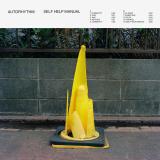
Autorhythm - Self Help Manual LP

/// First track, Symmetry, debuted on BBC Radio 6 New Music Fix, 10th February: "A beautiful, beautiful album" /// I got my life back. On 17 February 2025, 1024 rays of ultra sound converged at an operation table in Bern, Switzerland, and disconnected a noisy circuit on my brain. 90% of the manifestation ceased – of a disease that I no longer wish to mention by its name. During the same period, I completed my new album: Self Help Manual. I’ve read more current research about the nameless disease than my neurologist, who despite that I didn’t follow his advice on suitable treatment, called me after the successful operation: a brave, brave man. I have composed the music in the same way as in my previous album – Songs for the Nervous System – through layers upon layers of improvisations in dialogue with my synthesizers, most of which are the same age as me. I made the majority of the songs in my studio in the remains of Old Hagalund in Solna. I edited the recordings in my bed during the waking hours of clarity at night. Some songs – NAC, Ketosis, Overkill – were recorded in the basement of my childhood home in Skutskär, in Norduppland, where I’d returned to be nurtured by my retired parents – who during a night when I couldn’t turn over in bed, or pull the blanket over me – made a list of what would happen to my belongings. To my friends who have stood out with me despite my disease, I want to state: you will not inherit me yet. On the new album, the electric bass takes on a leading role. ESG and Liquid Liquid have been important when I reinvented my baselines, limited and liberated by my poor fine motor skills. Plasma is my homage to Summertime Rolls by Jane’s Addiction, that I listened to frequently in my youth. I guess that no one will hear the resemblance. In several songs, the Fender Rhodes plays an important role, a magical instrument that I bought shortly after my diagnosis over a decade ago, and for a long time didn’t dare to touch out of respect for Herbie Hancock and Fela Kuti. A couple of songs draw inspiration from the Horn of Africa – Inner Nile and Delta. At first, subconsciously in the reverb-drenched Inner Nile, then more consciously in Delta. I’m sorry it doesn’t swing the right way, but it was my attempt to return to the cradle of humanity. Longevity is possibly my favourite. The melody is played by an arpeggiator that I controlled by pressing down different keys in an exhilarating sense of freedom. One song in particular, the second track – One – has caused friends to associate freely: one thought it sounded like Patrick Cowley, another like Sly & Robbie meets Kraftwerk, a third like Air – Moonlight Safari. I made one song just before the surgery: opening track Symmetry. It’s the mightiest and most minimal song. I made one song after the surgery: finishing track Self Help Manual. My previous medication pump is heard through the microphone of my Ovation Magnum. It’s the most hopeful song on the album. I took the cover photos with my Hasselblad during walks in Tokyo suburbs of Ōmori and Kamata more than ten years ago. It was something about the faith of the traffic cones that fascinated me – born in the same streamlined form, they had over the years become increasingly individual and lovable. The mixing was finalized by Christoffer Roth in the newly built Studio Dubious in Nacka. Rashad Becker, who in an interview said that he listens as much with his mouth as with his ears, mastered the album at Clunk in Berlin. Right now it feels like anything is possible. My recovery is perhaps a small step for mankind, but a giant leap for me. I hereby leave the music to you. Joakim Forsgren

En stock

Disponible en stock et prêt pour l'expédition

18,70
Gigi - Illuminated Audio (2x12")

180g Heavy double vinyl LP with liner notes by Tyran Grillo. Limited Japanese Obi for the first pressing. Original artwork by Russell Mills and photography by Jean-Baptiste Mondino.

The third Time Capsule is a body of dub reinterpretations by celebrated producer Bill Laswell of Ethiopian singer Gigi. Curated by Tokyo record collector, music researcher and seasoned reissue supervisor Ken Hidaka, it is the first time Illuminated Audio is pressed to vinyl after its CD release in 2003.

Ejigayehu Shibabaw was born in 1974 in Chagni, northwestern Ethiopia and by pursuing a career as a singer, went against her father’s strict, traditional gender roles. As Gigi, she embraced the same musical freedom she had strived for in her personal life, incorporating the Ethiopian church, funk, hip-hop, West and South African music into her work. She first settled in Nairobi, then Addis Ababa, where she quickly established herself as one of the city’s leading singers. A move to San Francisco in 1998 led to a long and fruitful creative partnership with bassist and producer Bill Laswell.

Around the same time, Chris Blackwell had stepped away from Island Records to start the art house film company and label Palm Pictures. He took an interest in Gigi and together with Laswell, pulled together an all-star cast of musicians for her self-titled US debut album, including Herbie Hancock, Pharoah Sanders and Wayne Shorter. It won international critical acclaim, not just for its musicianship but for making Gigi a “defining voice for the Ethiopian expatriate community”, as journalist Tyran Grillo praises in his Time Capsule liner notes. From the nation-defining 1896 victory over Italian invaders to the quiet revolutionaries who wear simple shemma garments, Grillo believes the themes in Gigi make it “a shower of sunlight on her homeland for those ignorant of its struggles.”

After its success, Blackwell encouraged them to go back into the studio to rethink the album and Illuminated Audio was born. “Anyone can make a voice sound worldly”, Grillo remarks, “but rare are those who can make one sound inner-worldly.” Gigi was clear with Laswell to give her vocals a minor role “because it’s already been done.” Instead her Amharic verse is fleeting, exhaling through the textures like ghostly fragments; soaring yet muted. Yet the album is still titled under her name, an assertion by Laswell of her central role in the album’s creation. Not only was it a fully endorsed project by Gigi, but she would be present throughout its development, giving feedback on half-finished ideas as Laswell played them back in the studio. “It works perfectly”, she reflected after the album’s release. “We wanted to capture the whole spirit of each track, and Bill’s remixes create a different music language that really puts you in a pleasant place”.

This new vocabulary takes its lead from a technical approach that Laswell had been perfecting during a furtive creative period at the turn of the millennium. Much like his ambient interpretations of Miles Davis (Panthalassa, 1998), Bob Marley (Dreams of Freedom, 1997), and Carlos Santana (Divine Light, 2001), Laswell approached Illuminated Audio by returning to the original multitrack masters. Gigi wasn’t just reworked, but recomposed into an expansive lattice of instruments, submerged in a watery ambience of dub and trance undercurrents.

Sonically, this new language that Gigi refers to, is manifested by the original album’s more understated parts being pushed to the fore. Explaining his contrasting methods, Laswell saw Gigi as being “put together in a way that fits”. Contrastingly, in Illuminated Audio, “a lot of things that I featured in the remix weren’t as audible in the original.” Instrumentation laying near-dormant, deep in the mix, are brought to the fore: the acid rock guitar and Wayne Shorter’s saxophone on ‘Tew Ante Sew’, Graham Haynes’ flugelhorn on ‘Nafekeñ’, Laswell’s bass on ‘Kahn’, the melodica in Mengedegna or the floating synths and talking drums in ‘Gud Fella’.

Brought to his attention by mentor DJ Nori, Hidaka describes Illuminated Audio as a “masterful sonic exploration into ethereal ambience and dub” and made sure this reissue also contained a full remaster to give its “deep musicality” much better dynamics and density in the overall sound. Hidaka admits that Laswell's music “is sometimes so out-there, it is often misunderstood” and, indeed, to dub album non-believers this might seem like a prolific producer imposing himself on another artist’s work; eternally developing rearrangements that never quite get to its destination. But that’s missing its true power and triumph. This is more than the reissue of a remix, but “a wholly unique musical entity”, as Hidaka describes. Illuminated Audio refers to the illuminated manuscripts that comprise the major part of Ethiopian art and its new compositions stand in proud solitude as a rare body of reworks that both informs and enhances their originals.

pré-commande08.06.2026

il devrait être publié sur 08.06.2026

18,07
Natalie Bergman - Mercy
  • 1: Talk To The Lord
  • 2: Paint The Rain
  • 3: The Gallows
  • 4: Shine Your Light On Me
  • 5: Your Love Is My Shelter
  • 6: I Will Praise You
  • 7: I'm Going Home
  • 8: He Will Lift You Up Higher
  • 9: Sweet Mary
  • 10: Home At Last
  • 11: You Make My World Go Round
  • 12: Last Farewell

Release week Focus Track: Paint the Rain RELEASE TIMELINE 12/10 - TMR signs Natalie Bergman Announcement with video on Youtube: I Will Praise You (Live) 01/27 - Announce w/ PreSave/PreOrder IG1: Talk to the Lord + (music video) 02/24 - IG2: Shine Your Light On Me + (music video) 03/24 - IG3: I Will Praise You (album version) 04/21 - IG4: I’m Going Home Potential Video Asset - Live set of all the IG tracks released 05/05 - IG5 and Official Music Video: Paint the Rain 05/07 - STREET DATE w/ Focus Track: Paint the Rain Mercy is Natalie Bergman's debut, a self-produced solo album recorded in the strangest of times, during a personal period of profound sadness and reinvention. It's startling, and often beautiful — a rush to the edge of the cliff, with an unflinching look below Recorded at her brother's home studio in Los Angeles, CA, Bergman has already had a lengthy, successful career as one half of the brother-sister duo Wild Belle, but this is the first time she wrote and played all the material. This record absolutely pulses with redemptive power; it is replenishing and original, and deeply cathartic. And before we go any further, you should know that this is kind of a gospel record. It should also be said -- Natalie made this record because she absolutely had to. The music of Mercy began to germinate a few months after she lost her father in a wrong-way, head-on collision. He and her step-mother were killed by a drunk driver. Shortly after, Natalie visited a monastery in the southwestern desert, and there she began to embark on this album. "The first song I wrote on Mercy was 'Home At Last,'" she says. "It is the best song I have ever written. I sing a lot about home on this record. Believing in that place has been my greatest consolation. I had an urgency and desperation to know that my father was there. His sudden death was a whirling chaos that assaulted my mind. This album provided me with my only hope for coming back to life myself. Gospel music brings hope. It is the good news; it’s exemplary. It can bring you truth. It can keep you alive. These songs have kind of written themselves, and they rely on me to sing them.” Natalie Bergman made one of the first great albums of 2021.

pré-commande08.06.2026

il devrait être publié sur 08.06.2026

18,45
STEVIE WONDER - TALKING BOOK LP
  • A1: You Are The Sunshine Of My Life 2:45
  • A2: Maybe Your Baby 6:45
  • A3: You And I 4:39
  • A4: Tuesday Heartbreak 3:09
  • A5: You've Got It Bad Girl 4:55
  • B1: Superstition 4:40
  • B2: Big Brother 3:35
  • B3: Blame It On The Sun 3:28
  • B4: Lookin' For Another Pure Love 4:45
  • B5: I Believe (When I Fall In Love It Will Be Forever) 4:48

The fifteenth album by Stevie Wonder, originally released in October 1972. As the second of five consecutive albums which made up Stevie's classic period, Talking Book found Wonder at the top of his game, combining tight song writing with warm electronic arrangements and effervescent vocal performances. Released in 1972 and sandwiched between the release of Music of My Mind and Innervisions, Talking Book saw the then 22 year-old Wonder enjoying more artistic freedom from Motown, taking over the production reins and playing most of the instruments himself. As a result, the sound of the album is sharply defined by Wonder's exquisite keyboard work, and his use of the Hohner clavinet model C on Superstition became widely regarded as one of the definitive tracks featuring the instrument. Despite making the majority of Talking Book himself, the album also benefits from the talents of guest guitarists Jeff Beck, Buzzy Feton and Ray Parker, Jr who featured on Maybe Your Baby and Lookin' For Another Pure Love.

pré-commande08.06.2026

il devrait être publié sur 08.06.2026

16,77
Nazar - Demilitarize LP

Nazar

Demilitarize LP

12inchHDBLP070
Hyperdub
08.06.2026
  • A1: Core
  • A2: Anticipate
  • A3: War Game
  • A4: Mantra
  • A5: Unlearn
  • A6: Disarm
  • B1: Open
  • B2: Safe
  • B3: Heal
  • B4: Dmz

Demilitarize follows Nazar’s remarkable 2020 debut Guerrilla, which reprocessed Angolan kuduro music with rough textures, field recordings and media clips, telling a personal story of the civil war that exiled his family to Europe, while his father, a rebel General, fought a losing battle in the jungle back home. After Guerrilla, and an extended period of serious illness, now Demilitarize is motivated by a reckoning with mortality and the flowering of new love, turning the ‘rough kuduro’ of Guerrilla inside out.This is a deep sound world, genuinely dreamy, the arc of the album describing shedding the armour of trauma and surrendering to this new situation. A constant and unexpected aspect of Demilitarize is Nazar's gentle, submerged vocal. Insistent and mantra-like, it’s like a cross between Elisabeth Frazer, Arthur Russell and Frank Ocean, and the music is fragile and opaque in response. The rhythms of kuduro are still here,but move around his voice like fish around a swimmer, while precise sound design illuminates from different angles. Chords spiral, ripple and shoot through the beats giving tracks the loosest of settings; songs disassemble; vocals float off-centre.

pré-commande08.06.2026

il devrait être publié sur 08.06.2026

26,85
Various - I Had the Craziest Dream: Modern Jazz and Hard-Bop in Post War London, Vol. 2

The second volume in a survey of the modern jazz & hard-bop scenes that emerged in the new cultural melting pot of post war London, with recordings from the end of the 1940s through to the early 1960s.

Featuring representations from players whose roots lay in the East-End's jewish community alongside a wealth of talent of Caribbean and African descent playing and recording in post war London during this period.

Made in partnership with the Barbican to coincide with the exhibition Postwar Modern: New Art in Britain 1945-1965.

pré-commande08.06.2026

il devrait être publié sur 08.06.2026

11,35
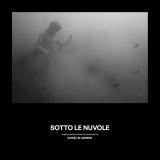
Daniel Blumberg - Sotto le Nuvole (Pompeii: Below The Clouds) (Original Motion Picture Soundtrack) LP
  • 1: Nuvole I
  • 2: Nuvole Ii
  • 3: Nuvole Iii
  • 4: Nuvole Iv
  • 5: Nuvole Ix
  • 6: Nuvole V
  • 7: Nuvole Vi
  • 8: Nuvole Vii
  • 9: Nuvole Viii
  • 10: Nuvole X

In Gianfranco Rosi’s portrait of Naples, Sotto le Nuvole, the ground shakes periodically. Between Mount Vesuvius and the Tyrrhenian Sea, the fumaroles of the Phlegraean Fields hiss volcanic gas and steam. Below the sleeping volcano, modern day Naples emerges in black and white and fills with voices, with lives. From the traces of history and the concerns of the present, Rosi documents a city immersed in its continuous past, with Daniel Blumberg’s minimal soundscape hovering in a sonic space between liquid and air.
Tasked with creating a soundscape that would suspend space within Rosi’s film, Blumberg called upon the extended technique of saxophonists Seymour Wright and John Butcher to create a gossamer fabric of traces and sounds abstracted from their instruments. Having transitioned from theoretical physics to the saxophone, John Butcher has always deeply considered space in the context of his playing. His concerns are with flow, density and how the saxophone is situated in the living world. Zeroing in on the core sonic properties of the mechanical and acoustic components of the saxophone, Seymour Wright has integrated its every breath, reed vibration, keypad clatter and hissed microtone of his alto into his own, unique improvisational language. In his work with these two seminal players, Blumberg makes his most concentrated soundtrack to date - reinforcing the film's sense of overlapping time and space, and pushing at the limits of experimentation.

Initially recorded in Daniel’s flat in London, Butcher and Wright centre themselves around long, consistent tones, so soft that it seems breath is being gently pulled from the saxophone's bell by an invisible hand. Blumberg himself adds haunting bass harmonica, and recordings of Wright’s launeddas - a traditional and ancient triple pipe polyphonic reed instrument from Sardinia, Italy. Blumberg then travelled to the volcanic region of Baia, next to Pompeii. Once a flourishing classical Roman city loved by Nero, Baia slowly sank under hydrothermal pressure, leaving the city in a kind of geological purgatory. Using specialised geophones and hydrophones, Blumberg took those initial recordings and amplified them underwater, sending them calling out across the ruins of Baia’s mosaics, Nymphaeum statues and villas.

“It was important to me that the music was whispered in the same landscape that Gianfranco has worked for the past three years, so that you can hear the volcanic air gulping, the lapping of the waves, the steam and bubbles popping against John and Seymour’s saxophone breaths – an echo from a suspended time.”
What emerges is deeply melancholic, tender, subtle and right at the edges of audio technology. Submerged in an aquarian mausoleum, the mysterious vibrations of the saxophone and its bell become an echo of an echo, wading from the future into the past. ‘Sotto le Nuvole’ is less a soundtrack than a process of aeration - a sonic puncture in the material of the film which allows its central message to breathe, and a remarkable experiment at the limits of the saxophone’s possibility.

pré-commande08.06.2026

il devrait être publié sur 08.06.2026

21,81
Katatonic Silentio - Dance of the Sun LP 2x12"

Produced after a period spent alone, surrounded by the elements of nature, this record brought Katatonic Silentio back to her essence and her roots. The result is a dedication to the dancefloor through the genre she first became involved with, and to the music itself as the conductor of her whole life; an ever-changing entity of the essence of the soul; a bridge to the unknown and the depth of existence. A luminous voyage in the profound lightness of sound. Far from being an intellectual exercise, the album - the first club-oriented release by Krisis Publishing - is a physical and spiritual journey. This one is for the body, mind and soul, so that there may be harmony between the parties, between the inside and the outside, between the self and the other.

pré-commande08.06.2026

il devrait être publié sur 08.06.2026

35,50
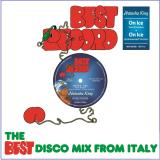
Natasha King - On Ice

Natasha King

On Ice

12inchBST-X113
Best Record Italy
08.06.2026

"This majestic Italo-Disco tune, arranged by Pierluigi Giombini, possesses something magical and mysterious. "On Ice" begins with Natasha King's a cappella vocals and a sweet piano melody by the same composer who wrote "Masterpiece" and "I Like Chopin" for Gazebo. A classic Italo-Disco piece from the mid-1980s, which, more than its sales, achieved success in live performances and on TV shows for the grace and charm exuded by the artist, who was also a dance teacher at the time. The elegance and precision of every move are the foundation upon which Natasha builds her technique. The reissue of "On Ice" was never fully embraced by lyricist Natascia ''Nati'' Maimone, straying from her tastes in soul, blues and jazz. It was also overshadowed by her previous hip-hop track, "AM-FM" - released from Best Record in 1983 - which made the artist world-famous at the age of twenty. This reissue in both original versions was also created to allow new generations to relive, at least in part, the great musical era of the 1980s, a period of incredible musical richness combined with a carefree spirit."

pré-commande08.06.2026

il devrait être publié sur 08.06.2026

18,28
Articles par page:
N/ABPM
Vinyl