The trashed hotel room and communal living depicted on the cover of the J. Geils Band's sophomore album tell you all you need know about the music, spirit, and energy spilling from within The Morning After. Shot through with raw, lean rock n' roll sparked by juke-joint blues and loose rhythms, the 1971 set comes on like the most fun, party-still-raging hangover any group in the 70s enjoyed. And now it rolls with an abandon that takes you inside the sweaty, smoky roadhouses and wall-to-wall-packed clubs the group dominated in its heyday.
Mastered from the original master tapes, pressed at RTI, and limited to 3,000 numbered copies, Mobile Fidelity's 180g vinyl LP achieves a sonic acumen that brings you face-to-face with the sextet's white-hot instrumental prowess and magnetic personalities. It's always been difficult to single out just one member of the band given the cohesive bluster the ensemble achieves as a whole, but this collectible audiophile edition allows you to do just that if you so choose, by way of superb imaging and separation. As for the band's trademark dynamics? Here, they feel like they're on the verge of exploding.
So go ahead. Twist the volume knob to the right as much as you want. You'll lose none of the focus, detail, placement, or presence no matter how high the decibels climb. The Morning After spills forth with previously unheard tonalities, ranging from the distinctive swells of Seth Justman's slow-burn organ to the live-wire spark of Geils' own downed-power-line-jumpy guitar work to the mooring hi-hat/cymbal/snare combinations of arrangement-steadying drummer Steven Bladd. Friends, this is raw rhythm n' blues, this is how it should feel, and, man, this is how it should sound.
Not for nothing did the Massachusetts-based collective name the album The Morning After. The music within doesn't abide by rules, ignores speed limits, flips the bird at curfews, and digs deep down into America's blues roots to yield organic material at once fresh, exciting, traditional, and original. The back-porch punch provided by the combination of "Magic Dick" Salwitz's searing, melodic, snake-like harmonica and vocalist Peter Wolf's animated, barely controlled deliveries is alone enough to make anyone with a faint pulse to stomp their feet, climb atop a kitchen table, and kick their boot heels until the neighbors call the cops.
Just witness the deceptive smoothness of the snake-like "So Sharp" or Maxwell Street zest of the aptly titled Magic Dick showcase "Whammer Jammer," which will leave you gasping for breath before it even ends. J. Geils Band also knew its way around deep-cut soul. The ensemble's Top 40, howling, adrenaline-to-the-heart rendition of the Valentinos' "Looking for a Love" and swirling, romantic take on Don Covay's "The Usual Place" seamlessly balance drive and emotion. Coupled with rafter-shaking originals such as "Floyd's Hotel" and the riff-propelled "I Don't Need You No More," sent up with typical Wolf vocal flair, and the record parks the band's all-night festivities and go-for-broke attitudes right on your front lawn.
One last word of warning to the uninitiated: The Morning After is not the slick-pop J. Geils Band of "Centerfold." And that is a very good thing.
Cerca:persona
In an age where most contemporary bluesmen strive to mimic the past and pattern their music after the greats, Keb' Mo' is content to be himself. Original, charismatic, and immensely gifted, the guitarist/vocalist (born Kevin Moore) brings country blues in the late 20th century on his stunning self-titled Epic debut, which quickly climbed the charts and turned the former backing instrumentalist into a household name. Replete with gritty textures, close-up vocals, and resplendent acoustics, Mobile Fidelity's scintillating version of this 1994 set finally possesses the fidelity that brings Mo's Delta strains out of the backwoods and onto a lively back porch.
Half-speed mastered from the original tapes, this numbered edition 180g LP represents the very first time that Mo's watershed album has been given a much-needed sonic facelift. Gone are the hazes that obscured his singing, artificial ceilings that blunted the highs, and digital fog that interfered with the multitude of illuminating tones, details, and notes. What's revealed is startling intimacy and soothing emotion, Mo's gorgeous vocal timbres and inflections given equal space with his guitar, harmonica, and pace. Finally, a great-sounding contemporary blues record that doesn't resort to derivative recycling and bland revivalism.
The son of Southern parents, Mo' channels his heritage via a batch of superb folksy songs that relax, refresh, and regale. While he's since traveled in a more commercialized pop-oriented direction, Mo's initial salvo is nothing but raw, pure blues played with unbridled passion, tremendous conviction, and what is best deemed the essence of heart and soul. Keb' Mo' engages with a compelling mix of tradition and modernity, the headliner refraining from any attempt at assuming an artificial personality and instead basing his reputation on quality songs. As such, Mo's material resonates with deep, mellow vibes and extraordinary National steel guitar work, which complements his fluid, acoustic finger-picking and soulful strumming.
Mo' occasionally teams with an ensemble. But this record is mostly all about the basics: guitar, voice, and harmonica. Tunes such as "Victims of Comfort" and "Angelina" testify on behalf of his phenomenal country-blues songwriting; his covers of Robert Johnson's "Come On In My Kitchen" and "Kindhearted Woman Blues" speak to his reverence for the past. Shuffles, ballads, dance songs – Mo nails them all.
Keb' Mo' remains one of the finest blues albums made in the post-Stevie Ray Vaughan era. Don't miss this American gem that so many have since tried to copy.
The story of Del cuarto rojo (From The Red Room) began in March 2020, when the Peruvian composer and percussionist Manongo Mujica received a call notifying him that the visual artist Rafael Hastings, his friend of almost half a century, had passed away. Since then, and in the midst of the pandemic, Manongo Mujica began a personal journey searching for sounds, which has resulted in a new set of pieces that evoke the memory of a friendship. Del cuarto rojo (From The Red Room), subtitled Homenaje sonoro escuchando la pintura de Rafael Hastings (Sound Tribute Listening To Rafael Hastings' Paintings), is Manongo Mujica's new album, and it has also motivated the preparation of a new show by the dancer and choreographer Yvonne von Mollendorff, wife of Hastings. The history of this friendship dates back to 1974, when a young Manongo returned to Lima, after ten years living in London, while young Rafael Hastings and Yvonne von Mollendorff settled in Peru after a long period in Europe. Since then, the collaborations between these artists have been continuous, always marked by an experimental impetus. The attitude of listening to images and painting sounds was more than a metaphor and became a code that identified them and a way of working, where the crossing of disciplines set the tone, both in video works and in unusual visual / conceptual scores, works of dance and experimental music, in the context of a creative effervescence that renewed the arts and music in Lima in the 70s. Del cuarto rojo is an album that integrates many of the musical resources developed by Mujica. It is an amalgam that well sums up his own language: from the creation of environments with extended techniques and objects, to experiments in jazz fusion; from the use of field recordings and sound montages to compositions with string arrangements: everything around the hypnotic pulse of percussion and drums, which oscillate between moments of subtlety and explosive improvisation. The album features the participation of outstanding musicians such as Pauchi Sasaki (violin), José Quezada (cello), Terje Evensen (electronic effects), Jean Pierre Magnet (Saxophone), Cristobal, Daniel and Gabriel Mujica (sons of Manongo Mujica, on percussion, string and wind arrangements). It is published in vinyl LP and includes a full color 12-page booklet with a sample of Rafael Hastings' visual art, which also illustrates the album cover.
Continuing his journey, the former member of Egypt 80 and last trumpeter of the Black President Fela Kuti releases his second album: APP (Accumulation of Profit & Power). Muyiwa Kunnuji and his band Osemako, which has been extensively recasted since Moju Ba O - which had already laid the foundations of his afroclassicbeat - have had quite an evolution, and are eager to share a recipe that has been
patiently elaborated and stewed, both on stage and in the studio.
A complex mix of deep musical and cultural heritages as well as a claimed and combative Pan-African culture, APP sets the bar still one step higher in the message, but also and especially in terms of composition and polyrhythms. Inspired by Western African highlife as well as the purest afrobeat of the Afrika 70 era, and even incorporating elements of South African marabi or Central African soukous, the whole does not sound less perfectly personal, tailored, with a natural and disconcerting ease.
But this easiness is only an apparent as Muyiwa devoted himself body and soul to the composition and harmony during the gestation of these tunes so widely inspired and yet intensely personal.
APP will thus delight fans of African music in the broad sense as well as connoisseurs, and just as much fans of funk grooves or jazzy solos; it is a deeply plural album. Multi-influenced, multicultural, multilingual, a slice of life as much as an initiatory journey, on which hovers the spectre of Covid, which has also largely inspired this second ‘effort’. Standing against absurd sanitary rules or the accumulation of profits by the powerful of this world and other
pseudo-philanthropists, APP, again, reminds us of the great Fela, as much by the use of an acronym to entitle the album as by the themes addressed or the mixing of genres. A warrior album, filled and full of revendications, but also of calls for open-mindedness. An intensely human, sincere, combative album, and however radically enthusiastic and optimistic.
Semi Delicious is wrapping up the 2022 with a set of collaborative remixes of bossman Demi Riquísimo’s personal SD stash.
Following on from 2019’s ‘Reconfigured’, 'Reconfigured 2’ see’s Manami, Gallegos, Gina Breeze & Asa Tate put their own imitable stamps on the back catalog of label head’s own Semi Delicious back catalog.
First up with have Japan born, Peckham based Manami’s interpretation of ‘Mirage Over’. Originally released on SEMID008, Manami’s fingerprints are all over this revised iteration. High energy, twisted prog with balearic touches make for a considered & unique reimagining. Fresh from tearing apart Panorama Bar, Gallegos puts his spin on disco tinged roller ‘Point One’. Vintage percussion characterise a remix that wouldn’t sound of out of place in the bag of Larry Levan or Ron Hardy. The b-side kicks off with HomoBloc & Warehouse Project resident Gina Breeze beefing up the low end and levels of psychedelia on ’Sanitise’ making for some serious peak time gear. To wrap up the package we have Asa Tate’s revision of ‘Anxious Elephants’. Breezy piano and panpipes contrast the records chugging low end and acid inflections creating a truly versatile track suitable for shifting the mood up or down in a given context.
The Belgian minimal synth band's three releases – a cassette and two vinyl EPs – were all titled »Against The Dark Trees Beyond«. This compilation collects the songs from these records.
"They were interesting times, the early eighties. Against a backdrop of cold war and economic crises, the DIY attitude of the earlier punk movement had spawned near countless new genres where artists and bands broke the three-chord guitar mould and experimented with new content matter, singular song structures and – in many cases – new instruments. Synthesizers became affordable and were no longer the sole privilege of rock millionaires. All around the globe, musical creativity boomed as never before, and Belgium was no exception: Digital Dance, Snowy Red, The Names, Pseudocode, Marine, 1000 Ohm, De Kommeniste, M.Bryo & D.M.T., De Brassers, Struggler, Siglo XX are but a few legendary names of bands and artists who started making a name for themselves.
In Leuven, things were happening as well. Until then, the music scene in this rather provincial town had been dominated by straightforward rock and blues acts. Not for much longer, though: in places like Arno'z and (later) The Gladhouse, where young budding artists met with kindred spirits, bands were often formed on the spot and, more importantly, started to make ripples.
Ludo Camberlin and Karel 'Bam' Saelemaekers already had a certain track record in Leuven's burgeoning music microcosm. But what they shared would become the cornerstone of A Blaze Colour (Against The Dark Trees Beyond): a fascination for new forms and instruments, a penchant for sonic adventure and a profound love for gripping songs. The full band name, by the way, was inspired by a phrase from the Irish-American novelist J.P. Donleavy, a writer who belongs in the definitely-worth-checking-out section.
After appearing on the first No Big Business LP (1981) with the instrumental 'Fisk', A Blaze Colour's first proper release, as was so often the case in those days, was a self-produced cassette. The music – which would later be dubbed 'minimal' – was characterized by the use of basic rhythm machines (Boss Dr. 55, mainly) and analog synthesizers (for the synth geeks: Korg Delta and MS20, Roland SH-2 and Jupiter IV, and the infamous Casio VL-1). Camberlin’s vocals, meanwhile, displayed an aloofness totally in sync with the zeitgeist. Equally important, though: all five tracks on this cassette were bona fide songs with a clear sense of structure, aided by a sonic mastery that demonstrated a high level of experience: 'Means To An End' started out as a proto-industrial track before bursting out into a moroderesque finale. The remix of 'Fisk' was as sprightly as the next river salmon, while 'Or Lie Again' proved the perfect soundtrack to a nightly walk through wet deserted streets. On the other hand, 'Through With Life', rife with disturbing sound effects countered by a slow portamento, could have been a prize track on a post punk 'Lamb Lies Down On Broadway'. And in true dramatic fashion, 'Follow The Signs' was the perfect ending of this five-song cycle: a driving sequencer and gripping chord progression coupled with a simple but powerful vocal line. Considering the limited technical means the duo was working with, this was no less than a triumph.
A few months later, the band released a seven-inch single on its own ABLACO label. 'Dark Trees Beyond', a quirky pop song, was coupled with 'Addict Of Time', a dark and brooding spoken word piece. Not the kind of single to storm hit parades, but it didn't go unnoticed. The Minny Pops' Wally van Middendorp, who had founded the Plurex label in 1978, invited A Blaze Colour to his studio in the Netherlands, to record an EP. It would prove to be a massive step forward: recording in a semi-professional studio offered great possibilities, the recently acquired TR-808 drum machine allowed for a broader rhythm palette, and the three new tracks (next to the re-recording of 'Through With Life') showed a band on the top of their game: 'The New Ones' was a wry and haunting song built around a live drum loop and an ominous bass pattern, while 'Nowhere Else' was a near-pop track with very un-minimal vocal harmonies. And it's a mystery why 'Altitude' – another instrumental – was never used in a stylized, high-profile detective soundtrack.
Another song from these sessions, the revved-up 'Cold As Ever' turned up on the high-profile Plurex "Hours" compilation, where it shone brightly, next to songs of a.o. X-Mal Deutschland, Nasmak, Minny Pops and Section XXV.
Meanwhile, Camberlin had already carved out a bit of a reputation for himself as a producer, while Saelemaekers was a respected graphic designer. It remains uncertain if this played a big part in the end of A Blaze Colour, but the fact remains: as studio recordings go, 'The Ultimate Fight' on the "No Big Business 2" compilation, was to be their swan song. What a way to go, though: maybe their best song ever, this was a synthetic bastard funk groove, complete with shout-out chorus and punch-drunk middle-eight. It shut a door, for sure, but it did so with a resounding bang.
So there it is and there it was. Short, sweet, visionary, pioneering and highly influential. And as anybody listening to this first ever compilation will be able to assess probably one of the most colourful electronic acts of its time.
On a more a personal note, A Blaze Colour proved to be instrumental in my own coming of age as a lyric writer, when Ludo and Bam graciously adopted some of my earlier writings, warts and all. To hear them translated into songs was no less than magic, and it certainly gave me the confidence to start our own band a bit later. And the magic continued when Ludo became our producer and Bam designed our record sleeves. But that’s another story, obviously. Because this is the place and the time to dive back into the wondrous world of A Blaze Colour!"
Bart Azijn (Aimless Device)
Classic Black Vinyl repress in soon note new price. LP with DL card. “a songwriter testing the limits of her sound and redefining herself in the process” - Pitchfork // “Rundle’s voice floats above the seething morass, graceful and triumphant, an angel welcoming the apocalypse” Stereogum // The cover to Emma Ruth Rundle’s fourth solo record, On Dark Horses, bears a blurry photo of the songwriter obscuring her face with a large toy horse with broken legs. The photo suggests something candid but also hidden, graceful but also fractured a fitting portrait for an artist who has established a career by vacillating between shrouding herself in mystery and exposing her wounds to the world. The first peek behind the curtain came with her Sargent House debut Some Heavy Ocean, where layers of distortion were excised in favor of acoustic guitar and Rundle’s beguiling vocals. There was a distinct difference by the time Rundle released Marked For Death, a stark and deeply personal meditation on mortality and self-destructive behavior. Her entire musical trajectory from the cinematic instrumentals of Red Sparowes to the lush haze of Marriages and onward through her solo career seems like a gradual disclosure of intimate secrets. With On Dark Horses, Rundle doesn’t shy away from uncomfortable realities or retreat into a private world, but it does capture an artist who has survived their personal nadir and come out stronger on the other side. Taking the full arrangements of Marked For Death on the road demanded a backing band, which Rundle pieced together from tour companions first Dylan Nadon from Wovenhand and Git Some and later Evan Patterson and Todd Cook from Jaye Jayle. Rundle’s budding romance with Patterson prompted a move to Louisville, Kentucky, which not only amplified the equestrian themes of the record but also yielded a new writing process. “This the first time I haven’t played all the guitars on my own record,” Rundle says of Patterson’s contributions to the writing process. “It was stressful letting go but it was also rewarding.” The collaboration worked both ways, with Rundle contributing to Jaye Jayle’s No Trails and Other Unholy Paths. That album’s “Marry Us” mirrors On Dark Horses’ “Light Song”, with the union of Rundle’s siren vocals and Patterson’s poised baritone conjuring a dizzying and feverish update on the duets of Johnny Cash and June Carter. The eight tracks of On Dark Horses capture the evolution of Rundle as an artist, with vestigial traces of the savvy guitar work of Electric Guitar: One, the siren song beauty of Some Heavy Ocean, and the amplified urgency of Marked For Death all factoring into the album’s rich tapestry. Rundle arrives at the end of the album with an ode to a traumatized and heartbroken friend on the grand and triumphant “You Don’t Have To Cry”. After laboring over the majority of the material for the album, she wrote the finale in one sitting, describing its easy birth as a gift from the gods. It’s a fitting closer, a song announcing Rundle’s newfound hope and reminding us to take control during our darkest moments instead of succumbing to them. Track Listing: 1 Fever Dreams 2 Control 3 Darkhorse 4 Races 5 Dead Set Eyes 6 Light Song 7 Apathy on the Indiana Border 8 You Don’t Have to Cry
The origins of Cos date back to the second half of the sixties when Daniel Schell joined forces with Jean-Paul Musette, Pascale Son and Robert Pernet to form Classroom. When Classroom split, Daniel Schell and Pascale Son moved ahead and formed Cos together with Charles Loos, Alain Goutier and Bob Dartsch. They produced an experimental jazz rock sound linked to the influences above mentioned, but without being mere copycats since they always managed to keep to their own personality.
Babel was Cos' third long playing release, issued in 1978. It represented a new step in the band's evolution with the addition of new influences that ranged from musique dodécaphonique, minimalist droning, or even a hint of disco, without turning their backs to their earlier love for Canterbury sounds or more conventional jazz-rock. Dirk Bogaert, Francis Cahen and Marc Moulin all played in its sessions, making this a superb sample of what was going on through the Belgian music scene in those days.
The Wah Wah reissue comes housed in a beautiful reproduction of the original sleeve. Limited edition of 500 copies, licensed from and with the collaboration of Daniel Schell.
- A1: A Day In The Bebop (Long)
- A3: A Hole To The Universe
- A4: What Planet Is This??
- A5: After Image
- A6: Ana’s High Class Damp 1-2
- B1: Ana’s Rouge
- B2: Two Detectives
- B3: Jet’s Investigative
- B5: Faye’s Sky Fall
- B6: Time
- B7: Teddy’s Ika Pod
- B9: Headphone
- B10: Ein
- C3: Respect For Sergio
- C7: Kimmie’s Birthday
- D1: Sad End Fad
- D2: Muddy Road
- D4: Sushi2
- D5: In The Noir
- D6: The End Of Friendship
- D8: Earthland Entrance
- D9: El Rey Bar
- D10: G Blues
• Sony Masterworks is happy to announce the vinyl release of the Netflix live-action series Cowboy Bebop which premiered in November 2021 and is available on Netflix.
• Yoko Kanno and the band SEATBELTS, the artists behind the music in the original anime series of Cowboy Bebop, have returned to bring their signature dynamic, jazzy sound to the Netflix live-action show. The resulting compositions are characters themselves - constant companions to the crew of the Bebop and brimming with just as much personality.
• Cowboy Bebop (Soundtrack from the Netflix Original Series) is a treat for Bebop fans in an additional way - it features over twenty new tracks only available on vinyl! This wide release is pressed on red marble vinyl discs in a gatefold jacket with printed inner sleeves.
• COWBOY BEBOP is an action-packed space Western about three bounty hunters, aka “cowboys,” all trying to outrun the past. As different as they are deadly, Spike Spiegel (John Cho), Jet Black (Mustafa Shakir), and Faye Valentine (Daniella Pineda) form a scrappy, snarky crew ready to hunt down the solar system’s most dangerous criminals — for the right price. But they can only kick and quip their way out of so many scuffles before their pasts finally catch up with them.
• Original anime series director Shinichirō Watanabe is a consultant on the series, and original composer Yoko Kanno returns for the live-action adaptation. The series also stars Alex Hassell and Elena Satine.
• Yoko Kanno is a Japanese composer, arranger and musician best known for her work on the soundtracks of anime films, television series, live-action films, video games, and advertisements. She has written scores for Cowboy Bebop and its live-action adaptation, Darker than Black, Macross Plus, Turn A Gundam, The Vision of Escaflowne, Ghost in the Shell: Stand Alone Complex, Wolf's Rain, Kids on the Slope, Genesis of Aquarion and Terror in Resonance, and has worked with the directors Hirokazu Kore-eda, Yoshiyuki Tomino, Shinichirō Watanabe and Shōji Kawamori. Kanno has also composed music for pop artists Maaya Sakamoto and Kyōko Koizumi. She is also a keyboardist and is the frontwoman for the SEATBELTS, who perform many of Kanno's compositions and soundtracks.
For his debut album Dip Shim digs deep into his past for his most personal release yet, drawing on his childhood in Spain for a genre-bending album of electronics, combining influences from house, techno, electro, downtempo, and ambient to create one of the year’s most essential releases.
Dip Shim, who also runs the Bolero record store in Malmo, Sweden, pushes and tweaks those silver boxes to create music with one foot in the past but looking to the future, from the fluid acid house of Dalaplan Jam and Bubble Gate, uptempo electro jams like BDP Fast Life and Tusso Arcade Force, to meditative joints such as One For Regen and Impossible Connection.
But although the album is eclectic, these 12 tracks are underpinned by Dip Shim’s unique hardware-led sound, proving he’s an artist with depth and longevity.
Nocturne, the critically acclaimed sophomore album by Wild Noth- ing, is a window into singer/songwriter Jack Tatum’s “ideal world” of pop music. Written largely while living in Savannah, GA during 2011, the songs that became Nocturne blur the lines between Tat- um’s influences and personality. The album features some open ref- erences to past music just as his hit debut Gemini did, but it’s also an album that feels much less rooted in anything in particular, and marks a distinct evolution in songwriting for Wild Nothing.
Gemini was written before there were Wild Nothing fans or even a live band; Nocturne is different. With an unexpected new fan base to turn to, Tatum spent more time perfecting his craft. The obsessive- ness of Nocturne is inherent in it’s gentle harmonies, orchestrated synths, wandering voice, and songs that speak to his post-Gemini experiences as he explores new paradoxes of pop. And yet, Noc- turne isn’t obvious, it is a strange and distinctive musical beast, the product of an obsessive pop vision that creates its own reality.
James Taylor's best-selling record since 1970's hallmark Sweet Baby James, the triple-platinum JT takes its permanent place as one of the singer's most enduring albums — an affair that gorges on country, blues, and rock styles as well as incisive songwriting. As the pre-eminent singer-songwriter's Columbia debut, it catapulted Taylor back into the limelight and re-established his place as the era's leading-edge folk-rock troubadour.
Sourced from the original analog master tapes and pressed at RTI, Mobile Fidelity's numbered-edition 180g LP possesses a warmth, immediacy, and intimacy absent from other pressings. The singer's comforting voice, breath control, and enchanting guitar lines sound as if they pour right out of the studio control room. Similarly, the splendid array of backing instrumentation is balanced, vivid, and dynamic. Taylor should always sound this realistic, warm, and lively.
More than any other of his records, JT features all sides of Taylor's lyrical persona. Optimistic, content material fills half of the 1977 set while Taylor reveals a darker, moodier identity on a number of songs that keep the 12-track set alternating between shade and light, shadow and sun. He turns romantic and blissful on the touching ballad "There We Are," praises the power of love on "Your Smiling Face," and enchants with the graceful "Secret O'Life."
In addition to channeling domestic bliss, Taylor expresses surprise and cynicism on "Honey Don't Leave L.A.," delves into despair on "Another Grey Morning," and invites sardonic tones on "Bartender's Blues." The result is a complete picture of an extraordinary songwriter and an accurate sketch of the mixed emotions many of us feel when it comes to romance. Taylor's ability to capture deep-seated feelings and set them to lyrical and musical poetry explains why we relate to him on such a meta-level. It's also why his music, including JT, remains timeless.
Taylor doesn't do it all alone. JT benefits from an all-star support cast. Carly Simon and Linda Ronstadt supply background vocals, saxophone great David Sanborn plays the horn, Russ Kunkel mans the percussion, and arranger David Campbell oversees the strings and woodwinds. It's no wonder why many fans consider this gorgeous collection of Laurel Canyon pop-rock Taylor's finest.
Whether you've never heard this record or know it inside and out, this reissue will open your ears to previously hidden details ranging from pedal-steel guitar accents to honky-tonk tonalities. Taylor's funky rhythms, too, gain in stature, as does his command of pace and tempo.
Deniz Cuylan set out to explore his own distinctive sound on his 2021 solo debut album 'No Such Thing As Free Will.' The album signaled the Turkish musician's first bold step into the spotlight following a winding 15-year path in the music industry playing in multiple bands with home bases dotted all over the globe - Stockholm, NYC, Istanbul - and tackling a wide array of styles both on the stage and in the studio. Now settled into his current home in Los Angeles, Deniz lends his instrumental talents to create scores for independent films and recurring Netflix original series, yet these projects inevitably fulfill the sonic backdrop for another artist's vision. Looking inward on his own for the first time, 'No Such Thing As Free Will' laid the groundwork for his own personal soundtrack, one that fused his love of classical guitar, introspective jazz, and ambient expressionism with his whimsical compositional ear. Over a magical 6-track journey, 'No Such Thing As Free Will' painted a lush cinematic narrative with Deniz's guitar as its guide, delivering an album that "seems to invent new languages for the guitar" (The Guardian) and receiving glowing comparisons to legends like Steve Reich, The Durutti Colum's Vini Reilly, Glenn Branca, and Bert Jansch. With such a singular foundation exposed on a debut album, many artists would stay true to their inventive winning formula and find out if lightning could strike twice. Deniz is not one of those artists. An explorer at heart, Deniz unveils a beautifully alluring and lightly adjusted language on his mesmerizing second album 'Rings Of Juniper.' The record continues to spotlight Deniz's exquisite guitar work and hypnotic compositional skills, yet it boasts a punchier, refined, and more immediate tone right from the start. Accented by a desire to once again uncover a new shade of his sonic palette with the support of a talented cast of friends and artistic collaborators, 'Rings Of Juniper' lays bare a rich, dynamic, and evocative sound that Deniz lovingly refers to as Mediterranean Minimalism.
Experimental once-sludge metal duo branch out further with an album influenced by Middle East / North African / Asian pop and traditional music. Nazm sees Jucifer deploy their familiar studio tactic: writing, arranging, producing, engineering, and playing all instruments themselves to create a sprawling concept album. This time, it’s to celebrate their shared love for the Middle East and North Africa (MENA) and central / south / west Asian traditional and pop music cultures with fourteen highly textured, intensely personal and passionately delivered original songs. Fans of the band likely know they can expect surprises with each album, as well as recordings which differ drastically at times from their live sound. In this tradition, Nazm strays far from the brutal excess of a Jucifer show (and of their recent releases Futility and District Of Dystopia) but, as with all Jucifer’s recordings, the point is not to imply any static trait of the band but instead to bring to life a story they’re telling. Track Listing: 1. Return 2. Mood 3. Un Occupied 4. Welcome 5. Sahel 6. Endure 7. Pulverization (Becoming) 8. Displaced 9. Jucifer – Divided 10. Notice (Warning) 11. Water Woman 12. Mitochondria 13. The World Is A Sword 14. To The Lost
Florence Cats is a poet, visual artist, sound composer, performer and acupuncturist. Born in Vilvoorde (Belgium) in 1985, she is currently living and working where Brussels merges with the Sonian forest.
Florence Cats’ working process involves things about to appear or disappear, and echo one another : air, light, wind, tone, print, voice, water, color, dust, junk, rumor… She creates eclectic pieces related to travel, porosity, natural energies and celestial events. Each proposal is in tune to a context, a space, an environment.
Ys is a generous debut. Raw, courageous.
Sunken Cathedral is Florence interpreting Claude Debussy’s La Cathédrale Engloutie (trans. the Sunken Cathedral). The track reminds me of one of those fabled Charles Ives home recordings. Where he records himself on Speak-O-Phone - an old brand of recordable aluminium phonograph discs - while practicing and composing his music. But unlike Charles Ives treating these home recordings as personal sketches, Florence Cats shares her captured moments as compositions for the public.
Similar to the Speak-O-Phone recordings, we now meet the piano as a physical expression - not as an archetype. We are together with Florence in a room. The pedal. The keys. The hiss of the room. Learn, repeat.
Trough Florence’s hands and feet, La Cathédrale Engloutie is brought out of its pupa stage to become a presence. Instead of being grounded in luxurious concert halls or on high end recordings, the piece is now natural. Sunken Cathedral is a template, an affirmation for amateurs.
The piece was originally created for the group exhibition "Here Comes the Wave” at Project(ion) room, Brussels, February 2020.
In Fall Call, we find ourselves at QO2, a sound art initiative in Brussels. This piece was captured during a residency Florence took over the summer of 2022. We listen to the moment when a summer storm just washed the city.
Fall Call is a testament to Florence’s magical - humanistic way of playing her custom-made theremin. By pushing the controls of the instruments so high, her whole body starts to control the instrument - instead of just her hands. So when she walks around in the room, the instrument answers in full color.
And then, a phone-call. Giving it a bit of a Poulenc vibe.
For the last piece, Drop Out, we find ourselves in Florence’s apartment. When Florence opens the windows, the ambience of the surrounding Sonian Forest seeps in. This is an adorable moment. It predicts new beginnings. The smell of wet dirt and dripping leaves in the air. The poetry of rain.
- A1: Second Chance Ft. Kimberly Davis (Club Mix)
- A2: Try My Love (On For Size) Ft. Teni Tinks (Club Mix)
- B1: Life Is A Dancefloor Ft. Kimberly Davis (Club Mix)
- B2: Look, Don't Touch Ft. Teni Tinks (Extended Mix)
- C1: Bring On The Rain Ft. Joss Stone
- C2: When Love Breaks Down Ft. Teni Tinks
- D1: Slippery People Ft. Ramona Renea & Fiorious
- D2: Tell Me It's Not Over Ft. Adi Oasis
- E1: Love's Been Waiting Ft. Kimberly Davis
- E2: You Ain't Love Ft. Teni Tinks (Club Mix)
- F1: Finally Ready Ft. Billy Porter (Extended Monologue Mix)
- F2: The One That Got Away Ft. Obi Franky (Extended Mix)
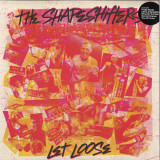
From an aspiring b-boy to working with luminaries Billy Porter, Joss Stone, Kimberly Davis and Teni Tinks, The Shapeshifters, Simon Marlin announces the release of his brand-new studio album “Let Loose”.
Wrapped in a defining optimistic mood and colourful palette, “Let Loose” plays with the friction between musical persona and influence, delivering a masterclass in Simon’s flourishing depth of integrity as a producer and admiration to those that exert their enduring influence upon him.
“I'm a facilitator of talent. I'm blessed that over the years I've managed to put a team of people together - as a producer, that's what I do, very much in the old school sense like a Quincy Jones or Gamble & Huff, they’re the guys I try to emulate - and make something magic out of nothing, but do it in a contemporary way. That’s what really floats my boat, and that's what this whole project is about.” Simon Marlin – The Shapeshifters
Across the latest and long-awaited studio album “Let Loose” The Shapeshifters pledge rhythmic allegiance to the golden era disco records and their spellbinding qualities; embracing the tension often found between tradition and future to craft a euphoric, certifiable body of work presented to the devoted audience he deserves. The Shapeshifters exemplify a scene in rude health one that is now switching on an ever-younger fan base, and with Marlin being the beating heart of it it’s easy to see why The Shapeshifters are more in demand in the clubs than ever.
The twelve-track album is illuminated with vocal collaborations including the recently released and debut collaboration with the Grammy, Tony and Emmy Award-winning Billy Porter.
Layers of rushing strings, flares of brass and hedonistic grooves provide refreshing dancefloor power dynamics and deliver a liberating, triumphant and inherently uplifting record.
Taking an impeccably smooth course through disco-infused house, The Shapeshifters continue the rich relationship with Glitterbox and its record label; one that has yielded instant classics that epitomise the label’s ethos for preserving disco’s mission to uplift and empower.
Clear Vinyl
Originally released in 2020 on cassette and digitally. more eaze is the nom de plume of Austin, TX mainstay m.maurice, a roving experimentalist who’s explored an astoundingly diverse range of sounds, from drone and computer music to avant-pop and beyond. claire rousay is a San Antonio, TX-based percussionist/composer/sound artist who uses physical objects and their potential sounds as a way to explore queerness, human physicality, and self perception. Together—through a suite of deeply personal aural collages—two of Texas’ most vital and vibrant sonic searchers beg the eternal question: If I Don't Let Myself Be Happy Now Then When?
Although only their debut album together, If I Don’t Let Myself… reveals a profound and fruitful relationship between m and claire. But the symphonic symbiosis goes even deeper still. Outside of musical breakthroughs, the pair helped each other conquer intensely personal changes, with m and claire transitioning and coming out as non-binary and trans, respectively.
As m explains, “to me this record is very much about this process of becoming—trying to reach something and getting there but sometimes not being quite where you want to be but at least getting closer. It’s about feeling alternately empowered and insecure socially as you transition and trying to cope with these conflicting emotions.”
Musically, the album showcases startlingly sincere sets of serrated but sedative situational music. A-side epic Drunk is a sprawling but taut rove of aural duality. Passages of exquisite elegance subtly clash with shimmering shards of sound. Pre-op is a poised and pensive piece of solemn reflection, harrowingly honest and delivered with clarity and composure, while Post-op closes out the set in a wholly uplifting and optimistic flair.
If I Don't Let Myself Be Happy Now Then When? is ultimately about coping during the respective transitioning phase in both of their lives, obliquely blissful and fraught with freedom.
A joint release by LA's Hippos In Tanks and Montreal's Arbutus Records, the Darkbloom EP is a thrilling split by d'Eon and Grimes. Harnessing the dark energy of her sophomore album Halfaxa, along with the shimmering dream pop of her debut Geidi Primes, Grimes' side represents a synthesis of her two sonic personalities. Displaying a level of clarity and craftsmanship heretofore unseen in her releases, Boucher presents a stunning new collection of ethereal dreamscapes that expand her creative palette without compromising the spectral presence she is known for. Following the Middle-Eastern-tinged R&B of 2010's Palinopsia, d'Eon broadens his stylistic breadth through reference to a number of electronic genres - for example, he simultaneously incorporates elements of Chicago footwork and new jack swing, but surprises the listener with strange forays into bygone genres such as UK drum and bass and trip hop. Presently available worldwide on CD and Digital formats, Darkbloom will be available on vinyl, for the frst time in many territories, on May 20th, 2016.
At the start of the pandemic, Carrellee turned to the microKORG and Yamaha DX7 synths after finding traditional folk music to fall a bit flat in expressing the personal intensity of the year including the dissolution of her marriage. Following her weekly demo videos amassing nearly one million streams on Facebook in 2021, Carrellee teamed up with producer Brett Bullion (Low, Poliça, Now Now), Con Davison (Bad Bad Hats) and Huntley Miller (Lizzo, Slyvan Esso) in Minneapolis to distill 40 demos down to 10 cohesive album tracks. The resulting album conjures crushed artifacts of desire, with each instrument processed through crumpled and scorched analog tape. Carrellee draws inspiration from 80's new wave icons Cockteau Twins and Kate Bush, as well as a wide variety of Italo disco and synthwave artists. The single and music video "Morning Sun" by Doug Pray (Hype, The Defiant Ones) will be released in advance of the album on Negative Gain (Mr Kitty, Twin Tribes) with tour dates to follow.
Baiser Mortel is the soundtrack of a performance commissioned by the Bourse de Commerce - Pinault Collection, performed in Paris in October 2021. PAN presents Baiser Mortel, the original soundtrack to the acclaimed theatrical performance of the same name. Staged at the Bourse de Commerce - Pinault Collection over four days last October, the original production - collaboratively realized by composer and director Low Jack, composer and rapper Lala &ce, choreographer Cecilia Bengolea with costumes designed by Marine Serre and Oriana Bekka as creative director and co- director of the performance - merged ballet and urban folklore; sound art and soap opera. A modern-day danse macabre, Baiser Mortel (trans. "The Kiss of Death") cast Lala &ce in the title role. Unfolding over thirteen songs, the musical narrative follows Death as she navigates the realm of the living, and the encounters - desire, romance, spiritual awakening, and adventure - which validate the human experience. "I brought in people who are close to me personally and musically in order to tell a story that speaks to humanity," Lala &ce says in a video uploaded to Bourse de Commerce - Pinault Collection's YouTube channel. Performers Jäde, Rad Cartier, BabySolo33, and Le Diouck joined Lala &ce on stage and in the booth at La Place - Centre Culturel Hip Hop in Paris, where the official soundtrack was recorded. A sonic representation of the musical's themes, Baiser Mortel the album - produced by Low Jack and written by Lala &ce with artwork by Pierre Debusschere - moves through the distorted strings of its opening track, "Goûter" and gathers sonic and lyrical intensity on each successive song. "Lune," the melancholically autotuned midpoint of the album, marks the beginning of the musical's second act and sets the tone for its tragic resolution. Mechanical sounds mix with sonic influences spanning the Global South throughout the album, honoring both Low Jack and Lala &ce's musical heritage and influences, while developing a new musical lexicon that defies comparison. As a theatrical production, Baiser Mortel represents a departure for both artists. A veteran of Parisian subculture, Low Jack's collaboration with Lala &ce represents a new model of artistic mentorship based not on age but on experience, with each artist leaving a distinct signature on the work.