
nicht am Lager
Bestelle jetzt und wir bestellen den Artikel für dich beim Lieferanten.
Last In: vor 5 Jahren
11,72 €
Bestelle jetzt und wir bestellen den Artikel für dich beim Lieferanten.
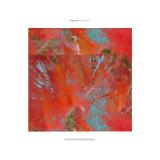
Aspetuck has been steadily carving out a name for himself through releases on Never Late and Oslated, garnering a respected following for his DJ mixes and festival performances. Aspetuck’s latest record, Immersion, was sequenced and curated from dozens of ideas spanning a transformative few years in Griff’s life. The album is less a snapshot in time and more of a memory bank - flashes of fatherhood, loss, modular rabbit holes, late-night studio sessions, and long walks by the Hudson River with his daughter.
The emotional undertow of the album is immediate. Opener Hit Me With Your Pet Shark is one of the earliest compositions in the collection, created just months after the loss of Griff’s brother and during the sleepless swirl of new parenthood. Built around a single sound from Spectrasonics Omnisphere, found while rediscovering his brother’s studio gear, the track sets the tone: restrained yet searching, personal without becoming precious.
From there, The Printing Press captures the raw energy of a live jam in Griff’s upstate New York basement, running through a 1980s Tascam mixer like a lo-fi assembly line of synths, pads, and drum machines. REI, named after a spontaneous family mission to find a pink water bottle, encapsulates his knack for imprinting daily minutiae into sound. And title track Immersion- once known simply as Tuesday 303 Jam- emerges from a dinner break and a blender, distilling modular sketches and distorted drums into a powerful, slow-motion march.
Under, Under The Tree hits hardest. Built around a grainy iPhone voice memo of Griff’s daughter singing by the Hudson. And closing the album is Bobik, a collaborative studio session with Moon Patrol channeling the playful chaos of a close friendship and modular exploration. Named after a joke about their golden retriever and filled with alien textures from Griff’s beloved EMU XL7 gifted years ago by his late brother, it’s a fitting send-off to an album that straddles celebration and mourning with grace.
The artwork comes courtesy of Peter Skwiot Smith, whose textured analog/digital aesthetic resonated immediately with Griff’s original vision. Peter’s treatment draws on Griff’s personal photography and leans into motion, blur, and the layered nature of memory, echoing the album's sonic tone without overexplaining it.
Mastered by Sven Weisemann, Immersion is available on blue smoke colored 12”
Bei uns am Lager und sofort versandfertig

Originally released in 1994, MSD - Moonboom is a true cornerstone of Irish dance music and one of the defining dancefloor anthems of the '90s. Fusing Techno, Progressive House and raw 303 energy, it became a staple on floors across Ireland and beyond, a track whose power has only grown with time. Now beautifully remastered and repressed on the newly launched CeltTribe label, Moonboom returns sounding bigger and sharper than ever. Created by Fintan McDonald alongside Dublin DJ Liam Dollard, with Paul Clifford and Peter Coss present during the original mixdown, the track was produced on a Tac Scorpion desk using Akai S1000 and S950 samplers, capturing the raw, hardware-driven spirit of early '90s dance music. Originally released on the Inner Conscience label, this reissue celebrates Ireland's underground dance heritage and is expanded with a strong set of 2026 remixes. The "Love Will Save the Day" Remix delivers a piano-led '90s House groove with nods to New York and Chicago, reflecting the deep Irish house sound loved in Cork and Waterford. The Lanzatech Remix is a tribal, acid-fuelled slammer driven by reworked piano, 303 lines and Detroit-inspired synth pads. Collie's "Midnight" Dub dives deeper into jazzy, hypnotic territory, while Ian's Techno Mix pushes Moonboom into darker, harder underground space with reimagined piano and vocals. A timeless Irish classic, respectfully reimagined!
Bei uns am Lager und sofort versandfertig

Back to ACID and back to meaningful underground vibes and attitude.
Servants Of Struggle unleash their first EP on their own eponymous label with 4 trax of classic Acid House and Techno with a modern twist.
Made up of a shadowy collective of members this gathering of like minds features at least 2 legends of Acid (inc one original Acid House pioneer) but it isn’t about who’s making it, it’s about the sound, the sound of funked up 303’s, dark vocals, thumping kicks and percussion, and tons of attitude.
Already being championed by the likes of Mr C, Colin Dale, Billy Bunter & Blue Peter
Bei uns am Lager und sofort versandfertig
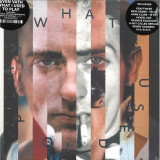
For this uniquely personal retrospective spread over twelve vinyl discs, Sven Väth takes us back to the early days of his DJ career. On What I Used To Play we meet great pioneers of electronic music, gifted percussionists, obscure wave bands, and innovative producers of a bygone 'new electronic' era. Rough beats and irresistible grooves from the identification stage of house, techno, and acid remind us not just how far electronic music has evolved over the past four decades, but how great it was to dance to EBM, techno, and house for the very first time.
If there is one protagonist of the electronic music scene who has remained curious, innovative and at the very cutting edge of music for over four decades, it's Sven Väth. His multi-layered artist albums and Sound of the Season mix compilations have been defining the genre for over two decades, and even today, he is constantly on the lookout for the next top tune to add to the highlights of his next set. At least, that's the case when he's not producing them himself as an artist or remixer. "Actually, it's always been part of my DNA to think ahead," and nothing had been further from his mind than looking back at his past, but when in spring of 2020 the international DJ circuit had to be scaled down to virtually zero, the 'restless traveler' suddenly had time. Time to stop and reflect on "how it actually was back then, at the very beginning of my career..."
"It was a great trip and with every track, beautiful memories came flooding back".
In the London apartment, he had just moved into, Sven has set up a "little music room", where he cocooned himself for several days, "to look way back for the first time and review my musical journey through the eighties, so to speak."
The interim result was six thematically oriented playlists with a grand total of 120 tracks from 'early 80s' to 'Balearic late 80s', together with excursions into afrobeat, European new wave, and EBM sounds and a few epochal techno/house tracks from the USA in between. From these 'Best of Sven Väth's favorites', the project What I Used To Play crystallized. Sven remembers how the Cocoon team reacted to his proposal: "They found the idea of making a compilation out of it MEGA from the beginning and everyone said 'Sven, go for it', but then, of course, the work really started, namely, to clear the rights and to get clean sounding masters of the up to 40-year-old tracks. There was also disappointment, of course. We couldn't clear certain titles because the rights holders in the USA had fallen out with each other or simply disappeared from the scene. In short, it wasn't easy, but now I can safely say we got the most important tracks."
Finally, after two years of research, curation, design, and administrative fine-tuning, the "little retrospective" from 1981 to 1990 is available. The exquisitely packaged, and three-kilo heavy box set is not only physically impressive, WIUTP is also the definitive record of Sven Väth's musical development. On each of the twenty-four sides of vinyl, you can trace track by track, what influenced him during which phase, and how he took off as a DJ from his parents' Queen's Pub straight into the spotlight at Dorian Gray. There and at Vogue (later OMEN), Sven became the style-defining player in the DJ booth that he still is today.
1981 - 1990: Future Sounds of Now
In the early eighties, the crowd in clubs like Vogue and Dorian Gray danced to what nowadays we call 'dance classics' - mainly disco, funk, soul, and chart pop. It was up to a new generation of DJs, including Sven Väth, the youngest protagonist in the Rhine-Main area at the time, to create their own club-ready music mix. Good new tracks and potential floor-fillers were rarities that had to be sought out and found, in order to prove oneself worthy.
Without MP3s, internet streaming, or other digital download possibilities, music didn't just gravitate to the DJ, instead, it had to be tracked down. In well-stocked record stores in Frankfurt and Wiesbaden or even in Amsterdam, London, or New York, Sven and friends sourced the material for countless magical nights. On WIUTP we can follow Sven's very personal journey through this wild, innovative era in which synth-pop, funk, hip-hop, and disco were successively replaced as 'club music' by house, techno, acid, and breakbeat. By the end of the decade, it was clear to see that these once exotic 'fringe' phenomena would soon become 'mass' phenomena.
Early 80s
Dirty Talk by the Italian-American duo Klein & M.B.O. represents the most innovative phase of the Italo-disco genre in the early eighties like no other track. Mario Boncaldo (I) and Tony Carrasco relied entirely on the original synthetic drum and percussion sounds of the Roland TR-808, coupled with the raunchy vocals of Rossana Casale and guitar accents of Davide Piatto. Of course, other tracks from this period were also influential in style, most notably Unit by Logic System, which worked as the perfect soundtrack to the laser lighting system at the legendary Dorian Gray club. With stomping beats and robotic rap interludes, Bostich by Yello also belongs on Sven's eternal playlist - after all, it caught the attention of Afrikaa Bambaataa, who invited the Swiss duo to perform at the Roxy in New York in 1983.
EBM Wave - Mid 80s
From today's point of view, the almost ten-minute-long, downtempo track Giant by Matt Johnson's band project The The, would probably not be considered an obvious club classic. However, a closer (re)listen reveals the rhythmic intricacies of the percussion overdubs by JG Thirlwell (aka Foetus) on Johnson's composition, and it becomes clear why this exceptional piece of music is one of Sven's absolute favorites. Other classics from this phase include Kaw-Liga by the mysterious The Residents, the hypnotic-synthetic Our Darkness by Anne Clark (and David Harrow), and last but not least, the somber, monotonous anthem Where Are You? by 16Bit, one of Sven Väth's projects together with Michael Münzing, Luca Anzilotti from 1986.
US House - Late 80s
You certainly can't talk about Chicago house without mentioning Frankie Knuckles. The resident DJ at the Warehouse not only gave the name to an entire genre, but also produced epochal floor fillers on the Trax label like the timeless Your Love, sung (and moaned) by Jamie Principle. Acid house protagonists Phuture also hail from Chicago, and on We Are Phuture (also released on Trax) we hear the chirping acid sounds of the legendary Roland TB-303 in full effect. Another featured classic is No UFO's by Detroit's Model 500 aka Juan Atkins, who is rightly considered the 'Godfather of Techno' even if the genre-defining track from 1985 still breathes with the spirit of hip-hop and electro from the first breakdance era.
Afrobeat
Le Serpent, by Algerian-born Abdelmadjid Guemguem, is a track that sounds completely different from everything else on WIUTP. Made in 1978, it's a monumental, rousing groove created without bass or synths, just with five congas! Even though Guem sadly passed away in 2021, his immortal, acoustic beats are understood all over the world and will continue to enrich many thousands of DJ sets for years to come. Another classic that not only Sven appreciates beyond measure is Hugh Masekela's Don't Go Lose it, Baby. In addition to being one of the most important jazz pioneers, the trumpeter and freedom fighter from Johannesburg was very experimental, integrating electronic sounds into his music in later years, in a similar vein to Miles Davis and Herbie Hancock. Dutch jazz pianist Jasper van't Hof's afrobeat project Pili Pili has also aged well. The trance-like, almost sixteen-minute-long track of the same name, manages to fill a whole side on the seventh of twelve vinyl discs in the WIUTP box.
UK-US-Euro - Late 80s
Time for a change of scene, in the truest sense of the word, and from a musical perspective, this section is like landing on another planet. First up is Andrew Weatherall's classic remix of Primal Scream's Loaded, featuring the iconic Peter Fonda sample (lifted from the 1966 biker film Wild Angels) that came to personify the mood triggered by the British Second Summer of Love in the late eighties: "We wanna be free to do what we wanna do, and we wanna get loaded...". This period also saw the emergence of M/A/R/R/S whose only single, 1987's Pump Up The Volume, became a club classic with support from DJ legend CJ Mackintosh. In this most eclectic of sections, we also encounter New York house and reggae producer Bobby Konders and his seminal Nervous Acid.
Balearic - Late 80s
Those who know him, know that Sven had already lost his heart to the 'magic island' of Ibiza as a teenager, so with that in mind, the WIUTP project couldn't end without a Balearic chapter. Inspired by Manuel Göttsching's E2-E4, the immortal, eponymously titled Sueño Latino belongs in there without question. Equally popular on the island was, and still is Break 4 Love by Raze, which thinking about it, would also fit perfectly into the house chapter. Last, but not least, there's an overdue reunion with Sven Väth himself, in his role as frontman of the successful Frankfurt trio OFF. Together with Michael Münzing and Luca Anzilotti (later of Snap!) this 'Organization For Fun' created the off-the-wall club hit Electric Salsa in 1986 which incidentally turned into an international chart smash, putting Sven in the enviable position of having to decide between pop stardom and a DJ career. Well, we all know how that decision turned out and the rest, as they say, is history. A not insignificant part of his story is What I Used To Play. Enjoy!
Bei uns am Lager und sofort versandfertig

Arriving at a defining point in his rapidly rising career, Webb delivers the next chapter with the momentum of a musician whose audience and reputation are expanding quickly. National television appearances on Later... with Jools Holland and the Jools' Annual Hootenanny introduced his explosive piano style to millions, while collaborations with RAYE and performances alongside Wynton Marsalis mark Joe Webb as one of the most compelling emerging voices in British jazz. At the centre of Neath Beat is Webb's distinctive piano language - the rhythmic drive of stride, the melodic instinct of Britpop, and the storytelling shaped by the music he absorbed growing up in South Wales. His trio playing carries the lineage of pianists such as Oscar Peterson and Duke Ellington, channelled through the songwriting culture of bands like Oasis. The result is music that feels urgent, melodic and unmistakably personal - a pianist pushing forward with imagination, clarity and the confidence of an artist whose story is gaining real momentum.
erscheint voraussichtlich am 22.05.2026

Repress.
The Italo dance classic that Carl Craig sampled for the legendary 69 track 'Rushed'
Finally available again on Dark Entries
We are honored to announce the next 12 in Dark Entries Editions is one of the all time Italo Disco club classics: My Mine - 'Hypnotic Tango'. My Mine were the trio of Stefano Micheli (vocals, keyboards), Carlo Malatesta (vocals, keyboards), and Danilo Rosati (drums, keyboards) formed from the ashes of Italian New Wave group Ipnotico Tango in 1982. They shifted focus from the experimental post punk sounds towards something more commercial with which to try and enter the market, namely to make a record. At that time Carlo was studying in Bologna and he had heard about producer and arranger Mauro Malavasi famous at that time for the many hits produced for Macho, Peter Jacques Band, Change, Luther Vandross, Ritchie Family. The group handed Malavasi a demo tape and four days later they were invited to Fonoprint Studios to record their first single, 'Hypnotic Tango'.
Utilizing new electronic instruments like the now legendary Roland TB-303, Danilo improvised a simple but effective synthesizer bass line and passed it through the Roland Echo until something magical came out. 'Hypnotic Tango' was released on Progress Record in 1983 and became an international hit across Europe and US dance clubs in New York, Detroit and Chicago, capturing the imagination of House and Techno producers. In 1987 the legendary Frankie Knuckles remixed 'Hypnotic Tango' at Seagrape Studios in Chicago, with assistance from studio engineers Tommy White and Brett Wilcotts. Originally released on Danica Records as the 'Powerhouse Mix' paying tribute to the Windy City club atmosphere and adding his own "sighs" in the track as well. The Hypnotic Remix This reissue presents 4 mixes of 'Hypnotic Tango' including the 'Hypnotic Mix' only appearing together once before in 1990 on Rams Horn Records. All songs are remastered for vinyl by George Horn at Fantasy Studios in Berkeley. The vinyl comes housed in a jacket with original artwork and includes an insert with photos and liner notes by Stefano Micheli. 'Look on the floor and all is spinning round, Someone told me this was just a dance And take a chance I ain't met before..Do you think I really have a chance"
Bestelle jetzt und wir bestellen den Artikel für dich beim Lieferanten.

London-based producer/musician/DJ act Dub Fu Masters provides a triple delivery of high-quality funk-heavy, left-field jazz/fusion/house/tripped-out collaborative tracks featuring “NJB” with four-piece band Q3 and “Mr Frosty” with fellow London producer Son Of Abe. The EP’s three productions span a versatile sonic range of ear-wiggling treats, “Mr Frosty” is an acid-focused 303 workout, with a deeply rolling groove and hypnotically enticing bass layer. “NJB” explores a broken beat structure with the delightfully funky live band instrumentation of Q3, double bass, sax and a metric ton of groove.
The solo track “Herb Was Created” dives into the dub/reggae mood, holding a real tasty sound of old-school saturation and deeply enticing bass. Support from Âme, Damian Lazarus, Roger Sanchez, Paco Osuna, Sabo, David Guetta / Steve Aoki / Bakermat, Timo Maas,
Laurent Garnier, and Steve Lawler, Francesco Mami, Silicone Soul, Alex Taylor, Peter Kruder, Chaim, Bolam, Matisa, sim0ne, DJ Phantasy, Dan Marciano
Bestelle jetzt und wir bestellen den Artikel für dich beim Lieferanten.

Repress!
In the mid-1970s, a force of nature swept across the continental United States, cutting across all strata of race and class, rooting in our minds, our homes, our culture. It wasn’t The Exorcist, Goodbye Yellow Brick Road, or even bell-bottoms, but instead a book called The Secret Life of Plants. The work of occultist/former OSS agent Peter Tompkins and former CIA agent/dowsing enthusiast Christopher Bird, the books shot up the bestseller charts and spread like kudzu across the landscape, becoming a phenomenon. Seemingly overnight, the indoor plant business was in full bloom and photosynthetic eukaryotes of every genus were hanging off walls, lording over bookshelves, and basking on sunny window ledges. The science behind Secret Life was specious: plants can hear our prayers, they’re lie detectors, they’re telepathic, able to predict natural disasters and receive signals from distant galaxies. But that didn’t stop millions from buying and nurturing their new plants.
Perhaps the craziest claim of the book was that plants also dug music. And whether you purchased a snake plant, asparagus fern, peace lily, or what have you from Mother Earth on Melrose Avenue in Los Angeles (or bought a Simmons mattress from Sears), you also took home Plantasia, an album recorded especially for them. Subtitled “warm earth music for plants…and the people that love them,” it was full of bucolic, charming, stoner-friendly, decidedly unscientific tunes enacted on the new-fangled device called the Moog. Plants date back from the dawn of time, but apparently they loved the Moog, never mind that the synthesizer had been on the market for just a few years. Most of all, the plants loved the ditties made by composer Mort Garson.
Few characters in early electronic music can be both fearless pioneers and cheesy trend-chasers, but Garson embraced both extremes, and has been unheralded as a result. When one writer rhetorically asked: “How was Garson’s music so ubiquitous while the man remained so under the radar?” the answer was simple. Well before Brian Eno did it, Garson was making discreet music, both the man and his music as inconspicuous as a Chlorophytumcomosum. Julliard-educated and active as a session player in the post-war era, Garson wrote lounge hits, scored plush arrangements for Doris Day, and garlanded weeping countrypolitan strings around Glen Campbell’s “By the Time I Get to Phoenix.” He could render the Beatles and Simon & Garfunkel alike into easy listening and also dreamed up his own ditties. “An idear” as Garson himself would drawl it out. “I live with it, I walk it, I sing it.”
But as his daughter Day Darmet recalls: “When my dad found the synthesizer, he realized he didn’t want to do pop music anymore.” Garson encountered Robert Moog and his new device at the Audio Engineering Society’s West Coast convention in 1967 and immediately began tinkering with the device. With the Moog, those idears could be transformed. “He constantly had a song he was humming,” Darmet says. “At the table he was constantly tapping.” Which is to say that Mort pulled his melodies out of thin air, just like any household plant would.
The Plantae kingdom grew to its height by 1976, from DC Comics’ mossy superhero Swamp Thing to Stevie Wonder’s own herbal meditation, Journey Through the Secret Life of Plants. Nefarious manifestations of human-plant interaction also abounded, be it the grotesque pods in Invasion of the Body Snatchers or the pothead paranoia of the US Government spraying Mexican marijuana fields with the herbicide paraquat (which led to the rise in homegrown pot by the 1980s). And then there’s the warm, leafy embrace of Plantasia itself.
“My mom had a lot of plants,” Darmet says. “She didn’t believe in organized religion, she believed the earth was the best thing in the whole world. Whatever created us was incredible.” And she also knew when her husband had a good song, shouting from another room when she heard him humming a good idear. Novel as it might seem, Plantasia is simply full of good tunes.
Garson may have given the album away to new plant and bed owners, but a decade later a new generation could hear his music in another surreptitious way. Millions of kids bought The Legend of Zelda for their Nintendo Entertainment System back in 1986 and one distinct 8-bit tune bears more than a passing resemblance to album highlight “Concerto for Philodendron and Pothos.” Garson was never properly credited for it, but he nevertheless subliminally slipped into a new generations’ head, helping kids and plants alike grow.
Hearing Plantasia in the 21st century, it seems less an ode to our photosynthesizing friends by Garson and more an homage to his wife, the one with the green thumb that made everything flower around him. “My dad would be totally pleased to know that people are really interested in this music that had no popularity at the time,” Darmet says of Plantasia’snew renaissance. “He would be fascinated by the fact that people are finally understanding and appreciating this part of his musical career that he got no admiration for back then.” Garson seems to be everywhere again, even if he’s not really noticed, just like a houseplant.
Bestelle jetzt und wir bestellen den Artikel für dich beim Lieferanten.

»Picture a Frame,« the debut album by the Belgian composer Elisabeth Klinck, was born out of strict isolation and is nonetheless a result of a collaborative process that saw her working closely with artist Oscar Claus. Enriching her compositions for violin with electronic soundscapes and field recordings from their surroundings, the two entered an artistic dialogue that took place inside its own idiosyncratic space outside of conventional time. It is an intimate record in which Klinck’s expressive playing that incorporates unconventional techniques forms the basis of something much bigger: an invitation to inhabit a specific space at a specific time together with the two of them.
For an entire week in the spring of 2021, Klinck and Claus stayed at an abandoned monastery surrounded by beautiful gardens, but with no power or running water. The intention was to record some of Klinck’s musical ideas on violin, experiment with electronics and acoustic spaces and to get to know each other on a musical level. This proved to be an inspiring and deeply moving process—and the starting point for more. In the winter of that year, the duo set out to the Spanish Pyrenees to build a DIY studio in a small village on a mountain top and record the eight pieces that form »Picture a Frame.« The idea of losing track of time and space is a theme that found its way in these recordings. The two spent their days and nights reading, walking, talking, cooking and taking care of the animals living there but also experimenting with sound, improvising together and making field recordings.
This deep focus on being present in the moment, listening to the world around them and each other resulted in a holistic experience that was translated into music and sound. Klinck and Claus understand this album as a collage, an attempt to evoke the implicit, an essay that suggests a time and space, and a gentle collision between two people that deeply resonate with one another. It’s impossible to argue with that, and even harder not to be drawn into it.
erscheint voraussichtlich am 26.05.2023

Bestelle jetzt und wir bestellen den Artikel für dich beim Lieferanten.

Afro-Finnish band Maajo return with their third album, "Water of Life," a fluid celebration of various influences. Supported by two preceding singles, "Better Days" and "Unelmissani," the album is the group's first release with the Brooklyn, NY-based tastemaker label Wonderwheel Recordings. Maajo's signature Afro-Balearic sound meets late eighties new age and fusion, with touches of modern soul. The addition of two band members, Waina and Gilbert K, as well as featuring artists Issiaka Dembele and Ismaila Sané, has rooted the album's stories in a diverse range of backgrounds, featuring vocals in no less than six different languages.
Gilbert K's drum grooves pay tribute to the late Tony Allen's legendary heritage and the percussion experiments on a more melodic and atmospheric tip. Cold synth pads and 303 squeaks blend with warm guitars, fretless bass, and Issiaka Dembele's sublime kora harps and balafon mallets. "Water of Life" shows a band at its maturation point, reaching the cross-cultural coalescence of Finnish-African sound that's ready for the dancefloor or home-listening.
The three vocalists take centre-stage on the album: Waina hails from Zambia and sings in Nyanja, English and Finnish; a renowned musician in Zambia for over two decades who now calls Finland home, Waina wrote a song that reached the finals of the 2020 Afrimusic contest. Gilbert K primarily sings in his native Mauritian Creole while comprising part of the percussion line. He made his way to Finland by way of South Africa and China, eventually winning the Voice of Finland show. Gilbert K has played with such legends as Tony Allen, Andy Summers, Diana King, and Suzanne Vega. Ismaila Sané is from the Casamance region of Southern Senegal and sings in Wolof (a widely-spoken language in West Africa) on "Ndekete," and in Jola (a smaller language in Casamance) on "Èwàn".
Maajo is a sonic, linguistic, and cultural melting pot that has come together in Tampere, Finland, like a tropical breeze from the cold north. Their musical explorations lead from equatorial soundscapes to the woods and moods of their native Scandinavia. African influences, electronic beats and organic rhythms, ethereality and the sounds of nature all make up the patchwork sound of Maajo.
Not only is Maajo's music a way of travelling to faraway places, the songs themselves have travelled all over the globe. Maajo has evolved from a sample-based electronic music project to a full-sized band, including African vocalists and musicians. The group has put out two full-length albums and three EP's on Queen Nanny records, in addition to a release on German label Permanent Vacation. Maajo has received the remix treatment from artists such as Luke Vibert and Call Super, and has toured festivals and clubs internationally. The band has built a dedicated international following having been championed by the likes of Gilles Peterson (Worldwide FM), Tom Ravenscroft (BBC Radio 6), and Tim Sweeney (Beats In Space), while they've been featured by KEXP (Song of the Day), Resident Advisor, Ransom Note, and Pan-African Music.
"Water of Life" is out on Wonderwheel Recordings October 14th, 2022, both digitally and as an exclusive, limited-run 2xLP.
d 04: Better Days (Kumba) feat. Waina & Gilbert K
Bestelle jetzt und wir bestellen den Artikel für dich beim Lieferanten.

Nils Frahm, born in 1982, had an early introduction to music. During his childhood he was taught to play piano by Nahum Brodski a student of the last scholar of Tschaikowski. It was through this that Nils began to immerse himself in the styles of the classical pianists before him as well as contemporary composers. Today Nils Frahm works as an accomplished composer and producer in Berlin. In early 2008 he founded Durton Studio, where he has worked with Peter Broderick and Dustin O' Halloran amongst other fellow musicians.
The three instrumentals, which make up his debut release 'Wintermusik' are piano led pieces, coloured with occasional celeste and reed organ parts. The record's equal measures of sorrowful refrains and uplifting passages, combined with a real intimacy that makes for an album you'll want to return to again and again.
The songs were originally intended as a Christmas present for friends and family, hence its winter release via London-based cinematic music label Erased Tapes. As the curator of the Swedish boutique label Kning Disk's Piano Series, Peter Broderick invited Nils to record a new Nils Frahm, born in 1982, had an early introduction to music.
During his childhood he was taught to play piano by Nahum Brodski a student of the last scholar of Tschaikowski. It was through this that Nils began to immerse himself in the styles of the classical pianists before him as well as contemporary composers. Today Nils Frahm works as an accomplished composer and producer in Berlin. In early 2008 he founded Durton Studio, where he has worked with Peter Broderick and Dustin O' Halloran amongst other fellow musicians.
The three instrumentals, which make up his debut release 'Wintermusik' are piano led pieces, coloured with occasional celeste and reed organ parts. The record's equal measures of sorrowful refrains and uplifting passages, combined with a real intimacy that makes for an album you'll want to return to again and again. The songs were originally intended as a Christmas present for friends and family, hence its winter release via London-based cinematic music label Erased Tapes.
As the curator of the Swedish boutique label Kning Disk's Piano Series, Peter Broderick invited Nils to record a new album of piano improvisations the result is 'The Bells', which will now be released on Erased Tapes in the UK, Ireland and North America. Perhaps the most stunning aspect of what on the surface appears to be an entirely pre-planned and composed body of work comes with the discovery that these pieces were in fact improvised.
These two friends share a common affinity in that they both possess an absolute mastery of melody, composition and performance able to deliver with devastating effect. The modest Mr. Broderick states 'I remember thinking to myself as I lay there stunned, that I could spend ten years trying to write an amazing piece of piano music, and still it would never be half as good as these improvisations!'
Recorded in a rented, beautiful old church in the heart of Berlin over two nights, Nils 'just played' with the occasional instruction from Peter 'I spouted "Make a song using only the notes C, E, and G", or "Make a song that you could imagine me rapping over the top of" (Track 8 'My Things'). At one point I was even inside the piano, laying on the strings, asking him to make a song called 'Peter Is Dead In The Piano'. The resultant work 'The Bells' shares the same excitement and air of playfulness.
For a musician this early in his career, Frahm displays an incredibly developed sense of control and restraint in his work. As the recognition continues to grow for both, 'Wintermusik' and 'The Bells', we are pleased to announce that 2010 will also see his next album release on Erased Tapes.
Bestelle jetzt und wir bestellen den Artikel für dich beim Lieferanten.

Secretsundaze welcomes Eliphino to the gala relaunch of their imprint for a thoroughly satisfying mini album of contemplative jacking and dulcet breakbeats.
Eliphino's most recent 'Realistic Sex EP' on the hotly tipped Meda Fury label boasts thunderous breaks, 303s and serious sub-bass pressure which has gained praise from tastemakers such as Jon K, Carista, Josey Rebelle, Moxie and Gilles Peterson.Having flexed with this darker edged EP after a long lay-off from releasing, while sharpening his skills and reconnecting with his musical inspiration, Eliphino is now ready to really cut loose with 'Breaking Up Is Hard' - a statement longplayer that dreamily investigates the dusty spaces between house, breakbeat, ambient, hardcore and acid. Tom This album came about as way of focussing my energy in the wake of a significant break up. I tried to experiment with melody and texture to convey some of the range of emotions that come with such a testing time. That being said, the B-side bangers are more dedicated to abandon and forgetting your worries.
Hailing originally from the Leeds, but with time spent in both London and Berlin, 'Breaking Up Is Hard' lands somewhere between the Hessle Audio crew, Joy O and Selected Ambient Works era Aphex.
Having previously released heaters for Brownswood and Hoya Hoya over the years, Eliphino stepping up for the debut artist LP on the reactivated Secretsundaze label feels like a natural fit as James Priestley explains:
""We've collectively had a connection and friendship with Tom that goes back several years and in fact it was receiving this work as demos that really spurred and inspired us into getting the label rolling again. It feels totally right to be working with him on this and for this mini-LP to herald the relaunch of the label as it moves towards a more artist led as opposed to EP driven approach.
Bestelle jetzt und wir bestellen den Artikel für dich beim Lieferanten.

Led by Saxophonist Rob Mitchell, Abstract Orchestra have been a consistent presence on the u.k. music scene, touring constantly in the promotion of their debut LP "Dilla" and steadily building a loyal and supportive fanbase.Inspired by the legendary live performances of The Roots with Jay-Z and the 40 piece orchestral arrangements by Miguel-Atwood Ferguson of the work of J Dilla, classic arranging techniques underpin modern loop-based structures, breathing new life into familiar material.The band itself is based on the classic jazz big band instrumentation of saxes, trumpets, and trombones and features the cream of the north of England's jazz scene, who collectively have played with Jamiroquai, Corinne Bailey Rae, Mark Ronson, Martha Reeves, John Legend & the Roots, Roots Manuva and Amy Winehouse.
"New Day" is the eagerly anticipated new single and features rapper and J Dilla's brother Illa J on vocals. Supported by a U.K. tour with Illa J throughout February, "New Day" takes the blueprint laid out on last years LP "Dilla" and expands it with Illa J's understated vocal delivery. Radio support anticipated from BBC6's Gilles Peterson who has been an advocate for Abstract Orchestra on both his BBC6 and Worldwide FM shows, as well as Huey Morgan (BBC6), Shawn Lee (Soho) and Dom Servini (Wah Wah 45s). "New day" is the first original work by Abstract Orchestra and builds on the foundations laid on their debut. Flutes and electric piano lay out a gentle pad, propelled forward by Joost Hendrickx's insistent drums. Occasional fragments of saxophones add an urgency to the insouciant groove laid out by the rhythm section as soft trumpets and trombones are gradually added to the flutes. This provides the perfect foil to Illa J's laid-back vocal delivery as he describes a typically relaxed Tuesday morning spent contemplating the day ahead. The B-side is the AO remix which takes the instrumental performances of the A-Side, chopping and fragmenting them and re-framing the original with a slightly harder edge, which should be popular with those DJs and listeners looking for something with a tougher sound.
Bestelle jetzt und wir bestellen den Artikel für dich beim Lieferanten.

- 180 GRAM AUDIOPHILE VINYL
- GATEFOLD SLEEVE
- INCLUDES 4 PAGE BOOKLET
- FIRST TIME ON VINYL
- 5TH ANNIVERSARY EDITION
- FEATURING THE HIT-SINGLES HERE'S TO NEVER GROWING UP', ROCK N ROLL' AND LET ME GO'
- LIMITED EDITION OF 3.000 INDIVIDUALLY NUMBERED
COPIES ON SILVER & BLACK MIXED VINYL
Avril Lavigne is the fifth studio album by Avril Lavigne. It was released in 2013.
Lavigne collaborated with numerous producers including Martin Johnson, Peter Svensson, David Hodges, Matt Squire and her then-partner Chad Kroeger. The album features a more pop and upbeat sound combined with power and piano ballads. Avril Lavigne also incorporates electronic music, industrial and punk rock. The album features two vocal collaborations: Kroeger and American industrial metal singer Marilyn Manson.
The album debuted in the Top 5 in album-charts of the US, Canada, Japan, China and many other countries.
Five singles were released from the album. Its lead single Here's To Never Growing Up' peaked at number one on the in Taiwan and The Philippines. Other singles, including the duet with Chad Kroeger Let Me Go', Rock n Roll', Hello Kitty' and Give You What You Like' became succesful international hits.
Avril Lavigne received two award nominations, The Juno Award for best Pop Album and World Music Award for World's Best Album.
2018 marks the 5th Anniversary of Avril Lavigne. The album is now available on vinyl for the first time. This first, limited edition run is pressed on 180 gram silver and black mixed vinyl. Only 3.000 copies are available.
Bestelle jetzt und wir bestellen den Artikel für dich beim Lieferanten.

Bestelle jetzt und wir bestellen den Artikel für dich beim Lieferanten.

Vozduh (air) marks the first in a series of EPs by Nocow for Figure, showcasing his emerging signature-style of Electronica-tinged techno. Drawing inspiration from the sheer endless winters of St. Petersburg, his series builds on classic IDM tropes, imbuing them with a noticably Russian and deeply personal sensitivity. As each part of the trilogy is represented by an element, the tracks on Vozduh are vaporous by nature: from the crackling ambiance of opener Bouis to the weightless vocals on stoic Forgiven, as well as a surprisingly introspec-tive take on ghetto-house or the wafting melodies closing out the record's B-side - all forms seem to be in con-stant shift, casting a dense yet permeable body of sound. With two more releases on the way, which will be exploring the themes of voda (water) and zemlya (earth) within this artist's singular spectrum, the outlook (which also includes a full- volume edition) on this approaching season is anything but gloomy.
Bestelle jetzt und wir bestellen den Artikel für dich beim Lieferanten.

After releasing Nils Frahm's two-track solo synthesiser EP 'Juno' in a highly sought after 7' edition, Erased Tapes now re-release ...
Bestelle jetzt und wir bestellen den Artikel für dich beim Lieferanten.

Bestelle jetzt und wir bestellen den Artikel für dich beim Lieferanten.
