This is the first reissue of the “Piece Of The Action” LP since 1973, and the CD has bonus tracks with everything Bobby Hutton recorded between 1969 and 1974. Everything taken from the original master stapes and restored.
Bobby Hutton is from Detroit, Michigan and began his career after winning a talent show at the 20 Grand nightclub. In 1971 he performed on the very first nationally aired Soul Train TV programme. He cites Jackie Wilson as his biggest influence. He began writing under his real name Harold Hutton, then Billy Davis at Chess Records persuaded the change to Bobby Hutton. He had decided not to pursue a career at Motown, and after one single for Checker, then another at Blue Rock (a subsidiary of Mercury) he moved to the Philips label for the huge Northern Soul favourite, “Come See What's Left Of Me" which was first played at the Stafford All-Nighters back in1985, covered up as Casanova Brown. Talents that produced and arranged for Bobby during those Blue Rock/Philips sessions include Donny Hathaway and Joshie Jo Armstead, and in fact it was with Jo that Bobby co-wrote that Northern Soul classic.
The Philips tracks are all on the CD as bonus tracks to the Piece Of The Action” album for ABC Records in 1973.
Produced by Dee Ervin, there are several fine tracks to enjoy but surely none better than the Gary Wright-penned “Lend A Hand” which became one of the biggest 'modern' Northern Soul tracks of all-time after spins at venues like the Highland Room at the Blackpool Mecca and Wigan Casino. The track was first championed by DJ Colin Curtis in 1974.
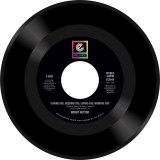
The album is beautifully produced with vocal accompaniments from artists including Patti Hamilton of The Lovelites, Jean Plum, Mikki Farrow and Frankie Karl. It received great reviews at the time and that persuaded ABC to release a non-album follow-up 45 produced by the brilliant McKinley Jackson and Reginald Dozier credited “Loving You, Wanting You, Needing You, Wanting You”/'Watch Where You’re Going” which is an elusive, highly sought-after single by soul collectors worldwide (now an Expansion 7” reissue).
In 2007, Bobby was honoured as he was voted the best singer in Chicago, quite an achievement and something that Bobby is quite rightly very proud of
Cerca:ph 1
Onimikìg Algonquin: (n. an.)- thunder Timothy Archambault's unaccompanied flute pieces for this album have been inspired by Indigenous brontomancy (divination by thunder). Each piece highlights a different extended flute technique metaphorically related to types of thunder sounds: claps, peals, rolls, rumbles, inversions, and CG (cloud-to-ground). An important document of new music meets contemporary musicological research via Stephen O'Malley of SUNN O)))'s Ideologic Organ. The Indigenous flute used in this recording is made of cedar respective to the traditional woods used by the Kichesipirini and other tribes who live along the Ottawa & Saint Lawrence Rivers. To the Algonquin the flute (Pibigwan) is the wind maker or essence of the wind. Unlike other tribal nations whom the majority used the flute as a courting instrument, the Algonquin generally utilized the flute for more contemplative singular usage to mimic the sounds of nature or as a signaling device during times of conflict. When love songs were required, they were usually more plaintive in character expressing sadness, loneliness, or concerning the departure of a lover. The album intro begins with the shaking of a necklace of otter penis bone, fish spine, bear claw, elk teeth and deer hide, gifted from Algonquin Elder Ajawajawesi. It is meant to focus the listener's attention before the flute pieces begin. The warble or multi-phonic oscillation prevalent in all the pieces traditionally represented the "throat rattling" vocalization of the tonic note, sometimes known as the horizon of which the melody floats from. Due to the repetition of multi-phonic oscillation the performer will breathe erratically creating an altered state correlating with similar traditional ceremonial practices.
Reissue
'Find Me Finding You', the new album from the new organization called the Laetitia Sadier Source Ensemble, manages to strike new chords while touching familiar keys in the song of life.
From its percolating opening beat, 'Find Me Finding You' locates new systems within the sound-universe of Laetitia Sadier. This in itself isn't a surprise - Laetitia has relentlessly followed her music through different dynamics and into a variety of dimensions over the course of four solo albums since 2010 (not to forget her three albums with Monade and the long era of Stereolab) - but the nature of the construction here stands distinctly apart from her recent albums. Laetitia was inspired by a mind's-eye envisaging of geometric forms and their possible permutations. As she sought to replicate the shapes in music, this guided the process of assembly for the album.
Part of the freshness of 'Find Me Finding You' comes from working and playing within the Source Ensemble and exploring new sound combinations via a set of youthful and evolving musical relationships. Laetitia recognized the energy of the tracks in their initial form and sought to preserve their vitality by not retaking too many performances - instead, the rawness in the tracks was retained and refined at the mixing stage, maintaining an edge throughout. When we hear synth lines diving, lifting and drifting, unusual guitar textures, the plucked sound of flat wound bass strings or the bottomless pulsing of bass pedals stepping out of the mix with an exquisite vibrancy, this is the sound of the Source Ensemble.
A key to Laetitia's music is her use of vocal arrangements. Throughout 'Finding Me Finding You' the shifting accompaniment creates space to bring this element gloriously forward. Arranged by Laetitia with Joe Watson and Jeff Parker making string charts that were subsequently transposed to vocal parts for several songs, richly arranged choirs of voices provide depth along with the thrilling presence of extra breath in the sound. Laetitia's community-politic is well-served by the groups of voices lending support to the machining of the song craft, providing additional uplift to her quintessentially forward-facing viewpoint - as well as massed voices from three different countries sharing space in harmony.
Working in collaboration is Laetita's tradition and a key to this album's view on being free together. The designation of Source Collective implies a new togetherness phase, alongside long time collaborators Emmanuel Mario and Xavi Munoz, keyboard and flutes parts played by David Thayer (Little Tornados) were essential contributions, as well as further keys, synths and electronics from Phil M FU and several intense guitar sequences from Mason le Long. Chris A Cummings (aka Marker Starling, Laetitia's favourite composer) graciously wrote 'Deep Background' for her. The duet with Hot Chip's Alexis Taylor on 'Love Captive' (not to mention Rob Mazurek's distinctive coronet playing) gives voice to an ideological cornerstone of 'Find Me Finding You'
Dream Theater-Keyboarder Jordan Rudess ist kein Unbekannter, wenn es um Experimente geht. Er hat den Ruf, kreative, klangliche und technologische Grenzen gekonnt zu überschreiten. Sein neuestes Werk, das Soloalbum "Permission to Fly", verkörpert dieses Ethos und beschäftigt sich mit der Komplexität der menschlichen Existenz in unserer facettenreichen Welt. Mit Darby Todd (Devin Townsend) am Schlagzeug, That Joe Payne am Gesang, Steve Dadaian an der Gitarre und Bastian Martinez als Gast-Gitarrensolist hat Rudess diesmal eine Kerngruppe von Musikern zusammengestellt, die seine Vision unterstützen und erweitern. "Permission to Fly" ist eine abwechslungsreiche Sammlung, die von ausgefeilten Prog-Kompositionen bis hin zu mitreißenden Balladen reicht. Die Songs erforschen verschiedene Themen - von alltäglichen menschlichen Kämpfen bis hin zu übernatürlichen Phänomenen. Jeder Song ist eine eigenständige Reise, aber in seiner Gesamtheit enthüllt das Album eine musikalische Odyssee durch das breite Spektrum menschlicher Erfahrungen.
Achtung UFO Fans, aufgepasst! Wer in den zurückliegenden zwei Jahren befürchtet hatte, dass UFO-Frontmann Phil Mogg, einer der einflussreichsten
Rocksänger der Welt, nach dem Ende seiner Band und zwischenzeitlich gesundheitlichen Problemen komplett von der Bildfläche verschwindet, wird
nun erfreulicherweise eines Besseren belehrt. Nach einer kurzen Pause des kreativen Durchschnaufens präsentiert der Engländer mit der markanten
Stimme jetzt mit ‚Moggs Motel‘ seine neueste Veröffentlichung, die er zusammen mit Tony Newton (Bass & Keyboards) von Voodoo Six – die Band
war zuvor mit UFO auf Tournee – und seinem langjährigen Partner Neil Carter (Gitarre, Keyboards, Gesang) komponiert hat. Das Album wurde im
Studio von Iron Maiden-Bassist Steve Harris in Essex/UK aufgenommen. Während der Aufnahmen wurde das Line-Up durch Joe Lazarus (Schlagzeug)
und Tommy Gentry (Gitarre) vervollständigt. Die zwölf zeitlosen Songs der Scheibe zeigen unüberhörbar, dass Mogg anno 2024 nichts von seinem
künstlerischen Charisma, der einzigartigen Ausdruckskraft seiner Stimmbänder und seinem Spaß an ungezügelter Kreativität eingebüßt hat.
Veröffentlicht wird ‚Moggs Motel‘ am 6. September 2024 über Steamhammer/SPV als CD, Vinyl-LP und Download. Bereits vorab werden – quasi als
Appetizer – zwei Singles inklusive Videos ausgekoppelt: Am 28. Juni 2024 erscheint der Album-Opener ‚Apple Pie‘, gefolgt von ‚Sunny Side Of Heaven‘
am 16. August 2024.
Mutant, in partnership with WaterTower Music, are proud to present the premiere physical media release of Tom Holkenborg’s explosive score to George Miller’s latest wasteland epic FURIOSA: A MAD MAX SAGA. Tom Holkenborg’s collaborations with the legendary George Miller Mad Max: Fury Road, Three Thousand Years of Longing have produced some of the most unique and powerful film music of the last decade. With FURIOSA, he takes the sonic landscape he created with the last film and shifts into higher gear. The loudest revving-engine of a score you’ve ever heard, absolutely pulsating with ferocity and white-knuckle tension.
"My collaboration with the incredible George Miller began over a decade ago with our work on Mad Max: Fury Road, a project that marked a pivotal moment in my career as a film composer." says Holkenborg. "Returning to this world to score the odyssey of Furiosa, an epic tale of survival, resilience and revenge has been just as eye-opening and gratifying. Furiosa: A Mad Max Saga is a testament to the vision of a singular film maker, whose pursuit of excellence always inspires me to push my creative limits."
Pressed on 2x 140 gram eco vinyl, with liner notes by composer Tom Holkenborg and housed in a tri-fold sleeve designed by Mutant co-founder Mo Shafeek.
Isik Kural returns with Moon in Gemini, a luminous scrapbook of slow-flowing narratives couched in intuitive and symbolic storytelling. Bending a playful take on environmental music to the folk song form, Isik's vocals coo atop pastoral field notes, airy chamber instrumentation and archival recordings culled from a curious musical life. A tender pastiche coalesces across the suite of Moon in Gemini's fourteen pieces, and Isik invites the listener to daydream as-deep-as-possible. "The songs on Moon in Gemini don't mind being slower or taking their time to reach the listener," says Isik, who wanted the title to speak to the album's dreamy, liminal nature. "I enjoyed how the phrase could be used to describe an object, a time or a place simultaneously," he explains. Similarly and subsequently, these songs contain a multiplicity of sonic artifacts, moments and spaces that span Isik's rich musical career to date. With the bulk of the album realized between Amasya, Turkey and Isik's current home in Glasgow, in both domestic and studio recording environments, additional tracks unearthed from his personal recording archive lend their lush patina. The record emerged as a fertile space to reimagine a handful of previously unreleased songs and unfinished ideas spanning the past fifteen years of his life and work, including streetside sounds documented while growing up in Turkey and recordings made while studying music engineering in Miami, Helsinki and Glasgow. Looking to the more recent past, Isik found himself wanting to build upon some of the methodologies and textures explored on his 2022 album in february, seeking a newly intimate, vocal-forward sound. He points to the track "film festival" from that album as a door through which to enter Moon in Gemini, where sample-based arrangements are presented in the context of asymmetrical "build ups and progressions" and ambience and vocals intertwine. Inspired in part by listening to iconic, if not sometimes misunderstood, singers such as Nina Simone, Aldous Harding and Ed Droste of Grizzly Bear, Isik aimed to carve out a new space for his voice on Moon in Gemini, experimenting with novel recording and mixing techniques. Captured at his aunt's farmhouse in Amasya during an extended three week recording session, we find Isik's vocal high in the mix, front-and-center and on newly expressive terms. As a songwriter, Isik is an intuitive and playful lyricist who allows his deep love of literature to flow through his off-kilter texts. Here, echoes of Silvina Ocampo's poem "Dialogues of the Silence" reverberate from the margins of "Most Beautiful Imaginary Dialogues". Likewise, Elliott Smith and Virgina Astley shapeshift through "Behind the Flowerpots," some lines of which were based on misheard lyrics from Smith's "Stickman" and Astley's "Some Small Hope." Attuned to the magic of happy coincidences, other unexpected "themes and connections between tracks flourished" during the recording process, resulting in some songs being more "thematically and lyrically connected to each other compared to previous records." The duos "Prelude" and "Interlude" as well as "Grown One Iota" and "After a Rain" explore connected stories, while "Almost a Ghost" and "Behind the Flowerpots" serendipitously emerged out of a conversation with Stephanie "Spefy" Roxanne Ward, whose balmy vocals heard highlighting in february return and call out to Isik's in sweet dialogue. Plumbing these new potentials of structure and songwriting, Isik also developed a taste for an expanded sonic palette, one enriched by the lulling undertones of live woodwinds and strings. The resulting collaborations with flutist Tenzin Stephen, harpist Kirstin McCarlie and clarinet player Giulia Tamborino envelop the record in an altogether "dreamier sound," swaying pastel and awash in lunar light. Moon in Gemini, brimming with natural imagery and lullaby-inflected tones, tunes into states of being where the wonder filled sound of everyday is heard and felt, perfectly imperfect in its poetry; where the invisible steps forward; where dauntless ghosts wait around every corner and play enriches the soul; where bird song fills sun-soaked afternoons and carries us on its wings into each enchanted evening. Isik Kural's Moon in Gemini will be released on vinyl, Japanese import CD, and digital editions on September 6, 2024. On behalf of Isik and RVNG, a portion of the proceeds from this release will benefit Mor Çaty Women's Shelter Foundation, whose social work at their solidarity centers and shelters supports women building lives unhindered by gender-based discrimination and male violence under free and equal conditions.
- 01: Johnny April - She Had A Pikanese (Feat. Mat Matthews Quartet)
- 02: Lu Elliott - Common Sense
- 03: Lloyd Fatman - No Big Thing (Pt.1&Amp;2)
- 04: Billy J - Teacher Teach Me
- 05: Wayne Johnson - Scram Gravy Ain&Apos;T Wavy (Feat. Brigade)
- 06: 4 Dimensions - Hipper Snapper
- 07: The Villagers - Funky Broadway
- 08: The Rippers - Honesty
- 09: Exceptional Citizens Band - Proud Mary
- 10: Gus Brendel - Sax On The Rocks
- 11: The Hornets - Seven Days To Tahiti
- 12: Bret Breitinger - Jive Samba
- 13: Downtown Trio - Summertime
- 14: Onyx - Break It Loose (Pt.1)
- 15: The Shake And Bake Band - Shake And Bake (Pt.1&Amp;2)
- 16: Lou Jackson - Outside Looking In
- 17: Energy Crisis - Tough Times Blues
- 18: Soul Unlimited - Do It
- 19: Soul Unlimited - Darkside Of Town
** INITIAL 400 LPs CONTAIN A BONUS 7" SINGLE **
MOVEMENTS Vol.12 – A bag full of rare rhythm & blues, mod-jazz, and mid 70s funk.
Side A starts with rhythm & blues from the 1960s. Most of the tracks were pulled from hopelessly obscure 7" singles. The only names of which some of you might be familiar with are most likely Mat Mathews and Lu Elliott. However, both original 45 RPM singles are pretty hard to find these days, especially in playable condition.
Side B is all about deepfunk this time. "Hipper Snapper " is a prime example of that genre. Some say its groove is reminiscent of Charles Wright's "Express Yourself. Agreed! The Villagers are responsible for the first 'aha' moment. Their (previously unreleased!) version of "Funky Broadway" would have certainly astounded even Dyke & The Blazers. Representing Germany on this volume: The Rippers, also called the "Offenburg Beatles"! Back in the USA, John Fogerty has probably never heard of this heavy school-funk cover of "Proud Mary". Drum breaks galore!
Side C begins with another German contribution. Saxophonist Gus Brendel delivers a mod-jazz belter of the highest order as do The Hornets. Definitely sure-shots for any dance floors! High time for 'aha' moment #2. Many bands have tried their hands on a cover version of the Nat Adderley jazz classic, incl. vibraphone player Bret Breitinger! The perfect choice to finish this side is Downtown Trio's smooth and groovy cover of Gershwin's "Summertime ".
Side D is reserved for proper 1970s funk. ONYX's "Break It Loose " has become a certified Rare Groove classic. Here you can enjoy it for the first time with the blessing of the band! Glenn Doughty and his Baltimore Colts Shake and Bake Band of the 70's is the first musical group consisting of former NFL All-Pro players that Tramp Records has partnered with in its history! Watch out, "Shake and Bake " will be re-released on a good old 45 RPM single, too!
Those of you who have been enjoying the detective work of the people behind the label over the past 21 years know that the Movements series can be easily considered as the flagship compilation series on Tramp. So, after having listened to the entire selection of this brand new volume we sincerely hope that we will have achieved our aim to surprise, delight, and enlighten you once again!
Key selling points:
- initial 400 LPs contain a bonus 7" of a SUPERRARE funk 45
- incl. full album download code
- deluxe double-gatefold LP with detailed liner notes & unseen photographs
- ALL but three songs appear on CD, LP & digital for the very first-time
Mutant, in proud partnership with Back Lot Music, are proud to present the premiere physical release of Dominic Lewis’ score to THE FALL GUY.
The Fall Guy is our favourite kind of movie - it's a love story not only between the film’s two leads but also a love letter to the cinema. Its also a love letter to the people who risk their lives to tell us stories. That it's scored like a stadium rock anthem also helps.
Dominic Lewis has produced a soundtrack that makes you want to stand up and cheer in the theater and blast at full volume at home.
It is pressed on 2x 140-gram Black vinyl and features liner notes by the film’s director, David Leitch, and composer, Dominic Lewis.
Bobby Hutton is from Detroit, Michigan. In 1971 he performed on the very first nationally aired Soul Train TV programme. He recorded with Phillips (the in-demand “Come See What’s left Of Me” now a separate 7” release), then ABC where her recorded his LP “Piece Of the Action” (released by Expansion on LP/CD) including “Lend A Hand”, the other separate 7” side on Expansion). The two tracks on this 7” (which feature as bonus tracks on the Expansion CD reissue of “Piece Of The Action”) were first released back-to-back in 1974 on the ABC label. Both songs are co-written and produced by McKinley Jackson, key to songs for Lamont Dozier, Freda Payne and The Four Tops at ABC in the early to mid-70s. The other co-writer is the Grammy Award winning Reggie Dozier, brother to Lamont Dozier. This 7” has not been reissued for 40 years, and an original copy on Discogs will set you back £200 in the UK.
Kato Hideki's Statement: "The Walk is the first collaboration between me and my brother from another mother, Kramer. We started working together in the late summer in 2023, discussing the thematics and the sonic palette of the album. We shared strong connections with the writings by Robert Walser and Basho - both of them walked, dreamed, lived and died on the road. Ambient music was our natural plane for us to transduce the power of their literature into our music as signifiers. Neither of us imagined just to make 'another ambient record', nor a direct translation of their writings. My instinct was to use various modal colors with modulation - slow yet structured music that sounds deceivingly similar to ambient music. Kramer's genius was apparent to me: his ability to elaborate the music as a composer / musician with his keen ears; to frame the album conceptually, sonically and musically as a producer. What you hear in this album is a true collaboration between two artists who trusted each other to let the music transcend. Here you have it, enjoy YOUR walk - dream, live and die well!" Kato Hideki - Brooklyn, NY on April 3rd, 2024 Kramer's Statement: "Sometime in the latter 20th Century, I became aware of the art of The Brothers Quay, two American animators living in London and making the most beautiful works of art I'd ever experienced in cinema. I noted that some of their work was inspired by_ 'the writings of Robert Walser'. Fast forward to 2024 and I have now read every word there was to read (translated into English) by this unique Swiss-German writer. I'd waited decades to find the right 'environment' in which to create music in dedication to this great prose writer and poet, and in 2023, I found that it was not 'the right environment' that I'd been waiting for, but rather, the right collaborator. Kato Hideki and his extraordinary work as composer for film, dance and just about every other creative discipline you can imagine, was equally as inspiring to me for this project as the words and worlds of Walser and Basho. Our journey in collaborative composition began all over the global map, but arrived at the same physical endpoint, and at the very same point in time. I'm not sure that I would even be interested in music at all, unless there were other artists to partner with as I worked. Working alone means Nothing to me. This months-long act of co-creation i have shared with Kato for "THE WALK" has made me as happy to be alive as Walser and Basho were so happy to be alive while on their walks, as evidenced by their extraordinary descriptive powers, knowing that the world around them - so simple yet so very complex - made life so wondrous, and so well worth the sometimes seemingly insurmountable struggles of finding a way to survive Today, so that we might try again Tomorrow." - Kramer, April 9, 2024 (Asheville, NC)
Im neuesten Label-Spotlight der 'This Is'-Reihe - nach gefeierten Blicken auf Flying Dutchman und Fame - konzentrieren sich die Ace-Macher auf Goldwax, das seinen 60. Geburtstag feiert, und präsentieren die besten Aufnahmen, die während der kurzen Existenz des Soul-Labels entstanden sind.
Die Compilation rückt nicht nur James Carr ins Rampenlicht, sondern auch seinen wichtigen Labelkollegen Spencer Wiggins oder die wunderschönen Harmonien der Ovations. Diese drei Acts waren die tragenden Säulen von Goldwax und zeigen neben den Songschreiber-Talenten von George Jackson und Dan Greer, warum der Einfluss des Labels auch heute noch wichtig ist. Ein Katalog voller Juwelen, von den frühesten Aufnahmen des Hitmachers von 'Why Can't We Live Together', Timmy Thomas, bis hin zu selten aufgenommenen Künstlern wie Philip & The Faithfuls. Diese Zusammenstellung zeigt auch, wie stark die Club- und Studioszene in Memphis damals war, mit Aufnahmen von Willie Walker, Percy Milem, Barbara Perry, Gene 'Bowlegs' Miller und anderen, die zwar nur sporadisch Aufnahmen machten, aber beliebte Live-Performer waren. 'This is Goldwax' wird mit einem vollständig illustrierten Booklet mit Liner Notes von Dean Rudland geliefert. Eine perfekte Einführung in das Label zu Beginn seines siebten Jahrzehnts. Als Doppel-LP
Repress of Still House Plants’ second LP FAST EDIT on frosted clear vinyl with microtene inners. Cultivated over the course of 2019, the album switches the combativeness of previous releases for bare intimacy. FAST EDIT is a palette of qualities and curdled headspaces. Now living far apart and coming together only for intense periods of shows and touring, the band have come to rely on an archive of mp3s (quick recall overtakes stable long-term memory). Written on mobile phones, dictaphones, and laptops, FAST EDIT cuts rehearsals and schemas with tight, raucous tracks. This is most tenderly at play on ‘Shy Song’ – a cut'n’chase piece, in which all sounds are ghosts of another. ‘PredikateD’ is a phone on the ground: the voice is air, the guitar and drums meld with the plywood and sand-bag structure, the seams exposed.
Black Truffle is thrilled to present a Song for two Mothers / Occam IX the first ever solo release from Laetitia Sonami. Born in France in 1957, Sonami studied with Éliane Radigue in Paris before moving to California in 1978 to study electronic music at Mills College, going on to make important innovations in the field of live electronics interfaces and multi-media performance. Sonami is perhaps most closely associated with one of her inventions, the Lady’s Glove, an arm-length tailored glove fitted with movement sensors allowing the performer fluidly to control digital sound parameters and processing, as well as motors, lights and video playback. Having performed with the Lady’s Glove for 25 years, Sonami retired it in 2016, turning her attention to the interface/instrument heard and pictured here, the Spring Sprye.
In Sonami’s own description, “The Spring Spyre is composed of three thin springs that are attached to reverb tank pickups, mounted on a metal ring. The audio generated when the springs are touched, rubbed or struck is analyzed in Max/MSP. The extracted features are then used to train machine learning models in Wekinator and Rapidmax and control the audio synthesis in real time. We never actually hear the springs.” After decades of aversion to documenting her work on recordings, a Song for two Mothers / Occam IX treats listeners to two side-long performances with the Spring Spyre: the very first piece developed for the instrument and the most recent, the two contrasting remarkably in sound palette, energy and form. A Song for two Mothers (2023) spins an intricate web of rippling synthetic burbles, rapid sweeps and fizzing textures. Performed in real time with the sensitive and partly uncontrollable Spring Sprye ("a bit tyrannical," Sonami calls it), the music is delicate yet chaotic. Abrupt gestures hover against a backdrop of silence, "devoid of spatial or temporal direction". After several minutes, the sound-world becomes metallic and percussive, tapping and ticking in pointillistic flurries before a wavering harmonic cloud emerges, sprinkled with resonant drips and pops.
Occam IX is a radically different proposition. At the outset of Sonami’s exploration of the Spring Sprye, she asked her former teacher Éliane Radigue to compose a piece for it—and her: like all of Radigue’s work since she ceased working with analogue electronics at the beginning of the 21st century, Occam IX is written not only for an instrument but also for a particular performer. These scores are developed verbally, through meetings and conversations between performer and composer; each is grounded in an image (usually kept from listeners, to avoid influencing their experience); all magnify the subtlest acoustic phenomena and require great commitment and patience from the performer. Sonami’s is one of the few Occam pieces to make use of electronics, bringing it closer to Radigue’s famous longform pieces for ARP 2500. Beginning from a rumbling low tone, the listener is gradually immersed in slowly lapping waves of synthetic tones, eventually thinning out into delicate bell-like pings against a background of white noise, reminiscent of one of the most beautiful sections of Kyema from the Trilogie de la Morte.
Accompanied by notes from Sonami, her longtime collaborator Paul DeMarinis, and Radigue, and illustrated with scores, photographs and images of the Spring Spyre, a Song for two Mothers / Occam IX is an essential document celebrating an under-recognised pioneer of electronic music and performance.
Coming out on September 6th on Sharptone Records, Sundiver is Boston Manor’s fifth album and one that represents a glimmering dawn for the Blackpool five-piece. Grown from a seedbed of optimism and sobriety, the LP celebrates new beginnings, second chances and rebirth. With two members recently stepping into fatherhood, hope is baked into every note. “Datura came out of these really dark few years over the hangover of the pandemic,” Henry reflects. “I'd been struggling a lot with drinking and not taking care of myself and bad mental health and stuff. We wanted Sundiver to be the next morning of the following day.” He explains that it feels good this time round to write through the lens of positivity. “The themes began to emerge, of rebirth, spring, dawn, sunshine and then other elements just started to fit into that.” It was during the making of Sundiver that Henry found out he was going to be a dad. This album is a significant one for the band. Originally coming out of the emo and pop punk scene, they’ve explored sonics and genres throughout their career, taken risks and achieved more than they could ever had dreamed of. They’ve grown up as Boston Manor – their lives and the world changing around them. They’re now taking stock, at a crossroads of the band they were and the band they could be.
While writing the album, they revisited the bands that shaped them in the late 90s and early 00s. “I was listening to the music I loved when I was a teenager and I just thought, why don't we make music like our favourite bands?”, guitarist Mike Cuniff remembers with a smile. “So we brought our interests to the table that way. Y2K kind of vibe. There are elements of Deftones, there are elements of Portishead in there, some Garbage, The Cardigans.” He laughs and adds NSYNC to the list of inspirations. From this cocktail of classics comes a dynamic and ambitious record, rich with depth, groove and more hooks than Peter Pan’s nightmares. Lyrics that foxtrot from parallel universes to personal growth, vivid dreamscapes to raw grief. Individually they’re single strokes full of meaning and magic. Together they’re a landscape.
Container (out Feb 15th) is the first single and it’s them at their best – impassioned and infectious. “This song is about the stagnancy of life creeping up on you & how that can bring about change.,” Henry explains, citing Ocean Song by US band Daughters as an inspiration.
The concept of the butterfly effect is present on Sundiver – how small actions can lead to big changes. This is no clearer than on their second single, Sliding Doors (out April 5th). It has the golden sound of late 90s Lollapalooza rock – think Smashing Pumpkins - rebooted with crisp 2024 production and a potent heaviness. In the lyrics Henry wonders, what if?, pondering on what could be. The idea that there are infinite versions of you whose lives splinter off in different directions at every decision you make. That there’s another you out there somewhere right now reading this sentence, and another me writing it. “So much is down to chance and circumstance,” Henry says. “You might catch that train and your life totally changes. Or you might miss it and things stay the way they are.”
Heat Me Up (out May 30th) is defiant and victorious, the audio equivalent of quitting your shit job and driving into the hot summer sun with a head full of dreams. “The lyrics are about love and gratitude,” Henry shares. “Another theme on the record is just appreciating what you have. It’s about not taking for granted the things that you've been afforded.”
There was some natural magic in the creation of Sundiver. They worked with their usual producer, Larry Hibbitt, and engineer, Alex O’Donovan, but instead of recording in London again they ended up in the green pastures of Welwyn Garden City. “Because Larry lives out in the countryside now, it was a way different environment and way different experience recording this time,” Mike remembers. “That contributed a lot to the brighter sound of the record.” The daily barbecues they had during their recording sessions imbued the process with harmony – five old friends spending quality time together and making quality music.
However, the album is by no means one-note. Birthing this new world they’ve created wasn’t without it’s pain, and that can be heard in the heavier moments on Sundiver. What Is Taken Will Never Be Lost is the most-stripped back on the album, a slow rock number seasoned with the downtempo Portishead influence. The heartfelt lyrics are Henry’s way of processing the loss of his grandfather, who died in a hospice last year(?). “It was just fucking horrible. It was always cold when I went there and they were always trying to get rid of me. The song title, What Was Taken Can Ever Be Lost, is the idea of his memory fading at the time because of dementia.” Henry goes onto explain that shoeboxes of photographs, diaries and a legacy is what he’s left behind. “He lived a really rich life and it has really impacted me and my father. His legacy is etched into the fabric of history in a very small way.” This song continues the connection between his grandfather and the band, as his painted face is emblazoned on the cover of the very first Boston Manor EP, Driftwood. As well as emotionally heavy themes, there’s heaviness in the music of Sundiver too. The closing song, Oil In My Blood, descends into an intense shoegaze outro with Debbie Gough from Heriot screaming hellfire. It’s in moments like this that the band show us aggression and fury can be as much a part of positive change as quiet introspection. The last lyrics of the song, “It resets and starts again,” leaves us in contemplation as the final chord rings out.
Touring the US, Europe and Japan over the years makes for an impressive CV, but if you know anything about Boston Manor you’ll know that they’re all about their hometown. Their choice to work with Blackpool-based photographer Nick Barkworth is testament to that. They’ve been working with him since the pandemic. “He captures Blackpool in a light that really reflects the weirdness and quirkiness of the town,” Henry says.” He's got a really good way of presenting that.” For the Sundiver cover, Nick photographed a 30ft tall abstract glass sculpture made by the local artist John Ditchfield. A striking and bewitching monolith that’s familiar to them but unusual to most people. “It has such kind of a gravity and power to it,” Henry describes the sculpture which stands in a field just outside of the seaside town. “It reminds me of either an explosion or a star or a supernova. To me it represents new life, power and radiance.” Boston Manor have got a knack for that - connecting the otherworldly and the everyday, the stars and the streets.
They’re a band known for using their music to make bigger statements about society. This time round they’re harnessing the uplifting power of music, and the communion it creates, as an antidote to the daily doom and isolation. “It seems like absolute chaos out there at the moment,” Henry says. “You’ve got Gaza and Israel, you've got Russia, you've got the fact that 40% of the world is going to have an election this year and increasingly most governments are leaning very far to the Right. The internet is dividing everybody, people are getting poorer and more desperate. It's really, really scary.” They considered trying to tackle the weight of it all in their music. “We could’ve written Welcome to the Neighbourhood on steroids, where it's just absolute darkness and misery”. He’s referring to their 2018 concept album that deals with class, inequality and the bleaker side of Blackpool. “But I think it's really important to write something that people can be immersed in and find some sort of solace in. Somewhere they can escape to from the modern day pressures and everything that’s going on. We’re all in this together.”
The next album in our Cuban Classics series is a hard one to pigeonhole. It’s a real oddity, unique and not in keeping with the majority of Cuban albums we know, but it's all the better for this. Coming courtesy of Juan Almeida, the Fantasia LP is an eclectic and epic, instrumental ride through Latin jazz-funk, trippy electronics and orchestrated classical music. Sounding at points like a full-blown orchestrated score to a dusty animated film extravaganza, with phrases and passages repeating like the appearance of ghostly spectres throughout the recording. At others, it busts into exotic funk, psychedelic-trippiness and Afro-Cuban percussion.
As rich and varied as the record, so too was Juan Almeida's (Juan Almeida Bosque) life. A descendant of African slaves born in a poor neighbourhood in Havana in 1927, Almeida went from bricklayer to university law student, through which he would meet Fidel Castro. He played a key role in the Cuban revolution, becoming the only black commander and famously voicing “Aqui no se rinde nadie!” (“Nobody here surrenders!”) when outnumbered at the start of the offensive. Castro would later make him one of his vice presidents, but Almeida’s legacy does not stop there. He also became the composer of over 300 popular Cuban songs, many of them recounting his days as a guerrilla.
Produced, orchestrated and conducted by Rafael Somavilla, who worked on a vast array of Cuban recordings including Raúl Gómez's 'Instrumental' which we also reissued on Mr Bongo, the feel of Fantasia is big, luscious, grand and pop-classical. It has become a highly sought-after, cult Cuban rarity amongst collectors and like many great albums, every repeat listen brings with it new elements previously unnoticed. Such is its richness and depth. A truly mesmerising, off-the-beaten-track instrumental record.
Individually, Kronos Quartet and Sun Ra are two of the most groundbreaking names in contemporary music. The former is the legendary San Francisco-based string quartet that laid a blueprint for what concert music could become, working with the likes of John Cage, Tanya Tagaq, and Astor Piazzolla. The latter was a singular jazz and avant-garde bandleader, as well as a philosopher and poet, who honed an extraordinary strain of cosmic experimental music from the 1950s until his ascension in 1993. As a capstone to Kronos Quartet’s 50th anniversary, the group has joined forces with the Red Hot Organization for the new album Outer Spaceways Incorporated: Kronos Quartet & Friends Meet Sun Ra. It’s stacked with some of the most innovative artists active today — everyone from multidimensional electronic musician Jlin, to Moor Mother and DJ Haram’s radical noise / rap project 700 Bliss, to abstract hip hop luminaries Armand Hammer, to avant-garde hero Laurie Anderson, to minimalist pioneer Terry Riley.
- Prologue/The Tale Of Master Seth
- Hitler And Witchcraft/ Witchcraft In History
- Women As Witches/ Witch Burning
- Witch Tortures
- Witch Tortures (Cont.)/The World Of Spirits And Demons
- Preparation For Magic/ Instruments Of Magic
- How To Invoke Spirits, Demons, Unseen Forces/ The Magic Bloodstone
- The Witches Cauldron/How To Communicate With The Spirits
- How To Communicate With The Spirits (Cont.)/Gerald Yorke And Necromancy
- How To Make A Pact With The Devil/How To Become A Witch
- Curses, Spells, Charms
- Curses, Spells, Charms (Cont.)/Potions
- The Hand Of Glory/The Witches Sabbat
- Witchcraft Today/Epilogue
This is going to be the scariest spoken word record you’ve ever heard. We’re not joking…and neither is Vincent Price. The star of such horror classics as House of Wax, The Abominable Dr. Phibes, and Theatre of Blood (and, of course, narrator of Michael Jackson’s Thriller video) can barely hide his delight while he takes his audience through a graphic and occasionally grisly history lesson in witchcraft from the Bible through the Middle Ages, the Spanish Inquisition, and Nazi Germany. Then, accompanied by occasional eerie, abstract electronic music, Price’s sinister satisfaction only mounts as he provides instruction in the dark arts, with such tracks as “How to Make a Pact with the Devil” and “Curses, Spells, Charms.” It’s all in good fun, of course…or is it? The mysterious writer of the script, one Terry d’Oberoff, has only one other credit to his name: as the “mascot” of an early ‘70s band called…wait for it…Black Magic. This 1969 double-LP release has long been coveted by collectors of the curious and macabre, and for its first reissue in over 50 years, we are giving it the Real Gone treatment, reproducing the gatefold jacket and the full-size, 8-page booklet that accompanied some copies. It’s a combination history textbook and how-to manual in witchcraft, with a title page depicting a particularly unsettling spell called “The Hand of Glory” involving the severed, salted, and dried hand of a convicted felon. We are releasing this one-of-a-kind album on clear with orange “pumpkin” swirl vinyl…Happy Halloween.