Remotif offers up a disc of pure euphoria on London label GODDEZZ, featuring four original tracks of trance-futurism crafted for peak time club elevation. Boasting an illustrious tapestry of prior releases on labels such as All My Thoughts, Coymix, air miles, X-Kalay and Space Lab, here Remotif presents a record that takes a deep dive into the cherished producers current sonic universe; driving guttural basslines, glistening piano breakdowns and crystallized drum patterns all distilled into four perfect gems of the most uplifting rave material.
Close Your Eyes And Count To One...
Buscar:ph
- Et Peu À Peu Les Flots Respiraient Comme On Pleure
- Jlg
- Hurlements En Faveur De Serge T
- Le Marin Rejeté Par La Mer
- Dernière Étape Avant Le Silence
- Dialogues Avec Le Vent
- Ses Mains Tremblent Encore
- Ma Contribution À L’industrie Phonographique
- Géographie Intime
- Je Suis Vivant Et Vous Êtes Morts
- Mon Royaume
- Potlatch (1971-1999)
- Un Souffle Remua La Nuit
Sylvain Chauveau's debut album "Le livre noir du capitalisme" is a melancholic milestone – and a precursor of what later would become the Modern Classical genre. With his release in 2000, Chauveau created a landmark of contemporary electronic music, parallel to the first releases of Jóhann Jóhannsson and Max Richter.
Inspired by John Cage's reflections on silence and Mark Hollis' solo album of the same name, on "Le livre noir du capitalisme" Chauveau assembles contemplative, repetitive piano and string arrangements with electronic sound layers and discreet field recordings to create an other-worldly but seductive Musique Noir. Midway between ambient, jazz and post-rock, Chauveau lays out a new paradigm of electro-acoustic music that functions as much atmospherically as compositionally, and whose parameters keep the boundaries between academic and non-academic music dissolved to this day.
Originally released on the small French experimental label Noise Museum in 2000, the album got reissued by Type Records in 2008 with the English title “The Black Book of Capitalism”. Being out of print for a while, Sonic Pieces now rereleases the classic with its original French title, plus new remastering by Loop-O and in an ultra-limited, handmade edition with black bookcloth cover on both CD and vinyl.
The Sex featuring members of Mercenary God and No Suicide. A mixture of different elements with a rock substrate for an uncategorized result. Another Post-Punk gem from the 80's Italian North-Eastern scene.
My adventure buddies? The silent, enigmatic Patti, former singer of the mysterious No Suicide, and the young, faithful Chris, a passionate Police fan, we met on the battlefield and he immediately became my brother. For him, learning to play the bass was a way to get close to Sting, in other words, just one step below Paradise. Patti instead played keyboards as an extension of her mysterious and glacial presence, so still and distant that the audience sometimes wondered if she was real. And then there was my fixation for the drum machine, a futuristic device which could transform the drumming sweat into an invisible, yet physical, dreamlike pulsation. A particular combination of characters and a special astral conjunction, that’s what you need to get a nucleus source of sonic emotions, and in some ways this is what we were. You could clearly feel it during the concerts. When at the end of ‘81 My Mercenary God lost their drummer and had to disband, I felt clearly that the music had already changed.
Our old 70’s rock ‘n’ roll sound was no longer representative of the day. We were like some sort of yesterday’s newspaper. Thus I Sex was born (later The Sex). According to Freudian thought that sees sexual instinct as the driving force behind every (creative or destructive) human act. And in fact we immediately started creating, destroying, assembling and deconstructing our sound. Suddenly “tomorrow became now”. It was an outburst of creative independence in the form of homemade cassettes put together with makeshift tools, at least until the arrival of the legendary 4 track recorder. I was 19 years old, Chris was only 17. Nothing more than kids after all. Yet we were already veterans, veterans of a lost war. Wise, naive, disillusioned dreamers, everything and the opposite of everything. But, above all, we were totally devoted to our creative delirium up to the point of losing touch with reality, crossing limits, breaking down barriers and almost bordering on madness. Perhaps we were just too involved, especially if in relationship with what we could receive in return. We always spread our energies as if there was no future. We unconsciously felt that we had to live in the moment, now or never, and in retrospect it really was like that, and this is why these songs exist now. Songs created with the intent to tell an inner universe that is, now as then, far from any convention.
- A1: The Look Of Destiny - Crêpesuzette (1982)
- A2: The Speechless Man - Physique Du Rôle (1983)
- A3: The Doll - Polarphoto (1982)
- A4: Make Up - Démodé (1980)
- A5: All The Fancies - Weltanschauung (1984)
- A6: My Only Fight - Ici On Va Faire (1985)
- B1: La Porta - Rosadelleceneri (1985)
- B2: Darkest Before Dawn - Vapore 36 (1987)
- B3: Domani - Anonimia (1989)
- B4: Io Trasformo - Agorà (1989)
- B5: Raving Mad - Autosuggestion (1988)
- B6: Sogni - Quartz (1987)
- B7: Attonito - Maniumane (1989)
“The Missing Boys” is a film born from the need to tell the story of the emergence and affirmation of a forgotten music scene, like much of the youth movement that spread in metropolitan areas as well as in the provinces more than forty years ago, dealing with the same critical issues of everywhere. It’s a story of mostly unknown bands, who from Sardinia, especially from Cagliari and Sassari, interrupt the blissful isolation of an island, only apparently distant from that revolution that ignited wherever there was a stage and a power socket. The birth of a path that began with punk and quickly transformed into a magmatic picture where research, experimentation, sound subversions and slivers of darkness, shape a multifaceted and unique scene in balance between affinities and divergences with its whole surroundings. The examined period between 1979 and 1989 marks a seminal decade, a ten years time-frame linked to an indelible generational transition, like an imaginary journey “from the ants to the clouds”, an invisible thread suspended between those kids and their great dream. This album contains music from a vibrant and uncompromising season, just like all that cannot be recognized as industrial product and maintains an independent spirit. (Davide Catinari)
Now-Again Records presents catalog-wide reissues of Latin music propellant Joe Bataan’s legendary Ghetto Records. Next up in the series - Joseph “Candido” RodrÌguez - Candido was mentored by Tito Punete, and his debut features a fantastic mix of fiery Salsa, Latin Jazz and Sweet Latin Soul. Ghetto Records was Joe Bataan’s way to get over on “The Man” and out of the ‘hood, a bold move by an artist looking for independence and creative control in an industry that had exploited his talents and treated him like chattel. As Bataan puts it today, “Ghetto Records was part of my journey, a stepping stone to everything else that I’ve done. I learned enough that it enabled me to get out of the box with my thinking, it showed me how to deal with adversity.” Like many dreams and schemes born of the street, this one was audacious, perhaps even reckless to a fault. Hatched from desperation yet full of hope Ghetto Records came crashing down shortly after its inception. The seven albums in its discography languished out of print - until now. These are the definitive reissues of these albums, licensed from Joe Bataan, with his oversight and input into a 16 page oversize book by Pablo Yglesias that details Bataan’s larger-than-imagination life and his little Latin label that could.
The Umbrellas are four renegade romantics crafting irresistible indie pop hymns. The band's self-titled 2021 debut album became a breakout moment, winning critical praise and sparking an international tour. Follow-up LP 'Fairweather Friend' goes a step further - absorbing the sonic attack of their live shows, it balances this with studio finesse, allowing the San Francisco four-piece to become the band they've always aspired to be. It's a record overflowing with highlights. The candyfloss melodies of introductory track 'Three Cheers!' are matched to an impactful percussive punch; 'Say What You Mean' finds The Umbrellas working with total confidence, letting the song ride out to its chiming conclusion, four voices working in precision. 'When You Find Out' offers rotating notes of guitar punctuated by a vocal that pushes past angst to accept a world full of hope. A lean 10 track affair, it grasps towards beatific pop while fuelled by a sense of risk, and the precision that comes from long months on the road. Allowing their live dynamic to bleed out on tape, The Umbrellas are at once more physical and yet also more controlled on their new album. It's also a record of ambition. Taking their time over each note, the four-piece have strengthened their songwriting, adding depth and assurance while unlocking their potential. Some bonds last a lifetime - The Umbrellas are ready to capture your heart. RIYL: Orange Juice, Sarah Records, early Creation, Mary Chain, C86, Lush
The man of many bands seems perpetually on the lookout for theunbalancedorthesurprising.Likealoveroffirstdates,Nick Wheeldon never tires of adding new formations with an ease that borders on the supernatural. After a highly acclaimed debut solo album in 2021, Communication Problems, followed by Gift in 2022, Nick Wheeldon, the Parisian Englishman from Sheffield, returns with a third opus, Waiting For The Piano To Fall. Nick Wheeldon has recorded nearly 20 albums with countless bands, including Nick Wheeldon's Demon Hosts, Os Noctàmbulos, 39th & the Nortons and Sex Sux, each of them offering him a new opportunity to refine a sound inspired by Gene Clark and Alex Chilton, at once majestic and fragile, delicate and flayed. Waiting For The Piano To Fall is the third LP in a triptych for which Nick Wheeldon has tried to capture a moment, an acoustic photograph. The band, The Living Paintings, had never playedtogether before this album and had no rehearsals before arrivingat the studio. It lends an amazing color, shape, confidence andexperiencetoNick'shypersensitiveanti-folksongs.Moreelaborate arrangements take shape around subtle country soulgroovesinwhicheventhe softestballadsswing.
'“Nobody Move!”, so says Philippe Doray and his Asociaux Associés (the Antisocial Associates)! Having dynamited the end of the 70s with two radical albums – Ramasse-Miettes Nucléaires in 1976 & Nouveaux Modes Industriels in 1978, both reissued by Souffle Continu – Doray still hadn’t finished singing. Throughout the next decade he began his Composant compositeur which would document the “second period”, as he calls it, of his Asociaux Associés.
The record includes new schizo-electro songs which make the most of his association with Laurence Garcette, who also plays all sorts of keyboards. A prolongation of the first period of the Asociaux Associés, the duo updates Doray’s poetry: in reaction to the current overcast atmosphere, here are some hallucinatory fantasies to the rhythm of an infernal circle dance (« Le petit géant ») or an ecstatic waltz (“Bombés fluo”) or even coded messages stuffed into bottles and thrown into space (“Secoue le flipeur”, “Choc d’amour”).
On the bonus CD there are further iconoclastic examples: rare recordings (unpublished or even “inaudible”) of the Asociaux Associés but also by Crash, a duo that Doray formed with Thierry Müller (Ilitch, Ruth). At the controls of their experiment- bending machine the musicians multiply the possibilities: peripheral rock, arias in orbit, broken swing, industrial mantras and other joyful falsities. Enough to make you lose your mind? No... as Philippe Doray promised: it is the “jackpot qui frissonne” (the shivering jackpot) which is there to excite.'
Ultravillage is a collective and burgeoning community of new age music devotees, private press fanatics and underground ambient, minimal and progressive electronic aficionados. T
Mark Griffey, the man behind Ultravillage, has recently made the venture into releasing albums, with the intention of reissuing forgotten personal masterpieces of 1980s and 90s private press synth culture on new label Mid-Air Museum. MM’s first vinyl record release is a collaboration with Scottish reissue label chOOn!!.
Together, they present Accidental Music 1987-1991 by Charles Esposito, a career retrospective of the experimental composer from Martha’s Vineyard, Massachusetts. The cinematic and the sacred swirl around on Accidental Music, which gives new life to intriguing self-released tapes that Esposito put out in the 1980s and 90s. Heard by few on its original release, the music featured on this compilation ranges from Palace of Lights percussive sonics to an almost minimal techno palette, a meeting of pop and twisted electronics with the hypnotic immediacy of ancient ritual.
Accidental Music 1987-1991 develops a series of resonant harmonic spaces, by adding layers of instruments and played objects. Rather than work as acoustic maps of specific locations, these pieces eddy and gather into positive physical presences. But Esposito’s real strength lies in creating depth of field. The foreground might be dominated by glassy chimes or resonant prayer bowl-like timbres, but beyond it a series of sonic veils seems to recede towards murky imperceptibility. There’s also a kind of surreal decorum at play, passages that sound like an immaculately laid dinner table being shaken by an earth tremor while the tinkling complaints of the silver, glass and muffling linen are scrupulously recorded.
Available for the first time on vinyl, Accidental Music 1987-1991 by Charles Esposito is an exploration into
many inner worlds and dreamscapes, an analogue mirage of avant-garde gems. Produced in cooperation with the artist for Mid-Air Museum and chOOn!!.
Mastered for vinyl and digital and featuring liner notes from Mark Griffey.
- A1: Three Chestnuts – (Galathea's Psychedelic Pepper)
- A2: Millstone – (Agosta's Rework In The New Mill)
- A3: Apples 65 – (Agosta "Rework 23")
- A4: Hearing The Call – (Lady G In A Rainy Day, With The Invisible Session)
- A5: Varanni – (Anan Remix)
- B1: Unna – (Salvo Borrelli "Myhome809" Remix)
- B2: Lady G – ("Butterfly Version" Agosta's Rework)
- B3: Cellars – (Go Soul.map Remix)
- B4: Carricante – ("Grape Must" Agosta's Rework)
- B5: Don Alfio – (Reverend James "Black Calamaro" Remix)
One year after his surprising debut, Agosta, the Catania musician-non-musician and Space Echo Records return to the point with “Reworks and Remixes”. Which from the very title disengages itself from the industrial 'album+remix album' chain and on listening reveals itself to be a record capable of moving, in total autonomy from its antecedent, on three different levels of reading. For, at its base, we would say, there is a much more stimulating idea than the simple compulsion from alternative versions, b-sides and so on.
Point 1, transfiguration. Because, contrary to the genre stereotype, the remix mode allows songs to express themselves in creative and experimental ways.
Point 2, the Rorschach Test. Because, on those songs, there is the personality, that is, the result of the cross-vision with experience, of the individual producers being measured against itself.
Point 3, the stage backdrop. That is, its ability to show a cross-section of the current electronic scene in Etna.
Agosta wanted some of the pillars of Catania's black-minded electronic scene with him and, together with them, reinterpreted songs from his first album. The result is a work that is as multifaceted, in terms of the specific weight of the artistic individualities involved, as it is homogeneous, in their idea of a sound that is as physical as it is mental and, above all, in terms of a totally Mediterranean underlying taste with which every single track is imbued.
Whether it is the pensive house of “Apple 65” or “Lady G” (Butterfly Agosta's Rework) as much as AN-AN's dub on “Varanni”, between Grace Jones and Adrian Sherwood, or Galathea's more psychedelic and twilight Trip-Hop on “Three Chestnuts”. The Shaft-esque swagger of Salvo Borrelli and Reverend James, the donwnbeat pop of “Cellars” by Go.Soul.Map. and the caress of “Hearing The Call” (Lady G In A Rainy Day Version) by The Invisible Session, in which spoken and what they once called nu jazz flirt.
Don’t Miss It!!!!
After two years and a half, Pietro Santangelo (formerly Nu Genea sax player) and his PS5 ensemble are back to Hyperjazz Records with a brand new album: Echologia.
'Echologia' draws inspiration from the idea of natural biodiversity as an expression of contamination, coexistence and balance. In the same way as the biological agents contribute to the life of a certain ecosystem, seemingly distant musical languages act as elements of balance in a fertile and blooming musical system. Multiculturalism becomes coexistence.
As in the previous 'Unconscious Collective' (Hyperjazz, 2021), suggestive saxophones textures interwine on a solid rhythmic equilibrium and move naturally along an imaginary line highlighting the ancestral connection between Africa and Mediterranean Sea. On the background, the tribute to the earlier Jamaican dub masters with a strong use of vintage echoes in the mixing phase.
Album cover by Sabrina Cirillo is inspired by the myth of the nymph Echo, the Oread condemned by Juno to be able to express herself by repeating only the last words of theinterlocutor, who died of pain due to the impossibility of communicating her love to Narcissus.
Fay Hallam is a hugely respected Hammond organist, singer and songwriter.She first came to
prominence in Wolverhampton Mod-popsters, Makin' Time, in the early 1980's, along with a Martin Blunt.
She and Martin, along with drummer John Brookes, then went on to form The Gift Horses, which were the
embryonic beginnings of The Charlatans, which Martin and John then went on to form. Fay’s next project
was as the vocalist and organist in the now legendary, Prime Movers, including the 'Earth Church' LP,
which was hailed by the now-defunct Sounds Music Weekly, as LP of the year. Since then, Fay has gone
on to make over 10 albums, as Phaze, The Fay Hallam Trinity, and then as a solo artist
"The organ dates back to 1790 and was made by Venanzo Fedeli, who came from a prestigious family of organ builders. This particular organ is tuned in the ancient way at 430 Hz. Tuning relies on pure thirds that aim to create dissonances within the instrument itself.
Since the organ is an instrument modeled according to the principles of nature, the intonation of the pipes was performed according to an incompletely equal system that reflects the natural intonation based on mathematical ratios.
This produces a purer sound for the thirds but slightly harsher and more difficult to listen to. The hardness of the intervals of the organ is a metaphor for the hostile climate that prevails in the Potenza valley during winter and autumn.
The sound of the organ with the register of the flute returns a particularly sweet and penetrating sound but, at the same time, a very complex timbre with intricate harmonic texture, given the numerous fluctuations and beats. The warm tones of the organ reflect the good and welcoming sould of the people who inhabit these lands. The absence of dynamics inside the instrument allows the listener to focus and understand the harmonic texture and timbral differences between the various notes more clearly.
Trombone and trumpet played by Matteo Paggi on track 2 and 3 were recorded during a hot summer day at Elefante Bianco Studio in Rome by Matteo Scarchilli. Sax, effects and noises in track 6 played by Giulio De Asmundis and Pietro Rianna were recorded in Fauna53 studio.
Many thanks goes to Marco and Giuseppe for making this happen. Thanks Federico, Sami, Marisa, Romeo and everyone involved in this project. You know who you are."
Mastered by Alessandro Caldarola.
Photos and color grading by Filippo Corsi.
Graphic project and design by Flavio Mancini.
Vinyl pressed by AFG Record Manufacturing.
Analogue Productions (Atlantic 75 Series) Celebrating the 75th Anniversary of Atlantic Records! 180-gram 45 RPM double LP Mastered by Bernie Grundman from the original analog tape Contains Otis Redding's posthumous hit "Sittin' On the Dock Of the Bay" Appeared on Rolling Stone's 500 Greatest Albums of All Time, rated 161/500! Pressed at Quality Record Pressings Gatefold old-style "tip-on" jacket by Stoughton Printing Hybrid Mono SACD Mastered directly from the original master tape by Bernie Grundman The guts of the story are this: While on tour with the Bar-Kays in August 1967, Otis Redding's popularity was rising, and he was inundated with fans at his hotel in downtown San Francisco. Looking for a retreat, he accepted rock concert impresario Bill Graham's offer to stay at his houseboat at Waldo Point in Sausalito, California. Inspired, Redding started writing the lines, "Sittin' in the morning sun, I'll be sittin' when the evening comes" and the first verse of a song, under the abbreviated title "Dock of the Bay." He had completed his famed performance at the Monterey Pop Festival just weeks earlier. While touring in support of the albums King & Queen (a collaboration with female vocalist Carla Thomas) and Live in Europe, he continued to scribble lines of the song on napkins and hotel paper. In November of that year, he joined producer and esteemed soul guitarist Steve Cropper at the Stax recording studio in Memphis, Tennessee, to record the song. Cropper remembers: "Otis was one of those the kind of guy who had 100 ideas. ... He had been in San Francisco doing The Fillmore. And the story that I got he was renting boathouse or stayed at a boathouse or something and that's where he got the idea of the ships coming in the bay there. And that's about all he had: 'I watch the ships come in and I watch them roll away again.' I just took that... and I finished the lyrics. If you listen to the songs I collaborated with Otis, most of the lyrics are about him. ... Otis didn't really write about himself but I did. Songs like 'Mr. Pitiful,' 'Fa-Fa-Fa-Fa-Fa (Sad Song)'; they were about Otis and Otis' life. 'Dock of the Bay' was exactly that: 'I left my home in Georgia, headed for the Frisco Bay' was all about him going out to San Francisco to perform." Redding and Cropper completed the song in Memphis on Dec 7, 1967 with tragedy, unknowingly, looming. Just two days later Redding lost his life on a routine commute to a performance when the small plane he was in crashed. The other victims of the disaster were four members of the Bar-Kays — guitarist Jimmy King, tenor saxophonist Phalon Jones, organist Ronnie Caldwell, and drummer Carl Cunningham; their valet, Matthew Kelly and pilot Fraser. Cropper and bassist Donald "Duck" Dunn completed the music and melancholic lyrics of "(Sittin' On) The Dock of the Bay' which was taken from the sessions — Redding's final recorded work. Cropper added the distinct sound of seagulls and waves crashing to the background. This is what Redding had wanted to hear on the track according to Cropper who remembered Redding recalling the sounds he heard when he wrote the song on the houseboat. One of the most influential soul singers of the 1960s, Redding exemplified to many listeners the power of Southern "deep soul" — hoarse, gritty vocals, brassy arrangements, and an emotional way with both party tunes and aching ballads. At the time of his tragic death he was 26. ‘(Sittin’ On) The Dock of the Bay’ was released just a month following Redding’s death and became his only ever single to reach number one on the Billboard Hot 100 in January 1968. The album, which shared the song's title, became his largest-selling to date, peaking at No. 4 on the pop albums chart. "Dock of the Bay" was popular in countries across the world and became Redding's most successful record, selling more than 4 million copies worldwide. The song went on to win two Grammy Awards: Best R&B Song and Best Male R&B Vocal Performance. With the album, Redding confirmed himself as a talent lost far too soon. All the hallmarks of a top-notch Analogue Productions reissue are here for you to savor: Mastered directly from the original master tape by Bernie Grundman and cut at 45 RPM. Pressed on 180-gram vinyl at Quality Record Pressings, and housed in tip-on old style gatefold double pocket jackets with film lamination by Stoughton Printing.
Utopia is an unimaginable alter world that is created by Mastering Black’s universe of sonic escapism.
When I have been overwhelmed with the amount of work that I've been doing in the past years, I have decided that I needed a certain get away - a certain sacred space for me to pursue the reason why I actually signed up for this in the beginning. Music composing that love is!
Earlier this year , during a trip in African island group Cabo Verde, we went to this night excursion to the Viana desert. We have taken some random photos shot some videos of the Moon thru a telescope. That didn’t struck me as an amazing experience yet I was there many distorted feelings in my mind trying to enjoy and forcing myself trying to be in the moment.
So when I have looked at these pictures back on a calmer state when I was home In NL , I've seen the vast amount of breather - a space - enough that is needed in life to let the blood flow in vein the way it’s suppose to flow. Envisioning your life from moon to create clarity - looking to life on earth - to understand what our mistakes are as human beings - or learning from 8 years old’s pure heart - that’s when my 8 year old daughter collaborated with the fist opening track to summarize the main purpose of our life - love or so called Utopia!
- Īlker (October 2023)
Soms is haat het enige waar je over hoort, maar er is in deze wereld meer liefde dan je je ooit kunt voorstellen.
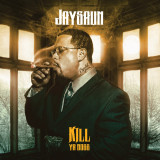
- A1: Anything Ft. Slaine (Produced By Marco Polo)
- A2: Kill Ya Boss (Produced By Teddy Roxpin)
- A3: Bad Luck Ft. Wris P & Larry Cheeba (Produced By Nox Beatz)
- A4: Hitg (Produced By Stu Bangaz)
- A5: Strawberry (Produced By Marco Polo)
- A6: It Don't Matter Ft. Rex X Edo.g (Produced Supa Dave)
- B1: Voltron Ft. Edo.g X Slaine (Produced By Teddy Roxpin)
- B2: Suicide (Produced By Falside)
- B3: Boston/Ct/Philly Ft. Blacastan & Reef The Lost Cauze (Produced By David Gunkel)
- B4: Part Of The Game (Remix) Ft. Craig G & Larry O/Lo (Produced By Skip Whitman)
- B5: Divorced (Produced By Audible Doctor)
- B6: Kings (Produced By Statik Selektah)
Julian Cannonball Adderley's only Blue Note album, Somethin' Else, would likely forever be famous in music lore if just for the presence of Miles Davis. The iconic composer/trumpeter steps into the role of sideman on the 1958 set, one of just a handful of times he'd make such a move after the calendar passed the mid-1950s. Yet evaluating Somethin' Else strictly on Davis' involvement misses the big picture. Plain and simple, Adderley's jubilant work remains a jazz landmark due to the chemistry of its Hall of Fame personnel, enthusiasm of its participants, and sophistication of its arrangements – not to mention the reference-grade production and inclusion of the definitive renditions of two all-time jazz standards.
Limited to 6,000 numbered copies, pressed on dead-quiet MoFi SuperVinyl at RTI, and mastered from the original master tapes, Mobile Fidelity's ultra-hi-fi UltraDisc One-Step 180g 45RPM 2LP collector's edition pays tribute to the record's merit and includes the bonus track "Allison's Uncle." Offering reference-calibre sonics, this spectacular collector's version provides a clear, transparent, ultra-dynamic, and up-close view of a cornerstone effort that witnesses Adderley and Davis sharing horn duty alone for the only time in their fabled careers – an arrangement that occurred as a result of Adderley having joined Davis' majestic sextet a year prior. The premium packaging and beautiful presentation of the UD1S Somethin' Else pressing befit its extremely select status. Housed in a deluxe slipcase, it features special foil-stamped jackets and faithful-to-the-original graphics that illuminate the splendour of the recording. No expense has been spared. Aurally and visually, this UD1S reissue exists as a curatorial artefact meant to be preserved, touched, and examined. It is made for discerning listeners that prize sound quality and production, and who desire to fully immerse themselves in the art – and everything involved with the album, from the iconic photos to the gorgeous finishes.
Lead single from Skinshape’s 8th Studio Album ‘Craterellus Tubaeformis’. For fans of Khruangbin, El Michels Affair, Madlib, Bonobo. A perfect taster of Skinshape’s latest album ‘Craterellus Tubaeformis’ is this double header featuring the laid-back vocals from the man himself. The joyous feel of ‘It’s Real’ sounds as if it’s been lifted from a classic blues album but with a contemporary feel. ‘Amnesia’ keeps a similar vibe with thoughtful lyrics leading to a deeper track than the production may initially suggest. Will Dorey’s ambiguous words on the tracks It's Real: “I shall leave you to decide what the song is about. Musically, it's straight-up 1960s British blues era style. Phased guitar solos, 12-string acoustic chugging along. All that.” Amnesia: “Following the course of slightly psych-edged bedroom pop. Is it pop? I shall leave you to discern the lyrical meaning.” Support from BBC 6 Music, BBC Radio 2, Jazz FM, Soho Radio, Mojo, Uncut, Shindig etc