
Suche:phd
- 1

- A1: Super Disco Breakin
- A2: The Move
- A3: Remote Control
- A4: Song For The Man
- A5: Just A Test
- A6: Body Movin
- B1: Intergalactic
- B2: Sneakin' Out The Hospital
- B3: Putting Shame In Your Game
- B4: Flowin' Prose
- B5: And Me
- B6: Three Mc's & One Dj
- C1: The Grasshopper Unit (Keep Movin') (Keep Movin')
- C2: Song For Junior
- C3: I Don't Know
- C4: The Negotiation Limerick File
- C5: Electrify
- D1: Picture This
- D2: Unite
- D3: Dedication
- D4: Dr Lee, Phd
- D5: Instant Death
22

Fausto returns to the Carpet family, this time with three tweaked out jams perfect for the Circuits series. Spread across the A-side, the 9-minute ‘Moonland’ evokes its title with driving acid and cosmic Detroit atmospherics. On the B, ‘Nacho’ is a classic mood builder, tempering its own acid lead with expansive bass and a rolling groove. The EP closes with the stepping ‘Nirvana’, perfect for closed-eyes reverie at the afters.

7
Métron Records announces Mycorrhizal Music, the forthcoming album from composer and multi instrumentalist Ess Whiteley. Currently a PhD candidate in Composition at the University of California-San Diego, Whiteley’s practice spans recordings, installations, performances, and scores, a body of work as diverse as the fungal webs that inspire it.
Across seven tracks, Whiteley explores interconnected sound worlds shaped by mycelium networks, rhizomatic structures, and other unseen systems that sustain life. Rooted in experimental electronics, minimalism, ambient and IDM, the record imagines sound as ephemeral connective tissue capable of reshaping how a listener might experience time, memory, and futurity.
At the core of Whiteley’s work is an excavation of what lies beneath perception, the felt but unspoken currents of emotionality and subtle experiences that dwell in the unconscious.
Mycorrhizal Music channels these hidden threads into a speculative ecosystem of kinship and exchange, where joy, play, and spirituality interlace like branching hyphae beneath the soil. Mycorrhizal Music has been conceived as kinetic ambient music, designed to move with the listener while walking, riding trains, driving, cooking, where everyday rhythms align with shifting sonic textures, reminding them of hidden, interconnected, mycelial webs of spiritual vitality beneath the surfaces of daily activity.
Guided by a vision of speculative ecology and interspecies resonance, it thrives in contrasts: tracks like Rhizomatic Harpists and Whispered Messages in Tapestried Fields of Fluid Motion pulse with fluid momentum, while Kaleidoscopic Patterns of Emptiness Dancing drifts into fragile stillness.
With artwork by Kenta Senekt and mastering by Brandon Hocura, Mycorrhizal Music extends Métron Records’ ethos of cultivating subtle, interconnected sound worlds.

16
On September 26th, 2025, two decades and seven albums into his career, American musician, composer, and academic John Maus will release his most transcendent work yet: Later Than You Think. Arriving via his new label YOUNG, the album explores themes of grief, justice, rebirth, transformation, and spiritual warfare - coalescing into a work of confession and confrontation: an aural metaphysics where affect, intellect, and spirit converge in search of the beautiful, the truth and the real. Written, produced, and recorded in the Ozarks of Southwest Missouri, Later Than You Think spans 16 tracks and contains multitudes - the lush and the bare, the sacred and the profane, minimalist discipline and maximalist indulgence, counterpoint and simple pop harmony. At its core, the album reaffirms John Maus’ commitment to radical sincerity and emotional truth in an age of alienation. Powered by confrontation, faith and transformation - driven by the urgent belief that meaning still matters, and time is of the essence. Holding a degree in experimental music from CalArts and a PhD in political science from the University of Hawaii, Maus has been dubbed a “philosopher pop star” and “analog futurist” for the way he merges academic rigor with lo-fi synth-pop aesthetics. His influence spans genres and generations—from UK grime icon Skepta, who sampled his track “I’m Only Human,” and Gen-Z rapper nettspend, to filmmaker Josh Safdie, actor Natasha Lyonne, and photographer Wolfgang Tillmans. His track “Cop Killer” features in the 2025 film Friendship, underscoring his continued relevance across high and low culture. With five previous albums under his belt - Songs (2006), Love Is Real (2007), We Must Become The Pitiless Censors of Ourselves (2011), Screen Memories (2017) and Addendum (2018) - Maus has carved out a singular path where irony, grief, joy, and absurdity can coexist and gained a cult following along the way. On Late r Than You Think Maus doesn’t just return—he confronts, confesses, and transforms. The result is not only a career-defining work, but a rare artistic offering: one that dares to believe in meaning, beauty, and the possibility of transcendence
Perhaps a drum is a space wrapped in material.
With some excitement the space and the material interact to produce vibrations, which we hear. Separately, yPLO prepared some sounds in advance of a performance based on the components of a speculative drum kit
ob TRU was performed and recorded live on 6/8/18 at Cafe OTO. During this live performance yPLO used amplified mylar, floor tom bass drum, mixers, audio recordings and microphones.
The recordings were mixed and edited into 8 discrete tracks.
----
yPLO (Paul Abbott & Michael Speers) is a project about imaginary drums and rhythms, using acoustic percussion and synthetic sounds.
Michael Speers is a musician from Northern Ireland who works with various sound materials — using drums, computer, microphones, feedback — in performance, installation and composition. Other collaborators include John Wall, Louise Le Du, Olan Monk, Niklas Adam, Lee Fraser and Seijiro Murayama.
Paul Abbott is a writer, sound and performance artist. He has played at venues and festivals internationally and was a resident at Cafe OTO. He completed a PhD at the University of Edinburgh under the supervision of Florian Hecker and Nikki Moran, and is currently undertaking research at Royal Conservatoire in Antwerp. He is also the co-founder and editor of Cesura//Acceso, a journal for music, politics and poetics.

7
London centric debut album from Floating Points with a host of guest musicians and vocalists.
the label say " Sam Shepherd spent five years putting together Elaenia, juggling the production with his DJ commitments and his now-completed PhD in neuroscience.
The album takes its inspiration from classical, jazz, electronic music, soul and Brazilian music, much of which can be heard in Shepherd's DJ sets. There's a long list of contributors, with Tom Skinner and Leo Taylor (drums), Rahel Debebe-Dessalegne and Layla Rutherford (vocals), Susumu Mukai (bass), Alex Reeve (guitar), Qian Wu and Edward Benton (violins), Matthew Kettle (viola) and Joe Zeitlin (cello) all featuring. Shepherd also provides some of the vocals.
Shepherd's influence on the album extends to the cover art: he built his own harmonograph to create Elaenia's sleeve, using fibre optic cables that were connected to light sources and responded to bass drum hits and other sounds.
Aside from a couple of early excursions on R2 Records and Planet Mu, Shepherd's solo material has come out through Eglo Records, the label he co-runs with Alex Nut. Records like Vacuum, Shepherd's breakthrough release in 2009, and 2011's Shadows, which scored a five-star review on RA, have cemented his reputation as a classy, inventive producer. On top of that he's also released music from his Floating Points Ensemble project, and produced some of Fatima's 2014 album, Yellow Memories. "

- Ntr1
- Ntr2
- Drg5
- Drn9
- Drg10
- SL12:
- Drg14
- Drg15
- Prn2#16
- Otr
- Prn2_9Ofm15Tb
- Prn2_9Ofm15Ta
- Prn2_M15T
- Prn2_M15T_Selforg_Tapecut
NYZ (David Burraston) presents this collection of generative music pieces carefully extracted from a PreenFM2 gifted to him by Aphex Twin. PRN2_M15t is being released at the same time as an LP titled Stria from Dr. John Chowning who invented the original FM synthesis algorithms which were sold to Yamaha and used in the creation of the DX series of keyboards. An interview with Chowning, conducted by David Burraston, will be published at the same time.
David Burraston is an award winning artist/scientist working in the areas of technology and electronic music, operating Noyzelab as an independent art/science music studio since 1981. Numerous research publications include a 2006 PhD thesis Generative Music & Cellular Automata, which developed and applied fundamental new concepts from generative music practice to a key problem in complex systems theory.
His experimental arts practice encompasses field recording, landscape-scale sound art, chaos/complexity, practice-based research, sound synthesis and electronic music. He performs, lectures, conducts workshops and creates art installations in Regional NSW and around the world. David also designs and builds sound synthesizers based on his theories of chaos/complexity science. He was recently interviewed by Bandcamp Daily and The Wire Magazine.
David has worked with many diverse collaborators such as Aphex Twin, Chris Watson, Doug Quin, Russell Haswell, Robin Fox, Oren Ambarchi, Sarah Last, Cat Hope, Garry Bradbury, William Barton, Alan Lamb, MIT Media Lab and the Australian Broadcasting Corporation. In 2014 he independently published the legendary "SYROBONKERS!", the most technical and in-depth interview ever given by Aphex Twin.

Have you noticed that Western music emphasises linear time? Melody is a continuous sequence of sounds. Harmony and rhythm follow a progression from beginning through climax and resolution. Is it possible to have an art that is based on non-linear time? Can we even experience non-linear time? Efrain Rozas' Still posed this question in the form of an installation made for quadraphonic sound, architecture and light. A document of his installation at Queenslab--part of a one-month residency with The Kitchen, New York City in April 2021--the album is a live, stereo room recording of Still as it was presented over three one-hour viewings. Efrain Rozas is a Peruvian interdisciplinary artist working with Latin American music, robotics, sculpture and installation. He holds a PhD in composition and ethnomusicology from New York University, and is a 2023-2024 Jerome Hill Artist Fellow. He has published Fusi?n: a soundtrack for Peru, a publication, video documentary, and music compilation; and has released several albums internationally via Names You can Trust, the Ethnomusicology Institute of Peru, the Embassy of Spain and Buh Records.

- 1: Awakening
- 2: Under The Wire
- 3: Contact
- 4: Tug
- 5: Profess
- 6: Altar Of The
- 7: Ancestors
- 8: Quixotica
- 9: Postscript
He cast off his old skin, fundamentally altering his studies, homeland, and life, thereby charting a new future. Recorded at Sound on Sound Studios in Montclair, New Jersey, in January, 2024, 'Ancestral' was influenced, in part, by O'Gallagher's PhD studies into the music of John Coltrane, and reunites the versatile reeds player with guitarist Ben Monder while, notably, features the first-ever recorded collaboration between master drummers Andrew Cyrille and Billy Hart. "Basically, my PhD (available on O'Gallagher's website) is an analysis where I transcribed all of Trane's solos, spelling out what he does on his late recordings 'Interstellar Space' and 'Stellar Regions'. And it shows that free music is not free, not the way people think it is.
Trane was definitely thinking about organization in those records. This research definitely gave me ideas about how to be freer within the systems that I had developed, and how to perceive them in a more organic way." O'Gallagher's latest recording marks a significant artistic evolution, following a period of considerable personal change. After leaving Brooklyn, New York, he and his wife relocated to the UK before ultimately settling in Lisbon, Portugal. This journey, coupled with dedicated study, profoundly shaped his new music. O'Gallagher, Monder, Cyrille, Hart, and Coltrane: a potent brew. In an album consisting largely of first takes, O'Gallagher's compositions vary from through- composed pieces to skeletal charts to full- blown group compositions/ improvisations.

Old-time and traditional music stay exciting for their contrasts. Exacting instrumentation honed through mentorships and late-night jams at fiddler's conventions tangles with a community-sourced inventiveness that influences variants and new sounds. Joseph Decosimo is a master of this genre for this very reason, blending deep technique with an openness and curiosity that keep his music crackling with life. A "marvelous fiddler" (No Depression) and banjo player who braids "exultation and veneration" (INDY Week) into his music, on his third solo album Fiery Gizzard Decosimo gathers a close-knit ensemble of friends from his musical career to infuse his interpretations of fiddle and banjo pieces with a contagious communal joy. As an artist working with traditional music from the South and Appalachia, Decosimo chooses songs based not only on historical significance and lineage but also his own sensory approach. For Fiery Gizzard, his ear was tuned to otherworldly tones and mystery, sourcing from field recordings such as Virginia fiddler Luther Davis' hypnotic version of "Shady Grove" while amping up the music's psychedelic potential. On the middle Tennessee banjo composition "Flowery Girls," a VHS of bluesman Abner Jay inspired Decosimo to rig up a pickup inside a fretless banjo and play it thr ough a tube amp to capture some of Jay's edge and funkiness. But to round out the sound and keep it kinetic meant galvanizing a genre-eschewing crew to jam out - and not in a "spaced-out drooly" kind of way, he laughs, but as a sort of "responsive conversation." Decosimo has always been a community-minded artist. He began playing as a seventh graderin Tennessee, fostering relationships with older players at jams and in homes, a learning mode natural to his inquisitive nature and desire for musical connection. A folklorist by intuition, he later became one by profession, studying with old-time legend Clyde Davenport, teaching in East Tennessee State University's renowned bluegrass program, and receiving his PhD at the University of North Carolina with a dissertation titled "Catching the `Wild Note': Listening, Learning, and Connoisseurship in Old-Time Music." In North Carolina, Decosimo kicked about in the verdant environment of Durham and Chapel Hill's folk and indie scenes, collaborating with artists including Alice Gerrard, Hiss Golden Messenger, and Jake Xerxes Fussell. This community has influenced his own music, including his "sublime and strangely heartening" (Bandcamp Daily) 2022 release While You Were Slumbering and Beehive Cathedral, Decosimo's 2024 "Appalachian mountain music treasury" (New Commute) trio album with Luke Richardson and Cleek Schrey for Dear Life Records. Continuing on this path, Fiery Gizzard is home base for a loose outfit of mostly Tarheel-based musicians from within and beyond traditional music. Inspired by a tour with fiddler Stephanie Coleman (Nora Brown), guitarist Jay Hammond, and synth builder and multi-instrumentalist Matthew O'Connell, Decosimo assembled studiomates based on close friendships and comfort. Coleman, O'Connell, and Hammond contribute to Fiery Gizzard, along with bassist and producer Andy Stack (Helado Negro, Wye Oak), horn player Kelly Pratt (Beirut, David Byrne), Mipso and Fust's Libby Rodenbough, Joseph O'Connell (Elephant Micah), and trad/experimental artist Cleek Schrey. Decosimo's fiddle and banjo work is virtuosic, intricate and simple simultaneously, a testament to his many years of study. On some tracks, his playing or lovely, plain-hearted singing is the centerpiece, such as on his interpretations of Texan street preacher Washington Phillips' 1929 recording "I Had a Good Father and Mother" or the Eastern Kentucky fiddle barn-burner "Glory in the Meetinghouse," famously played by Luther Strong for Alan Lomax. But there's also a trusting open-door policy, like where Southern Appalachian tune "Ida Red" relaxes into Coleman's sweet, confident fiddling and Hammond's loping guitar. As a bandleader, Decosimo's confidence and enthusiasm for the music reveal the heart of traditional music and how it can come to life through community. Fiery Gizzard is Joseph Decosimo as a powerful champion of traditional music - a sponge who soaks up as much as he squeezes out, a responsive artist who makes his genre accessible, and a magnet who can bring musicians of all sorts into his orbit with his same passion.
9
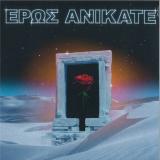
Local Suicide kündigen ihr lang erwartetes Debütalbum "Eros Anikate" an, das am 13. Mai 2022 auf ihrem eigenen Label Iptamenos Discos erscheinen wird. Der Titel bedeutet übersetzt "unbesiegbare Liebe" und ist inspiriert von Sophokles’ Stück "Antigone”.
Das Album bleibt dem Technodisco-Sound des Berliner Duos treu, für den sich die beiden einen Namen gemacht haben, und zeigt ihren unverkennbaren Stil, der 80er Retro-Feeling mit einem modernen, düsteren Twist kombiniert. In gewohnter Local Suicide-Manier zeigt das Debütalbum des Duos augenzwinkernde Texte über mystische Abenteuer, Lieb...

- Ida Red
- Glory In The Meetinghouse
- Flowery Girls
- I Had A Good Father And Mother
- Shady Grove
- Pretty Fair Maid
- Billy Button
- Puncheon Camps
- The Queen Of Rocky Ripple
- Boatsman
auch erhältlich
SEAWEED GREEN VINYL[22,27 €]
Old-time and traditional music stay exciting for their contrasts. Exacting instrumentation honed through mentorships and late-night jams at fiddler's conventions tangles with a community-sourced inventiveness that influences variants and new sounds. Joseph Decosimo is a master of this genre for this very reason, blending deep technique with an openness and curiosity that keep his music crackling with life. A "marvelous fiddler" (No Depression) and banjo player who braids "exultation and veneration" (INDY Week) into his music, on his third solo album Fiery Gizzard Decosimo gathers a close-knit ensemble of friends from his musical career to infuse his interpretations of fiddle and banjo pieces with a contagious communal joy. As an artist working with traditional music from the South and Appalachia, Decosimo chooses songs based not only on historical significance and lineage but also his own sensory approach. For Fiery Gizzard, his ear was tuned to otherworldly tones and mystery, sourcing from field recordings such as Virginia fiddler Luther Davis' hypnotic version of "Shady Grove" while amping up the music's psychedelic potential. On the middle Tennessee banjo composition "Flowery Girls," a VHS of bluesman Abner Jay inspired Decosimo to rig up a pickup inside a fretless banjo and play it thr ough a tube amp to capture some of Jay's edge and funkiness. But to round out the sound and keep it kinetic meant galvanizing a genre-eschewing crew to jam out - and not in a "spaced-out drooly" kind of way, he laughs, but as a sort of "responsive conversation." Decosimo has always been a community-minded artist. He began playing as a seventh graderin Tennessee, fostering relationships with older players at jams and in homes, a learning mode natural to his inquisitive nature and desire for musical connection. A folklorist by intuition, he later became one by profession, studying with old-time legend Clyde Davenport, teaching in East Tennessee State University's renowned bluegrass program, and receiving his PhD at the University of North Carolina with a dissertation titled "Catching the `Wild Note': Listening, Learning, and Connoisseurship in Old-Time Music." In North Carolina, Decosimo kicked about in the verdant environment of Durham and Chapel Hill's folk and indie scenes, collaborating with artists including Alice Gerrard, Hiss Golden Messenger, and Jake Xerxes Fussell. This community has influenced his own music, including his "sublime and strangely heartening" (Bandcamp Daily) 2022 release While You Were Slumbering and Beehive Cathedral, Decosimo's 2024 "Appalachian mountain music treasury" (New Commute) trio album with Luke Richardson and Cleek Schrey for Dear Life Records. Continuing on this path, Fiery Gizzard is home base for a loose outfit of mostly Tarheel-based musicians from within and beyond traditional music. Inspired by a tour with fiddler Stephanie Coleman (Nora Brown), guitarist Jay Hammond, and synth builder and multi-instrumentalist Matthew O'Connell, Decosimo assembled studiomates based on close friendships and comfort. Coleman, O'Connell, and Hammond contribute to Fiery Gizzard, along with bassist and producer Andy Stack (Helado Negro, Wye Oak), horn player Kelly Pratt (Beirut, David Byrne), Mipso and Fust's Libby Rodenbough, Joseph O'Connell (Elephant Micah), andtrad/experimental artist Cleek Schrey. Decosimo's fiddle and banjo work is virtuosic, intricate and simple simultaneously, a testament to his many years of study. On some tracks, his playing or lovely, plain-hearted singing is the centerpiece, such as on his interpretations of Texan street preacher Washington Phillips' 1929 recording "I Had a Good Father and Mother" or the Eastern Kentucky fiddle barn-burner "Glory in the Meetinghouse," famously played by Luther Strong for Alan Lomax. But there's also a trusting open-door policy, like where Southern Appalachian tune "Ida Red" relaxes into Coleman's sweet, confident fiddling and Hammond's loping guitar. As a bandleader, Decosimo's confidence and enthusiasm for the music reveal the heart of traditional music and how it can come to life through community. Fiery Gizzard is Joseph Decosimo as a powerful champion of traditional music - a sponge who soaks up as much as he squeezes out, a responsive artist who makes his genre accessible, and a magnet who can bring musicians of all sorts into his orbit with his same passion.

- Eternal I
- Incandescence
- Phosphoresence
- Between Us
- Drifters And Dreamers
- Surrounded By You
- Midnight Snow
- Devotion
- Reverie
- Dream Of What Was
- Eternal Ii
Reverie is a soundtrack of atmospheric chamber music for violin, cello, and piano by sisters Rebecca Foon and Aliayta Foon-Dancoes, and marks the first full-length album collaboration between the two players/composers. Reverie melds cellist Rebecca's post-rock and semi-improvised sensibility forged from over two decades playing in DIY/indie bands like Esmerine, Thee Silver Mt. Zion, and Set Fire To Flames, with violinist Aliayta's more recent trajectory from award-winning virtuosic performer to academically-shaped explorations of interdisciplinary composition. Following several years in London at the Royal Academy and Royal College of Music, Aliayta's move to Princeton in 2023 for a Composition PhD put the sisters back on the same continent, regularly meeting and collaborating at Rebecca's Lost River studio in Quebec's Laurentian mountains. Working with co-producer Jace Lasek (Godspeed You! Black Emperor, Patrick Watson, The Besnard Lakes), the result is an immersive suite of thematic variations that balances intimacy and detail with wide-spectrum spatial lushness. Subtle electronic interventions and gently blown-out acoustics ebb and flow throughout, further conveying Reverie's overriding mission to weave a meditative pastoralism with the underlying anxiety, sorrow, and tragedy of ecocide.

- A1: Cáin Chairr
- A2: Fear Liatroime Páirt 1
- A3: Maidin Heinz
- A4: Fear Liatroime Páirt 2
- A5: M'anam Go B'ea
- B1: Teach Tuí Bhearna
- B2: Cé Mo Dhuine Siúl Sa Hi-Vis
- B3: Monty Phádraic Jude
- C1: Ndáiríre Tho, Meastú Cén Fáth Nach Mbíonn Signal Ag An Bhfón Thart Ar Shiopa An Phobail
- C2: Fear Liatroime Páirt 3
- C3: Yung Fella
- C4: Bóthar An Chillín
- D1: Maidin Heinz Athrach
- D2: Cáin Chairr Athrach
- D3: Monty Athrach
15
'Trá Pháidín are an Irish nine piece collective from Conamara, Galway, a wild coastal region of West Ireland where Gaeilge remains the first language. The group are currently lighting up Ireland's underground with their joyful noise, a unique and unpredictable blend of traditional Irish folk, post-rock, jazz, and Dadaist absurdity. The glorious album An 424 takes us on a psychogeographical journey along the 424 bus route which follows this remote stretch of coastline, introducing us to the landscapes and the characters who depend on the buses. Expect wild improvisational flights filled with brass, woodwinds, harp and fiddles alongside relentless grooves.
Here's what the band themselves have to say about the album:
Psychogeography is a funny aul term......the effect geography and landscape of a certain area has on the psychology, identity and nature of the local people...........I suppose
Notoriously, Conamara is famous place for psychogeoraphy due to the work of the great Tom Robinson. He walked every coastline in every area contemplating the geography, culture, history, Gaelic language, English language and folklore of the area while he was drawing it's best map with great depth and detail.
Right, so I've given context, a few buzzwords and some interesting names, now it's time for the absurd stuff....
"Bóthar Chois Fharraige" (the R336 and whatever anglicized name they call it) is well known by everyone in the South Conamara Gaeltacht (Gaeltacht is an area where Irish/Gaeilge is the dominant language, there aren't many because we were colonized by the British and our government doesn't care about its own language). The people of Conamara travel this road almost every day by car, by bike, on Peadar Óg's buses or of course, through the medium of the 424 (the bus service provided by Bus Éireann, Ireland's public-private bus company). From Bearna to Carna (maybe sometimes a detour in Casla going as far back as an Cheathrú Rua and/or Leitir Mealláin)
Every passenger is well versed of gorgeous views of the landscape that is on offer on this journey. Included are Cuan na Gaillimhe/Galway Bay, An Bhoirinn/the Burren, na hOileáin Árann/the Arann Islands,Aillte an Mhothair/the Cliffs of Moher, Portach Mhaigh Cuilinn/the bogs of Maigh Cuilinn, Bóthar Loch an Iolra/Eagle lake road, Cuan Casla/Casla Harbour, Cuan an Fhir Mhóir/Greatman's Bay, Cnoc Mordáin/Mordáin hill, Sléibhte Mhám Toirc/the Maamturk Mountains and Na Beanna Beola/the twelve pins. Passengers would also be well used the unique character of the bus. Depending on the day, you will get a unique perspective of the "complicated identity" of the Gaels as the bus travels from the Gaeltacht into anglophone Ireland, or maybe going the other way.
This is a topic you could write a PhD about (and maybe someone already has). But, if you are someone who grew up or lives in this region, you have a particular understanding at this stage of how complicated Gaelic psyche is and the kind of spectrum of identity along bóthar Choise Fharraige. With the landscape in mind, this bus journey is a great meditation of the various topics of life.
‘Bhfuil tionchar ag an mbus ar nádúr na ndaoine?
Nó an bhfuil tionchar ag na daoine ar nádúr an bhus?'
'Does the bus effect the nature of the people?
Or do the people affect the nature of the bus?'
Le gach dea-ghuí,
TP.
(translated from Gaeilge by Peadar-Tom Mercier)'

A collaboration between US label Astral Spirits and Sweden’s Thanatosis Produktion, It could / If I marks the debut album from Stockholm-based duo Johan Jutterström (saxophone) and Alex Zethson (piano). Together, they reinterpret jazz standards and explore an eclectic mix of compositions by Leonard Cohen, Pet Shop Boys, John Lurie, and 19th-century composer Alexander Fesca.
Jutterström and Zethson’s musical partnership dates back to their teenage years, when they bonded over a love for jazz and the struggle to find their own voice within it. Their duo work has always been about navigating that tension—trying to capture jazz, failing, and finding another way forward. This album continues that pursuit, emphasizing not just what is played, but how it is played.
The record’s title reflects their approach: a process of reaching for something just out of grasp. Songs are deconstructed, rearranged, and treated like palimpsests—scrubbed clean and rewritten while allowing traces of the original to shine through. The result is a dynamic and deeply personal exploration of sound, filled with both reverence and reinvention.
Both musicians have extensive backgrounds in jazz, improvisation, and experimental music. Zethson, a prolific pianist and composer, has worked with ensembles like Fire! Orchestra and Trondheim Jazz Orchestra, and plays keyboards in ensembles such as Vilhelm Bromander Unfolding Orchestra, Goran Kajfes Tropiques, Vathres, and Angles (current with the jazzopera The Death of Kalypso). Jutterström, a saxophonist with an artistic PhD, has performed internationally and runs the ensemble STHLM svaga, a band who have performed commissioned pieces by jazz legends such as Ron Carter, Archie Shepp and Roscoe Mitchell.
With It could / If I, the duo crafts an intricate, ever-shifting dialogue—an ongoing attempt to "stick jazz music," as they put it, constantly approaching, never quite arriving, and finding beauty in the pursuit.

11
For the past two decades, Dr Roman Belavkin (Solar X) has been deeply involved in AI research and mathematics at British universities. His albums from the 1990s are a testament to an era defined by the early internet-bulletin boards, FTP sites and mailing lists. In keeping with this, Solar X's music sounds surprisingly futuristic, a romantic artifact of a time eagerly anticipating tomorrow.
Following the re-issue of Solar-X's "Xrated" in 2019, GALAXIID is releasing his debut "Outre X Mer". All tracks are from the original DAT tapes and have been remastered for this release. "Pozdno Utrom", "Dileg" and "Solar X" were originally released on the "Outre X Mer EP" on Defective Records in 1995. Other tracks are out on vinyl and digital platforms for the first time.
"I was homebound for two years between 1992 and 1994, and the only way I could escape was through computer networks and writing," Belavkin recalls. Before the nasty car accident he was a member of the USSR/Russia national wushu team. Confined to his home, Belavkin started creating tracks based on ideas from his school days in the late 1980s, when he first recorded melodies on cassette tapes. This time, however, he fused those sounds with Soviet analogue synthesizers and PC sound cards. He shared these tracks via email with friends in different countries, becoming part of the "Analogue Heaven" mailing list, a community of enthusiasts united by their passion for analogue synthesis dating back to the 1960s.
During his initial pursuit of a PhD in Computer Science, Roman wanted to explore the intersection of what electronic music could offer humanity, the potential for AI to experience emotions, and whether emotions enhance or hinder intellect. These themes resonate in the music of Solar X. The album embodies ambient techno with intricate rhythms and ear caressing melodies, choppy percussion and blissful synths, making it both tranquil and danceable. Like a shimmering spaceship navigating between anxious dreams and visions, it transports the listener to a naively hopeful era yet to come.

Critically acclaimed series We Are Lady Parts follows the highs and lows of the band – Lady Parts – as
seen through the eyes of Amina Hussain – a geeky microbiology PhD student, who’s on the lookout for love and is recruited to be their unlikely lead guitarist.
The second season, which launched on Channel 4 (UK) and Peacock (US) on May 30th, sees the band return
with a renewed artistic mission after the high of their first UK tour, only to find a rival band threatening their delicate status quo.
But as the reality of chasing success sets in, Lady Parts embarks on recording their first album,
juggling personal ambitions and questioning whether ‘making it big’ is really what they want.
This vinyl release features original songs and surprising cover tracks from season 1 and 2!!

5
New electro release from the Detroit homie Dr. Di'jital, who's celebrating his PHD in mechanical engineering. The man throws the classic Direct Beat hit Automatic Activity in the rebound, but not before going back to the European hood and grabbing Carl Finlow & Will Webb to drop two awesome remixes. Guaranteed 2 get the dance floor hoppin!

About 10 years ago I tried to contact Dutch artist and scientist Felix Hess, when he was still alive, but never got a reply. Years later, in 2022, I was talking to Frans de Waard, who told me he was administering the sound archive of the late Hess together with Mark Poysden. Together we started working on an album to celebrate his life and many accomplishments. It includes selections from all the highly collectible Frogs releases from the 80's and 90's, while the artwork is sourced from his Zenga collection, unifying his two greatest passions.
While in Australia conducting research for his PhD thesis on the aerodynamics and motion of returning boomerangs in 1975, Felix Hess heard frog choruses for the first time. The hills, close to Adelaide, generating amazing natural rhythms and waves of spatial sounds. He started traveling to the outback to record similar frog choruses, camping in quit places to enjoy these wonderful nightly concerts.
Mystified by how the waves and rhythms of frog choruses could emerge without a conductor or a score and by the physics of this method of communication, he started to research the phenomenon in 1982 by designing and building small electronic sound creatures that could respond to each other in a similar way. These creatures and his various other installations earned him international acclaim.
During the 1990s, Hess was invited to Japan many times to present his work and he became interested in Zen Buddhism. One summer evening in 2001 he visited a museum in Berlin and saw actual Zen art for the first time. Overwhelmed by the extraordinary power radiating from this and similar artworks he became addicted to Zenga and gradually built up one of the world's most representative collections of hanging Zen scrolls. A collection he named Kaeru-An (Frog Hut) to honor his original teachers, the frogs

The latest release on Jai Alai follows the format of forgotten vinyl tracks never before released on 7” format, or previously CD only album tracks, and will raise some eyebrows in artist selection and pairing.
Donaldson Toussaint L’Ouverture Byrd II was one of the most significant jazz artists of all time having joined Art Blakey’s Jazz Messengers in the mid-50s and establishing himself as one of the best hard bop trumpeter/flugelhorn players. His progression was continuous through the 50s/60s working with John Coltrane, Gigi Gryce, Pepper Adams, Thelonius Monk, Sonny Rollins as sideman, and became one of Blue Note Records leading artists.
By the end of the 60s Byrd decided to move away from that idiom, experimenting with jazz fusion, African music and Rhythm & Blues. He worked hard to make jazz and its history part of the curriculum in US music colleges and he taught at many including Rutgers, Hampton, Howard, and Columbia, the latter from who he received his PhD in music.
Byrd took a great interest in how Miles Davis’ experimentation was resonating with a younger audience, and despite being castigated by his musical peers, his development of jazz fusion changed the jazz scene forever. His work with the Blackbyrds was a cornerstone for the progression of jazz funk in the UK.
The effect of his hook-up with brothers Larry & Fonce Mizell was immediate and his Blue Notes albums “Black Byrd” (1973), “Street Lady”, “Stepping Into Tomorrow” (1974), “Places & Spaces” (1975) and “Caricatures” (1976) became legendary on the newly evolving jazz funk scene with certain tracks such as “Change (Makes You Wanna Hustle)” normalising dance jazz on the disco floors, not to mention being a rich source for many hip-hop samples.
A slightly leaner period followed when he moved to Elektra Records and of the three albums with his new incarnation 125th Street NYC, a group of musicians he taught at North Carolina Central University, two were produced by Isaac Hayes including “Words”, “Sounds, Colors & Shapes” (1982) from which “Everyday”, a fabulous forgotten piece of mellow jazz funk derives.
By the end of the 80s he had returned to his harder straight-ahead jazz roots, but his place in history and the evolving of jazz as a dance culture in our clubs should never be forgotten.
9
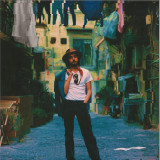
Edoardo Florio Di Grazia is a Cantautore (singer-songwriter) and story collector from the Amalfi coast, born in Florence and living in Paris, of a Neapolitan family..
Edoardo tries, like an antenna, to pick up signals and transform them into songs. Writing songs allows him to travel and unite distant worlds, to create imaginary landscapes on which to dream up new music: the Amalfi rocks of Tangier harbor can lead directly to a house in Belleville overlooking a Florentine piazza.
Edoardo is also a writer, with a PhD in medieval history from the University of Florence, a podcast author, radio show host, and DJ Selector, a compulsive Digger constantly on the lookout for the rare gem. He will publish next spring "Italia Express" the podcast produced by Radiooooo. It is a journey in five stages through the main Italian cities (Naples, Rome, Bologna, Milan, and Genoa) to discover music and history, from the post-war period to today.
After a first EP “Indossare Il Mare” released in June 2023, the spring of 2024 will see the release of “Ambra e Corallo”, Edoardo Florio Di Grazia’s first album, produced by the Parisian afro-beat label Comet Records (Tony Allen, Ebo Taylor, etc.). 9 songs about journeys, a small collection of stories found in the deep and mythological Mediterranean Sea. Like bottles in the sea, these songs belong to no one and are timeless, messages whispering us the dream of a new path to explore. The story of his first album, "Ambra e Corallo" has the flavor of a novel, the aftertaste of a contemporary fairy tale.
The vinyl includes a QR Code booklet featuring lyrics, liners notes, photos..

7
The new album The Commune Of Nightmares by noise artist David Wallraf is a tapeloop-based musical game of cadavre exquis, a technique developed by surrealist artists.
David Wallraf is a noise artist and theorist living in Hamburg. His artistic work deals with the repressed and uncanny sonic residues of quotidian life, crafting soundtracks for the creeping disaster we inhabit. His works have been released on numerous international tape labels. A recent interest of his is the live scoring of silent films, including works by Luis Buñuel, Maya Deren and Jean Genet. His PhD thesis Grenzen des Hörens. Noise und die Akustik des Politischen (Limits of Hearing.Noise and the Acoustics of the Political) has been published in German, an English translation is in progress.
The Commune of Nightmares stems from the idea that nightmares are the logical reverse of 'capitalist realism': an uncanny undercurrent of daily experiences and an algorithmic haunting of dreams that at the same time is a shared – communal – experience of everybody. All songs are based on tapeloops that were cut arbitrarily from a stash of cassettes, some of which found on the street, others from a stockpile of 4 track tapes recorded in the late 90s and early 2000s – a musical game of cadavre exquis played with random strangers and former versions of DW.
Credits:
All music composed and recorded by David Wallraf in Hamburg-Wilhelmsburg, first half of 2023

- A1: Super Disco Breakin
- A2: The Move
- A3: Remote Control
- A4: Song For The Man
- A5: Just A Test
- A6: Body Movin
- B1: Intergalactic
- B2: Sneakin' Out The Hospital
- B3: Putting Shame In Your Game
- B4: Flowin' Prose
- B5: And Me
- B6: Three Mc's And One Dj
- C1: The Grasshopper Unit (Keep Movin')
- C2: Song For Junior
- C3: I Don't Know
- C4: The Negotiation Limerick File
- C5: Electrify
- D1: Picture This
- D2: Unite
- D3: Dedication
- D4: Dr. Lee, Phd
- D5: Instant Death
- E1: Description Of A Strange Man
- E2: Dirt Dog
- E3: Intergalactic (Colleone Webb Remix)
- E4: Dr. Lee Version Dub
- E5: Switched On
- F1: Body Movin' (Fatboy Slim Remix)
- F2: Auntie Jackie Poom Poom Delicious
- F3: Putting Shame In Your Game (Prunes Remix)
- F4: Stink Bug
- G1: Peanut Butter & Jelly
- G2: Piano Jam
- G3: Happy To Be In That Perfect Headspace
- G4: The Negotiation Limerick File (The 41 Small Stars Remix)
- G5: The Drone
- G6 20: Questions Version
- H1: The Bizz Grasshopper Experiment
- H2: Hail Sagan (Special K)
- H3: Body Movin' (Kut Masta Kurt Remix)
- H4: Creepin
- H5: Learning Remote Control
- H6: Oh My Goodness This Record's Incredible
43

10
'Insight Into Mind And Space' is the latest full length project from techno producer and label owner 30drop. It's a 10 track collection compiled out tracks previously released on Jeff Mills' Axis imprint in digital formats. The original albums 'Soroban' and 'Photosynthetic Zone Manifesto' have been released in the years 2020 and 2021 and will now be available on vinyl in a limited edition for the first time. The compiled album includes pieces that, like the mind, evolve as a consequence of each other in an orderly way. Starting with the early origins represented by the track 'Dunkelblau' with which the album begins, going through 'Accepting The Future', which represent the complexity reached by the human brain. 'Insight Into Mind And Space' portrays those hypothetical and alternative molecular combinations in the form of songs. Exposed to different chemical elements, gravitational and environmental conditions, dormant genes and signaling pathways are activated and uncannily combined. And just like the molecular events, sounds are combined in different ways, whether simple or complex, to create songs that provide an artistic vision to that scientific concept that opens a hypothesis to other types of intelligence that are far from human and that could exist in the vast out there. About 30drop. In his formative years, the artist responsible for 30drop discovered new synthetic and electronic sounds that would later influence his work. From the year 1996, his activity as a DJ powered his link with music, focused on Detroit Techno and Techno sounds that held the transgressive references of Birmingham, UK. These impressions saw 30drop magnetize toward an industrial, experimental, noise-based sound, particularly in the mid-2000s. After a creative pause, 2014 brought his new project, '30drop', at this time his label 30D Records of which he is the Manager and joint A&R with Angel Molina, was also born. The conceptual part of this project has been done in collaboration and with the supervision of Meritxell Rosell, PhD in biochemistry and molecular biology.

Mattias Petersson debuts on the Swiss label Hallow Ground with »Triangular Progressions,« a suite in nine parts written entirely in the SuperCollider environment using additive synthesis. The starting point for the evocative piece is a magic number triangle that Petersson invented during his early composition studies and which has been an obsession of the artist for over twenty years, previously forming the foundation of many other of his works. By exploring the harmonic progressions found hiding within the triangle, »Triangular Progressions« at once emits a sense of introspective calm that fosters deep listening and evokes a whole spectrum of emotions, mediating between the abstract and the visceral.
The Stockholm-based Petersson, also known under the moniker Codespira1 and for his long-term collaboration with violinist George Kentros as There Are No More Four Seasons, has been active as a composer of computer music as well as an artist in the realms of live coding and modular synthesis for over two decades. Originally trained as a classical pianist, he also holds a diploma in electro-acoustic composition from the Royal College of Music in Stockholm, where he currently works as an associate professor. Besides his activities as a musician and teacher, Petersson is pursuing a PhD in composition at the Luleå University of Technology. Researching modular systems comprising both human and non-human modules, he is part of the GEMM))) Gesture Embodiment and Machines in Music cluster.
»Triangular Progressions« can be considered a perfect synthesis of Petersson’s academic interests and aesthetic ideas, combining a mathematical approach with artistic rigour. The magic number triangle highlights the beauty of symmetrical properties. By exploring its idiosyncrasies, the composer manages to translate them into engaging sounds. The lush melodies and harmonies of the music at times call to mind the intimate organ and drone works by label mates Kali Malone and Maria W Horn while also maintaining a unique signature sound. The addition of pure sinusoidal waves enables a deep listening exploration of the counterpoint between melodic and harmonic rhythms, chord structures and spectral harmonies that Petersson extrapolates from those magic numbers.

- A1: Tales Of Girls, Boys & Marsupials
- A2: Kill The Director
- A3: Moving To New York
- A4: Lost In The Post
- A5: Party In A Forest (Where's Laura?) (Where's Laura?)
- A6: School Uniforms
- A7: Here Comes The Anxiety
- B1: Let's Dance To Joy Division
- B2: Backfire At The Disco
- B3: Little Miss Pipedream
- B4: Dr Suzanne Mattox Phd
- B5: Patricia The Stripper
- B6: My First Wedding
13

Faitiche presents the album Exq I by Berlin underground techno legends Muellie Messiah & Punk not Punk, mainly known under their 100Records moniker. Weighing in at 36 minutes, the track was recorded in 2010, effortlessly intermingling dub, drone and collage, a blend achieved thanks to the duo’s jazz-inspired approach to improvisation.
_
100records is one of the last undiscovered treasures of the Berlin underground of the 1990s and 2000s. Like Elektro Music Department, 100records is unthinkable without techno and the club scene, but with a few exceptions the duo’s tracks are not aimed at the dancefloor. With a claim to universality and a broader frame of reference, 100records developed a more extensive understanding of sound that rests on three pillars: the understated analogue drums of the Roland TR-808, a blurred, dubby sound, and improvisation.
On first hearing, Exq I has little in common with the groovy, detailed, variation-rich sound usually associated with 100records. Recorded at the end of a highly productive decade, it is an echo speaking of exhaustion in which dub, drone and collage converge to form something whose jazz sensibility makes it readily identifiable as the work of 100records.
100records was founded in 1994 by Muellie Messiah (Dirk Budde) and Ekki 808 (Ekkehard Rau), who were joined in 1999 by Punk not Punk (Martin Osti). Around 2002, Ekki departed, leaving Budde and Osti to continue as a duo. Since then, their relationship has shaped 100records: Budde is the driven lone genius doggedly pursuing sounds, Osti the pragmatist who turns ideas into music.
As well as making music, Budde is also a musicologist. In 1997 he published his PhD thesis entitled Take Three Chords... Punk Rock and the Development to American Hardcore. As well as being his specialization, punk is also part of his identity: in the 1980s he sang and played keyboards in various punk bands in Kassel, the best known being Haunted Henschel.
After the fall of the Wall, attracted by the freedom of the newly reunited Berlin, Budde packed his bags and drove to the formerly divided city, having already become acquainted with techno at Kassel’s influential Stammheim club.

16
Rare Americans 3: Jamesy Boy & The Screw Loose Zoo is the third installment of the "Rare Americans" album series by the genre-bending Vancouver punks, Rare Americans. Helmed by bandleader, James Priestner, the band consists of fellow songwriter and brother Jared Priestner, Slovak guitarists Lubo Ivan and Jan Cajka, and drummer Duran Ritz. The four piece band experiments not only with a new character-driven universe but its widest variety of instruments to date. The album features the singles "Rhythm Kitchen (feat. D Smoke)," "Baby Boy," & "Walkin' n Talkin'," each accompanied by their own self-produced animated video. This is an invitation to walk into Rare Americans' world of colorful characters and stories – So what are you waiting for?

International power duo Dasom Baek (traditional Korean flutes) and Violeta García (cello) present their debut album. is the sound of two leading composers and improvisers pushing their instruments to the technical and creative limit, then beyond into places unnavigated, futuristic and often haunting.
Dasom and Violeta tussle with playful and at times brutal mastery between passages of sparse melody, acrobatic percussion and harmonic drift, while interjecting voices fracture and reassemble into intimate, improbable forms. It is hard to imagine an album more abundant in ideas and motifs, all atomised as soon as they are brought to life. The effect is a tapestry of rugged spirits - moving, and at times just plain beautiful.
Recommended for fans of Okkyung Lee, John Butcher, Messiaen, or Ernst Reijseger.
Dasom Baek is a composer, improviser and performer of traditional Korean instruments, mainly Daegeum, Sogeum. Dasom pursues ground-breaking and modern music rooted in traditional Korean instrumental performance. She is a Certified Master of Important Intangible Cultural Asset, no.45. She has achieved Bachelor's and Master's degrees from the Korea National University of Arts, and is currently undertaking a PhD course at Seoul National University. She has also represented Korea at the International Flute Festival. In 2019 she was selected as a fellow for the OMI Music residency in New York, collaborating with various genres of musicians from different countries. In 2020, she released her debut album, titled . In 2021 she was selected as a showcase artist at SXSW Festival.
Violeta García is a cellist, improviser and composer born in 1990 in San Nicolás de los Arroyos, Buenos Aires, Argentina. She studied at the Conservatory Astor Piazolla, and holds a degree in Composition from the Conservatory Manuel de Falla, with Ricardo Capellano. She also has a degree in Musical Arts, specialising in violoncello, from the Universidad Nacional of Arts (U.N.A).

8
No Sun is the fifth studio album by singer, songwriter, producer and scholar
Ramona Gonzalez PKA Nite Jewel.
After the critical acclaim of Real High (2017), Gonzalez began her PhD in Musicology at UCLA in 2018. At the same time, her twelve year marriage and creative partnership with Grammy Award-winning producer Cole M.G.N. dissolved,
leaving her homeless and adrift. Though in a state of grief, her studies renewed
her focus.
Working with only a Moog sequencer and keyboard, Gonzalez improvised
along to rhythmic grooves while singing in hushed undertones, which she then
meticulously produced into a collection of intimate off-pop masterpieces. No
Sun manifests a future out of songs of sorrow, as a part of Gonzalez’s quest to
reclaim her subjectivity.
Occupying a liminal space between Arthur Russell’s whispered intimacies, Tirzah’s R&B poeticism, and Kraftwerk’s rigid electronics, No Sun traverses new
soundscapes through the eyes of an uncompromising female auteur.

7
UPSIDE DOWN SMILE WAS RECORDED AND PRODUCED BY EWA JUSTKA AND BY SELF-DESIGNED, SELF-MADE, SELFSELFSELF, ODD LOOKING SLIGHTLY DYSFUNCTIONAL SYNTHESISERS AND BY A TRANCE PURPLE KILLER ROLAND JP8080 AND BY HIS BROTHER VIRUS AND SOME OTHER ROLAND BROTHERS NO SISTERS INCLUDED DURING THE TIME WHEN EWA JUSTKA WHO CURRENTLY LIVES IN GLASGOW, GOVANHILL, ALLISON STREET, WHERE RECENTLY HER PASSPORT WAS STOLEN DUE TO THE BURGLARY, WHERE SHE LIVES IN JOY, ALTHOUGH SOMETIMES THE FLOOR GETS WET DUE TO THE LEAKING WINDOWS AND SOMETIMES ONE CAN FIND DEAD PIGEONS LAYING ON THE STAIRCASE BUT IT'S NICE AND COSY AND EWA JUSTKA HIGHLY INFLUENTIAL PERSON IN THE DEEP DARK TRANSISTOR LADDER CIRCUITS LIVES SINCE SHE IS STUDYING PHD AT EDINBURGH COLLEGE OF ART WHERE SHE THINKS A LOT ABOUT IMITATION IN SYNTHESISER DESIGN AND FILTERS AND VCOS AND FORMANTS AND ACID AND HARDCORE MUSIC AND TWIN T FILTERS AND OPERATIONAL AMPLIFIERS AND SHE TURNS KNOBS AND THINKS AND THE UPSIDE DOWN SMILE ALBUM WAS MADE IN THE DEPTH OF THOSE THOUGHTS QUITE OFTEN SAD THOUGHTS UPSIDE DOWN SMILE IS A BIT OF A CYNICAL SMILE BUT AN HONEST SMILE CYNICAL BUT HONEST UPSIDE DOWN SMILE IS A SMILE THROUGH TEARS BUT TEARS OF JOY SCOTTISH JOY UPSIDE DOWN SMILE IS UPSIDE DOWN ACID ONE COULD SAY UPSIDE DOWN SMILE COULD BE INTERPRETED AS A SAD SMILE BUT IT IS A SMILE IN THE END OF THE DAY

Recital publish the newest record by Canadian composer Sarah Davachi. Currently working on her PhD in Musicology at UCLA, her trajectory has been unorthodox. Hailing from Calgary, Alberta, which, if you've never been there, doesn't really scream "Avant-Garde" (Calgary is the rodeo capital of the world). From a young age, Sarah was a driven pianist (and figure-skater, although that's a story for a different time). It is important and interesting that she chose to study esoteric music; as Sarah could have easily been a cowgirl or a concert pianist had her ingrained love of synthesis and sonic phenomenology not taken the wheel.
Sarah is a considered person. I find few people that have the diligence and resolve to take their time with music... especially in a live context. I respect that about her. The first time I saw Sarah perform, I presumptuously told her that her music reminded me of my favorite Mirror albums (the exceptional project of Andrew Chalk and Christoph Heemann). Sarah was not familiar with Mirror, so the compliment was initially lost on her. Years back I was in the same situation when a review compared my music to Andrew Chalk, who was unknown to me at the time. So I felt a kinship in our magnetic drift towards unspoken and clustered beauty.
Let Night Come On Bells End The Day follows the release of her "sound-wheel" LP All My Circles Run, which examines the isolation of different instruments. Let Night Come On..., recorded mainly with a Mellotron and electronic organ, feels like a return to the nest. Burrowed in the studio, Davachi was the only performer on this album. She both splays her compositional architecture and re-contextualizes the essence of her early output. She chiseled careful and shadowed hymns; anchors of emotion.
Two pillars of this album are "Mordents", which to my ears drops hints of her love for Progressive rock music - and "Buhrstone," comparable to a sombre funeral march of piano and flutes. These two examine punctuations of early music, gently plucking melodies and movements. The three other compositions are tonal works, blowing slow jets of lapping harmonics.
Writing this description now, I find it hard to separate "At Hand" from filmmaker Paul Clipson, who made a melancholic film for this piece of Sarah's. A fitting title for Sarah and Paul's relationship - frequently working in orbit of each other, meticulous and tactile. I cherish this track as a memory of Paul.
This is a lovely album to fill an evening living room with. A blanket, a cup of wine, a dim bulb, a wide window.
Three beautiful photo-prints by Davachi are included with Let Night Come On Bells End The Day. Frames are not included.
- Sean McCann

'There's a lot of serendipity involved in wrestling grooves out of these awkward machines', says Richards about the process behind the record. 'A large part of the composition is making the machines and the patches. They define the limitations of the pieces coming together. Then the performances are happy accidents - found using intuition and practice.'
Made up of two studio sessions and one live recording, PINK NOTHING reflects the unusual space Richards inhabits musically. It's partly informed by his background as a PhD student at Goldsmiths, where he re-imagined and built the Mini Oramics machine – a 'drawn sound' instrument first conceived by electronic music pioneer Daphne Oram, and finally realised by Richards in 2016.
But Richards is also an autodidact beat-maker, and much of the structures and sounds on PINK NOTHING derive from dance music, while his influences also include ritual trance, Ghanaian drum choir music, and the cellular rhythms of Steve Reich. 'It's polyrhythmic abstract electronica' – and he emphasises – 'listening music'.credits

10
"Things take a psychedelic turn for SchleiBen 7 with a welcome to the label of arch exponents of mind expansion in NYC's Georgia and the unlikely but no less diverse inclusion of Balearic stalwarts A Man Called Adam. Having Georgia in the series might not now be a surprise, however discussions with this open, genuine duo started during a visit to New York over 3 years ago and so here, finally realised in this fluid journey of confident pace and harmony, is the best of their freeform evocations. A duo in the everyday sense, Brian Close and Justin Tripp are video / music production teamsters of unnatural talent. Having gained a status of their own that has seen them release for the likes of Palto Flats and FTD, the five pieces that form their contribution drip with psychedelic intent. Culled from archives, the interest is how the tracks - made over different years, locations and situations in life - meld in to something poetic simply by being placed within a specific format. Avant-chimes ebb to rhythmic pulses and erudite teachings before dark percussion and Eastern melodies reach a clattering, but gentle finale. With an upcoming collaborative album with Secret Circuit due on the label later in 2018, as well as recent works with RVNG Intl's Matt Werth and recordings for Sacred Summits' brethren Firecracker Recordings, it's a warm, effusive glow of a welcome. In contrast, the inclusion of A Man Called Adam in the series may indeed surprise but is a false comprehension. The "Sketches" included here show AMCA away from their Balearic pop incarnation of the last thirty years and towards the academia that both members Sally Rodgers and Steve Jones have pursued in the last decade. With both completing PHDs, Sally ('The Diachronic Impact of Technology-Led Abstraction in Oral, Written and Music-based Poetries') is a senior lecturer at Leeds College Of Music, while Steve ('Mobilise: The Carry Principle, Sound and Mobile Media') is based out of de Montfort University, now is the perfect time to highlight the diverse sound environments they have been working in. The music that makes up these recordings are drawn from sound works and audio experiments completed in recent years. From sound toys and apps to home made glass organs and electro-acoustic sound, custom patches to spoken word manipulations, the sketches are excerpts - some evolved from commissions for the National Science Museum, BBC Radio 4 and live performances with the world renowned video artist Milosh JL - fused especially for this release. Bringing these generated pieces in to an audible "mix" creates a discourse of their work in performance, interactions and visual media. An intellectualised album therefore, but still in the premise of the series to allow artists to present something new, unique, discrete, hidden even, all with the aim of giving the recipient the chance to sit back and (un)listen. "

4
asen Loveland's prescriptions are strong and may not be suitable for all patients inquiring. These formulations were created in assistance from BMG, Silent Servant, and a new and improved mix by Patrick Russell, PhD. A full dose of all four medications should not be administered without the help of a certified professional.
- 1
Artikel pro Seite:
