Having stepped into fourth year of existence the factory of Depth.Request manufactures an article in form of an EP titled "Night Wounds Time" produced by British-born underground scene veteran Mahk Rumbae under the guise Antechamber, which - in slight contrast to his arguably better known alias Codex Empire - he ostensibly reserves for a more dysfunctional brand of electronic music intended as much for frantic terpsichorean participation as for contemplating the inevitable under the gloom of moonless nights. In line with offbeat nature of sounds presented, the release gives a subtle nod to Tod Phillips' literary work "A Humument", borrowing its name and
track titles from the lines within the idiosyncratic book.
Suche:phil b
New album of Québecois performer Bernardino Femminielli after several releases on Mind Records or Desire Records. Produced by Dominic Vanchesteing (Marie Davidson, Jef Barbara, Chocolat, Bernardino Femminielli...). A synth-pop/chanson act in between Sebastien Tellier, Serge Gainsbourg and lust.
Bernardino Femminielli, a lucid and tempestuous entertainer, abandons his performance and his leather clothes to take on the role of a triple agent in a sentimental mise en abyme, far from the tumultuous moral, political and philosophical conflicts. By turns storyteller, voyeur and actor of this tragedy in six acts, it is his word against that of another.
The other is Brad Cerini.
Lulled by the variety of his Italy, this unaware student of Vannier, Lai and Musy projects Femminielli into the heart of the torments of a high school girl in love and betrayed.
The mouse slips out of the shadow of the palaces and embraces her fate with a gunshot. Iris embarks on a hellish journey, assumes her excesses of politeness and turns an unexpected encounter into a grandiose event.
An introspective and/or schizophrenic tale that polarises a toxic, vital desire, carried by a flowery music that frees the artist from her principles.
Femminielli plays "an assumed, sincere role, a more serious posture and a more serious tone, but also an emotional distance in the face of this painting of manners. I had to act for her and him.
Directed by Dominic Vanchesteing (Marie Davidson, Jef Barbara, Chocolat, Bernardino Femminielli...), Dans les yeux d'Iris is the first release of the Parisian label Corps Double.
- A1: Columbia Symphony Orchestra & Bernstein - Rhapsody In Blue (Excerpt)
- A2: Rr Orchestra - Sarabande
- A3: John Barry - Midnight Cowboy
- A4: Pascal Roge - Gnossiennes #3
- A5: Michael Andrews - Mad World (Feat Gary Jules)
- A6: Arthur Fielder & Boston Pops Orchestra - March Of The Siamese Children
- A7: Nick Ingman & Orchestra London Sinfonietta - Adagio For Strings
- B1: John Williams - Cavatina
- B2: Philip Glass - Powaqqatsi
- B3: Michael Kamen - The Office
- B4: Bernard Hermann - Outer Space
- B5: Ray Noble & His Orchestra - Midnight, The Stars & You
- B6: Thomas Newman - Horse
- B7: Wendy Carlos & Mark Ayres - Ode To Joy
- C1: Deodato - Also Sprach Zarathustra
- C2: Thomas Newman & Hollywood Studio Symphony - Brooks Was Here
- C3: Mike Oldfield - Tubular Bells (Excerpt)
- C4: Hotei - Battle Without Honor Or Humanity
- C5: John Carpenter & Mark Ayres - Halloween (Main Theme)
- C6: Bernard Hermann - Main Title
- D1: Giorgio Moroder - Chase
- D2: Isaac Hayes - Theme From Shaft
- D3: Lalo Schifrin - Bullitt (Main Title)
- D4: Vangelis - Tears In Rain
- D5: Louis Armstrong - We Have All The Time In The World
"60 Years of cult and classic soundtracks presented on 2 x 180g
Featuring Bernard Hermann, John Barry, Thomas Newman, Giorgio Moroder, Isaac Hayes, Lalo Schifrin, Mike Oldfield, Vangelis...
With another week comes another gem to be let loose into
the world via Nice Swan. This time it’s the turn of Brighton
set Opus Kink, releasing their second offering of the year
in ‘Wild Bill’ / ‘This Train’.
Having been recorded at the seminal Rockfield Studios in
Wales and produced by Tim Burgess, it’s every bit as
zealous and free as we’d expect and in discussing the
release, the group revealed: “‘This Train’ is a hell-forleather ride through humanity’s self-destructive tendencies
and futile battle against nature, flipping on its head the old
adage that ‘this train is bound for glory’.”
A spooky intro converts to a fast-paced and frenetic sound
as trumpets and sax blare with feral delight. The single
comes to a screeching crescendo and we’re sonically
transported to what could easily be a pub parlour, perched
on the crimson material of a baby bar stool as beautifully
bedraggled chants echo out. They can’t remember how
they got there but are united in their message: “Don’t lose
yourself to everyone else; Don’t lose yourself to this train.”
So far, Opus Kink have succeeded in turning listeners on
their head, leaving a simultaneous excitement and
perplexity as the struggle to brandish them with a ‘wemust-define-you’ handle ensues. With an underlying tone
likened to that of a Dickensian tale, they possess the edge
of a brooding petty criminal, the charm of a street urchin
and the philanthropic spirit of any good protagonist.
The band have a flurry of nationwide gigs scheduled over
the coming months, including two Nice Swan showcases
alongside labelmates Malady, Mandrake Handshake and
Hallan. Taking the studio energy and general raucousness
into consideration, catching them live will be well worth a
look-in.
- 1: O Mar
- 2: I_Still Hear_The Roar Of A Distant Crowd
- 3: Small Piece With Walfisch And Autodrum
- 4: ??
- 5: Icaro
- 6: Cycloïd-E
- 7: Móbil
- 8: Escucha Para Acelerador De Partículas, Parancatadora Y Voz
- 9: Música Nocturna
- 10: Tripa Con Dientes
- 11: Uma Isis Esfera
- 12: Aerodrones
- 13 1: Prepared Dc-Motor, 1 Mdf Wheel, Touch Fasterner, Mdf Box 25X25X9Cm
HIGHLIGHTS: Objetos Musicais is a collection of 13 sound pieces created by artists from South America and Switzerland, who work in an intermediate zone among the craft of luthiers, visual arts and experimental music. Their works evoke the visionary ideas of Walter Smetak, a Swiss composer who lived in Salvador, Bahia (Brazil) Smetakian spirit tunes in with a new community of contemporary artists, who relate to the work of the so-called "experimental luthiers": artists who build their own instruments, lead them towards radical extended versions or take the exploration towards the building of resonant machines. DESCRIPTION: Objetos Musicais is a collection of 13 sound pieces created by artists from South America and Switzerland, who work in an intermediate zone among the craft of luthiers, visual arts and experimental music. Their works evoke the visionary ideas of Walter Smetak, a Swiss composer who lived in Salvador, Bahia (Brazil). Smetak was a pioneer of musical experimentation in that country and developed, in the 60s and 70s, a musical poetics that was captured in two seminal albums, Smetak (1974) and Interregno (1980), both of which, after being out of print for a long time, have been reissued today, hence the motivation for this tribute. On those two albums, Smetak combined Afro-Brazilian ritual traditions, theosophy, microtonality studies, collective improvisation and the use of unconventional musical instruments, which he called Plasticas Sonoras. Smetak came to build around 150 acoustic instruments, many of which are true sound sculptures of great visual impact. This latter aspect is the most directly evoked one on this album-and it so happens that the Smetakian spirit tunes in with a new community of contemporary artists, who relate to the work of the so-called "experimental luthiers", artists who build their own instruments (Marco Scarassatti, Phillipp Laeng, Maria Anália), lead them towards radical extended versions (Ruben Dhers, Claudio Merlet), develop hybrid projects involving instruments and sound sculpture (Javier Bustos, Alvaro Icaza and Verónica Luyo, Juan Pablo Egúsquiza, Edgardo Rudnitzky) or take the exploration towards the building of resonant machines (Nicole L'Huillier, O Grivo, Zimoun, Cod.Act), without these categories being mutually exclusive, but rather tending to mix, thereby opening up new sonic possibilities. This new community of artists has begun to create a whole new field of research and, in a way, a new discipline, understandable within the context of this new paradigm opened by the maker culture, which has pushed creators and developers from all over the world to conceive alternative-anti-hegemonic and DIY-forms of production. Therefore, this collection allows the artists to evoke Walter Smetak but also to connect his work to this new scene-to which it precedes-a link for this new art that makes its way at some point among the work of experimental luthiers, sound art, experimental music and the DIY ethics. Curated by Luis Alvarado and Chico Dub. Art by René Sánchez. Limited edition of 300 copies on vinyl. This project is part of the experimental music and sound art platform Incidencias Sonoras: COINCIDENCIA, by the Swiss Arts Council Pro Helvetia.
Storage units hold possessions on pause from the outside world, objects capable of reconnecting us to a time or place. Hana Vu (born in 2000s California) grew up with her family making regular use of public storage spaces in Los Angeles, moving every few years, leaving a mix of the sacred and the mundane to sit inside concrete and steel. The 20-year-old musician sees the art of making and releasing songs in a similar sense: “these public expressions of thoughts, feelings, baggage, experiences that accumulate every year and fill little units such as ‘albums.’” She lived next to one of these buildings when she started writing her full-length Ghostly International debut, Public Storage, and its towering presence lends a metaphor to a record that sounds far bigger than the bedroom it came from.
Vu’s relationship with music began when she picked up a guitar her dad had lying around and taught herself to play. She’d wake up every day and listen to LA’s ALT 98.7, home to ‘90s and ‘00s alternative rock; later in high school, she found the local DIY scene. She remembers, “A lot of my peer musicians were surf rock/punk type bands and so I tried to fit into that when I was gigging around. But what I was listening to at that time St. Vincent, Sufjan Stevens was very different from what I performed.” Ultimately she’d do her own thing, keeping a journal of bedroom pop ex-periments on Bandcamp, including a low-key Willow Smith collaboration and covers of The Cure and Phil Collins. She caught the ear of Gorilla vs. Bear, who released Vu’s self-produced debut EP in 2018 on their Luminelle Recordings imprint, followed by a double EP the next year.
Public Storage builds on the sound of Vu’s early work underscoring her strengths as a songwriter with a deeper sense of luster, sophistication, and urgency. She calls it “very invasive and intense sounding music,” refreshingly out of step with contemporary trends; this is music to engage with rather than lean back to. For the first time, she welcomes a co-producer, Jackson Phillips (Day Wave), who helps Vu create a vast, grainy, multifaceted world to stretch into vocally, her distinct contralto drifting freely between evocative low-lit ruminations and soulful, skyward bursts.
Storage units hold possessions on pause from the outside world, objects capable of reconnecting us to a time or place. Hana Vu (born in 2000s California) grew up with her family making regular use of public storage spaces in Los Angeles, moving every few years, leaving a mix of the sacred and the mundane to sit inside concrete and steel. The 20-year-old musician sees the art of making and releasing songs in a similar sense: “these public expressions of thoughts, feelings, baggage, experiences that accumulate every year and fill little units such as ‘albums.’” She lived next to one of these buildings when she started writing her full-length Ghostly International debut, Public Storage, and its towering presence lends a metaphor to a record that sounds far bigger than the bedroom it came from.
Vu’s relationship with music began when she picked up a guitar her dad had lying around and taught herself to play. She’d wake up every day and listen to LA’s ALT 98.7, home to ‘90s and ‘00s alternative rock; later in high school, she found the local DIY scene. She remembers, “A lot of my peer musicians were surf rock/punk type bands and so I tried to fit into that when I was gigging around. But what I was listening to at that time St. Vincent, Sufjan Stevens was very different from what I performed.” Ultimately she’d do her own thing, keeping a journal of bedroom pop ex-periments on Bandcamp, including a low-key Willow Smith collaboration and covers of The Cure and Phil Collins. She caught the ear of Gorilla vs. Bear, who released Vu’s self-produced debut EP in 2018 on their Luminelle Recordings imprint, followed by a double EP the next year.
Public Storage builds on the sound of Vu’s early work underscoring her strengths as a songwriter with a deeper sense of luster, sophistication, and urgency. She calls it “very invasive and intense sounding music,” refreshingly out of step with contemporary trends; this is music to engage with rather than lean back to. For the first time, she welcomes a co-producer, Jackson Phillips (Day Wave), who helps Vu create a vast, grainy, multifaceted world to stretch into vocally, her distinct contralto drifting freely between evocative low-lit ruminations and soulful, skyward bursts.
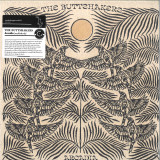
Dark and yet still luminous, the new album of The Buttshakers, Arcadia remains true to
the spirit of soul : hope out of struggle, light out of fear; even when the cracks expose the
darkest side of humanity, soul music has always given us the assurance that out of this
chaos, a better day will come. A philosophy on which they built their discography and their
stage presence; founding principles that the group has always been faithful to: to awaken
the listener, to ignite the fire, to bring the dance.
- A1: Check Out This 4 25
- A2: Stay Back (Keep Your Distance) 3 52
- A3: Yum 3 49
- B1: Jorun It (Live On Air) 3 21
- B2: Lower Your Expectations 3 32
- B3: Down With Jorun 3 04
- B4: Funky Fresh For '83 2 10
- C1: Rock The Party 4 29
- C2: The Truth Is Forever Featuring – Jay Quan 2 12
- C3: Mdm Freestyle (Live At Echo Park) 3 18
- D1: Can't Hang With Us 3 22
- D2: Q S. 3 42
- D3: Boom Box 3 56
The long awaited Jorun PMC album is finally here! Available on all formats – double vinyl, download from Jorun and Phill’s bandcamp pages plus limited CD and Cassette. Jorun Bombay and Phill Most Chill have impressive individual catalogues and together on AE Productions have a clutch of vinyl releases as Jorun PMC stemming from the debut ‘Magic Disco Machine’ EP with the associated 7” ‘The Champ’ from 2013. After a brief hiatus while working on other projects they returned with the ‘Check Out This’ 12” in September 2018 followed by the Stay Back (Keep Your Distance) b/w Sammy Davis 7” in February 2019. Due to some delays at the label the album was unfortunately delayed from it’s intended 2019 release but is now available including stunning sleeve artwork by the amazing Dan
Lish with design and layout by regular AE artwork supremo Mr Krum.
Nottingham don Lukas Wigflex and "The Wizard" Tom Smith come correct with their Me & Meds project. Following on from their debut together on Wigflex, the follow up is just as inventive & playful.
2 years in the making- the studio skills of the pair shine through across the 3 tracks. The opener "Curtains Nine Tails" moves and warps over the first few minutes only to penetrate the listener with a crescendo of god-like basslines and tripped out vocals.
Faffhammer which gained big popularity when Lukas played it on that boat party at Love International is an atmospheric, wonked out euphoric number of the highest order.
The records finished off with the offside ramblings of another notorious Notts head - Des Hagenasty. This is his first outing on wax and it does not disappoint, backed by the analog wobbles and techno grit of Me & Meds, this one bites. The videos an eye opener too, just you wait!
0115 is alive.
A collective of forward-thinking "jazz" musicians from Australia. We owe our thanks and gratitude to the founding mothers and fathers of the music people call jazz. We respect and continuously study their legacy whilst embracing our current surroundings in making music that honestly reflects our time and space.
- A1: Columbia Symphony Orchestra & Bernstein - Rhapsody In Blue (Excerpt)
- A2: Rr Orchestra - Sarabande
- A3: John Barry - Midnight Cowboy
- A4: Pascal Roge - Gnossiennes #3
- A5: Michael Andrews - Mad World (Feat Gary Jules)
- A6: Arthur Fielder & Boston Pops Orchestra - March Of The Siamese Children
- A7: Nick Ingman & Orchestra London Sinfonietta - Adagio For Strings
- B1: John Williams - Cavatina
- B2: Philip Glass - Powaqqatsi
- B3: Michael Kamen - The Office
- B4: Bernard Hermann - Outer Space
- B5: Ray Noble & His Orchestra - Midnight, The Stars & You
- B6: Thomas Newman - Horse
- B7: Wendy Carlos & Mark Ayres - Ode To Joy
- C1: Deodato - Also Sprach Zarathustra
- C2: Thomas Newman & Hollywood Studio Symphony - Brooks Was Here
- C3: Mike Oldfield - Tubular Bells (Excerpt)
- C4: Hotei - Battle Without Honor Or Humanity
- C5: John Carpenter & Mark Ayres - Halloween (Main Theme)
- C6: Bernard Hermann - Main Title
- D1: Giorgio Moroder - Chase
- D2: Isaac Hayes - Theme From Shaft
- D3: Lalo Schifrin - Bullitt (Main Title)
- D4: Vangelis - Tears In Rain
- D5: Louis Armstrong - We Have All The Time In The World
60 Years of cult and classic soundtracks presented on 2 x 180g
Featuring Bernard Hermann, John Barry, Thomas Newman, Giorgio Moroder, Isaac Hayes, Lalo Schifrin, Mike Oldfield, Vangelis...
Over the past decade or so, Chris Forsyth has produced a series of perennially year-end list haunting studio albums of expansive art-rock, from 2013’s Solar Motel to 2019’s All TimePresent , in the process becoming one of the leading lights of the so-called “indie jam” scene, musicians combining omnivorous influences with post-Dead sprawl.
These critically lauded albums have established Forsyth as one of today’s most unique and acclaimed guitar player/composers - a forward thinking classicist synthesizing cinematic expansiveness with a pithy lyricism and rhythmic directness that makes even his 20-minute workouts feel as clear, direct, and memorable as a 4-minute song.
Pitchfork has called his music “a near-perfect balance between 70s rock tradition and present day experimentation,” NPR Music named Forsyth “one of rock’s most lyrical guitar improvisors,” and the New York Times calls him “a scrappy and mystical historian… His music humanizes the element of control in rock classicism (and) turns it into a woolly but disciplined ritual.”
But the studio records are just the tip of the iceberg.
You see, in a live setting Forsyth’s music is never really finished.
He hasn’t had a fixed band in years and plays with a rotating cast of characters. Regulars in Forsyth’s bands have included bassists Doug McCombs (Tortoise) and Peter Kerlin (Sunwatchers), and drummer Ryan Jewell (Ryley Walker, too many others to mention), among others - basically, whoever is available for the given gig or tour.
These are not groups that rehearse, exactly. Operating more like a jazz band, Forsyth and his players treat the songs as frameworks that remain identifieable but morph based on who’s playing them, like weather to a landscape.
Embracing this flux has become a cornerstone of Forsyth’s live sets, rendering every performance special and thereby catching the attention of tapers from his home base in Philly to New York City, Chicago, and Minneapolis. In fact, most of his live performances over the last few years are recorded and posted on the Live Music Archive site.
But the taper recordings, though many are high quality and full of character, are not professionally recorded and mixed multi-tracks.
Which brings us to Peoples Motel Band , the new live LP culled from a set that Forsyth played with NY-based group Garcia Peoples as his band, and is self-releasing on his own Algorithm Free label in a limited pressing of 500 copies.
Recorded September 14, 2019 before a packed and enthusiastic hometown crowd at Johnny Brenda’s in Philadelphia, Peoples Motel Band catches Forsyth and Garcia Peoples (plus ubiquitous drummer Ryan Jewell) re-imagining songs from Forsyth’s last couple studio albums with improvisatory flair.
Forsyth and Garcia Peoples played a number of 2019 shows together, beginning with a semi-legendary jam set at Nublu in NYC in March, through a couple dates on Forsyth’s month-long weekly residency at Nublu in September and concluding with a five-date tour of the Northeast in December. The chemistry between the players is tangible.
As is often the case with Forsyth shows, the gloves come off quickly and the players attack the material - much of it so well-manicured and cleanly produced in the studio - like a bunch of racoons let loose in a Philadelphia pretzel factory.
Recorded and mixed with clarity by Forsyth’s longtime studio collaborator, engineer/producer Jeff Zeigler, the record puts the listener right in the sweaty club, highlighted by an incredible side-long take of the chooglin’ title track from 2017’s Dreaming in The Non-Dream LP (note multiple climaxes eliciting wild shouts and ecstatic screams from the assembled).
This is not the new Chris Forsyth album, exactly, but then again, it kinda is because whenever he sits down to play, something new comes out.
Diving into the archives of Alter Ego - the Italian experimental ensemble of Manuel Zurria, Paolo Ravaglia, Aldo Campagnari, Francesco Dillon, Oscar Pizzo, and Eugenio Vatta - Die Schachtel is thrilled to present Microwaves, a never before released body of recordings of works composed by Atli Ingólfsson, Giovanni Verrando, Yan Maresz, and Riccardo Nova, made with Pan Sonic (Mika Vainio and Ilpo Vaisanen) in 2005. Resting at the outer reaches of avant-garde chamber and electronic music, the LP’s blistering structures, tones, and textures - plowing forward with frenetic energy - remain radical and ahead of their time, more than 15 years after they were first laid to tape.
A modular chamber ensemble with a pointedly anti-academic approach to music, over the course of its activities - running roughly between 1990 and 2010 - Alter Ego developed a devoted following among some of the most forward thinking voices in experimental music, all the while collaborating widely with artists spanning a vast range of practices and disciplines, including Robin Rimbaud, Philip Jeck, Matmos, Gavin Bryars, Andrew Hooker, William Basinski, David Moss, Alvin Curran, Terry Riley, and near countless number of others.
Alter Ego’s diverse activities can be understood as interventions with the disposition toward formality within contemporary chamber music, often pairing themselves with artists working well beyond their own context as a means to develop highly original interpretations of a specific composer’s work. In 2004, this process led them to instigate a collaboration Pan Sonic, the Finnish duo of Mika Vainio and Ilpo Vaisanen, pioneers of a remarkably distinct form of rhythmic, experimental electronic music, and regarded by many as one of the most visionary and irreverent projects working in the field during the '90s and 2000s.
Initially conceived with Fausto Romitelli in 2004 before being sidelined by the composer’s untimely passing the following year, Microwaves acts, in part, a remembrance in sound, featuring four works by some of his closest friends, the composers Atli Ingólfsson, Giovanni Verrando, Yan Maresz, and Riccardo Nova. Each composition, Ingólfsson’s Snap, Verrando’s Harmonic Domains #3, Maresz’s Link, and Nova’s Thirteen13x8@Terror Generating Deity, have roots in a pallet of samples and fragments drawn by each composer from existing works by Pan Sonic. Upon completion, these compositions then entered into a collaborative process between Mika Vainio and Ilpo Vaisanen (Pan Sonic) and Alter Ego (Manuel Zurria, Paolo Ravaglia, Aldo Campagnari, Francesco Dillon, Oscar Pizzo, and Eugenio Vatta), and were performed collectively by both groups during an extensive tour that year.
Distinct and free-standing, while operating as a seamless whole, the four works encountered across the album’s two sides - built from the sounds of flute, clarinet, violin, cello, piano, electronics, and further treatments - present an engrossing intersection between electronic and acoustic sound that diverges from most standing conceptions of electroacoustic music. Each composer’s carefully rendered structures rise and fall within the startling, conversant interplay between the two groups, finding perfect balance - between the frenetic and restrained - in what can only be regarded as one of the most striking and singularly unique expressions of contemporary chamber music realized during the 2000s.
Vast in scope, visionary in concept and artistry, and sonically engrossing, Die Schachtel is thrilled to present these never before heard recordings from the archives of Alter Ego. Microwaves is available on black vinyl, in a limited edition of 350 copies.
Diving into the archives of Alter Ego - the experimental ensemble of Manuel Zurria, Paolo Ravaglia, Aldo Campagnari, Francesco Dillon, Oscar Pizzo, Fulvia Ricevuto, and Eugenio Vatta - Die Schachtel is thrilled to present Pranam - A(Round) Giacinto Scelsi, a never before released body of recordings interpreting the works of the legendary Italian composer Giacinto Scelsi, made with Matmos (Martin Schmidt and Drew Daniel) in 2005. Resting at the outer reaches of avant-garde chamber and electronic music - moving at a glacial pace of tightly wound energy - Pranam’s two sides radically rethink the terms electroacoustic music in ways that still feel radically ahead of their time, more than 15 years after they were first laid to tape.
A modular chamber ensemble with a pointedly anti-academic approach to music, over the course of its activities - running roughly between 1990 and 2010 - Alter Ego developed a devoted following among some of the most forward thinking voices in experimental music, all the while collaborating widely with artists spanning a vast range of practices and disciplines, including Robin Rimbaud, Philip Jeck, Pan Sonic, Matmos, Gavin Bryars, Andrew Hooker, William Basinski, David Moss, Alvin Curran, Terry Riley, and near countless number of others.
Alter Ego’s diverse activities can be understood as interventions with the disposition toward formality within contemporary chamber music, often pairing themselves with artists working well beyond their own context as a means to develop highly original interpretations of a specific composer’s work. In 2005, this process led them to invite Matmos, the American duo of Drew Daniel, Martin Schmidt - acclaimed for a body of visionary albums at the vanguard of electronic process and sampling - to collaborate on a series of interpretations of works by the legendary Italian composer Giacinto Scelsi.
Realized in collaboration with The Fondazione Isabella Scelsi, which holds Giacinto Scelsi’s archives, and performed at the Festival Roma Europa and the Festival Aeterforum during May of 2005, the album’s four works - Estratti dal Quartetto per archi n.3 (1963), Ko-Lho (1966), Riti: I Funerali di Carlo Magno A.D. 814 (1976), Aitsi (1974) - shift the boundaries of 20th Century chamber music toward markedly new and contemporary terms, incorporating everything from the sounds of the Revox tape machine that Scelsi used to record his own improvisations and processed electronics, to the plastic trumpets used by fans during football matches.
From intertwining, shifting lone-tones that render startling resonances and dissonances, to passages guided by a vast pallet of electronics and flurries of acoustic sounds, joined as a single ensemble, across the two sides of Pranam, Alter Ego and Matmos infuse these four works by Scelsi with humor and playfulness, while retaining all the urgency and rigour with which they were initially composed.
Delicate and meditative, while tightly wound and brooding, Pranam brings the works of Giacinto Scelsi to life in ways that almost no group ever has. Riveting and immersive from start to finish, Die Schachtel is thrilled to present these never before heard recordings from the archives of Alter Ego. Pranam is available on black vinyl, in a limited edition of 350 copies.
If one always looks at the sky, he will end up with wings, a wise French man once declared. Halifax, Nova Scotia based musician Jeremy Costello had wings, long before he looked up. Wings of imagination. Brandishing in his head, transforming deep-rooted emotions into poetry and sound. Since 2012 the Canadian self-releases music as Special Costello, a moniker under which he records solo or with local friends like Saxophone player Nick Dourado or guitarist Dave Burns. His lyrics are sincerely woven poetic enunciations that balance between introspective emotions and existential philosophical demands. Lyrics from a spirit that is in love without an object, unconditional, mirroring his very own subconscious inner being. The music reflects his tempers in many colours. Glimpses of Synth-Pop, psychedelic rock nuances, traces of new romantic utopia, infantile Casio minimalism, Shoegaze haze, drama wave: Special Costello blends many styles, uniting all in his very own musing grandeur of pop music.
After an array of digital releases, Berlin based label Marmo Music now publishes the Special Costello touch for the first time physically fabricated on vinyl. Seven songs featuring the longing voice of Jeremy Costello, sometimes in correlation with spoken words and dialogues by noted artists, poets, and scientists. All creations have been recorded by himself between Spring 2017 and winter 2020, using the extrasomatic help of instruments and machines like Farfisa Combo Compact transistor organ, Roland JX3P polyphonic analog synthesizer, Roland D50 linear synthesizer, Roland Rhythm Composer TR-08, Arturia Microbrute monophonic analog synthesizer or a Gibson Thunderbird IV bass guitar. In communication with his sensitive inner blues, they created an atmospheric voyage into the heart of Special Costello, that fulfils Arthur Russel’s sapient declaration: being sad is not a crime! Seven musical paintings full of intimate, vibrant feelings and existential thoughts, veiled in an antidepressant neo new romantic glam. An epic tune like “The Next Day”, in which Costello’s singing links with thought-provoking spoken word samples, sounds like Robert Ashley is meeting Hans-Joachim Roedelius in a psychic séance with Brian Ferry. In comparison, a song like “If Not Depression, Then What?” grooves with a pulsating wave bass figure and an overall gently floating electronic majesty, while Costello’s voice takes deep listeners to an unknown higher ground. On the other hand, a composition like “Unsetting” offers a nonchalant graceful funk drift with reverberant hand claps, minimal guitar strains and a chromatic synth pop grace. Above all the music Costello’s voice cries, screams, whispers, and weeps with a compelling introspective elegancy, that invites to associate intensely with the nonpareil Special Costello touch.
Written, composed, and recorded by Jeremy Costello between 2016 to 2020 in Halifax, Scotch Village and Toronto (Canada).
Instruments used by the artist: Farfisa Combo Compact transistor organ, Roland JX3P Programmable Preset Polyphonic Synthesizer, Roland D50 linear synthesizer, Yamaha DX7 Frequency Modulation/Programmable Algorithm Synthesizer and TX7 FM Expander, Roland Computer Controlled Rhythm Composer TR-08, Arturia Microbrute Analog Synthesizer, Gibson Thunderbird IV bass guitar, MicroKorg Synthesizer/Vocoder, Electro Harmonix Small Stone Phaser, Memory Boy Analog Delay, Alesis Quadraverb, and finally, their voice was recorded using Shure Beta57A and AKG D 330 BT dynamic microphones.
At this stage in the game, the name Whitechapel commands respect. Already sitting on one of the most enviable catalogs in contemporary metal, in 2019 they dropped The Valley, showcasing a confident evolution in their sound and standing as a true landmark release that sets a new standard for the genre. In 2021, they return with that album's successor, the mighty Kin , which is an even more dynamic and diverse collection, further advancing the band's sound into new territory without losing sight of what brought them to this point. The commencement of writing for the album was a direct result of the Covid pandemic, the band having several tours lined up to finish out the cycle for The Valley, but when these got cancelled, they decided to refocus their energies and begin working on a new record. The result is a collection that explores a lot of sonic and emotional territory, and for the first time, it could be said that a Whitechapel record is as much a rock album as it is a metal one, an assertion guitarist Alex Wade agrees with. "It's still very much a metal album, I don't think you would hear any of the songs on mainstream radio, but there are elements of the record that have more of a rock and open vibe. We really wanted these songs to breathe and have life and to sound bigger than anything we've made so far. We have explored more singing on 'Kin' too. It wouldn't make sense to have the majority of the fanbase enjoy that sound and then shy away from it." This is not to say that the band have lost their hardest edges, with the full-on death metal assault that kicks off both "Lost Boy" and "To The Wolves" as brutal and serrated as extreme metal gets, and while vocalist Phil Bozeman explores his wide-ranging singing voice more, he also cuts loose with his trademark roar across the album's eleven tracks.
Vivian Jones' debut album, released in 1983 and backed by Undivided Roots. Heavy slow sparse rhythms (in a Roots Radics style) and floating keyboards. Superb roots by this inspired UK singer, including the well-known tunes Flash It And Gwan and Third World Man.
Born in Jamaica but raised in the UK, Vivian Jones is an important voice in the UK Roots scene. Started in the 70’s as deejay on local sound systems but also as a member of several UK Roots bands. Disillusioned with the music industry he returned to Jamaica in 1982 and recorded some material there. He returned to London, began recording again in his spare time and released his debut album Bank Robbery on Ruff Cut. He went on to work with Jah Shaka, Bobby Digital, Junior Reid and many others. In the 90’s he started his own ‘Imperial House’ label. Nowadays a welcome guest on every reggae festival in Europe, Vivian still plays live shows and even with more than 130 single releases under his belt, he keeps on recording new and uplifting tunes.
Vivian on the creation of the album: At that time I never had a band to work with or anything so I spoke to Crucial Tony Phillips and he said I must come in. I went down to Ruff Cutt and they had some rhythms down there that they didn't know what to do with and I think they were even going to wipe some of them off the tape. They played me a few of them and I said, "What? You gwaan wipe off this?? A me tek this!" so they say "Alright, come voice it..." and the tune was Flash It And Gwaan. When I heard that rhythm I said, "Bwoy you mad???" and they said, "we cyaan get nobody to sing 'pon this riddim" so I said, "gimme the riddim". And, in fact, before I sang it, when I heard the rhythm I went to a sound party. I went there and they gave me the mic and I started singing Flash It And Gwaan right there and then. Then I went to the studio and sang it for Ruff Cutt.
After Flash It And Gwaan I sang about three more tunes that night and then they decided to make an album so they started giving me different rhythms and I kept voicing them until we had an album. That was the album Bank Robbery, because at the time the bank robbery was a real thing that happened on my birthday, 1st April, when they robbed some gold bullion or something like that. Whole heap of millions. And because it was on my birthday, I remembered that and then one day they gave me a rhythm and so I sang Bank Robbery on it for the album title track.