Much has been written about Young Marble Giants' small, perfect catalogue, which contained roughly two-dozen songs, nearly each one a perfect gem. Less is known about his long wilderness years after the break-up of his first professional band. His next project, The Gist, chopped YMG's minimalism into a new sound. This Is Love, Public Girls and Fool For A Valentine showed his songs to be razor-sharp, but the album's fragmented pieces were a step too far for some, though even the strangest, Carnival Headache, when cast in sunlight by Alison Statton's combo Weekend, was as fine a song as any he'd written - and Love At First Sight became a million-seller when covered by Etienne Daho. Then Stuart disappeared. A rmid-90s resurgence led to fine albums done on low budgets, before more silence followed. The Gist's 2018's release Holding Pattern - unexpected and then quickly followed by YMG singer Alison Statton's first new album with her accompanist Spike in two decades, adding fuel to public interest. The Devil Laughs, recorded a few years back, is a compelling addition to the canon of the 21st century songwriting. Stuart's generally unadorned musical presentation does not hinder his appreciation for the skills of Louis Philippe, whose iconic arrangements across an array of Él label albums inspire the fierce devotion of aficionados around the world. Nor does the unvarnished solidity of Stuart's arrangements deter Louis from hearing possibilities for their presentation in styles which take inspiration from the perfection of 1960's studio technology that led to the rise of Brian Wilson, Burt Bacharach, along with less-recognised names such as Bones Howe and Roy Halee. Tidy Away is Young Marble Giants redux, though the backing vocals hint at maturity which band didn't live to see. Fighting To Lose, written with producer Ken Brake, would pass as a worthy b-side to Bridge Over Troubled Water, and although the songs are otherwise Stuart's, Louis fans will delight at several, like Love Hangover and Sky Over Water, which display his style and production genius as succinctly as anything on his own albums. The Devil Laughs is as out of its time as Colossal Youth was - its subtle but immediate beauty, devoid of "rock", is a recording best understood in the light of those obscure groundbreakers who inspired it - the faux barbershop vocals of Smile-era Beach Boys, the studio lustre of Tom Wilson's work with Simon & Garfunkel, a dash of The Swingle Sisters and French chanson - along with enough hints of Young Marble Giant's modernist folk abstraction to satisfy longtime fans. The Devil Laughs is a small masterpiece of pure expression.
Cerca:phil back d
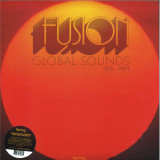
Favorite Recordings comes back with the 2nd edition of its compilation series: Fusion Global Sounds. 8 rare and hidden tracks produced between 1976 and 1984 in various parts of the world. As a fine collector of Jazz-Funk and Fusion for many years, Charles Maurice cooked another fine selection of forgotten Fusion Jazz productions, this time driven by a common Brazilian influence.
On this 2nd edition, recordings come from Brazil, Philippines, Netherlands, Poland, and US, all again from underrated artists mostly unknown from the masses. You'll find here the best elements of the Fusion genre: fine vocal arrangements, catchy Fender Rhodes and synthesizers, irresistible basslines, and classy horns section, altogether bringing a unique groove infused with Brazilian flavors.
The compilation starts with Lerma dela Cruz, a quite occult songstress from Philippines. “Free” was part of a very rare compilation titled “Tropical Jazz Fusion”, released in 1983 on A&W Horizon label (also home of Boy Katindig). With its blowing Samba / Jazz-Funk vibes, it was an obvious match to open this collection. The following song could only enhance this ambience, since that of Brazilian saxophonist, Nivaldo Ornelas, present on this opus with 2 titles taken from his album A Tarde (1983). On “Cactus”, Nivaldo is supported on keyboards by his friend Marcos Resende, both also known for their album on the MPBC series released by Phonogram-Polygram between 1978 and 1981, which has clearly been an inspiration for Charles Maurice in building this second edition.
We could continue telling stories and details about the others great tracks included in Fusion Global Sounds Vol.2, but we believe that the best way is to listen to it and pursue your trip through Fusion Jazz combined with Brazilian styles, including surprising stopover in Poland, or Netherlands.
Clear green Vinyl[15,34 €]
Singer-Songwriter Kurt Vile - auch bekannt als ”Phillys Constant Hitmaker” - veröffentlicht seine neue
EP ”Back To Moon Beach”, die am 17.11. über Verve Records erscheint. Hierauf mitgewirkt haben
unter Anderem neben Le Bon sein langjähriger und leider kürzlich verstorbener Freund und Produzent Rob
Laakso, Stella Mozgawa (Warpaint, Courtney Barnett) und Chris Cohen. Mit stolzen neun Songs, die
innerhalb der letzten vier Jahre in verschiedenen Sessions entstanden sind, setzt der Slacker-Star seine ganz
eigenen EP-Maßstäbe. Das fast einstündige ”Back To Moon Beach” repräsentiert für ihn einen Querschnitt
durch die vielen inspirierenden Begegnungen und Kreationen innerhalb seiner Musik-Community. Es zeigt
aber auch wie groß Kurt Viles Repertoire tatsächlich ist, wenn man bedenkt, dass diese neun Songs genauso
gut ein komplettes Album hätten füllen könnten.
Black Vinyl[24,79 €]
Singer-Songwriter Kurt Vile - auch bekannt als ”Phillys Constant Hitmaker” - veröffentlicht seine neue
EP ”Back To Moon Beach”, die am 17.11. über Verve Records erscheint. Hierauf mitgewirkt haben
unter Anderem neben Le Bon sein langjähriger und leider kürzlich verstorbener Freund und Produzent Rob
Laakso, Stella Mozgawa (Warpaint, Courtney Barnett) und Chris Cohen. Mit stolzen neun Songs, die
innerhalb der letzten vier Jahre in verschiedenen Sessions entstanden sind, setzt der Slacker-Star seine ganz
eigenen EP-Maßstäbe. Das fast einstündige ”Back To Moon Beach” repräsentiert für ihn einen Querschnitt
durch die vielen inspirierenden Begegnungen und Kreationen innerhalb seiner Musik-Community. Es zeigt
aber auch wie groß Kurt Viles Repertoire tatsächlich ist, wenn man bedenkt, dass diese neun Songs genauso
gut ein komplettes Album hätten füllen könnten.
English indie rock group Black Box Recorder formed in London in 1997 and featured Sarah Nixey, Luke Haines (of The Auteurs), and John Moore (of The Jesus and Mary Chain). Their debut album, England Made Me, was released on Chrysalis Records in 1998. The album was named after the eponymous Graham Greene novel and fuses indie rock and easy-listening pop stylings with lyrics that explore life and the experience of growing up in England. Pitchfork's Michael Sandlin described the sound of the album as \"mildly morose but slightly tongue-in-cheek Sylvia Plath-meets-Paul McCartney pop sensibility\". England Made Me remains a high point in the band's catalogue with standout tracks including 'Kidnapping An Heiress', 'Girl Singing In The Wreckage', and the single 'Child Psychology' which was recently back in the spotlight with a viral moment on social media after being championed by Billie Eilish. This new anniversary edition has been curated with the assistance of the band and features a newly remaster version of the album, along with a bonus 10\" vinyl that includes six b-sides, 4 of which are first time on vinyl. All audio has been remastered from the original production tapes by Phil Kinrade at AIR Mastering and and cut by Alex Wharton at Abbey Road Studios.
In the wake of Young Marble Giants’ breakup, two acts were created, with Stuart Moxham taking minimalist, geometric play to extremes while Alison Statton added more warmth and feeling to a similar template, creating something stunning yet based in popular forms. Those two opposing means of forging paths away from one of music’s most astonishingly unique debuts both included Stuart’s brother, Phil. More recently, both have reversed course, with Stuart proving himself a master of classic pop form, with Alison’s work again approaching a modern abstraction of quiet folk music - experimental but accessible. But that’s another tale. With no template to guide him, Stuart’s new music - as The Gist - was regarded as wildly uneven. Stuart admits that he didn’t know which way to go, so perversely, he decided to take all directions at once. The Gist’s original discography stood at a scant 18 songs, yet only seven featured Stuart’s own voice, often in heavily processed and oddly-mixed form. The Gist’s label, Rough Trade, dropped the band. Starting with a critical re-evaluation of The Gist’s sole album Embrace The Herd in an issue of Mojo, the tide begin to turn. Ambience in pop has long enjoyed a cult following, and the nonlinear structure of many of The Gist’s songs have parallels with artists such as Aphex Twin and Seefeel. One song from the era was covered by Etienne Daho in France - sounding rather advanced for French pop at the time, it ended up selling over a million copies and was later covered by Lush and sampled by DJ Koze with Lambchop singer / songwriter Kurt Wagner. Recent discovery of a trove of unreleased recordings show that Stuart had held back an array of excellent material, in demo and completed forms, often in different arrangements. Interior Windows adds 13 new performances or alternate versions to the band’s catalogue, and does the service of making both sides of The Gist’s first 7” 45 (recorded at the same session as the final YMG single) available again, along with their contribution to the NME / Rough Trade cassette compilation C81, and in keeping with The Gist’s tradition, at least one song on which Stuart does not appear
The earth rotates, seasons change_there is but one long day_ Time is a beguiling, indistinct entity_sometimes standing still, sometimes bending back upon itself with premonitions or memories of the future. Growing out of a pen pal style correspondence that took place over the course of a year, separated by the Atlantic Ocean, Gloria de Oliveira and Dean Hurley passed thoughts and music back and forth that would eventually form their collaborative album, Oceans of Time. The result is an aural tapestry of that exchange: woven from conceptual threads of the celestial within, mortality and the realm beyond stars. The duo's partnership is an effortless merge, yet it's the steady presence of de Oliveira's vocals that endows the record with its sense of potency. Throughout the album, there is an innate understanding of how a lyric across a chordal color can sharpen an emotional truth. Much like a sunbeam that pierces a spiderweb to reveal its intricacy, her lyric and melody are purposely aimed in order to illuminate the truths deep within oneself_a process that ties us all to the universal. The Danish philosopher Soren Kierkegaard, a professed influence, wrote about the truth as something that was inherently subjective, less about the concrete reality of what is believed and more about how it is experienced by the believer. Frequent David Lynch collaborator Dean Hurley sets the tonal and sonic landscape of each track on the album, lending a layered ether that envelops, frames and holds de Oliveira's vocals. With its impressionistic synths, shimmering guitars, and ethereal sonics, Oceans of Time at moments recalls the foundational dreampop of 4AD acts like Cocteau Twins and Lush. The album feels especially attuned to the connections between the physical and transcendental realms, and the best dreampop has a way of making the veil between two worlds feel just a little bit thinner. Oceans of Time is a key that has the power to release its listener from the handcuffs of reality, however briefly_
‘Double Pink’ is the debut album by And Is Phi (Andrea Isabelle Phillips), a multidisciplinary artist from Norway and the Philippines now based in South East London. ‘Double Pink’ is a nuanced world that draws on colours and texture; with influences of Joni Mitchell and Frank Zappa, 90's R&B and Madlib’s ‘Shades Of Blue’ blending languidly to produce a base for uncovering layers of self, a deep release, and fragile new form.
Written by Andrea and co-produced with Fiona Roberts and Lorenz Okello over a nine month period; ‘Double Pink’ thematically explores the many movements of internal change, speaking from a deep inner voice inside the body. The title track is an invitation to be as unapologetically hungry as you please after a long absence of life giving passion and trust in oneself. ‘White Noise’ is a recovery song playing in your soul the first time you made it back out to the dance floor after a heart break so massive it laid rest to the person you used to be. Songs like ‘Working’ and ‘Staaar’ come from a candid and contemplative aspect. Stages of grief and resilience and wonder and wisdom are all touched upon.
“The album explores metamorphosis, liminal spaces, and the multiple faces of love”, says Andrea. “I mention love as a key ingredient, because anyone who has had to push and pull and hold and yield themselves through great loss and transformation knows it ain’t gonna happen without love. Tough times ask for double love, a stronger heart, something like a double pink”.
Andrea’s story dots between periods spent living in Norway, the Philippines and England - experiencing joy and beauty battling corruption and violence in Manila, DJing in Oslo, losing her sizable record collection in a warehouse fire before making friends and family in the jazz scene in London. Every story needs a scene, a landscape, an environment; all things Andrea visualises when writing songs.
“At my heart I am emotional and imaginative, searching for freedom for my spirit. What grounds it all is coming from a family of storytellers. My father played drums and percussion, he was a great dancer and a true collector and connoisseur of music from everywhere. My wise mother instilled in me a sense of faith and grace”.
Andrea is far from new to the scene, having performed with Steamdown, Emma Jean Thackray, Hector Plimmer, Scrimshire, William Florelle and many more as a valuable and inspiring creative force within the South London music scene. Andrea also created the album’s artwork and music videos: musicality and painting evolved from her initial creative languages of drawing and dance. All aspects are dialects of her common language: singing what can’t be painted and painting what can’t be sung.
- A1: Mel & Tim - Keep The Faith
- A2: Impact - Sara Smile
- A3: Billy Paul - It's Too Late
- A4: Esther Phillips - I Hope You'll Be Very Unhappy Without Me
- B1: John Edwards - Tin Man
- B2: Roy Ayers - What You Won't Do For Love
- B3: Arnold Mcculler - Gringo
- C1: Richie Havens - Dreams
- C2: Brenda Russell - I Want Love To Find Me
- C3: Patti Labelle - Monkey See - Monkey Do
- C4: The Main Ingredient - Euphrates
- D1: The Isley Brothers - Listen To The Music
- D2: Dionne Warwick - Dedicate This Heart
- D3: Chaka Khan - Fate
- D4: Keni Burke - Love Is The Answer
lim. two color Vinyl. Gatefold Cover with sticker and download code on postcard.
Welcome Back, friends, to the Yacht Soul cruise that never ends!
This theme, explored at length in the previous installment of this series, is a fertile one that just keeps on giving, and give it certainly does on the tracks we have dug up for your perusal, enlightenment, edification and enjoyment on Yacht Soul 2.
For those just joining us, the concept here concerns R&B and soul artists mining the songbooks of their white contemporaries for cover versions that serve the dual purposes of potentially garnering some crossover radio airplay as well as introducing great songs to segments of the listening public who might otherwise miss them. Some of these versions might have come about because they were personal favorites of the artist in question, others might have been strongly suggested by their labels or by the publishing company, but all of them provide an entirely new perspective on what were already fantastic songs to begin with.
So there you have it--a further dig into this nebulous concept that reveals more unexpected connections and crossed paths. Understanding the hows and whys of the way these particular covers and collaborations came to be is as fascinating as just enjoying the music itself, and there really is a lot of great music to dig into this time around! We hope you enjoy listening to it as much as we did putting it together.
VITAL SALES POINTS:
- Second volume from the YACHT SOUL series. First volume is the second best selling "Too Slow To Disco" compilation so far.…
- Extensive Global Promo by Tobias Kirsch/Germany and Special Requests UK
- Record Relase Parties planned.
DEVO’s Hardcore documents the group’s beginning as pre-punk outcasts in the fertile Akron, Ohio, underground rock scene. Spawned at the nearby college of Kent State, site of the infamous May 4 Massacre, DEVO formed as a conceptual art project armed with the radical philosophy of de-evolution. Brothers Mothersbaugh (Mark, Bob and Jim) and Brothers Casale (Jerry and Bob) along with drummer Alan Myers soon whipped up an otherworldly brand of “devolved blues” that could hold its own alongside the beatnik groove of 15-60-75 (a.k.a. The Numbers Band) or the primal rock poetry of The Bizarros. Recorded on various four-track machines and in tiny studios, basements and garages between 1974-1977, Hardcore reveals their strikingly clear vision: rock ’n’ roll stripped bare of its collective cool and jerked back into propaganda fit for post-modern man. It’s no surprise that these transmissions would soon catch the eye and ear of Brian Eno, who later produced their landmark 1978 debut album. Noisy synth, strangled guitar chops and a primitive rhythmic thud power the early DEVO sound. Threaded beneath it all are lyrical themes of post-McCarthy paranoia, middle-class ephemera and DEVO’s long-running topic of choice: sex, or lack thereof. Few moments in pop music history can match the grinding, pent-up energy of “Mongoloid” and the spastic bounce and sputter of “Jocko Homo” (two anthems presented in their earlier and superior versions here). Cult favorites like “Mechanical Man” and “Auto-Modown” make Volume 1 essential listening. Superior Viaduct and Booji Boy Records are proud to present DEVO’s Hardcore to a new generation of spuds, lovingly packaged with Moshe Brakha’s stunning cover photography. As David Bowie said in 1977, DEVO is indeed “the band of the future.”
Thomass Jackson presents UFO HOUSE.
A fixture in Mexico's thriving electronic scene, the Argentinian import has made a name for himself alongside cohort Iñigo Vontier with a style that seamlessly blends haunted desert disco with gritty acid house and techno.
This EP might be his most cogent formulation yet, a mightily playable set of peak-time DJ-friendly tracks that bring enough mystery and wonkiness to a perfectly club-ready backbone. It's a conspiracy of sound, a cosmic abduction with pulsating rhythms and hypnotic bleeps sure to melt minds on the dance-floor.
DJ Feedback:
Tiefschwarz - "soooo gooood!!"
Roe Deers - "dope EP"
Matt FX - "an absolute tour de force EP. hard to pick a favorite, maybe guadalajara"
Justin Strauss - "great ep"
Kiki - "Cool trax!"
Mawimbi - "really like the acid touch in back in guadalajara"
Jerry Bouthier - "well put together madness yay!"
Phil smart - "Solid bunch of tracks, all great! Can't wait to test out on a dancefloor:)"
Vidis - "Cool stuff as per usual from señor Thomass. Young Woman in Kashmir and Back in Guadalajara are the faves."
Phred Noir - "Alll the tracks are so good, super happy to see Thomass back with sooo good tracks !"
Genish - "Back in Guadalajara for me ! fire"
Ayala (It) - "I'm a Thomas fan from years and years"
Kato - "mad fun”
Fabio Me Llaman Soltero - "Sublime work, always favorito Thomaaaaaazzzz"
On his third voyage as Skyway Man, artist + producer James Wallace is still seeking answers beyond the stars and still coming back with more questions in the form of ten brilliant songs. On its surface, 'Flight of the Long Distance Healer' registers as another concept album replete with aliens and alternative philosophy, but this time around, Wallace coats the glass with a vital layer of self-reflection. Like a West Coast Dr. John—but more preoccupied with flying saucers than voodoo dolls—Skyway Man is in the business of opening new aural worlds, cracking open reality just enough to get the message through. 'Flight of the Long Distance Healer' sparkles and blinks, whispers and moans—hugely enjoyable music rendered in imaginative and gleaming style. There are hints of the polyrhythmic cinematic sensibility from Wallace’s contributions to the Joe Pera television series, rhythms of the Stax-inspired Spacebomb house band, and ripples of the current East Bay scene outside San Francisco. In a real showcase for the extended Skyway Man family, Wallace has coaxed personal and masterful performances from the likes of Erin Rae, Vetiver’s Andy Cabic, pedal steel wizard Spencer Cullum, Kelly McFarling, and more. Cooking up genres in such a way as to keep their nutrients intact; he packs prog, blues, glam rock, acid folk, swamp boogie, and future folk into a beautiful Martian bouillon.
Philly's first supergroup returns with a new LP They released four albums. Their joint debut LP with The Krown Rulers from Camden, New Jersey included production by the Ultramagnetic MCs' Kool Keith and Ced Gee, with a style that was bass-heavy with the Roland TR-808 drum machine and E-mu SP-12 sampler, raw "street" lyrics and aggressive scratch DJing. They performed with Public Enemy, Run-D.M.C., Biz Markie, Big Daddy Kane, Rob Base and DJ E-Z Rock, LL Cool J, and many others. They toured the US as the support act for 2Live Crew, and were fan favorites on the groundbreaking Street Beat radio program on Power 99, hosted by Lady B. They were racially mixed and ethnically diverse, and were regular performers at the After Midnight club in North Philly, once the largest Hip-Hop club in America. Their contemporaries included DJ Jazzy Jeff & The Fresh Prince, DJ Cash Money and Marvelous, Cool C, Schoolly D, MC Breeze, and Three Times Dope. Brand new tracks and new version of classic My Part Of Town.
Back in print - on white vinyl - for the first time since 2003, ‘The New Romance’ by Pretty Girls Make Graves, is the latest instalment of Matador’s ongoing catalogue series Revisionist History. Pretty Girls Make Graves formed in Seattle in 2001, fused together out of the still glowing embers of nearly a dozen important groups. Andrea Zollo and Derek Fudesco had played together in Death Wish Kids and Area 51 along with Dann Gallucci, with whom Derek formed Murder City Devils. Shortly before the Murder City Devils called it quits, he and Andrea started Pretty Girls Make Graves with J. Clark (who was in Kill Sadie and Sharks Keep Moving) and Nick Dewitt and Nathan Thelen (both in Bee Hive Vaults). Brilliantly produced by Phil Ek (Modest Mouse, Built To Spill, Les Savy Fav), ‘The New Romance’ magnifies Pretty Girls Make Graves’ songcraft and technical prowess while letting some air into their songs and keeping things in crisp focus. Every song on ‘The New Romance’ is an anthem, yet without traditional verses and choruses. Tension builds and shifts without conventional release, as moments of glassy beauty and rousing aggression trade sides. White vinyl LP.
Repress!
In the mid-1970s, a force of nature swept across the continental United States, cutting across all strata of race and class, rooting in our minds, our homes, our culture. It wasn’t The Exorcist, Goodbye Yellow Brick Road, or even bell-bottoms, but instead a book called The Secret Life of Plants. The work of occultist/former OSS agent Peter Tompkins and former CIA agent/dowsing enthusiast Christopher Bird, the books shot up the bestseller charts and spread like kudzu across the landscape, becoming a phenomenon. Seemingly overnight, the indoor plant business was in full bloom and photosynthetic eukaryotes of every genus were hanging off walls, lording over bookshelves, and basking on sunny window ledges. The science behind Secret Life was specious: plants can hear our prayers, they’re lie detectors, they’re telepathic, able to predict natural disasters and receive signals from distant galaxies. But that didn’t stop millions from buying and nurturing their new plants.
Perhaps the craziest claim of the book was that plants also dug music. And whether you purchased a snake plant, asparagus fern, peace lily, or what have you from Mother Earth on Melrose Avenue in Los Angeles (or bought a Simmons mattress from Sears), you also took home Plantasia, an album recorded especially for them. Subtitled “warm earth music for plants…and the people that love them,” it was full of bucolic, charming, stoner-friendly, decidedly unscientific tunes enacted on the new-fangled device called the Moog. Plants date back from the dawn of time, but apparently they loved the Moog, never mind that the synthesizer had been on the market for just a few years. Most of all, the plants loved the ditties made by composer Mort Garson.
Few characters in early electronic music can be both fearless pioneers and cheesy trend-chasers, but Garson embraced both extremes, and has been unheralded as a result. When one writer rhetorically asked: “How was Garson’s music so ubiquitous while the man remained so under the radar?” the answer was simple. Well before Brian Eno did it, Garson was making discreet music, both the man and his music as inconspicuous as a Chlorophytumcomosum. Julliard-educated and active as a session player in the post-war era, Garson wrote lounge hits, scored plush arrangements for Doris Day, and garlanded weeping countrypolitan strings around Glen Campbell’s “By the Time I Get to Phoenix.” He could render the Beatles and Simon & Garfunkel alike into easy listening and also dreamed up his own ditties. “An idear” as Garson himself would drawl it out. “I live with it, I walk it, I sing it.”
But as his daughter Day Darmet recalls: “When my dad found the synthesizer, he realized he didn’t want to do pop music anymore.” Garson encountered Robert Moog and his new device at the Audio Engineering Society’s West Coast convention in 1967 and immediately began tinkering with the device. With the Moog, those idears could be transformed. “He constantly had a song he was humming,” Darmet says. “At the table he was constantly tapping.” Which is to say that Mort pulled his melodies out of thin air, just like any household plant would.
The Plantae kingdom grew to its height by 1976, from DC Comics’ mossy superhero Swamp Thing to Stevie Wonder’s own herbal meditation, Journey Through the Secret Life of Plants. Nefarious manifestations of human-plant interaction also abounded, be it the grotesque pods in Invasion of the Body Snatchers or the pothead paranoia of the US Government spraying Mexican marijuana fields with the herbicide paraquat (which led to the rise in homegrown pot by the 1980s). And then there’s the warm, leafy embrace of Plantasia itself.
“My mom had a lot of plants,” Darmet says. “She didn’t believe in organized religion, she believed the earth was the best thing in the whole world. Whatever created us was incredible.” And she also knew when her husband had a good song, shouting from another room when she heard him humming a good idear. Novel as it might seem, Plantasia is simply full of good tunes.
Garson may have given the album away to new plant and bed owners, but a decade later a new generation could hear his music in another surreptitious way. Millions of kids bought The Legend of Zelda for their Nintendo Entertainment System back in 1986 and one distinct 8-bit tune bears more than a passing resemblance to album highlight “Concerto for Philodendron and Pothos.” Garson was never properly credited for it, but he nevertheless subliminally slipped into a new generations’ head, helping kids and plants alike grow.
Hearing Plantasia in the 21st century, it seems less an ode to our photosynthesizing friends by Garson and more an homage to his wife, the one with the green thumb that made everything flower around him. “My dad would be totally pleased to know that people are really interested in this music that had no popularity at the time,” Darmet says of Plantasia’snew renaissance. “He would be fascinated by the fact that people are finally understanding and appreciating this part of his musical career that he got no admiration for back then.” Garson seems to be everywhere again, even if he’s not really noticed, just like a houseplant.
White Vinyl[30,04 €]
It's been 40 years since these tracks were recorded, but all the original studio and live recordings by Times Beach are finally available on CD & LP Times Beach came together in 1983 with a core of active members from San Francisco's vibrant theatre community. That background propelled the band to a kind of stage glamour that wasn't much seen during the era of post- punk, industrial, and goth music. They were striking to see and hear, with the songs to match. But, like so many excellent bands of the era, they suffered from the "home town curse" since they were not from New York or Los Angeles – but San Francisco. Over the course of two years, Times Beach performed throughout the Bay Area, playing most of the major (and minor) clubs such as The Stone, Baybrick Inn, Cotati Cabaret, Berkeley Square, Sound Of Music, Trocadero Transfer, Ashkenaz, Ruthie's Inn, Sleeping Lady Café, and the beloved Chi Chi Club. They had a legion of dedicated supporters, and many of their shows were real party events. When it came time to record, they accepted an invitation from the illustrious Snakefinger (aka Philip Lithman) and Eric Drew Feldman to produce them at Russian Hill Studio. The first part of their story ends just about there, as they never made enough money to actually produce the album from the recordings. And the various members started drifting off. The final public gig was like their first, at the Mabuhay Gardens, in November 1984. Side One of this LP is comprised of those glorious Snakefinger sessions. Side Two presents just a few of the other great songs they wrote and performed live – never captured in any other form. For fans of Jefferson Airplane, Mutants, Nuns.
Black Vinyl[26,47 €]
It's been 40 years since these tracks were recorded, but all the original studio and live recordings by Times Beach are finally available on CD & LP Times Beach came together in 1983 with a core of active members from San Francisco's vibrant theatre community. That background propelled the band to a kind of stage glamour that wasn't much seen during the era of post- punk, industrial, and goth music. They were striking to see and hear, with the songs to match. But, like so many excellent bands of the era, they suffered from the "home town curse" since they were not from New York or Los Angeles – but San Francisco. Over the course of two years, Times Beach performed throughout the Bay Area, playing most of the major (and minor) clubs such as The Stone, Baybrick Inn, Cotati Cabaret, Berkeley Square, Sound Of Music, Trocadero Transfer, Ashkenaz, Ruthie's Inn, Sleeping Lady Café, and the beloved Chi Chi Club. They had a legion of dedicated supporters, and many of their shows were real party events. When it came time to record, they accepted an invitation from the illustrious Snakefinger (aka Philip Lithman) and Eric Drew Feldman to produce them at Russian Hill Studio. The first part of their story ends just about there, as they never made enough money to actually produce the album from the recordings. And the various members started drifting off. The final public gig was like their first, at the Mabuhay Gardens, in November 1984. Side One of this LP is comprised of those glorious Snakefinger sessions. Side Two presents just a few of the other great songs they wrote and performed live – never captured in any other form. For fans of Jefferson Airplane, Mutants, Nuns.
Konfus proudly welcomes Florian Meffert & Marc Philipp as ĀMAN to the artists family, as well as a new collaboration between the two friends and Subtil’s label head Nils Weimann as MEPHIWEI.
Three deep minimal house trips catching your body, mind & soul.
Perfect gadget from open air, to club, to after hour and back!
First 150x copies come in a handstamped full cover.
- A1: Bye Bye Love
- A2: Wake Up Little Susie
- A3: This Little Girl Of Mine
- A4: Bird Dog
- A5: Problems
- A6: Rip It Up
- A7: All I Have To Do Is Dream
- B1: Take A Message To Mary
- B2: (‘Til) I Kissed You
- B3: Let It Be Me
- B4: Claudette
- B5: I Wonder If I Care As Much
- B6: Leave My Woman Alone
- B7: Maybe Tomorrow
- C1: Cathy’s Clown
- C2: When Will I Be Loved
- C3: Should We Tell Him
- C4: Keep A-Knockin’
- C5: So Sad (To Watch Good Love Go Bad)
- C6: I Want You To Know
- C7: Brand New Heartache
- D1: Crying In The Rain
- D2: Devoted To You
- D3: Be Bop A-Lula
- D4: Like Strangers
- D5: Roving Gambler
- D6: Made To Love
- D7: Down In The Willow Garden
- E1: Walk Right Back
- E2: Don’t Blame Me
- E3: Temptation
- E4: Love Of My Life
- E5: Just In Case
- E6: Put My Little Shoes Away
- E7: That Silver Haired Daddy Of Mine
- F1: Step It Up And Go
- F2: Barbara Allen
- F3: Stick With Me Baby
- F4: That’s Old Fashioned (That’s The Way Love Should Be)
- F5: I’m Here To Get My Baby Out Of Jail
- F6: Long Time Gone
- F7: Who’s Gonna Shoe Your Pretty Little Feet
“I believe that if they ever had a singing Olympics Donald and I would get (into the) top 3, if not win some gold. If you put us all together and let us have a singoff, we could hold our own with anybody from any era. That maybe sounds a little prideful, but that’s what I believe.” Phil Everly’s words to author and music historian Joe Smith will ring very true to anyone who listens to this compilation. All the tracks on it are half a century old, yet sound as fresh as ever. The fact is, that the harmonies Don and Phil brought to the charts were widely influential on a generation of pop performers on both sides of the Atlantic. For most of their recordings, Don sang the baritone and Phil the higher tenor part. Paul Simon and Art Garfunkel were just one of the acts that copied the Everlys, while Bob Dylan added to the praise by saying, ‘We owe these guys everything. They started it all.’