As Freerange hits another landmark release with their 300th EP we see label head Jimpster join forces with Philippa who together deliver 3 original tracks which epitomise the labels’ sound over the past (almost) three decades.
With recent releases appearing on Slothboogie and Razor n Tape, remixes for Roach Motel on Faith, and James Curd and Robert Owens on Pronto, not to mention her recent Panorama Bar debut, it’s safe to say Philippa is making waves. The Berlin-based New Zealander has a sound all her own with an organic, deep and musical style winning her many fans from Terry Farley and Aroop Roy to DJ Spen and Dave Lee.
Lead track All I Wanted sees the duo pooling their influences with both producers sonic touches shining through. Chunky drums and bassline are the bedrock for pulsing synths and MON’s vocal which is chopped up and looped bringing a rolling momentum to the track.
Dreaming features the wonderful vocals of Care and goes on a floaty vibe with chiming synths and crusty Rhodes keys layering up to produce a densely textured track. The mood is powerful yet subtle and refined and will work as nicely on a chilled house playlist as it will on a discerning dance floor at 4am.
Closing out the EP we have Say What which goes on a jazzed out, UKG inspired excursion. Shuffling beats, bouncing square wave bassline and big brash synth chords all combine to form a track which sounds both retro and contemporary.
quête:phil bar
Analog Mutants consist of Phill Most Chill on the vocals, DJ Snafu of Bankrupt Europeans fame on production and the inimitable DJ Grazzhoppa on the cuts.
Vocals: Phill Most Chill
Phill Most Chill grew up in Conecticut half hour away from Boogie Down Bronx and by the late 80s had already established himself in the hip hop scene, having released a very strongly received (and eventually highly collectible fetching amounts in the high three digits) single (On Tempo Jack/ That Girl), the preccedent setting left field Baritone Tiplove releases and writing for the seminal Rap Sheet magazine. The Arcahaelogists' Classics and Soulman's World of Beats tape series and column further established him as an elite beatmaker and sample collector, with highly acclaimed producers seeking him out to purchase records in conventions. The random rap craze brought renewed attention to Phill Most's releases in the late 90s, leading to reissues of On Tempo, the release of previously unissued Baritone Tiplove records, his return with the Lo-Fi EP, and then the highly influential Fast Rap EP on Nobody Buys Records which led to a flurry of funky uptempo releases across the globe again. The interest in Phill Most records over the whole 2010s was rabid, with further releases produced by Bankrupt Europeans, Mr. Fantastic and Chris Read flying off the shelves, and two full length albums produced by 90s stalwarts Paul Nice and DJ Format, as well as the recent Jorun-PMC album being now considered classics in the boom bap scene. Having now signed with Chuck D's Spitslam label, Phill Most continues his journey in stepping all over MC conventions, and these first two Analog Mutants release are a perfect example of this.
Produced by DJ Snafu
DJ Snafu has been part of the Bankrupt Europeans crew since 2004, co-founding Nobody Buys Records in 2012 with the other two Bankrupt Euros members. Huge collector of vinyl from the 50s ad 60s primarily, and with an interest in modular production, FM synthesis and marrying modern techniques with the love of sampling old records, the Analog Mutants project is his first without the Bankrupt Euros crew. Having produced among others for Chill Rob G on his seminal return to music with the classic Tell 'Em on the Chilled Not Frozen EP, Roc Marciano on the Goodfelons label, DITC legend AG on The 21st Day and Chicago legend MC Juice's return to vinyl after 15 years, this is Snafu's first whole album to produce since Rise of Demigodz' debut album The Cornerstone in 2006 (released in 2013). Snafu shows he's honed his skills and developed an even crazier side to his production in the 5 year that passed between the last Bankrupt Euros project and the Analog Mutants album and the first three Analog Mutants singles are a sign of things to come in the post Bankrupt Euros years.
Scratches: DJ Grazzhoppa
DJ Grazzhoppa got infected in 1983 with the hip hop virus, demolishing local DJs and winning the European DMC Championships in 1991, and taking 3rd place in the ITF World Championships in 1998! His unique and immediately recognizable style was first heard on Blade's legendary 12” Clear The Way, and caught so many ears that the list of MCs and producers who queued up to work with him is seemingly endless. From MF Doom, Ruste Juxx, Guilty Simpson and Cage to Necro, Keith Murray, Big Daddy Kane, Kool G Rap and of course the Bankrupt Europeans projects with Phill Most Chill, MC Juice and Chill Rob G! This is a short list of a page of credits spanning over 4 pages long- if you have hip hop records, Grazzhoppa is already in your collection!
Analog Mutants consist of Phill Most Chill on the vocals, DJ Snafu of Bankrupt Europeans fame on production and the inimitable DJ Grazzhoppa on the cuts.
Vocals: Phill Most Chill
Phill Most Chill grew up in Conecticut half hour away from Boogie Down Bronx and by the late 80s had already established himself in the hip hop scene, having released a very strongly received (and eventually highly collectible fetching amounts in the high three digits) single (On Tempo Jack/ That Girl), the preccedent setting left field Baritone Tiplove releases and writing for the seminal Rap Sheet magazine. The Arcahaelogists' Classics and Soulman's World of Beats tape series and column further established him as an elite beatmaker and sample collector, with highly acclaimed producers seeking him out to purchase records in conventions. The random rap craze brought renewed attention to Phill Most's releases in the late 90s, leading to reissues of On Tempo, the release of previously unissued Baritone Tiplove records, his return with the Lo-Fi EP, and then the highly influential Fast Rap EP on Nobody Buys Records which led to a flurry of funky uptempo releases across the globe again. The interest in Phill Most records over the whole 2010s was rabid, with further releases produced by Bankrupt Europeans, Mr. Fantastic and Chris Read flying off the shelves, and two full length albums produced by 90s stalwarts Paul Nice and DJ Format, as well as the recent Jorun-PMC album being now considered classics in the boom bap scene. Having now signed with Chuck D's Spitslam label, Phill Most continues his journey in stepping all over MC conventions, and these first two Analog Mutants release are a perfect example of this.
Produced by DJ Snafu
DJ Snafu has been part of the Bankrupt Europeans crew since 2004, co-founding Nobody Buys Records in 2012 with the other two Bankrupt Euros members. Huge collector of vinyl from the 50s ad 60s primarily, and with an interest in modular production, FM synthesis and marrying modern techniques with the love of sampling old records, the Analog Mutants project is his first without the Bankrupt Euros crew. Having produced among others for Chill Rob G on his seminal return to music with the classic Tell 'Em on the Chilled Not Frozen EP, Roc Marciano on the Goodfelons label, DITC legend AG on The 21st Day and Chicago legend MC Juice's return to vinyl after 15 years, this is Snafu's first whole album to produce since Rise of Demigodz' debut album The Cornerstone in 2006 (released in 2013). Snafu shows he's honed his skills and developed an even crazier side to his production in the 5 year that passed between the last Bankrupt Euros project and the Analog Mutants album and the first three Analog Mutants singles are a sign of things to come in the post Bankrupt Euros years.
Scratches: DJ Grazzhoppa
DJ Grazzhoppa got infected in 1983 with the hip hop virus, demolishing local DJs and winning the European DMC Championships in 1991, and taking 3rd place in the ITF World Championships in 1998! His unique and immediately recognizable style was first heard on Blade's legendary 12” Clear The Way, and caught so many ears that the list of MCs and producers who queued up to work with him is seemingly endless. From MF Doom, Ruste Juxx, Guilty Simpson and Cage to Necro, Keith Murray, Big Daddy Kane, Kool G Rap and of course the Bankrupt Europeans projects with Phill Most Chill, MC Juice and Chill Rob G! This is a short list of a page of credits spanning over 4 pages long- if you have hip hop records, Grazzhoppa is already in your collection!
Analog Mutants consist of Phill Most Chill on the vocals, DJ Snafu of Bankrupt Europeans fame on production and the inimitable DJ Grazzhoppa on the cuts.
Vocals: Phill Most Chill
Phill Most Chill grew up in Conecticut half hour away from Boogie Down Bronx and by the late 80s had already established himself in the hip hop scene, having released a very strongly received (and eventually highly collectible fetching amounts in the high three digits) single (On Tempo Jack/ That Girl), the preccedent setting left field Baritone Tiplove releases and writing for the seminal Rap Sheet magazine. The Arcahaelogists' Classics and Soulman's World of Beats tape series and column further established him as an elite beatmaker and sample collector, with highly acclaimed producers seeking him out to purchase records in conventions. The random rap craze brought renewed attention to Phill Most's releases in the late 90s, leading to reissues of On Tempo, the release of previously unissued Baritone Tiplove records, his return with the Lo-Fi EP, and then the highly influential Fast Rap EP on Nobody Buys Records which led to a flurry of funky uptempo releases across the globe again. The interest in Phill Most records over the whole 2010s was rabid, with further releases produced by Bankrupt Europeans, Mr. Fantastic and Chris Read flying off the shelves, and two full length albums produced by 90s stalwarts Paul Nice and DJ Format, as well as the recent Jorun-PMC album being now considered classics in the boom bap scene. Having now signed with Chuck D's Spitslam label, Phill Most continues his journey in stepping all over MC conventions, and these first two Analog Mutants release are a perfect example of this.
Produced by DJ Snafu
DJ Snafu has been part of the Bankrupt Europeans crew since 2004, co-founding Nobody Buys Records in 2012 with the other two Bankrupt Euros members. Huge collector of vinyl from the 50s ad 60s primarily, and with an interest in modular production, FM synthesis and marrying modern techniques with the love of sampling old records, the Analog Mutants project is his first without the Bankrupt Euros crew. Having produced among others for Chill Rob G on his seminal return to music with the classic Tell 'Em on the Chilled Not Frozen EP, Roc Marciano on the Goodfelons label, DITC legend AG on The 21st Day and Chicago legend MC Juice's return to vinyl after 15 years, this is Snafu's first whole album to produce since Rise of Demigodz' debut album The Cornerstone in 2006 (released in 2013). Snafu shows he's honed his skills and developed an even crazier side to his production in the 5 year that passed between the last Bankrupt Euros project and the Analog Mutants album and the first three Analog Mutants singles are a sign of things to come in the post Bankrupt Euros years.
Scratches: DJ Grazzhoppa
DJ Grazzhoppa got infected in 1983 with the hip hop virus, demolishing local DJs and winning the European DMC Championships in 1991, and taking 3rd place in the ITF World Championships in 1998! His unique and immediately recognizable style was first heard on Blade's legendary 12” Clear The Way, and caught so many ears that the list of MCs and producers who queued up to work with him is seemingly endless. From MF Doom, Ruste Juxx, Guilty Simpson and Cage to Necro, Keith Murray, Big Daddy Kane, Kool G Rap and of course the Bankrupt Europeans projects with Phill Most Chill, MC Juice and Chill Rob G! This is a short list of a page of credits spanning over 4 pages long- if you have hip hop records, Grazzhoppa is already in your collection!
From the perspective of people who categorize music by genres and types, Evan Shornstein, better-known under his production moniker Photay, has created lots of different kinds of sounds over the past decade. There’s the Hudson Valley-raised, Los Angeles-based multi-instrumentalist composer’s quasi-IDM and electronic almost-pop tracks with the occasional vocal; the improvised organic and and experimental music sessions he participates in alongside new age giants, Laraaji and Carlos Niño; the diaspora electronic folk-jazz he makes with veteran musicians from all over the globe; and the disco and house adjacent records he tag-team DJs with Brooklyn producer Cesar Toribio and engineer Phil Moffa (who also masters all of Photay’s records — and those of dance-music dons around the world). But if you’ve listened closely to Shornstein’s prodigious output, you know that separating and classifying the work is actually contrary to the energy of Photay music. That what on-the-surface may lazily appear as differences, is actually brought together by a shared sonic warmth, a hardware pastoralism at play. Whatever category he engages, Photay makes outdoor music under the spell of the elements, for the purpose of different human movements — some physical, some spiritual, some emotional, some philosophica.
"Auto-Reverse" is a compilation of the greatest hits of Guillaume Fédou, a pioneer of French independent pop since 2003, the year of his first single "Garçon Moderne" released by Village Vert. Presented as a best-of and not an anthology, this project of 12 hand-picked tracks tells the sentimental and offbeat story of a "singer since 1974" who is both vintage and furiously contemporary.
Coming from collaborations with Arnaud Fleurent-Didier, Plaisir de France, Benjamin Diamond, Jérôme Plasseraud or les Soucis (his group composed of Victor le Masne, Pierre Leroux, Philippe Monthaye, Judah Warsky and Mattias Mimoun), these 12 songs are as many chapters of a melodic novel that defies the laws and especially the spirit of the times.
No need to rewind, Auto-Reverse does it for you.
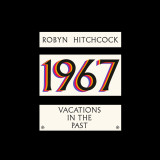
Robyn Hitchcock is a rock’n’roll surrealist. Born in London on March 3rd, 1953 he describes his songs as “pictures you can listen to”. As much a child of Dali, De Chirico, and JG Ballard as of his 1960s musical heroes, he is a master of the absurd, reveling in the beauty of the unexpected. His first publicly visible band The Soft Boys (1976 - 81) has remained an influential art-rock touchstone for generations of musicians. “I just want to be an obscure cult fringe,” he told the NME in 1978; the NME didn’t believe him, but he’s been true to his ambition. Without ever breaking the surface of pop culture Hitchcock has floated at a tangent to the mainstream for nearly 5 decades. His songs have been performed by REM, The Replacements, Neko Case, Gillian Welch & David Rawlings, Lou Barlow, Grant Lee Phillips, Sparklehorse, and Suzanne Vega with the Grateful Dead among others. A confirmed outsider, he nonetheless has devoted listeners around the world who attend his concerts, and also tune into the online streaming shows Robyn seasonally does with his wife, the singer Emma Swift. In 1996 he was the subject of Jonathan Demme’s in-concert film, ‘Storefront Hitchcock’. Robyn Hitchcock came of age in the 1960s when he attended Winchester College, an eccentric hothouse boarding school in the south of England. This is the subject of “1967”, which is both a memoir and an album, due for release in June this year. The memoir is a book “1967: How I Got There And Why I Never Left”, describing how the music of Bob Dylan, The Beatles, Jimi Hendrix and others drastically transformed the direction of his life when he left home for this strange new world. The companion record album “1967: Vacations In The Past” is a selection of the (mostly) hit songs of that year, re-recorded acoustically by Robyn with the help of some friends in Cambridge, San Francisco, and Sydney. He is currently preparing new material to release in 2025. “I like to keep busy”, he says: “We have all eternity to not exist”.
- A1: Hosanna (Meridian)
- A2: First Born (Redeemed)
- A3: When Angels Speak Of Love
- A4: Doubleupptown (Larocque)
- A5: W-I-S (Above Every Other)
- A6: Pistol Poem (Leadbelly)
- A7: Whip Appeal (Pipn8Ez)
- A8: Seven Trumpets
- A9: Giz'aard ($Uckets)
- A10: Helpmeet (Iyadunni)
- B1: Flir2A
- B2: U&Me (Decemberseventeen)
- B3: Illbethere, 4Everandever
- B4: Alàáfía (Cita's World)
Original Cover[27,52 €]
Honour's debut album is a ligament stretching from Lagos to London and to New York, curling across the diaspora and brushing the darker hues of blues, hip-hop, free jazz, ambient, gospel with Christian mythology and Yoruba folklore. As cinematic as it is painterly, Alàáfíà is a meditation on themes of life, death and love that pulls inspiration from the unexpected poetic profundity of casual conversations, field recordings, literature, ephemera, or personal archives. The result is an impressionistic vision in Black and Blur that both exhausts and implicates language_substantiating a mythos proposed by Fred Moten that sublimates boundaries between everywhere and nowhere; history and the present; the individual and the universal. Alàáfíà delineates a gothic landscape cut by overdriven beats, swooping orchestral blasts, choral bursts and ear- splitting fuzz, where the fleshly and spiritual realms commune. Dedicated to Honour's late grandmother, the title track began to take form after their last embrace and remains steeped in her influence and spirit_a tape-saturated composition that starts in Lagos and ends in London's smoke-stained cityscape, the song's dream-like quality developed out of the artist's grief and PTSD coping with this loss. Beneath the stretched guitar drones and stuttering loops, their grandmother's shared faith bubbles to the surface. "When Angels Speak of Love," borrows its title from two works by Sun Ra and bell hooks, respectively. Sculpting echoes of praise music into disorienting spirals perforated with syrupy DJ Screw-inspired breaks and sharp splinters of melancholic guitar, "When Angels Speak of Love" engages a conceptual dialogue with the spirits of both late thinkers, folding them into Honour's pantheon of ancestral guides. The album's ninth track, "Giz Aard ($uckets)," is a dirge of regimented drums which anchor this somber melody as it whirls into a blizzard of heartache, uncertain if its consequence will be death or eternal joy. The album's sole lyrical offering, "Pistol Poem (Lead Belly)," begins with a darkly humorous bar, "He went thru hell and back/ came back/ 2 get the strap," that swells into a haunting allegory based on the life of Philip "Hot Sauce" Champion. A modern take on the Blues, Honour's lyrics reify the artist's status as a student of both literature and popular culture, crossbreeding the artist's clever wordplay with additional references to Richard Pryor, Robert Johnson, Kelly Rowland & Bryon Gysin. Setting core principles of hip-hop, R&B, jazz and gospel music to atemporal soundscapes and compositions, Honour crafts a record that marinates in its own knotty contradictions. The ghosts that sit on the artist's shoulders have never been more tangible than with this emotive debut.
Im neuesten Label-Spotlight der 'This Is'-Reihe - nach gefeierten Blicken auf Flying Dutchman und Fame - konzentrieren sich die Ace-Macher auf Goldwax, das seinen 60. Geburtstag feiert, und präsentieren die besten Aufnahmen, die während der kurzen Existenz des Soul-Labels entstanden sind.
Die Compilation rückt nicht nur James Carr ins Rampenlicht, sondern auch seinen wichtigen Labelkollegen Spencer Wiggins oder die wunderschönen Harmonien der Ovations. Diese drei Acts waren die tragenden Säulen von Goldwax und zeigen neben den Songschreiber-Talenten von George Jackson und Dan Greer, warum der Einfluss des Labels auch heute noch wichtig ist. Ein Katalog voller Juwelen, von den frühesten Aufnahmen des Hitmachers von 'Why Can't We Live Together', Timmy Thomas, bis hin zu selten aufgenommenen Künstlern wie Philip & The Faithfuls. Diese Zusammenstellung zeigt auch, wie stark die Club- und Studioszene in Memphis damals war, mit Aufnahmen von Willie Walker, Percy Milem, Barbara Perry, Gene 'Bowlegs' Miller und anderen, die zwar nur sporadisch Aufnahmen machten, aber beliebte Live-Performer waren. 'This is Goldwax' wird mit einem vollständig illustrierten Booklet mit Liner Notes von Dean Rudland geliefert. Eine perfekte Einführung in das Label zu Beginn seines siebten Jahrzehnts. Als Doppel-LP
- A1: Doris Troy - What’cha Gonna Do About It
- A2: Hank Jacobs - So Far Away
- A3: Nella Dodds - Come See About Me
- A4: George Stone - Hole In The Wall
- A5: The High Keys - Que Sera Sera
- A6: Betty Everett - Getting Mighty Crowded
- A7: Sugar Pie Desanto - I Don’t Wanna Fuss
- A8: Rufus Thomas - Walking The Dog
- A9: Joe Tex - Hold What You Got
- A10: Irma Thomas - Time Is On My Side
- B1: Ike And Tina Turner - I Can’t Believe What You Say
- B2: Chuck Jackson - Any Day Now
- B3: Major Lance - The Monkey Time
- B4: Inez And Charlie Foxx - La De Da, I Love You
- B5: Mary Love - I’m In Your Hands
- B6: The Larks - The Jerk
- B7: Mitty Collier - I Had A Talk With My Man
- B8: Maxine Brown - Oh No Not My Baby
- B9: The Sapphires - Gotta Have Your Love
- B10: Solomon Burke - Everybody Needs Somebody To Love
- C1: Lee Dorsey - Ride Your Pony
- C2: Jackie Ross - Selfish One
- C3: The Sharpees - Tired Of Being Lonely
- C4: Roy Head & The Traits - Treat Her Right
- C7: Don Covay - Mercy Mercy
- C8: Darrell Banks - Open The Door To Your Heart
- C9: Bessie Banks - Go Now
- C10: Bobby Moore & His Rhythm Aces - Searching For My Love
- D1: Phil Upchurch Combo - You Can’t Sit Down Part 1
- D2: Jackie Lee - The Duck
- D3: Bobby Sheen - Dr. Love
- D4: The Poets - She Blew A Good Thing
- D5: Little Hank - Mr Bang Bang Man
- D6: Jerry Jackson - It’s Rough Out There
- D7: Bunny Sigler - Let The Good Times Roll - Feel So Good
- D8: Chris Bartley - Sweetest Thing This Side Of Heaven
- D9: Toussaint Mccall - Nothing Takes The Place Of You
- D10: Mickey Lee Lane - Hey-Sah-Lo-Nay
- C5: Little Milton - Who’s Cheating Who?
- C6: James Brown - Out Of Sight
*BLACK VINYL*Asher White's third album in two years (and fifteenth overall), Home Constellation Study is less a refinement of last year’s sly, quaint New Excellent Woman and more an explosion of it. Her meticulous chamber pop has given way to resplendent swells of horns and squeals of noise, throbbing bass and queasy orchestral loops. The cover, painted by White, frames a burst of flowers against a dark blue abyss, mimicking the music: over frenzied sambas, bleary slacker rock, hushed ambient meditations, and surprisingly slick disco. The past year has found the prolific Providence-based singer-songwriter ascending through her city’s fertile experimental rock scene alongside the breakout synth-punk act BabyBaby_explores and her labelmates Or Best Offer. Live, White’s band plays riotous, unpredictable noise rock that nods to their city’s storied DIY scene; on Home Constellation Study, mid-album highlights like “Downstate Prairie” and “Hymn” nod to Providence’s bands of yore with their blistering sheets of feedback and pummeling drums, placing White, improbably, within the lineage of local heroes Les Savy Fav or the broken pop dispatches of Black Pus. At its core, however, Home Constellation Study is the product of studied, monastic auteurism. Like New Excellent Woman, it was arranged, performed, recorded and mixed by White alone in her basement studio in Providence. “Happy Birthday” is an earnest psalm, a paean of devotion and remorse to God a la Beverly Glenn-Copeland that drifts along with Panda Bear haziness. White’s concept of “toxic femininity” undergoes further investigation on “Good luck!” and “Runes,” both with Elliott Smith-like chord changes and the barbs of cynical romantics like Aimee Mann. Asher White’s vision has never been so expansive and unpredictable.
Little Hag zeigt das breit gefächerte Songwriting von Avery Mandeville, deren bissige und nachvollziehbare Songs eine Welt beschreiben, die so kompliziert ist wie die, in der wir leben. Mit Hilfe von 8 Produzenten aufgenommen, in Wohnungen von Freunden bis zu den Headroom Studios in Philadelphia, liefert sie Punkrock-Knaller, tiefe Disco-Tauchgänge, Fackellieder, Folk-Balladen und vieles mehr. Die Bandmitglieder sind seit ihrer Teenagerzeit befreundet und haben sich gemeinsam zu einer wilden Rockband entwickelt.
- Jam
- China Cat Sunflower
- Mud Love Buddy Jam A.k.a. Mind Left Body Jam
- I Know You Rider
- Beer Barrel Polka
- Truckin
- Other One Jam
- Spanish Jam
- Wharf Rat
- Sugar Magnolia
- Eyes Of The World
- Sugar Magnolia
- Scarlet Begonias
- Big River
- To Lay Me Down
- Me And My Uncle
- Row Jimmy
- Weather Report Suite: Prelude/ Pt. 1/Pt. 2-Let It Grow
- Jam
- Jam (Cont.)
- U.s. Blues
- Promised Land
- Goin Down The Road Feeling Bad
- Sunshine Daydream
- Ship Of Fools
When we were offered the most welcome opportunity of choosing another “virgin” (as in never released on vinyl before) volume from the Dick’s Picks catalog, we did our Dead diligence, combing through the many chat rooms online to see which one the fans really wanted to see come out on LP. It will come as no surprise that opinions were varied and vehement…but a consensus emerged that Dick’s Picks Vol. 12—Providence Civic Center 6/26/74 & Boston Garden 6/28/74 was the one. Which is interesting, because that Pick is a little different, combining the second sets of two different nights instead of offering a single show. But it’s the exception that proves the rule—the playing is so extraordinary, and the repertoire so unusual, that one can understand why Dick Latvala played more curator than archivist here. Side A picks up the second set from Providence three songs in, featuring a short jam that leads into what many have labeled the most extraordinary live version of “China Cat Sunflower” ever recorded, complete with a sublime transition (“Mud Love Buddy Jam” a.k.a. “Mind Left Body Jam”) into “I Know You Rider.” The revelatory moments continue throughout the Providence set, highlighted by a dazzling, 15-minute “Spanish Jam.” But the second set of the Boston show—which appears here complete, after a superb encore performance of “Eyes of the World” from Providence—is the one that has passed into legend among Dead fans (a performance of Phil Lesh and Ned Lagin’s electronic music piece “Seastones” provides an appropriately adventurous interlude). The set boasts one of the most renowned live jams of the band’s career, a flawless, 14-minute “Weather Report Suite: Prelude/Pt. 1/Pt. 2-Let It Grow” leading into a 27-minute “Jam” that is simply one of the most far- ranging, telepathic improvisations ever played by, well, anybody. That this set also includes a separation of the “Sunshine Daydream” section from “Sugar Magnolia” for only the second time ever is just gravy. This is, of course, a “Wall of Sound” concert, so we’re working with something of a special audio source to begin with. So, we enlisted Jeffrey Norman to master the release for vinyl from the original tapes (pictured on the enclosed insert), and enlisted Clint Holley and Dave Polster over at Well Made Music to cut the lacquers. Gotta Groove Records, our manufacturer of choice, has pressed the 6 LPs on to 180-gram black vinyl housed inside a two-piece hardshell box, and we have a little stencil surprise for ya on Side L. Limited edition of 3000 hand- numbered copies!
Comes with insert and download coupon.
Imagine a Latin remake of Back to the Future. The mad scientist is Arsenio Rodriguez (the godfather of salsa) and the young student who travels through time with him is Eblis Alvarez (Meridian Brothers). This album can only be described as the perfect soundtrack for that movie that never was.
After the massive buzz generated by his first solo album, Mentallogenic, Alex Figueira got back in the studio to work in a more collective fashion this time, carefully assembling the second album of his largest project to date, Conjunto Papa Upa; a team of 6 musicians, spanning 3 generations of some of the best talent in the Latin and avant-garde scenes.
In an era where tropical music is dominated by purely electronic and rhythmically uniform sounds, the ten songs encompassed in “Fruta Madura” (“Ripe Fruit”) wander through the most diverse tempos, rhythms, and motifs effortlessly. A real breath of fresh air that gracefully incorporates soul, funk, jazz, psychedelia, and electronics into a solid tropical, irresistibly polyrhythmic foundation, without ever succumbing to the many genre clichés.
The distinctive production and catchy songwriting of Figueira shine in a very distinctive light on this second full-length. Living up to his reputation (Miles Cleret, founder of Soundway Records, called him “one of the scene's truly authentic and eccentric producers”), he takes the opportunity to show he’s not afraid to keep walking his own path.
Taking the band for a wild ride through the traditions of Africa, America, and the Caribbean; contrasting them with a ridiculously wide plethora of vintage, contemporary, and futuristic sounds, and pivoting on the exuberant musicality displayed by his musicians; the result leaves no doubt: this album is destined to be considered a future classic of the exciting tropical psychedelic music of the 21st century.
Addressing the most diverse themes in this new collection of songs, things take on a much more mature tone, as the title clearly suggests.
The opening track “El segundo es más sabroso” (“The second one is tastier”) sets the tone in the most assertive way imaginable, with the band boldly declaring, through multiple metaphorical references (laid upon a crazy mix of Dominican merengue, Detroit techno, classic and free jazz, dub, and electro), that the bar will be set higher with this second album.
The remaining compositions touch upon the most diverse subjects, with a fair dose of humor, sarcasm, and postmodern “magic realism”. “El Algoritmo” (The Algorithm) is a parranda-cumbia hybrid (for lack of a specific term) about the omnipresence of technology in our lives. The sophisticated Latin soul of the titling track “Fruta Madura” makes a case for the beauty of the maturity process. Some key philosophical teachings of Marcus Aurelius (the role of causality, the impositions of “the logos” and the importance of self-control) get a twisted cumbia treatment on “Reos del Deseo” (Prisoners of Desire). “No le pongas Coca-Cola” (“Don’t put Coca Cola in it”) shows us the most satirical side of the band, accusing those who mix Coca Cola with Rum of committing "sacrilege", on a powerful base of Dem Bow (the grandfather of Reggaeton), intertwined with touches of soul, salsa, and Cuban comparsa.
"Háblame Claro" (“Talk to me clearly”) is a story of heartbreak that evokes in its first part the spirit of the erotic salsa of the 80s (a subgenre deeply despised by purists), and after an unexpected samba interlude, leads to the hardest salsa of the 70s (a subgenre adored by purists), to end up in the surprising form of pure Afro-Cuban ceremonial music.
“Tu mamá tenía razón” ("Your Mom Was Right") is an attempt to exalt the spirit of the Latin American soap opera in the key of “acid bachata”, to recount a real-life case, witnessed by the band on countless occasions: the partying woman who arrives at the show accompanied by her bitter husband, who obviously does not like to dance. A very cheeky song to talk about the very serious and pertinent topic of female empowerment.
“La misma vaina” (“The same thing”) with its indescribable blend of bantú, candomblé, and Mozambique rhythms with abstract synthesizers, is an ode to adventure in favor of the aversion to taking risks and seeking predictability.
“Amigas picadas” (“Salty friends”) is another humorous song recounting another real-life case witnessed by the band on countless occasions: a love encounter sabotaged by the girlfriend's friends, who all happen to fancy the same guy. A jazzy take on the ancient Dominican rhythm of pambiche (grandfather of merengue), with generous psychedelic touches, resembling the classy late 60s releases of Guadeloupe's legendary producer / label owner Henri Debs.
“Vinimos a hablar” (“We came to talk”) takes sarcasm to the highest level, to ridicule the absurdity (also experienced by the band firsthand) seen in live music venues where people pay a ticket to go and have conversations that could be carried out much better on any bar, where no band is playing. The music alternates between a delicate melody with loose, sparse percussion and a full-on, pumping Angolan semba, with a techno kick drum included; bringing things to an apotheotic grooving finale, where the peculiar swing of Venezuelan calypso from the Callao region is thrown on top of all the precedent elements; closing the album in the most uplifting, “end of the carnival parade” feel.
The artwork is a delicate and impactful oil painting by Colombian artist Kevin Simón Mancera, who has collaborated many times with the label before (“Maracas, tambourines and other hellish things” tape and the Lola’s Dice LP).
What the experts are saying:
“Alex (Figueira) dove into this work with a brutal cohesion between lyrics and synths. Timbre poetry, sound poetry (you name it). And that, superimposed on his always impeccable percussive base, confirms the title of “avant-garde visionary of our beautiful Latin music”".
EBLIS ALVAREZ (MERIDIAN BROTHERS)
“Papa Upa's infectious quirkiness is a balm against boredom. A mature album, but without an expiration date”.
GLADYS PALMERA
“Here there is a lot of strength, drum, cadence and psychedelia, lost dance rhythms, united in an intercontinental Latin/African/and Caribbean journey, a unique winning combination that we could consider the new “Ritmo Figueira”.
DISCODELIC
Conjunto Papa Upa are:
Alex Figueira - Timbales, percussion, vocals.
Gerardo Rosales - Congas, percussion, vocals.
Ramón Mendeville - Bongos, percussion, vocals.
Randy Winterdal - Bass.
Andrew Moreno - Guitar.
Nico Chientarolli - Organ, piano, synths.
All songs written by Alex Figueira.
Arranged and performed by Conjunto Papa Upa.
Recorded, produced, mixed and mastered by Alex Figueira at Heat Too Hot, Amsterdam.
2024 Repress
Great classic and timeless tune of the 80s and French Boogie scene, « Histoire d’1 Soir (Bye bye les galères) » is an ode to party, liberty, youth and freedom, interpreted by Bibi Flash aka Brigitte Gasté, an atypical singer from the French Boogie.
With its light lyrics and mythical chorus, its euphoria and irresistible disco-rap vibe, this track produced by Philippe Renaux (Holly Guns, Clever, Pianola…) released in 1983 is a sincere photography of its time, during which these children of the « summer of love » and May 68 criss-crossed Paris in search of endless nights, pleasure and freedom.
A prized and rare record which is nowadays repressed by Barbecue imprint in 2021, in its 12’’ version, with the original, the Disco Mix, instrumental and the A Cappella, and is accompanied by a new modern and festive edit by French house producer Blutch.
As a bonus, an insert with exclusive texts and photos by Bibi Flash and Philippe Renaux, in a fun and flash universe full of bright colors, revealing the spirit of these good old times.
‘Blind On A Galloping Horse’ serves as David Holmes’ first solo album since 2008’s ‘The Holy Pictures’. A 14-track interrogation of the last decade, time spent watching a decaying, fraying Britain visibly buckling in real time while tending to his own battles with mental health. Holmes’ soundtrack to this inquiry is at times claustrophobic, often euphoric, driven by the rattle and snap of analogue drum machines, wild oscillations of droning analogue synths and the voice of Raven Violet, which beguiles and commands in a way that could part oceans. On this album, there are songs of hope for an age of uncertainty; love songs to leap the barricades to and, on ‘Necessary Genius’, a comprehensive roll call of the great and good - those ‘dreamers, misfits, radicals, outcasts’ that we’ve lost and just a few who’ve managed to cling on in the churn of the 21st century. And there are elegiac electronics evocative of an endless Europe where pulsating, crackling rhythm tracks fuse with dreamlike textures and the underground pulse of psychedelic therapy to form something unique that feels nothing less than radical. CD in 4pp digisleeve with 8pp booklet. Double vinyl in 300gsm gatefold sleeve with reverse side print and 180gsm reverse side print inner sleeves.
PATRICK HIGGINS is an American composer, guitarist, and producer from New York City, known for his work in experimental and contemporary classical music. Higgins plays guitar and composes in the band Zs, described by The New York Times as "one of the strongest avant-garde bands in New York." Heralded as a "formidable concert music composer" (Boston Globe) and "one of the most gifted guitarists working today" (The Quietus), Higgins has received attention for bridging traditions including baroque chamber music, contemporary noise, electronics and 20th century minimalism. His work has been performed in over 25 countries internationally, and he has composed works for some of the world's leading ensembles, ranging from chamber orchestra works, percussion cycles, and string quartets to smaller ensembles and soloists. He has scored works for television, museum exhibitions, and films both short-form and feature-length. Since 2013, he has operated Future-Past Studios, a recording studio in upstate NY.
He recently had a solo exhibition of artworks and sheet music, as well as two world premiers, at The Clark Museum in MA, USA. In 2019, he was a curator and headliner of the Le Guess Who festival in Holland. Higgins has performed and presented works at many of the world's largest festivals and venues across the past 12 years, including The Broad Museum (LA), The Warhol Museum, SF MOMA, Unsound Festival (Poland), Pioneer Works (NYC), Monom Berlin, Sony Ginza Park (Tokyo), ReWire (Holland), Cleveland MOCA, ICA Boston, Teatro Carignano (Torino IT), Sacrum Profanum (Kracow), Merriweather Post Pavillion, Donau Festival (Austria), Paula Cooper Gallery (NYC), Club Unit (Tokyo), Shakespeare Theater (Gdansk), The Netherlands Philharmonic Orchestra and many more.
Diggers Society is an underground electronic music label based in Barcelona. This debut release encapsulates the label's musical philosophy, featuring two tracks produced by legends Francesco Farfa and Miki (in collaboration with Niki IL B and Andrea Melly), and two tracks produced by talented artists from the new generation such as Luca Piermattei and Lucio. The result is a complete EP, featuring 4 different dancefloor-oriented productions, each one for a different moment of the night.
Artwork by @designattitude_graphic
- A1: Conflagration
- A2: Malachite
- A3: Nuts
- B1: 6'S And 7'S
- B2: B
- B3: Afore The Morrow
The core membership of free jazz act The Trio ensured its output was captivating, comprised as it was of double-bassist Barre Phillips, who had played with Archie Shepp, Chris McGregor, and Gong; saxophonist John Surman, who had played with John McLaughlin, Lester Bowie, and Alexis Korner; and drummer Stu Martin, who had played with Count Basie, Donald Byrd and Herbie Hancock. On the gripping sophomore set Conflagration, guest players include Chick Corea and trumpeter Harry Beckett, ensuring their take on abstract jazz contains melody as well as jarring exchanges. Another great Trio free jazz set!
- A1: Get Away From Me - The Angels
- A2: The Hoochy Coo - The Fatimas
- A3: Ask Me - Debbie Williams & The Unwritten Law
- A4: Grave Digger - Unknown Group
- A5: Give Me Rhythm And Blues - The Mysteries
- A6: Bus Stop - The Hairem
- A7: Pink Dominos - Chiyo & The Crescents
- B1: I Got My Mojo Working – Joyce Harris & The Daylighters
- B2: Chico's Girl - The Girls
- B3: If You Wanna Be Happy - The Debutantes
- B4: Dimples - The Missfits
- B5: Skinny Minnie - The Beat-Chics
- B6: Mary Had A Little Kiss - The Tomboys
- B7: Glue - The Ace Of Cups
Bona fide all-girl bands the Hairem, the Girls, the Debutantes, the Missfits, the Beat-Chics and the Ace Of Cups are stars of the show on this new vinyl volume in our ear-grabbing “Girls With Guitars” series, providing further confirmation that girls can do what the guys do.
This collection opens with ‘Get Away From Me’ by the mean-sounding Angels (probably not the ‘My Boyfriend’s Back’ group of that name), a slice of feisty she-rock recorded circa 1965 that remained on the shelf at Philadelphia’s Swan Records until Ace rescued it about 40 years later, and closes with ‘Glue’ by the Ace Of Cups, a hippy outfit raved about by Jimi Hendrix in a Melody Maker interview back in 1967.
Elsewhere, ballsy-voiced Joyce Harris (think Wanda Jackson meets Tina Turner) teams up with Texas bar band the Daylighters to tear the roof off ‘I Got My Mojo Working’, teenage ice skater Debbie Williams sings lead with male garage band the Unwritten Law, guitarist Chiyo fronts the Crescents on the instrumental ‘Pink Dominos’ and, well, you get the picture. Those so inclined can learn more about all the tracks on the swanky inner bag containing a picture-packed 3,000-word track commentary by series compiler Mick Patrick