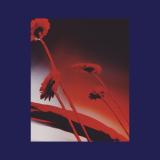
Phil Berg is back on the label, with his highly anticipated return. Four tracks that
continue to pave the way he laid in 2023 with his Raid EP.
Titled Iso, the EP is a study in reduction and discipline. Phil builds each track around a single guiding tension, rhythmic loops that breathe and shift injecting different emotions as each sound passes.
Phil Berg first appeared on SK11 in late 2023 with Raid, one of his biggest and most accomplished releases to date, an EP that made an immediate impression across techno fans worldwide. Iso's four productions here, each with their own identity, each showcasing the same commitment to craft and precision that defined his introduction to the label.
The EP is a statement of intent for Phil in 2026 and one of SK11's strongest releases of the year.
quête:phil berg
- A1: Les Masques - Il Faut Tenir (1969)
- A2: Isabelle Aubret - Casa Forte (1971)
- A3: Christianne Legrand - Hlm Et Ciné Roman (1972)
- A4: Jean Constantin - Pas Tant D'chichi Ponpon (1972)
- A5: Billy Nencioli & Baden Powell - Si Rien Ne Va (1969)
- B1-: Marpessa Dawn - Le Petit Cuica (1963)
- B2: Jean-Pierre Sabar - Vai Vai (1974)
- B3: Sophia Loren - De Jour En Jour (1963)
- B4: Isabelle - Jusqu’à La Tombée Du Jour (1969)
- B5: Sylvia Fels - Corto Maltesse (1974)
- C1: Frank Gérard - Comme Une Samba (1972)
- C2: Ann Sorel - La Poupée Des Favellas (1971)
- C3: Charles Level - Un Enfant Café Au Lait (1971)
- C4: Andrea Parisy - Les Mains Qui Font Du Bien (1970)
- C5: Audrey Arno - Quand Jean-Paul Rentrera (1969)
- C6: Aldo Frank - T’as Vu Ce Printemps (1970)
- D1: Christianne Legrand - Cent Mille Poissons Dans Ton Filet (1972)
- D2: Clarinha - Lemenja (1970)
- D3: Hit Parade Des Enfants - Aquarela (1976)
- D4: Jean-Pierre Lang - Tendresse (1965)
- D5: Magalie Noël - Une Énorme Samba (1970)
- D6: Françoise Legrand - La Lune
Ever since the late 1950s bossa-nova revolution, Brazil’s influence on French music has been undeniable. Pierre Barouh, Georges Moustaki and a vast array of lesser known artists, all made the Musica Popular Brasileira (MPB) an axis of promotion at the service of a cool and metaphysical, modern and mixed Brazilian lifestyle. Some were seduced by the poetic languors of the bossa, some were looking for fun, and others just loved the American hybridization of jazz-bossa, jazz-samba.
What is bossa nova? One of its creators, Joao Gilberto said: "Its style, cadence, everything is samba. At the very start, we didn't call it bossa nova, we sang a little samba made up of a single note - Samba de uma nota so .... The discussion around the origins of bossa nova is therefore useless”. It is nevertheless useful to remember that these magnificent Brazilian songs, which the guitarist describes as samba, were shifted and balanced around improbable chords. "I like things that lean, the in-betweens that limp with grace," said Pierre Barrouh, quoting Jean Cocteau.
With emotion, arrangements for violin and supple guitar licks, bossa nova rapidly changed. A transformation that can be heard in the Tchic, tchic, French Bossa Nova 1963-1974 compilation, the result of a cultural reappropriation, which traveled through the United States and supplemented itself in France.
A musical revolution that has remained significant, bossa nova was born in Rio. From 1956 to 1961, Brazil lived through its golden years. In five years, the country had invented its modernist style. Elected president in 1956, Juscelino Kubitschek de Oliveira, an elegant man with a broad forehead, brandished a promising slogan: "Fifty years of progress in five years". He quickly got to work. Not worried about increasing debt, he launched the project for a new federal capital, Brasilia, designed by the communist architect Oscar Niemeyer. Volkswagen opened state-of-the-art factories and created the “fusquinha”, the Beetle. In Rio, the Vespa made its first appearance. The Arpoador Surf Club crew run into the “girl” from Ipanema, Helô Pinheiro - the tanned garota ("chick"), between a flower and mermaid, who at 17 walked by the Veloso bar, where the fiery author and composer, Tom Jobim and Vinicius de Moraes, were getting drunk on whiskey. From then on, bossa symbolized cool.
In 1958, Joao Gilberto recorded Chega de Saudade, which the directors of Philips denied, calling it "music for fagots". The marketing director, who believed in it, secretly pressed 3000 78-inch vinyls and distributed them at schools around Rio, creating a tidal wave.
American jazzmen then took over. In particular, trumpeter Dizzy Gillespie and guitarist Charlie Byrd. In November 1962, the Brazilian Ministry of Foreign Affairs funded a "Bossa-Nova" concert at Carnegie Hall in New York, inviting the genre’s pioneers. Unprepared, the show soon turned to disaster. But the troupe was invited to the White House by Jackie Kennedy. The first lady loved "the new beat" and in particular Maria Ninguem, a song by Carlos Lyra, later covered by Brigitte Bardot.
In Brazil, the 1964 military coup quickly ended this euphoria. The destructive atmosphere that ensued pushed many Brazilian musicians to leave, if not to exile. Thus, Tom Jobim, Sergio Mendes and Joao Gilberto arrived to the United States. In New York, Joao Gilberto met saxophonist Stan Getz. At the time, he was married to the Bahianese Astrud Weinert Gilberto, who had a German father. She had never sung before, but she knew how to speak English. Getz therefore asked her to replace her husband on The Girl From Ipanema. The Getz/Gilberto record with Tom Jobim on piano, was released in March 1964. Phil Ramone, the "pope of pop" was in charge of sound.
Bossa nova arrived in Paris through the classic “guitar-voice” channel (Pierre Barouh, Baden Powell, Moustaki…) But France loved jazz and Paris had already welcomed its American contributors. All these good people were to pass through Saint-Germain-des-Prés. The cabaret l'Escale became the Mecca of Latin American sound where one could find Pierre Barrouh and his friends, such as the Camara Trio, samba-jazz aces, whose only record was published by the Saravah label. With a band strangely called Les Masques (a band that included Nicole Croisille and Pierre Vassiliu, among others), the Camara Trio recorded an interesting Brazilian Sound, including the track Il faut tenir which is present on this tasty compilation of rarities.
Other enlightened musicians can also be found on the compilation, such as Jean-Pierre Sabar (songwriter for Hardy, Auffray, Leforestier ...) and the French pop rock organist Balthazar. In 1975, Sabar recorded Aurinkoinen Musiikkimatka on a Finnish label, which featured the crazy Vai, Vai, included on this record. We are now following the footsteps of Brazilian electronic musicians such as Sergio Mendes, Eumir Deodato or Marcos Valle who created funk and disco sounds on their keyboards and synthesizers. A style that influenced Véronique Sanson when she wrote Jusqu’à la Tombée de la nuit in 1969 for Isabelle de Funès, the niece of Louis and a great friend of Michel Berger - Sanson did end up singing this track on her 1992 Sans Regret record.
The pinnacle of exoticism and travel, Sylvia Fels’ Corto Maltese includes bongos, sea mist and ocean sounds. The title was taken from Jacky Chalard’s concept album written in 1974, Je suis vivant, mais j’ai peur (I am alive, but I am scared), based on Gilbert Deflez’s science fiction novel.
However, bossa nova extended the scope of popularity. "In the 1970s, I was a fan of Sergio Mendes, Getz / Gilberto. I fell in love with this music that I knew because I had been an orchestral singer, " explained Isabelle Aubret, who in 1971 delivered a composite record of covers by the very funky Jorge Ben, Orfeu Negro, Tom Jobim, Vinicius de Morais and Jean Ferrat. "I recorded this album for Meys Records in Paris, far from Brazil, with wonderful musicians, François Raubert, Roland Vincent, Alain Goraguer...". The latter wrote the arrangements for Casa Forte, a very percussive title borrowed from Edu Lobo, one of the initiators of the bossa who spent time in California. "Jazz and bossa came together and produced very rhythmic music. I love singing, it allows me to dream, to have fun, to feel a high on stage, and these songs brought me joy, made me swing, my singing felt like a dance.”
The world tours of French singers and their desire for the tropics, often brought them to Rio with its hills, forests, caipirinhas and tanned bodies. There are surprises though, like this Iemenja (Iemenja is the goddess of the sea in the Afro-Brazilian candomblé religion). Not unlike the composer and musician Jean-Pierre Lang, based in Sao Paulo, Claire Chevalier taught Brazil to Brazil. In 1970, the singer and painter published a 45-inch vinyl, Mon mari et mes amants (My husband and my lovers), under the improbable pseudonym of Clarinha (little Claire). She was then living in Rio, with her husband, Joël Leibovitz, who founded a band called Azimuth, and who owned a record label specialized in "sambas enredos" songs for samba school parades.
For its B side, she asked Pierre Perret to come up with lyrics for a song composed by Carlos Imperial: "Oh goddess of the sea, o goddess Iemenja, I bring a white rose to adorn your long hair ..." . "Perret came to see us, and we had fun, remembers Joël Leibovitz. We wrote Lemenja for fun, we recorded it at the Havaí studio, behind the Central do Brasil the central station. Erlon Chaves, the arranger who worked with Elis Regina, joined us" adding his share of Afro-Brazilian percussions and funky brass to the mix.
There is a common misunderstanding in Franco-Brazilian history: that bossa, admittedly hedonistic, is perceived as funny, even though the poets who wrote the texts are often philosophizing on the human condition. Its French interpreters pull it towards a carnival inspired universe, far removed from its fundamental essence. Thus, Jean Constantin covered the famous Samba da minha terra, an ode to the art of samba written by the classic Bahian composer Dorival Caymmi, renaming it with the enticing title of Pas tant de tchi tchi pompon: "On your pier there is no tchi tchi / when you arch your back, you know everything is alright ”(lyrics by Gérard Calvi). This expedited bossa aims for the absurd, but retains a certain elegance.
Indeed, Jean Constantin was not an idiot, the rather large man had a huge mustache and liked fantasy, (Les pantoufles à papa, Le pacha, inspired by cha-cha-cha-cha, salsa and jazz) but he was also the lyricist of Mon manège à moi interpreted by Edith Piaf, the composer of Mon Truc en plume by Zizi Jeanmaire and the soundtrack of François Truffaut’s 400 Blows. Le Poulpe, published in 1970, from which this bossa is extract, was arranged by Jean-Claude Vannier, an accomplice of Serge Gainsbourg’s Melody Nelson. In short: "There is enough of samba / By looking at the parasol / Because my poor cabeza / Is going to die in the sun".
Even the American actress Marpessa Down, who was at the heart of the bossa nova revolution with her role as Euridyce in Marcel Camus’ film Orfeu Negro, winner of the 1959 Cannes Palme d'or, fed the clichée with Je voudrais parler au petit cuica - "Tell me how you manage to always make people want to dance / It's true, I must admit that I cannot resist your magic" - in consequence, once can hear the cuica, a little drum inherited from the Bantu.
But bossa nova had many angles. Societal, of course, pushing actresses who were symbols of women's liberation like Brigitte Bardot, Jeanne Moreau, or Sophia Loren to engage in the exercise of accelerated bossa. In February of 1963, Sophia Loren made a record in French in Rome, Je ne t'aime plus, featuring the song De jour en jour, a bossa written by two Italians, Armando Trovajoli and Tino Fornai, which was released a little later by Barclay. Bossa accompanied the 1960s, a decade of moral liberation. Ann Sorel, who interpreted La Poupée des favellas, caused a sensation with L’amour à plusieurs, a provocative song written by Frédéric Bottom and Jean-Claude Vannier. As for the actress Andrea Parisy, she displayed her bourgeois cheekiness in Marcel Carné's Les Tricheurs before interpreting Les mains qui font du bien. And Magalie Noël, the friend of Boris Vian, who sung Johnny fais-moi mal, was hired to sing Une énorme Samba, composed by Alain Goraguer (arranger to Gainsbourg, Bobby Lapointe and Jean Ferrat) with lyrics by Frédéric Botton.
But in the end, of what wood is bossa nova made of? The answer is given by Christianne Legrand, daughter of Raymond the conductor, and sister to Michel the composer: "With me, with jà" - jà means "immediately" in Portuguese. In 1972, the singer, an expert in vocal jazz and a member of the Double Six, published Le Brésil de Christianne Legrand. Two songs included on the Tchic Tchic compilation that demonstrate how bossa, jazz, funk, rock, etc. work like a swiss army knife: the music is used to denounce broken systems, or miracles, HLM et ciné roman, Cent mille poissons dans ton filet, two songs from the O Cafona soundtrack, a successful telenovela broadcast, at the time in black and white, on TV Globo. The first was adapted in French by the fighter and friend of the Legrand tribe, Agnès Varda. The second is content with a play on words, jostling them into a summer fun.
Véronique Mortaigne
- A1: Yant - Bee Sting
- A2: Rene Wise - Gut Punch
- B1: Kr!Z - Split Tongue
- B2: Blanka - Extravaganza
- C1: Eman - Lerake
- C2: Holden Federico - Hydro
- D1: Cirkle - Delta State
- D2: Altinbas - Epinephrine
- D3: Kameliia - Memories
- E1: Phil Berg - Sappho
- E2: Border One - Warp Shift
- F1: Kwartz - Watch Out
- F2: Phalcon - Into The Depth
2026 Repress
SK_eleven celebrates a decade of sonic exploration with a 13-track compilation showcasing its signature tension, technical discipline, and stylistic spectrum. Reuniting a tight circle of artists whose contributions have helped shape the label, the release offers an unrelenting sequence of pressure, mental twists, and textural collisions; a multifaceted snapshot of techno's enduring capacity to evolve, disturb, and seduce.
The compilation resists uniformity. Instead, it thrives on contrast: tension versus release, density against spaciousness, rhythm in all its permutations. From high-energy metallic openers and dub-inflected body rollers, to disorienting, delay-heavy experiments and stripped-back percussive tools, each contribution reveals a unique grip on groove and detail. Some tracks move like engineered machines: sharp, robotic, and syncopated to surgical precision. Others embrace sensuality and unpredictability, exploring spatial motion, layered harmonic friction, and states of controlled chaos. Each piece acts as a structural component in a larger sonic architecture, where tension is built, collapsed, and rebuilt. Friction becomes a form of choreography. Across the record, a shifting palette of emotional mechanisms takes form; granular and magnetic, haunting and quietly forceful, restrained, then disruptive.
More than a retrospective, SK_eleven's first compilation becomes a collective gesture toward techno's unresolved possibilities: its ability to hold contradiction, remain in flux, and mutate without conclusion.
- A1: Chlär - Cipe Ortni
- A2: Hemka - Rich Sex
- B1: Rødhäd - Wormhole Situation
- B2: Jpsrv35 - Soulsearch
- C1: Ignez - A Love Dream
- C2: Lobster - Whispers Of The Muse
- D1: Quelza - Automated Assistance Program
- D2: Beste Hira - Babe2
- E1: Alarico - Rugiada
- E2: Setaoc Mass - Blink
- F1: Cleric - Kluis
- F2: Grace Dahl - The Green Room
- G1: Oscar Mulero - Into The Light
- G2: Phil Berg - Skid Row
- H1: Blanka - After Making Love
- H2: Yanamaste - Cello
- I1: Stef Mendesidis - License To Fly
- I2: Lars Huismann - Nebula
- J1: Annē - Dusk
- J2: Chontane - Tisash
Since its founding back in 2014, Blume has carved a unique place in cultural landscape, issuing free-standing works, spanning the historical and contemporary, that represent singular gestures of creativity within the field of experimental sound. Joining their broad efforts in building networks of context and understanding that already includes the works by Werner Durand, Sarah Hennies, Bruce Nauman, John Butcher, Jocy de Oliveira, Mary Jane Leach, Valentina Magaletti, Alvin Curran, Julius Eastman, Alvin Lucier, and others, Blume return with the first ever vinyl release to attend to James Tenney’s legendary “Postal Pieces”, Marking the first ever appearance of five of the suite’s works - “Maximusic, for Max Neuhaus” (1965), “Having Never Written a Note for Percussion, for John Bergamo” (1971), “FFor Percussion Perhaps, or... Night, for Harold Budd” (1971), “Cellogram, for Joel Krosnick” (1971), and “Beast, for Buell Neidlinger” (1971) - on vinyl, drawing upon recordings made in 2003, by the Amsterdam based ensemble, The Barton Workshop, under the direction of James Fulkerson. Among the most important and highly regarded efforts in Tenney’s canon of compositions, as well as within the history of 20th Century music, these five pieces represent a crucial bridge between Fluxus-oriented conceptualism, minimalism, and the microtonal complexities that would emerge in their wakes. Issued in a highly limited vinyl edition of 300 copies, it includes exact replicas of the original postcard graphic scores, and features newly commissioned liner notes by Bradford Bailey, Blume’s brand new edition takes great steps to centring Tenney at the eye the storm during some of experimental music’s most important years.
A student of composition under Carl Ruggles, John Cage, Harry Partch, and Edgard Varèse - remaining close to all of them, and later performing in both Cage and Partch’s ensembles - as well as acoustics, information theory, and tape music composition under Lejaren Hiller, James Tenney carved a wide path within the contexts of experimental and avant-garde music during the second half of the 20th Century. Not only was he a tangible bridge between the generations of composer’s who laid much of the groundwork and the later movements of Fluxus, Minimalism, and the broader practices of experimental music, but Tenney is credited as having contributed one of the earliest applications of gestalt theory and cognitive science to music in 1961, before helping to pioneer the field of computer music at Bell Labs, during the following years.
Over the course of his career, Tenney produced music of such complexity and sophistication - paying little mind to the seductions of taste or dominant tropes of its own moment - that his work and legacy have largely remained under-recognised by the broader publics that have attended to most of his peers. Perhaps more pertinently, the body of work he produced can be perceived as too varied and complex to fit neatly within standard creative histories or critical frameworks, comprising harmonically complex works for acoustic instrumentation, musique concrète, the groundbreaking 1961 “plunderphonic” composition, “Collage No.1 (Blue Suede) (for tape)” - sampling and manipulating a recording of Elvis Presley - as well as algorithmic and computer synthesized music. Even here, within this single decade, a clear image of Tenney’s endeavours remains elusive. In addition to penning important theoretical texts, he collaborated and / or played with Max Neuhaus, La Monte Young, Steve Reich, Philip Glass, Michael Snow, Terry Riley, and numerous others; was an active member of Fluxus; starred in and composed music for Stan Brackage’s films; regularly worked with the Judson Dance Theater; co-founded and played in the ensemble, Tone Roads, with Malcolm Goldstein and Philip Corner; was a vocal advocate of the works of Conlon Nancarrow and Charles Ives, playing a significant part in the revival of both of their legacies; and regularly collaborated as a composer, musician, and actor with his then-partner, the artist Carolee Schneemann, notably co-starring in her film, “Fuses” (1965) and her legendary 1964 performance, “Meat Joy”, as well as creating sound collages for her films “Viet Flakes” (1965) and “Snows” (1970). Curiously, for a relatively absent figure in the historical and critical narratives, Tenney seems to have been the thread that bound multiple generations and disciplines of avant-garde practice in New York during this period.
Tenney was deeply invested in the quality and perception of sound. By 1970, this led him back to composing exclusively for acoustic instrumentation (though sometimes processed with tape delay) - in most cases utilising non-well tempered tuning systems to explore harmonic perception - a practice that he would remain steadfast to for the remainder of his life. This development roughly corresponded with his relocation to California, at the outset of the 1970s, following an invitation to teach at the newly founded music department at California Institute of the Arts (CalArts) in Valencia. Finding himself in regular contact with the harpist Susan Allen and the artist Allison Knowles, as well as at a great distance from many of his friends, in 1971 he completed (with the assistance of Knowles and Marie McRoy) “The Postal Pieces”, a project he had begun in 1965.
A suite of eleven compositions, “The Postal Pieces”, stands among Tenney’s well known and celebrated compositions, and illuminates the dualities embraced by the composer, notably his use of sound to develop consciousness in and of others, and his willingness to draw on elements and observations of everyday life; citing his strong dislike of writing letters as being the primary inspiration for their inception. In lieu, he conceived to send his friends - John Bergamo, Allison Knowles, Pauline Oliveros, La Monte Young, Harold Budd, Philip Corner, Joel Krosnick, Buell Neidlinger, Susan Allen, Max Neuhaus, and Malcolm Goldstein - short scores on the back of postcards. The suite is composed around three themes: Tenney’s concept of swell form (utilizing repetition and progressing through a structurally symmetrical arch), intonation, and the desire to produce “meditative perceptual states”.
A hugely important addition to Blume’s ever expanding efforts in context building and networks of creative practice, James Tenney’s “Post Pieces” is issued in a highly limited vinyl edition of 300 copies, which includes a exact replicas of the original postcard graphic scores, and features newly commissioned liner notes by Bradford Bailey.
2024 Repress
Founded by Blue Hour and Philippa Pacho, positivesource is a sub-label of Blue Hour Music. The series brings together various electronic music artists with a focus on progressive attitudes in dance music while paying homage to our roots in early club culture.
Die in der Nähe von Philadelphia geborene Lizzy McAlpine wurde bekannt, nachdem sie ihre eigenen Songs und Coverversionen auf Soundcloud und YouTube veröffentlicht hatte. Im Jahr 2020 veröffentlichte sie ihr erstes Album "Give Me A Minute", mit dem sie sich als aufstrebende Künstlerin etablierte und Tausende von Fans begeisterte. Im Jahr 2022 ging ihr Song "Ceilings" auf Tiktok viral und eroberte die Charts auf der ganzen Welt. Lizzy hat auch mit Niall Horan, Noah Kanan, John Mayer, FINNEAS und Jacob Collier zusammengearbeitet und sich in der Folk-Pop-Indie-Akustik-Szene einen Namen gemacht. Die 24-jährige Amerikanerin präsentiert nun "Older", eine neue Single, die ihr gleichnamiges drittes Opus ankündigt. Die Platte wurde in Los Angeles von Lizzy und Mason Stoops (Ryan Beatty, Del Water Gap) aufgenommen und produziert, mit einer zusätzlichen Produktion von Ryan Lerman von Scary Pockets, Jeremy Most (Emily King, Norah Jones) und Tony Berg (Taylor Swift, Boygenius)
Pitch Dark is a new VA series brought to you by Berlins Pure Hate Trax. For this the 1st in the series they invite 3 new Artists to the label but by no means new to the scene in Codex Empire, Maedon & 7CIRCLE. Also making a welcome return after his debut on VHXX1 is STRISC. Codex Empire – Since 2014, British born, Vienna based Codex Empire has built an international reputation for dark and intense techno productions and live shows. Combining this background in dark electronic music with heavy rhythmic elements makes Codex Empire an intense and simultaneously danceable experience both live and on record. Codex Empire has performed over 100 live shows across Europe, Japan, Korea and Canada, as well as numerous appearances in Berlin at Berghain, Tresor, Arena Club, Suicide Circus and BoilerRoom. Maedon – A native of notoriously grimy Baltimore who spent some seasons in filthy Philadelphia learning the craft, her arrival in New York City circa 2018 signalled a shift in development, one confirmed by the emergence of her Maedon moniker and her partnership with Brooklyn/Berlin techno powerhouse Sonic Groove and its head Adam X. Fast forward three years to Berlin, two albums, a residency at Tresor and an entire world later, Maedon forges ahead to the next phase of a rapidly building career. Assuring her future as the world falls apart, Maedon’s bracing sound and undeniable skills are a story now unfolding, with its beginnings already written in grit.
7CIRCLE – At the helm of Destroy to Rebuild, 7CIRCLE is a musical project without boundaries. Drawing from post punk and metal roots, 7CIRCLE navigates across all genres including Techno and Industrial without compromise or frills. The journey through the discography of 7CIRCLE is a fascinating path filled with darkness and aggressive sounds which are sometimes embellished with a melancholy touch to satisfy lovers of strong emotions. STRISC. – Hailing from the East Midlands, UK and residing in Berlin for the last 8 years, STRISC. is an Artist, DJ & Label Owner who has been making waves due to a relentless output of no-compromise productions that have garnered him the respect and attention of Techno aficionados and peers alike.
Closely following a busy 2023, GiGi FM announces her brand-new record label, offering “Kiwi Synthesis Diary Vol. 2” to mark the debut. Sea~rène takes aim at dreamlike and ethereal electronic music to reconnect the subconscious and the cosmos through immersive storytelling. As the identity quote of the label says itself “We are Sea~rène swimming in-between supernatural tides, forever following the emotional waves of the universe”.
Already quite accomplished in her milieu through an acclaimed release on Bambounou’s Bambelabel, where she explored the relationship between bodily technologies and music, as well as through her residency on NTS Radio where she explores inter-dimensional sounds and shares her own musical palette, GiGi also continues to perform at strings of performances in the past years in settings like Berghain, Rural Japan, Draaimolen, Fabric, De School, Primavera, The Bunker New York, and Sustain Release. The French/Italian artist takes her productions further with this first release of her imprint. A continuation of her first self-released project, “Kiwi Synthesis Diary 21k,” in 2021, GiGi FM celebrates the exchange between her, as the owner of the journal, and its reader through euphoric soundscapes and vibrant psychedelia. Taking a step back from lockdown introspections, blurred lines between dream and reality like ambient and drony atmospheres, GiGi gives us a bent club record full of colors and life.
GiGi FM guides us through dreams of sonic environments and the adventures to be had through them. Some are characterized by evolving fractals and shifting landscapes like in the healing mushroom journey of ‘Amadamushies’ and the mythical Japanese Heron ‘Tsuru’. Combining steady rhythm and immersive ambiances, the result intends to soothe into a state of openness through kindly familiar territories. Sifting through the tracks, we find ourselves traveling fast through cosmic ecosystems like in the spiritual and cosmic teaching that “Tevora'' represents, as well as ‘Househopping (Keroppi)’ and “Sly Xupete Di Barcelona,” conveying the urgency to feel and create, even within difficult circumstances, while “Spazio Teletrasporto'' takes us on a hypnotic whirlwind trip into the depths of the cosmos and our inner consciousness. Through these chapters of a journey, a connection between the mind and the beyond is implied, and its importance is highlighted.
Deeply influenced by astrology, philosophy, and the cosmos; for GiGi, music is both a tool for expression and introspection. As a multi-hyphenate artist, she continues on her quest to push artistic boundaries and hold space for unique audience experiences. Whatever medium she may adopt, the result is a rich embodiment of the interconnectedness of sound, color, movement, and metaphysics.
ғᴏʀ ᴛʜᴏsᴇ ᴡʜᴏ ʙᴜʀɴ ᴛʜᴇ ᴄᴀɴᴅʟᴇ ᴀᴛ ʙᴏᴛʜ ᴇɴᴅs. Four prime cuts of summer party techno. Already being played by some of your favourite DJ’s like: MARRØN, Cleric, Daria Kolosova, Funk Assault (Chlär & Alarico), Phil Berg, Yanamaste, Lobster, Faster Horses, Nastia, Bailey Ibbs, Alex Nantaya, Albert Zhirnov, Beste Hira, Seretide, Erik Burka, VSC, Gonzo MDF, Boris, Dax J, Gareth Wild, SLV, Stephanie Sykes, Juri Heidemann, ANNĒ, Chontane, Desroi, Slam
- A1: Film 2
- A2: Schlachtet!
- A3: Hinter Den Bergen
- A4: Maikäfer Flieg
- A5: Marmelade Und Himbeereis
- B1: Wütendes Glas
- B2: Kälte Kriecht
- B3: Kunstgewerbe
- B4: Der Weg Zu Zweit
- B5: In Der Nacht
- C1: Eisbär
- C2: Ich Lieb Sie
- C3: Moskau
- C4: Ein Tanz Mit Dem Tod
- D1: Traüme Mit Mir
- D2: Ich Und Du
- D3: Wütendes Glas (Maxi Version)
- D4: Raum
- D5: Film 1
Cassette[33,74 €]
Double LP: Heavy 350gsm Sleeve, Liner Notes, Sticker
WRWTFWW Records is very happy to reissue Swiss cult band Grauzone's self-titled album in an expanded 40 Years Anniversary Edition packed with the original 1981 album plus 9 extra songs, as well as extensive liner notes by Swiss music historian Lurker Grand. The 19-track album is available as a double LP vinyl in heavy 350gsm sleeve and a digipack CD, both sourced from the original reels and put together under the supervision of band member and all around legend Stephan Eicher.
The pioneering band from Bern (Switzerland) had a short-lived but highly-regarded career which birthed a cult discography that still fascinates and resonates today. Consisting of core members Martin Eicher, Stephan Eicher, and Marco Repetto, and on-and-off participants Christian GT Trüssel, Claudine Chirac, and Ingrid Berney, the elusive group broke new grounds in the early 80s, experimenting with punk and industrial music, early techno sounds, minimalism, new wave, pop, and various electronics. With an innovative and polished approach to design, visuals, performance, and all around style and philosophy on top of their superb music, the constantly transforming unit developed a whole experience - the Grauzone experience: wild and unpredictable, yet sophisticated and cohesive, or as Swiss music historian Lurker Grand would call it, "an Art band with a Punk attitude".
Completely rejecting the music industry rules and refusing to play the game of promotion, touring, release schedules, and TV appearances even though they had a multi-platinum international hit with the song "Eisbär", the band quickly disintegrated in full convention-defying glory, leaving behind an inspiring music legacy for the world to discover and discover again, one generation after the other.
This extended version of their debut (and only) album beautifully crystallizes the Grauzone miracle/accident - where pop and youthful experimentation meet at (new/cold/no) wave and industrial crossroads, and where classic hits ("Eisbär", "FILM 2", "Raum", "Träume Mit Mir", "Der Weg Zu Zweit"…) flawlessly mesh with unconventional deep cuts ("In Der Nacht", "Film 1", "Maikäfer Flieg"…). Very simply put: GOOD timeless music with an edge.
Stephan Eicher went on to be, arguably, the most successful Swiss musician ever, with an international career extending from pop chanson to experimental escapades and collaborations with Moondog, artists Sophie Calle and Sylvie Fleury, and author Martin Suter among many other luminaries. Marco Repetto flourished as a techno and ambient producer, releasing multiple projects including releases on Aphex Twin's Rephlex label.
Mannequin's 100th - a comp looking forward featuring an international and serious cast... BIG TIP!
The modern synthwave scene would be significantly poorer without the keen ear and tireless efforts of the Mannequin label run by Alessandro Adriani. Geographically situated within the nerve centers of Rome and Berlin, yet with a musical spirit that easily transcends these boundary lines, Mannequin's back catalog has been an important component in the modular assemblage that makes up electronics-based independent music in the 21st century, and an important reference point for those who need to defend against the lazy accusations that this such is purely retro' in its form and content. Recent accolades and accomplishments - being named Resident Advisor's label of the month' for May of this year, starting the 'Death of the Machines' 12' series, and being given the 'green light' for bi-monthly parties at the Säule room in Berghain - have been earned through Mannequin's unflagging commitment to sonic diversity and Adriani's own realization that the anxious and sharp-edged sounds associated with, say, the Cold War of the 1980s can convey a completely different message today. Adriani says it best when claiming that there is no such thing as 'old' or 'new' music...only the music of now'. With this cogent statement of intent, Mannequin continues to go on exploratory missions to find the best and most relevant aspects of genres like acid, industrial, EBM, post-punk, coldwave and still more.
Which brings us to Mannequin's newest project and 100th release overall: the Waves of the Future double LP compilation, which itself is not a conventional retrospective collection. Case in point - none of the artists appearing on this collection have put out their own releases on Mannequin yet, despite acting as Mannequin's unofficial ambassadors (via DJ sets and other means). This makes the set even more compelling rather than less so, since it shows how Mannequin fits into a larger picture that includes other scene leaders and label owners including Beau Wanzer, Willie Burns (WT Records), Silent Servant (Jealous God) and Ron Morelli (L.I.E.S.). Of equal importance is how Waves of the Future projects a sense of aesthetic resilience and continuity, showcasing just how well the current artists allied with Mannequin employ and re-interpret the sonic lexicon that appears on that label's reissues of 'classic' acts such as Nocturnal Emissions, Bourbonese Qualk, Din A Testbild and Doris Norton.
However, none of this would matter as much if the music itself didn't have strong potential for lighting a blaze in the dark corners of the human imagination, and of course for forcing bodies into motion. Each track here pivots around a couple of key sound elements that seem to set the stage for the next track to come: see the sputtering / chopped ghost voices on Morelli's Charges Won't Stick,' which easily informs the slicing drone and authoritarian beat of Shawn O' Sullivan's Ill Fit,' which then lays down the emotional foundation for the sequencer-powered With You' from An-I & Adriani or the glassy landscape of Illum Sphere's Exhaustion'. Elsewhere, the wired mischief of Not Waving intersects easily with the spherical electro-funk and coded commands of Beau Wanzer. When all the disparate parts of Waves of the Future are soldered together, it perfectly illustrates Mannequin's non-linear philosophy and Adriani's suggestion that Mannequin listeners directly engage with the music rather than trying too hard to analyze or dissect it.
- A1: Eden
- A2: Sun
- A3: Hawaii Oslo
- A4: Pour Trois
- A5: Biesy
- B1: Luka
- B2: Glass
- B3: Today It Came
- B4: Esja
- B5: Now, Run
Hania Rani is a pianist, composer and musician who splits her life between Warsaw, where she makes her home, and Berlin where she studied and often works. She has written for strings, piano, voice and electronics and has collaborated with the likes of Christian Löffler, Dobrawa Czocher and Hior Chronik, and released an album with her Polish group teskno last year. She has performed at some of the most prestigious venues in Europe - from the National Philharmony in Warsaw, to Funkhaus in Berlin, to The Roundhouse in London (where she made her debut at the Gondwana 10thanniversary festival last October) and at festivals such as Open'er, Scope Festival and Eurosonic. Her compositions for solo piano were born out of a fascination with the piano as an instrument, and her desire to interpret its sound and harmonic possibilities in their entirety and in her own way.
LP comes with heavy weight reverse board sleeve including a double sided printed insert plus digital download code.
Esja is her debut solo album and for Rani it is her first, real, personal statement as an artist. "No hiding behind the "collaborations" or "projects" anymore. For the very first time, finally - just me, as I am".
Recorded at Rani's apartment in Warsaw (the piano room has a beautiful reverb and the space has become part art studio and part sound laboratory for Rani) and at her friend Bergur Þórisson'sstudio in Reykjavik, Esja is a series of beautiful melodic vignettes. Sensual, sensitive, rhythmic, atmospheric, free but harmonious, beguiling and hypnotic, collectively they project a sense of unlimited space and time.
Expect support from accross the media spectrum from Mojo to Uncut and Gilles Peterson and Mary Ann Hobbs on 6 Music to Radio 3 and beyond. Full servicing to the Gondwana Records datebase.
Sluta Leta first emerged in the mid-1990s with a series of EPs on legendary labels such as Mego (Fan Club, 1995), Uptight (Space Is The Place, 1996), Cheap Records (Lisa 94, 1998) and Chocolate Industries (…If You Like Champagne On Ice?, 1999). After the release of Sluta Leta's debut album “Semi Peterson” on Mego in 2003, the group somehow got lost in Second Life. Having missed a good decade and a half but not a beat, Sluta Leta unexpectedly reappeared in 2020 with a new album – “Entrée Contrôle” produced by Andi Pieper and Ramon Bauer with a little help from Gerhard Potuznik – released on famersmanual’s generate and test label.
Almost 30 years after their first release on Cheap Records (Lisa 94 in 1998), Sluta Leta returns to the Viennese cult label with their new album “Drift Dekoder”. Andi Pieper and Ramon Bauer have once again teamed up with Gerhard Potuznik to produce some crispy new songs that are bound to set the tone for the second half of the 2020s and beyond. On “Drift Dekoder”, the inherently artificial and somewhat otherworldly atmosphere of Sluta Leta’s songs is enhanced by the participation of several brilliant collaborators: vocals by Gerhard Potuznik on “Moment Eternal” and a duet with Luise Nehl on “Past In Reverse”, drums by ddKern (Past in Reverse, Björn i Fårkläder and Rymdpatrul), keys by Philipp Quehenberger (Björn i Fårkläder) as well as vocal contributions from various previous band members – Jonas Bergkvist (Tidsflayer), Bengt Liljstad (First Order) and Yngwie Moskowich (Driftstopp). A particularly noteworthy highlight of the album is the mix of “Tidsflayer” by Finlay Shakespeare.
Stop looking, start grooving! Written and produced by Andi Pieper and Ramon Bauer.
Lyrics and vocals on “Past In Reverse” and “Moment Eternal” by Gerhard Potuznik. “Tidsflayer (Finlay Shakespeare Mix)” mixed and produced by Finlay Shakespeare.
DJ Subaru returns to Palms Trax’s CWPT with ‘Dog’, showcasing three tracks of offbeat dancefloor material that encompasses throbbing italo, sticky indie dancefloors and snarling, timeless punk.
Following on from their 2024 EP ‘Lots of Love’, the short time since has seen the DJ and producer rising on their own terms, scoring Tune of The Week from BBC 6Music’s ‘Introducing’, playing multiple gigs at Berghain/Panorama Bar and elsewhere around Europe, always returning to hone their cultishly adored Pleasuremaxxx party in their home city of Leeds.
Title track ‘Dog’ reunites DJ Subaru with regular vocal collaborator Chopper Johnson, delivering a gratifying sermon of canine defiance to suit Subaru’s razor-sharp motorik disco, whose pumping bassline and angular guitar licks prove irresistible to dancers seeking independent energy in the lineage of CBGBs or Trash.
Meanwhile, 'Rush' channels the same philosophy into a pogoing pleasure palace, raising the tempo and masterfully dividing its impulses between the cosmic elegance of Norwegian nu-disco and Pete Waterman’s poppers-fuelled strobe light fantasies. The result is an international anthem in memory of all local discotheques.
Finally, ‘Swoon’ steps back from the fizzier attitude of its tougher siblings for Subaru’s most disciplined attempt yet at a “proper club track”; the result succeeds entirely on its own terms, destined to transfix revelers with blissful analogue chords and slinky drums, while never skipping a beat on Subaru’s unique sonic character. From Leeds, with love.
Herbert Von Karajan,Berliner Philharmoniker Schoenberg
Berg - Webern (Original Source Series) LP 4x12"
1973/74 wagte Herbert von Karajan einen innovativen Schritt und nahm mit den Berliner Philharmonikern
Orchesterwerke von Arnold Schoenberg, Anton Webern und Alban Berg auf. Das Ergebnis waren bahnbrechende Aufnahmen der Zweiten Wiener Schule, präsentiert in einer aufwändig gestalteten 4-LP-Box vom
renommierten Grafikdesigner Holger Matthies.
Erstmals wurden diese Aufnahmen von den originalen Vier- und Acht-Spur-Bändern neu abgemischt und
geschnitten und erscheinen nun im Rahmen der Original Source Serie als 4-LP-Gatefold-Edition mit OriginalArtwork in einem hochwertigen Schuber.
Die audiophile Vinyl-Serie The Original Source präsentiert herausragende Aufnahmen der 1970er Jahre
in ganz neuer Klangqualität. Dafür haben die renommierten Emil Berliner Studios die originalen Vier- und
Achtspur-Bänder mit eigens für die Produktion der Serie entwickelten Technologien in 100% analoger Qualität (AAA) neu gemastert und geschnitten. Die klanglichen Unterschiede zu den Originalveröffentlichungen sind beträchtlich: Größere Klarheit, mehr Feinheiten und Verbesserungen im Frequenzgang, zugleich
weniger Nebengeräusche, Verzerrungen und Komprimierungen ermöglichen ein audiophiles Hörerlebnis wie
nie zuvor.
Auf 180g Vinylplatten und in einer Deluxe-Gatefold Edition mit Originalcovers und -texten werden die Exemplare dieser Serie limitiert und nummeriert veröffentlicht, begleitet von zusätzlichen Fotos und Faksimiles
der Aufnahmeprotokolle und Bandkartons.
Andrew Litton,Bergen Philharmonic Orchestra,Stephen Hough
Grieg & Liszt: Piano Concertos - Vinyl Edition
Nach dem Erfolg der ersten zehn Alben der Vinyl Edition von Hyperion (veröffentlicht im September 2024
und März 2025) folgen nun sechs weitere LPs. Alle Alben erscheinen erstmals auf Vinyl und zeigen weltweit
tourende Künstler, mit denen das Label seit langem eng zusammenarbeitet. Jeder der sechs Titel wird als
limitierte 180g-LP erscheinen, die in einem vollfarbigen Gatefold präsentiert wird und mit einem Begleitheft
ausgestattet ist.
Für seine 2011 erschienene Aufnahme der Klavierkonzerte von Grieg und Liszt reiste Sir Stephen Hough
in Griegs Heimatstadt Bergen, um mit Andrew Litton und dem Bergen Philharmonic Orchestra zusammenzuarbeiten. Bei seiner ursprünglichen Veröffentlichung nannte die Sunday Times Houghs Album „eine
der wichtigsten Veröffentlichungen zum Liszt-Jubiläum, von Großbritanniens größtem lebenden Magier der
Klaviatur“.
Sir Stephen Hough, der von The Economist als einer der zwanzig lebenden Universalgelehrten bezeichnet
wurde, verbindet die herausragende Karriere eines Konzertpianisten mit der eines Komponisten und Schriftstellers. In Anerkennung seines Beitrags zum kulturellen Leben wurde er als erster klassischer Künstler mit
einem MacArthur Fellowship ausgezeichnet und erhielt 2022 im Rahmen der Queen’s Birthday Honours
den Ritterschlag für seine Verdienste um die Musik.
Journeys are never just about distance. They stretch time, reshape perception, and demand transformation. With its latest vinyl split EP, Standard Deviation presents four tracks by Nastya Vogan and Phase Fatale that serves as a vessel for tracing displacement, memory, and the liminality of return. These melancholic yet powerful techno cuts serve both the concrete dance floor and moments of intimate self-reflection. Two artists--Nastya Vogan and Phase Fatale--approach Kyiv from different trajectories, but they both keep returning to the city. Vogan, a Ukrainian musician and resident DJ of Kyiv, and Phase Fatale (Hayden Payne), Berlin-based producer, Berghain and Khidi resident and founder of BITE Records, share a longstanding musical friendship. They've played B2B sets at K41 and Vogan, appeared on BITE's ''Shedding Skin'' compilation in 2023, and they share a vision for music selection, from aesthetics to philosophy. Vogan's 'Transitioning Territory' and 'This Is Not a Love Song' unravel the psycho-geography of transition. The first track captures the 24-hour journey to Kyiv as a rite of passage where 'time seems to fold; you are profoundly present yet paradoxically far from the world you left.' In this suspended state, memories surface and ordinary life recedes as the train's rhythm becomes its own meditation. Her second track explores Lacanian limerence--consciously falling for something not fully known, filling absences with personal projections as a way to discover what lies within oneself. Phase Fatale's contributions capture movement and distance with mechanical precision. 'Kekkai,' takes its name from the Japanese word for boundary, echoing 'respect my borders' ethos while reflecting on crossing into wartime Ukraine. The term also suggests a protective force field in Buddhist thought--much like Kyiv's current aura of resistance. 'Neosyazhna Rosa' (Unreachable Rose) honors Payne's Ukrainian grandmother Rose, weaving family history into his present connection with Ukraine. Both pieces balance melancholy with light, their sound palette of lush pads and rhythmic breaks crafted with K41's dance floor in mind.
For our ninth chapter, X/Y/Secret hands the controls to Sira. Surfacing is a study in tension: grooves tight enough to steer a packed floor, yet spacious enough for long blends or sudden cuts. Each element arrives with purpose, opening pockets of air to breathe just before the pressure rises again. Both sides speak the same language while delivering different messages. Phil Berg distills the title track into a focus-sharpening remix, before Sira closes with a late-hour mover built to steady the room while the lights stay low.
The Great Sea wurde 2022 von JR (Long Distance Calling) und SH (Ordeal & Plight) mit dem Ziel gegründet, eine Atmosphäre zu schaffen, die mit der Majestät der Berge und den schrecklichen Tiefen der Meere mithalten kann
Um dem Sound das zu geben, was er verdient, luden sie Phil Jonas (Crone, exɞ Secrets Of The Moon) und Azathoth (Gràb, exɞDark Fortress) ein, dieser Platte ihren Stempel aufzudrücken und eine Verbindung zwischen dieser Welt und den Sphären zu schaffenɎ von der man nie sprechen kann
Beide Songs sind mit einem Maximum an schwarzem Klebstoff in den Rest der Platte integriert und geben dem Hörer die Erfahrung von Tiefstrom
2025 Repress in Arctic Pearl Vinyl
Alles fließt, nichts bleibt wie es ist. Diese philosophische Erkenntnis gilt auch für das dritte Studioalbum der aufstrebenden niederländischen Rockband DOOL. Der treffende Titel "The Shape of Fluidity" zielt keineswegs nur auf die musikalische Innovation. Sondern das Album dreht sich um Themen wie persönlicher Wandel, physische Veränderung, psychologische Weiterentwicklung und die sich erneuernde Welt um uns herum. DOOL und insbesondere Sänger/in und Gitarrist/in Raven van Dorst stellen Fragen: Wie wirkt sich der Wandel auf uns aus? Wie bleiben wir uns selbst in einer Welt treu, die so unglaublich herausfordernd und aggressiv gegenüber dem Individuum ist? Wir müssen so fließend wie Wasser sein, um in diesem Ozean von Möglichkeiten und Ungewissheiten erfolgreich zu navigieren - und Frieden mit Chaos und Unbeständigkeit zu schließen. Musikalisch setzen DOOL den auf den beiden vorangegangenen Studioalben eingeschlagenen Weg fort, der emotionale Rockmusik mit Elementen aus dem Metal kombiniert. Dabei demonstrieren die Niederländer eine auffällige Reife und Kontrolle im Songwriting, die aus Jahren der Erfahrung gewachsen sind. "The Shape of Fluidity" zeigt eine eklektische, aber nahtlose Verschmelzung von Progressive und Post-Rock sowie Doom und Heavy Metal, die mit einer stets präsenten Eingängigkeit und hintergründigen Dynamik kombiniert sind. Es ist offenkundig, dass sich das Album thematisch mit dem Konzept der Identität vor dem Hintergrund einer sich ständig verändernden Welt befasst. Die Texte des Albums sind eng mit der Biografie von Leadsänger/in Raven verknüpft. Von Geburt an intersexuell, entschieden die Ärzte chirurgisch, dass der Säugling als Mädchen durchs Leben gehen solle. Dies führte zu einer Existenz auf der Suche nach der eigenen Seele, dem Kampf gegen Tabus und die Überschreitung von Grenzen, bis Raven vor kurzem beschloss, das zurückzufordern, was andere versuchten hatten, ihnen wegzunehmen - und ihre hermaphroditische Natur zu akzeptieren. Der Bandname DOOL leitet sich vom niederländischen Wort für "Wandern" ab. Bereits das im Jahr 2017 erschienene Debütalbum "Here Now, There Then" landete einen sofortigen Volltreffer. Der frisch-wilde Rock- und Metalsound aus den Niederlanden wurde von den renommierten deutschen Magazinen Metal Hammer und Rock Hard zum "Album des Monats" gekürt. Auch Vice (US), Aardschok (NL) und De Volkskrant (NL) überschütteten die junge Band mit Lob. Mit ihrem zweiten Album "Summerland", das 2020 erschien, übertrafen DOOL die ohnehin schon hochgesteckten Erwartungen. Es gab weitere "Album des Monats"-Auszeichnungen in den deutschen Magazinen Rock Hard (10/10) und Sonic Seducer sowie eine #2 Soundcheck-Position in Metal Hammer (DE) und Metal.de, und eine weitere #1 im polnischen Metal Hammer - mit einem Berg herausragender Kritiken auf beiden Seiten des Atlantiks. Mit "The Shape of Fluidity" bieten DOOL sehr viel mehr als nur verdammt coole Musik. Die zusätzlichen Dimensionen von Tiefe und Bedeutung sind Teil ihres einzigartigen Reizes und kommen auf dem neuen Album deutlich zum Vorschein. Mögen sich alle, die wandern, unter der fluiden Flagge von DOOL versammeln!
Barker's debutalbum Utility (on Berghain's Ostgut Ton label) was something of a sensation in the world of electronic music when it was released. Utility made numerous Best of 2019 year's end lists, including Pitchfork (8,2 review), The Quietus, DJ Mag, Resident Advisor (Recommends) and others. It also earned title of Mixmag's Album of The Year 2019. Now its finally time for the follow-up Stochastic Drift on Smalltown Supersound. And where Barker on Utility was "using ambient materials to remake techno" as Pitchfork's Philip Sherburne wrote, he takes this approach even further here creating - as the title suggests - a dreamy stochastic drift and beautiful freeform float.
2024 Repress
Seasons are changing - energy is shifting. The next Frenzy release is here, presenting the next-best-local talent on the block: Levzon. This born-to-be gearhead from the outskirts of Amsterdam began experimenting with electronic music as a youngster. Immersing himself in a variety of genres throughout his early years, he decided to take the next step and provide an output for his vision on techno as 'Levzon'. For our next Frenzy adventure, he is going all out for the first time, profiling his sound through a 4-track heavy-hitting EP with old-school-induced cuts and loopy basslines, including two remixes by like-minded associates.
Imagine an era where speed has no limit and the night knows no dawn. That's about the atmosphere 'Mambata' is creating at the start of the A-side. Followed by drum-led 'Bang the Drums', Levzon continues to ride the wave of heat, pressure, and movement. The adventure doesn't end here yet: talent on the rise Phil Berg is providing a perfectly executed dubby remix of 'Bang The Drums' Enter the B-side where a body-heavy peak time experience is awaiting you with 'Baraa'. A true weapon on the dancefloor. At the end of his story, Levzon leaves us with the beautifully composed 'Baila', casting a subtle rhythm of basslines with funk-induced vocals within a more subtle tempo. To close off the record in style, Ruiz OSC1' provides a remix of 'Baila' - throwing her 90s rave techniques into the battle.
- Opium Warlords Away Team
- Feel The Strength
- The Essence Of Life
- Faschionista
- Men Behind The Sun
- War Against Suicide
- The Mad Titan
- It Never Happened
- Vox Populi
- Legionari
- Everything Goes
- Wwii
- Der Heilige Berg
- The Holy Sweat
- Parasites
- The Hashashin
- Alien Harvest
- Ancient Wisdom
- The Rape Of Europe
- Amazing Race
- Erotomania
- Angels Of Chaos
- Pain And Love
- March
Black Vinyl[24,16 €]
Opium Warlords' sixth album "Strength!" out on Svart Records in September 2024! Opium Warlords, led by Sami Albert ”Witchfinder” Hynninen (Reverend Bizarre, The Puritan, The Candles Burning Blue), return with their sixth album Strength! It is a versatile but tight combination of pussy techno, sludge, industrial pop, hardcore punk, drone, shamanistic pulse, noise, heavy metal, old school gothic rock and march music. It is a take on European rhythmic patterns: stagnant factory beat – no groove, no swing, just a rhythm of industrialism that pierces through different genres and styles. Comparing to the dark and oppressive Nembutal (2020), Strength! is significantly more light-hearted, with its postmodern lyrics emitting from sources such as shampoo bottles and television UFO series to the Pan-Europa myth or morbid lore of death-hungry Transylvanian Iron Guard. However, the sting of irony and sarcasm is balanced with more serious subjects: Strength! is a hate/love letter to Europe and a self-reflection on Machiavellian and Nietzschean philosophies of strength and elitism. True to the band’s soul everything is covered with pure toxic misanthropy. Strength! 2LP/digital/2CD will be released 13th of September on Svart Records. Album’s first outtake, Erotomania, is out right now via digital services worldwide.
- Opium Warlords Away Team
- Feel The Strength
- The Essence Of Life
- Faschionista
- Men Behind The Sun
- War Against Suicide
- The Mad Titan
- It Never Happened
- Vox Populi
- Legionari
- Everything Goes
- Wwii
- Der Heilige Berg
- The Holy Sweat
- Parasites
- The Hashashin
- Alien Harvest
- Ancient Wisdom
- The Rape Of Europe
- Amazing Race
- Erotomania
- Angels Of Chaos
- Pain And Love
- March
Transparent Green Vinyl[26,68 €]
Opium Warlords' sixth album "Strength!" out on Svart Records in September 2024! Opium Warlords, led by Sami Albert ”Witchfinder” Hynninen (Reverend Bizarre, The Puritan, The Candles Burning Blue), return with their sixth album Strength! It is a versatile but tight combination of pussy techno, sludge, industrial pop, hardcore punk, drone, shamanistic pulse, noise, heavy metal, old school gothic rock and march music. It is a take on European rhythmic patterns: stagnant factory beat – no groove, no swing, just a rhythm of industrialism that pierces through different genres and styles. Comparing to the dark and oppressive Nembutal (2020), Strength! is significantly more light-hearted, with its postmodern lyrics emitting from sources such as shampoo bottles and television UFO series to the Pan-Europa myth or morbid lore of death-hungry Transylvanian Iron Guard. However, the sting of irony and sarcasm is balanced with more serious subjects: Strength! is a hate/love letter to Europe and a self-reflection on Machiavellian and Nietzschean philosophies of strength and elitism. True to the band’s soul everything is covered with pure toxic misanthropy. Strength! 2LP/digital/2CD will be released 13th of September on Svart Records. Album’s first outtake, Erotomania, is out right now via digital services worldwide.
Previously Unreleased Recording. Limited to 1200 copies on transparent cherry vinyl. Tip-on jacket, Download code. Insert featuring LP sized original art by Grungie O'Muck. Includes the original recording of Richard Tucker's "Are You Leaving For The Country", later covered by Karen Dalton, and the only song co-written by Karen & Richard, "Sleeping In The Garden". "Richard, Cam & Bert seem to have grasped The Great Harmony. That is, ensemble singing that is at once sweet, precise, funky and a bit sardonic..." -Mike Jahn / New York Times (1970) "For a few years in the late sixties and early seventies Richard Cam & Bert ruled MacDougal St. walking a fine line between the increasingly commercialized demands created by groups like Crosby Stills and Nash and the fierce integrity of earlier folk performers, the generation to which Richard belonged. They managed this with great aplomb, producing original tunes of great integrity and obvious folkloric origins, as well as those which expressed the anarchic omnipresent psychedelia of the moment. They also never abandoned the idea of including some traditional material in their performances. But for the usual random application of luck they could have been very big." - Grungie O'Muck / Artist, Bluesman, Cover artist for their first album and contributor to this one. Richard Tucker, Campbell Bruce, and Bert Lee coalesced as a trio in the spring of 1968, and by the end of that year had become regular performers at fabled Greenwich Village nightspots - The Gaslight, The Bag I'm In, Cafe Feenjon, among others. But mostly they were street singers, busking regularly in Central Park. Their only LP, Limited Edition, was released in 1970, and sold mainly at gigs and on the street. Somewhere in The Stars compiles earlier, previously unreleased recordings, when all three members were signed with Peer-Southern Music publishers as writers and began using their studio to make demos and experiment musically. Beautifully recorded by house engineer Charlie Mack (supervised by Jimmy Ienner), the demos capture a back room casualness and rustic, homespun quality. For me, listening to their songs and harmonies is like entering a world you always hoped existed but had never experienced. Some of the songs were re-recorded the following year for Limited Edition, but many are heard here for the first time. Among them is the original demo for Richard Tucker's song, "Are You Leaving For The Country", which Karen Dalton covered on her seminal 1971 release, In My Own Time. Richard and Karen were husband and wife for much of the 1960s, performing as a duo (initially as a trio with Tim Hardin), and navigating their time on the Village scene while alternating living in a small mining town outside Boulder, Co. before splitting up in 1967. Also making its debut, is the only song Richard and Karen ever wrote together, the haunting "Sleeping In The Garden". Also contains two epic songs by Cam "One Of These First Nights", and "Stockholm") not on their LP, but staples of their live performances, and noted in a gig review by The New York Times, and in a column by future A&R hero, Karin Berg, who was an early champion. Another rarity is the only cover of "Sweet Mama" by Fred Neil we've ever heard. Campell Bruce came to New York in 1967 as lead singer with a band from Washington, DC, The Natty Bumpo. They'd recently signed a record deal with Phillips, but were falling apart. Cam landed in the Village with an acoustic guitar and first started playing and singing in the basket houses, and shortly thereafter at The Gaslight, as the "Cam Bruce Trio" (which included Collin Walcott). After opening for Mose Allison, Cam's hero, the trio went their separate ways, and Cam returned to regular solo gigs at The Flamenco, and the basket houses on Bleecker. Richard and Cam met up on that scene and quickly found a musical kinship as well as becoming best pals. Bert Lee arrived in New York as a runaway the following winter, and began playing and sleeping wherever he could. His sometime accompanist, Ron Price, introduced Bert to Richard and Cam just as Bert's own songs were garnering attention from publishers. According to Bert, "I arrived on the New York scene during a time of great change, and it was the notion of change that influenced me. All around me I saw there were two sorts of songwriters, on the one hand dedicated to the traditions that had inspired them, folk, jazz, the American songbook. On the other hand were songwriters influenced by the wave of experimentation that The Beatles were the perfect example of. Mixing genres, writing lyrics that weren't just about ordinary love and loss. Richard Tucker was a country blues player, with a relaxed and melodic approach to the craft. Cam wrote something more akin to soul songs, with a hint of jazz in the changes. I was writing tunes that sometimes drew on classical structures with a tendency toward what I suppose would be known as prog-rock. But I was rather adamant about not being pinned down stylistically, and so I would write, for example, a song based on some complex classical chord structure, and then go right ahead and write a simple folk song, like Evelyn. Our band was popular locally, and it was this variety that made it distinct." Delmore is excited to present this unearthed treasure, fifteen years in the making. In the words of Richard Tucker, "Tap on your knee, roll on the floor; if you aint free, what's it all for?" "The trio's singing, playing, and writing have all withstood the test of time. Believe me, because I was there. In 1969 R,C&B, myself, Charles John Quarto, David Bromberg, Ron Price, and Keith Sykes were just a few of that year's crop of song-slingers. We were young turks back then, out on the prowl in New York's Greenwich Village for record deals, gigs, and beautiful young women to sleep with and maybe even write a song about. I've lost the names and numbers of those lovelies and I'm not sure what happened to Ron Price, but Richard, Cam, and Bert are back! - Loudon Wainwright lll
Advitam Aeternamour, Cléa Vincent's third album, will be released on 29 March 2024 by Midnight Special.
If the 90s gave us “French touch,” then the 2010s ushered in “French pop,” and it was in the midst of this revival that Cléa began her artistic journey. As early as the music video for
“Achète-le-moi” from her debut LP Retiens mon désir (2016), we witness the singer striking selfie-like poses with her French pop comrades (La Femme, Bertrand Burgalat), appearing pell-mell on screen in the form of their vinyl records. Since then, whether singing with Philippe Katerine or co-producing (and composing) Jeanne Balibar's D'ici là tout l'été (2023), Cléa Vincent has effortlessly carved out a niche for herself in the French pop scene. The advantage of being a “jack-of-all-trades” — Cléa is a writer, composer, and producer — is that her music casts a wide net. Both highly acclaimed in the indie circuit and “as seen on TV” (on Quotidien, among others), she has also enjoyed a stint as the host for web-TV show Sooo Pop, for which she regularly interviewed a plethora of French artists. Beyond France, the singer tours extensively. After a run of concerts in Europe, Asia, North and South America, it was her visit to Latin and Central America that inspired Tropi-cléa (2017-2020-2022). The three EPs bathed in a tropicalist glow do more than just dip their toes in the water; they mark a deep desire to escape in a post-lockdown world.
In between these projects emerged Cléa’s LP Nuits sans sommeil (2019). The album quickly became an instant classic and lives up to its name, since Clea never seems to stop — writing, composing, singing, or dancing. Mixed by Stephane ALF Briat, who has lent his magic touch to records by Phoenix, Bonnie Banane, Air, and Flavien Berger, Cléa Vincent's third LP Advitam Aeternamour proves once again that her music is in perpetual renewal. The artist takes risks both in her pursuit for innovative sounds and in the themes she tackles: coming out, incest, grief...and of course, she will always be a true romantic at heart; there’s no need to be ashamed of loving love. Cléa’s songs are full of “explicit lyrics,” but not in the typical sense: rather than ringing harsh and raw, her words are tinged with sweetness and melancholy, at the risk of shocking less sentimental listeners.
Written hand-in-hand with Raphaël Léger, her creative soulmate for the last ten years who also recorded and produced the album, Advitam Aeternamour features lyrics charged with Epinal and equinox imagery. On the poignantly sober title track, sudden flashes of light are padded by tinkling synthesizers swathed in the voices of an angelic choir, as also heard on “Nuit de Yalda.” Cléa offers a modern take on 90s house music (“C'est Ok”) and 2-step garage (“Free Demain”). Particularly influenced by The Beloved, she is not above dipping pop songs into the electronic melting pot to get them through the club door (“État Second,” where we “turn up the BPM”). And whether on “Shut down ma tête,” or “Douce Chavirée,” Cléa pushes the champagne cork down even further so that the party never stops. The bass gets louder, the rhythm intensifies — the melodies of these eternal hits are an invitation onto the dance floor, lit up by her smile.
As depicted in the soothing embrace that appears on the album artwork, the bright psychedelic hues are the perfect complement to her therapeutically inclined synthetic pop. Even if they tackle themes such as breakups, Cléa's songs, which are vitamin-packed and deep on the surface, are intended to heal and repair. “Se laisser partir,” with its light vocoder echoes, emulating the vocal shadow of a loved one, is an optimistic breakup song. Advitam Æternamour gives us life, from birth to grief — and in the middle, wild, beating passion. If her songs resonate with us, it's because Cléa speaks to us in her songs, as heard on the girl power anthem “Free demain,” where she addresses the listener as a friend (“put the pedal to the metal and you’ll take off for the stars”). When she shares the microphone with Jacques on “État Second,” enveloped by the sounds of unidentified musical objects, the complementary nature of the two artists is evident. The album is as much a tribute to the healing virtues of music as it is a self-portrait of Cléa inhabited by her art. Ad vitam æternam and with love.
Alles fließt, nichts bleibt wie es ist. Diese philosophische Erkenntnis gilt auch für das dritte Studioalbum der aufstrebenden niederländischen Rockband DOOL. Der treffende Titel "The Shape of Fluidity" zielt keineswegs nur auf die musikalische Innovation. Sondern das Album dreht sich um Themen wie persönlicher Wandel, physische Veränderung, psychologische Weiterentwicklung und die sich erneuernde Welt um uns herum. DOOL und insbesondere Sänger/in und Gitarrist/in Raven van Dorst stellen Fragen: Wie wirkt sich der Wandel auf uns aus? Wie bleiben wir uns selbst in einer Welt treu, die so unglaublich herausfordernd und aggressiv gegenüber dem Individuum ist? Wir müssen so fließend wie Wasser sein, um in diesem Ozean von Möglichkeiten und Ungewissheiten erfolgreich zu navigieren - und Frieden mit Chaos und Unbeständigkeit zu schließen. Musikalisch setzen DOOL den auf den beiden vorangegangenen Studioalben eingeschlagenen Weg fort, der emotionale Rockmusik mit Elementen aus dem Metal kombiniert. Dabei demonstrieren die Niederländer eine auffällige Reife und Kontrolle im Songwriting, die aus Jahren der Erfahrung gewachsen sind. "The Shape of Fluidity" zeigt eine eklektische, aber nahtlose Verschmelzung von Progressive und Post-Rock sowie Doom und Heavy Metal, die mit einer stets präsenten Eingängigkeit und hintergründigen Dynamik kombiniert sind. Es ist offenkundig, dass sich das Album thematisch mit dem Konzept der Identität vor dem Hintergrund einer sich ständig verändernden Welt befasst. Die Texte des Albums sind eng mit der Biografie von Leadsänger/in Raven verknüpft. Von Geburt an intersexuell, entschieden die Ärzte chirurgisch, dass der Säugling als Mädchen durchs Leben gehen solle. Dies führte zu einer Existenz auf der Suche nach der eigenen Seele, dem Kampf gegen Tabus und die Überschreitung von Grenzen, bis Raven vor kurzem beschloss, das zurückzufordern, was andere versuchten hatten, ihnen wegzunehmen - und ihre hermaphroditische Natur zu akzeptieren. Der Bandname DOOL leitet sich vom niederländischen Wort für "Wandern" ab. Bereits das im Jahr 2017 erschienene Debütalbum "Here Now, There Then" landete einen sofortigen Volltreffer. Der frisch-wilde Rock- und Metalsound aus den Niederlanden wurde von den renommierten deutschen Magazinen Metal Hammer und Rock Hard zum "Album des Monats" gekürt. Auch Vice (US), Aardschok (NL) und De Volkskrant (NL) überschütteten die junge Band mit Lob. Mit ihrem zweiten Album "Summerland", das 2020 erschien, übertrafen DOOL die ohnehin schon hochgesteckten Erwartungen. Es gab weitere "Album des Monats"-Auszeichnungen in den deutschen Magazinen Rock Hard (10/10) und Sonic Seducer sowie eine #2 Soundcheck-Position in Metal Hammer (DE) und Metal.de, und eine weitere #1 im polnischen Metal Hammer - mit einem Berg herausragender Kritiken auf beiden Seiten des Atlantiks. Mit "The Shape of Fluidity" bieten DOOL sehr viel mehr als nur verdammt coole Musik. Die zusätzlichen Dimensionen von Tiefe und Bedeutung sind Teil ihres einzigartigen Reizes und kommen auf dem neuen Album deutlich zum Vorschein. Mögen sich alle, die wandern, unter der fluiden Flagge von DOOL versammeln!
Escape Music are pleased to announce the release date for long awaited Turkish Delight studio album titled “Volume 1" with 500 limited edition double Vinyl “Side A+B Snowy White colour and side C+D Skull Gold colour” all will be numbered 1-500! ‘Turkish Delights Volume One’ celebrates the absolute joy that Escape Music co-owner Khalil Turk has for the kind of music he loves so much and has spent the last thirty and then some years championing. Indeed, his enthusiasm for a new band or a new song today is no different from when I first met him in the mid ‘80’s. I lost count of the number of phone calls he made to me when I was working for ‘Kerrang!’ magazine, where he would excitedly tell me ‘Dave, you just have to listen to this! It’s brilliant! You’ll love it!’ before playing me something over the phone – new and often obscure - he had picked up on his international record buying trips. Nine and a half times out of ten he’d be right!! Khalil’s quality control has been such that the record label he co-founded with fellow melodic rock enthusiast Barrie Kirtley in 1995 remains reliably and solidly in place all these years later. Escape continues to deliver monthly doses of quality hard rock, melodic rock and AOR to a very devoted following. Khalil had first entered the music business in the early ‘90’s, effectively as a talent scout for the German owned Long Island label. However, after the company folded, Turk felt that, rather than look at opportunities with other labels, he had the enthusiasm and now had rather more knowledge of the inner workings of the music business to put something together himself alongside the equally enthusiastic and astute Kirtley. We’ve seen hundreds of solid album releases from a huge variety of acts (including AXE, Steve Walsh (Kansas), John Elefante (Kansas), Lonerider, Shadowman, Alliance, Pinnacle Point, Mass, Heartland, Grand Illusion, Overland, Last Autumn’s Dream, Punky Meadows, ColdSpell, Chris Ousey, Ozone and Touch, to name just a few) as well as reissues (from Aviator, Sugarcreek, Jon Butcher Axis, Franke And The Knockouts, FM, Tantrum and Surrender, Zon, Hanover Fist etc) ever since. So here we are, over twenty-five years since that first Escape Music album appeared hot off the presses (Heartland’s ‘III’ album in November 1995, if you’re asking) and this collection of songs, personally chosen by Khalil, reiterates that pure joy he still possesses for the music he is utterly immersed by. With material from the pens of Steve Overland (FM), Chris Ousey (Heartland), Steve Morris (Export/Ian Gillan/Heartland), Mick Devine (Seven), Steve Newman (Newman/Compass) and Tommy Denander (Radioactive) there’s also a list of musicians culled from Khalil’s contact book that, quite frankly, is VERY impressive. Just a few names appearing on ‘Turkish Delights’ to throw at you include Ronnie Platt (Kansas), Billy Greer (Streets/Kansas), Billy Sheehan (Talas/David Lee Roth/Mr Big), Gary Pihl (Sammy Hagar/Boston/Alliance), Gene Black (Device), Jeff Pilson (Dokken), Jeff Scott Soto, Chris Childs (Thunder), Mike Slamer (City Boy/ Streets/Seventh Keys/ Steelhouse Lane) Joel Hoekstra (Whitesnake/Joel Hoekstra’s 13), Mark Mangold (American Tears/Touch/ Drive, She Said), Mark Stanway (Magnum), Mat Sinner (Sinner), Marco Mendoza (Thin Lizzy/Whitesnake/Journey), Ricky Phillips (The Babys/Bad English/Styx), Robin Beck, Robin Mc Auley (Grand Prix/MSG), James Christian (House Of Lords) Steve Overland (FM), Jerome Mazza (Pinnacle Point/solo), Terry Brock (Strangeways) and Vince DiCola (‘Transformers’/Thread/Storming Heaven). This is a cast of thousands. Well, it at least appears that way! It’s a very interesting package and, as Khalil would surely say, you’ll love it! - Dave Reynolds / August 2022. Produced by Khalil Turk for Turkish Delight Productions / Mixed and Mastered by Stephen DeAcutis at Sound Spa Studio, New Jersey, USA / *Mixed by Andy Zukerman / *Mastered by Fredrik Folkare / **Mixed and Mastered by Brian J Anthony (Vinyl Only) - Artwork Design by Hugh Syme (Rush/Bad English/Elton John) - Turkish Delights: The Musicians are: Ronnie Platt: Lead vocals (Kansas) / Billy Greer: Lead vocals (Kansas/Seventh Keys/Streets) / Jeff Scott Soto: Lead and backing vocals (Talisman/Yngwie Malmsteen/Trans-Siberian Orchestra) / Robin McAuley: Lead and backing vocals (Michael Schenker Group/Grand Prix/solo artist) / Chris Ousey: Lead vocals and Backing vocals (Heartland/Ousey-Mann/Virginia Wolf/Ozone)/ Jerome Mazza: vocals (Pinnacle Point/Steve Walsh) / James Christian: Lead and backing vocals (House Of Lords)Terry Brock: Lead vocals (Strangeways/Kansas) / Lee Small: Lead and backing vocals (Phenomena/Lionheart/Shy) / Mick Devine: Lead and Backing vocals (Devine Intervention/7/solo artist) / Ronnie Romero: Lead and backing vocals (Rainbow/Michael Schenker Group) / Tony Harnell: Lead vocals and backing vocals (TNT/Westworld/Starbreaker/Morning Wood) / Steve Overland: Lead and backing vocals (Lonerider/FM/Shadowman/solo artist) / Robin Beck: Backing vocals (solo artist) / Matt Sinner: Bass (Primal Fear/Sinner) / Joel Hoekstra: Guitars (Whitesnake/Trans-Siberian Orchestra/13) / Mike Slamer: Guitars (City Boy/Streets/Seventh Key/Steelhouse Lane) / Jeff Pilson: Bass (Foreigner/Dokken) / Gary Pihl: Guitars (Sammy Hagar/Boston) / Steve Morris: Guitars and Keyboards (Heartland/Lonerider/Ian Gillan Band/Shadowman) / Gene Black: Lead Guitars (Tina Turner/Rod Stewart/Device) / Billy Sheehan: Bass (Mr Big/The Flood/Talas) / Tracy Ferrie: Bass (Stryper/Boston) / Ricky Phillips: Bass (Baby’s/Styx/Bad English) / Rocky Newton: Bass (Michael Schenker Group/Lionheart) / Josh Devine: Drums (One Direction/Levara/Devine Intervention) / Takeaki Itoh: Bass (Pinnacle Point) / Jim Kirkpatrick: Slide guitar (FM/The Flood/Bernie Marsden Band) / Chris Childs: Bass (Thunder/Lonerider) / Steve Mann: Keyboards (Michael Schenker Group/Lionheart/Ousey/Mann) / Vince DiCola: Keyboards (Rocky4/Staying Alive/Transformers/Storming Heaven/Thread) / Mark Mangold: Keyboards (Touch/American Tears/Drive She Said) / Alessandro Del Vecchio: Keyboards (Revolution Saints/Edge Of Forever/Hardline) / Stevie D: Lead guitar / Marco Mendoza: Bass (Whitesnake/Thin Lizzy/Journey) / Jimmy Nicholas: B3 (Faith Hill/Kenny Loggins/Van Zant/Jim Peterik/Juice Newton) / Tommy Denander: Guitars and keyboards (Radioactive/Steve Walsh/Robert Hart)) / Brain J Anthony: Bass (Steve Walsh/Lonerider/Robert Heart/Robbie LeBlanc) / Brian Tichy: Drums (Whitesnake/Dead Daisies/ Foreigner) / Mark Stanway: Keyboards (Magnum/Grand Slam) / Robin Beck: Backing vocals (solo artist) / Nikolo Kotzev: Lead guitars (Brazen Abbot/Robin Gibb) / Fredrik Folkare: Guitars (Unleashed/Heartwind) / Mikael Rosengren: Keyboards (Heartwind) / Steve Newman: Guitars/keys/backing vocals (Newman/Compass) / Eric Ragno: Keyboards (Baby’s/Joe LynnTurner) / Fredrik Bergh: Keyboards (Talk Of Town/BloodBound) - CD Track listing: Intro; Live Again; Crazy Days; Bad Enough; Never Will Forget; Harder They Fall; Get Out Of Here; Believe; Hangman Blues; State Of Mind; Belly Of The Beast*; Holy Water; Sweet Serenity; Take It Away; Bad To Good. Vinyl Track listing: Intro; Live Again; Crazy Days; Bad Enough; Never Will Forget; Harder They Fall; Get Out Of Here; Believe; Hangman Blues; State Of Mind; Belly Of The Beast*; Holy Water; Sweet Serenity; Take It Away; Bad To Good; The Year 2000; Frozen Rose
After their highly praised debut record "I" - called "a sparkling electro-jazz and cinematographic hybridization game" and "refreshingly futuristic big band music" - the french quintet returns with the new full length called "II". Notilus is back, more raw and free than ever, taking a journey through both evening shadows and luminous mornings, through long expanses of suspended time as well as hypnotic swathes of dancing vibes. It crosses vast tundras, ascends snowy mountain ranges, reaches swampy troubled waters bathed in eerie light, at the crossroad between Jazz, Techno, Ambient music and self-reflexion.
The Notilus Orchestration:
Philippe Rieger : machines
Mathieu Goust : drums & percussions
Guillaume Nuss : trombone & effets
Christophe Rieger : saxophone & effets
Paul Barbieri : cornet, synthétiseurs
tapetopia 004 The Leipzig band Neu Rot represented a singular phenomenon within the alternative music reservoir of the GDR. As with so many bands that cultivated a more sophisticated sound in the late 80s, Neu Rot’s beginnings had been in punk rock. But, with a remarkable rigour against itself, the band steadily worked its way towards post-rock. This thorough process came to fruition in 1988 with the production of the tape “Halt An”. It had been preceded by the band’s struggle for its very own means and their technical feasibility. Neu Rot’s pilgrimage to its own centre was not unimpeded. The band’s name was perceived by the GDR’s cultural watchdogs as an erratic chain of associations between the suspicious word “Neu” and the ideological signal colour red. The band was legal, but its lyrics were deemed illegal. The edition of “Halt An” was somewhere between over fifty and under one hundred copies. Jörg Stein (voc, g, casio sk-1, yamaha ps-2) Karsten Maaß (bg, voc) Anke Mehlhorn (vl, casio sk-1) Henrik Eiler (dr, voc, casio sk-1) Produced by Mike Stolle & Jörg Stein Lyrics by Jörg Stein, except „Sometimes“ and for „Die Schlange“ by Christoph Wielepp Tape artwork by Daniel Schörnig Tape cover photos by Daniel Schörnig Published by Henryk Gericke Liner notes by Henryk Gericke Remastered by Black Flag Mastering/ Friedemann Kootz © Music by Neu Rot except „Sometimes“ (traditional) recorded Oktober 1988, Leipzig Thanks to: Mike Stolle, Adrian Neumann, Nikolaus Michael, Horst Pfaff, Andreas Berger, Christoph Wielepp, Daniel Schörnig and to the unknown roommate Lachmund Christian Andersen, Michael Barthel, Sarah Baumann, Ralph Gabriel, Ronald Galenza, Jakob Geisler, Ulrike Geisler, Gerd Gericke, Elke Grabinski, Gabriele Herzog, Egmont Hesse, Sabine Jansen, Siegfried Männer, Bettina Matten-Gericke, Christian Morin, Frank Siewert, Philipp Strobel, Christoph Tannert, Stefan Widdess, Margarete Wohlan In memory of Michael Pfaff.
This session was originally intended to be released on Mike King's highly regarded Reel Recordings label. Sadly, Mike passed away before the project was completed and consequently the session has instead sat on a shelf of the esteemed British jazz collector and historian Philippe Renaud for the past decade. UNTIL NOW.
Album includes extensive notes by Philippe and renowned Canterbury music expert Aymeric Leroy.
Original mastering by Mike King. additional mastering by Matt Parker.
Very special thanks to: Marino Dean, Philippe Renaud, Aymeric Leroy, Ricardo Bergerone.
Produced by Matt Parker for British Progressive Jazz in association with Improjazz.
Dedicated to the memory of Mike King.
- A1: String Quartet No. 5 I
- A2: String Quartet No. 5 Ii
- A3: String Quartet No. 5 Iii
- A4: String Quartet No. 5 Iv
- A5: String Quartet No. 5 V
- B1: String Quartet No. 4 (Buczak) I
- B2: String Quartet No. 4 (Buczak) Ii
- B3: String Quartet No. 4 (Buczak) Iii
- C1: String Quartet No. 2 (Company) I
- C2: String Quartet No. 2 (Company) Ii
- C3: String Quartet No. 2 (Company) Iii
- C4: String Quartet No. 2 (Company) Iv
- D1: String Quartet No. 3 (Mishima) 1957 – Award Montage
- D2: String Quartet No. 3 (Mishima) November 25 – Ichigaya
- D3: String Quartet No. 3 (Mishima) 1934 – Grandmother And Kimitake
- D4: String Quartet No. 3 (Mishima) 1962 – Body Building
- D5: String Quartet No. 3 (Mishima) Blood Oath
- D6: String Quartet No. 3 (Mishima) Mishima/Closing
When Kronos plays a piece, they become fellow composers, true collaborators. Without them, we wouldn’t have the kind of string quartet playing that we find around us today. There are two kinds of string quartet playing: the ‘Before Kronos’ and the ‘After Kronos’.” – Philip Glass
‘Kronos Quartet has broken the boundaries of what string quartets can do.’ – New York Times
Nonesuch releases Kronos Quartet’s acclaimed album Kronos Quartet Performs Philip Glass on vinyl for the first time to coincide with Kronos Quartet: Five Decades, a year-long celebration marking the quartet’s 50th anniversary. Originally released in 1995, the album features David Harrington (violin), John Sherba, (violin), Hank Dutt (viola) and Joan Jeanrenaud (cello) performing Quartet No. 2 (Company) (1983), No. 3 (Mishima) (1985), No. 4 (Buczak) (1990), and No. 5 (1991), the first piece Glass wrote especially for Kronos. Recorded at Skywalker Sound in California, the album was produced by Judith Sherman, Kurt Munkacsi and Philip Glass. The cover art features Francesco Clemente’s painting The Four Corners (1985). At the time of the album’s release, the New York Times said, ‘It contains some of Glass's best music since Koyaanisqatsi. His ear for sumptuous string sonorities is undeniable,’ while the Washington Post called it ‘An ideal combination of composer and performers.’ It was a top 10 hit on Billboard’s Top Classical Albums, and spent 12 weeks on Billboard’s Classical chart.
In his original liner note, critic Mark Swed wrote, ‘Glass’ string quartets may contain his most intimate music. They are works through which a very public composer, perhaps the most important opera reformer of our age and a longstanding collaborator in large-scale music theater, holds up a mirror to himself and his way of composing. “In an odd way,” Glass explains, “string quartets have always functioned like that for composers. I don’t really know why, but it’s almost impossible to get away from it. It’s the way composers of the past have thought and that’s no less true for me. It’s almost as if we say we’re going to write a string quartet, we take a deep breath, and we wade in to try to write the most serious, significant piece that we can.” Glass says that as he sat down to write String Quartet No. 5, he had discovered that perhaps not taking a serious tone might be the most serious way to deal with it. “I was thinking that I had really gone beyond the need to write a serious string quartet and that I could write a quartet that is about musicality, which in a certain way is the most serious subject.”’
Glass’ first numbered quartet was written in 1966; however, he did not return to the string quartet medium until 1983, when he provided incidental music for a dramatization of Samuel Beckett’s prose poem, Company. During those 17 years, Glass had formed an ensemble and developed his style in a series of increasingly elaborate pieces for it. String Quartet No. 3 is also adapted to dramatic music, this time from his score to the 1985 Paul Schrader film, Mishima. It was with the music of Mishima that Kronos became associated with Glass, recording the string quartet sections of the soundtrack and subsequently working extensively with the composer on all five of his numbered quartets. Kronos also gave the first concert performances of Company and Mishima. String Quartet No. 4 was composed in remembrance of the artist Brian Buczak, who died of AIDS in 1988.
As Kronos’ anniversary season continues with further concerts around the world, Nonesuch will reissue Black Angels on vinyl on February 16. First released in 1990, the award-winning album includes George Crumb’s title piece, which inspired David Harrington to found the quartet. Called ‘an unusually elevated and searing Vietnam War protest’ by the New York Times, it sets a dark, powerful tone for this collection, which addresses the political/physical/spiritual consequences of war. Also featured are works by Charles Ives, István Márta, Thomas Tallis, and Dmitri Shostakovich. ‘Stylishly packaged, intelligently programmed, superbly recorded and brilliantly performed,’ proclaimed Gramophone. ‘In short, very much the sort of disc we’ve come to expect from the talented and imaginative Kronos Quartet.’ The Evening Standard included it among its ‘100 Definitive Classical Albums of the 20th Century’.
Born in Baltimore, Maryland, in 1937, Philip Glass is a graduate of the University of Chicago and the Juilliard School. By 1974, he had created a large collection of music for The Philip Glass Ensemble. The period culminated in the landmark opera, Einstein on the Beach. Since Einstein, Glass’s repertoire has grown to include music for opera, dance, theatre, orchestra, and film. His scores have received Academy Award nominations (including Kundun and The Hours, as well as Notes on a Scandal) and a Golden Globe (The Truman Show). Recent works include his memoir, Words Without Music, his first Piano Sonata, opera Circus Days and Nights, and Symphony No. 14. Glass received the Praemium Imperiale in 2012, the US National Medal of the Arts from President Barack Obama in 2016, and 41st Kennedy Center Honors in 2018.
Nonesuch’s relationship with Glass began in 1985, with the release of the score for Paul Schrader’s Mishima featuring Kronos Quartet. Over the years other Glass works on Nonesuch have included Einstein on the Beach (1993), Kronos Quartet Performs Philip Glass (1995), Music in Twelve Parts (1996), Glass Box (2008), as well as the soundtracks for Powaqqatsi (1988), Kundun (1997), Koyaanisqatsi (1998), and The Hours (2002), amongst others.
For 50 years, San Francisco’s Kronos Quartet – David Harrington (violin), John Sherba (violin), Hank Dutt (viola), and Paul Wiancko (cello) – has challenged and reimagined what a string quartet can be. Founded at a time when the form was largely centred on long-established, Western European traditions, Kronos has been at the forefront of revolutionizing the string quartet into a living art form that responds to the people and issues of our time. In the process, Kronos has become one of the most celebrated and influential groups of our era, performing thousands of concerts worldwide, releasing more than 70 recordings of extraordinary breadth and creativity, and collaborating with many of the world’s most accomplished composers and performers. Through its nonprofit organization, Kronos Performing Arts Association, Kronos has commissioned more than 1,000 works and arrangements for string quartet – including the Kronos Fifty for the Future library of free, educational repertoire. Kronos has received more than 40 awards, including three Grammy Awards and the Polar Music, Avery Fisher, and Edison Klassiek Oeuvre Prizes.
Kronos is prolific and wide-ranging on recordings. The ensemble’s expansive discography on Nonesuch includes three Grammy-winning albums: Terry Riley’s Sun Rings (2019), Landfall with Laurie Anderson (2018), and Alban Berg’s Lyric Suite featuring soprano Dawn Upshaw (2003); the 40th-anniversary boxed set Kronos Explorer Series; Nuevo (2002), a Grammy- and Latin Grammy–nominated celebration of Mexican culture; Pieces of Africa (1992), a showcase of African-born composers that simultaneously topped Billboard’s Classical and World Music charts; and Folk Songs (2017), Nonesuch’s 50th album with Kronos, which featured Sam Amidon, Olivia Chaney, Rhiannon Giddens, and Natalie Merchant singing traditional folk songs.
Aurora Records proudly presents Temporal Gardening, featuring
composer and performer Stephan Meidell and the baroque ensemble
Bergen Barokk
The new album will be available on vinyl and digital platforms on15th of
September 2023.
Temporal Gardening was originally a commission written in 2020 for Bergen
Barokk. The idea was to explore using early music instrumentation in dialogue
with new electro-acoustic technology. The unique and remarkable ecology grew
from pseudo- baroque music playfully reimagined, reinterpreted, disassembled,
remixed, and resampled.
The trio has been expanded with drums, functioning as speakers for the
electronic manipulations of the ensemble. A double-bass recorder vibrates a subwoofer speaker mounted inside a bass drum, and a live sampled harpsichord
sounds through cymbals, gongs, and a snare drum. Meidell himself part takes as
a musician in the performance, doing live sampling and electronic contributions.
Musician-composer Stephan Meidell is a musical adventurer who, in a nomadic
fashion, improvises his way through a plentitude of styles. Meidell's music exists
where genres dissolve into fragments that canbe picked apartand combined in
new ways. He frequently combines sounds from electronic, acoustic, and
electromechanical instruments and machines and then recontextualises them
with his finely tuned intuition and sense of detail. Meidell has a plentitude of
releases and commissions, including with Erlend Apneseth Trio, Strings &
Timpani, Cakewalk, and TRIGGER on labels such as Hubro, Clean Feed, Playdate,
and Ideophone.
Bergen Barokk was established in 1994 and is today one of Norway's leading
early- music ensembles. The group has concertized and appeared in radio
broadcasts in Europe, Russia and USA. Their recordings on Simax Classics, BIS,
Bergen Digital Studio and Toccata Classics include German, English, Italian and
French repertoire. Bergen Barokk has collaborated with several ensembles
through the recent years, some of them are Pratum Integrum (Moscow),
Norwegian Soloists' Choir and Barokksolistene (Norway). Bergen Barokk has
performed in festivals like Festspillene i Bergen, Bach Festival of Philadelphia,
Moscow Early Music Festival and Janacek International Music Festival (Czech
Republic).
After a total of three EPs, "ZOMBICRON" is now the first regular full album by ROTTEN CASKET, which was mixed and mastered at Tom Meier Studios (a.o. Asphyx, Soulburn etc.) in Enschede (NL). The fantastic morbid artwork is by Toderico Arts, the layout by Phil Jonas. Bram Bryneel is responsible for the band members zombified in the booklet Martin van Drunen (vocals, among others Asphyx), Stefan "Husky" Hüskens (drums, among others Asphyx), Yorck Segatz (guitar, among others Sodom), Patrick van der Breek (bass, among others Disabuse/Born Infected) as well as guitarist, founding member and mastermind/main songwriter Frank Bergesson. ROTTEN CASKET are not an all-star band, but an independent force that crushes everything in its path.