A pioneering force in African music, Jo Tongo has always been on top of the game. Since the late 60s he has been recording music under his early Jojo L'Explosif moniker. His debut album "Jo Tongo" was released 1976 on Fiesta/Decca and features classic tracks like Jangolo and Piani. Now, after decades of underground influence and global recognition, his second album Sa Discossa (1980) is re-released for the first time. Being an electrifying fusion of African rhythms, disco, makossa, reggae and funk it is reflecting his lifelong journey of musical exploration and cultural storytelling and claims its place as an essential recording in the Afro-disco movement.
Jo Tongo's music is inseparable from his life's story-a journey that spans continents, struggles, and victories. From his early years as a leading African musician before the global rise of Afrobeat, to his deep roots in classical training, and his time performing in France and Germany, his sound is shaped by a rich blend of influences. Having played in bands across Europe, from American military bases in Germany to the jazz and soul circuits of Paris, he absorbed the pulse of multiple musical worlds, creating a sound uniquely his own.
"My music is my life. I never saw it as a way to become a star-I am a simple man," Tongo explains. "I came into music to say something, to tell about life, to share my experiences with the world." His perspective on fame and artistry is deeply rooted in his Cameroonian background. "I wasn't interested in business. I wanted to build something with music, to create a sound that was mine."
But Jo Tongo's music has always carried a deeper message. His work reflects his strong political stance against colonialism, social injustice, and oppression. "I cannot stay silent while my people suffer," he says. "Music is a way to resist, to stand strong, and to remind people of their dignity and their power." Throughout his career, Tongo has used his platform to advocate for African identity and independence. His songs, layered with messages of social consciousness, have continued to resonate with younger generations who recognize the relevance of his words even today.
Sa Discossa is more than just a disco record. It embodies Jo Tongo's philosophy of resistance, identity, and celebration. The title itself is a blend of "disco" and "makossa," reflecting the seamless fusion of African groove and the dancefloor energy that defined the era. Tracks like Bunya, sung in his native language, carry messages of love, gratitude, and resilience-sentiments that remain as relevant today as they were nearly 50 years ago. As Tongo describes it, "Every day, give thanks and praise to your Lord. Every day, show me your love. Every day, let me show you my tender love."
Tongo's musical journey also took him through the world of reggae, inspired by his exposure to American and Caribbean artists. "At first, I didn't like reggae-it was too slow for me," he admits. "But then I heard Bob Marley, and I realized the power in its simplicity. The rhythm, the
message-it was all connected to something bigger." He later found himself embracing reggae as an essential part of his musical DNA. "I realized that my music and reggae shared the same roots. We are all connected, all telling the same story in different ways."
Having spent much of his career performing across Europe, Jo Tongo reflects on his connection with international audiences. "I've played everywhere-from Africa to Germany, from Paris to other cities in France and what I've learned is that music speaks a universal language. You don't need to know the words to feel the message."
Despite taking a step back from the stage in recent years, he remains open to new possibilities. "Music is like a fire-it never truly dies. I have a lot to say, and music is the best way to say it."
For Jo Tongo, music is more than entertainment-it's a language of truth, a testament to history, and a bridge between cultures. The rhythm of Sa Discossa lives on, stronger than ever. With Sa Discossa returning under the African Edge series on The Outer Edge label, Jo Tongo's legacy continues to resonate, proving that real music never fades.
Suche:phil disco
- A1: Design - Premonition
- A2: Vision - Lucifer’s Friend
- A3: Richard Bone - Alien Girl
- A4: John Howard - I Tune Into You
- A5: Ian North - We’re Not Lonely
- A6: Selwin Image - The Unknown
- B1: Harry Kakoulli - I’m On A Rocket
- B2: Rich Wilde - The Lady Wants To Be Alone
- B3: Billy London - Woman
- B4: Alan Burnham - Science Fiction
- B5: The Microbes - Computer
- B6: The Goo-Q - I’m A Computer
- C1: Gerry & The Holograms - Gerry & The Holograms
- C2: The Warlord - The Ultimate Warlord
- C3: Die Marinas - Fred From Jupiter
- C4: Dee Jay Bert & Eagle - I Am Your Master
- C5: Peta Lily & Michael Process - I Am A Time Bomb
- C6: Sole Sister - It’s Not What You Are But How
- D1: Alasdair Riddell - Do You Read Me?
- D2: Karel Fialka - Armband (The Mystery Song)
- D3: John Springate - My Life
- D4: Incandescent Luminaire - Famous Names
- D5: Disco Volante - No Motion
- D6: Dream Unit - A Drop In The Ocean
Compiled by Philip King
“And then came the rise of synth pop : blokes with dodgy haircuts hunched over keyboard-operated
machines stuffed with wires and do-it-yourself tone oscillators making sounds like a brood of geese
passing gas in a wind tunnel. Whoopee! This is the way the ‘70s ended : not with a blood-curdling bang
bang but with a cheap, synthesized, emasculating whimper.”
NICK KENT, NME.
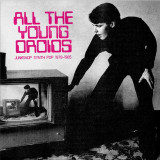
All The Young Droids: Junkshop Synth Pop 1978-1985 is a new compilation that charts the
underbelly of the epoch-defining sound of the synthesiser in 80s popular music. Compiled by Philip
King (previously seen compiling All The Young Droogs, Glitterbest and Boobs - The Junkshop
Glam Discotheque), the music here connects the dots between DIY synth enthusiasts grappling with
new, cheap synthesisers at the tail-end of punk and wannabe, jobbing songwriters enthral to the new
music pioneered by Gary Numan, Depeche Mode and Daniel Miller’s Mute Records. Featuring rare
tracks of auto-didactic progressive pop music, proto-techno punk, shoot-for-the-stars-land-in-the-gutter
chart flops and heralded, underground synth classics, School Daze paints a picture of beautiful failure.
Complete with extensive sleeve notes written by King and never before seen imagery, all 24 tracks
were remastered by RPM in-house engineer Simon Murphy, many from vinyl copies due to lost master
tapes. The story told on All The Young Droids is one of the dawning opportunity presented by both the
emergence to the market of cheaper analog synthesisers and the distribution networks plus indie labels
that exploded with the advent of punk music in 1976. While the music that sprouted out all over the
globe in the wake of these factors was decried as fake, plastic, a refutation of punk’s guitar-led
revolution, it’s telling that much of the music on All The Young Droids.. was created in bedrooms,
ramshackle studios and home-made set ups with often borrowed equipment. In the era of record labels
jumping to capitalise on the success of The Sex Pistols, The Clash (both on major labels, of course)
these artists struggled to stand out from a new gold-rush with next to no budget or PR team. With radio
and labels desperate for the new Yazoo, what resulted was a testament to necessity being the mother
of invention.
At the time, the synthesiser was the music of the future, a shiny new machine that could paint like an
orchestra with a single finger and a 4-track. In the hands of Manchester avant-pranksters Gerry & The
Holograms it’s a pulsing, sardonic weapon.. the only instrument on the Messthetics classic lampooning
of New Wave fashion. In Hamburg, a 16 year old Andreas Dorau used it to write and record (with his
female classmates on vocals) a global smash in Fred Vom Jupiter (later licensed to Mute Records).
The hard-to-find English version (Fred From Jupiter, natch) is included here. Many artists with alreadystoried careers caught the bug and recorded synthesiser-fuelled peons to space, computers, the future
and, of course, love-interests. Harry Kakoulli, late of Squeeze, recorded a solo album in 1979 that
included the incredible power-synth-pop smash-that-never-smashed I’m On A Rocket. Similarly, Ian
North of Neo and American Power Pop stalwarts Milk ’n’ Cookies bought a Korg MS20 and used a
tape machine to record We’re Not Lonely, an absolute lost-classic of minimal synth pop. We’re Not
Lonely also features on the Junkshop Synth Pop sampler 7” twinned with John Howard unreleased
track You Will See, released April 12th 2025.
There are plenty of compilation debuts in evidence. Sole Sister were a mysterious trio who were
featured on the Scaling Triangles compilation of female-fronted, queer-adjacent post-punk /
underground music that also featured The Petticoats. Selwin Image were from San Francisco and
featured members of the recently defunct power pop/punk group The Pushups. Their stupidly catchy
The Unknown fizzes with New Wave energy - think XTC to Sparks but remains unreleased until now.
Dream Unit’s A Drop In The Ocean is an early synth wave cut, positively teaming with Joy Division
instrumentation, previously only released on a long-forgotten and super rare, self-released EP.
Incandescent Luminaire’s Famous Names belies an archetypal struggle of a small-town trying to
make it in a cruel industry but is a thrilling New Romantic-Synth Wave cross over with a OMD
gloominess that’s a joy to hear. Feminist Minimal Wave track I Am A Time Bomb by performance artist
Peta Lilly and Michael Chance is a revelation destined for new found cult status. It was released on 7”
and lost until now.
The flipside to the subterranean, never-made-it synth pop mentioned above are the ambitious, even
fruity attempts at success that have a perennial elegance to their confidence. New Jersey-ite Billy
London (real name Ed Barth) tried to cash in on the synth boom with Woman, released by a major
label, a lurching new wave track built on the Louie Louie rhythm and a wonderfully camp Lou Reedstyle sleazy vocal before exploding in the synthesised chorus. The song bombed but with a chorus like
this, you have to wonder why? Ex-Glitter Band member John Springate’s My Life is truly epic, with
doomed chord progressions and massive sounding drums turning into at least 3 different songs in the
course of the track. Before you wonder what’s going on the song resolves with a glorious return to the
main refrain.
The dry-ice-dressed dance floor is well catered for too. Design’s Premonition and Vision’s Lucifer’s
Friend are stone-cold minimal synth bangers, well loved but given a new lease of life here. The
Warlord’s The Ultimate Warlord was released in 1978, a homespun proto Hi NRG banger that was
later re-recorded by The Immortals in Canada who had a club hit with it. One-man- band Disco
Volante’s No Motion was re-issued by Synth wave label Medical in 2012 but makes its first vinyl
compilation appearance here. Close your eyes and you can imagine what Lawrence of Felt would have
sounded like with some cheap Korgs a little earlier in his career. Gibraltar-based trio The Microbes
imagined a computer programming people to dance - how prescient - and ended up with a propulsive,
robo-funk track with splendid rubbery bass playing over a tectonic drum machine. Previously picked up
by Belgian label Stroom TV, Dee Jay Bert & Eagle’s heavily Euro-accented I Am Your Master
demands the listener to “come to paradise!” In a frankly terrifying manner.
All The Young Droids is the first compilation to peel away from the narrative that dour, Minimal Synth
and Cold Wave were the only musical children of the first rush of synth pop. Philip King and School
Daze Records describe a much more complicated world: along with the austere, Brutalist children of
Daniel Miller (who produced Alan Burnham’s Bowie-Low-influenced Science Fiction here) was a
plethora of desperate cash-ins, accidental mainstream hits, ambitious pop dramas and major label
punts that went nowhere. Crucially, the compilation blurs the line between junk and treasure. What if the
two things are interchangeable. What if it’s all science fiction?
This Convertion single is a mandatory staple in anyone’s disco, boogie record collection. A true timeless classic from the SAM Record label out of New York City.
“Let’s Do It” was a paradise garage anthem regularly played by Larry Levan and every other disc jockey upon released in 1980. Featuring the legend that is Leroy Burgess on lead vocals with production by Greg Carmichael. On the flip is a gorgeous track by “All I Want Is You” (Four Flights).
Originally released as a 12” the 7-inch version was only ever released on styrene vinyl until now. Remastered by Phil Kinrade and presented in a 7” Discobag sleeve and now officially released in full coordination with SAM Records.
Glen Adams was a Jamaican musician, composer, arranger, engineer, producer, based since the mid-1970s in Brooklyn, New York City. Predominetly known for being a key member of Lee ‘Scratch’ Perry’s group The Upsetters – the Glen Adams Affair was the disco alter ego of this reggae/dub organist.
Originally released as a 12” on the infamous SAM Records label in 1980 the 7-inch version only ever received a small UK pressing. This is the first time this legendary single appears as a 7-inch with the iconic SAM Records sleeve and label.
Remastered by Phil Kinrade and presented in a 7” Discobag sleeve and now officially released in full coordination with SAM Records
AN ATLAS OF LOSS
Do minerals dream of becoming semiconductors? Do they yearn to carry charges, amplify, switch, and convert energy into emotions comprehensible to humans? And what if, from the darkness of the underground, they had been listening to us sing in caves before the emergence of the first flute? Could they have guided us, through the course of history, to find them, extract them, and create new sounds through sinusoidal waves, to form valves and bend circuits?
If so, minerals would transition from what philosopher Eugene Thacker defines as the ‘planet’—that virginal and unreachable realm for humans that we study through geology, paleontology, and environmental sciences—to the ‘world,’ the space we inhabit, interpret, and synthesise in our daily lives. Sadly, we only remember the world when it erupts violently, through climate catastrophes or when a new virus emerges. Sometimes a tsunami collides with a nuclear plant, or viruses are cultivated as biological weapons in high-security laboratories, provoking a deep biological anxiety, hard to quell, which we all feel beneath our skin.
There exists a third realm, disconnected from both the world and the planet: the ‘earth’, an immense, dense rock floating in space alongside other planets, situated in the cosmological dimension. Relating to the earth is so complex that we only do so through theoretical speculations of a scientific nature or through science fiction, interweaving until one becomes the prophecy of the other, in an infinite, pendular dance. Beyond the darkness of space and Lovecraft’s cosmic horror, the fantasy of human extinction is the most recurrent: to reach a collapse so devastating that we do not survive it, even though the earth does, without us.
In a world where we quantify everything through body sensors, financial algorithms, nanometre-scale robots, and surveillance drones—a world in which everything that can be domesticated and controlled can also be commodified—a superior artificial intelligence would survive the collapse of the species (some speculate it might even cause it) and learn from our mistakes, thanks to our obsessive gathering of data.
Long after our voices fade, minerals will persist in the darkness of screens, in the silicon of chips, and in their pure form, still unexploited underground. Over the millennia, this intelligence might piece together fragments of our reasoning, as if an alien civilization finally connected with one of our spacecrafts loaded with messages cast into the void. It would sort through endless streams of data, unable to grasp the depths of emotion behind what it quantified, recreating simulations of our past, stripped of the nuance that once defined us and conducting experiments in sandboxes.
Some remnants of our existence—faint echoes of forgotten beauty—would be pieced together in an atlas of loss, buried beneath layers of numbers, decayed bots, and corroded hard drives. What will follow? Perhaps bison will once again roam—trotting to the strange pulse of techno, their ancient forms framed by the ruins of our cities.
Buildings will crumble, slowly dissolving under the soft touch of ambient music, and a thousand flowers will bloom with that ancient music created through electrical signals and computation. 7 songs for a future both improbable and inevitable—a final message from a world lost to itself, from planet Earth to planet Earth.
Alfons Pich, 2025
“To Model Phenomena” is a scientific concept that describes a computer’s ability to emulate, regardless of whether the emulated phenomenon exists outside its circuits or is purely imaginary.
Modeling communication platforms enables us to interact with each other or with computers. Modeling behavior patterns, nuclear fusion, or, as in the case of scientists from the Human Brain Project, a virtual human brain, allows us to simulate cognitive processes such as perception, memory, and decision-making, providing insight into the nature of human thought.
In this record, the phenomena modeled are those moments when the mind leaps into the void, confronting new paradigms. For instance, when science, art, or mass media introduces new information, propelling us into a transformed reality.
From this starting point, European musician Shifting Heigo maps a path between realities, evolving his narrative as his music unfolds. This work draws inspiration from Curtis Roads (vice chair of Media Arts and Technology at the UCSB) and his studies on granular synthesis and time scales, where each track on To Model Phenomena evokes a sense of movement, where nothing begins or ends in quite the same way.
A musician with strong ties to new technologies, Shifting Heigo has collaborated with the University of Málaga (Spain) in its PH Degree Program in video game design, composing interactive music, while also singing as part of the tenor section in the Qatar Concert Choir, affiliated with the Qatar Philharmonic Orchestra.
Currently based in Abu Dhabi, he is now part of a circle of electronic musicians surrounding the New York University Abu Dhabi, an institution that supports electronic and experimental music across the Middle East.
To Model Phenomena is the result of his search for a unique voice as a musician, where ternary rhythms, noise, and silence shape the narrative. This is a discourse from a musician’s perspective on the changes that science, technology, art, and the rapid flow of information demand of us. A direct gaze into the fear of change.
The Situation collective headed up by Mr Mulatto and Frank Situation return with their much-anticipated new album ‘Audio Proxemics’. Across nine sumptuous tracks it explores a warm array of sounds from jazz-flecked deep house to soulful nu-disco with guests like Javonntte, Faze Action's Robin Lee and more. Situation is a collective of DJs, producers, editors, and musicians who hail from the five valleys of Stroud in the UK. Between them they have deep roots in electronic music and have been entrenched in the scene on many levels from hosting their own events, organising free parties, releasing everything from deep house to tech under several aliases and, since 2014, have established Situationism Records with cultured sounds from the likes of Ashley Beedle, Greg Wilson, Dr. Packer, and more.
This accomplished new album has been two years in the making and began with three tracks recorded by South African vocalist Venessa Jackson while she was on tour in the UK. As well as Venessa’s sweet tones, vocalists from across the globe contribute alongside some core Situation members: James Payne, Phil aka Dr Keys and Jon Gray aka BitterSuite who take care of bass, arrangement, production, and guitar.
It’s a timeless record that spans everything from jazz to funk with real musicality and standout instrumental skills lighting up each track. Underground favourite Javonntte adds deep and smoky tones to the flute laced and sunny house sounds of 'Bullit' while 'Never Taken A Weekend Off' is a lush broken beat sound with radiant synth leads and vocal hooks that echo classic Brit funk. 'Mrs Donovan' is a more club-ready sound with dazzling keys dancing over dusty house drums and 'Fairy Godmother' is a gorgeous slice of disco house with vibrant strings from Faze Action's Robin Lee and an effortlessly cool acid jazz vocal. Add in 'Over & Over', a lovely jumble of chords, organic percussion and life-affirming horns, and the hip-swinging drums and expressive interplay of sax and synth on the uplifting 'Rodborough Groove' and you have an album perfectly suited to bright days and hot summer nights.
"Disco Tape 4" is the fourth volume in a series of vinyl records released by Sound Exhibitions Records. This compilation offers an eclectic selection of tracks ranging from classic disco to nu-disco, and from house to deep house. The tracks, produced by emerging and established artists such as Tj Edit, Phil Disco, Alexny, The Mechanical Man, Just Guess, Tecam, and John De La Noise, promise to make both disco music nostalgics and lovers of new electronic trends dance. A must-have vinyl for genre enthusiasts and those who love to explore refined sounds and engaging grooves.
Over the course of a decade, Wata Igarashi has risen as one of techno's most accomplished DJs and producers. His highly aesthetic trademark sound is as heavily psychedelic as it's driven by its stern kinetic energy. It's often overlooked that Igarashi is much more than a torch bearer of the raw hypnotic techno he became known for. He's also a very accomplished and versatile musician with a deep understanding of the cause and effect of sound design. His skills are fully on display on 2023's full length "Agartha", a film score to a fictitious movie about the mythical underworld of planet Mars. It was a rather obvious idea to cross the bridge between this epic deep listening album and Wata Igarashi's techno persona by having him remix himself. As you might expect, the "Agartha Sorcery Acid Mix" has turned out to be a masterclass in psychedelic designer techno. It's slightly slower in BPM as the usual Igarashi fare but every bit as captivating. The "Floating Against Time Shimmering Mix" shows another intriguing facet of Wata's spectrum. Let's call it: Psychedelic Deep House. KOMPAKT's very own Michael Mayer couldn't resist to turn the Godzilla soundtrack-ish "Ceremony Of The Dead" into a positively hysterical minimal disco operette. And then there's the "Fusion Mix of Abyss x Darkness" by Philipp Stoffel, a fresh Cologne DJ producer whose AKTE club nights just spawned a label by the same name. He's definitely one to keep an eye on in 2025.
Im Laufe eines Jahrzehnts hat sich Wata Igarashi zu einem der versiertesten DJs und Produzenten im Bereich Techno entwickelt. Sein hochästhetischer, unverwechselbarer Sound ist ebenso stark psychedelisch entrückt wie von einer strengen kinetischen Energie angetrieben. Oft wird übersehen, dass Igarashi viel mehr ist als nur ein Fackelträger des rohen, hypnotischen Techno, für den er bekannt wurde. Er ist auch ein sehr versierter und vielseitiger Musiker mit einem tiefen Verständnis für Ursache und Wirkung von Sounddesign. Seine Fähigkeiten kommen auf dem Longplayer „Agartha“ von 2023 voll zum Ausdruck, einer Filmmusik zu einem fiktiven Film über die mythische Unterwelt des Planeten Mars. Es lag nahe, die Brücke zwischen diesem epischen Deep-Listening-Album und Wata Igarashis Techno-Persönlichkeit zu schlagen, indem man ihn sich selbst remixen ließ. Wie zu erwarten war, ist der „Agartha Sorcery Acid Mix“ eine Masterclass des psychedelischen Designer-Techno. Mit einer etwas geringeren BPM-Zahl als bei Igarashis üblicher Musik, aber genauso fesselnd. Der „Floating Against Time Shimmering Mix“ zeigt eine weitere faszinierende Facette von Watas Spektrum. Nennen wir es: Psychedelic Deep House. KOMPAKTs Michael Mayer konnte nicht widerstehen, den Godzilla-Soundtrack-ähnlichen Song „Ceremony Of The Dead“ in eine geradezu hysterische Minimal-Disco-Operette zu verwandeln. Und dann gibt es noch den „Fusion Mix of Abyss x Darkness“ von Philipp Stoffel, einem jungen Kölner DJ-Produzenten, aus dessen AKTE-Clubnächten gerade ein Label mit dem gleichen Namen hervorgegangen ist. Er ist definitiv einer, den man 2025 im Auge behalten sollte.
From an artist in their seventies, you probably wouldn’t expect to hear an album like this. But Brazilian drumming legend Ivan ‘Mamão’ Conti has been experimenting and innovating for the last half a century. As one third of cult Rio jazz-funk trio Azymuth, Mamão was at the root of the group’s ‘samba doido’ (crazy samba) philosophy, which warped the traditional samba compass with jazz influences and space age electronics. Even with his lesser known jovem guardua group The Youngsters, Mamão was experimenting with tapes and delays to create unique, ahead-of-its-time sounds, way back in the sixties. More recently Mamão recorded an album with hip-hop royalty Madlib under the shared moniker ‘Jackson Conti’.
With his first album in over twenty years, and the first to be released on vinyl since his 1984 classic The Human Factor, Mamão shares his zany carioca character across eleven tracks of rootsy electronic samba and tripped out jazz, beats and dance music. Featuring Alex Malheiros and Kiko Continentino on a number of tracks, the Azymuth lifeblood runs deep, but venturing into the modern discotheque (as Mamão would call it), Poison Fruit also experiments with sounds more commonly associated with house and techno, with the help of London based producer Daniel Maunick (aka Dokta Venom).
Take a bite of Mamão’s psychoactive Papaya and join the maestro on a weird and wonderful stroll through the Brazilian jungle.
United by a love for the music of Mamão and Azymuth, the CD and digital edition also feature the previously released remixes and dubs from some of today’s most forward-thinking producers with a penchant for percussion, including IG Culture, the 22a crew, Max Graef and Glenn Astro.
- A1: Love In C Minor
- A2: Look For Love
- A3: Paradise
- A4: You Are The One
- A5: For You
- B1: Rocket In The Pocket
- B2: All We Are
- B3: The Impact
- B4: Je Suis Music
- B5: Give Me Love
- C1: Love Is Here
- C2: My Desire
- C3: The Only One
- C4: Africansism
- C5: Percs Solo
- C6: Drum Symphony
- C7: Not Too Shabby
- D1: Hooked On You
- D2: Took Me So Long
- D3: Supernature
- D4: A Part Of You
Cerrone has been a musical icon beyond Disco for 5 decades. He keeps inspiring the greatest names of electronic music and improving his way of playing & creating music. With “Disco Symphony” Cerrone revisits in a symphonic way 21 of his greatest hits performed with the Symphony Orchestra of Cannes (+50 musicians) directed by the legendary Randy Kerber , also featuring Cerrone himself on the drums & an additional bass-guitars-keyboards band playing with the orchestra. Merging the power of electronic music , the groove of Disco and the lyrism and unique touch of a symphony orchestra , in respect of the club Culture Cerrone was born in and with . This performance recorded live will be played in Paris at La Philharmonie de Paris on February 21st 2025, day of release.
- A1: The Blow Monkeys - Save Me (Neville Watson's Dub)
- A2: Cisco Cisco - If You Want Me (Jay Shepheard Remix)
- A3: Bongo Entp. - Drømmen (Sirs Remix)
- B1: Darlyn Vlys - Wuzu (Tyu Tribe Remix)
- B2: Kimo - Whirl
- B3: Discoscuro - Discoscuro
- C1: Popular Tyre - Feel Like A Lazer Beam
- C2: Class B Band - Repli-Can (Edit)
- C3: Bal5000 - Bleu Infini
- D1: Phil Kieran - Find Love (Andrew Weatherall Remix)
- D2: Das Komplex - 89
- D3: Brioski - Calling 626 (Edit)
Red Vinyl[31,89 €]
Seit der Gründung 2010 durch Andrew Weatherall und Sean Johnston entwickelte sich die Clubreihe "A Love From Outer Space" (ALFOS) zu einer britischen Institution, expandierte und erreichte ein internationales Publikum. Als Reaktion des Undergrounds auf den schnelllebigen Mainstream verfolgte ALFOS einen langsameren, nachhaltigeren Ansatz bei einem Tempo von maximal 122 bpm. ALFOS wurde für seinen eklektischen und hypnotischen Sound bekannt, der alles von Cosmic und House bis zu Dub und Post-Punk vermischte. Dieser Jubiläumssampler spiegelt die Musik wider, die ALFOS in den letzten 15 Jahren geprägt hat. Das von Johnston zusammengestellte und gemischte 19-Track-Album ist eine Hommage an die reiche Geschichte des Clubabends und sein Engagement, musikalische Grenzen zu erweitern. Es enthält zahlreiche exklusive Titel, darunter The Blow Monkeys' begehrten Neville Watson-Remix und Brioskis "Call 626", sowie eine breite Palette von Sounds, die sowohl die Vergangenheit ehren als auch die Zukunft begrüssen.
Folamour represents the present and future sounds of the disco/house hybrid, staying true to the Glitterbox sonic philosophy. His tracks share the same production values as the timeless records from classic disco imprints in the late 70s; melodies are super-tightly harmonised, instrumentation is lively and the rhythms are designed purely for dance. 'The Power and The Blessing of Unity' is almost a mini album, exploring all the facets of Folamour's sophisticated house and disco tendencies. The title track sparkles with brass stabs and a textbook swinging disco beat, 'Island Of Recent Father' breaks things down into synthy house goodness, 'Let's Grab Some Smokes' channels a more contemporary low-fi sound and bringing it home with 'Home Beyond The Clouds', Folamour closes with uplifting house hooks and percussion. It's a real trip.
Moton Records celebrates its 50th release!
We are proud to announce our 50th release sees a return for The Mighty Zaf, who did Moton 38 back in 2018 - our biggest selling Moton release to date. After four years of inactivity, largely due to the passing of best friend and genius engineer Phil Asher, Zaf has teamed up with Linkwood and created a spellbinding EP every bit as good as his previous Moton release.
‘Things Could Be’ is gospel soul funk killer and was made before its original creator Quincy Jones passed away recently; ‘Connect Here’ is one for the disco funk boys; ‘Gee Oh Dee’ is an obscure left-field disco gospel banger.
Moton’s fiftieth release promises to be special!
DJ Feedback
Colin Dale - I love this 3 tracker. In a sea of so many faceless and monotonous tracks this EP stands head and shoulders above the rest. Music drenched in soul, blues from a more innocent age from back in the halcyon days of black music. Music to ease your soul.
Rocky x press 2: Another mighty 3 track ep of killer cuts from Moton. Perfect companion to the Ghosted Edits 49th release. Loving all 3 edits but Things Could Be is a worthy a side and definitely my favourite. A tribute to the late Quincy Jones and a little nod to Phlash on the label. Class all the way. Massive props to Zaf and the Moton crew.
Jeremy Underground: Uplifting outro that takes you to a higher dimension!
Norman Jay: Does some justice to Q’s work..
Roberto Musci, born in Milan in 1956, studied guitar, music and electronic instruments. From 1974 to 1985 he traveled the world studying African, Indian, Arabic and Oriental music, recording ethnic music “in the field,” studying and collecting ethnic musical instruments from all over the world. His self-produced debut album, “The Loa of Music,” is a seminal work of staggering originality and extraordinary beauty in which field recordings, musique concrète, electronics, synthesis and instrumentation are interwoven, drawing on the countless musics from around the world that he has recorded. The subsequent “Water messages on desert sand,” composed with Giovanni Venosta, was nominated for a Grammy in the UK in 1987. In the 1980s and 1990s he broadcast ethnic and electronic-experimental music from Rai and Radio Popolare radio stations. He has also composed and played music for videos, commercials, dance, poetry, theater, composed soundtracks and accompanied silent films live. From 1980 to the present, he has played with many Italian and European musicians: Giovanni Venosta, Claudio Gabbiani, Walter Prati, Giorgio Magnanensi, Massimo Cavallaro, Massimo Mariani, Moni Ovadia, Roberto Zorzi, Chris Cutler, Jon Rose David Moss, Steve Piccolo, Elliott Sharp, Keith Tippett and the Third Ear Band.
The theme of travel, ethnicities and mysticism are a pivotal point in this new album of his as well, demonstrating once again how music needs absolutely no sharp lines of demarcation. The music is one.
It goes from the search for deep meanings in a time spent in a Hindu monastery (Ashram) listening to mantras and studying Buddhist philosophy (The Principle Of Things) to space explorations and human settlements on the Moon or Mars wondering how man will live and what he will bring to the new worlds imagining that Sufism, an Islamic mystical religion, will accompany him in the discovery of new worlds (Derviches On Mars). In Goodbye Monsters, harmony and peace are sought. Memories Of A Piano Player is a tribute to Keith Tippett, a great pianist (King Crimson , Centipede, Mujician) with whom he played in several concerts and with whom I spent evenings talking about music, food and Italian wine. Quantum State focuses on how quantum mechanics is creating a revolution in the way of thinking and dividing reality into infinite Parallel Worlds. Panthalassa is the vast ocean that surrounded Pangea and blends South American marimba music and traditional Chinese music. Burn The Shadows is a tribute to the fascinating Indonesian shadow theater, from the stories told and the atmosphere created during the long plays told in the sacred Indian texts of Ramayana or Mahabharata. Shadows are also more or less pleasant memories to which one is attached, and to burn them is still to move on with one's life.
Torajan Funeral Chant: The Toraja are a people living in Sulawesi (Indonesia) who have a special worship of the dead. Funerals are festivals that last several days, the corpses are protected by Tau-Tau (small dolls that watch over cemeteries), and over the years, they exhume the corpses of their relatives and keep them in their homes with them for a time to remember them.
The experimentation goes all the way to modern Artificial Intelligence that 'interrogated' to create something new by inserting conflicting inputs joins them together but nonsensically creating interesting insights; hence A.I. In Confusion. Pangea, named after the continent that contained all the land that emerged between 540 and 200 million years ago, in the Paleozoic and Mesozoic periods, imagined as inhabited by man without divisions created by borders, wars, religions or ethnic groups, is also a tribute to Steve Reich, one of the fathers and a great musician of minimal music. Prophecies, a reading of sacred texts and religious songs from evangelical sects in the United States filtered into granular synthesis with percussion music from South India, closes.
Claudio Mate introduces from the Italian headquarters a new label from the Ottagono family. Influenced by his sister Vala, which she introduced Claudio in the early 90s, in club music and club culture. Ottagono Retro is a new fashion retro vintage outlet record label, inspired by Vala’s fashion, vintage clothing, and handmade accessories shop called Ottagono Retrò. You can visit the physical store on the first floor of Ottagono’s historic place in Nocera, close to the beauties of Naples, Sorrento, Pompei, Salerno, and the Amalfi Coast in southern Italy .
Hansol Oh is a South Korean singer, songwriter, and multi-instrumental electronic musician, currently living between South Korea and Germany, proudly representing Gyeonggi (State) Province as its promotional ambassador. She first captured the spotlight as the Korean representative in the 2017 MTV Aloft Star competition, marking the beginning of her journey as an electronic musician and also becoming a Korean Ableton testimonial under the name Uza. In the last few years, during the COVID-19 era, she earned international attention as one of the most interesting indie solo K- wave artists. She is renowned for its robust philosophy and a distinctive, hard- hitting sound rooted in synthesizers with a retro analogue feeling. More recently, she introduced to the music world her new figure as Tova Oh.
A side: S.O.S club extended, for the fans of k-wave music since the COVID-19 has been a true sensational song. Club extended mix is exclusive for this vinyl release, keeping the original sounds which are a crossover mixture between 80s new wave, electro-pop, techno, house music, playing like a club anthem from deep to dark rooms to Balearic dance floors.
B side: Suitable Kimchi mix sounds like music coming from Netflix, Stranger Things show as the perfect soundtrack for any late-night party. It strikes the perfect harmony between EBM, new wave, electro, and techno, converging with disco soul music. The outcome is a cosmic journey reminiscent of the ’80s, both fiery and flavourful like Kimchi !!!
SOULMEEX record label premiers with a powerful nu-disco and italo EP conceived during the spring and summer of 2024. It comes with the signature of synth maestro Philipp Lauer, and remixes by Johannes Albert and Max Buchalik. An impressive debut for a label that originally began its path in the industry as a weekly mix series back in December ’22.
Bogotá-based Colombian composer Eblis Álvarez, known as Meridian Brothers, has been concocting a unique blend of psychedelic sounds since 1998. With his latest project, "Mi Latinoamérica Sufre," Álvarez explores the untapped potential of the electric guitar in a tropical Latin context. Drawing inspiration from African highlife and soukous traditions, Álvarez crafts a fearless sonic experiment infused with invention, playfulness, and emotion. Unlike typical tropical guitar records, this album eschews distortion and clichés, opting for a pure, clean approach. Through intricate compositions blending cumbia, champeta, soukous, Brazilian tropicalia, and underground psychedelic rock, Álvarez pays homage to the golden era of Congolese rumba, Ghanaian highlife, and Nigerian afrobeat.
"Mi Latinoamérica Sufre" delves into the ego trip, presenting a humorous yet introspective journey of self-discovery and identity. The central character, Junior Maximiliano the Third, navigates through the complexities of self-discovery using psychedelic substances, political philosophy, and folklore. As he grapples with nostalgia, paranoia, and shared suffering, Álvarez showcases his vocal prowess, creating a sonic theater of the mind. Accompanied by visual narratives from Colombian artist Mateo Rivano, the album portrays various psychological states of disorientation, self-pity, enlightenment, and optimism. "Mi Latinoamérica Sufre" emerges as a worthy and innovative addition to the concept album tradition, offering a distinctive blend of bitter-sweet flavors inspired by Latinoamérica.
During the early 1980s, “I Specialize In Love” by the American singer Sharon Brown, who happens to be the niece of the songwriter Phil Medley, gained popularity as a club hit. The track was officially released in March 1982 by the prominent Profile Records label based in New York City. Notably, the song marked the debut production of Eddie O Loughlin, who later went on to establish the renowned Next Plateau label. “I Specialize In Love” achieved a remarkable feat by spending three weeks at number two on the US Hot Dance Club Play chart. Its success extended globally as it also charted on the UK Singles Chart and secured a position in the Dutch Top 15, solidifying its status as an international club hit. Moving on from Ben Liebrand’s Classic Rework and his more club-oriented DJ Mix of the track, it’s now time to unleash the Ben Liebrand Le Disco Mixes. You just know from the filtered kick intro, and the funky, ass-shaking bassline to expect an awesome, authentic, disco-fied party jam for today: six and a half minutes of dancefloor delight. all other singles, extended versions only.
- A1: India
- A2: Child Of Nature
- A3: Anna Was Mine (Demo Version)
- A4: Nature Boy (Mantovani Orchestra)
- A5: Land Of Love (Come My Love And Live With Me)
- A6: Hey Jacque (Hey Jacque)
- A7: Palm Springs (The Ray Anthony Orchestra)
- A8: Umgowah
- B1: Wild Boy ( With Mort Wise & The Wisemen And Rocky Holman)
- B2: Surfer John (Nature Boy & Friends)
- B3: Eden’s Island (Arthur Lyman)
- B4: Monterey (With John Harris And Paul Horn)
- B5: Overcomers Of The World (With John Harris)
- B6: The Clam Man
Black Vinyl[26,85 €]
“Wild Boy …” is a reissue of the well-known 2016 release curated by Brian Chidester, renowned researcher and biographer of Eden Ahbez. Especially for this album, Brian wrote an interesting text about Abi’s life, which definitely became the decoration of the release.
With the new 2020 re-release, we went a little further and kept what is commonly referred to as studio cuts. It’s a few more minutes in the studio with ahbez himself, full of emotion and life. In addition, to the delight of fans, the edition includes an additional composition Nature Boy (Mantovani Orchestra).
Especially, it is worth noting the outstanding mastering prepared from practically decomposed tapes by the Grammy-nominated Jessica Thompson, which guarantees the deepest and warmth possible sound. Jessica a huge ahbez fan and we’re highly appreciated for what she has done to save his music for the future.
Eden Ahbez is definitely at the origin of psychedelic music and this release can be taken as further proof. Over the past twenty years, the iconic figure of the world’s first hippie Eden ahbez has become famous primarily for his 1948 song “Nature Boy”, praising universal love, and his amazingly solo album from the 1960s called “Eden’s Island” – one from the first concept albums in the history of music and probably the first psychedelic music album. “Wild Boy: The Lost Songs Of Eden Ahbez” deepens understanding of the origins of the psychedelic movement in the 1950s.
The disc contains a musical selection of works by Eden ahbez himself, written by him in the period after Nature Boy. The inclusion of songs such as “Palm Springs” – Ray Anthony Orchestra and “Hey Jacques” by Erta Kitt gives the listener the chance to discover for the first time the little-known recordings of world-famous artists composed by Eden ahbez. Through “Wild Boy” and “Surfer John” you can hear the author’s handling of absurd rock and exotic experimentation, as well as sweet psychedelic pop like Monterey (with Paul Horn on flute). Overall, Wild Boy: The Lost Songs Of Eden Ahbez offers an overview of the lost works of 1949-1971 with seven unpublished recordings and eight rare singles.
If in 2020 you are missing the hallucinogenic content in Eden Ahbez, it amazingly makes up for that deficiency with simple chords, expansive arrangements, and lyrics about travel, relaxation, free love, and spirituality. Thus creating the standard of psychedelic music. Eden Ahbez’s songs weren’t only fantasy and his personal philosophy was the real thing that he lived.
reviews:
“This carefully and extensively researched compilation culls covers by top notch mainstream artists juxtaposed with unreleased Eden recordings. What might sound like a mixed bag is actually more like a chronological, musical non-fiction novel about Eden Ahbez. While Eden was writing hundreds of songs and performing live and making recordings in various styles, his songs were also being picked up by popular artists like Nat King Cole and Eartha Kitt who recorded with a more polished mainstream style. There are also some early rock n roll style recordings here. Eden’s professionally recordings often end up as Novelty Pop records such as “Child of Nature” and “The Clam Man” but if you read between the lines and listen to the lyrics it is pretty eye-opening that he is singing about Eastern-religion-style and pre-hippie philosophies about being at one with the planet Earth.
All of this is explained in the lengthy liner notes inside the lp along with a few choice photos that establish Eden as a founding father of Southern California mystic/psychedelic music.” – Tiki_News
“Eden Ahbez’s life philosophy was summed up in the lyrics of his most famous song, “Nature Boy,” a 1948 hit for Nat King Cole: the song describes a “strange enchanted boy” who wanders the world in search of truth. “The greatest thing you’ll ever learn,” he concludes, “is to love and be loved in return.” Ahbez was a pre-cursor of California’s beatniks and hippies, and an exalted icon of ex-otica via his rare 1960 album Eden’s Island. Beyond “Nature Boy” and Eden’s Island, though, there were nu-merous lesser-known Ahbez record-ings. Ahbez biographer Brian Chidester has been doing an exemplary job of archiving and documenting that catalog of work. The Exotic World of Eden Ahbez (reviewed in UT#38) appeared a few years ago, gathering together 14 Ahbez-related rarities” – Ugly Things