Sampling Moods Records was founded in 2015 by Edoardo Danielli. It revives his legacy and philosophy thanks to sam sampling moods, a cultural association established in his memory in 2018. The label focuses on contemporary Garage House and essential interpretations of rare groove hits and other underground Disco classics. As a work of art that touches our mood, Sampling Moods Records tries to make us rediscover the power and love of House music.
Поиск:phil disco
Все
Three years after he released the incredible New Experience EP (picking up plaudits from Bill Brewster, Tim Sweeney, Laurent Garnier, Horse Meat Disco, Leo Mas & 6Music’s Tom Ravenscroft, among many more), Tokyo’s Kota Motomura returns to Hobbes Music for his debut LP, Pay It Forward. This is the first vinyl release on Hobbes Music since the much-loved ‘Aranath’ EP by Leonidas & Hobbes last Spring. While the label maintains the level of quality control for which it has become recognised, the artist continues to subvert electronic and dance music norms in his iconoclastic way on this extraordinary record.
He’s a mysterious character with an ear for idiosyncratic music that runs the gamut from ambient, exotica and jazz to disco, house and techno via post punk, new wave and funk. It’s highly original and all adds up to a confection perhaps best described as ‘Balearic’.
Album opener Paradise is a certified jazz-funk JAM. Destined for dance floors worldwide, this one’s been dropping well with DJs, Motomura demonstrating his piano chops alongside Mutsumi Takeuchi’s sax. Tropical pushes the boat in a more rhythmic direction, some pretty wild drum programming laced with more sounds of the, um, tropics, before mad vocal yelps suggest something yet more tribal. To Be Free initially resembles early 90s progressive house (pulsing bassline, synth-driven melodies), before the arrival of some new wave guitar licks a la classic Talking Heads/David Byrne and ooh ooh vocal chants take it to another dimension altogether.
B-side opener Emotion features Takeuchi again (on flute this time) and more vocal chants before things take a dramatic turn, threatening to open up into a full fanfare before calming and then bursting into wild life again with the exhortation that “C’mon, everybody dancing!” Rhythm flirts with an energy and pace more akin to a techno record: drums, drums, more drums plus a fair few yelps and chants - the kind of DJ tool that will send a simmering dance floor wild in the right hands. Flower closes things in a more melancholy style, familiar to fans of ‘Aboy’ from the New Experience EP, with plaintive acoustic guitar (performed by Akichi), birdsong and big piano chords.
Support from Bill Brewster, Leo Mas, Al Kent, Red Rack’em, Nick The Record, Phil Mison, Phat Phil Cooper, KZA, Sean Johnston (ALFOS), S/A/M, Dribbler, Joe Muggs, Monolith Cocktail and more…
‘Gonna review in MÜ mag... very fine stuff!’ JOE MUGGS
‘Will be reviewed on the blog’ MONOLITH COCKTAIL
BILL BREWSTER played Flower on the DJ History podcast #641 (25.3.22)
'I really like this album, Flower and Paradise are my favourite' LEO MAS
‘I like Paradise’ AL KENT
‘Woo this is tasty. DEFO playing on my next radio show. The label’s A&R is defo getting better and better. HM has been putting out some dope stuff and this one seems really good quality’ RED RACK’EM
‘Paradise and Flower sounding good’ NICK THE RECORD
‘Tunes sound great!’ PHIL MISON
‘Going to include Paradise and Flower on my Sunday Ibiza global radio show PHAT PHIL COOPER (Nu Northern Soul)
‘Very nice album with influences from many different genres. I especially like To Be Free with nice synths and guitar cutting, and Flower, which is a chill vibe’ KZA (Mule Musiq, Endless Flight)
'100% correct about the ALFOS potential of To Be Free!' SEAN JOHNSTON (A Love From Outer Space)
'Stunning, will fit perfectly with the vibe of my radio show’ S/A/M (Music For Dreams, DK; Playa Del Sol, Ibiza)
'Stellar work, i'll make a bet that Flowers is a Balaeric classic this summer' DRIBBLER (Breakfast Club, Ibiza)
‘It's cool in a nice smelling psycho sense, it was a very DEEP sound that I couldn't produce. Congrats!’ ALTZ (Altzmusica)
‘Paradise is my jam, it's deep, sunny and never boring. I'm interested to see how this will work on the dance floor. Overall a great album with solid composition and impressive use of live instruments!’ SOBRIETY (fka Chloé Juliette)
'Very tidy selection' ASTROJAZZ (Kelburn Garden Party, Wee Dub, Samedia Shebeen, Disco Makossa)
‘This is a lovely release. Follows on from New Experience in the best way possible. It's got lots of vibes going on but holds together as a cohesive piece of work. Love it’ JAMIE THOMSON (La Cheetah, Glasgow)
‘To Be Free is a track i could imagine Andy Weatherall playing in one of his sets at A Love From Outer Space’ KIRSTIE PATON aka She-Bang Rave Unit (Threads Radio, Radio Magnetic)
- A1: Film 2
- A2: Schlachtet!
- A3: Hinter Den Bergen
- A4: Maikäfer Flieg
- A5: Marmelade Und Himbeereis
- B1: Wütendes Glas
- B2: Kälte Kriecht
- B3: Kunstgewerbe
- B4: Der Weg Zu Zweit
- B5: In Der Nacht
- C1: Eisbär
- C2: Ich Lieb Sie
- C3: Moskau
- C4: Ein Tanz Mit Dem Tod
- D1: Traüme Mit Mir
- D2: Ich Und Du
- D3: Wütendes Glas (Maxi Version)
- D4: Raum
- D5: Film 1
Cassette[33,74 €]
Double LP: Heavy 350gsm Sleeve, Liner Notes, Sticker
WRWTFWW Records is very happy to reissue Swiss cult band Grauzone's self-titled album in an expanded 40 Years Anniversary Edition packed with the original 1981 album plus 9 extra songs, as well as extensive liner notes by Swiss music historian Lurker Grand. The 19-track album is available as a double LP vinyl in heavy 350gsm sleeve and a digipack CD, both sourced from the original reels and put together under the supervision of band member and all around legend Stephan Eicher.
The pioneering band from Bern (Switzerland) had a short-lived but highly-regarded career which birthed a cult discography that still fascinates and resonates today. Consisting of core members Martin Eicher, Stephan Eicher, and Marco Repetto, and on-and-off participants Christian GT Trüssel, Claudine Chirac, and Ingrid Berney, the elusive group broke new grounds in the early 80s, experimenting with punk and industrial music, early techno sounds, minimalism, new wave, pop, and various electronics. With an innovative and polished approach to design, visuals, performance, and all around style and philosophy on top of their superb music, the constantly transforming unit developed a whole experience - the Grauzone experience: wild and unpredictable, yet sophisticated and cohesive, or as Swiss music historian Lurker Grand would call it, "an Art band with a Punk attitude".
Completely rejecting the music industry rules and refusing to play the game of promotion, touring, release schedules, and TV appearances even though they had a multi-platinum international hit with the song "Eisbär", the band quickly disintegrated in full convention-defying glory, leaving behind an inspiring music legacy for the world to discover and discover again, one generation after the other.
This extended version of their debut (and only) album beautifully crystallizes the Grauzone miracle/accident - where pop and youthful experimentation meet at (new/cold/no) wave and industrial crossroads, and where classic hits ("Eisbär", "FILM 2", "Raum", "Träume Mit Mir", "Der Weg Zu Zweit"…) flawlessly mesh with unconventional deep cuts ("In Der Nacht", "Film 1", "Maikäfer Flieg"…). Very simply put: GOOD timeless music with an edge.
Stephan Eicher went on to be, arguably, the most successful Swiss musician ever, with an international career extending from pop chanson to experimental escapades and collaborations with Moondog, artists Sophie Calle and Sylvie Fleury, and author Martin Suter among many other luminaries. Marco Repetto flourished as a techno and ambient producer, releasing multiple projects including releases on Aphex Twin's Rephlex label.
Informed by a highly influential early 1980s electronic music classic, the title track literally mind-sets the theme of Llewellyn’s latest release, kicking off with a euphoric vibe and drums shimmering with digital artifacts. At times almost dreamy cinematic pads, upfront with energetic Moroder-esque propelling bass lines, are the sound signatures of Llewellyn’s journey through a warm and synthesizer laden EP, reviving the sound aesthetics of both the post-discoid VHS and today’s club era with a contemporary touch. Finishing off with a laid-back facet, this four track EP contains enough warmth and drive to get you safely through the cold months, into a warm and promising future.
Llewellyn is one of Martin Enke’s producer’s monikers, who is closely associated with the Riotvan crew and also known as Lake People. Past releases can be found on labels like Riotvan, Uncanny Valley, Permanent Vacation, Mule Musiq and others.
Named "best kept secret of Canadian funk" by the Quebecois newspaper La Presse, The Brooks are a band of accomplished musicians, well-known in the soul/funk scene across the Atlantic. Expert instrumentalists led by Alexandre Lapointe create a dazzling combo with frontman Alan Prater— an incredibly energetic showman who has worked alongside some of the biggest names in the music industry. This passionate and experienced band fan the sacred fire every time they perform! Thanks to a solid realization, their musical message comes across beautifully. The Brooks go beyond mere interpretation and style exercises: they are a powerful groove machine and a driving force in their sector. 50 years of African American music are condensed in the band's aesthetic. In their live shows and in their records, you can hear James Brown's meticulousness, D'Angelo's delightfulness, Fela Kuti's radiance, Herbie Hancock's intergenerational openness, and J. Dilla's innovative spirit. These heroes of music didn't let rules and trends dictate their messages, and neither do The Brooks. Just like these history makers, they built their reputation with sweat and rigor, outside of conventional channels. The Brooks are incredibly hard workers united in a project where pleasure and complete artistic freedom are the only key words. After 8 years of existence, with an EP and two albums, they have already won many awards and nominations (GAMIQ, Independent Music Awards, ADISQ...) and built a solid reputation in the Quebec indie world.
Who are The Brooks? First, there's the icon, Alan Prater! This Florida-born musician can boast that he shared the stage with the Jacksons! Thanks to his many trips and experiences, he became a key member of Montreal jazz. He is the band's biggest asset: if The Brooks were a sports team, Alan Prater would be captain. Then, at the drums: Maxime Bellavance, one half of the Beat Market duo, whose "dancy and retro futurist" groove can be heard in several major and underground projects in Canada. Philippe Look aces guitar and vocals. His experience as a session musician working with famous bands for 20 years allowed him to take part in different projects: rock, downtempo, trip hop, electro… As one of the founding members of The Brooks, he also wrote many of the band's songs. Keyboardist Daniel Thouin is an integral part of the Montreal jazz scene. He is both an accomplished acoustic piano player and synthesizer player, well versed in writing as well as in improvising, in organic sounds as well as in the latest technologies. Thouin possesses a double vision, which allows him to both exalt and lead productions. Composer Sébastien Grenier wows us with his saxophone. Thanks to his theoretical knowledge and his 20 years of experience, acquired through continuous training all around the world, he is a true guiding force. French trumpetist Hichem Khalfa begun learning the instrument at 7 years old. He attended a musical conservatory before going to the Haute École de Musique and finally pursuing his studies at McGill University. He won prizes at Rimouski International Jazz Festival and received the François Marcaurelle prize at Montreal Off Festival. His successful jazz projects allowed him to work with famous musicians like Blitz the Ambassador, Nomadic Massive, Rhonda Ross and Kalmunity. Philippe Beaudin can be considered an apostle of Afro-Latin percussions, which he teaches and practices with great passion. Thanks to his participation in several projects, you can discover his talent both on stage and onscreen. The Brooks' philosophy is based on art in its rawest form, on perfectionism in musical practice. The choices they make and the directions they take are motivated mostly by instinctive feelings. This is how The Brooks recently crossed the path of Underdog Records during a trip in France. It was love at first sight for the two groups who share a passion for soul. Their chemistry allows them to be completely free in their creative process and natural as ever in their conception-creation-communication approach.
Samosa Records 10 is the brand new spin off label from Samosa Records concentrating on 2 choice cuts from some of the finest producers at the label one each side of a 10” vinyl. It also see’s Samosa announce an exciting collaboration with another of the finest labels out there Tropical Disco who will be handling the digital release for this one down the line.
Launching the brand new imprint it’s only fitting for the label bosses De Gama and Les Inferno to lead things out.
First up is De Gama’s Sometimes Sometimes which see’s him creating a much more reflective track than his previous powerful peak-time percussive club jams. Despite its ever so bluesy laid-back sentiments it’s no less a sublime outing. Velvety smooth the lead vocal is definitely one of those once heard never forgotten magical musical moments. It’s a track of simplicity, a smooth bassline, subtle guitar licks and the wonderful vocal performance. It’s an entrancing life affirming track which has all the hallmarks of a track which absolutely must be listened to again and again. And yeah, maybe just one more time!
Over on the flip Les Inferno takes us off towards classic Philly territory with an equally subtle but ever so funky slice of feel-good disco in ‘Yeah C’Mon’. Smooth percussion, an ever so danceable bassline, brilliantly performed yet subtle keys and another absolute monster vocal. And did we forget to mention the disco flute? Yeah Disco flute, does it get any better. We think not?
This is a 10” which is quite simply undeniable. You must have this in your collection right now because you will need to listen to it time and again. Samosa continues its quest to dominate the disco vinyl landscape with yet another ridiculously superb release.
What are you waiting for just order this and thank us later.
Disco pioneer and mix/production legend John Morales leaves his signature mark on his version of these two modern disco cuts cooked up by Philadelphia's Michael The Lion and Brooklyn’ Amy Douglas & Steven Klavier.
After the success of 'Funk Train' and 'Get It On', we wanted to push further and deeper and make an EP. As we started working, we knew there was one song that could be a successor to 'Get It On' - a song about overcoming hard times in our own personal lives. We wanted a chorus and a message that would burrow into your subconscious and become a kind of mantra - 'Find A Way'. Our incredibly talented friend, the vocalist Steven Klavier, was the perfect collaborator for this, and we three wrote something to stand the test of time. When struggles find you, and times are hard... reach down deep, look to the light, and “Find A Way.”
Comet presents the first release from its new Disco Highlife series, featuring remastered originals by Ghanaian legends Ebo Taylor & Pat Thomas and disco reedits by LeonxLeon and Leo Nanjo.
Founder of Comet Records, Eric Trosset, started working with those great heroes of West African music, back in 2010. Taking on the role of manager/publisher, Comet teamed up with Strut Records
and musician/producer Ben Abarbanel Wolff to revive Ebo Taylor‘s international career with a string of album releases: Love & Death, Appia Kwa Bridge and Life Stories. In 2014, he collaborated with
Pat Thomas & The Kwashibu Area Band on a new album, gathering together the old ‘pals’ (Ebo Taylor, Pat Thomas, Tony Allen) in producer Kwame Yeboah’s studio in Accra.
It is with great pleasure that Comet launches this new series. Let's make this beautiful and timeless music the soundtrack to an unforgettable summer!
On side A, comes “Enye Woa” by Pat Thomas, originally released in 1988 on Nakase Records and taken from the album Me Do Wiase. It’s killer disco cut, and as innovative a piece of highlife as it
was 30 years ago. Paris-based producer LeonxLeon has been cooking up songs in his Parisian home-studio since 2013. He did a remarkable remix of Cerrone's "Funk Makossa" and more recently released his new Rokanbo EP on Cracki Records. His remix of “Enye Woa” is a classy modern disco cut with funky bass and spacey synths.
On side B is “Atwer Abroba” by Ebo Taylor, a stand out up-tempo track from the album Twer Nyame, originally released in 1978 on Philips West African Records. Tokyo-based multi
instrumentalist/producer/arranger Leo Nanjo formed the first Japanese afrobeat group, Kingdom
Afrorocks. Since the band broke up in 2014, Leo has been producing and arranging music with various collaborations, such as DJ Muro, Pushim and Misia. This is a trippy afro-futurist, broken
beat reedit with highlife grooves flying to deep space
From playing chaotic house parties in their home city of Oxford to becoming major festival headliners across Europe, Foals' trajectory has been remarkable. They've earned critical acclaim (NME and Q Award wins, plus Mercury Prize, Ivor Novello and BRIT Award nominations) and fan devotion (1.7 million sales of their four Gold-certified albums) in equal measure. And while the majority of contemporaries have fallen by the wayside, Foals continue to hit new peaks.
After more than a decade in the game, Foals again embrace that love for the unconventional with the bravest and most ambitious project of their career: not one, but two astonishing new albums: 'Everything Not Saved Will Be Lost'. A pair of releases, separate but related, they share a title, themes and artwork. 'Part 1' will be released on March 8th, with 'Part 2' following later in the year.
'They're two halves of the same locket,' frontman Yannis Philippakis explains. 'They can be listened to and appreciated individually, but fundamentally, they are companion pieces.
Fundamentally tethered but possessing their own personalities, the two bodies capture the most compelling, ambitious and cohesive creations they've ever produced. Eager to break the traditional pop song structure which they felt they were becoming increasingly tapered to, the 20 tracks defy expectation. There are exploratory, progressive-tinged tracks alongside atmospheric segues which make the music an experience rather than a mere collection of songs. Yet the band's renowned ability to wield relentless grooves with striking power and skyscraper hooks also reaches new heights.
The album's lead single 'Exits' is a case in point, featuring Philippakis conjuring the image of a disorienting world via a contagious vocal melody. It's a fresh anthem for Foals' formidable arsenal, but also an ominous forecast.
'There's a definite idea about the world being no longer habitable in the way that it was,' says Yannis. 'A kind of perilousness lack of predictability and a feeling of being overwhelmed by the magnitudes of the problems we face. What's the response And what's the purpose of any response that one individual can have'
'Exits' signposts what to expect thematically from both instalments of 'Everything Not Saved Will Be Lost'. The title is a warning that anything - from the tiniest fleeting moment of inspiration through to the planet's own biological diversity - can be under threat of being irrevocably erased.
It's a theme that permeates throughout the album's material, as Foal mirror the public neuroses that have been provoked by our current cultural climate. Paranoia of state surveillance Fear of environmental collapse Anxiety over Trump's next potentially cataclysmic move It's all there in these apocalyptic songs.
'Lyrically, there are resonances with what's going on in the world at the moment,' summarises Yannis. 'I just feel like, what's the utility of being a musician these days, if you can't engage with at least some of this stuff These songs are white flags, or they're SOSs, or they're cries for help... each in a different way.'
The new albums' journeys began as the 'What Went Down' era ended. Founding bassist Walter Gervers departed on amicable terms after playing the Festival Paredes de Coura in Portugal in August 2017. Foals felt that he couldn't be replaced - a decision that ushered in a period of recalibration, reorganisation and, ultimately, rejuvenation.
After taking a little time out, Foals - completed by Jimmy Smith (guitar), Jack Bevan (drums) and Edwin Congreave (keys) reconvened - with Yannis on production duties, who, together with Edwin, also covered the bass parts. They began by writing in a rehearsal space before exporting those sketches into the recording phase at 123 Studios, Peckham, with the assistance of engineer Brett Shaw. They'd repeat the cycle between the two spaces, effectively creating an ongoing feedback loop as they sought to push every new idea to the finish line.
1 x 12" black vinyl 180gsm
- label 4/c
- discobag on reverse board with matt varnish
- gatefold on reverse board with matt varnish
- shrinkwrap
Timeless Legend are a soul group from Columbus, Ohio. Their 'Synchronised' album from 1980 is one of the rarest 'rare grooves' and both original copies and the single 'I Was Born To Love You' currently sell for over £1,000 a copy.
For RSD, Love Vinyl in conjunction with Expansion bring you an earlier 1979 single 'Everybody Disco' (itself worth over £200), a remix and 'I Was Born To Love You' on a 12' single limited to 750 copies. The remix of 'Everybody Disco' is by The Mighty Zaf & Phil Asher who command major respect from the current disco scene and have transformed the song into what will become one of the most significant disco style dance releases of 2018. This is the first and only time for these tracks on 12' single.
'an incredible, funked-out live show and production team with their own modern take on boogie, Philly soul, and NY disco.' - XLR8R The Possé are a new face to many people. The five piece run by Andrew Elston and Ross Ferraro is comprised of veterans from all over Australia's music scene. After a year of knuckling down in the studio and a string of sold out shows they've boiled down their favourite influences into an in-credible, raw, funked out live show and production team. Watch out for The Posse's debut EP, Our Thing, featuring contributions from Andrew Elston (Phy-sique/Toni Toni Lee/Catcall), Ross Ferraro & Jarrol Renaud (The Goods), Michael Di Francesco (Touch Sensitive/Van She) and NZ jazz keys prodigy Andrew Bruce.
Support by Nachtbraker (Dirt Crew Recordings), Blue Mondays (Rebirth), S3A (Sampling As An Art), Roman Rauch (Philpot), Julien Guzz (Sure Cuts Records), Space Echo (Luv Shack Records), Simonlebon (Luv Shack Records).
We are starting the year 2016 with several artists. On the A-side of the forTunea Cookies EP we feature the Viennese-Innsbruckian combo JANEFONDAS. Since 5 years they are touring around the country and are wellknown for their mixture of current house tunes and disco classics. In this release they are presenting their newest composition, called - Lovely Secret . A great tool that definitely finds its way in the recordbags and usbs of a house dj. The B-side starts with KLAUS BENEDEK. - Spanked In The Disco sounds at first like your typical 1990s filterhouse. But in the end it builds up to a warm and breathtaking melancholic climax that leaves you with a smile. The third track in the bunch by SCHAMPUS GHOST & KAIROBOY is literally a balls to the walls - Loveletter to disco music. This track will come out only on vinyl. And like the previous releases on forTunea, there will be no repress. So first come, first serve!
Limited to 300 copys
Mastering by Patrick Pulsinger
Fresh from the success of 'Say You Won't Ever', Wallflower return with their second single 'Manifest', an ode to honouring what naturally unfolds through surrendering to the Process; not to be confused with having manifest intent of a desired outcome consistently held in the mind's eye.
Leah Floyeur's vibrant piano and Alison Marks' haunting and
mantric vocals combine beautifully with the deeper moody strings to produce a delicately illuminating piece.
The package includes a couple of strong re-interpretations.
On the A Side by Gerd Janson and Phillip Lauer team up again for Rebirth to deliver a mix set to become a classic, combining an old school house feeling with a pulsing disco bass and atmospheric pads.
The vocals shine once more on what is sure to become a real dance-floor filler ! On the B side, Keinemusik's boss Rampa creates a strong remix combining raw percussion and tambourine with an intense synth line to build tension and energy.
Walter G & Jay Caruso deliver a warm, groove-led Soulful Disco version of “From East To West”, built for DJ’s who appreciate real disco dynamics. Rolling basslines, bright piano chords and lush strings wrap around an emotive vocal, creating a timeless club-ready moment that bridges classic 70s soul-disco with modern dancefloor aesthetics. Ben Liebrand delivers a classic 12-inch reconstruction rather than a modern nu-disco vibe. It leans into Ben Liebrand’s signature extended format philosophy, letting the groove breathe. His is a rhythm-first reconstruction with crisp percussion, dynamic low-end and long instrumental sections. The vocal sits naturally within the groove, while the arrangement allows DJs space to build, ride and transition with ease. Less modern sheen, more heritage authority, a purist disco tool with timeless floor appeal.
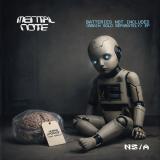
‘Batteries Not Included (Brain Sold Separately)’ EP Arrives Via No Static Automatic
No Static Automatic is proud to announce the new EP from UK Electro legend Phil Klein under his Mental Note alias. Titled “Batteries Not Included (Brain Sold Separately),” this release marks the dynamic follow-up to the acclaimed 2020 debut “Voices In My Head (Noises In My Pants).”
Few authentic Electro producers from the UK can wear the badge ‘legend’ with the same level of justification as Phil Klein, aka Bass Junkie. Active since the late 80s, Klein has tirelessly shaped his distinct vision of Electro, both as a solo artist and through storied collaborations with icons like Dynamix II, Keith Tenniswood (Radioactiveman), and Si Brown (Dexorcist). As a DJ, remixer, live act, and the driving force behind the seminal Battle Trax label, his influence is woven into the fabric of the genre.
With essential releases on labels including DMX Krew’s Breakin’ Records, Andrea Parker’s Touchin’ Bass, and Billy Nasty’s Elektrix, the Bass Junkie sound seamlessly bridges the old-school beats of Electro’s origins with a potent, borderline-industrial edge. As noted by Andy Barton of Bass Agenda: “From funky to ferocious, Bass Junkie’s discography is a must-have for anyone claiming passion for the genre – influential, individual, and infectious with every beat.”
Now, as Mental Note, Klein continues his exploration of electronic psychedelia. The new EP, “Batteries Not Included (Brain Sold Separately),” is a four-track expedition through the Electro cosmos:
“Brainwash” immerses the listener in swirling, hypnotic synths.
“They're Not Blue, They’re Purple” delivers a masterclass in crunchy, textured drums.
“Primordial Soup” showcases frantic, intricate programming.
“Kluster Funk” offers a moment of deep, sonic relief and groove.
Each track reinforces Mental Note’s signature: a journey that is cerebral, raw, and irresistibly rhythmic.
About Bass Junkie/Mental Note:
Phil Klein, operating primarily under the alias Bass Junkie, is a cornerstone of the UK Electro scene. For over three decades, his work has defined and evolved the sound, earning him a revered status among peers and purists. His Mental Note project is a focused outlet for a deeper, more experimental strand of his production genius, further solidifying his legacy as an electronic music innovator.
- A1: Les Masques - Il Faut Tenir (1969)
- A2: Isabelle Aubret - Casa Forte (1971)
- A3: Christianne Legrand - Hlm Et Ciné Roman (1972)
- A4: Jean Constantin - Pas Tant D'chichi Ponpon (1972)
- A5: Billy Nencioli & Baden Powell - Si Rien Ne Va (1969)
- B1-: Marpessa Dawn - Le Petit Cuica (1963)
- B2: Jean-Pierre Sabar - Vai Vai (1974)
- B3: Sophia Loren - De Jour En Jour (1963)
- B4: Isabelle - Jusqu’à La Tombée Du Jour (1969)
- B5: Sylvia Fels - Corto Maltesse (1974)
- C1: Frank Gérard - Comme Une Samba (1972)
- C2: Ann Sorel - La Poupée Des Favellas (1971)
- C3: Charles Level - Un Enfant Café Au Lait (1971)
- C4: Andrea Parisy - Les Mains Qui Font Du Bien (1970)
- C5: Audrey Arno - Quand Jean-Paul Rentrera (1969)
- C6: Aldo Frank - T’as Vu Ce Printemps (1970)
- D1: Christianne Legrand - Cent Mille Poissons Dans Ton Filet (1972)
- D2: Clarinha - Lemenja (1970)
- D3: Hit Parade Des Enfants - Aquarela (1976)
- D4: Jean-Pierre Lang - Tendresse (1965)
- D5: Magalie Noël - Une Énorme Samba (1970)
- D6: Françoise Legrand - La Lune
Ever since the late 1950s bossa-nova revolution, Brazil’s influence on French music has been undeniable. Pierre Barouh, Georges Moustaki and a vast array of lesser known artists, all made the Musica Popular Brasileira (MPB) an axis of promotion at the service of a cool and metaphysical, modern and mixed Brazilian lifestyle. Some were seduced by the poetic languors of the bossa, some were looking for fun, and others just loved the American hybridization of jazz-bossa, jazz-samba.
What is bossa nova? One of its creators, Joao Gilberto said: "Its style, cadence, everything is samba. At the very start, we didn't call it bossa nova, we sang a little samba made up of a single note - Samba de uma nota so .... The discussion around the origins of bossa nova is therefore useless”. It is nevertheless useful to remember that these magnificent Brazilian songs, which the guitarist describes as samba, were shifted and balanced around improbable chords. "I like things that lean, the in-betweens that limp with grace," said Pierre Barrouh, quoting Jean Cocteau.
With emotion, arrangements for violin and supple guitar licks, bossa nova rapidly changed. A transformation that can be heard in the Tchic, tchic, French Bossa Nova 1963-1974 compilation, the result of a cultural reappropriation, which traveled through the United States and supplemented itself in France.
A musical revolution that has remained significant, bossa nova was born in Rio. From 1956 to 1961, Brazil lived through its golden years. In five years, the country had invented its modernist style. Elected president in 1956, Juscelino Kubitschek de Oliveira, an elegant man with a broad forehead, brandished a promising slogan: "Fifty years of progress in five years". He quickly got to work. Not worried about increasing debt, he launched the project for a new federal capital, Brasilia, designed by the communist architect Oscar Niemeyer. Volkswagen opened state-of-the-art factories and created the “fusquinha”, the Beetle. In Rio, the Vespa made its first appearance. The Arpoador Surf Club crew run into the “girl” from Ipanema, Helô Pinheiro - the tanned garota ("chick"), between a flower and mermaid, who at 17 walked by the Veloso bar, where the fiery author and composer, Tom Jobim and Vinicius de Moraes, were getting drunk on whiskey. From then on, bossa symbolized cool.
In 1958, Joao Gilberto recorded Chega de Saudade, which the directors of Philips denied, calling it "music for fagots". The marketing director, who believed in it, secretly pressed 3000 78-inch vinyls and distributed them at schools around Rio, creating a tidal wave.
American jazzmen then took over. In particular, trumpeter Dizzy Gillespie and guitarist Charlie Byrd. In November 1962, the Brazilian Ministry of Foreign Affairs funded a "Bossa-Nova" concert at Carnegie Hall in New York, inviting the genre’s pioneers. Unprepared, the show soon turned to disaster. But the troupe was invited to the White House by Jackie Kennedy. The first lady loved "the new beat" and in particular Maria Ninguem, a song by Carlos Lyra, later covered by Brigitte Bardot.
In Brazil, the 1964 military coup quickly ended this euphoria. The destructive atmosphere that ensued pushed many Brazilian musicians to leave, if not to exile. Thus, Tom Jobim, Sergio Mendes and Joao Gilberto arrived to the United States. In New York, Joao Gilberto met saxophonist Stan Getz. At the time, he was married to the Bahianese Astrud Weinert Gilberto, who had a German father. She had never sung before, but she knew how to speak English. Getz therefore asked her to replace her husband on The Girl From Ipanema. The Getz/Gilberto record with Tom Jobim on piano, was released in March 1964. Phil Ramone, the "pope of pop" was in charge of sound.
Bossa nova arrived in Paris through the classic “guitar-voice” channel (Pierre Barouh, Baden Powell, Moustaki…) But France loved jazz and Paris had already welcomed its American contributors. All these good people were to pass through Saint-Germain-des-Prés. The cabaret l'Escale became the Mecca of Latin American sound where one could find Pierre Barrouh and his friends, such as the Camara Trio, samba-jazz aces, whose only record was published by the Saravah label. With a band strangely called Les Masques (a band that included Nicole Croisille and Pierre Vassiliu, among others), the Camara Trio recorded an interesting Brazilian Sound, including the track Il faut tenir which is present on this tasty compilation of rarities.
Other enlightened musicians can also be found on the compilation, such as Jean-Pierre Sabar (songwriter for Hardy, Auffray, Leforestier ...) and the French pop rock organist Balthazar. In 1975, Sabar recorded Aurinkoinen Musiikkimatka on a Finnish label, which featured the crazy Vai, Vai, included on this record. We are now following the footsteps of Brazilian electronic musicians such as Sergio Mendes, Eumir Deodato or Marcos Valle who created funk and disco sounds on their keyboards and synthesizers. A style that influenced Véronique Sanson when she wrote Jusqu’à la Tombée de la nuit in 1969 for Isabelle de Funès, the niece of Louis and a great friend of Michel Berger - Sanson did end up singing this track on her 1992 Sans Regret record.
The pinnacle of exoticism and travel, Sylvia Fels’ Corto Maltese includes bongos, sea mist and ocean sounds. The title was taken from Jacky Chalard’s concept album written in 1974, Je suis vivant, mais j’ai peur (I am alive, but I am scared), based on Gilbert Deflez’s science fiction novel.
However, bossa nova extended the scope of popularity. "In the 1970s, I was a fan of Sergio Mendes, Getz / Gilberto. I fell in love with this music that I knew because I had been an orchestral singer, " explained Isabelle Aubret, who in 1971 delivered a composite record of covers by the very funky Jorge Ben, Orfeu Negro, Tom Jobim, Vinicius de Morais and Jean Ferrat. "I recorded this album for Meys Records in Paris, far from Brazil, with wonderful musicians, François Raubert, Roland Vincent, Alain Goraguer...". The latter wrote the arrangements for Casa Forte, a very percussive title borrowed from Edu Lobo, one of the initiators of the bossa who spent time in California. "Jazz and bossa came together and produced very rhythmic music. I love singing, it allows me to dream, to have fun, to feel a high on stage, and these songs brought me joy, made me swing, my singing felt like a dance.”
The world tours of French singers and their desire for the tropics, often brought them to Rio with its hills, forests, caipirinhas and tanned bodies. There are surprises though, like this Iemenja (Iemenja is the goddess of the sea in the Afro-Brazilian candomblé religion). Not unlike the composer and musician Jean-Pierre Lang, based in Sao Paulo, Claire Chevalier taught Brazil to Brazil. In 1970, the singer and painter published a 45-inch vinyl, Mon mari et mes amants (My husband and my lovers), under the improbable pseudonym of Clarinha (little Claire). She was then living in Rio, with her husband, Joël Leibovitz, who founded a band called Azimuth, and who owned a record label specialized in "sambas enredos" songs for samba school parades.
For its B side, she asked Pierre Perret to come up with lyrics for a song composed by Carlos Imperial: "Oh goddess of the sea, o goddess Iemenja, I bring a white rose to adorn your long hair ..." . "Perret came to see us, and we had fun, remembers Joël Leibovitz. We wrote Lemenja for fun, we recorded it at the Havaí studio, behind the Central do Brasil the central station. Erlon Chaves, the arranger who worked with Elis Regina, joined us" adding his share of Afro-Brazilian percussions and funky brass to the mix.
There is a common misunderstanding in Franco-Brazilian history: that bossa, admittedly hedonistic, is perceived as funny, even though the poets who wrote the texts are often philosophizing on the human condition. Its French interpreters pull it towards a carnival inspired universe, far removed from its fundamental essence. Thus, Jean Constantin covered the famous Samba da minha terra, an ode to the art of samba written by the classic Bahian composer Dorival Caymmi, renaming it with the enticing title of Pas tant de tchi tchi pompon: "On your pier there is no tchi tchi / when you arch your back, you know everything is alright ”(lyrics by Gérard Calvi). This expedited bossa aims for the absurd, but retains a certain elegance.
Indeed, Jean Constantin was not an idiot, the rather large man had a huge mustache and liked fantasy, (Les pantoufles à papa, Le pacha, inspired by cha-cha-cha-cha, salsa and jazz) but he was also the lyricist of Mon manège à moi interpreted by Edith Piaf, the composer of Mon Truc en plume by Zizi Jeanmaire and the soundtrack of François Truffaut’s 400 Blows. Le Poulpe, published in 1970, from which this bossa is extract, was arranged by Jean-Claude Vannier, an accomplice of Serge Gainsbourg’s Melody Nelson. In short: "There is enough of samba / By looking at the parasol / Because my poor cabeza / Is going to die in the sun".
Even the American actress Marpessa Down, who was at the heart of the bossa nova revolution with her role as Euridyce in Marcel Camus’ film Orfeu Negro, winner of the 1959 Cannes Palme d'or, fed the clichée with Je voudrais parler au petit cuica - "Tell me how you manage to always make people want to dance / It's true, I must admit that I cannot resist your magic" - in consequence, once can hear the cuica, a little drum inherited from the Bantu.
But bossa nova had many angles. Societal, of course, pushing actresses who were symbols of women's liberation like Brigitte Bardot, Jeanne Moreau, or Sophia Loren to engage in the exercise of accelerated bossa. In February of 1963, Sophia Loren made a record in French in Rome, Je ne t'aime plus, featuring the song De jour en jour, a bossa written by two Italians, Armando Trovajoli and Tino Fornai, which was released a little later by Barclay. Bossa accompanied the 1960s, a decade of moral liberation. Ann Sorel, who interpreted La Poupée des favellas, caused a sensation with L’amour à plusieurs, a provocative song written by Frédéric Bottom and Jean-Claude Vannier. As for the actress Andrea Parisy, she displayed her bourgeois cheekiness in Marcel Carné's Les Tricheurs before interpreting Les mains qui font du bien. And Magalie Noël, the friend of Boris Vian, who sung Johnny fais-moi mal, was hired to sing Une énorme Samba, composed by Alain Goraguer (arranger to Gainsbourg, Bobby Lapointe and Jean Ferrat) with lyrics by Frédéric Botton.
But in the end, of what wood is bossa nova made of? The answer is given by Christianne Legrand, daughter of Raymond the conductor, and sister to Michel the composer: "With me, with jà" - jà means "immediately" in Portuguese. In 1972, the singer, an expert in vocal jazz and a member of the Double Six, published Le Brésil de Christianne Legrand. Two songs included on the Tchic Tchic compilation that demonstrate how bossa, jazz, funk, rock, etc. work like a swiss army knife: the music is used to denounce broken systems, or miracles, HLM et ciné roman, Cent mille poissons dans ton filet, two songs from the O Cafona soundtrack, a successful telenovela broadcast, at the time in black and white, on TV Globo. The first was adapted in French by the fighter and friend of the Legrand tribe, Agnès Varda. The second is content with a play on words, jostling them into a summer fun.
Véronique Mortaigne
Death Is Not The End collaborate with Uzbek label Maqom Soul to deliver an LP counterpart to last year's mixtape of the same title, compiling specially picked & fully licensed individual belters from the ex-soviet studios of Central Asian republics between 1978 and 1989 - incl. Uzbek, Tajik, Kurdish & Uyghur artists pulling traditional folk motifs together with pop & rock and psych elements.
"These recordings do not form a smooth or coherent history. They feel more like a sequence of discoveries made at different moments and in different circumstances. Songs and instrumental pieces that once lived inside specific contexts radio broadcasts, philharmonic programs, touring routes now sit side by side, revealing hidden connections as well as clear fractures between them.
Nasiba Abdullaeva appears here as a voice from the end of an era. Trained within a conservatory system, she worked inside the format of the Soviet pop song while filling it with melodic logic that did not come from Moscow or Leningrad. Her voice is soft and sustained, shaped by Eastern melisma, and it never functions as decoration. Even in tightly structured songs there is a sense of resistance, an effort to preserve a musical language rooted in Uzbek tradition rather than fully adapted to an all Union standard.
The ensemble Sintez, later renamed Navo, represents a different path. Beginning as a student rock group, the band was gradually absorbed into the official VIA system with all its limitations and compromises. Yet it was precisely within those boundaries that Sintez and Navo developed a recognizable sound. Electric guitars and jazz rock harmonies do not overpower the folk material but remain in tension with it. Their recordings feel like negotiations between what the musicians wanted to play and what they were allowed to perform.
The Tajik ensemble Gulshan reflects an institutional approach carried to a high professional level. Formed under television and radio structures, the group treated folk material almost as a written score. Carefully constructed arrangements, close attention to orchestration, and restrained use of pop techniques define their sound. There is less spontaneity here, but a strong sense of discipline and structure, where national melody becomes part of a carefully controlled sonic framework.
Koma Wetan occupies a very different space. Formed in the 1970s, this Kurdish rock group approached poetry and folklore as tools of cultural assertion. Their psychedelic rock never feels like a stylistic borrowing. Instead it functions as a contemporary vessel for language and themes that might otherwise have remained unheard. Even today these recordings sound fragile and stubborn at the same time.
The Uyghur ensemble Yashlik, closely connected to a musical drama theatre, operated somewhere between stage performance and popular music. Their songs are built on folk melodies but shaped for wide audiences. What emerges is a constant attempt to preserve the recognizability of Uyghur musical identity without freezing it in a folkloric frame. Yashlik's music exists in a state of balance between representation and development.
Digging Central Asia does not attempt to establish hierarchies or offer a single wayof listening. Names and dates matter less than the sound itself. Tape noise, abrupt transitions, and unexpected timbres remain part of the material rather than flaws to be corrected. This music existed at the crossroads of multiple routes geographic, cultural, and ideological. Heard today in a new context, it no longer feels peripheral. Instead it stands as a reminder that the history of popular music is far more fragmented, layered, and polyphonic than it is usually allowed to be."
Australia's Dancing in Space crew have thus far kept their vinyl releases to a minimum, reappearing every so often with a fresh batch of their own excellent disco edits. Here they try something different, delivering a typically assured two tracker from one of the most talented and productive scalpel fiends in the business, Chicago scene stalwart Rahaan. A-side 'Allright' is a typical Rahaan rub, with the talented re-editor skilfully rearranging and lightly dubbing out what sounds like a turn-of-the-80s fusion of classic disco, synth-splattered boogie and soaring jazz-funk. On 'My Strategy', he successfully breathes new life into an old Philadelphia International favourite, opting for a largely instrumental extension that subtly pitches the track up, tempo wise, for greater dancefloor pleasure.
UILTY RAZORS, BONA FIDE PUNKS.
Writings on the topic that go off in all directions, mind-numbing lectures given by academics, and testimonies, most of them heavily doctored, from those who “lived through that era”: so many people today fantasize about the early days of punk in our country… This blessed moment when no one had yet thought of flaunting a ridiculous green mohawk, taking Sid Vicious as a hero, or – even worse – making the so-called alternative scene both festive and boorish. There was no such thing in 1976 or 1977, when it wasn’t easy to get hold of the first 45s by the Pistols or the Clash. Few people were aware of what was happening on the fringes of the fringes at the time. Malcolm McLaren was virtually unknown, and having short hair made you seem strange. Who knew then that rock music, which had taken a very bad turn since the early 1970s, would once again become an essential element of liberation? That, thanks to short and fast songs, it would once again rediscover that primitive, social side that was so hated by older generations? Who knew that, besides a few loners who read the music press (it was even better if they read it in English) and frequented the right record stores? Many of these formed bands, because it was impossible to do otherwise. We quickly went from listening to the Velvet Underground to trying to play the Stooges’ intros. It’s a somewhat collective story, even though there weren’t many people to start it.
The Guilty Razors were among those who took part in this initial upheaval in Paris. They were far from being the worst. They had something special and even released a single that was well above the national average. They also had enough songs to fill an album, the one you’re holding. In everyone’s opinion, they were definitely not among the punk impostors that followed in their wake. They were, at least, genuine and credible.
Guilty Razors, Parisian punk band (1975-1978). To understand something about their somewhat linear but very energetic sound, we might need to talk about the context in which it was born and, more broadly, recall the boredom (a theme that would become capital in punk songs) coupled with the desire to blow everything off, which were the basis for the formation of bands playing a rejuvenated rock music ; about the passion for a few records by the Kinks or the early Who, by the Stooges, by the Velvet mostly, which set you apart from the crowd.
And of course, we should remember this new wave, which was promoted by a few articles in the specialized press and some cutting-edge record stores, coming from New York or London, whose small but powerful influence could be felt in Paris and in a handful of isolated places in the provinces, lulled to sleep by so many appalling things, from Tangerine Dream to President Giscard d’Estaing...
In 1975-76, French music was, as almost always, in a sorry state ; it was still dominated by Johnny Hallyday and Sylvie Vartan. Local rock music was also rather bleak, apart from Bijou and Little Bob who tried to revive this small scene with poorly sound-engineered gigs played to almost no one.
In the working class suburbs at the time, it was mainly hard rock music played to 11 that helped people forget about their gruelling shifts at the factory. Here and there, on the outskirts of major cities, you still could find a few rockers with sideburns wearing black armbands since the death of Gene Vincent, but it wasn’t a proper mass movement, just a source of real danger to anyone they came across who wasn't like them. In August 1976, a festival unlike any other took place in Mont-de-Marsan – the First European Punk Festival as the poster said – with almost as many people on stage as in the audience. Yet, on that day, a quasi historical event happened, when, under the blazing afternoon sun, a band of unknowns called The Damned made an unprecedented noise in the arena, reminiscent of the chaotic Stooges in their early adolescence. They were the first genuine punk band to perform in our country: from then on, anything was possible, almost anything seemed permissible.
It makes sense that the four+1 members of Guilty Razors, who initially amplified acoustic guitars with crappy tape recorder microphones, would adopt punk music (pronounced paink in French) naturally and instinctively, since it combines liberating noise with speed of execution and – crucially – a very healthy sense of rebellion (the protesters of May 1968 proclaimed, and it was even a slogan, that they weren’t against old people, but against what had made them grow old. In the mid-1970s, it seemed normal and obvious that old people should now ALSO be targeted!!!).
At the time, the desire to fight back, and break down authority and apathy, was either red or black, often taking the form of leafleting, tumultuous general assemblies in the schoolyard, and massive or shabby demonstrations, most of the time overflowing with an exciting vitality that sometimes turned into fights with the riot police. Indeed, soon after the end of the Vietnam War and following Pinochet’s coup in Chile, all over France, Trotskyist and anarcho-libertarian fervour was firmly entrenched among parts of the educated youth population, who were equally rebellious and troublemakers whenever they had the chance. It should also be noted that when the single "Anarchy in the UK" was first heard, even though not many of us had access to it, both the title and its explosive sound immediately resonated with some of those troublemakers crying out for ANARCHY!!! Meanwhile, the left-wing majority still equated punks with reckless young neo-Nazis. Of course, the widely circulated photos in the mainstream press of Siouxsie Sioux with her swastikas didn’t necessarily help to win over the theorists of the Great Revolution. It took Joe Strummer to introduce The Clash as an anti-racist, anti-fascist and anti-ignorance band for the rejection of old-school revolutionaries to fade a little.
The Lycée Jean-Baptiste Say at Porte d’Auteuil, despite being located in the very posh and very exclusive 16th arrondissement of Paris, didn’t escape these "committed" upheavals, which doubled as the perfect outlet for the less timid members of this generation.
“Back then, politics were fun,” says Tristam Nada, who studied there and went on to become Guilty Razors’ frontman. “Jean-Baptiste was the leftist high-school in the neighbourhood. When the far right guys from the GUD came down there, the Communist League guys from elsewhere helped us fight them off.”
Anything that could challenge authority was fair game and of course, strikes for just about any reason would lead to increasingly frequent truancy (with a definitive farewell to education that would soon follow). Tristam Nada spent his 10th and 11th unfinished grades with José Perez, who had come from Spain, where his father, a janitor, had been sentenced to death by Franco. “José steered my tastes towards solid acts such as The Who. Like most teenagers, I had previously absorbed just about everything that came my way, from Yes to Led Zeppelin to Genesis. I was exploring… And then one day, he told me that he and his brother Carlos wanted to start a rock band.” The Perez brothers already played guitar. “Of course, they were Spanish!”, jokes their singer. “Then, somewhat reluctantly, José took up the bass and we were soon joined by Jano – who called himself Jano Homicid – who took up the rhythm guitar.” Several drummers would later join this core of not easily intimidated young guys who didn’t let adversity get the better of them.
The first rehearsals of the newly named Guilty Razors took place in the bedroom of a Perez aunt. There, the three rookies tried to cover a few standards, songs that often were an integral part of their lives. During a first, short gig, in front of a bewildered audience of tough old-school rockers, they launched into a clunky version of the Velvet Underground's “Heroin”. Challenge or recklessness? A bit of both, probably… And then, step by step, their limited repertoire expanded as they decided to write their own songs, sung in a not always very accurate or academic English, but who cared about proper grammar or the right vocabulary, since what truly mattered was to make the words sound as good as possible while playing very, very fast music? And spitting out those words in a language that left no doubt as to what it conveyed mattered as well.
Trying their hand a the kind of rock music disliked by most of the neighbourhood, making noise, being fiercely provocative: they still belonged to a tiny clique who, at this very moment, had chosen to impose this difference. And there were very few places in France or elsewhere, where one could witness the first stirrings of something that wasn’t a trend yet, let alone a movement.
In the provinces, in late 1976 or early 1977, there couldn’t be more than thirty record stores that were a bit more discerning than average, where you could hear this new kind of short-haired rock music called “punk”. The old clientele, who previously had no problem coming in to buy the latest McCartney or Aerosmith LP, now felt a little less comfortable there…
In Paris, these enlightened places were quite rare and often located nex to what would become the Forum des Halles, a big shopping mall. Between three aging sex workers, a couple of second-hand clothes shops, sellers of hippie paraphernalia and small fashion designers, the good word was loudly spread in two pioneering places – propagators of what was still only a new underground movement. Historically, the first one was the Open Market, a kind of poorly, but tastefully stocked cave. Speakers blasted out the sound of sixties garage bands from the Nuggets compilation (a crucial reference for José Perez) or the badly dressed English kids of Eddie and the Hot Rods. This black-painted den was opened a few years earlier by Marc Zermati, a character who wasn’t always in a sunny disposition, but always quite radical in his (good) choices and his opinions. He founded the independent label Skydog and was one of the promoters of the Mont-de-Marsan punk festivals. Not far from there was Harry Cover, another store more in tune with the new New York scene, which was amply covered in the house fanzine, Rock News (even though it was in it that the photos of the Sex Pistols were first published in France).
It was a favorite hang-out of the Perez brothers and Tristam Nada, as the latter explained. “It’s at Harry Cover’s that we first heard the Pistols and Clash’s 45s, and after that, we decided to start writing our first songs. If they could do it, so could we!”
The sonic shocks that were “Anarchy in the UK”, “White Riot” or the Buzzcocks’s EP, “Spiral Scratch” – which Guilty Razors' sound is reminiscent of – were soon to be amplified by an unparalleled visual shock. In April 1977, right after the release of their first LP, The Clash performed at the Palais des Glaces in Paris, during a punk night organised by Marc Zermati. For many who were there, it was the gig of a lifetime…
Of course, Guilty Razors and Tristam were in the audience: “That concert was fabulous… We Parisian punks were almost all dressed in black and white, with white shirts, skinny leather ties, bikers jackets or light jackets, etc. The Clash, on the other hand, wore colourful clothes. Well, the next day, at the Gibus, you’d spot everyone who had been at this concert, but they weren’t wearing anything black, they were all wearing colours.”
It makes sense to mention the Gibus club, as Guilty Razors often played there (sometimes in front of a hostile audience). It was also the only place in Paris that regularly scheduled new Parisian or Anglo-Saxon acts, such as Generation X, Siouxsie and the Banshees, the Slits, and Johnny Thunders who would become a kind of messed-up mascot for the venue. A little later, in 1978, the Rose Bonbon – formerly the Nashville – also attracted nightly owls in search of electric thrills… In 1977, the iconic but not necessarily excellent Asphalt Jungle often played at the Gibus, sometimes sharing the bill with Metal Urbain, the only band whose aura would later transcend the French borders (“I saw them as the French Sex Pistols,” said Geoff Travis, head of their British label Rough Trade). Already established in this small scene, Metal Urbain helped the young and restless Guilty Razors who had just arrived. Guitarist for Metal Urbain Hermann Schwartz remembers it: “They were younger than us, we were a bit like their mentors even if it’s too strong a word… At least they were credible. We thought they were good, and they had good songs which reminded of the Buzzcocks that I liked a lot. But at some point, they started hanging out with the Hells Angels. That’s when we stopped following them.”
The break-up was mutual, since, Guilty Razors, for their part, were shocked when they saw a fringe element of the audience at Metal Urbain concerts who repeatedly shouted “Sieg Heil” and gave Nazi salutes. These provocations, even still minor (the bulk of the skinhead crowd would later make their presence felt during concerts), weren’t really to the liking of the Perez brothers, whose anti-fascist convictions were firmly rooted. Some things are non-negotiable.
A few months earlier (in July 1978), Guilty Razors had nevertheless opened very successfully for Metal Urbain at the Bus Palladium, a more traditonally old-school rock night-club. But, as was sometimes the case back then, the night turned into a mass brawl when suburban rockers came to “beat up punks”.
Back then, Parisian nights weren’t always sweet and serene.
So, after opening as best as they could for The Jam (their sound having been ruined by the PA system), our local heroes were – once again – met outside by a horde of greasers out to get them. “Thankfully,” says Tristam, “we were with our roadies, motorless bikers who acted as a protective barrier. We were chased in the neighbouring streets and the whole thing ended in front of a bar, with the owner coming out with a rifle…”
Although Tristam and the Perez brothers narrowly escaped various, potentially bloody, incidents, they weren’t completely innocent of wrongdoing either. They still find amusing their mugging of two strangers in the street for example (“We were broke and we simply wanted to buy tickets for the Heartbreakers concert that night,” says Tristam). It so happened that their victims were two key figures in the rock business at the time: radio presenter Alain Manneval and music publisher Philippe Constantin. They filed a complaint and sought monetary compensation, but somehow the band’s manager, the skilful but very controversial Alexis, managed to get the complaint withdrawn and Guilty Razors ended up signing with Constantin with a substantial advance.
They also signed with Polydor and the label released in 1978 their only three-track 45, featuring “I Don't Wanna be A Rich”, “Hurts and Noises” and “Provocate” (songs that exuded perpetual rebellion and an unquenchable desire for “class” confrontation). It was a very good record, but due to a lack of promotion (radio stations didn’t play French artists singing in English), it didn’t sell very well. Only 800 copies were allegedly sold and the rest of the stock was pulped… Initially, the three tracks were to be included on a LP that never came to be, since they were dropped by Polydor (“Let’s say we sometimes caused a ruckus in their offices!” laughs Tristam.) In order to perfect the long-awaited LP, the band recorded demos of other tracks. There was a cover of Pink Floyd's “Lucifer Sam” from the Syd Barrett era – proof of an enduring love for the sixties’ greats –, “Wake Up” a hangover tale and “Bad Heart” about the Baader-Meinhof gang, whose actions had a profound impact on the era and on a generation seeking extreme dissent... On the album you’re now discovering, you can also hear five previously unreleased tracks recorded a bit later during an extended and freezing stay in Madrid, in a makeshift studio with the invaluable help of a drummer also acting as sound engineer. He was both an enthusiastic old hippie and a proper whizz at sound engineering. Here too, certain influences from the fifties and sixties (Link Wray, the Troggs) are more than obvious in the band’s music.
Shortly after a final stormy and rather barbaric (on the audience’s side) “Punk night” at the Olympia in June 1978, Tristam left the band ; his bandmates continued without him for a short while.
But like most pioneering punk bands of the era, Guilty Razors eventually split up for good after three years (besides once in Spain, they’d only played in Paris). The reason for ceasing business activities were more or less the same for everyone: there were no venues outside one’s small circuit to play this kind of rock music, which was still frightening, unknown, or of little interest to most people. The chances of recording an LP were virtually null, since major labels were only signing unoriginal but reassuring sub-Téléphone clones, and the smaller ones were only interested in progressive rock or French chanson for youth clubs. And what about self-production? No one in our small safety-pinned world had thought about it yet. There wasn’t enough money to embark on that sort of venture anyway.
So yes, the early days of punk in France were truly No Future!
- A1: Live From Mumbai
- A2: No Other Than
- A3: Powerman & Iron Fist (Fighting Without Fighting Version)
- A4: The Sure Shot!
- B1: Fresh Like Dougie
- B2: How To Cut & Paste (Lesson 1)
- B3: Audobahn
- C1: All Out War
- C2: Break Down
- C3: Golden Crown (Feat. Oxygen)
- D1: Fashion Plate
- D2: Sister Of Phyllis Diller
- D3: Heroes Of The East (Feat. Paten Locke)
- D4: The Pack Up (Part 3)
Cassette Box Set[38,87 €]
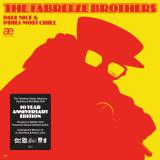
AE Productions in association with Sure Shot Recordings and In Effect Recordings are pleased to announce a 10 Year Anniversary Edition of the critically acclaimed Phill Most Chill and Paul Nice album as the Fabreeze Brothers.
The hugely successful first edition which was pressed on colour vinyl and supplied in double fold out sleeve sold out in only 2 weeks from release date and then the 2nd pressing black vinyl edition sold out a little while later but has for years been out of print but is increasingly requested by shops, via email, social media, AE Productions website back in stock requests, etc…
As it has been 10 years since original release back in 2015 at the time of proceeding with manufacturing, it was the perfect opportunity to do a 3rd pressing to mark the anniversary but we had to pull out all the stops for a 3rd run of this incredible album and also make it subtly different again in packaging design from the 1st and 2nd pressings so that each has it’s own particular feel and quality.
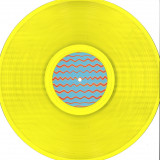
With help from the original designer and all-round vinyl artwork supremo Mr Krum we have found some nice adjustments for the gatefold sleeve where the detail from the insert sheet found in the original issues is incorporated into the inside panels of the sleeve. We have also tweaked the hype sticker to mark the 10th Anniversary Edition and updated the vinyl labels so as to work better with the new Splatter vinyl which follows the original red and yellow vinyl but each splattered with the opposite colour.
For something a little extra we have compiled a Limited Expanded Edition Double Cassette Box Set that includes the original album and also a ‘Bonus Tape’ which features all of the remixes, alternate versions, Original Versions of album cuts and bonus tracks found on B-sides of the array of singles and we included for good measure 2 tracks that only appeared on the promotional only LP sampler that ended up being different on the final release. This is limited to cassette just for the non-vinyl heads as all of these tracks already appear on vinyl. The outer box is A5 card in black with gold foil Fabreeze Brothers logo and comes with discography booklet.
‘The Bonus Tape’ from the box set is also available as a standalone cassette release with alternate j-card art work so that it has it’s own flavour and so that anyone that purchased one of the original run of cassettes that sold out before we could even ship any copies, did not need to purchase the main album again unnecessarily and to make it noticeable from the Expanded Edition Box Set version.
This version also has an alternate shell design in keeping with the clear shell with dark liner that was commonplace back in the 90’s and the cassette geeks may note the red text on the spine as was also a common design back then – giving this a pseudonym of ‘the 90’s tape’ during the design process.
We couldn’t stop there so we also have an extremely low quantity Limited Edition Mini Disc version which is the main album plus 8 of the bonus tracks from The Bonus Tape – only missing the 2 least significant alternate versions but clocking in at just a few seconds under 80 minutes – the absolute maximum for the format! Mini Disc???!!! You’re probably asking – yes!
While looking into the cassette duplication options we realised that the duplicator also offers Mini Disc production so we thought that it may be worth doing a very small run just because not only are professionally manufactured Mini Disc’s rare in Hip Hop, they are rare within the entire music industry as they never really took off as a medium to purchase music but ended up as the choice for home recorded Walkman and car use. Indeed, AE boss Mr Fantastic still has his main machine, portable and old discs. Amazingly also, the sleeve artwork transferred brilliantly to the Mini Disc template. They are manufactured using high quality Sony discs using ATRAC 4.5 codec.
All releases are supplied with unique free download codes on cards that are included inside the packaging but also with the Expanded Edition cassette and Mini Disc having 2 cards – 1 for the main album and a 2nd card for ‘The Bonus Tape’. The free downloads are supplied direct from Phill Most Chill’s Bandcamp page keeping it independent.