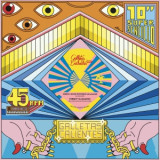
quête:phil nova

Genres
Tout
PPJ - Joker
  • A1: Me Pega
  • A2: Tem Carnaval
  • A3: Sexy Doce
  • B1: Coeur
  • B2: Então Tá Bem
  • B3: Para Ser Feliz
  • B4: Tô Nem Aí

Fresh from releasing projects on Method 808 and Future Classic, landing a huge collaboration with Chloé Caillet, and delivering an official remix for Fatboy Slim, PPJ are entering a new chapter in full force. Their expansive take on global street sounds, ranging from neoperreo to Miami bass, gets a cool re-coating.

Led by the magnetic vocalist Páula, with production from Povoa (individually supported by Four Tet, Ben UFO, and Barry Can't Swim, with recent releases on Live From Earth), the duo operates in maximalist mode: playful, sensual, and slightly unhinged.PPJ’s new era, JOKER, embraces a figure that appears everywhere from card decks to carnival culture as a symbol that mirrors their own DNA: funny, eerie, seductive, unpredictable. The EP leans further into club territory, but rather than polishing their edges, PPJ amplify them.

At the emotional core of the record sits “Coeur,” co-produced with Chloé Caillet. It begins with an MPB-tinged foundation flirting with bossa nova. It’s unmistakably Brazilian, bathed in sunset hues before being sped up and twisted into a dance-floor-ready electronic form. The groove shimmers with tension: warm percussion, elastic basslines, and Páula’s voice hovering between intimacy and tease. It feels like a remix of itself, romantic, but slightly untrustworthy.

If “Coeur” glows, “To Nem Ai” is a slow burner. A very deep and downtempo house cut, it unfolds slowly, almost luxuriously, guided by sensual vocals that feel whispered directly into the ear of the listener. A hypnotizing piano sample that feels like a late-night confession. It’s the kind of record that transforms a dancefloor into something tactile.

Elsewhere, “Me Pega” is a high-energy reinterpretation of the tech-house sounds from Santa Catarina, one of southern Brazil’s most feverish party states, twisted and accelerated for ferocious impact. Drawing direct inspiration from Sarro, a raw and vibrant Brazilian street dance, the track captures physical intensity in its purest form: sweat, bass pressure, collective release.

Its counterpart, “Tem Carnaval” channels Páula’s vivid storytelling into a thunderous ode to Rio’s carnival spirit, euphoric, chaotic, cinematic landed just in time for this year’s celebrations.

On “Sexy Doce,” rugged electroclash melodies collide with unexpected references. “It was inspired by Budots, which is dance music from the streets in the Philippines,” Povoa explains. “Then we mixed it with Páula’s Brazilian vocals. Baile funk is similarly from the streets, so there is a connection.” The result is raw yet futuristic, a cross-continental flirtation that feels both underground and explosive.

With this new EP, PPJ make music like they’re tuning into a dozen pirate frequencies at once. Pirate radio from Rio to Berlin to Manila intercepting fragments of street culture, sensuality, and chaos, and stitching them into something deliriously cohesive.
JOKER doesn’t just nod to club culture. It challenges it, twists expectation and leaves a lasting impression.

pré-commande24.04.2026

il devrait être publié sur 24.04.2026

20,97
Pernett, Quantic - Vamos A Hacer Edits

LTD 300 - Printed Sleeve
------------------------

Barranquilla born multi-instrumentalist Pernett is undoubtedly a true pioneer in fusing Colombian folklore with electronic elements. Back in 2003, when he released his first album “Música Para Pick Up”, Humberto was immediately seen as genius by some, crazy and outrageous by others. How dare he incorporate synthesizers into traditional music? What would be called this avant-garde genre where gaitas, traditional drums and keyboards come together? To this date, Pernett has released 6 albums, worked with an impressive number of prestigious artists such as Phil Manzanera, Calle 13, Novalima, or Quantic, and is still influencing whole generations of forward-thinking musicians.

Originally released from is latest album, “Vamos A Hacer” and El Pajarito have been edited for the occasion, by talented recording engineer Benjamin Calais AKA Ben Matik,

A-side “Vamos A Hacer - Ben Matik Instrumental Edit” is a joint collaboration between Pernett and renown British producer Will Holland aka Quantic. A heavy blend of funky breaks and cumbia. A 7-minutes version, exclusive to this 10″, has been especially taken out from the masters vault, and edited by Ben Matik: the original short version takes a unexpected turn to a completely freaked-out “Puya” rhythm, where gaitas and synths perfectly merge together.

B-side “El Pajarito - Ben Matik Instrumental Edit” is a deep downtempo anthem, a perfect fusion of powerful electronic beats, 808 bass, analog synths and gaitas. special attention should be paid to the enchanting voice of Diana Pereira on this one.

Artwork by Mateo Rivano.

pré-commande

Cet article n'a pas encore été publié. Vous pouvez pré-commander le produit maintenant.

42,44
Doof - The Love Mixes

Doof

The Love Mixes

12inchMYS023
MYSTICISMS
03.06.2025

Following the success of his ‘Love Dub So’ EP, Nick Barber’s Doof project returns to Mysticisms, delving back to his earliest recordings of his ground-breaking Trance project, presenting tracks from his previously cassette only release ‘The Love Mixes’.

A youth that had captured the psychedelia of Pink Floyd, Gong, Hawkwind and on to Psychic TV, as a self-taught guitarist, his first trip to India and Thailand in 1989 and witnessing the early electronic dance music at the Full Moon parties, had seemed rudimentary in nature compared to musicality of psychedelic rock.

Returning to England, the electronic / rock crossover of The Shamen’s ‘Progeny’ parties – featuring DJs like Paul Oakenfold and Mixmaster Morris with the live acts of Orbital and Ramjac Corporation – offered something new that turned his head, before finally finding his crew in the legendary squat / underground Pagan parties. There, residents Lol and Yaz first played the new electronic Trance sound, introducing Barber to the music of Eye-Q, Dance To Trance and the hugely influential Pete Namlook.

Recorded between 1990 – 1991, while living in Cambridge to study Philosophy, these are the first versions of tracks that formed the basis of his debut EP on Novamute, in 1993. Working with minimal equipment – an Akai sampler, Roland monosynth, Yamaha delay pedal, all sequenced on an Atari black and white PC and single MIDI output and then recorded straight to an 8-track Tascam cassette multitrack – the exuberance and rawness of the music are full of the excitement and naivety of youth.

Never intended for public release or initially even as a demo, Barber would play the music off the Tascam multitrack for friends at after parties. Dubbing a handful of cassettes himself and personally drawing the covers, around a dozen cassettes were handed out to mates. Eventually one copy found its way to Mute Records, who were looking to launch their dance offshoot, Novamute. Re-edited mixes of Gift Of The Gods and The Nagual appeared on his debut EP and history was made, before Doof went on to release for luminaries like TIP Records and Dragonfly and a career touring the globe was launched.

Remastered from the original tapes, this EP offers a snapshot of that time, the energy and joy of these early recordings is clear and overwhelming. Where Ambient, House and Techno met the birth of electronic Trance that truly stand up some 30 years later as originals then and now.

Trance The Mystery.

En stock

Disponible en stock et prêt pour l'expédition

15,92
Tomislav Simovic - The Zagreb School Of Animated Film (Original Soundtracks 1961-1982) (OST)

A collection of unreleased themes and scores from 18 short animated films from the world famous Zagreb School Of Animated Film. Includes Oscar winning short cartoon Ersatz / Surogat by Dusan Vukotic (1961) and many other jazz, electronica and experimental scores by composer Tomislav Simovic. Coined by the famed film theorist Georges Sadoul at the 1959 Cannes Festival, The Zagreb School of Animated Film(s) or The Zagreb School of Animation, was defined as an artistic and philosophical world-view that set its mark on the history of animation in the 60's and 70's. The key feature of the Zagreb School (not educational facility in any kind), was commitment to stylization in contrast with the Disney-style canon of realistic animation. Among many composers that worked in Zagreb Film productions, the name of Tomislav Simovic (1931 - 2014) stands out. In his oeuvre of 300+ film scores (not counting compositions and arrangements for pop singers and jazz orchestras), many were made exclusively for Zagreb film documentaries, fiction shorts, features and animation. Simovic was particularly adept at writing music for cartoons. He skillfully synchronized movement and sound and mixed different musical genres, although, like his peers at the time, he leaned towards jazz. 'The Zagreb School of Animated Film (Original Soundtracks 1961-1982)' is compiled by Leri Ahel (Mutant Disco Radio Show) and Zeljko Luketic (Electronic Jugoton, Ex-Yu Electronica III). Master tapes were considered lost, now found and restored for this epic 2 x LP release celebrating Yugoslavia's animated art shorts. Double vinyl gatefold with extensive liner notes, photographs from the films and exclusive cover artwork by Dejan Krsic (NEP / Nova Evropa).

En stock

Disponible en stock et prêt pour l'expédition

27,69
GUY CABAY - CABAYCÉDAIRE LP

Guy Cabay

CABAYCÉDAIRE LP

12inchTRILPFR061
Tricatel
03.07.2023

The Belgian vibraphonist Guy Cabay has played with Toots Thielemans, Philip Caherine or Raoul Faisant. Composer, arranger, musicologist and singer, he also wrote and recorded two extraordinary albums in Liege Walloon. Tricatel is happy to make them available at last, 46 years after their publication.

"Gravity kills us. Perhaps that is the meaning of Adam's Fall. We are condemned to be Newton's apple, not the balloon carried away by the wind. But it happens nevertheless that, by the grace of music in particular, we escape gravity, that time escapes time, that another breath inflates our lungs, so much lighter than the one that usually suffocates us.

We don't take light music seriously, and that's good. Only serious music deserves to be treated so badly. Guy Cabay's music flows from a purer source and speaks to us in a more tender voice. One can obviously describe it as one labels export product. Origin: Belgium. Ingredients: jazz, bossa nova, tropicalism, song - proportions may vary. Calorific value: none.

Non-perishable product. But this would say as much about what this music really is as if, in. order to evoke what the foggy blue of a Norman sky inspires, one were to take note of the variations in the percentage of humidity in the atmosphere at Etretat and make a learned presentation on the laws of refraction.

Guy Cabay did pass through Brazil and still lives there a little, a Brazil that is not the one ofcartographers or travel agencies, a Brazil that is as real as the Far West in which Fenimore Cooper's child readers lived, as blurred and limpid as a dream. It is not the Amazon thatflows through this Brazil, but the Ourthe, a tributary of the Meuse, which makes it morefamiliar, stranger and even more poetic.

To let oneself be bathed in this melancholichappiness, to let oneself be carried by this river is sweet, as sweet as the fluid consonants of the Walloon language, this 'd' which becomes 'dj' in his mouth, as in Portuguese, by the way. To know how to create melodies that hold on a note like Jobim's samba, like a fildeferist above a waterfall of chords, is not given to everyone. It is a gift. Knowing how to lace others on dozens of points, as on Tot a-fet rote cou d'zeur cou d'zos, a poignant encounter between Randy Newman and Robert Wyatt, is another. These are not the only ones that the fairies offered to Guy Cabay and that, by an almost miracle, he offers us again today. Hearts up."

Bertrand Burgalat

En stock

Disponible en stock et prêt pour l'expédition

16,60
Various - Tchic Tchic: French Bossa Nova 1963-1974  Colored Edition LP 2x12"
  • A1: Les Masques - Il Faut Tenir (1969)
  • A2: Isabelle Aubret - Casa Forte (1971)
  • A3: Christianne Legrand - Hlm Et Ciné Roman (1972)
  • A4: Jean Constantin - Pas Tant D'chichi Ponpon (1972)
  • A5: Billy Nencioli & Baden Powell - Si Rien Ne Va (1969)
  • B1-: Marpessa Dawn - Le Petit Cuica (1963)
  • B2: Jean-Pierre Sabar - Vai Vai (1974)
  • B3: Sophia Loren - De Jour En Jour (1963)
  • B4: Isabelle - Jusqu’à La Tombée Du Jour (1969)
  • B5: Sylvia Fels - Corto Maltesse (1974)
  • C1: Frank Gérard - Comme Une Samba (1972)
  • C2: Ann Sorel - La Poupée Des Favellas (1971)
  • C3: Charles Level - Un Enfant Café Au Lait (1971)
  • C4: Andrea Parisy - Les Mains Qui Font Du Bien (1970)
  • C5: Audrey Arno - Quand Jean-Paul Rentrera (1969)
  • C6: Aldo Frank - T’as Vu Ce Printemps (1970)
  • D1: Christianne Legrand - Cent Mille Poissons Dans Ton Filet (1972)
  • D2: Clarinha - Lemenja (1970)
  • D3: Hit Parade Des Enfants - Aquarela (1976)
  • D4: Jean-Pierre Lang - Tendresse (1965)
  • D5: Magalie Noël - Une Énorme Samba (1970)
  • D6: Françoise Legrand - La Lune

Ever since the late 1950s bossa-nova revolution, Brazil’s influence on French music has been undeniable. Pierre Barouh, Georges Moustaki and a vast array of lesser known artists, all made the Musica Popular Brasileira (MPB) an axis of promotion at the service of a cool and metaphysical, modern and mixed Brazilian lifestyle. Some were seduced by the poetic languors of the bossa, some were looking for fun, and others just loved the American hybridization of jazz-bossa, jazz-samba.


What is bossa nova? One of its creators, Joao Gilberto said: "Its style, cadence, everything is samba. At the very start, we didn't call it bossa nova, we sang a little samba made up of a single note - Samba de uma nota so .... The discussion around the origins of bossa nova is therefore useless”. It is nevertheless useful to remember that these magnificent Brazilian songs, which the guitarist describes as samba, were shifted and balanced around improbable chords. "I like things that lean, the in-betweens that limp with grace," said Pierre Barrouh, quoting Jean Cocteau.


With emotion, arrangements for violin and supple guitar licks, bossa nova rapidly changed. A transformation that can be heard in the Tchic, tchic, French Bossa Nova 1963-1974 compilation, the result of a cultural reappropriation, which traveled through the United States and supplemented itself in France.

A musical revolution that has remained significant, bossa nova was born in Rio. From 1956 to 1961, Brazil lived through its golden years. In five years, the country had invented its modernist style. Elected president in 1956, Juscelino Kubitschek de Oliveira, an elegant man with a broad forehead, brandished a promising slogan: "Fifty years of progress in five years". He quickly got to work. Not worried about increasing debt, he launched the project for a new federal capital, Brasilia, designed by the communist architect Oscar Niemeyer. Volkswagen opened state-of-the-art factories and created the “fusquinha”, the Beetle. In Rio, the Vespa made its first appearance. The Arpoador Surf Club crew run into the “girl” from Ipanema, Helô Pinheiro - the tanned garota ("chick"), between a flower and mermaid, who at 17 walked by the Veloso bar, where the fiery author and composer, Tom Jobim and Vinicius de Moraes, were getting drunk on whiskey. From then on, bossa symbolized cool.

In 1958, Joao Gilberto recorded Chega de Saudade, which the directors of Philips denied, calling it "music for fagots". The marketing director, who believed in it, secretly pressed 3000 78-inch vinyls and distributed them at schools around Rio, creating a tidal wave.

American jazzmen then took over. In particular, trumpeter Dizzy Gillespie and guitarist Charlie Byrd. In November 1962, the Brazilian Ministry of Foreign Affairs funded a "Bossa-Nova" concert at Carnegie Hall in New York, inviting the genre’s pioneers. Unprepared, the show soon turned to disaster. But the troupe was invited to the White House by Jackie Kennedy. The first lady loved "the new beat" and in particular Maria Ninguem, a song by Carlos Lyra, later covered by Brigitte Bardot.

In Brazil, the 1964 military coup quickly ended this euphoria. The destructive atmosphere that ensued pushed many Brazilian musicians to leave, if not to exile. Thus, Tom Jobim, Sergio Mendes and Joao Gilberto arrived to the United States. In New York, Joao Gilberto met saxophonist Stan Getz. At the time, he was married to the Bahianese Astrud Weinert Gilberto, who had a German father. She had never sung before, but she knew how to speak English. Getz therefore asked her to replace her husband on The Girl From Ipanema. The Getz/Gilberto record with Tom Jobim on piano, was released in March 1964. Phil Ramone, the "pope of pop" was in charge of sound.

Bossa nova arrived in Paris through the classic “guitar-voice” channel (Pierre Barouh, Baden Powell, Moustaki…) But France loved jazz and Paris had already welcomed its American contributors. All these good people were to pass through Saint-Germain-des-Prés. The cabaret l'Escale became the Mecca of Latin American sound where one could find Pierre Barrouh and his friends, such as the Camara Trio, samba-jazz aces, whose only record was published by the Saravah label. With a band strangely called Les Masques (a band that included Nicole Croisille and Pierre Vassiliu, among others), the Camara Trio recorded an interesting Brazilian Sound, including the track Il faut tenir which is present on this tasty compilation of rarities.

Other enlightened musicians can also be found on the compilation, such as Jean-Pierre Sabar (songwriter for Hardy, Auffray, Leforestier ...) and the French pop rock organist Balthazar. In 1975, Sabar recorded Aurinkoinen Musiikkimatka on a Finnish label, which featured the crazy Vai, Vai, included on this record. We are now following the footsteps of Brazilian electronic musicians such as Sergio Mendes, Eumir Deodato or Marcos Valle who created funk and disco sounds on their keyboards and synthesizers. A style that influenced Véronique Sanson when she wrote Jusqu’à la Tombée de la nuit in 1969 for Isabelle de Funès, the niece of Louis and a great friend of Michel Berger - Sanson did end up singing this track on her 1992 Sans Regret record.


The pinnacle of exoticism and travel, Sylvia Fels’ Corto Maltese includes bongos, sea mist and ocean sounds. The title was taken from Jacky Chalard’s concept album written in 1974, Je suis vivant, mais j’ai peur (I am alive, but I am scared), based on Gilbert Deflez’s science fiction novel.


However, bossa nova extended the scope of popularity. "In the 1970s, I was a fan of Sergio Mendes, Getz / Gilberto. I fell in love with this music that I knew because I had been an orchestral singer, " explained Isabelle Aubret, who in 1971 delivered a composite record of covers by the very funky Jorge Ben, Orfeu Negro, Tom Jobim, Vinicius de Morais and Jean Ferrat. "I recorded this album for Meys Records in Paris, far from Brazil, with wonderful musicians, François Raubert, Roland Vincent, Alain Goraguer...". The latter wrote the arrangements for Casa Forte, a very percussive title borrowed from Edu Lobo, one of the initiators of the bossa who spent time in California. "Jazz and bossa came together and produced very rhythmic music. I love singing, it allows me to dream, to have fun, to feel a high on stage, and these songs brought me joy, made me swing, my singing felt like a dance.”


The world tours of French singers and their desire for the tropics, often brought them to Rio with its hills, forests, caipirinhas and tanned bodies. There are surprises though, like this Iemenja (Iemenja is the goddess of the sea in the Afro-Brazilian candomblé religion). Not unlike the composer and musician Jean-Pierre Lang, based in Sao Paulo, Claire Chevalier taught Brazil to Brazil. In 1970, the singer and painter published a 45-inch vinyl, Mon mari et mes amants (My husband and my lovers), under the improbable pseudonym of Clarinha (little Claire). She was then living in Rio, with her husband, Joël Leibovitz, who founded a band called Azimuth, and who owned a record label specialized in "sambas enredos" songs for samba school parades.


For its B side, she asked Pierre Perret to come up with lyrics for a song composed by Carlos Imperial: "Oh goddess of the sea, o goddess Iemenja, I bring a white rose to adorn your long hair ..." . "Perret came to see us, and we had fun, remembers Joël Leibovitz. We wrote Lemenja for fun, we recorded it at the Havaí studio, behind the Central do Brasil the central station. Erlon Chaves, the arranger who worked with Elis Regina, joined us" adding his share of Afro-Brazilian percussions and funky brass to the mix.

There is a common misunderstanding in Franco-Brazilian history: that bossa, admittedly hedonistic, is perceived as funny, even though the poets who wrote the texts are often philosophizing on the human condition. Its French interpreters pull it towards a carnival inspired universe, far removed from its fundamental essence. Thus, Jean Constantin covered the famous Samba da minha terra, an ode to the art of samba written by the classic Bahian composer Dorival Caymmi, renaming it with the enticing title of Pas tant de tchi tchi pompon: "On your pier there is no tchi tchi / when you arch your back, you know everything is alright ”(lyrics by Gérard Calvi). This expedited bossa aims for the absurd, but retains a certain elegance.

Indeed, Jean Constantin was not an idiot, the rather large man had a huge mustache and liked fantasy, (Les pantoufles à papa, Le pacha, inspired by cha-cha-cha-cha, salsa and jazz) but he was also the lyricist of Mon manège à moi interpreted by Edith Piaf, the composer of Mon Truc en plume by Zizi Jeanmaire and the soundtrack of François Truffaut’s 400 Blows. Le Poulpe, published in 1970, from which this bossa is extract, was arranged by Jean-Claude Vannier, an accomplice of Serge Gainsbourg’s Melody Nelson. In short: "There is enough of samba / By looking at the parasol / Because my poor cabeza / Is going to die in the sun".

Even the American actress Marpessa Down, who was at the heart of the bossa nova revolution with her role as Euridyce in Marcel Camus’ film Orfeu Negro, winner of the 1959 Cannes Palme d'or, fed the clichée with Je voudrais parler au petit cuica - "Tell me how you manage to always make people want to dance / It's true, I must admit that I cannot resist your magic" - in consequence, once can hear the cuica, a little drum inherited from the Bantu.


But bossa nova had many angles. Societal, of course, pushing actresses who were symbols of women's liberation like Brigitte Bardot, Jeanne Moreau, or Sophia Loren to engage in the exercise of accelerated bossa. In February of 1963, Sophia Loren made a record in French in Rome, Je ne t'aime plus, featuring the song De jour en jour, a bossa written by two Italians, Armando Trovajoli and Tino Fornai, which was released a little later by Barclay. Bossa accompanied the 1960s, a decade of moral liberation. Ann Sorel, who interpreted La Poupée des favellas, caused a sensation with L’amour à plusieurs, a provocative song written by Frédéric Bottom and Jean-Claude Vannier. As for the actress Andrea Parisy, she displayed her bourgeois cheekiness in Marcel Carné's Les Tricheurs before interpreting Les mains qui font du bien. And Magalie Noël, the friend of Boris Vian, who sung Johnny fais-moi mal, was hired to sing Une énorme Samba, composed by Alain Goraguer (arranger to Gainsbourg, Bobby Lapointe and Jean Ferrat) with lyrics by Frédéric Botton.

But in the end, of what wood is bossa nova made of? The answer is given by Christianne Legrand, daughter of Raymond the conductor, and sister to Michel the composer: "With me, with jà" - jà means "immediately" in Portuguese. In 1972, the singer, an expert in vocal jazz and a member of the Double Six, published Le Brésil de Christianne Legrand. Two songs included on the Tchic Tchic compilation that demonstrate how bossa, jazz, funk, rock, etc. work like a swiss army knife: the music is used to denounce broken systems, or miracles, HLM et ciné roman, Cent mille poissons dans ton filet, two songs from the O Cafona soundtrack, a successful telenovela broadcast, at the time in black and white, on TV Globo. The first was adapted in French by the fighter and friend of the Legrand tribe, Agnès Varda. The second is content with a play on words, jostling them into a summer fun.


Véronique Mortaigne

pré-commande17.04.2026

il devrait être publié sur 17.04.2026

27,31
Jards Macal - Jards Macal (1972)
  • A1: Farinha Do Desprezo
  • A2: A. Vapor Barato
  • A2: B. Revendo Amigos (Volto Prá Curtir)
  • A3: Mal Secreto
  • A4: 78 Rotações
  • B1: Movimento Dos Barcos
  • B2: Meu Amor Me Agarra E Geme E Treme E Chora E Mata
  • B3: Let's Play That
  • B4: A. Farrapo Humano
  • B4: B. A Morte
  • B5: Hotel Das Estrelas

Jards Macalé’s biography is a testament to the electrifying energy of music and the unwavering spirit of artistic rebellion. Macalé has remained true to his vision, unapologetically embracing the unconventional and challenging the status quo. His music, a conduit of emotion and a mirror to society, continues to weave a sonic tapestry that resonates with the souls of listeners.

In 2022, Macalé celebrated the momentous 50th anniversary of his debut solo album, a groundbreaking masterpiece released by Philips in 1972. This iconic record gifted us timeless tracks such as “Vapor Barato”, “Mal Secreto”, “Farinha do Desprezo”, “Revendo Amigos”, and “Hotel das Estrelas”. Its sheer brilliance united the realms of Brazilian music, infusing samba and bossa nova with the fiery essence of rock, classical harmonies, and the improvisational spirit of jazz. As the years passed, a new generation of musicians and fans discovered this gem, fueling its resurgent popularity and inspiring fresh collaborations.

Last year, Jards Macalé assembled a formidable new band, igniting stages across Brazil with a tour that now sets its sights on Europe. Together with Gui Held on guitar, the Paulo Emmery on bass, and Thomas Harres on drums, Macalé conjures an exhilarating homage to his illustrious body of work. This live performance embodies the untamed spirit and boundless musical freedom that define this visionary artist, transporting audiences to a realm where the past intertwines with the present in a breathtaking display of artistic prowess.

pré-commande20.03.2026

il devrait être publié sur 20.03.2026

30,88
PHYLIPE NUNES ARAUJO - Phylipe Nunes Araujo  LP

Phylipe Nunes Araújo's songs are as rich and varied as the diverse landscapes they were written in. The hills of Pernambuco, the lagoons of Alagoas, and the beaches of Bahia are all woven into his stripped-back, folk-inspired Brazilian songwriting. As part of a wider movement of musicians originating from Brazil's Northeast, Phylipe sees the process of music-making as the search for beauty itself.

Collaborating with fellow Northeastern artists Bruno Berle, Batata Boy and Nyron Higor among others, Phylipe's debut album represents the latest flowering of this exceptionally talented community's creative search.

The Northeast holds an almost sacred importance in Brazil's collective cultural imagination. The region bore witness to the brutal histories of Portuguese colonization and the African slave trade, while simultaneously amalgamating the diverse cultures, religions and traditions of those who have called it home. Countless Brazilian music greats - Gilberto Gil, Caetano Veloso, Hermeto Pascoal, Djavan and Luiz Gonzaga - have emerged from this vast cultural melting pot.

Born in Caruaru, Pernambuco state, and raised in the city of Santa Cruz do Capibaribe (famed for its textiles industry), Phylipe describes his music simply as "Brazilian music from the Agreste of Pernambuco". His masterful compositions thread together regional rhythm, folk poetry and sophisticated harmony.

Phylipe's musical foundations were laid in youth, listening to the local elders rehearsing their forrós, attending São João street parties in front of his house and watching the Junina Quadrilhas dance through his neighborhood. At street fairs he would read the Literatura de Cordel (handcrafted pamphlets of Brazilian folk literature), and watch the rhyme battles between cantadores, violeiros, and repentistas, who improvise verses on daily life, social commentary and philosophy. This tradition of Northeastern folk poetry proved particularly formative for Phylipe as a lyricist. "I always try to write things as simply as possible. I believe that beauty must be easily understood. If I can facilitate the path to the message, there's no reason not to. It's something I learned from the traditional poetry here: it's more beautiful if everyone understands."

At the age of 11, Phylipe first got access to the internet. As he explains: "Still in adolescence I was also able to discover things like The Beatles and Nick Drake - I started to get to know music from the rest of the world and later to correlate that with my local musical experiences." Rich with extended chords and artful dissonances, it's clear from his compositions that jazz and bossa nova also took hold, but he's quick to eschew stereotypes. "Inevitably, people associate a Brazilian musician playing a nylon-string guitar with bossa nova..." "But the foundation is another story," he asserts, "It's the Northeast."

On the guitar Phylipe experiments with the binary rhythms inherent in traditional Northeastern music. Coco, frevo, maracatu and baião are recontextualised, placed alongside Brazilian popular music (MPB), gentle lullabies and stunning ballads. "In these 10 songs, I am experimenting with making pop music on a nylon-string guitar with my foundation in the Northeastern songbook."

The contemporary musical community which Phylipe belongs to developed initially in Pernambuco's neighbouring state Alagoas. Phylipe lived in its capital Maceió for three years, where he built friendships and musical bonds with Bruno Berle and Batata Boy who together produced his album. Bruno also sings in unison with Phylipe on the duet "Valise", a song Phylipe wrote aged just 15.

In recent years, Phylipe, Bruno and Batata have migrated south to São Paulo, where the majority of the album was recorded. Other collaborators on the album include Alici, who provides vocals for the ebb and flow of "Temperim", Nyron Higor who plays drums on lead single "Asa" and the sweet indie moment "Ziz"", bassist Meno Del Picchia who plays on the mystical baião "Bixin" and the propulsive "Subindo a Ladeira", and Raphael Coelho who joins Bruno and Batata on percussion for "Santa Cruz", Phylipe's hypnotically powerful portrait of his hometown.

pas en stock

Commandez maintenant et nous commanderons l'article pour vous chez notre fournisseur.

23,11

Last In: 5 months ago
POISON GIRL FRIEND - SHYNESS (1993) LP

POiSON GiRL FRiEND’s first full album produced by British artist Momus. Simon Turner and Louis Philippe also participate.


releases, August 8

Nippon Columbia/J-Digs / Ambient, Synth Pop, Bossa Nova, Downtempo, Japanese

pas en stock

Commandez maintenant et nous commanderons l'article pour vous chez notre fournisseur.

36,56

Last In: 6 months ago
Tagua Tagua - RAIO

Tagua Tagua

RAIO

12inchWONDERLP71
Wonderwheel
16.05.2025

Based in São Paulo and formed in 2017, TaguaTaguais lead by songwriter and producer FelipePuperi. Felipe, having fronted space groove rock band WannabeJalvafor several years, has an extensive indie resume. Having played at Lollapalooza Brazil, supported shows for Pearl Jam and Jack White. He's also been featured on KCRW, NY Times, Stereogum, Brooklyn Vegan and WFUV.

Tagua Tagua's 3rd full length LP and 3rd release on Wonderwheel following 2024's Todo Tempo EP and 2023's Tanto LP

Upcoming tour plans include SXSW and Lollapalooza Brasil in March 2025

Lead singleLado a Ladofeatures James Petralli frontman of the Austin, TX based rock band White Denim

White Denim were founded in 2008 and have shifted through genres like post-punk, soul, garage, and psychedelic rock and have released music on labels such as Bella Union, City Slang, and Downtown

2024 was a big year at radio as Tagua Tagua filmed and recorded a live sessions for NPR's World Cafe (US) and Gilles Peterson's Brownswood Basement on Worldwide FM (UK)

Embarked on a 10 date Brazilian tour in Spring of 2024 playing to capacity crowds each night in 400-500 cap rooms

Recent tour history includes two stints in the US for New Colossus Festival in NYC and SXSW March 2024 and November of 2024 in Miami, New York, and Philadelphia as well as a headline tour throughout Europe in September and October of 2024

Significant press coverage from publications like NPR Alt Latino, Remezcla, FIP, Bandcamp, and Sounds & Colours to name a few

Huge worldwide radio support from stations like KEXP, KCRW, KUTX (US) Inter, FIP, Nova (FR), RinseFM, Soho Radio, Worldwide FM (UK), 3RRR, 2SER, RTR (AU), RTP Antena 3, TSF Rádio Notícias, Rádio Oxigénio (PT) iCat, Radio 3 (ES) RBB Radioeins (DE) and many more

pré-commande16.05.2025

il devrait être publié sur 16.05.2025

24,33
Miles Davis Quintet - Relaxin' with the Miles Davis Quintet
  • If I Were A Bell
  • You're My Everything
  • I Could Write A Book
  • Oleo
  • It Could
  • Happen To You
  • Woody 'N You

One of Mile Davis's fnest recordings, an example of one of the 20th century's great ensembles reaching the pinnacle of their craft, a masterpiece by any measure Like his other titles, Relaxin' features a variety of material the band performed simultaneously in concert: the format is perfect for Davis (trumpet), John Coltrane (tenor sax), Philly Joe Jones (drums), and Red Garland (piano). The results are consistently superior in both song selection and execution.

pré-commande11.04.2025

il devrait être publié sur 11.04.2025

21,64
AILI - NANDAKKE? LP

Aili

NANDAKKE? LP

12inch541416667324R
ESKIMO RECORDINGS
07.06.2024

A kaleidoscopic sonic riot, Nandakke? is the hotly anticipated debut album from Japanese-Belgian duo Aili. Featuring 10 tracks of surreal electro-pop, joyful electronica, house music and more, Nandakke? is a euphoric album that sees Aili Maruyama and Orson Wouters more than fulfil the promise of their acclaimed debut EP.

Recorded over the course of six months in Orson's studio, packed full of vintage synths, Nandakke? captures the spontaneous spirit and creativity of those sessions. Exchanging riffs and rhythms, bouncing sounds and samples off each other, Aili and Orson would let the music take them where it wanted. The result,an album full of wild ideas and bold, playful experimentation.

More than anything an exhilarating feeling of discovery courses through Nandakke?, leaving you never sure where it will go next. One minute a pulsing electro-pop number featuring Aili's dad discussing his takoyaki (battered octopus) recipe, the next an explosive high energy workout song like Up & Down.

Certainly Aili was surprised to find herself singing in her own unique version of Japanese again.

"I thought that I was done with that after our debut EP, but apparently not as I speak even more Japanese on the album!" said Maruyama. "Every time we were in the studio these words would just tumble out. It's a complicated language but I just love to play with it.

"In many ways I'm an outsider, I left Tokyo aged 7, so there's a lot I notice as someone who is not a native speaker and it doesn't always make sense, there's a lot of mistakes in it.But in a way that sums up the whole philosophy of the album and how Orson and I work together."

That notion of duality, a sense of belonging but feeling apart, of being between two worlds and inventing your own captures the spirit of Nandakke?, itself a Japanese word that roughly translates to "Well, what was it?".

"It's something you say when you're looking for a word, like you know it but have forgotten how to say it. That's literally how I communicate with my dad the whole time," Maruyama explains. "The main feeling I have when I go to Japan is that I know the language, I can speak it, but part of me still feels like it doesn't have all the vocabulary. There's a gap there that nandakke has always filled for me. All the lyrics come from that place, that seven-year old trying to speak Japanese."

Whether Aili's singing about the language she invented with her father over the years to bridge the gap between them (Nandakke?), the idiosyncratic Japanese relationship to fashion (Fashion) or riffing on children's playground songs (Yubikiri) the result is a remarkable album that defies easy categorisation.

Bursting onto the Belgian scene in 2021 with their acclaimed debut EP, Dansu, its lead track spent 8 consecutive weeks at the #1 spot of Radio 1's VOX list and saw the band nominated for Studio Brussel's De Nieuwe Lichting ('New Generation') award. Since then Aili have appeared playing live on the Belgian TV show Roomies, been tipped by the likes of Rolling Stone, become regulars on tastemaker stations like KEXP and KCRW in the US and Nova in France, toured across Europe and, just recently, played their first sell out shows in Japan.

pas en stock

Commandez maintenant et nous commanderons l'article pour vous chez notre fournisseur.

23,74

Last In: 21 months ago
Jards Macalé - Jards Macalé LP

Jards Macalé’s biography is a testament to the electrifying energy of music and the unwavering spirit of artistic rebellion. Macalé has remained true to his vision, unapologetically embracing the unconventional and challenging the status quo. His music, a conduit of emotion and a mirror to society, continues to weave a sonic tapestry that resonates with the souls of listeners.

In 2022, Macalé celebrated the momentous 50th anniversary of his debut solo album, a groundbreaking masterpiece released by Philips in 1972. This iconic record gifted us timeless tracks such as “Vapor Barato”, “Mal Secreto”, “Farinha do Desprezo”, “Revendo Amigos”, and “Hotel das Estrelas”. Its sheer brilliance united the realms of Brazilian music, infusing samba and bossa nova with the fiery essence of rock, classical harmonies, and the improvisational spirit of jazz. As the years passed, a new generation of musicians and fans discovered this gem, fueling its resurgent popularity and inspiring fresh collaborations.

Last year, Jards Macalé assembled a formidable new band, igniting stages across Brazil with a tour that now sets its sights on Europe. Together with Gui Held on guitar, the Paulo Emmery on bass, and Thomas Harres on drums, Macalé conjures an exhilarating homage to his illustrious body of work. This live performance embodies the untamed spirit and boundless musical freedom that define this visionary artist, transporting audiences to a realm where the past intertwines with the present in a breathtaking display of artistic prowess.

pas en stock

Commandez maintenant et nous commanderons l'article pour vous chez notre fournisseur.

31,51

Last In: 2 years ago
Various - JAZZ LEGENDS (3x12")

Various

JAZZ LEGENDS (3x12")

3x12inch3438146
Wagram
15.12.2023
 
40

Re-release All the greatest Jazz Legends in a 3LP boxset. From Nina Simone to Louis Armstrong, from Miles Davis to Billie Holidai, they are all there!

pré-commande15.12.2023

il devrait être publié sur 15.12.2023

41,98
Various - SOUL VOICES (5x12")

Various

SOUL VOICES (5x12")

5x12inch3444126
Wagram
28.11.2023
 
65

FROM RAY CHARLES TO SELAH SUE, FROM NINA SIMONE TO IBEYI, FROM BARRY WHITE TO ALOE BLACC, DISCOVER THE BEST OF THE GREATEST VOICES OF SOUL MUSIC OF ALL TIME IN A 5 VINYLS BOXSET

pas en stock

Commandez maintenant et nous commanderons l'article pour vous chez notre fournisseur.

54,58

Last In: 2 years ago
MFSB - Mysteries Of The World LP

Mysteries Of The World is the stunning final studio album from legendary Philly supergroup MFSB. Expertly co-written and produced with the mighty Dexter Wansel, it features the untouchable, sparkling masterpiece "Mysteries Of The World". The whole album is truly exquisite; a stylish, classy collection of pure Philly soul and orchestral jazz-funk.

MFSB, an acronym for Mother, Father, Sister, Brother, was formed by producers Gamble & Huff of Philadelphia International Records. The band's roots can be traced back to the house band at the legendary Sigma Sound Studios, where they played on numerous hit records by artists like The O'Jays, Harold Melvin & The Blue Notes and The Stylistics. Mysteries Of The World comprises slick jazz-funk grooves, mostly penned by Wansel, who produced a fair chunk of the album in a similar style to his space-funk records. MFSB's smooth sound is retained but it receives a fresh, elegant and jazzy upgrade. While this album is as mellow as the rest of the latter-period MFSB recordings, it never forgets the group's soul music underpinnings.

Swaggering, well-timed horn blasts, sweeping strings and a percolating, hard thumping slap-bassline combine to devastating effect on amazing opener "Manhattan Skyline". It's a sexy mid-tempo instrumental which sets us up nicely for what follows. Essays could be written analysing the perfection of title track. Arguably the finest jazz-funk instrumental ever made, it's absolutely magnificent. Featuring musicianship of the highest calibre, the band play with their trademark tight discipline, cooking up a syncopating rhythm with an array of exploratory keyboard riffs wrapped around a punchy bassline sent from heaven. It sounds like house music, it's that ahead of its time. The string intro is sumptuous, hypnotic and divine and that's all before the beat hits. The track fuses classical, jazz and funk into a musical journey that you never want to end. Absolutely flawless, it's a dramatic disco dancefloor killer.

Says Dexter Wansel himself: "You know, of all the songs I wrote/produced/arranged for MFSB, this is for me the most different. I think it's an experiment in rhythmic, soft sonic synth and live string and harp combinations. I composed it in an effort to blend a funky groove, along with synthesis, and orchestral sounds. There are 3 synthesizers: Oberheim 4 voice, Polymoog, and of course Arp 2600v. And, as I remember, I recorded the track with the rhythm section, string, harp and flute players first. Then I added synthesis."

The profound elegance remains in abundance on the slinky, harp-laced "Tell Me Why"; Carla Benson's beautiful voice truly shines on this sophisticated cut. The side closes out in dramatic style with the string-drenched "Metamorphosis". It's a staccato, Blaxploitation groove workout featuring wah-wah guitar, creeping basslines, rich horn solos and soulful vocals drifting in and out of the mix. The bouncy, irrepressible "Fortune Teller" opens the B side in the bass-heavy orchestral funk style before the beautiful "Old San Juan" glides in, a Balearic-adjacent track with intricate arrangements, building its mellow soul groove around an atypical flamenco guitar hook. Melancholy, guitar-led instrumental "Thank You Miss Scott" is a real highlight, with gorgeous flute, string and percussive elements whilst closer "In the Shadow" works an otherworldly synth line into its bossa nova groove.

An essential record for fans of Philly soul and groovy jazz-funk, Mysteries Of The World was mastered for vinyl by Simon Francis and cut by Cicely Ralston for Alchemy at AIR Studios. The stunning artwork, the work of renowned illustrator Robert Giusti, was restored at Be With HQ to round out this beautiful reissue.

pas en stock

Commandez maintenant et nous commanderons l'article pour vous chez notre fournisseur.

23,49

Derniere entrée: 12 jours
Jorge Ben - Solta O Pavão

Jorge Ben

Solta O Pavão

12inchSVVRCH009CV
Survival Research
04.08.2023

A reissue of Jorge Ben's Solta o Pavao, originally released in 1975. Jorge Ben is one of Brazilian music's iconic and best-loved figures. Born Jorge Duilio Lima Menezes in Rio in 1942, he took the stage name, Jorge Ben, in deference to his mother's Ethiopian roots, and later used Jorge Ben Jorge for further distinction. Playing tambourine and singing in a church choir from an early age, Ben began playing in Carnival blocos and was performing in nightclubs as a teen. Signed to Philips in 1963, his "Mas Que Nada" became an instant international sensation that has never waned, despite being sung entirely in Portuguese. Beginning in samba, Ben's openminded approach saw him embrace aspects of bossa nova, the "Jovem Guarda" rock movement of the mid-1960s and the experimental Tropicalia form, the broad palette and diverse influences yielding a number of adventurous and abstruse albums during the 1970s, of which Solta o Pavao is one of the most rated by connoisseurs, though somewhat overlooked in general; its title translates roughly to "Unleash the Peacock" and apparently concerns the outward expression of inner beauty. Against a backdrop of lushly produced samba rock with shades of MPB, highlights include opener "Zagueiro", in which Ben salutes football center-backs in typically playful and poetic language; closing number "Jesualda" is a heady ballad of a chance encounter leading to a girl's social climbing and "Para Ouvir No Radio (Luciana)" a love song with striking flute and string arrangements; Dadi Flavi's bubbling bass and occasional string synths help keep the sound non-standard.

pré-commande04.08.2023

il devrait être publié sur 04.08.2023

19,54
Grentperez - When We Were Younger LP

Conceived as a means to get out of a songwriting rut, When We Were Younger, is an EP centered around the concept of nostalgia. This was partly motivated by grentperez’s desire to stave off cynicism and embrace the carefree creativity of childhood. When We Were Younger fuses the signifiers of a wide variety of nostalgic sounds: his beloved bossa nova, yes, but also sprightly Philadelphia soul, the swelling strings of golden-era Hollywood, even the soundtracks and general vibe of 90s romcoms. Different musical gestures and lyrics stimulating long-dormant memories while simultaneously providing a soundtrack for new ones.

pré-commande15.07.2023

il devrait être publié sur 15.07.2023

23,11
The City Of Prague Philharmonic Orchestra - Music From The Twilight Saga LP

Die weltberühmten Prager Philharmoniker spielen die besten Scores aus der 'Twilight'-Filmsaga. Aus den Episoden 'Twilight: Biss zum Morgengrauen' (2008), 'New Moon: Biss zur Mittagsstunde' (2009), 'Breaking Dawn: Biss zum Ende der Nacht Teil 1' (2011).

pré-commande05.05.2023

il devrait être publié sur 05.05.2023

32,48
Chaperone - Emotion Hospice

Chaperone

Emotion Hospice

12inchBDNLP012
Bedouin
17.03.2023

Emotion Hospice is the debut LP by New York-based sound artist and writer Chaperone on Bedouin Records. Combining layers of doom electronics, dystopian ambient, and manipulated tape loops, Emotion Hospice reflects both the artist's suffering and recovery from addiction, as well as Philadelphia's history of socio-economic decay and misanthropy.

Emotion Hospice was recorded from 2016 to 2019, when Chaperone's David Coccagna lived and worked in his hometown of Philadelphia, a city notoriously known for its poverty, redlined city divisions, and fascist policing tactics. While exploring the sound of the city and the effects of its political and social climate, Coccagna also struggled with and managed to overcome a severe addiction to alcohol, tying further the misaligned nature of the self to the maladjusted world he grew up in that is reflected in the record itself.

Sonic thrills and their destruction is present throughout the record, as Coccagna experiments with the brutal manipulation of bossa nova, varying styles of jazz, hip hop, and rap, using 4-Track tape loops, shortwave radio frequencies, various apps on his iPad, and open source audio editing software. With Emotion Hospice, Chaperone liberates the inherent darkness of the cheerful and poppy music that he samples and transforms it into an extensive, doomy sound of a future that is dystopian, maladroit, suffering, but hopeful about human beings. The album was written and recorded entirely by Coccagna aside from the track featuring New York rapper and producer Andre Altrez, whose establishment of Girard Hall in Philadelphia was a beacon of DIY ethos that became legendary in the city in its own right.

Chaperone's Emotion Hospice is his first release on Bedouin Records. His cassette release Dead Pitbulls Slung On Tired Shoulders was his first outing for Bedouin's now defunct sub-label Bastakiya Tapes in 2017. This initial tape was the catalyst to a working relationship between Coccagna and label operator Salem Rashid as collaborators and colleagues.

pré-commande17.03.2023

il devrait être publié sur 17.03.2023

20,80
Articles par page:
N/ABPM
Vinyl