"Disco Tape 4" is the fourth volume in a series of vinyl records released by Sound Exhibitions Records. This compilation offers an eclectic selection of tracks ranging from classic disco to nu-disco, and from house to deep house. The tracks, produced by emerging and established artists such as Tj Edit, Phil Disco, Alexny, The Mechanical Man, Just Guess, Tecam, and John De La Noise, promise to make both disco music nostalgics and lovers of new electronic trends dance. A must-have vinyl for genre enthusiasts and those who love to explore refined sounds and engaging grooves.
Buscar:phil
On its 40-year anniversary, this crossover dancefloor gem gets a re-issue AND a brand-new remix from Scandinavian superstar OPOLOPO courtesy of the musical melittologists over at A's & Bee's. His remix drops a bassline of all basslines over the Philadelphia quartets rare 1985 mid-tempo groover, giving it a fresh lease of life for the dancefloors of 2025. This is a charity release, and the label will, as ever, donate proceeds to BBKA, who will use the funds to help educate people about the importance of our flying friends, and how to help in their well-being. Limited edition press in a Dylan Kendle designed A's & Bee's sleeve.
First release on Saucy Lady’s own new label Dippin’ Records features double sider smashers. Starting with the A side, cover of Carly Simon’s Why, a classic funk tune produced by Nile Rogers that got a fresh new boogie revamp, produced by Saucy Lady herself and Yuki “U-KEY” Kanesaka.
With a more dance-floor friendly up-tempo treatment, it will guarantee hands up in the air and hips moving round & round ‘n side to side.
Flip side is another heater, a cover of the 80s hit slow jam One More Time by Phil Collins but sped up and turned into broken beats flyness, followed with a deep house remix produced by Daisuke Miyamoto, member of Orienta-Rhythm who’s had numerous notable releases with King Street Sound.
B side ends with an acappella version so you too can play with your own creative version of the classic. With limited vinyl copies, you don’t want to sleep on this.
Early DJ support so far from AtJazz, Dave Lee, Yam Who?, DJ Spinna, and Star Creature label.
LKDNV 10 EP - Various Artists
More than a year after its last compilation, Amsterdam’s Locked-in returns with a glistening selection of club-ready tracks further anchoring the label’s progressive groove while opening avenues to different sounds and scenes.
Blending minimal techno and ambient aesthetics, Hamburg’s Rupert Marnie opens up the A-side with “Half-Baked Spel”, a mysterious yet dancefloor-ready cut elegantly setting the tone. Norwegian house and techno DJ and producer A:G (Asgeir Giskegjerde) follows up with an escape into trance influenced sounds, delivering a playful, ambitious and infectious bopper. On the flip-side, Barcelona-based Aniano takes things one notch deeper offering a dimmed light minimal groover. With its moody atmosphere and catchy samples, the track gracefully hints at Perlon's catalogue. To close the journey, Frog Dog Records crew member Slacks from Philadelphia takes the listener apart with a very subtle emotional break composition, crafting an intricate and moving piece of music reminiscing of good times.
With four tracks stemming from different parts of the world, Locked-In once again showcases the quality of its curation and the consistency of its sound and vision. This release is dimmed to resonate on both dark and sun-drenched dancefloors.
- A1: Montego Bay - Everything (Paradise Mix) 04 59
- A2: Atelier - Got To Live Together (Club Mix) 06 06
- A3: Golem - Music Sensations 04 56
- B1: The True Underground Sound Of Rome Feat. Stefano Di Carlo - Gladiators 05 26
- B2: Eagle Parade - I Believe 04 26
- C1: Dj Le Roi - Bocachica (Detroit Version) 05 28
- C2: Green Baize - Synthetic Rhythm 01 41
- C3: M.c.j. Feat. Sima - Sexitivity (Deep Mix) 05 30
- D1: Kwanzaa Posse Feat. Funk Master Sweat - Wicked Funk (Afro Ambient Mix) 06 31
- D2: Progetto Tribale - The Bird Of Paradise 06 29
- D3: Mbg - The Quite 06 59
Vol 1[28,99 €]
Googling “paradise house”, the first results to pop up are an endless list of European b&b’s with whitewashed lime façades, all of them promising “…an unmatched travel experience a few steps from the sea”. Next, a little further down, are the institutional websites of a few select semi-luxury retirement homes (no photos shown, but lots of stock images of smiling nurses with reassuring looks). To find the “paradise house” we’re after, we have to scroll even further down. Much further down.
It feels like yesterday, and at the same time it seems like a million years ago. The Eighties had just ended, and it was still unclear what to expect from the Nineties. Mobile phones that were not the size of a briefcase and did not cost as much as a car? A frightening economic crisis? The guitar-rock revival?! Certainly, the best place to observe that moment of transition was the dancefloor. Truly epochal transformations were happening there. From America, within a short distance one from the other, two revolutionary new musical styles had arrived: the first one sounded a bit like an “on a budget” version of the best Seventies disco-music – Philly sound made with a set of piano-bar keyboards! – the other was even more sparse, futuristic and extraterrestrial. It was a music with a quite distinct “physical” component, which at the same time, to be fully grasped, seemed to call for the knotty theories of certain French post-modern philosophers: Gilles Deleuze, Félix Guattari, Paul Virilio... Both those genres – we would learn shortly after – were born in the black communities of Chicago and Detroit, although listening to those vinyl 12” (often wrapped in generic white covers, and with little indication in the label) you could not easily guess whether behind them there was a black boy from somewhere in the Usa, or a girl from Berlin, or a pale kid from a Cornish coastal town.
Quickly, similar sounds began to show up from all corners of Europe. A thousand variations of the same intuition: leaner, less lean, happier, slightly less intoxicated, more broken, slower, faster, much faster... Boom! From the dancefloors – the London ones at least, whose chronicles we eagerly read every month in the pages of The Face and i-D – came tales of a new generation of clubbers who had completely stopped “dressing up” to go dancing; of hot tempered hooligans bursting into tears and hugging everyone under the strobe lights as the notes of Strings of Life rose up through the fumes of dry ice (certain “smiling” pills were also involved, sure). At this point, however, we must move on to Switzerland.
In Switzerland, in the quiet and diligent town of Lugano, between the 1980s and 1990s there was a club called “Morandi”. Its hot night was on Wednesdays, when the audience also came from Milan, Como, Varese and Zurich. Legend goes that, one night, none less than Prince and Sheila E were spotted hiding among the sofas, on a day-off of the Italian dates of the Nude Tour… The Wednesday resident and superstar was an Italian dj with an exotic name: Don Carlos. The soundtrack he devised was a mixture of Chicago, Detroit, the most progressive R&B and certain forgotten classics of old disco music: practically, what the Paradise Garage in New York might have sounded like had it not closed in 1987. In between, Don Carlos also managed to squeeze in some tracks he had worked on in his studio on Lago Maggiore. One in particular: a track that was rather slow compared to the BPM in fashion at the time, but which was a perfect bridge between house and R&B. The title was Alone: Don Carlos would explain years later that it had to be intended both in the English meaning of “by itself” and like the Italian word meaning “halo”. That wasn’t the only double entendre about the song, anyway. Its own very deep nature was, indeed, double. On the one hand, Alone was built around an angelic keyboard pattern and a romantic piano riff that took you straight to heaven; on the other, it showcased enough electronic squelches (plus a sax part that sounded like it had been dissolved by acid rain) to pigeonhole the tune into the “junk modernity” section, aka the hallmark of all the most innovative sounds of the time: music that sounded like it was hand-crafted from the scraps of glittering overground pop.
No one knows who was the first to call it “paradise house”, nor when it happened. Alternative definitions on the same topic one happened to hear included “ambient house”, “dream house”, “Mediterranean progressive”… but of course none were as good (and alluring) as “paradise house”. What is certain is that such inclination for sounds that were in equal measure angelic and neurotic, romantic and unaffective, quickly became the trademark of the second generation of Italian house. Music that seemed shyly equidistant from all the rhythmic and electronic revolutions that had happened up to that moment (“Music perfectly adept at going nowhere slowly” as noted by English journalist Craig McLean in a legendary field report for Blah Blah Blah magazine). Music that to a inattentive ear might have sounded as anonymous as a snapshot of a random group of passers-by at 10AM in the centre of any major city, but perfectly described the (slow) awakening in the real world after the universal love binge of the so-called Second Summer of Love.
For a brief but unforgettable season, in Italy “paradise house” was the official soundtrack of interminable weekends spent inside the car, darting from one club to another, cutting the peninsula from North to centre, from East to West coast in pursuit of the latest after-hours disco, trading kilometres per hour with beats per minute: practically, a new New Year’s Eve every Friday and Saturday night. This too was no small transformation, as well as a shock for an adult Italy that was encountering for the first time – thanks to its sons and daughters – the wild side of industrial modernity. The clubbers of the so-called “fuoriorario” scene were the balls gone mad in the pinball machine most feared by newspapers, magazines and TV pundits. What they did each and every weekend, apart from going crazy to the sound of the current white labels, was linking distant geographical points and non-places (thank you Marc Augé!) – old dance halls, farmhouses and business centres – transformed for one night into house music heaven. As Marco D’Eramo wrote in his 1995 essay on Chicago, Il maiale e il grattacielo: “Four-wheeled capitalism distorts our age-old image of the city, it allows the suburbs to be connected to each other, whereas before they were connected only by the centre (…) It makes possible a metropolitan area without a metropolis, without a city centre, without downtown. The periphery is no longer a periphery of any centre, but is self-centred”.
“Paradise house” perfectly understood all of this and turned it into a sort of cyber-blues that didn’t even need words, and unexpectedly brought back a drop of melancholic (post?)-humanity within a world that by then – as we would wholly realise in the decades to come – was fully inhuman and heartless. A world where we were all alone, and surrounded by a sinister yellowish halo, like a neon at the end of its life cycle. But, for one night at least, happy."
Limited to 200 Copies
The debut release from Tensegrity Records brings together five tracks, each capturing a unique mood while staying grounded in the label’s philosophy.
"Tensegrity" introduces the label’s concept with sounds that intertwine to create a subtle yet strong balance. "Érase una vez" blends electro and new wave with a nostalgic touch, while "Meritocracia" shifts gears, offering lush melodies and reflective tones.
On the B-side, "Romi" takes a darker turn, with tribal rhythms and minimal grooves that resonate on the dancefloor. "Structural Stress" closes the release with a raw, personal energy, drawing from a challenging moment to deliver a track that feels direct and real.
Over the course of a decade, Wata Igarashi has risen as one of techno's most accomplished DJs and producers. His highly aesthetic trademark sound is as heavily psychedelic as it's driven by its stern kinetic energy. It's often overlooked that Igarashi is much more than a torch bearer of the raw hypnotic techno he became known for. He's also a very accomplished and versatile musician with a deep understanding of the cause and effect of sound design. His skills are fully on display on 2023's full length "Agartha", a film score to a fictitious movie about the mythical underworld of planet Mars. It was a rather obvious idea to cross the bridge between this epic deep listening album and Wata Igarashi's techno persona by having him remix himself. As you might expect, the "Agartha Sorcery Acid Mix" has turned out to be a masterclass in psychedelic designer techno. It's slightly slower in BPM as the usual Igarashi fare but every bit as captivating. The "Floating Against Time Shimmering Mix" shows another intriguing facet of Wata's spectrum. Let's call it: Psychedelic Deep House. KOMPAKT's very own Michael Mayer couldn't resist to turn the Godzilla soundtrack-ish "Ceremony Of The Dead" into a positively hysterical minimal disco operette. And then there's the "Fusion Mix of Abyss x Darkness" by Philipp Stoffel, a fresh Cologne DJ producer whose AKTE club nights just spawned a label by the same name. He's definitely one to keep an eye on in 2025.
Im Laufe eines Jahrzehnts hat sich Wata Igarashi zu einem der versiertesten DJs und Produzenten im Bereich Techno entwickelt. Sein hochästhetischer, unverwechselbarer Sound ist ebenso stark psychedelisch entrückt wie von einer strengen kinetischen Energie angetrieben. Oft wird übersehen, dass Igarashi viel mehr ist als nur ein Fackelträger des rohen, hypnotischen Techno, für den er bekannt wurde. Er ist auch ein sehr versierter und vielseitiger Musiker mit einem tiefen Verständnis für Ursache und Wirkung von Sounddesign. Seine Fähigkeiten kommen auf dem Longplayer „Agartha“ von 2023 voll zum Ausdruck, einer Filmmusik zu einem fiktiven Film über die mythische Unterwelt des Planeten Mars. Es lag nahe, die Brücke zwischen diesem epischen Deep-Listening-Album und Wata Igarashis Techno-Persönlichkeit zu schlagen, indem man ihn sich selbst remixen ließ. Wie zu erwarten war, ist der „Agartha Sorcery Acid Mix“ eine Masterclass des psychedelischen Designer-Techno. Mit einer etwas geringeren BPM-Zahl als bei Igarashis üblicher Musik, aber genauso fesselnd. Der „Floating Against Time Shimmering Mix“ zeigt eine weitere faszinierende Facette von Watas Spektrum. Nennen wir es: Psychedelic Deep House. KOMPAKTs Michael Mayer konnte nicht widerstehen, den Godzilla-Soundtrack-ähnlichen Song „Ceremony Of The Dead“ in eine geradezu hysterische Minimal-Disco-Operette zu verwandeln. Und dann gibt es noch den „Fusion Mix of Abyss x Darkness“ von Philipp Stoffel, einem jungen Kölner DJ-Produzenten, aus dessen AKTE-Clubnächten gerade ein Label mit dem gleichen Namen hervorgegangen ist. Er ist definitiv einer, den man 2025 im Auge behalten sollte.
15 Years Of Dame-Music Vol.1 is an ode to the unmistakable sound of the TB-303, a core element of Bloody Mary’s widely respected sound and label. Above all, it celebrates fifteen years of quality dance music, set to continue across its three excellently curated volumes in 2025.
The first volume, releasing 28th March 2025, features a track from Bloody Mary and welcomes back Thomas P. Heckmann, E-Bony, and Hardfloor to the imprint.
15 Years Of Dame-Music Vol. 1 with label regular Thomas P. Heckmann’s ‘Days Of Buzz’ electrifying the dancefloor with waves of mind-melting acid over a resolute beat.
Label head Bloody Mary then drops ‘Fractal Waves’, playful, 303-licked, and comfortably switching between straight 4/4 and raw, crunched-up breaks; this is a raveready cut showing Mary at her best.
On the flip, artist E-Bony returns to Dame-Music after closing the label’s 2024 schedule with the ‘Machine Code’ EP. His ‘303 Elements’ builds from a low-slung groove to an intense climax as acid drips, oozes and rains over crisp drums while hoover sounds create an otherworldly atmosphere at its peak. Closing out the first volume is 90s Acid Techno duo Hardfloor with ‘I’ll Never Own A Helicopter’, providing a hands-in-the-air club track to work the dancefloor into a frenzy.
Mastered by Thomas P. Heckmann
Artwork by Philip Mercieca
(c) Dame-Music 2025, all right reserved
- A1: Queen - A Kind Of Magic (Highlander)
- A2: Survivor - Eye Of The Tiger (Rocky Iii)
- A3: Bonnie Tyler - Holding Out For A Hero (Footloose)
- A4: Simple Minds - Don't You (Forget About Me) (The Breakfast Club)
- A5: Tina Turner - We Don't Need Another Hero (Thunderdome) (Mad Max Beyond The Thunderdome)
- A6: Gladys Knight - Licence To Kill (Licence To Kill)
- A7: Lionel Richie & Diana Ross - Endless Love (Endless Love)
- B1: Ray Parker Jr. - Ghostbusters (Ghostbusters)
- B2: Blondie - Call Me (American Gigolo)
- B3: Michael Sembello - Maniac (Flashdance)
- B4: Harold Faltermeyer - Axle F (Beverly Hills Cop)
- B5: A-Ha - The Living Daylights (The Living Daylights)
- B6: The Psychedelic Furs - Pretty In Pink (Pretty In Pinkl
- B7: Echo & The Bunnymen - People Are Strange (The Lost Boys)
- B8: The Bangles - Hazy Shade Of Winter (Less Than Zero)
- C1: Kenny Loggins - Footloose (Footloose)
- C2: Huey Lewis & The News - The Power Of Love (Back To The Future)
- C3: Dan Hartman - I Can Dream About You (Streets Of Fire)
- C4: Philip Oakey & Giorgio Moroder - Together In Electric Dreams (Electric Dreams)
- C5: Limahl - Never Ending Story (The Never Ending Story)
- C6: The Beach Boys - Kokomo (Cocktail)
- C7: Christopher Cross - Arthur's Theme (Best That You Can Do) (Arthur)
- C8: Neil Diamond - Love On The Rocks (The Jazz Singer)
- D1: Bill Medley & Jennifer Warnes - (I've Had) The Time Of My Life (Dirty Dancing)
- D4: Deniece Williams - Let's Hear It For The Boy (Footloose)
- D5: Olivia Newton-John - Magic (Xanadu)
- D6: Stephen Bishop - It Might Be You (Tootsie)
- D7: Joe Cocker & Jennifer Warnes - Up Where We Belong (An Officer And A Gentleman)
- D2: Billy Ocean - When The Going Gets Tough, The Tough Get Going (The Jewel Of The Nile)
- D3: James Brown - Living In America (Rocky Iv)
"30 unforgettable hits from the decade that brought movie classics from The Breakfast Club to Back To The Future.
There was no greater era for movie soundtracks than the 80s! Featuring some of the most iconic and memorable soundtrack moments including the title track from Ghostbusters, ‘Holding Out for a Hero’ from Footloose, ‘I’ve Had The Time Of My Life’ from Dirty Dancing, ‘A Kind Of Magic’ from Highlander, ‘Eye Of The Tiger’ from Rocky III, Gladys Knight’s classic Bond theme from Licence To Kill plus many more. This epic double vinyl will have you reminiscing on those beloved 80s film classics and their amazing music."
This year marks the 75th anniversary of the release of John Lee Hooker's 'Boogie Chillen'. Recorded in Detroit in September 1948 by Bernard Besman - who had his own Sensation label - it was licensed to Modern Records in Los Angeles and released on 3rd November. The flip side was 'Sally May'.
To say that the single caught fire is an understatement. It is believed that 'Boogie Chillen'' shifted in the region of a million copies in 1949 placing Hooker on the map as a blues guitarist and singer of the first rank - where he stayed until his death in 2001.
The original was, of course, released as a 78rpm single. In 2020 we issued 'Boogie Chillen' with 'Boogie Chillen' #2 on the flip as a limited edition of 500 copies that played at 78rpm.
We now present 'Boogie Chillen'' and 'Boogie Chillen' #2' as a limited edition 7" single that plays at 45rpm. Despite being 75 years old, this classic recording still sounds so fresh and rhythmically propulsive it is hard to believe that you are listening to one man and his guitar playing live and stomping his feet in a room. Besman caught lightening as it flashed, just like Sam Philips did some years later with Elvis Presley in Sun Studios.
There are classics. There are stone cold classics. And there is 'Boogie Chillen''.
Deeply Armed announce release of debut single, ‘The Healing’.
Release features remixes by Andrew Innes (Primal Scream) & Brendan Lynch (Lynch Mob/Paul Weller) and Keith Tenniswood (2 Lone Swordsmen/Radioactive Man).
Belfast’s Deeply Armed have been making subterranean waves for a while now, with tracks being passed around serious heads via various samizdat channels. Andrew Weatherall was an early booster. David Holmes dropped an incredible psychedelic remix that was played out live on specific ritual occasions – but now the trio finally break cover with a three-track 12” that combines deep soul with Krautrock grooves and a rock and roll heart.
With their debut 12” Deeply Armed announce themselves as a singular presence on the fringes of electronic underground sound, hallucinating the kind of phantom dancefloor moves that would reconcile the version, the loop and the live jam with the kind of audacious pop elan of a dream Phil Spector/Dennis Bovell/Conny Plank mega mix.
At times like these we could all do with a little healing, and Deeply Armed are the ones to bring it.
From an artist in their seventies, you probably wouldn’t expect to hear an album like this. But Brazilian drumming legend Ivan ‘Mamão’ Conti has been experimenting and innovating for the last half a century. As one third of cult Rio jazz-funk trio Azymuth, Mamão was at the root of the group’s ‘samba doido’ (crazy samba) philosophy, which warped the traditional samba compass with jazz influences and space age electronics. Even with his lesser known jovem guardua group The Youngsters, Mamão was experimenting with tapes and delays to create unique, ahead-of-its-time sounds, way back in the sixties. More recently Mamão recorded an album with hip-hop royalty Madlib under the shared moniker ‘Jackson Conti’.
With his first album in over twenty years, and the first to be released on vinyl since his 1984 classic The Human Factor, Mamão shares his zany carioca character across eleven tracks of rootsy electronic samba and tripped out jazz, beats and dance music. Featuring Alex Malheiros and Kiko Continentino on a number of tracks, the Azymuth lifeblood runs deep, but venturing into the modern discotheque (as Mamão would call it), Poison Fruit also experiments with sounds more commonly associated with house and techno, with the help of London based producer Daniel Maunick (aka Dokta Venom).
Take a bite of Mamão’s psychoactive Papaya and join the maestro on a weird and wonderful stroll through the Brazilian jungle.
United by a love for the music of Mamão and Azymuth, the CD and digital edition also feature the previously released remixes and dubs from some of today’s most forward-thinking producers with a penchant for percussion, including IG Culture, the 22a crew, Max Graef and Glenn Astro.
Will You joins the roster of Philipp Priebe’s Stólar this February with his ‘Is It 2 Late?’ EP accompanied by remixes from Lb Honne and Orion. Producer, DJ and Oleeva Records label boss Will You has been slowly unveiling his take on contemporary deep house and dub-tinged techno over the past few years via solo material and remixes on his own imprint and most recently a remix of Philipp Priebe’s ‘Movements In An Empty Department Store’ on Stólar. Here we see Will You returning to the latter aforementioned imprint with his latest EP.
Leading the release is ‘Santé’, a six and a half minute excursion through snaking sub bass tones, a crisp, shu®ed rhythm section, dreamy synth chimes, squelchy 303 licks and spoken word vocal lines. Title-cut ‘Is It 2 Late’ follows next and deviates into more dubbed out territory via expansive, unfurling echoes, cinematic atmospherics and robust, intricate percussion. Opening the ¬ip-side is Zurich’s Lb Honne’s interpretation of ‘Is It 2 Late’, the Project Indigo artist extracts the essence of the original and reshapes it into a subtly nuanced, loop-led and hypnotic workout. Italian duo Orion then conclude the package with their take on ‘Santé’, reshaping the original with their signature deep techno style, fuelled by grainy textural components and bumpy saturated drums.
Sound the alarm, we’re back! PAGER15 is our first VA since 2020, and it’s a special one— dropping soon with four tracks, four unique voices, and enough groove to shake your neighbor’s picture frames off the wall!
First up, our homeboy Phil Evans, aka "the coach” aka daddy cool, with Chocolate Funk. Imagine warm pads, crispy drums, and a bassline so addictive it should come with a warning. Add his signature offbeat stabs and a swing smoother than the creamy drizzle on kimchi fries, and you’ve got a groove that lingers long after the needle lifts.
Fresh blood incoming! Wavelength Infinity marks the Pager debut of the Parisians Aline Umber & Maxime dB, and they’re making waves. Deep, undulating basslines meet shimmering pads in a hypnotic blend of rhythm and texture. It’s a groove-roller that pulls you in faster than a free drink at the bar.
Flip it over, and California Sunshine Boy Rocky delivers debut number two with Aquatic Maneuvers. Flowing pads and bubbling percussion weave together a lush, evolving soundscape. Organic and intricate, it shifts like underwater currents, with each layer wrapping around you like the warm embrace of an after-hours vibe you never want to end!
And then there’s the Gude-Launebär himself—Markus Sommer, aka Frau Hommer, answering the eternal question: Does it Funk? Spoiler: absolutely. Rolling basslines, sharp percussion, and cheeky melodic twists come together. This is Hommer energy at its peak!
You know the drill: Either you grab it while it’s hot, or you’ll be left watching it spin on someone else’s deck. PAGER15 is calling—don’t let it go to voicemail!
- A1: The Blow Monkeys - Save Me (Neville Watson's Dub)
- A2: Cisco Cisco - If You Want Me (Jay Shepheard Remix)
- A3: Bongo Entp. - Drømmen (Sirs Remix)
- B1: Darlyn Vlys - Wuzu (Tyu Tribe Remix)
- B2: Kimo - Whirl
- B3: Discoscuro - Discoscuro
- C1: Popular Tyre - Feel Like A Lazer Beam
- C2: Class B Band - Repli-Can (Edit)
- C3: Bal5000 - Bleu Infini
- D1: Phil Kieran - Find Love (Andrew Weatherall Remix)
- D2: Das Komplex - 89
- D3: Brioski - Calling 626 (Edit)
Red Vinyl[31,89 €]
Seit der Gründung 2010 durch Andrew Weatherall und Sean Johnston entwickelte sich die Clubreihe "A Love From Outer Space" (ALFOS) zu einer britischen Institution, expandierte und erreichte ein internationales Publikum. Als Reaktion des Undergrounds auf den schnelllebigen Mainstream verfolgte ALFOS einen langsameren, nachhaltigeren Ansatz bei einem Tempo von maximal 122 bpm. ALFOS wurde für seinen eklektischen und hypnotischen Sound bekannt, der alles von Cosmic und House bis zu Dub und Post-Punk vermischte. Dieser Jubiläumssampler spiegelt die Musik wider, die ALFOS in den letzten 15 Jahren geprägt hat. Das von Johnston zusammengestellte und gemischte 19-Track-Album ist eine Hommage an die reiche Geschichte des Clubabends und sein Engagement, musikalische Grenzen zu erweitern. Es enthält zahlreiche exklusive Titel, darunter The Blow Monkeys' begehrten Neville Watson-Remix und Brioskis "Call 626", sowie eine breite Palette von Sounds, die sowohl die Vergangenheit ehren als auch die Zukunft begrüssen.
This album was recorded September 15, 1957, in Hackensack, New Jersey. The personnel includes Coltrane's Miles Davis bandmates, Paul Chambers on bass and Philly Joe Jones on drums - both of whom had worked before with pianist Kenny Drew - and trumpeter Lee Morgan and trombonist Curtis Fuller, who were then up-and-coming jazz musicians and would go on to join Art Blakey's Jazz Messengers. All of the compositions were written by John Coltrane, with the exception of the standard "I'm Old Fashioned". The title track is a long, rhythmically variegated blues with a sentimental theme that gradually shows the major key during Coltrane's first chorus. "Locomotion" is also a blues riff tune, in forty-four-bar form.
Nupharmic, duo from early 2000s with just one release on the record, are back in the game! Tony Goldstone & Phil West reunited one more time to bring back their dubby, exclusive and timeless sound to our music era. Special thanks to Tony for recreating lost files and making this possible!
This year marks the 75th anniversary of the release of John Lee Hooker’s ‘Boogie Chillen’. Recorded in Detroit in September 1948 by Bernard Besman – who had his own Sensation label – it was licensed to Modern Records in Los Angeles and released on 3rd November. The flip side was ‘Sally May’.
To say that the single caught fire is an understatement. It is believed that ‘Boogie Chillen’’ shifted in the region of a million copies in 1949 placing Hooker on the map as a blues guitarist and singer of the first rank – where he stayed until his death in 2001.
The original was, of course, released as a 78rpm single. In 2020 we issued ‘Boogie Chillen’ with ‘Boogie Chillen’ #2 on the flip as a limited edition of 500 copies that played at 78rpm.
We now present ‘Boogie Chillen’’ and ‘Boogie Chillen’ #2’ as a limited edition 7” single that plays at 45rpm. Despite being 75 years old, this classic recording still sounds so fresh and rhythmically propulsive it is hard to believe that you are listening to one man and his guitar playing live and stomping his feet in a room. Besman caught lightening as it flashed, just like Sam Philips did some years later with Elvis Presley in Sun Studios.
There are classics. There are stone cold classics. And there is ‘Boogie Chillen’’.
- A1: Do Not Fire! (Demo)
- A2: Bistro (Demo)
- A3: One False Move (“Great Day” Demo)
- A4: America’s Most Blunted (Demo)
- A5: Operation Lifesaver… Aka Mint Test (Demo)
- A6: Figaro (Demo)
- A7: Rainbows (Demo)
- A8: Just For Kicks ("Meat Grinder" Demo)
- B1: Fancy Clown (Demo)
- B2: Shadow Of Tomorrow (Demo)
- B3: Money Folder (Demo)
- B4: Stakes (“Supervillain Theme” Demo)
- B5: All Caps (Demo)
- B6: One False Move (“Great Day” Demo Instrumental)
In 2002, before Madlib and MF DOOM finished Madvillainy, the first demo sequence of the album leaked online – early vocal cuts from DOOM, recorded then quickly mixed in LA at Madlib’s Bomb Shelter studio. The leak spread around the world, and while the tracks may have been unfinished, it was clear that this was a hip-hop album unlike any other…
In celebration of the 20th anniversary of Madvillainy, 'The Demos' is being released on vinyl for the first time, mastered by Dave Cooley, and with a new cover photo and insert of photographer Eric Coleman's contact sheets from the original album shoot. Vinyl mastering by Phil Rodriguez.
Folamour represents the present and future sounds of the disco/house hybrid, staying true to the Glitterbox sonic philosophy. His tracks share the same production values as the timeless records from classic disco imprints in the late 70s; melodies are super-tightly harmonised, instrumentation is lively and the rhythms are designed purely for dance. 'The Power and The Blessing of Unity' is almost a mini album, exploring all the facets of Folamour's sophisticated house and disco tendencies. The title track sparkles with brass stabs and a textbook swinging disco beat, 'Island Of Recent Father' breaks things down into synthy house goodness, 'Let's Grab Some Smokes' channels a more contemporary low-fi sound and bringing it home with 'Home Beyond The Clouds', Folamour closes with uplifting house hooks and percussion. It's a real trip.
Tearra’s “Just Loving You” on it’s original U.S Midtown label due to its quality and desirability continues to regularly achieve four figure sale prices on the rare occasion that a copy comes on to the open market. Soul Junction through a licensing deal with Emandolynn Music first reissued this modern soul anthem back in 2017 as part of a dual 45 package that included the previously unissued Delights track “Listen To Me Girl” with the limited 500 copy pressing run selling out in a matter of days. Since then, copies of that Soul Junction release have regularly sold for circa £60 a copy with sales enquiries still being received for either side of this 45 to this day. Therefore, we at Soul Junction have decided to fulfill this continued demand by reissuing “Just Loving You” for the second this time paired with Teeah-Louise’s “You Happened To Me” as the featured flipside (reissued for the first time).
Tearra, real name Teeah-Louise a native of Mobile, Alabama was offered a recording contract by Philadelphian Record Producer/Label Owner Manny Campbell Jr during 1980. Campbell himself had relocated his Emandolynn Music operations from the city of Brotherly Love to Atlanta, Georgia some two years earlier. Campbell had planned to record a whole album on Teeah-Louise under the working title of “Great Love”. He firstly released a lead 45 single, the mid-tempo “You Happened To Me/Got To Keep You Mine” on his Coastal label logo with the artist credited as Teeah-Louise. Teeah’s fiancé didn’t share his future wife’s ambitions of a recording career and her prospective album project faltered and was never completed. Although as a further two tracks had been recorded this allowed a for second 45 release to follow “Ooh Let This Feeling (Last A Long, Long Time)” backed with the desirable “Just Loving You” these were released on the Midtown label, with Midtown by then being Coastal Records main record distributor. This second release was credited under the artist name of Tearra, due to Teah-Louise by now not wishing to use her real name. Both the Coastal and Midtown releases were only ever pressed in 500 promotional copies runs. Teeah-Louise left the recording business for good soon after her marriage.
In addition, a later 12” Coastal Records single issued on the group ‘Tomorrows Wish’ featuring the song “My Love For You” which shares the same backing track as Tearra’s “Just Loving You”. All four of Teeah-Louise’s songs were wrote by Manny Campbell, with Manny sharing the songwriting credits on “Ooh Let This Feeling (Last A Long, Long Time)” with his cousin, Keith “Toppie” Hill notably a former group member of the aforementioned ‘Delights’.
2025 Repress
Wide Yonder’ is a truly remarkable album, offering as much depth and soul as it’s predecessor, yet sounding ultimately fresh and different. Above all, the ten tracks show an artist that’s willing to take risks, find in- spiration in new places and move beyond the sound of his previous album. Trentemøller: ‘Of course I didn’t want to make the same record twice. So the album is for me a logic development from ’The Last Resort’’. Instead he just started to collect new ideas, without thinking too much about the direction the music would take him: ‘The only thing I knew was that I’d want the music to sound more organic and analog.’ Compared to the intimate electronic mood pieces of ‘The Last Resort’, the ten tracks on the new album indeed have a more strange, mystic and dramatic vibe, with a lot of dynamics, distorted, driving twang- guitars, real and electronic drums mixed with haunting synths. With ‚Into The Great Wide Yonder‘ Trentemøller is not only exploring new moody and atmospheric universes, but combines his sense for glorious soundscapes with a firm melodic and tonal touch. The original chord progressions and feel for melodies is fundamental to him, and that‘s also the reason why most of the instruments are played by Trentemøller himself on this album. ‚I like the possibility to be surprised that chords and melodies change into something new. The music that I like most lets the themes and sounds come back in different disguises‘. The Danish multi instrumentalist and producer shows an unexpected talent for finding vocalists that fit the mood of his songs. The first single of the album, the beautifully tender ‘Sycamore Feeling’, featuring Marie Fisker, is a typical highlight. In fact, all the vocal tracks are stunning. Trentemøller chose to collaborate with the English artist Fyfe Dangerfield from UK based Guillemots and Danish singers Solveig Sandnes and Josephine Philip from the debuting Danish indie girlduo Darkness Falls. They all manage to add their own sound and flavour to the album, while their voices blend perfectly with Trentemøller’s atmospheric songs. This is an album that keeps growing for a long time, as every track works its way stealthily under your skin. The sound of ‘Into The Great Wide Yonder’ might be one step ahead of his previous work, but we still easily recognize the hand of Trentemøller, in this inspired collection of songs and atmospheres. The sonic richness, sharp contrasts and daring musical colours are vintage Trentemøller. Into The Great Wide Yonder’ might demand more from the listener than ‘The Last Resort’, as it ended up being quite a dramatic album. This album is more noisy, there’s more happening.‘ But getting to know the tracks definitely is a rewarding experience, as the album will keep growing and growing for a long time to come and its safe to say that Anders Trentemøller has managed to create
- A1: Vajolet (Feat Lukas Lauermann, Wolfgang Pfistermüller & Flip Philipp)
- A2: Autostrada Del Brennero (Feat Diggory Kenrick)
- A3: Latzfonser Kreuz (Feat Mamadou Diabate & Hamidou Koita)
- A4: Lago Di Garda (Feat Roger Robinson)
- A5: Alfa Romeo 145 (Feat Kwame Yeboah)
- A6: Feltuner Hütte (Feat Osman Murat Ertel)
- A7: Avrupa Köprüsü (Feat Osman Murat Ertel)
- A8: Europabrücke (Feat Susanna Gartmayer)
- B1: Ancient Atoll (Feat Reinhilde Gamper, Martin Mallaun & Flip Philipp)
- B2: Latemar (Feat Reinhilde Gamper & Martin Mallaun)
- B3: Brennerautobahn (Feat Taka Noda)
- B4: Echoes Part I (Feat Flip Philipp)
- B5: Echoes Part Ii (Feat Flip Philipp)
- B6: Transit Tribe (Feat Didi Kern)
- B7: Latemar (Reprise)
12"[23,49 €]
Ulrich Troyer has been producing music now solidly for over twenty years within a largely genre free framework, but whilst navigating forms such as avant-garde, techno, leftfield, field recording, electronica, glitch and ambient it is the aesthetics of dub that guide his creative direction. Not really recognisable in an orthodox form as remixed versions of roots reggae songs but in the way sonics are manipulated with space, the application and layering of delay, reverb and echo that fixes his output well within the scope of what might be called futurist dub.
The nearest comparisons to his new album TRANSIT TRIBE can only be established by a synthesis of some of the more adventurous explorations in modern music such as African Head Charge, Jon Hassell, Pole (Stefan Betke), Bill Laswell or even Miles Davis; featuring a diverse selection of artists and friends not only from Vienna and environs but also from around the world, sounds are not so much fused but allowed to float along the continuous flowing tide of warm waves of bass.
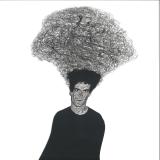
Rather than to allow the names of Ulrich Troyer's collaborators be merely listed in the album credits, what they bring to this joyful affair needs to be outlined, albeit briefly: Co-producer credits go to Osman Murat Ertel from Istanbul, who employed a variation on the old foolproof Nick Lowe method for checking out the impact quality of his own sound productions by playing tracks through his car sound system speakers!
Murat is a member of the electro-psych-folk group Baba Zula where he plays electric saz, oscillators and theremin and played a key part in the creative development of the album. Mamadou Diabate, the balafon master originally from Burkina Faso and now resident in Vienna, has developed his own unique technique of playing solos that replicate the sound of three instruments playing in unison; however the multi-talented Mamadou is engaged here on singing and playing the talking drum. From South Tyrol Reinhilde Gamper is a member of the experimental trio Greifer who are bringing the sound of the zither into the twenty-first century using new playing techniques and electronic gadgets. Susanna Gartmayer is an Austrian composer and bass clarinetist specialising in improv and multimedia sound research. Diggory Kenrick has been engaged with creating new dub fusions and also re-energising classic rocksteady and roots reggae classics, renowned for his interventions on flute. Didi Kern is an electronic dance musician and drummer from Vienna with a focus on free improvised music. Hamidou Koita, a singer and multi-instrumentalist, is from a traditional Griot family in Burkina Faso but now resident in Vienna and a regular musical partner of Mamadou Diabate playing drums and calabash. Austrian Lukas Lauermann is both a studio and live musician playing cello, also working on electronic sound design and writing string arrangements. He has recorded extensively and appeared on stage with both Mark Lanegan and Hans-Joachim Roedelius. Martin Mallaun is a Tyrol-born specialist in both the development of the zither in modern music and also as a researcher in the effects of climate change on the vegetation of Alpine ecosystems. Mystica Tribe is the musical alias of Tokyo-based dub/techno producer Taka (Takafumi) Noda. He collaborated with Vienna's own Vegetable Orchestra on 2020's "Transplants (Mystica Tribe Version)". After studying classical percussion Flip Philipp is now a jazz vibraphone player and member of the Vienna Symphony Orchestra. Wolfgang Pfistermüller is a member of the Vienna Trombone Quartet and the developer of the incredible bass-trombone Aurora with its uniquely warm and resonant sound. Roger Robinson is a renowned British poet, winner of many contemporary poetry prizes and member of the experimental music group King Midas Sound. Kwame Yeboah is a Ghanaian born UK based keyboard wizard who tours regularly with Yusuf / Cat Stevens, Ms. Dynamite and Pat Thomas.
So contained on the album is an astonishing mix of musicians and instruments: sounds of cowbells recorded in the South Tyrolean alps processed by modular synthesizers and heavy analogue bass synths combined with instruments such as zither, bass-zither, electro saz, flute, talking drum, trombone, cello, vibraphone, marimba, djembe, contra-alto clarinet, melodica, Farfisa - all bound together by organic live-drums and dub effects.
Liner notes by Steve Barker
Moton Records celebrates its 50th release!
We are proud to announce our 50th release sees a return for The Mighty Zaf, who did Moton 38 back in 2018 - our biggest selling Moton release to date. After four years of inactivity, largely due to the passing of best friend and genius engineer Phil Asher, Zaf has teamed up with Linkwood and created a spellbinding EP every bit as good as his previous Moton release.
‘Things Could Be’ is gospel soul funk killer and was made before its original creator Quincy Jones passed away recently; ‘Connect Here’ is one for the disco funk boys; ‘Gee Oh Dee’ is an obscure left-field disco gospel banger.
Moton’s fiftieth release promises to be special!
DJ Feedback
Colin Dale - I love this 3 tracker. In a sea of so many faceless and monotonous tracks this EP stands head and shoulders above the rest. Music drenched in soul, blues from a more innocent age from back in the halcyon days of black music. Music to ease your soul.
Rocky x press 2: Another mighty 3 track ep of killer cuts from Moton. Perfect companion to the Ghosted Edits 49th release. Loving all 3 edits but Things Could Be is a worthy a side and definitely my favourite. A tribute to the late Quincy Jones and a little nod to Phlash on the label. Class all the way. Massive props to Zaf and the Moton crew.
Jeremy Underground: Uplifting outro that takes you to a higher dimension!
Norman Jay: Does some justice to Q’s work..
The Trails label appeared as a natural continuation of the crew’s parties. By joining minds with select producers they aim to showcase pieces that capture their collective vision of electronic music.
On TRAILS001, they bring us their close friend and graphic designer Bogdan Năstase going by the alias DJ Bogdan. As a reflection of the label’s philosophy and taste, the EP presents themes of melancholy, introspection, mystery and hope, all wrapped in a sound aesthetic reminiscent of 2000’s electro-techno with a touch of synth-pop. Shade Detector kicks off the A side with enough energy to entice crowds during those peak hours of the night. Next up comes the title track, Freakshow Parallax, a melancholic piece for the afterhours. Moving on to the B side we find Videofreex. This one’s a creative and flexible tune suitable at any point of the party. We wrap up with Fântâna Carteziană, a wonderfully twisted minimal techno track that pays homage to a lost period of Bucharest’s history.
- A1: Madness
- A2: You Were Mine
- A3: Revolution Come
- A4: Man Free Dub
- A5: Days Of Old
- B1: Dubb Girl
- B2: Dubb Girl Rhythm
- B3: Official Sound
- B4: Fragile Rhythm
- B5: Kid Phil Rhythm
- C1: Zion City - Jacob Miller
- C2: Zion City Dub Wise
- C3: Lorraine Dub Wise - Jacob Miller
- C4: Rock My Soul Dub Wise
- C5: Trying Man - Johnny Clarke
- D1: You Were Dubbing
- D2: Sit And Cry
- D3: Iron Bird - Jacob Miller
- D4: Riding On A High & Windy Day (Alt. Take) - Breezy & Hugh Mundell
- D5: Riding Rhythm
This compilation is dedicated to the memory of the late great “Prince” Philip Smart - the first apprentice of King Tubby and the first engineer at Tubby’s studio besides Tubby himself. Alongside Tubby, Philip was integral to the innovation that took place at Tubby’s studio in the mid 1970s, where the mixing of new roots reggae revolutionized the sound of Jamaican music and created styles and techniques that are still being echoed today, nearly 50 years later.
Though rarely credited on records in comparison to Tubby, Philip also mixed a lot of the paramount music produced by those close associates of Tubby’s studio such as Bunny Lee, Yabby You, and Augustus Pablo. Philip was closely tied to Pablo due to their childhood friendship and was a partner in his stylistically significant early production works. In the early years of Tubby’s studio, both men were making and cutting custom dubs there for their sound systems before starting to produce their own tunes from scratch, and Philip becoming the second chair engineer.
Several of the songs on this compilation are a selection of the aforementioned work. All of the songs here are sourced from Philip’s personal tape archive, and basically all of these mixes and versions have been scarcely if ever heard, and never released before. This double album comprises a rare and genuine glimpse into the dubplate workings of the inner circle of Tubby’s studio in the mid 1970s, where the prime players and emerging giants of reggae music production and sound system versioned, remixed and voiced rhythms for custom and exclusive cuts. Some of the cuts heard here were formerly exclusive power plays on King Tubby’s own legendary sound system, and unlike some previous issues of such material, these are genuine mixes done at the time. Some other tracks clearly exude the youthful enthusiasm of the participants. In both cases we find this collection of tracks to be truly compelling, so please enjoy this glimpse into such rare air. Rest in power Prince Philip Smart.
-RB/DKR, Summer 2023
Marysia Osu’s debut album, “harp, beats & dreams,” is a captivating journey of self-exploration and emotional expression, blending classical harp with innovative electronic production. A graduate of Brownswood’s ‘Bubblers’ academy and a key member of Levitation Orchestra, Marysia brings a unique background, including a classical music degree from Trinity Laban. The album, entirely homemade, captures intimate moments and raw emotions, featuring notable tracks like “seatime,” which celebrates self-acceptance, and “memento mori,” inspired by stoic philosophy. Collaborations with artists such as Emma Barnaby (cello), YUIS (flute), and Plumm (clarinet) enrich the project, which reflects Marysia’s classical training infused with modern experimental sounds. The album offers an absorbing and elevating listening experience, perfect for those seeking a peaceful, calming sonic sanctuary in an uncertain world
In our current perspective of dematerialization, where screens and chips have flooded the world, we find ourselves deprived of what makes us feel alive: physical connection.
Far from the ever intangible digital realm, people and records help us maintain this bond.
True to this philosophy, DiskCard was born and for the first release, Alich comes through with a perfectly matching aesthetic: five crunchy squashed and chippy infused tunes meticulously scraped out from small synths and pocket devices, giving his EP an undeniable character and setting the label's prime footprint.
For the music that matters, there is DiskCard.
- A1: Amazin` (Kakalak Remix)
- A2: Nuff Love
- A3: Raw Factor
- A4: This Year (Feat Big Kap)
- A5: If You Got Beef
- B1: My Main Man
- B2: Represent (Feat Lil Kalef)
- B3: When I Make Parole (Feat Rock Of Brick Flava)
- B4: I`m On Mine
- B5: Was It Just You
- C1: We Lust For The Papes
- C2: I Gotta Maintain
- C3: Touch Y`all
- C4: Wrecognize
- C5: Freestyle After A Philly
- D1: Touch Y`all (Remix)
- D2: Stage Presence (Feat Toz Torcha)
- D3: Rap Vs Crack
- D4: Turn The Party Out
- D5: We Live That Shit
Originally scheduled for release way back in March 1996, "The Raw Factor" by North Carolina native Omniscence is one of the last of the unreleased mid-90's albums to see the light of day. Despite being awarded The Source's coveted "Hip Hop Quotable" and dropping two well-received singles ("Amazin" and "Touch Y'all"), record label politics meant the full-length "The Raw Factor" album was never released and fans were left wondering what might have been.
28 years later, "The Raw Factor" is finally being released on vinyl, CD and digital stores. Featuring punchline-driven lyrics from Omniscence delivered in his unmistakable cadence, and backed by head-nodding production from Fanatic, the album is a must-own for fans of 90's Hip Hop.
Omniscence haunted the same early 90's cyphers and stages that many lyrical greats from the era had to cross. With a gruff delivery and equal adeptness with punchlines and metaphors, his high finish at the 1994 edition Battle For World Supremacy at the New Music Seminar assured heads across the culture were watching. After this, Omniscence locked in with producer Fanatic (who also laced tracks for Notorious B.I.G., Ma$e and Michael Jackson). The result was "The Raw Factor" album, fifteen plus tracks of jazzed out boom-bap, replete with crackin' drums.
Now Below System Records has not only given the album its first deluxe physical release (including 2xLP, CD and digital) as well as a slew of bonus/unreleased tracks.
p Touch Y'all (Remix) feat. Sadat X
p Touch Y'all (Remix) [feat. Sadat X]
- A1: 黒色エレジー*– 花粉犯罪
- A2: Surrealistic Men– "覚醒期
- A3: Bárbara - Can! Can! Can!
- A4: Anemone - 鋳物工?
- A5: Rap - 空間のあなた
- A6: Real - Kids
- A7: Oxz - Fall Into Night
- A8: Still - Just A Song
- B1: Allergy - インポテンツ
- B2: Inu - 305
- B3: Suicide - Celebration
- B4: Gara - Karyatide
- B5: Böhm - Possessed Love
- B6: 餓鬼道 - 赤い?
- B7: Unknown Artist - Unknown Song
- B8: Desertshore - 栄光製造機
- B9: Dark Mine Fields - Why
PT II[16,77 €]
DINTE presents a cassette-only two-part Japanese post-punk, goth & new wave mixtape, the first in a tranche of regionally-focused mixes produced in partnership with Philadelphia's punk archivists World Gone Mad.
Berlin based artist TWINS debut album of home produced, world infused
Lo-FI Soul / Psychedelic Pop / Devotional tape recordings
The wide array of sounds pulsing through The Human Jazz reflect the diversity of
Neukölln as well as Denck's extensive library. Tracks like "Some Kind of Space"
wobble and groove, vintage '60s Philicorda organ vamping over the top a la
Zamrock and other East African styles. The sleigh bells and droning keys of
"Anatman", meanwhile, are pulled from the vibes of another African music
explorer: "Alice Coltrane is a goddess to me," Denck says. "I spend so much of my
time listening to spiritual, modal, and free jazz." And as the track ends on a bit of
warped tape, a smoky purple portal rips open, pulling a new world into focus..
Philadelphia producer DJ Matpat delivers his third release of the year with a 12” on NYC's Off Track Recordings. Dropping November 21th “Lucky Strike” is a 4 track raw house EP that delivers a timeless feel full of club-ready grooves that are made to keep energy high on the dance floor. From Deeper Love’s belting vocals to ‘Lucky Strike’s’ chunky drums, ‘Falsettos’ minimalist approach this EP hits a few different sounds for any house music head.
Roberto Musci, born in Milan in 1956, studied guitar, music and electronic instruments. From 1974 to 1985 he traveled the world studying African, Indian, Arabic and Oriental music, recording ethnic music “in the field,” studying and collecting ethnic musical instruments from all over the world. His self-produced debut album, “The Loa of Music,” is a seminal work of staggering originality and extraordinary beauty in which field recordings, musique concrète, electronics, synthesis and instrumentation are interwoven, drawing on the countless musics from around the world that he has recorded. The subsequent “Water messages on desert sand,” composed with Giovanni Venosta, was nominated for a Grammy in the UK in 1987. In the 1980s and 1990s he broadcast ethnic and electronic-experimental music from Rai and Radio Popolare radio stations. He has also composed and played music for videos, commercials, dance, poetry, theater, composed soundtracks and accompanied silent films live. From 1980 to the present, he has played with many Italian and European musicians: Giovanni Venosta, Claudio Gabbiani, Walter Prati, Giorgio Magnanensi, Massimo Cavallaro, Massimo Mariani, Moni Ovadia, Roberto Zorzi, Chris Cutler, Jon Rose David Moss, Steve Piccolo, Elliott Sharp, Keith Tippett and the Third Ear Band.
The theme of travel, ethnicities and mysticism are a pivotal point in this new album of his as well, demonstrating once again how music needs absolutely no sharp lines of demarcation. The music is one.
It goes from the search for deep meanings in a time spent in a Hindu monastery (Ashram) listening to mantras and studying Buddhist philosophy (The Principle Of Things) to space explorations and human settlements on the Moon or Mars wondering how man will live and what he will bring to the new worlds imagining that Sufism, an Islamic mystical religion, will accompany him in the discovery of new worlds (Derviches On Mars). In Goodbye Monsters, harmony and peace are sought. Memories Of A Piano Player is a tribute to Keith Tippett, a great pianist (King Crimson , Centipede, Mujician) with whom he played in several concerts and with whom I spent evenings talking about music, food and Italian wine. Quantum State focuses on how quantum mechanics is creating a revolution in the way of thinking and dividing reality into infinite Parallel Worlds. Panthalassa is the vast ocean that surrounded Pangea and blends South American marimba music and traditional Chinese music. Burn The Shadows is a tribute to the fascinating Indonesian shadow theater, from the stories told and the atmosphere created during the long plays told in the sacred Indian texts of Ramayana or Mahabharata. Shadows are also more or less pleasant memories to which one is attached, and to burn them is still to move on with one's life.
Torajan Funeral Chant: The Toraja are a people living in Sulawesi (Indonesia) who have a special worship of the dead. Funerals are festivals that last several days, the corpses are protected by Tau-Tau (small dolls that watch over cemeteries), and over the years, they exhume the corpses of their relatives and keep them in their homes with them for a time to remember them.
The experimentation goes all the way to modern Artificial Intelligence that 'interrogated' to create something new by inserting conflicting inputs joins them together but nonsensically creating interesting insights; hence A.I. In Confusion. Pangea, named after the continent that contained all the land that emerged between 540 and 200 million years ago, in the Paleozoic and Mesozoic periods, imagined as inhabited by man without divisions created by borders, wars, religions or ethnic groups, is also a tribute to Steve Reich, one of the fathers and a great musician of minimal music. Prophecies, a reading of sacred texts and religious songs from evangelical sects in the United States filtered into granular synthesis with percussion music from South India, closes.
- A1: The Meditation Singers - Let Them Talk
- A2: Charlie Brown - The Whole World Is Watching
- A3: Martha Bass - Since I've Been Born Again
- A4: The Williams Singers - So Good To Be Alive
- A5: The Faithful Wonders - Ol' John (Behold Thy Mother)
- A6: The Salem Travelers - Crying Pity And A Shame
- B1: The East St Louis Gospelettes - Soon I Will Be Done
- B2: Power And Light Choral Ensemble - Stand Up America, Don't Be Afraid
- B3: The Masonic Wonders - Just To Behold His Face
- B4: The Majestic Choir & The Soul Stirrers - Why Am I Treated So Bad
- B5: The Jordan Singers - My Life Will Be Sweeter
- B6: Lucy Rodgers - I'm Fighting For My Rights
- C1: The East St Louis Gospelettes - I'll Take Care Of You
- C2: The Williams Singers - Don't Give Up
- C3: The Soul Stirrers - Don’t You Worry
- C4: The Meditation Singers - I've Done Wrong
- C5: The Jordan Singers - Lord Have Mercy
- C6: The Kindly Shepherds - Lend Me Your Hand
- C7: The Violinaires - Groovin' With Jesus
- D1: Cleo Jackson Randle - Life In Heaven Is Free
- D2: The Violinaires - Mother’s Last Prayer
- D3: The Inspirational Singers - Bless Me
- D4: The Bells Of Joy - Give An Account At The Judgement
- D5: Stevie Hawkins - Same Old Bag
- D6: The Soul Stirrers - Striving
Gospel melts into Soul in this dazzling collection of sides originally released by the Chess subsidiary.
Devised by the same team supporting the likes of Muddy Waters and Etta James at Chess, the vintage of Checker Gospel celebrated here is distinguished by its expertly raw, rugged, live feel — thumping bass and pounding drums, bluesy guitar and horns — and its keen engagement with contemporary realities and politics, with an underlying, unwavering commitment to the Civil Rights movement. Not forgetting its sheer, startling, richly diverse soulfulness.
Key architects of the Chicago Sound and Motown are amongst the scores of contributors: Charles Stepney, Gene Barge, Eddie Kendricks, and Leonard Caston Jr. are in the house… Morris Jennings, drummer on Curtis’ Superfly and Terry Callier’s What Color Is Love… Louis Satterfield from The Pharaohs and Earth Wind & Fire… Ramsey Lewis’ guitarist Byron Gregory… Phil Upchurch… Laura Lee…
Producer Monk Higgins joined Checker in 1967, bringing his experience of R&B and Gospel hit-making for the labels One-derful and Satellite, together with a loyal cohort of musicians. A protege of Willie Dixon, engineer Malcolm Chisholm set up the Ter Mar studio as if preparing for a live gig, carefully teasing measures of bleed into the microphones. With Ralph Bass from King Records running A&R, they knew exactly what they were after. ‘I’m using horns and an R&B sound in gospel recordings,’ said Bass. ‘We have no charts. All the musicians are given the chord changes. I want the cats to think when we’re cutting. I want spontaneity, and that’s what we’re getting.’ And: ‘There is more to gospel than just finding solace in the church. This follows the same message of Martin King, who was fighting for a new way of life. Kids are tired of hearing Jesus Give Us Help. They want a positive message.’
Focussed on the late sixties and early seventies, the twenty-five recordings here are all killer no filler, but try these four, random entry points: the heavy funk ostinato of the Violinaires’ Groovin’ With Jesus, working itself up into a post-James-Brown brass frenzy, sure to knock your socks off; Cleo Jackson Randle’s title track, for those who like their Gospel straight-up and hard-core; Eddie Kendricks’ achingly timely choral call-to-arms, Stand Up America, Don’t Be Afraid; the East St Louis Gospelettes’ heart-stopping, fathoms-deep rendition of Bobby Bland’s I’ll Take Care Of You.
A beautiful gatefold sleeve; a full-colour booklet with excellent notes by Robert Marovich; top-notch sound. Another knockout selection by Greg Belson and David Hill.
A shoo-in for soul compilation of the year.
Claudio Mate introduces from the Italian headquarters a new label from the Ottagono family. Influenced by his sister Vala, which she introduced Claudio in the early 90s, in club music and club culture. Ottagono Retro is a new fashion retro vintage outlet record label, inspired by Vala’s fashion, vintage clothing, and handmade accessories shop called Ottagono Retrò. You can visit the physical store on the first floor of Ottagono’s historic place in Nocera, close to the beauties of Naples, Sorrento, Pompei, Salerno, and the Amalfi Coast in southern Italy .
Hansol Oh is a South Korean singer, songwriter, and multi-instrumental electronic musician, currently living between South Korea and Germany, proudly representing Gyeonggi (State) Province as its promotional ambassador. She first captured the spotlight as the Korean representative in the 2017 MTV Aloft Star competition, marking the beginning of her journey as an electronic musician and also becoming a Korean Ableton testimonial under the name Uza. In the last few years, during the COVID-19 era, she earned international attention as one of the most interesting indie solo K- wave artists. She is renowned for its robust philosophy and a distinctive, hard- hitting sound rooted in synthesizers with a retro analogue feeling. More recently, she introduced to the music world her new figure as Tova Oh.
A side: S.O.S club extended, for the fans of k-wave music since the COVID-19 has been a true sensational song. Club extended mix is exclusive for this vinyl release, keeping the original sounds which are a crossover mixture between 80s new wave, electro-pop, techno, house music, playing like a club anthem from deep to dark rooms to Balearic dance floors.
B side: Suitable Kimchi mix sounds like music coming from Netflix, Stranger Things show as the perfect soundtrack for any late-night party. It strikes the perfect harmony between EBM, new wave, electro, and techno, converging with disco soul music. The outcome is a cosmic journey reminiscent of the ’80s, both fiery and flavourful like Kimchi !!!
- A1: Vajolet Feat Lukas Lauermann, Wolfgang Pfistermüller & Flip Philipp
- A2: Autostrada Del Brennero Feat Diggory Kenrick
- A3: Latzfonser Kreuz Feat Mamadou Diabate & Hamidou Koita
- A4: Lago Di Garda Feat Roger Robinson
- A5: Alfa Romeo 145 Feat Kwame Yeboah
- B1: Feltuner Hütte Feat Osman Murat Ertel
- B2: Avrupa Köprüsü Feat Osman Murat Ertel
- B3: Europabrücke Feat Susanna Gartmayer
- B4: Ancient Atoll Feat Reinhilde Gamper, Martin Mallaun & Flip Philipp
Cassette[14,92 €]
Ulrich Troyer has been producing music now solidly for over twenty years within a largely genre free framework, but whilst navigating forms such as avant-garde, techno, leftfield, field recording, electronica, glitch and ambient it is the aesthetics of dub that guide his creative direction. Not really recognisable in an orthodox form as remixed versions of roots reggae songs but in the way sonics are manipulated with space, the application and layering of delay, reverb and echo that fixes his output well within the scope of what might be called futurist dub.
The nearest comparisons to his new album TRANSIT TRIBE can only be established by a synthesis of some of the more adventurous explorations in modern music such as African Head Charge, Jon Hassell, Pole (Stefan Betke), Bill Laswell or even Miles Davis; featuring a diverse selection of artists and friends not only from Vienna and environs but also from around the world, sounds are not so much fused but allowed to float along the continuous flowing tide of warm waves of bass.
Rather than to allow the names of Ulrich Troyer's collaborators be merely listed in the album credits, what they bring to this joyful affair needs to be outlined, albeit briefly: Co-producer credits go to Osman Murat Ertel from Istanbul, who employed a variation on the old foolproof Nick Lowe method for checking out the impact quality of his own sound productions by playing tracks through his car sound system speakers!
Murat is a member of the electro-psych-folk group Baba Zula where he plays electric saz, oscillators and theremin and played a key part in the creative development of the album. Mamadou Diabate, the balafon master originally from Burkina Faso and now resident in Vienna, has developed his own unique technique of playing solos that replicate the sound of three instruments playing in unison; however the multi-talented Mamadou is engaged here on singing and playing the talking drum. From South Tyrol Reinhilde Gamper is a member of the experimental trio Greifer who are bringing the sound of the zither into the twenty-first century using new playing techniques and electronic gadgets. Susanna Gartmayer is an Austrian composer and bass clarinetist specialising in improv and multimedia sound research. Diggory Kenrick has been engaged with creating new dub fusions and also re-energising classic rocksteady and roots reggae classics, renowned for his interventions on flute. Didi Kern is an electronic dance musician and drummer from Vienna with a focus on free improvised music. Hamidou Koita, a singer and multi-instrumentalist, is from a traditional Griot family in Burkina Faso but now resident in Vienna and a regular musical partner of Mamadou Diabate playing drums and calabash. Austrian Lukas Lauermann is both a studio and live musician playing cello, also working on electronic sound design and writing string arrangements. He has recorded extensively and appeared on stage with both Mark Lanegan and Hans-Joachim Roedelius. Martin Mallaun is a Tyrol-born specialist in both the development of the zither in modern music and also as a researcher in the effects of climate change on the vegetation of Alpine ecosystems. After studying classical percussion Flip Philipp is now a jazz vibraphone player and member of the Vienna Symphony Orchestra. Wolfgang Pfistermüller is a member of the Vienna Trombone Quartet and the developer of the incredible bass-trombone Aurora with its uniquely warm and resonant sound. Roger Robinson is a renowned British poet, winner of many contemporary poetry prizes and member of the experimental music group King Midas Sound. Kwame Yeboah is a Ghanaian born UK based keyboard wizard who tours regularly with Yusuf / Cat Stevens, Ms. Dynamite and Pat Thomas.
So contained on the album is an astonishing mix of musicians and instruments: sounds of cowbells recorded in the South Tyrolean alps processed by modular synthesizers and heavy analogue bass synths combined with instruments such as zither, bass-zither, electro saz, flute, talking drum, trombone, cello, marimba, djembe, contra-alto clarinet, Farfisa - all bound together by organic live-drums and dub effects.
SOULMEEX record label premiers with a powerful nu-disco and italo EP conceived during the spring and summer of 2024. It comes with the signature of synth maestro Philipp Lauer, and remixes by Johannes Albert and Max Buchalik. An impressive debut for a label that originally began its path in the industry as a weekly mix series back in December ’22.
Since its founding back in 2014, Blume has carved a unique place in cultural landscape, issuing free-standing works, spanning the historical and contemporary, that represent singular gestures of creativity within the field of experimental sound. Joining their broad efforts in building networks of context and understanding that already includes the works by Werner Durand, Sarah Hennies, Bruce Nauman, John Butcher, Jocy de Oliveira, Mary Jane Leach, Valentina Magaletti, Alvin Curran, Julius Eastman, Alvin Lucier, and others, Blume return with the first ever vinyl release to attend to James Tenney’s legendary “Postal Pieces”, Marking the first ever appearance of five of the suite’s works - “Maximusic, for Max Neuhaus” (1965), “Having Never Written a Note for Percussion, for John Bergamo” (1971), “FFor Percussion Perhaps, or... Night, for Harold Budd” (1971), “Cellogram, for Joel Krosnick” (1971), and “Beast, for Buell Neidlinger” (1971) - on vinyl, drawing upon recordings made in 2003, by the Amsterdam based ensemble, The Barton Workshop, under the direction of James Fulkerson. Among the most important and highly regarded efforts in Tenney’s canon of compositions, as well as within the history of 20th Century music, these five pieces represent a crucial bridge between Fluxus-oriented conceptualism, minimalism, and the microtonal complexities that would emerge in their wakes. Issued in a highly limited vinyl edition of 300 copies, it includes exact replicas of the original postcard graphic scores, and features newly commissioned liner notes by Bradford Bailey, Blume’s brand new edition takes great steps to centring Tenney at the eye the storm during some of experimental music’s most important years.
A student of composition under Carl Ruggles, John Cage, Harry Partch, and Edgard Varèse - remaining close to all of them, and later performing in both Cage and Partch’s ensembles - as well as acoustics, information theory, and tape music composition under Lejaren Hiller, James Tenney carved a wide path within the contexts of experimental and avant-garde music during the second half of the 20th Century. Not only was he a tangible bridge between the generations of composer’s who laid much of the groundwork and the later movements of Fluxus, Minimalism, and the broader practices of experimental music, but Tenney is credited as having contributed one of the earliest applications of gestalt theory and cognitive science to music in 1961, before helping to pioneer the field of computer music at Bell Labs, during the following years.
Over the course of his career, Tenney produced music of such complexity and sophistication - paying little mind to the seductions of taste or dominant tropes of its own moment - that his work and legacy have largely remained under-recognised by the broader publics that have attended to most of his peers. Perhaps more pertinently, the body of work he produced can be perceived as too varied and complex to fit neatly within standard creative histories or critical frameworks, comprising harmonically complex works for acoustic instrumentation, musique concrète, the groundbreaking 1961 “plunderphonic” composition, “Collage No.1 (Blue Suede) (for tape)” - sampling and manipulating a recording of Elvis Presley - as well as algorithmic and computer synthesized music. Even here, within this single decade, a clear image of Tenney’s endeavours remains elusive. In addition to penning important theoretical texts, he collaborated and / or played with Max Neuhaus, La Monte Young, Steve Reich, Philip Glass, Michael Snow, Terry Riley, and numerous others; was an active member of Fluxus; starred in and composed music for Stan Brackage’s films; regularly worked with the Judson Dance Theater; co-founded and played in the ensemble, Tone Roads, with Malcolm Goldstein and Philip Corner; was a vocal advocate of the works of Conlon Nancarrow and Charles Ives, playing a significant part in the revival of both of their legacies; and regularly collaborated as a composer, musician, and actor with his then-partner, the artist Carolee Schneemann, notably co-starring in her film, “Fuses” (1965) and her legendary 1964 performance, “Meat Joy”, as well as creating sound collages for her films “Viet Flakes” (1965) and “Snows” (1970). Curiously, for a relatively absent figure in the historical and critical narratives, Tenney seems to have been the thread that bound multiple generations and disciplines of avant-garde practice in New York during this period.
Tenney was deeply invested in the quality and perception of sound. By 1970, this led him back to composing exclusively for acoustic instrumentation (though sometimes processed with tape delay) - in most cases utilising non-well tempered tuning systems to explore harmonic perception - a practice that he would remain steadfast to for the remainder of his life. This development roughly corresponded with his relocation to California, at the outset of the 1970s, following an invitation to teach at the newly founded music department at California Institute of the Arts (CalArts) in Valencia. Finding himself in regular contact with the harpist Susan Allen and the artist Allison Knowles, as well as at a great distance from many of his friends, in 1971 he completed (with the assistance of Knowles and Marie McRoy) “The Postal Pieces”, a project he had begun in 1965.
A suite of eleven compositions, “The Postal Pieces”, stands among Tenney’s well known and celebrated compositions, and illuminates the dualities embraced by the composer, notably his use of sound to develop consciousness in and of others, and his willingness to draw on elements and observations of everyday life; citing his strong dislike of writing letters as being the primary inspiration for their inception. In lieu, he conceived to send his friends - John Bergamo, Allison Knowles, Pauline Oliveros, La Monte Young, Harold Budd, Philip Corner, Joel Krosnick, Buell Neidlinger, Susan Allen, Max Neuhaus, and Malcolm Goldstein - short scores on the back of postcards. The suite is composed around three themes: Tenney’s concept of swell form (utilizing repetition and progressing through a structurally symmetrical arch), intonation, and the desire to produce “meditative perceptual states”.
A hugely important addition to Blume’s ever expanding efforts in context building and networks of creative practice, James Tenney’s “Post Pieces” is issued in a highly limited vinyl edition of 300 copies, which includes a exact replicas of the original postcard graphic scores, and features newly commissioned liner notes by Bradford Bailey.
2024 Repress
Fratelli Malibu is an original idea of Andrea De Fazio with the cooperation of Paolo Petrella, drummer and bassist for the “Nu Guinea” live band. Their love for synthesizers and drum machines brought them together to create the shiny world of Ciro Miami.
We could think of Ciro as a neapolitan expat in the american dream, where he discovers a world of excess, flashy cars, cocktail bars, beautiful women, cocaine, gambling, spaceships and videogames that erodes all of his money forcing him to go back to Napoli
completely broke, but with a fistful of wonderful memories.