In 2016, Cliche Morph offered the aquatic textures of "Liquid Materia". "Hidden Madness" is the return and a new beginning. Four tracks of intense introspection mark a collaboration and a founding, Deep Sound Channel and Postdynamic. Atmospheric and immersive, from the needle drop the listener is immediately drawn into the subterranean chambers of this cerebral piece. A stark beat is the guide rope, a snare that echoes and ricochets into the cavernous expanse of cold currents and all too real phantoms. Feeding off that palpable paranoia, Psyk pours a thick resonating syrup over the original before pulling the switch. Darkness descends, distortion and reverb dominate with a steady kick delivering some form of solid ground. Respite? No hope. Pound and thud tell the arrival of "Exorcist". Industrial groans and a clanking larynx are cut through by haunting strings, a meagre echo of humanity in this absorbing and unsettling track. Blazej Malinowski closes. Drum patterns are amplified and concentrated in the producer's purge of "Exorcist", hi-hats hissing as the spectral refrains of the original shift in shape and form. A 12" that plumbs the physical and the psychological depths of sound.
Cerca:physic
Jafa Sound’s latest 7” release is guaranteed to Nice Up each and every dance. produced by Rob Smith (RSD,Smith & Mighty, Jafa Sound) Kingstonian Young Garvey comes with his eternal positive vibes and links with the UKs ’ champion chatter Mr Williamz for this refresh of Sugar Minott’s ‘Chant a Psalms” riddim. The release is both digital and physical with a limited edition run of 300 7”s in a full colour sleeve with Kyoko Shirai’s beautiful artwork.
- Come Over
- Heartbreak Blues
- Left Your Smile
- My Baby Says
- Southern Birds
- Space
- Grief
- Basketball No. 1
- Ghost Town
Dear Life Records is proud to present the physical reissue of the self titled debut of MJ Lenderman. MJ Lenderman is a songwriter born and raised in Asheville, North Carolina. The anatomy of an MJ record might go something like this: warped pedal steels and skuzzed out guitar; a voice reminiscent of the high-lonesome warble of a choirboy; the keen observations and reflections of a front stoop philosopher. Songs snake their way from a lo-fi home recording to something glossier made with longtime friends at Asheville's Drop of Sun studios, but the recording setting doesn't seem to matter much - at its core, a Lenderman song rings true. "MJ Lenderman" was recorded, mixed and mastered for digital in 2019 by Colin Miller in Asheville NC, and was self-released online to quiet but firm acclaim. Now available as a Double LP and remastered for vinyl by Heather Jones, it offers a glimpse into the formative steps of a style; focused and precise, yet expansive and rough around the edges, that remains consistent across MJ's catalogue to date (see also 2021's `Ghost of Your Guitar Solo' (DLR 016) and 2022's `Boat Songs' (DLR 031)). Looking as firmly to the legacy of 90s slowcore as it does to the tenor of Magnolia Electric Co. and sound wall of Neil Young and Crazy Horse, these 9 songs clock in at just over an hour and offer warm, patient worlds of heavy color that blow by breezily. These are songs that wrap mysterious and urgent feeling in layers of patience and clarity that unfold anew with each timeless listen.
WAST unveils a powerful EP, a sonic journey between Indonesian waves and Breton storms. This essential return to his roots - surfing and the call of the open sea - finds him exploring hardware, delivering organic, hardgroove techno. Danceable yet introspective, physical and deep, it's a reflection of a rediscovered identity.
Mutant, in partnership with Hollywood Records and 20th Century Films, is proud to present the premiere physical edition of Mark Korven's terrifying score to THE FIRST OMEN. Combining the inventive and dynamic instrumentation he is best known for, Mark Korven (THE WITCH, THE LIGHTHOUSE) has created a truly unsettling and powerful score to this new chapter to the legendary series. Jerry Goldsmith's Academy Award® winning score for the original 1976 classic THE OMEN is a totemic work of horror cinema. The film is the only time a horror film has ever won an Oscar for its score. Korven clearly knows he has big shoes to fill, because he takes his scoring style to powerful new heights with this brilliant work. It helps that Mark Korven is one of our favorite working composers. His score to THE FIRST OMEN is an incredible achievement and a fitting inclusion in one of the most important legacies of Horror filmmaking. A lot has changed since 1976, but one thing that hasn't is that horror scores deserve to be played as loud as possible, on vinyl, from your home stereo. Pressed on two red vinyl 140gram discs, housed in printed inner sleeves, contained within a die-cut jacket.
- “The Imaginary” Theme – Welcome To The World Of The Imaginaries
- Blow Away The Blues
- The Legendary Christmas Tree
- Attack Of The Yeti
- You Can See Me?
- Bunting’s Theme
- No Clue, No Hope
- Voglio Una Casa
- Side B
- Emily’s Theme (Induction)
- Voglio Una Casa (Instrumental)
- Welcome To The World Of The Imaginaries (Venice)
- Venetian Banquet
- Lascia Ch’io Pianga
- Emily’s Theme (First Job)
- Also Sprach Zarathustra (Einleitung)
- “The Imaginary” Theme (Dusk)
- Bunting's Theme (Reunion)
- Side C
- Nothing's Impossible (Attic)
- Escaping
- Bunting Is Everywhere (Ruins)
- I Want To See Amanda
- Side D
- Bunting Is Everywhere - Welcome To The World Of The Imaginaries - The Girl
- Nothing’s Impossible (Strings)
- Hymn To The Imaginaries
- Nothing’s Impossible Performed By A Great Big World Feat. Rachel Platten
- Nothing’s Impossible (With Drums) Performed By A Great Big World Feat. Rachel Platten
- Disappearing – No Clue, No Hope
- Hymn To The Imaginaries (Determination)
Mutant, in partnership with Studio Ponoc, are proud to present the soundtrack to their latest animated film The Imaginary, now streaming on Netflix worldwide.
From the studio that brought you Mary and The Witch’s Flower (2017) and Modest Heroes (2019) comes a new sweeping and epic animated feature film based on the novel by A.F. Harrold. Studio Ponoc’s The Imaginary tells the story of Rudger, the made-up and invisible friend of young Amanda, through his eyes as he traverses the magical liminal spaces that Imaginaries inhabit, the dangers they face, and their adventures.
The original score is full of genre swings and poignant beauty. Bouncing from imaginary Yeti attacks, to Venetian Banquets, and Submarine battles, all while deftly navigating joy, and grief and everything in between - Kenji Tamai & agehasprings take us all on a journey that helps us find our imaginations again.
The anthemic closing track of the film, "Nothing's Impossible", written and performed by A Great Big World featuring Rachel Platten. We are proud to present it for the first time in any physical form.
This limited edition release features original artwork by Tom Whalen (continuing his Studio Ponoc series from Mary and the Witch's Flower), and pressed on 2x 140 gram "Zin-Zan Eyes" color vinyl
X or Size deftly frays and soothes the ‘floor with a 3rd LP of craftily textured ambient house scuzz for Good Morning Tapes in a vein shared by Huerco S, NWAQ, Actress, Michael J.Blood and Madteo, but pushed farther into groggy and loosey-goose limbed abstraction.
Formerly known as part of ambient drone duo The Geese with Recital’s Sean McCann, and member of psychedelic mutators Regal Degal; Josiah Wolfson has, in recent years, come into his own as X Or Size, whilst retaining the trippy sense of play and experiment that coloured and defined earlier works. His 3rd outing as X Or Size continues a tradition of punning titles and subtly psyched-out, edge-of-the-‘floor dance music with six bits of submersed trippiness idealised for bobbing bodies with eyelids at halfmast, on a slow arc to other dimensions.
Blessed with the finest grasp of heady equilibrium, X Or Size pull strings like a gently psychoactive puppeteer on the 10-minute opener of dreamlike physics, and aching psych-soul downstroke of ‘Anonymous AD'. ’B O M H’ follows with thee gauziest breeze of filtered vox and harmonised textures rolled out in sun-dazed motion that makes us hanker for warmer times, and ‘Ceremonism’ sustains that flow with sloshing beatdown drums paced like an offcut of NWAQ’s ‘The Dead Bears’ marinaded with special ingredients by Madteo.
With minds/bodies well massaged and acclimated to his vibe, ‘oSSo’ screws off into even trippier zones with a nervy offbeat swing and parry spangled by wettest spring reverb, before bringing up for air in the 11 minute title piece of astral planing bliss, ready to roll another one or go head first into the pillow.
Producer, songwriter and director Sevdaliza releases her highly anticipated sophomore album Shabrang in roaring 2020. Produced entirely by herself together with long-time collaborator Mucky, the 14- track album is the long awaited follow-up to the 2017 debut album ISON.
In just a few years time Sevdaliza established herself as an iconic, highly creative, versatile and independent artist who has landed on many celebrity moodboards. Her stunning visual for HUMAN of her debut album ISON has collected over 25 million YouTube views to date and masterpiece Shahmaran about mental slavery, won 2 UK Music Video Awards. Sevdaliza toured 35 countries in the last 2 years and amassed thousands of fans globally (Spotify 200.000, Youtube, 300.000, IG 230.000). In 2020 Sevdaliza will return with her follow up album Shabrang.
“Shabrang” is mentioned In Persian mythology, although there is no direct translation to capture it’s essence, the Farsi phrase Shabrang literally translates to color-palette of the night. This “palette” is visualized in the tones in Sevdaliza’s black eye on the album cover. The black eye represents the years of physical and emotional turbulence. In Sevdaliza’s words “This album represents to me that the essence of it all to me is love. It is a deep letter to myself, my own bible I have to write in order to trust and believe in life. Trust in myself and my character as a human being.”
Born in Iran and residing in the Netherlands, Sevdaliza has been a strong independent force in the creation of her art. She is a producer and engineer, an independent art director with critical eye for detail and storytelling and an unique songwriter. Her music has been described as “genre- bending”, drawing on various genres including alternative electronic, indie, triphop, alternative R&B and the avant-garde.
Shabrang is available on grey vinyl and the package contains a large poster and photograph ID-sheet.
Introduced by the digital single ‘Deixa Passar’, this 12” EP concretises on physical support the renewed collaboration between the two Schema Records artists Gerardo Frisina and Tomaz ”Toco” Di Cunto, working together again five years after the release of the EP “Frisina Meets Toco” (SCEP 487): the two unreleased songs here included, the aforementioned “Deixa Passar” and “Ilê”, are featured both in their original and reworked versions, and represent an excellent blend of samba jazz and Brazilian popular music. In both tracks, the music composed and arranged by Gerardo backs up the Portuguese language lyrics and melodic lines of Toco, who duets with Luzia Dvorek in an almost surprising contrast between serious and graceful sounds. The instrumental department features Gianluca Petrella on trombone, Eduardo Taufic on piano (Deixa Passar) and Fender Rhodes (Ilê), and Edu Moreno on flute (Ilê), in an excellent ‘union of opposites’, between popular music and modern sounds, between acoustic instruments and electronics, with mystical influences that envelop the songs with a mysterious and attractive aura. Not only musically, but also visually and lyrically, this EP is a tribute to the Brazilian culture and lands, already from a cover that re-imagines the iconic shapes of the famous Copacabana pavement in Rio De Janeiro: while “Deixa Passar” celebrates Rio’s carnival as an opportunity to momentarily free oneself from the burdens of life, “Ilê” recalls the traditions of Salvador De Bahia’s historic ‘bloco afro’ quarter called Ilê Aiyê.
Two records came out in 1988 that forever changed the perception of "experimental" or "serious" music produced in Portugal. These were "Plux Quba" by Nuno Canavarro and "Música de Baixa Fidelidade" by Tózé (António) Ferreira. Both were released by the same label - Ama Romanta -, an influential independent imprint closely linked to avantgarde pop band Pop Dell'Arte. Because those records appeared in what could be perceived as an "alternative pop" framework, they rescued this difficult music from Academia. It helps that Canavarro played in a successful new wave pop band (Street Kids) during the period 1980-83. By association, being a friend since 1976, António was in close contact with many of the musicians and bands that were part of the equally celebrated and detested Portuguese Rock Boom (roughly 79-82).
He was not a musician then but through his friendship with Canavarro, who had the means to acquire electronic equipment, António became involved with that equipment and shared Canavarro's passion for experimentation and curiosity for knowledge. They tried to get hold of as many technical magazines as possible and learn while testing ideas. In 1983, Street Kids were about to break up, young lives drafted into the Army and maybe, in Canavarro's case, a whole new passion for challenging music similar to his bandmate Nuno Rebelo, by then in the process of discovering a wide range of "other" music mainly through Jorge Lima Barreto. Barreto, who had started Telectu with Vítor Rua, possessed a huge book and record collection and, like Rua before them, Canavarro, Rebelo and Ferreira became fascinated by the pool of knowledge they now had access to by frequenting Barreto's house in Lisbon. He was roughly a decade older, had published several books and other writings throughout the 1970s, cultivated an anarchic stance and a penchant for cultural indoctrination. Rebelo was the first to be introduced via his contact with Rua (who had invited him to play in his other band GNR).
Overwhelmed, he felt the need to share his enthusiasm with friends and eventually took a few to the house in true pilgrimage fashion. To see the Light. Among the few he led there was even João Peste, founder of Ama Romanta. Canavarro and Ferreira preceded him.
Ferreira recalls an exciting learning process added to his experiments with Canavarro's array of synths such as the Korg Ms 20, Korg polysix, ARP Axxe, Roland SH-01, the Ensoniq Mirage sampler... He read in a magazine article about someone who had studied at the Institute of Sonology (then in Utrecht, Netherlands) and went there during a vacation trip in the Summer of 1983. He became excited by the prospect of studying at the Institute but money was a problem. Canavarro, on the other hand, was admitted there in the following year. Back in Portugal, Ferreira eventually abandoned his Chemical Engineering studies in Lisbon's Technical Institute in favour of a more focused music practice. He collaborated with Telectu during 1984 and 85 as a sort of technical engineer, implementing some recording solutions and background tapes and went to work at a thermoelectric power plant in Sines, hoping to make enough money to fund his musical studies. He did and proceeded with the paperwork for admission at the Institute of Sonology, now based in The Hague. António studied there in 1986-87 and the present album includes two compositions developed at the Institute: "More Adult Music" and "This Is Music, As It Was Expected", both featuring the voice of Rodney Waschka II. Among other activities and talents, Rodney is an expert in computer music and to António his voice sounded similar to Robert Ashley's, whose work he admired.
What happened at the Institute was a systematization of António's self-taught practice. Computer software, Musique Concrète, noise and silence, organisation of abstract ideas and sounds. The original notes on the back sleeve of the LP give some indication of process and thinking, but a more detailed account was given by António in the liner notes of the CD reissue in 2002, which are also included in this 2025 LP reissue.
The music sounds deep and detailed, despite the fact of António calling it low-fi ("Baixa Fidelidade"). It flows like an improvised performance where several musicians might be responding to each other, respectful of their mutual space. Drama occurs, as a natural emotional connection is sought by the listener. Piano, bells, drone, processed voices, even the clear narrative of Rodney Waschka II, contribute to create a sort of alternative perceptual reality. The sounds are almost tangible, more a part of the physical world than ethereal manifestations and thus it would not be correct to invoke "ambient music" as a selling point. But although "physical" and distinct, this music is still alien, more so in Portugal's 1988 environment. In March, helped by Canavarro, António set up a home studio and there he recorded the remaining material for this album: "Algumas Pessoas Olharam O Sul E Viram Deserto", "Um Som, Seguido De Uma Cena Negra E Malva" and "O Verão Nasceu Da Paixão De 1921".
"Música de Baixa Fidelidade" stands not only as a proof of great resilience but as one of those magnificent works of art coming from someone who balanced technical inclination and emotional sensibility. Because of that, Tózé Ferreira is able to decode the phantom world of sound for anyone who cares to experience the sensation of inhabiting a version of the Future. First ever vinyl reissue, reproduction of the original artwork with an additional insert. Made in collaboration with the artist and the support of Paulo Menezes (Plancton Music), who provided valuable assistance. Remastered by Taylor Deupree.
- 1: Prologue
- 1: 2 The Sweet
- 1: 3 Music Box - Philip Glass
- 1: 4 Row Houses
- 1: 5 Graffiti
- 1: 6 Rows And Towers
- 1: 7 What's Candyman?
- 1: 8 I Thought We Could/The Turn
- 1: 9 Joke Summoning
- 1: 0 End Of Clive And Jerrica
- 1: Brianna Finds Bodies
- 1: 2 Brianna's Mirror Dream
- 1: 3 The Library
- 1: 4 The Elevator
- 1: 5 Frantic Painting
- 1: 6 You Should Say It
- 1: 7 End Of Finley
- 1: 8 Frantic Cycles
- 1: 9 The Story Of Daniel Robitaille
- 1: 20 Brianna In The Studio
- 1: 2 The End Of The Kids
- 1: 22 Anthony's Arm
- 1: 23 Got Taken
- 1: 24 Called To Row Houses
- 1: 29 End Of Burke
- 1: 30 Brianna Says His Name
- 1: 3 Music Box (Reprised) - Philip Glass
- 1: 32 Cabrini Walk (Bonus Track)
- 1: 33 Cabrini Walk Ii (Bonus Track)
- 1: 34 The Bridge (Bonus Track)
- 1: 25 The Laundromat
- 1: 26 Young William
- 1: 27 Leaves A Stain
- 1: 28 William Chases Brianna
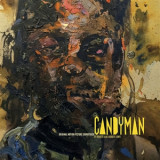
The Complete Film Music Composed by Robert Aiki Aubrey Lowe - 2xLP 180 Gram Colored Vinyl - Old-Style Tip-On Gatefold Jackets with Satin Coating and a Built-In Booklet Page - Composer Liner Notes - 12 Page Art Gallery Exhibit Catalogue // In partnership with Universal Pictures, Metro Goldwyn Mayer (MGM) and Monkeypaw Productions, Waxwork Records is thrilled to present CANDYMAN Original Motion Picture Soundtrack by Robert Aiki Aubrey Lowe. Directed by Nia DaCosta (next year's The Marvels) from a screenplay by Oscarr winner Jordan Peele, Win Rosenfeld and DaCosta, Candyman, currently in theaters nationwide, is a fresh take on the blood-chilling urban legend and a contemporary incarnation of the 1992 cult horror classic. About Robert Aiki Aubrey Lowe: Robert Aiki Aubrey Lowe (b.1975) is an artist, curator and composer who works primarily with, but not limited to, voice and modular synthesizer for sound in the realm of spontaneous music. Along with analog video synthesis works, he has brought forth an A/V proposal that has been a focus of live performance and installation / exhibition. The marriage of synthesis and the voice has allowed for a heightened physicality in the way of ecstatic music, both in a live setting and recorded. The sensitivity of analogue modular synthesis echoes the organic nature of vocal expression, which in this case is meant to put forth a trancelike state. Lowe's works on paper tend towards human relations to the natural/magical world and the repetition of motifs. The deluxe 2xLP vinyl release features 180-gram colored vinyl, old-style tip-on gatefold jackets with satin coating and a built-in booklet page, liner notes by composer Robert Aiki Aubrey Lowe, a 12-page art gallery exhibition catalogue, artwork by Sherwin Ovid and Julian Williams and puppetry art by Manual Cinema.
- A1: Diamond Jubilee
- A2: Glitz
- A3: Baby Blue
- A4: Dreams Of You
- A5: All I Want Is You
- B1: Dallas
- B2: Olive Drab
- B3: Always Dreaming
- B4: Wild One
- B5: Flesh And Blood
- B6: Le Machiniste Fantome
- C1: Kingdom Come
- C2: Demon Bitch
- C3: I Have My Doubts
- C4: Til Polarity's End
- C5: Realistik Heaven
- D1: Stone Faces
- D2: Gayblevision
- D3: Dracula
- D4: Lockstepp
- D5: Government Cheque
- E1: Deepest Blue
- E2: To Heal This Wounded Heart
- E3: Golden Microphone
- D4: Crime Of Passion
- D5: 24/7 Heaven
- E4: If You Hear Me Crying
- E5: Darling Of The Diskoteque
- E6: Don't Tell Me I'm Wrong
- D1: What's It Going To Take
- D2: Wild Rose
- D3: Durham City Limit
Superior Viaduct and our new artist label, W.25TH, are proud to continue to be the home for Cindy Lee with the physical release of the celebrated album Diamond Jubilee. Universally praised, shortlisted for the 2024 Polaris Music Prize, and already hailed by Pitchfork as the 3rd best album of the 2020s, anticipation and conversation around the record has been high.
Cindy Lee is the performance and songwriting vehicle of Patrick Flegel (who previously fronted influential indie group Women). Over several albums, Flegel has combined delicate melodies and sheer beauty with moments of experimentation. With Diamond Jubilee, Flegel’s undeniable songcraft comes to the foreground, embracing a more instant connection and accessibility. Timeless tales of love and longing, surrounded by sticky hooks, take the listener on an unforgettable journey. Diamond Jubilee was written and recorded over several years by Patrick Flegel in Toronto, Durham, Calgary and Montreal at Realis- tik Studios. The album was mixed by Steven Lind, who also contrib- utes to several tracks and co-wrote “Baby Blue,” and was mastered by Joshua Stevenson.
Triple LP on black vinyl comes with 24” x 36” poster.
- Flowers Bathed In Sunlight
- New Love
- I'm With You
- Feeling Blue
- Where Does The Love Go?
- Learn Yourself
- Responsibility Of The Dreamer
- Outlaw
- Addicted
- Confessions
- Blessings
- Singing For Country
Independent and Double Platinum ARIA-certified artist Ziggy Alberts' eagerly anticipated seventh studio record, New Love, set for release in February 2025, captures the essence of personal growth, reflection and adventure in a year defined by Alberts' return to the road. Written during his 2023 Rewind World Tour and completed in the beautiful Australian town of the Northern Rivers, this album is a return to simplicity, embracing magic and adventure amid life's chaos. With anthemic songs made for the stage and a deep, cohesive narrative, New Love stands as a spiritual sequel to Albert's 2018 album, Laps Around The Sun. Co-produced with Garrett Kato, the new record embraces the warmth of acoustic folk on Side A and the raw energy of rock and country on Side B. New Love is a testament to growth and resilience, choosing joy and doing good, and letting life's journey guide you back to the simple, meaningful moments. As part of the Artists’ commitment to sustainability, all physical albums are produced on 100% Recycled Stock. Main/Standard LPs use Eco-Mix Coloured Vinyls - which are created using recycled offcuts and colours from previous records. Where possible with manufacturers, environmentally conscious alternatives to plastic shrink-wrap will be used. A comprehensive global marketing campaign is in place to drive awareness from its announcement, on the 18th of September.
- Cantern N2
- Blue Monk
- Lennie
- Tango
- Kenny's Blues
- Body & Soul
- Cantern N1
- Don't Worry Baby
- Mr P.c
CLEAR MARBLE VINYL[43,28 €]
2LP - 180 Gram Vinyl Jazz Standards Live is a remarkable collaboration between two iconic jazz musicians: Kenny Wheeler, a legendary trumpeter and composer known for his versatility, and Rain Sultanov, a saxophonist celebrated for his rich tone and innovative style. This album captures an unforgettable performance that has never before been released physically. Blending the expressive power of Wheeler's trumpet and Sultanov's saxophone, the quintet delivers a warm and resonant sound that harks back to the golden era of jazz in the late 1970s and early 1980s. Fans of Herbie Hancock's V.S.O.P. quintet will recognize the vibrant interplay reminiscent of Freddie Hubbard and Wayne Shorter. This double vinyl LP is a treasure trove for jazz enthusiasts, featuring a mix of beloved standards and original compositions by Wheeler. Adding depth and character to the performance is Shahin Novrasli's masterful piano work, which infuses the album with a distinctive mood. Meanwhile, Paul Clarvis on drums and Ruslan Guseynov on bass provide a dynamic and cohesive rhythm section that elevates each track. Jazz Standards Live is not just an album; it is a testament to the boundless creativity and artistry of two jazz maestros, uniting their talents to create an experience that is both timeless and fresh. Whether you're a longtime jazz aficionado or a newcomer to the genre, this album promises to captivate and inspire.
Black Vinyl[38,45 €]
2LP - 180 Gram Vinyl Jazz Standards Live is a remarkable collaboration between two iconic jazz musicians: Kenny Wheeler, a legendary trumpeter and composer known for his versatility, and Rain Sultanov, a saxophonist celebrated for his rich tone and innovative style. This album captures an unforgettable performance that has never before been released physically. Blending the expressive power of Wheeler's trumpet and Sultanov's saxophone, the quintet delivers a warm and resonant sound that harks back to the golden era of jazz in the late 1970s and early 1980s. Fans of Herbie Hancock's V.S.O.P. quintet will recognize the vibrant interplay reminiscent of Freddie Hubbard and Wayne Shorter. This double vinyl LP is a treasure trove for jazz enthusiasts, featuring a mix of beloved standards and original compositions by Wheeler. Adding depth and character to the performance is Shahin Novrasli's masterful piano work, which infuses the album with a distinctive mood. Meanwhile, Paul Clarvis on drums and Ruslan Guseynov on bass provide a dynamic and cohesive rhythm section that elevates each track. Jazz Standards Live is not just an album; it is a testament to the boundless creativity and artistry of two jazz maestros, uniting their talents to create an experience that is both timeless and fresh. Whether you're a longtime jazz aficionado or a newcomer to the genre, this album promises to captivate and inspire.
Somewhat incredibly, this four-piece vocal Soul act are still performing today after 56 years of harmonising, without anything they recorded achieving a physical release until a few years ago. What began as four guys singing together for fun after basketball practice in Portland, took until early 1977 to realise as actual recordings – and that lone tape of four original songs lay unreleased until 2020. From that set we've pulled a bright and lively gem ripe for plays on the Modern Soul scene, backed with stunning, polished slow-jam.
First time ever on 7" 45rpm vinyl, dinked centre hole with picture sleeve, 500 numbered copies only.
Welcome to 'Instrumental Dubs #3', the ongoing series that delves into the world of the Dub Version and beyond. Side one explores the axis of UK Street Soul and Reggae with the opening two tracks produced by Howard Hill and originally released on his Passion Enterprises label in the late eighties. Both 'Versions' have a machine lead rhythm section paired with a reggae skank and snippets of soulful vox. The Proto House of Protek's 'I Love to Dance With You' featured on a Jura Soundsystem DJ Mix for Planet Trip, a one off single from the now sadly deceased Errol Parkes that's been re-edited with love by The Nightlark from Edinburgh.
The B side features The Cool Notes 'Natural Energy', which isn't strictly speaking a Dub Version, but it has that vibe with a primarily instrumental backing track featuring sparse vocals and spacey FX. The album closes with a secret weapon of Ilija Rudman 'Dub 4 Love' that pays homage to a famous track from Acid House's heyday.
Pressed on 180g Heavyweight Vinyl with full sleeve jacket design by Bradley Pinkerton.
- A1: Hit Man
- A2: You're Billy
- A3: Animal Abandon
- A4: Madison
- A5: Cabbage Alley
- A6: It's So Weird
- B1: We Don't Have A Choice
- B2: A Personal Attack
- B3: Superego
- B4: Not Technically Divorced
- B5: What's Our Story?
- B6: All Pie Is Good Pie
Mutant, in partnership with Netflix, are proud to present Graham Raynold’s score to Richard Linklater’s film HIT MAN.
A Romantic Comedy Noir, loosely based on the true story of a nebbish philosophy professor named Gary Johnson who moonlighted as an undercover police officer, HIT MAN is Richard Linklater and Glen Powell’s meditation on identity. Linklater, a filmmaker who has shapeshifted many times over his storied three decades of storytelling, has reteamed with his frequent music collaborator Graham Reynolds, to produce a jazzy, romantic, dark, and playful score.
Reynolds has worked in each of these modes before with Linklater, but never all at the same time. It stands defiant in contrast the version of the Gary that we meet at the beginning of the film - allowing the character to meet the score on its level by the time we approach the twisted finale. This score proves that genre, like identity, can be a limitation placed on both films and film music.
This physical release is limited to 500 copies worldwide, and features a forward by Graham Reynolds and packaging designed by Mutant co-founder Mo Shafeek.
So 2020 was going to be the year of Van Weezer -- the big riffs rock album Weezer made as an homage to the metal bands they loved growing up -- until, thanks to the global pandemic, it suddenly wasn't. The entire time, however, Weezer frontman Rivers Cuomo was busy at the piano, writing a very different album that referenced another vital musical touchstone of his youth: The Beach Boys' Pet Sounds.
Throughout the summer of Covid-19, he and the band -- along with a 38 piece orchestra -- chipped away at masked recording sessions until the record was complete. The result is an album called OK Human -- a cheeky nod to Radiohead's technophobic future-trip OK Computer, but sounding nothing at all like that record. Taking the listener bit by bit through parts of Cuomo's every day, it's a Technicolor symphonic spree that meditates on how over-and-under-connected we all are, particularly in a year where we can see each other with greater ease, but actually can't physically be near each other at all.
OK Human is also packed to the brim with some of the best, most personal songs Cuomo has written in the last decade, all of which shine brighter and bolder with splashes of string and horn arrangements courtesy of album producer Jake Sinclair and arranger Rob Mathes. It's hard to imagine any other band who came up in the alt haze of the 90s creating a simply perfect orchestral pop album, but that is exactly what Weezer's done; OK Human is a testament to the excellent, enduring melodies Cuomo has written since Weezer's inception, and the ones he continues to write today.
- A1: Progetto Tribale - The Sweep
- A2: Onirico - Echo Giomini
- A3: Open Spaces - Artist In Wonderland
- B1: Alex Neri – The Wizard (Hot Funky Version)
- B2: M C.j. Feat. Sima - To Yourself Be Free - Instrumental Mix Energy Prod
- B3: Mato Grosso - Titanic Expande
- C1: Dreamatic - I Can Feel It (Part 1)
- C2: Carol Bailey - Understand Me Free Your Mind (Dream Piano Remix)
- C3: The True Underground Sound Of Rome - Secret Doctrine
- D1: Don Carlos - Boy
- D2: Lazy Bird – Jazzy Doll (Odyssey Dub)
Vol 2[28,99 €]
Volume 1 of this expertly curated project of 90s Italian House - put together by Don Carlos.
If Paradise was half as nice… by Fabio De Luca.
Googling “paradise house”, the first results to pop up are an endless list of European b&b’s with whitewashed lime façades, all of them promising “…an unmatched travel experience a few steps from the sea”. Next, a little further down, are the institutional websites of a few select semi-luxury retirement homes (no photos shown, but lots of stock images of smiling nurses with reassuring looks). To find the “paradise house” we’re after, we have to scroll even further down. Much further down.
It feels like yesterday, and at the same time it seems like a million years ago. The Eighties had just ended, and it was still unclear what to expect from the Nineties. Mobile phones that were not the size of a briefcase and did not cost as much as a car? A frightening economic crisis? The guitar-rock revival?! Certainly, the best place to observe that moment of transition was the dancefloor. Truly epochal transformations were happening there. From America, within a short distance one from the other, two revolutionary new musical styles had arrived: the first one sounded a bit like an “on a budget” version of the best Seventies disco-music – Philly sound made with a set of piano-bar keyboards! – the other was even more sparse, futuristic and extraterrestrial. It was a music with a quite distinct “physical” component, which at the same time, to be fully grasped, seemed to call for the knotty theories of certain French post-modern philosophers: Gilles Deleuze, Félix Guattari, Paul Virilio... Both those genres – we would learn shortly after – were born in the black communities of Chicago and Detroit, although listening to those vinyl 12” (often wrapped in generic white covers, and with little indication in the label) you could not easily guess whether behind them there was a black boy from somewhere in the Usa, or a girl from Berlin, or a pale kid from a Cornish coastal town.
Quickly, similar sounds began to show up from all corners of Europe. A thousand variations of the same intuition: leaner, less lean, happier, slightly less intoxicated, more broken, slower, faster, much faster... Boom! From the dancefloors – the London ones at least, whose chronicles we eagerly read every month in the pages of The Face and i-D – came tales of a new generation of clubbers who had completely stopped “dressing up” to go dancing; of hot tempered hooligans bursting into tears and hugging everyone under the strobe lights as the notes of Strings of Life rose up through the fumes of dry ice (certain “smiling” pills were also involved, sure). At this point, however, we must move on to Switzerland.
In Switzerland, in the quiet and diligent town of Lugano, between the 1980s and 1990s there was a club called “Morandi”. Its hot night was on Wednesdays, when the audience also came from Milan, Como, Varese and Zurich. Legend goes that, one night, none less than Prince and Sheila E were spotted hiding among the sofas, on a day-off of the Italian dates of the Nude Tour… The Wednesday resident and superstar was an Italian dj with an exotic name: Don Carlos. The soundtrack he devised was a mixture of Chicago, Detroit, the most progressive R&B and certain forgotten classics of old disco music: practically, what the Paradise Garage in New York might have sounded like had it not closed in 1987. In between, Don Carlos also managed to squeeze in some tracks he had worked on in his studio on Lago Maggiore. One in particular: a track that was rather slow compared to the BPM in fashion at the time, but which was a perfect bridge between house and R&B. The title was Alone: Don Carlos would explain years later that it had to be intended both in the English meaning of “by itself” and like the Italian word meaning “halo”. That wasn’t the only double entendre about the song, anyway. Its own very deep nature was, indeed, double. On the one hand, Alone was built around an angelic keyboard pattern and a romantic piano riff that took you straight to heaven; on the other, it showcased enough electronic squelches (plus a sax part that sounded like it had been dissolved by acid rain) to pigeonhole the tune into the “junk modernity” section, aka the hallmark of all the most innovative sounds of the time: music that sounded like it was hand-crafted from the scraps of glittering overground pop.
No one knows who was the first to call it “paradise house”, nor when it happened. Alternative definitions on the same topic one happened to hear included “ambient house”, “dream house”, “Mediterranean progressive”… but of course none were as good (and alluring) as “paradise house”. What is certain is that such inclination for sounds that were in equal measure angelic and neurotic, romantic and unaffective, quickly became the trademark of the second generation of Italian house. Music that seemed shyly equidistant from all the rhythmic and electronic revolutions that had happened up to that moment (“Music perfectly adept at going nowhere slowly” as noted by English journalist Craig McLean in a legendary field report for Blah Blah Blah magazine). Music that to a inattentive ear might have sounded as anonymous as a snapshot of a random group of passers-by at 10AM in the centre of any major city, but perfectly described the (slow) awakening in the real world after the universal love binge of the so-called Second Summer of Love.
For a brief but unforgettable season, in Italy “paradise house” was the official soundtrack of interminable weekends spent inside the car, darting from one club to another, cutting the peninsula from North to centre, from East to West coast in pursuit of the latest after-hours disco, trading kilometres per hour with beats per minute: practically, a new New Year’s Eve every Friday and Saturday night. This too was no small transformation, as well as a shock for an adult Italy that was encountering for the first time – thanks to its sons and daughters – the wild side of industrial modernity. The clubbers of the so-called “fuoriorario” scene were the balls gone mad in the pinball machine most feared by newspapers, magazines and TV pundits. What they did each and every weekend, apart from going crazy to the sound of the current white labels, was linking distant geographical points and non-places (thank you Marc Augé!) – old dance halls, farmhouses and business centres – transformed for one night into house music heaven. As Marco D’Eramo wrote in his 1995 essay on Chicago, Il maiale e il grattacielo: “Four-wheeled capitalism distorts our age-old image of the city, it allows the suburbs to be connected to each other, whereas before they were connected only by the centre (…) It makes possible a metropolitan area without a metropolis, without a city centre, without downtown. The periphery is no longer a periphery of any centre, but is self-centred”.
“Paradise house” perfectly understood all of this and turned it into a sort of cyber-blues that didn’t even need words, and unexpectedly brought back a drop of melancholic (post?)-humanity within a world that by then – as we would wholly realise in the decades to come – was fully inhuman and heartless. A world where we were all alone, and surrounded by a sinister yellowish halo, like a neon at the end of its life cycle. But, for one night at least, happy.