
4
Standard[37,61 €]
Washington's Slow Dancing Society aka Drew Sullivan has gone long here: Do We Become Sky? is a deeply immersive 86-minute work that very much rewards being listed to in one sitting. It is "a spiritual successor" to his 2008 album Priest Lake that draws upon feelings of loss, mostly using the tonality of the Korg Wavestation as a foundational instrument through the work. It features well-balanced boiling of tension with subtle moments of release, swelling harmonies, plucked guitars and evocative synth progressions that always keep things moving both physically and emotionally.

Analog Fingerprints Vol. 0 is a compilation bringing together the early 2000s works of Marco Passarani under his Analog Fingerprints alias, collecting key tracks originally released on Rome’s Plasmek and Pigna labels.
For Numbers, the story starts long before the label itself. In their formative years, digging in Glasgow’s Rubadub, Passarani’s records felt like dispatches from a future city. Releases on his own Nature Records and on labels such as Generator and Interr-Ference Communications were mind blowing: rooted in Detroit techno, Chicago house and electro, yet pushing somewhere new. Much like fellow travellers Autechre, who would remix him in 2001, Passarani’s music balanced machine funk with restless experimentation.
Information was scarce, and you would hear these records first on the dancefloor or at listening stations in shops like Rubadub. Print fanzines like Ear and early web outposts such as Forcefield offered only fragments. But there was a palpable axis forming between Detroit techno and a new European wave of record labels including Skam, Rephlex, Clone, Viewlexx and Nature itself. It was the sound that defined Saturday nights at Rubadub’s ‘69’ parties in Paisley, just outside of Glasgow.
Passarani’s records, in particular, were instrumental in bringing together the future Numbers co-founders. Richard had already booked him pre-Numbers; meanwhile Calum (Spencer) and Jack (Jackmaster), then 16/17 year olds working alternate Saturdays in Rubadub, were so enamoured with the Roman sound that they travelled to Rome for the Bitz Festival in 2003 to seek out Passarani and Lory D at their source.
The first Analog Fingerprints release landed as a 12” on Plasmek in 2001, following the fractured, IDM-leaning 6 Katun material. For Passarani, the project marked a recalibration. A DJ first and foremost, he had moved into production via early computer setups, from a Commodore Amiga through primitive PC audio, Cubase and Logic, later experimenting with Ableton. The IDM scene had offered a playground for trial and error, but there was always a tension between abstraction and the dancefloor. Analog Fingerprints became the bridge: still intelligent, but with more dance than distance. After years of broken beats and complex arrangements, he wanted directness without surrendering identity.
Working closely with Francesco de Bellis and Mario Pierro in the Pigneto district, the trio formed Pigna as a vehicle for reclaiming a more accessible dance sound, deliberately steering away from the minimal wave beginning to dominate Europe. Sessions were fast, instinctive, often stretching late into the night with friends dropping by. It was a studio as social space, production as collective energy.
“In that constant search for balance, Analog Fingerprints was my way of expressing something closer to the classic dance floor. The track 'Tribute' - a tribute to my favourite early Detroit techno track of all time, 'First Bass' by Separate Minds - came after I realised I had almost lost my connection with the dance floor. The simplest step was to take inspiration from early Chicago and Detroit and twist it in our Roman ‘Pigna’ way. My goal was to create more accessible dancefloor tracks by mixing my unconscious Italo roots with my teenage love for that early US sound, ensuring the result was as far as possible from the minimal sound that was starting to dominate everywhere.” - Marco Passarani
Technically, the Analog Fingerprints tracks span a transitional era: Roland TR-909, SH-101 and Alpha Juno hardware met early software experiments. A Novation Drumstation rack stood in for the unattainable TR-808, syncing with TB-303 and TR-606. Yet the true secret weapon was Jeskola Buzz, a tracker-style modular environment that allowed step-by-step parameter control and strange melodic constructions, later exported into the audio sequencer. Even the lead on ‘Tribute’ came from an early PPG Wave-style plugin. It was hybrid thinking at a moment when digital tools still felt unstable but full of possibility for technologists like Passarani.
Behind the music sat Finalfrontier, a loose Roman collective orbiting Nature and Plasmek. Distribution and production were intertwined; importing obscure records into Italy built connections with like-minded outsiders across Europe and the US. Expensive phone bills and fax machines forged an “electronix network” that linked Rome to Clone, Viewlexx, Skam, Rephlex, Rubadub and Detroit’s Underground Resistance. There was a shared sense of survival and resistance, of operating against commercial systems.
Passarani recalls “The first time I found a sheet of paper inside an Underground Resistance 12” with info about upcoming releases... and a huge picture of Spock on the back. Imagine that: you love the music, you love Star Trek, and there’s someone on the other side of the ocean sharing those same values and sounds. It was the perfect match. We even gave our original company the suffix ‘Finalfrontier’: that says it all.”
Feedback in that era arrived physically: distributor faxes, conversations with visiting DJs, the experience of playing abroad and meeting kids who had connected with the records. Glasgow became a key node in a scattered outlier network. Passarani personally brought the first two Nature releases to Fat Cat in London, playing them in-store. Shortly after, a fax arrived from Rubadub in Glasgow requesting copies.
“I still remember that phone buzz and the fax paper slowly sliding out, with someone I didn’t know saying they wanted 75 copies of Nature 001. Or like the time we got a fax from the Rephlex crew just saying, “Hello Nature Records, Keep up the good work.” That was how we knew the message was getting through. It was a fantastic feeling; just one piece of thermal fax paper as an analog notification - the mood for the entire week would change.” - Passarani
The connection to Glasgow has since stretched across generations. As Passarani reflects, links often fracture as scenes renew themselves, but in Glasgow something different happened. New and old mixed seamlessly. There was a visible trust in what came before, and a willingness to carry it forward rather than discard it. Observed from Rome, it was deeply encouraging.
Analog Fingerprints Vol. 0 captures that moment of exchange: Rome to Glasgow, Detroit to Europe, experiment to dancefloor. It documents an artist recalibrating his sound and a network of scenes discovering one another in real time, connected by vinyl, faxes and shared intent.
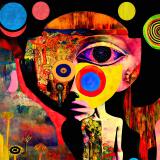
Pick a Piper is a Toronto-based electronica duo featuring Caribou drummer Brad Weber and vocalist–songwriter Sophia Alexandra. Their music pairs catchy, ethereal vocals with warm synths, upbeat percussion, and a distinctive sense of sound design that feels both grounded and vulnerable.
The duo’s live show is an intoxicating blend of vibrant physicality and immersive lights and visuals, creating an experience that is both danceable and hypnotic. Pulsing with momentum, vocally driven and haunting, it radiates a charisma that unites the band and audience in cathartic release.
Their new album "Dandelion", explores how we exist in the space between opposing feelings while calling for resilience and the courage to recognize that growth is possible and inherently beautiful, even in life’s most difficult experiences. The record employs skippy beats, bass-heavy kicks, warm subs, hyperactive percussion, woozy synths and organic textures, delivered with a lovingly human-curated feel.
Pick a Piper has toured across Europe, the US, Canada, Guatemala, and Colombia, and has shared the bill with Bonobo, Gold Panda, Blue Hawaii, Do Make Say Think and Ghetto Kumbe.

Feeling Is Structure explores the relationship between physical form and human emotion.
Across 10 spatial audio-visual works, Cooper examines how structure in sound, architecture, biology and art, shapes the way we feel.
The album is built on the idea that our inner emotional lives are profoundly connected from our lived environment. Developed from a commission to create a live show for London’s Royal Albert Hall, expanding on this idea, Max explains:
“I’m fascinated by architects who can imbue brutalist buildings with humanity, or artists who can paint a block of colour representing their soul.” says Cooper. “We have this remarkable capacity to spill ourselves into the world through form. When I began working on a show for the Royal Albert Hall, that connection between large-scale physical structures and feeling took over, and this album emerged from that process.”
Musically, Feeling Is Structure leans into Cooper’s more intricate and deliberate compositional side. Rather than improvisation, the record focuses on carefully designed systems and processes that build evolving sonic architectures. Precise at the micro level, but deeply emotive in impact.

Originally released on CD in 2006, It's A Feedelity Affair marked a formative moment in Hans Peter Lindstrøm's early career, compiling key tracks from his first wave of 12-inch releases between 2003 and 2006. Now, twenty years after the founding of his Feedelity label, the album is presented for the first time as a newly remastered vinyl edition.
"Listening back now, I hear an artist still figuring things out, but with a clear instinct for where I wanted to go. It was a period defined by freedom - no rules, no expectations." - Hans-Peter Lindstrøm
Released at a time when electronic music was shaped by extended runtimes and physical formats, It's A Feedelity Affair captured a club culture rooted in patience, atmosphere, and spatial awareness rather than immediacy. Its long-form approach remains central to the album's lasting appeal and resonates strongly with today's renewed focus on vinyl and immersive listening experiences. The album stands as a document of an era marked by experimentation, expansive club tracks, and an open-ended vision of electronic music.
Upon its original release, the album received widespread international attention, including a Best New Music rating (8.4) from Pitchfork. The track I Feel Space has since become one of Lindstrøm's most enduring and recognizable works. The album also documents some of his earliest collaborations with Prins Thomas and Christabelle, resulting in tracks such as Boney M Down and Lovesick.
Lindstrøm relaunched Feedelity in 2024, with the label returning in 2025 alongside his most recent album Sirius Syntoms and the single Cirkl, marking a full-circle moment for the imprint. A new studio album is currently in progress and expected in autumn 2026.

2026 Repress
Deetron is a venerated veteran who has been crafting sublime house and techno for three decades on a range of influential labels. 2025 brought another busy year for him, with another standout EP on Ilian Tape followed by his latest album which landed via Running Back in October. Back in 2024, he dropped his 'Translate Rhythms' EP on Mutual Rytm's X series and now takes charge of the second release on SHDW's new sub-label Mutual Rytm Raw - following the first 12" 'You And Me', which was a true summer anthem courtesy of KiNK & Raredub.
In its original form, the bright, expressive 'Flow' is a fulsome techno cut that pairs a driving rhythm with sophisticated synths. It sparkles with cosmic energy, while a textured, screwy lead winds through the mix and euphoric female vocals burst out to big emotional reactions. The 'Chord Dub' is a tight, bouncy rework with vamping chords lighting up the drums with real warmth and soul, while the 'Breakbeat Mix' fizzes with rich, old school energy. The dusty breakbeats demand physical reactions, while the pads bring a grand sense of scale and the vocals tug at the heart. All three are classy, effective and offer yet more timeless sounds.
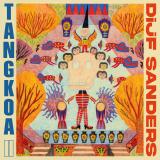
With 'Tangkoa II', Belgian producer and multi-instrumentalist Dijf Sanders invites listeners into a vibrant and immersive sonic world shaped by travel, collaboration and instinct. Released via Unday Records, the album grew out of field recordings captured during a journey through Vietnam, later transformed into rhythmic, colourful compositions that feel both intimate and expansive.
Rather than building tracks piece by piece on a screen, Sanders approaches music as something alive and unfolding. Sounds are performed and reshaped in real time, giving the album a spontaneous energy, as if the music is discovering itself while you listen. Together with drummer and producer Simon Segers, he creates a fluid dialogue between electronic sounds and human rhythm, balancing precision with freedom.
Improvisation lies at the heart of 'Tangkoa II'. Contributions from Vitja Pauwels (guitar), Viktor Perdieus (saxophone) and Louise van den Heuvel (bass) bring a subtle jazz sensibility to the music, pushing it toward hypnotic grooves and unexpected turns.
The result is an album that feels warm, physical and constantly in motion. Electronic music that breathes, pulses and draws you fully into its atmosphere.

Nonesuch Records releases Let X=X, by Laurie Anderson with Sexmob. This triple-LP/double-CD set was recorded live during a 2023 tour by Anderson and the jazz band Sexmob – Steven Bernstein and Briggan Krauss on brass, Kenny Wollesen on percussion, Douglas Wieselman on winds and guitar, and Tony Scherr on bass. Its cover and interior packaging feature paintings by Anderson. The album features 23 songs, including many favourites from throughout Anderson’s career, performed in new arrangements – plus one by Lou Reed and Metallica, ‘Junior Dad’. Anderson and Sexmob play more US and international dates this spring and summer (details below).
The New York Times said Anderson and Sexmob’s concert at the Brooklyn Academy of Music (BAM) ‘wasn’t a historical recreation of past recordings; Sexmob’s sound is a beefier one than on Anderson’s albums. With musicians who can double on electric guitar and bass clarinet, its members offered a rich range of textural variation throughout the evening.’
Laurie Anderson is one of America’s most renowned – and daring – creative pioneers. Her work, which encompasses music, visual art, poetry, film, and photography, has challenged and delighted audiences around the world for more than 40 years. In a recent 60 Minutes profile, Anderson Cooper said she ‘is a pioneer of the avant-garde, but... that doesn’t begin to describe what she creates... It’s experienced by audiences who come to see her perform: singing, telling stories, and playing strange violins of her own invention... she blends the beautiful and the bizarre, challenging audiences with homilies and humor. She blurs boundaries across music, theater, dance, and film.’ The Washington Post has said she ‘doesn’t just tell stories; she draws out every word with a kind of physical pleasure, tasting its flavor as she probes the everyday mysteries of life.’
Anderson released her first album with Nonesuch Records, the critically lauded Life on a String, in 2001. Her subsequent releases on the label include Live in New York (2002); Homeland (2010); the soundtrack to her acclaimed film Heart of a Dog (2015); and her Grammy-winning collaboration with Kronos Quartet, Landfall (2018). Nonesuch released a re-mastered edition of Big Science in 2007 for its 25th anniversary, followed by a vinyl LP re-issue in 2021; the album includes Anderson’s beloved, surprise hit, song, ‘O Superman’, which also is featured on Let X=X. Her recent Nonesuch release was 2024’s Amelia, about renowned female aviator Amelia Earhart’s tragic last flight.
Anderson’s virtual-reality film La Camera Insabbiata, with Hsin-Chien Huang, won the 2017 Venice Film Festival Award for Best VR Experience, and, in 2018, Skira Rizzoli published her book All the Things I Lost in the Flood: Essays on Pictures, Language and Code, the most comprehensive collection of her artwork to date. Recent exhibitions and installations of Anderson’s work include Habeas Corpus at New York’s Park Avenue Armory; her largest exhibition to date, The Weather, at Washington, DC’s Smithsonian’s Hirshhorn Museum of Modern Art; and Looking into a Mirror Sideways at Stockholm’s Moderna Museet, which was her largest European exhibition to date.
Laurie Anderson was awarded the 2024 Stephen Hawking Medal for Science Communication, along with Christopher Nolan and David Attenborough, and the International Astronomical Union named a minor planet in her honour: Asteroid 270588, Laurieanderson. That same year, she was awarded a Grammy Lifetime Achievement Award.
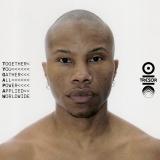
May 2026 marks the arrival of TYGAPAW (aka Dion McKenzie)’s first full-length album on Tresor Records, entitled Together You Gather All Power Applied Worldwide. An acronym of its creator’s name, TYGAPAW’s third studio album is a deeply personal collection of music building worlds where Black queer and trans siblings can thrive, while unifying dancefloors worldwide. A proposition that collective wisdom liberates us from the matrix of domination we live within. The album unfolds as the latest chapter in TYGAPAW’s ongoing techno opera opus, continuing to center the voices of Black women, which surface as layered incantations rather than lyrics - powerful, haunting, sensual, activating.
With the process of creating the album starting in 2023, as TYGAPAW (Dion McKenzie) was in the first year of their transition, the music reflects the intensity of that period, where they were experiencing deplatforming as a response to the shift in their physical appearance: Tracks like ‘M32 Riddim’ and ‘Helicopter hovers over my Crown Heights Apartment’ feature high-paced rhythms intersecting with intense siren-like synths to form demanding compositions echoing a heightened sense of alert. Yet throughout the album, relief comes in the form of TYGAPAW’s vocal features, co-conspirators, and chosen family, whose voices are treated with reverb and echo, a sonic fingerprint that leads back to the pioneers in the legendary studios of TYGAPAW’s native land, Jamaica, an important reminder that the past will always inform the future. It is an album for dancers first and foremost, where joy, defiance, and integration with the natural body coexist, and every drop feels less like a climax than a transformation. Expect a bass that permeates your soul and melodic synthesized sequenced phrases echoing the dancehall eras of TYGAPAW’s youth, reshaped into hypnotic melodies that glow over industrial kicks designed to command attention, reasserting Jamaica's pioneering yet often overlooked contribution to electronic music.
In the opening track, ‘Can I Live’, Precious Okoyomon’s words feel like the beginning of a ritual; setting the intentions for the rest of the proceedings. As McKenzie puts it, their “work is about regeneration, resetting, getting integrated into nature, and about rebirth. That’s the tone I wanted to set at the outset of the album.” Ms Carrie Stacks continues this thread of support in ‘Don’t Panic’ with heavily processed vocals on top of a beat that takes inspiration from another important ingredient in the antidote to the oppression of isolation: Ballroom culture. “ I feel like I found my queerness in Ballroom, that’s why this track is very important to me.”
Echoes of NYC Black queer nightlife scene also permeate in the energetic drums of ‘Exorcise the Language of Domination’, in which Julianna Huxtable’s spoken performance complements the various movements and tones of the music. “My producer brain thought this was the one that Juliana’s vocals would be best suited for. I hinted: ‘what do you think of this one?’ She just went into her notes and picked some passages to go with the first section of the track. From there, it was a year-long process of development. It required time and space for this thing to evolve, but I think it’s one of the most powerful tracks on the album.” London’s SUUTOO contributes the album’s only musical collaboration on ‘B2B’, a track that emerged from sessions in McKenzie’s New York studio where the real objective was to connect and have fun; a time out from the demands of life outside.
The album closes out with a double hit of emotion in the form of ‘Effects of Resistance and Black Trans Masculine Experience’. The former features South African scholar Khanyisile Mbongwa drawing connections that exist between Africa and the Black diaspora, whilst looking to the future and calling for a shared sense of community.
The latter piece, an instrumental version of the piece which featured on the IMMIGRANT E.P. of 2025 is a gentle and deeply affecting end to the record, a place of peace and acceptance. This end-of-cycle tone is mirrored in the sleeve photography, which also ties back to IMMIGRANT by finally revealing what was hidden: a portrait of the artist fully self-actualized; a step towards true inner liberation. TYGAPAW is sonically defiant across this album; bass frequencies feel tactile — less heard than inhabited — infectious lead synth melodies remain with you long after the track ends. An overall sound that leaves asserting an urgent need for connection. From Detroit to New York to Berlin to Jamaica, despite geographic distance, this album reminds us that we remain in solidarity, recognising that meaningful world-building requires collective input and action, both personal and communal, if we are to move toward liberation.
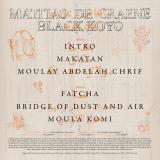
With Black Koyo, Mattias De Craene enters a sound world at once intimate and vast. Born from journeys in Morocco and Brussels, the project traces the rhythms, chants, and spirits of the Gnawa tradition, revealing a quiet resonance that echoes De Craene's own search for depth and presence. Guibri, qraqueb, call-and-response chants, saxophone, loops, and electronics come together in a trance-induced dialogue - ritualistic, elemental, and dreamlike - creating a space where listening becomes immersion, tradition meets imagination, and music unfolds as a shared act of reflection and wonder.
About Mattias De Craene
Mattias De Craene's artistic path is marked by rare coherence. As a central voice in Nordmann and MDC III, he developed a physical, rock-inflected jazz language driven by propulsion, volume, and trance-like collective energy. Over time, a period of personal rupture - burnout, tinnitus, depression - shifted his focus inward. The saxophone became a breathing, textural presence, and in his solo work, he weaves saxophone, electronics, loops, and minimal forms into a cinematic, hushed world where repetition, resonance, and silence slow perception. Rooted in ambient and introspection, his music prizes attention over impact, precision over excess - a quiet intensity recognized with a nomination as Musician for the Music Industry Awards (MIA's).
About Black Koyo
Black Koyo is a Brussels-based ensemble and one of the most compelling voices of the Gnawa tradition outside Morocco. Led by maalem Hicham Bilali, the group brings guibri, qrraqueb, and call-and-response chants to life with trance-like intensity and ritual precision. Their music is both rooted and contemporary, weaving earthbound rhythms and vocal invocations into ecstatic, immersive soundscapes, creating a space where ancestral resonance meets present-day imagination.
About Jan Bang
Jan Bang is a pioneering Norwegian producer and musician, celebrated for his mastery of live sampling and his ability to merge electronics with improvisation, rhythm, and texture in real time. He mixed the album and occasionally joins live performances, bringing his signature approach to sound as co-founder of the influential Punkt Festivaland collaborator with artists such as Jon Hassell, David Sylvian, Arve Henriksen, and ECM Records' roster. As a performer and sound architect, Bang creates immersive, trance-like sonic textures where silence and sound carry equal weight. Within Mattias De Craene ftBlack Koyo, his live sampling becomes an organic instrument, weaving saxophone, electronics, and Gnawa rhythms into hypnotic, physically charged soundscapes.
Line-up & credits
Mattias De Craene - sax, electronics | Hicham Bilali - guibri, vocals, qraqueb |Ismael Akhraz - vocals, qraqueb | Marwan Abantor - vocals, qraqueb
All tracks are original gnawa traditionals played by Black Koyo and arranged by Mattias De Craene.
Album produced & recorded by Mattias De Craene in Essaouira, Morocco and hometown Ghent, Belgium 2025.
Text by Hicham Bilali.
Mixed by Jan Bang at Punkt Studio
Mastered by Lieven Van Pee
Artwork by Marina Sviridova
Design by Benoit Van Geel
Manufactured and distributed by N.E.W.S.
Executive production by W.E.R.F. records
Supported by Flemish Government, Jazzlab, nona, HA Concerts, Aubergine artist Management,
KAAP, La Bestia (Wout Van Putten) & mdcmu.sic vzw.
2026 (c) W.E.R.F. records
Rigetto is a natural reflex of expulsion, and it is from this concept that the label is inspired.
Founded by DJ and producer CUT, aka Luca D'Elia Fiorenzano, Rigetto is a personal and direct space where sound becomes a silent way of exposing oneself. More than a defined genre, it is an attitude: a techno free from rigid structures, influenced by human movement, interaction, and the surrounding sonic matter, where elements of techno, ambient, and natural soundscapes meet and transform.
The first release, Rigetto 01, represents the starting point of this path: a first statement of intent that introduces the label's sonic identity, made of essential rhythms, subtle tensions, and immersive atmospheres where sound becomes a physical and perceptual experience.
2026 Repress
Maltese talent Human Safari debuts on Mutual Rytm with jazz-influenced techno EP, 'Culture Shock'.
Human Safari is a key player in his native scene in Malta. He's a resident at Glitch Festival, has played cult spots, and has a dynamic sound that brings jazz improvisation to techno, often featuring live instrumental elements. His music has found its place on top labels like R&S Records, and most of this new EP for SHDW's Mutual Rytm imprint was produced during his Colombian summer tour last year - written and recorded amongst inspiring and unusual settings with just a laptop and headphones.
"This EP represents embracing new beginnings that, though might bring uncertainty and fear, the
light always guides you to where you were always meant to be." - Human Safari.
Opener 'Mouse on Keys' has been a key cut for the label boss across the past year, a unique track that peaks curiosity from dancers to DJs whenever it's played. Its cantering techno rhythm is overlaid with delicate, heartfelt piano keys straight from a smoky jazz bar, making for a great counter to the physical drums. 'Fragments' is a deeply personal track dedicated to the artist's late grandfather. It's a funky, soulful techno roller with blissed-out and sunny chords full of hope.
Next, 'Classique' gets more gritty with loopy drums and bass and glitchy percussion that fizzes with energy, while 'The Labyrinth' features piano motifs recorded in just one take. It brings a dark paranoia in the uneasy, off-grid keys which dart about with nervous energy over the booming low ends. There is just as much intensity and edge to the unresolved keys that loop over the raw drums on 'A Rainy Day in Bogota', before digital bonus cuts 'Dorian' and 'Phantom' bring more jazzed out techno madness with warped keys and expressive elements bringing great invention.
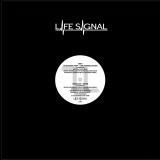
Leading voices in contemporary Organic House anchor LS001 V.A-Thunderlab Collective, the inaugural vinyl-only edition from Life Signal. This first chapter introduces Life Signal as a curated imprint dedicated to presenting standout works from modern electronic music-pieces selected for their lasting impact and now pressed exclusively for listeners who value both sound and physical format.
These tracks have earned significant attention within the digital space, and this release brings them to vinyl for the first time, giving collectors a chance to experience them in a new, tactile form.
A1-Volen Sentir & PROFF-"Luna Amazonia (PM Mix)"
The record opens with a signature blend of organic textures and melodic flow, shaping an atmosphere that sets the tone for the edition.
A2-Krasa Rosa-"
Kaftan"A refined balance of acoustic nuance and electronic drive, building toward a standout breakdown and a sharp, vocal-chopped lead.
B1-Jiminy Hop-"Cavalier (Extended)"
Marked by Jiminy Hop's characteristic phrasing and evolving percussive movement, this version extends the melodic narrative with precision.
B2-Audiense-"Winterfell (Extended)"
A steadily rising finale combining psychedelic touches and ethno-vocal textures, rounding out the collection with an expansive sense of lift.With LS001, the Life Signal vision arrives on vinyl: curated electronic works preserved for collectors who follow music not only by sound, but by legacy.

2026 Repress
French talent Hyden makes label debut on Mutual Rytm with conceptual new techno EP, 'To Whom It May Concern'. Hyden is a potent force in the French underground, creating powerful techno with dense percussion, immersive grooves and subtle nods to classic influences - all through his own unique lens. Having delivered standout releases in recent years, here he offers up sounds "anchored in psychoanalysis, time, and emotional residue" as he makes his mark on SHDW's Mutual Rytm imprint, delivering influences of dream logic and surrealism as the palette moves between brutality and introspection. "It's hypnotic music for moments of rupture where something breaks or breaks through". Opener 'Manifest Content' is inspired by Freudian theory and explores the surface illusions of thought and dream. It's about the dissonance between what we perceive and the deeper meaning that slips away beneath and is a deep and dubby techno track with flashes of unsettling melody. 'Bruises' is emotional trauma made sonic. This piece delves into invisible scars and traumas, residues of past conflict or intimacy - it's slow-burning, heavy and raw. 'Jikan' is a meditation built on time and its erosion. Inspired by the Japanese concept of impermanence, it reflects fleeting moments, decay and the tension between stillness and motion with jacked up but warm drums and turbulent bass. Next, 'Free Will' is born from inner conflict and plays with deterministic rhythms and evolving layers, questioning whether we are truly in control or just passengers in a prewritten sequence. The vocal mentions, "creatures, you're out of time" to bring darkness to the intense but sleek rhythms. The streamlined physicality of 'Swarm' channels the primal force of collective movement and is a nod to the loss of individuality in group behaviour. In addition, the package is loaded with digital bonus cuts. 'Yumehara' is a dive into surreal dream-states and evokes subconscious landscapes where logic dissolves and emotion reigns, while 'Lu Bu' is brutal and warlike and named after the legendary Chinese general that captures impulsive violence, betrayal and reckless glory with relentless energy and rhythm. Lastly, 'Neon Pale' is a synthetic dreamscape about fading beauty under artificial light - a melancholy ode to cities at night and the loss of warmth in modern life.
Italian producer Gledd has been quietly carving out a reputation for groove-led house music that balances raw dancefloor energy with rich musicality.
Drawing on influences that span gospel, afrobeat, and classic deep house, his productions channel both heritage and forward-thinking club culture. My House Is Your Church marks his debut release on Delusions Of Grandeur - a fitting home for his expansive, souldrenched sound - and signals a bold new chapter in his evolution as an artist. The EP opens with On His Way, a percussion-heavy deep roller built for maximum dancefloor impact. Anchored by fat, heavyweight production and a massive low-end presence, the track surges forward with relentless energy. An incredible gospel vocal cuts through the mix, elevating the groove into something transcendent - equal parts spiritual and physical.
On It’s Not That Easy, Gledd leans further into his gospel house influences. Highimpact and rhythmically rich, the track weaves together organ fills and subtle tropical flourishes, creating a vibrant, sun-soaked energy while keeping the pressure firmly on the floor.
It’s a track that feels both uplifting and commanding. Flipping to the B-side, Habibi Gospel pushes into more “outernational” territory. A wild, expressive lead vocal takes center stage, riding atop a heavy, driving groove. Organ stabs punctuate the rhythm, locking dancers into a hypnotic flow that bridges cultures and styles with effortless confidence. Closing the EP, Can You Hear My Noise? brings things to a richly textured finale. Slightly more organic in feel, it blends echoing synth stabs, percussive melodic lines, and chopped vocals into a melting pot of sound. The result is a seamless fusion of gospel, afrobeat, and classic house - deep, emotive, and undeniably danceable. With My House Is Your Church, Gledd delivers a statement of intent: music as ritual, the dancefloor as sanctuary.
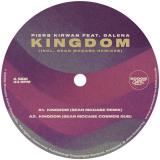
A welcome return for Boogie Café on vinyl with one of the standout moments from Piers Kirwan’s COLLABS series receives a high-spec remix package from the legendary Sean McCabe.
Sean McCabe delivers three distinct flavours: the main vocal remix provides a sophisticated, club-ready pulse; the Cosmos Dub shifts gears into syncopated, bruk-leaning territory; and the Instrumental offers pure groove utility.
This physical release features a Vinyl-Only Exclusive Dub, making this a must-have.
Italian producer Gledd has been quietly carving out a reputation for groove-led house music that balances raw dancefloor energy with rich musicality. Drawing on influences that span gospel, afrobeat, and classic deep house, his productions channel both heritage and forward-thinking club culture. My House Is Your Church marks his debut release on Delusions Of Grandeur - a fitting home for his expansive, souldrenched sound - and signals a bold new chapter in his evolution as an artist.
The EP opens with On His Way, a percussion-heavy deep roller built for maximum dancefloor impact. Anchored by fat, heavyweight production and a massive low-end presence, the track surges forward with relentless energy. An incredible gospel vocal cuts through the mix, elevating the groove into something transcendent - equal parts spiritual and physical. On It’s Not That Easy, Gledd leans further into his gospel house influences. Highimpact and rhythmically rich, the track weaves together organ fills and subtle tropical flourishes, creating a vibrant, sun-soaked energy while keeping the pressure firmly on the floor.
It’s a track that feels both uplifting and commanding. Flipping to the B-side, Habibi Gospel pushes into more “outernational” territory. A wild, expressive lead vocal takes center stage, riding atop a heavy, driving groove. Organ stabs punctuate the rhythm, locking dancers into a hypnotic flow that bridges cultures and styles with effortless confidence. Closing the EP, Can You Hear My Noise? brings things to a richly textured finale. Slightly more organic in feel, it blends echoing synth stabs, percussive melodic lines, and chopped vocals into a melting pot of sound. The result is a seamless fusion of gospel, afrobeat, and classic house - deep, emotive, and undeniably danceable. With My House Is Your Church, Gledd delivers a statement of intent: music as ritual, the dancefloor as sanctuary.
Shrouded in mystery when it first appeared, Tiger & Woods’ debut album quickly took on a life of its own. With little more than whispers surrounding the project, the music spoke loud enough: a set of extended disco constructions carefully tuned, remixed, over-dubbed, sliced and diced by the elusive duo of Larry Tiger and David Woods. What began as a cult phenomenon soon caused a stir across dance floors and record bags worldwide.
Now, for the first time ever, that legendary debut finally arrives on vinyl. Through the Green captures Tiger & Woods at the moment their distinctive language of groove first took shape. Rooted in the spirit of disco edits but already stretching beyond the format, the album blends loop-driven funk, house-leaning propulsion and the unmistakable bounce that would soon become their signature.
It’s the sound of two producers refining a craft that would later blossom on albums like On The Green Again, where their approach expanded into a wider palette of boogie, electronica, Italo and uptempo house. But here is where the story begins.
Before world tours, live sets and the creation of their own T&W Records imprint, there were these tracks: hypnotic, playful and engineered with a dancer’s instinct for tension and release. Each cut unfolds like a perfectly extended club moment, full of warmth, swing and that unmistakable Tiger & Woods sense of fun and function.
Years after its original digital release, Through the Green remains a cornerstone of modern disco-house culture. Pressed to wax at last, it finally receives the physical format it always deserved: grooves built for the turntable, the dance floor and the crate.
The mystery might be gone. The magic, however, remains very much intact.
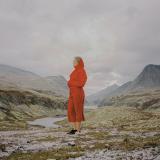
Evergreen In Your Mind, the new and third album from Norwegian singer-songwriter Juni Habel, exists in two worlds at the same time. Songs were recorded in quiet corners of her home, on the piano in the school where she works, and it uses the physical world around her to provide percussion. It also takes place, as she herself attests, within a dream; an imagined place in which her desire for oneness with each other and the world around us is finally realised.
Evergreen In Your Mind was recorded with co-producer Stian Skaaden, it’s Habel’s first album in three-years, following the breakthrough success of 2023’s Carvings LP. Formed of eleven new recordings, the songs here remain delicate, Habel’s voice playing an elegant lead role – but there are fluctuations too.
These small shifts in Habel’s sound result in a notable stride forward. More focus went into the groove of these songs. Playfulness was embraced and, perhaps most importantly, patience played a fundamental role in shaping the album with time and care given to every element of these songs. “We always aim to capture effortlessness - but the way of getting there is anything but effortless,” Habel reveals.
This extra time that was given to the project gave Juni the space to nurture her creativity. She would read and listen to music, hike into the hills, place herself within nature and seek out stillness. Not as a deviation from her work but as a fundamental part of the process. It’s a search for connection, and it’s a recurring theme across Evergreen In Your Mind; the polarity between stillness and passion, also our resistance to these desires, and the things we want to live and experience.
The album’s title-track and fist single feels indicative of this narrative. A gorgeous, delicate folk song, it finds Habel out in the woods, hiding from real life, caught in the space between the natural world and the pull of modernity. “It’s nostalgic. It’s about looking back and realizing things will be different,” Habel says. “Its about visualizing something beautiful in your head that you keep clinging onto.”
The album cover for Evergreen In Your Mind also adds shimmer. A striking photograph of Juni among the mountains, it was taken on a day trip to Rondane, a five-hour drive each way from her home. Habel explains. “It was awe-inspiring to drive all the way up into the high mountains, with its wide plains and intense colours. For an album with music that at times likes to hide itself, I think it fitted nicely with such an epic, grand, and powerful landscape.”
"Fans of Nick Drake, Karen Dalton and Neil Young will find much to enjoy in this musical equivalent of an evening spent alone by the fireside.” The Times
