Just when you thought you had Kasper Bjørke figured out he comes back with another great musical surprise. His new album Puzzles, which will be released April 5th on hfn music, follows two recent collaborative EPs on Live at Robert Johnson and Mule Musiq as well as his second Kasper Bjørke Quartet neoclassical/ambient album Mother on Kompakt.
Puzzles is Kasper’s love letter to the sound of early 2000s New York - merged with his Scandinavian sense of producing songs that goes beyond conventional club music; combining disco tinged instrumentations mixed with elements of 80s funk, jazz and contemporary pop songwriting, creating something familiar yet, something very fresh and innovative at the same time.
The album includes collaborations with a wide range of musicians and vocalists. From California based indie-disco troubadour Woolfy (DFA, Rong, Permanent Vacation etc.) to the Icelandic dream-folk trio Systur aka Sísý Ey (who also featured on Kasper’s 2014 single Apart, where the Michael Mayer remix became a timeless club anthem), as well as other longtime collaborators and artist friends: Toby Ernest, Jacob Bellens, WhoMadeWho’s Tomas Høffding on bass, Posh Isolation affiliate Frederik Valentin on guitar and the young, rising jazz star Oilly Wallace on saxophone and flute. Essentially, the majority of Puzzles is played and recorded live, including the drums by Rasmus Littauer (School of X, MØ). Many of the songs emerged from chord progressions written during studio sessions between Kasper and Toby - which Kasper then produced into a colourful and effective album, rooted in an expressive live feeling far from programmed patterns.
Puzzles is a new step for Kasper as a producer and artist, showcasing his ability to move and flow freely between genres and expressions, however still deeply rooted in his love and affection for the classic disco groove - which is only natural after more than two decades as an active DJ.
Another piece has been added to the musical puzzle of Kasper Bjørke
out of Stock
Last delivered 21 days ago available to reorder, subject to availability
'Mei Semones' sweetly evocative blend of jazz, bossa nova and math-y indie rock is notonly a way for her to find solace in her favorite genres, but is an intuitive means ofcatharsis. "Blending everything that I like together and trying to make something new -that's what feels most natural to me," says the 23-year-old Brooklyn-based singer-songwriter and guitarist. "It's what feels most true to who I am as an artist." Plinking guitar tones and asymmetrical time signatures exemplify her forays intoangular indie rock more now than ever before, especially on her debut Bayonet Recordssingle "Wakare no Kotoba"_its wide-interval arpeggios in odd meters being some ofthe most technically difficult guitar work Mei has ever implemented in her songwriting.Translated to "parting words'' in English, the self-described "anti-love song" serves as afarewell to a toxic friendship, complete with orchestral swells and crashing guitars. Originally from Ann Arbor, Michigan, Semones began playing music at a young age,starting out on piano at age four before moving to electric guitar at age eleven. Afterplaying jazz guitar in high school, she went on to study guitar performance with a jazzfocus at Berklee College of Music. College is where she met her current bandmates,including string players Noah Leong and Claudius Agrippa, whose respective viola andviolin add softness and multidimensionality to Mei's intricate guitar work. After releasinga slew of singles and an EP in 2022, coinciding with her move to New York City, Mei andher band have since gone on to collaborate with post-bossa balladeer John Roseboroand embark on their first-ever tour with the melodic rock outfit Raavi. Semones chronicles infatuation, devotion, and vulnerability in her songs, complete withsweeping strings, virtuosic guitar-playing and heartfelt lyrics sung in both English andJapanese, that have all become part of her sonic trademark: ornately catchy, genre-fusing compositions serving as the backdrop to tender lyrics touching on theuniversalities of human emotion.
Following 2021’s Cape Cod Cottage — Eder’s concept album under the guise of Edward Blankman, a retired dentist who wrote elegant jazz in the1970s — on Therapy, Eder drops the alter ego and the drumset (almost entirely) and explores more reverberant sounds with his ensemble of woodwinds. The result is a distinctive take on new-age ambient music subtly interwoven with Eder’s affinity for 20th century classical and jazz. The quest for Therapy came during a period of deep spiritual curiosity. Eder was avidly watching testimonies of near death experience survivors (NDEs), pouring over books of Theosophical artwork and philosophy, and processing experiences of grief, uncertainty and spirituality. Eder wanted to explore the threshold between the spiritual and physical dimensions, and create music that could evoke its shape and texture — a theme further illustrated in the original album artwork and single covers by Adam Rabinowitz. Eder felt he must be on to something when, on a whim, he looked up the tempo of a piece he was calling “137 Riddle.” Turned out to be “the most important number in the world” in theoretical physics, as well as a provocative number in Jewish mysticism. Maintaining his track record of recording the best musicians Eder can find, Therapy features special guests Nailah Hunter (harp), Henry Solomon (saxophone), and Ethan Haman on The Newberry Memorial Organ at Yale University.
Utilising a mammoth bank of saxophone samples, Shmuel Hatchwellpresents his new alias hoyah with an engrossing album captured in tape and digital form on Bruk.
The process leading to Set + Setting started out with a need for limitations to provide some focus for long-serving sound engineer and producer Hatchwell. He set out the following guidelines to accompany the overarching idea of 'set + setting':
No 'beats'
Saxophones are the voice
Stay away from the computer for as long as possible
Hatchwell took a deep dive in search of every saxophone sample he could find, threw them all into his MPC and then proceeded to weave together a variety of pieces. The focus on a particular instrument brings cohesion to the album, but equally the limited sound inspired freedom to experiment with other techniques and tools. At times one or two sax voices sound naked and undisturbed, while elsewhere you might only hear jagged shards or distant ghosts as they pass through aggravated processing.
Beyond the sound itself, the name hoyah was born with the flippancy of the 21st Century and ratified by ancient tradition. After the music had been made, After the music had been made, Hatchwell plucked the name out of thin air as a play on the TikTok meme 'can I get a hoya,' and subsequently discovered on a dive into his Jewish heritage that in old Hebrew hoyah means, 'to be, become, come to pass, exist, happen, fall out.' This distinction between Jewish concepts and modern political conflations is important to Hatchwell, who finds himself consistently having to separate Judaism from the situation in the Middle East and its ongoing genocide.
Subtly calling to mind the understated cosiness of real-life sax players like Sam Gendel as well as the fragmented sample manipulation of Matmos and Tim Hecker's approach to processed noise, hoyah's debut album absolutely manifests an idea and musical practice as something new and intentional
Having built a loyal local Antwerp following off of the success of their 2019 debut self released album, ‘Forgotten Kingdom’, and growing reputation for electrifying stage performances, Kolonel Djafaar achieved worldwide recognition in 2021 for the ‘Cold Heat’ EP on Batov Records, attracting praise from Music Is My Sanctuary (“triumphant), and support from Gideon Coe on BBC 6 Radio Music, and DJs across Worldwide FM, Soho Radio, Le Mellotron, and KEXP.
The group overcame busy schedules and frequent quarantine periods to hit the studio in February 2022 to lay down four tracks. However, the creative itch persisted, leading to an intense writing session in August, deep in the heart of a tranquil forest. From noon until midnight, the band immersed themselves in the creative process, embracing the freedom to make noise without restraint.
Fueled by hearty breakfasts, unwavering focus, and the ambient clucking of chickens roaming the studio, Kolonel Djafaar crafted the majority of ‘Getaway’. This period marked a pivotal shift as a number of new band members joined just in time for the August sessions.
Membership changes, including Emiel Lauryssen joining on trumpet, alongside guitarist Philip Matthhijnssens, the band's palette has broadened and new sounds are able to break through. From psychedelic rock and soul influence of the Daptone Records’ affiliated Budos Band, surf rock (“Urban Dweller”), Morricone Spaghetti Western guitar, and Afro Cuban (“Kelmendi”), alongside the brassy Afrobeat and Ethio jazz vibes the group have been known for.
The broader dynamics of ‘Getaway’, and the band’s more cinematic and experimental approach, is particularly apparent on "Siren’s Glitch" and "Phil’s First Tear". The latter, first conceived by drummer Anton Van Hove, features the lead guitar doubling up with the bass guitar for added impact. Whilst the origins of "Convoi Exceptionnel", a brass & synths stomper of a march, trace back to a jam session during the band's Hungarian tour, another vital period of prolonged time together, capturing the organic essence of their experiences on the road.
Each track on ‘Getaway’ holds a unique connection to at least one band member, and all benefit from a collaborative approach to songwriting. "Sparking Clover'', an Ethio-inspired psych & soul groover penned by tenor saxophonist Doyin Smith, carries a poignant undertone inspired by personal loss, while psych rock leaning tracks like "Apologies in Advance" showcase the band's evolution and increasing professionalism in crafting a distinct sonic experience.
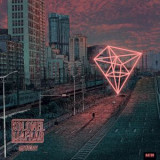
The curious cover art depicts a lone individual heading down an empty city street towards a large mysterious glowing object, evoking the common emptiness and struggle of urban life, and the search for meaning or just something better. The band envision the object to represent this album, offering a beacon to like-minded listeners. Kolonel Djafaar invite music enthusiasts on an immersive journey, to ‘Getaway’ from the daily grind of life, on an album reflecting diverse influences and marking a new chapter in their musical exploration.
Ltd. Edition Vinyl: limitiertes gelbes 180g Doppel-Vinyl, Cover mit Prägung und Durchnummerierung, bedruckte Innenhüllen, Poster und Fotos der Bandmitglieder
Einstürzende Neubauten präsentieren ihr neues Album. Sie suchen nach neuen Formen. Nach dem unentdeckten Ton und dem noch unausgesprochenen Wort. Seit ihrer Gründung am 1. April 1980 verschieben die Einstürzenden Neubauten die Parameter von Mainstream und Subkultur, um das Unhörbare hörbar zu machen. Und vielleicht auch das Unerhörte. Ein sich über vier Dekaden erstreckender Feldforschungsversuch, der nun ins nächste Stadium tritt. In ihrem 44. Bestehensjahr geht die Formation weit zurück zu ihren Wurzeln, um sich gleichzeitig neu zu definieren. Ein verändertes Selbstverständnis, für das das Berliner Quintett plus eins 2024 sein eigenes Genre kreiert hat: apm - alien pop music. Ständige Weiterentwicklung - so könnte man das Schaffen der Einstürzenden Neubauten kurz und knapp zusammenfassen. Eine musikalische Evolution, die beim 1981 veröffentlichten Albumdebüt "Kollaps" beginnt und sich nun auf dem im April 24 erscheinenden Album "Rampen - apm: alien pop music" manifestiert, auf diesem präsentieren sich Blixa Bargeld, N.U. Unruh, Alexander Hacke, Jochen Arbeit, Rudolph Moser und Felix Gebhard nun von ihrer unberechenbarsten und eigenwilligsten Seite. Auf ihrem neuen Album setzen die Neubauten nun allen Sound-Spekulationen ein - wenn auch spätes - Ende. Schon seit Mitte der 1980er-Jahre experimentieren die Einstürzenden Neubauten auf der Bühne mit sogenannten Rampen: Öffentliche Improvisationen mit offener Entwicklung und Ausgang; Abschussrampen ins noch Unerforschte, die die Band im Jahr 2022 auf ihrer letzten "Alles in Allem"-Tournee im Zugabenteil performte und deren Mitschnitte als Basis für das neue Album dienen. "Rampen - apm: alien pop music" ist Popmusik für Paralleluniversen und Zwischenwelten. Für Hyperräume und Interzonen. Mikrokosmisch und intergalaktisch zugleich. Eine demimondäne Behauptung außerhalb aller physikalischen Gesetze, mit der die Einstürzenden Neubauten ein stilistisches Niemandsland zwischen Vergangenheit und Zukunft betreten. Rückkehr zu den Wurzeln einerseits, andererseits entsteht aus lärmgewaltigen Kracheruptionen, auf kryptische, oftmals fragmentarische Lyrics treffend, eine neue Kunstform: Populäre Musik für Aliens und Außenseiter. Aus Anti-Pop ist Alien Pop geworden. Fremdartig. Kokonhaft versponnen. Ungehört. Sonus inauditus. Nicht ganz unabsichtlich erinnert das reduzierte Coverartwork an das ikonische Layout des "Weißen Albums" von den Beatles. "Ausgehend von der Idee, dass die Einstürzenden Neubauten in einem anderen Sonnensystem ebenso berühmt sind wie die Beatles in unserer Welt", so Blixa Bargeld über die Gratwanderung zwischen Avantgarde und Augenzwinkern, Provokation und popkultureller Diskontinuität. Womit auch direkt das zentrale Thema vorgegeben wäre, das sich wie ein roter Faden durch alle Songs zieht: Veränderung, utopische Gedankenspiele und Vergänglichkeit. "Ich habe auf der Platte ein paar Lösungen gefunden und Dinge formuliert, wie ich sie vorher noch nicht formuliert habe, weil sie mir noch nicht so klar waren. Ich bin jemand, der denkt, durch Musik Erkenntnisse zu gewinnen. Das war schon immer so. Die Überzeugung, in der Musik etwas zu finden, was ich vorher nicht wusste. Und etwas zu singen, was ich vorher nicht wusste. Etwas, was sich dann als Wahrheit herausstellt. Oder zumindest als sinnvoll, wenn man es ein wenig kleiner halten will." Dieses Album repräsentiert die nächste Stufe der Evolution, auf der man die bekannte Sprache schließlich hinter sich gelassen hat. Und die Eröffnung weiterer, unendlicher Möglichkeiten: alien pop music.
out of Stock
Last delivered 2 years ago available to reorder, subject to availability
Fabiana Palladino announces full details of her hotly anticipated self-titled debut album. The UK vocalist, songwriter, multi-instrumentalist and producer releases ‘Fabiana Palladino’ via Paul Institute / XL Recordings. Made in the wake of the end of a long relationship, the album is an intimate record that sees Fabiana Palladino confront complex questions about love, loneliness and normativity in relationships. The result is a 10-track full-length of shapeshifting sonics that draws inspiration from the big R&B, soul, pop and disco studio productions of the 1980s and 90s and filters them through a modern lens.
Written and self-produced by Palladino, the album features performances from renowned musicians and close friends including Paul Institute co-founder Jai Paul, her father and legendary session bassist Pino Palladino, brother and Yussef Dayes bassist Rocco Palladino, renowned drummer Steve Ferrone and strings from Rob Moose.
Speaking on the new music and forthcoming album, Fabiana Palladino says: “A central theme of the album is aloneness. Whether it’s a song where I’m searching for connection with someone else, or trying to embrace the aloneness, it tends to come back to me, who I am when I’m alone, what I feel when I really look inwards. I’d say it’s a pretty introspective record overall. The songs are often about trying to go deeper into yourself, exploring your true feelings and how they then relate to and affect your relationships with others
Recorded and produced by Pink Floyd engineer Andy Jackson, the audio is via analogue transfer to 96khz/24 bit by John Dent at Loud, with vinyl mastering by Geoff Pesche at Abbey Road. Formed in 1984, Fields of the Nephilim is the creation of vocalist and front man Carl McCoy. Highly influential, especially in the world of goth, but also within the metal and electronic genres, their legacy endures to this day. You can hear their influence on bands like Swans, Godspeed! You Black Emperor, Explosions In The Sky, Wolves in The Throne Room, Behemoth and more. The band"s unique sound, an apocalyptic fusion of Victorian underworld meets Sergio Leone Spaghetti Western, had an appearance to match (wide-brimmed hats, long duster coats and cowboy boots, usually black and smothered in white flour as a substitute for dust), and set them apart from their contemporaries. Elizium is one of their most beautiful albums and considered by many to be their best. As The Quietus wrote, "it was both their most accessible and their most experimental work, concluding and consolidating the Nephilim"s five-year shamanic journey. Lead-off single and opening track "For Her Light" featured a lengthy mid-section that anticipated the apocalyptic post-rock of Godspeed! You Black Emperor (unsurprisingly, it failed to chart), and the album featured some of the band"s hardest rock in the wah-overload of "Submission," as well as further incorporating dance elements - more successfully and organically than many of their peers, it must be said - on second single "Sumerland"." Louder Sound also called "Sumerland" their "greatest ever track".
There's a new guitar in town....nein besser gesagt altbekannte Recken mit neuer Band, die 2022 beim Rebellion-Festival vom Geheimtipp schnell auf sich aufmerksam machten: We proudly presents: ON THE HUH mit ihrem Debut "Bit on the side" und wer auch nur einen Hauch für den good oldschool UK-Streetsound übrig habt wird diese Band lieben! Aufgenommen in den altehrwürdigen Londoner Perry Vale Studios und produziert von Pat-"Vibrators"-Collier verbergen sich hinter der East-Coast-Slangphrase "On the Huh" (meint: slightly on the piss) Musiker von Infa Riot, Braindance und Special Duties und liefern 15 Brickwall-Oi! / Streetpunk Hymnen mit dezentem Glam-Touch der Extraklasse ab! Klassische Singalongs, eine unglaubliche Spielfreude, rotzige Chorals und traditionelle Punkrock-Einflüsse aus vielen Jahrzehnten "Made in Britain" und dabei extrem abwechslungsreich und halt a little "Bit on the side"!
Für den Nachfolger seines ECM-Leader-Debüts La traversée erweitert der französische Saxophonist Matthieu Bordenave sein Trio mit dem deutschen Pianisten Florian Weber und dem französischen Bassisten Patrice Moret um die einzigartige Sensibilität des Schlagzeugers James Maddren, dessen beharrlicher Puls einen gewandten Kontrapunkt zum ohnehin schon eigenwilligen Sound der Gruppe setzt. Neben der gefühlvoll kantigen Wiedergabe von John Coltranes ”Compassion” nimmt sich das Quartett acht Bordenave-Originale vor, die eine Brücke zwischen kammerjazziger Dynamik und Post-Swing-Designs schlagen. Webers und Bordenaves eigenwillige Herangehensweise an ihre Instrumente - Bordenave ist sowohl auf dem Tenor- als auch auf dem Sopransaxophon zu hören - gehen nahtlos ineinander über und spinnen unerwartete Linien über einer höchst interaktiven Rhythmusgruppe. The Blue Land wurde 2022 in Pernes-Les-Fontaines aufgenommen und von Manfred Eicher produziert.
Smudge All Stars is Richie Stevens' audio intelligence collective. Richie is the son of the late John Stevens, a pioneer of British free jazz, and a gifted drummer, percussionist and producer in his own right. His talents have found him in constant demand, working with everyone from Horace Andy and Joss Stone to Boy George and Damon Albarn. Now, with Smudge All Stars, Richie leads a funk/soul ensemble that draws on his friendships with many leading black British, Jamaican and US musicians.
Smudge All Stars is Richie’s musical vision writ large. This is a party album in the old school P-funk tradition, all instrumentation is recorded live with Stevens calling on the original Horny Horns Fred Wesley and Peewee Ellis to help build a fat brass groove for the authentic P-Funk vibe and George Clinton vocals for the ultimate seal of funk approval.
The 8-track musical extravaganza commences with ‘Brutal Funk’; a rousing psychedelic funk workout that encompasses a delicious groove cooked up by the famed Jamiroquai member DJ D-Zire and the powerful vocals of British soul singer Mary Pearce. ‘Up is Just a Place Feat. George Clinton’ continues the party vibes by bringing none other than the P-Funk master himself together with Mary Pearce, MWS, Derek 'Dr Mouthquake' Green and the decorated British soul singer-songwriter Omar for a full flavoured aural delight. Cue tight rapping, funky beats and scratching alongside slap bass and a slice of synth for good measure.
Other highlights include, ‘Freaky Toe’ which opts for a smoother groove than its predecessors with seductive vocals courtesy of Soul II Soul’s Charlotte Kelly. ‘B Side’ sees Mary Pearce join Derek 'Dr Mouthquake' Green for another upbeat affair, accompanied by the legendary American trombonist Fred Wesley (James Brown, Parliament-Funkadelic) who adds a distinctive touch to the track.
Die britische Sängerin, Songwriterin, Multi-Instrumentalistin und Produzentin Fabiana Palladino veröffentlicht am 5. April 2024 ihr selbstbetiteltes Debütalbum bei Paul Institute / XL Recordings. Das Album entstand nach dem Ende einer langen Beziehung und setzt sich mit komplexen Fragen zu Liebe und Einsamkeit in Beziehungen auseinander. Das Ergebnis sind 10 Songs, die sich von den großen R&B-, Soul-, Pop- und Disco-Studioproduktionen der 80er und 90er Jahre inspirieren lassen, gefiltert durch einen modernen Blinkwinkel. Es ist eine intime Platte, die die Toughness und Weiblichkeit von Janet Jackson auf ihrem 1986er Album "Control" und Annie Lennox" bei "DIVA" ausstrahlt, das klassische Songwriting von Kate Bush und Joni Mitchell aufgreift und die romantischen Motown-Duette von Marvin Gaye und Tammi Terrell unterläuft, um die Normativität in Beziehungen zu hinterfragen. Das von Palladino selbst geschriebene und eigenproduzierte Album enthält Beiträge von renommierten Musikern und engen Freunden, darunter vom Mitbegründer des Paul Institute, Jai Paul, dem legendären Session-Bassist Pino Palladino (Fabianas Vater), ihrem Bruder und Yussef Dayes-Bassisten Rocco Palladino, dem bekannten Schlagzeuger Steve Ferrone sowie Streichern von Rob Moose. Fabiana Palladino hat in den letzten Jahren als gefragte Session-Musikerin für Acts wie Jessie Ware, Sampha, SBTRKT oder Laura Groves gearbeitet, während sie in ihrer eigenen Musik intensiv nach Pop-Perfektion strebt. Im vergangenen Jahr war sie Teil von Jai Pauls Band für sein lang erwartetes Live-Debüt, sowie Support-Act der gefeierten Shows.
wieder auf Lager Der Plan gelten als zentrale Wegbereiter der Neuen Deutschen Welle: Mit minimalen Mitteln produzierten Moritz Rî, Frank Fenstermacher und Pyrolator experimentelle elektronische Musik, verspielt und mitunter dilettantisch anmutend, aber immer mit Humor. 1984 wurde Der Plan von der japanischen Kaufhauskette Seibu für sechs Konzerte nach Tokio eingeladen. Anlass war die von Seibu ausgerichtete deutsche Woche. Ausgerechnet Der Plan? Warum nicht eine Oktoberfestkapelle oder die Scorpions? "Damals war in Japan die NDW sehr beliebt", so Moritz Reichelt. "Man kannte sich dort besser damit aus als hierzulande. Außerdem war an diese Kaufhauskette der Plattenladen und Vertrieb Wave angeschlossen, und die kannten sich richtig aus." "Japlan" dokumentiert die Setlist dieser Tokio-Auftritte. Neben Songs von den Vorgängeralben "Normalette Surprise" und dem Soundtrack "Die letzte Rache" und von der Doppelsingle "Golden Cheapos" enthält "Japlan" auch seltsame Instrumentalstücke, die extra für diese Konzerte produziert wurden. Und einen der bekanntesten Songs des Plans: "Gummitwist". Das Album erscheint mit Bonus-Tracks.
FYEAR is a Montréal-based ensemble led by composer Jason Sharp and poet/writer Kaie Kellough that fuses spoken word into genre-bending compositions for electronics, two voices, two drummers, and processed saxophone, pedal steel guitar, and violins. FYEAR incorporates drone, out-jazz, post-classical, ambient metal, avant-rock, and modular synthesis in a sonic and stylistic palette the opposite of collage or pastiche: the FYEAR ensemble integrates a unique and unified sound/aesthetic while traversing adventurous and variegated terrain. Kellough’s poetic materiality conveys acute political-existential themes, alternating between declarative, meditative, and cut-up/semiotic manifestations. This self-titled debut album is a supremely innovative 40-minute multi-movement work; an ardent mission statement that mines the interzone where Saul Williams, Moor Mother/Irreversible Entanglements, Shabazz Palaces, Zulu, Angel Bat Dawid, Damon Locks/Black Monument Ensemble, Shabaka Hutchings, and Matana Roberts are all iconoclastic neighbours. FYEAR melds improvisation and composition, traditional notation and graphic scoring, electronic and acoustic instrumentation, lucid recitation and abstract vocalization, balancing intensive structure with an expansive sense of exploration. Through several years of collaboration, development, workshops, commissions and performances conducted by Sharp and Kellough, their wordsound practice has culminated in this nine-piece group which also features poet/writer/activist Tawhida Tanya Evanson (present director of the Banff Centre Spoken Word program) violinists Josh Zubot and Jesse Zubot (Tanya Tagaq, Darius Jones, Joshua Hyslop), pedal steel player Joe Grass (Tim Hecker, Patrick Watson), drummers Stefan Schneider (Bell Orchestre) and Tommy Crane (The Mingus Big Band, Aaron Parks), with live visual typographics from Kevin Yuen-Kit Lo, who also designs the album art. Propelled by the vocal interactions of Kellough and Evanson, FYEAR interrogates our present and future post-capitalist polycrisis, invoking collective anxieties, emotions, and critiques. FYEAR re-poetizes our constructed, manipulated social/conceptual realities, re-inscribing questions about the future by setting them to a wildly dynamic and evocative temporal soundtrack: Who does it belong to? How will it be shared? How do we project a collective future into the contested challenges of climate change, global migration, wealth gaps, safety/precarity, identity/affinity, segmentation / segregation, all our seemingly irreconcilable histories and forward visions for the world we dream to inhabit
Technically, Yeah. Detroit artists Eddie Logix and Jo Rad Silver alchemize sonic matter on Real, No. The EP emerges from years of creative collaboration and blends each of the artists’ strengths into a deep-house, hi tech jazz, dubby leftfield assemblage straight from the pulse of today’s Detroit.
Since 2017, the pair has been producing tracks and co-curating Technically, Yeah., an influential monthly happening that encourages (Live) electronic musical expression. The duo’s curation is grounded in community, widely genre-diverse and steadfast in commitment to technological experimentation. The Real, No. EP distills this ethos and puts it on wax.
While Jo Rad is known for techno leanings and Eddie for organic jams (recently on Rocksteady Disco,) the two transform beats into substance with a diverse and thoughtfully constructed release. Glued together with attuned mixing from Salar Ansari and cut loud at Archer Pressing in Detroit, the EP’s range puts deep grooves in the bag for every discerning DJ.
AKKA’s Side: “King David” sticks the synthy deep house groove right in gear with a driving, bubbling bassline and floating effervescent vocal chops from and for a special someone. “Mango Strut” offers a slight island twang and dives into a breaky depth of a bracing cathartic arpeggiated, hand drum ecstasy. A vitamin filled chugger.
BEEP’s Side: The duo recorded “June Buggy” the first time they jammed together on a borrowed Juno. This propulsive Italo-ish conga groover is a mechanical piece of action. The record ends by summoning the ancestry of “Callin’ Dybbs,” a textured hi-tech jazz heater. Kasan Belgrave, young-gun horn of known pedigree, lays down the sax. The sultry brass tones lock in with buxom stabs. For those who know and those who don’t yet. This one holds depths!
“Fierce jazz buggin futurism in outerspace” - Luke Una
“Driving and psychedelic and gorgeous hi-tech.” - Peter Croce
“Perfectly crunchy soul squeezed jams begging to be rinsed” - 2Lanes
“Funky, jackin’, atmospheric, groovy, ravey and ethereal”- Father Dukes
“I’m calling dibs on callin’ dybbs!” - DJ Etta
out of Stock
Last delivered 2 years ago available to reorder, subject to availability
Sie sind die größte Band, von der Sie noch nie gehört haben. Unbesungene Helden, deren Musik politisch und spirituell war und ihrer Zeit um Generationen voraus. Ihre Geschichte ist nie erzählt worden. Bis jetzt... Cymande, eine Gruppe schwarzer britischer Musiker, die alle als Kinder aus der Karibik nach Großbritannien gekommen waren, veröffentlichten Anfang der 70er Jahre kurz hintereinander drei brillante Alben und wurden in den USA begeistert aufgenommen. Doch im Vereinigten Königreich sahen sie sich mit einem Musikgeschäft konfrontiert, das von Vorurteilen gegenüber einheimischen schwarzen Talenten geprägt war, und wurden weitgehend ignoriert. 1975 lösten sie sich auf. Aber ihre Musik lebte weiter, da nachfolgende Generationen von Künstlern und Fans ihre Songs entdeckten und sich für sie begeisterten.
Die brandneue Neuauflage des bahnbrechenden selbstbetitelten Albums der Band, Cymande, wurde 2022 in den Abbey Road Studios neu gemastert.
In diesem Jahr kommt die gefeierte Cymande-Dokumentation "Getting It Back: The Story Of Cymande" in die britischen und internationalen Kinos. "Getting It Back" wurde unter der Regie von Tim Mackenzie-Smith gedreht und enthält Interviews mit einer ganzen Reihe von Musikern und Produzenten, die beeinflusst und begeistert sind von der Musik Cymandes, darunter Mark Ronson, Jim James, Kool DJ Red Alert, DJ Maseo und Louie Vega.
out of Stock
Last delivered 15 days ago available to reorder, subject to availability
Second in a series of reissues from Pierre Jaubert’s Parisound studio archive on Strut Record IS Lafayette Afro Rock Band's elusive funk/Afro original album, 'Soul Makossa' originally released in 1973. Transparent blue colored LP
In 1971, an undocumented seven-member Afro-American ensemble known as the Bobby Boyd Congress made a transformative journey from the United States to France. Bandleader Frank Abel recollects, "We sensed that the soul and funk market was saturated back home, and our original plan was a brief 6-month stint in Paris. Surprisingly, we ended up staying for a decade." Upon lead singer Bobby Boyd's return to the U.S., the group rebranded as Ice and crossed paths with independent producer Pierre Jaubert, a seasoned studio professional with credits on groundbreaking recordings alongside Charles Mingus, John Lee Hooker, and Archie Shepp, among others.
Drawing inspiration from Motown's work ethic, Jaubert initiated regular rehearsals with Ice. He recalled, "I didn't want to mimic Berry, but with seven talented musicians collaborating daily, something unique emerged." The band, residing in Paris and immersed in the African-dominated Barbesse district, began infusing African elements into their music frequently performing with Paris-dwelling Camaroonian and legendary composer Manu Dibango.
Rechristening themselves Lafayette Afro Rock Band, the group's musical direction shifted towards predominantly instrumental compositions, characterized by a weightier, more intricate Afro-funk sound. Their debut recording under this new moniker, 'Soul Makossa,' made a powerful impact with a dynamic rendition of Dibango's classic, coupled with the intense break of 'Hihache' and the contagious 'Nicky.' Initially released by Musidisc in France and later in the U.S. via Editions Makossa, the album omitted the title track due to publishing clearance issues.
Despite modest sales upon its initial release, the album's enduring influence became evident as hip-hop culture surged in the '80s, establishing it as a primary source for samples and riffs. The iconic 'Hihache' break found fame in Biz Markie's 'Nobody Beats The Biz,' and tracks from the album were lifted by LL Cool J, The Beatnuts, Kruder & Dorfmeister, and numerous others.
out of Stock
Last delivered 2 years ago available to reorder, subject to availability
A quietly influential figure among electronic and experimental circles since the late 90s, Berlin based sound artist Hanno Leichtmann has been developing a sprawling and idiosyncratic vision both as a creator and curator.
With a keen sense for charting new territories, Leichtmann's work spawns a multitude of languages that go from deli-cate ambient excursions to techno explorations or abstract sceneries on numerous sound installations, releases on such esteemed labels like Entr'acte or The Tapeworm and collaborations with artists like Valerio Tricoli or Jan Jelinek. A reflection of his keen sense of discovery.
Centered around the Villa Aurora Organ, an intriguing and mostly unknown instrument built in 1928/29 by the Artcraft Organ Company in Santa Monica, California, 'Outerlands' presents a deeply personal approach to the instrument's particular properties, very much in line with Discrepant's ethos. Consisting of a pipe organ, a wall mounted marimba and a two octave tubular bells/chimes ensemble, remotely controllable by MIDI, the Villa Aurora Organ's rich palette of sounds is translated into 12 short tracks capable of conveying the mesmerising spirits of minimalism, exotica and de-votional music.
Starting with the ecstatic sound of the pipe organ, 'Lucero' sets up the hypnotic mood for 'Outerland's excursions through moments of spiralling repetition - 'Tramonto' -, blissful contemplation - 'Sunset' or 'Notteargenta' - or underly-ing tension - ‘Coperto’. 'Espera' amps up the unease, with queasy organ tones lurking beneath marimba harmonic motifs that wouldn't sound out of of place on some survival horror movie, while 'Miramar' or 'Revello' bring an uncanny sense of familiarity through its repetitive melodies.
Drifting seamlessly through a variety of moods that somehow feel connected - the outerlands are within you, if you allow yourself to let go.
out of Stock
Last delivered 2 years ago available to reorder, subject to availability
Escape Music are pleased to announce the release date for long awaited Turkish Delight studio album titled “Volume 1" with 500 limited edition double Vinyl “Side A+B Snowy White colour and side C+D Skull Gold colour” all will be numbered 1-500! ‘Turkish Delights Volume One’ celebrates the absolute joy that Escape Music co-owner Khalil Turk has for the kind of music he loves so much and has spent the last thirty and then some years championing. Indeed, his enthusiasm for a new band or a new song today is no different from when I first met him in the mid ‘80’s. I lost count of the number of phone calls he made to me when I was working for ‘Kerrang!’ magazine, where he would excitedly tell me ‘Dave, you just have to listen to this! It’s brilliant! You’ll love it!’ before playing me something over the phone – new and often obscure - he had picked up on his international record buying trips. Nine and a half times out of ten he’d be right!! Khalil’s quality control has been such that the record label he co-founded with fellow melodic rock enthusiast Barrie Kirtley in 1995 remains reliably and solidly in place all these years later. Escape continues to deliver monthly doses of quality hard rock, melodic rock and AOR to a very devoted following. Khalil had first entered the music business in the early ‘90’s, effectively as a talent scout for the German owned Long Island label. However, after the company folded, Turk felt that, rather than look at opportunities with other labels, he had the enthusiasm and now had rather more knowledge of the inner workings of the music business to put something together himself alongside the equally enthusiastic and astute Kirtley. We’ve seen hundreds of solid album releases from a huge variety of acts (including AXE, Steve Walsh (Kansas), John Elefante (Kansas), Lonerider, Shadowman, Alliance, Pinnacle Point, Mass, Heartland, Grand Illusion, Overland, Last Autumn’s Dream, Punky Meadows, ColdSpell, Chris Ousey, Ozone and Touch, to name just a few) as well as reissues (from Aviator, Sugarcreek, Jon Butcher Axis, Franke And The Knockouts, FM, Tantrum and Surrender, Zon, Hanover Fist etc) ever since. So here we are, over twenty-five years since that first Escape Music album appeared hot off the presses (Heartland’s ‘III’ album in November 1995, if you’re asking) and this collection of songs, personally chosen by Khalil, reiterates that pure joy he still possesses for the music he is utterly immersed by. With material from the pens of Steve Overland (FM), Chris Ousey (Heartland), Steve Morris (Export/Ian Gillan/Heartland), Mick Devine (Seven), Steve Newman (Newman/Compass) and Tommy Denander (Radioactive) there’s also a list of musicians culled from Khalil’s contact book that, quite frankly, is VERY impressive. Just a few names appearing on ‘Turkish Delights’ to throw at you include Ronnie Platt (Kansas), Billy Greer (Streets/Kansas), Billy Sheehan (Talas/David Lee Roth/Mr Big), Gary Pihl (Sammy Hagar/Boston/Alliance), Gene Black (Device), Jeff Pilson (Dokken), Jeff Scott Soto, Chris Childs (Thunder), Mike Slamer (City Boy/ Streets/Seventh Keys/ Steelhouse Lane) Joel Hoekstra (Whitesnake/Joel Hoekstra’s 13), Mark Mangold (American Tears/Touch/ Drive, She Said), Mark Stanway (Magnum), Mat Sinner (Sinner), Marco Mendoza (Thin Lizzy/Whitesnake/Journey), Ricky Phillips (The Babys/Bad English/Styx), Robin Beck, Robin Mc Auley (Grand Prix/MSG), James Christian (House Of Lords) Steve Overland (FM), Jerome Mazza (Pinnacle Point/solo), Terry Brock (Strangeways) and Vince DiCola (‘Transformers’/Thread/Storming Heaven). This is a cast of thousands. Well, it at least appears that way! It’s a very interesting package and, as Khalil would surely say, you’ll love it! - Dave Reynolds / August 2022. Produced by Khalil Turk for Turkish Delight Productions / Mixed and Mastered by Stephen DeAcutis at Sound Spa Studio, New Jersey, USA / *Mixed by Andy Zukerman / *Mastered by Fredrik Folkare / **Mixed and Mastered by Brian J Anthony (Vinyl Only) - Artwork Design by Hugh Syme (Rush/Bad English/Elton John) - Turkish Delights: The Musicians are: Ronnie Platt: Lead vocals (Kansas) / Billy Greer: Lead vocals (Kansas/Seventh Keys/Streets) / Jeff Scott Soto: Lead and backing vocals (Talisman/Yngwie Malmsteen/Trans-Siberian Orchestra) / Robin McAuley: Lead and backing vocals (Michael Schenker Group/Grand Prix/solo artist) / Chris Ousey: Lead vocals and Backing vocals (Heartland/Ousey-Mann/Virginia Wolf/Ozone)/ Jerome Mazza: vocals (Pinnacle Point/Steve Walsh) / James Christian: Lead and backing vocals (House Of Lords)Terry Brock: Lead vocals (Strangeways/Kansas) / Lee Small: Lead and backing vocals (Phenomena/Lionheart/Shy) / Mick Devine: Lead and Backing vocals (Devine Intervention/7/solo artist) / Ronnie Romero: Lead and backing vocals (Rainbow/Michael Schenker Group) / Tony Harnell: Lead vocals and backing vocals (TNT/Westworld/Starbreaker/Morning Wood) / Steve Overland: Lead and backing vocals (Lonerider/FM/Shadowman/solo artist) / Robin Beck: Backing vocals (solo artist) / Matt Sinner: Bass (Primal Fear/Sinner) / Joel Hoekstra: Guitars (Whitesnake/Trans-Siberian Orchestra/13) / Mike Slamer: Guitars (City Boy/Streets/Seventh Key/Steelhouse Lane) / Jeff Pilson: Bass (Foreigner/Dokken) / Gary Pihl: Guitars (Sammy Hagar/Boston) / Steve Morris: Guitars and Keyboards (Heartland/Lonerider/Ian Gillan Band/Shadowman) / Gene Black: Lead Guitars (Tina Turner/Rod Stewart/Device) / Billy Sheehan: Bass (Mr Big/The Flood/Talas) / Tracy Ferrie: Bass (Stryper/Boston) / Ricky Phillips: Bass (Baby’s/Styx/Bad English) / Rocky Newton: Bass (Michael Schenker Group/Lionheart) / Josh Devine: Drums (One Direction/Levara/Devine Intervention) / Takeaki Itoh: Bass (Pinnacle Point) / Jim Kirkpatrick: Slide guitar (FM/The Flood/Bernie Marsden Band) / Chris Childs: Bass (Thunder/Lonerider) / Steve Mann: Keyboards (Michael Schenker Group/Lionheart/Ousey/Mann) / Vince DiCola: Keyboards (Rocky4/Staying Alive/Transformers/Storming Heaven/Thread) / Mark Mangold: Keyboards (Touch/American Tears/Drive She Said) / Alessandro Del Vecchio: Keyboards (Revolution Saints/Edge Of Forever/Hardline) / Stevie D: Lead guitar / Marco Mendoza: Bass (Whitesnake/Thin Lizzy/Journey) / Jimmy Nicholas: B3 (Faith Hill/Kenny Loggins/Van Zant/Jim Peterik/Juice Newton) / Tommy Denander: Guitars and keyboards (Radioactive/Steve Walsh/Robert Hart)) / Brain J Anthony: Bass (Steve Walsh/Lonerider/Robert Heart/Robbie LeBlanc) / Brian Tichy: Drums (Whitesnake/Dead Daisies/ Foreigner) / Mark Stanway: Keyboards (Magnum/Grand Slam) / Robin Beck: Backing vocals (solo artist) / Nikolo Kotzev: Lead guitars (Brazen Abbot/Robin Gibb) / Fredrik Folkare: Guitars (Unleashed/Heartwind) / Mikael Rosengren: Keyboards (Heartwind) / Steve Newman: Guitars/keys/backing vocals (Newman/Compass) / Eric Ragno: Keyboards (Baby’s/Joe LynnTurner) / Fredrik Bergh: Keyboards (Talk Of Town/BloodBound) - CD Track listing: Intro; Live Again; Crazy Days; Bad Enough; Never Will Forget; Harder They Fall; Get Out Of Here; Believe; Hangman Blues; State Of Mind; Belly Of The Beast*; Holy Water; Sweet Serenity; Take It Away; Bad To Good. Vinyl Track listing: Intro; Live Again; Crazy Days; Bad Enough; Never Will Forget; Harder They Fall; Get Out Of Here; Believe; Hangman Blues; State Of Mind; Belly Of The Beast*; Holy Water; Sweet Serenity; Take It Away; Bad To Good; The Year 2000; Frozen Rose
out of Stock
Last delivered 2 years ago available to reorder, subject to availability
For Fans Of... El Michels Affair, Adnan Younge, Roy Ayers, Karnem Riggins, The Roots, Khruangbin. Producer "Grimez"” has been making music for 20 years deep, Grimez has ghost produced tracks for 50 cent, Hi-Tek, Kool Keith, Stick man (DEAD PREZ), Killah Priest, Sadat X, MOOD & Talib Kweli, and Mighty Diamonds to name a few. Gritty & raw analogue instrumentals. Very limited black vinyl LP. Genre: Hip Hop. Doctor Bionic is back on the airwaves. The newest album from Cincnnati based executive producer Jason Grimez is an instrumental collection of classic soul, jazz, and hip-hop sounds. The first instalment of a three-part series, Terrestrial Radio offers 37 minutes of carefully curated jams. Tune in to catch the vibe on 1/26/2024. Jason Grimez is an engineer, executive producer, and the owner of Chiefdom Records. Growing up in the 90s, he fell in love with hip hop at an early age. He started scratching on a pair of 1200s and sampling records with an MPC 3000 in high school Years of sampling, mixing, producing, and sharing his own music led him to where he is today. His independent label Chiefdom Records has released close to 30 albums in the last seven years. His studio persona Doctor Bionic was one of the first to see a release on the new implant. The project features a rotating cast of incredibly talented session musicians. Jason is responsible for writing, recording, producing, mixing, and releasing the records. Grimez sets the scene on track one of Terrestrial Radio, aptly titled “Time Continuum.” The listener is greeted with the scrubbing sound of a radio dial We pause for a few seconds when the signal is strong enough to catch an ad-read from an old cereal commercial, or to gather an update from a sports announcer. Grimez takes the listener to a new era each time he spins the dial. Our search comes to an end on the channel where we’ll cruise through the next six songs, hand-picked by the Doctor himself. Terrestrial Radio features some of Cincnnati's best session musicians. “Keep Your Kids in School” highlights a killer rhythm section. Brian Batchelar-Glader recorded the organ over an effortlessly funky foundation formulated by Manan Havéans (drums) and Aaron Jacobs (bass). With an equally punchy bass line, funky guitar jabs , and thoughtful trumpet arrangements (Michael Mawnidoglou), “Wire Fraud” s the perfect soundtrack for your next bank heist. The remainder of the record offers everything from shuffling gospel grooves to head-nodding drum breaks. As Doctor Bionic, Jason Grimez has carved out a niche for a community of musicians to thrive in and build upon. Grab a copy of Terrestrial Radio on 1/26/2024 and stay tuned for the second instalment in the series.
out of Stock
Last delivered 2 years ago available to reorder, subject to availability
First in a series of reissues from Pierre Jaubert’s Parisound studio archive on Strut Record IS Lafayette Afro Rock Band's elusive funk/Afro original album, 'Malik,' originally released in 1974. Transparent blue colored LP
In 1971, an undocumented seven-member Afro-American ensemble known as the Bobby Boyd Congress made a transformative journey from the United States to France. Bandleader Frank Abel recollects, "We sensed that the soul and funk market was saturated back home, and our original plan was a brief 6-month stint in Paris. Surprisingly, we ended up staying for a decade." Upon lead singer Bobby Boyd's return to the U.S., the group rebranded as Ice and crossed paths with independent producer Pierre Jaubert, a seasoned studio professional with credits on groundbreaking recordings alongside Charles Mingus, John Lee Hooker, and Archie Shepp, among others.
Drawing inspiration from Motown's work ethic, Jaubert initiated regular rehearsals with Ice. He recalled, "I didn't want to mimic Berry, but with seven talented musicians collaborating daily, something unique emerged." The band, residing in Paris and immersed in the African-dominated Barbesse district, began infusing African elements into their music frequently performing with Paris-dwelling Camaroonian and legendary composer Manu Dibango.
Under the new moniker Lafayette Afro Rock Band, the group's music transitioned to predominantly instrumental compositions, featuring a denser Afro-funk sound. Their inaugural recording with the new name, 'Soul Makossa,' included a compelling rendition of Dibango's classic and the impactful break in 'Hihache.' The subsequent release a year later, 'Malik,' refined their sound with the percussive Afro party jam 'Conga,' the atmospheric vocoder and piano-led piece 'Djungi,' and the robust funk of 'Darkest Light.' Despite a limited impact upon its initial release, 'Malik' found appreciation as hip-hop culture flourished in the '80s, establishing itself as a rich source of samples and riffs. 'Conga' was featured in the 'Ultimate Breaks And Beats' series, while the opening horn line from 'Darkest Light' became a pivotal hip-hop motif, employed by Jay-Z, Public Enemy, Wreckx 'N' Effect, and many others
out of Stock
Last delivered 2 years ago available to reorder, subject to availability
ASC returns with a deeply emotive album on Past Inside the Present, showcasing a new chapter in his musical journey. Known for his versatility across electronic and drum & bass genres, James Clements channels introspection and healing in Loss. Quiet bird calls and field recordings intertwine with ASC's expertly crafted synths, creating a therapeutic sonic landscape. Each track evokes a range of emotions, from melancholy to hope, acceptance to sorrow. Loss invites listeners to embark on a poignant journey, where ASC's mastery shines through in every moment. It's a captivating and beautiful testament to the power of music as a form of self-expression and healing.
Fanu returns to Straight Up Breakbeat for another EP packed with a variety of beats.
"Timetravels" kicks things off with a beautiful blend of classic amen trickery and majestic organ sounds. Timeless piece of music!
"Mystic Woods" is his tribute to a proper drum & bass classic from '96 - for those who know!
"Borderline Offensive" is Fanu at his nastiest with rounds of fierce breakbeat fire all over, while the hard jazz of "Permanent Vacation" (digital release only) bridges the gap between the styles.
DJ Support
Concord Dawn, John Rolodex, NTS Radio, Missrepresent (Kool LDN), DnB Dojo, Two Hungry Ghosts, Jungletrain, Only Oldskool Doc Scott, Muffler, Askel and many more
out of Stock
Last delivered 6 years ago available to reorder, subject to availability
To abandon animals for music – and avant-garde jazz at that –, could seeming shocking to some people. However, it is exactly what Manuel Villarroel did, as he was a vet for three years before leaving his native Chili for Europe and a career in music. And though the animals may have suffered, the world of music can be grateful.
Born in 1944, Manuel Villarroel lent an ear to the best pianists from North America: Oscar Peterson and Erroll Garner then Herbie Hancock, McCoy Tyner and Cecil Taylor. Manuel left Santiago in September 1970 to participate in the Contemporary Music Workshop in Berlin. To pursue his musical career, he rapidly decided to remain in Europe.
The following year in Paris, Manuel began a quartet with saxophonist Jef Sicard (who would also play with his brother Patricio, in the Dharma Quintet). But the group would rapidly expand: Villarroel and Sicard added Gérard Coppéré (saxophone), William Treve (trombone), François Méchali (bass) and Jean-Louis Méchali (drums). And with the arrival of Sonny Grey, a Jamaican trumpeter heard ten years earlier with Daniel Humair, the Matchi-Oul Septet was complete.
Complete and ready: on May 8th, 1971, Matchi-Oul was in the studio for Gérard Terronès’ Futura label. The septet recorded seven of the pianist’s compositions. A succession of tracks which flow magically from one to the next: from the first drum strokes to the last deep notes of the bass, the successive waves roll over the piano and whistle through the wind instruments. And when they all come together it gives even greater force to Villarroel’s beautiful songs. Terremoto is a masterpiece of collective expression: but what else could we expect from a “supergroup’’ of this stature?
At just 21 years old Peter Frampton had already played with The Herd and co-formed and left Humble Pie. So he struck out on his own with the appropriately named, “Wind of Change.” Freed from Humble Pie’s narrower focus on hard-rock boogie, Frampton’s debut solo album reveals an artist exploring more dimensional, delicate and nuanced songwriting and guitar playing … Frampton showed his own brand of rocking hard with tunes like “It’s a Plain Shame,” “All I Wanna Be (is by your side)” and even made a Stones song his own with “Jumping Jack Flash,” which became a staple of Frampton’s live shows. But these tunes and even the hook-laden “The Lodger” are balanced with intricate, beautiful tunes like the elegiac “Fig Tree Bay” and the title track “Wind of Change.”
Miles Davis' boundlessly influential On the Corner was so far ahead of its time upon release in 1972, the jazz cognoscenti rejected its groundbreaking concoction as middling in nature. Yet time has a way of righting wrongs and shifting views by adding needed context and perspective to visionary ideas, music, and approaches — the likes of which fill Davis' boldest and most controversial — undertaking. Designed to bring the focus back on the groove and bottom-end frequencies, the funk-loaded On the Corner revolutionized jazz. It also set new standards for record production, presaging remixing and electronica by more than a decade. And the work has never sounded more thrilling thanks to this very special pressing.
Sourced from the original master tapes and pressed on MoFi SuperVinyl, Mobile Fidelity's numbered-edition 180g 33RPM SuperVinyl LP of On the Corner exposes the internal mechanisms, free-associated playing, and then-unmatched studio techniques in vivid fashion. The low end, crucial to every composition here, is both heard and felt, with locked-in bass lines and low-range percussion conveyed as taut, solid, and visceral passages. You can discern the multiple layers of rhythm Davis employed on complex tracks such as "Black Satin," as On the Corner stands as his first effort to use overdubbing and multiple tape machines. As a pioneer, Davis likely would’ve loved MoFi’s groundbreaking SuperVinyl profile that features the lowest-possible analogue noise floor as well as pristine transparency, dead-quiet surfaces, and superb groove definition.
New degrees of spaciousness and airiness — equally important to the musique concrete arrangements — give the impression Davis and Co.'s creations float in space. Instruments are portrayed in three-dimensional manners, rhythmic loops retain tonal purity, and horn solos skitter across an extra-wide soundstage that takes listeners into Columbia's Studio E. Mobile Fidelity's SuperVinyl LP captures Teo Macero's innovative production — and the trumpeter's cutting-edge aural collages — in definitive fashion.
Heavily inspired by Sly and the Family Stone, On the Corner portrays street vibes and remains Davis' Blackest-sounding record. The conscious attempt to connect with youthful audiences tapped into rock and funk is evident not only on the colorful cartoon cover art depicting hot-pants and zoot-suit revelers, but in the music's emphasis of recurring drum and bass grooves. Distinct from Davis' earlier fusion experiments, the record's long-misunderstood set dials back improvisation in favor of beats, loops, and atmospherics that generate trance-like effects. While Davis utilizes his band for core duties — Chick Corea and Herbie Hancock prominently figure — he also relies on an all-star cast of side-men for concentrated soloing and additional support.
With rhythm providing the basic foundation, other notes fall into place, with their positioning steered by Macero and Davis' editing-room techniques. Looking to the manipulation-based work of Karlheinze Stockhausen and teaming with Stockhausen disciple Paul Buckmaster, Davis re-imagines what grooves constituted and could accomplish throughout On the Corner. The shapes of the songs become completely transformed as they progress. Faint melodies, spacey chords, chunky riffs, wah-wah fills, and repeated motifs bounce in and out of a sonic funhouse that wouldn't be out of place at a Harlem block party.
Exotic, intrepid, and filled with Davis' "jungle sound," On the Corner remains daringly hip more than four decades later.
Janis Joplin wouldn't be denied on Pearl. The powerhouse vocalist had kicked her addictions, teamed with a stupendous band, and partnered with a producer that knew how to best showcase her voice on record. She came to the sessions with an armload of astonishing songs, and a burst of creative energy that mirrored her rejuvenated emotional state and undeniable spirit. You can hear it on every note of the 1971 record. Ranked #135 on Rolling Stone's 500 Greatest Albums of All Time list, Pearl sold more than four million copies and stands as the first female rock superstar's definitive studio work.
Mastered from the original master tapes, cut at 45RPM, and pressed on dead-quiet vinyl at RTI, the iconic audiophile label's reissue takes Joplin and Co.'s stupendous performances to newly transcendent levels. Boasting a fidelity that further magnifies the singer's passion and producer Paul A. Rothchild's clear production, this pressing benefits from increased spaciousness, dynamics, and openness afforded by the wider grooves. Joplin's husky, strong, and penetrating singing has never sounded so vibrant or made deeper connections. Warm, organic, and free of any artificial ceilings, this version lets you step into Sunset Sound Recorders with the performers, such is the degree of realism and authenticity. Indeed, few, if any words, describe Joplin better than "authentic," and her spirit comes to life on this 2LP set in positively transcendent fashion. Like its headliner, this pressing leaves it all on the floor.
While Joplin's electrifying vocal prowess is universally lauded – she's recognized as the greatest white female blues singer the world has ever seen – her mix of compassion, confidence, and charm play as large a role in attracting listeners and keeping them ensnared more than four decades after her tragic death. And on Pearl, she burrows into deeper stylistic veins, teasing out sides of her persona and craft she'd never previously displayed. Her signature desperation, sadness, and vulnerability remain – the harrowing, lonely wail that begins her soul-ravishing take on Jerry Ragovoy's "Cry Baby," underlined with a Wall of Sound-like piano accompaniment, could only come from a person severely scarred by loss and disappointment – yet Joplin also reveals a sense of humour and beatnik innocence that helped propel the album to the top of the charts for nine straight weeks.
Playfully introduced as "a song of great social and political import," the acapella "Mercedes Benz" reflects Joplin's throaty timbre as well as her enhanced, sunnier mood. Similarly, her definitive read of Kris Kristofferson's "Me and Bobby McGee" signals a laidback demeanour and a move into country strains, with the delivery as natural, carefree, and loving as any in the rock canon. As she does throughout the record, Joplin invests her all in the narrative so that there's no line between the performer and the song. She makes everything on Pearl feel autobiographical, and by extension, gut-wrenchingly honest, and devastatingly intimate. Joplin achieved these feats often during her brief career, yet there are differences on Pearl, chiefly among them her balance of impeccable timing and raw emotion. Heart-aching anthems such as "A Woman Left Lonely" offer both grit and control, subtlety and attack, resulting in cathartic releases distinguished with originality, personality, and instinctual passion.
Pearl remains Joplin's finest hour, with credit also owed to the Full Tilt Boogie Band – the only group she ever considered to be her own – as well as the Doors alum that sat behind the boards. Joplin and Rothchild both admitted to sharing a common bond and understanding, with the latter inheriting the role of teacher and Joplin, a willing student ready to discover how she could use her voice in new, more expressive ways. The fruits of the pair's labours fill Pearl, be it the guardedly optimistic "Get It While You Can" or assertive, fleet-footed "Move Over."
Experienced in the new light brought to fore by this definitive Mobile Fidelity edition, Joplin's swan song is no longer about a masterpiece that its creator never lived to see finished. Rather, it's about a once-in-a-lifetime vocalist realizing mammoth potential and wringing passion out of every note. It's not a tragedy, but a triumph. Get it while you can.
Recorded by award-winning mastering engineer Kevin Gray's record label, Anthony Wilson's Hackensack West is Cohearent Records' follow-up to Kirsten Edkins' Shapes & Sound album. Produced by Joe Harley and recorded all-analogue/all-tube at Gray's studio, Cohearent Recording, the AAA vinyl release is pressed on 180-gram vinyl at RTI and housed in a deluxe tip-on gatefold jacket.
From the liner notes:
The week before these sessions in the summer of 2023, I sat down each morning with the goal of composing one new song by day's end. I knew I'd soon be in the room with my dear friends Gerald Clayton, John Clayton, and Jeff Hamilton, three musicians whom I trust the most, and with whom I've played the most over the last couple of decades. I tried to imagine themes that would feel natural to us, the kinds of songs we could simply dive into without much thinking. When we headed to Kevin Gray's studio to record, I brought seven new songs along with me. Five are included on this album.
"Daido" is dedicated to Japanese photographer Daido Moriyama, who became known in the late 1960s for his grainy, sometimes blurry, high-contrast black and white images made throughout Japan. I love his pictures taken on the streets of various Tokyo neighbourhoods such as Shinjuku. His portrait of a menacing stray dong, from his series "A Hunter," is the kind of picture that, seen just once, is unforgettable. These days Daido is still out on the street making pictures, at the ripe young age of 85.
"Verdesse" has a sinuous, chorinho-like melody and rhythmic feel. The tune seems to weave and bob playfully in a space of brightness the way a grapevine seems to curl towards the sunlight. So I named it after a wine grape native to the pre-Alpine region of Isère, near Grenoble in eastern France, that makes a particularly delicious and drinkable white wine.
I wrote "Sunday," well...on Sunday. It unfolds slowly, like a good Sunday does when there's nothing to do, you can sleep in, you've got your person beside you, and you just relax into the day.
"The Lands" is dedicated to a family very dear to my heart: that of tenor saxophonist Harold Land. My mother met Harold when they were both teenagers growing up in San Diego, California. The two of them became lifelong friends, and a little later, Harold enjoyed a fruitful musical association and close friendship with my father, Gerald Wilson. Harold, his lovely wife Lydia, and their son Harold Jr. were extended family for us; they looked after me with love and care. Some of my first gigs ever as a young guitarist were with Harold's incredible band that included Oscar Brashear, Billy Higgins, Richard Reid, and Harold Land Jr.
I've loved Todd Rundgren's "Marlene" since I first heard it on his epic double-album Something/Anything. With its tender, well-contoured melody buoyed by a few special harmonic surprises, it almost seems like something from the pen of Burt Bacharach. It tells such a complete musical story. Rundgren's recorded version has a beautiful endlessly repeating tag. So we played the melody simply, and used the tag as a small staging area for a bit of improvising.
Hackensack West is our alias for engineer Kevin Gray's studio Cohearent Recording, a place inspired by Rudy Van Gelder's first studio in Hackensack, New Jersey. Located inside Van Gelder's parents' home, the musicians played in the living room! It was there, in 1954, that Thelonious Monk recorded his classic tune "Hackensack," a "contrafact" melody over the chord changes to the Gershwins' "Oh, Lady Be Good!" In contrafact-like fashion, my own bebop-spirited melody "Hackensack West" seems to nod toward the changes of a few recognizable standards, without corresponding to any particular one.
Out of print as a stand-alone release for decades since its original 1974 issue. Produced by George Harrison, Shankar Family & Friends is an almost-forgotten masterwork – an emotional and sonic pact between two like-minded souls to both advance their spiritually minded bond and unite musical styles, cultures, and sounds in wondrous fashion Contributions from Ringo Starr, David Bromberg, Billy Preston, Nicky Hopkins, Jim Keltner, Klaus Voorman, and a host of virtuosic Indian musicians add to a diverse album that melds Eastern and Western traditions; encompasses jazz, funk, bhajan, Indian, and pop; and represents the spirit and breadth of Harrison's Dark Horse Records imprint.
Memorable contributions from an A-list of American and English musicians — Ringo Starr (drums), David Bromberg (electric guitar), Billy Preston (organ), Nicky Hopkins (piano), Jim Keltner (drums), Klaus Voorman (bass), Robert Margouleff (Moog), Malcolm Cecil (Moog), Tom Scott (saxophone) included — add to the richness of a set that melds Eastern and Western traditions. These “names” mesh with a host of Indian virtuosos — Alla Rakha, Ashish Khan, Kamala Chakravarty, Hariprasad Chaurasia included — who turn Shankar Family & Friends into a journey laced with percussive, string, and vocal components that aren’t soon forgotten.
Throughout, Shankar Family & Friends remains true to its title — a mesmerizing record named to reflect the group participation approach of its creators. The idea started when Shankar told Harrison about a ballet he wrote. The Beatle, who first met Shankar in June 1966 — roughly a year after Harrison became interested in Indian music after overhearing it in a restaurant while filming Help! — immediately was convinced they needed to record it. Harrison’s staunch admiration of Shankar and serious approach to Eastern styles are reflected throughout the album.
Indeed, for Harrison, Shankar Family & Friends marks the culmination of a years-long effort to master the sitar, study Hinduism, and incorporate elements such as drones, unusual chords, and expressive picking into his own songs. The seeds of this unique collaboration can be heard in Beatles works such as “Norwegian Wood,” “Love to You,” and “Within You Without You.” Both musicians were also fresh from performing at the 1971 Concert for Bangladesh shows. Yet Shankar Family & Friends remains entirely unique in each visionary artist’s history — and ultimately, led to a collaborative tour Harrison and Shankar staged across North America.
Encompassing jazz, funk, bhajan, Indian, and pop, Shankar Family & Friends is thematically split into halves. Side One reveals Shankar’s uncanny ear for melody — even when applied to Western forms. The lead-off “I Am Missing You,” the first single ever released by Dark Horse Records and reportedly the first pop composition Shankar completed, underscores his skills as a composer and global ambassador. Beautifully sung across three octaves by his sister-in-law, Lakshmi Shankar, the devotional song features multiple drummers and production that mirrors Phil Spector’s Wall of Sound approach. Harrison plays autoharp and guitar; Starr sits in on drums; Scott handles flute and soprano saxophone. It’s the inviting start of a musical adventure teeming with color, majesty, and mysticism.
A second version of the track — designated with a “(Reprise)” tag — appears minutes later. Unfolding in different ways, it follows a folk ballad structure stitched together with Indian instrumentation. Here, according to Shankar, the musicians “attempted to convey the sounds and atmosphere of Vrindavan, the ancient holy place where Krishna grew up.” Both renditions speak to the cross-continental fusion that came so naturally to Harrison and Shankar, whose oversight on the side’s other vocal tracks ensures listeners familiar with Western methods gain easy access to the hypnotic allure of his native country’s music.
Nowhere is this more evident than on Dream, Nightmare & Dawn (Music for a Ballet), the side-long piece that served as the genesis for Shankar Family & Friends. Launched with an airy overture and unfolding across three movements, the mostly wordless suite features everything from call-and-response interplay and classical lyricism to uptempo dance figures, stacked rhythms, and intoxicating grooves. Blurring the lines between contemporary and traditional, and Western and Eastern, the inspirational work is the exclamation point on a record that defined “world music” well before the term became co-opted as a catch-all genre.
"Humble Pie was formed by ex- band member of the Small Faces' Steve Marriott, former Spooky Tooth's Greg Ridley, Peter Frampton, and Jerry Shirley. The supergroup recorded eleven studio albums in total, including the 1970 self-titled album. They recorded it with producer Glyn Johns, who worked with many of the most famous rock artists including the Rolling Stones, the Beatles, Led Zeppelin, the Who and many more. The material was darker than their previous two albums and includes Peter Frampton's gentle ""Earth and Water Song"", a cover of ""I'm Ready"" originally by Willie Dixon, and ""One Eyed Trouser-Snake Rumba"". The front cover features artwork by English illustrator-author Aubrey Beardsley, who is known for his Japanese woodblock influenced grotesque and erotic illustrations. Humble Pie is available in its original gatefold sleeve. "
Humble Pie by Humble Pie, released 29 March 2024, includes the following tracks: "One Eyed Trouser-Snake Rumba", "I'm Ready", "Red Light Mamma, Red Hot!" and more.
This version of Humble Pie comes as a 1xLP in a(n) Gatefold Sleeve packaging.
Mix aus NDW, New Wave, Punk/Rock und Metal spannend wie die wilden 80er. Konkret bedeutet das: kräftige Gitarrenriffs, Ohrwurm-Hooklines sowie markanter Gesang, der zwischen kraftvoll klar und charmant ungehobelt variiert. Immer getragen von einem druckvoll- treibenden Fundament aus Bass und Drums. PIA UNITED feiert die ,Wiederauferstehung` des klaren und dabei gleichzeitig rotzig-frechen Lebensgefühls der 80er Jahre des letzten Jahrhunderts." Die Protagonisten dieser Band sind vier alte Hasen aus Ost und West, mit musikalischer Vergangenheit in Punk, Rock und Metal (Baujahre zwischen 1969 und 1979) und eine junge Häsin (Erstzulassung 2006). Dabei bringen Mon Général Lütsch, Sir Herrle, Rob a.D. und Costja Chaos Erfahrung aus dutzenden, durchaus erfolgreichen, Veröffentlichungen und mehreren hundert Konzerten (u.a. auch in Dubai und auf Rapa Nui/ Osterinsel) mit. Das junge, selbstbewusst- kesse Frollein Pia Höhne punktet dafür mit ihrer prägnanten Stimme und ihren erstaunlichen Fähigkeiten an Gitarre und Schlagzeug. Außerdem bringt sie als Dorfkind die Zugehörigkeit zur Freiwilligen Feuerwehr und zum lokalen Angelverein mit. Dass sie bei allen Entscheidungen das letzte Wort hat, versteht sich da von selbst. Als weiteres Alleinstellungsmerk: die Wortschöpfungskreativität. ,In der Tradition der Neuen Deutschen Welle, lassen wir Wörter entstehen, die ohne Erklärung auskommen. Und so für sich allein Bestand haben." Inspiriert von Kreationen wie ,Kebabträume" oder ,Mauerstadt" erschafft PIA UNITED eigene Wortschöpfungen. Beispielhaft dafür: ,Sirenendeutschland", ,Notwehrmodus" oder ,Spiellistengeschmack-Gewinnkomposition". Ein eigener Song sowie Feeling B-Cover "Artig auf der Flip.
Anna Gréta goes gentle...into her second album on ACT, “Star of Spring”. The Reykjavik-born pianist, singer and a songwriter, who has lived in Stockholm since 2014, has her own way of approaching the art of quiet, artful, deeply personal songs, often drawing inspiration from the beauty and power of Iceland’s natural landscape. Her 2021 ACT debut "Nightjar in the Northern Sky" was named after a bird, and this follow-up album lands gracefully on a flower, the “glory of the snow”, also known as the "star of spring", which symbolises the ending of winter and the arrival of spring.
But look closer, and there are always other levels of meaning. Her "Nightjar”, the rare bird she once saw in front of the northern sky, was a metaphor for the search for the things which are special and essential. In fact, almost all of Anna Gréta's lyrics have more than one significance, and her storytelling has now taken a leap forward on "Star of Spring". She says of the little flower on the title track: "I wasn't just inspired by the way it takes over the meadows in spring and turns them from green to blue, but also by the fact that it blooms because it is compelled to do so. It cannot do anything else."
Anna Gréta's starting point to creating music was and is the piano. She first studied classical music, then switched to jazz. She only started singing later, when she was writing the songs for Nightjar and wanted to express herself in words. Anna Gréta's debut as a singer, pianist and songwriter earned her international acclaim: Downbeat Magazine called it „an album with the metamophoric diversity of a year’s seasons and a voice like the everchanging colours of the Northern lights“, France Musique “a remarkably immersive experience” and Jazzwise “starkly beautiful”.
On "Star Of Spring" Anna Gréta has further developed her individual style. Her vocal lines can resemble piano motifs, often doubling them and resonating with an impressively quiet vibrato, sometimes quirkily reminiscent of Björk, at other times with the brooding ease of Norah Jones. The album also bears a very distinctive production style. For each of the songs, Anna Gréta has created her own little world of choirs, rhythmic textures and various smartly used keyboard instruments. The album ranges from the hymnal and elegiac - in "She Moves" or in the title track - to the playful and cheerful "Space Time" or the extremely pared-down melancholic ballad "Denouement". And even if the general mood of the music exudes above all warmth and comfort, Anna Gréta also deals with serious topics, such as the forced birth control of women in Greenland during the 60s and 70s in the song "The Body Remembers".
There is a directness of expression and emotionality, even sensuousness about the new album, and that is not least because Anna Gréta’s band has developed and become a properly played-in unit with the experience to take this album’s more complex arrangements in its stride. The sheen and brightness of her piano playing is contrasted with a deeper voice, that of her father Sigurður Flosason's bass clarinet, on three tracks. "This album is more playful and experimental," she says. "A lot of things were easier for me than on the first album. And while I was still completely focussed on my own world then, now I was even more conscious and aware of what was going on around me."
The result is music that is rooted in jazz, but at the same time goes far beyond it in a very subtle and deeply touching way.
This Is Street Funk” is part of a new series aimed at vinyl buyers who want a genre specific compilation to excite their ears. They will appeal to long-standing, discerning music acolytes and recent converts alike. Two sides of fantastic music, at an affordable price, hand-picked with TLC from Ace and its associated catalogues.
Compiled by Dean Rudland, who also writes the liner notes, “This Is Street Funk” brings you 14 tracks of hard hitting, heavy funk, and sums up the sound of 70s Black America. A combination of fatback drums, syncopated bass, rhythmic guitars and explosive vocals.
The line-up of tracks includes classics from the Fatback Band and Millie Jackson, dancefloor favourites from Billy Garner and Billy Sha-Rae and screaming organ instrumentals from the Fame Gang and Larry & Tommy.
This is fourteen tracks that defy you to start dancing.
Taken from from Skinshape’s 8th studio album ‘Craterellus Tubaeformis’. For fans of Khruangbin, El Michels Affair, Madlib, Bonobo. Will Dorey aka Skinshape has proven himself time and again a connoisseur for the cosmopolitan, across a prolific career expertly exploring understated sounds and theatrical textures. Taking his place alongside the likes of Khruangbin, Tame Impala, Bonobo and Madlib, Skinshape’s global kaleidoscopes are loaded with warmth and wisdom created on vintage analogue equipment applying a perfectionist’s touch. As a former member of indie band Palace, he has played everywhere from Glastonbury and BBC Maida Vale to headlining Shepherd’s Bush Empire. Skinshape’s words on the tracks. The Ocean: “This one is dedicated to all the surfers out there. Following the theme of 1960s rock and combining it with subtle elements of 90s beats (that you may not be able to hear).” The Longest Shadow (feat. Andy Platts): “This song takes a more experimental route than some of the more 'psych' tracks on the album. The hot vocals of Mamas Gun frontman Andy Platts lends the track a deep soul vibe, whilst Jon Moody (of the band Franc Moody) lends his piano skills for an electric solo in the latter part of the track.” Support from BBC 6 Music, BBC Radio 2, Jazz FM, Soho Radio, MOJO, Uncut, Shindig etc.
Kjetil Mulelid's various projects have received international acclaim, ranging from his duo with Siril Malmedal Hauge, his trio, and the quartet Wako. His first solo album, "Piano" (Rune Grammofon, 2021) received plaudits that placed him in the same company as pianists like Keith Jarret, Brad Mehldau, and Bill Evans. With "Agoja" Mulelid demonstrates what a musician and composer worthy of such acclaim can do with an ensemble cast of musicians of the highest calibre. On "Agoja" three features are immediately apparent. First, that Mulelid's compositions are melodic, yet frequently surprising in their path from their beginning to end; second, that he is a generous band leader, allowing the musicians both to be themselves and to express themselves, often while he merges almost completely into the background; finally, that each composition has its own unique identity, yet bears Mulelid's hallmark clearly and distinctly. Kjetil Mulelid (b.1991, Hurdal, Norway) has distinguished himself as an inventive artist, blending jazz, psalms, and improvised music in both his own playing and compositions. After graduating from the famous "Jazzlinja" in Trondheim back in 2014, he has been heavily touring the world's nooks and crannies with his own music and projects. He has played concerts in large parts of Europe and Japan and released several well-received albums as a solo artists, as well as with his own Kjetil Mulelid Trio, the jazz quartet Wako, with singer Emilie Storaas as the duo Kjemilie, and with singer Siril Malmedal Hauge - both as a band and as a piano / vocal duo.
Tom Saltas (Deathloop, PUBG, Halo) zutiefst beunruhigender Soundtrack zum Horror-Survival-Spiel 'The Outlast Trials' (Red Barrels Games, 2023) wurde komplett (35 Tracks) für 180g Heavyweight-Doppelvinyl gemastert und erscheint samt Linernotes-Einlage. 'The Outlast Trials' bietet einen abwechslungsreichen Horror-OST mit gruseliger Audioproduktion und ungewöhnlichen Orchester- und Musique-Concrète-Techniken, ergänzt durch einen nervtötenden falschen Mid-Century-Jingle, jazzige Fahrstuhlmusik und Honky-Tonk-Klavier. Salta nutzt geschickt die Sprache der Musik, um die Menschen in eine alptraumhafte emotionale Dimension eintauchen zu lassen und die grausamen Erlebnisse zu unterstützen, denen die Spieler begegnen werden.
decade-plus together, the four-piece - Julia Shapiro (guitar, vocals), Lydia Lund (guitar, vocals), Gretchen Grimm (drums, vocals), and Annie Truscott (bass, vocals) - have created a resonant body of work. Live Laugh Love is a natural continuation. Against the bizarre backdrop of the past few years, Chastity Belt remained a supportive space for the members to grow and experiment, drawing on the ingredients most essential to their process since the beginning: authenticity and levity. Recorded over three sessions in as many years (January 2020, November 2021 and 2022), the focus became more about enjoying their time together in the studio than making it feel like work. Their ease and familiarity with engineer Samur Khouja in LA, who also recorded their last album, made for a particularly enjoyable process. Once completed, they returned to renowned engineer Heba Kadry who mastered the album. Album opener "Hollow" sets the tone with a gently driving rhythm while guitar layers stream like sun rays through an open car window. A warmth radiates through Shapiro's voice, even while grappling with feeling lost and stuck. "The older I get," Shapiro says of the lyrics, "the more I realize that I might just always feel this way, and it's more about sitting with the feeling and accepting it, rather than trying to fight it." That wisdom seems to anchor Live Laugh Love . Chastity Belt has never shied from navigating the spectrum of difficult emotions, and an existential thread weaves throughout the subject matter. And yet the songs feel more grounded than ever; there's a sense of quiet confidence and self-assurance that comes with being less numb and more present. Facing discomfort takes more fortitude, after all. Live Laugh Love finds the members in their prime as musicians. Their parts trace intricate patterns over one another, but there's room to breathe between the layers. Everyone contributes to the writing, sometimes switching instruments, and for the first time, all four members sing a song. It's never been more apparent that they are creative siblings, cut from the same belt. "We've been playing music with each other for over a decade," says Shapiro, "so it really does feel like we're all fluent in the same language, and a lot of it just happens naturally." "Laugh" seeks in the balm of friendship, aware of the anticipatory nostalgia that hits during a good time that you're already missing before it's gone; the heavier guitar tones on "Chemtrails" streak ominous chord progressions over Grimm's precision timekeeping, lamenting memories that won't fade easily. During a transitional time, Truscott came across a note in their phone that read, "it's not hard all day, just sometimes," which inspired a poignant line in the chorus of "Kool-Aid," their first song as lead vocalist on a Chastity Belt recording. Another standout, "1-90 Bridge" shines with a silvery melody that soars as Lund belts one of the most resounding moments on the album: "Tell your girlfriend she's got nothing to fear/I'm set in my head/My body's a different story." The track "Blue" saunters nonchalantly with a wink; you can almost hear Shapiro's smile as she sings "Faking it big time/So I can hit my stride/Man, it feels good to be alive," channeling early Chastity Belt channeling early '90s before channeling the late Elliott Smith in a spiral of distortion and insight: "Don't get upset about it/It's gonna pass/Tell all your friends about it/They're gonna laugh." "We have such a strong sense of each other's musical inclinations" says Lund. "I think this allows for a lot of playfulness...we can kinda surprise each other, like a good punchline would."
Die britischen Metalcore-Überflieger While She Sleeps loten auf ihrem neuen Album kompromisslos unberechenbar die Grenzen ihres Genres neu aus. So entsteht eine Collage der musikalischen Leidenschaften ihrer einzelnen Band-Mitglieder. 'SELF HELL' fühlt sich an wie das zweite Debütalbum einer Band, die in den letzten zehn Jahren zu einer so vitalen Kraft geworden ist. Die Riffs sind weiter brachial. Vintage Synthesizer lassen elektronische Einflüsse wie Aphex Twin, Bicep oder Prodigy erkennen.
Die fünfköpfige Band hat auf ihrem sechsten Studio-Album einen unglaublich kraftvollen und kreativen Weg gefunden, die Essenz und Vision jedes einzelnen Bandmitglieds zum Ausdruck zu bringen. 'SELF HELL' ist von einer von Britpop geprägten Working-Class-Jugend in den Bergbaudörfern rund um Sheffield geprägt. Ein trotziger „Nothing-to-lose-and-everything-to-gain“-Spirit schwebt über allem.
Die britischen Metalcore-Überflieger While She Sleeps loten auf ihrem neuen Album kompromisslos unberechenbar die Grenzen ihres Genres neu aus. So entsteht eine Collage der musikalischen Leidenschaften ihrer einzelnen Band-Mitglieder. 'SELF HELL' fühlt sich an wie das zweite Debütalbum einer Band, die in den letzten zehn Jahren zu einer so vitalen Kraft geworden ist. Die Riffs sind weiter brachial. Vintage Synthesizer lassen elektronische Einflüsse wie Aphex Twin, Bicep oder Prodigy erkennen.
Die fünfköpfige Band hat auf ihrem sechsten Studio-Album einen unglaublich kraftvollen und kreativen Weg gefunden, die Essenz und Vision jedes einzelnen Bandmitglieds zum Ausdruck zu bringen. 'SELF HELL' ist von einer von Britpop geprägten Working-Class-Jugend in den Bergbaudörfern rund um Sheffield geprägt. Ein trotziger „Nothing-to-lose-and-everything-to-gain“-Spirit schwebt über allem.
Die britischen Metalcore-Überflieger While She Sleeps loten auf ihrem neuen Album kompromisslos unberechenbar die Grenzen ihres Genres neu aus. So entsteht eine Collage der musikalischen Leidenschaften ihrer einzelnen Band-Mitglieder. 'SELF HELL' fühlt sich an wie das zweite Debütalbum einer Band, die in den letzten zehn Jahren zu einer so vitalen Kraft geworden ist. Die Riffs sind weiter brachial. Vintage Synthesizer lassen elektronische Einflüsse wie Aphex Twin, Bicep oder Prodigy erkennen.
Die fünfköpfige Band hat auf ihrem sechsten Studio-Album einen unglaublich kraftvollen und kreativen Weg gefunden, die Essenz und Vision jedes einzelnen Bandmitglieds zum Ausdruck zu bringen. 'SELF HELL' ist von einer von Britpop geprägten Working-Class-Jugend in den Bergbaudörfern rund um Sheffield geprägt. Ein trotziger „Nothing-to-lose-and-everything-to-gain“-Spirit schwebt über allem.