Queer Country-Rock. Der Highschool-Folkie Charles Brown aus Marlyand tat sich mit den regionalen Country-Rockern Sleepy Creek zusammen, was eine unerwiderte Liebesgeschichte und den melancholischen Titelsong des Albums zur Folge hatte. Diese 15-Song LP versammelt Browns Solo- und Bandarbeiten aus den Jahren 1976-'82, und Jon Freemans begleitender Essay seziert die Geschichte dieses Pioniers der amerikanischen LP-Privatpressungen.
Das in Chicago ansässige Quintett Brigitte Calls Me Baby kündigt sein Debütalbum 'The Future Is Our Way Out' an, das über ATO Records erscheinen soll!
'The Future Is Our Way Out' wurde teilweise im RCA Studio A in Nashville mit dem 9-fachen Grammy-Preisträger Dave Cobb (Jason Isbell, Sturgill Simpson, Chris Stapleton) aufgenommen.
Mit ihren poetischen Meditationen über Sehnsucht, Angst und die Komplexität der Vergänglichkeit ist das Album eine kraftvolle Weiterentwicklung der Debüt-EP 'This House Is Made Of Corners' von Brigitte Calls Me Baby, welche von vielen Seiten gelobt und mit dem Nervenkitzel einer vergangenen Ära beschrieben wurde. Post-Punk Elemente wechseln sich mit tanzbaren Rhythmen und Gitarrenriffs ab, die vor allem zusammen mit der Stimme von Sänger Leavins immer wieder an The Smiths erinnert.
Bei der Wahl des Titels für das Debütalbum landete die Band bei einem Satz, den Leavins als Teenager impulsiv auf ein weißes T-Shirt gekritzelt hatte, und den er im Laufe der Jahre immer wieder aufgriff und schließlich in einen üppigen und filmischen Popsong verwandelte.
Mit 'The Future Is Our Way Out' legen Brigitte Calls Me Baby nun ein Werk vor, das auf geniale Weise Genres und Epochen überspannt und die üppige Romantik des Pop aus der Mitte des Jahrhunderts mit der frenetischen Energie und stacheligen Intensität des Indie-Rocks der frühen Jahrtausendwende verbindet. Im Mittelpunkt steht Leavins' hypnotisch croonender Gesang. Das Ergebnis ist eine seltene Konvergenz von Raffinesse, Stil und unverhohlener Aufrichtigkeit.
Indignation Meeting are punky rail fans from Leeds. 15-year-old Peter is the driver - he's the drummer and lead singer, writes most of the songs, and also plays bass and trumpet on the album. The rest of the crew is his dad Michael on guitar, Hugo on bass, and with Keith, Heather and Sally often along for the ride when they play out. Here at DGHQ we've been listening to their self-released debut album Trouble In The Shed since last year and finally spoke with the band and agreed to release it on vinyl for the first time. It was very good timing as they've just been in the studio to finish recording their second album, so we'll be releasing that later in 2024. Welcome on-board! We caught up with Peter to ask as few questions about the band_ Q: "In a week when the Labour Party promised to return the rail network to public ownership, we ask how did your fascination with trains begin?" A: "Honestly, I don't really know - I've just loved them ever since I can remember. It's not like with some people who had a family connection or watched Thomas the Tank Engine; I've just always loved them. I guess it's just a childhood obsession that never went away!" Q: "'Trouble In The Shed' is quickly becoming a firm office favourite here at DG. There's a touch of punk, indie and new wave about it. What would you say are the key influences that make up your musical DNA?" A: "My main influence when this album was released was Blyth Power. They'd been my favourite band for years when this was recorded, so everything on it was influenced by them in some way. They've had so many different musical styles over the years that they kind of conglomerated into this album, to create yet another eclectic mix of songs. The only real exception to that on this album is Electrification - no prizes for guessing the influence there! If you see us live, however, you may notice another influence pervading through our songs. That influence is the anarcho-hippy band 'The Astronauts,' whom I discovered midway through the recording process, and have quickly become one of my all-time favourite bands!" Q: "What's the story behind your song 'Hornby Horrors'?" A: "Hornby Horrors is an interesting one. People who haven't heard it may assume it's about some ill-fated model railway endeavour, but it's actually a tale of corruption in, of all places, the model train company Hornby! This song was the result of several minor scandals at Hornby HQ making their way to the modelling masses, the main ones of which were an ill-fated tier list, which placed retailers in three categories as to whether or not they received Hornby's products, with tier 3 retailers barely getting anything at all. Interestingly, the UK's former biggest retailer, Hatton's Model Railways, was a tier 3 retailer due to their 'competing products' (made by their own small brand Hatton's Originals') and has recently announced closure due to financial hardship. Now as we all know, correlation does not equal causation, but I wonder_" Q: "The album is being released on a specific shade of green vinyl. What's the significance?" A: "The shade of green on the vinyl is very similar to the shade worn by the locomotives from the Great Western Railway in the 1870s - 1940s. Due to this connection, we thought it was only proper we picked this colour, which we have dubbed 'Great Western Green!'" Q: "The album release coincides with an appearance at Rebellion Festival in Blackpool this August. Can you give the readers three reasons why they should come and see your performance?" A: "1 - We like to think we provide something different with our music - it is very obviously punk, but it's a bit more light-hearted than a lot of the political stuff, with nearly all the songs being about some sort of obscure steam loco engine. If you just want something light-hearted to enjoy, we might just be the band for you! 2 - We've got a rather interesting line up - instead of the usual line-ups you see, we've got a 15 year-old singing drummer with his dad on guitar, a newly-turned adult with a massive ginger afro playing the bass, the guitarist from the old anarcho band 'Dog On A Rope' playing some gnarly lead parts, and all topped off with some beautiful backing vocals from the drummer's sister and mother. As Attila the Stockbroker described us, Blyth Power meets the Partridge Family - not to be missed! 3 - Here's something you won't forget in a hurry - as well as his vocals, our 15-year-old frontman Peter plays drums and trumpet at the same time! If that's something you want to see, make sure you get down to see us!"
Chet Baker was an American jazz trumpeter, actor and vocalist and a major innovator in cool jazz, leading him to be nicknamed “the prince of cool”. The 1989 album Cool Cat contains six tracks, split into 3 instrumentals; ""Swift Swifting "", ""'Round Midnight"", ""Caravelle"" and the 3 vocal tunes ""For All We Know"", ""Blue Moon"" and ""My Foolish Heart"". The songs are written by top jazz composers, including Thelonious Monk, Rodgers & Hart. For the recordings of Cool Cat, Chet is accompanied by pianist Harold Danko, bassist Jon Burr and drummer Ben Riley. Cool Cat is available on black vinyl.
Visionary engineer, producer and dub experimentalist, Scientist returns to his roots to mix new album direct-to-disc for latest Night Dreamer session. With over 60,000 recordings to his name, Scientist (born Hopeton Overton Brown) is one of the most influential figures in dub. From Studio One to King Tubby"s, Channel One to Tuff Gong, he worked at Kingston"s premier studios, pioneering recording techniques and elevating the dub mix into an rt form in his own right. Known as the "Dub Chemist" for both his technical expertise and forwardthinking ideas, Scientist"s Night Dreamer session brings together musicians from across the London reggae scene, including The Instigators" rhythm section Mafia (bass) and Fluxy (drums), Creation Rebel guitarist Tony Ruffcut, vocalist Donovan Kingjay, Jah Shaka keyboardist Greg Assing and saxophonist Finn Peters.
Inhaler is the third studio album by American rock band TAD, originally released on October 19, 1993. It was the band's major label debut after two albums and an EP released by Sub Pop, and it was also their first album with drummer Josh Sinder, formerly of The Accüsed. Producer J. Mascis (Dinosaur Jr.) gave TAD a more focused and driven sound on this record. He can be heard playing the piano on ""Luminol"". The song ""Grease Box"" was played during the end credits of the 1994 movie Brainscan. Inhaler is easily their best and most consistent album to date and obtained positive critical reception upon release. Fortunately, the group has lost none of the grit that marked them as the grungiest of the Seattle scene. In promotion of Inhaler, TAD toured with Soundgarden. Inhaler is available as a limited edition of 1000 individually numbered copies on magenta coloured vinyl and includes an insert.
After releasing their first EP Fuse, Cranes expanded to a four-piece band and recorded their debut full-length album Self-Non-Self in 1989. Their sound has been described as “gothic minimalism” and “dreampop”, and also became part of the shoegazing movement in the early Nineties. This 1989 album showed their progression with the increased textures in sound and drum slams. The album contains a darker sound and is a mixture of industrial and post-punk music. Originally only six tracks, the band’s label Dedicated Records added a further two tracks upon its re-release in 1992: “Reach (Live)” and “Nothing In The Middle, Nothing At The End”. In that same year, Cranes went on a world tour with The Cure, which increased their popularity. Self-Non-Self is available as a 35th anniversary edition of 1000 individually numbered copies on black & white marbled vinyl.
To this day, jazz pianists are influenced by Bill Evans by his use of impressionist harmony, interpretation of traditional jazz repertoire, and his trademark rhythmically independent, “singing” melodic lines. Evans gained his first spotlight when joining Miles Davis’ sextet during the time Kind of Blue was recorded. After leaving the sextet, Evans began his career as bandleader, which he finished in his last trio with Marc Johnson on bass and Joe LaBarbera on drums. This trio recorded The Brilliant in 1980 live at the Keystone Jazzclub, San Francisco, just before Evans’ passing. The Brilliant is available on black vinyl.
Everything, the debut album from Chicago quartet Bnny, may as well be a field recording taken from the lone country of grief. Written in sessions that span several years by singer Jess Viscius as she processed the death of her partner, the album is a chronicle of love at its most complex and loss at its most persistent. In the same vein as Sky Blue Sky-era Wilco or the harrowing vulnerability of Tomberlin or Helena Deland, Viscius’ songwriting is evocative and intentional. A longstanding member of the Windy City music scene, the album was produced by Dehd’s Jason Balla, and the sparse arrangements pick apart complicated truths while feeling both timeless and transcendent. Everything is out in September on Fire Talk (Dehd, Deeper, Mamalarky).
music to be issued on The Avant Garde (with Don Cherry), Coltrane's Sound and the all-time classic My Favorite Things, he embarked on the making of Coltrane Plays the Blues, a thematic LP consisting of six tunes based on the blues. "Blues for Bechet", one of the two pieces on this album on which Trane plays the soprano sax, is obviously dedicated to the jazzman who brought this instrument to jazz: Sidney Bechet. Pianist McCoy Tyner sits out on "Blues to Bechet" and both takes of "Blues to You", reducing the band to a trio on these tracks.
One of the four classic albums Miles Davis recorded in 1956 to fulfill his contract with the Prestige label, Steamin' features him on trumpet leading his iconic quintet with John Coltrane on tenor sax, Red Garland on piano, Paul Chambers on bass and Philly Joe Jones on drums.
New Orleans Voodoo Psych Fuzz Boogie Blues aus einer finnischen Irrenanstalt in Helsinki, drei Jungs flogen über das Kuckucksnest und machten dieses erstaunlich schräge Album... früher spielten sie in Black Magic Six und Cosmo Jones Beat Machine, für Fans von Captain Beefheart und Chuck E. Weiss oder Dr. John GOBLIN SHARK ist ein Hybrid aus einem finnischen Irrenhaus, einer transsexuellen Göttin und einer verkommenen, dunklen After-Hour-Blues-Rock'n'Roll-Fuzz-Psych-Voodoo-bar in New Orleans. Sie alle treffen sich in Helsinki, Finnland, um ihre Musik zu machen, Taskinen spielt in Bands wie Black Magic Six, Heavy Breathers oder Disgrace, der zweite, noch verrücktere Gitarrist und Meister selbstgebauter Mini-Gefängnisgitarren Pharaoh Pirttikangas veröffentlichte zahlreiche Soloalben und war mit Cosmo Jones Beat Machine unterwegs, Nubialaiset und Astro Can Caravan unterwegs, dann kommt Neuvonen, er ist ein Black-Metal-Schlagzeuger aus Tempere, Jeder liebt den Blues und die verwirrende Seite des Lebens aus finnischer Sicht, wenn Sie wissen, was ich meine. Kann man ihre Musik in Richtung Captain Beefheart und Chuck E. Weiss mit der rohen Kraft der Stooges oder Dr. John einordnen. Ich weiß es nicht. Aber ich habe sie 2023 auf meiner Tour in Helsinki getroffen und war von ihrer Performance, ihrer Musik und dem anschließenden Bier in einem Helsinkier Bierclub so begeistert, dass wir beschlossen, GOBLIN SHARK auf Voodoo Rhythm zu veröffentlichen. Taskinen hatte bereits einen Trip in die Schweiz von Black Magic Six gemacht und Robert Butler (der von den Miracle Workers) getroffen und sind seitdem befreundet, so dass es Sinn machte, dass Robert 'Mr. Butler' das Artwork des Covers für die Band entwarf und es wurde so, wie es sein musste... ein komplette Hirnschmelze , und so sind auch die 10 Songs, die dich wegblasen werden wie nichts anderes - dies ist verwirrter dreckiger Blues Rock'n'Roll der außerirdischten dritten Art. Tiefschwarzes Vinyl, bedruckte Innenhülle, gratis Download Code oder Digisleeve-CD mit Booklet.
The music of Brigitte Calls Me Baby is equal parts elegant time warp and up-close exploration of our modern-day neuroses. The Chicago-based five-piece emerged in early 2023 and soon scored a breakout hit with “Impressively Average”—a sublimely shimmering anthem, setting the band on a swift rise that’s recently included embarking on a headline tour with sold-out dates across the US. Having opened for The Strokes, Last Dinner Party and Muse, the band has been featured in the Sunday Times “Breaking Act” and NME’s Radar Spotlight series. Now, with their debut LP The Future Is Our Way Out, Brigitte Calls Me Baby share a body of work that ingeniously spans genres and eras, merging the lavish romanticism of mid-century pop with the frenetic energy and spiky intensity of early-millennium indie-rock. Centered on lead singer Wes Leavins’ hypnotically crooning vocal work, the result is a rare convergence of sophistication and style and unabashed sincerity.
Dust & Disquiet is the band’s fourth full-length album and the follow up to 2012’s stellar Waking Season. Recorded at Q Division Studios in Somerville, Massachusetts, Caspian once again tapped Matt Bayles (Isis, Cursive, Screaming Females, The Sword) to produce and mix. On Dust & Disquiet, Caspian again refuses to be confined by genre. Listeners will find those familiar intricately textured soundscapes that the band has become known for. Caspian released, Waking Season, in 2012 to critical acclaim, with Spin proclaiming it as the “Best Post Rock Album of 2012.” The band followed with the release of Hymn For the Greatest Generation in the fall of 2013, an EP that was to serve as Caspian’s epilogue to Waking Season. Hymn for the Greatest Generation was also well received, finding praise everywhere from Pitchfork to Nylon to Alternative Press.
Waking Season is the third full-length album from Beverly, MA post-rock quintet Caspian. The 10-song set was co-produced by Matt Bayles, former keyboard player from Minus the Bear and producer for such seminal albums as Isis’ Oceanic, Botch’s We Are Romans and Mastodon’s Blood Mountain. Waking Season is the follow-up to Caspian’s 2009 album Tertia. 2LP pressing from Triple Crown Records. Guitarist/keyboardist Philip Jamieson on working with Bayles, “We wanted to shake things up and work in a different type of environment, the kind of environment where it wasn’t just us calling the shots all the time. Working with someone who had the credibility to challenge the way we heard the songs outside of our own bubbles was extremely important to us for this record. Matt has a way of pulling the pieces together to make them sound crystal clear, sharp and balanced without removing any raw energy from a track. Working with him was a humbling and enlightening experience and we feel like it really benefited the album.”
I’ve lost my sense, I’ve lost control, I’ve lost my mind! Yeah, we all know how the song goes, but those words will no doubt end up driving their point home throughout the duration of Bloodstains’ self-titled debut LP. This thoroughly-welcome Euro pressing follows the album’s DIY release earlier in 2024, which is excellent news for UK/mainland fans of early 80s SoCal hardcore who’ve yet to hear it - the whole thing absolutely fkn rips. Feel free to rifle through your Adolescents, Weirdos and (natch) Agent Orange records to see what these guys have been mining, but all you’ll find is a launchpad - Bloodstains inevitably hail from California and they’re clearly au fait with all the above (not to mention a certain compilation), but they manage to inhabit that sound with a personality all of their own. Vocalist Cesar Marin splits his delivery between a sneering bark (like the most withering put-downs you’ve ever heard being delivered via nailgun) and a purposeful, melodic croon… which itself sounds it’s made from sandpaper and vitriol, but there you go. Most importantly, this is a band with SONGS. Eight of ‘em here, to be precise, and you’ll rarely have been so glad to have something turned up so loud it blows holes in your speakers. ‘Stray Bullets’ hangs its mighty chorus on a call-and-response refrain that dares you not to pick a side and bellow along, while instrumental opener ‘The Last Rites’ sets you up perfectly for the seething, volatile bundle of hooks to follow. I’d say the interplay between the band’s string-wielding Espinoza contingent is something to behold as well, but what am I, some kinda nerd? The guitars sound fkn awesome - that’ll do ya. And I don’t wanna spoil the party ahead of time, but just wait til you hear future anthem ‘Public Hanging’. I could go on about this record all day, but ultimately all you need to do is listen to it. Hell, even buy it. And dare I return to a theme, lose your mind.
This record is 20 years in the making. It features two songs by one Makode Linde, legendary visual artist and musician, dear friend of (and frequent cover designer for) Studio Barnhus, the wonderfully weird dance label from Stockholm, the city Makode once called home, before moving to Berlin around the same time work started on these two songs.
On Never Getting Over Me, Makode sings an age-old song of lost love and persistent passion over a zany, sunsoaked riddim, while Professional Help is a piece of bossa nova perfection, its protagonist lamenting his old flame's refusal of therapy over a graceful, flute-driven instrumental.
Exquisite songwriting and glowing lo-fi charm will have these propel straight to your heart, taking up residency in that sacred place reserved for the sweetest pop songs only.
out of Stock
Last delivered 2 years ago available to reorder, subject to availability
“Dreaming With Alice” by British folk musician MARK FRY was released only in Italy in 1972.
This album has been quite an obscurity already by the time of its release. Recorded by 19 year old Mark Fry for an Italian sub label of RCA it presented a beautifully naive kind of psychedelic folk similar to what the INCREDIBLE STRING BAND laid down at the same time just a bit more straight forwarded. We saw originals in good condition go for about 1600 Euros already, therefore such a reissue is always welcome among fans of totally psyched out music ,done by mostly acoustic instrumentation and vocals. Young Mark enchants his listeners with dreamy vocal melodies of utter beauty which create an outmost peaceful atmosphere. The picturesque tunes take you onto a trip out to the English countryside on a gentle and warm spring morning and into a fairytale world. You might get lost within this colorful dream and not be willing to return to grey reality anymore but this music indeed burns on as the flame of love within your heart. The direction despite all psychedelic elements is definitely determined by British folk music of the 60's and 70's. One charmingly odd aspect of the album is that the title track has been split up over the whole album as short sections flanking the longer tunes. I cannot recall anybody else ever doing that, so this is making this nifty little record a unique effort. If you are a fan of PERRY LEOPOLD or the above mentioned INCREDIBLE STRING BAND this record will fulfill your wildest dreams but will also please those into STEELEYE SPAN, WOODS BAND or PENTANGLE. Mark Fry plays his acid folk from the bottom of his soul without thinking about satisfying the demands of the mainstream audience. This is a must have for all fans of acid folk from the late 60s to the early 70s era. This music is intriguing, keen and absolutely one of a kind with a mood changing from rainy days to sunny mornings out in the meadows.
Careening from the Black Sublime of Dadawah to the, er, Foxy Brown of Jennifer Hylton, Dug Out lets off this early~nineties r'n'b~spiced piledriver, recorded by Lloyd Pickout Dennis at Dynamic, with the Firehouse Crew - George programming drums, Danny the bass, and Wrong Move the other keys
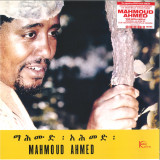
The re-release series of original Ethiopian classic vinyl continues -- the finest Ethio jazz by Mahmoud Ahmed and his band from 1975 plus two tracks from 1978.The liner notes: 'Melancholy blues, piercingly minimalist country airs, brassy, danceable urban jazz, heart-wrenching, off-key crooners: a rich and stirring patchwork of sounds, crossing Afro-beat, Latino-swing moves and Eastern arabesques (Ana�s Prosa�c).' Such were the first -- informed and enthusiastic -- opinions of the music press when the first strains of modern Ethiopian music sounded on our shores. This was in 1984-1985. Such a positive note, struck about such a country at such a time, created plenty of reverb. The country had been so thoroughly trashed by the media's feeding-frenzy, which spewed out a mix of horror and pious pity, bitter denunciation and humanitarian appeals, wallet-tickling clich�s and refusal of identity. In one brutal swoop, TV-reality transformed Ethiopia into a cursed nation, forsaken by God and by man. In contrast to these tragedies, but in the same hackneyed tones, Mahmoud Ahmed's life resembles an edifying fairy-tale where destiny, talent and achievement combine to triumph over poverty, fate and the evil eye. Biography, history and legend, with the help of God, infallibly weave the lesson of merit rewarded. But who can argue, in spite of the mockery that celebrities invariably draw, when faced with one of the greatest voices in all of Africa? Once upon a time, there was a street urchin in Addis Ababa, who started off as a shoe-shine boy and went on to become one of his country's biggest stars, opening the door to Ethiopian music to Western audiences. --Francis Falceto
out of Stock
Last delivered 5 years ago available to reorder, subject to availability
This isn’t just a seminal album. It is an estuary. All the black rivers that would form Brazilian funk/hip-hop flow through it. Led by Paulista pianist Salvador Silva Filho – Dom Salvador – “Som, Sangue, e Raça” from 1971, one year after the explosion of Tim Maia on the scene, catalyzed the bossa nova and jazz background of its leader with the rhythm and blues of its members like saxophonist Oberdã Magalhães, nephew of samba-enredo master Silas de Oliveira and future leader of Banda Black Rio, who since the group Impacto 8 (which had, among others, Robertinho Silva on drums and Raul de Souza on trombone) had already been trying to reconcile MPB with Stevie Wonder and James Brown. Add to all this a mixture of samba, Nordestino accent, and even the black side of the Jovem Guarda represented by the authorial presence of Getúlio Cortes (older brother of Gerson King Combo, our James Brown “cover”) in ‘Hei! Você’. Alongside these elements and the presence of Rubão Sabino (bass), who still called himself ‘Rubens’, drummer Luis Carlos (another member of Black Rio), the record enlists the trumpet and flugelhorn of symphonic musician Darcy in place of the original Barrosinho (yet one more founder of Black Rio), who was traveling during the recording but would end up being a leading force of the band.
The album ‘Som, Sangue e raça’ paves the way for future generations of musicians and producers of the Carioca scene at the beginning of the 1970s. The lyrics that dealt with the question of race and the explosive fusion of samba, soul, jazz, and funk, elaborated by Dom Salvador and his troupe, Abolição, established the bases for the development of new sounds and tendencies in Brazilian music.
out of Stock
Last delivered 3 years ago available to reorder, subject to availability
Paketo Wilson's 'Immigration' is a hymn to freedom from the Kingston, Jamaica-born artist. It first arrived on the Child of God label in 1982 and is one of the self-declared "positive rastaman"'s finest tunes. He was introduced to music by his father and through watching them play managed to pick up his own skills with no formal turning. His career began at age 16 when he played concerts all around the island with the New Vibration Band before going solo with Daddy U-Roy's King Stur Gav Sound System. Now back in its original form, 'Immigration' is a tune that remains as relevant now as ever.
Ten bad boy digi riddims from the myspace era by Copenhagen’s Maffi crew, dubbed out into 3D space by disrupt in 2024. Raw, minimalist CyberDancehall at its best, nostalgic and oddly futuristic at the same time, this album is quickly becoming RoboCop’s favorite playlist when going to work.
…………………………………………………………………
Maffi Promotions a.k.a. Maffi Boys come straight outta 1773 Kbh V, Copenhagen, Denmark. Originally founded in 1990 by the two homeboys, lazy body Moog and Junior the Rat, Maffi Promotions have been a steady producer of simple digital riddims for years. Hanging out in the streets of Hummel City Junior & Moog used to entertain their friends with the primitve riddims of the Maffi sound. Not knowing that they would do the exact same thing fifteen years later, they continued to believe that one day they would move up the ladder, break out of the underground and reach for the stars.
Now, after finally adopting a little sense of realism, the two homeboys have realised that stardom is nothing compared to spamming people on myspace. So the two stoners decided to get a couple of friends together and turn up the bass online. Together with their sound crew FIREHOUSE, Maffi deal nuff weed and gyals!
Maffi Boys are very dedicated to the art of playing Sensible World of Soccer, rolling weed joints with Manitou tobacco and keeping it real in a Vesterbro-style. So watch out! And don’t test! We’ll be putting up new riddims on a weekly basis. We have nuff things brewing – including a delicious chicken!
………………………………………………………………
Growing up in the streets of Hummel City, Vesterbro, MOOG learned the pleasures of sleeping late, playing Sensible World Of Soccer and picking up hot gyals at an early age. He has spent most of his life trying to master these crucial skills. Taking a break from the dog race, Moog is currently focused on reaching a higher understanding of reggae-science and weedology.
JUNIOR experienced the necessity of rolling well-made spliffs at an early age. Incorporating the aestethic heritage of Scandinavian design, he has spent most of his life perfectionizing this old and traditional art form. Junior is currently taking his ph.d. in digital reggae by buying crates of 80’s 7″ and selecting for his sound system Firehouse.
out of Stock
Last delivered 23 months ago available to reorder, subject to availability
An innovative and idiosyncratic pianist, Thelonious Monk has been hailed as one of Be-Bop’s founding figures, with unexpected melodic shifts and dramatic hesitation hallmarks of his work. Monk By Five is one of the lesser-known sessions recorded for Riverside in the late 1950s and is one worthy of a wider audience; it features the bright swing of the new ‘Jackie-ing’ and the more dissonant ‘Played Twice,’ alongside engaging revisits of ‘Straight No Chaser,’ ‘I Mean You’ and ‘Ask Me Now,’ the interplay between Monk, cornetist Thad Jones and saxophonist Charlie Rouse especially noteworthy. Definitely worth investigating.
Imagine a Latin remake of Back to the Future. The mad scientist is Arsenio Rodriguez (the godfather of salsa) and the young student who travels through time with him is Eblis Alvarez (Meridian Brothers). This album can only be described as the perfect soundtrack for that movie that never was.
After the massive buzz generated by his first solo album, Mentallogenic, Alex Figueira got back in the studio to work in a more collective fashion this time, carefully assembling the second album of his largest project to date, Conjunto Papa Upa; a team of 6 musicians, spanning 3 generations of some of the best talent in the Latin and avant-garde scenes.
In an era where tropical music is dominated by purely electronic and rhythmically uniform sounds, the ten songs encompassed in “Fruta Madura” (“Ripe Fruit”) wander through the most diverse tempos, rhythms, and motifs effortlessly. A real breath of fresh air that gracefully incorporates soul, funk, jazz, psychedelia, and electronics into a solid tropical, irresistibly polyrhythmic foundation, without ever succumbing to the many genre clichés.
The distinctive production and catchy songwriting of Figueira shine in a very distinctive light on this second full-length. Living up to his reputation (Miles Cleret, founder of Soundway Records, called him “one of the scene's truly authentic and eccentric producers”), he takes the opportunity to show he’s not afraid to keep walking his own path.
Taking the band for a wild ride through the traditions of Africa, America, and the Caribbean; contrasting them with a ridiculously wide plethora of vintage, contemporary, and futuristic sounds, and pivoting on the exuberant musicality displayed by his musicians; the result leaves no doubt: this album is destined to be considered a future classic of the exciting tropical psychedelic music of the 21st century.
Addressing the most diverse themes in this new collection of songs, things take on a much more mature tone, as the title clearly suggests.
The opening track “El segundo es más sabroso” (“The second one is tastier”) sets the tone in the most assertive way imaginable, with the band boldly declaring, through multiple metaphorical references (laid upon a crazy mix of Dominican merengue, Detroit techno, classic and free jazz, dub, and electro), that the bar will be set higher with this second album.
The remaining compositions touch upon the most diverse subjects, with a fair dose of humor, sarcasm, and postmodern “magic realism”. “El Algoritmo” (The Algorithm) is a parranda-cumbia hybrid (for lack of a specific term) about the omnipresence of technology in our lives. The sophisticated Latin soul of the titling track “Fruta Madura” makes a case for the beauty of the maturity process. Some key philosophical teachings of Marcus Aurelius (the role of causality, the impositions of “the logos” and the importance of self-control) get a twisted cumbia treatment on “Reos del Deseo” (Prisoners of Desire). “No le pongas Coca-Cola” (“Don’t put Coca Cola in it”) shows us the most satirical side of the band, accusing those who mix Coca Cola with Rum of committing "sacrilege", on a powerful base of Dem Bow (the grandfather of Reggaeton), intertwined with touches of soul, salsa, and Cuban comparsa.
"Háblame Claro" (“Talk to me clearly”) is a story of heartbreak that evokes in its first part the spirit of the erotic salsa of the 80s (a subgenre deeply despised by purists), and after an unexpected samba interlude, leads to the hardest salsa of the 70s (a subgenre adored by purists), to end up in the surprising form of pure Afro-Cuban ceremonial music.
“Tu mamá tenía razón” ("Your Mom Was Right") is an attempt to exalt the spirit of the Latin American soap opera in the key of “acid bachata”, to recount a real-life case, witnessed by the band on countless occasions: the partying woman who arrives at the show accompanied by her bitter husband, who obviously does not like to dance. A very cheeky song to talk about the very serious and pertinent topic of female empowerment.
“La misma vaina” (“The same thing”) with its indescribable blend of bantú, candomblé, and Mozambique rhythms with abstract synthesizers, is an ode to adventure in favor of the aversion to taking risks and seeking predictability.
“Amigas picadas” (“Salty friends”) is another humorous song recounting another real-life case witnessed by the band on countless occasions: a love encounter sabotaged by the girlfriend's friends, who all happen to fancy the same guy. A jazzy take on the ancient Dominican rhythm of pambiche (grandfather of merengue), with generous psychedelic touches, resembling the classy late 60s releases of Guadeloupe's legendary producer / label owner Henri Debs.
“Vinimos a hablar” (“We came to talk”) takes sarcasm to the highest level, to ridicule the absurdity (also experienced by the band firsthand) seen in live music venues where people pay a ticket to go and have conversations that could be carried out much better on any bar, where no band is playing. The music alternates between a delicate melody with loose, sparse percussion and a full-on, pumping Angolan semba, with a techno kick drum included; bringing things to an apotheotic grooving finale, where the peculiar swing of Venezuelan calypso from the Callao region is thrown on top of all the precedent elements; closing the album in the most uplifting, “end of the carnival parade” feel.
The artwork is a delicate and impactful oil painting by Colombian artist Kevin Simón Mancera, who has collaborated many times with the label before (“Maracas, tambourines and other hellish things” tape and the Lola’s Dice LP).
What the experts are saying:
“Alex (Figueira) dove into this work with a brutal cohesion between lyrics and synths. Timbre poetry, sound poetry (you name it). And that, superimposed on his always impeccable percussive base, confirms the title of “avant-garde visionary of our beautiful Latin music”".
EBLIS ALVAREZ (MERIDIAN BROTHERS)
“Papa Upa's infectious quirkiness is a balm against boredom. A mature album, but without an expiration date”.
GLADYS PALMERA
“Here there is a lot of strength, drum, cadence and psychedelia, lost dance rhythms, united in an intercontinental Latin/African/and Caribbean journey, a unique winning combination that we could consider the new “Ritmo Figueira”.
DISCODELIC
All songs written by Alex Figueira.
Arranged and performed by Conjunto Papa Upa.
Recorded, produced, mixed and mastered by Alex Figueira at Heat Too Hot, Amsterdam.
Limited Yellow w/ Purple Splatter Vinyl. Pigeons Playing Ping Pong has been turning heads coast-to-coast with their high-energy psychedelic funk shows for over 15 years. In 2014, the fledgling flock released their now-classic studio album, 'Psychology.' Featuring fan-favorite songs like "Horizon" and "Melting Lights," the album has produced 40 million streams on Spotify alone. Since its release, 'Psychology' has come to represent everything the band stands for, with its hypnotic hybrid of funk, rock, and infectious groove. "Recording 'Psychology' feels like a lifetime ago," says singer/guitarist Greg Ormont. "We were really just finding our identity as a band, but everything seemed to come together in the studio in a way that we all knew felt special. Looking back, the album laid the foundation for our growth, helped shape who we are as musicians, and the songs continue to be staples of our live catalog today."Ten years later, 'Psychology' still stands the test of time, and PPPP celebrates the anniversary with the first-ever vinyl pressing of their definitive studio work. Available on limited edition 180g Splatter Vinyl on July 12, 2024."We've always wanted to release 'Psychology' on vinyl, so we couldn't think of a better way to mark the 10-year anniversary than with its first-ever vinyl pressing!"
Strut present the first definitive retrospective of an icon of 1970s and ‘80s soul, jazz and disco, Patrice Rushen, covering her peerless 6-year career with Elektra / Asylum from 1978 to 1984. Joining Elektra after three albums with jazz label Prestige, Patrice had shown prodigious talent at an early age and had first broken through after winning a competition to perform at the Monterrey Jazz Festival of 1972. By the time of the recordings on this collection, she had become a prolific and in-demand session musician and arranger on the West coast, appearing on over 80 recordings for other artists. She joined the Elektra / Asylum roster in 1978 as they launched a pop / jazz division alongside visionaries like Donald Byrd and Grover Washington, Jr. “The idea was to create music that was good for commercial radio / R&B,” Patrice explains. “We were all making sophisticated dance music, essentially.”
Drawing on some of the leading musicians in L.A. like saxophonist Gerald Albright, drummer “Ndugu” Chancler and bassman Freddie Washington and keeping an open minded approach from her training in classical, jazz and soundtrack scores, Patrice’s music was a different, more intricate proposition to many of the soul artists of the time. “L.A. musicians were not so locked into tradition,” she continues. “None of us were accustomed to limitation and the record label left us to take our own direction.”
Early classics like ‘Music Of The Earth’ and ‘Let’s Sing A Song Of Love’ were among Patrice’s first as a lead vocalist before her ‘Pizzazz’ album landed in 1979, featuring the unique disco of ‘Haven’t You Heard’ and one of her greatest ballads, ‘Settle For My Love’. “Although ballads make you feel more vulnerable as an artist because they are often personal, I think listeners relate to that sincerity,” she reflects. By now, Patrice’s records were supremely arranged and produced as her confidence as an all-round writer, producer, arranger and performer grew. Slick dancefloor anthem ‘Never Gonna Give You Up’ and the ‘Posh’ album in 1980 led to her landmark album ‘Straight From The Heart’ two years later. Receiving little support from her label, Patrice and her production team personally funded a promo campaign for the first single from it, ‘Forget Me Nots’. It went on to peak at no. 23 on the Billboard Hot 100 and the album was later Grammy-nominated, while the track became a timeless anthem and popular sample, inspiring Will Smith’s theme for the film ‘Men In Black’ and George Michael’s ‘Fastlove’.
Patrice’s final album for Elektra, ‘Now’ kept the bar high with sparse, synth-led songs including ‘Feel So Real’ and ‘To Each His Own’. It concluded a golden era creatively for Patrice which remains revered by soul and disco aficionados the world over.
‘Remind Me’ features all of Patrice Rushen’s chart singles, 12” versions and popular sample sources on one album for the first time. Formats included a 3LP set and 1CD fully remastered by The Carvery from the original tapes. Both formats include an exclusive new interview with Patrice Rushen and rare photos.
• First definitive Patrice Rushen compilation released on vinyl since the ‘80s
• Includes all of her chart hits, DJ favourites and sample sources
• Official release featuring full interview with Patrice Rushen about her career and music • Features rare photos from her personal collection + some of the photographers she has worked with during her career
• Fully remastered by The Carvery from the original ¼” tapes
• Start of full Patrice Rushen reissue programme from her Elektra era
out of Stock
Last delivered 6 years ago available to reorder, subject to availability
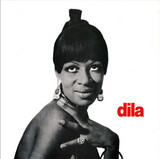
Far Out Recordings proudly presents the first and only album from the mysterious Brazilian vocal sensation Dila (pronounced “Jee-la”). Having reportedly died in a car crash shortly after the album’s release in 1971, there is very little known about the woman behind the voice. But the joyous music Dila left behind, gives us a picture as good as any, of a powerful feminine soul at the top of her game.
The liner notes on the elusive original LP, written by composer Arnoldo Medeiros attest: “Friend, look out! Because when this girl starts to sing, you’re in trouble. Hold the railing so you don’t fall down the stairs, because she’s coming this way and shaking up everything.”
Arranged and produced by Durval Ferreira, alongside his studio band affectionately known as “Os Grillos” (The Crickets), Dila (1971) is a rare glimpse into the authentic soulful Samba sound of Rio’s favelas in the late sixties and early seventies.
A blast of funky, percussive Brazilian breaks, scorching hot brass and swing-laden piano, the music is as iconic as the album’s stark cover, as is clear on opener ‘Inez’, composed by The Crickets’ bassist Romildo. There’s a fantastic interpretation of the Ivan Lins classic ‘Madalena’ (made famous by Elis Regina), a moving version of the Tom Jobim and Vinicius De Moraes classic ‘O Morro Não Tem Vez’, and a number of sunny original compositions by Arnold Madeiros, who’s other writing credits include music for Marcos Valle, Wanderlea, Evinha and Dom Salvador.
With original LPs extremely hard to come by, this rare treasure of Brazilian soul, which fans of Gal Costa, Celia, Evinha and Elis Regina will love, gets a much-deserved official reissue: remastered and pressed to 180g vinyl.
out of Stock
Last delivered 7 years ago available to reorder, subject to availability
OTOROKU is proud to reissue Evan Parker's first solo LP "Saxophone Solos". Recorded by Martin Davidson in 1975 at the Unity Theatre in London, at that time the preferred concert venue of the Musicians' Co-operative, Parker's densely woven and often cyclical style has yet to form; instead throaty murmurs appear under rough hewn whistles and calls - the wildly energetic beginnings of an extraordinary career. Reissued with liner notes from Seymour Wright in an edition of 500. "The four pieces across the two sides of Saxophone Solos - Aerobatics 1 to 4 - are testing, pressured, bronchial spectaculars of innovation and invention and determination. Evan tells four stories of exploration and imagination without much obvious precedent. Abstract Beckettian cliff-hanging detection/logic/magic/mystery. The conic vessel of the soprano saxophone here recorded contains the ur-protagonists: seeds, characters, settings, forces, conflicts, motions, for new ideas, to delve, to tap and to draw from it story after story as he has on solo record after record for 45 years. 'Aerobatics 1-3' were recorded on 17 June 1975, by Martin Davidson at Parker's first solo performance. This took place at London's Unity Theatre in Camden. 'Aerobatics 4' was recorded on 9 September the same year, by Jost Gebers in the then FMP studio in Charlottenburg, Berlin. Music of balance and gravity, fulcra, effort, poise and enquiry. Sounds thrown and shaken into and out of air, metal and wood. It is - as the titles suggest - spectacular." - Seymour Wright, 2020.
Writing music for film and theatre has always been a big part of Hania Rani's musical world. It is also a part of the creative process that can be tantalisingly out of reach for listeners, either the project doesn't come to fruition or the music simply isn't available away from the film or play. From early collaborations with friends, to last year's two scores for full length films (xAbo: Father Boniecki directed by Aleksandra Potoczek and I Never Cry directed by Piotr Domalewski') Rani has been involved in many such projects, each representing an important step in her artistic development and life as a composer and artist:
"Composing for motion picture or theatre is for me a very different kind of work than writing for my own projects. Firstly, I need to collaborate with somebody else who sees the world through the lense of their own art and craft. That's why these kinds of encounters can be so exciting - they are a promise of creating something very new, as a result of creative work of so many people from all walks of life. Secondly, I feel that music in film is an invisible character, a missing emotion that creates a special atmosphere and sensation. It doesn't illustrate, it completes the work of art. I think it is an extremely sensitive matter that rejects banal associations and easy solutions. I feel like composing for film works like an exercise for my imagination."
It is the nature of these collaborations though, that sometimes the composers own preferred compositions don't make the final cut. This is where Music for Film and Theatre comes in as it allows Rani to present a selection of her own personal favourite pieces composed for film and plays. Pieces that made it to the final cut and pieces that were rejected by the director or the producer. Bringing the music together as an album offers a chance for Rani to share her music with her listeners on her own terms and a chance for her fans to hear a different side of her art.
"I put them in one place, as a collection of precious objects that were kept for years in a drawer. Some of them were composed a couple years ago, some are the result of recent research. I am very happy to finally be able to present them as a separate project."
Rani is of course grateful to all of the directors who have entrusted her to create music for their projects, but she professes especially warm feelings for the pieces composed for her first 'real' theatre play, Pradziady, directed by Michał Zdunik. The title comes from 'Dziady' a term in Slavic folklore for the spirits of the ancestors and a collection of pre-Christian rites, rituals and customs that were dedicated to them. The essence of these rituals was the 'communion of the living with the dead', namely, the establishment of relationships with the souls of the ancestors. "I felt this story needed extremely dark and fragile music, and at the same time a sound that could express the mixture of the two worlds - the living and the dead. I decided to compose part of the soundtrack with a string quartet but including two cellos, viola and only one violin. We recorded in a little house, completely built from wood, mostly from Finnish pine. I always felt this space has a very special, warm and natural acoustics - especially when it is combined with string instruments. The track composed for this theatre play is called Ghosts but actually didn't finally make it to the performance, although I like it so much that I thought it would perfectly fit
this compilation". Other highlights include the enchanting Soleil Pâle written for a collaboration with director Neels Castillon, and improvising dancers Alt Take, the beautiful melancholy of In Between (from the film score for xAbo: Father Boniecki) and the magical bliss of The Beach (from I Never Cry) and together they create a beautiful offering from an artist whose every note is worth hearing, but for whom the journey is just beginning:
"I am very happy to see that many artists consider my music as the right soundtrack for their works, because film music was always a huge inspiration for any of my compositions. I find there a lot of life and real emotions, but also a feeling of freedom. Freedom from my own thinking patterns and prejudices. I also believe strongly in collaboration between people, I always feel this is the way to create something really new, based on a mixture of different ways of thinking, feeling, expressing."
This then is Hania Rani, Music for Film and Theatre – enjoy!
out of Stock
Last delivered 2 years ago available to reorder, subject to availability
Strut introduces a pioneering new compilation 'A Dancefloor In Ndola,' curated by revered East African DJ, Kampire. This release marks an evolution in Strut's approach to compilations, showcasing emerging DJ talent from across the world and embracing an innovative approach to musical discovery from the next wave of selectors. Forging her reputation through memorable sets for the Nyege Nyege Festival in Uganda over the last decade, Kampire now tours worldwide and is celebrated for her brilliantly curated sets spanning the full range of African music styles from the ‘70s and ‘80s to the present day.
Although born in Kenya to Ugandan parents, Kampire spent her formative years in Ndola, Zambia. ‘A Dancefloor In Ndola’ is inspired by artists and songs that formed part of her soundtrack during that time. “It is important for me to continually reference Africa’s own musical history,” she explains. “At 17, I didn’t pick up on my Dad’s music but now I love and collect those records. I’m constantly referencing them in my music sets today. I love that feeling of shared nostalgia where people recognise a song they haven’t heard in a long time. It is a touchstone for me when I’m playing.”
The compilation flows through different East African and South African genres from Congolese rumba and soukous to 1980s township bubblegum and the rich guitar-led sounds of Zambian kalindula. “There are styles of music on the compilation which are often considered unsophisticated from rural areas. I and other contemporary African artists and DJs draw inspiration from them; it is part of what makes us ourselves.” Kampire also shines the spotlight on many incredible women in African music from the ‘80s, including Congolese legends like Pembey Sheiro, Feza Shamamba and Princesse Mansia M’bila to V-Mash and Di Groovy Girls from South Africa.
‘A Dancefloor In Ndola’ is released on 2LP and CD and features exclusive new edits by Kampire alongside personal liner notes tracing her links to the music. Cover artwork montage is by Canon Rumanzi and vinyl restoration / mastering by The Carvery
Debut compilation by one of East Africa’s leading new generation DJs, Kampire.
Mix of African classics and rarities spanning 1970s – 1990s from Congolese soukous, South African bubblegum and Zambian kalindula.
Shining the spotlight on women in African music Pembey Sheiro, Feza Shamamba and Princesse Mandisa M’bila.
Exclusive cover artwork collage by Canon Rumanzi.
Worldwide DJ dates supporting release during Summer and Autumn 2024.
out of Stock
Last delivered 2 years ago available to reorder, subject to availability
Pascal Gaigne, born in France in 1958 and installed in San Sebastian since 1985, is a musician with a vast trajectory composing music for films. He has composed for more than 50 movies, won 16 awards (including a Goya award, Spanish Oscar equivalent) and had 15 nominations. He has worked with some of the most interesting new directors in Spanish cinema (Víctor Erice, Icíar Bolláin, Salvador García Ruíz, Daniel Sánchez Arévalo, Montxo Armendáriz), and foreign directors like France (Le cou de la girafe), Finland (Matka Edeniin) or Cuba (Omerta).
Early in his career, before working in cinema, he collaborated with some of the most interesting artists and voices in the short history of Basque folk music, including well known Amaia Zubiria (check the two records he made with her “Egun Argi Hartan” & “Kolorez eta Ametsez”), as well as Basque traditional chant avant-gardist Beñat Achiary. It is together with Amaia & Beñat that he paired himself up to create “music pour le ballet du Iguzki Hauskara”, an entire album of compositions made for the 80’s French Basque Ballet group “Ekarle”. Originally released on cassette only in 1984, it is now reissued by Hegoa including three unreleased pieces taken from a second album that was never published.
Limited edition of 250 black vinyl LP’s housed in a coloured reverse board cover recreating the original hand painted artwork.
Isaac Helsen and Zach Frizzell, the unfathomably prolific ambient producer known as zake, have been collaborating together again. They both run the Past Inside the Present label and despite great musical kinship have only put out two records to date: beliefsystems in 2021, and Atonements earlier this year, which first came on Zake Drone Recordings and now gets a cassette reissue on Past Inside the Present. It's a gorgeously hazy analogue affair made with a reel-to-reel and Korg Minilogue. "This album embodies the theme of letting go and moving forward with acceptance," they explain, and what a beauty it is too.
Asmaa Hamzaoui stands out as a pioneering female figure in the traditionally male-dominated realm of Gnawa music. With her group, Bnat Timbouktou, she brings a dynamic and spiritual dimension to the genre, infusing it with the vibrant energy of desert blues. Despite the essential role women have played in Gnawa rituals, female musicians have historically been underrepresented. Hamzaoui, however, is at the forefront of changing this trend. Born into a family deeply entrenched in Gnawa traditions in Casablanca, Hamzaoui was immersed in this musical heritage from a young age. Her father, a master musician, and her mother, a dancer, provided a rich environment for her early education in music. She learned to play the guembri, a three-stringed lute central to Gnawa music, and began performing with her father's band on the qraqeb, metal castanets used in Gnawa music, and in the choir. Encouraged by her father, she eventually formed her own group, Bnat Timbouktou. The group's debut album, "Oulad Lghaba," recorded in collaboration with the Swedish label ajabu! Records, was critically acclaimed and nominated for a Songlines Music Award. This album, along with their upcoming release "L'bnat," showcases Hamzaoui's commitment to preserving and revitalizing Gnawa music. "L'bnat," will emphasize the female traditions and spiritual aspects of Gnawa culture. Hamzaoui's performances are characterized by her powerful voice and the rhythmic, percussive playing of the guembri. Her music not only pays homage to the spiritual and healing qualities of Gnawa but also aims to keep the tradition alive by introducing it to new audiences worldwide.