Gold Vinyl Represss
*A MODERN JAZZ REINTERPRETATION OF THE MUSIC FROM THE LEGEND OF ZELDA*
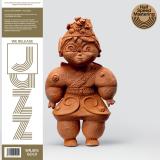
WRWTFWW Records is happy to announce the release of Casimir Liberski ReTRio's The Z Suites, a full-length jazz album reinterpreting the music from iconic Nintendo video game series The Legend of Zelda. The epic Z-Jazz journey is available in the following formats: limited edition 180g half speed mastered vinyl double LP housed in a heavyweight sleeve with obi, digipack CD with cavalier, and digital.
Casimir Liberski reimagines the golden era of video game soundtracks with jazz versions of Zelda favorites The Legend of Zelda (1986), A Link to the Past (1991), Link's Awakening (1993), and Oscarina of Time (1998) - plus a few Easter eggs! Dancing between nostalgia and avant-garde, the Brussels-born pianist and composer crafts a sonic world of pixelated folklore where melody and improvisation coexist in harmony.
Music critic Arthur Meurant perfectly explains:
For many video games are a journey of the mind. Since its inception - dating back to the early seventies - this avant-garde artistic medium has nourished the imaginations of a digital age. Casimir, like many others, has been fed a steady diet of pixels from an early age. From simple squares to cultural cornerstones they have become the trail on which playful travelers of the mind retrace the steppes of history. A shared universe, familiar yet endless, of pocket-sized mythology. Its name? Hyrule. Its goal? To amaze. In these few tracks - selected with care - the Casimir Liberski ReTRio invites you, finally, to visit a space which does not exist yet holds us all. A land where all feel welcome. Where all are happy. But also... to rediscover under another timbre the classical compositions of Master Composer K?ji Kond?. A man who, unbeknownst to him, composed our dreams as well as music. That single noble pursuit, where an artist gives soul without losing his own, is yet again a statement of humanity in its purest of forms: art as that which brings us together and makes us whole in a world eroded by modernity. Pick up your key. Gather your maps. Open the door. Adventure calls.
Long live Hyrule jazz!
Buscar:pia
For the first EP on his new label, Planet Strangelove, Job Jobse brings new life to an overlooked balearic house gem: "Pasion," an early '90s deep cut by the Leeds artist Pianoman, inspired by Tangerine Dream's "Love On A Real Train,” aka the most breathtaking synth arp of all time. Alex Kassian, whose sprawling take on Manuel Göttschings's "E2-E4" already showed his fine touch for the kosmische vibe Tangerine Dream embodied, delivers a "Dance Mix" and a "Dream Mix," one packing a club-ready beat, the other drifting weightlessly. London duo The Trip, of the label and party Tesselate, deliver a remix as breezy as it is thumping, all wailing divas, sunkissed pads and shimmering pianos. As for Pianoman's "Analysis" remix, it's a dazzling artifact of the balearic era at its peak, touched by the ineffable essence of its time but sounding just as fresh as its modern reinterpretations.
A collection of transfixing, storm-like compositions, "Drifts" draws you into its heightened sense of quiet, reveling in iridescent, tranquilized vapors - one part ambient Classical, one part Club-adjacent ambience.
Pitched, reduced, sampled and re-sampled, the album's glowing, elliptical abstractions - using piano, harp, strings & modular synthesizer - explore the emotional terrain between aftermath and renewal, blending the unstructured immediacy of improvisation with the elegant sculpture of composition.
"Drifts" represents for its maker a newfound interest in shadow and mystery, each track a shifting terrain, a collection of clues, a scene set in a larger story, the effect cumulative.
Featuring collaborations with Patrick Belaga, Marilu Donovan (LEYA), and Takuma Watanabe, the album's cinematic suite of impressionistic, ambient works invites the listener into a vast, mapless space of dreamlike non-linearity where interior and exterior landscapes bristle with intimacy and electricity.
DJ Support - Alan Fitzpatrick, Ben Sims, Colin Dale, Dave Clarke, DJ Bone, Doc Scott, Dustin Zahn, Ellen Allien, Fear-E, Fixon, Gary Beck, James Ruskin, Laurent Garnier, Luke Slater, Misstress Barbara, Radio Slave, Rebecca Delle Piane, Remy Unger, Rodhad, Scuba, The Advent & Truncate
Hardgroove returns with three powerful new remixes from rising Greek talent ANNE, who twists label boss Sim’s Snapshot ‘99 into a trio of peak-time weapons. Marking her third release on the legendary label, ANNE builds on acclaimed work for Out Of Place, Soma, and Hardgroove sister label Symbolism, seeing her in heavy demand with a packed 2025 touring schedule across the EU and beyond.
The third release on Midnight Fashion Chill gracefully continues the label’s elegant, soul-soothing direction, this time through the warm voice of Jaidene Veda. The original Across The World stands as a true gem: a silky, gently flowing composition where soft, understated drums and delicate piano lines create an intimate, contemplative atmosphere. The From P60 rework tightens things up a little, adding a touch more groove while preserving the track’s airiness and emotional subtlety.
The next on is Kai Alcé’s remix. The Atlanta based producer injects the track with his signature classic-house energy: deeper basslines, dancefloor-ready rhythms, and an overall sophistication that makes the remix both driving and refined. This is the version guaranteed to move the crowd — vibrant, stylish, and tailormade for late-night club moments. The three faces of Across The World show just how far a well-crafted vocal track can be stretched. Midnight Fashion Chill’s latest release manages to be both relaxing and dance-inducing — exactly the kind of balance that makes this series worth following.
GAMM is proud to welcome New Zealand born, but these days based in Berlin, Philippa to our camp.
Over the last years, Philippa has been releasing amazing, warm, soulful, and highly distinctive dance music on labels like Slothboogie and Freerange as well as building her DJ roster. For her premier GAMM release,'Cloud Walking EP', Philippa has three amazing tracks that all mix up samples, live musicality, and vocals. If you put Moodymann and Henrik Schwarz in a blender somewhere in the Balearic Islands, you're kinda close. Either way, it's deep, organic, and almost kinda orchestral at some points. If you ask us, we would simply call it dance MUSIC.
Opening the EP is the title track 'Cloud Walking' which is a deep Fender Rhodes affair with vocals inspired by Aretha's Day Dreaming classic. Moving on, on 'Hear Me' Philippa shows off her musical piano skills with a lush and atmospheric deep house jam. On 'Return To The Red Kite' we follow a similar theme but with big warm orchestral strings, spoken words, and live guitars. Again, very Balearic yet very soulful and incredibly pleasant to your ears :)
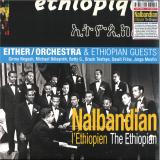
The Éthiopiques series returns! Essential archive recordings from an extremely fruitful period in Ethiopian music.
Before “Swinging Addis” took over the world, there was Moussié Nerses Nalbandian — the Armenian-born composer who shaped modern Ethiopian music. Mentor, arranger, and pioneer, he laid the foundations of Ethio-jazz.
This Éthiopiques volume revives his forgotten legacy, recorded live by Either/ Orchestra First issue ever with new exclusive photos and in depth liner 8-page insert.
“Ethiopian jazzmen are the best musicians that we have seen so far in Africa.
They really are promising handlers of jazz instruments.”
Wilbur De Paris
(1959, after a concert in Addis Ababa)
አዲስ፡ዘመን። *Addis zèmèn* **A new era.**
The time is the mid-1950s and early 1960s, just before "Swinging Addis" bloomed – or rather boomed – onto the scene. Brass instruments are still dominant, but the advent of the electric guitar, and the very first electronic organs, are just around the corner. Rock’n'Roll, R’n’B, Soul and the Twist have not yet barged their way in. Addis Ababa is steeped in the big band atmosphere of the post-war era, with Glenn Miller's *In the* *Mood* as its world-wide theme song, neck and neck with the Latin craze that was in vogue at the same period. Life has become enjoyable once again, with the return of peace after the terrible Italian Fascist invasion of Ethiopia (1935-1941). The redeployment of modern music is part and parcel of the postwar reconstruction. *Addis zèmèn* – a new era – is the watchword of the postwar period, just as it was all across war-torn Europe.
The generation who were the young parents of baby boomers** were the first to enjoy this musical renaissance, before the baby boomers themselves took over and forever super-charged the soundtrack of the final days of imperial reign. Music is Ethiopia's most popular art form, and very often serves as the best barometer for the upsurge of energy that is critical for reconstruction. Whether it be jazz in Saint-Germain-des-Prés or the *zazous* who revolutionised both jazz and French *chanson* after the *Libération*, be it Madrid's post-Franco Movida, or Dada, the Surrealists and *les années folles* that followed World War I, the periods just after mourning and hardship always give rise to brighter and more tuneful tomorrows. Addis Ababa, as the country's capital, and the epicentre of change, was no exception to this vital rule.
**Two generations of Nalbandian musicians**
Nersès Nalbandian belonged to a family of Armenian exiles, who had moved to Ethiopia in the mid-1920s. The uncle Kevork arrived along with the fabled "*Arba Lidjotch*", the** "*40 Kids*", young Armenian orphans and musicians that the Ras Tafari had recruited when he visited Jerusalem in 1924, intending to turn their brass band into the official imperial band. If Kevork Nalbandian was the one who first opened the way of modernism, pushing innovation so far as to invent musical theatre, it was his nephew Nersès who would go on to become, from the 1940s and until his death in 1977, a pivotal figure of modern Ethiopian music and of the heights it. Going all the way back to the 1950s. Nothing less. And it is Nersès who is largely to thank for the brassy colours that so greatly contributed to the international renown of Ethiopian groove. While the younger generations today venture timidly into the genealogy of their country's modern music, often losing their way amidst a distinctly xenophobic historiographical complacency, many survivors of the imperial period are still around to bear witness and pay tribute to the essential role that "Moussié Nersès" played in the rise of Abyssinia's musical modernity.
Given the year of his birth (15 March 1915), no one knows for sure if Nersès Nalbandian was born in Aintab, today Gaziantep (Turkiye/former Ottoman Empire) or on the other side of the border in Alep, Syria... What is certain is that his family, like the entire Armenian community, was amongst the victims of the genocide perpetrated by the Turks. Alep, the place of safety – today in ruins.
Before Nersès then, there was uncle Kevork (1887-1963). For a quarter of a century, he was a whirlwind of activity in music teaching and theatrical innovation. *Guèbrè Mariam le Gondaré* (የጎንደሬ ገብረ ማርያም አጥቶ ማግኘት, 1926 EC=1934) is his most famous creation. This play included "ten Ethiopian songs" — a totally innovative approach. According to his autobiographical notes, preserved by the Nalbandian family, Kevork indicates that he composed some 50 such pieces over the course of his career. This shows just how much he understood, very early on, the critical importance of song as Ethiopia's crowning artistic form. Indeed, for Ethiopian listeners, the most important thing is the lyrics, with all their multifarious mischief, far more than a strong melody, sophisticated arrangements or even an exceptional voice. (This is also why Ethiopians by and large, and beginning with the artists and producers themselves, believed for a long time — and wrongly — that their music could not possibly be exported, and could never win over audiences abroad, who did not speak the country's languages).
Last but not least, one of Kevork's major contributions remains composing Ethiopia's first national anthem – with lyrics by Yoftahé Negussié.
Nersès Nalbandian moved to Ethiopia at the end of the 1930s, at the behest of his ground-breaking uncle. Proficient in many instruments (pretty much everything but the drums), conductor, choir director, composer, arranger, adapter, creator, piano tuner, purveyor of rented pianos,... he was above all an energetic and influential teacher. From 1946 onwards, thanks to Kevork's connexion, Nersès was appointed musical director of the Addis Ababa Municipality Band. In just a few years, Nersès transformed it into the first truly modern ensemble, thanks to the quality of his teaching, his choice of repertoire, and the sophistication of his arrangements. It was this group that would go on to become the orchestra of the Haile Selassie Theatre shortly after its inauguration in 1955, which was a major celebration of the Emperor's jubilee, marking the 25th anniversary of his on-again-off-again reign.
At some point or other in his long career, Nersès Nalbandian had a hand in the creation of just about every institutional band (Municipality Band, Police Orchestra, Imperial Bodyguard Band, Army Band, Yared Music School…), but it was with the Haile Selassie Theatre – today the National Theatre – that his abilities were most on display, up until his death in 1977. To this must be added the development of choral singing in Ethiopia, hitherto unknown, and a sort of secret garden dedicated to the memory of Armenian sacred music, and brought together in two thick, unpublished volumes. Shortly before his death (November 13, 1977), he was appointed to lead the impressive Ethiopian delegation at Festac in Lagos, Nigeria (January-February 1977).
His status as a stateless foreigner regularly excluded him from the most senior positions, in spite of the respect he commanded (and commands to this day) from the musicians of his era. Naturally gifted and largely self-taught, Nerses was tirelessly curious about new musical developments, drawing inspiration from the very first imported records, and especially from listening intensely to the musical programmes broadcast over short-wave radio – BBC *First*. A prolific composer and arranger, he was constantly mindful of formalising and integrating Ethiopian parameters (specific “musical modes”, pentatonic scale, and the dominance of ternary rhythms) into his “modernisation” of the musical culture, rather than trying to over-westernise it. It even seems very probable that *Moussié* Nerses made a decisive contribution to the development of tighter music-teaching methods, in order to revitalise musical education during this period of prodigious cultural ferment. Flying in the face of all the historiographical and musicological evidence, it is taken as sacrosanct dogma that the four musical modes or chords officially recognised today, the *qǝñǝt* or *qiñit* (ቅኝት), are every bit as millennial as Ethiopia itself. It would appear however that some streamlining of these chords actually took place in around 1960. It was only from this time onward that music teaching was structured around these four fundamental musical modes and chords: *Ambassel*, *Bati*, *Tezeta* and *Antchi Hoyé*. A historical and musical “details” that is, apparently, difficult to swallow, especially if that should honour a *foreigner*. Modern Ethiopian music has Nersès to thank for many of its standards and, to this day, it is not unusual for the National Radio to broadcast thunderous oldies that bear unmistakable traces of his outrageously groovy touch.
Pt.2 of 2
Gigi Masin's sparkling sonic magic leads us to the light in “Implodendo in una accecante oscurità” (Imploding in a blinding darkness). The mirror reflects nothing but a faint, unfamiliar, mysteriously hostile face, but a glimmer survives, evoked by a painfully solemn romanticism that is salvific, glimmers of light bounce off broad synthetic volutes, a bewitching ambient, airy quiet, they spread, a few veins of darkness shine through, aesthetic beauty equates to clear spirituality, sax and female voices, the elegy that intertwines piano and vocal loops, that omnipresent melancholy, nostalgia, reassuring, which is openness to tomorrow. It is the moment of light, the powerful feeling that nothing is lost, that what awaits to be grasped is more than a remnant, perhaps an overcoming, light that “is not what it shows but what it reveals”, that light that becomes memory that does not need to illuminate to be perceived where it most needs to spread, where darkness has resided for too long
Opeth wurde von den Kritikern für ihre Kombination aus progressiven Einflüssen und vernichtendem schwedischem Death Metal gelobt. Diese farbigen 140g Re-Issues sind ein Muss für Fans und Sammler, denn sie wurden von keinem Geringeren als Jens Bogren (Opeth, Katatonia, Amorphis, Sepultura) mit Unterstützung von Mikael Åkerfeldt ein liebevoll remastert. Die Aufnahmen wurden mit halber Geschwindigkeit in den berüchtigten Abbey Rd von Miles Showell (ABBA, Beatles) geschnitten, und das gesamte Artwork wurde von Dan Capp sorgfältig restauriert und so gestaltet, wie es die Band ursprünglich beabsichtigt hatte.
Es gibt nur wenige Bands, die es mit den Schweden von Opeth aufnehmen können oder wollen. Seit ihrer Gründung 1990 in dem kleinen Stockholmer Vorort Bandhagen haben die Schweden alle Konventionen über den Haufen geworfen, sich trotzig gegen alle Widrigkeiten durchgesetzt und - was am wichtigsten ist -12 atemberaubend schöne und intensive Alben geschaffen und sich damit zu einer der besten Bands der Welt entwickelt.
Streng limitierte Stückzahlen!
- A1: Boots On The Ground
- B1: The Fly
Massive Attack need no introduction. ‘Boots On The Ground’ marks their return, with their first new music in 10 years and Tom Waits first vocal feature in over a decade. Releasing everywhere apart from Spotify. Physical release features extra spoken word track ‘The Fly’, exclusive to vinyl. Vinyl is created using recycled water bottles with all paper elements using 100% recycled fibres.
- A1: I Missed The Target Again (Radio Edit) 3.40
- A2: It's Gonna Rain 4.06
- A3: Hang On In There 3.59
- A4: Shine A Light 4.26
- A5: The Lord Will Make A Way 4.56
- B1: There Will Be Peace In The Valley 3.26
- B2: 1963 5.20
- B3: Reach Down And Touch Heaven For Me 2.48
- B4: Love Breakthrough 3.46
- B5: In God's Hands We Rest Untroubled 4.58
- A1: My God Has A Telephone 3.25
- B1: God's Gonna Use Me Anyway 4.02
Soul Music legend Candi Staton returns to her down-home Alabama roots on her 32nd album, Back to My Roots. The twelve-track Americana set features an array of Staton-penned originals and some well-chosen covers.
"These songs represent my roots," Staton adds as she reflects on her many trials and triumphs. "Even the new songs on some level represent something I've experienced and that's what real soul music is about." Back to My Roots was produced by Staton with her second eldest son, Marcus Williams, a professional drummer who has toured with the likes of Peabo Bryson, Isaac Hayes, and Tyler Perry. They brought in Mark Nevers of Lambchop fame, who produced three of Staton’s prior Americana albums for Honest Jon’s and Thirty Tigers, to sweeten certain tracks. “Some of the first songs I ever heard were songs like `Peace in the Valley’ and `It’s Gonna Rain,’” says Staton. “The new songs or cover songs are tracks that remind me of that era when I was growing up as a child and evolving as a young woman. That’s why I named the album Back to My Roots because I’m going back to the roots that made me who I am.”
Staton received the Americana Music Association UK’s highest honour, the International Lifetime Achievement Award, at the UK Americana Music Awards ceremony at Hackney Church in London last year for her southern soul work that stretches from her 1969 Muscle Shoals hits to her more recent collaborations with the likes of Americana kings Jason Isbell and John Paul White.
The album opens with a mid-tempo Bonnie Raitt-styled contemporary blues “I Missed the Target Again” that finds Harry Connick Jr.’s longtime guitarist Jonathan DuBose Jr. (aka the Prophesying Guitarist) showing off his skills that set the tone for the song and the album.
Staton’s older sister, Maggie Staton Peebles (who alongside Staton was a member of the Jewel Gospel Trio in the 1950s), joins her for two duets. The first, “It’s Gonna Rain,” features just a drum, steel guitar and vocals. “My mother used to sing that song to us all the time when I was a child,” Staton recalls. “It’s a really soulful kind of song I wanted to revisit.” They then take turns leading Thomas Dorsey 1939 gem “There Will Be Peace in the Valley” that Elvis Presley popularized in the 1950s.
“Hang on in There” is a new, mid-tempo song that has an old school gospel flavour and features vocals from veteran bluesman, Larry McCray.
While in Europe in 2023 for her farewell concert tour that took her to the Glastonbury Festival and Love Supreme, Staton and her British band, PUSH, went into a London studio to record a new version of The Rolling Stones’ 1972 gem, “Shine A Light.” “I love the way that came out,” Staton says. “We put a big choir on it and put our own twist on it.”
From there, Staton revives another Thomas Dorsey classic, “The Lord Will Make a Way Somehow,” with a bluesy vibe. When Al Green started recording gospel in the early 1980s, he re-introduced this song into the culture.
“God’s Gonna Use Me Anyway” is a new mid-tempo blues with subtle Caribbean influences.
The mood takes a turn on “1963.” It’s a poignant, spoken-word reflection on September 15, 1963, when four black girls were killed in the Birmingham Church bombing. “I was in the city that day and I remember the chaos and horror after the bombing,” Staton recalls. “Just thinking of how racism and hatred caused those men to kill those girls was so emotional for me that I could only do it in one take.”
It's a perfect segue into "Reach Down and Touch Heaven," a haunting, plea for divine intervention into the affairs of mankind. "That's straight Baptist," she says. "I used to be a church pianist back in the 1960s. I've never played piano on one of my records before so that's a unique song for me because I’m finally playing on one of my records. The message of that song is about the homeless. It came to me when a homeless person on the street asked me for $5. When God touches your heart to help somebody else that’s heaven to God’s hears. So, when we reach into our purse or wallet to help someone, we’re touching heaven."
Staton offers love as an antidote to hate on the bouncy, Motown-styled, “Love Breakthrough.”
Her publicist brought Aaron Frazer & the Flying Stars of Brooklyn NY’s 2017 cut “My God Has a Telephone” to Staton’s attention. She shifts the track from a retro 1960s groove to more of a 1980s Malaco Records arrangement, a subtle but distinct variation. Staton brought in her longtime friend and STAX Records legend, William Bell (“I Forgot to Be Your Lover” and “Trying to Love Two”), to add raspy seasoning to the track.
The album closes with the wistful, “In God’s Hands We Rest Untroubled,” that was originally written and recorded by the late country star, Lari White, who died in 2017 at the age of 52. “Lari sent me that song to consider at least ten years ago and I always loved it,” Staton says. “The record label didn’t want it on the album or something, so I just held it.”
Staton says, “I grew up hearing a lot of these old songs when they were new songs. I toured with the Jewel Gospel Trio in the 1950s and we got to know people like Mahalia Jackson, Sam Cooke and others who sang these types of songs. So, I’m sort of paying tribute to them and the influence they had on me by refreshing these songs and making new songs in the old style.”’
2026 Repress
If ever an album could transport you to the hazy sunshine and imagined halcyon paradise of Southern California in the mid-1980s, could capture the early evening warmth of hanging at an inclusive boogie jam as it approaches “magic hour” in Santa Ana or Anaheim, then it’s Vaughan Mason and Butch Dayo’s Feel My Love. A brilliantly produced deep slung, low rider funk classic originally released on Salsoul in 1983. It’s a masterpiece of “funk love music”.
Yes, this is indeed a perfectly formed five track “mini LP” of unparalleled heat, but there’s one song here that, above the rest, represents Orange County boogie-funk. A straight killer beloved by all that have had the pleasure of moving to it. A track that can fill up a dance floor within seconds of its starting. That song is the eternal title track, “Feel My Love”.
This is a work of art that made people fall in love with the funk. It transcends the limitations of genre. “Feel My Love”’s deceptive simplicity makes it perfect to drop during a house set, a classic funk party or at a west coast rap jam. It’s sexy, deeply emotional, melancholic, hopeful, passionate and just radiates so, so much raw energy. This is music.
The rest of the record is hardly filler though. Opener “Oh, Love” is a dizzying, emotional slow jam. With heaven-sent vocals riding gorgeous, sweeping keys that alternate between sweet twinkling lines and funk-fuelled stabbing. It’s sensational. A rollerskating jam named “Rollalong Songs” is an ultra-swish piece of dance floor dynamite. Its slick drums, staccato piano and neck snapping claps underscore Dayo’s buoyant vocals. It’s essentially “Bounce, Rock, Skate, Roll Part II”.
The flip begins with “Party On The Corner”. Smoother than silk vocals, day-glo synths, a bubbling bassline and guitar licks that surely received the Prince seal of approval. It’s another example of how Vaughan Mason and Butch Dayo flirt with perfection so routinely. The most majestic closer, the kaleidoscopic, cow-bell-assisted synth-funk heater “You Can Do It” is a proto-rap groover that truly smokes.
This prized LP is a stone cold jam and finding original copies on vinyl at affordable prices has been tough for years. Mastered brilliantly by Simon Francis, cut by Pete Norman and with lovingly reproduced artwork, this fresh Be With reissue ensures this legendary LP now sounds, looks and feels as sensational as it should.
2026 Repress
The undisputed Godfather of Boogie, Leroy Burgess’s Logg project is his grand masterpiece.
The self-titled LP, originally released on Salsoul in August 1981, is one of the greatest albums of the post-disco era. It’s one of Be With’s favourite ever LPs and so it’s a complete honour to be giving it our reissue treatment. With all the touchstones of Burgess’s finest work - breezy grooves, undulating synths, funk-drenched bass and life-affirming lyrics - delivered with gospel-derived vocals and harmonies - it’s a record to uplift both body and spirit.
Already a cult soul figure as lead singer of seminal vocal group Black Ivory, Leroy Burgess cut his teeth as arranger, vocalist and songwriter with legendary producer Patrick Adams on essential late-70s projects like Phreek and Dazzle. He went on to define the essence of “boogie”: the vibrant underground dance sound that stood in contrast to commercial disco. With its reduced speed - mid-90 to under 110 BPM - the cool boogie of Burgess has the disco bounce, just more laidback.
All six tracks here could have been stand alone 12" hits. Indeed, some of them were. But together they are also an incredibly cohesive album, where all the compositions are deeply relevant to each other. In short, it’s essential; a thrilling showcase for Burgess’s finest arranging and production work - with his vocals at their euphoric peak alongside the inventive rhythm section of Aaron (Sonny) T. Davenport on drums and James Calloway on bass.
Opener “(You’ve Got) That Something” is a balmy sunshine groover with an insistent chorus whilst the timeless vocal of “Dancing Into The Stars” - married to percolating synth and airtight drums - showcases the chemistry between Burgess and the rhythm section.
The fusion of funk and gospel-influenced harmonies which propels “Something Else” is remarkable - deep, joyous and bouncy. Infamously mixed by Larry Levan, “I Know You Will” is an easy glide, all rollicking electric piano underpinned by a precise and relentlessly upbeat groove. “Lay It On The Line” radiates smooth, understated brilliance, elevated by interstellar keys and finally album-closer “Sweet To Me” is a chilled-out gem of profound soulful elegance.
Logg has long been a hit with the likes of Kenny Dope and Dam-Funk whilst, in the last decade, MCDE and Harvey Sutherland have routinely cited it as a huge influence. Accordingly, finding original copies on vinyl at affordable prices has been a thankless task. This fresh Be With reissue ensures this legendary record now sounds, looks and feels as sensational as it deserves to.
Mastered brilliantly by Simon Francis, cut by Pete Norman and with lovingly reproduced artwork, we think this is a reissue that does justice to this classic LP.
Brixton Heights Records proudly presents the brand new single ‘Am I the Same Man?’, a soulful roots-reggae gem featuring a heavyweight all-star lineup including: Mafia & Fluxy on drum and bass respectively, the Ital Horns on brass, Gussie Clarke on mastering and Gaudi on falsetto vocals + BVs, dub mixing, piano and co-production alongside The Brixton Heights Orchestra.
Drawing inspiration from the timeless instrumental groove ‘Soulful Strut’ by Young-Holt Unlimited, the track channels vintage soul through a deep lovers-rock lens. A fresh and earnest reinterpretation of Barbara Acklin’s 1968 classic ‘Am I the Same Girl?’, this version flips the narrative with an adaptation on the lyrics voiced by none other than Gaudi singing in falsetto, resulting with a smooth, dub-infused love song that combines classic soul and international reggae into a modern masterpiece.
Gaudi is not stranger to falsetto-singing and backing vocals, in fact he has lent his distinctive vocal talent to albums by reggae giants such as Steel Pulse, Horace Andy, Lee “Scratch” Perry, Don Letts, Johnny Clarke, Mad Professor, Hollie Cook, Michael Rose, Creation Rebel, Africa Unite, Awa Fall, African Head Charge, Lion D & Capleton.
Mixed and co-produced by Gaudi at his Metatron Studio in London UK and mastered by Gussie Clarke at Anchor Studios in Kingston Jamaica, ‘Am I the Same Man?’ is more than a cover version, it’s a heartfelt transformation that captures the emotional core of the original song while creating a whole new vibe that speaks to today’s lovers and soul seekers alike.
The B-side presents a meticulously crafted dub version by Gaudi, produced exclusively with analogue equipment and vintage studio hardware. The mix brings forward the intricacies of the original instrumentation and enhances the lyrical elements through spacious delays and warm, analogue textures. Last but not least, in order to maintain the highest level of authenticity and an organic sonic texture, all recordings were done at 432Hz, tuned to resonate naturally.
Dragutesku’s new EP "Tenebre" immerses listeners in a dark sonic universe, featuring four tracks that explore obscure energies through deep basslines and rhythmic layers. The title track pulses with acid synths and ethereal vocals, while "Ciclon" creates a sonic storm with spatial effects and fleeting snippets. "Contrabass" offers an organic groove with violins and saxophone, and "Macabru" combines glitching piano with punchy drums for an intense storytelling experience. Hypnotic and atmospheric, "Tenebre" showcases Dragutesku’s evolving sound, captivating the mind, body, and soul.
On “Cold Sweat,” James Brown famously called to “give the drummer some.” In 1974, Philadelphia vibraphonist Khan Jamal called to Give the Vibes Some, with superb results. Pianist and composer Jef Gilson’s PALM label gave Jamal the platform he needed to deliver a thorough exploration of contemporary vibraphone. After launching PALM in 1973, Gilson quickly demonstrated that he would only produce records not found anywhere else. Give the Vibes Some, PALM number 10, was another confirmation of this guiding principle.
Raised and based in Philadelphia, Khan Jamal took up the vibes in 1968, after two years in the army during which he was stationed in France and Germany. Decisively drawn to the instrument by the work of the Modern Jazz Quartet’s Milt Jackson, Jamal studied under Philadelphia vibraphone legend Bill Lewis and soon made his debuts in the local underground.
Early in 1972, Jamal made his first recording, with the Sounds of Liberation. The band attempted an original fusion of conga-heavy grooves with avant-garde jazz soloing. Saxophonist Byard Lancaster, an important figure in Jamal’s development, contributed much of the solo work. Later in 1972, Jamal made his leader debut with Drum Dance to the Motherland, a reverb-drenched, never-to-be-replicated experiment with live sound processing. Both albums appeared on the tiny musician-run Dogtown label.
“We couldn’t get no play from nowhere. No gigs or recording sessions or anything. So I took off for Paris,” Jamal recalled in a Cadence interview with Ken Weiss. “Within a few weeks, I had a few articles and I did a record date. It didn’t make me feel good about America.” That was in 1974, while Byard Lancaster was recording the music gathered on Souffle Continu’s recent The Complete PALM Recordings, 1973-1974.
Jamal’s record date delivered Give the Vibes Some. At its core, it was an exploratory solo vibraphone album, even if two tracks added (through technological resourcefulness?) a très célèbre French drummer very much into Elvin Jones appearing under pseudonym for contractual reasons. Another track, for which Jamal switched to the vibes’s wooden ancestor, the marimba, added young Texan trumpeter Clint Jackson III. The most notable article published on Jamal during this stay in France was a Jazz Magazine interview. Jamal’s last word there were “The Creator has a master plan/drum dance to the motherland.” “Give the vibes some” could be added to this programmatic statement.
- A1: Ich Bin, Ich Bin Musik
- A2: Wo Bleibt Mozart?
- A3: Schließ Dein Herz In Eisen Ein
- A4: Gold Von Den Sternen
- A5: Wie Wird Man Seine Schatten Los?
- B1: Irgendwo Wird Immer Getanzt
- B2: Wie Kann Es Möglich Sein
- B3: Warum Kannst Du Mich Nicht Lieben?
- B4: Der Einfache Weg
- B5: Mozart, Mozart!
- B6: Wie Wird Man Seine Schatten Los? (Finale)
HitSquad Records bringt die Größen des deutschsprachigen Musicals endlich dort hin, wo sie hingehören : Auf die
schönsten Vinyl-Schallplatten. Nach dem handsignierten Solo-Album von Everybody’s Darling Pia Douwes, einem von
den Fans-kurierten Best-Of der Songs aus Elisabeth, und einer Kompilation der Tanz Der Vampire Melodien, die die
Show unsterblich machen, erscheint nun ein weiteres KUNZE-LEVAY Meisterwerk auf WEISSEM Vinyl: Auch die
größten Hits aus MOZART! glitzern schon bald auf 12 hochwertig präsentierten Zoll.
Aiden Francis steps up with Floral Oceans, a four-track trip of melodic drive and low-end punch. Club gear tackle with a ton of attitude!
Opening with the title track ‘Floral Oceans’, he sets the tone - sweeping progressive synths meet low-end power in a piece built for wakes and peaks alike. Layers fold and rise with effortless tension and release, guided by vocal hooks that hit straight to the chest. The momentum rolls straight into ‘Nelumbo’, where a burst of piano and infectious melody bring a euphoric lift, riding atop a taut groove that demands movement without losing emotional weight.
Flip the disc and ‘Stunnalina’ pushes harder still - a rush of psy/goa-inspired energy, driving drums and layered arps that pull the floor into orbit. Then onto B2, Hybrid Man step in to rework ‘Stunnalina’, steering the original thrust into their own world: a bouncy, analogue workout glowing with resonant growls and a rolling rhythm. Yum!
Life blooms through gentle seasons, and every season needs its moment on the floor.
Hot on the heels of Luv (LuvLuv) comes a sublime new Drum Chums from midland's madlads Wrekin Havoc.
Over the years we've shared great tunes, fun times and A-grade dance floor debauchery with these permanent party people (our first encounter almost exactly like that Spiderman pointing meme) so it made more sense than we usually do to invite them aboard the V*nga bus for some Balearic-Disco edit excellence.
Things kick off with the sexy throb of 'Shine A Light', a stonewashed funk workout complete with Paisley guitars, Troutman bass grunts and some big time blue-eyed soul vocals. It's a bit like an extended and unheard collaboration between George Michael and Tears For Fears recorded immediately after a particularly heavy night at Future. Unsurprising perhaps that this one's been getting a whole lot of love from DJ Harvey.
'Mars Bar Party' grabs you by the hips from the first bar of its swaying Mediterranean house rhythm, then tugs at every single one of your heartstrings with melancholic pads and a silken vocal croon. Fuuuuuuckin' hell! Sorry, was totally bewitched by the primal power of piano house magic - it's like John Rocca was in the room for a second. Armed with an awesome arrangement and clocking in at ten massive minutes, this may be the ultimate Balearic house journey.
If all this wasn't enough to have you stocking up on 5-HTP and sinus rinse, those crafty cats close the set out with the shimmering disco euphoria of 'Leccy Meet Her'. The bottom end pulses endlessly, Cowley synths trill and a crystal clear Vox soar above, sending us far off into mirrorball orbit. If this isn't a hit at Horse Meat, we'll neck a bottle of poppers and never eat a tomato again.
Each and every track Wrekin Havoc touch is a pearler, but we're particularly chuffed with ourselves for snapping this top trio up.
100% Drum Fun Guaranteed. .