2LP - schwarzes, schweres Standard-Doppelvinyl; enthält einen exklusiven Hidden Track, bei dem der handgeschriebene Liedtext auf der D-Seite eingraviert ist.
Otherness" ist das zweite Studioalbum von Ferris & Sylvester. Die Musik erstreckt sich über ein Spektrum von psychedelischem Folk, Blues, Rock und Soul - und doch sind die Songs durch das starke und lebendige Storytelling des Duos verbunden. Anklänge an Alabama Shakes, Madison Cunningham und die Teskey Brothers schwingen mit. Aufgenommen im Studio der beiden auf einer Bandmaschine aus den 1960er Jahren und veröffentlicht über ihr Label Archtop Records, widmet das Ehepaar das Album "jedem, der sich als Außenseiter fühlt".
Cerca:pia
There'll Never Be Another You was recorded live in Zagreb, Croatia, in 1985. Chet Baker plays on trumpet, piano and melancholy vocals, and is joined by longtime collaborator Philip Catherine on guitar. Together they play four duos: ""Beatrice"", ""There'll Never Be Another You"", ""Leaving and ""My Foolish Heart"". The album There'll Never Be Another You is available on vinyl for the first time.
Through the folded sky to America
Ten albums in three years. That's still the cosmic mission of the Berlin post-kraut trio YELKA with Daniel Meteo, Christian Obermaier, and the namesake Yelka Wehmeier.
With the album "For," there was a Label change. After releasing three albums in 2023 with Maurice Summen, head of Fun In The Church they passed the label responsibilities to Karaoke Kalk. Karaoke Kalk is a friendly label founded in Cologne known for establishing the Berlin post-wende scene (fall of the wall scene).
The trio's fourth album was also created with Arne Berger at Popschutz Studio, and the team is definitely well-rehearsed. Instead of recording the planned tracks, the band decided to improvise the session, and all tracks, except for the krauty Doors cover "The Crystal Ship," were created in 5 days in the studio, mostly on the first or second take, but with significantly more overdubs - keyboards, backing vocals, second and third guitars, percussion, and piano. The sound of "For" has become warmer, and the album begins with a kind of 60s-Kinks feeling. Overall, the current record has become much more exuberant - like Alice in Wonderland, YELKA seem to want to restore innocence to things in the opener "Smile (Into Skies)," resulting in an uplifting hiking song for experimental outdoor bohemians.
The follow-up piece "The Boar" speaks to everyone from the north, south, west, and east and here YELKA encounter a horde of wild boars on their travels, before the vocals become hardly understandable and ghostly spooled in reverse, suddenly sounding like Damo Suzuki from CAN at the height of Tago-Mago times.
Finally, YELKA‘s "Crystal Ship," simply sails away with the wild boars into remote 4D worlds between the Cocteau Twins and X-Mal Deutschland.
In the first instrumental of the album "Is this enough?", the band reverse tracks like Jimi Hendrix in his Electric Ladyland, and we dive deeper and deeper into the endless sky until YELKA finally arrive on newly trodden sound paths with "MM" to their beginnings on their debut album "Nowhere Jive." At the popular intersection of post-rock and jazz, where guest singer Bela Hagel also likes to linger for a moment: "Sie wissen" (They know), he knows that too! Surely Rolf-Ulrich Kaiser would have had a lot of fun with his shamanistic singing on his "Kosmische Kuriere" label. The guitars sound like a desert, and the reverb reminds us of the expansive space in the opening track "Skies."
Finally, we land in Amerika, or rather, YELKA ponder the melancholic question of whether anyone still wants to travel to America with them, to the land of unlimited possibilities, the haven for artist souls all over the world. "Do you wanna dance?" Yelka Wehmeier finally asks, while a chorus in the best Sun Ra manner mantra-like repeats "Cold dogs, cool cats." The whole band sings. Everything sounds good.
All Again. That's the title of the upcoming full-length record from Philadelphia's Queen of Jeans. The LP tracks an entire arc that, by the final hazy vibrato wash of "Do It All Again," bleeds back into the ambient first seconds of the record. "Thought I'd call tonight, hear how you're dealing," Miriam Devora sings to a distant lover on opener "All My Friends" in a neon-lit, melancholy tenor, the precise sound of lonesome love. The full band joins her in a beautiful night time sway, but it's still no use: "I got all my friends around, but I'm not home til I'm alone with you."The rest of the record follows this relationship as it tumbles through loneliness and longing, to elation and joy, to pain and anger, and finally to its foggy close, where Devora admits, "If I got to do it all again, I'd find you there like I did back then."Releasing on Memory Music, All Again is principally an enveloping, rich indie-rock record, changing dance partners between cheek-to-cheek '60s pop sweetness, '90s alt-rock dirt, spacious and pained emo, and the songcraft and melodicism of the sharpest acoustic singer-songwriter acts. Devora (vocals, guitar, keys) and Matheson Glass (lead guitar, piano) took extra care this time to create a Queen of Jeans full-length that reflected in sound and structure the emotional depths they were exploring.It's the first time since their 2015 debut, Dig Yourself, that they've had a full band, with drummer Patrick Wall and bassist Andrew Nitz, to build with. Where on releases like 2022's sparkling lockdown-pop Hiding In Place Devora and Glass had gone into producer and mix/master engineer Will Yip's Studio 4 with sketches and worked with Yip to arrange the songs in studio, this time, they went in with a complete vision for the record. That allowed them to use studio time to expand the record's sonic boundaries. "We had a lot more room to play with some of the ear candy we've always wanted to explore and get weirder in the studio," says Glass.Those elements lend a physicality and playfulness to the memory and emotions that unfurl through All Again. "We're trying to tell the story of when you look back at an important relationship," says Glass. "Years go by, and the more you reflect on it, it becomes more warped and the facts become a little bit more murky. We wanted to play with that and get surreal with the story." (Literally: listen for a "monster" voice in the already-released banger "Karaoke.") The record's artwork, conceptualized by Devora, renders this idea with devastating clarity.
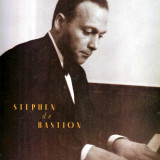
Ein exzellenter Tribut an den Budapester Komponisten und Pianisten Stephen de Bastion, dessen Karriere in den 1930er Jahren grausam unterbrochen wurde, er aber die Schrecken überleben konnte. Kuratiert von seiner Enkelin Roxanne de Bastion, die - parallel zu ihrem Buch "The Piano Player Of Budepast" - mit diversen Musikern und dem Produzenten Simon Tong (Damon Albarn, The Verve) einen Schatz von Kassetten auswertete und die Stücke (teilweise auf Stephens Originalklavier in Berlin) liebevoll neu interpretierte. Entstanden ist ein zutiefst ergreifendes Album mit Stephens wundervoller Musik.
- 1: Can’t Hold Me Back
- 2: Fire Me Up Feat. Maggie Rose
- 3: Runnin’ From Me
- 4: A Man Like That
- 5: Southern Sounds Feat. Kendell Marvel
- 6: Me And My Old Man
- 7: Summer Down South Feat. The Cadillac Three
- 8: Following The Rain
- 9: Deep In The Woods
- 10: Wild, Free And Easy
- 11: Everybody’s Talkin’ Feat. Sarah Zimmermann
- 12: Divided We Are
Mit einer Mischung aus klassischem Südstaaten-Rock und modernem Country macht Kyle Daniel Blue-Collar-Musik für Rockclubs, Honky-Tonks und alles, was dazwischen liegt. Nach hunderten Live-Shows veröffentlicht Daniel via Snakefarm ein hymnisches Debütalbum, das bis zum Rand gefüllt ist mit Gibson-Grit, Telecaster-Twang und der hart erkämpften Unverwüstlichkeit eines Straßenkämpfers, der jahrelang sein Lehrgeld bezahlt hat.
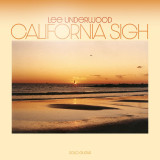
Drag City is excited to present the first ever vinyl pressing of guitarist Lee Underwood"s under-sung 1988 acoustic guitar opus, California Sigh. Guitarist Lee Underwood"s syncretic blend of jazz, folk, and blues was a tremendous force behind Tim Buckley"s genre-stretching late 60s/early 70s music - but his 1988 acoustic guitar opus California Sigh has remained a unsung footnote to his story. Until now! This first time vinyl-edition reveals Lee"s free-floating acoustic moods, with synths and co-production from ambient avatar Steve Roach, as a soulful work of tranquility and transcendence. In the years following the release of California Sigh, Lee wrote and recorded two solo piano CDs, Phantom Light and Gathering Light. Additionally, he wrote Blue Melody: Tim Buckley Remembered, a memoir of their time together, as well as three books of poems, Timewinds (2010), Diamondfire (2016) and Into Light (Poetic Matrix Press, 2021). He continues to live in Northern California.
1993 Chick Corea - the venerated 27-time Grammy winner and National Endowment for the Arts Jazz Master - unveiled the second incarnation of the Elektric Band. With the brand new lineup of guitarist Mike Miller, bassist Jimmy Earl and drummer Gary Novak, and saxophonist Eric Marienthtal (the lone holder over from the first iteration of the Elektric Band,) Corea, approached this ambitious outing in the same way he had done everything throughout his career, by pushing the boundaries of what modern jazz is.
With material written with these specific players in mind, Corea gathered this group of remarkably flexible musicians into Mad Hatter Studios in Los Angeles. Recorded almost entirely live in first takes, the album is notable for its “less is more” approach to Corea’s particular style of genre bending composition. Though the focus may have been more on acoustic piano than synths, the same proficiency, spontaneity, impeccable execution and jaw-dropping display of chops that characterize the five first Elektric Band albums applies.
Of special note here is the inclusion of the track “Final Frontier”, originally released exclusively on the Japanese and European editions. This all out burner is the lone tune on the record featuring Corea on a synthesizer.
Written as an answer to “Got A Match” from 1986’s The Chick Corea Elektric Band album, it’s an uptempo showcase for the players to stretch out and the kind of track that exemplifies the jazz fusion that Corea and his groups came to define."
Blue[26,85 €]
First in a series of reissues from Pierre Jaubert’s Parisound studio archive on Strut Record IS Lafayette Afro Rock Band's elusive funk/Afro original album, 'Malik,' originally released in 1974. Transparent blue colored LP
In 1971, an undocumented seven-member Afro-American ensemble known as the Bobby Boyd Congress made a transformative journey from the United States to France. Bandleader Frank Abel recollects, "We sensed that the soul and funk market was saturated back home, and our original plan was a brief 6-month stint in Paris. Surprisingly, we ended up staying for a decade." Upon lead singer Bobby Boyd's return to the U.S., the group rebranded as Ice and crossed paths with independent producer Pierre Jaubert, a seasoned studio professional with credits on groundbreaking recordings alongside Charles Mingus, John Lee Hooker, and Archie Shepp, among others.
Drawing inspiration from Motown's work ethic, Jaubert initiated regular rehearsals with Ice. He recalled, "I didn't want to mimic Berry, but with seven talented musicians collaborating daily, something unique emerged." The band, residing in Paris and immersed in the African-dominated Barbesse district, began infusing African elements into their music frequently performing with Paris-dwelling Camaroonian and legendary composer Manu Dibango.
Under the new moniker Lafayette Afro Rock Band, the group's music transitioned to predominantly instrumental compositions, featuring a denser Afro-funk sound. Their inaugural recording with the new name, 'Soul Makossa,' included a compelling rendition of Dibango's classic and the impactful break in 'Hihache.' The subsequent release a year later, 'Malik,' refined their sound with the percussive Afro party jam 'Conga,' the atmospheric vocoder and piano-led piece 'Djungi,' and the robust funk of 'Darkest Light.' Despite a limited impact upon its initial release, 'Malik' found appreciation as hip-hop culture flourished in the '80s, establishing itself as a rich source of samples and riffs. 'Conga' was featured in the 'Ultimate Breaks And Beats' series, while the opening horn line from 'Darkest Light' became a pivotal hip-hop motif, employed by Jay-Z, Public Enemy, Wreckx 'N' Effect, and many others
Bassist, bandleader and composer Orlando le Fleming continues to make music that crosses genres as readily as he crosses the Atlantic - after 20 years in New York City, he"s back in his native UK, forging new pathways and renewing old partnerships. His love for the acoustic tradition continues unabated alongside his deep affection for the robust, muscular electric fusion that emerged in the 1980s. Old London friends Tom Cawley (piano/keys) and James Maddren (drums) completed the rhythm section: new acquaintance Nathaniel Facey was picked from the ranks of the UK"s brightest young saxophone players: NYC stalwart Philip Dizack flew in from the US to play trumpet. Orlando"s old schoolfriend Chris Martin contributes a starkly sincere vocal performance, singing words from a poem by Persian poet Rumi, in unison with Orlando"s daughter Nadia.
We can't really say that Japanese jazzmen benefit (not justify in fact) from a great international fame. However, trumpet player Terumasa Hino is an exception, undoubtedly because since the 70s he has collaborated with numerous American musicians : Gary Burton, Roy Haynes, Herbie Hancock … On Into the Heaven, which was released in 1970, Terumasa Hino is surrounded by the same musicians as on Hi- Nology, released a year earlier : his brother Motohiko Hino on drums, Hiromasa Suzuki on electric piano, Kunimitsu Inaba on electric bass and Takeru Muraoka on tenor sax. The eponymous piece, which lasts more than 20 minutes, is a jazz fusion giving room to choruses and which is reminiscent of the music that Miles Davis then offered, in what we will call his "electric period". B side opens with "Love More Train", a brilliant and long hard bop song, while the album closes melancholy with the peaceful "Feeling Blues As You Are Feeling".
These are recordings from the Berlin club Au Topsi Pohl where ism played 4-nights in a row, May 18-21 2022. For the concerts a Bösendorfer grand piano was brought in to the small club - the trio barely fit on stage, but the acoustic sound, all the more omnipresent and precise, was embraced by a highly crafted and risky playing evoking notions of dreams, form and human vibrations.
Long time Djoon club resident and one of Paris’ most prolific producers, Lucas Moinet (Groove Boys Project, Keraw, Projecture) makes his long overdue debut on The Djoon Experience. On the A side, the aptly titled "The Sounds of Deepness" (ft. Stupid Flash on bass) takes you on a raw & soulful journey - while the B side delivers two more 8mn long spiritual soundscapes, “Planet Earth” & “The Piano Ritual” - simply put, this lush, 3 track EP is nothing short of a deep house masterclass.
First time out for this wildly raw dubplate, sister-recording to the Pablo master-rhythm, shot through with other-worldly, illusively allusive incantation.
Surely that's Family Man stalking a sunken cavern, and his bro battering all seven shades out of his drum-kit, like Meters on fire, and Chinna on guitar, glazed and violent. The mixing rears up right in your face.
Producer Gussie Clarke says Theophilus 'Easy Snappin' Beckford is playing piano, with the front removed so he can strum the strings (like he finally snapped) — but he credits the work overall to Augustus Pablo.
Transferred from acetate — fuss-pots don't grumble, just be humble — though the flip brings a clutch of criss, unmissable alternates, direct from Gussie's tape-room (where the files are entitled 'Classical Illusion / The Sun').
Heavy, heavy funk. Simplicity People dug in. Stunning.
BLUE NOTE CLASSIC VINYL EDITION: Stereo, komplett analog, von Kevin Gray von den OriginalMasterbändern gemastert, bei Optimal auf 180g-Vinyl gepresst. LPs im Single-Sleeve-Cover. Der Tenorsaxofonist Stanley Turrentine begann seine lange Zusammenarbeit mit Blue Note 1960 mit einem grandiosen Doppelschlag, als er gleich zwei exzellente Alben mit souligem Hardbop für das Label einspielte: “Look Out! und “Blue Hour”. Auf letzterem kam es zu einem besonders fruchtbaren musikalischen Austausch mit dem von dem Pianisten Gene Harris geleiteten Trio The Three Sounds, das sich mit seinen eigenen Aufnahmen für Blue Note bereits als eine der besten Hardbop- und Soul-Jazz-Formationen etabliert hatte. Als den “Mittelgewichts-Champion des Tenorsaxofons” hatte der Kritiker Leonard Feather einst den 1986 verstorbenen Hank Mobley bezeichnet. Das klingt zunächst nicht sonderlich schmeichelhaft, sollte aber nur zum Ausdruck bringen, dass Mobley mit seiner Phrasierung zwischen zwei anderen Tenorsax-Champions rangierte: dem “Schwergewicht” John Coltrane und dem “Leichtgewicht” Stan Getz. Auf “Workout” präsentierte sich Mobley 1961, sekundiert von einem Quintett junger Modernisten, in bestechender Höchstform.
*REMASTERED ROUGH TRADE 4 TRACK E.P LIMITED TO JUST 500 COPIES*
Everything on “Up Home!” is bigger, richer; the guitars are huge, as though they’re being played through the clouds, massive gusts of blue-green noise that move across the stereo spectrum like weather systems. “Baby Milk Snatcher” is built around face-flattening dub bass, with glinting piano and shards of guitar ricocheting through the song. “W.O.G.S.” is delirious to the point of expiration; “One Way Mirror” is their attempt at weird, lopsided ‘anti-funk’, the song’s melody crushed by avalanches of six-string interference. And the closing “Up” is AR Kane’s masterpiece, a disembodied thud pulsing at its heart as a six-note guitar melody spirals ever onward, Ayuli’s voice lost in its own reverie, hymning escapism via references to Jamaican political activist Marcus Garvey’s ‘black star line’.
• Jon Dale, lead review in Uncut Magazine
who grew up together in Stratford, East London. From the off the pair were outsiders in the culturally mixed (cockney/Irish/West Indian/Asian) milieu of the East End, with Alex and Rudy’s folks first generation immigrants from Nigeria and Malawi, respectively. The two of them quickly developed and fostered an innate and near-telepathic mutual understanding forged in musical, literary and
artistic exploration. Like a lot of second-generation immigrants, they were ferocious autodidacts in all kinds of areas, especially around music and literature. Diving deep into the music of afro-futurist luminaries such as Sun Ra, Miles Davis, Lee Perry and Hendrix, as well as devouring the explorations of lysergic noise and feedback from contemporaries like Sonic Youth and Butthole Surfers, they also thoroughly immersed themselves in the alternate literary realities of sci-fi and ancient history (the fascination with the arcane that gave the band their name), all to feed their voracious cultural thirsts and intellectual curiosity.
It was seeing the Cocteau Twins performing on Channel 4 show the Tube that spurred A.R. Kane into being - “They had no drummer. They used tapes and technology and Liz Fraser looked completely otherworldly with those big eyes. And the noise coming out of Robin’s guitar! That was the ‘Fuck! We could do that!
The duo debuted with the astonishing ‘When You’re Sad’ single for One Little Indian in
1986. Immediately dubbed a ‘black Jesus & Mary Chain’ by a press unsure of WHERE to put a black band clearly immersed in feedback and noise, what was immediately apparent for listeners was just how much more was going on here – a tapping of dub’s stealth and guile, a resonant umbilicus back to fusion and jazz, the music less a conjuration of past highs than a re-summoning of lost spirits.
The run of singles and EPs that followed picked up increasingly rapt reviews in the press, but it was the ‘Up Home EP’ released in 1988 on their new home, Rough Trade that really suggested something immense was about to break. SimonReynolds noted the EP was: Their most concentrated slab of iridescent awesomeness and a true pinnacle of an era that abounded with astounding
landmarks of guitar-reinvention, A.R. Kane at their most elixir-like.
If anything, the remastered ‘Up Home’ is even more dazzling, even more startling than it was when it first emerged, and listening now you again wonder not just about how many bands christened ‘shoegaze’ tried to emulate it, but how all of them fell so far short of its lambent, pellucid wonder. This
remains intrinsically experimental music but with none of the frowning orthodoxy those words imply. A.R. Kane, thanks to that second generation auto-didacticism were always supremely aware about the interstices of music and magic, but at the same time gloriously free in the way they explored that connection within their own sound, fascinated always with the creation of ‘perfect mistakes’ and the possibilities inherent in informed play.
Jenifa Mayanja is a favourite amongst true deep house heads. Her work is smoky, jazzy, and emotive, and has come on labels like Underground Quality before now. Here she arrives on the sixth EP from fledgling but already cultured label Sole Aspect and shows off her sophisticated sound once more. 'Rise To The Top' is full of elegant harmonies and jazz melodies that dance on pulsing rhythms, 'Like A Dream' brings spiritual vocals to bold chords and dusty drums while 'Our World' has piano lines floating high over the languid drums and bass.
'Rose Colored Glasses' has fresh melodies and challenging synths that defy usual genre norms and bring all new ideas to deep house. This is music that elevates mind, body and soul.
Welcome to yet another release orchestrated by DJ/Producer Roi Azulay. This latest release further demonstrates the undeniable talents of this up and coming producer featuring 2 dope alternate compositions taken from his critically acclaimed full-length release titled Reflections. A full-length album, which features a remix produced by the one and only Kuniyuki Takahashi. Keeping in rhythm and tradition this latest 12-inch release features not only two new remixes by Roi but also a supercharged remix produced by one of deep techno ambassadors Vince Watson.
And so, what you get here are 3 hot music compositions on 12ihch colored vinyl housed on a full colored / hand painted Jacket.
If you have an affinity for deep house and an even deeper one for musical electronics, then this colored vinyl 12 inch should be right up your alley. Let's go…
- A1: Mr Righteous (Intro)0 35
- A2: You Need Knowledge 3 45
- A3: 88 Soul 3 12
- A4: Black Shakespeare 3 02
- B1: For My People ..It's Spiritual 2 55
- B2: Lonely At The Top 3 56
- B3: Just Listen 4 05
- B4: California Dreamin' 4 33
- C1: Purity 3 59
- C2: Kunta Kente 4 20
- C3: 1993 Shit 3 49
- D1: We Got Plots 3 38
- D2: Do Win-Dis 4 11
- D3: Hope She Remembers Me 3 15
A Gilles Peterson-approved deep jazz-rap classic.
2024 first time vinyl release, 140g double vinyl, remastered audio with restored artwork.
Limited and Non-Returnable.
Holy grail hip-hop alert! Superstar Quamallah's Invisible Man was never released on wax so, to celebrate the 15th anniversary of this astounding record, we present the first ever vinyl edition. A stunning record which gained accolades upon its initial release, such as a prominent feature on Gilles Peterson's renowned Best Of 2009 show, it's one of the most essential jazz rap albums of all time.
Deep jazz rap on that mellow-melodic tip, Invisible Man is an unforgettable album with nothing but dope beats and dope bars. There's a strong chance this album has passed you by but we truly believe it to be a lost hip-hop masterpiece. It supremely captures the essence of a golden age classic without being slavish to the past. No, this ain't some facile throwback rap. It's a fresh and deeply soulful, original album shot through straight from the heart. Perfect to chill to, Invisible Man is profoundly jazz-oriented and captures with simplicity and sincerity the essence of hip-hop circa 1983-1994. It sounds like vibing with your nearest, dearest and oldest friends on a long hot summer night as the tantalising thought that anything is possible fills the air. You know what, we can just call this "magic hour rap" and we think you'll know what we mean. It's just beautiful. Just Listen.
Brooklyn-born, California-based emcee, DJ, and producer Superstar Quamallah was active in the West Coast underground scene throughout the 90s and recorded extensively with such revered names as Defari and Tajai. His parents were some serious artistic heavyweights, too; his father was soul organist Big John Patton, a giant in the jazz world known for his releases on Blue Note whilst his mother was an active designer. However, he remains relatively unknown. Invisible Man, named ostensibly after the classic Ralph Ellison novel, could also refer to how he is viewed by the public at large. With close affiliations to the Hieroglyphics, Dilated Peoples and Likwit crew, his debut EP "Don't Call Me John" arrived in 1999 on ABB Records, after which he took a sabbatical from recording which included graduate school, travelling, teaching at Inglewood High and eventually a professorship of African Studies at Berkeley.
With a laidback flow and deep, relaxing presence on the mic, Superstar Quamallah is equal parts Big Daddy Kane, Rakim and Guru. Invisible Man is refined, soulful, feel-good hip-hop of the old school. Its wise, spiritual and literate sound, combined with the summertime vibes projected by the smooth beats and the nostalgia-inducing samples and vocal scratches, created jazzy boom-bap rap reminiscent of prime De La Soul, A Tribe Called Quest and Gang Starr.
Irresistibly bouncing opener "You Need Knowledge" loops sparkling pianos, horns and a nagging whistle refrain with scratched vocal refrains from Slick Rick, Mobb Deep and Guru. The super-smooth head-nod classic "88 Soul" also utilises a beautifully swelling piano line and dusty breaks whilst Quamé reminisces about his childhood in NYC. Deeply moving, the silky, sultry "Black Shakespeare" is built around an elegant piano loop and goes hard on the superman lover tip whilst "For My People...It's Spiritual" is transcendental rap in conversation with Rakim and older gods. The "Moment Of Truth"-sampling "Lonely At The Top" is striking for its undiluted boom-bap stylings and the staccato flute-hop of "Just Listen" is riddled with soulful refinement. The deeply-affecting, wistful-yet-triumphant bells and horn-drenched single "California Dreamin'" is top-tier rap of unimpeachable quality. What a flow!
Another highlight is the rich melodic piano-rap of "Purity", a beautiful ode to the foundations of rap and those keeping the culture authentically alive. Beautifully played instruments and spiritual jazz samples elevate the deep thinking present on "Kunta Kente" whilst the darker jazz-tinged battle-rap of "93 Shit" goes super hard both in a lyrical sense and with its no-holds drum punches. The breezy Rhodes and string loops that serve as the sonic backdrop to the slinky jazz rap of "We Got Plots" are just gorgeous as our hero evokes Common's "I Used To Love H.E.R." with a head-spinning tale of crime, deception and double crossing. And some twist! "Do Win-Dis" has a tense crime-funk backing and rolling beats which complement Quamé's flow perfectly before the record is rounded out by the tough yet jazzy brilliance of rap confessional "Hope She Remembers Me". Just sensational.
Upon its original release, Quamallah himself declared: "My favorite time period for Hip Hop music was definitely between 1983 and 1994 with 1988 and 1993 being two years that standout as extremely impressive years musically and culturally. The fashion, slang, movies, TV shows and vibe during those years was incredible. While totally submerged in the feelings and music of that entire time period, I went to work on Invisible Man and I am excited for people to hear the result! It is an album that I would want to hear from some of my favorite artists of the past and present today. This is not a RETRO trip for me; this is me at my best lyrically and spiritually using the accessories of the 80s and 90s to fuel me. I am a 88 soul as the song states!"
This album goes deep. It goes all in. When Invisible Man first came out it had a real hold on us here at Be With HQ. We couldn't stop listening to it. We'd venture to say it's one of the top 25 rap records of the 2000s. In the years since its release, it has remained a criminally underrated record, an increasingly hidden gem. We sincerely hope this first time double LP release will go some way to correct this.
It's been mastered for vinyl by Simon Francis, cut by Cicely Balston and pressed at Record Industry. Finally available on the format it should always have been on, it must never be rendered invisible again.
Compassion combines ethereal pop with ‘80s synth textures, and slacker-rock charm. It's got a bit of Matthew E. White, chilled out BC Camplight and Conor Oberst.
The inviting and perceptive songs on Rui Gabriel’s debut LP Compassion all tackle growing up. It’s about how the older you get, your priorities shift, friendships evolve, and responsibilities become inescapable. For Gabriel, the Indiana-based, Venezuela-born artist and co-founder of the acclaimed band Lawn, the changes in his own life inspired him to write a solo full-length that sounds like nothing the indie rock journeyman has done before. Across 10 vibrant tracks that combine ethereal pop with slacker-rock and piano-driven dance music, it’s a galvanizing showcase of personal growth and the grace you give yourself to push forward.
Work on Compassion started in 2018 when Gabriel was living in New Orleans. “I was living a pretty teenage life in many ways,” says Gabriel. “I worked at a pizza restaurant and would just go to shows or parties. I wasn’t doing anything other than music. I didn't have many responsibilities.” The songs he was working on at the time—tracks that didn’t fit Lawn but Gabriel still liked—initially went unfinished. But as Gabriel’s life changed, so did his songwriting and his desire to see his ideas through. “When I was writing lyrics, I was settling down with my partner and about to become a dad,” says Gabriel. “I was making choices about my life that contradicted the existence I had before. I had a different set of priorities.”
The songs on Compassion deal with youthful carelessness ("Dreamy Boys") and coming face-to-face with newfound responsibilities ("Change Your Mind"). It's consistently a biting, observant look at getting older thanks to Gabriel's unique perspective as a South American immigrant who's lived across the United States for the past 13 years. “When you are Hispanic, English isn't your first language, and you're in a music scene with a bunch of white people, you're going to stand out a little bit,” he says. On “Church of Nashville,” “Hey, Leonard Cohen is singing poems by the gentrified alley” he humorously aims at scene pretension and industry gatekeepers.
Compared to Gabriel’s work with Lawn, where he writes frenetic post-punk songs and yells, for Compassion he explores more straightforward pop sensibilities and showcases his singing voice. “I wanted to do a solo record to prove to myself that I could sing,” says Gabriel. Take the meditative, piano-based lead single “Target,” which is inspired by Dido and finds Gabriel gorgeously harmonizing with singer Kate Teague. He reaches similar infectiousness on the sunny rocker “Summertime Tiger,” which guests Stef Chura. Co-produced by Gabriel and Nicholas Corson (The Convenience, Video Age), Compassion is consistently warm, generous, colorful, and adventurous.
“Compassion is a record about change,” says Gabriel. “It's a coming-of-age record but for somebody who's coming of age into their thirties.”