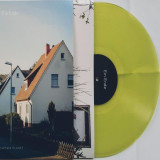
LIMITIERTE VINYL AUFLAGE, LIMETTENGRÜN! Das vierte Studioalbum von Captain Planet umfasst bei rund 30 Minuten Laufzeit zehn schnurstracks gehende Lieder. Wie bereits bei vorherigen Werken sind die Songs geprägt von sausenden Gitarrenschwärmen, die auf einem präzise gewebten Rhythmus-Netz aus Bass und Schlagzeug federn. Es ist dieser genreprägende, emotional gefärbte Sound norddeutscher Punkbands, der beim Hören sofort die Hummeln aufrührt.
Suche:pia
Tongue-in-cheek as usual, belleter Niklas Wandt melts up pianos, acid lines and bass heavy breaks as raw material for Die Glocke (The Bell). When the hunchback pours the lead of three decades of rave culture onto your lost souls, it’s too late for shelter.
Fantastic Twins evaporates not just the bell but the whole bell tower into particles of peak time madness for the mental cases.
On the flip Bodyzeit heats up on an even more old schoolish tip with breaks that definitely win the bumper car dancefloor. Very sorry for the spilt drinks, thrown fags, popped pills, ripped shirts and funny faces trying to sing along these german vocoder phrases. Borusiade doing some serious bodywork, shifting gears down in her lowrider manner, modding this burner into a dreamish but deep wee-hour masterride.
2023 Repress
Often called one of Chicago's talented hidden gems, singer/songwriter/DJ/producer Tai Davis means House in almost every sense. He's dropped vocals for established producers such as Paul Johnson, Stacy Kidd, and also Galactik Knights, Nate Caswell and Yakka. Preferring to use vintage analog gear, his classic house sound consistently packs dance floors worldwide!
Track Review: A1) ""Cosmic Groove"" This piece sends you on a trippy journey with a 'spacey' bassline accompanied with groovy drums, but the lush pads and lead synth puts this jam over the top- guaranteed to make the floor burn!
A2) ""Floating"" This is truly vintage-sounding acid with 2 overlapping powerful TB-303 patterns with NO distortion, haunting strings, and a beating drum track for extra thump!
B1) ""Falling Forever"" The mellow but depressing synth pads will definitely grab you, but the repetitive, hypnotizing bassline will keep you. Add a minimal, pounding 808 and it makes this track one to play over and over...and OVER. B2) ""Strobe Light"" A minimalist track with a basic but adequate house piano riff and a freaky synth lead. But the 'popping' claps over the pulsating 909 bass drum paired with an abnormal, repeating bassline makes this one sound like pure 90's house! A definite classic.
Over the course of a 19-year career, Marshall Watson has released all manner of musical treats for a similarly wide array of labels, yet it’s the effortless beauty of his downtempo works – and particularly his ambient and Balearic excursions – that have often left a lasting impression.
It certainly caught the attention of NuNorthern Soul founder Phil Cooper, who brought the West Coast producer to the label in the summer of 2021. That EP, Sunsets on Larkin Parts 1 & 2, was undeniably special. The same can be said about his belated return to the label, Foothills, an EP packed to the rafters with slow-burn melodies, sustained chords, becalmed textures and gently unwinding grooves.
Watson’s distinctive take on Balearic naturally comes to the fore on EP opener ‘High Desert’, a soft-focus delight where languid electric guitars, starry electric piano lines, echoing chords and gently pulsing electronics stretch out across a shuffling groove. While tailor-made for watching the sun set off his beloved Pacific Coast – and over the Mediterranean Sea – ‘High Desert’ offers a dose of hazy sonic sunshine that can brighten up even the greyest of days.
Fittingly, the accompanying remix comes from long-time friends of the label Seahawks, whose textured, layered and atmospheric productions similarly blur boundaries between Balearic, ambient, pitched-down dancefloor grooves and glassy-eyed psychedelia. Employing opaque, shape-shifting pads, effects-laden guitars, subtle spoken word snippets and yearning, almost melancholic chords – all atop a crunchy, head-nodding beat and toasty bassline – the duo deliver a remix that’s as emotive and sonically stunning as Watson’s original mix.
The EP’s three other tracks amply demonstrate the subtle variety within Watson’s downtempo output. Vocalist Julie Childe makes her mark on ‘Sweet Sounds’, a brilliant blend of warming deep house and laidback Balearic nu-disco that sports subtle hints to his work as one half of synthwave duo Causeway, while ‘Open Sky’ brilliantly wraps undulating TB-303 acid lines and echoing Spanish guitars around a hypnotic, locked-in dancefloor groove.
Then there’s ‘The Landscape’, a deliciously saucer-eyed slab of breakbeat-powered, TB-303-sporting genius that evokes the immersive, early morning waviness of the ambient house era, the beach party psychedelia of San Francisco’s free party movement, and the bleeping wonder of turn-of-the-90s UK dance music. Like the rest of the EP, it’s an enveloping, head-soothing and mind-expanding treat.
e B2 High Desert Seahawks High Sky Remix
Mammal Hands announce spell-binding new album 'Gift from the Trees', their fifth studio album, pointing to subtle shifts and exciting new departures for the unique trio
"We're at a point now where playing and writing together can sometimes feel almost telepathic, that as individuals we can tune in to a collective resonance..."
Mammal Hands fifth album 'Gift from the Trees' offers a fresh perspective on the unique trio's singular music. The first to be recorded in a residential studio, the band enjoyed the opportunity to go late into the night searching for a deeper, more organic experience, closer to both their writing process but also their trance-like live performances. While some of the music was pre-composed and had even been performed live, the band also enjoyed the opportunity to improvise ideas in the studio. Drummer Jesse Barrett explains:
We wanted to have a more immersive experience that felt closer to our writing process. One thing that was really important to us was feeling free to jam out ideas as they came to us. We're at a point now where playing and writing together can sometimes feel almost telepathic, that as individuals we can tune in to a collective resonance and just follow that thread where it wants to go. Sometimes it's something as simple as a rhythmic, textural flow, like in Sleeping Bear.
There was also a conscious decision to move away from the sound and ambiance of the recording studio, with the band opting to engineer the record with their go-to live engineer Benjamin Capp before mixing the sessions with Greg Freeman in Berlin. The idea was to try and capture more of the energy of the band's captivating shows, saxophonist Jordan Smart explains:
Considering the group of tracks we had, it made sense to try and capture this process as organically and honestly as possible, and so a change in studio environment felt like the right move to us. Some of the tracks have a raw joy and energy that came with being able to play together again after a long period of time of having been apart, and capture that feeling of just being happy to be in a room with our instruments altogether again.
Whereas for pianist Nick Smart there was also the chance to really go deep into the band's music:
The new studio environment really opened us up to different ways of working and thinking because we could record at any hour of the day or night. I think this allowed us much more freedom to try unusual ideas and push elements of the music to extremes because we had the time to really focus in on the detail and work on things without time pressure. With some tracks, we were trying to find the boundaries of our playing ability and push beyond that point. With others, it was just getting into the right mindset and putting as much energy and emotion into the take as possible.'
The Welsh environment outside the studio doors seeped into the music presented on Gift from the Trees, with two recording sessions (one in winter and one in the spring) bringing different moods: one bleak and wintery, the other more hopeful and bright – an energy that permeates through tracks such as Kernel and Dimu.
Gift from the Trees opens with wonderfully elevating The Spinner which grew from one of Nick's piano parts and was developed and arranged into a complete tune without losing the feeling of constant flow and motion. It is almost like a dance, with the interaction of different melody parts and the doubling of certain parts melding together and fitting into the overall energetic flow, while Jesse's drums are both floating and deeply melodic. Riser aims to capture the band's raw energy and intriguingly is influenced by both breaks and modern drum production but also minimalist classical composition. Nightingale features the band at their most delicate and lyrical – a band favourite it draws heavily on modern folk with a beautifully realised melody that came unforced to pianist Nick Smart before being jammed out together. It was recorded early one morning, bringing an extra light and brightness to this beautiful performance.
Another album highlight is Dimu which utilises one of drummer Jesse Barret's favourite rhythmic devices from the Tabla repertoire and draws inspiration from Indian, Greek and Arabic music as well as modern folk arrangements. Dimu starts with saxophone over a bed of drones and percussion and moves through many different sections that frame and present the melodies in unique ways. The beguiling, intimate Deep within Mountains aims to place you in the room with the band as they play; it was recorded late at night to capture a dreamlike, liminal ambiance. The piano solo really reflects this mood and energy while the tenor is some of the softest and closest on the recording. Elsewhere, the remarkable Labyrinth started with what Nick describes as "some weird recording on my phone from a soundcheck, where Jordan was playing some crazy sounding bass clarinet part and I quickly recorded him", giving birth to a captivating, complex slice of propulsive 'almost' contemporary classical that like so much of the music on Gift from the Trees really couldn't be any other band than Mammal Hands.
Finally, the album draws to a close with the glorious Sleeping Bear, a tune that was wholly improvised in the studio. Nick and Jesse entered a simple but 'weird' locked groove and Jordan improvises melodies over the top. The track came about without any planning or thought; it was one of those special things that came by surprise and the band felt offered the perfect ending to their latest gift to us all: a deeply enthralling album that captures so much of what makes Mammal Hands a special band while mapping out new routes and paths for their beautiful, beguiling music.
As some of you may know, Alice Coltrane was a legendary pianist, composer, spiritual leader, and the wife of John Coltrane, the most venerated and influential saxophonist in the history of jazz. In 1967, four years after meeting John, he died of liver cancer, leaving Alice a widow with four small children. Bereft of her soul mate, Alice suffered sleepless nights and severe weight loss. At her worst, she weighed only 95 pounds. She had hallucinations in which trees spoke, various beings existed on astral planes, and the sounds of “a planetary ether” spun through her brain, knocking her into a frightening unconsciousness.
The critical event of this period was not that Alice fell into the nadir of her existence, but rather that she experienced tapas, a vital period of trial. These tapas (a Sanskrit term she used to describe her suffering) helped prepare Alice for the spiritual ally she found in Swami Satchidananda, an Indian guru, with whom Alice made her first trip to India. On her second trip there, Alice had a revelation instructing her to abandon the secular life and become a spiritual teacher in the Hindu tradition – so she moved out West – eventually opening the Shanti Anantam Ashram on 47 acres she’d bought in Agoura Hills, California.
Under-recognized trumpeter Johnny Coles recorded only one album for Blue Note but 1963’s Little Johnny C is a little-known treasure of the catalog featuring Coles at the helm of a dynamic sextet with tenor saxophonist Joe Henderson, alto saxophonist Leo Wright, pianist Duke Pearson, bassist Bob Cranshaw, and drummers Walter Perkins & Pete La Roca.
This Blue Note Classic Vinyl Edition is stereo, all-analog, mastered by Kevin Gray from the original master tapes, and pressed on 180g vinyl at Optimal.
Seems our favourite light-fingered Norwegian Cut-N-Paste maestro has been busy of late !
With his Cosmic Oslo debut about to land, we're treated here to a SUPER Limited 4-way of secret weapons from the cupboard of delights...
As ever with Rune, we're going off-piste, but into nevertheless inviting dancefloor territory.
A 70's cheeser hides in plain sight until the last minute pay off alongside a slick, mid-Eighties Japanese gem on the A.
On the B, another Japanese favourite is reworked for maximum dancefloor derangement while an Iberian throbber finishes us off in fine style !
Be quick !
Blue Room: The 1979 VARA Studio Sessions in Holland features two recordings of trumpet/vocal icon Chet Baker captured in glorious stereo at the legendary VARA studio 2 in Hilversum, the Netherlands for the KRO radio program Nine O’Clock Jazz. The April 10, 1979 session features pianist Phil Markowitz, bassist Jean-Louis Rassinfosse, and drummer Charles Rice; and the November 9th session features pianist Frans Elsen, bassist Victor Kaihatu, and drummer Eric Ineke. Both sessions were originally produced by Edwin Rutten, and are produced for release officially for the first time by “jazz detective” Zev Feldman and Frank Jochemsen. The limited-edition 2-LP set (and deluxe 2-CD edition) includes an elaborate booklet with photos by Veryl Oakland, Jean-Pierre Leloir, Christian Rose and others; liner notes by Dutch journalist Jeroen de Valk, plus essays by Feldman, Jochemsen, and Rutten; and interviews with Baker bandmates Phil Markowtiz, Jean-Louis Rassinfosse and Eric Ineke, as well as trumpeters Randy Brecker and Enrico Rava, and pianist Enrico Pieranunzi. Transferred from the original KRO radio tape reels and mastered for vinyl by legendary mastering engineer Bernie Grundman
Boppin’ In Baltimore: Live at the Left Bank is a previously unissued recording of saxophone master Sonny Stitt captured live at the Famous Ballroom in Baltimore, MD on November 11, 1973, for the Left Bank Jazz Society. Recorded by Left Bank founder Vernon Welsh, Boppin’ In Baltimore is an official release in cooperation with the Sonny Stitt Estate and features an all-star rhythm section of pianist Kenny Barron, bassist Sam Jones and drummer Louis Hayes. The deluxe limited-edition 180-gram 2-LP set includes an extensive booklet with rare photos by Christian Rose, Raymond Ross, Tom Copi, Burt Goldblatt and others; liner notes by acclaimed jazz critic Bob Blumenthal; and interviews with Barron, Hayes and saxophone icon Charles McPherson, Muse Records founder and producer Don Schlitten, and an archival interview with Sonny Stitt himself from the early 1970s conducted by Marc Vasey in Canada. The vinyl edition is mastered for vinyl by legendary mastering engineer Bernie Grundman.
For Anyone That Knows You, an album of mostly piano solos by Josiah Steinbrick, was recorded riot for smoothness or posterity but to emphasize the piano as object, the person playing it, and the moment it sounds. On three of the pieces, the saxophone of Sam Gendel hovers ok or the piano like a faint change in the light, adding resonance and gentle reinforcement rather than counterpoint. Three others are delicate renditions: "Green Glass" interprets an untitled recording by Quechuan folk musicians Leandro Apaza Roams and Benjamin Clara Quispe; *Tyne Road" abbreviates one of Malian kora master Toumani Diabatels most tender compositions: and "Lullaby" is an arrangement of a traditional Creole song, originally recorded in 1954 by the Haitian-American guitarist Frantz Casseus.
2023 Repress
it was in february 2015 when japanese producer and sound designer kuniyuki takahashi, sometimes known as koss, releases with the ep 'newwave project '2' a record, that tapped some roots of his musical education: new wave, german electro punk from bands like a daf, ebm from acts like front 242 as well as industrial music.
styles, about kuniyuki claims that they are his 'favourite music'. now, nearly two years after his first newwave project ep, he drops an album that is leaning towards his musical love from the past. compared to his former work, that was rooted in worlds of classic, jazz, house, ambient, and electronic song-writing, his new tunes are full of melodic drifts and rhythmical shifts.
as usual all is loaded with tones and rhythms straight from the heart that filter and modulate human emotions without losing their natural source. to get a sound that is fresh but still leaning to the 1980ees, he used some old synthesisers like a roland jupiter 8, a juno 60, a korg ms 20, an old tape echo machine but also new instruments like the roland aira. furthermore, his modular synthesizers talk too.
instead of having a masterplan, kuniyuki just made sound, drifted on his machines and moved into a territory, that his far away from his former sound. also the use sampled voices and other alienated sound sources of unknown origin inject his new tunes otherworldly atmospheres.
his skills as a fine instrumentalist is evidence as kuniyuki also played the piano, percussions or flute, if he felt their warm sound is needed for his freely grooving tracks. some dance in a house or techno outfits.
other slam like a mix of funk and ebm. tunes like 'puzzle' or 'body signal' are twisted treasures that bemuse deeply. in-between you hear the echoes of cosmic spheres, the darkness of the cold war days and some bewitching tribal jungle vibes. a new, moving, unorthodox and yet catchy side of kuniyuki takahashi.
it is not totally novel to him, as he already released some industrial, ebm and electronic with the project drp in 1990 on the belgium label body records. but for his listeners, that know him for detailed house, jazz and classic or that love him as a man of collaborations who already worked together with artists like innervisions jazz house heavyweight henrik schwarz, the famous japanese pianist fumio itabashi or the british synth-pop protest spoken word icon anne clark, the 'newwave project' sheds a light on a different artistic side of kuniyuki takahashi.
it is diversified, has many rhythmical and atmospheric turns but stays stirring and compelling in all twelve tracks. a true new wave, formed, played in and envisioned with a view on the past that was filtered through the now while feeling the future. the cover art work comes from the swiss artist augustin rebetez - a man who also loves to generate unknown poetic universes in his drawings, sculptures, videos and installations.
Fat Albert Rotunda is the venture into jazz-funk by keyboardist Herbie Hancock. The record is centered around the music Hancock wrote the Fat Albert cartoon show. It's one of the records which appeared in the period between his landmark album Maiden Voyage of 1965 and his 1973 classic Head Hunters. Fat Albert Rotunda is a unique item in Herbie Hancock's long and diverse catalog, with funky tracks like 'Fat Mama' and modern jazz-oriented tunes like 'Tell Me A Bedtime Story'. The sextet which is backing Hancock consists of some of the most prominent musicians of that time, like Joe Henderson on tenor sax, Johnny Coles on trumpet and Buster Williams on the bass.
Herbie Hancock is one of the most prolific jazz pianists of the 20th century. A child prodigy, he played with the greats such as Donald Byrd and Miles Davis. As he was a bit of a geek, he enjoyed gadgets & buttons and he was one of the first to embrace and master the electric piano, but he always stayed true to the acoustic sound. In fact, he always bounced back and forth between his electronic and acoustic sound, touching upon almost every development in R&B, Funk and Jazz while retaining an original and distinctive voice.
Spatial & Co Vol. 2 may well be the best album in the Spatial & Co series. It's absolutely flawless. Again created by French disco lord and Arpadys maestro Sauveur Mallia for French library label Tele Music in 1979, it leans far more into the space disco sound than the clean cosmic funk of its predecessor. And it's all the more thrilling for it.
Wide-eyed opener "Discomax" is starts as pure piano-disco brilliance with a bassline to die for before heading off into wigged out territory, all acidic squelches and jaw-dropping percussive breakdowns. Perfection. "Space People" follows, an eerie, half-beatless sci-fi synth workout played out against a hauntingly metronomic pulse for the first half - proper slow-mo space disco business - before the beat kicks in, the electric guitar solo wails beautifully and the bassline that emerges at its conclusion rides in on some other shit.
Closing out the A-Side, the six minute long "Bass Power" is, unsurprisingly, a deep, low-end roller with head-nod drums, whizzing synths, blissed out ambient vibes and Mallia's otherworldly bass playing super high in the mix. It's white hot funk, make no mistake, and it sounds like a re-geared library version of Roxy Music. Yes, *that* good.
Side B is laced firstly by "Holidays Morning", an emotional disco-pop groover, all electric guitars, skipping drums and synthy bleeps with more than a few moments of pure driving funk.
One for the deep heads, longtime favourite "Electric Maneges" follows, a bleepy, haunted dancehall gem, uncut tropical balearic-funk from another dimension. The sophisticated digi-soul of "Loving Discovery" comes on like a weird, interplanetary Sade instrumental, all swelling synths, warm keys and syrupy guitar rhythms. Hearing is believing.
Arguably saving the best til last, the fierce, proto-techno of "Exotic Guide" closes out this extraordinary set. The intro genuinely sounds like Detroit would a good few years later - just wild - before it glides into a driving percussive funk break complete with both stabbing, insistent synths and those of a more winding, laconic variety. The one complaint? It's over far too soon. Remarkable.
Sauveur Mallia is a crucial figure in the history of electronic and dance music and a hugely underrated French library bass player and composer from the Arpadys / Voyage crew. This is just the beginning of Be With's Mallia - Tele Music reissue campaign!
The audio for Spatial & Co Vol. 2 has been remastered by Be With regular Simon Francis, ensuring the punch of Sauveur's bass and those sick drums come through to the fullest. Pete Norman’s expert skills has made sure nothing is lost in the cut whilst the original and iconic sleeve has been restored here at Be With HQ as the finishing touch to this long overdue re-issue.
Upcoming album 'Hijaz + Strings' to be released in April 2023.
Hijaz is a multicultural sextet that combines Eastern melodies with improvised jazz. Their music is based on the dialogue between oud and piano. ‘Hijaz’ refers to the Arabic musical scale but also holds a clear reference to jazz. More than ten years already, the band is weaving an intriguing web of Mediterranean warmth, polyrhythmic structures and musical virtuosity. In a tight formation of fore core musicians, Hijaz captures the magic of the moment during their concerts. For this album the band aligned with a cello and two violins and arranged for strings by bass player Ben Faes.
Hijaz is without a doubt one of the best kept secrets of the Belgian world music scene. – Jazz in Belgium
This is essentially a jazz album, but one with a difference since the Arabic music scales, the instrumentation and the influence of Greek Rembetika are so infused into the album that you can almost smell the aroma of Eastern spices floating out of the studio. – Worldmusic
‘Dunes’ is een zeer veelbelovend klein meesterwerkje, dat na herhaald luisteren steeds meer van zijn schoonheid prijsgeeft. – Moors Magazine
De muziek vervoert je zo naar een rustige patio in een Mediterraanse stad, op een steenworp afstand van de drukke Medina. – JazzLab
Anaïs Tuerlinckx is a Belgian pianist who has been living in Berlin since 2008.
She began playing the piano as a child and discovered the world of free improvised music as a teenager. Her approach to the instrument is based on an intuitive sonic research of the piano, which is extended by using a variety of found objects.
Since 2021, she has been playing on a string box instrument, made by Henri Seiferth. The string box, a simplified piano, is a wooden resonator with shortened piano strings mounted on it. Miroitements Étranges was recorded in her home, where the first piece on the A-side album was composed using her string box, while the rest of the material was recorded with a broken Wiener Zither. The B-side is played on her grand piano.
Das Debütalbum des Electro-Punk Musikerkollektivs aus Teesside im Nordosten Englands um Frontmann Kingsley Hall.
Gegründet 2019, schloß sich die Band - bestehend aus Hall (Gesang und Gitarre), Robbie Major (Synthesizer), Hugh Major (Bass und Sequenzer) und Jonny Snowball (Schlagzeug) - aus "einem kollektiven Misstrauen gegenüber den politischen Entwicklungen" heraus zusammen. Nails ist ein wütendes, an Dringlichkeit kaum zu übertreffendes Statement, brutal und minimalistisch, in dem Hall über Beats, Drone Noises und Gitarrenfeedback mit seinem unverkennbaren Sprechgesang gesellschaftliche Mißstände lauthals anprangert. "a shit-hot artist" (NME). Darüber sind sich auch Anhänger der Band wie Sleaford Mods, Black Francis (Pixies), Steve Albini und Modeselektor einig.
Für Fans von Idles, Sleaford Mods, Divide And Dissolve, Bob Vylan und Billy Nomates!
Of all the things that can and should and will be said of Sam Wilkes’ & Jacob Mann’s Perform the Compositions of Sam Wilkes & Jacob Mann, let’s begin at the beginning and acknowledge that it is an aptly named record indeed. An ideal collaborative effort (which is to say, greater than the sum of its parts), here we have two longtime friends, two luminaries of the New Weird Los Angeles — the experimental, genre-encompassing underground—who have, at last, devoted a full-length record to their signature musical admixture.
Since their meeting as USC music students (Wilkes studied bass, and Mann, jazz/piano), the two have, with a kind of ceaseless abandon, chased the music to the ends the earth — oftentimes quite literally; travel is a recurrent theme in Compositions’ track titles (Pre-board, Soft Landing, and Around the Horn), and the record’s second track, Jakarta, was sketched out in a hotel room in the city of the same name, where Wilkes and Mann were performing at a jazz festival in 2019. Having initially bonded over a mutual and abiding appreciation for the Soulquarians, the two have spent over a decade playing and traveling, together and separately, their styles coevolving all the while.
Across its thirteen tracks, Compositions captures the relaxed creative flow of two consummate musicians. Most of the record’s sessions (“four-to-five-day summits” in an apartment studio, occasioned by “blasts of inspiration”) began with casual improvisation, and, indeed, roughly half of the final material was composed in this manner: Wilkes and Mann squaring off, a Yamaha DX7 facing a Roland Juno 106, alternating leads, two co-pilots with no set course. And though the songs are polished to a shine, there are artifacts of the intimacy of these sessions. Yes It Is concludes with a snippet of just-intelligible studio chatter: “…A flat minor, then A major.” A figuring-it-out-as-we-go moment that briefly renders explicit the warmth, friendship, and creative freedom that is the album’s heart.
Behold the might of Rodan, the giant monster from the sky! In 1956, Toho unleashed their first colour kaiju picture: RODAN, directed by Ishiro Honda and produced by Tomoyuki Tanaka, is a terrifying tale from the creators of the original Godzilla that sees a giant Pteranodon rise from a deep underground cave after being disturbed by miners. Like the Big G, Rodan has mutated to excessive size after being exposed to nuclear radiation, subsequently soaring free above Kyushu to cause as much mayhem as possible as the JSDF do their best to protect the island from his bloodthirsty rampaging. It was inevitable that the man behind the music of Godzilla would also take on scoring RODAN, and the great Akira Ifukube created a score with a solemn edge as with Godzilla, which makes the music of RODAN fit in the larger universe while allowing it to feel unique to the character. For the main theme, Ifukube introduces a malevolent low piano and brass phrase before cointerpointing it with horns to create a howling menace worthy of Rodan. In contrast, beautiful but melancholy material represents the carnage the monster has brought upon the Earth; in a more upbeat mode, the composer includes another of his jaunty and jazzy marches for the JDSF in the guise of "Get Rodan". It's another Toho triumph from the great maestro Ifukube! (Charlie Brigden)


