Volker Bertelmann and Hildur Guðnadóttir hardly need an introduction - their distinct styles have graced the speakers of pretty much anyone enamored with experimental music in the last decade, and between them the two have chalked up an enviable canon of successes. Bertelmann, under the Hauschka moniker has explored the extremities of prepared piano improvisation, and Guðnadóttir has taken cinematic, explorative cello music into a new era of depth and passion, so to hear them both together is a rare and unexpected treat. Rare is putting it lightly even - „Pan Tone“ is a recording of a single concert which the duo performed on the 26th of February 2010 as part of Arctic Circle - Bubbly Blue and Green festival at Kings Place in London, and documents an event that would truly never be repeated. Sure, they could attempt to re-create the event, but the spontaneity and glorious serendipity in this particular recording is a pleasure to behold.
Bertelmann and Guðnadóttir decided to create a set of compositions which based on the idea of the ocean, and took a book of Pantones to extract exact references to the specific colors of the sea. These watery tones form the backbone of the performance and inform the direction of the collaboration, guiding us through rich blues, glassy greens and frothy whites. In listening to the music it seems incredibly appropriate that the artists should choose blue as the middle ground in their work; the ineffable lightness that Bertelmann brings to the table is a stark contrast to Guðnadóttir's sinking darkness, and as the two styles collide we witness a plethora of tones, shades and hues. It sounds as if the two artists have been playing together for decades, and their sound is so perfectly matched you might wonder why it's taken them this long to collaborate. All that's left for us to do is to soak in the tidal beauty of this very exclusive body of music, to listen to it sing, bubble and crash through its duration before settling in total silence. When the record reaches its conclusion there is an unsettling calm, a sense that you have witnessed something very special indeed, and that is a feeling to prize amongst all else.
Cerca:pia
Tape
Hailu Mergia & Dahlak Band's Wede Harer Guzo is the third release on Awesome Tapes From Africa for Ethiopian keyboard and accordion maestro. In the years since Shemonmuanaye, Mergia has revamped his touring career, playing festivals and clubs worldwide, including a recent tour supporting Beirut. By 1978, Addis Ababa's nightlife was facing challenges. The ruling Derg regime imposed curfews, banning citizens from the streets after midnight until 6:00 am. But that didn't stop some people from dancing and partying through the night. Bands would play from evening until daybreak and people would stay at the clubs until curfew was lifted in the morning. One key denizen of Addis' musical golden age, Hailu Mergia, was preparing a follow-up to his seminal Tche Belew LP with the famed Walias Band. It was the band's only full-length record and it had been a success. But his Hilton house band colleagues were a bit tied up recording cassettes with different vocalists. Still Mergia, amidst recording and gigs with the Walias, was also eager to make another recording of his instrumental-focused arrangements. So he went to the nearby Ghion Hotel, another upmarket outpost with a popular nightclub. Dahlak Band was the house band at Ghion at the time. Together they made this tape Wede Harer Guzo right there in the club during the band's afternoon rehearsal meetings, with sessions lasting three days. Dahlak Band catered to a slightly more youthful, local audience, while Mergia's main gig with the Walias at Addis' swankiest hotel had a mixed audience that included wealthy Ethiopians, foreign diplomats and older folks from abroad. Therefore, their sets featured lighter fare during dinnertime and a less rollicking selection of jazz and r&b. Meanwhile, Dahlak was known more for the mainly soul and Amharic jams they served up for hours two nights a week to a younger crowd. Mergia released Wede Harer Guzo ("Journey to Harer," a city in eastern Ethiopia) with Sheba Music Shop, which was located in the Piazza district but has long since shut down. His cassette copy is the only known source we could find. Jessica Thompson at Coast Mastering managed to restore the recording to clean up layers of hiss, flutter and distorted frequencies, made worse by years of storage. Although there are some remaining sonic artifacts of the era's recording and cassette duplicating quality, this reissue captures the band's inimitable vibe. Recalling the audience's positive reaction to Wede Harer Guzo's novel arrangements, he says it sold well and found many fans. However, as no trace of the tape can be found online, there's no indication as to why the cassette appears largely forgotten until now
It's finally here the fourth and final release in the afro series with Zeke Manyika and Faze Action. This time they crank up the horns and lean towards a more afro latin, balearic flavoured track entitled "Maswera". Its tailor made for any festival or outdorr situation with its infectious piano riffs and Zeke's chants. This track is set for peak time moments. On the other hand "Rugare" has its roots firmly in the afro electronic sound. Think Eddy Grant meets 'manu Dibango circa 1981 and your in the right area. A solid bass line underpins the whole track, while horns and guitars dub in and out to create a classic afro club track.
Last year's 'Will We Ever Dance Again' 12" was a big one for Coyote who now follow it up and impress once more. First up they do so on 'Baka Re-Rub' by paying their respects to the iconic Jon da Silva remix of The FADS track. It's steamy, tropical, full of loose drum energy and jangling synths that lightened up any club. On the flip you find 'No Entry' which is a big house anthem plenty of classic tops, uplifting arpeggios and pianos, and dramatic strings next to big acid lines. It's an all out, hands in the air gem that brings the good times.
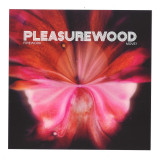
The inspirational intake and respectful tribute of and to Hindi Cinema Soundtrack artists Kalyanji-Anandji and R. D. Burman and the Simla Beat guitar organ psych records of the early/mid 70’s, coupled with the Italian silver-stringed heavy-funked composers Piero Umiliani and Stefano Torossi kaleidoscopically conjure the sounds brought to you by Pleasurewood in this 7” single.
Firework is ushered in by a Hofner Beatle bass’s nasal clacking joyfully assisted by clapping hands through murky spring reverb.
A breakbeat incantation to the sun scored with Farfisa, Guitar Wah and Arp Odyssey.
Move! is a more pensive post-apocalyptic funk hymn with the instrumentation of piano, cimbalom and mellotron, plus the layered and flanged vocals of the composers Paul Elliott and Anthony Donje, with the instruction to ‘Move!’ by studio kingpin Buddy Elliott.
Debut album by Dutch producer w1b0, who passed away in August, to be released in November on U-TRAX.
Wibo Lammerts' sudden death on August 15thshocked the worldwide electro community, and also left the record label, that had been working on the debut album with the artist known as w1b0 for the past two years, dumbfounded and in grief.
Wibo had jokingly always called his upcoming debut album 'his legacy', which now sadly has become a painful truth. With the support of Wibo's family, U-TRAX is now doing the only thing that doesn't feel totally wrong: proceed as planned, and release 'When Humans Ruled The Earth' on November 11.
W1b0 made quite a name for himself with heavy electro tracks that he released on labels like Bass Agenda, Hilltown Disco and Discos Antónicos. Standing at 202 meters, and combined with a cheerful character, most people remember him as the gentle giant of electro.
For this album, Wibo wanted to steer away from the dark and heavy electro he mostly made until then. The idea of having a platform to create delicate electronic music in different styles, and make it a showcase of his versatility, was very appealing to him. And that is where he and U-TRAX found each other.
The full-length album (over 75 minutes on cd and digital) comes after 'The Pilex Program EP', released in October, that featured a remix by Detroit's Ectomorph of 'Pilex Driver' and saw 'Program Yourself To Feel' remixed by a well-known Dutch producer that recently created the new 'techno alias' Human Form.
As usual with U-TRAX, the album comes in three different editions, with the 11-track double vinyl version containing the Ectomorph and Human Form remixes. The CD and digital version boast original versions only, plus four additional tracks: 'Alternate Reality Interface', 'Mixed Matter Fluctator', 'Synthetic', and 'In There'. The cassette version more or less has the same track list as the CD/digi version, but has both aforementioned remixes and a bonus track in the incredibly hypnotizing 'I Wanted You', a track that unfortunately couldn't be on the CD and vinyl versions.
Buyers of the physical releases get treated on superior quality products, another trademark of U-TRAX. The vinyl edition boasts over one hour of music, on two 180 grams, green vinyl discs, in a black & white & neon green gatefold sleeve. The eye-catching artwork is created by Utrecht artist Leffe Goldstein, known amongst others for his psychedelic beer can designs for Utrecht brewery Maximus. Wibo, being the beer lover he was, had zero doubts about having Leffe Goldstein do the cover for his album. The CD has a total playing time of 75 minutes and comes in a beautiful 6-panel digipack, while the cassette will have full-color on-body print and comes in a plastic-free Maltese cross fold-up sleeve.
Opener 'Acid Whip' is one of the oldest compositions on this album, in which a dark 303 bassline hums over layers of spacey strings. Wibo named it after the legendary Whip It party in Amsterdam's De Melkweg. 'Alternate Reality Interface' then presents bouncy rhythms toying around with all sorts of analog (bass) synthesizers, before we go really deep with the epic ambient techno track 'Wandering Souls'.
Then things get a little lighter spirited: 'Mixed Matter Fluctator' is an electro track that builds on sounds created by Matt Buggins. It has very strong Detroit influences, the city Wibo loved so much and that he made a pilgrimage to with a group of friends that called themselves 'The Techno Tourists'. The tempo goes up a notch in 'Program Yourself To Feel', that halfway opens up in wide science fiction strings that evoke memories of Star Wars, the movie series that Wibo was a great fan of, and that was the source of many of his tracks' names. The Human Form remix opens the vinyl edition of this album and is a downright belter of a track.
Next is a somewhat experimental intermezzo named 'Synthetic'. Erratic beats and pounding bassdrums get accompanied by very subtle eerie-sounding strings, before melancholic synthesizers and piano chords take over. This is an excellent prelude to the epic 'Hologram Computing', a track that is one of our favorites. It slowly and softly builds and builds, before a pounding bassdrum breaks loose and a hypnotic arpeggio takes you to higher planes.
Not ready to letting the listener relax, w1bo then serves 'Beilstein Reference', which again presents his trademark cocktail of down-to-earth electro rhythms and catchy melodies, covered in all sort of little sounds and noises, giving the song a lot of energy. What follows is 'Hit me', a track loosely based on a song by Dutch indie rock band Mr. Joe Abe. Wibo met the band's singer on a camping site while being on holidays and the two decided Wibo should do a remix of one of their songs. Nothing was left of the original except the vocals, and the result is a remarkable cheerful, poppy electro song.
'Anticipated Input' is one of the more recent tracks Wibo made for this album, combining electro, acid and, yes: epic strings. But not all is peace and quiet on this album, as 'Pilex Driver' shows. This is w1b0 going experimental in a danceable fashion: Industrial sounds make the track sound like we're passing a construction site that is playing loud electro music. On the vinyl version of this album, Ectomorph totally decomposed the original and made it into a mysterious, almost subdued, and totally brilliant electro track that sees a main role for the retro Roland CR drum machines sounds.
TFHats, Wibo's fellow member of the Transhumanism collective, added lyrics to 'Cartesian Coordinates'. His vocals add a pleasant New Wave flavor to this song, that has breaks that remarkably reminds one of Nirvana's 'Smells Like Teen Spirit'. What follows is the most personal track on this album. 'Fornan' is a song that Wibo made for his wife Nanette, and was added as the last piece of the puzzle that creating an album is. The warm Detroit techno atmosphere in this electro song couldn't be a more beautiful tribute to his love, and mother of their two young boys.
The album then takes a surprising detour through a 1980s landscape with 'In There', that features the Joy Division-esque vocals of another one of Wibo's friends, indicated only as Vincent. The super slow and gloomy track is a treat for anyone that loved the darker side of New Wave. The album has a worthy closer in the sensitive, yet playful 'Schlegel Diagram'.
h 08: Hit Me (w1b0's Slugfest Assault Dub) feat. Mr Joe Abe
Original cat# GREWCD314 - Recorded in 1981 for Time 1 Productions (Jah Screw) this is one of the 'strictly dub' albums and gets a re-mastered LP vinyl re-release! It's the follow-up to 'Dangerous Dub' and again The Roots Radics (Drums: Lincoln "Style" Scott, Bass: Erroll "Flabba" Holt, Piano: Gladstone "Gladdie" Anderson, Keyboards: Wycliff "Steely" Johnson, Rhythm Guitar: Eric "Bingy Bunny" Lamont, Percussion: Barnabus & Noel "Scully" Sims) at their very best and King Tubbys studio sound and mix. Additional mix by Soldgie and Paul "Jah Screw" Love, tracks laid at Channel One - Killer!
Original Cat# GREL314 / Das Original Album "Dangerous Dub" wurde 1981 veröffentlicht und gehört definitiv zu den "Must Have" Alben des Dub. Nun gibt es eine Fortsetzung dieses Klassikers. "More Dangerous Dub" enthält nicht weniger als 14 unveröffentlichte Tracks der Roots Radics, aufgenommen mit King Tubby in den Channel Studios.
- 1: Runner: I. Sixteenths
- 2: Runner: Ii. Eighths
- 3: Runner: Iii. Quarters
- 4: Runner: Iv. Eighths
- 5: Runner: V. Sixteenths
- 6: Music For Ensemble And Orchestra: I. Sixteenths
- 7: Music For Ensemble And Orchestra: Ii. Eighths
- 8: Music For Ensemble And Orchestra: Iii. Quarters
- 9: Music For Ensemble And Orchestra: Iv. Eighths
- 10: Music For Ensemble And Orchestra: V. Sixteenths
‘Runner is a calmly luminous orchestral piece with the pulsating, propulsive
rhythms that animate much of Mr. Reich’s music.’ – New York Times
‘Reich interweaves the two groups to create a dense textural tapestry that sounds like his most native orchestral thinking to date. A beautiful and dramatically charged masterpiece.' – San Francisco Chronicle
Nonesuch Records releases the first recordings of Steve Reich’s Runner (2016) and Music for Ensemble and Orchestra (2018), performed by the Los Angeles Philharmonic and conducted by Susanna Mälkki.
Reich says Runner is written “for a large ensemble of winds, percussion, pianos, and strings. While the tempo remains more or less constant, there are five movements, played without pause, that are based on different note durations. First, even sixteenths, then irregularly accented eighths, then a very slowed-down version of the standard bell pattern from Ghana in quarters, fourth a return to the irregularly accented eighths, and finally a return to the sixteenths but now played as pulses by the winds for as long as a breath will comfortably sustain them. The title was suggested by the rapid opening and my awareness that, like a runner, I would have to pace the piece to reach a successful conclusion.”
“Music for Ensemble and Orchestra is an extension of the Baroque concerto grosso where there is more than one soloist,” the composer continues. “Here there are twenty soloists – all regular members of the orchestra, including the first stand strings and winds, as well as two vibraphones and two pianos. The piece is in five movements, though the tempo never changes, only the note value of the constant pulse in the pianos. Thus, an arch form: sixteenths, eighths, quarters, eighths, sixteenths. Music for Ensemble and Orchestra is modeled on my Runner, which has the same five movement form.”
Nonesuch has recorded every new piece of music by Steve Reich since 1985, beginning with The Desert Music and continuing through 2018’s Pulse/Quartet, resulting in 22 albums and the two box sets Phases in 2006 and Works: 1965-1995 in 1997. Most recently, the label released his Reich/Richter, performed by Ensemble intercontemporain and conducted by George Jackson, in June 2022. The Times said, ‘What a delight to be able to focus on the music, delivered here with a clever mix of pinprick precision and reverberant haze by 14 members of Ensemble Intercontemporain. The more intently you listen, the more subtleties emerge among the shifting, criss-crossing textures and phrases, sometimes coloured with gentle melancholy but decisively upbeat by the end. Reich/Richter is an ear-tickling tonic and a happy companion to Reich’s newly published book, Conversations.’ Nonesuch will put out a collection of Reich’s complete works in 2023.
Reich released a book earlier this year, Conversations, that includes dialogues with past collaborators, fellow composers, musicians, and visual artists who have been influenced by his work, including: David Lang, Brian Eno, Richard Serra, Michael Gordon, Michael Tilson Thomas, Russell Hartenberger, Robert Hurwitz, Stephen Sondheim, Jonny Greenwood, David Harrington, Elizabeth Lim-Dutton, David Robertson, Micaela Haslam, Anne Teresa de Keersmaeker, Julia Wolfe, Nico Muhly, Beryl Korot, Colin Currie, and Brad Lubman. The Wall Street Journal called the book ‘a testament to the influence of an idea – one that triggered a cultural turning point,’ and the New York Times said, ‘The joy of the book is to hear artists from a variety of disciplines and backgrounds rhapsodizing about their relationship to Reich’s music and how it influenced their own creative processes.’
Steve Reich has been called ‘America’s greatest living composer’ (Village Voice), ‘the most original musical thinker of our time’ (New Yorker), and ‘among the great composers of the century’ (New York Times). His music has influenced composers and mainstream musicians all over the world. Music for 18 Musicians and Different Trains have earned him two Grammy Awards, and in 2009, his Double Sextet won the Pulitzer Prize. Reich’s documentary video opera works – The Cave and Three Tales, done in collaboration with video artist Beryl Korot – have been performed on four continents. His recent work Quartet, for percussionist Colin Currie, sold out two consecutive concerts at Queen Elizabeth Hall in London shortly after tens of thousands at the Glastonbury Festival heard Jonny Greenwood (of Radiohead) perform Electric Counterpoint followed by the London Sinfonietta performing his Music for 18 Musicians.
In 2012, Reich was awarded the Gold Medal in Music by the American Academy of Arts and Letters. He has additionally received the Praemium Imperiale in Tokyo, the Polar Music Prize in Stockholm, the BBVA Award in Madrid, and the Golden Lion at the Venice Biennale. He has been named Commandeur de l’Ordre des Arts et des Lettres and has been awarded honorary doctorates by the Royal College of Music in London, The Juilliard School, and the Liszt Academy in Budapest, among others. ‘There’s just a handful of living composers who can legitimately claim to have altered the direction of musical history and Steve Reich is one of them,’ states the Guardian.
Redefining what an orchestra can be, the Los Angeles Philharmonic (LA Phil) is as vibrant as Los Angeles, one of the world's most open and dynamic cities. Led by Music & Artistic Director Gustavo Dudamel, this internationally renowned orchestra harnesses the transformative power of live music to build community, foster intellectual and artistic growth, and nurture the creative spirit. This is the third recent recording by the orchestra on the label; the others were the Louis Andriessen pieces The only one and Theatre of the World. Additionally, the Los Angeles Philharmonic’s recordings of The Gospel According to the Other Mary and Must the Devil Have All the Good Tunes?, with Yuja Wang, released on Deutsche Grammophon, are included in this year’s John Adams Collected Works boxed set. Nonesuch also released an LA Phil recording of Adams‘ Naïve and Sentimental Music in 2002.
Susanna Mälkki is sought-after at the highest level by symphony orchestras and opera houses worldwide. About to embark on her final season as Chief Conductor of the Helsinki Philharmonic Orchestra, she concludes a seven-year tenure with a distinctive dynamism and imaginative flair to her programming. In addition to a full season in Finland, she will lead the Helsinki orchestra on tour to the prestigious Lucerne and Edinburgh festivals, New York’s Carnegie Hall, and Washington’s Kennedy Centre this season.
If you've been in the club scene for many years like David Dorad, you will one day face the big, essential, serious questions that each of us will ask ourselves sooner or later:
Are marmots pack animals?
Can marmots sign language?
Do marmots plan their lives according to European or Chinese zodiac signs?
Do marmots need a special passport, after all they don't have a thumb to turn the pages?
What happens when a marmot eats Coke and Mentos at the same time?
And with all those questions whistling, hissing and muttering in his head, David grabbed piano, baton and BioBassline to crochet his new EP.
This is called "Marble" and offers 6 different approaches to solve these big questions.
As a source of ideas, he has competent partners at his side in Roman Flügel, Mira, Christopher Schwarzwälder, Canson and Sascha Cawa.
A1 -
Murmeli - original
The marmot tribe awakens. Get up to brush your teeth. Gets your toes tapping. Makes you snap your fingers. Dare to roll your hips. Later rhythmically to turn. To look elegant at the same time. Eyes closed - eyes open.
Murmeli, the regular leader, sits at the piano.
Everyone is dancing, toothpaste in the corners of their mouths and a smile that takes the toothpaste by the hand.
A normal morning in marmot houses.
B1 -
Murmeli - Mira & Christoph Schwarzwald RMX
Mira and Christoph Schwarzwalder take over from Murmeli. They vary, combine and subtract. The first marmots raise their thumbless fists in the air - showing their passports, ready to take off.
B2 -
Murmeli - Canson RMX
Canson also sits next to Murmeli. Caress the theme, tickle the groove.
Murmeli has the best ideas early on: "Boy, let's try Mentos with Cola, we'll definitely take off."
Canon is in!
C1 -
Murmelot - Original
The sun goes down in Murmelhausen too. Then Murmelot is ready. Gives his advanced Pilates class, which the whole tribe takes. The village wants to remain mobile.
Murmelot's motto is "Why not stretch while walking?"
And so shall it be. He sets the rhythm on his wooden Fairtrade 303 and our furry friends shave shaky and obscene messages down each other's backs while impatiently hopping for the drop.
D1 -
Murmelot - Roman Flügel Remix
Roman Flügel and Murmelot are old buddies. Struck while carving the 303.
Roman happily takes over the Pilates class, the dancing crowd. Enchanted until the razor's batteries are empty and only dancing remains, only dancing is important.
D2 -
Murmelot - Sascha Cawa RMX
Sascha Cawa takes his trunk by the hand, wants to motivate her again shortly before the second sunset of the day. Whispers little obscene Pilates positions in their ears. That motivates. Murmelot switched from piano to percussion.
The marmots' sweat feeds the golden orchids in the clearing for the next six months.
Comprehensive box of 6 LPs / EPs and the band's first rare 7inch.
Aroma Di Amore is/was Belgian’s premier cult band. Since the early eighties ADA innovatively combined electronics with rock. With a mix of razor-sharp Flemish lyrics and unconventional song structures the group earned a cult status in Belgium and abroad. 40 years later they conclude their career with a few last concerts and a vinyl box set spanning the years 1983-1987.
At the notorious Rock Rally of 1982 Aroma Di Amore stands out with their wonderful handling of the Flemish language, a deep bass, typical cold new wave drums, biting guitar riffs with the occasional flavor of absolute madness. Frontman Jos Verlooy adopts the stage name Elvis Peeters. The explanation for this remarkable pseudonym choice: in 1977 – the period of the singer's musical awakening – one of the two famous rocking Elvises (not Costello, but Presley) succumbs to his pill addiction. So, dixit Verlooy, there is an Elvis vacant. A banal surname belongs next to that exotic first name. A combination that breathes rock 'n' roll, according to the singer.
His companion Gerry Vergult – who very much determines the sound with his metallic riffs, somewhat indebted to Jean-Marie Aerts – adopts the stage name Fred Angst. Completely in line with the depressing zeitgeist of the 1980s. Gerry eats and breathes music. Besides composing most of ADA’s songs, he records & self-produces a few fantastic dark en loner solo minimal wave tracks as Fred Angst. He is still musically active, more towards the electronic leftfield nowadays under the moniker Zool.
It is clear from an early age that companion Elvis Peeters possesses the gift of the word. As an adolescent he published the punkzine “Dus”. The punk spirit stimulates Peeters. He begins to transform the poetry that he has been entrusting to paper for some time into song lyrics. It is on a whim and without any stage experience that punk friends Peeters and Angst register for the Rock Rally as Aroma di Amore. On a bed of post-punk and cold wave (Joy Division, Wire and Sisters of Mercy are the main influences), they initially let out playful, minimalist and nonsensical slogans such as "Doe De Mafia" (1982) and "Gorilla Dans De Samba" (1983). Later on, the tone becomes more serious, although Peeters' choice of words continues to show a penchant for absurdism and sarcasm. No one in Dutch songwriting imitates this verbal elasticity, certainly at that time.
The numerous songs about war are downright horrifying. In the 1980s, an arms race is underway. When the Belgian government decides to install nuclear missiles in 1981, Aroma di Amore asks for one minute of silence in the hall during performances. In "Lauwe Oorlog" (1983), Peeters exposes the core of his unrest: “paraat voor de parade / de vrede wordt begraven / met militaire eer”. To this day, the frontman of AdA still proudly wears his at least 30 year old 'atomic energy, no thanks!' button.
In 1984 Aroma releases Koude Oorlog on the new and independent Brussels label Play It Again Sam. The traditional press and radio ignore the record, but in the alternative circuits the mini-album does not go unnoticed, and the group starts to build a solid fan base, resulting in more and more offers for gigs. There's also interest in the Netherlands, and due to the international contacts of PIAS, the record also ends up in France, Switzerland, Spain and Canada.
Encouraged by this modest success, the group returns to the studio for a 12" single. With new group member Frits De Cauter on sax, they record "Voor De Dood". To this day, Voor De Dood remains the most popular AdA song, as evidenced by the countless compilations on which the song has appeared.
AdA goes to the Netherlands to record their next album “De Sfeer Van Grote Dagen”. The people from Nasmak have built a new studio in Eindhoven and one of the members, Theo Van Eenbergen (later Henry Rollins), will be the producer. “De Sfeer Van Grote Dagen” is the group's most adventurous album, and the reviews are again unanimously favorable. However, sales are disappointing and PIAS proposes to recruit Chris Reed of Red Lorry Yellow Lorry and record a new single with him. "Zonder Omzien" is recorded at the prestigious Pyramid Studio. However, PIAS is waiting to release the album and in the meantime AdA is recording a number of extra tracks with producer Ludo Camberlin, including "Koekoek In De Stad". Towards the end of the year, Lo and Elvis travel to Africa for a few months and as a result the group comes to a standstill. In this period, Zonder Omzien is released.
At the beginning of 1986, Peeters and Meulen return, and Andrea Smits leaves the group. Luc Pillards is hired as a replacement, and when Ludo Camberlin presents himself as a new label boss and producer (Anything But Records), they start recording their first full album for the label. “Harde Feiten" kicks in immediately, and the group is back up to cruising speed. In the first week of release, the record even appears in the bestseller list of the record stores.
At the beginning of 1987 the recordings for the second album start, this time in a production by Peeters and Angst themselves. Shortly after the shooting, AdA goes to Switzerland for a short but successful tour, with Men 2nd and Cas & Organized Crime as support act. "Koudvuur" is published in the autumn and considered to be their strongest record so far by the group, the reactions are rather low. Both the reviews in the press and the sales are disappointing and put a damper on the joy. Nevertheless, the group is invited to perform in Valencia, Spain, where they have an unexpected success.
MUTANT SOUNDS BLOG
Aroma Di Amore have always been outsiders, even within the confinement of the alternative rock circuit. Their peculiar blend of raw guitars, electronics, Dutch lyrics and unconventional song structures was too hybrid for many. Those howewer who, without prejudice, would lend an ear to the band's music, discovered an energetic, authentic and uncompromising collective that stood above all trends. While so many Belgian "connaisseurs" had their doubts about the possibilities of international recognition for a band singing in Dutch, Aroma Di Amore toured France, Switzerland and Spain; their records figured in alternative charts from Poland to Canada.
From beginning to end the nucleus of Aroma Di Amore consisted of Elvis PEETERS, who in a inimitable, possessed way delivered his highly original lyrics, and Fred ANGST, guitarist mastering the heaviest riffs as well as refined tapestries of sound. Furthermore, the line-up varied throughout the band's carreer with:- H.K. (Guitarist from 1982 until 1983)- Andrea SMITS (Organ from 1982 until 1985)- Luc PILLARDS (Synthsizer in 1986)- Jan WANDELAAR (Guitar and synthesizer in 1986)- Pulcherie (Saxophone in 1983)- Wout DOCKX (Bass from 1987 until 1988)and especially- Lo MEULEN (Bass from 1983 until 1987)and the late Frits DE CAUTER (Saxophone from 1984 until 1986) contributing to the music.
Box Set includes: Gorilla Dans De Samba 7" (1983), Voor De Dood 12" (1984), Koude Oorlog LP (1984), De Sfeer Van Grote Dagen 12" (1985), Zonder Omzien 12" (1986), Harde Feiten LP (1986), Koudvuur LP (1987)
First-time reissue of Aroma Di Amore's debut album, originally released in 1984.
Aroma Di Amore is/was Belgian’s premier cult band. Since the early eighties ADA innovatively combined electronics with rock. With a mix of razor-sharp Flemish lyrics and unconventional song structures the group earned a cult status in Belgium and abroad. 40 years later they conclude their career with a few last concerts and a vinyl box set spanning the years 1983-1987.
At the notorious Rock Rally of 1982 Aroma Di Amore stands out with their wonderful handling of the Flemish language, a deep bass, typical cold new wave drums, biting guitar riffs with the occasional flavor of absolute madness. Frontman Jos Verlooy adopts the stage name Elvis Peeters. The explanation for this remarkable pseudonym choice: in 1977 – the period of the singer's musical awakening – one of the two famous rocking Elvises (not Costello, but Presley) succumbs to his pill addiction. So, dixit Verlooy, there is an Elvis vacant. A banal surname belongs next to that exotic first name. A combination that breathes rock 'n' roll, according to the singer.
His companion Gerry Vergult – who very much determines the sound with his metallic riffs, somewhat indebted to Jean-Marie Aerts – adopts the stage name Fred Angst. Completely in line with the depressing zeitgeist of the 1980s. Gerry eats and breathes music. Besides composing most of ADA’s songs, he records & self-produces a few fantastic dark en loner solo minimal wave tracks as Fred Angst. He is still musically active, more towards the electronic leftfield nowadays under the moniker Zool.
It is clear from an early age that companion Elvis Peeters possesses the gift of the word. As an adolescent he published the punkzine “Dus”. The punk spirit stimulates Peeters. He begins to transform the poetry that he has been entrusting to paper for some time into song lyrics. It is on a whim and without any stage experience that punk friends Peeters and Angst register for the Rock Rally as Aroma di Amore. On a bed of post-punk and cold wave (Joy Division, Wire and Sisters of Mercy are the main influences), they initially let out playful, minimalist and nonsensical slogans such as "Doe De Mafia" (1982) and "Gorilla Dans De Samba" (1983). Later on, the tone becomes more serious, although Peeters' choice of words continues to show a penchant for absurdism and sarcasm. No one in Dutch songwriting imitates this verbal elasticity, certainly at that time.
The numerous songs about war are downright horrifying. In the 1980s, an arms race is underway. When the Belgian government decides to install nuclear missiles in 1981, Aroma di Amore asks for one minute of silence in the hall during performances. In "Lauwe Oorlog" (1983), Peeters exposes the core of his unrest: “paraat voor de parade / de vrede wordt begraven / met militaire eer”. To this day, the frontman of AdA still proudly wears his at least 30 year old 'atomic energy, no thanks!' button.
In 1984 Aroma releases Koude Oorlog on the new and independent Brussels label Play It Again Sam. The traditional press and radio ignore the record, but in the alternative circuits the mini-album does not go unnoticed, and the group starts to build a solid fan base, resulting in more and more offers for gigs. There's also interest in the Netherlands, and due to the international contacts of PIAS, the record also ends up in France, Switzerland, Spain and Canada.
Encouraged by this modest success, the group returns to the studio for a 12" single. With new group member Frits De Cauter on sax, they record "Voor De Dood". To this day, Voor De Dood remains the most popular AdA song, as evidenced by the countless compilations on which the song has appeared.
AdA goes to the Netherlands to record their next album “De Sfeer Van Grote Dagen”. The people from Nasmak have built a new studio in Eindhoven and one of the members, Theo Van Eenbergen (later Henry Rollins), will be the producer. “De Sfeer Van Grote Dagen” is the group's most adventurous album, and the reviews are again unanimously favorable. However, sales are disappointing and PIAS proposes to recruit Chris Reed of Red Lorry Yellow Lorry and record a new single with him. "Zonder Omzien" is recorded at the prestigious Pyramid Studio. However, PIAS is waiting to release the album and in the meantime AdA is recording a number of extra tracks with producer Ludo Camberlin, including "Koekoek In De Stad". Towards the end of the year, Lo and Elvis travel to Africa for a few months and as a result the group comes to a standstill. In this period, Zonder Omzien is released.
At the beginning of 1986, Peeters and Meulen return, and Andrea Smits leaves the group. Luc Pillards is hired as a replacement, and when Ludo Camberlin presents himself as a new label boss and producer (Anything But Records), they start recording their first full album for the label. “Harde Feiten" kicks in immediately, and the group is back up to cruising speed. In the first week of release, the record even appears in the bestseller list of the record stores.
At the beginning of 1987 the recordings for the second album start, this time in a production by Peeters and Angst themselves. Shortly after the shooting, AdA goes to Switzerland for a short but successful tour, with Men 2nd and Cas & Organized Crime as support act. "Koudvuur" is published in the autumn and considered to be their strongest record so far by the group, the reactions are rather low. Both the reviews in the press and the sales are disappointing and put a damper on the joy. Nevertheless, the group is invited to perform in Valencia, Spain, where they have an unexpected success.
MUTANT SOUNDS BLOG
Aroma Di Amore have always been outsiders, even within the confinement of the alternative rock circuit. Their peculiar blend of raw guitars, electronics, Dutch lyrics and unconventional song structures was too hybrid for many. Those howewer who, without prejudice, would lend an ear to the band's music, discovered an energetic, authentic and uncompromising collective that stood above all trends. While so many Belgian "connaisseurs" had their doubts about the possibilities of international recognition for a band singing in Dutch, Aroma Di Amore toured France, Switzerland and Spain; their records figured in alternative charts from Poland to Canada.
From beginning to end the nucleus of Aroma Di Amore consisted of Elvis PEETERS, who in a inimitable, possessed way delivered his highly original lyrics, and Fred ANGST, guitarist mastering the heaviest riffs as well as refined tapestries of sound. Furthermore, the line-up varied throughout the band's carreer with:- H.K. (Guitarist from 1982 until 1983)- Andrea SMITS (Organ from 1982 until 1985)- Luc PILLARDS (Synthsizer in 1986)- Jan WANDELAAR (Guitar and synthesizer in 1986)- Pulcherie (Saxophone in 1983)- Wout DOCKX (Bass from 1987 until 1988)and especially- Lo MEULEN (Bass from 1983 until 1987)and the late Frits DE CAUTER (Saxophone from 1984 until 1986)contributing to the music.
First-time reissue of Aroma Di Amore's 2nd album, originally released in 1986.
Aroma Di Amore is/was Belgian’s premier cult band. Since the early eighties ADA innovatively combined electronics with rock. With a mix of razor-sharp Flemish lyrics and unconventional song structures the group earned a cult status in Belgium and abroad. 40 years later they conclude their career with a few last concerts and a vinyl box set spanning the years 1983-1987.
At the notorious Rock Rally of 1982 Aroma Di Amore stands out with their wonderful handling of the Flemish language, a deep bass, typical cold new wave drums, biting guitar riffs with the occasional flavor of absolute madness. Frontman Jos Verlooy adopts the stage name Elvis Peeters. The explanation for this remarkable pseudonym choice: in 1977 – the period of the singer's musical awakening – one of the two famous rocking Elvises (not Costello, but Presley) succumbs to his pill addiction. So, dixit Verlooy, there is an Elvis vacant. A banal surname belongs next to that exotic first name. A combination that breathes rock 'n' roll, according to the singer.
His companion Gerry Vergult – who very much determines the sound with his metallic riffs, somewhat indebted to Jean-Marie Aerts – adopts the stage name Fred Angst. Completely in line with the depressing zeitgeist of the 1980s. Gerry eats and breathes music. Besides composing most of ADA’s songs, he records & self-produces a few fantastic dark en loner solo minimal wave tracks as Fred Angst. He is still musically active, more towards the electronic leftfield nowadays under the moniker Zool.
It is clear from an early age that companion Elvis Peeters possesses the gift of the word. As an adolescent he published the punkzine “Dus”. The punk spirit stimulates Peeters. He begins to transform the poetry that he has been entrusting to paper for some time into song lyrics. It is on a whim and without any stage experience that punk friends Peeters and Angst register for the Rock Rally as Aroma di Amore. On a bed of post-punk and cold wave (Joy Division, Wire and Sisters of Mercy are the main influences), they initially let out playful, minimalist and nonsensical slogans such as "Doe De Mafia" (1982) and "Gorilla Dans De Samba" (1983). Later on, the tone becomes more serious, although Peeters' choice of words continues to show a penchant for absurdism and sarcasm. No one in Dutch songwriting imitates this verbal elasticity, certainly at that time.
The numerous songs about war are downright horrifying. In the 1980s, an arms race is underway. When the Belgian government decides to install nuclear missiles in 1981, Aroma di Amore asks for one minute of silence in the hall during performances. In "Lauwe Oorlog" (1983), Peeters exposes the core of his unrest: “paraat voor de parade / de vrede wordt begraven / met militaire eer”. To this day, the frontman of AdA still proudly wears his at least 30 year old 'atomic energy, no thanks!' button.
In 1984 Aroma releases Koude Oorlog on the new and independent Brussels label Play It Again Sam. The traditional press and radio ignore the record, but in the alternative circuits the mini-album does not go unnoticed, and the group starts to build a solid fan base, resulting in more and more offers for gigs. There's also interest in the Netherlands, and due to the international contacts of PIAS, the record also ends up in France, Switzerland, Spain and Canada.
Encouraged by this modest success, the group returns to the studio for a 12" single. With new group member Frits De Cauter on sax, they record "Voor De Dood". To this day, Voor De Dood remains the most popular AdA song, as evidenced by the countless compilations on which the song has appeared.
AdA goes to the Netherlands to record their next album “De Sfeer Van Grote Dagen”. The people from Nasmak have built a new studio in Eindhoven and one of the members, Theo Van Eenbergen (later Henry Rollins), will be the producer. “De Sfeer Van Grote Dagen” is the group's most adventurous album, and the reviews are again unanimously favorable. However, sales are disappointing and PIAS proposes to recruit Chris Reed of Red Lorry Yellow Lorry and record a new single with him. "Zonder Omzien" is recorded at the prestigious Pyramid Studio. However, PIAS is waiting to release the album and in the meantime AdA is recording a number of extra tracks with producer Ludo Camberlin, including "Koekoek In De Stad". Towards the end of the year, Lo and Elvis travel to Africa for a few months and as a result the group comes to a standstill. In this period, Zonder Omzien is released.
At the beginning of 1986, Peeters and Meulen return, and Andrea Smits leaves the group. Luc Pillards is hired as a replacement, and when Ludo Camberlin presents himself as a new label boss and producer (Anything But Records), they start recording their first full album for the label. “Harde Feiten" kicks in immediately, and the group is back up to cruising speed. In the first week of release, the record even appears in the bestseller list of the record stores.
At the beginning of 1987 the recordings for the second album start, this time in a production by Peeters and Angst themselves. Shortly after the shooting, AdA goes to Switzerland for a short but successful tour, with Men 2nd and Cas & Organized Crime as support act. "Koudvuur" is published in the autumn and considered to be their strongest record so far by the group, the reactions are rather low. Both the reviews in the press and the sales are disappointing and put a damper on the joy. Nevertheless, the group is invited to perform in Valencia, Spain, where they have an unexpected success.
MUTANT SOUNDS BLOG
Aroma Di Amore have always been outsiders, even within the confinement of the alternative rock circuit. Their peculiar blend of raw guitars, electronics, Dutch lyrics and unconventional song structures was too hybrid for many. Those howewer who, without prejudice, would lend an ear to the band's music, discovered an energetic, authentic and uncompromising collective that stood above all trends. While so many Belgian "connaisseurs" had their doubts about the possibilities of international recognition for a band singing in Dutch, Aroma Di Amore toured France, Switzerland and Spain; their records figured in alternative charts from Poland to Canada.
From beginning to end the nucleus of Aroma Di Amore consisted of Elvis PEETERS, who in a inimitable, possessed way delivered his highly original lyrics, and Fred ANGST, guitarist mastering the heaviest riffs as well as refined tapestries of sound. Furthermore, the line-up varied throughout the band's carreer with:- H.K. (Guitarist from 1982 until 1983)- Andrea SMITS (Organ from 1982 until 1985)- Luc PILLARDS (Synthsizer in 1986)- Jan WANDELAAR (Guitar and synthesizer in 1986)- Pulcherie (Saxophone in 1983)- Wout DOCKX (Bass from 1987 until 1988)and especially- Lo MEULEN (Bass from 1983 until 1987)and the late Frits DE CAUTER (Saxophone from 1984 until 1986)contributing to the music.
First-time reissue of Aroma Di Amore's 3rd album, originally released in 1987.
Aroma Di Amore is/was Belgian’s premier cult band. Since the early eighties ADA innovatively combined electronics with rock. With a mix of razor-sharp Flemish lyrics and unconventional song structures the group earned a cult status in Belgium and abroad. 40 years later they conclude their career with a few last concerts and a vinyl box set spanning the years 1983-1987.
At the notorious Rock Rally of 1982 Aroma Di Amore stands out with their wonderful handling of the Flemish language, a deep bass, typical cold new wave drums, biting guitar riffs with the occasional flavor of absolute madness. Frontman Jos Verlooy adopts the stage name Elvis Peeters. The explanation for this remarkable pseudonym choice: in 1977 – the period of the singer's musical awakening – one of the two famous rocking Elvises (not Costello, but Presley) succumbs to his pill addiction. So, dixit Verlooy, there is an Elvis vacant. A banal surname belongs next to that exotic first name. A combination that breathes rock 'n' roll, according to the singer.
His companion Gerry Vergult – who very much determines the sound with his metallic riffs, somewhat indebted to Jean-Marie Aerts – adopts the stage name Fred Angst. Completely in line with the depressing zeitgeist of the 1980s. Gerry eats and breathes music. Besides composing most of ADA’s songs, he records & self-produces a few fantastic dark en loner solo minimal wave tracks as Fred Angst. He is still musically active, more towards the electronic leftfield nowadays under the moniker Zool.
It is clear from an early age that companion Elvis Peeters possesses the gift of the word. As an adolescent he published the punkzine “Dus”. The punk spirit stimulates Peeters. He begins to transform the poetry that he has been entrusting to paper for some time into song lyrics. It is on a whim and without any stage experience that punk friends Peeters and Angst register for the Rock Rally as Aroma di Amore. On a bed of post-punk and cold wave (Joy Division, Wire and Sisters of Mercy are the main influences), they initially let out playful, minimalist and nonsensical slogans such as "Doe De Mafia" (1982) and "Gorilla Dans De Samba" (1983). Later on, the tone becomes more serious, although Peeters' choice of words continues to show a penchant for absurdism and sarcasm. No one in Dutch songwriting imitates this verbal elasticity, certainly at that time.
The numerous songs about war are downright horrifying. In the 1980s, an arms race is underway. When the Belgian government decides to install nuclear missiles in 1981, Aroma di Amore asks for one minute of silence in the hall during performances. In "Lauwe Oorlog" (1983), Peeters exposes the core of his unrest: “paraat voor de parade / de vrede wordt begraven / met militaire eer”. To this day, the frontman of AdA still proudly wears his at least 30 year old 'atomic energy, no thanks!' button.
In 1984 Aroma releases Koude Oorlog on the new and independent Brussels label Play It Again Sam. The traditional press and radio ignore the record, but in the alternative circuits the mini-album does not go unnoticed, and the group starts to build a solid fan base, resulting in more and more offers for gigs. There's also interest in the Netherlands, and due to the international contacts of PIAS, the record also ends up in France, Switzerland, Spain and Canada.
Encouraged by this modest success, the group returns to the studio for a 12" single. With new group member Frits De Cauter on sax, they record "Voor De Dood". To this day, Voor De Dood remains the most popular AdA song, as evidenced by the countless compilations on which the song has appeared.
AdA goes to the Netherlands to record their next album “De Sfeer Van Grote Dagen”. The people from Nasmak have built a new studio in Eindhoven and one of the members, Theo Van Eenbergen (later Henry Rollins), will be the producer. “De Sfeer Van Grote Dagen” is the group's most adventurous album, and the reviews are again unanimously favorable. However, sales are disappointing and PIAS proposes to recruit Chris Reed of Red Lorry Yellow Lorry and record a new single with him. "Zonder Omzien" is recorded at the prestigious Pyramid Studio. However, PIAS is waiting to release the album and in the meantime AdA is recording a number of extra tracks with producer Ludo Camberlin, including "Koekoek In De Stad". Towards the end of the year, Lo and Elvis travel to Africa for a few months and as a result the group comes to a standstill. In this period, Zonder Omzien is released.
At the beginning of 1986, Peeters and Meulen return, and Andrea Smits leaves the group. Luc Pillards is hired as a replacement, and when Ludo Camberlin presents himself as a new label boss and producer (Anything But Records), they start recording their first full album for the label. “Harde Feiten" kicks in immediately, and the group is back up to cruising speed. In the first week of release, the record even appears in the bestseller list of the record stores.
At the beginning of 1987 the recordings for the second album start, this time in a production by Peeters and Angst themselves. Shortly after the shooting, AdA goes to Switzerland for a short but successful tour, with Men 2nd and Cas & Organized Crime as support act. "Koudvuur" is published in the autumn and considered to be their strongest record so far by the group, the reactions are rather low. Both the reviews in the press and the sales are disappointing and put a damper on the joy. Nevertheless, the group is invited to perform in Valencia, Spain, where they have an unexpected success.
MUTANT SOUNDS BLOG
Aroma Di Amore have always been outsiders, even within the confinement of the alternative rock circuit. Their peculiar blend of raw guitars, electronics, Dutch lyrics and unconventional song structures was too hybrid for many. Those howewer who, without prejudice, would lend an ear to the band's music, discovered an energetic, authentic and uncompromising collective that stood above all trends. While so many Belgian "connaisseurs" had their doubts about the possibilities of international recognition for a band singing in Dutch, Aroma Di Amore toured France, Switzerland and Spain; their records figured in alternative charts from Poland to Canada.
From beginning to end the nucleus of Aroma Di Amore consisted of Elvis PEETERS, who in a inimitable, possessed way delivered his highly original lyrics, and Fred ANGST, guitarist mastering the heaviest riffs as well as refined tapestries of sound. Furthermore, the line-up varied throughout the band's carreer with:- H.K. (Guitarist from 1982 until 1983)- Andrea SMITS (Organ from 1982 until 1985)- Luc PILLARDS (Synthsizer in 1986)- Jan WANDELAAR (Guitar and synthesizer in 1986)- Pulcherie (Saxophone in 1983)- Wout DOCKX (Bass from 1987 until 1988)and especially- Lo MEULEN (Bass from 1983 until 1987)and the late Frits DE CAUTER (Saxophone from 1984 until 1986)contributing to the music.
First-time reissue of Aroma Di Amore's 3rd EP, originally released in 1985.
Aroma Di Amore is/was Belgian’s premier cult band. Since the early eighties ADA innovatively combined electronics with rock. With a mix of razor-sharp Flemish lyrics and unconventional song structures the group earned a cult status in Belgium and abroad. 40 years later they conclude their career with a few last concerts and a vinyl box set spanning the years 1983-1987.
At the notorious Rock Rally of 1982 Aroma Di Amore stands out with their wonderful handling of the Flemish language, a deep bass, typical cold new wave drums, biting guitar riffs with the occasional flavor of absolute madness. Frontman Jos Verlooy adopts the stage name Elvis Peeters. The explanation for this remarkable pseudonym choice: in 1977 – the period of the singer's musical awakening – one of the two famous rocking Elvises (not Costello, but Presley) succumbs to his pill addiction. So, dixit Verlooy, there is an Elvis vacant. A banal surname belongs next to that exotic first name. A combination that breathes rock 'n' roll, according to the singer.
His companion Gerry Vergult – who very much determines the sound with his metallic riffs, somewhat indebted to Jean-Marie Aerts – adopts the stage name Fred Angst. Completely in line with the depressing zeitgeist of the 1980s. Gerry eats and breathes music. Besides composing most of ADA’s songs, he records & self-produces a few fantastic dark en loner solo minimal wave tracks as Fred Angst. He is still musically active, more towards the electronic leftfield nowadays under the moniker Zool.
It is clear from an early age that companion Elvis Peeters possesses the gift of the word. As an adolescent he published the punkzine “Dus”. The punk spirit stimulates Peeters. He begins to transform the poetry that he has been entrusting to paper for some time into song lyrics. It is on a whim and without any stage experience that punk friends Peeters and Angst register for the Rock Rally as Aroma di Amore. On a bed of post-punk and cold wave (Joy Division, Wire and Sisters of Mercy are the main influences), they initially let out playful, minimalist and nonsensical slogans such as "Doe De Mafia" (1982) and "Gorilla Dans De Samba" (1983). Later on, the tone becomes more serious, although Peeters' choice of words continues to show a penchant for absurdism and sarcasm. No one in Dutch songwriting imitates this verbal elasticity, certainly at that time.
The numerous songs about war are downright horrifying. In the 1980s, an arms race is underway. When the Belgian government decides to install nuclear missiles in 1981, Aroma di Amore asks for one minute of silence in the hall during performances. In "Lauwe Oorlog" (1983), Peeters exposes the core of his unrest: “paraat voor de parade / de vrede wordt begraven / met militaire eer”. To this day, the frontman of AdA still proudly wears his at least 30 year old 'atomic energy, no thanks!' button.
In 1984 Aroma releases Koude Oorlog on the new and independent Brussels label Play It Again Sam. The traditional press and radio ignore the record, but in the alternative circuits the mini-album does not go unnoticed, and the group starts to build a solid fan base, resulting in more and more offers for gigs. There's also interest in the Netherlands, and due to the international contacts of PIAS, the record also ends up in France, Switzerland, Spain and Canada.
Encouraged by this modest success, the group returns to the studio for a 12" single. With new group member Frits De Cauter on sax, they record "Voor De Dood". To this day, Voor De Dood remains the most popular AdA song, as evidenced by the countless compilations on which the song has appeared.
AdA goes to the Netherlands to record their next album “De Sfeer Van Grote Dagen”. The people from Nasmak have built a new studio in Eindhoven and one of the members, Theo Van Eenbergen (later Henry Rollins), will be the producer. “De Sfeer Van Grote Dagen” is the group's most adventurous album, and the reviews are again unanimously favorable. However, sales are disappointing and PIAS proposes to recruit Chris Reed of Red Lorry Yellow Lorry and record a new single with him. "Zonder Omzien" is recorded at the prestigious Pyramid Studio. However, PIAS is waiting to release the album and in the meantime AdA is recording a number of extra tracks with producer Ludo Camberlin, including "Koekoek In De Stad". Towards the end of the year, Lo and Elvis travel to Africa for a few months and as a result the group comes to a standstill. In this period, Zonder Omzien is released.
At the beginning of 1986, Peeters and Meulen return, and Andrea Smits leaves the group. Luc Pillards is hired as a replacement, and when Ludo Camberlin presents himself as a new label boss and producer (Anything But Records), they start recording their first full album for the label. “Harde Feiten" kicks in immediately, and the group is back up to cruising speed. In the first week of release, the record even appears in the bestseller list of the record stores.
At the beginning of 1987 the recordings for the second album start, this time in a production by Peeters and Angst themselves. Shortly after the shooting, AdA goes to Switzerland for a short but successful tour, with Men 2nd and Cas & Organized Crime as support act. "Koudvuur" is published in the autumn and considered to be their strongest record so far by the group, the reactions are rather low. Both the reviews in the press and the sales are disappointing and put a damper on the joy. Nevertheless, the group is invited to perform in Valencia, Spain, where they have an unexpected success.
MUTANT SOUNDS BLOG
Aroma Di Amore have always been outsiders, even within the confinement of the alternative rock circuit. Their peculiar blend of raw guitars, electronics, Dutch lyrics and unconventional song structures was too hybrid for many. Those howewer who, without prejudice, would lend an ear to the band's music, discovered an energetic, authentic and uncompromising collective that stood above all trends. While so many Belgian "connaisseurs" had their doubts about the possibilities of international recognition for a band singing in Dutch, Aroma Di Amore toured France, Switzerland and Spain; their records figured in alternative charts from Poland to Canada.
From beginning to end the nucleus of Aroma Di Amore consisted of Elvis PEETERS, who in a inimitable, possessed way delivered his highly original lyrics, and Fred ANGST, guitarist mastering the heaviest riffs as well as refined tapestries of sound. Furthermore, the line-up varied throughout the band's carreer with:- H.K. (Guitarist from 1982 until 1983)- Andrea SMITS (Organ from 1982 until 1985)- Luc PILLARDS (Synthsizer in 1986)- Jan WANDELAAR (Guitar and synthesizer in 1986)- Pulcherie (Saxophone in 1983)- Wout DOCKX (Bass from 1987 until 1988)and especially- Lo MEULEN (Bass from 1983 until 1987)and the late Frits DE CAUTER (Saxophone from 1984 until 1986)contributing to the music
First-time reissue of Aroma Di Amore's 4th EP, originally released in 1986.
Aroma Di Amore is/was Belgian’s premier cult band. Since the early eighties ADA innovatively combined electronics with rock. With a mix of razor-sharp Flemish lyrics and unconventional song structures the group earned a cult status in Belgium and abroad. 40 years later they conclude their career with a few last concerts and a vinyl box set spanning the years 1983-1987.
At the notorious Rock Rally of 1982 Aroma Di Amore stands out with their wonderful handling of the Flemish language, a deep bass, typical cold new wave drums, biting guitar riffs with the occasional flavor of absolute madness. Frontman Jos Verlooy adopts the stage name Elvis Peeters. The explanation for this remarkable pseudonym choice: in 1977 – the period of the singer's musical awakening – one of the two famous rocking Elvises (not Costello, but Presley) succumbs to his pill addiction. So, dixit Verlooy, there is an Elvis vacant. A banal surname belongs next to that exotic first name. A combination that breathes rock 'n' roll, according to the singer.
His companion Gerry Vergult – who very much determines the sound with his metallic riffs, somewhat indebted to Jean-Marie Aerts – adopts the stage name Fred Angst. Completely in line with the depressing zeitgeist of the 1980s. Gerry eats and breathes music. Besides composing most of ADA’s songs, he records & self-produces a few fantastic dark en loner solo minimal wave tracks as Fred Angst. He is still musically active, more towards the electronic leftfield nowadays under the moniker Zool.
It is clear from an early age that companion Elvis Peeters possesses the gift of the word. As an adolescent he published the punkzine “Dus”. The punk spirit stimulates Peeters. He begins to transform the poetry that he has been entrusting to paper for some time into song lyrics. It is on a whim and without any stage experience that punk friends Peeters and Angst register for the Rock Rally as Aroma di Amore. On a bed of post-punk and cold wave (Joy Division, Wire and Sisters of Mercy are the main influences), they initially let out playful, minimalist and nonsensical slogans such as "Doe De Mafia" (1982) and "Gorilla Dans De Samba" (1983). Later on, the tone becomes more serious, although Peeters' choice of words continues to show a penchant for absurdism and sarcasm. No one in Dutch songwriting imitates this verbal elasticity, certainly at that time.
The numerous songs about war are downright horrifying. In the 1980s, an arms race is underway. When the Belgian government decides to install nuclear missiles in 1981, Aroma di Amore asks for one minute of silence in the hall during performances. In "Lauwe Oorlog" (1983), Peeters exposes the core of his unrest: “paraat voor de parade / de vrede wordt begraven / met militaire eer”. To this day, the frontman of AdA still proudly wears his at least 30 year old 'atomic energy, no thanks!' button.
In 1984 Aroma releases Koude Oorlog on the new and independent Brussels label Play It Again Sam. The traditional press and radio ignore the record, but in the alternative circuits the mini-album does not go unnoticed, and the group starts to build a solid fan base, resulting in more and more offers for gigs. There's also interest in the Netherlands, and due to the international contacts of PIAS, the record also ends up in France, Switzerland, Spain and Canada.
Encouraged by this modest success, the group returns to the studio for a 12" single. With new group member Frits De Cauter on sax, they record "Voor De Dood". To this day, Voor De Dood remains the most popular AdA song, as evidenced by the countless compilations on which the song has appeared.
AdA goes to the Netherlands to record their next album “De Sfeer Van Grote Dagen”. The people from Nasmak have built a new studio in Eindhoven and one of the members, Theo Van Eenbergen (later Henry Rollins), will be the producer. “De Sfeer Van Grote Dagen” is the group's most adventurous album, and the reviews are again unanimously favorable. However, sales are disappointing and PIAS proposes to recruit Chris Reed of Red Lorry Yellow Lorry and record a new single with him. "Zonder Omzien" is recorded at the prestigious Pyramid Studio. However, PIAS is waiting to release the album and in the meantime AdA is recording a number of extra tracks with producer Ludo Camberlin, including "Koekoek In De Stad". Towards the end of the year, Lo and Elvis travel to Africa for a few months and as a result the group comes to a standstill. In this period, Zonder Omzien is released.
At the beginning of 1986, Peeters and Meulen return, and Andrea Smits leaves the group. Luc Pillards is hired as a replacement, and when Ludo Camberlin presents himself as a new label boss and producer (Anything But Records), they start recording their first full album for the label. “Harde Feiten" kicks in immediately, and the group is back up to cruising speed. In the first week of release, the record even appears in the bestseller list of the record stores.
At the beginning of 1987 the recordings for the second album start, this time in a production by Peeters and Angst themselves. Shortly after the shooting, AdA goes to Switzerland for a short but successful tour, with Men 2nd and Cas & Organized Crime as support act. "Koudvuur" is published in the autumn and considered to be their strongest record so far by the group, the reactions are rather low. Both the reviews in the press and the sales are disappointing and put a damper on the joy. Nevertheless, the group is invited to perform in Valencia, Spain, where they have an unexpected success.
MUTANT SOUNDS BLOG
Aroma Di Amore have always been outsiders, even within the confinement of the alternative rock circuit. Their peculiar blend of raw guitars, electronics, Dutch lyrics and unconventional song structures was too hybrid for many. Those howewer who, without prejudice, would lend an ear to the band's music, discovered an energetic, authentic and uncompromising collective that stood above all trends. While so many Belgian "connaisseurs" had their doubts about the possibilities of international recognition for a band singing in Dutch, Aroma Di Amore toured France, Switzerland and Spain; their records figured in alternative charts from Poland to Canada.
From beginning to end the nucleus of Aroma Di Amore consisted of Elvis PEETERS, who in a inimitable, possessed way delivered his highly original lyrics, and Fred ANGST, guitarist mastering the heaviest riffs as well as refined tapestries of sound. Furthermore, the line-up varied throughout the band's carreer with:- H.K. (Guitarist from 1982 until 1983)- Andrea SMITS (Organ from 1982 until 1985)- Luc PILLARDS (Synthsizer in 1986)- Jan WANDELAAR (Guitar and synthesizer in 1986)- Pulcherie (Saxophone in 1983)- Wout DOCKX (Bass from 1987 until 1988)and especially- Lo MEULEN (Bass from 1983 until 1987)and the late Frits DE CAUTER (Saxophone from 1984 until 1986)contributing to the music.
»Follower« is Abrahams’ 6th album for Room 40 and showcases his continuing interest in the ambiguous spaces between music and noise; tonality and atonality; rhythm and texture. All four tracks have piano as a key factor: in one instance, high-pitched and atonal; in another, emotive yet distant as if projected on to a screen. Follower presents the listener with a sound world of colourful juxtapositions, rich orchestration and organically open forms.
On the opening track, bass piano meanders through a wilderness of de-tuned bells and organ swells; a strange sort of festival. Low frequency sighs evenly punctuate, like a pump or a heartbeat. It’s a procession that takes it time as it wanders the terrain, brought to a close with transcendent distortion. On track 2, muscular modal piano surfs among waves of percussion and analogue synthesisers. A buffeting travel.
Originally released in 2014, “Instruction Booklet N. 1232” marks the first cassette release on Dauw for Tatersall under his The Humble Bee moniker. Taking advantage of the format, each side on “Instruction Booklet N. 1232” is reserved for a single piece nearing the 20-minute mark.
“Exploding View” (aka Side A) swells into existence with a very grand sounding synth-driven melody. Of course the other thing that’s present is the decaying sound of the tape loop that’s working to bring that music to life. At first, the melody grows and grows, fairly undisturbed, but eventually the sound of so-much tape warble threatens the rising nature of the piece until it sounds as though it is one loop away from total decay and simply fluttering out of existence.
But of course that’s the point. There’s a tension between that grand melody that opens these moments and that warble. It’s a lesson in opposites: the mechanics of a tape loop, guaranteed to break down, placed in contrast with those signature Tatersall melodies, which somehow seem eternal. And just as that tension seems too much to bear — the melody dies to be replaced by something altogether new. What comes next is something much quieter, driven by a sub-aquatic bassline, some rhythmic tape hiss and some gentle piano.
It’s a very dramatic and sudden break. The technical elements of that could be attributed to Tattersall’s understanding of how far a melody can be pushed before it succumbs to the abuse of being processed out of existence — perhaps the tape had been looped and processed to its breaking point. Regardless of whether it was a technical or artistic choice, that hard break serves an important narrative function. Frequently in instrumental music, musicians play with opposites (quiet-loud, clean-distorted) to create a narrative to their work since they don’t have words/lyrics as a tool. In the case of The Humble Bee’s use of tape loops, one set of opposites in tension is always driven by the fragility of the melodies and the limitations of a machine guaranteed to inevitably decay the media it is designed to support. And where one thrives, the other takes a backseat. As side A winds down, the melodies are much more sparse — appropriate for en ending, yes; but it also gives more space for those hisses and crackles to claim their moment.
Side B is filled out by “Manual with Foot Pedal” and it begins as gently as its predecessor ended. Slowly eking outing it existence – it’s as if watching Tatersall set the board, showing his players on opposite sides of the table before really setting them in motion to do their thing. By the piece’s midpoint, melody has taken centre stage as a glitchy, piano-led rhythm marches its way forward, clearly carving out its space and claiming its territory. And almost immediately following that: the decay takes over again and those tape loops seem processed to near death — the melody almost barely decipherable as it flutters under the weight of the history of being looped/played ad nauseum. And in the very final moments, the melodies are sparse again, giving the tape hiss room to play its part — it’s as if Tatersall is giving both players enough space to take their final bows.
Tape
Originally released in 2019, Craig Tattersall unspooled a gorgeous tape of disintegrated piano meditations and dusty lower case ephemera.
On the A-side it’s a dreamily searching, silty flux of piano notes peeling in slow motion. Strings drift over, connoting cold breezes and infrasonic, spectral presences, but the effect is far from menacing, it’s more a tranquil shade of sublime, like those hours after midnight when the meridian sounds of road traffic and human life have ebbed off into the distance and you’re left with the sighing creaks of a room.
The sound is remarkably different on the B-side. Here the air gradually thickens with murkier sub-harmonic distortion, bordering on a seething sense of aggression relative to most of Tattersall’s other output, pushing the grim murk to a logical entropy that precipitates elegiac pauses for reflection and warbling closure.
Repress of the 2010 classic “The Jazz Files” by Dexter from the legendary Hi-Hat Club series. Jazz is the subject!
Dexter is taking an new look at the long going love affair between hip-hop and jazz. From Stetsasonic to Gang Starr to Madlib, it is not an easy path to follow, but the 26 year old producer is adding a new and fresh style to it. The sound design of Dexter's "Jazz Files" is dusty but with an unmistakable 2010 twist. As much inspired by Wes Montgomery and Ramsey Lewis as by Sun Ra and Dave Pike, Dexter's tracks are never just "jazzy". They live and breathe jazz by combining the freedom and artisty of jazz with the craft of a free-thinking beatsmith.
And the "Jazz Files" are fun too. By implanting quotes an samples from interviews and tv shows such as the classic NBC program "The Subject Is Jazz", Dexter is telling his own little story of jazz. One that had it's starting point in the massive record collection of his father and grew into shape during a long hot summer blasting nothing but Ahmad Jamal and Sun Ra.
About Dexter: The 26 year old producer, DJ and MC is part of the Wortsport collective from Heilbronn. He has made beats for Morlock Dilemma, Damion Davis, Jaques Shure, Audio 88 & Yassin and Retrogott. He likes Flylo, Madlib and Oh-No as much as libary music, psych rock and Amiga Schlager. Dexter is one of the founding member of the Generation Tapedeck blog and has just started a new project with Suff Daddy.
About the Hi-Hat Club: MPM have teamed up with photographer Robert Winter to take a look behind the beat, into the bedrooms and makeshift studios of today's beat generation. Every Hi-Hat Club volume consits of an LP packaged with Rob's photos and accompanied by more pics on the Hi-Hat Club blog plus additional infos, free beats and drinks. Exhibitions in records stores and galleries are in the making too. Hi-Hat Club parties have been taken place in Cologne and Berlin so far. Watch out for more nights in 2010.
Musically the Hi-Hat Club promotes total artistic freedom. We are not bound to any sound or school. A Hi-Hat Club record can be anything from boom-bap to aqua crunk or whatever is fresh and dope.
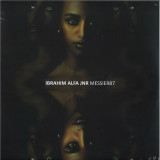
Ibrahim Alfa Jnr released techno music since the age of 17. He started to play piano when was six years old and has a master degree in sonic arts. As a Live Act and DJ he is world wide known.
His first album on Mille Plateaux is a fine example of Hypercussion, which implies a new rhythmic A-logic when beats split or shoot each other off, or when they overlap and mutate into high-pitched hums and rattlesnake breaks; accelerating, before music again blurs into the grains of noise or calm science fiction landscapes and at the same time builds gigantic sound walls. And such music, as far as its conceptualization is concerned, does not have to submit itself to technology at all, but must understand itself as a form that can be recombined with technology.
clear green vinyl
Germany based MC Fava releases his first solo EP on Beatalistics, the imprint he co-runs with Freiburgs soulful tag team partner Enea. This has been a long time coming and it couldn't be more emotional. The 5 track strong "Destiny EP" reveals more of the hopeless romantic songwriter's soul and once again showcases his immense versatility. Finish Drum 'n Bass legend Muffler adds his inimitable minimal melodic touches to the title track and underlines Fava's personal lyrics with his trancy trademark signature. Shooting Star Mountain from Japan shows his unique talent and musical approach on the 80s Synth-Pop influenced "Midnight", a rock-bass driven song characterized by its harmonised vocals arrangement. Teaming up with British vocalist Becca Jane Grey and Slovakian Smote, "Sarah" is a soul touching piano based liquid roller with a long acoustic drum intro which perfectly leads into the highest emotions. Enea himself takes you into deeper shades of colour with the moody "Green Velvet". Hypnotizing pads complete the warm bassline pattern which wraps the simple but distinctive drums perfectly around Fava's mesmerizing vocals. The Green Man from Cologne, Germany concludes the emotional rollercoaster ride with the Downtempo Chill-Hop "Alone in the Dark". Smooth horns and breathy pads create the perfect atmosphere for the German vocalist who playfully mixes melodic singing hooks with calm spoken words and repetitive chants. Outstanding on all levels!
- 1: Turpe Est Sine Crine Caput
- 2: Não Fale Com Parede
- 3: Espêlho
- 4: Lem - Ed - Êcalg
- 5: Ôlho Por Ôlho, Dente Por Dente
- 6: Metrô Mental
- 7: Teclados
- 8: Salve-Se Quem Puder
- 9: Animália
Módulo 1000 were not messing around when they made 'Não Fale Com Paredes’. It holds its own, not just as a raw, heavy, experimental “Brazilian” psychedelic rock album, but as a raw, heavy, experimental psychedelic rock album, full-stop!
Formed in Rio de Janeiro in 1969, Módulo 1000 honed their craft as the house band in clubs and resorts in São Paulo where they predominantly covered American artists such as Jimmy Hendrix as well as British giants, Led Zeppelin. After acquiring a taste for fame following the performance of one of their tracks at the Rio International Song Festival, the band focussed their attention on composing original material. Their manager, Marinaldo Guimarães, encouraged the band to explore their experimental and creative sides. This, in parallel with the explosion of experimental music in Brazil, resulted in the band performing alongside heavyweights such as O Têrço; there was a happening in the air.
Módulo 1000 recorded just one album. Released on Top Tape records in 1972, it featured Eduardo Leal on bass, Candido Faria on drums, Daniel Cardone on guitar, violin and vocals, and Luiz Paulo Simas on organ, piano, and vocals. 'Não Fale Com Paredes' was produced by the popular DJ, Ademir Lemos, and came housed in a fold-out cover featuring tripped-out artwork and design by Wander Borges. However, due the uncompromising nature of its wild, heavy psychedelic rock sound, the album was destined not to be played on the radio in Brazil. Rumours suggest that the label didn't understand the album, and as a result, it wasn't promoted or marketed. Thus, like many other underground cult classics, it was lost in the ether, only later to be rediscovered by a new audience at a different time.
One thing is certain, you definitely know when you've heard Módulo 1000. The sound is raw, heavy and at points quite aggressive, more Black Sabbath than Os Mutantes. It floats between psychedelic rock, prog rock, early metal, and dare we say, displays elements of proto-math-rock.
The band’s discography includes a 7" single, as well as their music being featured on several compilations for Odeon Records, additionally they released a 7" single under their alias 'Love Machine' for Top Tape Records. These compositions are included as bonus tracks on the CD version of our reissue.
In reduzierter Besetzung, mit Piano und klarer Stimme, widmen sich Mira Lu Kovacs (5K HD, My Ugly Clementine) und Clemens Wenger (5/8erl in Ehr'n, JazzWerkstatt Wien) vollends der Traurigkeit. 'Sad Songs To Cry To' heißt ihr gemeinsames Programm, welches zum Jahresende 2022 als Album erscheinen wird. Das Duo bearbeitet eine Auswahl aus bekannten Liedern der Popgeschichte, über melancholisch anmutende Jazzklassiker bis zu deutschsprachigen Liedern.
Die Originalbesetzung von Black Ox Orkestar ist nach einer 15-jährigen Pause wieder zusammen. Die aus der fruchtbaren Montréaler Post-Punk-Agit-Prop-Szene der frühen 2000er Jahre hervorgegangene Band besteht aus Scott Gilmore, Jessica Moss und Thierry Amar von Thee Silver Mt. Zion (Amar komponiert und spielt auch weiterhin Bass für Godspeed You! Black Emperor) und Gabriel Levine von Sackville. Black Ox Orkestar haben Mitte der 2000er Jahre zwei gefeierte Alben mit aufgewühltem akustischem Avant-Folk veröffentlicht, auf denen sie osteuropäische und nordafrikanische Folklore durch die Linse einer düsteren, resonanten Indie-Rock-Sensibilität erforschten und Interpretationen von Instrumentalstücken aus verschiedenen jüdischen, rumänischen und arabischen Traditionen den Originalen gegenüberstellten. Auch dank Gilmores politisch aufgeladenem jiddischen Gesang sind diese frühen Alben für eine neue Generation von Musikern und Fans der jiddischen, Klezmer- und jüdischen Diaspora-Musik zu Meilensteinen geworden. Das von Greg Norman (Jason Molina, Nina Nastasia, Electrical Audio) hervorragend produzierte Album Everything Returns macht genau da weiter, wo die Band aufgehört hat: ein einschneidend atmosphärisches, melancholisches und doch entschlossenes Album einzigartiger moderner jüdischer Folkmusik, bei dem Klavier, Geige, Kontrabass, Klarinette und Cymbalom die Kerninstrumentierung bilden und die Gesangsstücke hauptsächlich auf Jiddisch gesungen werden. ENG Everything Returns reunites the original Black Ox Orkestar lineup following a 15-year hiatus. Arising from the fertile Montréal post-punk agit-prop scene of the early 2000s, the band comprises Scott Gilmore, Jessica Moss and Thierry Amar of Thee Silver Mt. Zion (Amar also continues to compose and play bass for Godspeed You! Black Emperor) and Gabriel Levine of Sackville. Black Ox made two acclaimed albums of roiling acoustic avant-folk in the mid-2000s, exploring Eastern European and North African folkways through the lens of a gritty, resonant indie rock sensibility, juxtaposing interpretations of instrumentals from various Jewish, Romani and Arabic traditions with originals led by Gilmore's politically-charged Yiddish vocals. These early albums have since become lodestars for many among a new generation of Yiddish, Klezmer and radical Jewish diasporic music practitioners and fans. First revealing its resurrection in February 2022 with a surprise flexi 7" single issued by left journal Jewish Currents as a gift to its thousands of subscribers, Black Ox has indeed fully and fruitfully reunited. Exquisitely recorded by Greg Norman (Jason Molina, Nina Nastasia, Electrical Audio), Everything Returns picks up right where the band left off: an incisively atmospheric, melancholic yet resolute album of uniquely modern Jewish folk music, with piano, violin, upright bass, clarinet and cymbalom making up the core instrumentation, and the vocal tunes sung primarily in Yiddish, alongside album centerpiece "Viderkol" and closer "Lamed-Vovnik" where English also features. This is not fusion music, but diaspora music: a cross-cultural call and response of musical lexicons, emerging from the history of Jewish persecution and displacement, the musicology of 19th century repertoire from Jewish shtetls , the improvisational traditions of nusakh in Jewish music and taqsim in Arabic music, and a wider polyglot dialogue of Jewish, Slavic, Arabic, and Central Asian musical traditions. Lyrically and stylistically, Everything Returns connects key current issues_from refugees forced to leave their homes, to the return of fascism and exclusionary nationalism_with the legacy of modernist Yiddish poetry and song. The new Black Ox Orkestar album is a sublime, poetic, politically-informed statement of re-energized diasporic musical intent, where Gilmore's voice and the band's simmering arrangements conjure an ardent, doleful balladry that echoes the sound and sensibility of artists like Tindersticks, The National, Nick Cave and Leonard Cohen. Everything Returns is a haunting, richly textured, darkly sparkling song cycle at once from a vanished world and very much of our time and place. Thanks for listening.
SoiSong is the stunning but short-lived partnership of Coil co-founder Peter "Sleazy" Christopherson and veteran Russian electronic experimentalist Ivan Pavlov. Though friends since 1997, the project birthed roughly a decade later in Bangkok, where Christopherson relocated following the death of his Coil collaborator John Balance in 2004. Named after the Thai word for `two' along with a notorious red-light district street nearby, the duo dialed into a cryptic language of lurching synthetics, Eastern minimalism, and interdimensional glitch, oscillating between elegance and mayhem. qXn948s collects some of their earliest recordings, and remains as transgressive and transcendent a listen now as it was upon its release a decade and a half ago. Pavlov characterizes SoiSong as less a musical group than a "utopian, semi-alien platform for collaboration, devoid of pronounced personality or centralized authority_ more like a message from elsewhere that anyone is welcome to participate in and spread." Every facet of the project was disruptive and oblique: self-released CDs packaged in elaborate origami that had to be destroyed to be accessed; a website with password protected sections, where different passwords were provided for different events, objects or releases; performance merchandise of headphones and a Walkman melted shut so the music can only be heard as long as the set of batteries last. Theirs was a muse as unprecedented as it was uncompromising, equal parts pranks and profundity. qXn948s began with samples and software composed intuitively in tandem before a large monitor, then progressively processed and scrambled into bewildering arrangements of digital frequencies, alternately spartan and claustrophobic, uneasy and uncanny. Vignettes of small melody emerge and are obliterated; gamelan-esque tones spiral above cybernetic pulse programming and funereal didgeridoo; skeletal piano meanders in the distance while flickering circuitry pummels patterns of white noise. Pavlov describes his and Christopherson's chemistry as "unspoken and sincere, and very efficient." That music this aggressively disorienting and complex congealed in a smoothly organic fashion is testament to the rare vision of its creators.
Clear Vinyl
SoiSong is the stunning but short-lived partnership of Coil co-founder Peter "Sleazy" Christopherson and veteran Russian electronic experimentalist Ivan Pavlov. Though friends since 1997, the project birthed roughly a decade later in Bangkok, where Christopherson relocated following the death of his Coil collaborator John Balance in 2004. Named after the Thai word for `two' along with a notorious red-light district street nearby, the duo dialed into a cryptic language of lurching synthetics, Eastern minimalism, and interdimensional glitch, oscillating between elegance and mayhem. qXn948s collects some of their earliest recordings, and remains as transgressive and transcendent a listen now as it was upon its release a decade and a half ago. Pavlov characterizes SoiSong as less a musical group than a "utopian, semi-alien platform for collaboration, devoid of pronounced personality or centralized authority_ more like a message from elsewhere that anyone is welcome to participate in and spread." Every facet of the project was disruptive and oblique: self-released CDs packaged in elaborate origami that had to be destroyed to be accessed; a website with password protected sections, where different passwords were provided for different events, objects or releases; performance merchandise of headphones and a Walkman melted shut so the music can only be heard as long as the set of batteries last. Theirs was a muse as unprecedented as it was uncompromising, equal parts pranks and profundity. qXn948s began with samples and software composed intuitively in tandem before a large monitor, then progressively processed and scrambled into bewildering arrangements of digital frequencies, alternately spartan and claustrophobic, uneasy and uncanny. Vignettes of small melody emerge and are obliterated; gamelan-esque tones spiral above cybernetic pulse programming and funereal didgeridoo; skeletal piano meanders in the distance while flickering circuitry pummels patterns of white noise. Pavlov describes his and Christopherson's chemistry as "unspoken and sincere, and very efficient." That music this aggressively disorienting and complex congealed in a smoothly organic fashion is testament to the rare vision of its creators.
RIYL: A Hawk And A Hacksaw, Leonard Cohen, Daniel Kahn, Xylouris White, Arooj Aftab, Tindersticks, Nick Cave, Alasdair Roberts, Geoff Berner, The Klezmatics. Deluxe 180gLP with 350gsm Arktika jacket/inner + 36”x12” art/lyrics fold-out + DL. CD in gatefold jacket + art/lyrics fold-out. Recorded by Greg Norman (Jason Molina, Nina Nastasia, Electrical Audio). Everything Returns reunites the original Black Ox Orkestar lineup following a 15-year hiatus. Arising from the fertile Montréal post-punk agit-prop scene of the early 2000s, the band comprises Scott Gilmore, Jessica Moss and Thierry Amar of Thee Silver Mt. Zion (Amar also continues to compose and play bass for Godspeed You! Black Emperor) and Gabriel Levine of Sackville. Black Ox made two acclaimed albums of roiling acoustic avant-folk in the mid-2000s, exploring Eastern European and North African folkways through the lens of a gritty, resonant indie rock sensibility, juxtaposing interpretations of instrumentals from various Jewish, Romani and Arabic traditions with originals led by Gilmore’s politically-charged Yiddish vocals. These early albums have since become lodestars for many among a new generation of Yiddish, Klezmer and radical Jewish diasporic music practitioners and fans. First revealing its resurrection in February 2022 with a surprise flexi 7” single issued by left journal Jewish Currents as a gift to its thousands of subscribers, Black Ox has indeed fully and fruitfully reunited. Exquisitely recorded by Greg Norman (Jason Molina, Nina Nastasia, Electrical Audio), Everything Returns picks up right where the band left off: an incisively atmospheric, melancholic yet resolute album of uniquely modern Jewish folk music, with piano, violin, upright bass, clarinet and cymbalom making up the core instrumentation, and the vocal tunes sung primarily in Yiddish, alongside album centerpiece “Viderkol” and closer “Lamed-Vovnik” where English also features. This is not fusion music, but diaspora music: a cross-cultural call and response of musical lexicons, emerging from the history of Jewish persecution and displacement, the musicology of 19th century repertoire from Jewish shtetls, the improvisational traditions of nusakh in Jewish music and taqsim in Arabic music, and a wider polyglot dialogue of Jewish, Slavic, Arabic, and Central Asian musical traditions. Lyrically and stylistically, Everything Returns connects key current issues from refugees forced to leave their homes, to the return of fascism and exclusionary nationalism—with the legacy of modernist Yiddish poetry and song. The new Black Ox Orkestar album is a sublime, poetic, politically-informed statement of re-energized diasporic musical intent, where Gilmore’s voice and the band’s simmering arrangements conjure an ardent, doleful balladry that echoes the sound and sensibility of artists like Tindersticks, The National, Nick Cave and Leonard Cohen. Everything Returns is a haunting, richly textured, darkly sparkling song cycle at once from a vanished world and very much of our time and place. Tracklist: 1 Tish Nign 2 Perpetual Peace 3 Oysgeforn / Bessarabia Hora 4 Mizrakh Mi Ma’arav 5 Skotschne 6 Viderkol (Echo) 7 Epigenetik 8 Moldovan Zhok 9 Lamed-Vovnik
With his first release since 2015, Seattle based Indie-folk hero Rocky Votolato returns with Wild Roots, an intimate concept album inspired by and written for his family. Each song a letter dedicated to a specific family member and focused on a special memory or moment in time. After losing his child in December of 2021 in a tragic car accident, the entire album, and especially the song “Becoming Human”, now a posthumous love letter, takes on an even deeper while devastatingly bittersweet meaning. The production on Wild Roots is hushed, handcrafted, and warm — an intimate and personal experience that brings the nature of Votolato’s storytelling to life in very authentic and genuine ways. Produced, engineered, and mixed by Votolato himself, the record is a deliberate construction of his conceptual vision and new phase of his recording career. Additionally, the record features a stellar cast of renowned musicians whose contributions perfectly compliment the delicate nature of these songs — Abby Gundersen (William Fitzsimmons) on piano, string arrangements, and vocal harmonies, James McAllister (Sufjan Stevens, The National) on drums and percussion, Phil Wandscher (Whiskeytown, Jesse Sykes and the Sweet Hereafter) on electric guitar, and Marcel Gein (Perry O’Parson) on electric guitar. In many ways, Wild Roots is not only a break in silence for Votolato, but the opening of a new chapter — one that feels laser focused on what really matters in life. Whether discovering Votolato for the first time or adding another record to your collection, Wild Roots resonates on the most simple and important human levels — a sharing of experience that encourages us to keep believing in ourselves and in the magic of this life, no matter how harsh and difficult it can be.
Track list: 1. Evergreen 2. 23 Stitches 3. Glory (Broken Dove) 4. There is a Light 5. X1998x 6. Becoming Human 7. Breakwater 8. Little Black Diamond 9. Archangels of Tornados 10. The Great Pontificator 11. The Wildest Horses 12. Little Lupine 13. Bella Rose 14. Southpaw 15. Texas Scorpion (The Outlaw Blues)
“This is for the family,” Abe Linx says. “It’s not really about who doesn’t love us, it’s about those that do. The ones we motivate and inspire. It’s for those people.” The World Famous La Familia Forever is the powerful sophomore effort from Abe Linx & Tully C., two incredibly gifted emcees who have crafted a contender for the best release of 2022. Across this EP’s 10 tracks, the Indianapolis-repping duo showcase their worldview, dig into their personal histories, and firmly plant themselves on the hip-hop map. And as Abe Linx spits on the stunning track “WORLDWIDE”: “Who the f*ck gon’ tell me different?” In addition to the passion of Abe Linx & Tully C. and their collaborators, TWFLFF stands on its own because it is just so sonically engaging. The production is equally crunchy and fascinating, because it flirts with sounds crafted by legends without sounding dated. This is timeless, raw hip-hop helmed by two talented rappers and their favorite producers like Nomstks & AWSME J, as well as longtime collaborators Baleboy Geechie & DJ GB.
You can tell that Abe & Tully took their time with these songs, meticulously piecing them together in the two years since their previous release. Each cut moves seamlessly into the next, bringing that special kind of cohesion. Just listen to how “RABIES” moves into “400MPH (skit)” and then “SKYSCRAPER,” a brilliant slice of showin’-out rap elegance. While there are only three guest features on the project, they’re used to great effect and make as much of an impact as their hosts. Planet Asia stomps all over the aptly titled “SHOWOFF,” while Willie The Kid complements the smoked-out vibes of “CHANDELIER.” And when Bub Rock shows up on “RABIES”? It’s a wrap as soon as he hops on that piano-laced, dusty instrumental. TWFLFF is a mission statement, with pieces that also sound like a word of warning to anyone looking at these two sideways. Or, as Tully C. raps so perfectly on “CHANDELIER”: “I be in this b*tch, with my clique/ So don’t act stupid.” The World Famous La Familia Forever drops on vinyl right in time for the holidays through their recent partnership with Fat Beats.
Hot off her 2022 GRAMMY win for Best Latin Jazz Album for 'Mirror
Mirror,' with Chick Corea and Chucho Valdes, superstar pianist, singer,
composer and arranger Eliane Elias returns to her Brazilian bossa nova
roots with 'Quietude'
A luscious collection showcasing her alluring vocals with her virtuosic
instrumental jazz and piano mastery, the recording features songs by such
legendary composers as Antonio Carlos Jobim, and Dorival Caymmi along with
Dori Caymmi, who joins her on vocals for the closing track of the recording.
1991 recording led by Swedish vibraphonist Lars Erstrand, which is
appearing on vinyl for the first time - this remastered edition is pressed
on 180g vinyl
Erstrand's third recordings for Opus 3, this time with his quartet, which includes
one of Sweden's best keyboard players, Kjell Öhman, playing both the piano and
Hammond B3 organ. Lars Erstrand, who has been ranked as No.3 in the world on
his instrument according to Jazz Journal International, is also joined by Leif "Gus"
Dahlberg on drums and Tommy Johnson on bass.
"Erstrand is always unhesitating, fluent playing gives the unfailing impression of a
musician in total control He can depict the most ethereal moods, as in the title
piece Dream dancing...One is struck, not least by his sense of sound and nuance
in this consistently well constructed, subtle performance...An obvious candidate
for Recording of the Year!" - Audio Video
Tape
The Manchester based artist Craig Tattersall aka The Humble Bee returns to Dauw with 2 longform compositions centered around piano. The recordings were partly captured by a contact mic attached to his garden bird feeder adding an organic and intimate touch to the music. Hence, the album presents itself as a more outside experience and complements the Autumn season quite well. Susurration is available as a limited risograph cassette edition and digitally with artwork for Skrew Studio.
For the occasion, the label decided to reissue Craig's earlier Dauw cassette releases including "Instruction booklet n. 1232", "Deathless songs" and "Things are sweeter when they're lost". These albums sold out shortly after their release or were not even available publicly until now. The original silkscreen artwork by Femke Strijbol has been reinterpreted with risograph techniques. These albums will be available separately on limited cassette editions.
Club of Jacks presents their 6th vinyl-only release - Hoovers EP.
This heavyweight 4 tracker fuses that trademark Club of Jacks House & Garage sound with an injection of raw Rave energy, delivering an EP that's as upfront as it is nostalgic.
Kicking things off on the A side is 'The Hoovers Track', an homage to a certain UK Garage classic (we'll let you work it out) but with a twist - combining a slamming 909 beat with a dirty Alpha Juno hoover line and a roucous breakbeat on the breakdown. A2 track 'Fall On Me' is a bumping Deep House groove flecked with evocative old-school vox and samples that raise the temperature.
On the flip side, things get a little moodier with the 2-Stepper 'Rub-A-Dub' mixing heavy sub bass with organ grooves, pianos, chopped breaks, dancehall shouts and a sweet female vocal chant. Finishing off the EP is 'Watch It' which samples a voicemail from a conversation the COJ boys had with none other than El-B and cuts it up over a rolling 4/4 bass groove. Limited edition clear vinyl hand-stamped pressing.
Written/Produced/Mixed by Club of Jacks.A Mastered by Henry@Pitchcraft.
TwoStep2 aka DJ Relay and Jo Public have been known for their superlative but distinctly old skool sounds, but lead track on this three cut 12" is rather a subtle departure. The beat is a little more wonderfully wonky than you might expect and the bassline bigger and more adventurous, with pleasingly original results. 'Starlight' plays off its abrasive backspins with fluttering harps that are more Luke Vibert than Sticky or Noodles, true genius, and a bubbling beat to boot. 'Weapon of Choice' plunders ravier elements but again, it's no museum piece with its off kilter piano and slowed down, drowsy atmospherics. If you're looking for memorable tunes that stick out rather than fit in, make this your destination.
- A1: Marsch Nr. 2 G-Moll (Aus Vier Märsche Op. 76) / March No. 2 In G Minor (From Four Marches, Op. 76) Waldszenen Op. 82 / Forest Scenes, Op. 82
- A2: Eintritt
- A3: Jäger Auf Der Lauer
- A4: Einsame Blumen
- A5: Verrufene Stelle
- A6: Freundliche Landschaft
- A7: Herberge
- A8: Vogel Als Prophet
- A9: Jagdlied
- A10: Abschied
- B1: Des Abends
- B2: Aufschwung
- B3: Warum
- B4: In Der Nacht
- B5: Traumes Wirren
- B6: Ende Vom Lied
The music of Robert Schumann and the artistry of Sviatoslav Richter are a natural match. Schumann was loathe to use flashy, purely virtuosic elements in his compositions, a fact brilliantly illustrated in the vast majority of his works for solo piano. Rather, Schumann was much more likely to tell a story, paint a picture, or read a poem through his music, although his works were not overtly programmatic. Richter possessed a technique virtually unrivaled during his career and was able to definitively toss off even the most technically demanding works. At his heart, however, Richter was a poet and an artist with profound musical insights and introspections. This album, featuring recordings made in the late '50s, is one of Richter's surviving albums in which poor sound quality does not distract listeners from this artistry. His performances of the C major Fantasy, the Op. 82 Waldszenen, and the Op. 12 Fantasiestucke are magnificently refined, unhurried, and unsullied by some pianists' need to make the works flashier then they need to be.
Brian Fennell is a student of simplicity
As SYML (pronounced simmel), which translates to simple in Welsh, Fennell writes emotive ambient pop songs that capture the ethos of his musical persona.
With delicate piano, swells of strings and Fennells sterling vocals, the songs that comprise In My Body, embody the relinquishing of all emotions, a cathartic release laid bare.
With a keen grasp on textural and emotive songwriting, SYML aka Brian
Fennell combines bare piano, minimalist synth and string-scapes, and
ethereal vocals to create his music
Adopted and not knowing his history or connection to his Welsh roots, many of
these songs are influenced by the complex feelings that come from unknown
lineage.
- 1: Sonata For The Sirius
- 1: 2 A Snowflake
- 1: 3 Diverge
- 1: 4 Pulling The Rain
- 1: 5 Low Light
- 1: 6 Bernard & Elba's Waltz
- 1: 7 Under The Bridge
- 1: 8 Moment
- 1: 9 Query
- 1: 0 It's A Storm When I Sleep
- 1: Eyes Closed And Traveling
- 1: 2 Planes (Solo)
- 1: 3 Ceasefire
- 1: 4 Carried
- 1: 5 Laden
- 1: 6 Three Floats
- 1: 7 Up Niek Mountain
- 1: 8 Conspiraling
- 1: 9 When I'm Gone
- 1: 20 Deares
Clear Vinyl[26,51 €]
Ireland based American songsmith Peter Broderick announces the release of Piano Works Vol. 1 (Floating in Tucker"s Basement) - a new comprehensive album of solo piano recordings out November 25. Shining a light on the artist"s ongoing piano-based compositions, this release offers an opportunity to celebrate his more intimate work. A comprehensive collection of Peter Broderick"s piano work to date, these recordings were originally captured in Berlin to accompany the 2017 sheet music book Piano Works Vol. 1. The book contains 20 pieces for solo piano and a download code to access new recordings of all 20 pieces. Up until now, the only way to hear these recordings was to purchase the sheet music book. This release sees the original recordings receiving further treatment and processing by Tucker Martine in the customised echo chamber of his studio in Portland, Oregon-the region where Broderick grew up. The clean and unaffected original recordings were intended for educational purposes, so for this release Erased Tapes founder Robert Raths suggested to "throw the recordings into the well", for a more dynamic and conscious listening experience. "We gave these recordings a bit of a makeover. We sent all the tracks over to legendary engineer/producer Tucker Martine, who processed all 20 of them with unique tape and reverb treatments, utilising the echo chamber of his Portland studio, Flora Recording & Playback," explains Broderick.
- A1: Sonata For The Sirius
- A2: A Snowflake
- A3: Diverge
- A4: Pulling The Rain
- A5: Low Light
- B1: Bernard & Elba's Waltz
- B2: Under The Bridge
- B3: Moment
- B4: Query
- B5: It's A Storm When I Sleep
- C1: Eyes Closed & Traveling
- C2: Planes (Solo)
- C3: Ceasefire
- C4: Carried
- C5: Laden
- D1: Three Floats
- D2: Up Niek Mountain
- D3: Conspiraling
- D4: When I'm Gone
- D5: Dearest
Black Vinyl[23,82 €]
Clear Vinyl
Ireland based American songsmith Peter Broderick announces the release of Piano Works Vol. 1 (Floating in Tucker"s Basement) - a new comprehensive album of solo piano recordings out November 25. Shining a light on the artist"s ongoing piano-based compositions, this release offers an opportunity to celebrate his more intimate work. A comprehensive collection of Peter Broderick"s piano work to date, these recordings were originally captured in Berlin to accompany the 2017 sheet music book Piano Works Vol. 1. The book contains 20 pieces for solo piano and a download code to access new recordings of all 20 pieces. Up until now, the only way to hear these recordings was to purchase the sheet music book. This release sees the original recordings receiving further treatment and processing by Tucker Martine in the customised echo chamber of his studio in Portland, Oregon-the region where Broderick grew up. The clean and unaffected original recordings were intended for educational purposes, so for this release Erased Tapes founder Robert Raths suggested to "throw the recordings into the well", for a more dynamic and conscious listening experience. "We gave these recordings a bit of a makeover. We sent all the tracks over to legendary engineer/producer Tucker Martine, who processed all 20 of them with unique tape and reverb treatments, utilising the echo chamber of his Portland studio, Flora Recording & Playback," explains Broderick.
2022 Repress
It's been three years since Swiss producer Michel Cleis conjured a storm with 'La Mezcla", a Cadenza hit cemented into house canon as it was swiftly reissued by Strictly Rhythm, bringing the sabor latino into clubs worldwide. Some more 12s and a number of high-profile remixes (going from tracey thorn to skunk anansie,for labels like rekids , bronswood or Aus) later, he's now teaming up with DJ Koze's crew for his next move: a colorful, crescendoing 12-minute tune that's ready to make a splash in your summer soundtrack. 'Mir a Nero' begins with a steady, upbeat kick underlying a simple piano arpeggio - like if Philip Glass make dance music - but then some accents of vibrant hand percussion loosen up the vibe, soon progressing into rhythmic layers that cause the energy to swell. By the 4-minute mark, a subtle, buzzing synth permeates the background, contrasting the track's overall organic feel, leading into the playful piano chords and colombian vocal hook. Simply put, this is Latin House with that anomalous Pampa Records swagger, drenched with flavor like Sangria-soaked mango. Flip that baby over and you get 'Amaranthus", named after the famed flower that represents immortality. This piece stands as a color-negative of 'Mir a Nero", an unwavering stomp with just shadows of the piano sample heard earlier. Freeze-dried rather than sun-ripened, 'Amaranthus' is a dubby, more technofied counterpart to the A-Side, crafted for deeper and darker moments on the dancefloor.
Edition of 250 UNITS
English short Version
Almost five years after the inaugural compilation "El sol desde oriente", Passat Continu releases "El ser y el tiempo", the first solo recordings of the Tenerife musician Javier Segura, a set of seven
compositions that make up a true exceptionality in the panorama of Spanish experimental music and that have never before been uncovered for listening. This sound document recorded between 1976 and 1978 is presented remastered from its original tapes and with a bonus track, with the invaluable collaboration of Juan Belda.
panish Version
Casi cinco años después del recopilatorio inaugural “El sol desde oriente”, Passat Continu lanza “El ser y el tiempo”, las primeras grabaciones en solitario del músico tinerfeño Javier Segura, un conjunto de siete composiciones que conforman una auténtica excepcionalidad en el panorama de la música experimental española y que nunca antes han sido destapadas para su escucha. Este documento sonoro registrado entre 1976 y 1978 se presenta remasterizado de sus cintas originales y con una canción extra, con la inestimable colaboración de Juan Belda.
Existe cierto consenso en llamar transición española al período que va del fallecimiento de Francisco Franco, el 20 de noviembre de 1975, a la ratificación mediante referéndum de la Constitución, el 6 de
diciembre de 1978. Años de agitación y anhelo democrático que la población vive con gran intensidad. Aquejada por una larga enfermedad, la madre de Javier Segura fallece en 1976. El
tinerfeño tiene entonces 21 años y acaba de salir de su primera experiencia discográfica como compositor en el cuarteto Huellas. Como todo el mundo entonces, Segura se ha educado en un colegio
religioso. Es allí donde empieza a cultivar interés en la música, el cine y la filosofía “dentro de mí existía, y aún persiste, la idea de que somos un espejo donde algo o alguien se mira para reconocerse. Es una idea que surge de la lectura de “El ser y el tiempo” de Martin Heidegger.”
Con el objetivo de seguir dando forma a las ideas, Segura destina la totalidad de sus ingresos a la compra de equipamiento, experimentando en el desván de casa en los ratos libres. Se adentra en sesiones extenuantes utilizando la metodología de las músicas de corte concreto, grabando encima de un casete Sony, reproduciendo encima de otro al tiempo que mete más instrumentación por la entrada del micrófono. Así varias veces hasta sobreponer tres, cuatro y hasta cinco capas. En 1977 se hace con dos Tascam de carrete abierto de cuatro pistas. Las cintas grabadas en los casetes Sony se pasan al magnetofón para luego volver a encima del mismo, y así una y otra vez. En sus más de 40 minutos de duración, en “El ser y el tiempo” suenan flautas, saxos, un vibráfono, un piano, un violín, un arpa, un salterio turco, un Crumar DS-2, sintetizador monofónico de dos osciladores y de más de 50 kilos de peso popularizado por Sun Ra en los años 70 e incluso unas placas de metal.
One of the 'holy grails' of 1960s Cuban music was not recorded, produced or released in Havana or New York; in fact it was made in Lima, Peru under interesting if somewhat unexpected circumstances. Pianist Alfredo "Alfredito" Valdés Jr. (May 31, 1941, Havana - January 23, 2016, New York), one of the most important figures in Latin music, came from an illustrious musical family in Cuba. In 1956, he emigrated to New York with his family, making him one of the forerunners of Cuban-based salsa music in the US. Three years later at age 18 Alfredito joined Arsenio Rodríguez and his conjunto; then in 1961 Ray Barretto recruited him for his Charanga La Moderna. Alfredito kept himself very busy, studying music and literature during the day and playing at night with the bands of Tito Puente and Machito as well as Arsenio and Barretto. He was a quick reader and writer of music and displayed an impressive versatility and level of skill on the piano. It was precisely these qualities, combined with random chance, that saw Alfredito become substitute pianist for Machito and His Afro-Cubans for a tour that would take him to Colombia and Peru for a number of engagements in the winter of 1964 and into the new year. While in Lima, several problems arose with the Argentine businessman and tour promoter Mauricio Támara who took the Machito gang to the Peruvian capital but forfeited their pay and left them stranded and penniless to fend for themselves in December of 1964.
2022 Repress
After a few nice but largely unnoticed 12"s for lower-profile labels, Dürerstuben is ready to make a serious maneuver, and Pampa is pleased to provide them with the proper platform. The Sheets of Rane EP is the Berliner duo's most sophisticated statement yet, imbuing cold programmed sounds with a glowing human touch and a penchant for melody. A1 'Gscheids Planet' unfolds with a deceptive intro, click-clackety downtempo stomps and crunchy snares beneath a tender vocoder coo, just when some muted guitar plucks crescendo into a burst of robo-synths. Although three minutes have passed, only now does the song reveal its true nature, a summery tune with rich synths that billow in the wind. Then, as its title indicates, 'Haeckles Kosmos' further explores Dürerstuben's fascination with the unlimits of outer space. This star system in particular has a very tropical flair, punctuated with bouncy parallel fifths straight out of the Italo Orient. In between movements, the duo makes some brief non sequiturs into piano balladry, the kind that force a smile (and a record deal) out of DJ Koze. Finally, venturing even further into jacking territory, 'Freiherr in der Wall' hinges upon syncopated, sometimes faltering beatbox rhythms, a swaggering bassline and fluttering arpeggiation. Coupled with hand-played chords, this is a prime example of how Dürerstuben can tame the beast machine and let irregularities be strengths. If you can get down with Metro Area, Zapp, Tensnake, and yes, even Survivor, then pick this one up.
"Brazilian multi-instrumentalist Pascoal's magical 1976 album casts a spell over the listener from the first beat to the last"
Echoes ⭐⭐
"Viajando Com O Som is a wonderful
buried treasure from a better time."
Songlines ⭐⭐
It's a richly satisfying discovery; a snapshot of a master at his peak.
Record Collector ⭐⭐
"...One hell of a magic carpet ride."
FACT Magazine
"You may ask yourself what that was that you just heard. Then you'll want to hear it again."
Jazz Times
Recorded in just two days in 1976, at Rogério Duprat's Vice Versa Studios, São Paulo, Viajando Com O Som featured Zé Eduardo Nazario (drums), Zeca Assumpção (bass) and Lelo Nazario (electric piano), as well as saxophonists Mauro Senise, Raul Mascarenhas and Nivaldo Ornelas, guitarist Toninho Horta and vocalist Aleuda Chaves.
Not released until over 40 years later, now Viajando Com O Som is back again for a short time only, on limited edition green vinyl! Pre-order at the link below, Begins shipping 20th May 2022.
Los Angeles Free Music Society (LAFMS) formed in the mid-1970s as a loose-knit experimental music collective and multimedia publishing vehicle. Founded by teenage Le Forte Four members Chip Chapman, Joe Potts and Rick Potts and soon joined by Tom Recchion of Doo-Dooettes, LAFMS incorporated free improvisation, modular synthesizers, tape music, sampling, musique concrète, homemade instruments, noise, mail art and avant-rock in permissive and anarchic sessions at the Raymond Building and Poo-Bah Record Shop in old Pasadena. Inspired by The Residents, LAFMS self-released records and periodicals, organized performances and connected with fellow outsiders via post in the years before punk. Their uninhibited, egalitarian ideal of music-making and DIY distribution would influence generations of underground musicians.
Live At The Brand documents the second performance of newly formed LAFMS core groups Le Forte Four and Doo-Dooettes on July 8, 1976 at the recital hall of the Brand Library in Glendale. Le Forte Four (now joined by Tom Potts) did not actually perform live, but rather created 44 pyramid-shaped headphone helmets with internal quadraphonic speakers and countless wires in order to share their latest tape assemblages with showgoers deprived of sight. The recordings delivered in this Fluxus-inspired manner feature the Buchla synthesizer at nearby CalArts, radio interpolations, group improvisations, addled outbursts and splices from source material lost to time. Doo-Dooettes – Tom Recchion, Harold Schroeder, Juan Gomez, Dennis Duck and Fredrik Nilsen – performed a series of alternately droning and chaotic duets with guitar, percussion, piano, tape loops and synthesizer, all improvised around loosely structured compositions and culminating in a spontaneous group composition at the end of the program. Originally released in 1976, the double LP would be LAFMS' third release.
This first-time vinyl reissue is limited to 500 numbered copies. Comes with inserts.
2022 Repress
Originally released in 2005, 'Insen' is the second collaboration album between Alva Noto and Ryuichi Sakamoto and the second installment of V.I.R.U.S.'s five albums series.
Remastered in 2021 in collaboration with Calyx Studio, the album's recordings are accompanied by an unreleased composition titled 'Barco.' Initially composed for Alva Noto and Ryuichi Sakamoto's 2005 'Insen' tour, the audio material used in this piece is based on the subtle sounds of Barco projectors, whose tonalities served as a ground for the artists' live improvisation. ?
In 'Insen', Alva Noto and Ryuichi Sakamoto explore the potential for interaction and tension between electronic and acoustic instrumentation. Across eight compositions, the echoes of the cascading piano combine, collide, and dissolve with the tapestry of digital breakages in sheer vibrancy. This relationship lies at the album's core. It subtly continues Vrioon's calm melancholia, becoming a vessel for all the emotions and memories nourished by the listener. As you hear the opening, lonesome notes of 'Aurora,' you realize that the pair have once again conceded an ambition to embed elaborate disciplines into an archetypal sound of soul-searching beauty.
"Dieses Album habe ich Bliss (Seligkeit) genannt, denn
es verkörpert eine Periode des Glücks und das Ende
einer schmerzvollen Vergangenheit", verrät RIOPY die
Hintergründe zu seinem dritten Album extended Bliss .
In seiner Musik verarbeitet der französisch-britische
Pianist und Komponist , was das Leben für ihn
bereithält. Seine beiden ersten Alben RIOPY (2018) und
Tree of light (2019) begleiteten ihn auf dem Weg durch
die Depression - und katapultierten den musikalischen
Autodidakten ganz nebenbei an die Spitze der
amerikanischen Billboard-Classical-Charts , wo sich sein
zweites Album über 100 Wochen hielt. Die Einspielung
erschien bereits im Sommer 2021. Aber weil Werk und
Leben sich bedingen, bleibt es "work in progress". Unter
dem Titel [extended] Bliss erweiterte der Künstler das
Album nun um einige Tracks.
Die Ergänzungen erklärt RIOPY so: " Fantasy , The First
Waltz und Human Compassion - diese drei Stücke
beenden eine Trilogie, sie markieren das Ende der Angst
und eröffnen einen Weg zu neuen Erfahrungen". Diese
Reise in ein sehr ruhiges und heiteres Universum und
der Kontakt mit der Natur beeinflussten den Klang
des Albums.
- A1: My Little Red Book
- B1: A Message To Pretty
- C1: 7 And 7 Is
- D1: No. Fourteen
- E1: Stephanie Knows Who
- F1: Orange Skies (Mono Version)
- G1: She Comes In Colors
- H1: Orange Skies (Stereo Version)
- I1: Alone Again Or
- J1: A House Is Not A Motel
- K1: Your Mind And We Belong Together
- L1: Laughing Stock
- M1: Que Vida
- N1: Hey Joe
- O1: Always See Your Face
- P1: August
Federico Madeddu Giuntoli is an italian multidisciplinary artist. Mostly autodidact, his art is based on groundedness and simplicity, and focused on the complexity of human journey in a non aggressive, warm and unfiltered way.
His works, ranging from contemporary art, music, writing and photography, are usually delicate and subtle, yet unequivocally tuned into a certain kind of pop communication, however essential and experimental it may be.
"The text and the form" is his first solo album, featuring german e-poetess AGF and japanese artist Moskitoo (12K).
The album is a collection of 11 minimal and intimate short songs, in which piano fragments, lonely guitar solos, spoken words and evocative vocals resonate with processed microsounds and lo-fi field recordings, creating a concise and very deep journey into romance and sense of mystery.
In the artist's words, "the album shaped itself according to a loose process of refinement and layering. A long, undisturbed assembling across more then a decade, often against my own will to reach a definitive form. If any relevance in this work can be found, I would say it resides in its capability to deliver a rare sense of vulnerability, longing and aliveness together, an aroma of improvisation and instability mixed with a unexplicable impression of perfection".
- 01: Emerson, Lake & Palmer – Peter Gunn (Live)
- 02: Basement Jaxx – Where’s Your Head At (Head-A-Pella)
- 03: Peaches – Fuck The Pain Away
- 04: The Velvet Underground – I’m Waiting For The Man
- 05: Polyester – J’aime Regarder Les Mecs
- 06: Sly And The Family Stone – Dance To The Music
- 07: Ready For The World – Oh Sheila (A Capella)
- 08: Dakar & Grinser – I Wanna Be Your Dog
- 09: Ural 13 Diktators – Disko Kings
- 10: Bobby Orlando – The “O” Medley
- 11: Felix Da Housecat – Silverscreen-Shower Scene
- 12: The Stooges – No Fun
- 13: Salt ‘N Pepa – Push It
- 14: Hanayo With Jürgen Paape - Joe Le Taxi
- 15: The Jets – Crush On You (A Capella)
- 16: Funkacise Gang – Funkacise
- 17: Soul Grabber – Motocross Madness
- 18: Lil Louis And The World – French Kiss
- 19: Zongamin – Serious Trouble
- 20: Garbage – Androgyny ‘Thee Glitz Mix’ By Felix Da Housecat
- 21: Frank Delour – Disc Jockey’s Delight Vol. 2
- 22: The Residents – Kaw-Liga (Prairie Mix)
- 23: Carlos Morgan – Shake Your Body
- 24: Alphawezen – Into The Stars (Firebirds Remix)
- 27: Destiny’s Child – Independent Women Part 1 (A Capella)
- 28: 10Cc – Dreadlock Holiday
- 29: Dolly Parton – 9 To 5
- 30: Röyksopp – Eple
- 31: Arbeid Adelt – Death Disco
- 32: Jeans Team – Keine Melodien Feat. Mj Lan
- 33: Skee.lo – I Wish (A Capella)
- 34: Maurice Fulton Presents Stress – My Gigolo
- 35: The Breeders – Cannonball
- 36: The Cramps – Human Fly
- 37: The Wildbunch – Danger! High Voltage
- 38: Op L Bastards – Don’t Bring Me Down
- 39: Adult – Hand To Phone
- 40: Vitalic – La Rock 01
- 41: Queen Of Japan – I Was Made For Loving You
- 42: New Order – The Beach
- 43: Detroit Grand Pubahs – Sandwiches (A Capella)
- 44: Lords Of Acid – I Sit On Acid (Soulwax Remix)
- 45: Streamer Feat. Private Thoughts In Public Places – Start Button
- 25: Interstellar – Concepts
- 26: Nena – 99 Luftballons
Das ikonische belgische DJ-Duo 2ManyDJs, bestehend aus den Brüder Stephen und David Dewaele, feiert das 20-jährige Jubiläum ihres Albums 'As Heard on Radio Soulwax Pt. 2' mit einer besonderen Re-Issue. 2002 erschien es ursprünglich nach einer Reihe von Radioshows der beiden Brüder, damals vor allem bekannt als die Köpfe hinter der Electronic/Indie-Rock Band Soulwax. Die Re-Issue erscheint mit dem Foto von Richard Young auf dem Cover, das ursprünglich als Cover vorgesehen, aber nach Rechtsstreitigkeiten mit Tipp-Ex verfremdet wurde.
Running Back regular Feater aka Daniel Meuzard puts his newly-transplanted studio through its paces for the first time since relocating from Vienna, swapping out the bustle of the city for the fresh mountain breeze of the West Alps. The Positive People EP proves that a change is as good as a rest, as the wide open nature not only had some rejuvenating effects on the creative process - it also gave Feater some room in his head to ponder questions about nature, nurture, and whether our inner morality is externally programmed.
The taut jazz funk of opening track Coding springs into action like the montage music of a lost ‘70s TV show, while the title track Positive People plays on the ambiguity of its title, with cascading synth notes, tastefully dubby 303 stabs, and an afro-cuban drum figure that forms the foundation for a spaced-out dancefloor workout. It's a combo of tracks that should appeal to chat room moderators and serotonin programmers alike.
Expensive Zeit kicks off sounding like grime maverick XTC had been brought up on Murder Capital electro rather than East London garage - before it morphs into a bumpin electrofunk and percussion session, with its sights set firmly on an aquatic worm hole. The EP rounds out with Decline All Cookies, which breaks out of a flanged-out half-time drum 'n' effects intro to reveal a lush chord progression, flipping a soul jazz piano mood into a trippy slice of modern instrumental funk.
Can man be the master of his own destiny? It seems with this change of location and musical direction, Feater might just have figured out the answer.
For Dizzy everything starts and ends with laughter. In the meantime, all paths are possible. That of melancholy, of dance or of political commitment... Dizzy is everywhere at once, always elusive, he is this explorer who, after having been one of the founders of Bebop in the 40's, will never stop experimenting, surprising and pushing back the borders. Proud of his Afro-American heritage, he knew like no other how to confront it with other cultural horizons such as Latin America or Cuba. On 25 August 1973 Dizzy Gillespie came to the Dutch public in Laren. True to form, he introduced his musicians in a mischievous and generous mood and then launched thunderously into a Caribbean tempo that lasted 19 minutes! Then, in a deep voice, Dizzy evokes his friend Martin Luther King. He dedicates "Brother K" to him, a tender ballad punctuated by flashes of storm and anger. As a conclusion Dizzy invokes his roots: "The Blues", where he abandons his trumpet to unleash the full force and warmth of his voice. The musicians withdraw to a surprisingly light theme. We leave as we arrive, on tiptoe. However, we leave with a certainty: "Yes Dizzy, you made it".
Dizzie Gillespie, Trumpet and Vocals
Mike Longo, Piano
Alexander Gafa, Guitar
Earl May, Bass
Mickey Roker, Drums
Guest Artist : Jon Faddis, Trumpet on tracks 9 and 10
Recorded at the Singer Concert Hall
Laren Jazz Festival, 25.VIII.1973
STEREO ℗ 1973 VARA
Remastered by ℗ & © 2017 FONDAMENTA
Made and printed in Germany
- 1: Discover Who I Am
- 2: The Music Played
- 3: Winchester In Apple Blossom Time*
- 4: Who Knows Why
- 5: Sammy
- 6: Bye Bye Country Boy
- 7: Raindrops Keep Falling On My Head
- 8: Sweet Georgie Fame
- 9: Feeling Good Being Me
- 10: You Have Lived In Autumn
- 11: Both Sides Now
- 12: Winchester In Apple Blossom Time
- 13: Bring All You Love Along
Among the great moments in the career of Blossom Dearie, an exceptional singer and pianist, are the concerts she gave and recorded in the Netherlands between 1968 and 1989, of which we have a faithful reflection here, thanks in particular to a fine recording. She dominates all instrumental formats, from solo to the large Metropole Orchestra, and all repertoires, from the film song "Raindrops Keep Falling On My Head", which she magnifies, to Joni Mitchell's "Both Sides Now", which she renews with intelligence, not forgetting a masterpiece for which she is responsible, "Winchester in Apple Blossom Time". Not forgetting her other personal works, as well as "Bring All Your Love Along", of which we hear the first recorded version here. Blossom's sublime farewell, eternal spring, in the form of a delicate reverence.
- A1: You Win Again
- A2: Friday Nights
- A3: Whole Lotta Shakin' Going On
- A4: Born To Lose
- A5: Long Gone Lonesome Blues
- A6: I'm Feeling Sorry
- A7: I Could Never Be Ashamed Of You
- B1: Mexicali Rose
- B2: Sail Away (Feat Charlie Rich)
- B3: I'm Sorry I'm Not Sorry
- B4: Turn Around
- B5: I Forgot To Remember To Forget
- B6: Great Balls Of Fire
- B7: Tomorrow Night
Jerry Lee Lewis, Spitzname ”The Killer”, ist ein amerikanischer Rock’n’Roll- und Country-Sänger, Songwriter und Pianist. Als früher Pionier der Rock’n’Roll-Musik wurde Lewis 1986 in die Rock’n’Roll Hall of
Fame aufgenommen, und sein bahnbrechender Beitrag zu diesem Genre wurde von der Rockabilly Hall of
Fame anerkannt. Im Jahr 2004 setzte ihn das Rolling Stone Magazine auf Platz 24 seiner Liste der 100
größten Künstler aller Zeiten. Im Jahr 2022 wurde er in die Country Music Hall Of Fame aufgenommen.
Am bekanntesten ist er für seine Sun Records-Hits ”Great Balls of Fire” und ”Whole Lotta Shakin’ Going
On”.
The journey from trauma to healing and understanding inspired Andrew Oda’s beautiful new album: »Back To The Body«. More delicate and plaintive than his previous work, but no less adventurous in its broad palette of synthetic and acoustic sounds, this music is the topography of a descent into the wisdom of the body, “as frightening and unsafe as it may feel” as the composer puts it. A sweet piano, a gently plucked guitar, and a mournful cello sit alongside garbled synth melodies, rustling field recordings, and sweeping cosmic backdrops throughout, a mimic of the counterintuitive harmony of sensations that meet the traumatised body.
To Move is a new project by the trio of Anna Rose Carter (Moon Ate the Dark), Ed Hamilton (Dead Light) and Alex Kozobolis. Four-handed piano meets analogue manipulations to absolute wondrous effect from the London based friends.
We´re carried into a time and place not afraid to embrace a sense of optimism - even if it comes wrapped in a certain distorted shape. Transporting, blissful tones emanate free of concerns from the unifying keys; at least until the melodies are pulled and dragged from purity to become something wholly else – their own lived life; fitted with obstructions and unpredictability. The intertwining pianos linger like lovers in unison, full of drift, rhythm and life; all while analogue electronics and tape manipulations degrade and move them from their original form and closer towards earth itself.
The album came to light while Anna and Ed were temporarily residing in the English countryside between 2016 and 2019. Musical weekend visits from Alex turned into the fruitful collaboration presented here. 'To Move' is a compelling musical storyboard with a name that captures the essence of their music better than any written essay could do. This is music to resonate to, music to dance to, music to engulf your being. As for fans of the Sonic Pieces sound – if there is one – this record hits as close to home as it could do.
Never-before released Ahmad Jamal in the 1960s,
recorded at the Penthouse Jazz Club in Seattle.
Official release supervised by Ahmad Jamal. This is
Volume One.
Remastered audio transferred from the original tape
reels.
Includes an extensive booklet with previously
unpublished photos from Chuck Stewart and Don
Bronstein, essays by jazz writer Eugene Holley Jr. and
producer Zev Feldman, plus interviews with Ahmad
Jamal, Jon Batiste, Kenny Barron, Aaron Diehl and
Marshall Chess.
This will mark the first release from producer and ‘Jazz
Detective’ Zev Feldman’s new label venture, Deep
Digs Music Group, in partnership with Elemental
Music.
Featuring Ahmad Jamal on piano, Richard Evans on
bass and Chuck Lampkin on drums.
RELEASE OF THE CLASSIC 1996 SWEDISH BLACKENED DOOM METAL
MASTERPIECE OF MELANCHOLY 'FOR SNOW COVERED THE
NORTHLAND'.The roots of Ancient Wisdom trace back to 1992 when the
project was formed by Marcus E Norman (Throne of Ahaz/Bewitched) in
Ume, Sweden as Pain', then Ancient'
After the release of the first demo 'In The Eye Of The Serpent' in 1993, the name
was updated to Ancient Wisdom' & the recording of the second demo, 'Through
Rivers Of The Eternal Blackness' swiftly followed in December of 1993. On the
back of this, a deal was signed with Italian label Avantgarde Music, leading to the
recording of the full- length debut album,For Snow Covered The Northland'. The
studio sessions took place in December of 1994, though the album did not see
the light of day until 1996.
'For Snow Covered The Northland' was a triumphant journey of atmospheric &
melodic blackened doom metal, with sombre & hypnotic guitar leads permeating
the album to great effect amid the anguished screams. Also utilising acoustic
guitar & piano/keyboard passages, the opus overall exudes an ambience of deep
melancholy & despair. The album was recorded at The Garageland Studio &
produced by Henrik Kjellberg, plus drum programming was made by Fredrik
Thorendal, founding member of Swedish legends, Meshuggah.
' For Snow Covered The Northland' has been remastered for this release &
contains a bonus disc featuring extensive rare material from the early years of the
band, including the 'In The Eyes Of The Serpent' & Through Rivers Of The Eternal
Blackness' demos, plus rare promo & rehearsal tracks.
On his second release for ECM New York-based saxophonist Oded Tzur
introduces a heightened sense of urgency and a conceptually augmented
approach to his distinctive voice, weaving one underlying musical idea
through a series of elaborate and impassioned designs
The quartet's lineup is unchanged from 2020's Here Be Dragons and the group's
interplay has grown even more expressive in the meantime. Throughout Isabela
the saxophonist and his collaborators - pianist Nitai Hershkovits, Petros
Klampanis on bass and rhythm conjurer Johnathan Blake - apply their subtle
dialect in a more intense space, exploring the nuances and colors of Oded's selffashioned raga in a suite- like sequence of quiet meditations and powerful
exclamations.
The remarkable session was captured in Lugano's Auditorio Stelio Molo in
September 2021 and produced by Manfred Eicher.
Oded Tzur: tenor saxophone
Nitai Hershkovits: piano
Petros Klampanis: double bass
Johnathan Blake: drums
House royalty right here. An unmistakable voice over the decades, from the late ‘80s till the present day, Byron Stingily’s falsetto tones are some of the purest around. Whether hitting the high notes as part of Ten City or in his solo songs, his gospel-tinged, uplifting voice has soundtracked countless euphoric moments.
Club Chi’ll Records welcome Byron to the label as he delivers a signature, piano-laden, hands in the air vocal house gem in the form of ‘Can’t Help It’. Not stopping there, they enlist the expertise of Wade Teo, Spaces Between and Soul Clap to add their trademark flavour to proceedings with four distinctive remixes.
Early support Louie Vega & Smokin Jo.
Fresh off the back of his highly acclaimed debut album on Astral Black, Footshooter returns to the WOLF Music pack following his ethereal remix of Velour last year, with an exquisite six track journey through his signature sound.
An amalgamation of genres, ideas and vibes blend seamlessly together throughout the record, showing a wealth of knowledge, alongside a production prowess to match. From the cinematic opener 'Welcome In' to the soulful, synth-laden broken beat of ‘Turning’ and 'Archetype 7' on the A side. Samples dance next to magical playing and programming, with hats tipped to legends of yester year whilst keeping things completely fresh at the same time.
Flip it for the B, where UK Funky feels mix with bumping house for the fresh to death, dress to impress 'Dojo'. Footshooter then dips the lights down low and and slows the tempo with the beatsy, piano shimmering brilliance of 'Angel(s)' and the eyes closed, soul healing sounds of 'Hold On'.
Six shots, no misses, Footshooter gets deep into the heart of what’s bubbling in London town right now.
Hell Yeah is proud to present the return of Jazz N Palms with a superb new project following the success of his Ses Rodes album. 'Milano' as a 7" with radio and instrumental versions alongside an original video and expressive artwork by Parisian studio Nokko.
Jazz N Palms is a jazz-inspired project from Italian DJ and producer Riccio. He started this project after moving to Ibiza and falling under the spell of its ancestral side, its sweet and slow pace of life and the natural rhythms of the beauty in the north of the island. In summer, he served up his fantastic Ses Rodes double album which was dedicated to the original way of life that had remained almost unchanged till the early 80s party explosion.
This new track came about after Riccio heard Piera Martell's 1978 soul-jazz track 'Exotica' in a mix by Phil Mison. The idea was reimagine the song with new lyrics and set in Milan, in the early days when the town was invaded by unusual and exotic palm trees in Piazza Duomo. The song tells the story of a country teenager who is unsure about heading to a big new city after receiving an invitation. The story will retrieve familiar emotions for many of us who have faced similarly important decisions in our life, but this time married to an escapist groove.
For this release, the original 'Exotica' has been fully replayed by contemporary musicians from the multi-genre Italian ensemble 291out, with whom Riccio has worked in the past. It has new lyrics sung in Italian by fellow 291out collaborator Giovanna Lubjan after permission was given by original composer Salvo Ingrassia.
'Milano' is a luxurious soul-jazz fusion. It has exotic guitar lines and gently persuasive rhythms topped by the soaring vocal from Lubjan. A steamy sax helps the temperature rise as the track unfolds and traps you under its gorgeous spell.
This is a timeless package of blissed-out brilliance from Jazz N Palms.
Pusher returns to his own Indicate at the end of October with the two-track ‘Pianos By Day / Sounds Like Voodoo’ EP. Over the past few years Ireland’s Pusher has been unveiling a series of EPs on his own Indicate imprint, showcasing his own twist on contemporary House while stirring in elements of progressive, trance and electronica throughout. Here Pusher offers up the eighth release on the label and leading the way is ‘Pianos By Day’, as the name would suggest a piano laden, sun-drenched house anthem laid out across six and half minutes with robust, swinging drums, bumpy bass stabs and a sweeping, filtered hook at its core.
‘Sounds Like Voodoo’ follows on the flip side and embraces a more classic tech house feel via gritty bass stabs, intricately intertwined synth sequences, metallic melodies and playful vocal chants running atop an up-tempo organic drum groove throughout.
Special 10th Anniversary Edition In Brown Card Artboard Sleeve With Additional Lyric Print Insert
Slowdive singer and songwriter’s third solo album, which was originally released in November 2012. It is a stunning record and one which, upon its release, underlined the claims that Neil was one of the finest and most underrated British songwriters of recent times. It’s also a very special release in the Sonic Cathedral catalogue; the shoegaze label licensed the record from Jack Johnson’s Brushfire imprint for the UK and Europe and it was the start of a relationship that also gave us the Black Hearted Brother album in 2013 and, ultimately, brought about the reformation of Slowdive in 2014. But Palindrome Hunches is a very different beast. Both stately and understated, this moody and mesmerising collection of peculiarly British folk songs was made with the Band of Hope, a Wallingford, Oxfordshire based collective consisting of Ben Smith (violin), Drew Milloy (double bass), Paul Whitty (piano) and Tom Crook (guitar). Together with producer Nick Holton, banjo player Kevin Wells and backing singer Aimee Craddock, they recorded the album to tape over a few weekends in the music room of their local junior school. “At first we were going to record in a studio, but everything seemed too clean,” said Neil at the time. “We just went through the songs and recorded them live without very much rehearsal. We wanted to be spontaneous and simple and to keep the little mistakes that sneaked in.” This goes a long way to explaining the album’s humanity and intimacy, and also why it has had a quiet life of its own over the past decade, gradually growing in stature alongside Neil’s more high-profile activities with Slowdive; copies of the 2012 original and even the 2017 repress currently fetch up to triple figures on Discogs. The stunning opener ‘Digging Shelters’ was used to devastating effect in the posthumously released James Gandolfini movie Enough Said – a fitting home for a song that rubs shoulders here with ruminations about love and loss such as ‘Tied To You’ and ‘Spin The Bottle’ and, on ‘Wittgenstein’s Arm’, an Austrian pianist who had his right arm amputated in World War I and lost three of his brothers to suicide. The wordplay of the title track is almost light-hearted in comparison; “I wanted to write a song that was the same forwards and backwards, but it didn’t quite work out,” explained Neil, adding that he also chose ‘Palindrome Hunches’ for the album’s title because “I like the idea of things being reversible”. A couple years later, by reforming his old band, he proved that. And now, ten years on, it’s the perfect time to rewind to this understated, underrated classic. Side A 1 Digging Shelters 2 Bad Drugs and Minor Chords 3 Wittgenstein’s Arm 4 Spin The Bottle 5 Tied to You Side B 1 Love Is a Beast 2 Palindrome Hunches 3 Full Moon Rising 4 Sandy 5 Hey Daydreamer 6 Loose Change. Praise for Palindrome Hunches on its original release: ““Nope, it ain’t shoegaze as it's been codified and re-codified. But why be disappointed in someone following his muse to a logical conclusion when that path was always the one he walked on?” – Pitchfork An exquisite set of dark folk music” – The Times “Draws from the same understated, reflective well as John Martyn” – MOJO “‘Tied To You’ doesn’t merely evoke Nick Drake but withstands the comparison – evidence of the songs’ quality” – Financial Times “Halstead’s songs breathe the sort of honesty and goodness that’s harder and harder to find in the iTunes age” – The Independent “Given the chance, they could be songs that continue to enchant for many years to come” – The Line Of Best Fit
Having first met in 1991, music photographer STEVE GULLICK and JAMES JOHNSTON, founder of Gallon Drunk, began blurring the boundaries between audio and visual in 2004 when they formed their own band, '...bender'. They’ve maintained the habit ever since, with Gullick subsequently founding Tenebrous Liar and Johnston pursuing a career, alongside his work with PJ Harvey and a tenure in Nick Cave & The Bad Seeds, as an acclaimed visual artist and painter.After working together on an art show in late 2019, the idea of making music again immediately resurfaced. Without any firm strategy, Johnston and Gullick began recording, unprompted, drawing upon a shared love of noise, folk, and classical. This became the album ‘We Travel Time’, a compelling and mysterious record that bravely embraced beautiful piano, voice, violin, and guitar to create a drifting haze, forging an imagined soundtrack which offers echoes of Big Star, Nico, Lee Hazlewood and Palace Brothers alongside the haunting influence of contemporary minimal classical. Due for release this coming November 18th via God Unknown Records, Johnston and Gullick have returned to their craft to create a stunning new selection of songs and moods, brought together for the album ‘Everybody’s Sunset’. Recorded at their homes throughout 2021 and 2022, the ten songs on this new album take the fragile intimacy and agenda-free approach of its predecessor and go out even further into the fringes of tone and feeling. Utilising a vast selection of instruments between them (violin, organ, guitar, banjo, autoharp, harmonica, piano, synthesisers….), ‘Everybody’s Sunset’ ebbs and flows, bringing different instruments and signals to the fore as the album progresses. a bold, adventurous musical trip that finds Johnston and Gullick’s musical bond grow ever deeper and closer. Tune in and watch the Sunset glow. All songs written, arranged and recorded by James Johnston and Steve Gullick James Johnston: Violin, voice, organ, piano, guitar, banjo, autoharp. Steve Gullick: Voice, guitar, piano, organ, harmonica, harmonium. 1. The Moon & The Stars 2. Shimmer 3. Fear of Everything 4. Save Our Souls 5. Ice Moon 6. The Town That Couldn't Sleep 7. Medieval Death Song 8. Greater Silence 9. Who I Who 10. Everybody's Sunset
“Who Do You Love The Most?” is the young trio’s third album in just over four years, and continues in the tradition of their two previous efforts; beautiful and evocative melodies, rich on harmonies, often rhythmically complex textures and a typically folk-like Scandinavian character with the occasional gospel feel. The album’s 10 songs are all Mulelid originals, except for a gripping cover of Judee Sill’s The Archetypical Man. Two of the originals are the trio’s versions of songs that first appeared on the pianist’s much lauded solo piano album (“Piano”) from last year. Kjetil André Mulelid (31) comes across as an exceptionally mature pianist and composer. The trio’s 2017 debut “Not Nearly Enough To Buy A House” received wide international acclaim, with writers most typically mentioning Keith Jarrett and Bill Evans. The praise continued for 2019’s follow-up “What You Thought Was Home”, with the Jazz Journal giving it a 5/5 rating and calling it “some of the most captivating music I´ve heard in quite some while”. All About Jazz noted the maturity of the work, feeling like coming from three well-seasoned pros. Mulelid grew up in the small village of Hurdal, and started playing the piano when he was nine, after hearing Chopin on the stereo. Later he did a bachelor degree in jazz performance at NTNU in Trondheim, blessed with top teachers such as Erling Aksdal, Vigleik Storaas and Espen Berg. He is also a member of jazz quartet Wako. Bjørn Marius Hegge (33) has been making waves on the Norwegian jazz scene lately, with his quintet’s debut album "Hegge" winning a Norwegian Grammy. He has his own trio as well, with pianist Oscar Grönberg and young drummer ace Hans Hulbækmo (Moskus). In 2019 he released "Ideas" with Axel Dörner, Rudi Mahall, Håvard Wiik and Hans Hulbækmo. Andreas Skår Winther (30) is, like the other two, a "product" of the fertile milieu at the Trondheim Conservatory of Music. His discography includes "Left Exit, Mr. K" with Michael Duch & Klaus Holm (Clean Feed) and Megalodon Collective (Gigafon). Tracklist 1. Paul 2. Endless 3. The Road 4. Remembering 5. Point Of View 6. The Archetypal Man 7. For You I’ll Do Anything 8. Imagine Your Front Door 9. Gospel 10. Morning Song
A private press rarity that few know of, ‘Song of Island’ was the third album from pianist Yasuhiro Kohno’s trio, recorded live at the jazz club and live house (gig venue) ‘Again’ in August 1985. Pressed up in small numbers, ‘Song for Island’ was issued on the private ASCAP Records, set up by pianist and band leader Yasuhiro Kohno. The album is a follow up to Kohno-san’s previous two albums, ‘Peace’ and ‘Roma in the Rain’, released on the cult Aketa’s Disk label. However, unlike the ‘Peace’ and ‘Roma in the Rain’ albums, ‘Song of Island’ has never been reissued before – until now. The title track was included on J Jazz volume 3. This is a very special album that captures a special time in Japanese jazz, when exemplary acoustic jazz was still being performed and recorded by dedicated and talented artists at the height of mid-80s synth pop. ‘Song of Island’ features four original compositions by Yasuhiro Kohno plus a distinctive take on a jazz standard. Yasuhiro Kohno was born in Nara, southern Japan, in 1953 and made his professional debut as a member of Japanese rocker Eikichi Yazawa's band before going on to accompany actor/singer Masatoshi Nakamura. As well as recording and performing under his own name, Kohno has also played with American musicians such as Richard Davis and Mal Waldron and continues to perform regularly in Japan. ‘Song of Island’ will be issued as a full reproduction of the original work, with inserts, translated original sleeve notes, plus new sleeve notes, photos, and interview with Yasuhiro Kohno by Tony Higgins.
- A1: Strip-Tease
- A2: Wake Me At Five
- A3: Solitude
- A4: At Maxim’s
- A5: Rafa Temporel
- A6: Ariane Audition
- A7: Some Small Chance
- A8: Safari
- A9: Bath Dance
- B1: Serge At Sam’s
- B2: Strip-Tease Instrumental
- B3: At Elephant Blanc
- B4: Poupée La Rose
- B5: Effeuillage
- B6: Serge And Sam
- B7: Crazy-Horse Swing
- B8: Hurry
- B9: Strip-Tease Piano
- B10: Rendez-Vous A La Calavados
Another side of Serge Gainsbourg permeates this 1963 film soundtrack about ‘a stripper lost in the nocturnal world’ of Paris, according to director Jacques Poitrenaud, who cast Nico in the lead role (after her appearance in La Dolce Vita and just prior to the single she cut with Jimmy Page for Andrew Loog Oldham). Created by Gainsbourg with arranger and longstanding collaborator Alain Goraguer, the music is fittingly the cool jazz of dingy nightclubs and seedy bordellos, with Gainsbourg on piano, and there’s the sultry title track, delivered breathlessly by Juliette Greco. Another lost gem for all serious Gainsbourg and Goraguer fans.
‘Hearing The Water Before Seeing The Falls’ is Andrew Wasylyk’s second LP for the esteemed Clay Pipe Music label. It sees the Scottish composer and producer reach for new ground, finding quietly sublime imagery in rich and immersive worlds; horizon-less oceans and limitless landscapes.
The initial seed of inspiration for this work was conceived as a commissioned response to ‘The World’s Edge’ exhibition, by American contemporary landscape photographer Thomas Joshua Cooper, at the National Galleries of Scotland.
Andrew journeyed with Cooper to Inchcolm Island in the Firth of Forth to learn of the artist’s practice. Specifically, his three decades of travel across five continents, capturing cardinal points and extreme locations surrounding the Atlantic Ocean. Many of which will be under water within 35 years as a result of the impact of our changing climate.
From the deep allure of the sea to the symbolism and folklore of flowers, a dreaming to leave or a longing to stay, “Hearing The Water Before Seeing The Falls” utilises the ideas behind TJC’s work as a point of departure. Exploring outwardly in search of a better understanding within, themes of longing, self-discovery, new parenthood and premonitions weave through a Wasylyk album of melodic succour.
In ‘Dreamt In The Current Of Leafless Winter’; ambiences and devotional bells are imbued with the visceral playing of saxophonist/composer Angus Fairbairn, aka Alabaster DePlume, whose unmistakable tone casts ethereal and impressionistic hues across this striking, long form opener.
Elsewhere, string phrases flourish in pockets between restrained drum groove and light-touch piano chords of ‘The Confluence’, conducted by Pete Harvey (Modern Studies). Harvey’s sonorous arrangements augmented Andrew’s ‘The Paralian’ (2019) and ‘Fugitive Light And Themes Of Consolation’ (2020). Again, they illuminate and articulate throughout this collection.
The arc of present and past is examined in ‘The Life Of Time’, featuring words and narration by Thomas Joshua Cooper himself. His rich, baritone transcends amongst a rolling piano motif, undulating violins and the mellifluous brass work of Rachel Simpson.
With ‘Truant In Gossamer’ a new absence is felt while synthesised arpeggios glide and intertwine with glistening harp in the cadence of a farewell vibraphone. Steadily, this luminous journey dissolves and comes to a remarkable end.
Previously described as a "spiritual-jazz salve bathed in the cinematic”, Andrew Wasylyk is accumulating a growing body of work. With this seven song suite he distills these ideas and offers perhaps his most bold record yet. ‘Hearing The Water Before Seeing The Falls’, the follow-up to 2021’s ‘Balgay Hill: Morning In Magnolia’, is framed in a hypnagogic fog of wonder and possibility. A place to shade your dreamtime in subtle colour.
1. Dreamt In The Current Of Leafless Winter 2. Hearing The Water Before Seeing The Falls 3. Years Beneath A Yarrow Moon 4. A Confluence 5. Dusk Above Delphinium Dew 6. The Life Of Time 7. Truant In Gossamer
On the album Opening, Tord Gustavsen reveals a fresh angle to his
particularly unique trio investigations into Scandinavian folk hymns,
gospel, chorale and jazz, as he introduces a different voice on bass
With a new fellow- traveller on board and its recording premiere in Lugano's
Auditorio Stelio Molo, the trio discovers inspired new ways to interact with each
other, using innovative approaches to sound and technique in the process. Made
up in equal parts of intricately textured improvisations and understated melodic
hooks, the group's conversations bring an enticing unfamiliarity to the language
the Norwegian pianist has developed over almost two decades of collaboration
with ECM.
Tord Gustavsen: piano, electronics
Steinar Raknes: double bass, electronics
Jarle Vespestad: drums
Press:
"Vibrates between the introspective and the dramatic in rich and singular ways.
Scene-setting opener 'The Circle' sees Gustavsen exploring a modal melodic line
of beguiling simplicity, with the trio's sotto voce approach creating an atmosphere
of hushed intimacy." - **** Jazzwise (Editor's Choice)
"The focus of Opening remains the playing from Gustavsen and the rich
accompaniment from his fellow musicians, creating an atmosphere perfect for a
walk by a cabin at dawn, with the sun peeking in through the trees." - Pitchfork
"Norwegian piano star Tord Gustavsen's long-honed recipe of low-key folk songs,
gospel, classical music and jazz gets a graceful makeover on Opening - with new
bassist Steinar Raknes, a player of uncannily responsive precision alongside
regular percussionist Jarle Vespestad, while subtle electronics sometimes create
ghostly horn-player effects." - The Guardian
"For Gustavsen, pieces such as Floytelat and Vaer Sterk, Min Sjel are routes into
the sort of cerebral mysteries that the former church pianist has made his own.
The first is a funereal theme where the notes he sprinkles like raindrops build into
a fatalistic flood. The second, from the Norwegian Hymnal, is played with an
innocent simplicity. Both are equally powerful...Remarkable music, Norwegian
blues." - The Times
"Quietly beguiling release...With lesser artists the uniformity of mood and
reluctance to turn up the volume would pall. But there's an artistry to Gustavsen's
compositions, a skill in their execution, and a warmth to their spirit that keeps the
listener engaged." - LondonJazz News
Fleeting configurations of piano, wind, strings, synthetics, and field recordings, inspired by the Greek isles.
Previous albums adored by the likes of The Quietus, Exclaim, Drowned In Sound, etc.
For fans of Angelo Badalamenti & David Lynch soundtracks, Bohren & Der Club Of Gore, and Global Communication.
While on the island of Syros in the Aegean Sea for a film festival performance, Christina Vantzou experienced what she characterized as “a moment of focus”—a specific vision for the sprawl of raw recordings she’d been amassing for her fifth album. Upon relocating to the Cycladic island of Ano Koufonisi, she situated herself outside at a patio table with a laptop and headphones, taking brief breaks to swim, and began the “reductive process” of shaving and shaping the source material into uneasy but lyrical movements, alternately austere and adorned with strange inflections: glottal groaning, cavernous water, glittering eddies of modular synth, languorous silences. Mixing the pieces herself without outsourcing to an engineer compounded the intimacy and autobiographical dimension of the music; she refers to No5 as “almost like a first album.”
Drawing on sessions staged in February 2020, Vantzou’s editing instincts emphasize process and isolation, spotlighting resonance and restraint, liquidity and long tails. Fleeting configurations of piano, wind, strings, synthetics, and field recordings, these are spaces as much as compositions, surreal grottos of shifting light, suffused with a sense of invisible divinity. Although seventeen musicians appear on the record, the proceedings feel minimalist and malleable, sculpted from interstitial moments and oblique synchronicities. The definition of a composer as “one who joins things” is here both plumbed and proven; Vantzou describes No5 as “a letting go,” a place of “soft borders,” unfixed and undefinable.
Blue Vinyl
The Outer Edge is proud to present the first ever vinyl release of "No Message" by Art P, a still lesser known and lost masterpiece from the P.A.P. archives. Art P (initially Art Programming) was an electronic music duo consisting of Jens-Markus Wegener and Frank Grotelüschen. On "No Message", originally released in 1985, we hear the band's most profound work, a detailed and unique mixture in between of Electro and the synth-laden edge of New Wave.
We initially discovered Art P on the tape compilation "berlincassette 2-85" a couple of years ago. Their contribution, the title track from their second and last album "No Message", blew us right away: punchy drum machines, heavy synths and cool female vocals delivering a serious, yet slightly ironic view on the meaninglessness in pop music having "no message". A couple of months later, when we finally were lucky to get hold of an original full length tape, we couldn't ask for more: powerful apocalyptic Synth Wave on "A Place To Fear", thrilling vocoder Electro Funk on "Polaroid", uptempo New Wave Synth Pop on "Sounds of the City", dreamy and melodic Electro on "Without Jackets", and other well produced tracks. It was an absolute necessity for us to get in touch with Art P and ask for permission to re-release their music on vinyl.
"No Message" was remastered from the absolute best original tape source and sounds incredibly well. The release is limited to 300 copies and will be pressed on blue vinyl. It contains an insert with lyrics and additional art. We think it is save to say, that this should not be missed!
As a side note it should be mentioned that Wegener later became a key figure in the German music market. He was the founder of companies such as Public Propaganda, Europe's largest and most successful promotion agency in the mid '90s, the publishing company AMV, the distributor PP Sales Forces, among others. As a freelance promoter for SPV and the PIAS label he was also responsible for establishing the term Electronic Body Music as a musical genre. Grotelüschen was active as a music journalist (e.g. for Spex magazine) and later became an important and well known journalist for science.
True concept albums are actually few and far between. While it can be said that The Who’s Tommy and Quadrophenia, or Pink Floyd’s The Wall were designed from the ground up, that’s not necessarily the case for equally mythical, yet composite, albums such as Bowie’s The Rise And Fall of Ziggy Stardust…, or Lou Reed’s Berlin. In France, the genre established its pedigree in the 1970s with Serge Gainsbourg, then in the early 1980s with Léo Ferré. Cri d'amour by Mélanie Chédeville adds to this list of albums that tell a story through characters.
Cri d'amour was produced in a seaside setting, which may explain its flowing, organic character. It is all by herself that the violinist-by-training composed, wrote and arranged this collection of string-drenched songs that recall Jean-Claude Vannier’s work for Serge Gainsbourg. The latter would undoubtedly have been impressed by Mélanie’s fine-cut lyrics and melodies that are as raw as they are sophisticated, vocalized in a sprechgesang recalling his own. The deliberately retro palette, up to the bass sound so typical of 1960s English rock, betrays an artist indebted to the creator of Bonnie & Clyde and Initials B.B. through a sensual, clear tonality. Yet, polyrhythms borrowed from the late afro-beat legend Tony Allen, and the touches of guitar, piano, percussion and synthesizers distilled here and there by Éric and Mélanie, end up giving the whole affair a resolutely atemporal color.
Mélanie was sixteen with a head full of Beethoven and Brahms when she succumbed to an unexpected fascination for the world of Éric, a pianist, composer and sound engineer, who regularly delivered scores for Marc Dorcel’s X-rated films. She evokes him in L'Alpha-bêta and Le Pornographe, through whispered choruses that would suit the late Julee Cruise or Vanessa Daou to a tee, and explicit allusions to a “sword of Damocles” of “XXL” dimensions.
These are not the only texts on this album that remind us of the Franco-American author Anaïn Nin’s erotic poems, a model that Mélanie willingly takes on, adding to the list of her literary influences alongside Apollinaire and his Debauched Hospodar:
Some may find this album old-fashioned, which, far from being a flaw, is a credit to the fine musician that Mélanie is. Others will call it a charming album, which is not a bad way to describe it, provided that it is a powerfully relentless charm.
White Vinyl[30,21 €]
Die Veröffentlichung von HOME.S., dem einzigen existierenden, bisher unveröffentlichten Soloalbum des Pianisten
Esbjörn Svensson, ist nichts weniger als eine Sensation. Die
Aufnahmen wurden in Svenssons schwedischem Haus
gemacht - nur wenige Wochen vor seinem tragischen Tod
am 14. Juni 2008, wonach sie fast zehn Jahre lang unentdeckt auf einer Festplatte im persönlichen Archiv seiner
Frau Eva Svensson ruhten. HOME.S. besteht aus neun
Klaviersongs, die aus einer Kombination von niedergeschriebenen Fragmenten und Svenssons einzigartigem, melodischem Improvisationsstil bestehen. Von Herzen kommend,
gefühlvoll und zutiefst persönlich. Eine "über die Grenze
geschmuƽelte Botschaft, getragen von Liebe, Raum, Zeit
und nie endender kreativer Kraft." (Eva Svensson) Es gibt in
jeder Musik Figuren, die mit ihren Werken ein Genre als
Ganzes beeinfl ussen. Im Jazz trifft dies zweifellos auf
Esbjörn Svensson zu.
"Hey, there's this new guy around that plays like Herbie Hancock!!". When Chilean pianist Matías Pizarro arrived in Argentina fleeing Pinochet's dictatorship, word spread like wildfire in the local jazz scene.
In the two short years that Pizarro spent in Buenos Aires, he became one third of the Viejas Raíces project alongside local jazz heroes Jorge López Ruiz and Pocho Lapouble, recorded with famed Italian trumpeter Enrico Rava and released his own solo album, Pelo de Rata ("Rat's hair").
Pizarro was no beginner though. Whilst in Chile he had already participated in several music projects and worked as a producer and arranger for the IRT label, and was connected to influential bands such as Los Jaivas and Blops. He had also studied in the Berklee School of Music where he not only met and lived with the cream of an emerging new wave of musicians, but he also had the chance to attend live performances of giants such as Miles Davis or Thelonious Monk.
In the recording of Pelo de Rata Pizarro is joined by fellow Chilean Alejandro Rivera (Sacros, Grupo Sol) on quena and charango, Swedish bassist Bo Gathu on bass, Uruguayan saxophonist Finito Bingert and an impressive percussion team featuring Pocho Lapouble, "El Zurdo" Roizner and the mighty Domingo Cura. The album draws from the US jazz fusion currents of the time (think Chick Corea and Miles Davies), adding an undeniable Latin American character, all projected through Pizarro's own musical prism which displays his acute sense of harmony and a musical intimacy that reminds of those sincere, dreamy moments in Viejas Raíces.
The 8-page booklet that accompanies the vinyl edition will give you a deeper insight into the story of Matías Pizarro, with previously unseen pictures and liner notes by Argentinean journalist Humphrey Hinzillo (La Nación , Rolling Stone Argentina).
The Person is back on the dancefloor and she brought the delicious Australian version of a good old Italian recipe - ITALOZ DISCO. Mouthwatering rhythms spiced with everyday hustle, cosmic boogie and the extra dose of synthesizer! Changing the Meatballs for Oddballs to worship the Magic $ properly. Sull' alto lato (aka on the B-Side) we're changing the Oddballs for the Mothballs as the one and only Hysteric warms up the magic ragout in his unique steam-powered kitchen. Now go to work!
You still need to be convinced? Take these great lines by Patrick:
"Magic $" beams into the discotheque direct from deep space; a shimmering body of squelching bass, nebulous pads and snapping percussion which hosts Minna's bewitching vocals. The arch delivery and vintage sequences flirt with kitsch, but that playful genius particular to The Person pushes this into wonderfully wonkier territories. Basslines climb, keys collapse and the whole thing chugs and bubbles through a flawless arrangement. We thought they didn't make them like this anymore, but we were wrong. Stepping in on remix duty, renowned (Moth)baller Hysteric turns out a treatment that's worth a million bucks, boosting the bottom end with an acidic sequence, supercharging the percussion and punching in some strange sampler fun to guarantee utter club chaos.
Every superhero needs a theme song, and "The Person" sees Minna step away from the dancefloor to deliver a synthetic ballad for lucid dreamers everywhere. Jamming on top of a malfunctioning Jomox, Minna channels chimes, piano and a gentle chug into the classiest chord progression this side of Mike Francis. Closing cut "Go To Work" gives us neon lights and nighthawks as The Person indulges in a little Antipodean electro, proving once and for all that Australians Do It Better.
Smith & Burrows sind Tom Smith (Editors) und Andy Burrows (Solo, I Am Arrows, Razorlight, We Are Scientists). Ihr Debütalbum 'Funny Looking Angels' erschien 2011 und avancierte mit einer Mischung aus eigenen Gitarren-Pop-Weihnachtssongs und Coverversionen schnell zu einem Liebling der Fans beider Hauptbands.
Metallic Silver Vinyl[25,17 €]
Këkht Aräkh is the Ukrainian project founded in 2018 by Dmitry Marchenko. The debut album Night & Love was initially released on the Finnish label Livor Mortis in 2019 and it’s now seeing a worldwide reissue via Brooklyn label Sacred Bones.
Dmitry’s intent to experiment with standard black metal canons previously seen at play in Through the Branches to Eternity EP (2018) solidify further on Night & Love, he mentions “back then I had an idea of combining Darkthrone’s Transilvanian Hunger type of black metal with early Internazionale or Croatian Amor vibe.”
Described as ambient or atmospheric black metal, this debut presents Këkht Aräkh’s signature dichotomy of harsh traditional early Norwegian black metal and the more ethereal and delicate melodies. On the other hand the lyrics are romantic and melancholic, clearly influenced by a stark Gothic imagery, and serve as an extra layer of mystery to the already suggestive body of work. The album beings with a soft acoustic intro in “As the Night Falls…” before descending into the raw and raucous “Elegy for the Memory of Me” and “Den Venstre Hånd På Den Høyre”, both songs that are drenched in the more traditional black metal style of raspy, high-pitched vocals, dense, tremolo- picked riffs and fast paced drums. It is however songs like “Night” and “Love” that really set this album apart. “Night” is a softly spoken word ambient track that with a beautiful piano synth work that permeates throughout it aids in the romantic delivery and conjuring of imagery of the night. “Love” is a spellbinding and melancholic song, equal in its romanticism but one that displays a deeper sorrow and tenderness supported by calming field recordings of trickling water.
The intertwining of black metal, dark folk and ambient repeats itself, culminating in a quietly hummed outro “...And Never Ends (Eternal Love)” that alludes to and completes the album’s first track.
Black Vinyl[25,17 €]
Këkht Aräkh is the Ukrainian project founded in 2018 by Dmitry Marchenko. The debut album Night & Love was initially released on the Finnish label Livor Mortis in 2019 and it’s now seeing a worldwide reissue via Brooklyn label Sacred Bones.
Dmitry’s intent to experiment with standard black metal canons previously seen at play in Through the Branches to Eternity EP (2018) solidify further on Night & Love, he mentions “back then I had an idea of combining Darkthrone’s Transilvanian Hunger type of black metal with early Internazionale or Croatian Amor vibe.”
Described as ambient or atmospheric black metal, this debut presents Këkht Aräkh’s signature dichotomy of harsh traditional early Norwegian black metal and the more ethereal and delicate melodies. On the other hand the lyrics are romantic and melancholic, clearly influenced by a stark Gothic imagery, and serve as an extra layer of mystery to the already suggestive body of work. The album beings with a soft acoustic intro in “As the Night Falls…” before descending into the raw and raucous “Elegy for the Memory of Me” and “Den Venstre Hånd På Den Høyre”, both songs that are drenched in the more traditional black metal style of raspy, high-pitched vocals, dense, tremolo- picked riffs and fast paced drums. It is however songs like “Night” and “Love” that really set this album apart. “Night” is a softly spoken word ambient track that with a beautiful piano synth work that permeates throughout it aids in the romantic delivery and conjuring of imagery of the night. “Love” is a spellbinding and melancholic song, equal in its romanticism but one that displays a deeper sorrow and tenderness supported by calming field recordings of trickling water.
The intertwining of black metal, dark folk and ambient repeats itself, culminating in a quietly hummed outro “...And Never Ends (Eternal Love)” that alludes to and completes the album’s first track.
Human Remains follows Creatures of the Deep and Black Sarabande as the final installment of a trilogy of piano based recordings by Robert Haigh for Unseen Worlds. The trilogy marks the end of the late era of solo albums by Haigh before he steps away from music production.
The title, Human Remains, was initially based on a painting of the same name by Haigh that is suggestive of an ancient structure resolute in the wake of overwhelming forces. As a metaphor for our current times, it could be interpreted as human frailty in the face of nature’s unyielding dominion. Conversely, it could represent the persistence of human spirit and resourcefulness in the midst of catastrophe and upheaval.
RIGHTFUL RULER returns the legendary Jamaican vocalist Earl 16 to the center stage of international roots reggae music. This four song showcase style ep demonstrates that matching an A-class veteran singer/ songwriter with the sounds of the Zion I Kings (ZIK) production team serves to revitalize the musical forces long associated with the classic reggae tradition- roots, reality, and culture!
Earl 16's career now spans five decades and is marked by hits and highlights throughout. HIs Jamaican recordings from the cornerstone studios (Studio One, Black Ark, Channel One) are still sought after gems from the golden age. But, unlike many of his peers, Earl 16 successfully adopted the changing sounds and styles of reggae in the U.K.(where he resides) and collaborated with top producers like Mad Professor and Nick Mannaseh. He has remained current into the new millennium with "Release The Pressure", a notable vocal to LeftField's breakthrough drum & bass hit.
The all star lineup of musicians on RIGHTFUL RULER is anchored by drums provided by ace producer and multi-instrumentalist Roberto Sanchez (A-Lone Productions). Keyboards by Pau "Nattykeyz" Dangla Valls and trumpet by Patrick "Aba Ariginal" Tenyue complement the rhythmic foundations set by ZIK core players David "JAH David" Goldfine (bass) and Laurent "Tippy I" Alfred (rhythm guitar, piano, organ). Sheldon Bernard's flute and Errol "Blacksteel" Nicholson's background vocals are heard on the title track and lead guitars by David Prout and Andrew "Moon" Bain appear on "Find A Way", a feature with the dynamic toasting of Mr. Williamz. All dub mixes are done by JAH David with cover art by Ato K.D. Roberts .
Since 2018, BBE Music has been leading the field in reissuing rare modern jazz from Japan’s golden period spanning the late 60s to the early 80s. The J Jazz Masterclass Series continues to present the finest in Japanese jazz with Planets by Masaru Imada Trio + 1. Originally released in 1977 as a private press album, Planets showcases the refined playing and sophisticated compositions of one of Japan’s leading pianists, Masaru Imada. In a fifty-plus year career he has released over 40 albums, including several that have won awards from some of Japan’s leading music publications and has recorded with leading US jazz artists such as David Sanborn, Brecker Brothers, Steve Gadd, and Grover Washington Jr. Imada’s Bosendorfer piano is joined by the drums of Tetsujiro Obara and the bass of Kunimitsu Inaba, augmented by Yuji Imamura on percussion. The opening title track on Planets (featured on J Jazz vol 3) is a wafer-thin modal waltz, beginning with gentle bells and shells, followed by Obara’s deft brush work and Inaba’s hypnotically pliant bass that gives a discrete yet steady support to the gossamer melody from Imada-san’s piano. The other standout track is the suite, Sea's Pasture, an epic piece that undulates and heaves, like the dark endless ocean, rich with mystery and each side of the album ends with a solo piece on the haunting Bosendorfer. Planets comes with full reproduction of the original artwork with obi strip, extra photos, a translation of the original sleeve note and a 3000 word new sleeve note by Tony Higgins including an interview with Masaru Imada himself. The J Jazz Masterclass Series is curated by Tony Higgins and Mike Peden for BBE Music.
It’s almost four years since their last opus - two years since the most-recent run
of live shows. Now, Bitchin Bajas return from whatever kind of rare ether they
occupy when they’re at home, bearing the riches of the whole cosmos in their
hands. And strictly OG as well - on cassette only.
‘Switched On Ra’ is the outcome of a typical Bajas exercise: pouring some out
for the pioneers that came before (as they’ve done with Bitchitronics and their
participation in the annual Chicago performance of ‘In C’ over the years). It’s a
nice way to get a flow - they play a little of themselves, then some for the
pioneers, then a little more for the band. Before long, they’re playing with the
inspirations twined, as they can only come from within.
For ‘Switched On Ra’, this meant a deep delve into the song-book of one of their
soul-predecessors, Sun Ra, whose music is literally written in the Bajas DNA.
Digging into this music sounded wild on paper: the drone synth group taking on
the Arkestra harmonies and Ra’s loose grooves? The trick was to get that sense
of rhythm to translate across the spectrum from Ra to Bajas, in a way that
worked for them both.
Their rearrangements of the tunes went good - up and down the EQ band, they
were finding the round sounds and jagged edges that brought Ra’s music into
their own thing. Then at the last minute, there was another twist - why not pay
tribute to the Queen herself, and think of the arrangements with a Wendy Carlos
vibe? A little side homage? After all, ‘Switched on Bach’ was visionary, bringing
analogue synths from the outside all the way into the mainstream in the late 60s -
and this take on Ra is meant to take him to new ears everywhere.
Sun Ra of course was his own kind of original keyboard visionary, using electric
keyboards in the late 40s and 50s to fill a role in jazz that had traditionally been
played on acoustic piano only. Once he’d done so, he took his writing in
directions inspired by the electricity, places no one had thought to go before
then.
Bitchin Bajas have been content to dominate in a microtonal world, usually
without a single chord to be found anywhere. But here, they step up righteously,
their vibe triangulated as they bring Ra’s music forward with some Wendy C
style, making an unexpected space for all to thrive. There’s a real feeling of joy
as these collected signals bounce off the tape and through the speakers into
your space.
To get this unique colloid exactly right, Bitchin Bajas used nineteen different
keyboards. They abstained from deploying their arsenal of reed and woodwind
instruments: everything had to be on the keys. This meant Yamahas, Rolands,
Korgs, Casios, a MicroMoog and of course their trusty Ace Tone organ. They
even broke out the Crumar DS-2, to have some of Ra’s chosen tone in the mix.
Then Jayve Montgomery added an EWI as a solo voice on a few tunes, just to
get some air-blown signal (and a natural shout out to EWI master Marshall Allen)
in there, after all. It felt like somewhere in the universe, Ra was decreeing it.
White Vinyl[28,53 €]
There are only a few figures in music whose work influences and
shapes a genre as a whole. This is undoubtedly true of the Swede
Esbjörn Svensson. With his trio e.s.t., the pianist and composer
wowed audiences beyond age and genre affiliations. And his
influence on jazz as a whole reverberates to this day and already
within the second and third generation of musicians worldwide.
‘HOME.S.’ is Esbjörn Svensson’s only solo album and the sheer
existence of such a recording and its completely unexpected
discovery over a decade after its creation are nothing less than a
sensation: Since the early 1990s, Svensson focused almost his entire
creative energy and recording activities on his work with e.s.t.. Thus,
these new recordings are not only the first, but practically the only
ones that show Svensson in a setting other than that of the trio:
Intimate, concentrated and completely one with himself. The
recordings for ‘HOME.S.’ were made only a few weeks before
Esbjörn Svensson’s sudden death on June 14, 2008. Svensson
recorded the music in his Swedish home.
For almost ten years afterwards, the album rested untouched in his
wife Eva Svensson’s personal archive. Here, she tells the story
behind the discovery of the album and the music: “After Esbjörn’s
passing, I made sure all the contents of his computer were saved to
backup hard drives. And then I basically left them untouched for the
next ten years. At the point where I eventually felt ready to look into
the material, I soon realised that there was something I wanted to
look into.
“I took the hard drive and went to Gothenburg to meet with Åke
Linton, the sound engineer who had worked on all e.s.t. albums as
well as on their live shows. He was also the one who had helped me
to save the material from Esbjörn’s computer in the first place. So he
probably already knew that there was something hidden in there. But
nobody had listened to it.
“We went to his studio. And we pressed the start button. Then there
was a total silence and we couldn't speak for the entire time the music
was playing. After it finished, at first we were not able to say anything,
because we were both so touched and surprised that it was all there,
and that it was so beautiful. The tracks seemed to follow one another
like pearls on a string. After we just had sat there for a while we
agreed: This is really good. Musically, but also from a sound
perspective.”
AN EXCLUSIVE NEW LABEL DEDICATED TO JAZZ, HARD BOP, R&B AND SOUL MASTERPIECE IN STRICTLY LIMITED CLEAR VINYL EDITION.
Limited Clear Vinyl edition, 500 copies! Recorded in 1957 this is one of Charles Mingus’s lesser known sessions. Here the master was at the head of an awesome band including some of his regular sidemen. Jimmy Knepper - trombone, Shafi Hadi - alto saxophone, tenor saxophone and Dannie Richmond - drums, along with nothing but Bill Evans on piano! This is dense, lyrical and very stimulating music deeply rooted in the bop tradition
yet with an open ear to other sound territories.
Limited Clear Vinyl edition, 500 copies! Originally released on Impulse in 1962 “Soul Trombone and the Jazz Clan” was a major statement from one of the great trombone players in American jazz. Here Fuller displays an outstanding hard-bop ensemble based on a bunch of great individuals all at the top of their game. Fuller himself is part of a super strong horn section with trumpeter Freddie Hubbard and tenor saxophonist Jimmy Heath, while the groove is assured by a hard swinging rhythm section with pianist Cedar Walton, bassist Jimmie Merritt and drummer Jimmy Cobb. Fuller gives lots of space to his musicians who naturally respond and empathize with great solos.In one word: an outstanding record!
Limited Clear Vinyl edition, 300 copies! This is Lee Morgan’s second release as a leader. At the time of the recording (1956) Morgan was just 18 and he was already shining like a mature soloist and solid band leader. Another attracting point in this set is that the most of the tracks are composed by the great Benny Golson. A beautiful hard swinging bop session featuring Hank Mobley on tenor, Horace Silver on piano, Paul Chambers on bass, Charlie Persip on drums – plus the obscure Kenny Rodgers on alto sax. Originally released on Blue Note in 1957 this album stands as a strong early piece in Lee Morgan discography
Side A: 1. Whisper Not - 2. Latin Hangover - 3. His Sister
Side B: 1. Slightly Hep - 2. Where Am I - 3. D’s Fink
Limited Clear Vinyl edition, 500 copies! Originally released in 1961 by Prestige/New Jazz label, “Straight Ahead” marks the last Dolphy’s appearance
within a series of fortunate collaborations with saxophonist Oliver Nelson. This is a great modern jazz album taking shape from a quintet studio
session (all first takes) engineered and supervised by master Rudy Van Gelder and featuring: Oliver Nelson - alto and tenor saxes, clarinet - Eric
Dolphy - alto sax, bass clarinet, flute - Richard Wyands – piano - George Duvivier - double bass and Roy Haynes on drums. A serious bunch of jazz
stylists all caught in fine form and concentration. Needless to add that the Nelson-Dolphy sax tandem shines throughout the whole album while
Duvivier and Haynes inject their angular yet hard swinging groove. The track list consists of five Nelson’s originals plus Milt Jackson’s “Ralph’s new
blues”
AN EXCLUSIVE NEW LABEL DEDICATED TO JAZZ, HARD BOP, R&B AND SOUL MASTERPIECE IN STRICTLY LIMITED CLEAR VINYL EDITION.
Limited Clear Vinyl edition, 500 copies! Originally released in 1953 on Charles Mingus’s own “Debut” label, this is Paul Bley’s historical debut album.
Here the young talented and technically strong pianist appears as leader of a super-trio with nothing but Mingus himself on bass and Art Blakey
on drums. This is a beautifully varied set including both renditions of classic standards such as “I can’t get Started”, and Bley’s early originals like
“Opus 1” and “Spontaneous Combustion” This is where you can hear the very beginning of a truly unique musical voice in Jazz history.
Red Smoke Vinyl[25,17 €]
John Carpenter has been responsible for much of the horror genre’s most striking soundtrack work in the fifteen movies he’s both directed and scored. The themes can instantly flood his fans’ musical memory with imagery of a menacing shape stalking a babysitter, a relentless wall of ghost-filled fog, lightning-fisted kungfu fighters, or a mirror holding the gateway to hell.
The music on Lost Themes is there for Carpenter’s acolytes to visualize their own nightmares.
As is Carpenter’s style, repetition is the key to the thundering power of these tracks, their energy swirling with shredding chords, soaring organs, unnerving pianos and captivating percussion. Horror fans will be reminded of Carpenter’s past works, as well as ancestors like Mike Oldfield’s Tubular Bells and Goblin’s Suspiria.“They’re little moments of score from movies made in our imagina- tions,” Carpenter says. “Now I hope it inspires people to create films that could be scored with this music.”
Sacred Bones is now repressing this incredible debut by the one and only master of horror in a bunch of new colors in celebration of the label’s 15th year anniversary.
Trumpeter Raynald Colom immediately captivates with the hauntingly beautiful dream-like opening notes of his live recording, A Million Dreams. Colom demands the listener"s attention throughout the cohesive eight-track outing, alongside pianist Tony Tixier, Joe Sanders on double bass and Francesco Ciniglio on drums. French- born and Barcelona-based, Colom is a seasoned musician inspired by many genres and artforms, but with firm roots in flamenco.
New pressing of the old RSD LP , now on black vinyl. An essential vinyl release of the Throwing Muses’ mainstay’s 2016’s CD and essay book that featured stories from “her life's most perception-altering junctures” (NPR). “As memoirs, her albums are so intensely personal... as art, they’re arguments for the value of unapologetic individuality” Pitchfork. “This music reminds you how alone you are; it consoles you through its insolubility, comforts you by jabbing you in the chest and letting you know how complex the struggle is, how inaccessible we are to each other but just how universal our pain can be.” The Wire. This sonically rich and fragmented record references to Hersh’s past material and sees her perform on guitar, bass, drums, piano, horns and cello. There’s a mysticism and sense of life wonderment throughout ‘Wyatt At The Coyote Palace’ that also has death as a central theme rather than the contemplation of death itself it’s reaching the end of something and beginning a new life. Tracklist: Side A. 1 Bright 2 Bubble Net 3 In Stitches 4 Secret Codes 5 Green Screen 6 Hemmingway's Tell. Side B. 7 Detox 8 Wonderland 9 Day 3 10 Diving Bell 11 Killing Two Birds 12 Guadalupe. Side C. 13 American Copper 14 August 15 Some Dumb Runaway 16 From the Plane 17 Sun Blown 18 Elysian Fields. Side D. 19 Soma Gone Slapstick 20 Cooties 21 Christmas Underground 22 Between Piety and Desire 23 Shaky Blue Can 24 Shotgun
Re-mastered from the original master tapes.
180 gr vinyl pressed by Optimal in Germany using the Metal Mothers from Pallas.
Facsimile reissue using the original photo by Jean-Pierre Leloir.
Double insert using an original color photo by JP Leloir.
Each record has been visually checked to prevent defects.
Recorded October 22, 1958, Olympia hall, Paris.
Original LP issue: Brunswick 87 903.
“They’d been living in Europe for months. They’d appeared in Cannes and at Knokke (…) yet the only thing missing was the consecration that a great concert in Paris would bring. They won that last battle with astounding brio, in front of an audience of connoisseurs. There were many there who thought modern jazz had never been so well- served in Paris.” (Jazz Magazine). Hard bop had arrived! Hallelujah! On its first French appearance, in July ‘58 at the Cannes Festival – the first and only Cannes jazz festival – the Donald Byrd Quintet had brought the house down. Yet four of its five members were relatively unknown in France… The French knew that the leader had replaced Kenny Dorham in the Jazz Messengers, that Doug Watkins was the Messengers’ bassist, and that pianist Walter Davis Jr. was still only 18 when he’d played with Charlie Parker. As for Art Taylor, even if his name meant something to fans, it was still difficult for people to have a more precise idea of his musical qualities. Only Bobby Jaspar was well-known to Paris audiences, and the tour marked the return of the prodigal son, the musician who’d decided, after setting the Club St. Germain on fire, to try his luck in the States early in 1956 – J.J. Johnson had hired him, and then Miles Davis (for a short spell) before Donald Byrd brought him into the group he was taking to Europe. This new tour would climax at the Olympia theatre during one of the “Jazz Wednesdays” that were organised there, ever since the Jazz At Carnegie Hall” tour – Zoot Sims, JJ. Johnson, Lee Konitz, Phineas Newborn – had inaugurated the series a little earlier. Byrd and his band took pains not to disappoint a Paris audience they knew to be particularly fickle, and they astutely varied the public’s pleasures throughout the evening. The complicity that united the rhythm section – Walter Davis Jr., Doug Watkins and Art Taylor – was much in evidence on Ray’s Idea; mistrusting the traps of the spectacular at all costs, Donald Byrd, producing brilliant inventions on the trumpet, took the lion’s share of the honours on a theme that was then much in fashion, Dear Old Stockholm, adapted from a Swedish traditional song; on Flute Blues, Bobby Jaspar proved he was still a specialist on that instrument, and Paul’s Pal showed that, on tenor, the playing of Sonny Rollins hadn’t gone unnoticed. It must be said that it didn’t have much effect on the discreet lyricism underlying the choruses he played during his “St. Germain” period. The Olympia spectators weren’t sparing in their applause for the five musicians. How else could they have reacted, faced with the fire the band showed during a tune like The Blues Walk? It wouldn’t take much for us to applaud, too, even if it is fifty-five years later…
Text – Alain Tercinet
Re-mastered from the original master tapes.
180 gr vinyl pressed by Optimal in Germany using the Metal Mothers from Pallas.
Facsimile reissue using the original photo by Jean-Pierre Leloir.
Double insert using an original color photo by JP Leloir.
Each record has been visually checked to prevent defects.
In its October ‘58 issue, the title carried by Jazz Hot magazine was: »Revelation at the Chat Qui Pêche. The spirit of jazz (which some thought was dying) is sparkling with life in the Donald Byrd Quintet.« And indeed, on its first appearance at the Cannes Festival in July (the Jazz Festival, not the other one), the Donald Byrd Quintet brought the house down. Its members were hardly the Who’s Who of jazz, however. People vaguely knew that the leader had replaced Kenny Dorham in the Jazz Messengers, that Doug Watkins had played bass with them, and that pianist Walter Davis Jr. had been with Charlie Parker before he was 19. As for Art Taylor, if he’d already enjoyed a career longer than that of his colleagues, it hadn’t yet brought him recognition beyond a small circle of cognoscenti. Only Bobby Jaspar – who’d shone at the Club St. Germain – was famous with the Parisian audience. At the beginning of 1956, he’d decided to try his luck in the United States; J.J. Johnson had hired him, and then Miles Davis (for a brief spell) before Donald Byrd brought him into his own group. After appearing in Cannes (in the sun) and Knokke-le-Zoute (a much smaller audience) for almost three months, the Donald Byrd Quintet settled down for the autumn in one of the capital’s top jazz spots, the Chat Qui Pêche on the Rue de la Huchette. »In that tiny room,« wrote Frank Ténot, »where the owner used to bump into the soloists by accident when she was serving her customers, the music they played was hot, and always surprising.« To crown a tour that had been extremely satisfying for everyone, a concert at the Olympia theatre was organised (there were gigs there called “Jazz Wednesdays”). Byrd and Co. took things very seriously, even though they preserved the relaxed approach that their (relatively) long association now permitted: "La Marseillaise", and "And The Angels Sing" are both present in the introduction to Parisian Thoroughfare played by the two horns. The latter then went on to imitate other horns, those of the cars on 52nd Street ... However, when it came to "Stardust", it was with all the seriousness in the world, almost in meditation in fact, that Donald Byrd improvised over the backing provided by just Walter Davis Jr. and Doug Watkins. Bobby Jaspar, of course, was marvellous. If he showed a marked obedience to Sonny Rollins, he still preserved, intact, the virtues of sobriety that prevented him falling into the trap of serving up torrents of notes in pieces taken at a rapid tempo ("At This Time", for example). During the exchanges on "Formidable", you’d be forgiven for saying that he gets the better of Donald Byrd. As for the complicity that reigned between the members of the rhythm section, it gave the formation a homogenous character that was very rare in a quintet. One can’t thank François Postif enough for taking the risk to release this concert at the time. Now, almost half a century later, one
MCVCVP turns sound into a stream - In four tracks, they give us a place
to float, a deep pool of water
We listen to what is underneath. Continuity is the world we navigate, an eternal
vibration with all its nuances. Inside the water, there's no difference between
playing and finding the truth "non contextual and fluid " that carries us through
time. In MCVCVP, Carbon and Palestine open a window for us to stare into the
vortex where sound lives: pianos in abandoned rooms, a mysterious voice with a
dress, dusty tables and painted clouds, low light, blue walls, mirrors, echoes
without a ghost. A fine line between mysteries that remain close, the wish to be
dissolved in playful darkness. Each sound is alive and has a story that continues.
Staring are the open eyes of all the people who were. Not a scary one, just the
story of being. Pressed on Clear Blue with Black and White Smoke Color vinyl.
German-American pianist Benjamin Lackner makes his ECM debut with a
star-studded quartet of Manu Katché on drums, trumpeter Mathias Eick
and Jérôme Regard on bass
Mathias and Manu share a longstanding association with the label and their
respectively unique instrumental signatures can be traced across this set of
exclusively original material - eight pieces by Benjamin, one by Jérôme. The
bassist and the leader's partnership goes all the way back to 2006, when, Jérôme
joined Lackner's trio, which remains active until today. Two decades of close
collaboration have moulded them into intimate colleagues, who complement
each other's lines intuitively. Mathias Eick and Manu Katché's effortless
musicianship enhances the quartet's fluid interplay.
Last Decade was recorded in Studios La Buissonne, Pernes- Les- Fontaines and
produced by Manfred Eicher.
Benjamin Lackner: piano
Mathias Eick: trumpet, voice
Jérôme Regard: double bass
Manu Katché: drums
Nikki Lane's remarkably dazzling third album Highway Queen, sees the
young Nashville rebel emerge as one of country and rock's most gifted
songwriters.Produced by Lane and fellow singer-songwriter Jonathan
Tyler, and recorded in Denton, Texas and Nashville, Tennessee, Highway
Queen is an emotional tour-de-force
Blending potent lyrics, unbridled blues guitars and vintage Sixties country- pop
swagger, Lane's new music will resonate as easily with Black Keys and Lana Del
Rey fans as those of Neil Young and Tom Petty. Highway Queen starts with the
whiskey-soaked restlessness of € 700,000 Rednecks, a rowdy call to action, and
ends on the profoundly raw Forever Lasts Forever, where Lane belts freely,
mourning a failed marriage, the lighter shade of skin left behind from her wedding
ring. Lane's journey to heartbreak takes exquisite turns. Companion is pure Everly
Brothers' dreaminess ( I would spend a lifetime/ Playing catch you if I can ).
Elsewhere, she goes on a Vegas bender on the rollicking Jackpot, fights last-call
blues ( € Foolish Heart ) and tosses off brazen one- liners at a backroom piano
( Big Mouth ). Lane, a Greenville, South Carolina native, is a unique songwriter
who didn't take the traditional country artist path. Her backwoods roots are
undercut by her chosen career as a fashion entrepreneur (she's the owner of
vintage clothing boutique High Class Hillbilly) who has lived " and been
heartbroken in " Los Angeles, New York and Nashville. So it's no surprise that her
music seamlessly crosses musical genres with lyrics steeped in the doomed
perseverance only a true dark horse romantic knows. Lane's rapid rise in music is
thanks to the fervent critical acclaim of her debut record Walk of Shame and
2014's Dan Auerbach-produced All Or Nothin'. Pressed on Blue Jean Color vinyl.
limited silver vinyl LP with obi-strip
With a string of soundtrack credits as long as your proverbial arm, it's no surprise Yellow Magic Orchestra man Ryuichi Sakamoto was top of the list when it came to scoring this "sumptuous romantic melodrama" from director Ann Hui. This is his first score for a Chinese film, however, and he pulls out the emotional stops to betray the tense, tumultuous stirrings going on beneath the surface of tight lipped manners and suppressed feelings. Many of the themes are explored through simple piano playing before returning in the form of complex string arrangements, a clever trick that proves Sakamoto was worthy of his Best Original Film Score prize at the 40th Hong Kong Film Awards for this work.
Widely-loved electronic maestro Gigi Masin returns with ‘Vahinè' – a mini album of beautiful and distinct music that is unmistakably his, sounding better than ever.
Masin always pours his heart into composing, but here it takes on a potent new level of heavy emotion – as it’s a tribute to his late wife, who sadly passed away last year.
“There is a Tahitian dance called ‘Aparima’. It consists of graceful, sinuous and fascinating movements, which tell you stories and legends about love or tradition. The ‘Vahinè' are now dancing, the Tahitian females, with smiles and gestures that could be symbolic or descriptive but are always gentle, harmonious, charming. I was watching this documentary, it was almost 4 in the morning, but I couldn't sleep; I was in front of the television for hours, my wife had passed away the day before, and I was watching hands and arms swaying.
I told myself that maybe it’s so, at the end of the road it’s possible to realize dreams, and I’m sure that she is finally able to dance like never before, and is able to move without any impediment, with no suffering, free to make all the movements that she couldn't make for so long, turning to me with a smile and a wink. So, in the clouds, you will discover and see an extraordinary 'Vahinè', because she will move and dance and smile until the end of time.”
Gigi Masin
A future-retro dreamscape where stripes of early evening sun pour through partially closed venetian blinds; kalimba, piano and steel pans meet on the incredibly evocative ‘Marilene (Somewhere in Texas)’.
The Balearic/Italo house heart of ‘Barumini’ throbs throughout a celestial epiphany, whilst ‘Shadye’ is a sun blinded ambient mirage where angelic voices and electric guitar intertwine, before more heavenly music ensues on the trance-like ‘Malvina’.
A heart-wrenchingly beautiful evocation of transitioning to the other side, ‘Valerie Crossing’ is Gigi’s compelling and inspirational take on death, with a vivid evocation of something spiritual, existential and metaphysical. His exemplary approach shows decease not as a cause for despair, but a philosophical and poetic exploration of where souls go, when they leave their earthly bodies.
Masin closes with ‘Vahinè' – a twitchy, levitational piece of sublime deep techno, which transmits high strength vibrations of powerful emotions. On both this track, and the album of the same name, there’ s no pseudo intellectual ambient posturing with cod academic angles tagged on; This is music of real substance, coming from a real place. It’s saturated with feelings, but turns mourning into affecting art, and even a beacon of hope.
Human Remains follows Creatures of the Deep and Black Sarabande as the final installment of a trilogy of piano based recordings by Robert Haigh for Unseen Worlds. The trilogy marks the end of the late era of solo albums by Haigh before he steps away from music production. The title, Human Remains, was initially based on a painting of the same name by Haigh that is suggestive of an ancient structure resolute in the wake of overwhelming forces. As a metaphor for our current times, it could be interpreted as human frailty in the face of nature's unyielding dominion. Conversely, it could represent the persistence of human spirit and resourcefulness in the midst of catastrophe and upheaval. The album opens with 'Beginner's Mind' - a semi-improvised motif develops into an impressionistic refrain. This is followed by "Twilight Flowers" and "Waltz On Treated Wire" - intimate, monochrome piano portraits. Later tracks such as "Lost Albion" and "Signs Of Life" build on skeletal piano motifs with subtle electronic washes, textures and field sounds. The album ends with the elegiac "On Terminus Hill" where a stately piano refrain explores a series of sparse harmonic variations evoking a sense of closure.
- A1: Two 6’S Upside Down Feat. Woody Guthrie
- A2: Talking Jukebox
- A3: Ten Times More Feat. Woody Guthrie
- A4: Never Git Drunk No More Feat. Nikki Lane
- A5: All You Fonies
- B1: The Last One Feat. Evan Felker Of Turnpike Troubadours
- B2: Cadillac, Cadillac
- B3: Waters Are A’risin
- B4: Where Trouble Is At
- B5: Dig A Hole
- B6: Never Git Drunk No More Feat. Nikki Lane (Alternate Version)*
Crystal Clear Vinyl[36,51 €]
Dropkick Murphys veröffentlichen ein Album, das anders sein wird, als alles, für das die Bostoner Punkband bisher bekannt ist: Sie vertonen Woody Guthries Worte auf 'This Machine Still Kills Fascists'. Das Album wird am 30. September über PIAS/Dummy Luck Music (das bandeigene Label) auf CD erscheinen und am 11. November auf Vinyl.
In den 10 Songs auf 'This Machine Still Kills Fascists' übersetzen Dropkick Murphys Woody Guthries ewige Sticheleien gegen das Leben - viele davon aus den 1940er und 50er Jahren - in die Gegenwart, wobei die daraus resultierende Musik unheimlich relevant für die heutige Welt ist. Und das alles ohne ihr übliches Arsenal an E-Gitarren. Tatsächlich wurde kein einziger Verstärker verwendet, sondern DKM nutzten ihre ganze Kraft, um Woodys Texte zum Leben zu erwecken.
- A1: Two 6’S Upside Down Feat. Woody Guthrie
- A2: Talking Jukebox
- A3: Ten Times More Feat. Woody Guthrie
- A4: Never Git Drunk No More Feat. Nikki Lane
- A5: All You Fonies
- B1: The Last One Feat. Evan Felker Of Turnpike Troubadours
- B2: Cadillac, Cadillac
- B3: Waters Are A’risin
- B4: Where Trouble Is At
- B5: Dig A Hole
- B6: Never Git Drunk No More Feat. Nikki Lane (Alternate Version)*
Black Vinyl[32,56 €]
Dropkick Murphys veröffentlichen ein Album, das anders sein wird, als alles, für das die Bostoner Punkband bisher bekannt ist: Sie vertonen Woody Guthries Worte auf 'This Machine Still Kills Fascists'. Das Album wird am 30. September über PIAS/Dummy Luck Music (das bandeigene Label) auf CD erscheinen und am 11. November auf Vinyl.
In den 10 Songs auf 'This Machine Still Kills Fascists' übersetzen Dropkick Murphys Woody Guthries ewige Sticheleien gegen das Leben - viele davon aus den 1940er und 50er Jahren - in die Gegenwart, wobei die daraus resultierende Musik unheimlich relevant für die heutige Welt ist. Und das alles ohne ihr übliches Arsenal an E-Gitarren. Tatsächlich wurde kein einziger Verstärker verwendet, sondern DKM nutzten ihre ganze Kraft, um Woodys Texte zum Leben zu erwecken.
All-star group recording led by Swiss trumpeter/composer Franco
Ambrosetti and featuring John Scofield, Scott Colley, Uri Caine and Peter
Erskine, plus strings arranged by Alan Broadbent
Growing up in Lugano, Switzerland, the son of a pioneering bebop alto
saxophonist on the 1940s European jazz scene, a teenaged Franco Ambrosetti
came under the sway of his father's heroes - Charlie Parker, Dizzy Gillespie and
Clifford Brown. They became his heroes too as the aspiring trumpeter began
emulating their blistering chops and visceral abandon. Now, at age 80, Franco is
following a different muse. After nearly 40 albums as a leader, he has reached a
point in his career where caressing each note is more important to him than
showcasing chops. "When you're in your 20s, you want to play as fast as you can
and as high as you can, like Clifford," he said. "But somewhere after turning 50,
then you concentrate on more important things and you try to say something with
just a few notes, but the right ones, like Miles Davis did."
Franco plays all the right notes in typically elegant fashion on 'Nora'. Backed by an
all- world group of pianist Uri Caine, bassist Scott Colley and drummer Peter
Erskine, with a guest turn by guitarist John Scofield, plus Grammy- winning
pianist- arranger Alan Broadbent conducting a 22- piece string orchestra,
Ambrosetti plumbs the depth of emotion on this program of romantic ballads,
delivered with rare intimacy and grace. Possessing a golden tone on flugelhorn,
he ruminates and tells stories on each of these melodic gems.
Das neue, zweite Album des Trios Izzy Glaudini, Lola Dompé und Halle Saxon aus L.A. Produziert von Joo Joo Ashworth (Sasami, FROTH).
Auf 'Excess' entwickeln Automatic einen ganz eigenen, retrofuturistischen Motorik-Pop. Das Album bewegt sich an der imaginären Grenze, an der der Underground der 70er Jahre auf die Corporate-Kultur der 80er Jahre traf.
Es ist jener flüchtige Moment in der Geschichte, den sie als Ausgangspunkt für ihre Musik nehmen; ein Brennglas, um die Gegenwart zu betrachten und die zeitgenössische Unternehmenskultur und die ihr innewohnende Maßlosigkeit aufs Korn zu nehmen.
MONO’s first-ever feature-length motion picture soundtrack. My Story, The Buraku Story is a new feature-length documentary film that explores the discrimination against a group of people – commonly called “the burakumin” who were classed into lowly groups and segregated from the rest of Japanese society. This discrimination is not by race or ethnicity, but rather by place of residence and bloodline, and has existed for centuries – albeit very rarely acknowledged or discussed in Japan. When director Yusaku Mitsuwaka imagined the exemplary score for such a culturally sensitive and significant subject, he idealized MONO to help tell this story through their legendarily cinematic music. Following their recent experiments with electronic textures infused into their trademark dynamic rock compositions, My Story, The Buraku Story finds MONO at their most understated and elegiac. The songs that make up My Story, The Buraku Story are largely built around piano, strings, synths, and choral vocal loops. As one might expect from MONO, the arrangements are masterworks of understated execution with oversized emotional resonance. By far MONO’s most delicate album, it is a fitting document of the band’s first-ever full-length film soundtrack.
Eigentlich kaum zu glauben, dass es bis heute kein Weihnachtsalbum des unvergessenen Louis Armstrong
gab, schließlich hat er einige der romantischsten, witzigsten und swingendsten Weihnachtssongs aller Zeiten
aufgenommen. Diesem Missstand hat sich jetzt das Jazzlabel Verve angenommen:
„Louis Wishes You A Cool Yule“ ist die erste Louis-Armstrong-Weihnachtsplatte überhaupt und präsentiert seine Weihnachtstracks erstmals als zusammenhängendes Gesamtwerk. Die Zusammenstellung enthält
sechs Decca-Singles aus den 1950er Jahren, zwei Duette mit seinen Lieblingspartnerinnen Ella Fitzgerald
und Velma Middleton, und den monumentalen Evergreen „What a Wonderful World“, der längst auch zu
einer Art Hoffnungshymne geworden ist, die zum Geist des Weihnachtsfestes passt.
Als besonderes Geschenk an Satchmo-Fans enthält das Album eine bisher unveröffentlichte Aufnahme
von Louis’ berührender Lesung von Samuel Clement Moores Gedicht „A Visit from St. Nicholas“ (auch
bekannt als „The Night Before Christmas“), für die Pianist Sullivan Fortner, eine Jazz-Ikone aus New
Orleans, eine wunderschöne musikalische Untermalung liefert.
- A1: Rone - Bora Vocal
- A2: Red Axes & Abrao - Papa Sooma
- A3: Timothy Clerkin - Levitate
- A4: Perel - Crocus Vernus
- A5: Ame - No War
- B1: Closer Musik - One Two Three (No Gravity)
- B2: Baxter Dury, Étienne De Crécy & Delilah Holliday - Fly
- B3: Nova Nova - Bewildered (Piano Mix)
- B4: Il Est Vilaine - Fahrenheit 451
- B5: Malik Djoudi - Tempérament
- C1: Modeselektor - Tacken
- C2: Elbi - Neville
- C3: Norken - Motor Breeze
- C4: Pierre Rousseau - The Way You Made Me Feel
- C5: Bicep - Atlas
- D1: Arandel Feat Ben Shemie - Bodyline
- D2: Bantou Mentale - Château Rouge
- D3: La Fraicheur - Renegade
- D4: Martyn - Manchester
- D5: Tour-Maubourg & Christophe Salin - Autumn Leaves
In 1968, the future composer of "The Things of Life" (Les Choses de la Vie) seriously considered becoming a director. He wrote and shot "Florence", a short film influenced by the New Wave and composed its soundtrack, under the benevolent eye of Vladimir Cosma. The first spectators of the film are unanimous: failing to have seen a visionary cinematographic opus, they have discovered a real movie musician. From this first attempt, Philippe Sarde imposes his melodic talent on the picture and initiates his sense of counterpoint. This founding soundtrack, however, remained in the boxes for more than 50 years, before finding a place of choice on the B side of our album.
To open the ball, we offer you another forgotten score: the almost unused score of Loulou, Maurice Pialat’s cult classic. In 1980, the naturalist director planned to use original music to accompany the wanderings of his sublime love duo, played by Gérard Depardieu and Isabelle Huppert. He commissioned a bare, impressionistic score from Philippe Sarde, then changed his mind and kept only a
timid end credits. The meeting between the two giants of French cinema did however take place, as evidenced by the first side of this beautiful lp.
Zeke Sky is an American guitarist, pianist, vocalist and composer who has made continuous impact since videos of his playing and songs emerged on the internet in 2018. Combining influences of psychedelic rock, progressive metal, heavy metal and world music, Zeke goes against the grain in writing and performing bold and visionary songs without limitation, dealing with complex lyric issues ranging from toxic love to kingly conquests.
In the same year, Zeke played his first live event opening for KING'S X as part of a home recorded album effort. Despite the total infancy of his name, an impressive number of copies were sold of this obscure album on the web. Zeke followed up with a pair of singles in 2019 and 2020 with updated production ethics and of course more aggressive playing, and those saw favorable reviews all over the world, including in Rolling Stone Magazine (“ZEKE SKY is an incendiary of heavy metal.”).
In 2021, Zeke completed a debut label effort, »Intergalactic Demon King,« for release in late 2022. For this young composer, the future is as bold as it is long, for only the brave who accept the challenge will taste the fruits of the golden mountain. --- ---
Robert Groslot's Concerto for Bass Guitar and Orchestra represents the
next step in the evolution of the bass guitar
Groslot's composition pushes the instrument to its technical limits, while creating
a unique symbiosis between the soloist and the orchestra. Although he may not
be the first composer to write for the bass guitar in a symphonic setting, Groslot
brings a level of artistry and sophistication to the composition that will continue
and accelerate the legitimation of the bass guitar within contemporary classical
music. "The idea of a concerto for bass guitar is something that I have been
dreaming of for decades. Since its invention, the bass guitar has firmly
established itself as an essential and integral part of practically every genre of
music. The bass guitar, as we now know it, was invented and produced by Leo
Fender starting in 1951. The more portable bass guitar, in comparison to the large
and unwieldy double bass, was capable of playing at higher volumes via
amplification and satisfied the new sonic demands created by the widespread
use of electrification in popular music. By increasing the overall scale of the
electric guitar and only using the lowest four strings (E, A, D, G), Fender gave birth
to a new instrument. Traditional double bassists could quickly adapt, with the
added benefit of more accurate intonation due to the frets. Hence the original
name: The Precision Bass. At the same time, guitarists could also become bass
players when called upon. As a result, many of the early bass guitarists began
their musical life as guitar players, with the most well-known example being Paul
McCartney of The Beatles.
The fact that the bass guitar had no direct lineage like the evolution of the piano
or violin over time, led to a variety of disparate playing styles without any
fundamental methodology. Unlike the more traditional instruments, the bass
guitar does not sit upon a foundation of centuries of proven methods and
established schools of playing. The evolution of the bass guitar has been a
patchwork of trial and error by active musicians. This has led to a plethora of
personal approaches and hybrid-styles, effectively leading to the rapid evolution
of bass guitar technique. Given its relatively young history, it is remarkable how
the bass guitar has grown from being an instrument taken up out of necessity, or
as an afterthought, to being as respected and vital to modern music as any of the
older, more established instruments." - Thomas Fiorini
This collectors' special edition on 180g yellow vinyl presents 17 seminal
tracks featuring Vincius De Moraes' poetic lyrics set to music composed
by Antonio Carlos Jobim, longtime collaborates and icons of Brazilian
music
Brazilian poet, lyricist, essayist and playwright, Vincius de Moraes (1913-1980)
became a seminal figure in modern Brazilian music and literature. He served as a
national diplomat, composed his own bossa nova music and recorded several
significant albums. Along with his longtime collaborator, composer, arranger,
singer, and pianist/ guitarist Antonio Carlos Jobim, he composed hundreds of
songs that have become true classics and have transcended the bossa nova, as
they continue to be played and recorded by countless singers and
instrumentalists within Brazil and throughout the world.
- 1: An Experience
- 2: Stay
- 3: Calling Me Home
- 4: White Lilly
- 5: Eternal Winter
- 6: A Second Time
- 7: Beside The Well
- 8: Apparition
- 9: Down And Up
- 10: Me In My Glas
- 11: Kingdom Comes
- 12: Only The Wind
- 13: Final Charity
- 14: The Tyger
- 15: Wolf In A Trap
- 16: Frantic Pain
- 17: An Experience (Single Version)
- 18: Doloures Echo
- 19: Response
The Local Moon (East Berlin 1987/88) The name The Local Moon originated from an intimation by the oriental jester Nasreddin that every city had its own moon. This idea did not go without a certain local colour in the bipolar frontline city of Berlin; from an astropolitical view, its divided sky never saw a full moon, the light conditions were ideologically broken. From the black light of those years emerged The Local Moon. René Le Doil and Ronald Lippok took wings like two crows from a pigeon’s nest when quite suddenly in 1987 light entertainment permeated East Berlin’s Offground and the two musicians were hired for the New Romantic revue New Affair. Before that, Le Doil had been involved in the Stattgespräch fashion spectacle and in Allerleirauh, the “thing of light, space, sound and leather”. Lippok had been the drummer for Rosa Extra, one of the earliest punk rock bands in East Berlin. Together with his brother Robert, who had already come into the picture with an avant-punk project named after the Jules Verne novel Fünf Wochen im Ballon (Five Weeks in a Balloon), Ronald Lippok then founded the post-punk commune Ornament & Verbre- chen, for whom Le Doil would occasionally guest as an... more credits released July 20, 2022 Tape (Side A, B, C – Track #1 - #16) Music by The Local Moon, recorded in April 1987 René Le Doil: accordion, bass, guitar, keyboards, piano, voice Ronald Lippok: acoustic guitar, keyboards, percussion, voice Produced by The Local Moon Single (Side D – Track #17 - #19) Music by The Local Moon, recorded in May 1988 René Le Doil: keyboard Ronald Lippok: keyboard, voice Charlotte Jansen: oboe, voice Alex Wolf: percussion Bo Kondren: emax, traktor Detelf Pegelow: guitar Robert Lippok: clarinet, ethno brass Produced by Bo Kondren Recorded at Gunther Krex Studio Vinyl published by Henryk Gericke Texts and liner notes by Henryk Gericke Remastered by Calyx/ Bo Kondren Digital distribution via aufnahmeundwiedergabe.de
Brilliantly unclassifiable ambient midi-jazz salvo from Brazil’s Gabriel Guerra aka Guerrinha - member of PAN/Future Times' Lifted ensemble and lynchpin of the Rio De Janeiro underground. Very highly recommended noir sleaze x fantasy lounge music somewhere on the spectrum between Gigi Masin, Spencer Clark, 0PN, Flanger and Koji Kondo’s iconic video game soundtracks.
Deployed as the third release on the expertly curated confuso editions, ‘Cidade Grande’ sees Guerra unfurl an immersive and deeply enveloping variant of lounge jazz noir intersecting Japanese city pop, classic video game soundtracks and future-primitive kosmische signatures in a way that defies easy categorisation. Guerrinha colours outside the lines in swirling, exquisitely trippy designs that are as easy on the ears are they are hard to fully fathom over a single sitting.
Mirroring a strain of jazz music’s evolution from sophisticate lounge soundtrack to more psychedelic lustre when musicians found acid and Brazilian styles in the ‘60s, Guerrinha slants the paradigm thru the prism of late ‘80s midi with a c.21st suss that coolly echoes hauntological takes from Spencer Clark & James Ferraro to Leyland Kirby, and Eli Keszler’s electro-acoustic jazz proprioceptions, as much as emotive Kenji Kawai soundtracks. There's a complete lack of cynicism in his approach, and dense, hypnotic tracks like 'Venda Casada Village' and the moving 'Kafta Hoje' sound so completely straight-faced it's impossible not to respect the flex.
It’s a hugely trippy listen, at once calming and eerily evocative, with a wipe-clean palette of deft midi orchestrations that conjure flashbacks to soundtracks for everything from Twin Peaks to Sharky & George or Patlabor, but with more opalescent depth, dancing around motifs in holographic designs that mark the uncanny valley of perception.
Laila Sakini's new album 'Paloma' arrives via Modern Love and is her most striking and ambiguous to date - a pointed and timely meditation on hope and hierarchies that riffs on Zbigniew Preisner's magical "The Double Life of Veronique" score and enduring outsider music tome "The Langley Schools Music Project". Subtly transcendent, fathoms-deep music.
When Laila Sakini's debut album ‘Vivienne’ arrived in 2020, it felt like the record we were waiting for to map out our tangled reactions to an uninvited reality. Never self-consciously strange, it revealed itself slowly and cautiously, like a shadow in the corner of the eye, or an alchemical symbol in a bowl of alphabet spaghetti. This time around Sakini has worked her unique world-building to an even finer point, forming six tracks around a theme that's so close to our heart it's almost beating in time. Initially inspired by Krzysztof Kieślowski's 1991 arthouse classic "The Double Life of Veronique", the cult Polish director's enduring modern fairytale that serves as a cosmic rumination on identity and choice. Detailing two identical women - both singers, both in love - the film lets one live as the other dies, forcing us to consider the implications of art and endurance in the face of life's myriad challenges.
Sakini takes Polish composer Zbigniew Preisner's influential score for the film and uses it as a jumping-off point for ‘Paloma’, bending the more grandiose moments into baroque awkwardness on opening track 'Fluer D'Oranger' and evoking the mood of scene-setting cues 'Weronika' and 'Véronique' on the recorder-led 'The Light That Flickers In The Mirror'. And while Preisner's score zeroed in on the musical virtuosity of the film's lead characters, Sakini reinterprets that as a metaphor for self-discovery. Playing piano, violin, glockenspiel, timbale, recorder, and occasionally singing, Sakini captures a mood of innocence that immediately transports the listener back to simpler times. Her music isn't self-consciously simplistic, but forcing herself to interface with instruments impulsively rather than studiously, her sounds are all heart, no filigree.
In spirit, it reminds us of cult Canadian album "The Langley Schools Music Project", a collection of 1970s recordings of school kids singing rudimentary renditions of pop songs in a school gymnasium. That album's genius was in the bottling of hope and innocence: the feeling of joy from hearing and wholesomely interacting with music that's known and loved without a sense of hierarchy or desire for cultural clout. Sakini subtly subverts this by evoking the amateur spirit in the most bewitching way; instead of sourcing her ideas from Bowie, Fleetwood Mac and the Beach Boys, her stock is the established art canon, and by reforming those sounds she makes an insightful comment on intellectualism and access. European classical music is all too often trapped behind the frosted glass of respectability and assumed skill - craft replaces spirit, and technique replaces soul. By approaching these gestures from a different angle, Sakini softens the edges sonically and intellectually, finding music that bubbles with emotion, and most strikingly - hope.
Her choice of instruments and the way she interacts with them allows us to feel as if we're not only listening but contributing. It's a bottom-up way of absorbing art that's traditionally been top-down, and a reminder that we're all part of the experience, whether we're humming along to the remnants of a theme as it dribbles out of an ear in the shower, or dreaming of spotlights in a parallel life that may or may not be real. Sakini's music is nostalgic in a sense, but nowhere near the buttered popcorn and high-fructose candy migraine of the Netflix/Spotify algorithm generation of regurgitated churn. She makes sounds that remind us of what time and experience may have stolen from us, and how we might recover it.
Using just piano and a Weissenborn guitar, Helge Lien and Knut Hem
sculpt a timeless sound that conjures up images of endless planes,
feelings of freedom and nostalgia
They make use of the harmonic vocabulary of jazz, and the feeling of Country and
Bluegrass while occasionally hinting at ambient and film music. Journalists have
come up with clever genre names such as "Nordicana" to try and capture this
direction. But although Hem and Lien share influences with these acts, their style
feels like a distinct own branch within this fascinating scene.
At its very core, 'Villingsberg' is music for inner wandering, a cosmos of solitude,
in which the silence behind the notes is as important as the actual sounds made.
27 of the greatest hits by the central figure in the golden age of Cuban
music and multiple Grammy Award winner, Bebo Valdes
Includes the classics 'Lágrimas Negras', 'El Manisero', 'Descarga Caliente', and
'Ansiedad'. Package comes with a comprehensive 12- page booklet. Presented
here are Cuban pianist and legend Bebo Valdés' greatest hits recorded during the
most prolific period of his career from the mid-'50s to the beginning of the '60s.
Bebo is the leader on all of these recordings, which feature diverse formations
and include many of the greatest Cuban jazz musicians, as well as the singers
Celeste Mendoza, Pacho Alonso, Rolando Laserie, Fernando Alvarez, and Pío
Leyva.
This summit meeting of the two giants of post-war American jazz
attracted enormous attention and accolade from the world jazz fans
when released in 1974
Jackie McLean (1931 - 2006) and Dexter Gordon (1923 - 1990) who were at their
pinnacle of creative aptitude joined forces to thrill the packed fans at
Copenhagen's Jazzhus Montmartre in the summer of 1973.After 49 years this
180g audiophile version may bring back the heat wave of jazz in Europe of the
'70s.
Jackie McLean: alto saxophone
Dexter Gordon: tenor saxophone
Kenny Drew: piano
Niels-Henning Ørsted Pedersen: bass
Alex Riel: drums
Dear Friends,
Do you know that tipping point, when an average gathering at a bar turns into a dancing party? A few seconds ago, you´ve been mixed up in boring small talk, then you suddenly get distracted by unobtrusive but cheerful sounds that unwittingly make your head bob, let you turn around and at least let you unintentionally find yourself in a bunch of smiling and dancing people…. so, music can save the night- Freudenthalers “Bar Rescue EP” definitely does. It appears nonchalant and unexcited, but always with a compelling spell.
With a touch of swing, a wobbling bass line and all the jazzy elements and cheering voices “The Swingers” gives that perfect vibe to really get a party going. “Worthy” is nearly cracking that harmony with raw, almost careless cut Afro Latin jazz samples, deep chords and spherical particles embedded, but a funky bass always keeps the easy vibe. “Lingerie” opens the flip-side with a tight beat, perfectly complemented with a noisy piano lick, strings, horns and some hip hop cuts. “Overseas Phone Number” then rounds out the release by featuring a swinging rhythm, lovely string pads, pleasant saxophone parts and paying tribute to a French rap classic. Altogether, you will answer it with a smile, for sure. With this in your bag, you´ll be prepared for toughest rescues!
P.S.: Physical release comes with handcrafted, screen printed artwork by fabulous graphic artist Zatina Kessl.
The musician Roberto Enrique "Tito" Chicoma forged one of the most solid and constant career paths in Peruvian music. Self-taught, he started playing tenor saxophone in his father's orchestra, also playing the trumpet, piano or trombone when the occasion arose. In 1959, at the age of 23, Tito moved to Lima, where he soon joined ensembles such as the Koki Palacios and Armando Boza orchestras, which took him abroad for the first time on tour. A recognized musician in his own right, Tito would later decide to form his own orchestra, which was soon hired by América Televisión, starring on programs such as "El Show de Juan Silva", where he accompanied international artists that visited Lima. In 1966, Tito made his first record under his own name on the MAG label, performing two cumbias by the Colombian group Los Teen Agers. The praise the single received led to the recording of his first LP, "El ritmo de moda", where he continued to compile Colombian songs. At the end of 1967, he dedicated his new LP project to recording two fashionable rhythms at the time: cumbias y boogaloos. The Colombian cumbia became popular in Peru from 1964 onwards, when local orchestras like those of Andrés de Colbert, Mario Cavagnaro, Eulogio Molina and Lucho Macedo recorded cumbia hits, then the genre soared when groups like Los Pacharacos and Los Demonios del Mantaro mixed it with Andean music.
Ever since he remixed Abimaro & The Free’s ‘Mark’ back in 2014, NuNorthern Soul boss Phil Cooper has kept in touch with Daniel Stenger, the producer and self-taught multi-instrumentalist behind the Flashbaxx project. Cooper was always convinced that Sanger would be capable of crafting a very special release for the label but was willing to give him time to come up with something special.
With Take Care My Friend, a mini-album inspired by the German producer’s deeply rooted love of jazz-funk, Stenger has repaid the faith shown in him. He’s deliv-ered a collection of quality cuts marked out by audible warmth, effortless musicality and memorable, sun-soaked songs.
As he makes clear in the liner notes included with the vinyl version of the mini album, the project began with the recording of luscious, Rhodes-laden opener ‘Al-right’. After staying up all night recording the track, Stenger not only decided to continue recording with the same relatively limited set of instruments (think bass and electric guitars, drums, piano, electric piano, organ, hand percussion and a handful of synthesizers), but also stick to a hybrid sound that added a subtle Lat-in shuffle to his Balearic-minded take on jazz, funk and soul fusion.
We’re biased of course, but there’s no denying that Stenger’s creative choices have resulted in a superb set of tracks. While the restricted kit list provided focus during the music-making process, there’s still plenty of musical variety across the six tracks that make up the set.
For proof, compare and contrast the jazzy, loose-limbed headiness of ‘It Just Happens’, where simmer-ing synth-strings, twinkling melodic motifs and glis-tening guitar licks rise above smooth jazz-funk bass and a gentle broken beat rhythm, and the slow-motion soul brilliance of ‘Strangers’, where Kathryn Kempf’s evocative and poignant lead vocals rise above a sump-tuous downtempo groove and heart-aching piano lines.
This subtly varied but musically coherent vibe contin-ues across the mini album. Stenger indulges in a bit of New York daydreaming on ‘Brooklyn Love Boat’, a wonderfully musically detailed chunk of 1970s style jazz-funk heat that offers knowing nods to Roy Ayers, Herbie Hancock and the jazz-fusion stylings of Azymuth, before opting for a deeper, slower and even more seductive sound on the Hammond-sporting bliss of ‘Take Care My Friend’.
Closing cut ‘City Lights’, a gorgeous, soft-focus affair smothered in echoing Rhodes riffs and immersive chords, has the feel of an underground classic in wait-ing: a stirring, string-drenched future sing-along whose emotion-packed lyrics are delivered brilliantly by Glasgow-born singer/songwriter Chris Pookah.
Despite the song’s subject matter – the painful final breakdown of a relationship – there’s something strangely uplifting about the combination of Pookah’s pitch-perfect vocal delivery and the absorbing warmth of Stenger’s comforting and sonically detailed music. It provides a fittingly impressive finish to a mightily immersive mini album.
Beatservice Records are thrilled to present the hotly-anticipated third album from Oslo-based production maestro, Third Attempt. 'The Novel Sound' follows on from the widely acclaimed 'Beats From The Quarantine' album released in April 2021, and further compliments the young artist's deserved reputation as one of the dance underground's most exciting talents to emerge in recent years.
Third Attempt (aka Torje Fagertun Spilde) has been dazzling us with his far-reaching music since arriving in the Beatservice fold with 'Shoreline' back in 2018, and since then his ever-evolving repertoire has continued to serve up immaculate sonic surprises. The fast-rising 23-year old artist has wasted no time making his indelible mark, displaying a frenetic work rate alongside an impeccable ear for constructing compelling leftfield grooves.
'The Novel Sound' opens with the rolling deviance of 'Freak Out', where a dusty string sample makes way for vocal samples, scratches, and searing sirens permeating a bass-heavy groove, setting the tone magnificently for the music that's primed to unfold. Next, we arrive in the mid-tempo chug of 'Age Of Steam'. Evolving over a crisp, club-ready rhythm, heavy funk guitars, dancing keys and distant vocal stabs cascade over driving bass before soaring strings herald the arrival of a slick breakdown section. The icing on the cake arrives as bubbling acid joins sensational horn motifs, breaking down once again for a starry-eyed beatless passage that leaves us yearning for a reprise.
'My Girl' features amorous vocal samples hovering over an irresistible disco beat, with alluring rhythm guitars and dreamy e-piano chords setting the scene for rousing horns to blast off into blissful summer skies. Before we've found time to catch our breath, 'Nu Funk' arrives with snappy hip hop samples scratched over tight beats and a delectable bass guitar hook. The groove pauses for dubbed-out space delays to echo into the night before a singing lead guitar joins the rhythm elements to burst back into life, with flute motifs, elegant strings, and otherworldly sweeps elegantly meandering across the panorama.
Set over a groove that arrives like a cool summer breeze, 'Sunbeam Symphony' drifts over soul-soothing chords, weighted bass and slick, rolling beats. Hypnotic keys guide us into position as the drums build energy and the bass notes power us forward. Third Attempt's dextrous keyboard solo dazzles momentarily before subsiding for a dub-infused break, with spaced-out vocal chops and rising sweeps building tension before the groove resumes and the virtuoso solo once again majestically soars. Maintaining the sun-kissed meditations, 'Definite' effortlessly floats through waves of thick bass, funk guitar chops and elegantly fused samples, with seductive chords, hypnotic horns and laser-tight drums combining to create a near overpowering dream state.
The heavy trip-hop rhythms of 'Nightfall' enrapture the listener as rich chords discreetly beckon, with cascading congas, mysterious melodies and exotic refrains building before the glorious lead vocal appears like a hyper-luminous flash of light. The chords disappear into the nothingness, before the carefully selected sample of 'Working Man' drifts in to fill the empty space. Smokey drums soon arrive, joined by weighted bass, foggy chords and an enigmatic whistle lead, fusing to conjure a half-lit world lifted from the pages of an evocative film noir novel.
The enlivening tablas, glitchy effects and saucer-eyed sweeps of 'Greed' hide subliminal messages casting a knowing eye over the consumer-driven society and self-help culture that pervade our society, before we arrive at the album's charmed finale. 'Last Winter Of My Childhood' yet again manages to transport the listener into a gently hallucinatory realm, with drowsy bass notes, tripped out pads and emotive strings building to a profound and rush-inducing crescendo.
'The Novel Sound' once again sees Third Attempt dextrously merging expansive musical aesthetics that fuse trip-hop, funk, soul and disco to deliver a sound that – although endowed with vintage sensibilities – feels proudly up to date. Continuing his breathtaking development in dazzling style, the album feels destined to echo over blissed-out sunsets, back-room excursions and twilight skies for many years to come.
Sunda Arc are brothers Nick Smart and Jordan Smart. Best known as key members of folk and jazz influenced minimalists Mammal Hands, their Sunda Arc project takes inspiration from the likes of Jon Hopkins, Rival Consoles, Moderat and Nils Frahm as well as their own music world. Their debut EP 'Flicker' was released in December 2018 and now the duo are set to release their debut LP, 'Tides' on 7th February 2020.
Named for a volcanic arc in the Indian Ocean, created by the process of massive tectonic plates colliding, Sunda Arc strives to mingle electronic and acoustic sounds until they become almost indistinguishable from each other. It's a process where they draw the acoustic properties and quirks out of electronic sounds and find the electronic potential in acoustic sounds. "Finding the ghost in the machine or blending the human elements of playing live is something we are always trying to explore in our work.
Experimentation is a large part of our process and we tend to combine carefully composed material with chaotic ideas to find the balance between the two" — Sunda Arc 'Tides', their debut album, takes its name from the idea of unseen forces that can affect our lives in myriad ways, being pushed and pulled and at the whim of powerful forces outside of our control as well as offering a nod to things such as the tides on our planet, tectonic plate movements and weather systems. There are often chaotic elements in these systems that function in a way that produce a type of controlled randomness on a large scale. This is something they try to reflect in their music by adopting some of the ways these systems work into musical sequences, and using ideas such as chaos theory to control musical parameters. "Tides is a reference to themes we were thinking a lot about during the making of this album. These include the similarities between macro and micro systems, or the circulatory and nervous systems in the body. Things that produce a type of controlled randomness on a large scale". — Sunda Arc 'Hymn', the first single from the album, uses Nick's voice sampled and played back through a keyboard to create a human yet electronic feel.
It mixes soft vocals with heavier electronic elements to create a danceable yet human sound world. 'Dawn', is best described as uplifting-techno, its use of repeated phrases building in intensity and variations to put you into a hypnotic state whilst also being industrial and danceable. 'Daemon' is one of the tracks that really resonates live. Drawing on the sound of UK dubstep it's intense but fun and the bass clarinet blends with synths at the end to create a sound almost like a vocal. 'Secret Window' brings forward another side of the band, focusing around a lo-fi recording of felted piano and bass clarinet.
These are blended with granularised and processed versions of themselves which emerge like ghosts of the instruments throughout the track. 'Cluster' is another key track. It utilises a small group of notes looped in an unusual way to create a sense of cascading patterns over a solid danceable drum groove. It emphasises soprano sax blended into the sound world half-way through to lift into the final section.
Repress expected. Date TBA
By 1980 when this was originally released Pharoah Sanders was solidly entrenched with his own voice on tenor. The passing of John Coltrane and Sanders's fruitful years of playing with the prolific saxophone genius resulted with an unmistakable influence on his sound and explorations of the instrument. Beginning with "Greetings to Idris" the structure of the music is one that follows tradition yet opens up for the musicians to improvise within the arrangements. "Greetings to Idris" is in reference to the featured drummer Idris Muhammad who also played with Coltrane during his late period. Naturally Sanders is featured as the main instrument and his horn can be bold and demanding of your full attention. Always interested in other instruments from other cultures, much like Trane, he incorporates the Japanese instrument the koto, a beautifully harmonic stringed instrument to counter his soft rich blowing on tenor with only wind chimes and a harmonium for a delicious peaceful bit of music on "Kazuko"(Peace Child) that has the qualities of a meditative offering. Most of the music, eight tracks, is composed and arranged by Sanders and demonstrates his leadership. There is one John Coltrane composition entitled "After The Rain" that gets the Tranesque treatment by Sanders that makes it hard for even the most discerning listener to distinguish between the original version and Sanders impression. It is a bluesy duet featuring only sax and piano and leaves you wanting to hear it over and over again because of it's simple and haunting melodies. Another song that Coltrane recorded entitled "Easy To Remember" has a gentle swing to it built around a classic quartet (drums, bass, piano, sax) like that employed by Coltrane that results in a superb standard. Sanders incorporates the use of another "foreign" instrument to jazz by working in a tabla and sitar on "Soledad " that takes center stage before Sanders joins in on the music. The result is a thing of genius as the East and West merge and interface for composition that is peaceful. Sanders music on this LP fluctuates between the tranquil sounds of his mellow horn to the outer limits where he left off with the explorations of Trane's late period. What separates this LP from others is that it is a group playing under his leadership where he gives all others close to equal billing. The uptempo, "You've Got To Have freedom" is one such song where Sanders gets out there on some of his solos but works within the group structure as the other musicians, most notably Eddie Henderson on flugelhorn, bring the music back home. There is a chorus sung much of the time throughout where the the proclamation "Ya gotta have peace and love, ya gotta have freedom" is presented in Manhattan Transfer style but with much more soul. The use of vocalists is done again on the track entitled "Think About The One." The chorus features vocalese specialist Bobby McFerrin. This LP shows the different sides of Pharoah Sanders, a man always willing to explore the music, explore his soul and share it with you. The closing track "Bedria" is a mellow exploration of the various ranges of the tenor. It is a ten minute song that displays all the grace of his being, a gentle giant who can manipulate the horn to do extraordinary things, reverberating out and back in undulating waves of harmonic bliss. Sanders on this LP is next to perfect. One of his best recording from his post Impulse career. It belongs in your jazz collection right next to John Coltrane.
We would like to present Paloma's seventh release: Tom feat. Rose - Lose Yourself EP
Throughout club music history, the combination of vocals and groove remains a vital element. Countless anthems have prompted singing on the floor, and have raised arms in the air. There might have been times where vocals mattered less, but right now they are probably more needed than ever.
Tom & Rose are well aware of all that, and they were willing to place themselves and their music in a tradition of dancefloor euphoria, universal messages and also a bit of bittersweetness.
Tom is a DJ, producer and mix engineer, and also a booker and resident at Paloma. Rose is an Irish singer and producer. Together they created these tunes, a testament to better times gone and ahead."How Wrong" is the sound of heartbreak, albeit locked in a UKG tinged sureshot that swings back and forth with ease between jubilant piano bliss and monolithic bass weight, and it kicks like a mule. "Lose Yourself" is both an ageless acid slam and a joyful paean dedicated to all nights that should never end. There is a pumping dub too,
equally designed to be the soundtrack to blowing a nocturnal kiss to everyday sorrows.
Also included: complementary remixes by Eluize and Massimiliano Pagliara that come up with a different take, but a similar vision.
Enjoy the music, and stay safe!
A meeting of the minds between two Israeli DJs and producers. Adam Ten & Mita Gami release a combined two-tracker in September on Crosstown Rebels, dipping into dark and hypnotising waters while maintaining a club-cut aesthetic.
The pair pen a slow-burning chugger on the title track, merging tones of tech house, progressive house and techno. A high-pitched vocal weave’s throughout, in tandem with a distorted synthline and oddball sound FX—one for a wavey dancefloor. On the flip, Night Shift glistens with emotion as tribal-tinged percussion collides with long, drawn-out piano notes. A cosmic creation that blurs the line between melancholia and warmth.
Adam Ten is a Tel Aviv-born producer and resident DJ of institutional club The Block, located in his home city. Ten is a key artist on the Israeli scene, recognised for his all-night sets that blend a myriad of moods in electronic music. He’s played worldwide, spanning stints in Miami, Cape Town and Mykonos, amongst several other regions, and he’s channelled his compelling sound on labels like Diynamic, Multinotes, Disco Halal and Selador. As a co-founder of the event series TERRA, Ten curates some of the finest nature-orientated parties in Israel. Mita Gami hails from Tel Aviv. A multi-instrumentalist from a young age, he goes beyond the trope of entertainer. Instead, Gami invites his audience into immersive and almost trippy journeys during his performances via a hybrid set-up and enticing energy on-stage. Releases on REALM Records and Diynamic display his metaphysical approach. Beyond producing, Gami co-runs the label Blue Shadow Records and the Sunrise Kingdom area in Midburn Festival, based in the Negev Desert in Israel.
Clear Vinyl
New Nordic jazz duo Svaneborg Kardyb sign to Gondwana Records and announce NPR Tiny Desk session and captivating third album Over Tage
Svaneborg Kardyb are Nikolaj Svaneborg - Wurlitzer, Juno, piano and Jonas Kardyb - drums, percussion a multi award winning duo from Denmark, where they won two "grammys" at the Danish Music Awards Jazz 2019: New artist of the year and Composer of the year. ?Drawing on Danish folk music and Scandinavian jazz influences, including Nils Frahm, Esbjörn Svennson and Jan Johansson's landmark recording Jazz På Svenska, their music is an exquisite and joyful melding of beautiful melodies, delicate minimalism, catchy grooves, subtle electronica vibes, Nordic atmospheres and organic interplay, all underwritten by the sheer joy of playing together. "We started in the earliest of mornings over the blackest of coffee, sometimes even without talking, just music.
Immediately we felt a connection between our personal style of playing and the compositions emerged like out of nowhere. The vibe from these early sessions is still the backbone of our little band".
Svaneborg Kardyb hail from Aalborg, in Jutland, in the north of Denmark where they first met in 2013 and discussed the possibility of creating a duo over late night talks. Six years went by as they both explored other projects before they eventually realised the idea of making music together. Like their new label mates, Vega Trails, Svaneborg Kardyb are a duo, a format that gives them a lot of space to occupy - or leave blank. "We enjoy the simplicity and focus it gives to the interplay. We come from very different musical backgrounds; Nikolaj from Scandinavian jazz, and Jonas from Roots, blues and folk, so the music is a sum of our personal contributions and doesn't thrive to be anything else than that. It's quite unique for us to have this shared musical tongue and friendship".
Their music is intentionally simple at first glance, but evolves and unfolds through listening over time, with plenty of room for exploration, reflection and improvisation. Their aim is to create music that is as honest and intimate as possible "with melodies and rhythms so strong that we are left as only the messengers". And their fast-developing music chemistry allowed them to give little thought to what their musical influences were. Giving their music a captivating charm. "We explored whatever sounds and musical structures our duality gave birth to and through long jam-sessions we found small seeds of ideas that turned into tunes. Danish traditional songs, community singing and hymns are a big inspiration too. Both the tonal language, the lyrical melodies and the way generations can gather around the music, is something that is close to our hearts".
Over Tage (over roofs) is their third album, following Knob (2019) and Haven (2020) and marks their debut for Gondwana Records a label noted for working with artists such as Mammal Hands, Portico Quartet and GoGo Penguin whose music, like that of Svaneborg Kardyb delights in exploring the fertile spaces between genres. For the duo it is their most serious and thoughtful record to date. "It may be our strongest and most honest record so far. Doubts and uncertainty were kind of the foundation for the sounds of the album but there is also hope and lots of uplifting moments and we're very pleased with how it came out." And it is that mixture of elevation and thoughtfulness, honesty and intimacy that makes the music of Svaneborg Kardyb so special and Over Tage such a joy to listen to. The world awaits.
Eclair Fifi is back with the first new release on her River Rapid label in 2 years. Rapid Remixes brings together two of her favourite producers - Montreal legend and fellow LuckyMe alumni Jacques Greene and rising NYC star AceMo - to reimagine 2 key tracks from the labels previous releases - DC Salas and Santiago Salazar. These have been secret weapons amongst select djs for a while.
Beth Orton returns after six years with her new album, ‘Weather Alive’.
“Through the writing of these songs and the making of this music, I found my way back to the world around me - a way to reach nature and the people I love and care about. This record is a sensory exploration that allowed for a connection to a consciousness that I was searching for. Through the resonance of sound and a beaten up old piano I bought in Camden Market while living in a city I had no intention of staying in, I found acceptance and a way of healing.” - Beth Orton
Album collaborators include Tom Skinner, Alabaster dePlume, Shahzad Ismaily and Tom Herbert.
Big headline UK tour in October 2022, including a headline show at Koko in Camden, London.
CD housed in digipak packaging. Clear vinyl in a single-sleeve jacket and printed inner. Black vinyl, housed in a single-sleeve jacket and printed inner.
“As the music rises against the ragged pulse of her vocals, the English artist, nearly 30 years into her career, constructs an entirely new landscape for her songwriting - a wide-open space that grows stranger and more beautiful the further inside she leads us.” - Pitchfork
“The musical richness only mirrors Orton’s astounding writing” -MOJO (★★★★)
“Viscerally corporeal music, full of gristle and breath and richly ambient” - Uncut (8/10)
“‘Weather Alive’ is an enormously exciting record” - The Guardian
“Soaring” – NME
“Best New Track” - Pitchfork
“Singular and captivating” - Stereogum
Beth Orton returns after six years with her new album, ‘Weather Alive’.
“Through the writing of these songs and the making of this music, I found my way back to the world around me - a way to reach nature and the people I love and care about. This record is a sensory exploration that allowed for a connection to a consciousness that I was searching for. Through the resonance of sound and a beaten up old piano I bought in Camden Market while living in a city I had no intention of staying in, I found acceptance and a way of healing.” - Beth Orton
Album collaborators include Tom Skinner, Alabaster dePlume, Shahzad Ismaily and Tom Herbert.
Big headline UK tour in October 2022, including a headline show at Koko in Camden, London.
CD housed in digipak packaging. Clear vinyl in a single-sleeve jacket and printed inner. Black vinyl, housed in a single-sleeve jacket and printed inner.
“As the music rises against the ragged pulse of her vocals, the English artist, nearly 30 years into her career, constructs an entirely new landscape for her songwriting - a wide-open space that grows stranger and more beautiful the further inside she leads us.” - Pitchfork
“The musical richness only mirrors Orton’s astounding writing” -MOJO (★★★★)
“Viscerally corporeal music, full of gristle and breath and richly ambient” - Uncut (8/10)
“‘Weather Alive’ is an enormously exciting record” - The Guardian
“Soaring” – NME
“Best New Track” - Pitchfork
“Singular and captivating” - Stereogum
With this album I went one step further after years of mainly electronic production.
Except for a tape delay, it's all acoustic this time, piano and double bass. Hence the name of the album: "Off", all switches are off.
The focus is on my piano, a Danish small piano made by Brødr. Jørgensen from 1964. I have restored and partially prepared it, mainly with felt, recorded up close and personal. I tried to capture everything as naturally as possible to underline the character of this unique piano. Due to its organic sound and its own life, a few
distinctive pieces full of joy and warmth have emerged. Some of them are improvised, others have grown over time.
REPRESS
The second LP compendium of Emahoy Tsege Mariam Gebru's early solo piano works, recorded throughout the 1960s - finally available again. Emahoy Tsege Mariam Gebru is a true original - her compositions and unique playing style live somewhere between Erik Satie, Debussy, liturgical music of the Coptic Ethiopian Church, and Ethiopian traditional music. It is some of the most moving piano music you will ever hear! These original compositions, performed by Emahoy Tsege Mariam Gebru herself on solo piano, were originally self-released in Germany in small editions as fundraisers for orphanages, support organizations for widows of war victims, and other philanthropic causes. We are humbled and proud to present this album in collaboration with the EMAHOY TSEGE MARIAM MUSIC PUBLISHER and Foundation, and to assist in continuing her life-long mission of using music as a vessel to care for those who have been abandoned by society, or harmed by strife. Black vinyl LP comes in black inner-sleeves and heavy cardstock jacket with color printing and gold-foil stamping, and song notes by the composer herself. Restored and remastered by Timothy Stollenwerk.
clear vinyl
Colours Of Absence is the follow up to Original Soundtrack. Both albums were written during the 2020 pandemic lockdown, which was no doubt a phase of experimentation and pushing boundaries, as producers found themselves with a lot of time and no dancefloors.
This saw ASC pushing himself creatively and focusing on instrumentation within his ambient music, and in the case of both Original Soundtrack and Colours Of Absence, this meant the piano. The piano focus is a little less obvious in Colours Of Absence though, as this album attempts to strike a balance between ASC's 'traditional' beloved ambient work, and the aforementioned Original Soundtrack. 9 tracks spread over two slices of clear vinyl that will take your emotions on a journey like no other. Sit back and absorb Colours Of Absence.
"What you have here, pouring out of your listening devices, is Parisian Dreams. A genre-busting, generation-spanning, cross-pollination of 21st century beatmaking and 1970’s psychedelic composition. The styles are myriad. Running the gamut, between acoustic folky guitar riffs, through fuzzy movie-soundtrack textures, hitting grooves that land somewhere between dub and funky breakbeat jazz.
MPC producer Yeti recently found himself in a session with one of his musical heroes, Janko Nivolic. A veteran composer of psychedelic funk and jazz dating back to the late 1960’s. In his digging and sampling obsession Yeti had marvelled at the compositions of Mr Nivolic for years, collecting these rarities, mostly found on obscure Library records.
The title ‘Parisian Dreams’ is highly significant as is explained in this anecdote from Yeti. “At the session that I was involved in with Janko in Paris, he showed up with a score that he had conceived while dreaming the previous night. He awoke at 5 AM, scribbled it down immediately and brought it with him to the session. He didn’t need to take it over to the piano, to check if it made sense. He just knew it did. Blew my mind!” So, sit back and absorb these magical sounds from the sub-conscious of an 80 year-old musical legend, combined with punchy beats, from a revered MPC pad-tapper, specially designated, to give your woofers a workout. DJ Ollie Teeba". (Text by Soundsci/The Herbaliser)
Transversales Disques proudly presents Ahmad Jamal Trio, Live in Paris 1971. Never heard before ORTF recordings performed live at studio 104, Maison de la Radio, Paris. This is the first official release with the full permission and cooperation of the National Audiovisual Institute (INA) coming in a Deluxe Edition - Classic Tip-On Jacket. Including exclusive pictures. Mastered from the original master tapes.
« While be-bop musicians practise one-upmanship in terms of speed, Ahmad Jamal develops a crystal-clear touch and praises silence: "I was an angel among devils! The boppers made notes explode. I let them resonate until the end of their lives".
A reputation as an artist on the fringes perhaps explains this lack of fame he suffered at one time. But despite the great whirlwind that is his life, Ahmad Jamal declares that he is searching for peace: "The quest is that of musical and internal peace. I cannot acknowledge that I am at peace, it would be dangerous to show it. A man at peace with himself doesn't say so".
If you cannot say it, you can hear it, especially during his first concert in Paris in a trio. Here we are transported to the upper echelons of the art of the trio: the master of the piano, in studio 104 of Broadcasting House, is surrounded by brilliant accomplices, Jamil Nasser on double bass and Frank Gant on drums... » (Jérôme Badini, France Musique).
- A1: Life Goes On (Feat. Sampa The Great)
- A2: Victory Dance
- A3: No Confusion (Feat. Kojey Radical)
- B1: Welcome To My World
- B2: Togetherness
- B3: Ego Killah
- C1: Smile
- C2: Live Strong
- C3: Siesta (Feat. Emeli Sandé)
- C4: Words By Steve
- D1: Belonging
- D2: Never The Same Again
- D3: Words By Tj
- D4: Love In Outer Space (Feat. Nao)
Orange Vinyl[27,19 €]
Mit „Where I'm Meant To Be“ bricht für die britische Jazzfusionband Ezra Collective eine neue Ära an, definiert von musikalischer Reife und einem noch höherem Einsatz.
Das zweite Album des Londoner Quintetts ist vertonte Lebensfreude, eine Weiterentwicklung ihres hybriden Sounds und kollektiven Charakters. Die Songs vereinen kühle Zuversicht mit heller Energie. Das Album, auf dem auch Sampa The Great, Kojey Radical, Emile Sandé, Steve McQueen und Nao zu hören sind, ist das Produkt jahrelanger gemeinsamer Improvisationen auf der Bühne und lebt von Ruf und Antwort, dem Call and Response der Ensemblemitglieder.
Musik, die sich gleichermaßen für die Tanzfläche als auch zur musikalischen Untermalung einer Dinnerparty eignet.
Format:
Deluxe 2LP Col. Ltd. - Deluxe-Vinyl - zwei 140g schwere, limitierte, orange und gelb marmorierte LPs in einer Deluxe-Gatefold-Hülle mit zwei bedruckten Innenhüllen und 14-seitigem Fotobuch.
- A1: Life Goes On (Feat. Sampa The Great)
- A2: Victory Dance
- A3: No Confusion (Feat. Kojey Radical)
- B1: Welcome To My World
- B2: Togetherness
- B3: Ego Killah
- C1: Smile
- C2: Live Strong
- C3: Siesta (Feat. Emeli Sandé)
- C4: Words By Steve
- D1: Belonging
- D2: Never The Same Again
- D3: Words By Tj
- D4: Love In Outer Space (Feat. Nao)
Black Vinyl[24,58 €]
Mit „Where I'm Meant To Be“ bricht für die britische Jazzfusionband Ezra Collective eine neue Ära an, definiert von musikalischer Reife und einem noch höherem Einsatz.
Das zweite Album des Londoner Quintetts ist vertonte Lebensfreude, eine Weiterentwicklung ihres hybriden Sounds und kollektiven Charakters. Die Songs vereinen kühle Zuversicht mit heller Energie. Das Album, auf dem auch Sampa The Great, Kojey Radical, Emile Sandé, Steve McQueen und Nao zu hören sind, ist das Produkt jahrelanger gemeinsamer Improvisationen auf der Bühne und lebt von Ruf und Antwort, dem Call and Response der Ensemblemitglieder.
Musik, die sich gleichermaßen für die Tanzfläche als auch zur musikalischen Untermalung einer Dinnerparty eignet.
Format:
Deluxe 2LP Col. Ltd. - Deluxe-Vinyl - zwei 140g schwere, limitierte, orange und gelb marmorierte LPs in einer Deluxe-Gatefold-Hülle mit zwei bedruckten Innenhüllen und 14-seitigem Fotobuch.
Dark Purple Vinyl
Edinburgh party-starter Astro makes his return to the Lost Palms catalogue with a house quartet. Taking time out of his busy touring schedule which involves sharing stages with the likes of Helena Hauff, Pearson Sound, Or:la and Courtesy, on 'Outer Shon' Astro delivers four instant classics, some leaning towards disco ('Gauze') and others adding delay to a old school piano melody ('On A Dub').
Wganda Kenya was ahead of its time, anticipating current contemporary Afro-Latin-funk trends in a prescient way that has inspired a legion of fans across the globe. As part of that legacy, "Africa 5.000" (1975) has a legendary reputation as one of Discos Fuentes' best hard-to-find Afro Caribbean funk records and is a highly prized collector's piece. This LP features several classic dance floor gems as well as some lesser-known nuggets and a non-album bonus cut, plus informative notes. "Africa 5.000" (1975) has a legendary reputation as one of Colombia's best hard-to-find Afro-funk records and is a highly prized collector's piece today. The epic 'La torta' ('The Cake') kicks things off with a lively Colombian interpretation of Haitian compas. The tune is still remembered as a big picó (amplified sound system) hit at the verbenas (outdoor dance parties). 'Fiebre de lepra' ('Leprosy Fever') was also released as a 45 single and is certainly one of Wganda Kenya's wilder tracks. Funky wah-wah guitar, makossa style bass, manic organ, and feverishly insane vocals (from Wilson "Saoko" Manyoma and Joe Arroyo) indicate that Fruko and his pals were having a ball goofing around in the studio. If for no other reason, "Africa 5.000" is sought after for being the album containing Fruko and Javier García's outrageously funky and off-kilter 'Tifit hayed', which has become a tropical dance floor favorite in recent years. Again the "kitchen sink" approach is employed, including massive Latin bass lines, tasty Farfisa organ stabs, a bluesy, jazzy piano solo, and plenty of humorous vocal sound effects (including animal noises and lip burbling). However, it's the stomping break beats and cowbell counterpoint that has kept dance floors busy. Side B leaps out of the speakers with the heavy, strutting 'El caterete', which was the flip side to the 'Fiebre de lepra' single and is based on the 1970 song 'Cateretê' by Brazilian singer/songwriter Marku Ribas. Like its sibling Fuentes studio band Afrosound, Wganda Kenya was ahead of its time, anticipating current contemporary Afro-Latin-funk trends in a prescient way that has inspired a legion of fans across the globe, and this reissue of "Africa 5.000" will only serve to further cement the band's growing reputation amongst today's diggers of tropical psychedelia. First time reissue.
The Layers are a collection of compilations by 7K! Records to support a range of contemporary classical music. Duet Layers pays tribute to the first edition of Piano Layers, String Layers, Ambient Layers and Wind Layers. In this new compilation, each track is made up of two musicians merging their musical expressions together. The result is a collaborative record between twelve of the most interesting artists from around the world, sharing their sonic landscapes. Featuring: Hania Rani, Colin Stetson, Niklas Paschburg, Bryan Senti, Simon Goff, Dobrawa Czocher to name a few.
Stargeigerin Anne-Sophie Mutter und Cellist Pablo Ferrández, einer der vielversprechendsten Newcomer der Klassik, veröffentlichen ein gemeinsames Album mit dem Doppelkonzert von Brahms und dem selten zu hörenden Klaviertrio von Clara Schumann bei Sony Classical am 4. November 2022. Die Einspielung erscheint als CD, Vinyl und digital.Anne-Sophie Mutter hat für diese Zusammenarbeit mit ihrem Protegé, dem Cellisten und Sony Classical Exklusiv-Künstler Pablo Ferrández, das Konzert für Violine, Violoncello und Orchester a-moll op. 102 von Johannes Brahms mit der Tschechischen Philharmonie und dem Dirigenten Manfred Honeck sowie das rare Klaviertrio g-moll op. 17 von Clara Schumann mit dem Pianisten und langjährigen musikalischen Partner Lambert Orkis aufgenommen. Das Album ist ab dem 4. November 2022 bei Sony Classical erhältlich.Cellist Pablo Ferrández, der für sein hochgelobtes Debütalbum "Reflections" bei Sony Classical den Opus Klassik-Preis 2021 als "Nachwuchskünstler des Jahres" erhielt, war Mitglied von Anne-Sophie Mutters handverlesenem Ensemble Mutter's Virtuosi. Anne-Sophie Mutter zählt seit ihrer frühen Zusammenarbeit mit Herbert von Karajan, mit dem sie 1983 auch ihr erstes Brahm Doppelkonzert aufnahm, zweifellos zu den Größen der Klassik-Welt. Neben ihrem überragenden Können und hohen Ansehen hat sie sich stets dafür eingesetzt, neue Generationen von Streichern zu fördern und zu unterstützen, beispielsweise in der von ihr ins Leben gerufenen Anne-Sophie Mutter Stiftung zur Förderung von musikalisch Hochbegabten, darunter auch Pablo Ferrández.Das Doppelkonzert von Johannes Brahms nahmen beide Künstler live in Prag im Januar 2022 mit der Tschechischen Philharmonie unter Manfred Honeck auf, nachdem sie bereits in Madrid und Oxford mit demselben Werk aufgetreten waren. Das Konzert ist ein Kammermusikwerk mit symphonischer Wirkung, eine anregende Mischung von musikalischem Miteinander, wie auch Konfrontation. In der Zusammenarbeit mit Pablo Ferrández erlebte Anne-Sophie Mutter eine "frische, aufgeschlossene und neue" künstlerische Partnerschaft mit einem Musiker, der ihrer Meinung nach "an der Spitze" der neuen Generation von Cellisten steht. Clara Schumann, künstlerisch untrennbar mit Johannes Brahms verbunden, war eine weibliche Komponistin in einer Männerwelt und wurde oftmals und für lange Zeit übersehen. "Beide bewunderten sich künstlerisch und Johannes Brahms fragte sie oft um Rat", so Anne-Sophie Mutter. Ihre menschliche und künstlerische Beziehung verband und inspirierte sie. Für die Geigerin spielte bei der Auswahl des Repertoires auch die Vielfalt eine wichtige Rolle, um auch eine von der Musikgeschichte vernachlässigte Komponistin ins Rampenlicht zu rücken. Clara Schumanns Klaviertrio g-moll von 1846 ist eines ihrer besten Werke - ein Stück voller Turbulenz, beeindruckender Komplexität und tiefer Sehnsucht, das Anne-Sophie Mutter und insbesondere ihren regelmäßigen Klavierpartner Lambert Orkis zu einer neuen Dimension musikalischer Konversation animierte. Die Studio-Aufnahme entstand in München und ist unvergleichlich in ihrem Fokus auf Clara Schumanns individueller Musikalität."Es inspiriert mich, mit Pablo solch ein musikalisches Gespräch zu führen", sagt Anne-Sophie Mutter über ihre Arbeit mit Pablo Ferrández. "Anne-Sophie Mutter ist die ideale Künstlerin", sagt Pablo Ferrández. "Hinter ihrem Spiel steckt immer eine Idee, alles geschieht aus einem bestimmten Grund. Es ist eine Ehre, nicht nur mit ihr zu spielen und aufzunehmen, sondern sie zu kennen und sie als Mentorin zu haben."
This extraordinary NYC trio combines free jazz and post-punk with pointed commentary about issues of race, gender, the pandemic, and political autonomy. Rose Tang, a Mongol from Sichuan, sings/recites and plays guitar, piano, and percussion. Tenor saxophonist Ayumi Ishito, from Japan, plays in a plethora of bands along the jazz/rock spectrum. Drummer, composer, and educator Wen-Ting Wu, from Taiwan, combines jazz drive and classical rigor.
At the Moers Festival 2018, OXBOW got together with Peter Brötzmann to deliver a memorable performance, bringing out the best of two legends in their very own genres while playing old and new Oxbow songs together. Oxbow, formed in 1988 in San Francisco, plays a blend of noise rock, avant garde jazz, musique concrè te and blues, creating intimate soundscapes, with overtones of paranoia, revulsion and exaltation. They released a couple of cult albums, eg. on. Neurot, Hydra Head. Peter Brötzmann , active since the 60s with his distinct saxophone sound, is one of the key musicians in European Free Jazz. ,I think we have at least one thing in common: a certain kind of energy, which we could share and where we will meet." Peter Brötzmann *** Peter Brötzmann -saxophone / Eugene S. Robinson - vocals / Niko Wenner - guitars, piano / Dan Adams - bass guitar / Greg Davis - drums
Strut continue their work from the archives of Idris Ackamoor & The Pyramids with a first ever vinyl release of Ackamoor's debut avant-garde / Afro-jazz recordings from 1971 with The Collective, based out of Yellow Springs, Ohio.
The group was formed after Ackamoor had returned to Antioch from a spell in L.A. under the wing of influential saxophonist Charles Tyler. Pianist Lester Knibbs had been appointed to the Antioch college music department as an assistant professor and had followed a similar path to avant-garde pioneer, Cecil Taylor. "They both came from the classical tradition," explains Ackamoor, "but also understood jazz and avant-garde improvisation." Ackamoor and Knibbs started as a duet before Ackamoor met three musicians from Wright-Patterson Air Force base near Dayton. Ackamoor continues, "They would come to Yellow Springs because they could find marijuana there. They were called 'the three Steves': Steve Maniscoso, an Italian, Steve Rumboat, a white American and Oakland Steve, a black musician playing flute. Oakland Steve left the air force and then Margaux Simmons arrived - that is the quintet featured on these recordings. You also hear a vocalist called Peggy Pettitt, another Antioch student who became quite famous in movies; she starred in the film Black Girl soon afterwards in 1972.
This concert is the only professional recording of The Collective from a performance at Kelly Hall in August 1971. "After this, I think the Steves went back to Wright-Patterson," continues Ackamoor, "and The Collective just naturally evolved and transitioned
The Layers collections showcase compilations by 7K! Records, supporting a range of contemporary classical music. Duet Layers pays tribute to the first editions of Piano Layers, String Layers, Ambient Layers and Wind Layers, honoring the layers thematic template, and challenging the artists to work together to find a common ground. The results of this are something new and unexpected.
The first edition to be pressed on vinyl, Duet Layers contains six duets. The result is a collaborative record written and performed by twelve of the most interesting artists from around the world, a sharing of sonic landscapes.
The release opens with a collaboration between the saxophonist Colin Stetson and pianist Hania Rani. Divided equally between an astonishing piano line, synths, a trace of vocals and the stunning melody of the saxophone. The music finds its feet in silence and developing into a new world full of sounds. The second track slowly moves into an artistic-axis held between Stefano Guzzetti’s piano and Neil Leitner’s (Echo Collective) viola – paying tribute to the slow passage of time. Following, the Polish cellist Dobrawa Czocher and British-Berlin violinist & producer Simon Goff, meet with a dark and poignant track.
This extraordinary NYC trio combines free jazz and post-punk with pointed commentary about issues of race, gender, the pandemic, and political autonomy.
Rose Tang, a Mongol from Sichuan, sings/recites and plays guitar, piano, and percussion. Tenor saxophonist Ayumi Ishito, from Japan, plays in a plethora of bands along the jazz/rock spectrum. Drummer, composer, and educator Wen-Ting Wu, from Taiwan, combines jazz drive and classical rigor.
The group came together to play one song at an event. ESP-Disk’, already familiar with the separate work on the NYC scene of all three members, immediately invited them to make an album. After intensive rehearsals, the members recorded the album in a one-day session, then reunited during the pandemic to add words about its effect to an existing instrumental on “8 Steps/7 O’Clock.” This album is simultaneously part of ESP-Disk's Drive To Revive Weird Rock and an extension of the label's famed free-jazz legacy.
On August 26th Gwilym Gold releases his third album, Blue Garden, on SA Recordings. Alongside the record we are pitching the beautiful Blue Garden. Gwilym began playing improvised music as a pianist and may be fondly remembered as the singer and keyboardist in psychedelic pop trio Golden Silvers but has since worked widely as a soloist. 2012 saw the release of his high-concept solo piece Tender Metal which was composed and released using Bronze; a new music technology which Gold created with producer Lexxx alongside Mick Grierson. Using Bronze, a song is enabled to rebuild itself on each playback from the musical seeds and ground sown by the writer. Music composed with Bronze is not restricted to just one playback possibility, it is a dynamic, ever-transforming representation of itself where the artist builds a new model as part of each song’s writing process. Gwilym has since collaborated with artists such as Arca, Jai Paul, Philippe Parreno and Nicolas Becker, introducing them to this new technology. One of the hopes for Bronze is that it brings some of the characteristics of performance back into previously inert musical documents, and alongside his work with Bronze, Gwilym has maintained a wide performance practice. Performing recently alongside musicians such as Dave Okumu, Tom Skinner and Lucinda Chua and collaborating with artists Eddie Peake and Holly Blakey. His two recent collections of songs, A Paradise and Sky Blue Room, stem from this, the second being recorded almost entirely live in three days alongside Okumu and drummer Dan See. Blue Garden is Gwilym’s first collection written and recorded entirely in solitude and he hoped to unburden the process of anything beyond the most primary elements. Setting up a sort of hybrid harp in a small isolated room, the aim was to let the songs flow out unadorned and record them as they were. The only addition to the album is the accompanying sound of rivers and birdsong by sound recordist and founding member of Cabaret Voltaire, Chris Watson. Gwilym started to play the new album alongside Watson’s recording ‘The Drinking Boy’ which led him to reach out to Watson. Gwilym explains “I played it to a friend once I had recorded it with Chris’ field recordings, they said it almost sounded like the quarantine birds, there was a feeling of it being a little sanctuary”. The songs on Blue Garden were written during a bittersweet time, where Gold was experiencing moments of love, loss and rebirth. The album is a loose and abstract exploration of love in all its forms, how familial, platonic and romantic love are all intertwined.
From the moment that German producer, Fejká, burst onto the scene at the age of 17, he has captivated listeners with an unrivaled ability to sit comfortably at the intersection of expression and introspection. Where night and day, dreaming and dancing, the fast and the slow, might naturally diverge, he is able to balance them delicately, creating sounds which are, in the same moment, wonderfully ethereal, but also thrillingly dynamic.
His new single Hiræth, meaning ‘long gone’, offers a soundscape full of warmth and calm, enhanced by the unique soothing quality of Kim van Loo’s distinctive vocals – a sound which Fejká accidentally discovered during their time as roommates in lockdown. The track describes a certain sense of nostalgia for a place that might never be reached, or a place that might never be returned to, with an overarching feeling of longing throughout. Working from his studio in
Stuttgart, Fejká processed synths, pads and piano with a tape machine to heighten the nostalgic ambience and, through grainy imperfections, establish a more intimate relationship with the listener. The track is restrained and subtle, yet it cycles through the ups
and downs of an ever-changing landscape keeping listeners on their toes, “Like the feeling of being taken on a journey for the last time“, says Fejká Delving into a vast range of emotions and musical approaches, Fejká’s most recent album,
Reunion, cemented the young producer’s position in the downtempo electronic scene. The album’s single, Svanur, has been streamed over 15 million times with Fejká having recently performed sold-out shows at EartH London, Cross Club Prag, Kater Blau, and Klein Istanbul.
Italo-House classic “Tumbe” released in 1992 on Irma Records with Murk edits is here again with new fresh remixes.
Cesare Collina aka Tito Valdez and Umberto Damiani join forces 30 years ago to make “The big nowhere” version; with percussions played by Cesare, tropical voices and trancy pads.
On the remixes duties we have legendary Riviera hero Ricky Montanari, Dirty grooves master LTJ and the young House head Hill.
Ricky found an unreleased remix jam of “Tumbe” he did in the 90s with his classic Riviera Traxx groove which doesn’t need any presentation.
LTJ made a slow version with his unique beat, accompanied by atmospheric pads, lovely electric guitar riff and classic Rhodes.
Hill made a Paradise mix with dreamy Pianos, funky bassline and old school strings which goes to close this record in the best way.
For over two decades Bjørke has cut his own path, as a solo artist and enthusiastic collaborator. Bjørke’s Copenhagen home may be one of Europe’s great cultural hubs, and he’s certainly added a paragraph or two to that story, but his music is distinctly international. Even a cursory listen exposes an impressive, ever-evolving career. However, few expected him to initiate the collaborative ambient / neo-classical project Kasper Bjørke Quartet. In 2018 The Fifty Eleven Project was released on Kompakt Records, a deeply personal record that musically documents Bjørkes encounter with, and triumph over, cancer. The album topped many critics' lists, and was included among The Guardian’s Best Contemporary Albums of the year.
Mother, which will be released on October 28th, represents a quantum leap forward. Literally, when you consider the terrestrial shifts that informed it. Six compositions explore what the evolution of our planet sounds like. While Holst may have gotten there first, Mother singularly focuses on the orb where we reside, from its formation, to its likely conclusion. Other artists have tackled song cycles that parallel a day, a year, or even a lifetime. Mother spans a timeframe from 4.5 billion years ago up to humankind’s impending demise. It hints at how that may be sooner than we think, as well as the earth’s resilience, and the promise of another chapter.
Additional gravity comes courtesy of evocative choir arrangements - - and marimba recorded at the Copenhagen Opera House. “Formation” condenses 20 million years of runaway accretion into 20 minutes. It is sublimely padded by feature artist Sofie Birch’s gentle synths. “Abiogenesis” intimates a different type of emergence: the first life to inhabit our nascent planet. The entire cosmos is condensed into the layered vocals of Philip|Schneider. Birch returns on “Miocene,” which signals the divergence of proto-humans from primates not with foreboding, but rather cascaded notes and swells adumbrating a pure and curious being, revealing nothing of what the Catch-22 of knowledge will bring. That’s addressed in the diptych of “Anthropocene” and “Tipping Points,” respectively marking the dawn and foreshadowing the probable downfall of homosapians, through wondrous advancements and their climate damaging byproducts. It’s tempting to think the album’s finale, “Requiem,” implies only a dark conclusion, owing to its sparkling verrillon’s coronach, and the return of Philip|Schneider’s empyrean vocals, but its juxtaposition with revolving, enigmatic piano chords infers the earth will enter its next act.
Mother is a staggering achievement, encouraging contemplative thought. The album is released October 28th on Kompakt Records, both digitally and on limited edition double vinyl. The atwork is designed by multidisciplinary artist Trevor Jackson.
Seit mehr als zwei Jahrzehnten folgt Kasper Bjørke seinem ganz eigenen Weg, sowohl als Solokünstler als auch als umtriebiger Kollaborateur, während er gleichzeitig das Beste aus Techno, Pop, Elektro, New Wave, House, Ambient, Italo und klassischer Disco aufgreift und in seinen Produktionen zusammenfügt. Bjørke’s Heimat Kopenhagen gilt als eines der großen kulturellen Zentren Europas, und die Stadt hat dieser Geschichte sicherlich den einen oder anderen Absatz hinzugefügt, aber Kasper’s Musik ist eindeutig international. Schon ein flüchtiges Hineinhören gibt den Blick frei auf eine beeindruckende, sich ständig weiterentwickelnde Karriere. Nur wenige hätten jedoch erwartet, dass dieser Werdegang 2018 in der Gründung eines neoklassischen Quartetts gipfeln würde. In diesem Jahr wurde “The Fifty Eleven Project” auf KOMPAKT veröffentlicht. Ein sehr persönliches Album, das musikalisch dokumentierte, wie Bjørke seinen Kampf gegen den Krebs gewonnen hatte. Es wurde unter anderem in die Liste der besten zeitgenössischen Klassik-Alben des Jahres von The Guardian aufgenommen.
“Mother”, das am 28. Oktober erscheint, ist ein Quantensprung für das Kasper Bjørke Quartett. Im wahrsten Sinne des Wortes, wenn man die tektonischen Bewegungen bedenkt, die dem Album zugrunde liegen. Sechs Kompositionen erforschen, wie sich die Evolution unseres Planeten anhört. Gustav Holst (englischer Komponist, dessen bekanntestes Werk die Orchestersuite “Die Planeten” darstellt; Anm. des Übersetzers) war vielleicht zuerst da, aber “Mother” konzentriert sich ausschließlich auf die Erdkugel, auf der wir uns befinden, von ihrer Entstehung bis zu ihrem wahrscheinlichen Ende. Andere Künstler haben sich mit Songzyklen beschäftigt, die einen Tag, ein Jahr oder sogar ein ganzes Leben abdecken. “Mother” umfasst etwa 4,5 Milliarden Jahre, vom Anfang aller Zeit bis zum bevorstehenden Untergang der Menschheit. Das Werk deutet an, dass dies schneller geschehen könnte, als wir alle denken, aber auch die Widerstandsfähigkeit der Erde und das Versprechen auf ein neues Kapitel.
Für zusätzliche Erdanziehung sorgen stimmungsvolle Chor Arrangements und eine Marimba-Sektion, die im Kopenhagener Opernhaus aufgenommen wurde. "Formation" verdichtet 20 Millionen Jahre unkontrollierter Akkumulation in 20 Minuten, subtil untermalt von den sanften Klängen der Ambient-Künstlerin Sofie Birch. "Abiogenesis" beschreibt das erste Leben, das entsteht und unseren Planeten besiedelt. Der gesamte Kosmos verdichtet sich hier in den vielschichtigen Vocals von Philip|Schneider. Birch taucht erneut im Track "Miocene" auf, in dem das evolutionäre Streben des Proto-Menschen weg vom Primaten noch keine böse Vorahnung enthält, sondern mit kaskadenartigen Sounds und langsam anschwellenden Klängen musikalisch vom reinen und neugierigen Wesen des Menschen erzählt, in dem noch nichts von der Zwickmühle zum Vorschein kommt, in die ihn sein Wissen bringen wird.
Das wird im Diptychon "Anthropocene" und "Tipping Points" thematisiert, die den Anfang vom Ende, den Beginn des wahrscheinlichen Untergangs des Homo sapiens durch die Folgen des Fortschritts und seiner klimaschädlichen Nebenprodukte vorhersagen. Es ist naheliegend zu denken, dass das Finale des Albums, "Requiem", nur das düstere Ende von allem darstellt. Doch as funkelnde Glockenspiel und Philip|Schneiders eindringlicher Gesang in Gegenüberstellung mit sich windenden und erratischen Klavierakkorden deuten an, dass die Geschichte der Erde ein neues Kapitel aufschlagen wird.
Mother ist eine beeindruckende Performance, die zum Nachdenken anregt.
Time and duration are core themes in the work of both William Basinski and Janek Schaefer, and this long-distance collaboration took a suitably long gestation of eight years from start to finish. In that time, our collective perception of time has at times become disorienting. " . . . on reflection " remodels that instability as an exquisite work of art - one that is unmoored by time or space. Limitation breeds creativity, revealed as an expression of minimalism and close focus. Deploying a delicate piano passage from their collective archive, Basinski and Schaefer weave and reweave in numerous ways, forging an iridescent flurry of flickering melodies. The sounds of various birds heard from late night windows on tour can occasionally be heard throughout, ricocheting off mirrored facades, reflecting on themselves as they continually reshape their own environments with song. " . . . on reflection " looks backwards, a bustling revelry of positive emotions heard through the aging mirrors of memory. It is a celebratory meditation where sound shimmers through time like the light of the sea's waves glistening as it folds and unfolds upon itself. Created 2014-2022 between L.A. & London. Mixed at Narnia, Walton-on-Thames. For Harold Budd.
- 1: In The Moment (With Devin Daniels, Randy Gloss, Jamael Dean & Miguel Atwood-Ferguson)
- 2: Explorations 7 (With Devin Daniels, Randy Gloss, Jamael Dean & Miguel Atwood-Ferguson)
- 3: Actually (With Deantoni Parks, Jamael Dean & Nate Mercereau)
- 4: Youwillgetthroughthis, I Promise (With Jamael Dean)
- 5: For The Shapalaceer (With Sam Gendel & Nate Mercereau)
- 6: Dreamsishappening (With Jamael Dean & Sharada - Instrumental)
- 7: Uis's Special Shells (With Jamael Dean & Jamire Williams)
- 8: Jamirelandflight (With Jamire Williams, Josh Johnson, Jamael Dean & Nate Mercereau)
- 9: Waterwavesarrival (With Jesse Peterson)
- 10: Mushroomeclipse (With Iasos)
- 11: Youwillgetthroughthis With Koto (With Jesse Peterson)
- 12: Dreamsishappening (Feat Shabazz Palaces, Jamael Dean & Sharada)
- 13: Dreamsishappening (Reprise)
- 14: Uis's Special Shells (With Jamael Dean - Alternate Mix)
- 15: Amazonianpulse (With Laraaji & Nate Mercereau)
- 16: Thandi (Piano Edit)
- 17: Recurrent Reiki Dreams (With Iasos)
International Anthem is proud to present this expanded double LP edition of an album that Carlos Niño released exclusively via his Bandcamp page in 2020. Featuring a whole LP worth of entirely new, additional material, the remastered and expanded Extra Presence features Niño alongside an incredibly high profile slate of collaborators including: Jamael Dean, Nate Mercereau, Shabazz Palaces, Deantoni Parks, Sam Gendel, Miguel Atwood-Ferguson, Jamire Williams, Iasos, and more.
CHIARA CIVELLO'S NEW SINGLE ADDS NEAPOLITAN VIBES TO BRAZILIAN FUNK TO CELEBRATE DIVERSITY AND INCLUSION
Four Flies is proud to present a new, exciting single by internationally acclaimed Italian singer, multi-instrumentalist and songwriter Chiara Civello. Co-produced with Neapolitan pianist, beatmaker and producer Dario Bassolino and with lyrics by Civello and Sicilian artist Kaballà, "Sono Come Sono" is the first Italian adaptation of the Brazilian song "Olhos Coloridos", a celebration of diversity, mixed roots and inclusion written by Macau and made famous by singer Sandra de Sa. To respect the spirit of the original and its soul-funk sound, Civello decided to produce the song in Naples, a city with many similarities to Rio de Janeiro, including its multicultural history. The result is an irresistible eighties-inspired boogie-funk track brimming with positivity and joy.
"Sono Come Sono" comes out on 21 October 2022 as a 12" VINYL MAXI SINGLE containing the song plus three fantastic remixes by eclectic Neapolitan DJ/producer Whodamanny that add groovy and tribal influences to the mix and further enhance its dancefloor potential.
Civello's adaptation has been praised by the writer and singer of the original, as well as by another great name in Brasilian popular music:
"Cada Qual com seu Cada Qual, e muito Respeito pra Liberar Geral…" Chiara has expressed this idea truthfully, beautifully and with dignity. I'm very excited, proud and happy! This is a fantastic version of "Olhos Coloridos". "Limitar…, é humilhar o Infinito…" Thank you, sister" – Sandra de Sá
"Chiara, I couldn't contain my emotion when I listened to your Italian version of "Olhos Coloridos". Beautiful vocals… a beautiful brass arrangement… pure black-Rio! You put colors into my eyes and light into my soul with your magical performance, I have no words. I must really thank you for the joy you gave me. "somos o que somos", Olhos Coloridos, Sarará Crioulo"" – Macau
"Another smooth and super groovy creation by Chiara Civello, this is a perfect Italian version of the classic Rio de Janeiro soul-funk song, "Olhos Coloridos", made famous by Sandra de Sá. It respects the spirit of Black pride contained in the original lyrics but adds to it new sounds and meanings. Well done, Chiara!" – Nelson Motta
Some of the greatest jazz musicians of all time have passed through Art Blakey's Jazz Messengers: Horace Silver, Hank Mobley, Kenny Dorham, Wayne Shorter and Donald Byrd, among many others. However brief their stay, working with the demanding and full-throttle drummer not only increased their visibility, but also their chops and interpretive capacity. Blakey's ability to drum up the best players in the game may have even eclipsed his superhuman ability to play drums.
Altoist Jackie McLean, trumpeter Bill Hardman, bassist Spanky deBrest, and pianist Sam Dockery deliver whole-bop goodness on five propulsive, fiery tracks. True to its title, this LP bops hard, with a ferocious swing, boundless energy and telepathic communication between players - especially Blakey and Hardman. Considering the rhythmic demands of Blakey's locomotive playing style, this was an incredible achievement.
Impex Records has cut this gorgeous 180-gram LP with the original analogue mono master tapes and without computer processing of any kind. You hear all the vivacious interplay that occurred on that weekend in 1957 when Blakey and crew forged a bold new vision of muscular, funky jazz. This is music that still resonates over 50 years later. Not to be missed!