Acclaimed Scottish composer Craig Armstrong releases his new work Pacific via his own label CMA Records. Written for piano, cello, and electronics, the three-movement piece was originally commissioned in December 2024 by Christian Kellersman, a pioneering figure in contemporary classical and jazz music, for his new live event series Berlin Confidential, co-curated with Alexander Szlovák. The series aims to promote innovative new music projects, with a particular focus on emerging musicians and composers.
Armstrong was among the first artists invited to perform as part of Berlin Confidential, premiering Pacific at Berlin’s historic Meistersaal concert hall in March 2025. The concert featured Armstrong on piano alongside cellist Lena Angelina von Almen and producer and musician Guy Sternberg, combining acoustic instruments with live electro-acoustic treatments to create a rich and atmospheric sound world.
Recorded in May 2025 at Lowswing Studios in Kreuzberg, Pacific continues Armstrong’s ongoing exploration of blending acoustic and electronic sound in a natural, seamless way. Over several days in the studio, Armstrong, von Almen and Sternberg developed the work’s intricate textures and dynamic interplay, resulting in a recording that captures both the intimacy and expansiveness of the original live performance.
Speaking about the inspiration behind the piece, Armstrong says: “I wrote this work during a time of great instability in the world, I wrote “Pacific” as an Elegy dedicated to the many suffering in today’s conflicts and in the hope that peace will prevail.”
Across its three movements, Pacific 1 is elegiac in nature, with the main themes stated and developed throughout the piece, punctuated by recurring piano motifs. The movement is reflective and atmospheric, with subtle electronic interventions. The second movement is arrhythmic in nature, following shifting time signatures that reflect a sense of uncertainty - the music is searching and static, ending without resolution but leaving hope for one to come. Pacific 3 moves towards peace and resolution, bringing the work to a close with quiet strength and emotional release.
When speaking about the creative process and his collaborators, Armstrong said: “Lena’s beautiful playing , tone and expression worked so beautifully on Pacific, Lena was also a great collaborator and was always willing to experiment and try new musical approaches. Lena is such a natural musician and she brought so much emotion and beauty to the piece. I wish her all the best in her future musical journey.”
He continues: Guy is a unique combination of being a brilliant engineer and mixer and a prolific very talented musician/composer. I was very fortunate to spend time with Guy in his studio in Berlin. His sensitivity to the project and his electronic programming made a wonderful contribution to the composition. His collaboration and friendship made the days working in Berlin such a great experience I would like to thank Emma Ford for her dedication, enthusiasm and guidance on Pacific”
For both von Almen and Sternberg, the collaboration was equally meaningful. Von Almen reflects on the experience of recording the piece, saying: “As a musician, it is always a great privilege to work on a piece together with the composer, and of course I felt even luckier to go through the process of creating something new with an artist like Craig Armstrong. Figuratively speaking, it felt like knitting a silk scarf: using the finest materials and taking the utmost care during the recording, we have realised another beautiful and touching work by Craig, which will bring us and certainly many others great joy. I feel very honoured to have been part of this and to have experienced this warm encounter.”
Sternberg adds: “Diving into Armstrong’s music while working on this record felt like examining a diamond under a microscope, discovering endless beauty within simplicity. Perfection and complexity emerging from simplicity, where every note, tone, noise, and gesture has meaning. I’m deeply grateful to have been part of this process, and for the freedom Craig gave me to express myself through his music, to let our sonic visions merge into one. It’s been both a lesson in music-making and in setting the ego aside, if only for a moment.”
Reflecting Armstrong’s belief in the role of music as a force for empathy and reflection, proceeds from Pacific will be donated to charities working towards peace: Médecins Sans Frontières and the Red Cross.
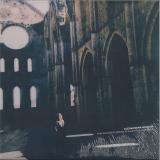
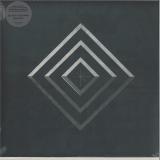
The limited-edition vinyl release has been pressed on Eco Vinyl at SeaBass Vinyl, a sustainable plant near Edinburgh. The record features striking cover art by Dirk Rudolph, who has designed several of Armstrong’s previous releases.
Suche:piece process
- 01: Insects Are Next
- 02: Cloud Burrito Pt. 1
- 03: Don't Drill
- 04: Draught
- 05: Cloud Burrito Pt. 2
- 06: Kerngut
- 07: Magnetic Rebounds
- 08: Pass It Sideways
- 09: Radiogram Kreativ
- 10: Resin Dripper
Markus Mattern, a.k.a. Kapillarkraft, lands on Slow Process with ‘Transdermal Patches’, a left-field exploration of vintage electronica.
Mattern, a Bavarian experimental electronic musician and professional drummer, builds this album around a plethora of interesting rhythmic elements. Aquatic timbres ebb and flow around almost-beats from analog drum boxes and Moog synthesizers.
Channeling inspiration from the likes of Kraftwerk, Brian Eno, Morton Subotnik and even early hip hop and electro-funk, some of it could be described as left-field electro, while some is just outright off the wall. An ever-present Roland Space Echo assists in the creation of rattling rhythm patterns and pitch dives, two of the album’s prominent sonic signatures. Atonal droplets and washes of simulated industrial noise yield an abiding sense of foreboding and tension, sitting in contrast to a few brief harmonious moments.
It may not be one for the clubs exactly, but it’s a deftly shaped piece of work, brimming with inventive sounds.
Released November 28th on limited edition “pharmaceutical” boxed cassette and digital formats.
- A1: Into The Obscure
- A2: Eternal Exodus
- A3: Tomb Procession
- B1: Beyond The Blackness
- B2: Soul Of Unlight
- B3: Infernal Presence
Oxblood Red Vinyl Edition[30,21 €]
RAW, RUTHLESS AND CEREMONIALLY DARK!
Only two years after its inception in 2023, the ominous entity hailing from Germany has come up with their first full-length. Consisting of 6 songs with the first one being an instrumental intro, "Fiery Paths" is a very convincing effort on all levels. Notwithstanding the fact INFERNAL PRESENCE has only been active for 2 years, their hybrid of Black and Death Metal sounds as if it had been composed by a seasoned band. Unlike many outfits whose songs consist of a salad of riffs randomly thrown together, INFERNAL PRESENCE are apt at cleverly composing their material by frequently alternating between different tempi and moods. Fast tremolo picked riffs akin to DISSECTION or MAYHEM are alternated with palm muted Thrash riffs or atmospheric slow-paced arpeggios reminding of WATAIN or ONDSKAPT.
In so doing the two-piece creates dynamic songs that succeed in truly capturing the listener's attention. Just listen to standout tracks like "Eternal Exodus" or the exceptional "Tomb Procession" with its slithering groove and you will see our point proven. Although, only sharing certain musical elements with said bands, the suffocating atmosphere of "Fiery Paths" reminds of NEGATIVE PLANE's first album or early SECRETS OF THE MOON. Fortunately, the production fits the material just splendidly, too. While being gritty and raw, thus emphasising the album’s ferociousness, it's still polished enough so that no detail gets buried in the mix.
INFERNAL PRESENCE unleashed a record suffused with unrelenting darkness! If you consider yourself a fan of some of the bands mentioned above, do yourself a favour and listen to this beast of an album!
- No More Lies
- I Should Have Asked Your Name
- Stood Out In The Storm
- Everywhere I’m Searching
- Losing It All To The Blues
- What Have We Done
- Did You Think That I Was Lost?
- What If
Previously we’ve mentioned influences from the 1970s self-reflective work of Nick Drake & John Martyn to the lovelorn tragedy of troubadours such as Elliott Smith and Jeff Buckley creating a fusion of 1960s/70s folk and blues.
Now Cardiff-based indie folk singer-songwriter Ivan Moult returns with his most personal work to date, Stood Out In The Storm, due to be released on November 7th through Bubblewrap (home to The Gentle Good). The album follows the acclaimed Songs From Severn Grove (2023), which drew praise for its warmth, intricacy and timeless songwriting, cementing Ivan’s reputation as one of Wales’ most compelling contemporary voices.
While Songs From Severn Grove captured moments of renewal and joy - written in lockdown and
during the early days of fatherhood - its follow-up takes a braver, more vulnerable step. Stood Out
In The Storm was written in the aftermath of a personal crisis and charts Ivan’s gradual process of
healing and recovery. The record traverses darkness and light, despair and resilience, offering a
deeply honest exploration of fragility, survival and hope.
Ivan’s signature sound remains at the core: a seamless blend of 1960s/70s folk and blues infused
with modern textures, drawing influence from John Martyn, the late great Terry Reid and Ry
Cooder. On Stood Out In The Storm, that familiar intimacy is expanded with a greater presence
of guitars and organs, adding new depth and urgency to the sound. As with his previous records,
Ivan wrote, played, recorded and mixed the album at his Cardiff home studio, and the record sits
as a companion piece to Songs From Severn Grove.
Over the years, Ivan has gained support from BBC Radio 6 Music, BBC Radio Wales and KLOF
(Formerly Folk Radio UK), earned festival slots at Cornbury Festival, Festival of Voice and Sŵn,
and shared stages with the likes of This Is The Kit, Becca Mancari and Willy Mason. Now, with
Stood Out In The Storm (out November 7th), he offers his most powerful and affecting work yet –
an album born of struggle, but defined by resilience.
“Exquisite”- Folk Radio UK
“Beautiful” - Huw Stephens, BBC Radio
“Utterly wonderful” - Adam Walton, BBC Radio Wales
”There is a wonderful delicateness that resonates through Ivan’s heartfelt lyrics, deamy music and vocals. Ivan is able to take listeners on their own journey of growth through his soft melodies and blissful atmosphere”
- Amplify The Noise
»La Traversée« (»The Crossing«) is Matthias Puech’s second album for Hallow Ground and follows up on 2023’s »Mt. Hadamard National Park.« Profoundly inspired by re-reading »The Odyssey,« the French composer, instrument designer, and scholar used a Eurorack modular synthesizer to create four pieces that are by far the most intuitive and emotionally charged in his ever-expanding catalogue. Puech’s masterful command of sound comes to the forefront with even more urgency on this record. A wandering meditation on the human condition, »La Traversée« is an album that is constantly in motion—complex electronic music at its most gripping and evocative.
The foundation for »La Traversée« was laid when Puech prepared a live set for a tour organised in collaboration with Hallow Ground in support of »Mt. Hadamard National Park.« Before writing the first three pieces—»Ennosigaios,« »Polyphármakos,« »Nekuia«—the 18½-minute-long »Ithâké« was composed in near-total isolation in the South of France at the end of 2023. Puech performed the material live several times before taking a step black from it for a while. He revisited the pieces when preparingthem for a release. »I was struck by how the technical process and the intention behind the music had completely vanished from my memory,« he says.
What remained intact, however, was Puech’s association of the material with one of the most influential texts of Western literature. Reading a graphic novel adaptation of »The Odyssey« with his two four-year-olds, he noticed the effect that it had on them and himself. »Its themes of longing, fear of and attraction to the unknown, unresolved quests, and the struggle for control felt topical,« he says. »I was completely taken. Every story ever told seemed contained in this ancient tale; every story I have ever tried to tell as a composer seemed inscribed in this framework.« This also extended to formal motifs such as the repetition of incidents, narrative developments, or dramatic effects that also mark »La Traversée.«
Puech says that he perceived Homer’s writing as musical, »like an old Delta blues or a Renaissance counterpoint,« which inspired his writing process. »With a couple of knobs on my Eurorack system, I could control the unfolding of a story,« he notes. »This made me pass through different emotional statesand led to moments in which everything made sudden sense—when you as an artist get a glimpse atsomething essential, can touch upon something universal.« This shines through »La Traversée,« a wildly imaginative album that is deeply personal while also telling a story far more wide-reaching than that of its creator.
AOKI takamasa and Tujiko Noriko’s 2005 album »28« has become a cornerstone in the artists’ respective discographies. 20 years after its initial release, Keplar issues it on vinyl for the very first time. Three years in the making, »28« saw the sound artist and the avant-pop singer-songwriter combine their distinct aesthetics for an album that defied categorisation. Their combination of advanced electronic experimentation and pop appeal paved the way for a new generation of artists and turned »28« into an enduring fan favourite. Remastered by Stephan Mathieu, the reissue comes with a brand-new artwork by Joji Koyama and a changed track listing—authorised by Takamasa and Tujiko—for the vinyl version to fit it on a single LP, while the digital version remains identical to the original release.
Tujiko and Takamasa first shared the stage together after the turn of the millennium. Both were emerging solo artists, with Takamasa a mainstay on the Progressive Form label and Tujiko forging a connection with Mego in Vienna, Austria. »I simply liked Noriko’s voice and music, and since we often performed at the same events, it felt like a natural progression for us to start working together,« remembers Takamasa. They first collaborated in 2002 for two shows at the Fondation Cartier in Paris and at SonarLab in Barcelona, respectively. The first joint piece was a rework of Tujiko’s »Fly« from »Hard Ni Sasete (Make Me Hard)« by Takamasa, appearing as the album opener »Fly2« on »28.«
After that, the Paris-based Tujiko and Takamasa, still based in Osaka, worked sporadically and remotely on new material. For the first two years of their collaboration, the two met in the context of live events or Takamasa’s visits to the French capital to discuss their process and exchange hard drives while also occasionally sending each other CDrs in the mail. »Aoki made beats and sounds that complemented my music perfectly, building the foundation on which my voice could float,« Tujiko says today. Takamasa used hardware such as the Nord Modular, the Korg Z1, and the Korg ER-1, while also working with different kinds of software and plug-ins as well as Logic. Tujiko was using Cubase, her preferred piece of gear at the time being an AKAI MPC.
After Takamasa moved to Paris in 2004, this enabled the duo to finish the album together in person. Starting with its subtle use of glitches to the almost-anarchic way in which it deals with the structures of a song, »28« came to be an incomparably intricate album. 20 years on, it remains timeless because of its flawless synthesis of the cutting-edge avant-garde ideas of early 2000s electronica with an idiosyncratic but accessible pop sentiment. Both artists look back fondly—though not uncritically, with Takamasa noting a certain »youthfulness« in his contributions—to the album that was titled after their respective age at that time. »Maybe we should make ›51‹ now?,« quips Tujiko. See you in three years, perhaps.
Noumen returns to Central Processing Unit after a six-year absence with Altum. This bumper record, the Ukrainian artist's fourth release for the Sheffield label and first since 2019 double-LPObscurium, serves to remind us all why Noumen's music has been lauded by the likes of Mixmag and Resident Advisor in the past.Altumis a consummate piece of contemporary electronic production, a technoid exploration of outer-edges electronica that nods to genre greats like Autechre while still maintaining its own unconventional charm.
Across well over an hour of music here we find Noumen repeatedly playing punchy mid-tempo beat work off of some more cerebral tuned synths.Altumkicks off with the epic 'Oion' - beginning in that Autechre/AFX mid-tempo zone, full of deep-sea bangs and whirrs, the track slowly builds to a final stretch of delay-drenched keys which set us free amidst the outer cosmos, almost Sun Ra-style. It's a perfect liminal-space roller and an apt scene-setter forAltum.
'Oion' provides a blueprint for several of the album's other highlights - plenty of the joints here adopt that same approach of hitting hard with the drums and soft with the synths. Second track 'Splitter' takes on the baton from 'Oion' while souping up the kick to warehouse levels; the beats in 'Far Wind' splutter like a needle skipping on a mid-90s Tresor drop; 'Fate Carette', all eerie looped synth leads, is a highlight as the album enters the home straight.
The rhythm production (which, it should be noted, is exemplary throughoutAltum) is ratched up in intensity on a handful of numbers. 'Telemask' displays a delightful breakbeat - if you'd told me this was sampled from golden age A Tribe Called Quest, I'd have believed you. Mid-section anchors 'Awe' and 'Axis' are glitchers in the Mike Paradinas mould, with the latter showing off some pleasing steel pan-esque synth leads for good measure. And whileAltumgenerally maintains a processional pace throughout, there are points where Noumen toughens up the drums for club deployment - 'Unveilness' shows off a real chunkiness in the low end, closer 'Spurling Sign' plays a satisfying rolling groove off of ever-layering synths, and the title-track is an alien machine-funker in keeping with fellow CPU electronauts like Silicon Scally and Cygnus.
Noumen's third album for Central Processing Unit is a pleasingly hefty double-LP which builds on the zany invention of acts like Modeselektor and Autechre to delightful effect.
FFO: Autechre, Aphex Twin, Modeselektor, Bochum Welt, LFO
2025 Repress!
Recorded in a remote cabin on the Devon coast, STILL OUT is an album-length collaboration between musician-filmmakers – and childhood friends – Will Cookson and Tom Haverly. A reflection on friendship, landscape and the passing of time, it inspired a road trip from North Yorkshire to North Devon they took together in the summer of 2024, and forms the soundtrack to a film of the same name which had its premiere screening as part of Stroud Film Festival in March 2025.
Like the film, STILL OUT is also an oblique homage to The KLF’s iconic 1990 album Chill Out, which the Gloucestershire-based pair revisited after it turned up unexpectedly a few years back in Tom’s dad’s record collection. Inspired to create their own recording using a similarly free-spirited process, Will and Tom relocated to the Devon coast in late summer 2023, splicing together a 40-minute mix from their personal archive of recordings and found sounds in a remote cabin with no electricity or mobile reception.
"It came together using cut-and-paste techniques, with ongoing shifts and tweaks,” says Will. “The final result was an audio collage that felt like something legendary hip hop producers The Bomb Squad might make - if ambient music was the only material in their sample library."
Using ‘ambient’ as a starting-point rather than an end in itself, they took inspiration from across the musical spectrum – classic-period Brian Eno, Philip Glass, Bill Evans, plus outliers such as 80s singer-songwriter Virginia Astley and the late DJ-producer Andrew Weatherall. The connections, though, are anything but obvious as the audio shifts seamlessly from field recordings and spoken-word interludes to mood pieces and snatches of vintage pop.
Edited and assembled using freely available open source programs, the source material was often radically altered using tools such as “PaulStretch”, a digital sound-morphing algorithm that allows users to stretch audio files to extreme lengths.
"When we found ourselves in a creative slump or unsure how to navigate a tricky part, we'd say, ‘Let's put some syrup on it and slow it down,’” says Tom. “That always helped us get back on track during late-night recording sessions at the cabin."
Part-soundtrack, part-meditative experiment, STILL OUT is intended as a reflection on the mental and emotional shift that occurs when stepping away from the routine of daily life – an album that forms a celebration of our ever-changing relationship to the world around us and the mystery of what it means to pass through time and space.
“The true follow up, 35 years later, to The KLF’s ‘Chill Out’”.
JD Twitch (Optimo).
An ambient journey reflecting on friendship, the British landscape - and The KLF’s landmark album Chill Out
"This record and film are just lovely. You need this in your life. Moo-Moo!” Balearic Mike (Down To The Sea & Back)
"The album is a perfect companion to the KLF classic, utilising the British countryside as the setting, occasionally reminding you that Mother Nature is not to be messed with.” Strictly Kev (DJ Food)
"A beautiful ambient journey into the landscape, taking the listener from reality to dream state and back again. A mystical realm full of mysterious chanting, rattling trains and sounds from the very depths of the earth."
Lally MacBeth & Matthew Shaw (Stone Club)
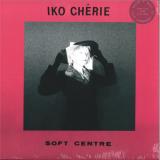
Soft Centre is the new album by Iko Chérie, the solo project of French-born, London-based multiinstrumentalist Marie Merlet. She blends dub-inflected textures, pop tinged vocals, reverbdrenched guitars, Casio drones, and warm experimental noises - creating her own intimate, fragile sound. Self-produced and largely performed by Merlet, the album grew from an introspective process, with many sketches recorded in transit between tours. The result is a deeply personal work, balancing light and dark in a Lynchian dream-pop haze. Songs such as We Smoke That Peace Pipe and Bilbao shimmer between vulnerability and resilience, while the single Ghosted Ghosters of the Holy G captures the immediacy of a one-take dub bass. Some pieces retain the quality of improvised snapshots (Intelligent Women, Half a Metaphor) while others reveal her meticulous production process and songwriting craft (Tears in the Sea, Luciférine). Merlet defines Soft Centre as alive in radical tenderness, unguarded, open, and vivid. Influenced by Clarice Lispector"s prose, Diane di Prima"s poetry and Rachel Carson"s environmentalist writing, as well as Marie"s fascination with a vintage Roland Space Echo, the album is an invitation to connection that she describes as "... hopefully a meditation into healing." A versatile musician trained in classical piano, jazz, and electroacoustic composition, Merlet has long moved between different worlds of sound. She has worked with Laetitia Sadier in Monade, performs with Gina Birch (The Raincoats), Malphino, Yama Warashi, and several other groups. She recently appeared as guest singer on the latest Stereolab album. Her debut solo LP, Dreaming On (Elefant Records, 2015), revealed her singular melodic instincts; with Soft Centre she ventures further inward, shaping her own distinctive voice in experimental pop.
Acclaimed electronic musicians, producers and sound architects Max Cooper and Rob Clouth team up for a new collaborative EP; a dark, playful four-track dive into ambient, breakbeat and techno’s subconscious flow, featuring a standout vocal performance from South London rapper FLOHIO.
Recorded over a series of spontaneous London sessions, “8 Billion Realities” channels years of creative exchange between two of the genre’s most quietly innovative artists and is a result of a decision between the longtime friends to refrain from conceptual overthinking in favour of instinct and joy.
As long-time admirers of each other’s audio/visual work, Cooper and Clouth collaborated in London together after both emerging from intense, idea-heavy album cycles. What followed was a series of exploratory sessions, half-improvised, half-built around half-formed thoughts.
The result is a club-ready EP that feels alive and human: imperfect and hypnotically rich.
“Rob Clouth has been one of my favourite electronic music producers since I first heard his work in 2011,” says Cooper. “His work is more full of ideas and structure than anyone else.” “We were both coming from extensive conceptual studio albums and both in the mood for simplifying things and having some fun with the music, so that’s what we did”.
For Clouth, no stranger to Max Coopers Mesh label having previously released an array of EP’s plus his 2020 debut album “Zero Point” this record marks a new chapter, both creatively and personally.“Something pretty new for me is collaborating,” he says. “You kind of have to when to stop, because if you develop an idea all the way to its endpoint, the other person has nowhere to jump in.”
The first “A Moment Set Aside” began as a break from another idea, a live, unplanned improvisation based around arps and ambience. “The track was written in about as long as it took to play it,” says Cooper. “It was pulled from a 1 hour recording session, more or less as you hear it… the energy and excitement grew as the unplanned moment bore some magic.”
“The lesson being that sometimes it’s helpful to set aside a moment without forcing results, and let the subconscious have something to say.” What followed was darker, heavier. “Asymptote” is detuned techno. Subversive and euphoric in its descent. “We found a sort of brain mangling, half consonant, half wandering detuned techno pulse, which we started chatting about being a sort of pit of spiralling body parts we were falling into,” says Cooper. “It was a lot of fun to work on and let loose with bigger kicks than I usually ever get to unleash.”
Then came “8 Billion Realities”, featuring a standout rap performance from FLOHIO; an emerging figure in the UK grime and rap scene. The track was inspired by conversations about algorithmic echo chambers and hyper-personalised online worlds. Frantic, direct, and South London to the core, FLOHIO brings this tension to life. Her sharp, intense flow cuts through distortion and rhythm, landing the track somewhere between chaos and control instantly making it one of the most striking moments in either artist’s catalogue. “A different reality for all 8 billion of us,” says Cooper. “We weren’t sure if it would work… but there was something about the energy of the percussive idea and the story which felt like it might fit.” “Then FLOHIO had a play with it and straight off the bat absolutely killed it, not just with the lyrics and energy, but the harmonising too, it was a beautiful process.”
The final piece on the EP “Candeleda” originated from Clouth’s solo experiments with a live rig made entirely of vocals and keys, using his self-developed “cheatbox” system. “He put forward a beautiful stumbling melodic sequence which we bounced back and forth adding harmonies and synth layers,” says Cooper. “It rounds off a collection covering some of the breadth of music that we both love.”
Anushka Chkheidze + Robert Lippok’s »Uncontrollable Thoughts« on Morr Music is the duo’s debut joint release. The Netherlands-based Georgian composer and the German sound artist from Berlin first met in 2019 in the context of a workshop programme that took place in Tbilisi, and later worked with Eto Gelashvili, Hayk Karoyi, and Lillevan on the massive »Glacier Music II« music and book project, released in 2021. This led them to engage in a less conceptually driven form of musicking and real-time composition that corresponds with their respective environments. They draw on traditions such as minimal music or late 1990s and early 2000s electronica to integrate subtle beats with elegiac organ drones, playful melodies with lush textures. The first document of an ever-shifting intergenerational dialogue, »Uncontrollable Thoughts« is a product of mutual listening outside time.
Though Chkheidze and Lippok had access to professional studios, they chose to rent a simple rehearsal space, equipped with only the bare essentials—bass and guitar amps as well as a small PA—to maintain immediacy in their working process. The music they made together corresponded to and drew on the respective possibilities and shortcomings of this studio, much like their collaboration in general is characterised by the care with which they approach each other's talents and ideas. While both had loosely defined roles—Chkheidze was responsible for the free-flowing beat programming and the evocative distortion came courtesy of Lippok, for example—they individually contributed in different ways to their joint process, which is as free of hierarchies as it is limitless. Hence, the duo’s focus on spontaneity and out-of-the-moment emergence makes them organically move beyond tried and tested conventions, resulting in music that seems to suspend time altogether.
When the first chimes on »Bird Song« announce a piece that sets rattling kickdrums against a backdrop of layered drones and rhizomatically entangled melodic elements, it becomes clear why »Uncontrollable Thoughts« carries this title: The album follows the constant detours of the subconscious of its makers, letting them explore moments of ecstasy such as on »Rainbow,« melancholy with »Field,« and the interplay of suspense and release through the ten-minute-long title track. But the different pieces also tie into one aother in various ways. The dirge-like organ drones on which »Rainbow Road« ends reappear in the beginning of »Uncontrollable Thoughts,« much like Chkheidze’s gentle yet emphatic piano chords on »Field« seem to provide the starting point from which the artist develops the striking motifs of the final piece »Opening«, whose title itself suggests that the record as a whole can and should be enjoyed as a loop. All this creates a unique, idiosyncratic temporal logic.
While there is much that sets Chkheidze and Lippok apart as solo artists, the major shared leitmotif in their respective bodies of work is the sonic engagement with space. »Uncontrollable Thoughts« is hence best understood as an extension of this practice; as an album that maps the geographies of their minds in motion, tracing musical movements as they melt into each other.
Irish techno producer, Kerrie, returns to Tresor Records on the 24th of October 2025 with her second EP for the label. Entitled Echoes Of The Live Wire, this collection captures the beauty and essence of live performance; a moment in time never to be repeated.
This fixing of time is also given a different meaning as the EP explores the ways in which intense moments in our lives, both joyful and painful, are crystallised into memory, both beautiful and haunting, lingering long after they've passed.
Layered meanings are employed throughout as Kerrie explores this idea: Live Wire draws connections between circuit boards and the human nervous system, whilst also toying with multiple meanings of the word “live”.
Echoes Of channels classic Detroit techno influences, resonating with the distant hum of memories that refuse to fade, while Moment To Memory is a beatless, floating piece which slowly builds to an ecstatic crescendo.
Digital bonus tracks Recircuit and Reclaim add further depth to the core metaphor: the former a driving, minimal yet building techno work-out, and the latter a cathartic and emotionally open track that delivers intensity with vulnerability.
Echoes Of The Live Wire reflects on memory as a complex, dual-sided force where joy and pain coexist with equal weight. Her creative process becomes a form of meditation and emotional processing, using machines to process, reflect, and let go. The result is a body of work that loops back on itself, telling a story of fleeting moments and their lasting emotional imprints.
2026 Repress
Tame Impala’s fifth full-length album ‘Deadbeat’. On it, Parker sculpts a collection of wickedly potent club-psych explorations as a vehicle for some of his most direct, brain-wormy songwriting to date, recasting Tame Impala as a kind of future primitive rave act in the process.
Deadbeat sounds like the work of an artist with a levelled-up mastery and bristles with a revitalized energy for experimentation. 12 songs crafted with a newfound embrace of spontaneity for the renowned perfectionist. How that manifests is a distinct minimalism and crunch to many of the tracks, with a clutch of crucial details, timbres and textures that add an ineffably new dimension to the sound, as well as a richer, more playful vocal range than ever.
- Transbordar
- Ponto De Vista
- Orbitando I
- Lunatic Garden
- Orbitando Ii
- Caminhos
- Luz
- Chegada
- Roxo
- Dejavú
- Terra Vermelha
- Garrafas
- Deságua
Recorded in Switzerland and mastered in Madrid, on Deságua Mello blends classical harp training with experimental techniques, creating a rich sonic journey that pushes the boundaries of the instrument. Brazilian harpist and composer Marina Mello presents Deságua, her solo debut released by the Peruvian label Buh Records. Based in Zurich, Mello has developed a unique and expressive approach to the harp, combining her classical training with a deep exploration of the instrument's sonic possibilities. Deságua is the result of this process: an intimate and expansive work that traverses sonic landscapes rich in contrast and texture. In the artist's own words, this album is a synthesis of material developed through her musical practice. The title refers to the Portuguese word that describes the moment a river flows into the sea. This concept guides the album's sonic narrative, in which each piece functions as a tributary flowing into an immersive and unexpected listening experience. From bittersweet whale-like sounds to destructive, unsettling, and shattering noise provocations, she explores, senses, and transcends the musical boundaries of her instrument. The album presents a wide range of sounds and styles, yet maintains a strong internal coherence through its technical and conceptual exploration of the harp. Mello performs on both lever and pedal harps, employing a range of non-traditional techniques: preparing the instrument with objects, using guitar effects pedals, detuning the strings, and using close mic recording to capture the subtlest sounds and the shifts that lie between them. The result is a collection of pieces that move between the melodic and the dissonant. Deságua does not shy away from repetition, noise, or raw textures. Instead, it embraces them fully, situating the album at the crossroads of contemporary music, improvisation, and electronic experimentation.
- No North Star
- Daffy Duck
- Without Your Love
- Hang On To That Feeling
- When You Go
- Psychic
- Fading Out
- We're Existential
- Parrots Of Rome
- After All
Returning after four years, Los Angeles indie-pop band Massage unveil Coaster, a luminous 10-track album steeped in melodic depth and emotional honesty. Widely recognized for their infectious pop sensibility, the five-piece approach the turbulence of adulthood through shimmering pop songs that capture both nostalgia and growth. Drawing inspiration from The Cure, Big Star, Echo and the Bunnymen, and The Go- Betweens, Massage now transcend their influences, offering a sound that's uniquely their own. Coaster is a testament to the band's evolution-embracing the "inbetween," writing pop songs that linger. What makes compelling is how three musicians take on writing and vocal duties, leading to stylistic shifts between tracks while maintaining a cohesive, signature sound. Across the record, the band's lyricism explores the messiness and resilience of adulthood-resolving to keep moving forward, even when life is uncertain. The recording process mirrored these themes: a willingness to make mistakes, hit reset, and chase down the unique world within each song. This is the soundtrack of five friends navigating life's unpredictability together. Their chemistry and shared history create moments of spontaneous brilliance- whether in the driving interplay between guitars, the pulse of vintage effects, or the heartfelt harmonies threading the album. Coaster is more than a collection of standout pop songs; it documents growth and camaraderie, bridging nostalgia with honest self-reflection and crafting melodies that linger long after the final note.
- Tokyo 1
- Osaka
- Nagoya
- Matsumoto (Beginning)
- Matsumoto (Ending)
- Hokkaido
- Tokyo 2
- Each Story
Black Vinyl[22,27 €]
Emily A. Sprague's Cloud Time traces an audio-spiritual journey through time and place, recorded across a long-awaited debut tour of Japan in the fall of 2024. Compiled from environmental improvisations captured in and for the moment, material at once welcoming, responsive, and inimitable, the album distills a voyage guided by psychic wayfaring, unbound presence, and activating performance for a reciprocal exchange with space, listener, and each fully engaged instant. The Japanese tour documented on Cloud Time held an almost mythic significance for Sprague, taking on properties of her own sonic white whale. After many near-departures and dropped plans to play in the country, "the empty spaces of cancelled trips and forgotten music turned into strange little misty spirits that I felt followed by," she says. "When I began preparing for the tour, I couldn't shake a sense that the invitation to Japan was more about opening myself up to this new place instead of bringing something into it tightly under my control. Improvisation has always been such a pillar in my music practice, and I really wanted to meet the country, spaces and people through that process." To amplify these intuitive whispers on-stage, Sprague reimagined her time-tested live rig, designed to be as free from error as possible, as a looser, more flexible set up that would allow her to interface with what was essentially a blank sonic canvas every night. Each performance became a collaboration between environment and instinct, Sprague processing the events, energies, and emotions informing the evening through her new sound ecosystem, and projecting an entirely present and unique version of herself to each open-eared and hearted crowd. "It was very much more than just an act of playing for me, but a total experience of time and place," she says. The seven long-form pieces that plot the course of Cloud Time, excerpted from over eight hours of recordings archived on the artist's on-stage recorder and generously shared on the album with no additional mixing and only minimal editing, invite listeners to become still in these deep-rooted moments of presence as the album moves from city to city, venue to venue. Cloud Time chronicles material recorded at each tour stop, Sprague selecting and sequencing the album around mood-based storytelling more so than linear chronology. "I tried to make the whole album flow in the way that any one of the complete live performances did," she explains, "while also keeping the spirit of the whole thing as a journey." The result is equal parts travelog, love letter, and impressionistic collage channeled from the potent ferment of a now encased in the glowing amber of memory. Intrinsically inspired by kankyo ongaku, an environmental music philosophy, known both in and widely outside of Japan that tunes into the similarly expansive ethos as Pauline Oliveros' deep listening practice and posits the listener as composer, Cloud Time is ambient music that seems to be listening right back, grounded in heartfelt synthesized frequencies that abundantly hold and heal. Pieces like "Nagoya," "Tokyo 1," and the ten minute "Matsumoto" in particular hum with the atomic resonance of gently tended landscapes, offering space for tuning way in and dropping far out from perspectives that stifle and bind. Cloud Time is an invitation to embrace each moment as both fleeting and eternal, floating by with nothing to grasp onto and absolutely everything to gain. The exercise in acceptance and letting go that Sprague practiced throughout the tour deeply impacted her understanding of self as both a guest and venerable performer. "The process of loving wherever I am, being present and focusing on a clear channel of communication for mind and emotion, rooted so deeply in respect for the space, those within it, and myself, ended up being profoundly healing," she says. "My vision and hope is that this album can be released as a gift back to anyone who either was or wasn't there. A cloud time of life passing by."
- A1: This Is A Never Ending Story (You Just Need To Close It)
- A2: Hidden Road (For Yoo Jae-Ha)
- A3: It Must've Been The Sunset (That Altered My Memory From That Day)
- A4: Good Morning, Harrison, It's Time To Go
- A5: Let's Walk Down To The Swamp Together
- B1: Rainy Night Ride With Roy
- B2: Crows Over My Shoulder (Take Me)
- B3: Spiral Dance (Up Or Down, I'm Not Too Sure)
- B4: Dear Oddie, Today Rainbows Are Falling From The Sky
- B5: Lying Here Half Awake, I Hear Kids Outside Laughing With Their Hearts
Unlike anything we have heard from her before, Okkyung Lee returns to Shelter Press with "Just Like Any Other Day: Background Music For Your Mundane Activities", a deeply intimate body of recordings at the juncture of ambient music, minimalism, and the baroque, that stands as radical intervention with what experimental music can be, and the place that organisations of sound occupy in our lives. For more than two decades, Okkyung Lee has stood at the forefront of the most radical trajectories of experimental music: a virtuosic cellist and improviser, renowned for her creative rigour and emotive depth. Particularly noteworthy for her range, dexterity, and adaptability, over the last five years Lee's output has revealed unexpected shifts and developments that move far afield from the realms of free improvisation for which she is most well known. 2020's "Yeo - Neun", a heart-wrenching, ambient chamber work - drawing inspiration from the Korean popular music of her youth - was issued by Shelter Press to great critical response, followed closely by "Teum (The Silvery Slit)" - one of a series engrossing electroacoustic works created at Groupe de Recherches Musicales in Paris - on Portraits GRM, and then "Na-Reul" in 2021, regarded by Lee as a closing statement of more than two decades living in New York, which set the precedent of her allowing her emotions to fully occupy the forefront of the music for the first time. Marking her return to Shelter press, "Just Like Any Other Day": Background Music For Your Mundane Activities", encounters Lee upturning the apple cart once again, weaving a profoundly intimate artistic statement on completely unexpected terms. Like its three aforementioned predecessors, "Just Like Any Other Day" belongs to broadening shift in Lee's approach to composing that roughly aligns with her return to her native South Korea, having lived in the United States since her late teens. Infused with a deep reengagement with her own culture and relationship to memory, it is equally a response to those critical challenges and questions provoked by significant life change. Worked on in isolation, and continuously returned to, over the course of four years, the album's nine pieces began with a simple recognition that experimental music is not always what we imagine it to be. It is a practice and a pursuit - a music for which, at its inception, the outcome is unknown - rather than an idiom defined by certain syntaxes, approaches, and qualities of structure and sound. From this departure point, Lee began to inquire after the utility of music itself: what is it for, what does it do, and what place does it (or can it) occupy in our lives? This solitary and durational journey, each composition gradually moving through different phases and evolutions over years, led Lee toward uncharted ground: a music that is not only playful, introspective, and seductive, but also intended to provoke a relationship to experimental music beyond its normative expectations. Rather active or deep listening, it pursues passive listening. Rather than a grand statement, it is discreet. Rather than virtuosity, it embraces the elegant and direct. Even more strikingly, for the first time, the music of "Just Like Any Other Day" encounters Lee leaving the cello entirely behind. Created at home on keyboard, computer, and an inexpensive cassette recorder, "Just Like Any Other Day" presents a remarkable form of ambient music - organisations of sound that become their own environment, to be occupied - intended, as the album's subheading infers, as Background Music For Your Mundane Activities. An expansion of the creative pathways opened by the Korean pop imbued compositions of Yeo - Neun, aspects of electronic process explored by "Teum (The Silvery Slit)", and the emotive foregrounding of "Na-Reul", each of the pieces presented across the two sides of "Just Like Any Other Day" implies something far greater than the limits of its own temporarily: a mood, provocations of memory and place, mirrors for the solitude within which it was made, and palpable emotion lingering just out of grasp. For Lee, each of the album's compositions could be continued or looped for an indeterminate duration: straddling a ground between the minimal and the baroque, enveloping the listener in endless cycles of appreciating, repetitive and rhythmical notes, flirting with the melodic and implying a disembodied imagism that borders on the profound. Remarkably beautiful and direct, Okkyung Lee's "Just Like Any Other Day: Background Music For Your Mundane Activities" - issued by Shelter Press on vinyl - represents a radical reconfiguration of experiential music, stripped to its bare essence in defiance of the widely presumed aesthetic signifiers. Unlike anything we've heard from her before, this immersive body of intimate recordings not only reveals new dimensions of Lee's striking range as an artist, but also of how we might regard and occupy music itself: an ambience to lived and felt like a second skin.
Furthering the passionate exploration of cinema that has guided her two previous LPs - 2017’s ‘Fassbinder Wunderkammer’ and 2020’s ‘I Should Have Been a Gardener’ - the Milanese guitarist/composer, Alessandra Novaga, returns to Die Schachtel with ‘The Artistic Image Is Always a Miracle’, two sides off shimmering, tense compositions – culminating as one of her most creatively ambitious and conceptually rich outings to date – freely inspired by the life and work of the Russian director Andrej Tarkovsky and the music of Johann Sebastian Bach.
Classically trained at the Musik Akademie in Basel, Switzerland, over the last decade Alessandra Novaga has emerged as one of the leading figures within northern Italy’s thriving new, experimental, and improvised music scene, rendering striking solo efforts, in addition to collaborations with Loren Connors, Stefano Pilia, Elliott Sharp, Nicola Ratti, Paula Matthusen, Sandro Mussida, Kid Millions, Travis Just, Francesco Gagliardi, and others. Remarkably ambitious and forward thinking, her approach to the guitar embarks upon a relentless deconstruction and rethinking of her instrument’s unique properties through distinct applications of structure, resonance, space, and tone, creating in a deeply personal and emotive music, seeking narrative and meaning within the abstractions of sound.
In 2017, with the LP, ‘Fassbinder Wunderkammer’, issued by Setola Di Maiale, Novaga embarked upon the exploration of her love of film. Having begun with Rainer Werner Fassbinder, this was followed in 2020 by Die Schachtel’s release of ‘I Should Have Been a Gardener’, a deeply intimate mediation on the life and work of Derek Jarman. Rather than focusing on a fixed point of inspiration or a single film to work from, these pieces achieve a form of abstract portraiture, distilling elements drawn from these filmmaker’s life and work into ambient networks of texture and tonality. ‘The Artistic Image Is Always a Miracle”’ freely inspired by the Russian director Andrej Tarkovsky and the music of Johann Sebastian Bach, finds Novaga radically expanding her sonic palette within this approach.
The seeds of ‘The Artistic Image Is Always a Miracle’ can be traced to a conversation that Novaga had with Alan Licht (contained in the highly regarded Common Tones: Selected interviews with artists and musicians 1995–2020, Blank Forms, 2021), relating to the connections between music and cinema, which led her to consider Andrej Tarkovsky’s use of Bach's music within a symbiotic framework: how the music illuminates the imagism of the films, and the film illuminates new dimensions of the music. Slowly developing over the subsequent years, the resulting album comprises six individual works, some of which draw directly upon pieces of Bach’s music that Tarkovsky used in his films – specifically 'Erbarme dich, Mein Gott', 'Das alte Jahr vergangen ist', and 'Ich ruf zu dir, Herr Jesu Christ' - while others draw upon the sensibilities and moods evoked in the imagination by the director’s films.
As a point of departure and illumination into the process and spirit that underscored the creation of the album, Novaga points toward a passage in Tarkovsky’s "Sculpting in Time”:
“Art is born and takes hold wherever there is a timeless and insatiable longing for the spiritual, for the ideal: that longing which draws people to art. Modern art has taken a wrong turn in abandoning the search for the meaning of existence in order to affirm the value of the individual for its own sake. What purports to be art begins to look like an eccentric occupation for suspect characters who maintain that any personalized action is of intrinsic value simply as a display of self-will. But in artistic creation the personality does not assert itself, it serves another, higher and communal idea.”
‘The Artistic Image Is Always a Miracle’ can be understood as a realisation of the collectivism of which Tarkovsky speaks, in the service of something far beyond the expression of self. Encountering Novaga moving into fairly uncharted waters, three of the album’s pieces incorporate the human voice we encounter the voices of others: that of the poet Arsenij Tarkovsky, the director’s father; a singer from Bach’s ‘Erbarme dich, Mein Gott’, capturing a broadcast in an underground parking lot, and Novaga’s own, rendering the melody from Bach’s “Ich ruf zu dir, Herr Jesu Christ”. Roughly alternating between solo excursions on guitar and bristling electroacoustic pieces, over the course of the album’s two sides Novaga weaves one of her most abstract and ambitious bodies of recordings to date, shifting between the complex tonal mediations generated by the six strings of her instrument, and phycological densities activated by the expanded pallet of sonority made possible by the tactics and approaches of musique concrète.
An immersive, deeply engaging meeting of beauty and melancholy within a labyrinth of voices and ideas, ‘The Artistic Image Is Always a Miracle’ transfigures the life and work of Andrej Tarkovski – one of the greatest auteurs in the history of cinema – into a singular, experimental statement of collective truth. Belonging to recent, ambitious stream of contemporary new music releases on Die Schachtel that’s already included Novaga’s ‘I Should Have Been a Gardener’, Stefano Pilia’s ‘Spiralis Aurea’, Jim O'Rourke & Giovanni Di Domenico’ ‘Immanent In Nervous Activity’, Claudio Rocchetti’s ‘Labirinto Verticale’, and Damāvand’s ‘As Long As You Come To My Garden’, among others, ‘The Artistic Image Is Always a Miracle’ is available on as a limited edition of 300 dark turquoise vinyl LPs released on June 21, 2024. The LP, designed by Bruno Stucchi / dinamomilano, comes with an 8-pages insert illuminated by Alessandra’s text as well as the lovely and intense photographs of Matilde Piazzi.
- Tokyo 1
- Osaka
- Nagoya
- Matsumoto (Beginning)
- Matsumoto (Ending)
- Hokkaido
- Tokyo 2
- Each Story
Cloudy White Vinyl[31,89 €]
Emily A. Sprague's Cloud Time traces an audio-spiritual journey through time and place, recorded across a long-awaited debut tour of Japan in the fall of 2024. Compiled from environmental improvisations captured in and for the moment, material at once welcoming, responsive, and inimitable, the album distills a voyage guided by psychic wayfaring, unbound presence, and activating performance for a reciprocal exchange with space, listener, and each fully engaged instant. The Japanese tour documented on Cloud Time held an almost mythic significance for Sprague, taking on properties of her own sonic white whale. After many near-departures and dropped plans to play in the country, "the empty spaces of cancelled trips and forgotten music turned into strange little misty spirits that I felt followed by," she says. "When I began preparing for the tour, I couldn't shake a sense that the invitation to Japan was more about opening myself up to this new place instead of bringing something into it tightly under my control. Improvisation has always been such a pillar in my music practice, and I really wanted to meet the country, spaces and people through that process." To amplify these intuitive whispers on-stage, Sprague reimagined her time-tested live rig, designed to be as free from error as possible, as a looser, more flexible set up that would allow her to interface with what was essentially a blank sonic canvas every night. Each performance became a collaboration between environment and instinct, Sprague processing the events, energies, and emotions informing the evening through her new sound ecosystem, and projecting an entirely present and unique version of herself to each open-eared and hearted crowd. "It was very much more than just an act of playing for me, but a total experience of time and place," she says. The seven long-form pieces that plot the course of Cloud Time, excerpted from over eight hours of recordings archived on the artist's on-stage recorder and generously shared on the album with no additional mixing and only minimal editing, invite listeners to become still in these deep-rooted moments of presence as the album moves from city to city, venue to venue. Cloud Time chronicles material recorded at each tour stop, Sprague selecting and sequencing the album around mood-based storytelling more so than linear chronology. "I tried to make the whole album flow in the way that any one of the complete live performances did," she explains, "while also keeping the spirit of the whole thing as a journey." The result is equal parts travelog, love letter, and impressionistic collage channeled from the potent ferment of a now encased in the glowing amber of memory. Intrinsically inspired by kankyo ongaku, an environmental music philosophy, known both in and widely outside of Japan that tunes into the similarly expansive ethos as Pauline Oliveros' deep listening practice and posits the listener as composer, Cloud Time is ambient music that seems to be listening right back, grounded in heartfelt synthesized frequencies that abundantly hold and heal. Pieces like "Nagoya," "Tokyo 1," and the ten minute "Matsumoto" in particular hum with the atomic resonance of gently tended landscapes, offering space for tuning way in and dropping far out from perspectives that stifle and bind. Cloud Time is an invitation to embrace each moment as both fleeting and eternal, floating by with nothing to grasp onto and absolutely everything to gain. The exercise in acceptance and letting go that Sprague practiced throughout the tour deeply impacted her understanding of self as both a guest and venerable performer. "The process of loving wherever I am, being present and focusing on a clear channel of communication for mind and emotion, rooted so deeply in respect for the space, those within it, and myself, ended up being profoundly healing," she says. "My vision and hope is that this album can be released as a gift back to anyone who either was or wasn't there. A cloud time of life passing by." Emily A. Sprague's Cloud Time will be released Friday, October 10th in vinyl, Japanese import CD (via Plancha), and digital editions.
The Pitch is a quartet made up of Boris Baltschun, Koen Nutters, Michael Thieke and Morten Joh. Founded in Berlin in 2009, they play a hypnotic form of structured improvisation full of acoustic exploration and electronic intervention. On Neutral Star, The Pitch are joined by Australian guitarist/composer extraordinaire Julia Reidy for a record of star gazing electro-acoustic jazz.
Reidy's playing and compositional technique between Takoma-style fingerpicking and Glenn Branca'esque microtonality, perfectly complements the loose improvisational framework The Pitch is providing. Endless ≠ Limitless, a recent piece by Reidy and Joh, is transformed from a washed-out/obscured tape delay composition into a colorful, meandering ensemble piece with a swarming character - blooming with intrigue for the patient ear. The B-side strikes a more gentle tone: the 24-minute Neutral Star begins with a siren-like overtone whose drone-like flowing slowly morphs into a deterritorial modality with jazzy undertone. Accompanied by constant eruptions of vibraphone, clarinet, electronics and double bass punctuation – while permanently questioned by Reidy's drippingly pearly steel guitar work. Slowly evolving into new territories through the expansive instrumentation and keen listening between the players.
The fact that Neutral Star was recorded in one take (by Rabih Beaini in his Morphine Raum studio/venue) in front of a live audience and without overdubs is hard to believe, even for the trained ear. The recording appears to be too multilayered for a single snapshot, with its compositional structures constantly shifting and moving against themselves, counterintuitively and anti-cyclically. Reidy´s playing has been described as "unstable harmonic territory, and the collaboration with The Pitch interprets this concept brilliantly - adding further non-places to the territory. And the listener, however, is never left alone in the process of tectonic shifts - at least as long as their listening is attentive and contemplative at once.