’Angelo lost his shit over it. Aaliyah’s 3rd favourite track of all time is on it. David Bowie rocked up with it to a TV interview, declaring it “the most exciting sound of contemporary soul music”.
In 1996, Lewis Taylor released his self-titled masterpiece. A true modern classic, it’s an album that was years ahead of its time. Forget 25 years ago, it could easily have been made in 2021. An effortless blend of neo-soul, sophisticated pop, smart grooves and laid-back white funk, it enjoyed rapturous reviews from critics and music legends alike. But the album never managed to make an impact and given what was likely a token vinyl release at the time, the original records have long since been near-impossible to find. Lewis Taylor’s Lewis Taylor remains a holy relic for some and criminally unknown to most.
Lewis Taylor’s impeccable influences created a dazzling sonic palette: the LP as a whole suggests the visionary brilliance of Prince; the vocal stylings evoke the yearning power of Marvin Gaye; the effortless guitar playing shares the virtuosity of Jimi Hendrix; the haunting tones conjure Tricky; the innovative production and engineering invite comparisons to studio mavericks like Todd Rundgren and Brian Eno; the multi-layered, complex harmonies flash on Pet Sounds-era Brian Wilson; the dark, drama is reminiscent of both Scott Walker and Stevie Wonder; the complex arrangements create textures and moods with the feel of Shuggie Otis on Inspiration Information; the bold experimentation is akin to progressive artists like Faust and Tangerine Dream; the atmosphere is in conversation with Jeff Buckley’s Grace… and we could go on. That might all sound like marketing hyperbole, but not as far as Be With is concerned. It is a genuine wonder how an album this good could’ve passed so many people by.
But despite all the reference points, the similarities are really only skin-deep because the album sounds truly original. It occupies its own distinct, strange universe that feels dark and brooding one moment, bright and joyous the next. Ultimately, Taylor sounds like Taylor.
Although you wouldn’t know it from the credits, the album wasn’t the work of Lewis alone. Sabina Smyth gets an executive producer credit on the original sleeve, but in fact she worked with Lewis on the production and arrangements, did a lot of the backing vocals and she co-wrote Track, Song, Lucky and Damn with Lewis.
Lewis clarified all this in a Soul Jones interview with Dan Dodds in 2016. He explains how not giving Sabina the credit she was due at the time was an unfortunate consequence of where his head was at and he’s now trying to set the record straight.
Together they created an exquisite and sensually-charged record, with a freshness to the writing that makes the songs catchy, melodic-yet-deep and sometimes even funky. The music is predominantly guitar-led and a mixture of organs and synths, live drum loops and electronic percussion make for a sort of modern soul backing orchestra.
On the surface the album is gorgeously laidback, but beneath the lush, sometimes slick, production there’s a murkiness in the seriously gritty funk/hip-hop instrumentation. Lewis Taylor can be a claustrophobic listen. Even its one-word, often seemingly throw-away track titles add to the sense of unease. In its most positive moments, there’s still a sense that things aren’t quite right. The magic comes from this compelling tension.
The languid, strutting “Lucky” is a sensational opening statement. Sinuous electric guitar winds around the shaking percussion with a killer bass line rattling your bones, and Lewis’s voice is sublime. Its six-and-a-half unhurried minutes manage to distill the work of Marvin, Al Green and Bobby Womack because yes, it’s *that* good. Up next is the tough, dusty drum and jazzy, unsettling psych-guitar workout of “Bittersweet”. Aaliyah described it the “perfect song”, which says it all. By turns loping and soaring, tightly coiled and blasting free, 25 years on its discordant, swaggering majesty still sounds like future R&B.
The swinging, blue-eyed funk of “Whoever” oozes sophisticated sunshine soul for hazy days before “Track” sweeps in. The music tries to lift us up, beyond the reach of the vocals trying to drag us back down as Taylor sings “my mood is black as the darkest cloud”. The spare, dubby electro-soul of “Song” closes out the first half of the album with barely contained dread as it creeps towards the lush, synth-heavy coda.
The smouldering “Betterlove” eases us into the second half, coming on like a languorous response to the call of “Brown Sugar”, before sliding into the shuffling, softly-rocking “How”. Somehow the remarkable “Right” manages to both warm things up and smooth things out even more. Taut yet luxurious, it’s definitely not wrong.
“Damn” was to have been the album’s title track and you might also be able to hear its influence on D’Angelo’s Voodoo, maybe most obviously in the chaotic closing moments of “Untitled (How Does It Feel)”. Building to a screeching wall of noise that suddenly cuts dead, “Damn” sounds like the natural end to the album, with the celestial a cappella “Spirit” serving as a heavenly reprise.
When it came to the sleeve, art director Cally Callomon heard Taylor’s music as “sideways off-camera glances at a plethora of influences he had” and wanted to interpret that visually: “I went off into night-time London to see if I could find his song titles in off-beam low-fidelity photographs. I even found a shop called Lewis Taylor”. With a slide for each of the album’s ten tracks, nine of them are on the inner sleeve and the slide for “Damn” makes the front cover. It should’ve been the album’s title, but concerns over distribution in the US scuppered this.
One of UK soul’s most fascinating artists, Andrew Lewis Taylor is an enigmatic figure and a hugely under-appreciated talent. A prodigious multi-instrumentalist who got his start touring with heavy blues/psych outfit the Edgar Broughton Band, he released two albums of psychedelic-rock as Sheriff Jack before Island signed him on the strength of a demo alone. But Taylor was destined to be one of those artists unable (or unwilling) to be pigeonholed and despite the best efforts of Island’s publicity department the music never sold in the quantities it needed to or deserved to. Island eventually let him go in the early 2000s and in June 2006, Lewis Taylor retired from music.
Typical for the mid-90s, this CD-length album was squeezed onto a single LP for its original vinyl release. Simon Francis’s fresh vinyl mastering now spreads out the ten tracks over a double LP so nothing is compromised. And as usual, the records have been cut by Pete Norman and pressed at Record Industry. The original artwork has been restored at Be With HQ and subtly re-worked to work as a double.
This sprawling psychedelic soul opus really is a forgotten should-be-classic. We know that there are those of you who know, and as for the rest of you, we’re a bit jealous that you’re getting to hear Lewis Taylor for the first time.
quête:pigeon funk
For number 90 in the Brazil45 series, we share a couple of lesser-known discoveries that have become recent favourites here at Bongo HQ. First up we head to the north of Brazil with funky Forr / boogie hybrid monster, ‘Vendedor De Mangaios’ by Josan. Originally released in 1981 on the album ‘Rio De Renova es’ on Copacabana Records. This addictive dancefloor gem is still relatively under the radar, but it has become a firm favourite at Bristol’s Worm Disco Club parties and amongst the DJ’s and collectors of Brazil’s underground dance music scene. Taken from the illustrious singer Bart Galeno’s self-titled 1977 album on Tapecar Records, ‘Vou Tirar Voc Daqui’ is an unusual one. Not easily pigeon-holed, he song sits somewhere between MPB / funk and rock, yet isn’t really any of them. Backed with a big orchestrated sound and tripped-out synths, the track has a truly unique feel. We hope you dig these finds. Another testament to the diversity and depth of Brazil’s rich musical heritage.
- Next installment in BRAZIL45 Series.
- Two lesser-known discoveries
“A weird trip of a band…the second this was playing I was
immediately hooked. I initially dove in because their name
was attached to Mikey Young for mastering (I have a rule
with Mikey…if he had his hands on it, it’s probably worth
a listen). This band exceeds in all my trials.
“Esoteric nature, but oddly poppy and ready to prick up
any ears out there. Deconstructed, but full of hooks. If I
were a lazy man, and I am, I would say its for fans of PiL,
but they transcend that pigeon-hole.
“Wonderful production lends its self to this unique LP.
It seems as if the room expands and contracts throughout
songs. Pulling away, then blocking your field of vision entirely.
Wasteland funk. Dub from the depths. Punk from
the pit.
“Even the instrumentation is worth mentioning:
saxophone, drums (and cut-up drums), guitar, synthesizer,
vocals (poetry) and general fuckery all combine to make
this a very interesting and worthwhile escape from the
average. And thank the Gods for that right now. Inspired
and desired by the active mind. A job well done by EXEK,
and there’s new stuff brewing too...
“For fans of BEAK>, Phantom Band, PIL and general
Jah Wobbleness, Magazine, short-wave radio, ESG and
underground Kraut”. —John Dwyer
“A weird trip of a band…the second this was playing I was
immediately hooked. I initially dove in because their name
was attached to Mikey Young for mastering (I have a rule
with Mikey…if he had his hands on it, it’s probably worth
a listen). This band exceeds in all my trials.
“Esoteric nature, but oddly poppy and ready to prick up
any ears out there. Deconstructed, but full of hooks. If I
were a lazy man, and I am, I would say its for fans of PiL,
but they transcend that pigeon-hole.
“Wonderful production lends its self to this unique LP.
It seems as if the room expands and contracts throughout
songs. Pulling away, then blocking your field of vision entirely.
Wasteland funk. Dub from the depths. Punk from
the pit.
“Even the instrumentation is worth mentioning:
saxophone, drums (and cut-up drums), guitar, synthesizer,
vocals (poetry) and general fuckery all combine to make
this a very interesting and worthwhile escape from the
average. And thank the Gods for that right now. Inspired
and desired by the active mind. A job well done by EXEK,
and there’s new stuff brewing too...
“For fans of BEAK>, Phantom Band, PIL and general
Jah Wobbleness, Magazine, short-wave radio, ESG and
underground Kraut”. —John Dwyer
The incredible sonic beauty of the Sphincter Ensemble results from musical spontaneity, a random jam session undertaken by a loose group of friends in the unlikely setting of the
Harrovian Club in Barnes, west London, on 2 January 1972. The sumptuous free jazz/prog rock/avant-classical fusion features top session players at their peak, with Trevor Morais’
funky drumming loosely tied to Quatermass bassist John Gustafson’s rough melodic lines, embellished by Anne Odell’s far-out synths, Martyn Ford’s French horn and arrangements by Elton John’s orchestrator, Paul Buckmaster. This hugely enjoyable rarity is appearing on vinyl here for the very first time—a thing of wonder for all discerning prog fans.
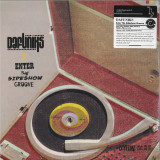
- A1: Musical Gymnastics
- A2: Typical Guy (Feat. Elias)
- A3: Searching (Feat. Kuku Agami, Astrid Engberg, Mattic)
- A4: Ease My Mind (Feat. Barbara Moleko, Joseph Agami)
- B1: D To The A (Feat. Barbara Moleko)
- B2: Don't Dig To Deep (Feat. Elias, Pigeon John
- B3: Radio (Feat. Pato Siebenhaar)
- B4: Disko Dansen
- C1: Daisy (Feat. Barbara Moleko)
- C2: All I Want (Feat. Elias)
- C3: Breakers (Feat. Kuku Agami)
- C4: Bone Jacked & Buggin'out (Feat. Pato Siebenhaar)
- D1: After Midnight (Feat. Astrid Engberg, Mattic)
- D2: Hello I Love You (Feat. Elias)
- D3: Outroduction (Feat. Dj Noize)
Twenty vinyl releases is a strong landmark in any labels life most especially in these ever unpredictable days. Tropical Disco Records have reached that number with some verve. Over the last three years they have had a succession of chart-topping, sell-out releases fusing their love of the Jazzier edges of house music with contemporary disco and plenty of sure-fire club hits. So successful has the label been that they have in a short space of time that they have quickly become one of the most established labels releasing across the disco spectrum.
As you would expect Tropical Disco Records have put together a very special collection of tracks to celebrate their twentieth edition. Uniting Italian producer Paul Older with England’s Tung-Sol, Greek disco don C. Da Afro and London’s label head Sartorial the EP marks all points on the European compass. It’s an EP which shows the clear impact that Disco has had across the continent and indeed that we are all united by the power of music.
The opening move goes to Paul Older with his delightful track ‘Nothing’ and it’s the perfect feel-good moment. Wonderfully warm vocals, layers of Saxophone, guitar licks aplenty and some tight drum programming give it an energetic live feel as if Salsoul’s band are playing this in the corner of your club. ‘Nothing’ is a track which transcends pigeon holing and as such is perfect for a variety of situations from sun soaked day parties to peak-time dance-floors.
Tung-Sol’s ‘One for Frida’ is packed with layers of brass giving it a truly enigmatic feel. It’s a track which has discernible African overtones but as seen through the lens of American funk and transcribed by a disco loving auteur. Its effervescent feel is hammered home even further with the addition of Jazzy keys. ‘One For Frida’ is as multicultural a track as you will find in the Disco pantheon and as such will see this picked up by a multitude of genre hopping DJ’s.
‘Shiva’s Chant’ see’s label co-boss Sartorial adding Eastern influences to what is already a globe trotting selection of sounds on Volume 20. Its smooth keys and brass stabs give it an undeniable charm which will see it in heavy demand with sun worshiping DJ’s and for summer playlists alike. Sitars, guitars and trumpets combine here for an intoxicating mix of sounds which help this track stand out from the crowd.
Closing the EP out is perhaps Disco’s most prolific producer C. Da Afro. His sure hands deliver yet another club smash in the shape of 'Street Jam'. Powerful strings immediately establish this as a track which has no intention of letting you do anything other than dance with abandon. It’s a straight to the dance-floor combination of percussion, guitar licks and delightfully effusive vocals. Combining the best moments of 70’s disco he’s crated a sensational club jam.
With their twentieth release Tropical Disco Records continue to redefine the notions of what disco is in 2020. With releases this exciting we can’t wait for the next twenty.
With roots cemented in jungle, breaks and hardcore, Unglued injects his signature bassline badness into each tearout track, topped with euphoric classic house samples in the title track ‘Total XTC’, to hair-raising vocals from Truthos Mufasa in ‘War Dance’ featuring Whiney.
Total XTC fires us through a prism of late 80s nostalgia with pitched-up soulful vocal samples from Charvoni’s feel-good classic house groover ‘Always There’. Dreamy pads and playful vintage notes set the scene. Soothingly sustained vocals swim over raw, metallic, jungle-infused drums that introduce the subdestroying drop. A certified rave anthem that will have all the heads entranced.
‘War Dance’ raises adrenaline as Manchester-based Truthos Mufasa lays down slick and weighty bars that ricochet off skippy old skool-style drums right in the eye of the storm. Together, Unglued and Whiney conjure up bass-rumbling chaos as we’re pushed ‘right off the tracks’ with double-barrelled artillery in the heat of battle.
Charging in with twisted swagger, ‘Got 2 Have’ is a squelchy bass-ridden stepper that screams Unglued all over. While ‘Pigeon Funk’ swoops in and stares you down with electrically-charged squarks and funk-fuelled flare.
Introduced to jungle at an early age by his influential uncle Stoppy, Unglued demonstrates his ability to simultaneously stick and unpick these roots in his powerfully dynamic ‘Total XTC’ EP by fusing the old-skool style with his unique, forward-thinking flair.
Unglued’s rise since his anthemic ‘If We Ever’ remix, has brought in over a hundred intercontinental shows since 2019, and regular support from some of the biggest players in the game, including Andy C, Noisia and Randall.
Unglued is no stranger to spins on national airwaves, with BBC Radio 1’s Annie Mac awarding him Hottest Record In The World for ‘Born In 94’, as well as regular support from Rene LaVice and Charlie Tee on Kiss Fresh. Everyone’s got their eyes stuck to Unglued!
2022 repress
currently the rediscovery of long forgotten japanese electronic, jazz and new age music is at a peak like never before. but although many re-issues already flood the record stores around the world: the large, diverse musical culture of japan still got some gems in store that are really missing.
for example, it is still quiet around the the work of japanese bass player, new-age and ambient musi-cian motohiko hamase. when the today 66-years old artist started to be a professional musician in the 1970's, he quickly gained success as a versed studio instrumentalist and started to be part of the great modern jazz isao suzuki sextett, where he played with legends like pianist tsuyoshi yamamoto or fu-sion guitar one-off-a-kind kazumi watanabe.
he also was around in the studio when legendary japanese jazz records like 'straight ahead' of takao uematsu, 'moritato for osada' of jazz singer minami yasuda or 'moon stone' of synthesizer, piano and organ wizard mikio masuda been recorded.
in the 1980's hamase began to slowly drift away from jazz and drowned himself and his musical vision into new-age, ambient and experimental electronic spheres, in which he incorporated his funky medi-tative way of playing the bass above airy sounds and arrangements.
his first solo album 'intaglio' was not only a milestone of japanese new-age ambient, it was also fresh sonic journey in jazz that does not sound like jazz at all. now studio mule is happy to announce the re-recording of his gem from 1986, that opens new doors of perception while being not quite at all.
first issued by the japanese label shi zen, the record had a decent success in japan and by some overseas fans of music from the far east. with seven haunting, stylistically hard to pigeonhole compo-sitions hamase drifts around new-age worlds with howling wind sounds, gently bass picking and dis-creet drums, that sometimes remind the listener on the power of japanese taiko percussions. also, propulsive fourth-world-grooves call the tune and all composition avoid a foreseeable structure. at large his albums seem to be improvised and yet all is deeply composed.
music that works like shuffling through an imaginary sound library full of spiritual deepness, that even spreads in its shaky moments some profound relaxing moods. a true discovery of old music that oper-ates deeply contemporary due to his exploratory spirit and gently played tones. the release marks another highlight in studio mule's fresh mission to excavate neglected japanese music, that somehow has more to offer in present age, than at the time of his original birth.
Darren Cunningham's eagerly~awaited new album is an adventurous, ultramodern, thoroughly British affair, rummaging about in the inner lives of house and techno, and brilliantly elaborating the accomplishments of his debut, Hazyville.
Determinedly off~the~map and resistant to pigeonholing, Cunningham is an enigmatic and playful figure, citing Francis Bacon and Monet as inspirations longside Theo Parrish, Anthony 'Shake' Shakir, Daft Punk, 'binary codes and numeral systems', and The Avengers. He's a hard man to pin down - somehow a key player in the post~dubstep diaspora and yet not there at all - but everything comes across in his shape~shifting, richly textured music.
The South Londoner's acclaimed debut lived up to its name: a series of dreamlike sketches and ideas. For Splazsh the fog has lifted, the sounds are less submerged than before, but still sticky and close - a signature combination of exuberance and introversion, luminescence and puzzlement. Unconstrained by the formal cliches of the dance music he loves, Actress' melodies and arrangements are enthralled by their own genies. Worlds of disturbance and melancholy revolve giddyingly inside the insidious funk of tracks like Get Ohn and Lost. A range of musical influences is redrawn, from speed garage (Always Human) to grime (Wrong Potion), with none crowned king. There is a reflectiveness - the ambient drift of Futureproofing, the radiophonic judder of
Supreme Cunnilingus - in amongst the industrial, synth~wave flavours of Casanova, and the stirring, stately Maze.
Actress has quickly and justly become one of the most respected names in the UK's new dance music underground. His own label, Werk Discs, has proven itself one of the most formidable and taste~making UK independents of recent times, bringing the world extraordinary albums from Zomby, Lukid, Lone and Actress himself. In love with the mysteries of groove and repetition, Splazsh is both a culmination and a new beginning for Actress, a substantial and eccentric work from a brave and coolly individual artist.
With international press interest gathering - photo features in Dazed And Confused, and Fader in the US, and a session with Wolfgang Tillmans for the cover of the German magazine Groove - the stage is set for Actress.
For the 9th instalment in DBA's Dubs series Ikonika and Big Strick square off head to head, following the Hyperdub artist's genre-defying Distractions LP earlier this year. Oral Suspension is an instrumental which switches rough-shod between a UK halfstep crunch and a Hoop Dreams era Chicago bounce. On the flip Big Strick brings his characteristic smooth groove to the table for the remix, which, though laidback, is nevertheless bound to energise the dancers.
Evading the ubiquitous pigeonholes, Ikonika has variously been known for her dubstep innovations, her uk funky experiments on Hum and Buzz and her post-urban sketches for Hyperdub. Meanwhile though an interest in techno and specifically the sounds of the Midwest have underpinned her work.
Fresh from the success of the Guilty Pleasures EP by Satin Jackets & Ejeca, next up from the ever growing House of Disco Records is Finnebassen's - 'Baby' EP. Boasting make overs from Monitor 66, Ron Basejam and Debonair along with the original track itself, this is a vinyl with credentials that speak for themselves.
The EP opens with the original track 'Baby' from the Norwegian born producer Finnebassen. With previous releases titled 'Babies' 'Footsteps' and 'Bleedin out' I'm starting to wonder if there's some sort of subliminal message at work. However with the rate at which he's been outputting releases lately there are no signs that he has anything other than more music on the way. 'Baby' is not what we have become accustomed to expecting from Finnebassen, it strays away from his usual deep poignant echoing house tracks. Instead it's a rich funk filled gem of a track that he's shown he is capable of through his 'silly pilly edit' of It's gonna take a long time. With bluesy lead guitar riffs and his trademark bass line it's the perfect soundtrack for a blossoming summer season.
The first remix of the EP comes from Swedish trio Monitor 66 who produce under the ethos of creating ''music for sunsets.' The track certainly embodies that motif as gorgeous saxophone licks and chiming synths over a shifting bassline give it a deep tropical feel. Next up is the remix from James Baron, or as the anagram works and we know him as, Ron Basejam. His remix is more of a straight up boogie house track letting the echoing vocals do a lot of the work whilst being complimented by sprinkles of playful keys. The sliced vocals work a treat and he manages to maintain the tracks strong groove throughout. The final remix of the EP comes from London based artist Debonair who strips down the track into a deep atmospheric affair making it the perfect weapon of choice for an after hour set. Ominous kicks and the spades of tension and atmosphere will make sure that fists are pumping well into the early hours of the morning.
The whole EP is brimming with groove and if you find yourself missing Finnebassens deep echoing trademark sound from the original track then you can find essence of it in the remixes. This release speaks volumes for the trajectory of 'House of Disco Records' as a label that's constantly maturing and sidestepping pigeonholes.