2026 Repress
Saha Gnawa’s self-titled debut pairs Moroccan Gnawa with NYC jazz and groove, channeling North African futurism through cross-cultural improvisation. Building off centuries-old practices, traditional song forms dissolve into psychedelic outer-space explorations.
Поиск:pique
Все
Pique is the sensational debut solo album from Dora Morelenbaum, one of the key talents spearheading Brazil’s new musical wave. A member of the Latin Grammy award-winning band, Bala Desejo, Dora showcases a new side to her solo productions on this special LP. Whereas Dora’s first solo EP, Vento de Beirada, was a leap of faith, Pique sees her soaring as one of Brazil’s standout stars, emboldened, emphatic but ever elegant. Building bridges between past and present, it’s a funkier, more groove-based affair, weaved together with those signature, slower, celestial tracks. Touching on disco, MPB, soul, R&B and jazz, the album is enriched with an indie pop aesthetic courtesy of fellow Brazilian star and co-producer, Ana Frango Elétrico.
With an ethereal, enveloping air few can match, Dora’s gift shines through both the serene and the spirited songs contained within. The blissful, sun-soaked ‘Não Vou Te Esquecer’ opens, before the funk-fuelled, feel-good ‘Venha Comigo’ and ‘Sim, Não.’ give a glimpse of the creativity bursting from the production partnership between Dora and Ana Frango Elétrico. Elsewhere, the album reclines into hazy lean-back realms via ‘A Melhor Saída’ and ‘Petricor’, virtuoso jazz funk in the form of ‘VW Blue’ and radiant MPB through the album’s title track ‘Pique’.
The drumming is tight, fresh and swung, the horns and strings deftly arranged, as funk-driven basslines and strutting guitars mesh with playful production touches that give an added vibrancy to the record. It is an album that exhibits every side of Dora and one she has been involved in from the ground up, from the songwriting, singing, arrangement and production to booking the studio time and sourcing the artwork designer, Maria Cau Levy.
An exchange of musical ideas powers every great scene and Rio’s contemporary landscape is no different - a family of interconnected musicians and friends that collaborate on each other’s productions. Pique is graced by a wealth of these leading Brazilian lights including her Bala Desejo bandmates Lucas Nunes, Julia Mestre and Zé Ibarra, as well as Guilherme Lirio, Alberto Continentino and Tom Veloso to name just a handful. This exchange crosses generations merging tradition with modernity. In a full circle moment, Dora’s parents Paula and Jaques Morelenbaum, who featured in countless recordings from Tom Jobim's Nova Banda and Ryuichi Sakamoto to Gal Costa and Gilberto Gil, join on the album through backing vocals and arrangement.
Pique sees Dora embrace a freedom through fresh forms, showcasing the depth and diversity of her creative artistry. An infinitely listenable release that nods to Brazilian greats like Gal Costa, Banda Black Rio and Lincoln Olivetti, fused with the indie pop edge of Ana’s production. The result is truly unique and sure to be a future Brazilian classic.
Pique is the sensational debut solo album from Dora Morelenbaum, one of the key talents spearheading Brazil’s new musical wave. A member of the Latin Grammy award-winning band, Bala Desejo, Dora showcases a new side to her solo productions on this special LP. Whereas Dora’s first solo EP, Vento de Beirada, was a leap of faith, Pique sees her soaring as one of Brazil’s standout stars, emboldened, emphatic but ever elegant. Building bridges between past and present, it’s a funkier, more groove-based affair, weaved together with those signature, slower, celestial tracks. Touching on disco, MPB, soul, R&B and jazz, the album is enriched with an indie pop aesthetic courtesy of fellow Brazilian star and co-producer, Ana Frango Elétrico.
With an ethereal, enveloping air few can match, Dora’s gift shines through both the serene and the spirited songs contained within. The blissful, sun-soaked ‘Não Vou Te Esquecer’ opens, before the funk-fuelled, feel-good ‘Venha Comigo’ and ‘Sim, Não.’ give a glimpse of the creativity bursting from the production partnership between Dora and Ana Frango Elétrico. Elsewhere, the album reclines into hazy lean-back realms via ‘A Melhor Saída’ and ‘Petricor’, virtuoso jazz funk in the form of ‘VW Blue’ and radiant MPB through the album’s title track ‘Pique’.
The drumming is tight, fresh and swung, the horns and strings deftly arranged, as funk-driven basslines and strutting guitars mesh with playful production touches that give an added vibrancy to the record. It is an album that exhibits every side of Dora and one she has been involved in from the ground up, from the songwriting, singing, arrangement and production to booking the studio time and sourcing the artwork designer, Maria Cau Levy.
An exchange of musical ideas powers every great scene and Rio’s contemporary landscape is no different - a family of interconnected musicians and friends that collaborate on each other’s productions. Pique is graced by a wealth of these leading Brazilian lights including her Bala Desejo bandmates Lucas Nunes, Julia Mestre and Zé Ibarra, as well as Guilherme Lirio, Alberto Continentino and Tom Veloso to name just a handful. This exchange crosses generations merging tradition with modernity. In a full circle moment, Dora’s parents Paula and Jaques Morelenbaum, who featured in countless recordings from Tom Jobim's Nova Banda and Ryuichi Sakamoto to Gal Costa and Gilberto Gil, join on the album through backing vocals and arrangement.
Pique sees Dora embrace a freedom through fresh forms, showcasing the depth and diversity of her creative artistry. An infinitely listenable release that nods to Brazilian greats like Gal Costa, Banda Black Rio and Lincoln Olivetti, fused with the indie pop edge of Ana’s production. The result is truly unique and sure to be a future Brazilian classic.
Pique-nique Recordings is proud to present People’s Dream, the latest solo release from NYC-based vibraphonist and electronic producer Will Shore.
Inspired by Francis Bebey and Don Cherry’s electronic music from the 70s and 80s, People’s Dream draws heavily from modal jazz, minimalism, and dance music. It blends tightly composed percussive phrases with freely moving melodic improvisations that feel as much at home in a DIY loft space as they do on a custom-built sound system at Nowadays.
Shore says: “The vibraphone is the thing that I know best, but I’ve always found the instrument quite limited. Its pure bell-like tone can seem too pretty to evoke a wide range of feelings. I normally find ways to obscure that pure sound: I distort it, pitch it down, or layer rougher textures over it. But for People’s Dream and Lucid, instead of obscuring the sound quality, I decided to embrace it.
I used the vibraphone for not only melodic parts but also as a driving rhythmic element. I let the entrances and exits of melodies appear and disappear in a dream-like way, and added electronics and percussion as texture, to create a more cinematic atmosphere.”
On the B-side, UK producer and label-head Tom Blip (Blip Discs) flips Lucid into a driving, bass-oriented club track, fit for vibrant dancefloors this summer. On the back of successful collaborations with East African artists Swordman Kitala and Mubashira Mataali Group, Blip unleashes a trademark peak-time drum track designed to elude any dream-like state.
People’s Dream is the seventh release on NYC/Sydney label Pique-nique Recordings, which worked with Shore in 2019 on their signature event, Take Two. Shore led a nine-piece band through a reinterpretation of Albert Ayler’s Spiritual Unity for the occasion, utilizing his mentor Butch Morris’ conduction technique to rapturous effect.
Pique-nique Recordings is proud to present 'Investigate and Enjoy', a deep musical conversation between two of New York City’s most prolific musicians, Dave Harrington and Kenny Wollesen. Harrington (Darkside) and Wollesen (Sex Mob) use a shared language of texture, groove, and space to craft intricate, free-formed, and inventive experimental music.
Wollesen’s forceful percussion opens up side A, which grooves heavily underneath Harrington’s skittering electronics. The flip side features sparse yet rich guitar tones on what Harrington and Wollesen refer to as an “improvised ballad.” Both pieces resonate with a powerful mood as hints of late-Talk Talk and Battles permeate these unique recordings.
This release is part of an ongoing series that aims to capture the New York City jazz scene in its current, always evolving form.
"Of all of the things we've done together over the years, playing as a duo has been one of the most special to me. We never rehearse, we never play any songs, but Kenny and I find ourselves writing music together in real-time. Kenny is the rare drummer who has the ability to not only supply a sort of canvas for another musician to work inside of and to paint harmonically on, but he can make the frame around it, and he can splatter paint himself in a meaningful way that has the power to change the whole shape of the shared dream of an improvisation.
We have recorded together a number of times over the last several years and this music came out of one such meeting. While it is no exaggeration when I say that having my name next to Kenny’s on a record sleeve is a dream come true, the real dream is getting to make music with a true master." - Dave Harrington
- A1: E Mto Fod3 E Mnto Mete Feat Mc Barbi & Mc India
- A2: Piquezin Do Nelhe Feat Dj Nelhe
- A3: Ta Me Machucando Feat Mc Dibizinha & Me Xangai
- A4: Ele Vai Bota Feat Mc Dl 22
- A5: Xota Piska Feat Wr Original & Mc Pl Alves
- A6: Zn Da Porra Feat Mc Kitinho, Mc Vk Da Vs, & Mc Luis
- B1: Respira Feat Mc Lean
- B2: Sei Q Tu Gosta Feat Dj Leal Original & Mc Vuk Vuk
- B3: Cuidado Bandida Feat Meno Saaint & Mc Torugo
- B4: Qvts Feat Mc Zkw
- B5: Vem Tacando Feat Mc Vk Da Vs & Mc Mr Bim
- B6: No Grelinho (Brothers Na Brisa) Feat Dj Gomes & Mc Vuk Vuk
Born to Dominican and Brazilian parents, xavi grew up bouncing from place to place, picking up inspiration wherever he landed. His first love was baile funk, but he was raised on classic hip-hop, eventually notching up production and songwriting credits for Vince Staples, Demi Lovato and Ariana Grande. But the major label life wasn’t giving; sick of the industry, he headed back to São Paulo to soak up the atmosphere and connect with artists on the ground. Before long, he started uploading quickfire bangers to SoundCloud – at this point there are over 350 of them on his feed – an »evolutionary playlist« in his own words, bursting with ideas.
»balança e paixão« is his debut release, proper, a 12-cut snapshot of chaotic, trailblazing, turbulent genius – bending thrashed rhythms into relentless vocal chops from a laundry list of young brazillian MCs. Built on ear-zizzing »tuin« hits and razor’s edge cuts, he creates hypnotic ripples that wedge themselves between São Paulo’s weirdo fringe (artists like JLZ and Iguana) and the percussive, MC-heavy sound of funk ritmado, one of the contemporary scene’s most vital and recognisable strains. Crucially, you can hear a Photek-like approach to space in his productions too, filling the gaps with metallic clangs to lend his rhythms their own unique dimension. The flipside takes it slower, deeper. On »sei q tu gosta« (I know you like it), DJ Leal Original and MC Vuk Vuk’s voices are transformed into ghosted sibilances next to xavi’s sonar pings and woodblock hits with an almost avant-dancehall slant, like some choice Equiknoxx dub, while on »cuidado bandida« (be careful bandit), he deploys bone-rattling trills that bite down on atmospherics that wouldn’t be out of place on Akira Yamaoka’s »Silent Hill« OST.
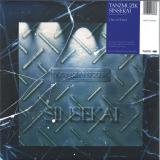
The incredibly beautiful album "SHINSEKAI", released in 1994, is finally being reissued. Long considered a phantom masterpiece and a cornerstone of Japanese techno, the album had been out of print for many years due to the business circumstances of its original label, RISING HIGH.
For the 58th outing of the Wrecks anthology we're very happy to welcome the new Argentinian producer Gaston Cabrera to the ranks. Gaston has piqued our interest for a while now with his unique and atmospheric productions and it's a pleasure to have him join the Klasse Wrecks family. The 'Prohibido' EP doesnt waste anytime getting to the point, a snarling beast that goes straight for the jugular. Spooky techno tropes mix with the best of yesteryear electro house stylings, it's a sound that feels new and exciting yet at the same time very familiar. Both raw and musical, the 4 song record could soundtrack either a long lost John Carpenter horror or a Tron-esque retro sci-fi movie.
Drumcode welcomes another debutant to the label, as Metodi Hristov unveils his stunning ‘Build to Destroy’ EP. The Bulgarian DJ/producer has been building a solid body of work stretching back a decade, releasing quality drops on labels including Terminal M, Octopus and Filth on Acid, meaning he’s long been on Adam Beyer’s radar. Drumcode, in turn, has always been a goal label for Hristov to release on. He explains: 'I’ve always wanted to release on Drumcode, but it was not a fixed plan till October last year when I fully embraced the idea and nailed it with my heart and mind. I ended up in a long three-month studio session from which I extracted some of the best productions I’ve made in my career.' He wasn’t wrong. The EP leads with ‘Flatline’, a straight up sexy techno track with bags of groove and charisma, driven by dreamy synth lines and an arresting vocal, while balancing silky and punchy elements with a deft ease. ‘Build to Destroy’ is a bulldozing beauty that fires out of the starting blocks with plenty of low-end energy, before moving into a succession of atmosphere-laden bass stabs and effects of varying rhythms and intensity. It’s a dynamic cut that piques interest to the end and a very solid addition to the Drumcode discography.
Repress!
Originally released in 1973, Black Pearl’s overall sound is the epitome of cool, orchestral funk / dramatic styles of the 1970s (e.g. “Next Stop LA”, “Collect”, “Oh! Militia”, “Choctaw”, “Black Pearl”, and “Blue Shadow”). Also featured are several more romantic, laid-back, emotive pieces such as “Miraculous Dream”, “Tryst”, “Sunny Monday”, “Melody and Lace”, “Monochrome”, “No Return”. Not to mention a couple of surprise solo honky-tonk piano jaunts – “The Vamp” and “Night of the Garter”.An eclectic mix that is sure to pique anyone’s interest. The album was produced by Alan Parker and Alan Hawkshaw, who is perhaps best-known for composing “The Champ”, which has been widely sampled and emulated by hip hop artists.“Library records are a collection of little one-minute pieces for soundtracks recorded by session musicians for movies, TV, student films, whatever. I don’t actually know the story behind when, why, or where they were made but…there were a bunch of different labels that made them and still probably do, and I was on the hunt for any recorded between 1969 and 1976. They all have random song titles like “Bouncy Strut” with descriptions like “hard-driving beat with percussion.” So imagine how much funky shit is on them. For me, De Wolfe Music was the best.”– Adam “Ad-Rock” Horovitz of the Beastie Boys
DJ Support: Luke Una, Leftfield, Ewan McVicar, Optimo, Damian Lazarus, Jimpster, Hifi Sean, Lovefingers, Heidi Lawden, Justin Robertson, Damian Harris, Sean Johnston (ALFOS)
Electronic music icon Jon Dasilva continues to push forward into the future with “Sun Brings Joy”, alongside Swedish production compadre Skyskrapa and vocalist extraordinaire Donald Waugh.
Coming in a few different flavours, the Bass ID mix has already piqued interest on the socials... is it house? Is it techno? Is it bass music? Who knows, but Luke Una has already called it “the tune of the year”…
The package is completed with a remix from in demand genre bending dj/producer Spatial Awareness.
A mercurial producer, he has had a string of cutting-edge productions to his name spanning over two decades, on labels including Ellum Audio, Rush Hour, Soma, Mute, Deconstruction, Better Days, Eskimo, and many more. His early productions were considered seminal works, combining breaks, African influences, Acid and Bleep culture.
He is in the process of finishing a number of electronic projects for labels such as Balkan Vinyl, Mighty Force, I Love Acid and Hottwerk.
- 1: Wid The Snippets Feat. Ram One
- 2: Prophet Of Doom
- 3: High Scores
- 4: Hailstorm
- 5: Th Dimension Feat. Pique Roscoe
- 6: Never Lost It
- 7: Vunerable Youngens Feat. Kieran
- 8: From The Drop
- 9: Bleeding The Steeze
- 10: Boiling Point Feat. Bil Next
- 11: Get To The Shubz
- 12: Shelly An Feat. Wates & Tommy Mila
- 13: The Internet Feat. Jehst & Farma G
- 14: Struggling To Swim
- 15: Not Speaking
- 16: Possi'o Feat. Axel Holy, Sk!Nt, Shogun & Verbz
- 17: The End
- 18: Boisterous (Bonus Track)
- A1: Eyeroll (Feat Elvin Brandhi) (4 01)
- A2: Malikan (Feat Abdullah Miniawy) (4 08)
- A3: Move On (Feat Iceboy Violet) (3 44)
- A4: 99 Favor Taste (Feat Juliana Huxtable) (0 57)
- A5: Nontrival Differential (Feat Elvin Brandhi) (4 25)
- A6: Partygoodtime (Feat Ledef) (0 09)
- B1: Cut Cut Quote (Feat Elvin Brandhi) (4 22)
- B2: Pique (4 26)
- B3: If The City Burns I Will Not Run (Feat Abdullah Miniawy & James Ginzburg) (3 23)
- B4: Hasty Revisionism (3 14)
- B5: Lacrymaturity (2 43)
Black Vinyl LP. The world has changed, we shouldn't try and pretend otherwise. While we were shut away in isolation our routines shifted, social patterns evolved, and our hopes and dreams were twisted into cobwebs we're still trying to wipe from our fingers. Ziúr tentatively approached this on her last album Antifate, an ambitious and complex hybrid pop fever dream that looked back to a Medieval escapist fantasy as the scent of revolution seemed to hum in the air. But when restrictions were eased, she found herself staring down a discombobulated society that had trapped itself in a spiral of microwaved nostalgia and detached, narcotic repetition. Eyeroll then is Ziúr's musical panacea, a tincture to wake us from our creative slumber and prompt external connection and reflection. It's a polyphonous hex that demands human interaction, and Ziúr's hand-picked alliance of collaborators - Elvin Brandhi, Abdullah Miniawy, Iceboy Violet, Juliana Huxtable, Ledef, and James Ginzburg - each provide distinct voices that together herald a bewildering sonic epoch. Ziúr's palette had to evolve to match the scope of the project, but it was pure necessity that informed the album's defining tone. Recording mostly at night, Ziúr was conscious of the noise she was making so developed a unique way to record organic percussion. Using a set of rototoms - low profile tunable drums - she scratched, scraped and gently tapped the skins to build up the undulating and unstable rhythmic backdrop for each track. It's the first sound we hear on the opener 'Eyeroll', rattling like lost marbles against Elvin Brandhi's primal croaks and screams. And when Brandhi's twisted articulations form words, Ziúr matches the energy with chaotic thuds and serrated blasts of saturated electronics. "I roll the shittiest cigarette," she squeals like she's about to start a mosh pit at Paris's GRM Studios. Without pause, Abdullah Miniawy takes over on 'Malikan', building on the promise of material with Simo Cell, Carl Gari and HVAD with corrosive trumpet blasts and charged, politically incendiary Arabic vocals. Inspired by pre-Islamic poetry and the Qu'ranic chanters he heard growing up in Saudi Arabia and Egypt, he spins labyrinthine stories that cross between the worlds, breaking down physical and spiritual borders simultaneously. Miniawy's scope is expanded even further on his second collaboration, 'If The City Burns I Will Not Run'. "If it rains and the city drowns," he utters over gaseous electronics, "I will not run away, but I will be anxious for the heart of one close to me." After a supple vocal turn from Manchester's Iceboy Violet on 'Move On' and a surreal interlude from poet- DJ-artist-theorist Juliana Huxtable on '99 Favor Taste', Brandhi returns with two more hyperactive collaborations: ,'Nontrivial Differential' and 'Cut Cut Quote'. On the former she slices into Ziúr's skeletal jazz eruptions, screaming and crooning interchangeably, fluxing between the rap battle and the cabaret. The latter is completely different meanwhile, with Brandhi settling into her role as front-woman and groaning dizzying improvised passages that sound like grunge crossed with psychedelic no-wave. Brandhi's spiky musical history has prepared her well for this collaboration; she's a prolific producer and has been using her voice spontaneously since debuting with father-daughter improv duo Yeah You in the mid 2020s. She's found an ideal foil in Ziúr, a producer who matches her restless energy and willingness to bend formality, and leaves an indelible mark on Eyeroll. But the album's most tender moments are from Ziúr herself, who winds the album down on 'Hasty Revisionism', growling over collapsible beats and cascading strings, and comes to an unexpected conclusion with country coda 'Lacrymaturity'. Its feverish amalgamation of country music and euphoric, experimental electronics might seem incongruous at first, but in context with the rest of the album is the only possible conclusion. With Eyeroll Ziúr is making a firm statement about togetherness, humanity, and the renewal of hope when all seems lost. By bringing together such a wide but philosophically harmonic team of collaborators, she's conducted a body of work that speaks to the creative fringe in no uncertain terms. Now's the time to throw away what you think you know, and build bridges you didn't think you need. Now's the time for action. She may have spent her entire career avoiding the solipsistic trappings of "queer art", but by assembling a communal statement that questions so many normative assumptions about music, politics, and beyond, Ziúr has chanced upon her queerest album yet. Cringe? Eyeroll.
- Rorbach
- Kircheim
- Handschusheim
- Neckargenm?Nd
- K?Ln Hfc
- E Lemon
- Mannheim Hbf
- Heidelberg Hbf
- Weisloch-Waldorf
- Aachen Hbf
- Parkplatz
"So the bad news is, in a fit of pique, I asked Chat GPT (nicely) to compose a one-sheet for the new Shit and Shine double album, Mannheim HBF. The even worse news (yes, even worse than resorting to such tactics) is that the resulting biography is halfway passable and on some levels, superior to the sort of thing being published by what’s left of our weekly coupon-shoppers. But for fuck’s sake my friends, Craig Clouse did not get to where he is today today by settling for halfway passable and neither should you. That Shit and Shine’s discography is vast and dizzying is already well established; what’s not nearly as established are these recordings being specifically dizzying. I don’t know if there’s anyone else in modern music as skilled in waltzing around the periphery of so many disparate idioms ('noise', being one of the least prominent this time around) and somehow, against all odds, tying ‘em together in the most intricate of knots. And who doesn’t love knots? We all have our favorite ways to experience music that’s all-engulfing, but whether your preferred method is thru a stadium sized sound system or ear buds affixed as you’ve leapt off the tallest building in Bastrop, TX (the Jerry Fay Wilhelm Center for the Performing Arts, since you asked), not for the first time, Shit and Shine is entirely appropriate in either instance, possibly every instance. There are moments where I think this is a club record. The Friars Club, however. Far be it from me to provide guidelines for how and when you take in Mannheim HBF. 'No interruptions', 'no distractions' are merely suggestions on the label’s part, though we cannot be held responsible for what happens if you ignore ‘em. Thank you."
I talk quite regularly with Basic Rhythm about all sorts of topics and he regularly sends me music that he's working on, of varying styles and sounds. When he sent me Gargantua last year, there was something about it where even though it wasn't very sonically similar to a lot of the other music I've put out on Future Retro London, there was something about that piqued my interest. I played it out a few times and noticed that there was an energy to it that I enjoyed and I eventually got over my hesitations and signed it for the label. I also did my own remix of Gargantua to try out a few ideas I had for how it could sound a bit different but still maintain the spirit of the original.
Selectors Convention was initially made for a forthcoming joint label project (which is to come hopefully next year, fingers crossed) but was better suited for coming out on a release with Gargantua, as I thought it was similar in the hard edge dancefloor approach that is embodied in Gargantua. I also did a VIP of Selectors Convention, based off wanting a special version of it to play at a Future Retro London event.
Thanks to Basic Rhythm for Gargantua (and letting me remix it) as well as supplying the source images for the artwork.
The first in a four-volume retrospective of Kuduro and tarraxinha pioneer DJ ZNOBIA. Incoming unto the world for a very long time from the musseke of Rangel, home of Casa da Mé&e Ju, in the Angolan capital o Ldanda, one if not the pivotal visionary of his country’s music electronic and digital modernism DJ Znobia, o/fum/an inventor. Usually considered the first purveyor of the fluency regarding tarraxinha (drinking in its foundational slow shuffle from the city of Benguela), as well as a main player in free thinking, spontaneous, funny, depressive, silly, melancholic, hilarious all encompassing beats within kuduro, batida, techno and beyond, his influence as a producer, DJ, MC and public fiuce has had a great imprint in Angolan culture for the better part of the last three ecades. This venture went through over 700 tracks of his archive (more than double are lost in the meantime between his and the NNT library) in order to collaboratively select a fiercely representative albeit balanced affair from his production, between instrumentals for sung kuduro, instrumental kuduro/batida, sung and instrumental tarraxinha, and other creative styling from the late 90’s to the mid 2000’s. Forms now heard around the world which started here, with Znobia a decisively influential contributor, along with several of his peers and collaborators, which will be also in evidence in this four volume retrospective. His story is way too far flung for this endeavor to try and make a simple narrative out of it. You have to be him, you have to be within this territory, and we ask of the people who will approach to ask him what has happened with the history of this music and what is the current reality at ground zero Luanda, as he is a mirror and visionary of its streets, in a country with such complicated dynamics and brutal treatment of its citizens. To try to put in a clean slate for this conversation, let’s talk to a genius of street music. Your question. First, here's the opening collection of what we have to share with you.
Klagelied für Klavier und Orchester:
Die LP-Version der erfolgreichen CD-Aufnahme von Arvo Pärts Lamentate, gespielt vom spanischen Pianisten Pedro Piquero und dem Orquestade Extremadura unter Leitung von Álvaro Albiach. Ebenfalls in der Aufnahme enthalten sind Psalom für Streichorchester und Cantus in Memoriam Benjamin Britten. Diese Einspielung wurde in Spanien mit dem Melómanode Oro Award ausgezeichnet, und erhielt 5 Sterne im spanischen Magazin Ritmo. „Diese CD ist kohärent, drückt ein authentisches und bewegendes Gefühl aus, wird vom Pianisten hervorragend gespielt und scheint mir eine der besten Einspielungen von Pärt zu sein, die es gibt.“ (Scherzo, Spanien).
- You're All I Need To Make It
- Who Knows
- I'm Gonna Keep On Loving You
- Sock It To 'Em Soul Brother
- Too Far Gone
- You Can't Blame Me
- Number One
- Row My Boat
- Without Love
- I Want To Be Ready
- Your Love Keeps Drawing Me Closer
- Hot Grits!!!
- I Can't Take It
- Can We Try Love Again
- You're My Desire
- A World Without You
- Go On Fool
- Pure Soul
- It To 'Em Soul Brother (Inst.)
- All I Need To Make It (Inst.)
Where everything Numero begins. Three guys in a purple Saturn station wagon drove down to Columbus, Ohio, and came back to Chicago with a lost label - the rest is history. In the early '70s, Bill Moss' Capsoul imprint could barely break wind in the larger music marketplace, and yet today the label's output can stand shoulder-to-shoulder with any classic soul of its era. Isolated in central Ohio and lacking the funds to back them, groups like the Four Mints and Johnson, Hawkins, Tatum & Durr might've easily withstood ten rounds against the Temptations, Smokey, or Otis. The scrappy Capsoul writing team of Dean Francis, Jeff Smith, and Norman Whiteside would've thrown blow-for-hook-filled-blow with any Gamble & Huff or Holland/Dozier/Holland thrown at them. From Bill Moss' civil rights meditation "Sock It To 'Em Soul Brother" to Marion Black's future hit about the future "Who Knows" to Kool Blues bounding "I'm Gonna Keep on Loving You," Eccentric Soul: The Capsoul Label remains dollar-for-dollar the best soul compilation of its century and the perfect primer for anyone piqued by the Eccentric Soul series - otherwise known around here as the "budding Numero enthusiast."
The first in a four-volume retrospective of Kuduro and tarraxinha pioneer DJ ZNOBIA. Incoming unto the world for a very long time from the musseke of Rangel, home of Casa da Mé&e Ju, in the Angolan capital o Ldanda, one if not the pivotal visionary of his country’s music electronic and digital modernism DJ Znobia, o/fum/an inventor. Usually considered the first purveyor of the fluency regarding tarraxinha (drinking in its foundational slow shuffle from the city of Benguela), as well as a main player in free thinking, spontaneous, funny, depressive, silly, melancholic, hilarious all encompassing beats within kuduro, batida, techno and beyond, his influence as a producer, DJ, MC and public fiuce has had a great imprint in Angolan culture for the better part of the last three ecades. This venture went through over 700 tracks of his archive (more than double are lost in the meantime between his and the NNT library) in order to collaboratively select a fiercely representative albeit balanced affair from his production, between instrumentals for sung kuduro, instrumental kuduro/batida, sung and instrumental tarraxinha, and other creative styling from the late 90’s to the mid 2000’s. Forms now heard around the world which started here, with Znobia a decisively influential contributor, along with several of his peers and collaborators, which will be also in evidence in this four volume retrospective. His story is way too far flung for this endeavor to try and make a simple narrative out of it. You have to be him, you have to be within this territory, and we ask of the people who will approach to ask him what has happened with the history of this music and what is the current reality at ground zero Luanda, as he is a mirror and visionary of its streets, in a country with such complicated dynamics and brutal treatment of its citizens. To try to put in a clean slate for this conversation, let’s talk to a genius of street music. Your question. First, here's the opening collection of what we have to share with you.