Search:pita

Styles
All
BLACK TO COMM - AT ZEENATH PARALLEL HEAVENS

Over the course of 20 years, German artist Black To Comm (Marc Richter) has pushed the limits of / and merged the aesthetics of art, conceptual installations, and music, coming in a wave of innovation alongside his peers Pita, Fennesz, and later Sarah Davachi to name a few. Through it all Richter as Black to Comm has challenged assumptions, explored identity, and confronted the concept of authorship itself. At Zeenath Parallel Heavens finds Black to Comm contemplating the hybridity within each and every one of us, be it sexual, racial, cultural, or linguistic. Richter mirrors personal dualities musically with a combination of sounds he created and manipulated samples, blurring their boundaries. "I always try to blur the line between sampling and my own recordings, also between "real" instruments,MIDI, electronics, editing, between authenticity and theatrics/artificiality," says Richter. When recording he became aware of how AI text programs processing resembles his own methods. "I had the realization recently that the way I compose is not too dissimilar to what AI software is doing nowadays - especially when the AI is hallucinating (this is the term used when the AI is overloaded/overcharged/inundated and comes up with made-up results)." Human behavior reflected in a computer facsimile of human intelligence appealed to the ethos of Black to Comm, whose titles and concepts are often oblique and tongue-in-cheek.

pre-order now20.10.2023

expected to be published on 20.10.2023

29,62
BLACK TO COMM - AT ZEENATH PARALLEL HEAVENS

Over the course of 20 years, German artist Black To Comm (Marc Richter) has pushed the limits of / and merged the aesthetics of art, conceptual installations, and music, coming in a wave of innovation alongside his peers Pita, Fennesz, and later Sarah Davachi to name a few. Through it all Richter as Black to Comm has challenged assumptions, explored identity, and confronted the concept of authorship itself. At Zeenath Parallel Heavens finds Black to Comm contemplating the hybridity within each and every one of us, be it sexual, racial, cultural, or linguistic. Richter mirrors personal dualities musically with a combination of sounds he created and manipulated samples, blurring their boundaries. "I always try to blur the line between sampling and my own recordings, also between "real" instruments,MIDI, electronics, editing, between authenticity and theatrics/artificiality," says Richter. When recording he became aware of how AI text programs processing resembles his own methods. "I had the realization recently that the way I compose is not too dissimilar to what AI software is doing nowadays - especially when the AI is hallucinating (this is the term used when the AI is overloaded/overcharged/inundated and comes up with made-up results)." Human behavior reflected in a computer facsimile of human intelligence appealed to the ethos of Black to Comm, whose titles and concepts are often oblique and tongue-in-cheek.

pre-order now20.10.2023

expected to be published on 20.10.2023

32,35
Sha Ru - Time Turns Liquid

Sha Ru

Time Turns Liquid

12inchJPT015
Jupiter4
19.05.2023

"After breakthrough releases in labels like Kindergarten, Shubzin and Pressure Dome, New York duo Sha Ru lands on Jupiter4 for a Bass infused, Half Time impressive release. Early support from Darwin, Simo Cell & Laksa"

out of Stock

Order now and we will order the item for you at our supplier.

11,72

Last In: 2 years ago
TIN MAN - SHOOTING STARS EP

Tin Man

SHOOTING STARS EP

12inchSALON018
Salon Records
14.02.2023

Limited to 500 copies

Shooting stars is the new single from the acid house american specialist Tin Man. A slow acid pop song that will drive you high for sure. The single comes with two different remixes of « Electric blue » from the frenchies Monkey Nenufar (Leiris & Ben Vedren). Non-standard Tobias Freund suggests a new vision of « Love sickness ». Both original tracks were released on salon records in 2011.

out of Stock

Order now and we will order the item for you at our supplier.

11,30

Last In: 23 months ago
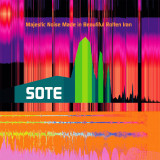
Sote - Majestic Noise Made In Beautiful Rotten Iran

It's an all electronic affair, harmonically maximalist, predominantly symphonic-synthetic, requiring active listening. Some pieces function as challengers of musical structural habits, provoking the short attention span culture, others present a problem-solution scenario, collectively via a neoteric noise aesthetic and detailed melodic weaving. Ultimately, the objective was to engineer an assortment of works full of sound, euphonic and vivid in nature.

The making of this album was intentionally a very personal process, going into self therapy territory at times interpreting the composer's contemplating mind dealing with tolerance, destruction, compassion, misery, grace and tyranny in an auditory manner. Some pieces function as challengers of musical structural habits, provoking the short attention span culture, others present a problem-solution scenario, collectively via a neoteric noise aesthetic and detailed melodic weaving. Ultimately, the objective was to engineer an assortment of works, awash with euphonic sound vivid in its essence, with a deep focus on various synthesis techniques within a compositional framework.

Dedicated to Peter Rehberg aka Pita

Ata 'Sote' Ebtekar composes music with a deeply-held conviction that rules and formulas should be deconstructed and rethought. He alters musical modal codes from their original tonality and rhythmic tradition to achieve vivid, synthetic soundscapes. Over the last three decades, his work has been published by labels such as Warp, Sub Rosa, Opal Tapes, Diagonal, Mute and Morphine, among others. In 2018, he founded a new label called 'Zabte Sote', which focuses on releases by Iranian experimental electronic composers from around the globe.

Known for creating compositions that range from the delicate to the abrasive, using sounds both of acoustical and electronic origins, Ebtekar sees music as the expression of cultural habits in sound and anti-sound (silence). Seeking to expand such traditions he creates music that, while rooted in many cultures at once, belongs to none in particular. Sote's work deals with various blueprints, in particular his solo all synthetic music, his electroacoustic audio/visual group project, and his multi-channel sound installations. Sote is on the jury panel of The DAAD Artists-in-Berlin Program, and has created commissioned work for and performed at a.o. Berghain and CTM Festival (Berlin), Unsound Festival (Krakow), Cafe Oto (London), Jazzhouse (Copenhagen), TodaysArt Festival (The Hague), Bozar (Brussels), Ultima Festival (Oslo), Donaufestival (Krems), Donaueschinger Musiktage, Mira (Barcelona), Terraforma (Milan), and many more.

pre-order now20.01.2023

expected to be published on 20.01.2023

18,11
Various - Begging the Moon: Phleng Thai Sakon & Luk Krung, 1945-1960

Begging the Moon is a collection focused upon an early-to-mid 20th century style of Thai popular song, commonly named Phleng Thai sakon (meaning "song which is both Thai and universal"). With recordings taken from the end of WWII until the start of the 1960s, many of these tracks may also be referred to as Luk krung (meaning "child of the city") a more urbanised style of popular song that is in contrast to the Thai country music known as Luk thung ("child of the field").

Following the Thai cultural revolution of the 1930s and the following reign of west-leaning premier Plaek Phibunsongkhram, Thai culture began to adopt more and more western influences - with Thai traditional and classical music starting to incorporate western notation and particularly Jazz-orientated themes. Thai folk melodies were also adapted to create "ramwong" - a merging of popular western dance music styles such as the tango or rumba, spear-headed at the time by the pioneering Suntaraporn band.

In the years following the end of WWII, the Phleng Thai sakon began to gradually develop sub-genres such as phleng talad (market songs) or phleng chiwit (life songs) focused on rural topics, and sung with rural accents. A little while later this would lead to a formal demarcation in the music - with the polished and western ballad-orientated music known as Luk krung, and the more traditional/country style now dubbed Luk thung. The gap between the two would then widen, both musically and culturally, right up to the present day.

The recordings compiled here can broadly be categorised as being in the former Luk krung style, though some tracks may touch on rural subjects and motifs. However that is not to say they are overpowered by western musical influence - many of these tracks display potent aspects of traditional Thai music within their beguiling and romantic arrangements.

Thanks to Peter Doolan/Monrakplengthai.

out of Stock

Order now and we will order the item for you at our supplier.

14,71

Last In: 3 years ago
Frantz - General Magic 2x12"

Frantz

General Magic 2x12"

2x12inchEMEGO010V
Editions Mego
07.02.2022

First time vinyl issue of this 1997 Mego classic. General Magic, the duo of Ramon Bauer and Andi Pieper, who, alongside Pita, first pioneered the classic Mego sound on the Fridge Trax 12” in 1995. The following year proved to be formulative when Mego released Frantz alongside a slew of game changing releases from Farmers Manuel, Pita and Fennesz.

Originally released as MEGO 010 Frantz presented a thrilling digression from what was in vogue in music at the time. This was the advent of portable computing and the Vienna based label was at the forefront of harnessing the potential of audio within this new technology.

At once smart and playful these releases reconfigured once disparate genres such as industrial, techno, glitch and the avant garde, folding them into a bright, audacious and euphoric new system of sound. The music on Frantz (named after the Austrian skier, Franz Klammer) still pushes the boundaries of acceptable audio constructions with it’s startling fried electricity and twisted sensibility. The sense of joy in the audio discovery is palatable as techno laced explorations unfold a variety of unexpected and unprecedented sonic manoeuvres.

Tyrell launches proceedings as schizophrenic stuttering handclaps simultaneously slice into pieces as it propels forward. The bending of the brain is on display with the likes of ‘Obvious’ and ‘Close, But Not Quien’. Temko skewers digital debris in which a ghost melody comes to the fore. Brazen rhythms mobilize the tracks ‘No Ketting’ and ‘Bonden’ whilst the Official GM Ski-WM Theme is a short stab of priceless pop wizardry skittering about a strange exhilarating melody in homage to the finest of winter activities.

This reissue also includes ‘Die Mondlandung’ which was released as a 12” in 1995 (MEGO 002), and has never been released anywhere, physical or digital, since. This track is based on the live German TV coverage of the moon landing. An apt theme for the abundance of exploration contained within this classic release.

--

About Frantz ... and Peter (by Ramon Bauer & Andi Pieper, November 2021):

Listening to the test pressings of the remastered Frantz album for the first time on vinyl, 25 years after the original release on the then still young Mego label in 1997, felt like uncovering an ancient artefact. In those exciting days during the mid-1990s, together with the late Peter Rehberg, we founded a label called Mego to further explore the wonders of electronic music. And that is what we did for the next 10 years until everything became too much with the label in somewhat rough waters. So we dropped out of music business and pursued different things. It was Peter who continued producing and releasing music with the restarted label, now called Editions Mego. Until his unexpected death in July 2021, he developed Editions Mego into the grown-up and much acclaimed outfit for which it is known today. We will forever miss Peter’s inspiring personality and his uncompromising creativity. His legacy will live on in his music and in the vast and rich Mego and eMego catalogues. We are humbled and proud to have played a role in those formative years of the label.

Peter approached us in October 2020 with the idea to do a vinyl reissue of Frantz, just in time for the 25 year anniversary of its release. That came as a complete surprise for us, General Magic had not released any music or performed live for over 15 years. Anyway, we were delighted with the prospect of having that General Magic "classic" remastered (by the exceptional Russell Haswell) and released for the first time on vinyl on Editions Mego.

Frantz is a collection of tracks that we produced in 1995 and 1996 right after recording “Fridge Trax” (with Peter) and “Die Mondlandung” (which comes as a bonus track on this reissue). At that time, we started to migrate our analogue gear to 64 MB RAM computers and used almost every other digital thing that yielded a sound by any means. We even deliberately crashed our then so-called "Powerbooks" and scratched self-produced CD-Rs until they produced previously unheard sounds. Real time audio processing with computers was barely a thing back then (before SuperCollider was released), but cheerful massaging of sound files yielded interesting results and the future looked bright. Listening to Frantz today, with decades of distance, there are some parts that might appear dated by modern standards, but the energy and the general magic of that period is well captured.

All Frantz tracks were produced in Andi's studio in Berlin and at Mego Vienna. The Mego studio/office was a vivid place located in an old factory on the outskirts of Vienna. We shared the place with Tina Frank, who created most of the early Mego covers and videos. Other artists, musicians and friends were hanging out there almost every day. Many ideas on Frantz are a product of that particular environment. “Mimi”, for example, is based on a field recording in the backyard of the factory, where we also shot the video for “Tyrell”. “11.25” contains sounds from the Prague train station we regularly passed through on the night train travelling between Vienna and Berlin. Other sounds were sourced from the early internet and mangled on the computer, carefully preserving those early audio codec artefacts. While working on the Frantz tracks at the Mego Vienna studio, Peter was usually around, as he was literally working and living there. And so, of course, he also made an impact on that album: It might not be widely known but Peter even appeared on Frantz contributing his voice to the choir on “The Official Ski WM Theme”.

Let there be Frantz!

out of Stock

Order now and we will order the item for you at our supplier.

25,84

Last In: 4 years ago
GORDAN - DOWN IN THE MEADOW

Truly adventurous and life enhancing music that invigorates your soul. TIP!

Press Release:

Gordan join traditional Serbian singing with abstraction, energy and minimalism. Their music is marked by radical reduction, seemingly endless ascension and a passion for experiments.

The Serbian singer Svetlana Spajić is an internationally recognized and acclaimed artist. She, like almost no other contemporary singer, is a master of all the complex local stylistic variations of singing from Balkan music. Guido Möbius plays bass and various electronic sound generators. Additionally he uses guitar amps, microphones and effects to provoke feedback which either harmonize or are juxtaposed with the song. It is a dialogue between sound and noise which is accentuated or fragmented by means of Andi Stecher’s expressive drumming. With a rich pool of ideas the percussionist drives the sound forward breathlessly and grounds it. Together the trio form a dynamic body of sound.

Gordan recorded their debut during the first wave of the Covid19 pandemic in Europe in March 2020. Due to the lockdown in Berlin at that time the city didn’t have many distractions to offer, so the trio just concentrated on work. The atmosphere of being isolated in a recording studio had a big impact on the musical results. All three band members came up with ideas for new pieces, which were immediately tested, worked out and recorded. On abstract instrumentals provided by Stecher and Möbius, Svetlana Spajic sometimes reacted with personal interpretations of serbian traditionals, and the other way around. Most of the time it was as if the music just happend to the band; playing together felt natural from the first moment on.

Some of the old serbian traditional songs that Spajic sang are extinct forms with a specific local melodic mode. The skillful improvisation of their lyrics and ornaments was of great importance and very estimated among village singers. The title song Down In The Meadow for instance originally is a love song from the village of Odevce in eastern Kosovo, Serbia. The singing manner is of a great intensity and sonority, with lots of specific local ornaments. It disappeared along with the village communities from the area. Oh, my Rose flowers is from the region of Kopaonik mountain (southwest Serbia) and the mode, scale is known as ”kopaonički glas” (Kopaonik mountain air). Svetlana adopted the style from the late singer Veličko Veličković from the village of Ostraće. It is an old mountain solo chant, rich in fast ornamentation movements and microtonal intervals. Don’t ask how I live is Svetlana’s homage to the new popular folk music movement from the 80ies known as Južni Vetar (Southern Wind) led by a musician and composer Mile Ilić, known as Mile Bas (“Mile the Bass”) which revolutionized popular music introducing tabooed oriental music and original arrangements.

All music by Spajic Stecher Möbius except ‘Don’t Ask How I Live’ by Miodrag M. Ilić, original title Što me pitaš
All lyrics are traditional, except ‘Don’t Ask How I Live’

Svetlana Spajic — vocals
Andi Stecher — drums & percussion
Guido Möbius — bass, feedback, electronics

Recorded by Alberto Lucendo at UFO sound studios Berlin in March 2020 mixed by Morphosis
Mastering by Neel at Enisslab, Rome
Artwork by Lorenzo Mason Studio

out of Stock

Order now and we will order the item for you at our supplier.

16,43

Last In: 4 years ago
Roberto Musci - Loa of Music (The Complete Sessions) 2x12"

Italian experimental music is notoriously resistant to definition and location. If ever there was an object to encapsulate the spirit of that movement, it is the composer and musician Roberto Musci’s debut album from 1984 - The Loa Of Music. Recorded after a decade travelling the world - drifting between African, Indian, and the Near & Far East - studying music, making field recordings, and collecting instruments, not only is it a perfect culmination of such an experience, but a lens into the rigorously democratic and international spirit of the generation of artists to which Musci belongs. Phenomenally ambitious,The Loa Of Music entirely refuses the well trod path - distilling a remarkable range of sonic reference and reality. A work of field recording, musique concrète, electronics, synthesis, and instrumentation, pulling from countless musics from across the globe, the result is nothing short of brilliant and stunningly beautiful. A near perfect work - an egoless gesture, which rather than attempting to find consensus, offers every voice equity and cohabitation - harnessing the history music, with all of its cultural diversity, as a vision for a more ideal future. Geographies and their sounds intertwine, while Musci’s interventions and instrumentation thread a path. Ambiences ripple, sounds and voices converse in a vision of unity that may only exist within sonic realms. Unquestionably seminal, and one of the most important works to emerge from Italy in the last 50 years. Never before issued on vinyl since it’s original release, and surely not to be around for long, this is one not to miss.

out of Stock

Order now and we will order the item for you at our supplier.

34,08

Last In: 4 years ago
GWAKASONNÉ - VWAYAJÉ

Gwakasonné

VWAYAJÉ

2x12inch16SC
SEANCE CENTRE
26.07.2019

“Stop here!” exclaimed Robert Oumaou as we passed a mango tree on the side of the road just outside of Point-a-Pitre, the balmy capital of Guadeloupe. He filled a plastic bag with ripe fruit, and we set off on our journey across the small Caribbean island in search of musicians he hadn’t seen in years. On the way, we shared stories in broken French and English, stopping at truck stops to eat delicious fried fish. Robert took me to his hometown, and placed a mango and a flower on the grave of his teacher and mentor, a local poet. The seeds of Vwayajé (Traveller) were sewn on this trip, but shortly after returning home, I heard that Robert was ill, and he sadly passed away in 2018. This compilation was originally intended as a way to share Robert’s brazen work with a wider global audience, but it now also serves to immortalize his indomitable spirit.

Gwakasonné is the ecstatic articulation of Robert Oumaou’s artistic and political vision, a unified expression of his interests in American jazz, pre-colonial rhythms, Guadeloupian independence, and Créole poetics. Over the course of three albums, all released in the 80s, Robert piloted a revolving cast of musicians, a venerable who’s-who of Point-a-Pitre avant-jazz pioneers, to deftly intone his creative communal concepts. The songs on Vwayajé are compiled from these three releases, Gwakasonné, Temwen, and Moun, along with an electronic mantra taken from his 2007 solo album Sang Comment Taire. Viewed from our current artistic and cultural landscape, Robert’s work is exceptionally enduring, grounded in its declarations of freedom and foundational use of the Ka (drum) and voice, and prescient in its borderless explorations of protest folk, electronics, ambient atmosphere, music from the African diaspora, and spiritual jazz. The long-form hive-mind expression of the group has parallels with similar explorations by The Grateful Dead, electric
Miles, Pharaoh Sanders, and even the Boredoms, but these are only oblique references for a truly peerless sound. Like other conceptual children of Gérard Lockel, the group was part of a progressive movement of like-minded musicians, such as Serge Fabriano, Dao, Erick Cosaque, and Gaoulé Mizik, who embraced Lockel’s modernist ideals, fusing Gwo Ka drumming and tuning systems with contemporary jazz and vanguard recording technologies. Robert’s ecstatic phrasings, embrace of electronic instruments, and daring lyrics set the group apart as the beatific expression of a sagacious soul.

out of Stock

Order now and we will order the item for you at our supplier.

26,51

Last In: 6 years ago
Npvr - 33 33

Npvr

33 33

12inchEMEGO251
Editions Mego
28.12.2017

NPVR is moniker taken on board by PITA AKA Peter Rehberg and Factory Floor's Nick Void. 33 33 is their debut recording made in July, 2017 at The Premises, London.

Peter and Nik both share formidable reputations in the post industrial shape-shifting world of sound and form with a vast range of releases and collaborative endeavours over a number of years. Together they tie together their collective experience into a vast array of sonic devices unleashing an album of pragmatic imbalance and psychedelic orientation. Blurring the lines of techno, ambient, avant garde, noise etc

33 33 positions itself in the nebulous realm of contemporary (dis)comfort presenting itself on the border of music and sound, the social and the private.

All tracks by Nik Void & Peter Rehberg
Recorded and edited at The Premises, London, July 2017
Mastered by Russell Haswell at Haswell Studio, London, August 2017
Cut by CGB at Dubplates & Mastering, Berlin, September 2017
Artwork by Nik Void

out of Stock

Order now and we will order the item for you at our supplier.

18,45

Last In: 8 years ago
Items per Page:
N/ABPM
Vinyl