A future classic - a project resurrected from a collaborative effort of the minds of late and great tastemaker and creator Mike Huckaby & Echospace's, Stephen Hitchell. Coming up on over 15 years since this project was conceived while working together on the Model 500 "Starlight" remix project back in 2008, this project truly captures a beautiful moment in time. During this period there was something magical in the air, a creative synergy and understanding of all things deep! The original mix (2008) results from a few sequences and patterns developed out of Wavetable ideas Mike was creating for a sample library he was curating at the time. The sweeps and transients found in these lofi wavetables truly add to the Detroit sound Mike's legacy was built upon, always staying true to his roots. After a few projects together (and more forthcoming) another collaboration was born with SF based (via Glasgow) producer, Federsen who simply put gives us a deeper than deep tribal stomper we're certain Huck would be dropping at peak hour! On the flip, cv313 + federsen reunite to surf Mike's wavetables once more, creating an addictive hook with a sick DETROIT saw bass deeper than the ocean floor! Intrusion's Dub closes out the EP and sends the listener deeper into the abyss, offering sonic designs from another planet, dubbed out into eternal bliss! We truly hope this project resonates and captures some of Mike's creative spirit and sound design. This 12" is a tribute to a true Detroit hero who's contributions to music and the culture are few and far between, a true legend.
R.I.P. HUCK
Поиск:planet mu
Все
lim. 2025 remastered Reissue!
Thirty years ago, LA producer Aaron Paar realized his dream of launching a label with the debut of Worldship Music, dropping the now cult classic Planet Eater EP in the late summer of 1995. Crafted on his newly acquired SP1200 and refined with mix engineer extraordinaire Greg “Ski” Royal, the record became the label’s very first release and a true vanguard single. Overflowing with the raw swing and deep grooves of classic US house, these tracks still radiate the timeless energy of the mid-90s underground. Now carefully remastered and reissued in a strictly limited edition, Planet Eater EP returns as an essential piece of house history for DJs, collectors, and true heads alike.
To submit or to surrender? Robert Johnson resident Oskar Offermann doesn’t have the answers, and that’s kind of the point. Things change: one moment you’re touring the globe as a recognizable face of one of the greatest clubs in the world, the next you’ve started a new life as a teacher. How do you handle that shift? On this record, Offermann doesn’t offer solutions so much as trace his own way through it, reflecting the whole process in his music and creative work.
Whatever the story, whatever the case, Oskar Offermann can still produce some of the most emotive, bleepy, strange dance music out there and this 12 inch is the proof. Sonically and conceptually it leans into that precise, melancholic German school: at points drawing from 80s wave and experimental music, then flirting with trancey motifs and closing in divinely crafted breakbeat. In just four tracks it packs in a surprising amount of functional range, exactly what you’d expect from one of RJ’s longest-standing residents. The A- and B-sides mirror each other: they open at full intensity, tempos pushed well past the 130 BPM mark, easy to imagine ripping through a peak-time floor – and still both sides land on something far more personal and reflective.
Even inside a framework of high-intensity club tunes, Oskar’s character shines through loud and proud. Think the slightly disjarring yet melodically captivating winds in the middle of the B1 trance induced number “Accepting”, or the masterfully paced build of opener “Planet Interface”. The same goes for A2 “Televise Improvise” and B2 “Sei mal nur lieb”: on paper they should feel like breathers next to the two behemoths, but they don’t. Offermann crams so much substance and personality into them that they become quietly dangerous. There’s that magical mix of squelchy acid, rough low end and naturalistic melodies on B2, and the relentless emotional drive of A2 “Televise Improvise”. Oskar is really, really good at making dance music irresistible.
Character, skill and honesty in one record, meant for the attentive listener and the brave DJ. A rare combination nowadays, get it fast!
- 1: Crucifixion
- 2: Primordial Sorcery
- 3: Barbarian Queen
- 4: Belly Of The Beast
- 5: Prison Planet Bios-4
- 6: A Place For Peace
- 7: Final War
- 8: In Pandemonium
- 9: Sacrificial Lamb
- 10: Vermiform (In A Perfect World)
- 11: Crystal Magic
Wiccans only make noise when they feel like it. A band that’s been uttered in reverence for nearly two decades with only a handful of releases, each one a stand-alone classic.
You see, it’s hard to pinpoint a band that actually has the equal influences of American psychedelia and hard rock all anchored in the glorious benevolence of American Hardcore. A tonne of bands dance around and flirt with each but it rarely lands in the sweet spot. They’re not trying to fit some supposed perfect space and that’s the very point so many others miss.
Wiccans are creating the space. Breaking rules and allowing a bit of breadth to what is often a claustrophobic style of music. This might sound scary as everyone knows that the more Hardcore evolves the worse it is - at least on record. The formula that Wiccans are playing with on Phase IV should scare you. It’s totally potent with odd songwriting, intensely creative and varied guitar work and completely pissed vocals. Phase IV does whatever the fuck it wants and passes the bar that only Wiccans could have set for themselves. All of this is propelled by a far stronger production quality than previous efforts and instead of having that expose some fault line it’s secured it as a modern classic.
It’s the kind of shit that will shake the dandruff from the beard of a Third Man collector but will also make that guy stop going to DIY gigs because they’re “too rough” or whatever. I’m just sitting here wondering if this is maybe what might have happened if Poison Idea wrote Hidden World. There’s always space for a carbon copy Negative Approach destroying someones basement and they usually put out a record that is clearly brilliant but fuck me if I can’t help but yawn.
Am I getting old or is Hardcore painting by numbers? In a slough of legitimately top tier Hardcore Punk releases, this one actually sounds like something truly special.
- A1: Deluxe Capacitor
- A2: All You Wanted By Michelle Branch
- A3: I Hate The Gooey Disk
- A4: The Soundtrack To Missing A Slam Dunk
- A5: Pluto Was Never Really A Planet Either Even
- A6: Wes Dault Can’t Find The Madison Falcon
- B1: *Whispers* Thank You
- B2: Good Ol’ Mr. Rags
- B3: Scream Mountain
- B4: How Do You Know It’s Not Armadillo Shellso?
- B5: There Was A Semi Fight On I-69
Purple+White Vinyl[31,72 €]
Reissue des 2018er Debütalbums von Hot Mulligan, eine der vielseitigsten und zutiefst bewegenden Bands des US-Emo-Undergrounds, deren Musik ein kathartischer Aufschrei nach Wachstum einer Generation zukunftsorientierter Mittelwestler ist, die - in den Getrieben eines verrosteten Systems gefangen - verzweifelt nach Hoffnung suchen.
The second release on Samurai Music sub label Saibai welcomes Italian sound-world-builder Pianeti Sintetici for a richly rendered foray into dynamic electronica that moves like a set of vibrant ecosystems.
Davide Perrone has developed his Pianeti Sintetici ('synthetic planets') alias to explore the idea of creating imaginary worlds through teeming, densely layered arrangements of modulating synthesis. He's previously delivered spellbinding albums and EPs to respected labels like Astral Industries and Hypnus. On SAIBAI2, Perrone ably blurs the lines between percussive, textural and melodic parts, letting voices bend and warp as each sound evolves through the labyrinthe lattice of his constructions. This is electronic music so dynamic and ever-shifting, it sounds positively sentient, and yet there's a strong emotional sentiment that binds these fantastic visions together as sincere expressions from a grounded, human perspective.
True to Saibai's focus on deeper, mellower flights of fantasy away from the dancefloor, SAIBAI2 offers a kinetic, engaging listening experience dressed up in opulent tones that gleam, shimmer, bend and flex with hypnotising dexterity.
- A1: When You Gonna Learn?
- A2: Too Young To Die
- A3: Blow Your Mind
- A4: Emergency On Planet Earth
- A5: Space Cowboy
- B1: Virtual Insanity
- B2: Cosmic Girl
- B3: Alright
- B4: High Times
- B5: Deeper Underground
- C1: Canned Heat
- C2: Little L
- C3: Love Foolosophy
- C4: Corner Of The Earth
- C5: You Give Me Something
- D1: Feels Just Like It Should
- D2: Seven Days In Sunny June
- D3: (Don't) Give Hate A Chance
- D4: Runaway
- D5: Radio
2LP 140g col vinyl
»High Times – Singles 1992–2006« erschien 2006, erreichte Platz 1 der Charts und wurde mit Dreifach-Platin ausgezeichnet. Die Tour Edition 2025 erscheint als stahlfarbenes Doppel-Vinyl mit Kunstdruck, Booklet und einem von fünf zufällig beigelegten Sammler-Laminaten mit dem Buffalo-Man-Icon.
Das Album umfasst 20 Songs, darunter den Nummer-1-Hit »Deeper Underground«, sieben weitere Top-10-Titel wie »Virtual Insanity«, »Cosmic Girl« und »Canned Heat« sowie weitere bekannte Singles wie »Seven Days in Sunny June« und »Space Cowboy« viele davon feste Bestandteile der aktuellen Live-Shows.
- Anders Gewollt
- Schwer
- Heute Abend
- Irgendwas Mit Wiederholung / Feat. Hannes Wittmer
- Meine Schuld/Deine Schuld
- Du Bleibst
- Unter Meiner Haut
- An Der Bar
- Wut / Feat. Tilman Von Tigeryouth
- Zuhause
- Beruhig Dich, Du Stirbst Nicht
"es ist nie zu spät für frühstück" ist das erste Album der Hamburger Musikerin jule. Ein Satz, der so beiläufig klingt, dass man fast übersieht, wie viel darin steckt. Zwischen Müdigkeit und Hoffnung, Alltag und Überforderung erzählt jule von dem Moment, in dem man weitermacht, obwohl längst Mittag ist. Von dem Drang, trotzdem aufzustehen, auch wenn nichts so läuft, wie man es geplant hatte. Nach mehreren Singles und der Debüt EP "Im Regio weinen" (Sommer 2024), deren Songs zwischen Unsicherheit und Wut pendeln, öffnet die Mittzwanzigerin jule jetzt ein neues Kapitel: Zum ersten Mal auch mit Band. Was früher allein mit Gitarre begann, ist gewachsen. Der Sound ist größer geworden, bleibt aber nahbar: Ehrlich, manchmal zärtlich, manchmal laut. Die elf Songs bewegen sich zwischen Melancholie und Aufbruch, zwischen Gitarre und Klavier. Sie handeln von Beziehungen die kippen, von Überforderung und dem Versuch, sich selbst auszuhalten. Von der Frage was bleibt, wenn Sicherheit fehlt. Produziert und aufgenommen wurde das Album von Alexander Kallenberg im Poolhaus Tonstudio/Hamburg, gemastert wurde es von Raphael Rasmus (u.a. Captain Planet, Matula, Deutsche Laichen) im Studio Gisela/Mühlheim am Main. Die Band bringt eine neue Tiefe und Energie in die Songs, ohne den Raum zu nehmen, die jules Texte brauchen."es ist nie zu spät für frühstück" erscheint bei Zeitstrafe und markiert für jule mehr als nur ein Langspiel-Debüt: Es ist eine Bestandsaufnahme zwischen Erschöpfung und Anfang. Kein Optimismus-Album, eher eins für die Möglichkeit, um überhaupt wieder aufzustehen.
Einer der wohl bekanntesten Songs Udo Lindenbergs ist „Cello“. Die Ballade über einen jungen Mann, der
eine Cello-Spielerein anhimmelt erschien erstmals 1973 auf dem Album „Alles klar auf der Andrea Doria“.
1997 nimmt Lindenberg „Cello“ dann erneut auf. Diesmal zusammen mit dem Filmorchester Babelsberg.
Zusammen schaffen sie das Album „Belcanto“. Jetzt kehrt ein Stück Musikgeschichte zurück. Zusammen
mit den zeitlosen, emotionalen Balladen „Bis ans Ende der Welt“, „Du und ich – und dann ganz Lage
gar nichts“ und „Die kleine Zockerin“ in orchestraler Aufmachung, gibt es die Single jetzt erstmals streng
limitiert und handnummeriert auf 10“ Vinyl mit neuem Cover in Anlehnung an das kraftvolle originale
Album „Belcanto“.
Lindenberg besingt in „Club der Millionäre“ in alter Udo-Manier den Wunsch, reich zu sein. Der Song
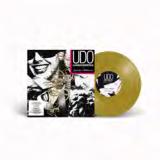
war die erste Single-Auskopplung von Udos Hommage-Album an seinen Vater, „Gustav“. Die Single erscheint nun zum ersten Mal als 10‘‘ Vinyl in Gold, streng limitiert und handnummeriert. Neben dem
Titelsong sind auf der Single zudem mit „Die Augen zu“, sowie die Ballade „Niemandsland“ und der HipHop Track „Wo ich meinen Hut hinhäng“ enthalten.
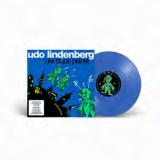
Mit echten Raritäten, kraftvollen Balladen und sozialkritischen Texten erscheint „Der blaue Planet“ von
Udo Lindenberg am 12.12.2025, das erste Mal als blaue 10‘‘ Vinyl in streng limitierter und handnummerierter Auflage. Die B Seite bilden zwei Balladen über Freundschaft und Liebe, die die Single perfekt
abrunden.
Einer der wohl bekanntesten Songs Udo Lindenbergs ist „Cello“. Die Ballade über einen jungen Mann, der
eine Cello-Spielerein anhimmelt erschien erstmals 1973 auf dem Album „Alles klar auf der Andrea Doria“.
1997 nimmt Lindenberg „Cello“ dann erneut auf. Diesmal zusammen mit dem Filmorchester Babelsberg.
Zusammen schaffen sie das Album „Belcanto“. Jetzt kehrt ein Stück Musikgeschichte zurück. Zusammen
mit den zeitlosen, emotionalen Balladen „Bis ans Ende der Welt“, „Du und ich – und dann ganz Lage
gar nichts“ und „Die kleine Zockerin“ in orchestraler Aufmachung, gibt es die Single jetzt erstmals streng
limitiert und handnummeriert auf 10“ Vinyl mit neuem Cover in Anlehnung an das kraftvolle originale
Album „Belcanto“.
Lindenberg besingt in „Club der Millionäre“ in alter Udo-Manier den Wunsch, reich zu sein. Der Song
war die erste Single-Auskopplung von Udos Hommage-Album an seinen Vater, „Gustav“. Die Single erscheint nun zum ersten Mal als 10‘‘ Vinyl in Gold, streng limitiert und handnummeriert. Neben dem
Titelsong sind auf der Single zudem mit „Die Augen zu“, sowie die Ballade „Niemandsland“ und der HipHop Track „Wo ich meinen Hut hinhäng“ enthalten.
Mit echten Raritäten, kraftvollen Balladen und sozialkritischen Texten erscheint „Der blaue Planet“ von
Udo Lindenberg am 12.12.2025, das erste Mal als blaue 10‘‘ Vinyl in streng limitierter und handnummerierter Auflage. Die B Seite bilden zwei Balladen über Freundschaft und Liebe, die die Single perfekt
abrunden.
Einer der wohl bekanntesten Songs Udo Lindenbergs ist „Cello“. Die Ballade über einen jungen Mann, der
eine Cello-Spielerein anhimmelt erschien erstmals 1973 auf dem Album „Alles klar auf der Andrea Doria“.
1997 nimmt Lindenberg „Cello“ dann erneut auf. Diesmal zusammen mit dem Filmorchester Babelsberg.
Zusammen schaffen sie das Album „Belcanto“. Jetzt kehrt ein Stück Musikgeschichte zurück. Zusammen
mit den zeitlosen, emotionalen Balladen „Bis ans Ende der Welt“, „Du und ich – und dann ganz Lage
gar nichts“ und „Die kleine Zockerin“ in orchestraler Aufmachung, gibt es die Single jetzt erstmals streng
limitiert und handnummeriert auf 10“ Vinyl mit neuem Cover in Anlehnung an das kraftvolle originale
Album „Belcanto“.
Lindenberg besingt in „Club der Millionäre“ in alter Udo-Manier den Wunsch, reich zu sein. Der Song
war die erste Single-Auskopplung von Udos Hommage-Album an seinen Vater, „Gustav“. Die Single erscheint nun zum ersten Mal als 10‘‘ Vinyl in Gold, streng limitiert und handnummeriert. Neben dem
Titelsong sind auf der Single zudem mit „Die Augen zu“, sowie die Ballade „Niemandsland“ und der HipHop Track „Wo ich meinen Hut hinhäng“ enthalten.
Mit echten Raritäten, kraftvollen Balladen und sozialkritischen Texten erscheint „Der blaue Planet“ von
Udo Lindenberg am 12.12.2025, das erste Mal als blaue 10‘‘ Vinyl in streng limitierter und handnummerierter Auflage. Die B Seite bilden zwei Balladen über Freundschaft und Liebe, die die Single perfekt
abrunden.
- A1: Biguine Willy - Biguine
- A2: Oh Esto Y De Irvaba Cumabo - Mambo Espagnol
- A3: Saoco - Charanga Cubain
- A4: En Guantánomo - Son Montuno
- A5: A M. Decantonio - Son Montuno
- A6: No Me Persigas - Cha Cha Cubain
- B1: Mama Egée - Rumba Lingala
- B2: Vivo Africa - Rumba Lingala
- B3: Ngonga Ebeti - Rumba Lingala
- B4: Minge Rumba Fiesta - Rumba Lingala
- B5: Matulekele - Folklore
- B6: Mitele Ngo Mama - Rumba Lingala
- C1: African Negra - Cha Cha Cha Indubil-Lingala
- C2: Rithmo Ya Suka - Cha Cha Lingala
- C3: Seis Linda Cubana - Son Cubain
- C4: Mi Amor - Cha Cha Cha Espagnol
- C5: Sabrosito - Cha Cha Cha Indubil Lingala
- C6: Nadie No Puede - Cha Cha Espagnol
- D1: Nella Negrita - Bolero Lingala
- D2: Arsene Diongue - Bolero Lingala
- D3: Liliane Yo Nsomi - Bolero Lingala
- D4: Yve Ya Fabien - Bolero Lingala
- D5: Tu Te Rappelles - Bolero Français
- D6: L’edera - Bolero Italien
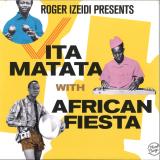
'The creation of the band African Fiesta, founded in 1963 by three well-known musicians, Nicolas Kasanda, Tabu Ley Rochereau and Roger Izeidi, and the contributions of the VITA label, established by Roger Izeidi, occupy an exciting chapter in the history of Congolese popular music. During the mid-1960s, African Fiesta consistently reached the top of the hit parade. The band, which back in the day positioned itself as a competitor to a current called ‘Fiesta Cubana’, breathed new life into Congolese Rumba, continuing the tradition of the African Jazz school started by Joseph Kabasele.
'The VITA label, with African Fiesta as their sole provider, besides four songs of Eduardo De Veracruz Vinagre et Son Orchestre, ran between May 1963 and early 1966. It created a spectacular legacy and back catalog full of tasteful sentiments and sensual melodies, deeply rooted in the Afro-Latin sound.
'This new compilation offers a few of the classic African Fiesta songs and complements them with an eclectic and original selection, divided into four thematic sides: Showcase, Rumba Lingala, Cha Cha Cha & Bolero. This double LP album comes with a 16-page booklet featuring the history of VITA and African Fiesta, song commentary by Congolese journalist Herman Bangi Bayo, and a written catalog of the VITA label. The heirs of Roger Izeidi kindly gave permission in Kinshasa to release this album of African Fiesta on Planet Ilunga.'
- Mobali Nakobala (Nico – Ngoma J 5127, © Sukisa) Rumba Lingala
- Nalingi Yo Na Motema (Nico, Chantal – Ngoma J 5130 © Sukisa) Kiri-Kiri
- Mokili Makambo (Nico – Sukisa 93) Kiri-Kiri
- Ata Osali (Chantal – Ngoma Dnj 5214, © Sukisa) Rumba Lingala
- 1: Er Boeing (Kwamy – Air Congo) Merengue
- Hommage A Lumumba Patrice (Sukisa 44) Mabanga
- Bougie Ya Motema (Nico – Sukisa 47) Rumba Lingala
- Okosambuisa Ngai (Mizele – Sukisa 66) Rumba Lingala
- Sule (Nico – Sukisa 50) Rumba Lingala
- Okosuka Wapi ? (Josky – Sukisa 110) Danse Kono
- Kamungaziko (Lessa Lassan – Sukisa 114) Danse Kono
- Mokili Matata (Nico – Tcheza 10.001; © Sukisa) Rumba-Kono Lingala
- Baoulé (Lassan – Sukisa 99) Kiri-Kiri
- Beauté (Nico – Sukisa 101) Rumba Lingala
- Mansanga (Nico – Sukisa 131) Rumba Lingala
- Souzi (Sangana – Sukisa 117) Rumba Lingala
- Naboyi Koswana (Sangana – Sukisa 120) Rumba Cha Cha
- July (Julie – Sukisa 120) Madre Rumba
- Runeme Mama (Nico – Sukisa 47) Cha Cha Cha
- A Morow (Arr. Nico – Sukisa 66) Cha Cha Cha
- Apôtre Del Si Boney (Apôtre – Sukisa 73) Charanga
- A La Savana (Arr. Nico – Sukisa 62) Pachanga
- Alto Songo (Arr. Nico – Ngoma J5126, © Sukisa) Rumba Espagnol
- Para Bailar (Nico – Sukisa 50) Pachanga
- Meta Fua Mudia (Kaba – Sukisa 118) Rumba Lingala
- Exhibition Show (Nico – Sukisa 135) Instrumental
- Exhibition Dechaud (Dechaud – Sukisa 71) Instrumental
- Bolala - Ayando (Nico – Sukisa 132) Extrait Show Kasanda
- Excitation - Makwandungu - Ngombele (Nico – Sukisa 132) Extrait Show Kasanda
- Kamulangu
'In collaboration with the children of Nico Kasanda, better known as Docteur Nico, Planet Ilunga proudly presents an anthology dedicated to African Fiesta Sukisa, available as a 3LP set and a digital release with bonus songs. This release is the result of many years of preparations and was realized in close partnership with Liliane Kasanda, Nico’s eldest daughter. Marking forty years since his passing, we felt that the year 2025 was the right time to honor Docteur Nico’s legacy with this original collection.
'Almost all of the African Fiesta Sukisa songs were released on Nico’s Sukisa label which translates in Lingala for “the final accomplishment”. The music on Sukisa, crafted by Nico and legendary vocalists such as Chantal, Sangana, Apôtre, Mizele, Lessa Lassan and Josky, embodies the essence of that powerful phrase with genius, class and depth. The label ran between 1966 and 1975 and released approximately 280 songs. Ngoma also issued the group between 1967 and 1971 and, in addition, reissued material from the Sukisa label. Many of these songs have become part of the collective memory of Congolese society and are still heard, discussed, and analyzed daily across digital platforms worldwide, as well as on numerous Congolese radio and TV stations.
'The album we put together features some of Nico’s signature songs alongside never before reissued tracks from the Sukisa catalog. It furthermore contains a large booklet with song commentary, testimonial interviews from well-known musicians, journalists, fans and Nico’s entourage, besides never before published photography about his personal and musical life.
'Alastair Johnston, author of the book ‘A Discography of Docteur Nico’ and longstanding Planet Ilunga collaborator, designed a stylish booklet and cover using all our collected material. Audifax Bemba, longtime admirer, compiler and connoisseur of Nico’s music, and the author of most of the song commentary in our accompanying booklet, offers his portrait of Docteur Nico:
“After displaying technical virtuosity with African Jazz, expert and accomplished guitar with African Fiesta, which musicologist Sylvain Bemba described as a dream guitar, Nico Kasanda was consecrated ‘dieu de la guitare’ by the public in the late sixties. With his band African Fiesta Sukisa, Docteur Nico displays his wide palette of unusual sounds. While exploring the Hawaiian guitar with its clear, airy, plangent, psychedelic effluvia, he continues to replicate the piano comping technique, and adds two missing strings to his bow: a simulation of the sanza (likembé or thumb piano), whose sounds he reproduces right down to the noisemakers of the tiny tin rings, on the one hand, and the sounds of the Luba balafon on the other. The right note, in the right place, at the right time, is the triptych on which Nico Kasanda’s playing is based, a note dressed in the perfect sound. A guitar of pure emotion. With African Fiesta Sukisa, his playing takes a ‘Chopin-esque’ turn, sending out more notes in a sublime adagio. The true artist is the one who simplifies everything. Docteur Nico is a genius of our time, whose style makes him the supreme exponent of the most important guitar school in Congolese music. He is recognized by his peers as the greatest African solo guitarist of all time. Sculpting sound in a tireless quest for beauty, Nico Kasanda has sublimated the guitar throughout his career.”
[xd] Kamulangu [Outro] (Dr. Kasanda – Sukisa 135) Folklore Baluba
- The Great North Road
- Gods, Children And Robots
- Comfortable In The Counterculture
- Pelican Crossing
- The Fall Of The Establishment
- The Glastonbury Oak
- A Real Rock ‘N’ Roller
- Big Night Out In Shrewsbury
- That’s Why I Don’t Drink Tequila Anymore
- Taylor Swift For President
- Our Cat
- Happy Birthday Baby
- Magicians And Outlaws
Kill Them With Kindness is the 18th album from Beans on Toast, recorded at Greenmount Studios in Leeds with The Beans on Toast Band, a collection of musical friends he handpicked from the UK music scene a few years back.
"We've done a few tours together, but this was our first venture into a studio. Each one of them is amazing, and together... well, I'm proper chuffed with how it sounds. Have a listen for yourself," says Beans.
This album is a bit of a juxtaposition, as is the title. "There are songs that deal with the current state of the world: wars, maniac leaders, the rise of AI and the fall of the establishment. Then there are songs about trees, late nights in music venues, art, love and my new cat. As usual, it's a time stamp of my thoughts and feelings from the past year on planet Earth."
- Troubled Paradise
- Runnin' With The Wild Ones
- Sadie Mae
- Love Don't Live Here Anymore
Tuk Smith is the kind of rock 'n' roll ambassador you didn't think existed anymore. Punk maverick from rural Georgia, Biters frontman, producer and solo artist, he's seen the best and worst of a music industry in constant flux. By turns it's left him critically acclaimed, poised for stadiums, dropped, burned out, back in the game and beloved by those for whom rock is still everything. Now based in Nashville, and with his own label Gypsy Rose Records, he creates from a more real place than most. "I want to do something that means something to people," Tuk says, "because a lot of shit nowadays is so disposable and so plastic. I just don't connect with that. I'd like to do things that impact people positively. It's a weird time on the planet, so to have songs about hope, but not be cheesy about it, it's something I think we need with songwriting. That's the kind of music I want to hear." Again, there's that dichotomy he speaks of. "Rock 'n' roll is essentially the illusion of not giving a fuck, right? Like, you know Axl Rose was doing sit-ups and jump rope, and Paul Stanley was on a cardio machine, and they come out and act like it just happens. The point is I sit at that piano many hours, working on this stuff."
- Ku Kisantu Kikuenda Ku
- Lolango
- Agardja-Dja
- Na Bolingo Conseil Ezali Te
- Congo Mibale
- Minoko
- Edo Aboya Ngai
- Lolo Soufire
- Kamalandua
- Mobali Na Ngai Azali Etudiant Na Mpoto
- Tembe Na Tembe
- Lola
- Mosaka Ya Kilo
- Nzela Claude
- Mokili Macaramba
- Sukola Motema Olinga
- Moi, C'est L'originalité
Sixteen wonders from the first three years of Franco’s own imprint Les Editions Populaires, founded in 1968. Mostly OK Jazz, performing ravishing rumbas and bolero ballads in Lingala, traditional songs in Kikongo, Kimongo, and even Yoruba, collaborations with Ngoma artists Camille Feruzi and Manuel d’Oliveira, and their own tough take on US funk.
Glorious music. Bim.
- Molinard Danser Cha-Cha
- Mibali Bakomi Mpasi Na Leo
- Soki Ye Te Nani ? “Carra”
- Amida Asukisi Molato
- Ya Mbala
- Kingotolo Mbuta Ngani Mbote
- Muasi Ya Motema Mabe
- Para Fifi
- Clarie Télé
- Moto Na Esika Na Ye
- Toponaki Bino Boyokana
- Kongo Ya Bankoko
- Kajinga Victorine
- Mama Seba
- Ekoti Ngai Hopitalo
- Pachito Eche
- Mi José
- Bueno Valentina Cha Cha
- Lolango Helena
- Lolaka Lwa Bale
- Lalouma De Belen
- Liwa Ya Emery
- Mboka Mosika Mawa
- Zongela Nzela Na Ngai
- Motema Ya Fa Fa
- Mbanda Mwasi Alingi
- Liwa Ya Champagne
- A Girl I’m Looking For
- Malata
- Tika Kolela Chérie
- Ba Mpangi Ya Matadi
- Mosala Etindi
- Casier Judiciare
- La Mode Ya Pius Apiki Dalapo
- Ngai Muana Na Weyi
- Cha Cha Cha Erique
- Baiser Na Litama
- Lopango Ya Bana Na Ngai
- Victoire De Bruxelles
- Onzeteuna
- Revolver
- Baila Charanga
- El Paso De Encarnacion
- El Pinazo
- Na Mokili Mibale Na Mibale
- Ma Nkewa
- Bandoki Kabasala Ye Nkenda Ko
- Beno Bakongo Sika
- Owawa
- Camp Luka
- Lokumu Ya Mwasi Mpo Na Mobali
- Mama Ndonga
- Satchmo Okuka Lokole
- Naboyi Ba Jumelle
- Guidado Colamano
- Miso Emona Makambo
- African Bana Ya Kin
- Aya-Ya
- Wachiwara
- Matata Masila Na Congo
- To Yokana Tolimbisana Na Congo
- Ma-Zo ! Dégagez
- Oyeme Querida
- Bana Ya Nwa
- Promenade African Jazz
- Kalejoph Surboum
- Longonia Yaya
- Clair De Lune
- Twist À Leo
- Pachismotou
- Ambiance
- Pasi Die Senorita
- Mutatshi Wa Yombo
- Mwamba Wa Mpatu
- Georgette Ye Ndeko
- Ba Tata Bakenda Kala
- Amor Perdido
- Luna Nokero
- Le Lion Est Mort
- Hallelouia