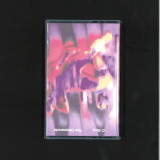
East Los Angeles quartet Levitation Room’s floaty, cosmic songs are always a trip. Since forming nearly a decade ago, they’ve self-produced dizzying, otherworldly music that’s connected with fellow travelers in the hallucinogenic world of outré rock music. Led by singer and guitarist Julian Porte along with founding members Gabriel Fernandez (lead guitar) and Johnathan Martin (percussion), the band has enchanted live audiences at Desert Daze and on tour with like-minded groups Post Animal and Psychedelic Porn Crumpets. The band’s vivid sound has found them placed on popular playlists like Modern Psychedelia and the legendary superproducer’s Danger Mouse Jukebox. Their 2015 debut, “Friends,” has surpassed 18 million streams. Joined by new member Kevin Perez (bass) in 2021, Levitation Room have continued to expand their colorful, unearthly sound, a process that has culminated with the vibrant new album Strange Weather. Collaborating with former Brian Jonestown Massacre keyboardist Rob Campanella, Jason Kick (Mild High Club), and Black Crowes’ Joel Robinow, Levitation Room take a new step in their story and vision with Strange Weather. The record’s lyrical narratives—about love in the park, life in the city, and the fact that “The world today is such an illusion”—are appropriately steeped in ’60s sonics and a dreamy, lo-fi atmosphere. It’s spacey, celestial guitar music for escaping into, and “it feels just like heaven.” Join Levitation Room on their new voyage.
quête:play out music
East Los Angeles quartet Levitation Room’s floaty, cosmic songs are always a trip. Since forming nearly a decade ago, they’ve self-produced dizzying, otherworldly music that’s connected with fellow travelers in the hallucinogenic world of outré rock music. Led by singer and guitarist Julian Porte along with founding members Gabriel Fernandez (lead guitar) and Johnathan Martin (percussion), the band has enchanted live audiences at Desert Daze and on tour with like-minded groups Post Animal and Psychedelic Porn Crumpets. The band’s vivid sound has found them placed on popular playlists like Modern Psychedelia and the legendary superproducer’s Danger Mouse Jukebox. Their 2015 debut, “Friends,” has surpassed 18 million streams. Joined by new member Kevin Perez (bass) in 2021, Levitation Room have continued to expand their colorful, unearthly sound, a process that has culminated with the vibrant new album Strange Weather. Collaborating with former Brian Jonestown Massacre keyboardist Rob Campanella, Jason Kick (Mild High Club), and Black Crowes’ Joel Robinow, Levitation Room take a new step in their story and vision with Strange Weather. The record’s lyrical narratives—about love in the park, life in the city, and the fact that “The world today is such an illusion”—are appropriately steeped in ’60s sonics and a dreamy, lo-fi atmosphere. It’s spacey, celestial guitar music for escaping into, and “it feels just like heaven.” Join Levitation Room on their new voyage.
- Carolina's Theme
- Unlistening
- Power Drill
- Mr. Stark
- Centrefold
- Never Gonne Be A Dead Man
- I'll Be Mountains
- My Cup Overflows
- Leather Sky
Turquoise Vinyl[29,62 €]
The UK avant-garde’s rising star, Bristol-based multi-instrumentalist Bingo Fury is announcing his debut album ‘Bats Feet For A Widow’ due out 16 February via tastemaking label state51. Filled with noir elegance, ‘Bats Feet For A Widow’ is an album that revels in extremity. The album was recorded in a local church in Bristol, taking inspiration from the musician’s complex relationship with his strong religious upbringing. The influence of the church building resonates throughout the album.
‘Bats Feet For A Widow’ is full of strange experiments, obscure references, offbeat one-liners, heart-breaking sentimentality and surging creativity. At the heart of it all is Bingo Fury’s crooning bass vocal, lending a vivid and slyly humorous voice to universal themes of love and pain.
Alongside the album announcement, Bingo Fury is releasing new single ‘Leather Sky’, a tender piano ballad charged with real emotion and a heartbreaking cornet refrain played by band member Harry Furniss. In this cinematic track full of paralysing despair, the musician sings: “You know I’m trying to give you everything / It all gets in the way.”
Bingo Fury on the single: “Leather Sky is a difficult song to describe succinctly. It’s about being separated from someone against both of your will. Somebody close to me became very unwell and communication became restricted, almost non-existent. The song took shape during that period. A few of the surreal lines ended up becoming reality.”
Although very much a solo songwriter, Bingo Fury’s compositional process relies on contributions from his entire band - bassist Megan Jenkins and drummer Henry Terrett have been playing together since their teens. In one of their various incarnations, they recruited local avant-jazz legend, cornet player Harry ‘Iceman’ Furniss, with guitarist and percussionist Rafi Cohen later completing the line-up.
The album announcement follows the release of the cacophonous single ‘Power Drill’, which garnered praise from The Line Of Best Fit and DIY. This comes after Bingo Fury’s debut EP, ‘Mercy’s Cut’, that came out last year to an abundance of critical acclaim from the likes of BBC 6 Music, The Quietus, Loud & Quiet, Clash, as well as earning himself a spot on the NME Top 100. Filled with rich, cinematic allure, the EP is both beautiful and unsettling and underlines Bingo Fury’s complete abundance of compositional ideas.
The UK avant-garde’s rising star, Bristol-based multi-instrumentalist Bingo Fury is announcing his debut album ‘Bats Feet For A Widow’ due out 16 February via tastemaking label state51. Filled with noir elegance, ‘Bats Feet For A Widow’ is an album that revels in extremity. The album was recorded in a local church in Bristol, taking inspiration from the musician’s complex relationship with his strong religious upbringing. The influence of the church building resonates throughout the album.
‘Bats Feet For A Widow’ is full of strange experiments, obscure references, offbeat one-liners, heart-breaking sentimentality and surging creativity. At the heart of it all is Bingo Fury’s crooning bass vocal, lending a vivid and slyly humorous voice to universal themes of love and pain.
Alongside the album announcement, Bingo Fury is releasing new single ‘Leather Sky’, a tender piano ballad charged with real emotion and a heartbreaking cornet refrain played by band member Harry Furniss. In this cinematic track full of paralysing despair, the musician sings: “You know I’m trying to give you everything / It all gets in the way.”
Bingo Fury on the single: “Leather Sky is a difficult song to describe succinctly. It’s about being separated from someone against both of your will. Somebody close to me became very unwell and communication became restricted, almost non-existent. The song took shape during that period. A few of the surreal lines ended up becoming reality.”
Although very much a solo songwriter, Bingo Fury’s compositional process relies on contributions from his entire band - bassist Megan Jenkins and drummer Henry Terrett have been playing together since their teens. In one of their various incarnations, they recruited local avant-jazz legend, cornet player Harry ‘Iceman’ Furniss, with guitarist and percussionist Rafi Cohen later completing the line-up.
The album announcement follows the release of the cacophonous single ‘Power Drill’, which garnered praise from The Line Of Best Fit and DIY. This comes after Bingo Fury’s debut EP, ‘Mercy’s Cut’, that came out last year to an abundance of critical acclaim from the likes of BBC 6 Music, The Quietus, Loud & Quiet, Clash, as well as earning himself a spot on the NME Top 100. Filled with rich, cinematic allure, the EP is both beautiful and unsettling and underlines Bingo Fury’s complete abundance of compositional ideas.
- A1: People Shrink - Remix By Andy Moor (4:17)
- A2: Like A Chicken In The Corn - Remix By Desmond Denker (2:03)
- A3: Donkeys Don't Grow Here - Remix By Phanton (1:27)
- A4: Exploding Dub Syndrom - Remix By Yürke (4:10)
- B1: Dub Specie Ludens - Remix By Dubby King Knarf (5:48)
- B2: Du Büst Dood Dub - Remix By Istari Lasterfahrer (4:28)
- B3: Danger They Say - Remix By Begritty (3:35)
All tracks licensed from Makkum Records | Produced and mixed by remix artists | Mastering by Detlef Funder, Paraschall Studios Düsseldorf | Artwork by Darko Kujundžic
It's the kind of project that brings the old mad scientist cliché out for an airing, "It's insane, but it just might work." The insanity in this case being a motley cast that features Andy Moor (The Ex, Amsterdam), Desmond Denker (Cologne), Phanton (Cologne), Yürke (Düsseldorf), Dubby King Knarf (Knarf Rellöm, Hamburg), Istari Lasterfahrer (Hamburg), Begritty (Cologne) laying down their versions of tracks from the demento-a-go-go-electro-pop-rock-mono-mind known as Zea.
How could we resist the spasmodic schizoid psychedelic menace of that devilish Dutch juggernaut called Zea. This bastardised twelve inch slab of wax has Zea sonically re-assessed, dissected and twisted in side out. And it had to happen, it had to be made.
"Standing up I forgot what came to mind when I was lying on the kitchen floor. Standing up I forgot what came to mind, something I tried to remember before." It's the punky pop intro of the song 'Staande ben ik vergeten wat ik dacht toen ik lag', the Dutch translation of the first sentence of the song that provided the title for this collection of remixes. Zea, a.k.a. Arnold de Boer, a musician who skips sitting down, who either jumps or lies on the floor fumbling with a dictaphone trying to remember the ideas that just came to mind jumping around from the couch straight into the kitchen, trying to write the next song while cooking spicy food that makes his head explode. It's all inthere, everyone is in there; shrinking people, growing people, dead people. And all "Sub specie ludens" (from the perspective of human play).
- A1: Porcelain Id Feat. Emma - Habibi (R U Alone?)
- A2: Porcelain Id - Low Poly
- A3: Porcelain Id - You Are The Heaven
- A4: Porcelain Id - Adam Coming Home
- B1: Porcelain Id - Moon
- B2: Porcelain Id - Feeling
- B3: Porcelain Id Feat. Emma - Brilliant
- B4: Porcelain Id - Cellophane
- B5: Porcelain Id - Man Down!
- B6: Porcelain Id Feat. Youniss - Reach Me/Reaching Higher
- B7: Porcelain Id - Lights!
You just moved to the big city, you end up at a party where you don't know anyone and someone walks up to you and asks: "Hey, are you alone here?". That is exactly the feeling that Porcelain id describes on their debut album Bibi:1, short for the Arabic pet name Habibi. Porcelain id is the pseudonym under which Hubert Tuyishime (they/them/their) has been unleashing unique songs since 2020.
The album - inspired by their move from a quiet provincial town to Antwerp - is the soundtrack to walking into city traffic during rush hour and trusting to get out of the chaos in one piece. It is an ode to exciting encounters with complete strangers and to the friends you can come home to afterwards. A story about being a stranger in a city you've romanticized for so long, the rejection that comes with it, and the false nostalgia with which you look back on it all later on.
At first hearing, the completely English-language Bibi:1 may seem like a brusque farewell to the autobiographical intimacy and lo-fi singer-songwriter music on the previously released EPs Mango and Reprise, and especially on songs like Vlaanderen. But to Porcelain id it feels like an organic evolution. One towards more abstraction, experimentation and electronics, but never detached, and still building on the core of Porcelain id.
The new sound is the result of an intense collaboration with producer and partner in crime Youniss Ahamad, who, despite their different musical backgrounds, immediately felt challenged after Porcelain id's legendary elevator pitch: 'I want to make something that is situated between Nick Cave and the Bad Seeds and Yeezus by Kanye West'.
Together they drew the blueprint for Bibi:1 in Youniss' home studio. Track by track, without looking back. A sporadic, but rigid process that added to the intensity of the album. In the studio, the songs were taken to a higher level. The two invited a pack of talented friends and young musicians to the studio to add parts, a stark contrast to the solitary approach of previous EPs. Aram Abgaryan (recording engineer/synths/vocals), Nard Houdmeyers (guitar), Tim Caramin (drums), David Idrisov (bass), Alban Sarens (sax) and Emma Hessels (vocals) came by. Aram Santy was at the controls during the mixing sessions.
The result sounds like the ultimate symbiosis of Porcelain id and Youniss. Lofi, but ambitious. Fragile, but rough. Poppy, but disruptive. Sometimes challenging. Then welcoming again. Sometimes even danceable. Each song forms a small vignette that is part of a diverse, but coherent unity. Adam Coming Home and Low Poly are closest to the melancholy of Porcelain id's earlier work, while Lights! strikes a new path. First single Man Down, on the other hand, is inspired by the Antwerp students who drown every year and sounds like a wandering nightly stroll through the city. For Brilliant, David Idrisov was asked to 'play bass as if Chet Baker were not a trumpet player, but a bass player', a bizarre assignment that he accomplished with verve. And Cellophane flirts with emo trap and was sung with raspberries between the teeth, to simulate the effect of grills.
PRAISE THE PLAGUE formulate the introduction to the dark, grim soundscape of their third album themselves by saying: "The gate is passed, upon us is a bleak, raging sea. Tidal waves crushing ashore, out of desperation evolves anger and frustration. Time, as a construct, imprisons its architects. "Suffocating In The Current Of Time" takes us from a dark and devouring realm, to staring the devourer into its cold, dead eyes. Lead by fierce and unforgiving melodies, we are marching into our own decay. Lead by the pounding of drums we indulge ourselves in the cloak of false promises." The quintet from the German capital Berlin has been around since 2017. After the debut "Antagonist" and their first album for LIFEFORCE RECORDS, "The Obsidian Gate" (2021), "Suffocating In The Current Of Time" showcases a further intensification of the band's dense and intense black metal. PRAISE THE PLAGUE are modern representatives of their guild and not purists. There are also ominous echoes of doom and sludge as well as atmospheric post-metal. It is no coincidence that the Berliners' third album remains instrumental for longer passages. This increases the impact of the furious tempo sections with their nagged vocals. "Suffocating In The Current Of Time" is full of emotion. Not all of them are purely negative and depressing. Nevertheless, PRAISE THE PLAGUE's playing will be perceived above all as oppressive and hopeless. Given their band name, who can blame them? The musicians pursue relentless catharsis.
This release captures the joyous and confrontational performance by the pioneering experimental electronic-pop outfit The Knife, 'Shaking the Habitual: Live at Terminal 5.' After a seven-year hiatus from playing live, the resulting musical saw The Knife expand from Karin Dreijer and Olof Dreijer to a 11-piece dance troupe. The show was recorded at the Hell’s Kitchen venue Terminal 5 in 2014. It was the Knife’s last tour before the band called it quits in November of that year
The Decline And Fall Of Heavenly’ Gets Re-Issued On Vinyl. Skep Wax Records are re-issuing all four Heavenly albums over a two year period, and this is the third instalment, following on from ‘Heavenly vs Satan’ and ‘Le Jardin De Heavenly’. Each LP includes relevant single releases as additional tracks, a 7” booklet with lyrics, pictures, and new sleeve notes by the members of the band. Altogether, the four albums will amount to a thorough collection of the band’s recorded output. Heavenly will be playing gigs in various countries in 2024. The third Heavenly album will be re-released by Skep Wax Records on Friday 2nd February. The re-release will also include all five tracks from the Atta Girl and P.U.N.K Girl 7” singles. The Atta Girl and P.U.N.K. Girl singles were released in 1993; album The Decline and Fall of Heavenly came soon after in 1994: collectively they show a band that is rapidly expanding its scope. The album veers confidently from high speed indiepunk (Me And My Madness) to cool surf instrumental (Sacramento) and back again to the sweetest indiepop (Itchy Chin). Meanwhile, the singles, which include the band’s most celebrated tune - P.U.N.K Girl – demonstrates how much confidence Heavenly were deriving from their involvement in the nascent Riot Grrrl scene. All the anger is there, the politics are direct and crystal clear – yet the whole thing is still delivered with the sweetest pop melodies. It’s like being punched and kissed at the same time. The three releases also show how Heavenly had come to feel equally at home in the UK and in the US. The album maybe feels more British, as demonstrated by the Old World irony of the ‘Decline and Fall’ title. At Heavenly gigs in the UK, often playing with other bands on the increasingly influential Sarah Records, audiences were getting bigger, while the bands were finding a sweet spot where anti-corporate understatement and a dismissive attitude to an increasingly misogynist UK Press was no barrier to success. P.U.N.K Girl and Atta Girl on the other hand, are more gleeful, more headlong, and somehow feel more American: they are carried along by the excitement and adrenaline of having found another spiritual home - the indiepunk Riot Grrrl scene that was focussed on Olympia, WA, the HQ of Heavenly’s US label K Records. (K released P.U.N.K Girl and Atta Girl together on one 10” EP.) Amelia Fletcher and Cathy Rogers were now confidently sharing vocals, sometimes harmonising, sometimes taking it in turns, sometimes singing over each other. Peter (guitar) Mathew (drums) and Rob (bass) had become adept at changing gear from ornate pop to full-on punk, unafraid of genre rules and increasingly happy to make up their own version of what pop music should sound like. The more delicate, more decorative arrangements of Heavenly’s first two albums had been left behind. The band – or more accurately, the women in the band – were still dogged by accusations of being too fey, too ‘twee’: not ROCK enough. But, as the chorus of Atta Girl makes clear, any attempts to define Heavenly by their ‘cuteness’ now received an unambiguous response: ‘Fuck you, no way!’ The fourth and final Heavenly album ‘Operation Heavenly’ will be released later in 2024. Heavenly were: Amelia Fletcher (guitar, vocals), Cathy Rogers (guitar, vocals), Rob Pursey (bass), Peter Momtchiloff (guitar), Mathew Fletcher (drums).
Mutagenicos (in English, "Mutagens...agents of change) were formed at the end of 2008, their base of operations being the wine region of Spain, Logroño in La Rioja. Influenced by traditional garage, surf and rockn´roll, but with their feet firmly planted in the present. Their brilliant, long-delayed, new album is finally out! They started as a quintet playing mainly instrumental songs, but little by little, both the formation and the compositions, have been undergoing mutations, making way for other musical genres with a greater number of sung songs, although always there remains room for instrumentals. For more than 3 years the band had stabilized as a trio: Santi Pequeno (bass) Pablo Magariños (drums and vocals) Alfredo Roto (guitar and vocals). But as they are irresistible to change, Miguel Aguas has joined, contributing percussion, synths, choruses, and much-needed height! But what has never, and will never, change is the is the fundamental driver of the band: fun above all. Which is what rock´n´roll is supposed to be, right?
United Kingdom-based Dirty Water Records has signed the California-based rock and roll / Power Pop outfit The Tearaways to a 5-year deal. The label has released the Ed Stasium-produced (Ramones, Talking Heads, Smithereens) digital version of their new record called “And For Our Next Trick.” The band features the dual lead singers of bassist John “Fin” Finseth and rhythm guitarist Greg Brallier, lead guitar David Hekhouse and Rock & Roll Hall of Fame drummer Clem Burke (Blondie). Also, from Tom Petty & The Heartbreakers, Benmont Tench played keyboards and Steven McCarthy (Jayhawks, The Long Ryders) added pedal steel guitar. The new record was recorded at legendary Village Recorders in Los Angeles and mastered at Sterling Sound by Greg Calbi. The first single being released to radio was “Charlie, Keith and Ringo,” along with the the award-winning video (Raindance Festival directed by Stephen David Brooks (“Flytrap”). The spring single is called “Saturday Everyday” and is being serviced to radio stations and other outlets right now. Label chief Paul Manchester: “We are thrilled to have assembled an all-star team of distributor Cargo Records UK, Wipe Out Music Publishing, Seán Crossey from the UK promotion firm High Violet PR & Plugging, and US publicity specialist Lou Mansdorf to help launch this project.“
Sun Yellow LP[21,22 €]
Clear Vinyl
Blue Lake is the musical moniker of American born, Copenhagen based multidisciplinary artist and musician Jason Dungan, who signs to the Tonal Union imprint for the release of his new longform album ‘Sun Arcs’. It follows 2022’s release ‘Stikling’, earning a nomination for ‘Album of the Year’ at the Danish Music Awards plus warm praise from The Hum blog and musicians and DJs alike including Jack Rollo (Time is Away/NTS) and Carla dal Forno. A self taught player, Dungan began freely experimenting with self-built multi-string instruments, preferring to build his own hybrid 48-string zither and working in the realms of left-field ambient music, off kilter folk and improvised acoustic minimalism.
The starting point of ‘Sun Arcs’ saw Jason travel for a week alone to Andersabo, a cabin set in the idyllic Swedish woods just outside of Unnaryd, known also as the music project, festival and residency space which has been run by Dungan since 2016, hosting artists like Sofie Birch, Johan Carøe and Ellen Arkbro. Whilst writing 1-2 pieces per day, a conscious decision was made to leave behind everyday distractions and shut out the outside world to instead focus on the natural passage of time as Dungan recalls: “My only sense of time came from these daily walks out in the woods with my dog, and an awareness of the sun’s path as it moved across the sky each day.”
The album’s immersive world unfolds with the opener ‘Dallas’, an ode to his home state and a musical synthesis of these two disparate spaces (Texas and Denmark), the touchstones of Dungan’s life. A folk-esque single acoustic builds to a flowing arrangement of clarinets, organ and cello drones coupled with percussion. ‘Green-Yellow Field’ chimes in as the first of two solo oriented zither recordings twinned with the dreamlike title track ‘Sun Arcs’, both densely rich as cascading and overlapping harmonic tones resound. ‘Bloom’ emerges with a krautrock psyche before an eruption of cello drones, slide guitar and free-ranging zither playing, ushering in the anticipation of spring. With half of the recordings conceived in Andersabo, Jason returned to Copenhagen to form the album's centre piece ‘Rain Cycle’ which features a tempered Roland drum machine alongside shifting zither improvisations. ‘Writing’ explores the shimmering harp-like qualities of sweeping playing figurations with Dungan mapping out adjusted tuning “zones” on the zither for unconventional but creatively liberating effects. ‘Fur’ captures the feeling of openness and the momentum of time, seeing Dungan perform waves of solo clarinet, often in one takes and embellished with textural drones, a zither solo, and layers of guitar. ‘Wavelength’ the album's closer is fondly inspired by the film works of Michael Snow and Don Cherry’s seminal live album ‘Blue Lake’ (1974), as it builds out from a drone-generated zither chord and features an alto recorder solo. Dungan found a deep connection to Cherry’s stripped back performance ethos, focusing on the core beauty of minimal instrumentation creating a genre-less meeting between folk and jazz. A dialogue is formed between the solo and the bandlike performances, interlinked in a geographical duality with all finding a sense of commonplace as musical sketches of visited landscapes. The bountiful instrumentation ebbs and flows as further layers emerge with Dungan constructing his material much like an artist would, recording and reviewing, adding and subtracting.
Musically it portrays a form of double life led by an American-identifying person living in Scandinavia, and a new found presence in Denmark, seeking out underdeveloped marshlands and barren stretches of beach adrift from other rhythms and distractions. Highlighting their individual and potent importance Dungan concludes: “Both places feel like “me”, I think on some level the music is always some kind of self-portrait.” ‘Sun Arcs’ depicts the intricate balance of nature’s cycles and the paths outlined by the seasons, from a winter dormancy to a warm sun drenched scene. The album scales new glorying heights and further defines Dungan’s musical narrative, inhabiting a unique space in left-field, improvised and experimental music, borning his most accomplished compositions to date. A singular and visionary expression, drawing on an array of instruments and sound worlds with a renewed sense of joy and discovery.
The album's rich tapestry was mixed by Jeff Zeigler (Laraaji, Mary Lattimore, Kurt Vile /Steve Gunn) and mastered by Stephan Mathieu (Kali Malone, KMRU, Félicia Atkinson).
• The first up to date, post-pandemic, no-borders era book to cover Berlin’s role as an electronic music and cultural capital. Coming To Berlin breaks the tradition of Berlin’s perception as techno ground zero and shows the true diversity and richness that make up the city.
• Connects musical and cultural dots over a 120 year timeline, including the Weimar era, krautrock, the 80s art scene that involved Einsturzende Neubauten and Nick Cave, the East Berlin punk movement, through to Berlin’s role as a techno capital with the Love Parade, Tresor and Berghain, and into the post-techno, post-genre, post-gender future that takes in the refugee crisis, gentrification, ambience and lockdown.
• Written by a former Londoner who made Berlin his home, the book captures nuances and details of living in Berlin that will be immediately relateble to fellow Berliners yet at the same time captures the city’s creative, free-living essence to anyone with a curiosity for Berlin and a love of electronic music.
Coming To Berlin reflects, through the lives and music of migrants, settlers and newcomers, how a constantly in flux city with a tumultuous history has evolved into the de facto cultural capital of Europe. And how at the heart of this, electronic music and club culture play a unique role. A plea for multiculturalism and a love letter to the borderless potential of music, the book breaks the tradition of Berlin’s perception as techno ground zero and shows the true diversity and richness that make up this city.
Told through Paul Hanford’s novelistic narration, Coming To Berlin mixes imagination and interview, psychogeography and narrative, humour and horror. Each chapter follows encounters with people who have made the city their own. Club legends Mark Reeder, Danelle DePicciotto and Monika Kruse. The journey of a young Syrian refugee who has immersed himself in DJing and UK Drill. Ferruccio Busoni, an Italian Weimar era composer whose influence has echoed subliminally for over a century.
We catch glimpses of the 1980s punk and art movement, the Genialle Dillentanten, and how it led towards the birth of modern club culture in the city. We follow the Turkish hip-hop scene on the streets of Kreuzberg. And under threat from gentrification, into the post-pandemic world where clubs, a thirty-year long pulse stopped, we hang out with artists reshaping electronic music into new genres and even new genders.
The organic minimalism of composer and producer Kirk Barley is collected on his new studio album Marionette, released via Odda Recordings.
Whether drawing from field recordings, found sound, instrumental improvisations or synthetic processes, Barley’s compositions evoke unfolding sound worlds, as simple ideas or motifs are layered and developed into complex set-pieces that reveal themselves over time.
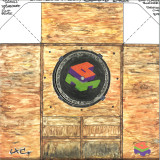
Marionette showcases the breadth and variety of the Yorkshire-born artist’s sound, weaving together familiar and uncanny moods of rural England and its Victorian architecture, as suggested by the gated garden print of the album’s cover. Unfurling between physical textures – the patina of vinyl crackle or gentle rain – and the hyper-real spaces that his music inhabits, Barley describes the compositions as “landscape or static scene paintings,” with many of the album’s tracks taking nature’s rhythms as their compositional cue.
On ‘Seafarer’, this manifests in the repeated synth swells of a boat on rough waters, while title track ‘Marionette’ imagines an eerie scene, were shadows flicker by an open fire. Similarly,‘Lake of Gold’ layers plucked strings at different scales and velocities to create what Barley calls the “rain-like quality” of the rhythm.
Drawing from jazz, minimalism and techno, Barley focuses on the detailed qualities of sound, experimenting with time signatures, temporals and tuning systems. His esoteric alter-ego Bambooman (2013-2018) found a home on Matthew Herbert’s Accidental imprint, releasing the album Whispers in 2017.
In contrast, under the pseudonym Church Andrews (most notably in collaboration with drummer Matt Davies), he produces synthetic, often beat-focused music, using digital synthesis and algorithmic composition techniques, with the live drum performances triggering and modulating Barley’s synths. The duo has recently performed at festivals such as Rewire and Waking Life, filmed sessions for Fact Magazine and Slate & Ash, and recently had their music played out by Aphex Twin.
Under his own name, Barley released his debut album Landscapes in 2019 on 33-33 Records and received support from the likes of NTS Radio and BBC 6 Music. Barley has performed at events across the UK and Europe alongside the likes of Andy Stott, Beatrice Dillon, Jan Jelinek, MF DOOM and Madlib. He has also completed commissioned work for the British Art Show, Camden Arts Centre, MSCTY and the Open Music Archive.
Paperback: 304 pages
Product Dimensions: 12.9 cm x 19.8 cm x 2.1 cm
• Details the story of the legendary DiY Collective in all their eclectic, outrageous and occasionally deranged glory from early acid house to DJ collective, sound system and record label.
• The first autobiographical account of the remarkable and historically overlooked nineties free party/festival movement from someone who played a pivotal role and was involved from the start.
• Covers truly historic events such as the huge Castlemorton free festival and Criminal Justice Bill riots via wild stories of Britain’s rave counter-culture and mass trips to Ibiza, Amsterdam and San Francisco.
Emerging from Nottingham in the summer of 1989, the DiY Collective were one of the first house sound systems in the UK. Merging the anarchic lineage of the free festival scene, the cultural and political anger of bands like Crass with the new, irresistible electronic pulse of acid house, they bridged the idealistic void left by the moral implosion of the commercial rave scene.
From Castlemorton to the Café del Mar, the DiY sound and DJs became internationally renowned and beneath their banners of liberty, collectivism and untrammelled hedonism achieved an underground cult status that endures to this day. Having celebrated their thirtieth anniversary in 2019, DiY continue to challenge the idea that dance music is apolitical and to celebrate the ideology of liberation through fun.
Written by Harry Harrison, one of DiY’s founding members, this book traces their origins back to early formative experiences, describing in detail the seminal clubs, parties, festivals and records that forged the collective. Dreaming in Yellow is an attempt to distil the story of DiY’s tumultuous existence and the remarkably eclectic, outrageous and occasionally deranged story of them doing it themselves.
“Culturally, the most dangerous people in the country.”
Tony Wilson’s In the City Music Festival brochure 1997
Warehouse find!
While the German producer Martin Matiske averages a new release under his given name every few years, there was a long stretch of time in which sightings of his Blackploid alias were much more rare. After dropping an EP for Frustrated Funk in 2006, fans found further material hard to come by over the next decade or so. However, Matiske has reinvigorated Blackploid in recent times, with the project making a few compilation appearances and dropping a couple of EPs across 2020.
That run now culminates inCosmic Traveler, a four-track affair which marks Matiske's debut appearance on Sheffield's Central Processing Unit. Given the long wait, it's great just to see Blackploid back among the fray once again. But for the project's CPU curtain-raiser to be an EP of such high-quality techno jams? Now that really is spoiling us.
Cosmic Traveler's title nods towards the sort of stargazing aesthetics one finds in classic Detroit techno. However, while there are undoubtedly ties to the Motor City in this music, the record ultimately steers less towards spacious atmospherics and more towards the taut, lean machine-funk of seminal practitioners like Dopplereffekt.
Matiske sets his stall out from the off. Opener 'Electric Engine' begins with a run of stiff-necked 808 kicks before hissing hi-hats, a grizzly bassline and all manner of futuristic sounds enter to warp the tune into hyperspace. Following cut 'Night Drive' repeats the trick of 'Electric Engine' but adds a pleasingly dinky synth lead in order to nudge itself slightly towards bleep-techno territory.
The two cuts on Cosmic Traveler's B-side are pure late-night goodness, a pair of mid-set heaters primed for dark basements. 'Pleasure Activism' delivers on the promise of its title and then some, pushing the Kraftwerk template to extremes by bringing a load of gnarly synth lines into play over a wobbling acidic chug. Finally, EP closer 'The Race' is reminiscent of both the twisted machine-funk of Gerald Donald's Japanese Telecom project and the playful modern evolutions of artists like fellow CPU high-flyer Jensen Interceptor.
The resurgence of Martin Matiske's Blackploid project continues withCosmic Traveller, an EP of timeless electro-funk and techno.
FFO: Dopplereffekt, Japanese Telecom, Jensen Interceptor, Cardopusher
White vinyl, limited to 500 copies. Liam Cromby, known for his work as the lead singer and songwriter of We Are The Ocean until 2017, has today announced his forthcoming debut solo album What Can I Trust, If I Can't Trust True Love, due for release on December 1st 2023, also sharing the title track, available to stream/download worldwide now. "Drawing from my own experiences, this song is a testament to those early, fragile moments of a relationship_where every misstep feels like a fall and every kind gesture feels like flying," he explains. "Choosing to name the album after this song was instinctive, given that it was among the final tracks to be crafted. Even though it came later in the creative journey, it perfectly embodies the central theme of the album." Since revealing the first taste of new music in March, with the release of `Here I Am' - accompanied only by a contemplative, artful film featuring an elaborate dance between two performers - followed by `Breakdown', and last month, `At This Table', this new phase of his career is already off to an impressive start. With early airplay from BBC Introducing and Absolute Radio Country among others, an appearance at The Great Escape festival and sold-out headline shows across the country, Cromby was invited to play at the prestigious Black Deer Festival of Americana, and along with a full-band set, joined Brandy Clark, Drake White, Elles Bailey and Bella White for a Songwriter Session. Although recorded in a matter of days, the project was at least five years in the making.
COTONETE is back!
After releasing numerous and now collectable standalone singles, plus some now famous collaborations with Dimitri from Paris, 2019 saw Parisian based 8 piece, Cotonete release their first long player in 15 years! Under the guidance of Melik Bencheikh from Paris’ rare record emporium, Heart Beat Vinyl. The dark moody mover "Super-Vilains" came out to great success on Heavenly Sweetness.
After playing some packed live shows around France and the UK, including the acclaimed Sunday at Dingwalls in Camden, hosted by Gilles Peterson and Patrick Forge. Somewhere along this part of the journey, they came across the Brazilian music legend and vocal powerhouse, Di Melo. He softened their souls, and from this love affair came the album "Atemporal". Released on Favourite Recordings, this 8 track album would end up being sampled by Canadian superstar Drake, for his 2023 album ‘For All the Dogs Scary Hours
Edition’.
So now into 2024, and we have Cotonete full length number two. They’ve enlisted the producer Guts to guide them towards sunshine, groove, warmth and all the colours in his rainbow. With their tongues firmly in their cheeks, the album is titled ‘Victoire de la Musique’ - a dig at the annual French music award ceremony. Taking the band deep, producer Guts showed them new and exciting rhythms from all corners of the world. The record’s first example of this is ‘Venezuela’, a track directly inspired by the jazz funk from the great Caribbean nation.
Other key musical exploration on the record can be attributed to the late composer Francis Lai. On ‘Cinq Pour L'aventure’ - an almost 15 minute epic monster showcasing the band’s love for 70's French movies soundtracks. “L’aventure c’est l’aventure”, was a movie by one of the most famous French directors Claude Lelouch The single from the soundtrack was sung by French music superstar Johnny Halliday.
Guests are scattered very tastefully across the album, on the only cover version of the record, the Brazilian master Jorge Ben’s ‘Bebete Vãobora’, Sabrina Malheiros was invited to lend her lungs. The daughter of Azymuth’s Alex Malheiros helps join perfectly the dots from a band that are without a doubt Cotonete’s biggest influence. Brazilian jazz funk, now with an added French touch.
On ‘Day in Day Out’ a powerful performance is given from Leron Thomas on vocals and trumpet. Perhaps also known for his role as the musical director for Iggy Pop and touring member of his band. This track is an already tried and tested dance floor filler, emphasizing just how tight the band really can play - the track even found its way into BBC Music’s Craig Charles’ ‘Track Of The Year’ selection.
No record so soulful would be complete without a trip to the UK. Omar, London’s Godfather of New Soul pops in. Having recorded with artists like; Courtney Pine, Level 42 & Erykah Badu, in his distinctive smooth style, he blesses the track ‘What Did Run You For?’ The final vocal visitor is Gystere Peskine, a Parisian based musical hero, who shows off his retro future funk feels on ‘O Ceu es Preto’ - which literally translates as ‘the sky is black’ - although given the hugely uplifting and almost Gospel Soul of this Russian/Brazilian singer, he
has us seeing things far brighter.
Cotonete have endeavored to build a worldwide rainbow warrior team of merry boys and girls. Fighting the brave fight to shine light towards the fact that music will always win…. "Victoire de la Musique" - a symphony of spring, songs of the new world, a "Victory Of Music”
Harm’s Way is Duck Ltd.’s most intuitive and organic album yet, the result of keen observation, self-possessed songwriting, and a collaborative spirit. Building on the successes of their previous releases, the deeply relatable album displays a band operating at a nuanced, lyrical and musical best.
Ducks Ltd. make inviting and frenetic guitar pop for when life feels overwhelming. While the band’s songs are ostensibly breezy, a palpable anxiety boils underneath that communicates something deeper about everyday existence. On their latest album Harm’s Way, the Toronto duo of Tom McGreevy and Evan Lewis hones in on interpersonal and societal collapses, urban decay, and the near-impossibility of keeping a level head when everything around you seems to be falling apart.
“They’re songs about struggling,” says singer and lyricist McGreevy (who also plays bass and rhythm guitar). “About watching people I care for suffer, and trying to figure out how to be there for them. And about the strain of living in the world when it feels like it's ready to collapse.”
Even with its often dark subject matter, Harm’s Way is Ducks Ltd.’s most vividly rendered and collaborative collection yet. It’s an undeniable evolution for the band, not just in how these songs soar, but in their entire writing and recording processes. Composed on tour while supporting acts like Nation of Language, Illuminati Hotties, and Archers of Loaf, the album displays the band’s finely tuned songcraft and well-earned, road-tested confidence. “When we got signed, we had played maybe five or six shows ever. After last year, it’s in the hundreds. That experience can change your perception of your own music and songwriting,” says McGreevy. “In the past when we got stuck on a song we had a tendency to look at our favourite records to see how they tackled it. But now, instead of asking ‘what would Orange Juice do?’, we’d ask, ‘what would we do?’.” Lewis adds, “We have this really great thing where every decision with the band is filtered through both of us. Here especially, we really figured out how to make something that truly sounds like us.”
The band, fortified by this strong sense of sonic identity and a self-assurance in their new material—and in contrast to their critically acclaimed 2021 debut Modern Fiction and 2019 EP Get Bleak, both self-recorded and self-produced in a Toronto basement—wanted to bring Harm’s Way to life in a new city, with an outside producer, and with some of their favourite musicians. “We realised that so many of our favourite bands who are making guitar music right now are from Chicago,” says McGreevy. Working with producer Dave Vettraino (Dehd, Deeper, Lala Lala), they enlisted a marquee cast of Windy City collaborators to round out the tracks on Harm’s Way, including: Finom’s Macie Stewart (violin, string arrangements); Ratboys’ Marcus Nuccio (drums on most tracks); Dehd’s Jason Balla (who helped arrange the backing vocals, to which he also contributed); and backing vocals from Julia Steiner (Ratboys), Nathan O’Dell (Dummy), Margaret McCarthy (Moontype), Rui De Magalhaes (Lawn), and Lindsey-Paige McCloy (Patio). The band’s touring drummer, Jonathan Pappo, and bassist Julia Wittman also appear on the LP.
Ducks Ltd. are a band that already thrives on skirting the edges of buoyant jangle pop and driving power pop, and the duo credits these collaborators with helping to push their sound even further. “Historically our process has been really tightly controlled and insular. On this record, we worked with people who we trusted with a pretty wide range of musical backgrounds and they had approaches and ideas that helped open up the record's sonic palette,” explains McGreevy. “Jason thinks about backing vocals in a totally different way than I do and is super intuitive with melodic ideas. Julia and Margaret have a really deeo understanding of harmony. Macie and Dave were comfortable with the idea of improvising string parts which took some of those layers in some surprising directions. Dave also has an amazing ability to create atmosphere on a recording, and encouraged us to use a bunch of different techniques, tones, and processes to achieve that.”
Harm’s Way’s lush, melodic swagger is clear from the first notes of opener “Hollowed Out.” A song about living with decline (inspired by a Toronto sinkhole), its bright, indelible catchiness serves in contrast to its lyrical unease. Anchored by Lewis’ shimmering electric guitar, “The Main Thing” laments growing apart from a person whose views you once shared while managing to toss in references to both the unglamorous lives of middle relief baseball pitchers and the occult. Other songs split the difference between country and krautrock, like the rollicking “Train Full of Gasoline,” which uses the 2013 Lac-Mégantic rail disaster in Quebec as a metaphor for self-destructive patterns. Meanwhile, “Deleted Scenes” mourns the absence of someone no longer in your life (even if for very good reasons) and recalls The Cure at their most direct, and closer “Heavy Bag” employs enveloping, mournful strings to evoke a sense of how misery frequently loves company.
"Live In Tokyo is the first live album by jazz fusion pioneers Weather Report, which was recorded and released in 1972. The recordings took place on January 13 at Shibuya Philharmonic Hall in Tokyo, Japan. It was one of five sold-out shows that they played in Japan during that month. The line-up during that time consisted of Joe Zawinul, Wayne Shorter, Miroslav Vitous, Eric Gravatt, and Dom Um Romão. All the music is encapsulated in five lengthy ""medleys"" of WR's repertoire, three of which contain elongated versions of themes from the group's eponymously titled debut album from 1971. Live In Tokyo is the first live album by jazz fusion pioneers Weather Report, which was recorded and released in 1972. The recordings took place on January 13 at Shibuya Philharmonic Hall in Tokyo, Japan. It was one of five sold-out shows that they played in Japan during that month. The line-up during that time consisted of Joe Zawinul, Wayne Shorter, Miroslav Vitous, Eric Gravatt, and Dom Um Romão. All the music is encapsulated in five lengthy ""medleys"" of WR's repertoire, three of which contain elongated versions of themes from the group's eponymously titled debut album from 1971. Live in Tokyo is available as a limited edition of 1000 individually numbered copies on purple coloured vinyl."
- A1: Hello, Mr George
- A2: Circles
- A3: A Night In
- A4: Dub I Your Bubble
- A5: Melodica Joe
- A6: Meadows
- A7: Late Again (Ft. Stevie 'Chicago' Christie)
- A8: Wishful Thinking
- A9: Blah De Blah
- A10: Here's What (Ft. David Rosenthal)
- B1: After
- B2: Circling Beats
- B3: Mr Minilogue
- B4: Dub In Your Bubble (Instrumental)
- B5: Just A Minute
- B6: Blah De Blah (Instrumental)
- B7: Late Again Beats
- B8: Blue Lou
Currently celebrating ten years of releasing music on vinyl & cassette and following hype for recent releases from Moscow (via Tallinn)’s Galun (glagol album) and Osaka's Kiji Suedo (Hosek EP & Riot album), Edinburgh's Hobbes Music label continues to mine a leftfield seam with this brand new album from singer/songwriter George Demure (Tirk, Output) aka DJ/producer George T (Greco Roman, Optimo), better known as George Thomson to his mum. And it’s another absolute peach if you have a taste for post-club sounds of a more leftfield persuasion.
This is the follow-up to his 'The Record Store' EP which came out via George's own All Noise imprint in 2021. He has also released the Roll On, King's Cross single via Hobbes Music under his George T moniker last November (plus various bits for the Paradise Palms and Ramrock labels in the interim).
“It all began with the Record Store EP in 2021,” explains George. “Limit my options. No samples, one drum machine, two analog synths (mono and poly), computer simply to record. I was so happy with the results I began with what you hear today. Same drums, same machines (or lack thereof) maybe some real percussion and melodica but hey, I only answer to me.”
Imagine, if you will, Scott Walker jamming with Kruder & Dorfmeister in a very small studio…
Bonus Album ‘Dandy In Dub’ features dubs, instrumentals and bonus tracks, with yet more regular flashes of pure brilliance. Be sure to check out opener 'After' and closer 'Blue Lou', which sound like George might well have sound-tracked some French 80s flick of the 'cinema du look' period (Betty Blue, Diva et al) in another life. Plus ‘Mr Minilogue’ with its clarinet-like synth.... Does it really get any better than this?!!
Sleeve art by the amazingly talented Bernie Reid, another local legend.
Feedback/Reviews to date:
'He's so talented!' JD TWITCH (Optimo)
'Love the LP. Sounds really together, production is awesome. I love the aesthetic. Vocal tracks sit nicely with instrumentals. Vocals sound light-hearted' THE MAGHREBAN
"On a bobbled and float-y, light sunbeam dappled vapor of deep house, garage, electro, kosmische, leftfield pop electronica, dub and new wave (both the German and UK’s), the Edinburgh DJ/producer and singer-songwriter George Thomson continues the good work he laid down on the last EP... It’s a most lovely, swimmingly blend of motivations, feels and deep grooves that effortlessly comes together in a generous offering of electronic music: the very epitome of the Hobbes label’s remit in delivering leftfield unique visions of now techno, house and club sounds." MONOLITH COCKTAIL
‘I love the album’ LEO MAS
‘Lovely stuff’ S/A/M (Music For Dreams/DK, Cafe Del Mar, Pikes, Playasol Radio and many more, Ibiza)
Plus play/s from Andy Wilson on ‘Balearia’ Ibiza Sonica Radio
+ DJ Dribbler (Pikes, Ibiza // Paradise Lost, Red Light Radio, Pure)
“I like to work with a variety of instruments and set ups,” says Mark Van Hoen, sometimes known as Locust or Autocreation but here working under his own name on the excellent Plan For A Miracle, his first physical release of solo music since 2018’s Invisible Threads. ”Sometimes it’s literally in my studio, with all the hardware electronics available. Sometimes the laptop, using software instruments. Some of the tracks on this record were recorded in the desert (Joshua Tree) using a 4-track tape machine and small modular synthesiser set up. Each track was recorded in different location using different instruments, which accounts for the distinction between each piece. It’s also about my own reaction to my environment, and what’s going on in my life at the time.”
The Croydon-born Van Hoen started musical life in the early 1990s, signing for R&S records in 1993 but developing his own, myriad and distinctive style across a range of releases on Touch, Editions Mego and other labels, using a battery of instruments, including analogue synthesizers and taking a number of different approaches to recording, rather than ploughing a single sonic furrow. He has worked on a number of collaborations, including with Nick Holton and Neil Halstead of Slowdive, under the moniker of Black Hearted Brother - their Stars Are Our Home was released in 2013. “I have known Neil Halstead since 1992,” says Van Hoen. “He shared a house with me for a couple of years, and the music I was making and listening to along with clubs I was attending had an influence particularly on Pygmalion, the final Slowdive album on Creation.”
Each track on Plan For A Miracle does indeed sound like a world unto itself, a mini-environment, a weather condition, an ecosystem created for the moment. It’s a collection of tracks recorded over the past few years, released on Bandcamp - despite his apparent absence, Van Hoen works constantly. Opener “Climates”, in its exquisite limpidity, feels like a homage to Brian Eno, one of his most formative influences in his teen years, commencing with Music For Films, which he bought in 1979. “This Is For Them”, feels like a ghostlike throwback to early drum & bass or electronica, reminiscent of his own, earliest outings. “There have been a number of requests from labels to make some more music like my very early releases on R&S,” says Van Hoen. “This is part of ‘letting go’ and realising that there’s nothing less creative about going back to those styles again.”
“Pencil Of Spheres” is something else again, a magnificent, imaginary glass structure, shimmering, refracting, without visible means of suspension, a thing of impossible beauty. “Electric Lights” evokes an abandoned fairground, its lights still pulsating, its music lingering. “The Underpass”, meanwhile, insofar as it reminds of anything at all, is faintly reminiscent of Cluster or Neu’s! West German ambience, the urban mundane rendered magical, the sodium lights, the whitewashed walls. The reverberant, faintly oriental chimes of “Insight” transport us yet again, burgeoning and intensifying.
The landscapes, the skyscapes rendered on Plan For A Miracle feel unpopulated as a rule - but when he does introduce vocal elements, Van Hoen has a history of doing so to spectacular effect - think of “Real Love” from 1998’s Playing With Time, the seductive intonation of its title recurring throughout like a series of massive holograms, echoing, stuttering, breaking up, surging. Here, there are just the faintest of vocals, barely distinct, disquieting. “There’s been a bit of a game changer in recent times,” explains Van Hoen. “AI software that enables you to extract vocals and instrument parts from virtually any recording. That means sampling individual parts from existing sources is no longer limited to the original mix exposing certain parts soloed. The vocal parts I use are from multiple sources and often pitch shifted altered rhythmically and melodically.“ There’s further vocal chatter on “I Really Do”, proceeding at a faster pace as if giving chase, or being pursued - distant, enigmatic. “The Music”, meanwhile, its beat tolling, lost in its own fog of static, features a curious intonation, like the ghost of a lost Walker Brother.
Sadly, the album’s title is in reference to a personal tragedy on Van Hoen’s part - the loss of his wife. Titles such as “I Won’t Give Up”, which faintly reminds of another Eno masterpiece, Another Green World, in its nautical hurly-bury, or the pastoral strains of “Mrs Who”, heavily clouded with sadness, seem to allude to this. “In fact the record was recorded entirely before she passed away,” says Van Hoen, “most of it before she even became very ill. The title was given to the album when it started to look like she wasn’t going to make it beyond a few months. It was something Osho said - “plan for a miracle” - so it was a statement of hope. Unfortunately it was not to be.” Although the album is non-thematic, non-specific in its atmospheres, sound paintings, elegant structures it most certainly stands as a magnificent monument to Osho’s memory.
-David Stubbs.
"Chamber Music" is the second studio album from American nu metal band Coal Chamber. It came out originally in 1999. This is the first time on vinyl in quite awhile. The album features the hit cover of Peter Gabriel's "Shock the Monkey" with a guest vocal from Ozzy Osbourne. The cut "Tyler's Song" was featured in the movie Scream 3. Coal Chamber reunited in 2023 playing festivals and touring with Mudvayne. They are also putting out a new autobiography.
The latest release on An’archives, Suikyō, documents a first-time meeting between three Japanese improvisers: Takashi Masubuchi on guitar and harmonica; Ayami Suzuki on voice and electronics; and Tomo on hurdy-gurdy. Recorded at Permian on the 29th of January, 2023, it’s a stunning, forty-minute long improvisation of rare artistic sympathy. Notably, it was the first time the trio had performed together, though Masubuchi and Suzuki have prior form as a duo; on the evening itself, the trio performance was preceded by solo sets from Suzuki and Tomo, which served as a kind of introduction, of sorts, to the broader aesthetic visions of two of the musicians on Suikyō.
Masubuchi, Suzuki and Tomo make for a fascinating trio, not only due to the shared musical sympathy that’s clear from their performance, but also due to their histories, and the way these dovetail on the music you hear on Suikyō. Masubuchi has recorded a number of stunning solo albums for guitar and has also improvised with a number of musicians: you can hear his responsiveness and thoughtful playing on albums alongside Suzuki, Taku Sugimoto, Straytone, Shizuo Uchida, Takahiro Kawaguchi, and more. Suzuki’s work for voice has been documented on several solo cassette releases, and in consort with Tetuzi Akiyama, Rob Noyes, Leo Okagawa, Aidan Baker and Tobias Humble. And Tomo’s music can be heard on a small clutch of solo CDs, as a member of Tetragrammaton and Archeus, and in collaboration with Junzo Suzuki.
The way their instrumental voices meld together on Suikyō, though, is evidence of a capacity both to draw from these histories, and to take these collective knowledges to new places. And sometimes, unexpectedly old places: Masubuchi notes that his guitar on this set took him back to the rock and blues he used to play, perhaps in earlier groups like Pelktopia, which he suggests contributes to “the psychedelic mood” of Suikyō. Tomo’s hurdy gurdy matches this by pulling drones out of the air or allowing melodies to slowly morph and envelop the listener – their development, at times, reminds me of troubadour music from Occitanie.
Suzuki’s presence is equally compelling and curious. Her voice is an eternally flexible instrument, and whether it sits unadorned within the soundworld magic’d into space by Masubuchi and Tomo, or slips between the cracks thanks to subtle use of electronic effects, it has a quality about it that is both otherworldly – at times, the voice soars and pirouettes – and thoroughly, deeply grounded, of this earth, a most human and intimate encounter. There is a lovely consort between Suzuki and Tomo, the voice and hurdy-gurdy shadowing each other: as Tomo notes, “the hurdy gurdy has been an instrument played to accompany singing since the Middle Ages.” For Suzuki, the performance was “psychedelic and hedonistic in a good way,” but it wasn’t simply given in to that experience: “we were at the same time looking at it from an objective point of view.”
That feels like the right way to approach Suikyō: as a performance that both sets the mind and ears spinning, but with a careful, thoughtful, and considerate objectivity to its moment-by-moment development. It’s also incredibly gorgeous. As a first encounter, it’s surprising in both its comfort and its challenge: and as Masubuchi says, the playing together feels just the way it had to be: “instinctive, unintentional, and inevitable.”
Mandalaband began life in the early 1970's, gaining cult status as one of the most forward-thinking prog outfits of the time. The brainchild of David Rohl, who formed a lineup featuring future Sad Cafe members Vic Emerson (keyboards), Ashley Mulford (guitars), John Stimpson (bass guitar and backing vocals), Tony Cresswell (drums) and vocalist Dave Durant.
Mandalaband received critical acclaim with legendary BBC radio presenter John Peel playing the entire album on his show before promptly re-broadcasting the whole thing immediately after. Unfortunately, at the time, this didn't translate to sales and Mandalaband fell into obscurity. However, with the advent of the internet, their legend grew, exciting a new generation of prog fans.
We are now pleased to make these recordings available again and offer a chance to dig into some of the most interesting progressive music of the '70s. As well as presenting the original album remastered, David gained access to the original 24-track analogue master tapes, having them restored and digitised at Abbey Road Studios before reinforcing the sound and instrumentation before remixing the entire album.
Nearly fifty years on, a veil of sonic mist has been lifted from these unique recordings.
Format: 2LP 180g gatefold edition featuring the original album and David Rohl 2024 remix of entire album, both remastered at AIR Mastering, with rare bonus track. Includes newly written liner notes.
To celebrate the launch of their sold-out US tour, NYC indie pop upstart Jordana and LA-based TV Girl surprise-release a collaborative EP entitled Summer’s Over today. Across its seven songs, the pair mesh TV Girl’s hypnotic, sample-heavy production aesthetic with Jordana’s plaintive-yet-playful vocal to form the perfect ode to the turning of the seasons, and the perfect celebration of their epic trek across America.
- 1: She Wanted To Be Burned
- 2: Deck The Warhorse
- 3: The Dizzly Doo Dah Man
- 4: Smashed To Ground
- 5: What Has The Universe Done For Me Lately?
- 6: Great Day Out For The Boys
- 7: His Love Affair With Americana Is Over
- 8: Cost Of Lifer
- 9: Why Must You Be Away?
- 10: Road
- 11: You Pride Yourself On Savage
- 12: Rocky 99
- 13: 21'S
Riding the Low are fronted by actor Paddy Considine, who was inspired to start a band after seeing Guided by Voices play live. "Robert Pollard's songwriting is just incredible. The immediacy of it just blew me away. His presence on stage... Being a fan felt like being in a gang. I wanted my own gang". The name Riding The Low came from a biography on Lee Marvin that Paddy read before the idea of having a band was even conceived. "There was a section in the book where it described the way Lee felt after he’d completed a movie. He used to see a psychiatrist who advised him that after movies he should fill his time doing the things he enjoys to take his mind off things and settle him back into normal life. The psychiatrist called this period 'Riding the Low'." 'Riding the Low' initially came about as a hobbyist outlet for Paddy's musical interest and ability; writing Pavement inspired songs on acoustic guitar on his own, before developing them with The Leisure Society's Nick Hemming.
What happens when a four-headed human drum computer meets a classical trained vilonist turned beatmaker to spend time in the studio? A beautiful lily blossoms. At least this was the case when Bokoya and FloFilz entered Atelier 21 in Aachen (a Produzentengalerie für globale Kunst) for a musical encounter with no goals set. The music that was born out of these sessions is simply amazing and we are more than happy to release them as an album under the name “Yurika” - which is a Japanese name that means “beautiful lily”.
The artwork was created by Jens Roth & Jeremias Diekmann who are responsible for almost all Bokoya artworks yet. The 19-track strong instrumental album includes one vocal track featuring Japanese singer Kan Sano.
FloFilz is one of Europe's most acclaimed Jazzbeat-producers with four albums on MPM under his belt. His last album “Close Distance” came out in 2022 an featured artists Alfa Mist, Blue Lab Beats, Jerome Thomas and Summers Sons. FloFilz is a classical trained musician who not only plays the TR 404 but also violin.
Bokoya describe themselves as a four-headed human drum machine that play improvised beat music. You can call it jazz if you like (all four members are graduated jazz musicians ) but be ready to stumble over some Dilla, Kraut Rock, Ambient or Dub in the mix. In 2022 Bokoya released their second album Hausensession on MPM , followed by a collabo album with Cologne-based producer Ginanni Brezzo (Jakarta Records) called „Minari“.
Bassmæssage is the heaviest and most consistent bass music night out of Leipzig, operating way over 30 low frequency terrapeutic events since 2007.
Hosting ventral vibrations by the likes of Mungo's Hifi, Moonshine, Rupture, Hardwax and the homies of Jahtari, maintaining strong relations within the local soundsystem culture like Zoumo and Plug Dub and pushing a ton of grass-roots DJs and visual artists, out of doubt it is a sure shot for all who like it low and want it vibrant.
2015 saw the release of the "Volume One" vinyl, blending all kinds of styles and tempi by artists who had played at a Bassmæssage. Dub met Dubstep, Footwork went along some Snailfunk Drum'n'Bass and even Skweee had a cameo. And all this happened on one plate with a warm vibe from start to finish.
It is about time to revive the label with a new vinyl compilation named "Second Drop", following the tradition of a nice roundup across various bass music tearitorries. One side pumps at uplifting 160 BPM, while the flipside is shifting down to relaxing 135 and even 120 speeds.
Nuphlo and Bukkha team up for the energetic modern halftime piece "Drip". Nuphlo might ring a bell as part of The Nasha Experience from London and Leeds, connecting asian roots with nowadays UK bass sounds. Bukkha is state-side born and has recently emigrated to Spain, from where this worldwide touring DJ machine is firing a plethora of bass music styles on renowned labels like Moonshine, System and Innamind.
DjBadshape passes the breakbeat driven torch with handsome melodies and subby kickbass on "Drift" to reflect Leipzig's well various scenes. While checking her tracks on Defrostatica and Human, one may also find artworks for Bassmæssage and more.
Sun People is closing the 160 side with the deep but dirty retro 90s jungle bit "Rise Up". Combining Techno, Footwork and UK Hardcore Breakbeats, the Graz based bass buab made it to releases on Exit, Rua and Alphacut.
Flipping sides, Dub Across Borders redefines steppers dub into the dreamy yet rolling "Bass Tree Dream". The project was found by a Copenhagen dubber when living in Colombia, fusing the rural folklore with soundsystem energy into a world-bass music. This can be heard on labels like Basscomesaveme, Translation and 45Seven and is best to be experienced in its live dubbing appearance which premiered at a Bassmæssage in 2015.
Paranoid One grabs these feelings and drops them a bit more sinister, "Glimp" manages to hide a playful 4 to the floor kick as well beyond its smooth soundscapes and percussions. As Paranoid Society these split personalities from Tallinn were delivering to Modern Urban Jazz and Alphacut already since a decade at least.
bhed finishes with the slow far-away dubsteppish "Minerva". Make sure to not only check the releases on Row and Trusik but also the freshly baked Neuburg based live act in between cosy ambient and lush bass music at the next Bassmæssage on 18th November in LeipZig!
180g, black vinyl. Warm and harmonic, this four-piece Scandinavian soul act deliver nostalgia steeped tracks with a timeless feel. Described as the bastard lovechild of Fleetwood Mac, Khruangbin, obscure Motown singles, hip-hop duo Eric B & Rakim seasoned with a bit of Stevie Wonder, Selda Bagcan, Elis Regina and Ted Gärdestad, Dina Ögon borrow across decade, country, and genre, ultimately delivering cohesive and homely retro pop from a laidback Nordic horizon. With two critically acclaimed albums under their belt and backing from the likes of Tyler The Creator, many sold out tours and and an organic growth and word of mouth build up on a global level in just two years, they are gearing up to release their third album "Orion" in February 2024.
Limited Crystal Clear Vinyl. Warm and harmonic, this four-piece Scandinavian soul act deliver nostalgia steeped tracks with a timeless feel. Described as the bastard lovechild of Fleetwood Mac, Khruangbin, obscure Motown singles, hip-hop duo Eric B & Rakim seasoned with a bit of Stevie Wonder, Selda Bagcan, Elis Regina and Ted Gärdestad, Dina Ögon borrow across decade, country, and genre, ultimately delivering cohesive and homely retro pop from a laidback Nordic horizon. With two critically acclaimed albums under their belt and backing from the likes of Tyler The Creator, many sold out tours and and an organic growth and word of mouth build up on a global level in just two years, they are gearing up to release their third album "Orion" in February 2024.
- A1: Soul Syndicate - Mix Up Dub
- A2: Soul Syndicate - Breaking Dub
- A3: Aggrovators Band - She Gone Dub
- A4: High Times Players - Cheater Dub
- A5: Soul Syndicate - Fling Weh Your Guns Dub
- A6: Soul Syndicate - Reggae Music Dub
- B1: Soul Syndicate - Predator Dub
- B2: High Time Players - Emperor Dub
- B3: Aggrovators Band - Roaming Dub
- B4: High Time Players - Love Dub
- B5: Soul Syndicate - Olives Dub
- B6: Soul Syndicate - Short Man Dub
Record Producer/ DJ / Record Plugger and Record Shop Owner Herman Chin-Lay operated out of his Aquarius Record shop at Half Way Three ,Kingston ,Jamaica.
It is from this base that he started his recording studio where he not only put out the first ever Dub album 'Aquarius Dub' but was also responsible for naming future artist Horace Swaby.
By allowing him to use his exotic fictitious working name 'Augustus Pablo' for his own recording career.
Although called 'Aquarius Dub' the tacks that make up this album were cut at Dynamic Sounds, Harry J's and Randy's Studio 17.
It was not long after this release that Herman opened the first ever twenty four track studio Aquarius Studios.
We have compiled this set of Dub tracks that were worked on at Aquarius studio's itself.
Using the legendary studio for some of the recordings and/or it's mixing and voicing facilites.
Hope you enjoy the set...Dubbing at Aquarius Sounds...
- A1: Brainticket - Places Of Light
- A2: T.j. Lawrence - Fireplay
- A3: Robert Rental - Double Heart
- B1: African Head Charge - No, Don't Follow Fashion
- B2: Keith Hudson - Nuh Skin Up Dub
- C1: Smokin' Cheeba - When I Was A Youth
- C2: The Wad - 15 Inches
- D1: Idjut Boys & Laj - Foolin' (Beatin On Dave)
- D2: Jbb Et Soprann - Tibi Lap
Part 2.[29,83 €]
Optimo (Espacio) started life as a weekly club night. It was born at The Sub Club in Glasgow on a wet, windy, wintry November Sunday night in 1997. Run by JD Twitch and partner in crime Jonnie Wilkes. Optimo was a reaction against what felt like an increasingly conservative musical soundtrack in clubs here at that time. Clubland felt as if it had become very bland and a bit too serious; it was the era of the dawn of the Superstar DJ. Clubs often felt like bastions of male energy. It seemed dance music and culture was going somewhere far, far away from where it was meant to be. The notion of fun had got lost.
It was no longer the world they had devoted ten years of their lives to already, and lots of their friends felt the same. When the opportunity came up to do a Sunday night at The Sub Club it felt like the perfect opportunity to rip it all up and start again. So they did. There was nothing in the city (or possibly anywhere) like it. As the club believed wholeheartedly in what they were doing, there was no pressure from The Sub Club to fill the club. So, they embraced the freedom. Groups of people who had never been in the same room at the same time before came together. A community of kindred spirits started to emerge.
Word spread, slowly. Lots of people checked it out. Many loved it, some hated it. The core of the Optimo idea was to embrace music they loved that might work on the dancefloor from whatever era or genre they thought felt right. It might not seem very radical now but at that time it was revolutionary.
After about a year and a half, the club went from having 100 people attending most nights to suddenly one week having 500 people turn up. It was very weird. It was as if a collective light bulb went off in people’s heads in Glasgow. From that week on, until the very last weekly Sunday night at the Sub Club, in 2010, over a decade later, it was packed.
There were 550 Sunday Optimo nights. A LOT of music was played. So, what was the music? People often find it hard to pin down exactly what Optimo is. This has been a positive but also a negative as we live in a world where people want easily defined “brand identities”. The simplest definition of the music played is “music for dancing”, which of course is a very broad definition. Even better than trying to define it in words, we have these 2 volumes of music that give a hint of what that might be.
This is not a “Best of Optimo” or a “Greatest Hits of Optimo” compilation. For people who come to, or used to come to the nights there are of course “Greatest Hits”. But, over such a long timespan they are “hits” belonging to a certain moment in time and space. Someone who came to Optimo in 1997 would have a completely different notion of the big tracks at the club to someone coming in 2003, or 2010, or today. This compilation is just a snap shot missing several genres that might make up the DNA of Optimo. There is though a broad sweep through lots of music Optimo loves, that they believe is amazing. Music that they know will rock a dancefloor, that they have played between 1997 and 2023. Of course Optimo nights were not all about rocking the dancefloor. The first hour was always a time for them to play music they loved that often was far removed from the dance. Side 1, Volume 1 of this compilation is the kind of music one might hear at the very start of an Optimo night.
Optimo have always loved a good slogan. The most long lived, and fitting Optimo slogan is "We Love Your Ears", which is in essence what it is all about to them.
- A1: Chris & Cosey - Take Control
- A2: Isolators - Concentrate On Us
- B1: Mike Dunn - Life Goes On
- B2: Kc Flight - Voices (Original Dub Mix)
- C1: Faze Action - Good Lovin' (Special Disco Mix)
- C2: Hannah Holland - Ekotypic
- D1: Divine - Shake It Up
- D2: Xs-5 - I Need More (Extended Dance Version)
- D3: Liquid Liquid - Optimo
Part 1.[29,83 €]
Optimo (Espacio) started life as a weekly club night. It was born at The Sub Club in Glasgow on a wet, windy, wintry November Sunday night in 1997. Run by JD Twitch and partner in crime Jonnie Wilkes. Optimo was a reaction against what felt like an increasingly conservative musical soundtrack in clubs here at that time. Clubland felt as if it had become very bland and a bit too serious; it was the era of the dawn of the Superstar DJ. Clubs often felt like bastions of male energy. It seemed dance music and culture was going somewhere far, far away from where it was meant to be. The notion of fun had got lost.
It was no longer the world they had devoted ten years of their lives to already, and lots of their friends felt the same. When the opportunity came up to do a Sunday night at The Sub Club it felt like the perfect opportunity to rip it all up and start again. So they did. There was nothing in the city (or possibly anywhere) like it. As the club believed wholeheartedly in what they were doing, there was no pressure from The Sub Club to fill the club. So, they embraced the freedom. Groups of people who had never been in the same room at the same time before came together. A community of kindred spirits started to emerge.
Word spread, slowly. Lots of people checked it out. Many loved it, some hated it. The core of the Optimo idea was to embrace music they loved that might work on the dancefloor from whatever era or genre they thought felt right. It might not seem very radical now but at that time it was revolutionary.
After about a year and a half, the club went from having 100 people attending most nights to suddenly one week having 500 people turn up. It was very weird. It was as if a collective light bulb went off in people’s heads in Glasgow. From that week on, until the very last weekly Sunday night at the Sub Club, in 2010, over a decade later, it was packed.
There were 550 Sunday Optimo nights. A LOT of music was played. So, what was the music? People often find it hard to pin down exactly what Optimo is. This has been a positive but also a negative as we live in a world where people want easily defined “brand identities”. The simplest definition of the music played is “music for dancing”, which of course is a very broad definition. Even better than trying to define it in words, we have these 2 volumes of music that give a hint of what that might be.
This is not a “Best of Optimo” or a “Greatest Hits of Optimo” compilation. For people who come to, or used to come to the nights there are of course “Greatest Hits”. But, over such a long timespan they are “hits” belonging to a certain moment in time and space. Someone who came to Optimo in 1997 would have a completely different notion of the big tracks at the club to someone coming in 2003, or 2010, or today. This compilation is just a snap shot missing several genres that might make up the DNA of Optimo. There is though a broad sweep through lots of music Optimo loves, that they believe is amazing. Music that they know will rock a dancefloor, that they have played between 1997 and 2023. Of course Optimo nights were not all about rocking the dancefloor. The first hour was always a time for them to play music they loved that often was far removed from the dance. Side 1, Volume 1 of this compilation is the kind of music one might hear at the very start of an Optimo night.
Optimo have always loved a good slogan. The most long lived, and fitting Optimo slogan is "We Love Your Ears", which is in essence what it is all about to them.
Daniel Land's new album, "Out of Season", is his most ambitious record to date, a series of reflections on history, memory, and post-Brexit Britain, which was inspired by his return to the landscapes of his youth – the rugged, underpopulated west coast of Somerset. The album was written and partly recorded in Daniel’s studio in a static caravan, overlooking the coast, during the period when the UK was tearing itself apart over its relationship to Europe. "I didn't set out to write about Brexit", Daniel says, "I have a kind of horror of political music. But I couldn’t escape the atmosphere of the time – this strange, distorted version of ‘Englishness’ in the national psyche. I’ve always been interested in memory and nostalgia; Brexit illustrates the dangers of taking seductive, possibly false memories at face value”. Songs like “White Chalk”, “Island of Ghosts”, and the album’s title track, represent a series of attempts to reclaim an older, more peculiar idea of England which, Daniel says has been “Lost in the nationalist mythmaking of the past decades” – the island of misfits and outsiders exemplified by the works of Derek Jarman, for example, whom Daniel was rediscovering while working on the album. “I must have read 'Modern Nature' ten times over the years”, Daniel says. “What I love about Jarman is that he had a deep, abiding love for England, but it was a very complicated, critical and a very queer kind of love. That was very much my mood, going into the making of this album”. Like Jarman’s work, "Out of Season" probes national identity whilst also displaying resolutely queer themes throughout. Daniel’s voice – once described by The Guardian as "The spawn of Elizabeth Fraser and Anthony Hegarty” – is less heavily reverbed than before, bringing to the fore his often-confessional lyrics, inspired by the frankness of modern queer poets like Andrew McMillan, Seán Hewitt, and Ocean Vuong. A lyrical highlight is the gorgeous “Southern Soul”, a deceptively straightforward recounting of a decades-old hookup with a closeted guy from his hometown which, Daniel says, “Serves as a metaphor for everything I’m talking about in the album”. And in keeping with the album’s nods to the heroes of gay literature, Daniel’s self-styling of the album as a “Dream Pop Album on National Themes” deliberately references the full title of Tony Kushner’s era-defining play "Angels in America", whose central character is namechecked in the hook-laden “Lemon Boy” – a song which must surely stand as Daniel’s most deliciously pop moment yet. Lauded by Mark Radcliffe, Guy Garvey, Tom Robinson, and many others, Daniel Land makes music that, in the words of BBC Radio 1, "You can't help but think the late John Peel would have loved".
What Do We Do Now is the fifth solo studio LP recorded by J Mascis since 1996. This is obviously not a very aggressive release schedule, but when you figure in the live albums, guest spots, and records done with his various other bands (Dinosaur Jr., The Fog, Heavy Blanket, Witch, Sweet Apple, and so on), well, to paraphrase Lou Reed, "J's week beats your year." What Do We Do Now began to come together during the waning days of the Pandemic. Utilizing his own Bisquiteen Studio, J started working on writing a series of tunes on acoustic with a different dynamic than the stuff he creates for Dino. "When I'm writing for the band," he says, "I'm always trying to think of doing things Lou and Murph would fit into. For myself, I'm thinking more about what I can do with just an acoustic guitar, even for the leads. Of course, this time, I added full drums and electric leads, although the rhythm parts are still all acoustic. Usually, I try to do the solo stuff more simply so I can play it by myself, but I really wanted to add the drums. Once that started, everything else just fell into place. So it ended up sounding a lot more like a band record. I dunno why I did that exactly, but it's just what happened." Two guest musicians are playing this time out; Western Mass local Ken Mauri (of the B52s) plays piano on several tracks. Since J himself has some experience with keys, when asked why he needed a hired gun, he says, "Ken is great, and he plays all the keys. I tried playing some keyboards on the first Fog album, but I'm really only comfortable playing the white notes, so it's kind of limiting. laughs Nowadays, I could just turn the pitch on a mini Mellotron to play different sounds, but black keys just seem hard. For whatever reason, I just like banging on the white ones. Seems like it's harder to figure out how to stretch your fingers around the other ones." Mauri has no such qualms and plays all the keys very damn well. He sounds especially great on "I Can't Find You," where he is Jack Nitzsche to J's Neil Young, creating one of the album's loveliest tunes. The other guest musician, Matthew "Doc" Dunn, is also prominent on this track. Dunn's steel guitar manages to both widen and soften the musical edges of the music, giving it a full classicist profile. Dunn is an Ontario-based polymath who J met through Matt Valentine. After J played on Doc's great 2022 Sub Pop single, "Your Feel," he figured it was time for payback. Both Dunn and Mauri add beautifully to the songs here, helping to transform them from acoustic sketches into full-blown post-core power ballads. What Do We Do Now is the finest set of solo tunes J has yet penned, and the way they're presented is just about perfect. Asked if he would be touring to support the album, J says he'll be doing some weekend dates, but he probably won't be putting a band together. And I'm sure these songs will sound great solo and acoustic, but the arrangements on this album are truly great and put a cool, different spin on Mascis' instantly Recognizable approach to making music. So, what do we do now? Not sure. But apparently, what J does is to make one of his most killer records ever. Hats off to him. - Byron Coley
toechter is an all-female trio operating from Berlin. toechter’s 2nd full-length album »Epic Wonder« sees its classically trained members blend elaborate string arrangements with ethereal indie pop and delicate rhythms. Katrine Grarup Elbo, Lisa Marie Vogel and Marie-Claire Schlameus exclusively use analogue sound sources (such as violin, viola, cello, and their voices), which were then electronically processed.
Named after the Greek god of the wind, toechters 2022 album »Zephyr« exhaled deeply with concurrently invigorating and confusing sounds. »Epic Wonder«, their second album, was created in the spring and summer of 2023. Playing with forms and contours, the music sounds like the awakening of something new. One seems to be listening to an ongoing conversation, an exchange about what music could be, where it wants to go and how it contributes to our view of life. It all rests on a simple premise:
»Every sound you hear in our universe comes from us. The string trio is the core of toechter, the starting point of all our work.«
Those looking for new worlds of sound can find them in the work of this classically- trained musicians. Whether they add voices or percussive instruments, sample the sounds, or manipulate them electronically; ultimately they are exploring the string trio's place in a world shaped by the digital.
»Prelude« opens the album, seemingly a conversation, yet not only between humans. We catch the word ›love‹ which soon morphs into pure sound images, while a violin theme tentatively takes over. Is it the dawning of a new day? The chorus of sound transforms into a fascinating rhythmic figure, creating a club-like experience that fades out in delicate structures. A perpetual transformation.
According to toechter, »Epic Wonder« is all about making connections. Connections between people, animals, plants, fungi, rocks, soils, oceans, ice caps, stars, and planets. One imagines oneself in a folk-pop song of the 60s, or even blown around by Morricone's desert wind:
»The world as we see it is in desperate need for a deeper understanding; for compassion, for empathy. We have to understand that we are all part of the same organism. Epic Wonder is a dream, a wish, a longing for kinship between all species that share the world - all that is alive.«
The acoustic throbbing and knocking in »Sea Of Serenity« makes you think of encounters with mythical creatures or planetary oceanography; and out of the mechanically clacking groove of »Shift Souls« a gentle, but steady movement awakens with voices that seem to sound from the depths of the sea. Everything is in flux, floating in and out of dimensions and elements.
The album ends with »Mercury«, spherically elegant and almost science fiction-like. Here, a pizzicato melody leads us back to the baroque, simultaneously representing a detail of intertwined sonic worlds, while the steady, housy baseline develops its driving theme.
»Creating the music for the album, we allowed ourselves to waft away with the aspiration that connections are possible. Sometimes dwelling on subtle, yet marveling phenomena like the evening fog covering a valley on Midsummer, sometimes on grandiose splendors like the genesis of mountains or the birth of a child - letting interactions and encounters with other beings float through the musical universe as drips of emotional perceptivity.«
For the visual manifestation of »Epic Wonder«, toechter has engaged with Finish up-and-coming lens-based artist Aino Kontinen. Her work will grace both the cover art of the album and accompany the first single and video as an ephemeral tale in motion.
Dazzle rolled deep. Very deep. In the 1980s, it wasn't unusual for the Milwaukee-based group to show up at various Midwest night clubs in a caravan of 30-40 cars and vans. Their live following was hard won over a career that spanned 20+ years, many line up changes, and a handful of project names. Friends, family, and fans made the journey with them weekend after weekend, a testimony to both the musical prowess of the group and the tight-knit community that they emerged from.
Donald Smith, band leader, was there the whole time - joined by many of his siblings and friends - first as founder of the Ghetto Players, a early 70's nine-piece which also included siblings Michael, Ronald, and Charles. They played hard funk in the style of early Kool and the Gang, and although they sadly left no recordings, the strength of their live act managed to catch the eye of local Milwaukee R&B music entrepreneur Cobie Joe Payne. Cobie had made a couple of records locally in the early/mid 70s as a singer, including the impossibly weird and amazing rare afro-blues-funk 45 "Sweet Thing", but had never enjoyed national success. When the Ghetto Players disbanded in the early-mid 70s, Donald soon put together a new group, C on the Funk (the 'C' referring to lead vocalist and sibling Charles), under Payne's tutelage. Sister Lorrie Smith came in as the drummer, the line-up being fleshed out by brothers David and Melvin Johnson, and friend Robert Mitchell. After a few years as a strictly live attraction, they drove to Chicago and produced a single, "In the Disco" / "A Place" for Payne's small record label Sweet Thang Records in 1980. Lacking the financial backing needed to supply the local R&B disk jockey's "promotional fees" , this single sadly languished in obscurity, gathering dust inside the local tavern jukeboxes and manilla promo envelopes that comprised Payne's DIY distribution network.
C on the Funk were traveling the Mid West extensively at this point, and making some important friends on the road. Ike Wiley Jr. of the Dazz Band/Kinsman Dazz took particular interest and the band was re-christened Dazzle, partially as a tie-in with Dazz, partially to embrace the new sounds that would distinguish the 70s disco scene from what record collectors and DJs would now refer to as the "Boogie" era. There no doubt was a stigma attached to the word "Disco" as the eighties began, and as we see in this collection C On the Funk's "In the Disco" is remixed and transformed into the psychedelic synth instrumental of Dazzle's "Disco's Out", a title which embodies both the next-step approach Smith and company were pushing for, and humorously comments on the state of black dance music in the early 1980s. The Dazzle recording, done in Chicago in 1982, updated the sound and featured an expanded line up, most notably a second synth player (Charles Washington), and a percussionist/second lead vocalist (Greg McDonald). The added synth textures and deep percussive grooves give the Dazzle recordings an elegant late night vibe that resonate just as well in a good pair of headphones as they do on the dance floor. The trance inducing cough syrup-warble of "Explain" may best exemplify this here. Sadly, a pressing flaw in the 12" halted production and promotion, and the EP and the songs within were lost to the ages. The group, having done a much better line in the live music business, followed that path instead all the way to the early 90s. --bio provided by andy noble
1000 miles away from the beating musical hearts of Rio and São Paulo in the late ‘70s, the Brazilian city of Belém gave rise to a little-known record label called Erla - Estudio Rauland. Though not prolific in its output, the label made up for it in quality and experimental offerings, with several records on the label now becoming sought-after pieces among collectors. One such release is the sublime four-track psych, MPB, rock EP by singer-songwriter Jarbas Mariz.
They say never judge a book by its cover, though on this occasion you pretty much can. The wonderful tripped-out ‘70s artwork by Baby is a sure-fire indication of the music lying within. Though the EP was recorded in ‘77, it clearly gained inspiration from the psychedelic hippy idols of the previous decade and could easily have been a soundtrack to an acid trip scene in an obscure Brazilian movie.
Low-fi and quirky, there are moments of beauty and splendour but also hints of darkness; with a sublime balance of music and styles throughout. At points Jarbas will have you drifting through a folk flute daydream, the next moment a growling, psych-distorted guitar breaks and parts the calm. An ability to make those elements blend cohesively is where Jarbas’ true brilliance shines through.
Jarbas played, and still plays, with some of the key figures in Brazil's musical underground. Guilherme Coutinho (whose Guilherme Coutinho - E O Grupo Stalo album from ‘78 was also re-issued on Mr Bongo) features on electric piano for this release, with fans of his work being able to pick out his tones and playing style. Elsewhere, Jarbas also collaborated with the late great Lula Côrtes on the 'Bom Shankar Bolenath' album from 1988 and 'Rosa De Sange' from 1980. He was a member of the wonderful Cátia de França band and is a regular in the legendary Tom Zé group.
'Transas Do Futuro' is a special record and one we are honoured to be reissuing.
PHILIPP ROLLER produced his album, "Sommer 97," back in 1996 during his student days in his small home studio. Drawing inspiration from acts like Kraftwerk, Orbital, various artists on Warp Records, and computer game music, Roller crafted a unique sonic experience. Initially released on cassette, the album was unveiled to an intimate audience at Künstlerhaus Stuttgart in February 1997. Following the initial release, Roller had the opportunity to sign with a small British label. Unfortunately, circumstances led to the label's dissolution before the record could see the light of day. Despite efforts to secure a new label, "Sommer 97" remained confined to DAT tapes and hard drives for years. Fast forward to 2020 when Michael Kübler and Daniel Varga (Rework) joined forces to establish EXLOVE Records. Recognizing the album's potential, they decided to bring "Sommer 97" out of obscurity and into the world. Philipp Roller, now residing in Berlin and working as a freelance interface designer for music software, has had an illustrious past creating a lot of music not only on his own but even for fashion shows, art and image films, and contributing ideas to Rework's debut track "Anyway I Know You" on Playhouse. In August 2021, Roller released his first single, "Kiss & Tell / Roller Disco," on Exlove Records. Finally, after a remarkable 26-year journey, Roller's legendary "Sommer 97" tape is set to be released as a double album on vinyl.
Dropping full Sweat EP with a very Chillout Mix by the mighty Locked Club and groovy jacking workout by Kovyazin D! Big TIP! Errortica has been smashing it really hard lately, vibing the big room and setting up the heat level of prime time slots (just watch her legendary STVOL.TV set and you can get an idea, how sweaty it was). Utilizing her experience of early years playing in garage bands and the experience as an in-demand DJ, Errortica comes with a fresh and original approach for production on Sweat and Get Down. Break-beat, balearic, jersey and bass music, Sasha denies genre borders, and incorporates what she plays out into her own new music world. Calligraphic sampling, re-sampling, vocal recording and processing via guitar FX pedals, heavy drum programming, - the creative flow here has been also very sweaty, and so is the final result. In her own words, "a real party is a sweaty party!" ...we can only agree! Pressed on transparent blue vinyl + full cover sleeve artwork
- A1: The War
- A2: The Council Of The Kings
- A3: Vertigo Of Love
- B1: The River’s Queen
- B2: The Margarina Hotel
- B3: All Aboard
- B4: In The Claws Of Cremazilla
- C1: The Cursed Ballerina
- C2: With A Little Help From Ess-95
- C3: Guess Who’s Back
- D1: The Team And The Beast
- D2: The Fight
- D3: We Are Victorious
- D4: Tell The Bells To Ring
If the genesis of The Big Idea was written both in the corridors of their high school and the surroundings of La Rochelle, the first chapter truly takes place in a big house in outskirts of Paris, where the six boys settled once they got their baccalaureate in 2015. Throughout these five years, The Big Idea hosted every European band playing in Paris with no landing place. The house of Champigny-sur-Marne, almost invisible in the monstrous metropolis, became a central location of the capital’s underground scene.
That creative cyclone within which the band is placed quickly shows results and the band hit it hard with their debut LP “La Passion du crime 3” (2017). This quadruple album, written as the movie score of a police investigation story, affirms something fundamental: The Big Idea is determined not to do things like everybody else. The influences of the great psychedelic rock’n’roll tribes naturally appear, the band release several record, start touring all around Europe allowing them to develop a furious alchemy on stage. But then covid brought everything to a halt. However, the band returned to La Rochelle and plotted a new, mad project.
The Big Idea becomes the first band to record an album on a sailing boat while crossing the Atlantic. Once again, the idea is fabulous, and “The Fabulous Expedition of Le Grand Vésigue” represents both the thirst of adventure of the sextet from La Rochelle, and their yearning for calm, psychedelic horizons. After the release of the documentary film and the big tour that followed this extraordinary adventure, the band decides to reaffirm the most essential part of its identity and announces for February 2024 the releasing of a new record more electric and radical, in the image of their live performance with more and more intensity. “Tales of Crematie” is a story built on a fantasy medieval backdrop, but could have however taken place in our modern era. If the elegant, psychedelics parts have not disappeared, the record’s tone is clearly more rock than what the band has ever created before, and as The Big Idea always likes to go overboard, the album will be released as a double LP in which you’ll hear trumpets as well as pianos, violins, tropical influences, post-punk, and above all, loads, loads of fuzz. Just like a toy chest whose key would’ve been thrown away on purpose, hidden arrangement treasures abound inside of “Tales of Crematie” , along with a violent revolt against the modern archetypes of “too normal music.”
The Sex featuring members of Mercenary God and No Suicide. A mixture of different elements with a rock substrate for an uncategorized result. Another Post-Punk gem from the 80's Italian North-Eastern scene.
My adventure buddies? The silent, enigmatic Patti, former singer of the mysterious No Suicide, and the young, faithful Chris, a passionate Police fan, we met on the battlefield and he immediately became my brother. For him, learning to play the bass was a way to get close to Sting, in other words, just one step below Paradise. Patti instead played keyboards as an extension of her mysterious and glacial presence, so still and distant that the audience sometimes wondered if she was real. And then there was my fixation for the drum machine, a futuristic device which could transform the drumming sweat into an invisible, yet physical, dreamlike pulsation. A particular combination of characters and a special astral conjunction, that’s what you need to get a nucleus source of sonic emotions, and in some ways this is what we were. You could clearly feel it during the concerts. When at the end of ‘81 My Mercenary God lost their drummer and had to disband, I felt clearly that the music had already changed.
Our old 70’s rock ‘n’ roll sound was no longer representative of the day. We were like some sort of yesterday’s newspaper. Thus I Sex was born (later The Sex). According to Freudian thought that sees sexual instinct as the driving force behind every (creative or destructive) human act. And in fact we immediately started creating, destroying, assembling and deconstructing our sound. Suddenly “tomorrow became now”. It was an outburst of creative independence in the form of homemade cassettes put together with makeshift tools, at least until the arrival of the legendary 4 track recorder. I was 19 years old, Chris was only 17. Nothing more than kids after all. Yet we were already veterans, veterans of a lost war. Wise, naive, disillusioned dreamers, everything and the opposite of everything. But, above all, we were totally devoted to our creative delirium up to the point of losing touch with reality, crossing limits, breaking down barriers and almost bordering on madness. Perhaps we were just too involved, especially if in relationship with what we could receive in return. We always spread our energies as if there was no future. We unconsciously felt that we had to live in the moment, now or never, and in retrospect it really was like that, and this is why these songs exist now. Songs created with the intent to tell an inner universe that is, now as then, far from any convention.
The weird world of Wombo is a kaleidoscopic journey of sharp turns and surprising visions, a melting pot of influences with a cheeky cheshire-cat grin that coalesce into a trippy but infinite universe of the band's own, and a portal into their unique vantage point without limitation. Already committed to living outside the traditionally-heralded country sound of the music scene in their hometown of Louisville, Sydney Chadwick (vocals) and Cameron Lowe (guitar) had previously played in punk pop band the Debauchees, and with the addition of Joel Taylor (drums) in 2016 they found a winning combination of more straightforward indie rock combined with Chadwick's pitched up, oscillating vocals and unpredictable shifts in melody that see the band moving forward at an impressive pace. Their 2020 Blossomslookdownuponus LP is a snapshot of Wombo's wide-ranging aspirations that careen across avant pop, post punk and warbly indie interludes with a sky's-the-limit approach to translating the mundanity of regular life into their own high-frequency language.
Blossomlooksdownuponus by Wombo, released 2 February 2024, includes the following tracks: "Ginkobiloba", "Blossom Bear", "Chugging", "Black Hole Sun II" and more.
This version of Blossomlooksdownuponus comes as a 1xLP.
The vinyl is pressed as a baby blue disc.
Ultravillage is a collective and burgeoning community of new age music devotees, private press fanatics and underground ambient, minimal and progressive electronic aficionados. T
Mark Griffey, the man behind Ultravillage, has recently made the venture into releasing albums, with the intention of reissuing forgotten personal masterpieces of 1980s and 90s private press synth culture on new label Mid-Air Museum. MM’s first vinyl record release is a collaboration with Scottish reissue label chOOn!!.
Together, they present Accidental Music 1987-1991 by Charles Esposito, a career retrospective of the experimental composer from Martha’s Vineyard, Massachusetts. The cinematic and the sacred swirl around on Accidental Music, which gives new life to intriguing self-released tapes that Esposito put out in the 1980s and 90s. Heard by few on its original release, the music featured on this compilation ranges from Palace of Lights percussive sonics to an almost minimal techno palette, a meeting of pop and twisted electronics with the hypnotic immediacy of ancient ritual.
Accidental Music 1987-1991 develops a series of resonant harmonic spaces, by adding layers of instruments and played objects. Rather than work as acoustic maps of specific locations, these pieces eddy and gather into positive physical presences. But Esposito’s real strength lies in creating depth of field. The foreground might be dominated by glassy chimes or resonant prayer bowl-like timbres, but beyond it a series of sonic veils seems to recede towards murky imperceptibility. There’s also a kind of surreal decorum at play, passages that sound like an immaculately laid dinner table being shaken by an earth tremor while the tinkling complaints of the silver, glass and muffling linen are scrupulously recorded.
Available for the first time on vinyl, Accidental Music 1987-1991 by Charles Esposito is an exploration into
many inner worlds and dreamscapes, an analogue mirage of avant-garde gems. Produced in cooperation with the artist for Mid-Air Museum and chOOn!!.
Mastered for vinyl and digital and featuring liner notes from Mark Griffey.
A lot of water has flown under the bridge since Błoto released their last album. Sadly, in Polish rivers it wasn't just water flowing, but also all sorts of sewage of unknown origin, which destroyed the condition of these once vibrant bodies of water; it eventually led to a real catastrophe on the Odra River, which, after all, surrounds the entire city of Wroclaw, the band's birthplace. It is time for a decisive response. Błoto is making a comeback with a seven-inch vinyl and their first singles in over two years - "Szlam" and "Ścieki".
Climate change had already led to a permanent hydrological drought, which was echoed on Erozje LP. Today, as many as 91.5 percent of Poland's rivers are in very poor condition. It is not only drought that threatens rivers, but also excessive salinity. This is precisely the kind of disaster that happened on the Odra river. It resulted in 360 tonnes of dead fish and death of the river along a stretch of almost 500 km, and the reason for that was short-sighted human activity that could have been avoided. Still, the decision was made to turn the river into a cesspool.
Two years of hiatus is far too long. During this time, reality has not let up for a moment, providing new inspiration. Szlam (eng. sludge) is the sediment that forms on the river bed and sometimes the river banks. The Polish word derives from German (Schlamm), which means swamp - or mud. Szlam is therefore a sticky and unsettling remorse that rests somewhere at the bottom of the human consciousness.
In "Szlam" and "Ścieki" tracks, you will not only hear references to Erozje, but also to Kwasy i Zasady LP. For it is also a metaphor for everything that pours out of the media, smartphones, and then flows into one's head. The constant bickering, conflicts and dirty play in political campaigns, scandals to which we are already numb. On top of this, hate speech, low-quality stupefying influencer content, resulting in an ever-decreasing cultural capital of a society that breeds conformists, individualistically-minded egoists and mindless consumers. This state of affairs spawns a society of egoists, incapable of critical reflection, questioning and rebelling against reality.
The sound and genres explored by the band are, as usual, difficult to pigeonhole. These two musical miniatures contain a lot of anxious and neurotic sounds, as well as synth glitches evoking emotions such as fear, anger, sadness and guilt. The quartet consisting of Wuja HZG, OlafSaxx, Cancer G and Latarnik managed to distill this mental state by encapsulating it in shades of breakbeat ("Szlam"), and broadly defined house music ("Ścieki").
The 7" vinyl will be released on January 08th 2024 by Astigmatic Records.
The Classic electronic funk Classic by the DETROIT TECHNO BASS INNOVATORS AUX88. “Direct Drive” is the track that defines Detroit, Detroit radio and the jam that still plays hard in any club or mix show. Aux88 show why they were indeed born to make beats. And create the precise floor filler dance tracks
A favorite of the likes of Juan Atkins, Carl Cox, Egyptian Lover, and the Unknown dj from the Xmen. The Repress is finally out.
*"AUX EXPRESS "(Dj K-1 Mix)*
Is a minimal bonus beat mix created by DJ K-1 in the dark dungeons of the original Aux88 studios in the 90’s where the group assembled beats effortlessly in two studios between four members. Aux Express shows a more 80s extended beat that Dj k-1 used to play acapellas over.
*"BYTES"*
Early on the group knew there were a lot of djs playing their music and they created acapellas bytes of their voices so that the world could have access to play them anywhere
Jason Grimez is a Cincinnati-based DJ and producer. He has a long history of record collecting, sampling, and creating new sounds with analog gear. Grimez works with some of Cincinnati's finest studio musicians to create raw, soulful, instrumental hip-hop under the moniker Doctor Bionic. The next LP, In The Infinite, is due out 12/01/2023 via Chiefdom Records. Grimez fell in love with music during the golden era of early 90's east coast hip hop - when digging for jazz and funky samples were the backbone of beats. He became comfortable scratching on a pair of 1200s and sampling records with an MPC 3000 in high school. After years of collecting music and working on his sound behind the scenes, he has compiled a huge discography of original songs. In 2015, Grimez started his independent label Chiefdom Records. His studio persona Doctor Bionic was one of the first to see a release on the new imprint. The project features a studio band of session musicians. Grimez is responsible for writing, recording, producing, mixing, and releasing the records. He gathers a group of musicians in his studio, presents a few ideas, and hits record. Due to a rotating cast of musicians and ever-changing inspirations, no two sessions are alike. "There's no set pattern," Grimez explained. "I'll invite some session players and have them jam on a few ideas. Sometimes we'll start with a drum break and add melodies over top. It's mostly improv, and I can always go back and chop it up." One common thread is the fresh, original sounds. "I like to call it Organic Groove," he shared. "I'm inspired by all kinds of music - instrumental hip-hop, soul, classic rock, jazz, you name it. When we get in the studio, all of the pieces add up to a new sound." In The Infinite features some of the best players in the Cincinnati music scene. Cameron Brown played guitar on several tracks. Brian Batchelor-Glader, an award-winning pianist, was also involved. All 12 tracks provide the perfect backdrop for hanging with a group of good friends or cruising in the car. The drums are solid, consistent, and lay an effortless foundation for all kinds of instrumentation. Jazzy trumpet lines, ethereal keyboards, choppy soul guitar licks, and much more. "Do You Remember?" (track 2) heroes a busy, poppy guitar and a head-bobbing bassline. The record scratching and tape-recorded drum tones on "Plastic Art" (track 7) feels like a hip-hop instrumental from the early aughts. From top to bottom, this record has a lot to offer. Pick up a copy of In The Infinite on vinyl or stream the album on 12/01/2023
FOLLOWING THEIR RECENT REUNION, THE DELGADOS REISSUE THEIR FOURTH STUDIO ALBUM HATE ON COLOURED VINYL AND CD TO MARK ITS 21st ANNIVERSARY
Ushering in a new era of emotionally vulnerable and cinematic songwriting for celebrated Glasgow group The Delgados, 2002’s Hate is the group’s most ambitious recorded statement to date. Recorded amidst a backdrop of personal change and international crisis, Hate’s internal alchemy transmogrifies darkness into light. It’s an enclosed universe full of tragedy and magic, a swirling galaxy of lush orchestration, misanthropy dealt with kindness and black humour. Above all it showed a band coming to terms with their fragility with a new power and grace.
In Hate, the band’s ambition saw them striving to reflect the breadth of human experience, both the joy and tragedy of living in tumultuous times. Initially commissioned by The Barbican in London to compose music for a film about artist Joe Coleman, the instrumental music that instigated Hate was laden with darkness from the outset. The Delgados’ worldview has always been informed by nuance, an oblique but incisive lyrical perspective but on Hate a new rawness is woven throughout the songs. Coleman’s original subject matter - portraits of troubled historical figures like Ed Gein, Mary Bell and Jayne Mansfield - influenced the tonality of the music but the songs were written against a backdrop of international tumult and personal life changes for the band members. Beginning writing sessions following a family bereavement in drummer Paul Savage’s family, Hate was then recorded while both Alun Woodward and co-singer/guitarist Emma Pollock were expecting new additions to their young families, the latter with drummer Paul Savage. In the background to the recording process were the attacks on the World Trade Center of September 2001 and their aftermath. In this context, it’s remarkable that an album was made at all, let alone one so grand and compassionate. It’s a masterclass in restraint and imagination.
Hate sounds like the world in all its ugly glory. Recorded in Glasgow and New York with Tony Doogan, Dave Fridmann and the band as producers and using over 20 additional musicians, Hate grabs the baton from the group’s breakthrough critical and commercial success The Great Eastern. Bolder, broader and more all-encompassing than anything the band had previously attempted, the album’s palette is furnished by a string section, brass and reed instrumentation, a choir and electronic elements augmenting the core group of Emma Pollock, Alun Woodward, Paul Savage and Stewart Henderson. Far from being over the top, the group’s skill is in attention to detail, in honing and refining each arrangement, allowing each element its space.
It’s a fine balancing act that pays massive dividends. Woodward’s new lyrical vulnerability is spotlighted on tracks like The Drowning Years, which throws elegiac string arrangements against the narrative of characters living in darkness, punctuated by couplets that bring a real-life documentary feel to the narrative. All Rise brings a black comedy to the idea of a confessional before a transcendent, choir-led refrain brings ecstatic resolution to Woodward’s vocal in its highest register. On the single All You Need Is Hate, Woodward’s trick of subverting the Beatles standard showcases the dark humour at the centre of Hate. Here The Delgados’ perversity is in full flow, nurturing a glowing light from darkness, the resolving melody and Fridmann production recalling contemporaries The Flaming Lips (whose Michael Ivins assisted in mixing) or Mercury Rev. The perversity is the surging serotonin induced by the group while singing the lines “Hate is everywhere, inside your mother’s heart and you will find it there. You ask me what you need? Hate is all you need.”
It’s a dark magic that pervades Hate, indeed it’s almost the driving force throughout the album. Flipping minor to major and back again, Favours is fuelled by fear and violence before blasting into the heavens with the gauche line “and you’re feeling fine,” operating in stark contrast to the verses’ tone. Album opener The Light Before We Land finds Emma Pollock in the aftermath of recent family trauma. Her vocal is effortless; a study in steady restraint against the massive, Fridmann-patented drum sound powering Savage’s playing and Henderson’s instantly recognisable melodic basslines. Coming In from the Cold is Pollock in full flight, lifted to the heavens by wide-screen, instrumental texture. Her presence on Hate highlights her knack for lyrical impressionism, the timbre of her voice lending itself to drama while always retaining a mystique. Never Look At The Sun, inspired by the Coleman painting The Big Bang Theory (itself an explosives-themed study), revels in paranoia, her performance ringing out in the eye of the storm conjured by the swirling arrangements. It reaches the peak of a redemptive arc while seemingly parodying the very idea of redemption.
Hate was the sound of The Delgados completely fulfilling their potential, a fully realised vision buoyed by the weight of coming through a darkness into light. For its 21st anniversary, the album is being reissued on the band’s own Chemikal Underground on coloured vinyl and CD. Hate is all you need
- A1: Wrath Of The Lich King (Main Title)
- A2: Dragons' Rest
- A3: Arthas, My Son (Cinematic Intro)
- B1: Path Of Tears
- B2: Crystalsong
- B3: Dalaran
- B4: God Hunters
- B5: Forged In Blood
- C1: Mountains Of Thunder
- C2: Secrets Long Forgotten
- C3: The Kalu'ak
- C4: The Eye Of Eternity
- C5: Garden Of Life
- C6: The Culling
- D1: Howling Fjord
- D2: Rise Of The Vrykul
- D3: Borean Tundra
- D4: Totems Of The Grizzlemaw
- D5: The Wrath Gate
- D6: Angrathar's Shadow
- D7: Assault On New Avalon
- iam8bit Edition - 2xLP on Ice Crown Blue Vinyl - Featuring Music from World of Warcraft: Wrath of the Lich King - Music Composed by Russell Brower, Derek Duke, Glenn Stafford, Jason Hayes, and Neal Acree - Album Design by Ryan Brinkerhoff // Wrath of the Lich King was more than just World of Warcraft's second expansion. For the game's millions of players, its release was a watershed moment in the MMORPG's then-young history, a defining time that rocketed the game into a new stratosphere of popularity and prestige. Northrend may be cold, but we here at iam8bit are feeling the warm and fuzzy embrace of nostalgia, thinking back on fond memories of countless icy raid nights. To commemorate this feeling, we collaborated with the folks at Blizzard Entertainment to create a 2xLP worthy of the Frozen Throne! Inside, you'll find select tracks from Russell Brower, Derek Duke, Glenn Stafford, Jason Hayes, and Neal Acree unforgettable soundtrack, presented across two records and packaged in album design from seasoned talent Ryan Brinkerhoff. This iam8bit version comes on lovely Crown Blue vinyl. Whether you're rolling need or greed, we know you're gonna want this one. Don't miss out on this celebration of one of the greatest expansions of all time!
180 GRAM AUDIOPHILE VINYL
HEAVYWEIGHT SLEEVE FINISHED WITH LEATHER LAMINATE
INCLUDES INSERT WITH LYRICS AND PICTURES
THE LEGENDARY 1985 DEBUT ALBUM FEATURING THE HIT SINGLES
“YOUR LOVE”, “ALL THE LOVE” & “SAY IT ISN’T SO”
LIMITED EDITION OF 3000 INDIVIDUALLY NUMBERED COPIES ON
PURPLE MARBLED VINYL
Ada Kaleh, the Romanian composer and DJ, follows up on his recent releases for R&S Records and Apollo with a brand new single, ‘Unravelling’.
Featuring the vocals of Fela Kuti at his most potent, ‘Unravelling’ also includes a featured performance from Eric Leeds, the American saxophone player most noted for his work with Prince, both in the studio and as part of the Purple One’s touring band.
Ada Kaleh constructs a hypnotising and minimalistic rhythm, reminiscent of Tony Allen's drumming style, speckled with dubbed out complexions and kaleidoscopic sonics that provide the perfect bed for Fela Kuti’s distinguished vocal delivery and conscientious lyric. The illustrious jazz musician Eric Leeds lends his prowess to the main mix here, as his smoky saxophone tones glide across ‘Unravelling’ with pure professional class!
Green Vinyl[22,65 €]
Bob Balch from FU MANCHU here. The idea for the SLOWER project started around four years ago. I was teaching a student how to play "South Of Heaven" by SLAYER but she was a beginner so we slowed it down. I thought that sounded cool so I tuned down to B standard and tried it. I added some drums and thought "someone in the doom community should do this and name it SLOWER." A few years later I befriended Steven "Thee Slayer Hippy" Hanford, best known for his work as the drummer in the influential Oregon punk band Poison Idea. He was backstage at a FU MANCHU show. Oddly enough I was wearing a POISON IDEA shirt and he told me that my shirt sucks. I asked who he was and why he was in our backstage. He told me and I felt stupid. We started drinking whiskey and talking about music. We stayed in touch over the next year or so and during Covid I told him about my SLOWER idea. He asked me to send him tracks. I waited too long because the day I sent the tracks he passed away. Totally tragic. I'm glad I got to know him even for a few years. He was a monster musician with a giant heart. He will be greatly missed. I shelved the project for a while after that. One day Esben from MONOLORD posted about musical collaborations. I love MONOLORD so I thought what the hell. I sent him some tracks and he killed it on drums. So I sent more. Then more. Shortly after that we started reaching out other musicians to get them involved. That's how we ended up with this lineup. Everyone that contributed completely knocked it out of the park and I can't thank them enough. This project has been a long time coming and I'm beyond stoked on how it turned out. Without all of the players involved, Steven Hanford and my baritone Reverend guitar it wouldn't have happened. Thanks to everyone involved and I hope you dig it! I'm a giant SLAYER fan so it's been a treat to dig into these classic songs. Hopefully we can do another record in the near future. Look out for shows because they will happen! Esben Willems - When Bob first approached me with the idea and I heard his scratch guitars, my first thought was "This is genius". Those iconic tracks we all know by heart suddenly unveiled an unexpected dimension. I'm really proud of how this turned out. Peder Bergstrand - "This might be blasphemous considering the circumstances, but when Bob reached out and asked if I'd want to play bass on sludged-out Slayer covers, I had to admit some of these tracks were brand new to me. That made the experience even more special though, hearing and playing on the Slower version first, and then comparing to the original. Bob has really transformed these songs into something totally their own, and on a personal level I feel the rest of the band's insane performances pushed me to my most inspired playing to date. So incredibly stoked for people to hear this album."
Black Vinyl[19,96 €]
Neon Green Vinyl, limited to 500 copies. Bob Balch from FU MANCHU here. The idea for the SLOWER project started around four years ago. I was teaching a student how to play "South Of Heaven" by SLAYER but she was a beginner so we slowed it down. I thought that sounded cool so I tuned down to B standard and tried it. I added some drums and thought "someone in the doom community should do this and name it SLOWER." A few years later I befriended Steven "Thee Slayer Hippy" Hanford, best known for his work as the drummer in the influential Oregon punk band Poison Idea. He was backstage at a FU MANCHU show. Oddly enough I was wearing a POISON IDEA shirt and he told me that my shirt sucks. I asked who he was and why he was in our backstage. He told me and I felt stupid. We started drinking whiskey and talking about music. We stayed in touch over the next year or so and during Covid I told him about my SLOWER idea. He asked me to send him tracks. I waited too long because the day I sent the tracks he passed away. Totally tragic. I'm glad I got to know him even for a few years. He was a monster musician with a giant heart. He will be greatly missed. I shelved the project for a while after that. One day Esben from MONOLORD posted about musical collaborations. I love MONOLORD so I thought what the hell. I sent him some tracks and he killed it on drums. So I sent more. Then more. Shortly after that we started reaching out other musicians to get them involved. That's how we ended up with this lineup. Everyone that contributed completely knocked it out of the park and I can't thank them enough. This project has been a long time coming and I'm beyond stoked on how it turned out. Without all of the players involved, Steven Hanford and my baritone Reverend guitar it wouldn't have happened. Thanks to everyone involved and I hope you dig it! I'm a giant SLAYER fan so it's been a treat to dig into these classic songs. Hopefully we can do another record in the near future. Look out for shows because they will happen! Esben Willems - When Bob first approached me with the idea and I heard his scratch guitars, my first thought was "This is genius". Those iconic tracks we all know by heart suddenly unveiled an unexpected dimension. I'm really proud of how this turned out. Peder Bergstrand - "This might be blasphemous considering the circumstances, but when Bob reached out and asked if I'd want to play bass on sludged-out Slayer covers, I had to admit some of these tracks were brand new to me. That made the experience even more special though, hearing and playing on the Slower version first, and then comparing to the original. Bob has really transformed these songs into something totally their own, and on a personal level I feel the rest of the band's insane performances pushed me to my most inspired playing to date. So incredibly stoked for people to hear this album."
- 1: O Astronauta (Baden Powell / Vinicius De Moraes)
- 2: Tristeza De Nos Doi (Bebeto, Durval Ferreira, Mauricio Einhorn)
- 3: Chuva (Durval Ferreira, Pedro Camargo)
- 4: Tema Para Martin (J. Demonte)
- 5: Consolação (Baden Powell, Vinicius De Moraes)
- 6: Canto De Ossanha (Baden Powell, Vinicius De Moraes)
- 7: Pro Forma (Arnaldo Costa, Mauricio Einhorn)
- 8: Samba Do Avião (A. Carlos Jobim)
- 9: Niña No Divagues (Agustin Pereyra Lucena)
- 10: Berimbau (Baden Powell, Vinicius De Moraes)
Following Far Out’s reissue of Agustin Pereyra Lucena Quartet’s La Rana, the label continues its memorialisation of the late, great Argentinian guitarist’s music, with the first ever direct from tape, audiophile reissue of Pereyra Lucena’s self-titled debut album from 1970.
One of the outstanding South American guitarists, Agustin Pereyra Lucena commanded a unique position in Latin music history. He hailed from Buenos Aires, but was obsessed with the music of Brazil. A disciple of Antônio Carlos Jobim, Baden Powell and Vinicius De Moraes, the nature of Agustin’s Argentinian roots combined with the nurture of Brazil and its music to give Agustin a sound entirely his own.
After being scouted in a nightclub, by musician and guitar craftsman Jorge Demonte, Agustin was invited for an audition at Argenitinian label Tonodisc. Before he knew it, aged 22, he was in the studio recording his first album.
Agustin enlisted fellow Argentinian Brazilophiles Mario "Mojarra" Fernandez who played bass and drummer Enrique "Zurdo" Roizner. He had first heard the duo backing Vinicius de Moraes, Toquinho and Maria Creuza on their legendary La Fusa live album, also recorded in Buenos Aires. For vocals, Agustin brought in his old friend, a French teacher called Helena Uriburu, who at the time had (unbelievably) never sung in a studio before.
The atypical bossas and spiritual swinging sambas, composed by many of Agustin’s aforementioned heroes, were elevated to new heights by Agustin’s dazzling arrangements and phenomenal guitar playing. The almost cosmic reaches Agustin achieved with his sound are balanced against the stylish sophistication and breezy nature of the music.
Moments of calm serenity include Agustin’s own composition “Nina No Divagues”, Durval Ferreira and Pedro Camargo’s “Chuva” and the Brazilian bossa classic “Tristeza Nos Dois”, which feels like it draws equally upon exotica and early library records. Accompanied by Roizner’s shuffling samba jazz drums, opener “O Astronauta” is Agustin’s cover of the Brazilian guitar standard composed by Baden Powell. Another Baden Powell classic, “Consolacao” is an extended full-band set, which features Agustin’s crisp guitar dancing around a hypnotic rhythm section. Upright bass is swapped out for a big, round-sounding electric one, which sits loud in the mix for almost seven minutes of deep, groovy, distinctively early-seventies magic.
Agustin passed away in 2019, and it is only in recent years that he is starting to gain his plaudits as one of South America’s greats. On the liner notes of the album Vinicius De Moraes writes: “I think I never saw, with the exception of Baden Powell and Toquinho, anyone more linked to his instrument than Agustín Pereyra Lucena. It would give the impression that if the guitar were taken away from him, he would fade into music as one dies from the amputation of an arm.”
Agustin Pereyra Lucena will be released on audiophile vinyl LP, CD and digitally on the 26th January 2024 via Far Out Recordings.
* Lou Reed's final solo album finally available again * First time on vinyl * Produced in partnership with Laurie Anderson and the Lou Reed Archive * Booklet features unseen photography by Lou, Q&A with Laurie Anderson & Jonathan Cott, essay by Eddie Stern, and archival interviews with Lou and Hal Willner * Remastered by GRAMMYr-nominated engineer John Baldwin * Package designed by multi-GRAMMYr-winning artist Masaki Koike // "I first composed this music for myself as an adjunct to meditation, Tai Chi, and bodywork, and as music to play in the background of life, to replace the everyday cacophony with new and ordered sounds of an unpredictable nature. New sounds freed from preconception. ...over time, friends who heard the music asked if I could make them copies. I then wrote two more pieces with the same intent: to relax the body, mind, and spirit and facilitate meditation." - Lou Reed Light in the Attic Records in cooperation with Laurie Anderson and the Lou Reed Archive, proudly announces a definitive re-release of Hudson River Wind Meditations, the pioneering artist's final solo album. Originally released in 2007, the deeply personal project combines Reed's love of creating drone music with his passion for Tai Chi, yoga and meditation. The album's ambient soundscapes have been described as a counterpoint to his intense Metal Machine Music album-but they are similar outliers in Reed's 40+ year exploration of drone music and feedback harmonics. The album has been remastered by the GRAMMYr-nominated engineer John Baldwin with vinyl pressed at Record Technology Inc. (RTI). The Double LP set is presented in a gatefold jacket designed by GRAMMYr-winning artist, Masaki Koike and features new liner notes by renowned Yoga instructor and author, Eddie Stern, who guided Reed's practice for years. Also included in the physical editions is a fascinating conversation conducted earlier this year between author/journalist Jonathan Cott (Rolling Stone, The New Yorker) and Reed's wife, artist Laurie Anderson, who discusses the album, as well as her husband's devotion to Tai Chi - one of the album's primary inspirations. Hudson River Wind Meditations marks the latest release in LITA's Lou Reed Archival Series. Launched in 2022 in tandem with the late artist's 80th birthday, the ongoing series has celebrated one of America's most influential songwriters through such acclaimed collections as Words & Music, May 1965 featuring many of Reed's earliest (and previously-unreleased) recordings, including the earliest-known versions of "I'm Waiting for the Man" and "Pale Blue Eyes."
nehan is a Japanese free improvisation & avant-garde rock quintet formed in August 2022. Their performances are initiated by a 9hz brain wave emitted from a testee who has been brought into a deep meditative state via either hypnosis or acupuncture - a very relaxed but very alert state. nehan doesn"t begin until the testee has gotten into the state of "nothingness." It is only then that the improvisation can begin. The role of improvisation has been key to all the musical projects of Masaki Batoh. In 2010, as Batoh was winding down the activity of his long-standing "heavy chamber folk" group, Ghost, he became involved in the design of a machine to generate sonic data based on brain waves. An acupuncturist as well as a musician by trade, his interest was spurred by the rhythms of the body and the brain, and a desire to access the "pulses" of brain waves to initiate improvisations. Following the release of Brain Pulse Music, Batoh toured Japan, the US and Europe, making demonstrations of his process using a local volunteer and guest performers, when available. Today, nehan arrive at their performance space prepared with a Brain Pulse testee, bringing a wide array of instruments including gongs, timpani, tabla and other drums and percussion, Crumhorn, bagpipes, mellotron, oscillators and additional sound effects. Their performance is a transformative electro-acoustic display that passes through the prism of music styles, from east to west, from traditional folk and classical to rock, jazz, and avant electronic. While nehan"s performance presentation invokes a sense of ritual, they understand their process as being far removed from any type of spiritual endeavor - it has nothing to do with eastern thinking or any kind of religious ceremony - this is an action of improvisation, occurring in reality between the five musicians on stage, in response to the brain waves of an individual. For the personnel of nehan, Masaki Batoh asked players with whom he had good previous experiences in improvisation: Futoshi Okano (Ghost, Acid Mothers Temple, The Silence), Haruo Kondo (Espvall & Batoh) and Junzo Tateiwa (Ghost), along with female Brain Pulse testee Gozen on oscillators. The performance here, recorded live in August of 2022 at GOK SOUND in Tokyo, demonstrates their communal dedication to the improvisation. The players act as listeners and musicians simultaneously, inspired to make extended pieces of music out of the "nothingness" of brain waves. The possibilities of nehans"s chosen approach are almost infinite; an evening with nehan is only the beginning of their journey.
Early Life Forms is a new quartet fronted by Belgian guitarist and sound wizard Vitja Pauwels, and on the 26th January, they are set to release their self-titled debut album via W.E.R.F. Records; a stunning, one-off live show recorded with American guitarist Marc Ribot (Robert Plant, Tom Waits, Wilson Pickett, Marianne Faithfull, The Black Keys, John Zorn).
Having already earned his spurs as a sideman with artists including Naïma Joris, Bombataz and Lara Rosseel, rising Belgian star Pauwels released his debut album 'Day at Half Speed' in 2019, which explored the possibilities of acoustic guitar and live electronics. This experiment became a new artistic path for Pauwels and showcased his musical versatility, with second album 'Drift By, Sink In', released to critical acclaim in 2022.
The same year, Pauwels was invited as special guest by the BRAND! Festival, Mechelen, to showcase new material and he came up with the idea of putting together his 'dream' live band which included his hero Marc Ribot, one of world's most accomplished and acclaimed guitar players. Reaching out to him via videos and early demos for this new recording project, Ribot liked what he heard and agreed to perform with Pauwels and his new project Early Life Forms in what would be the band's first ever live show.
Joined by Frederik Leroux (baritone guitar), Laurens Dierickx (Hammond organ) and Casper Van De Velde (drums), during the lead up to the festival, Pauwels wrote a number of songs he felt would work for the live show, with the only agreement being that there would be no rehearsals ahead of the performance, only a brief soundcheck beforehand with Ribot. The music was stripped down to its essentials - compelling melodies, themes, and clear forms but with the possibility to change direction at any given moment. "The music was played and heard for the first time, and it felt like a birth of something that needed to be alive. We felt connected in the right state of mind - relaxed and focused - and it all happened in a rush of shared energy. No ego's or fear, only connection and the music", states Pauwels.
Drawing on latin, jazz, cuban, and rock with a touch of exoticism and cinematic explorations, 'Early Life Forms' cites Ry Cooder, Henry Mancini, Los Lobos, Ennio Morricone and of course Ribot, as heavy influences. There is something existential, primary, something epic and at the same time youthfully uncomplicated, which is strongly associated with the music. From the mischievous and imaginative 'My Little Renaissance' to the adventurous and hypnotic 'Latin Dancer', 'Early Life Forms' is overflowing with sharp twists and turns, with Ribot's heavily rhythmic, distorted guitar amplifying the cinematic feel to the sound. The on-stage relationship between each member of the band and Ribot is childishly uncomplicated, something primary but always epic. The music is left to the moment and the magic of their first encounter with their hero Ribot. "Marc's commitment in the music was better than I could have hoped for. What he played was with 200% intention, putting the rest of us in a state of hyperfocus. Given the fact that it was a one-time thing and a recording, we took risks without 'overplaying' or overthinking it. Right before the gig, we felt an urge to play, Marc said, "Let's rock!!" and we hit the stage", says Pauwels.
Jakes was the commanding voice behind the Lonely The Brave sound. A master of melody, his lyrical talents enthralled audiences across Europe from supporting Neil Young in Belgium, to arenas with Biffy Clyro, to the main stage at Reading and Leeds festival. Jakes has always been uncomfortable with being the centre of attention; when playing live he would stand at the back of the stage, side on, barely saying a word to the audience between songs. A total juxtaposition to the anthemic tunes he wrote-songs that felt like they could move mountains. As Lonely The Brave grew in reputation and audience, so did Jakes' discomfort with attention and adoration. He left the band in March 2018. Fast forward five years and Jakes is back with Interlaker, a new musical project, with a new musical partner, Jack Wrench of Arcane Roots. Wrench, a skilled drummer, but also a multi-instrumentalist, became the perfect partner for Jakes. Jakes says: “Jack and I got chatting about doing some music over Instagram in the spring of2022. I'd seen Jack, a couple to times, playing with Arcane Roots, so I knew what an amazing drummer he was. It was when he started to send over fully instrumental pieces that he'd done-drums, guitar, bass and all-that I realised we could be onto a really good thing. I think the first demo we put down-we did all the demoing together over the airwaves on Logic Pro-was a track called 'Ghost ride'. So we thought we were off to a good start. It certainly wouldn't be for everyone-putting together music without being in the same room together (me in Cambridge and Jack in Brighton) but it worked out really well for the two of us. Around a year later we had 12 tracks ready to go and began the process go beginning to make a record...”
All true improvisation involves an element of chance: the coming together of a nexus of influences impulses and actions that result in spontaneous creation. Often in the world of jazz these creative sparks blaze briefly in performance, and then disappear as the sonic vibrations fade from the air, but sometimes chance intervenes again, and moments thought to be gone forever can resurface in unexpected ways. As master drummer Jeff Williams sorted through his archive of cassette tapes from his extensive international career, he had no idea that hidden within it would be a recording of a 1991 evening when he joined storied NYC legend David Liebman for a set of spontaneous performances. Reunited together fifteen years after the breakup of their seminal band Lookout Farm in 1976, the two players reaffirmed their deep musical bond with a set of free-flowing exploratory dialogues in front of a receptive audience. Believed lost for many years, these performances can now be experienced again, with all their fearless freshness and pure committed musicianship undimmed by the passage of time.
Jeff Williams has established a formidable reputation as a drummer, composer, educator and bandleader on both sides of the Atlantic. His relationship with Liebman was forged in the exciting, expansive atmosphere of the New York scene in the early 70s: the meeting of Williams, the laid back Midwesterner, and Liebman, the mercurial, quintessential New Yorker, was an inspired coming together of opposites that always made the creative sparks fly. Williams remembers the journey that led to the Bar Room 432 on that 1991 evening:
“Just as I was leaving my home town of Oberlin, Ohio to move to New York City in 1971, I was given David Liebman’s phone number by someone who told me that Dave had started an organisation for jazz musicians there. I knew of Dave, from Ten Wheel Drive and John McLaughin’s My Goals Beyond, but I couldn’t have imagined what a significant role he would play in my musical life. Shortly afterwards, Dave would leave Elvin Jones and Miles Davis to start his own band, with Richie Beirach, Frank Tusa, and myself, (later adding Badal Roy), naming it Lookout Farm. We released two albums on ECM and one on A&M to wide critical acclaim, and toured across Europe, Japan, India and the US.”
“Following the dissolution of Lookout Farm, Dave and I embarked on a short duo tour opening for Gary Burton. That would be the last time the two of us would play until the occasion of this recording, fifteen years later.”
“Fast forward to 1991 when I discovered an attractive bar located on the far West Side of 14th Street in Manhattan. Bar Room 432 would become a six night a week jazz club for a few years, providing me, and many others, with the opportunity to perform our music. Catching wind of this, Dave suggested we do a duo performance there.”
“Luckily, I recorded it.There was no preparation, no set music to be played - we simply improvised, picking up where we’d left off. David’s mastery of the soprano saxophone is in full bloom here, as well as his incredibly resourceful musical mind.”
The performances are revelatory, moving in pure improvisation from clear, songlike melody to furious density, from ambience to pulsing groove, from light into darkness and back again. Cleaned up and remastered by Alex Bonney, the sound of the tape captures the warm, wood-lined ambience of the room, allowing the full power and dynamics of William’s drums and the warmth and fullness of Liebmans’ soprano sax to sing out, engaging the contemporary listener just as it engaged the hip Manhattan crowd thirty three years ago.
Here it finally is, the first ever official reissue of all recorded material by Zyklome A, and as a bonus one unreleased track plus unreleased live recordings! One of Belgium’s earliest and most primitive hardcore punk bands’ legendary ‘Made In Belgium’ LP has been one of the rarest artifacts in the genre, and although it was bootlegged many times, the reason why an official reissue on vinyl has never been published is complicated. Zyklome A’s story starts in the middle of nowhere: in Bonheiden in early 1980, above a bank office. Brothers Bie and Toon Puttemans started shredding and terrorizing ears and minds with Markus Verbeeck, without any knowledge of anything close to a scene or other people doing what they were doing. Completely isolated, they were struck by lightning with the genius idea of speeding up punk, playing Ramones chords backwards and letting the bank office’s fire alarm go off with their wall of noise. When drummer Bie got to hear other hardcore records through a school mate, he was baffled to hear there were other folks out there doing what they were doing as well. After a fire alarm and family drama too many, the trio moved to a tiny shed in the garden of the Verbeeck family to refine their special blend of primal hardcore. The rest is history! For just 5 years they became one of Belgium’s most active HC bands, befriending many other classic main stays such as The Dirty Scums, Moral Demolition, Vortex, Wulpse Varkens etc., creating pits everywhere, and turning many a nazi skin’s skulls into pulp! When guitarist Toon “forgot” to fulfil his army service, he had to flee Belgium, and as the police harassed the other band members constantly about this, it became next to impossible to maintain Zyklome A. Zyklome A morphed into Ear Damage, with different members. In a later, army free future, a reunion of Zyklome A was not possible due to Toon’s heroin problem. It is strange, and sad to say, that the cards played differently when Toon passed away. Zyklome A played 2 reunion gigs in 2016 with guitarist Pieter Coolen (of Toxic Shock fame) before Markus’ severe back pain sadly also led to his passing. This record is dedicated to Toon and Markus, whose spirits live on through their incredible music. You will find the entire first album plus an extra LP with their part of the split single Moral Demolition, their tracks of the ‘Alle 24 Goed’ compilation LP, their tracks of the ’Second Time Around’ compilation cassette, an unreleased track and a live recording at the height of their game from 1984 in Deventer (which includes covers such as ’These Boots Are Made For Walking’ and ‘Rock ’n Roll Rebel’) and a 76 page book filled with tons of archive material such as flyers, lyrics, drawings, pictures and a lengthy interview with Bie Puttemans on this most possibly last Ultra Eczema release, Zyklome A’s ‘Uitgesproken (1980-1985)’.
Contradictory accounts of Miles Davis’ creation of the soundtrack to Louis Malle’s film noir Ascenseur pour l'Échafaud have all become part of its legend. Rarely has a soundtrack been so decisive. Nearly seventy years on, beyond the myth, this taut, feverish recording, imbued with extreme dramatic tension, remains one of the Miles’ finest records. The basic outline remains: Jean-Paul Rappeneau suggested to Malle asking Miles Davis to create the film's soundtrack who agreed to record the music after attending a private screening. Davis was performing at the Club Saint-Germain in Paris in November 1957 and on December 4, he brought his four sidemen to the recording studio without having had them prepare anything. Davis only gave the musicians a few rudimentary harmonic sequences he had assembled in his hotel room, and, once the plot was explained, the band improvised without any precomposed theme, while edited loops of the musically relevant film sequences were projected in the background. Bassist Pierre Michelot recalled in 1988 that “Miles just asked us to play two chords, D minor and C7, 4 bars of each, ad lib.” Typically, Miles planned very little but know exactly what he wanted. François Leterrier, the film’s Second Assistant Director picks up the story: “The session started at around ten o’clock and went on until dawn. The screen in the auditorium was showing the scenes for which Miles had devised some harmonies, and they were edited into a loop. And that’s what makes this music unique: it was entirely improvised in conditions that went back to the days of silent films, while watching frames shot in black and white by cinematographer Henri Decaë: tracking shots of Jeanne Moreau wandering down the Champs-Elysées at night, passing in front of lit window displays or going into bars, while looking for her lover/murderer alias Maurice Ronet … All of us there in the dark auditorium were aware that something extraordinary was taking place, something that had definitely never happened before. … In the small hours we all met up again at the Pied de Cochon in Les Halles, and Louis was looking at Miles with the disbelieving eyes of a child … as if he couldn’t believe the gift he’d just received. Even in his wildest dreams he had probably never imagined what his film would be like once it had been as if illuminated by the trumpet of Miles, incisive or wrapped softly in cotton.” The music was released on 10” by Fontana and received the Grand Prix from France’s Académie Charles Cros. It was released in the USA on Columbia as the A-side of the 12” LP Jazz Track, which received a 1960 Grammy nomination for Best Jazz Performance, Solo or Small Group. This beautiful re-issue of the original recording is pressed on 180g vinyl at GZ, and packaged in a deluxe gatefold tip-on jacket with Boris Vian’s original liner notes and Jean-Pierre Leloir’s iconic studio photo of Miles and Jeanne Moreau, and an essay on the circumstances that led to this out-of-the ordinary music by Franck Bergerot.
- Reaktor (1983)
- Unser Abv (1983)
- Stehen Bleiben Ist Verrat (1983)
- Warum (1983)
- Can't You See (1983)
- Die Angst Der Allgemeinheit (1983)
- Rosa Beton (1983)
- Wir Glauben (1983)
- Maschinengewehr (1983)
- Scheiss Stadt Berlin (1983)
- 16: Jahre Im Exil (1983)
- Müde (1983)
- Reaktor (2022)
- Unser Abv (2022)
- Stehen Bleiben Ist Verrat (2022)
- Warum (2022)
- Die Angst Der Allgemeinheit (2022)
- Rosa Beton (2022)
- Wir Glauben (2022)
- Maschinengewehr (2022)
- Scheissstadt Berlin (2022)
- 16: Jahre Exil (2022)
- Müde (2022)
A tape with the rather factual title “Rosa Beton – Demo 83” gained currency in 1983, albeit among an inner circle, or as it says in a lexical note on the band: Rosa Beton “achieved beyond-regional fame in and around Berlin”. Unlike some other bands that were merely rumoured to exist, this name was widely recognized in the East Berlin punk scene and the demo tape was received with some delight. It had been made in the suburb of Hönow, or more precisely in music enthusiast Thomas Wagner’s childhood bedroom. The band was less a classic combo than a short-lived pro- ject run, for a brief underground season, by 16-yearold Wagner and Ronald Mausolf, who was known as “Mausi” and had just come of age. An old clunker of a four-track machine served as an impor- tant nutritional supplement for the duo, allowing bass and vocals to be overdubbed separately. For a project without a professional background, especially for an illegal punk band in the East, this conventional procedure was clearly exceptional. Punk bands would usually record vocals and instruments simultaneously and on a cassette recorder. Recording gear was not readily available in the GDR, and it was disproportionately or prohibitively expensive. The adversities that had to be overcome in starting up a punk band were certainly challenging for teenagers. Rooms for rehearsals were few and far between despite wide- spread vacancies, and public space was taboo thanks to the state. Concerts, whether in flats and studios or under the protection of the Protestant church, remained rare events and, moreover, risky; starting with the party-loyal neighbour alerting the People’s Police as if there were a war on, to the ever-present “digging activity” of the Stasi. The only planned appearance by Rosa Beton never materi- alised. Whether it was the goddesses of fate who averted a show or the Stasi who prevented it can no longer be reconstructed. In any case, Rosa Beton never played live and thus joined a long list of GDR punk bands that, in the early 1980s, did not make it out of illegality into a public sphere, not even into a conspiratorial one. ausi compensated for the band’s lack of live performances by at least distributing a few copies of the demo tape. Among others, at the Kult, the Kulturpark Plänterwald, which provided an initiation field for the Berlin punk scene and a hotspot with a pull beyond it. The punks adapted the Kulturpark to their understanding of an amusement park.
They would thrash about to Schlager music and pogo to third-rate Ostrock bands, make fun of overwhelmed provincials, hang out and exchange half-baked ideas as superior knowledge. In between, the punks liked to ride the chain carousel, there was a certain liking for chains. The Kulturpark management made quite a fuss about the riot the punks put on. Initially they were banned from the chain carousel, then, when the punks switched to bumper cars, they were banned from the bumper cars, then from the roller coaster, and finally from the ghost
The vinyl edition of Klein's 2022 album: »STAR IN THE HOOD« plays like a cracked, tarnished mirror of contemporary numbing music, replacing long-form expression with tighter, more explosive and sometimes completely freeform transmissions that will wake you up from your overly comfortable environmental music slumber. Opening with cycling ghost drones, dialog and piano motifs that blur into heartfelt noise, »black star« is all loping, looping piano and chthonic vocals spiked with cheese-grater noise and chipmunked chirps. It’s Klein’s delirious vocal runs that push the album to the next level though; like her style-defining »Lagata« and the Hyperdub-released »Tommy,« she subverts the raw material that makes up R&B, turning memorable hooks into blurry impressions that will glue to your mind like a diva moment on a Suburban Bass cut.
She keels into longform on »schooled,« fogging organ drones into hazed clouds that gust into imposing shapes over a 10-minute duration, rekindling the dialog between contemporary noise and gospel music. Grandiose classical sounds receive a similar treatment on ‘Friend in the Mirror’, pulled into disorienting shapes that dispel any notions of class gatekeeping; in the final third, Klein’s voice interrupts the mood, before machine-gun percussion reminds us not to get too comfortable. If yr in search of beauty, »postcode wars« finds Klein fuzzing euphoric chords into an afterparty woosh of half-heard voices and dribbling synths. She simultaneously channels rapture and wrath, poignantly torching the contemporary societal skeleton without losing her near-at-hand community in the process.
Midway through the album there’s a thematic pivot signalled by the brief »shorty alert,« a trilling mass of carnivalesque vocal quirks that sound like spiders spitting DMT into yr eardrums. From here, things get darker and more unsettling: there’s doomed subterranean ambience on »signed and delivered«, Disney-esque piano motifs, blown-out lo-fi outsider rawk on »Swerve,« and speaker garbling free eccentric soul on »brand new day,« each struck through with that unmistakable high-vs-low culture posturing. It all brings us to the album’s unsettling one-two punch of ‘haha hehe business’, maybe the foamiest track we’ve heard from her this year, and the zonked »winter« - a piece that’s as crystal clear as Klein gets, an unprocessed heartstring-tugging vocal performance over acoustic guitar twangs.
As the BBE Music J Jazz Masterclass Series hits its 19th title, the milestone is suitably matched by a collaboration between two giants of jazz brought together to deliver an exceptional album, working with a band of the very best Japanese jazz musicians. ‘Reminicent Suite’ by American pianist Mal Waldron and Japanese trumpeter Terumasa Hino was originally released in 1973 on the famed Victor label and was one of several Japan-only albums recorded and released by Waldron over a thirty-year period, most of which have never been available outside Japan. ‘Reminicent Suite’ comprises two extended tracks, both taking up a side each. The title track on Side A is composed by Waldron, and is a dark, brooding heavy groove typical of his early 70s sound. ‘Black Forest’ on side B is written by Hino and is a vivid and energetic piece, layered and textured with dense percussion and Hino’s signature trumpet tone. Mal Waldron started out in the early 1950s working extensively on the Prestige label with notable figures such as Gene Ammons, Jackie McLean and Charles Mingus. Most famously, he worked with Billie Holiday before leaving the States in the mid-60s and relocating to Europe where he established himself as a major figure working across many countries including France, Italy, and Germany, where he made his home in Munich. In 1969, Waldron recorded the first releases for two major European jazz labels, ECM and Enja, before visiting Japan on tour for the first time in 1970. Waldron instantly fell in love with Japan and, over the next three decades, extensively toured and recorded there for numerous labels. Terumasa Hino is one of the towering figures of post-war modern jazz in Japan. Coming to prominence via the Hideto Shiraki and Sadao Watanabe bands in the mid-60s, Hino soon emerged as one of the prime movers in new jazz generation that changed the direction of jazz in Japan. He explored a more open, freer, and improvised sound, mixing psychedelic and rock elements with freeform and post-bop jazz. Hino recorded for many of the leading jazz labels of the era including Columbia, Three Blind Mice, and East Wind and would go on to relocate to the US in the mid-70s, immersing himself with the leading fusion players of the New York scene including Larry Corryell, Mtume, Al Foster, Dave Liebman and many more. In the early 80s, Hino’s jazz funk tracks were dancefloor smashes on the UK jazz dance scene. Joining Waldron and Hino on ‘Reminicient Suite’ is a band made up of the very best Japanese jazzman of their day: Takeo Uematsu on sax, Terumasa’s brother, Motohiko Hino, on drums, and the legendary bass master, Isao Suzuki. Together, they deliver one of the very best albums of the era, a richly articulated and dynamic session that exemplifies the very best that the Japanese jazz scene was doing in the early 1970s. ‘Reminicent Suite’ is pressed on 200g vinyl presented in a gatefold sleeve plus obi strip, with new photos by Tadayuki Naito; translated original sleeve notes; and a 7500-word essay including interview with Terumasa Hino from Tony Higgins, co-curator of the J Jazz Masterclass Series. This is the first time this album has been available outside of Japan
With her captivating voice and richly detailed songwriting, Sarah Jarosz has emerged as one of the most compelling musicians of her generation. A four-time Grammy Award-winner and ten-time nominee at the age of 30, the Texas native started singing as a young girl and became an accomplished multi-instrumentalist by her early teens. After releasing her full-length debut Song Up in Her Headat 18-years-old, she went on to deliver such critically lauded albums as Follow Me Down, Build Me Up From Bones, and Undercurrent, in addition to joining forces with Sara Watkins and Aoife O’Donovan to form the acclaimed folk trio I’m With Her. Her fifth studio album, World On The Ground, produced by John Leventhal, went on to win the Grammy award for Best Americana Album. In 2021 Jarosz released the Grammy-nominated Blue Heron Suite, a much-anticipated song cycle which she composed after being the recipient of the FreshGrass Composition Commission.
The seventh album from Sarah Jarosz finds the highly decorated songwriter at the apex of change. A Texas native, she’s spent most of her adult life living in New York City, but shortly before writing the album Jarosz left her adopted home to join her soon-to-be husband in Nashville, TN. The geographic shake-up led to a sonic one as well for Polaroid Lovers. For the first time in her career she opened herself up to collaborators, leading to writing sessions with Daniel Tashian, Ruston Kelly and Natalie Hemby. The creative reorganization of her writing process evolved to include a much richer and more electric sound in the studio and being in Nashville meant access to a world of hot shot players. She tapped guitarist Rob McNelley (Miranda Lambert, Carrie Underwood), Tom Bukovac (Tom Petty, Vince Gill) on guitar and organ, her husband- bassist Jeff Picker (Nickel Creek), and drummer Fred Eltringham (Sheryl Crow, Lucinda Williams) for the album recording. Tashian took the helm as producer and the whole album was laid down at the legendary Sound Emporium.
As it goes with all change, Jarosz’s major life events had her feeling contemplative. While sitting on the precipice of adulthood, Polaroid Lovers finds her reflecting on past loves, childhood dreams, the places she lived in and all the versions of herself that she’s been. Although the listener experiences the sonic shift forward, the album’s subject matter is a photo album of the past. Jarosz has never sounded more assured. Polaroid Lovers is filled with the kind of confidence that comes from hard won life experiences and the conviction of someone who truly knows herself.
If the Corona pandemic and the accompanying concert bans have at least one good thing going for them, it's the extra time musicians have to write songs and live out their creativity. This circumstance was also the driving force for the SAMURAI PIZZA CATS, who come from the Electric Callboy environment. Frontman Sebastian Fischer was behind the microphone in their predecessor band Her Smile In Grief, whose line-up also included Daniel "Danskimo" Haniß, who is now celebrating success as guitarist, songwriter and producer of Electric Callboy. The contact between the two never broke off and so Daniel also produced Sebastian's later band Fall Of Gaia in recent years, whose former drummer and multi-instrumentalist Stefan Buchwald is also involved in this new project - family business from downtown Castrop Rauxel! So while Stefan contributes the music, Sebastian writes the lyrics and Daniel, as a creatively involved producer, ensures a well-rounded overall result. Okay, before we try your patience any further, let's talk about the elephant in the room: the band name. The SAMURAI PIZZA CATS have named themselves after a Japanese anime series from the early nineties. Why? Stupid question! Of course, because they are fearless warriors on their instruments, love to eat pizza and like cats! And maybe a little bit because they have soft spots for anime and silly band names - but only maybe. Rumour also has it that "Banzai! Smack! Meow!" is an onomatopoeic description of the band's sound.
- A1: Vladimir Cosma - Courage, Fuyons
- A2: Salix Alba - Vol De La Voiture
- A3: Louis Marischal - Tu M'tapes Sur Les Nerfs
- A4: Martial Solal - Dancing
- A5: Roger Morès - Dancing
- A6: Bert Paige - De Discotheek
- A7: Pieter Verlinden - Theme 19 (Générique + Générique Variation I)
- A8: Henri Seroka - Theme Axel
- B1: Rocco Granata - Jonny's Theme
- B2: Krzysztof Komeda - Les Trucs Du Miroir
- B3: Quincy Jones - Love Theme From 'The Getaway' (Faraway Forever)
- B4: Roger Morès - Ballade
- B5: Alessandro Alessandroni - La Terrificante Notte Del Demonio (Demon Arise)
- B6: François De Roubaix - Poursuite Sur Les Dunes D'ostende
- B7: Jean Marie Bigman - Bolero Pour Denise (Bolero Voor Denise)
- B8: Alain Pierre - Nacht Shift
Sdban Records, the renowned independent groove & jazz label behind Funky Chicken, Hip Holland Hip, and Discophilia Belgica, is thrilled to announce the upcoming release of its latest compilation album, "The Belgian Soundtrack: A Musical Connection of Belgium with Cinema." Packed with the finest soundtracks boasting an unmistakable Belgian connection, this compilation takes listeners on a captivating journey through a collection of cinematic hidden gems from the early sixties to the late seventies.
Curated by the passionate duo Robin Broos and Tom 'Pélé' Peeters, known for their profound appreciation of obscure soundtracks, "The Belgian Soundtrack" showcases the exceptional talents of both local and internationally acclaimed composers and musicians. From obscure finds composed by lesser-known artists to Hollywood scores performed by world-renowned musicians, this compilation offers a vibrant blend of tracks, including the occasional contribution from renowned international artists who have lent their musical prowess to Belgian films.
"The Belgian Soundtrack" came into being as a serendipitous adventure. Former film journalist Jan Temmerman reached out to us one day, offering a treasure trove of vintage soundtrack albums discovered in his attic," recounts Robin Broos. "With 650 long players, mostly unheard of titles, we embarked on an extraordinary quest-to listen to every single one of them, totaling a staggering 29,250 minutes. It was like watching the original Star Wars trilogy 78 times!"
What started as a quest soon evolved into an intriguing investigation fueled by curiosity. Along the way, Broos and Peeters unearthed dozens of treasures, delved into the backgrounds of obscure composers and musicians, and witnessed an array of enigmatic films. "We encountered an abundance of (un)necessary nudity that we never could have imagined existed," Tom Peeters laughs. The outcome of their explorations is "The Belgian Soundtrack," a meticulously curated collection of funky, melodic, and uplifting tracks, each crafted exclusively for the silver screen and boasting an unexpected Belgian connection.
Kepler is free” represent the brand new Athenian Urban Jazz scene in full. You may say that they actually started the whole scene with their debut album "Teegarden" by Veego Records, an instant sold out! Voted by local music portals as one of the best albums of 2020 and probably one of the best debuts ever when it comes to the Greek jazz game. “Kepler Is Free” jazz rock ensemble makes expansive music that straddles the line between '70s soul-jazz, alternative hip-hop, and experimental electronica.
The name of the band is inspired by a retired space telescope launched by NASA to discover Earth-size planets orbiting other stars. Named after astronomer Johannes Kepler. Founded in November of 2018 by Sokratis Tsentoglou (drums) who gathered George Migdanis (electric guitar), Nikiforos Nugent (keys), Spyros Zardas (trumpet) and Vasilis Alexopoulos (bass guitar), they all came together from different musical backgrounds in order to create original and groundbreaking material.
Commuting over their shared love of jazz and hip-hop, they composed their debut album, “Kepler”, with five tracks that highlighted their love for the music of GoGo Penguin, Badbadnotgood and Alfa Mist.
The fact that all the members were young and had not played in other Jazz bands before was something that shook the Greek Jazz community. ''Second Light'' was recorded in difficult conditions and was delayed quite a while until it was finished due to the pandemic.
The band played a handful of sold out shows in Athens over the last few months proving with their performance and the attendance that the band created a crossover from Jazz to pop audience. "Juno" track was a smash hit on legendary "En Lefko'' Radio station over the last two years. Worth to mention that just a month before the release of their second album Kepler is Free collaborated with LEX, one of the most famous rappers in Greece with the "Spike Lee" track.
Amazing floaty modern soul / disco goodness out of late 70s Queens, NY. 'Love Is The Same' two brilliant and different versions, both dancefloor fire…
Mark Beiner met Ben Iverson in 1976 when I was 17 years old, at the time he was a junior at Newtown High School in Elmhurst, Queens. Mark had taken a part time job as a Produce Clerk at Walbaum's Supermarket on Northern Boulevard in Jackson Heights, Queens, where I met Ben Iverson, the "Frozen Food Manager."
Back then Mark remembers, 'I was going to work early just to talk to him about his musical background and his time spent in the 50's and 60's with the Ohio Doo Wop Group, "The Hornets", or better known as, "Ben Iverson and The Hornets."'
In 1978 after Ben and I discussed getting together and composing music, I started writing poetry and expressing in writing my break-up with my college girlfriend, Paula. Ben and Mark went on to writing two albums worth of material, which in turn gave us a lot of time and presence on stage at our live gigs.
The regular Coast to Coast Band members consisted of Ben Iverson on Lead Vocals, Rhythm Guitarist and Co-Executive Producer, Joe Crowley, who is known today as "New York Congressman Joe Crowley." Carl (Woody Wood) Morton on Bass Guitar, Jimmy Johnson on Keyboards. Lead Guitarist, Lou Jimenez, currently owns his own recording studio, Music Labs in Elmont, Long Island. On Drums, Eddie Byam, on Alto Sax, Jay Cohen, who in the 70's used to record for "Gary U.S. Bonds." Gary Pevols on Trumpet. On Bone, Scott Burrows, Trumpet player, Steve Becker, along side Neil Levine, Stan Stockley, Tom Russo.
In the midst of the pandemic, Enjoy Jazz Festival has developed a musical project whose members will be recruited new every year and then debut at a concert on UNESCO International Jazz Day, April 30. The members come from the jazz scene of the German state of Baden-Württemberg. "We wanted," festival director Rainer Kern stresses, "not only to revitalize the fragile network of outstanding creative minds, but also to rethink it artistically as a rolling system." Two experienced and renowned band leaders, Alexandra Lehmler and Erwin Ditzner, now curate an annually changing ensemble of outstanding artists of the most diverse provenance. As part of a voluntary commitment, the ensemble is to be organized in a sustainable, diverse, and, in three years at the latest, completely gender-equal
and climate-fair manner. Thus, as a commitment to the goals of the "European/Local Green Deal" (and with reference to the jazz standard "On Green Dolphin Street"), the name Green Dolphin Orchestra was created. Another special feature: The renowned Oriental Music Academy Mannheim (OMM), a long-standing partner of the Enjoy Jazz Festival, receives a white card, so that musicians with a migration background or protagonists from other musical cultures are always part of this "orchestra of many" and constantly expand its sound language.
The project has a free improvisation approach with changing personnel. "We actually even thought of drawing lots for the different formats within the band pool," explains saxophonist Alexandra Lehmler. "We decided against it in the case of the first concert and instead put together curated formations." And drummer Erwin Ditzner adds, "In principle, however, this procedure remains an option." It was important to the two of them to also mix the genres represented by the individual musicians in such a way that free space for something truly new could emerge. "We wanted to challenge ourselves," Lehmler sums it up. The only restriction: a time code was assigned to each sub-project. "Each formation was given a time limit, although it was possible to virtually override this limit by spontaneous
reshuffling," says Ditzner, explaining one central of the few rules. "In concrete terms, this meant that after eight minutes, the improvisation in progress was either ended or new musicians simply joined in the ongoing creative process, while others took themselves out of the game."
Alexandra Lehmler summarizes the artistic impact of the ensemble as follows: "We really cross-fertilize each other. In order to push this process even further, we forced ourselves when putting together the ensemble not to fall back on our 'favorite playing partners', i.e. musicians with whom one feels particularly at home. In other words, we consciously wanted to step out of our comfort zone with this project." The present pieces were recorded live in Heidelberg during the ensemble's premiere concert on the occasion of International Jazz Day on April 30, 2022.
Repress!
Rebirth's talent Corrado Bucci gets a full single release,exciting us again with his eclectic music.
Since the previous works 'Brooklyn' and 'Chewing Bubble' Corrado has being gaining a great support in the electronic scene.
With influences from jazz to funk, he explored new musical territories and started to play real instruments, refining his artistic expression ! Already hammered by Gilles Peterson, Jazzanova and Moodymann, and n.1 as most charted track on RA, 'Open Your Eyes' is an effective track with strong breakdowns, a warm house groove and old school vocals. Detroit's Andrés (Mahogani Music / Slum Village) delivers his signature vibe and smooths it out even further into a soulful neo-disco-house interpretation ! On the B Side Bostro Pesopeo follows his releases on Permanent Vacation with a tasty hypnotic dreamy version of '23 Years Old'. Super limited and extra hot Ep !
Following the reissue last year of Fairuz's classic 1979 album "Wahdon", Wewantsounds pursue their exploration of great Lebanese music with the reissue of Fairuz's highly sought-after LP "Maarifti Feek," released in 1987. Recorded in Beirut around 1983-84, the album features the Diva's superb voice combined with Ziad Rahbani's jazz and funk orchestration, making it one of the most in-demand albums on the Arabic funk scene. The release will coincide with "Arab Divas," a major exhibition set in the prestigious Institut du Monde Arabe (IMA) in Paris, celebrating the greatest singers from the Arab World and starting 13 May 2020. One of the greatest singers of the Middle East, Fairuz started her career in Lebanon in the 50s and quickly established herself as the most renowned Diva in the Arabic world, playing the most prestigious venues in the world. At the end of the 70s, Fairuz was at a turning point both professionally and personally. Her Husband Assi Rahbani, who, with his brother Elias, had penned her biggest successes, has suffered a stroke a few years earlier. This setback ultimately led to both the demise of their marriage and the end of their professionnal partnership. Enters Ziad Rahbani, Fairuz and Assi's son, a young musician, playwright and producer who had cut his teeth writing a handful of Fairuz's song - including her 1973 hit "Sa'alouni El Nas" - at just seventeen. Ziad Rahbani swiftly took over from his father and uncle as the singer's musical director and composer and this fruitful association, which started in 1979 with the album "Wahdon," broke many new grounds for Fairuz with funkier rhythms and edgier lyrics. It was recorded at the same time as Rahbani's own 12 inch "Abu Ali" which became a sought-after disco classic in its own right. The association between the two continued with a second album, "Maarifti Feek" ("Our Encounter"), recorded between 1983 and 84 in Beirut but only released in 1987. The album was another groundbreaking mix of influences ranging from the traditional arrangements of "Oudak Rannan" and "Ma Kdirt Nseet" to the brazilan flavour of "Version 1" via the synth funk of "Ouverture 83" and its follow up "Reprise 83". Also featured on the album is a beautiful remake of Joaquin Rodrigo's "Concerto de Aranjuez" in the form of a tribute to the lebanese capital, "Li Beirut." This blend of Oriental grooves with jazz and funk orchestrations by Ziad Rahbani is a unique document of Fairuz's career development in the 80s and explains why "Maarifti Feek" is such a sought after album on the DJ and collector circuits which Wewantsounds is delighted to reissue for the first time since the album first came out.
Andy Sharrocks started writing songs in 1976. He found a vehicle for these songs with punk band Accident On The East Lancs. This started out as a covers band, but Andy soon became frustrated when the other members wanted to stay that way. The band disintegrated but Andy retained the name, forming a new cutting edge four piece playing his songs. He financed their first single in 1979 on his own label Roach Records. This was a double A side as one of the sides was a ditty called We Want It Legalised. The other side was a Bo Diddley kind of groove called Tell Me What Ya Mean, which Record Collector magazine recently said sounded like a song The Strokes should cover. This line up fell apart when immediate success failed to arrive, but Andy formed another band out of the ashes of local band Wilful Damage, and the guitarist out of the original covers band. They recorded and released on Roach Records another double A sided single in 1981 as well as an album released on cassette tape on Cargo Records. The singles now exchange hands on the collectors market for over seventy pounds, the album has been rereleased on vinyl twice, once on a German label, and once on UK’s OZIT/MORPHEUS Records which came with a bonus live album The singles have been released on many punk compilations and We Want It Legalised is about to be released on a new Manchester punk compilation on Cherry Red Records. They played many free festivals including Deeply Vale three times, and did many great supports including The Fall, Tractor, Here And Now and Crass. Andy left the band in 1982 for personal reasons, and had a one single deal with I Believe In Love on the Vibes and Vibes record label in 1985. Refusing to compromise and do covers, Andy found it impossible to make a living doing his own material which was now primarily Americana, after discovering alt.country through Steve Earle and Lyle Lovett in 1985. He went on the road as a tour manager, which is where he met Hilly Briggs, who went on to produce Andy’s first solo album in 2004 called Walking In Familiar Footsteps, which featured ex Rolling Stones Guitarist Mick Taylor, Bluesband and Manfreds frontman Paul Jones and Bobby Vee’s sons Jeff and Tommy on drums and bass respectively. Andy was now living in London and was gigging regularly on his own or with a revolving circle of musicians going under the collective title of Andy Sharrocks & The Smokin’ Jackets. He played over five hundred gigs all over London and the UK. He also did many supports for Mick Taylor, Buddy Whittington, Steve Gibbons, The Strawbs, Curved Air, and supported John Mayall on a UK nationwide tour, and played the Jazz Café in Camden twice with John. He also played The Hells Angels Bulldog Bash three times, The Skegness Rock n Blues Festival, The Herelbeke Blues festival in Belgium and The Colne Blues Festival. In 2009 he released another album called Dirt with The Smokin’ Jackets, which came out to great critical acclaim. Andy is now releasing a triple album of truly magnificent UK Americana, called Country Rock n Roll n Durty Blues. Press Quotes : "Country Rock ‘n’ Roll ‘n’ Durty Blues is a sprawling album of original rock and blues which takes you from Muddy Waters to modern Americana" – Nigel Carr, Louder Than War // "Good honest earthy rock ‘n’ roll done the old fashioned way with passion and aplomb" – Mark Radcliffe, BBC // "Country Rock ‘n’ Roll effortlessly lives up to its title … and more" – Pete Feenstra, Get Ready To Rock // "As a listener it really is bloody good fun - Briticana, Americana with a very English voice
- A1: Please Come Out
- A2: Wicked
- B1: Working With
- IB2: N My Head
- C1: Got Your Money
- C2: Didn't You Know
- D1: Two-Door
- E1: Memory Lane
- E2: Good Girls And Boys
- F1: All I Want From You
- F2: Don't Sell Rock
- G1: What Yours
- G2: Tweets
- H1: You Check
- H2: Hero Forever
- I1: Don't Pick Up
- I2: You Don't Know Me Anymore
- J1: Tenderly With You
- J2: Now Let's Wait
Sasu Ripatti's complete "Dancefloor Classics" series. Music for imaginary dancefloors, released on Ripatti's own label Rajaton.
”Look up, into the light” she said, while the camera shutter clicked. ”Like this? Does it look holy?” His neck felt stiff. Her reply: ”Yes, just like that. What do you mean holy? Like religious? ”No, more like trying to look very far, somewhere beyond what we can see.” ”Okay, stand still, I’m going to come close to you now. The light hits your face great.” click, click, click.
He noticed her fingernails. They were not polished. Natural. Even somewhat rugged, as if something wore out the fingers slightly. What had these hands held besides the camera? What made the edges of her fingernails drift off?
He thought it’s weird to look straight into the camera. The photographer had closed her left eye, the one not looking into the lens. Then it opened, she looked up, perusing the surroundings, then she closed her eye again, then looked up, closed, looking up, very quickly. It all seemed very professional. Maybe she calculated the light, making sure it’s close to perfect. ”What will these photos look like?” – the thought popped into his head briefly. It was liberating to think it wouldn’t matter.
”What’s that song playing?” he asked. ”Wait a sec, Ol’ Dirty Bastard?” she replied. ”Oh yeah, right. But the sample?” ”Hey, could you look up again, like that. No, lower.”
New directions: ”Look out from the window, turn left.” ”My left or yours?” ”Yours, I always try to think from the direction of my model.” How professional! This is a good shoot, so natural. Should I worry about how the photos look like? No, I don’t want to. His thoughts bounced around. What would the story be like? It’s a big newspaper, everyone will read it. Maybe someone drinks coffee and eats a stroopwafel while they do it. Will they place the waffle on top of the mug for a brief while, so that it gets hot and the syrup melts a little? Then it feels wet, and you can bend the cookie.
She broke his train of thought off midway through: ”Now turn right, but look left, and slightly up, but don’t turn your face right.” ”Umm, like this? Sounds like a set of pilates instructions.” she laughed ”You do pilates?” ”Yeah, it’s hard sometimes. Have you tried?” ”No”, she said. ”I’m not good for sports that are done in groups.” ”Yeah, but in pilates you can just be inside your mind, drowning in your private thoughts.”
”What are you thinking in pilates?” she asked, taking more photos. ”Well, mostly just which way is right. And which left.” click, click.
Q&A with Sasu Ripatti:
1) Tell us something about the EP series ”Dancefloor Classics”, what’s the idea and what can we expect?
I’ve been slowly writing these sort of dance music pieces and finally curated them together for a conceptual release. I like to create music for a dancefloor that exists only in my imagination and doesn’t try to suck up to the standardized reality.
2) Your vinyl format is 10” which is quite special (as opposed to LP / 12”). Why did you choose it?
It’s my favourite format, absolutely. The size is perfect, and you can make it sound really good @ 45 rpm. And you still can make great artwork.
3) You seem interested in sampling/repurposing, what does it mean to you as an artist to approach something already existing from a new angle? How does the source material inform you about the approach to take?
I guess i could flip it around and just say I’ve outgrown synths or electronic sounds to a great extend, and having gotten rid off all my synths already good while ago I’ve used samples as my main source material a lot. It’s obvious on this series that i’ve sampled existing music, but I also sample instruments and things in the studio and resample my own library that I have built over the years, it’s quite large. To me the end result matters, not so much how I get there. Once I have something on my keyboard and play around, it’s all an instrument, though with sampling other music it becomes a really interesting and complex one as you’re possibly playing rhythm, but also harmonic content and maybe hooks or whatever, all at once.
I never sample premeditadedly, like listening to records and looking for that mindblowing 3 sec part. I just throw the cards in the air and see what lands where, just full intuition and hopefully zero mind involved, playing tons of stuff, trying things, just recording hours of stuff. Then comes the interesting part to listen to hours of mostly crazy stuff and finding that mindblowing 3 sec part.
4) What is your relationship with the dancefloor (conceptually and/or in experiences / as a performer)?
Very complicated. I have never really felt comfortable on a dancefloor but have always wanted to. There’s something in club music, in theory, that really speaks to me. It has never really materialized for me – speaking mainly from a performer’s point of view who goes to check on a dancefloor for a moment after a concert. I never have DJ’d or felt much interest towards it. But again, I love the idea and concept of DJing. As well as producing music for imaginary DJs. Lately, as in the past 10+ years, I haven’t even performed in any sort of club spaces. So my relationship to the dancefloor is quite removed and reduced, but there’s quite a bit of passion and interest left.
All tracks composed and produced by Sasu Ripatti.
Artwork & photography by Marc Hohmann.
Mastering by Stephan Mathieu for Schwebung Mastering.
Vinyl cut by SST Brueggemann.
Publishing by WARP Music Ltd.
- Interruption Introduction
- Passé Composé
- Les Orpailleurs
- Vitesse & Précipitation
- Octopolis
- La Ligne Claire
- The Coordinates Of A Soul
- Sens Dessus Dessous
- Catamaran Cameraman
- Une Minuscule Effervescence
- Le Devoir De Vacances
- Stereogrammes
- The Patterns Of A Hand
- Ainsi Souffle Le Vent
- Schmall Talk
- Maritime Jazz
- The Laws Of Subtraction
- Le Dictionnaire Des Sentiments
- Passé Decomposé (Bonus)
- Les Murènes (Bonus)
- The Contrast Of Characters (Bonus)
Jakarta Records is proud to present “Les Grandes Vacances” courtesy of Beirut’s Cosmic Analog Ensemble, aka multi-instrumental phenom Charif Megarbane. The LP is an expansive musical odyssey, one that paints a melodic tapestry woven from an eclectic panorama of sonic tools. Funky beats, dreamy melodies + cinematic flair combine to create an experience that transcends time. From vibrant funky energy to introspective moods and library-inspired tunes, “Les Grandes Vacances” captures the essence of past and present, inviting you to indulge in the perfect balance of “groove-stalgia.” Out January 19, 2024.
Cosmic Analog Ensemble (1.6k Spotify Monthly Listeners – SML), the prolific one-man band helmed by Charif Megarbane (61.5k SML), the staggeringly prolific producer, instrumentalist, and all-around musical mastermind, returns to his “Ensemble” with LP “Les Grandes Vacances.” Megarbane's artistry has garnered widespread recognition, with notable placements in Spotify Editorial Playlists like "Global Groove" (679k) and "Folk Fabrique" (162k), along with coverage from esteemed platforms / publications such as BBC Radio, Bandcamp, The Vinyl Factory, Time Magazine, and Esquire, among others. Building on the success of his debut solo release “Marzipan” in 2023 via Habibi Funk, “Les Grandes Vacances” is a sonic journey that captures the full scope of Megarbane’s sonic habitus. As a composer and producer, Megarbane touts hugely versatile, sometimes volatile musicianship — his 100+ catalogue of projects (including legendary groups like the Cosmic Analog Ensemble, Free Association Syndicate, Monumental Detail, etc.) features a huge domain of sonic direction. Now, Jakarta Records presents a new expansion in the Megarbane sonic universe.
In the enchanting sonic world of “Les Grandes Vacances,” Cosmic Analog Ensemble expertly combines diverse musical elements to craft an immersive experience. From vibrant funky energy to introspective moments and library-inspired compositions, the album's sonic palette is rich and varied. The meticulously designed artwork by Simone Cihlar (known for collabs with Anderson Paak., Tom Misch, Ivan Ave, Tapioca and others) complements the album's thematic depth, enhancing the visual and auditory journey for listeners.
First single is the thrilling sonic escapade, “La Ligne Claire,” set to release on November 10th in conjunction with LP pre-order. The track immerses listeners in vintage spy movie ambiance, featuring groovy drums, warm keys, thematic guitars, and strings that create an unforgettable car chase scene. As part of the rollout schedule, this single offers a glimpse into the album's captivating fusion of nostalgia and innovation, promising a musical adventure that lingers and resonates in your ears. Second single, the lush and groovy “Le Dictionnaire des Sentiments,” follows in the sonic footsteps of Serge Gainsbourg (complete with beautifully poignant French lyricism), out December 8th to round out the year. The track jerks the listener towards a more meditative state and expanding, cinematic sound.
Kicking of 2024 will be the absolute funkified single 3 “Maritime Jazz,” out January 5th. The track transports you to a groovy marina where the movement of the sea and boats sways you along a Madlib / Yesterdays New Quintet-esque groove.
Reflecting on his creative process, Megarbane cites a stream of consciousness approach to the Cosmic Analog Ensemble: “It’s a very spontaneous, playful, and diary-like approach and workflow…I trust my instinct because instinct is based on experience.”
Keiji Haino/Jim O'rourke/Oren Ambarchi
With pats on the head, just one too few is evil one too many...
- My “Watashi Dake?” Is Definitely Not Included In This Unequal Treaty, Is It?
- Right Brain, Left Brain; Right, Left; Right Wing, Left Wing. Just How Many Combinations Can Be Made From These?
- “Critical Consciousness?” That’s Been Abandoned In Corner Of A Shower Room In A 53-Storey Apartment Building Inhabited By Extra-Terrestrial Lifeforms…
- I Thought I Had Pulverized It Summarily But There Are Just Too Many Who Lack Reality Or Who Are Cowards So I Cannot Change A Thing
- E1: Still Divided Into Pieces? Let’s Reconnect Them Recognise That You Are A Point And The Longest Line Let It Become Light
- I Can No Longer Sense That Sacred Feeling Of Expression Just The Loitering Of Vulgar Vibrations That Can Only Be Described As A Half-Hearted Class Reunion Will You Consent To This?
- There Are Always Things I Wish To Say But I Can Only Convey Them In This Language August 6 August 9
The heavyweight trio of Keiji Haino, Jim O’Rourke and Oren Ambarchi return with their 12th and most epic release to date, the triple LP With pats on the head, just one too few is evil one too many is good that's all it is. Documenting the entirety of their final performance at the dearly departed Roppongi home of Tokyo underground institution SuperDeluxe in November 2018, the music spread across these six sides splits the difference between the guitar-bass-drums power trio moves and experiments with novel instrumentation that have defined the trio’s decade of working together. Containing some of the most delicate music the three have committed to wax since the gorgeous 12-string acoustic guitar and dulcimer tones of Only wanting to melt beautifully away is it a lack of contentment that stirs affection for those things said to be as of yet unseen (BT011), this wide-ranging release also offers up some of their most blistering free rock performances yet.
The side-long opening piece finds Haino on a single snare drum in duet with O’Rourke on unamplified electric guitar, playing in the lovely post-Bailey vein heard on his classic 90s recordings with Henry Kaiser and Mats Gustafsson. Spiky dissonance and ringing harmonics interweave with flowing melodic fragments as Haino single-mindedly explores the resonance of the snare like an untutored Han Bennink. On ‘Right brain, left brain; right, left; right wing, left wing. Just how many combinations can be made from these?’, O’Rourke moves to synth and electronics, joined by Ambarchi on drums, who at first focuses on sizzle cymbals before hypnotic cycles of gentle tom rhythms combine with electronic burbles and flutters to suggest a dream collaboration between Masahiko Togashi and Jean Schwarz. Ambarchi’s percussion is then joined by Haino on wandering, overblown flute, before the man in black switches back to the snare for a bizarre, stuttering drum duet.
For the first trio performance, Haino makes another new addition to his seemingly infinite catalogue of instruments, this time a homemade contraption he refers to as ‘Strings of Dubious Reputation’. Joined by O’Rourke on increasingly spaced-out electric guitar and Ambarchi on skittering percussion, Haino’s wonky, slack strings adds a definite ‘musique brut’ edge to this side-long performance, certainly one of the most enchantingly odd in the trio’s discography. When the group reconvene for the second set, spread out across the final three sides, they seem ready to breathe fire from the first instant. O’Rourke slashes distorted chords on the six-string bass, Ambarchi breaks into his signature irregular caveman thump, and Haino squeals and squawks on heavily delayed oboe before unleashing an overpowering electrical storm when he first picks up the guitar. For over half an hour, the trio pound out one of their most relentless performances, a constantly rearranging kaleidoscope of tortured fuzz guitar, insanely busy bass riffing and propulsive, tumbling drums. A hushed atmosphere initially reigns on the final long piece, given the mournful title ‘There are always things I wish to say but I can only convey them in this language August 6 August 9’. Haino’s clean guitar strumming calls up the shimmering tones of his PSF classic Affection, gradually building to a surging wall of sound, bass and drums lumbering through a roar of jet-engine guitar. Arriving in a deluxe trifold package with photos by Lasse Marhaug alongside inner sleeves with extensive live images, this epic release is perhaps the most remarkable document yet of this unique trio’s stamina and continuing inventiveness.
Dutch lute player and composer Jozef Van Wissem's new album The Night Dwells in the Day out 19th January 2024. “It's like a part of my body,” says Jozef Van Wissem of the relationship he has to his chosen instrument, the lute. “The complexity of it is what keeps me going because you can always find something new.” The ability to constantly extract something different and explore fresh terrain is evident throughout Van Wissem’s sprawling back catalogue and up to his latest album, ‘The Night Dwells in the Day’. Over the years he’s released countless solo albums stretching into double figures, there’s been collaborations with Jim Jarmusch and Tilda Swinton, award-winning computer game soundtracks, along with award-winning film soundtracks, from Jarmusch’s Only Lovers Left Alive to Pierre Creton’s 2023 film A Prince. Since studying the lute in New York with Patrick O'Brien in the 1990s, Van Wissem has gone on to create works equally as rooted in classical Renaissance and Baroque forms of lute music, as contemporary sounds spanning drones, electronics and field recordings. Throw in some of his formative influences from the no wave and industrial scenes, alongside a dedicated approach to minimalism and this has resulted in Van Wissem producing distinct and singular work whose sound is often a marriage of opposites; meditative and intense, forward thinking but with a sense of the arcane. The Quietus has called him “probably the most famous lutenist in the world”. The genesis for his latest album began during lockdown in Warsaw, where Van Wissem splits his time between Rotterdam. “The Call of the Deathbird” was the first song he wrote from the album and is the first to be shared, along with an accompanying video today. Over a hypnotic yet beautifully fluid and plucked melody - captures scenes of deserted streets, death and the intense isolation that gripped us all. One of the relatively rare tracks that Van Wissem sings on - along with some stirring and enveloping guest vocals from Hilary Woods (who will tour with Van Wissem later this year – details below) - his towering voice circles above the music much like the swooping deathbird he sings of. Normally Van Wissem writes all the music for one album within a confined period but this one song from a few years ago stuck around and took on a new lease of life and so joined a bunch of freshly written songs for the album. While one song written during, and about, the pandemic came to be the album’s centerpiece, the rest of the album grapples with the world as it moved on and all the dualism and dichotomies that followed. “It has to do with darkness and light,” Van Wissem says of the album. “The title can mean different things to people but sometimes people say that if I play a happy piece of music that it still sounds sad. So this is why I came up with that title.”
Limited Transparent Blue vinyl. “Pop” is a tag that’s been assigned to Minus the Bear throughout their career. It’s been used to set a distinction between the unique brand of complex indie rock they introduced on their first EP, and the more angular and aggravated sounds of their previous bands Botch, Kill Sadie, and Sharks Keep Moving. It’s also a tag that was thrown around frequently in the wake of their streamlined fourth album, OMNI. And it’s a descriptor that immediately comes to mind within the first few seconds of their classic second formal EP, They Make Beer Commercials Like This. Beer Commercials is the evolutionary step between Minus The Bear’s first two landmark albums, Highly Refined Pirates and Menos El Oso. Opening track “Fine + 2 Points” remains one of the band’s strongest opening tracks in their discography, charging out of the gates with a syncopated stomp that comes across as a more agitated take on Kylie Minogue’s “Can’t Get You Outta My Head.” If Minus The Bear were looking to make pop music without any of its major-scale bubblegum trappings, they nailed it here. The band follows it with “Let’s Play Clowns” and “Dog Park”—nods to Highly Refined Pirates’ formula of frenetic clean guitar work, bombastic choruses, and Jake Snider’s lyrics of detached romantic nostalgia. These tracks may represent Minus the Bear’s original trademark version of pop but on songs like “I’m Totally Not Down With Rob’s Alien,” the band eschews its restless energy for atmosphere and dynamics, creating a sound that’s inspired more than a handful of contemporary melodic post-rock bands. By the time the band belts out “Pony Up!” the listener has watched the three-year sonic transition between Minus the Bear’s first two full-lengths transpire within under half an hour, with their earlier math rock predilections yielding to the tightly wound club-banging pedalboard trickery that defined their sophomore album. Even if Beer Commercials doesn’t fit within your definition of pop music, the unorthodox energetic charm of this relatively low-profile release serves as an exciting reminder of why Minus the Bear became one of the most important and influential indie rock bands of the new century
LA-based composer/arranger E. Lundquist (aka Eric Borders) returns with ‘Art Between Minds’. Having cut his teeth in the LA hip-hop and beats scene and explored realms of cosmic-funk under previous monikers, E. Lundquist’s music displays a rich tapestry of influences including the cinematic & experimental jazz-infused library music that influenced his previous LP ‘Multiple Images’. Now he is back with another ample helping of his hallucinogenic sonics, utilizing a bevy of vintage gear to replicate that warm glow of ’70s jazz-funk. From the Fender Rhodes MKI to the ARP Odyssey, to the Mellotron, the keys and synths he employs on these tracks display a genuine appreciation for the groove-driven music of The ‘Me” Decade.
The album plays like the score to a cult classic B-movie. The sun-drenched haze of “Soliloquy” could easily be what you hear during the calm before the storm in a Blaxploitation flick and the laidback crawl of “Euphoria” seems ripped right out of a fuzzy ‘70s blue movie. But there is a certain sophistication here, like the way the horn section, slinky guitar, and trippy synths combine on “Escape” to sound like liquid one moment and like a summer breeze the next.
While E. Lundquist’s artistry will eventually take him to new plateaus of sound, where he is right now is undoubtedly a high watermark in his career. He has become a torchbearer for jazz-funk in a new jazz revolution, updating the sub-genre with his delicate balance of digital and analog elements that will easily appeal to fans of Kamaal Williams, Surprise Chef, BADBADNOTGOOD, Khurangbin, Robohands and similar.
Vladislav Delay's complete "Hide Behind The Silence" series. Intuitive and raw music, momentary and reflective, released on Ripatti's own label Rajaton.
Stillness is a myth. Consider concepts such as ”still water”, or ”still air” for that matter. Go to a restaurant, ask them for a glass of still water, hold it against the light and see where we’re at. Even though the water itself has been captured and imprisoned in the glass, it never stops breathing. It’s filled with tiny particles, dancing. Everything can be explained on a molecular level, but since we’re not scientists – and even if you happen to be – it’s the natural world of perception that moves me.
Still air is very similar. A hot summer’s day with zero wind feels completely still. It’s the closest I have felt to complete stillness. Or for a more urban adaptation, imagine the same vibe inside a normal apartment. In those moments, revelations and mind- blowing experiences can be had with experiments in stillness.
Try this: Just sit down for a minute on a sunny day, making sure there’s enough natural light. Do absolutely nothing. Try not to breathe for a bit. (If you need a mental anchor, you can play Cage’s 4’33” in your head but nothing else.) Watch the tiny dots of dust dancing :..’ ̈.:; ́ ́*°.,’:,. ̈ ̈ ̈ ̈:,.’
The movement is crazy, but the feeling of stillness comes from witnessing how subtle it is. In (perceived) complete stillness, every act of microscopic mobility seems to speak volumes. Yet, it feels both reassuring and oddly threatening that the stillness is never complete. What if we would need absolute stillness? Or is it just enough that we can perceive something as such? Extremes attract, so for both water and air, extraordinary movement is equally fascinating. That is also a luxury item of sorts. For us to enjoy a very ”loud” body of water or air, we need to be safe, in enough control of the situation. So when you are, it’s worthwhile to pay attention and take it all in.
A rapid flowing free with extreme strength and just barely in control. Look at that water go! No still water on this one, only ”sparkling”. A windy day when birds seem surprised how hard it is to fly, but in the end they make it. Trees bend but don’t break. The wind shows you its movement but doesn’t hurt you. It feels friendly, like a big clumsy dog that doesn’t quite understand its size.
It’s beautiful to be a guest of the elements, but not at the mercy of them. A new kind of dialogue forms.
Q&A with Sasu Ripatti:
1) Tell us something about the EP series ”Hide Behind the Silence”, what’s the idea and what can we expect?
Exploration of inaction. Of many kinds. In arts and in personal life, or at bigger and more serious levels. Questioning myself as a human being as well as an artist. Acknowledging the growing activism all around, and the very clear need for it, and how it reflects my own inaction.
Musically speaking, after Rakka, Isoviha and Speed Demon, I finally found some relief, but more importantly lost the need to go musically ever more outward and intensive. I felt quite strongly certain periods/moods from the past and they made me revisit some musical ideas or states of mind I was exploring early on.
It’s about live moments being captured, not much premeditation or editing. More intuitive and raw, even though the end result (to me) feels and sounds quite introspective and calm. It’s not very ambitious. Momentary and reflective.
2) Your music doesn’t sound very silent. Does it come from somewhere behind the silence?
Oh, this time to me it sounds quite quiet and playing with space if not silence. I don’t know what’s actually behind silence, but I think silence is the source of everything. We just don’t understand it yet.
3) What kind of thoughts or experiences gave inspiration to this series?
Writing this in Nov ’22, it’s not a stretch to say the world has been really unwell. Sometimes, like Mika Vainio put it, the world eats you up. I feel a bit like that. And I try to hide in my studio and stay away from it all, but it’s getting harder by the day. I’ve been questioning myself and thinking if what us artists are doing is worth anything, and whether it’s just a selfish thing I’ve been doing for the past 25 years, running away from everything. I haven’t come to a conclusion yet.
4) Is it easy for you to be in silence, or around silence?
Absolutely. I not only hide behind silence but I also love silence. It’s only since I started going back to nature as a grown-up person that I sensed and was enveloped by silence, true silence. I have begun to appreciate it a lot. I think all the people should spend more time in silence.
All tracks composed and produced by Sasu Ripatti.
Artwork by Marc Hohmann, photography by Shinnosuke Yoshimori.
Mastering by Stephan Mathieu for Schwebung Mastering.
Vinyl cut by SST Brueggemann.
Publishing by WARP Music Ltd.
The Vampisoul chicas are back. And for the third time. And, although collectors and connoisseurs have never stopped playing the songs by these Spanish female singers, here they are again, sounding as vibrant as they did half a century ago. Because these children of their times, the musical decades of the 60s and 70s covered by this compilation, boldly ventured into the limited spaces of freedom open to female artists back then. And they did so with attitude, in search of the right repertoire, proudly presenting new, daring personal projects often breaking away from the demure tone adopted by mainstream local female singers. And they were canny about it too. Realizing that the censors working back would just listen to the song that the record company flagged up as the listening target on the A side and not bother to flip the single over, they recorded many of their racier songs on the B side. That exciting dark side of singles, which have long tempted collectors. Lacking the freedom and visibility enjoyed today, these daring records by these female singers went as far as they could and a few managed to go beyond. The songs on this compilation tell everyday stories, narrating small socio-musical conquests revolving round the enduring theme of young love. Sass, sex, boy-girl rivalry, the defense of liberating women's fashion and, saying what women think loud and clear, all characterize these grooves. Performed in a variety of musical styles ranging from ye-yé, twist, disco, beat, popcorn, flamenco pop to Northern Soul, and, even more surprisingly, sung in an everyday, natural and self-assured tone that must have ruffled some feathers. As in previous volumes of "¡Chicas!", this third compilation includes female singers from outside Spain but whose career, their decision to sing in Spanish or their long tours and local stays, and occasionally permanent residence, meant their albums were created, recorded or produced here in Spain. It's a winning proposition for everyone. Take the band Los Bravos, four of the singers that passed through the ranks of this quintessentially Spanish group were foreigners. It's part of our open-door policy. Spain is different. In every sense. But let's get down to the serious stuff and the ritual: vinyl on the turntable and needle poised ready to play. Third volume of Vampis' ¡Chicas! series, an irresistible collection of ye-yé, twist, disco, beat, popcorn, flamenco pop and even Northern Soul! From the early 60s and in the middle of a difficult political and social context, Spanish female singers - and those who moved to Spain - disregarded conventions and overcame all barriers to be part of a music movement that shook the Spanish society of the period. Many of the 24 tracks are reissued for the first time, including very hard-to-find records. It includes extensive notes by Vicente Fabuel featuring all the original record sleeves and artist photos.
La Rama is back on wax with two original compositions from local producer/DJ Rig Thrall. We first linked up with the Rakya crew member at the shop and soon after released his music on a limited run 10” named ‘Exit 19’ via our La Rama Dubs sub label. We kept in touch, and when an assortment of unreleased material caught our ears, we quickly jumped on the opportunity to get working on this 4th record on our label.
‘Broken Guru’ drones and grooves you through the cavernous depths, out in to the open, where the clouds part and a voice reaffirms that you are on the right path. From here we dive back into the depths, with the full confidence that this is the right path.
Thanks to two Roman legends, we have variations on the theme of ‘Broken Guru’. Marco Passarani delivers the masterful hyper dance floor club dub with his many years of experience clearly on display… play it out and you will see that this is some kind of sorcery. In speaking of magic, we are honoured to have the one and only Lory D serve us up a bass heavy re-interpretation, recorded in one pass through his live rig and edited to perfection.
‘Acidly Dose’ is the second original from Rig Thrall, an acid infused beat of the highest order with all the necessary elements to give the room a communal high.
Out on the 6th of January 2024, mastered by Nik Kozub, manufactured and distributed by La Rama Records. Much love to all the distros, shops, DJs, radio players, jam organizers, rave goers… may these tunes add to the life of your party :-)
The first in a four-volume retrospective of Kuduro and tarraxinha pioneer DJ ZNOBIA. Incoming unto the world for a very long time from the musseke of Rangel, home of Casa da Mé&e Ju, in the Angolan capital o Ldanda, one if not the pivotal visionary of his country’s music electronic and digital modernism DJ Znobia, o/fum/an inventor. Usually considered the first purveyor of the fluency regarding tarraxinha (drinking in its foundational slow shuffle from the city of Benguela), as well as a main player in free thinking, spontaneous, funny, depressive, silly, melancholic, hilarious all encompassing beats within kuduro, batida, techno and beyond, his influence as a producer, DJ, MC and public fiuce has had a great imprint in Angolan culture for the better part of the last three ecades. This venture went through over 700 tracks of his archive (more than double are lost in the meantime between his and the NNT library) in order to collaboratively select a fiercely representative albeit balanced affair from his production, between instrumentals for sung kuduro, instrumental kuduro/batida, sung and instrumental tarraxinha, and other creative styling from the late 90’s to the mid 2000’s. Forms now heard around the world which started here, with Znobia a decisively influential contributor, along with several of his peers and collaborators, which will be also in evidence in this four volume retrospective. His story is way too far flung for this endeavor to try and make a simple narrative out of it. You have to be him, you have to be within this territory, and we ask of the people who will approach to ask him what has happened with the history of this music and what is the current reality at ground zero Luanda, as he is a mirror and visionary of its streets, in a country with such complicated dynamics and brutal treatment of its citizens. To try to put in a clean slate for this conversation, let’s talk to a genius of street music. Your question. First, here's the opening collection of what we have to share with you.
Trip Hill is a one-man operation by Fabrizio Cecchi out of Florence, Italy. With a naïve approach to making music and inspiration from all over the world he is making his own homemade and original version of trippy psychedelia and krautrock. Fabrizio Cecchi played in various garage and psych rock bands in the early 90's but by 1994 he set his own cause and started to work alone and in his own universe. Originally a bass-player he since taught himself guitar, drums, keyboards and various other instruments to be able to find his own way in making psychedelic music. Ain't Trip Ceremony is the latest output in a long string of experimental home productions recorded in his basement studio. Until recently it was only available on his Bandcamp and as a very cool limited edition CD-R with covers printed on thick cardboard with a special linograph technique. But now it gets the proper release on vinyl via Bad Afro Records that these recordings deserve. 1st print is limited to 500 copies on black vinyl.
- A1: Vibronics - Rising High
- A2: The Disciples - Backyard Dub
- A3: Freedom Masses - Reason
- B1: Iration Steppas - Foot & Mouth
- B2: Iration Steppas - Foot & Mouth Dub
- B3: Jah Warrior - Definition Of Dub
- C1: The Bush Chemists - Righteous Dub
- C2: Vibronics - One Drop
- C3: Nucleus Roots - Long Road Dub
- D1: The Bush Chemists - Higher Dub
- D2: Freedom Masses - Truth & Rights
- D3: Iration Steppas - Fuel Crisis
2001, Yorkshire, England. SUBDUB is in full strength shaking down Leeds' city walls with regular parties, community events & sound system sessions. Active since 1998, the devoted crew push UK Dub music forward, inviting key players of the scene to play at their events powered by the mighty Iration Steppas sound system. Session after session, the SUBDUB imprint nurtures a loyal community of skankers while building close ties top artists in the field. A solid reputation that resonates amongst dub-heads around the globe. After 3 years of existence and having already put out 3 singles on their Tandori Space Records label, the idea of putting out a SUBDUB compilation album sparks. Producers get involved and the ‘Digital Africa’ project takes shape! But when the test presses finally arrive, the difficult financial situation and bleak state of the vinyl market at the time force the project to get shelved…
22 years on, while on a pilgrimage to SUBDUB and stopover at the Tribe Records HQ, the Dubquake team see the dusty test presses emerge from the record store vaults and get a taste of the incredible music through the shop's speakers… Unreleased & exclusive tracks by Iration Steppas, Jah Warrior, D.BO General, Vibronics, The Disciples, Tena Stelin, Nucleus Roots, The Bush Chemists & Freedom Masses. 12 undiluted UK Dub cuts from the 90s pressed on to 2x12” vinyl discs, with a 13th bonus digital track. Pure sound system business, raw dubs inna vanguard style!
‘Digital Africa’ is finally coming out on Dubquake Records in time to celebrate SUBDUB’s 25th birthday. A forgotten compilation full of history, curated by Simon Scott & Mark Iration. Guaranteed to bring back sweet memories to veterans of the dance, a great piece of dub music education for the rest of us!
Repress!
10 years since the consumerist musings of Tesco, Matthew Herbert reanimates his Wishmountain project and heads deep underground to find the source material for Stonework: 1000 metres down.
Like many of Herbert’s projects, Wishmountain releases revolve around specific, material sound palettes, and for this latest album he’s drawn from a sample library created as a commission for the Stone Techno festival, which took place at the UNESCO World Heritage Zollverein mine in Essen, Germany. Working with sound recordist Lorenzo Dal Ri, Herbert and Dan Pollard captured a varied and wide variety of hits, tones, textures and one-shots from the frozen-in-time remnants of the Ruhr region’s coal-mining industry and from specific materials in the nearby Ruhr Museum and Mineralien-Museum. A sample library created by Matthew and Dan of the recordings was also used for the Stone Techno series, from which tracks have been commissioned by the likes of Luke Slater, Megan Leber, Ben Sims and KiNK drawing from the same sounds heard on this album.
These stone-cast sounds lend themselves to the Wishmountain framework – skeletal, quasi-industrial techno with an angular impulse and a subtle swing. Much like the breakthrough hit, 1996’s ‘Radio’ (made using samples of a broken radio), the limitations on the source material sharpen the focus of the music. What started out as a practical hardware restriction in the early 90s became a purposeful way of working for Herbert – one which carried through the 1999 album Wishmountainisdead to 2012’s Tesco with its sampling of the British supermarket chain’s 10 most popular products.
Musically, Stonework is consistent terrain for Wishmountain – austere and forbidding in one sense, playful and irreverent in another. But from a club music perspective, which Wishmountain absolutely is, it offers DJs a variety of rhythmic formations within the tool-like minimalism of the arrangements, opening up intriguing possibilities for mixing into, out of, or somewhere in between. For every 4/4 thrust and jerk there is a fractured, snaking meditation pivoting around other time signatures.
Crystal clear in its creative intention and simultaneously successful as surface-level club music, Stonework: 1000 Metres Down is a natural continuation for one of Herbert’s most celebrated, albeit intermittent, aliases.
“Water Tiger” is the debut album from oqbqbo & Scandinavian Star, compiling their previously released singles with 3 new songs. In 2020 the couple released their first collaborative work, the double single “Airdrops / Coercion” just as the the first wave of Covid lockdowns set in action across Europe and the rest of the world. The music offered a kind and compassionate stance to the turmoil that swept across the world in those months. Later that year the single “Wakening” was released on Rift One, a compilation by Year0001. In 2022 they returned with another double single “Dandelions / Sleep Lines”. “Water Tiger” compiles all those with 3 new songs; Free Fall, Colibri and Water Tiger. oqbqbo is the moniker of Russian born artist Nastya Sipulina. Scandinavian Star is Malthe Fischer, producer and part of pop outfit Lust For Youth. They live together in Copenhagen, Amager with their daughter Freja Rei. Together they make uplifting and bubbly dance music that inhabits its own world whilst playfully referencing both euro dance and contemporary club music. The LP version comes on white vinyl, housed in a white, stickered disco sleeve, with hand-stamped and numbered white labels, a fold around two-sided color cover and an obistrip. ltd to 300 copies
Bringing together over 50 of Jamaica's greatest session musicians, whose work spans from the birth of reggae in the late 1960s until today, Roots Architects is the largest gathering of Jamaican musical talent on one all-instrumental album. Never before have so many veterans, who helped create the immortal rhythms that made reggae internationally successful, been assembled to play on new material without vocals. This project aims to celebrate and pay tribute to the unsung heroes of reggae music: the rhythm builders or Roots Architects.
Before releasing the full album, due out April 2024, this new single gives you a taste of what's coming your way. Legends back together in Kingston studios doing what they do best: creating instrumental music all together! 'Memories of Old' pays tribute to the rocksteady era. You'll be delighted by Ernest Ranglin's guitar solo and Tyrone Downie's organ solo.
Aroop Roy’s star is deservedly in the ascendancy! As one of London’s most exciting selectors, he’s managed to position himself in the sweet spot of being the DJ’s DJ and causing wild scenes wherever he plays, with headline grabbing sets at Defected Croatia, We Out Here, Gilles Peterson’s Worldwide and many more.
As a producer, musician and label owner, he continues to excel, armed with a vast knowledge of outernational sounds, from rare African disco, jazz, funk, to house, UKG and seemingly everything in-between. His open-minded approach has led to brilliant releases and remixes for labels as diverse as Soundway, Heavenly Sweetness, Permanent Vacation, Club Bad, Delusions of Grandeur, Atjazz Recordings and his own Vive La Musique imprint.
Having played a few gigs together, it was only a matter of time before Jimpster convinced Aroop to get an EP together for Freerange and the resulting Re Bulele EP couldn’t be any more satisfying!
Leading the charge, 'Mama Mwana' captivates with entrancing thumb piano loops and a traditional African vocal all propped up by a subtle yet chunky house beat to lock the dancers in.
'Re Bulele' features the hypnotic vocals of Botswana native Fox Meropa. Aroop masterfully combines a deep, techy Afro House groove with glassy synth pads to form a stripped back instrumental with the vocals front and centre. Seemingly disparate elements shine on this wonderful alternative to the deluge of maximal Afro House tracks being released these days.
Moroccan producer FNX Omar delivers the goods with a sublime remix of Re Bulele. Creating tension with layers of looping vocals along with a rolling, percussive groove. Like the original, this remix transcends genres and will create special moments on the dancefloor, whether it be in a dark, sweaty basement or daytime festival in the sunshine.
An autumnal treasure, East Village’s Drop Out has spent the past thirty years finding new ears to bewitch and new hearts to melt. The only album from this British four-piece, recorded and released in the early nineties, it’s long been considered one of the hidden jewels of its time, and is talked of with hushed reverence by people who know. Bob Stanley of Saint Etienne once called it “an elegy for a particular brand of eighties guitar music, sweet minor chords and Dylanesque lyrics”, which captures what makes it so special; in summarising its era, though, it also effortlessly transcends it.
Like all great guitar gangs, East Village fell together as a four-piece; having relocated from High Wycombe to London in mid ‘80s, brothers Martin and Paul Kelly on bass and guitar, set on forming a group together, were joined by John Wood (guitar) and Spencer Smith (drums). Wood and the Kellys shared writing and vocal duties; it was an ideal combination, and one of the many charms of East Village is their various song writing voices, a tip of the hat, seemingly, to the 60s folk-rock groups who influenced them.
Originally influenced by garage-rock and freakbeat, the band eventually came through via the same scene as groups like Felt, The Go-Betweens, The Weather Prophets, and Primal Scream. They’d formed as Episode Four, releasing an EP, Strike Up Matches, in 1986, which has gone on to become one of most sought after releases of the C86 era. Their first two singles as East Village, ‘Cubans In The Bluefields’ (1987) and ‘Back Between Places’ (1988), were released on Jeff Barrett’s Sub Aqua label.
When it came time to record Drop Out, East Village found a supporter in Bob Stanley, who bankrolled the album sessions until Barrett re-signed the band to his new imprint Heavenly Recordings in 1990. The album that took shape is dusky, heartfelt, lamplit, full of chiming minor chords, close harmonies, rattling organs, all buoyed by a rhythm section that moves as one, steady and elegant. There’s melancholy here, certainly, on songs like ‘What Kind Of Friend Is This’, but also pleasure and freedom, on ‘When I Wake Tomorrow’ and ‘Silver Train’. The group were obsessed with Dylan’s Eat The Document at the time, and the album’s rich with references to the film; Drop Out’s character is also somehow close to the thin wild mercury sound of Blonde On Blonde, and the lambent light of the Byrds’ Notorious Byrd Brothers.
In one of life’s gentler surprises, ‘Silver Train’ became an unexpected radio hit in Australia when released there as a single in 1993. The story of East Village seems marked by such unexpected turns and surprising events. None was more surprising for their fans at the time, though, than their onstage split in 1991, leaving an unreleased album in the can. Encouraged by Jeff Barrett the band revisited the tapes two years on and while mixing the album for its posthumous release in 1993 invited Debsey Wykes (Dolly Mixture, Coming Up Roses, Saint Etienne, Birdie) to sing the quietly devastating album closer, “Everybody Knows”, a perfect, sad-eyed sign-off.
Listening now to Drop Out, its timelessness is clear. It could have been recorded by young folk-pop hopefuls in the late sixties, taking their shot at the big time; but it could just as easily have been recorded yesterday, by a group that’s both reverent to music’s past, but forward looking in spirit and temperament. It’s that kind of album. Drop Out’s pop poetry is fully formed, with a singular charm that takes in wistfulness, romance, and good times, and a clutch of deeply moving songs that are overflowing with melody and gracefulness. It’s pretty much everything you’d want from a guitar pop record.
It's also an album that’s slowly accrued its own legend. From its stunning cover art, photographed by Juergen Teller originally for a Katherine Hammett campaign, to the ten perfectly formed songs within, Drop Out’s significance in the scheme of things is such that, a decade ago, it was given a rare 10/10 rating in Uncut magazine, who called the album “the lost classic of its era”. Drop Out comes round every decade or so, each edition introducing new fans to its understated beauty, and this latest reissue is its most elegant and deluxe yet.
The 30th anniversary edition of Drop Out lands in two formats: an LP with tip-on style jacket and four-page insert, designed to partner with the 2019 vinyl reissue of their singles and rarities compilation, Hot Rod Hotel; and a double CD, featuring an extra disc compiling the group’s early singles and alternative versions. This CD edition previously has only been available in Japan, though it now features a new, superior mix of their second single, ‘Back Between Places’. Both feature new, typically eloquent liner notes from writer Jon Savage.
The members of East Village have all gone on to do inspired things: Martin Kelly joined Jeff Barrett at Heavenly and has managed label mainstays Saint Etienne since 1993; Paul Kelly formed Birdie with Debsey Wykes, and is now a renowned film director and graphic designer; both Paul and Spencer Smith played in Saint Etienne’s live band; John Wood moved to China to teach, and released a lovely, understated folk album, Quiet Storm, in Japan in 2006. But with the hazy perfection of Drop Out, they’ve all already etched their names in the firmament.
There are two versions of the vinyl - classic black and triple-color limited Indie Shop edition.
Both have special insert inside with the bands bio and photos.
Generacja JAZZ is a project showing a fragment of the new wave of Polish jazz, treading its own path, creating, touring and jamming across Europe. Borders don't exist - especially musical - the new generation is engaging with nightclubs, festivals and playlists. The time has now come to show its broader perspective. We created a project which involves a handful of groups that have already racked up debut albums and festival wins, as they set out on their musical odyssey. The groups also have other things in common, like their passion, originality and, for the needs of the project, age - all the artists during the recording of this album were under 30 years old. This is the new generation - the Jazz Generation.
For the Jazz Generation record we invited five bands who had already released debut albums: Immortal Onion, Klawo, Rejoin, Twoosty Mayonez and USO 9001. We also reserved two spots on the compilation for the winners of our open call competition, whereby on the basis of the jury's choice (jury: Monika Borzym, Paulina Przybysz, Envee, Wojtek Mazolewski i Marcin Groh Grośkiewicz) we met the winning bands: Kosmos and quietet.
The sleeve artist is Kornelia Nowak, who won our open call for young designers and graphic artists. Here once again we could rely on the opinion of a prestigious jury comprised of: Beata Śliwińska Barrakuz, Bovska, Maciej Animisiewasz Grochot, Grzegorz Forin Piwnicki i Marcin Groh Grośkiewicz.
Generacja JAZZ LP is also a start of the new imprint - U JAZZ ME, which will be focused on jazz from Poland.
And here are the bands from the album:
1. Immortal Onion - A band from the Tri-City playing a broad spectrum of instrumental music.
Band members: Wojtek Warmijak (percussion), Tomir Śpiołek (piano, synths), Ziemowit Klimek (Upright Bass, synths).
The band Immortal Onion has already established itself as one of the most interesting projects of the new wave of Polish jazz, and is consistently being labelled as such abroad. After two well received albums ("Ocelot of Salvation" (2017) and"XD Experience Design" (2020) U Know Me Records) they released their third album "Screens" in 2022, which was recorded with the well known Tri-City composer and saxophonist - Michał Jan Ciesielski.
The inspiration behind the band's formation were such artists as: Esbjörn Svensson, Hiromi Uehara, Tigran Hamasyan and Tosin Abasi.
The group's guiding principle from the very beginning was the fusion of often disparate musical styles, which bore "post instrumental aggressive gay pop". Despite the stylistic discrepancies, between which they swim, the group has forged its own identifiable language, characterised by complicated rhythmical structures, energetic riffs and trance beats with lyrical melodies.
The trio has performed its original material at many venues and festivals around Europe and Asia.
2. Klawo - seven adventurous adventurers from Gdańsk, who were brought together by their love for music, halvah and throwing Frisbee. Their self-named début album, released in 2022 on the local label Coastline Northern Cuts, is an amalgam of the inspirations of each of the team members and played backwards contains tips on how to reach the Kashubian pyramids. After a win at the international competition Jazz in the Park, held in Cluj-Napoca in Romania, the band began work on their second album. Meanwhile, they were also travelling the length and breadth of Poland on a mission to infect people with the idea of Baltic Funk.
3. Kosmos is a Łódż based jazz quintet. It was formed in 2020 by Pianist Stanisław Szmigero, Saxophonist Iwo Tylman and Trumpeter Jan Ostalski. However, it wasn't until 2022 that Kosmos found its true form when Kamil Gużniczak (Upright bass) and Kacper Kuta (Percussion) joined the line-up.
Their compositions are influenced by Polish yass bands, electronic music and hip-hop. Kosmos music is a mix of lyricism, space, intensity and elements of experiment.
The band members are all eccentric characters possessing different means of musical expression - looking at them, one could even argue they are a group of oddballs. Despite this, for reasons unbeknownst to themselves, the members of Kosmos complement each other on stage and form a unified artistic vision of the world around them.
Kosmos officially released their début single "Ja" in June 2023. They regularly play concerts across Poland and recently were selected as distinguished artists at JAZZiNSPIRACJE (JAZZiNSPIRATION) - a competition held during the 13th Lublin Jazz Festival.
4. Quietet (formed at the beginning of 2023) is the result of meetings between five talented musicians with a deep passion for musical creation. Its sound is a unique blend of Jazz and classical music with a hint of hard rock. The band is inspired by the Scandinavian approach to making music, which brings a characteristic atmosphere and melodies to their work. Their music captivates listeners with its originality, refined improvisations and flawless technique. Both classical and modern musical trends feed their inspiration when creating passionate and emotional compositions.
Their works are full of sound experimentation, which equally surprise and expose new musical horizons. Through their compositions, "Quietet" aims to share their emotions evoked during performances, creating a musical journey that affects and inspires.
5. Connecting jazz with electronic music in fresh interpretations, six young musicians make up the group Rejoin. The group re-formed in 2020 after a four-year break, playing their debut concert at Lotos Jazz Festival Bielska Zadymka Jazzowa. The musicians in Rejoin have performed alongside such artists as: Urszula Dudziak, Krystyna Prońko, Marcin Masecki, Szczyl, Kuba Więcek and Paulina Przybysz.
Most of the members of Rejoin are students from the Katowice Music Academy, where they also develop their own projects. Rejoin was a recipient of the Fabryki Norblin Music Masterclass Foundation scholarship.
6. Twoosty Mayonez is something your grandad would listen to with his younger sister. The non-standard approach to jazz alongside a pursuit of strange sounds, culminated in the conceptual album entitled "Carmin". The material was created by Bartosz Wolerta (percussion) and Dominik Kaniewski (bass guitar/synths). "Triceradiplodocus" tells the story of a mechanical dinosaur that lives on the yet undiscovered planet Carmin.
* Lou Reed's final solo album finally available again * First time on vinyl * Produced in partnership with Laurie Anderson and the Lou Reed Archive * Booklet features unseen photography by Lou, Q&A with Laurie Anderson & Jonathan Cott, essay by Eddie Stern, and archival interviews with Lou and Hal Willner * Remastered by GRAMMYr-nominated engineer John Baldwin * Package designed by multi-GRAMMYr-winning artist Masaki Koike // "I first composed this music for myself as an adjunct to meditation, Tai Chi, and bodywork, and as music to play in the background of life, to replace the everyday cacophony with new and ordered sounds of an unpredictable nature. New sounds freed from preconception. ...over time, friends who heard the music asked if I could make them copies. I then wrote two more pieces with the same intent: to relax the body, mind, and spirit and facilitate meditation." - Lou Reed Light in the Attic Records in cooperation with Laurie Anderson and the Lou Reed Archive, proudly announces a definitive re-release of Hudson River Wind Meditations, the pioneering artist's final solo album. Originally released in 2007, the deeply personal project combines Reed's love of creating drone music with his passion for Tai Chi, yoga and meditation. The album's ambient soundscapes have been described as a counterpoint to his intense Metal Machine Music album-but they are similar outliers in Reed's 40+ year exploration of drone music and feedback harmonics. The album has been remastered by the GRAMMYr-nominated engineer John Baldwin with vinyl pressed at Record Technology Inc. (RTI). The Double LP set is presented in a gatefold jacket designed by GRAMMYr-winning artist, Masaki Koike and features new liner notes by renowned Yoga instructor and author, Eddie Stern, who guided Reed's practice for years. Also included in the physical editions is a fascinating conversation conducted earlier this year between author/journalist Jonathan Cott (Rolling Stone, The New Yorker) and Reed's wife, artist Laurie Anderson, who discusses the album, as well as her husband's devotion to Tai Chi - one of the album's primary inspirations. Hudson River Wind Meditations marks the latest release in LITA's Lou Reed Archival Series. Launched in 2022 in tandem with the late artist's 80th birthday, the ongoing series has celebrated one of America's most influential songwriters through such acclaimed collections as Words & Music, May 1965 featuring many of Reed's earliest (and previously-unreleased) recordings, including the earliest-known versions of "I'm Waiting for the Man" and "Pale Blue Eyes."
Gianni Brezzo (213k Monthly Listeners on Spotify), the jazz affiliated band / studio project led by Cologne-based producer maestro Marvin Horsch, has a diverse musical profile that is reflected both in his genre-hopping as well as his creative output. Along with producing for Cologne bands like Keshavara, Woman and Xul Zolar, Gianni has released a number of EP and LP’s since 2017, including 2021’s “The Awakening” which featured vocal appearances from Berlin/Tel Aviv based singer / producer J.Lamotta and soul singer Otis Junior from Louisville, Kentucky. Gianni’s 2022 LP “Tutto Passa,” released on Jakarta Records, was a meditation around Marvin’s relationship to Italian culture, accompanied by research into Italian composers of the 60’s / 70’s such as Piero Umiliani, Stelvio Cipriani and Armando Trovajoli to more recent work by Sven Wunder. This was quicklya followed up with EP “Amoria,” an extension of the themes grown from “Tutto Passa,” along with the groovy baroque-jazz of LP “Soundscapes Vol. 1 – Music for Harlequins.” Gianni’s tracks have consistently placed on Editorial Playlists including Spotify’s “State Of Jazz” (908k Likes), “Lounge Jazz” (75k Likes) “Jazz-Funk” (316k Likes) and more, and most recently was synced in an episode of Gossip Girl for HBO US. Gianni Brezzo’s new project, “Filigrani” is a testament to the continued sonic growth and experimentation that pushes the music to new heights. The tracks, meticulously crafted, were born live in the studio, capturing the raw energy and creativity of Brezzo's jazz-driven genius. "Filigrani" introduces a unique fusion, seamlessly blending jazz progressions with touches of ambient electronics. Brezzo weaves a tapestry of sound, inviting listeners into a world where guitar melodies intertwine with subtle drum beats, dreamy harps, and the enchanting whispers of saxophones and flutes. The result? A groovedriven masterpiece that expands the boundaries of sonic artistry. The single and LP artworks by the esteemed Jason Jagel (MF DOOM, Madlib, JJ Whitefield) provide the perfect accompaniment to Gianni’s ever shifting grooves. The albums lead single is eponymous “Filigrani” due out Wednesday, November 22nd with LP pre-order announcement the following Friday, December 1st. This is to capitalize both on Gianni’s upcoming festival appearance at Linecheck in Milan on November 22nd and Bandcamp Friday on December 1st. With a guitar + drum progression that will have you swaying along, the track ebbs and flows as if your ears are gently skiing down fresh sonic powder. Recorded live in studio, the tracks lush horns and tranquil synth pads slide to and fro, combining the best of Khruangbin-style acoustics w/ Gianni’s unparalleled creativity. 2nd single is the lush, late-night vibes of “Milan Nights” out December 13th. Perfect for cozy evenings around the fire and slow dances with that special someone, the tracks harp, guitar, saxophone and slow, yet light and driving drums are a perfect groove to fall into the holiday vibe with. All you need is snow. Focus track is the effortlessly smooth, soulful jazz-funk piece, “Dreams of Sudden Clarity.” Certified 100% fresh, it’s a perfect way to kick off the year. The progression gives you a euphoric, elated feeling, like you’re finally arrived at that special place you never knew existed, but were always meant to find. Promotion will be handled via the label and artist profiles, along with further promotion by external agencies within Italy where Gianni has upcoming live events.
A discreet but essential figure in the field of musical creation, Horacio Vaggione has been crafting an ambitious, precise and highly significant body of work for over the last fifty years, coupled with a demanding research activity. This disc offers four purely electroacoustic pieces which illustrate, each in their own way, this singular and fascinating grammar developed by Horacio Vaggione, a complex but fertile grammar which establishes a very special relationship between structure and texture, between matter and formula, to create a fascinating musical space, made up of polyphonies and metamorphoses. (François Bonnet, Paris, 2022)
--
«Schall» (1994), 07’30
Schall exclusively uses piano sounds sampled and processed with various digital techniques. The sound palette focuses on several shapes of various sizes which reiterate, altered to varying degrees, throughout the process. The granular paradigm is clearly assumed here, as is also that of the interactions between various temporal scales. Basically, there is a concern for the articulation of micro-events. The piece essentially plays with low-intensity frames, composed of various planes and punctuated by stronger objects, in a kind of polyphonic dialogue between proximity and distance. (H. V.)
«Rechant» (1995), 15’51
Initially, a few brief sounds of instrumental origin — percussions, flutes, strings. Processed by means of various digital techniques, projected on various temporal scales, analyzed and re-synthesized, worked in their parts (in their saliences), articulated in their edges as well as in their interactions, these sounds show, as Bachelard would say, «pluralism under identity». I thus tried to compose morphologies by targeting properties contained in the material and by projecting them on temporal perspectives of all sizes. The title, an allusion to the old polyphonic technique, refers to the iterative content of these morphologies as well as to the modalities of their interweaving. (H. V.)
«24 Variations» (2001), 09’50
The word «variations» applies here to the morphological transformations of the material, as well as to the various contexts in which these transformations appear. The result can be heard as a continuous interaction between sound particles of different sizes, composed of several layers, reflecting a preoccupation with detailed articulation spanning different time scales. (H. V.)
«Gymel» (2002), 09’25
In Gymel I tried to compose a space-trajectory using layered sounds, produced by morphological operations (splits, clusterings) that spread out from location to location in variously dense objects. The space was treated through phase-decorrelation, a technique which I use extensively, both to create spaces and to locate sounds and movements within a polyphonic (stratified) context. (H. V.)
Ladies and Gentlemen, meet Jogo Duro, a collaboration between Ilhan
Ersahin and some outstanding Sao Paulo musicians Guizado, Ze Nigro,
Samuel Fraga, Chicao & Tony Gordin who also happen to be great friends
These are players who will be familiar to those following the careers of Ceu, Otto,
Curumin, Tulipa Ruiz and the late, great Gal Costa. This record is the result of the
amount of time Ilhan has spent in Sao Paulo over the last decade due to putting
on the Nublu Jazz Fest there every year. With all the contacts, connections and
friendships formed over the course of making an annual music festival happen,
musical cross-pollination (usually simply referred to as "jams") was inevitable but
this time it was decided to do it in a studio with tape rolling rather than on stage,
which is certainly a more productive approach than merely talking about it over
beers at a local bar!
Everything happened fairly spontaneously over three days in the studio,
everybody brought songs, ideas and creative energy and before you know it an
album was born, which will be released in November after three singles come out
over the spring and summer
Finally the 5th album of the imaginary German quartet - as always via Denovali. Although the title ""Systeme"" suggests a perhaps rather distant-cool album, it is the most personal and concentrated soundtrack so far created by Thomas Bücker from Münster in his ""E-Smog-Playground"" studio. In 2008, the quartet still flirted with cyrillic-mysterious melancholy and red wine-swilling trakl melancholy. 15 years and four albums later, it seems almost cynical to simply continue at this point. Because: late modernity delivers its very own complex tragedies - in real time.
This feeling of ""Something's not right here"" runs like a thread through the entire new album. While it still sounds popularly symphonic here and there, there are also many soundscapes that have an observing, almost unmasking effect. Microtonal shifts, polyrhythmic structures, tempo fluctuations and sound aesthetics torn out of context create a fragile, unpredictable foundation - as if Talk Talk, Tim Hecker and Skrillex were making music together and challenging our tolerance for ambiguity.
Typical of the Bersarin Quartet: sparks of optimism shimmer through everything. However, sitting back and enjoying doesn't really want to work - necessarily. Because that makes it exciting without freezing in escapism - fortunately.
Four essential cuts from Ghana & Cape Verde, compiled by Arp Frique...
Music is a great connector, bringing people together in many ways. On his journey in music so far, Arp Frique has been fortunate to meet many beautiful artists. The songs on this first edition of "Radio Familia" are deeply connected to the musicians he performs with. Join the music family on a trip through exciting sounds from Ghana and Cape Verde and listen to their story in both words and music.
Arp Frique never played a show without including Americo Brito’s epic song “C’est Dudu”. The song originally appeared on his album “Fidjo Di Mizeria” from 1989 but he had been performing his anthem for years and it came in many shapes and forms. After spending a lot of time in Paris, he (like many others in those days) got inspired by new records from Guadeloupe and Martinique, especially “kadans”. Incorporating latin piano motifs borrowed from salsa and merengue and a bold choice to sing in French, the song and album became an instant success for Americo in and outside the clubscene (note: DJs were not the primary source of dance music in those days, bands played all night to keep the dancers moving). The addition of C’est Dudu to this compilation became especially relevant since Americo recently passed away. Fortunately, his anthem just like all his other music will remain with us for decades to come.
While going through the archives with Americo Brito for the Radio Verde compilation, he introduced Arp Frique to a band called Imilux Star, of course again well connected with Americo. This Cape Verdean band residing in Luxemburg (where there is a substantial Cape Verdean community) definitely added a different flavor to the musical pallet the islands are famous for: heavy syncopated rhythms coming from the drum computer. They released two albums which both became very popular in their scene and the track “Yolanda” from their 1988 album “Jota Dê” got to Arp Frique’s attention too late to add to the Radio Verde comp. The band is still performing to this day in the Luxemburg-Cape Verdean live circuit.
While Arp Frique was on the road with his lead singer Mariseya, they talked much and deep about Ghanaian music (especially highlife) and he learned a lot about the community from Ghana in the Netherlands, mostly in Amsterdam and The Hague. Mariseya’s dad, Nana Adomako Nyamekye, came to see their liveshow while in the UK which was very special to them considering he is one of the highlife artists Arp Frique has grown to be very fond of. His deeply funky and bubbly bass driven song “Obra Twa Owuo” is about life and death, telling us we should all love each other as we still have life to live. Originally released on “Ano Plan” from 1982, the album is filled with philosophical advice. In his own words: “A message to all humans that something awaits us all at the end of life. Let’s live together with love.
Bnnyhunna, from the Ghanaian community in the Netherlands, joined Arp Frique’s live experience several times playing keyboards and synthesizers. His dad Elvis Kwasi Ankomah, just like him, developed a high level of musicianship while performing regularly in church. The song “Fa Wokoma Mame” (give me your heart) from his only studioalbum “Mfa Menko” released in 1995 is about showing his love to a lady but only if she puts her trust in him completely. The album talks about love, pain, relationships and life. Having worked with artists like Daddy Lumba, Nana Ampadu, Amakye Dede and many other hiplife and highlife legends, he still plays in church every week and has been doing so ever since he was 15 years young.
Following their contribution to the 2022 International Women’s Day compilation, and a co-production credit on “Dreaming is Essential” by Byron Yeates, Eoin DJ drops their first release on Radiant Records, Total Body. The 4-track EP is replete with mind-bending, lustrous tracks waiting to be spun out to sweatbox dancefloors.
“Total Body” invites movement from its first seconds. Layers and layers of snares, shakers and rhythmic synth stabs build tension before the pulse of a rolling bassline cements the elements into a cohesive hard house groove. Fragments and chops of sensx’s vocals wrap in and around the sonic field, leaving wisps of reverb and echo in their wake before repeating the track’s Total Body mantra in the breakdown. The result is a lushly-scored density of sound, with a relentless stomp that never feels overcrowded or too heavy.
Angel D’lite’s remix takes a more skeletal approach to “Total Body”: a snare and clap march beneath chiming vocal stabs, rumbling low end and rolling breakbeats, flipping the original into a modern bass-heavy hybrid number. The rhythmic synth from the original, reversed and efex’d, ushers us in, and then out of the track, around extra bass stabs and pitch shifted “Total Body” chops.
On the B side, “Ultra Soft” lifts off with a firm kick and a rolling 3-note bassline. Despite the title, the track hits harder than “Total Body” and sings with Eoin DJ signatures: swirling funnels of processed vocals, rich, ear-itching textures, stripped back percussion and rave-ready samples are sprinkled with 303s, to create a track that sits comfortably with both classic trance and techno and contemporary “Progressive” dance music.
The EP’s closer, a remix of “Ultra Soft” by Byron Yeates, compresses the astrally-inclined scale of the original track into shining slices of sound. A playful, chiming melody starts off the track alongside the kick, working through precise grooves, knife-sharp snares, a throbbing bass and chopped-up, smokey vocals. The result: 6 minutes of total embodiment from the Radiant Records boss.
In 1994 the South London collective Archive was formed by Darius Keeler and Danny Griffiths together with female singer Roya Arab and young rapper Rosko John. Unfortunately, a few months later, they broke up, however Darius and Danny regrouped and continued releasing more Archive albums. Their 1996 debut album Londinium features a very strong mix of trip-hop, electronica, string arrangements, and female vocals from Roya Arab. Rosko John’s tough-spoken words are very similar to Tricky, Future Sound Of London and Massive Attack. The original 1996 issue only came out as a limited edition advance release, and has steadily built in reputation as a rare and expensive record to get a hold of. Fun fact: the song “Londinium” was featured on the Playstation
1 demo-disc and the music video was directed by Matt Cook.
This 25th Anniversary Edition of Londinium by Archive features the singles “So Few Words”, “Londinium” and more. It is packed in a gatefold sleeve, and includes a 4-page booklet with song lyrics and credits.
C-thru - The Otherworld is a collection of introspective cosmic-leaning dance music that gives a healthy nod to the golden era of trance, ambient, and down- tempo from Austin, Texas based producer Jesse Edwards. Inactive for several years, these 10 tracks mark a new chapter for Jesse Edwards.
Previous works include his well received psychedelic project, Red Morning Chorus, that included Boards of Canada amongst its fans. Edwards began his musical journey in the late 90s playing shoegaze and experimental music with Jessica Bailiff (Kranky). The pair collaborated on several albums together including works with Flying Saucer Attack, His Name is Alive, & Odd Nosdam (Anticon).
Epic, grooving, dazzlingly creative, perfectly attuned blends of complex mbalax drumming, field recordings, thumping kick-drum, and cosmic, bubbling, jamming synths and electronics.
The opening is suitably liminal, haunted by a diachronic sense of times past, present, and to come: ancestral ghosts, scratched playback, scraps of old recordings, voices strangulated or just out of range; puttering drums; futuristic, kosmische keys. Part II picks up the pace; III gives the drummers some, and heightens the atmosphere of enchantment. Jon Hassell’s Fourth World music courses through a kind of Dream Theory In Dakar.
Toco SOS, the second side, is a thumping, throbbing, mesmeric future-classic; perfect for fahr’n fahr’n fahr’n on the Autobahn… in a spacecraft. Expert hand percussion, call-and-response singing, bin-trembling foot-drum, spaceways keys. Sleekly funky as prime Popol Vuh.
Both sides range expansively by way of Berlin, where Lamin resided for a few years: you can hear something of T++’s brilliant, landmark HJ record on the A, and elements of Mark Ernestus’ crucial Ndagga project, on the B.
Half an hour of stunning music; in a beautiful sleeve, with mirror lettering, and an intricate spot-gloss rendition of salt crystals, laid over a photograph of the salt mines at Lac Rose, outside Dakar.
Four dazzling, extended engagements with mbalax master-drumming.
The contribution from Holy Tongue is chase-the-devil steppers — thumping, clangorous, reverberating — super-charged with energy and atmosphere. From the off drummer Valentina Magaletti detonates a hard rain of small bombs, rounds of fire, ticking fuses. Musical co-ordinates are somewhere between classic On-U Sound crew like African Head Charge, The Mothmen, and Creation Rebel, and the experimental funk of the Pop Group and 23 Skidoo, at their funkiest. Thrillingly, the two dubs are increasingly deranged.
Adjusting the same wavelengths as her superb Workaround LP, Beatrice Dillon plays spaced-out, abstract synth-work against the bodily physicality of the ancient, shifting mbalax rhythms. The music is poised, mindful, tentative; but also limber, fleet, and magical.
Phantasmagorical and efflorescent, Lamin Fofana’s one-two is simply stunning. Both excursions are wide-open, beautiful, epic, and propulsive — the first mix is banging and headlong, the second more syncopated and serpentine — teeming with freshly sublime, funkdafied updates on Jon Hassell’s Fourth World possible musics.
The two parts of LABOUR’s Etu Keur Gui engage the same sequence of drum patterns (called bakks) from different perspectives. The duo performed portions of this piece at the opening ceremony of the Dakar Biennial in 2022, at the Grand National Theater, with thirty sabar players from the family of Doudou Ndiaye Rose. This Wolof phrase for the inner-court of a home — a meeting-place — doubles here as a metaphor for inner space on a metaphysical level; and Pan Sonic, Muslimgauze, Zoviet France, early Shackleton… all ghost across the threshold.
Known for his viral video series Sexta dos Crias, Ramon Sucesso is a virtuosic DJ who crushes, reimagines, and rearranges songs to such a degree that the original tracks become virtually unrecognisable. He has turned his controller into a particle accelerator, creating firework-like bursts of classic funk carioca samples, his own productions, mainstream tracks, nonsense TikTok sound bites, and tons of his trademark beat bolha. All contained within an unparalleled, mischievously non-linear rhythmic flow.
‘Ramon’s social network profiles are as outrageously unpredictable as his mixes. He posts interactive emoji games, bountiful fast-food feasts with his family, comments about the Flamengo football team, and videos of him playing FIFA. He has a prolifically restless mind, constantly riffing and improvising; he does whatever it takes to get by, to navigate the reality of life in Brazil and overcome the daunting challenges of the music industry.
‘Sexta dos Crias is the culmination of Ramon’s DJ work. A LP that embodies the newest in funk carioca, a faithful transposition of the bailes to vinyl. Ramon has unpretentiously ushered in a new age of experimentation for the genre – making a daring and unprecedented foray into a territory where extreme and radical sounds abound.’
- A1: Main Theme
- A2: Walking Music
- A3: Dragon's Tale
- A4: Happy Music
- A5: Jungle Music
- A6: Walk To The Castle
- A7: The Feast
- A8: Hurry Music
- A9: Balloon Music
- A10: Laughing Music
- A11: Underwater Music
- A12: Cowboy Music
- A13: Circus Music
- A14: Circus Play-Off
- A15: Landscape
- A16: Gloomy Pirate
- A17: Shanty
- A18: Street Scene
- B1: Main Theme
- B2: Walk To The Shop
- B3: Road Activity
- B4: Mr Benn
- B5: Rome
- B6: Gladiator Prison
- B7: Panther
- B8: Slow Benn
- B9: Chase
- B10: Chariot Walk
- B11: Before The Contest
- B12: Emperor's Arrival
- B13: The Arena
- B14: The Arena V2
- B15: Chariot Walk V2
- B16: Emperor's Departure
- B17: Hurry Music
- B18: Walking Home
- B19: Thoughtful Benn
All the music from the iconic Mr Benn cartoons, available for the only time. Recorded in two sessions - Olympic Studios in 1969, and Gateway Studios in 2004. All the music was written by Duncan Lamont, and featured some iconic session musicians including
Kenny Wheeler, Ray Swinfield and Duncan Lamont himself. Ray Swinfield used the same instruments as he used on The Beatles Penny Lane on these recordings. Mr Benn has an enduring popularity, and was shown on The BBC every year from 1971 - 1999, then on Nick Jnr till 2010. The sessions have ben fully remastered, and sound fabulous! It was due to Nick Jnr that a 14th Mr Benn cartoon was made, and the second session features re-working of some of the original tunes as well as lots of new tunes for Gladiator.
The packaging features an insert with Mr Benn dressed in all his adventure outfits, and a game to match all the souvenirs to each adventure. Not to be missed. A must for everybody that grew up with Mr Benn. All the sleeve notes have been written by The Mr Benn cartoon producer Clive Juster, and are full of insights from the recording sessions.
SOURCED FROM THE ORIGINAL MASTER TAPES: 2LP SET PRESENTS 1991 ALBUM IN 45RPM SPEED FOR FIRST TIME.
PCM Digital Master to Analog Console to Lathe.
Dire Straits never made a big to-do about its final run. In classic understated British fashion, the band simply let its music speak for itself. And how. Originally released in September 1991, On Every Street became the group’s swan song – a lasting testament to the influence, musicianship, and integrity of an ensemble whose merit has never been tainted by cash-grab reunions or farewell treks. It remains an essential part of the Dire Straits catalog and a blueprint of the distinctive U.K. roots rock the collective played for its 15-year career.
Sourced from the original master tapes, housed in gatefold packaging, and pressed at RTI, Mobile Fidelity’s 180g 45RPM 2LP set of On Every Street presents the album like it has always been meant to be experienced: in reference-grade audiophile sound. Recorded at AIR Studios in London and produced by Dire Straits leader Mark Knopfler, it features all of the band’s sonic hallmarks – wide instrumental separation, visceral textures, seemingly limitless air, broad soundstages, atmospherics that you can almost reach out and feel. Each element is made more vibrant, physical, and lifelike on this collectible reissue, which marks the first time this 60-minute work has been available at 45RPM speed.
Afforded generous groove space and black backgrounds, the songs from On Every Street burst with nuanced details and vibrant colors. Dire Straits’ playing appears to float, their intricate performances organized amid hypnotic, fluid, three-dimensional arrangements. Mobile Fidelity’s definitive-sounding set also brings into transparent view Knopfler’s finely sculpted guitar lines, expressive tones, and laid-back vocals – as well as the balanced accompaniment from his band mates. Here’s a record on which you can hear the full blossom and decay of individual notes, and imagine the size and shape of the studio. It is in every regard a demonstration disc. And it happens to be filled with timeless fare.
Remarkably, On Every Street almost never came to light. Dire Straits initially dissolved in September 1988 after touring behind its blockbuster Brothers in Arms and suffering the departure of two members. At the time, Knopfler professed his desire to work on solo material; bassist John Illsley also explored side projects. But Knopfler’s decision in 1989 to form the country-leaning Notting Hillbillies reignited a spark to reconvene his primary band and craft a fresh batch of songs. Six years removed from Brothers in Arms, Knopfler, Illsley, keyboardist Alan Clark, and keyboardist Guy Fletcher teamed with A-list session pros – steel guitarist Paul Franklin, percussionist Danny Cummings, saxophonist Chris White, guitarist Phil Palmer included – to create what still stands as an unforgettable farewell.
The platinum record brings the band full circle in that it returns Dire Straits to a quartet formation; finds the group refreshingly out of step with the era’s prevailing trends; and sees Knopfler and Co. knocking out song after song with the deceptive ease of a punter tossing back a pint at a pub. That subtle cool, clever poise, and innate control – signature traits that no other band ever matched – dominate On Every Street. Knopfler’s clean, virtuosic six-string escapades unfurl with dizzying melodicism and economical efficiency. Led by his winding fills and focused solos, Dire Straits traverse a hybrid landscape of rock, jazz, country, boogie, blues, and pop strains with near-faultless prowess.
More than any other entry in the group’s oeuvre, On Every Street welcomes quick detours down back alleys and into the depths of human souls. What makes it more brilliant is its staunch refusal to cater to commercial expectations or take advantage of prior successes; every passage feels true, every measure echoed in the service of song. It’s evident in the humorous satire of “Heavy Fuel,” closeted desperation of the witty “Calling Elvis,” and shake-and-bake bounce of “The Bug.” It pours from the album’s darker corners, as on the high-and-lonesome melancholy of the title track and bruised emotionalism of “When It Comes to You.”
Hinting at the open-minded approaches and boundless curiosity he’d embrace as a solo artist, Knopfler doesn’t limit himself when it comes to style or subject matter. Look no further than “You and Your Friend,” a shuffle whose all-inclusive lyrics encourage an array of interpretative meanings. Another of the album’s deep cuts, “Iron Hand,” comes on as one of the band’s most memorable moments – the narrative addressing the abuses of power at the 1984 Battle of Orgreave during the U.K. miners’ strike. Given cinematic heft by the expert production, the true-fiction account puts into perspective the richness, poetry, and depth of On Every Street.
“Every victory has a taste that’s bittersweet,” sings Knopfler on the title track. At least that bittersweetness seldom sounded so damn good on record.
Straight from the heart of downtown Bruxelles comes Instructor, a band that formed out of a group of friends who have been working hard to grow a local DIY scene centred around the Cobra Jaune Club. The CJ might as well be a time warp back to the CBGBs of the 80s, a truly raw punk affair where all freaks are welcome. Anyone who’s anyone on the hardcore punk tour circuit in the past 5 years will tell you playing the Cobra Jaune is what dreams are made of, bringing together punks and skins, together as one. Very much catching this vibe musically as well, Instructor sound like they got together in an alleyway and made some instruments out of garbage cans to play Breakdown’s ‘87 Demo and Kickback’s Cornered LP. As hardcore gets more and more polished, the truly meat-and-potatoes variety is becoming a rare sight, but that’s exactly what you get with Instructor, with bucketloads of attitude and energy from people living and breathing the life. Vocalist Dario sounds like he has smoked 2 million cigarettes, whilst guitarist Bert whips out some wild solos only a mother, and punk enthusiasts, could love. And that’s the point. Recorded at Spector Studio, a DIY space where analog equipment is crafted on-site, and with artwork by the infamous hardcore artists Spoiler and ‘Diamond’ Dave Decat, this is a snapshot of all things great from Belgium
Orange LP[21,43 €]
Blue LP[17,23 €]
Black Vinyl[16,60 €]
Transparent Red Vinyl[20,80 €]
Transparent Red Vinyl[44,33 €]
Ornette Coleman's hugely influential 'The Shape Of Jazz To Come'
pressed on limited edition 180g premium orange vinyl.
'The Shape of Jazz to Come' was a watershed event in the genesis of avant-guard jazz. The record shattered traditional concepts of jazz harmony, disposing of both the piano player and the whole idea of concretely outlined chord changes. The album includes Coleman's classic tune 'Lonely Woman.'
"The element that pours out of this disc is creativity in strong, concentrated waves. Four of the half dozen Coleman originals in this collection grow out of bop roots, but Coleman hears other things, too. This is not easy music for the listener, but even at its most difficult it remains compelling." - John S. Wilson, DownBeat
Orange LP[21,43 €]
Blue LP[17,23 €]
Crystal Clear/Black Marble Vinyl[25,00 €]
Transparent Red Vinyl[20,80 €]
Transparent Red Vinyl[44,33 €]
Ornette Coleman's hugely influential 'The Shape Of Jazz To Come'
pressed on limited edition 180g premium orange vinyl.
'The Shape of Jazz to Come' was a watershed event in the genesis of avant-guard jazz. The record shattered traditional concepts of jazz harmony, disposing of both the piano player and the whole idea of concretely outlined chord changes. The album includes Coleman's classic tune 'Lonely Woman.'
"The element that pours out of this disc is creativity in strong, concentrated waves. Four of the half dozen Coleman originals in this collection grow out of bop roots, but Coleman hears other things, too. This is not easy music for the listener, but even at its most difficult it remains compelling." - John S. Wilson, DownBeat
Orange LP[21,43 €]
Blue LP[17,23 €]
Crystal Clear/Black Marble Vinyl[25,00 €]
Black Vinyl[16,60 €]
Transparent Red Vinyl[44,33 €]
Ornette Coleman's hugely influential 'The Shape Of Jazz To Come'
pressed on limited edition 180g premium orange vinyl.
'The Shape of Jazz to Come' was a watershed event in the genesis of avant-guard jazz. The record shattered traditional concepts of jazz harmony, disposing of both the piano player and the whole idea of concretely outlined chord changes. The album includes Coleman's classic tune 'Lonely Woman.'
"The element that pours out of this disc is creativity in strong, concentrated waves. Four of the half dozen Coleman originals in this collection grow out of bop roots, but Coleman hears other things, too. This is not easy music for the listener, but even at its most difficult it remains compelling." - John S. Wilson, DownBeat
Lyra Valenza set the tone for their first full-length album ‘Low Gear No Pressure’ with an idyllic ambience, which then tumbles into feisty, heartfelt dance workouts. Across eight tracks, the Danish duo explore the pixellated euphoria of their previous ‘Scan, Deliver’ and ‘Nightshade Edition’ EPs with a more focused sensitivity. At the start of 2020, Lyra Valenza had been freshly nominated by music platform SHAPE. With the pandemic in hand, however, plans changed: instead of playing a slew of festivals, the duo spent weeks in a summer house in rural Sjælland, right at Denmark’s North Eastern coast, making early versions of the tracks in this album. ‘Low Gear No Pressure’ refers to the unusual calmness of that time, away from music industry stress and burnout; inspired by friendship. More than previous EPs, the album is shaped by the duo’s live set, which they’ve been performing in Denmark and Europe for many years now. The album breezes through different modes with confidence and ease, tracks morphing fluidly into one another to create a cohesive listening experience. A cool, expansive breakbeat on track two, ‘True Computer’, hints at the psychoactive journey to follow. ‘Truthwork’ plays with arps over a half time groove: subtle synths which reach their final form in ‘Joy Divided’. These agile swells and drops recall peers-in-precision Minor Science and 96 Back. On the flip, ‘Gameshow’ looks back over one shoulder to eurodance, while ‘Life on the Line’ goes out to the soulful junglists, but with a touches of trance in the samplework. On ‘Who Might Win’, the album’s ecstatic hyperactiveness melts into a slo-mo heartbeat, reminding us there’s a chillout room somewhere in the building. And just when we think it’s time to go home, the album gifts us with “one more tune”, and the soaring pop vocals of featured artist Saltmother on ‘Stretch Your Arms’.
#40 ON ROLLING STONE'S 500 GREATEST ALBUMS OF ALL TIME: ANTICIPATES LATE 1960S TURBULENCE VIA PROPHETIC SONGS AND DARK THEMES
1/4" / 15 IPS analogue master to DSD 256 to analogue console to lathe
Any discussion about the finest psychedelic rock record ever recorded is incomplete if it doesn't grant consideration to Love's Forever Changes. Ranked by Rolling Stone as the 40th greatest album ever made, and named by Mojo the second-greatest psychedelic set in history, the effort is an internationally recognized seminal work of art. Transcending language and convention, its magnitude and magnificence need to be heard again and again. For here is an effort whose mind-boggling acoustic complexities and kaleidoscopic nuances are tailored for high-fidelity playback.
Nearly unlimited headroom, vast instrumental separation, transparent clarity, artifact-free atmospherics, and faithful balances appear out of jet-black backgrounds. Turn it up as loud as you want; the sole limitation will be your system's potential.
Commercially ignored upon release in November 1967, Forever Changes confronts the alienation, paranoia, violence, and strife that would soon plague the countercultural movement and send the Summer of Love into a tailspin. Apart from its lyrical themes and prescient malaise, the record's enduring nature equally owes to intertwined arrangements sewn together with Latin guitar-picked lines, finessed folk harmonies, mariachi-inspired horn charts, and subdued strings.
The seemingly opposing combination – ominous, dark reflections situated amidst lush, light melodic beds – affords Forever Changes a distinguished tension of claustrophobia and openness, dourness and ecstasy, ugliness and elegance enjoyed by no other record in the rock canon. Much of the contrast owes to leader Arthur Lee's mental state and pertinent observations. Lee, whose suppressed romanticism often surfaces even amidst the blackest shadows and most cynical moments, believed he would soon die, and hence channeled everything from lasting hopes to acid-addled decay to the chilling testimony of a Vietnam veteran in his narratives.
Alternatively sad and beautiful, the album-opening and flamenco-inspired "Alone Again Or" establishes the mood for what follows. Vocals overlap and soar; tempos rise and fall; surrealism trades places with reality.Forever Changes thrives both because of and in spite of a surfeit of labyrinthine chords and difficult notes that never repeat. Its ambitious construction almost forced the already fractured band to cede responsibilities to session musicians, which appear on two tracks. The quintet's resolve to not only complete the album, but to do so with such poignancy and curiosity, further enhances Forever Changes' standing.
No wonder that, in the twilight of his troubled career, Lee performed the record in its entirely during concerts met with overwhelming critical acclaim. It was, and will always be, a personal manifesto of timeless relevance and appeal.
Featuring a fabulous mix of R&B classics such as "That's the Way of the World" (Earth Wind & Fire), "Lovely Day" (Bill Withers), "You're the One I Love" (Barry White), "Kiss" (Prince) with more contemporary pop material like "I Belong to You" (Lenny Kravitz), "It Runs Through Me" (Tom Misch), "Roads" (Portishead) and others, Vanessa and Tim Pierce (arranger) have delivered a supremely satisfying and ultra-rewarding album, one that is also beautifully recorded (tracked and mixed by maestro Michael C. Ross).
Many plaudits must also be directed at the magnificent group of creme de la creme LA-based session musicians who are backing Vanessa's latest effort. This is basically the same outstanding group that played on her previous album (GRV1200 I Want You): Tim Pierce (guitars), Alex Al (bass), Victor Indrizzo (drums), Jeff Babko (keyboards), Felipe Menolio (acoustic guitars), and Luis Conte (percussion). Felipe, a brilliant young guitarist from Brazil, is the one new addition and delivers some truly incredible playing - wait till you hear his solo on the samba-driven version of "It Runs Through Me"!
I see lucid blue flames moving before my eyes.
I hear voices melting. Voices somewhere from within.
Speaking words I do not know but feel connected to, almost as if I have known the meaning once..
Noises that obscures the multiple pictures hidden in these digital compositions.
Iku Sakan have created a set of five tracks that takes the listener on a
trip deep into the human psyché. Emotional flickering movements that twists and turns. The albums have a darker, much more intense feel than some of Ikus earlier magical and often hypnotic music. A myriad of different voices creates pulsing patterns and constantly morphing pictures for my inner eye. It's an album that might work as a hack to our lingual structures, pushing limits, pushing possibilities of meaning.
A pool of over-saturated information boils and out of the vapor new contours take form.
The magical and hypnotic is not gone, I still recognise the softer aspects of Ikus highly detailed hybrid sound design. But I no longer see where it takes me. It excites me. It feels like the world is expanding again, breathing. The sounds on the album asks us questions and points in several directions at once. In the shadows, weeds of lucid dreams grow deeper roots, reaching for my inner ear.
The faint sounds on the track Nature Morte reminds me of expeditions to the local witch house ruins as a child. Something almost not there, something felt. History, Memories and the connection between the two seems to have played a part in these compositions. Emotional reactions that plant reactions in other people, all around creating soft movements on the face of our planet.
Whether our collective psyché is an open field or an impenetrable dark forest, is of less concern with a key like Omnitopoeia, that works like an enhanced mirror, reflecting the dreams of the words we speak everyday, reflecting the emotional charges of significant places. Unrecognisable but still remembered.
Ever wondered what a Brian Wilson solo album
from 1969 would sound like?
Look no further. (No A.I. needed...)
Exquisitely arranged by ex-Animal Vic Briggs and
featuring several Wrecking Crew musicians who
also played on Pet Sounds, MARK ERIC’s A
Midsummer’s Day Dream is a unique blend of
Beach Boys/Four Freshmen sensibilities coupled
with wistful, lush surf psychedelia.
Defiantly soft, the 1969 LP captured the tail end
of L.A.’s pop innocence perfectly, just as it
slipped into infinity. First time on vinyl since its
original release.
Coming this summer! Our 2002 & 2009 CD reissues
of A Midsummer’s Day Dream caught the soft pop
collector’s world entirely off guard: Very few
were aware of the LP’s existence, and the
reaction was united: A masterpiece was
unleashed and a new generation of daydreamers
was born! The result was glowing reviews in MOJO
and UNCUT, a Japanese edition, as well as soaring
prices for the original long out-of-print vinyl
pressing. The full-colour gatefold jacket includes
EXCLUSIVE, rare photos, and UPDATED and
EXPANDED liner notes that feature the
participation of Mark Eric himself. Reissue
produced, annotated, and designed by STEVE
STANLEY.
Muireann Bradley is a young blues, ragtime, roots and folk guitarist and singer based in Ballybofey in County Donegal Ireland. “This is my first album. Most of these tunes were originally recorded by the great blues men and women who were making records from the 1920s and 1930s right up in some cases to the early 1970s. I have also found inspiration for the renditions recorded here in the playing of some of the musicians who began recording this music in the 1960s and later, and who in some cases learned at the feet of the greats. Many of these guitarists played pivotal roles in the 1960s blues revival and subsequent “rediscovery” of many of the greats of country blues. I grew up steeped in these old blues in the hills overlooking the valley of the River Finn just outside the town of Ballybofey in County Donegal. My father would play this music constantly at home and wherever we went in the car and talk about it endlessly whether anyone was listening or not, telling stories about the lives of these musicians as if they were legend, mythology or the evening news. My father could of course play all this stuff on guitar, I remember watching him when I was very young and thinking “I want to be able to do that”. When I was nine he agreed to teach me and bought me my first little travel guitar. I worked hard to learn how to play but as time wore on I seemed to have less and less time to practice as I became more and more invested in the combat sports I was regularly training and competing in. Then in March 2020 the first Covid lockdowns happened and all contact sports were shut down. I was lost for a while but soon found my way back to the guitar. I was now listening, playing and practicing with a new intensity and focus. In a very serious moment, I wrote out a list of tunes I was going to learn. The first tune on that list was Blind Blake’s “Police Dog Blues”. I’m not sure now how long it took to get that arrangement together but when it was ready we videoed me performing it and posted it on YouTube. It ended up getting a lot of attention, I remember my parents being quite shocked and soon after that Josh Rosenthal got in touch… and here we are! Each individual track on this album was recorded live in the studio and represents one entire take with me singing and backing myself up on guitar simultaneously. Most are either first or second takes. Nothing has been added or taken away, no overdubs or modern recording tricks of any kind have been used at all so at least in some respects this album has been recorded in the same way as those classics of the 1920s and 1930s
Mega rare soundtrack to the obscure Venezuelan sexploitation film “Sobre la Hierba… Virgen” originally released in 1976 and almost impossible to find in any condition. The album includes a wide variety of music to enjoy, from thrilling psychedelic jazz-funk to spacey experimental tracks, killer drum-breaks or romantic instrumental tunes. Composer and keyboard player Schneider had an outstanding body of work for the TV/film industry and recorded with the likes of Baby Bell, Grupo Syma, Vytas Brenner as well as huge mainstream artists like José Luis Rodríguez and Pecos Kanvas. He was also producer to Phirpo Y Sus Caribes’s highly collectable only LP, a brilliant Afro-Latin funk masterpiece. His much sought-after 1975 solo album on Polydor anticipated the sounds comprised on “Sobre la Hierba… Virgen”, featuring a variety of exotic arrangements ranging from Latin mood to jazz funk to electronic psychedelic. “Sobre la Hierba… Virgen” is one of the best recordings of Pablo Schneider at the peak of his career.
Van Halen did more than announce to the world the earthshaking arrival of a revolutionary guitarist. Performed by an enterprising California quartet that took its name from two of its principal members, the 1978 debut ripped headlines away from punk, injected fresh energy into a then-moribund rock 'n' roll scene, reimagined how heavy music and throwback pop could coexist, and invited everyone to experience the top-down pleasures of a beach-front Saturday night every day of the week no matter where they lived. Painstakingly restored by Mobile Fidelity Sound Lab, and the first of a multi-album series in an exciting partnership between the famous reissue label and Van Halen, Van Halen delivers feel-good thrills and hormonally charged desires like never before.
Limited to 12,000 numbered copies, pressed on dead-quiet MoFi SuperVinyl at RTI, and mastered from the original analogue master tapes, Mobile Fidelity's ultra-hi-fi UltraDisc One-Step 180g 45RPM 2LP collector's edition pays tribute to the record's merit and allows fans to experience Van Halen's original blend of raw power, Hollywood flair, and vaudeville fun for generations to come. Playing with reference-setting sonics that elevate a 10-times-platinum landmark whose importance cannot be quantitatively measured, this definitive version provides a clear, clean, transparent, balanced, and turn-the-volume-up-to-11 view of an album that birthed entirely new styles. Since MoFi's unique SuperVinyl compound allows you to crank the decibels to your wildest desires without risking noise-floor interference, prepare to not only hear but feel Van Halen in your chest, no fifth-row concert seat necessary.
The premium packaging and gorgeous presentation of the UD1S Van Halen pressing befit its extremely select status. Housed in a deluxe box, it features special foil-stamped jackets and faithful-to-the-original graphics that illuminate the splendor of the recording. No expense has been spared. Aurally and visually, this UD1S reissue exists as a curatorial artefact meant to be preserved, touched, and examined. It is made for discerning listeners that prize sound quality and production, and who desire to fully immerse themselves in the art – and everything involved with the album, from the iconic cover art to the meticulous finishes and, yes, of course, Eddie Van Halen's pioneering fretwork and his brother Alex's double-bass percussion.
Indeed, could a piece of music that transformed how countless guitarists approached their instrument be more fittingly named than "Eruption"? Likely not, and in just 102 seconds, Eddie Van Halen rewrote, reimagined, and reconfigured a vocabulary last significantly updated a decade earlier by fellow six-string wizard Jimi Hendrix. Akin to the Washington State legend, Eddie Van Halen developed his own techniques and tones all the while making his seismic accomplishments seem effortless. Devoid of the pretence, ego, and showiness that infected many of his imitators, the Dutch native sticks to a straightforward approach that underlines the authority, prowess, and visionary scope of his playing and then-unheard-of finger-tapping skills. Throughout Van Halen, he establishes himself as an instant idol – a savant whose otherworldly combination of breadth, poise, feel, speed, force, and melody seems beamed in from another galaxy.
As does nearly every song on the record, whose cohesiveness and dynamic put into perspective the advanced chemistry and one-for-all spirit the youthful band had out of the gates. Having paid its dues for years in bars and clubs – going as far as recording a 24-track demo for Kiss bassist Gene Simmons at Village Recorders only to be spurned by management companies that felt its music wouldn't go anywhere – Van Halen finally got a deserved break when Warner Bros. executives signed the group in 1977. The subsequent recording sessions further testify on behalf of the band's synergy and alignment. Completed in just a few weeks with producer Ted Templeman, Van Halen was primarily cut live in the studio with minimal overdubs and edits. The explosiveness, energy, and electricity remain definitive, and as heard on this UD1S set, put the group on a private stage – humming amplifiers, Frankenstrat guitar, bright spotlights, sweaty headbands, and then some.
Van Halen yielded just one hit in the form of a Top 40 single (a breathless cover of the Kinks' "You Really Got Me") but practically every song on the revered LP has become a staple. Named the 202nd Greatest Album of All Time by Rolling Stone and considered by countless experts as one of the best debuts in history, the record displays what can happen with four distinct talents gel and strive for the same purposes. In Van Halen's case, the latter almost always involved partying, freedom, sex, and, in the immortal words of singer David Lee Roth, living "life like there's no tomorrow." The celebration manifests from the opening notes of the strutting "Runnin' with the Devil" – announced with the blare of droning car horns, Michael Anthony's robust bass line, and Alex Van Halen's thumping drumming – and continues through the conclusion of the white-hot "On Fire," goosed by Eddie Van Halen's race-track-ready lines, Roth's flamboyant deliveries, and the rhythm section's cat-like pounce.
Picking out individual highlights on Van Halen is akin to trying to count all the stars in a clear nighttime desert sky: There are far too many to identify, once you see one you notice another dozen you didn't spot before, and the cluster is best enjoyed as a whole. What's evident over repeat listens is the sheer diversity, a fact that's often overlooked: The high harmonies and background funk of "Jamie's Cryin'"; the insistent cane-and-a-tophat shuffle and doo-wop shoo-bop vocal break on "I'm the One"; the throwback acoustic blues that spreads into fast-paced, single-entendre wildfire on the Roth-led standout interpretation of John Brim's "Ice Cream Man." Like the man says, on Van Halen, all the flavours are guaranteed to satisfy.
More About Mobile Fidelity UltraDisc One-Step and Why It Is Superior
Instead of utilizing the industry-standard three-step lacquer process, Mobile Fidelity Sound Lab's new UltraDisc One-Step (UD1S) uses only one step, bypassing two processes of generational loss. While three-step processing is designed for optimum yield and efficiency, UD1S is created for the ultimate in sound quality. Just as Mobile Fidelity pioneered the UHQR (Ultra High-Quality Record) with JVC in the 1980s, UD1S again represents another state-of-the-art advance in the record-manufacturing process. MFSL engineers begin with the original master recordings, painstakingly transfer them to DSD 256, and meticulously cut a set of lacquers. These lacquers are used to create a very fragile, pristine UD1S stamper called a "convert." Delicate "converts" are then formed into the actual record stampers, producing a final product that literally and figuratively brings you closer to the music. By skipping the additional steps of pulling another positive and an additional negative, as done in the three-step process used in standard pressings, UD1S produces a final LP with the lowest noise floor possible today. The removal of the additional two steps of generational loss in the plating process reveals tremendous amounts of extra musical detail and dynamics, which are otherwise lost due to the standard copying process. Every conceivable aspect of vinyl production is optimized to produce the most perfect record album available today.
MoFi SuperVinyl
Developed by NEOTECH and RTI, MoFi SuperVinyl is the most exacting-to-specification vinyl compound ever devised. Analogue lovers have never seen (or heard) anything like it. Extraordinarily expensive and extremely painstaking to produce, the special proprietary compound addresses two specific areas of improvement: noise floor reduction and enhanced groove definition. The vinyl composition features a new carbonless dye (hold the disc up to the light and see) and produces the world's quietest surfaces. This high-definition formula also allows for the creation of cleaner grooves that are indistinguishable from the original lacquer. MoFi SuperVinyl provides the closest approximation of what the label's engineers hear in the mastering lab.
Clear Vinyl
On Rock Island, their second LP, Palm produces evidence of a distinct musical language, developed over time, in isolation, and out of necessity. On the island, melodies are struck on what might be shells or spines. Rhythms are scratched out, swept over, scratched again. Individual instruments, and sometimes entire sections, skip and stutter. There is the sense of a music box with wonky tension or a warped transmission in which all the noise is taken for signal.
Like other groups so acclaimed for their compulsive live show, Palm has been burdened by the constant comparison between their recorded material and their touring set. On Rock Island, they render this tired discussion moot, using the album form to present that which could never be completely live, reserving for performance that which could never be completely reproduced.
Despite appearing behind the instruments typical of rock music, Palm trades in sounds of their own making. On these songs, one of the guitars and the drum kit are used as MIDI triggers, producing an index that can be combed through later and replaced with new information. The percussion is sometimes augmented so as to suggest a multiplication of limbs. The strings are manipulated to choke, crack, and hum like other instruments, or other bodies, might.
Working again with engineer Matt Labozza, the band spent the better part of a month in a rented farmhouse in Upstate New York. With the benefits of time and space, Palm recorded the various elements piecemeal, only rarely playing together in groups larger than two or three. While some members tracked, others holed up in the next room, experimenting with quantization, beat replacement, and other methods borrowed from electronic music. Even accounting for the many labors that brought them to be, these materials seem produced by an organic logic. Their complex friction forms a habit of thought, scores a network of grooves on the floor of the mind.
This is music with dimensionality. Sonic objects are deployed, developed, and dissected in various states of mutation. The listener flits about between the field and the lab. The tone is warm in a way only the sun could make, the pace as forceful and as variable as a gale. Whether one locates Rock Island in a sea or in a refinished attic (as in Greg Burak's album cover), whether one escapes to there or is banished, its psychic environs are charted clearly enough. Only at this remove from the mainland can we sense the conditions necessary for such a strange species of sound.
Soul To Burn features highly inventive and memorable avant-rock songs by trio of celebrated musicians, Reciprocate. The germ of the notion that would flower into Soul To Burn came when Reciprocate’s vocalist/guitarist Stef Kett reflected on the idea of funk rock. It ought, he thought to himself, be the best of genres but so often in practice it ends up being the poorest. True enough. Kett decided to approach the problem from a fresh angle, multiple fresh angles, grinding angles, creating an “alt-soul” in which the soul gets to stretch and burn, applied with the power of a rock’n’roll trio but dynamism and agility, rather than cumbersome bulkiness. Reciprocate is a super-group made up of highly celebrated musicians from the UK DIY music scene – their singular, searing-hot power conjured by Stef Kett (Shield Your Eyes) in tandem with drummer Henri Grimes (Shield Your Eyes, Big Lad) and Marion Andrau (The Wharves, Underground Railroad) on bass. The result is the excellent Soul To Burn, which proceeds at a cadence all of its own, halting and blasting, ducking and weaving, zooming away from its distant cousins: Taste era Rory Gallagher or Mr Zoot Horn Rollo of Captain Beefheart’s Magic Band. That’s particularly evident on “Self Regarding Floor Sweepings”, with echoes of “When Big Joan Sets Up” from Beefheart’s Trout Mask Replica, especially with Kett’s added harmonica as the trio hit the winding dirt track, slaloming and swerving. Here is an album of full throttle soul, an avant-rock made up of ear worms so intoxicating they borrow from deep in the mind down deeper into the heart – it’s the cool, weighty groove of Tony Joe White leathering it at full throttle, fuelled by virtuosic back beats that remind of somewhere between the rolling rock of Mitch Mitchell and the fractured noisebeat of Lightning Bolt’s Brian Chippendale: immediate, innovative, virtuosic, exhilarating. Key to the impact of Soul To Burn is Grimes’ drumming, a force unto itself, which sometimes feels like it’s engaged in a creative and playful tussle with Kett’s virtuosic vibrato guitar. Take “Rhodia”, which sounds initially like a radical reworking, an anagram of Free’s “All Right Now”, on which Grimes doesn’t so much hit the groove as hammer it into the ground. Reciprocate tend to be averse to mere repetition, too full as they are of ideas, possibilities. But they know how to hit a riff, as on “Pissed Hymn”. Kett’s vocals are unconventionally impassioned - no vibrato or performative hollering. Rather they climb, up and and again up from the pit of the soul. There’s a sense throughout that this music is hard wrought, squeezed through small apertures, produced against the odds, born to trouble as the sparks fly upwards. There are quieter moments, however, such as the exquisitely beautiful “Ressypressocate”, which affirm the ultimately tender place from where this album proceeds, notes plucked like black flowers, twisted and cherished. Reciprocate demonstrate an astonishing virtuosity, nuance and musical sensitivity manifested through their deep mutual understanding and synergetic interactions. There are moments of sync and camaraderie that remind of the very late Beatles, those rare moments during the Let It Be Era when they loosened up, reassumed their old understanding. But then Kett’s lets fly with a long, looming note and suddenly we’re somewhere else again. With Soul To Burn, Reciprocate set out their stall of intoxicating, super catchy good-time, big heart music – a human album delivering a human message of love and love lost. By the album’s end, you’ll feel pushed and pulled through the mill, wiped out, blissfully exhausted, strangely serene
Parisian quintet En Attendant Ana's third album "Principia" is without a doubt their best yet. Bandleader Margaux Bouchaudon's voice anchors many of the songs on "Principia". The songs were composed from a place of confusion about the state of the world and their place in it, looking outward and inward for answers. Guitarist Max Tomasso - newly joined just before the recording of "Juillet" - feels more "moved-in", his guitar-work gliding effortlessly through. New member Vincent Hivert's bass-work is rubbery & flexible, urging on drummer Adrien Pollin's metronomic swing. The band's secret weapon, multi-instrumentalist Camille Frechou's trumpet & saxophone add a new layer of sophistication to the group's debonair indie pop. Bouchaudon says "One of the most important points we tried to focus on was the place given to each instrument. For the first time, we withdrew parts, we were careful not to play everyone at once and I think that the result is a much lighter album in which every musician has a specific place and moment". "Principia" is a great step forward without sacrificing the things that make the band unique, and absolutely feel like the next great phase of an already great band.
KID FRANCESCOLI, leader of the French Riviera Touch is back with the stellar album SUNSET BLUE out Sept 22nd 2023.
After a first sold-out world tour (over 200 concerts in Europe, USA, Asia...), and successful hits such as Nopalitos, Blow Up or Moon (now certified diamond, with more than 200 millions streams), the Marseille-based producer, crooner and multi-instrumentalist, Mathieu Hocine, is eager to share his most accomplished LP ever. This fine collection of soulful songs honor his Mediterranean roots, with elegant and pop melodies. His most recent success and the creation of his first original soundtrack with AZURO, installed him as one of the best French songwriters of his generation, with a unique signature sound.
"I live in Marseille, I spent my childhood in Corsica, I have Algerian origins, my first vacations with friends were in Barcelona, vacations with my first girlfriend in Roma,... Then, I had the chance to perform in Morocco, Greece, Turkey and Egypt: each time I spent time in the Mediterranean region, the people I met there made me feel like I was part of the same country. This shared multiculturalism is really comforting, it has its own poetry and strength, bringing uniqueness and empathy to the people. It is essential for me. I love my city: it’s the perfect place to feel good with sun, sea, family, friendships, love... It gets me emotional, bringing tears with a smile".
With his new musical gem, Mathieu Hocine unveils 11 elegant tunes of his finest craft: sunbathed French Touch (Run Run, 1986), romantic chillwave (Corsica), uplifting synthpop (You Are Everywhere, Like Magic), electronic-soul (Casino Soul), cinematic disco (Solaris), cosmic R&B (Sweet and Sour, Take Time), … Everything is in this record.
For the first time ever, Kid Francescoli paid tribute to his mixed origins with his collaboration with world-renowned lute and mandolin player Hakim Hamadouche (Rachid Taha, Patti Smith, Brian Eno, Tricky...), whom added Algerian patterns to the introspectives songs Drift in Blue and The Morning After.
"My ambition is to create pictures in people's heads with music, to transport them instantly into a movie"
SUNSET BLUE is an instant-crush album: crystal-clear, strong, personal but universal at the same time.
It's an ecstatic soundtrack for this moment when time is suspended, the golden hour when everything seems possible. It feels like Love is in the air, you're living your best life and you're at the right place at the right time. This album embodies this magic moment where we would like to last forever… Like an epiphany, Kid Francescoli's new album is a moment of pure pleasure, a soothing way to escape reality.
"I see myself as a melodist.I would like my music to feel like velvet. There's something cinematic, classy about it, and yet comforting. It's very simple, popular and synonym of love and passion"
His friend French 79 co-produced the album, while the american rapper Bamby H2O brought his NYC swag (on Sweet & Sour), Stan Neff (Polo & Pan, Kungs, Christine and the Queens...) took care of the mix and Alex Gopher (Daft Punk, The Blaze, Bon Entendeur...) added a final touch of magic when mastering. Nicolas Despis (known for his work with Etienne Daho, Hoshi, Juliette Armanet... and many famous French rappers) later joined this dream-team to craft custom-made artworks. SUNSET BLUE is a deeply personal quest, a human adventure for Mathieu Hocine (whom explores his maghrebian origins, his feminine side, his subconscious space, ...). It's a male's work, but don't get it wrong, this LP would be nothing without women’s touch : Julietta (on Run Run and Take Time), Sarah Gaugler from Turbo Goth (on You Are Everywhere and Like Magic), and iOni (on Drift in Blue).
“Music has this magical power to broaden your vision of the world. It's fascinating because, like dreams, it's the kind of irrational things science can't explain and that makes life exciting."
Planets aligned perfectly on this project and thanks to this five-star cast of collaborators, Kid Francescoli achieved his personal holy grail : he orchestrated a great 21st century pop-music album.SUNSET BLUE is a new turning point between organic and electronic, both a mediterranean travel and a Californian dream, a bridge between Ennio Morriconne and modern electronic music.
Also, while it might be called SUNSET BLUE in honor of the sea and the Portuguese / Brazilian concept called “saudade”, but it is a really optimistic album, whose true colors would rather be "yellow-orange-red" in nod to the sun.
Created in the midst of the world tour, SUNSET BLUE is a direct result of the lives’ energy and fans’ joyful vibes: going back in the studio after smiling, singing and dancing with people all around the world inevitably gave Kid Francescoli the desire to retranscribe this ecstatic feeling in music. This album is a sensitive experience, from sunrise to sunset, from first track to last one. It’s an exploration of an everlasting summer, reaching its climax in the very final seconds of the track Corsica, making us want to press play and dive into this jewel all over again.
A beautiful cosmic trip, whether you like to stay in bed cocooning, to travel far, far away or to dance ‘till dawn, to catch the first rays of light.
Make sure to catch Kid Francescoli on his next world tour to have a good time.
2023 Repress
New York, early 90's, the haydays of the New York and Jersey clubhouse! With labels such as NuGroove, Nervous, Freeze, Strictly Rhythm, Henry Street Music taking all the spot light, there is Jovonn working on a small but sensational catalogue of music that somehow gets overshadowed by the popular releases on the mentioned labels. The honest productions, jazzy melodies and playful vocals (rooted in gospel) were taking things into a more musical, more spiritual way, lacking gimmicks or dispensable samples. For the real diggers, the true lovers of House music Jovonn always was a name to watch, a producer of some of their favorite NY house tracks, tracks that have a raw edge combined with a sincere human touch and pure underground house vibes. People such as Rex resident Dj Deep was a huge fan, and also collaborated on couple later productions with Jovonn. Slowly he started getting recognition from europe which resulted in a handfull of records on European labels such as Distance, Coco Soul and Estereo. Now after almost 25 years since his first release the man's small discography on his own Goldtone label and Emotive records stand out with his unique musical personality. More then 20 years after their original release dates these tunes are still very relevant and stand for many things we love about house music! We are happy to offer this selection of his hard to find early works remastered by Alden Tyrell and pressed on fresh clean high quality vinyl.
"Dance My Hurt Away" is the first single from the debut album by The Faithful Brothers from Tel Aviv/Israel.
Is there a Northern Soul scene in Tel Aviv? The surprising answer is – yes, there is. If you're a soulie and in town, look for the Tel Aviv Soul Club, and you might find yourself swaying across a talcum-powder covered floor to Tel Aviv's own unique blend of classic Northern Soul 45s and early 1960s R&B sounds.
Chances are that those 45s will come out of the record boxes of one of the brothers Neeman, Johnnie and Bin. Tel Aviv Soul Club, aka TASC, is the brainchild of Yashiv Cohen, a DJ who, in 2006, lured the brothers Neeman, whose massive soul collections been hitherto confined to their respective living rooms, into playing their records to the Tel Aviv public. Yashiv is also the lead singer of Men of North Country (MONC), a Tel Aviv band with a distinct sound, blending rock, British pop and soul. Since Neeman means Faithful in Hebrew, Yashiv woke up one morning with the crystallization that MONC must create a spin-off, a more puristic soul band, called the Faithful Brothers. It took a few more years, but gradually the brothers succumbed to their fate, to continue their musical progression, from collectors to DJs to musicians. Johnnie took his guitar, Bin took to the piano, and the brothers began pouring out some of their influences, creating new songs. It is finally all coming together now.
Big Crown Records is proud to present the debut full length offering from Les Imprimés, Rêverie. The stirring and ethereal sounds of Les Imprimés have been making fans of anyone who hears them since their first 7” single hit the speakers. Morten Martens is the man behind the band. Born, raised, and working in Kristiansand, Norway, he keeps a low profile while making his heartfelt, highly infectious, and unique music. This album is a long time coming for Martens and it is sure to make him a name to be reckoned with.
The first thing you notice listening to Les Imprimés is the high level of musicianship. Martens plays nearly every instrument on the recordings and handles the production and arranging. He has been making records for decades, winning a Spellemann Award (aka, the Norwegian Grammy) in 2006 for producing a Hip Hop album as well as getting nominations across three other genres. While awards and accolades speak to the level of his talent, this new album really shows who he is as an artist on his own terms.
Moving away from being a hired gun on the touring scene naturally led him to start doing more studio work. Slowly collecting gear and getting more experience behind the boards he built his own studio on the island of Odderøya and was making a living playing with and recording other people's music. As the story goes, after those sessions would end he would work on his own project into the wee hours of the night. From these late night sessions, Les Imprimés was born and Rêverie began to take shape.
However, "it wasn't until COVID, when things locked down, that I was really able to find the time to focus on Les Imprimés" Morten says about creating and leading his own solo project. "It was a scary time. But I knew I had to do something with it." He took the sum of his influences, combined them with his own vibe and got busy writing the music, playing the instruments, and singing the songs. "It's soul music, but I don't exactly have the soul voice," Morten explains humbly. "But I do it my own way, in a way that's mine."
It is his sound, his fingerprint, his sensibility, that makes his music hard to categorize. He has crafted an album of songs with different energies that all fit together to make one gorgeous record. The lead single “Falling Away” starts with a raw drum break and turns into a lushly arranged tune that paints the picture of love when it slips away. On “Still Here” he professes his resilience through life’s twists and turns over a thundering track that puts a new spin on the B side ballad genre. Songs like “You” and “Our Love” mix tones from 60s and 70s Soul with arrangement nods to Doo Wop records while Martens’ lyrics and delivery leave you singing the melodies long after they finish. “Love & Flowers” finds Martens in a moment of clarity with a song that fits the niche sub genre of happy break up tunes, the four on the floor track will move the dancefloor while the message will resonate with anyone who put too much effort into the wrong situation in their lives. However, it is songs like “Muse” and “Chess” that really encapsulate the uniqueness of Les Imprimés as they push the boundaries of genre, one a profession of love for music and the other a cover of an electronic record respectively. Martens’ lyrics, emotion, and delivery truly make the whole thing come together and stand out from any of his peers. There’s an infectiousness and a pop sensibility in the writing that is done with the utmost class and taste giving Les Imprimés the rare quality of immediate attraction that only deepens the more you listen.
We take immense pride in upholding the integrity of our label's name, and we're excited to announce a remix by Gregor Tresher for Mike Skinners legendary "The Streets”, which does just that. Gregor's admiration for The Streets' seminal 2002 album, "Original Pirate Material,” has fuelled his unwavering support for Mike Skinner's extraordinary musical journey.
Last year, when The Streets’ poignant EP "Brexit at Tiffany's" made its debut, Gregor crafted a remix of one of its tracks for his DJ sets. This rework quickly became a closely-guarded secret weapon, setting dance floors ablaze wherever he played it. The idea of reaching out to The Streets arose, driven by curiosity about Mike's reaction to the remix. To our delight, not only did he appreciate it, but he also granted us permission to officially release it on the label.
So without delay, we are delighted to unveil Gregor Tresher's monumental reimagining of The Streets' "3 Minutes To Midnight." This once anonymous gem has now emerged from the shadows, and we are absolutely thrilled to bring it to your eager ears.
- A1: I (Intro)
- A2: Me At The Zoo (Feat Abase)
- A3: Mixed Signals (Feat Ndo)
- A4: Love International Inc (Feat Bluestaeb & Melodiesinfonie)
- A5: Backseats Cheat
- A6: Ii - James' Joint
- A7: Something Good
- A8: Iii - Yagi Uda
- B1: Presumably Broccoli (Feat Suff Dadd)
- B2: Temptations
- B3: Iv - Trippin' (Feat K & Le Maestro)
- B4: Higher (Feat Abase & Saint Ezekiel)
- B5: Members Only
- B6: V - Extra Dobro (Feat Noa Erni)
- B7: Tiara St (Feat Aspene, K, Le Maestro & Zae)
2023 Reissue
Berlin based HipHop producer S. Fidelity presents his sophomore and full packaged concept album “Fidelity Radio Club” via Jakarta Records.
Four years after his Jakarta Records debut “A Safe Place to Be Naked” S. Fidelity has matured as a producer and as an artist: working and recording in London, Los Angeles, Paris and Johannesburg while building up his Manolo Purple Studios in Berlin with longtime collaborator, labelmate and soul brother Bluestaeb.
In 2021 S. Fidelity finally returns to the main program with his brand new solo album “Fidelity Radio Club” shaped in form of a genre crossing radio show exploring HipHop, R&B, Jazz, House and Funk in all their depths, creating the multi-layered album he always dreamt to do as he orchestrates a stoking line-up of equally talented friends and fellows like Bluestaeb, Melodiesinfonie, Suff Daddy, K, Le Maestro, Àbáse and many more while still delivering that very personal note every classic producer album needs and comes with. Or as the artist himself would put it: “17 different artists, producers and instrumentalists from all over the world helped me to bring this vision to life.”
According to that the albums 1st single features Singer NDO from Florida, giving life to the hard hitting R&B gem “Mixed Signals” where warm neo soul harmonies meet with classic R&B vibes of early 2000. The song made it to Spotify’s Butter Playlist right away and was picked for Deezer’s “Date Night” Playlist and Apple Music’s New Music Daily as well and received shout outs and further Playlist-placements by music blogs like Stereofox or MOW Mag.
The 2nd single comes as a double single featuring pianist, producer and main protagonist of Berlin’s prog-jazz scene Àbáse on “Me At The Zoo” (reminding its listeners of London’s new wave of jazz around Kamaal Williams or Yussef Dayes) on one side and the energetic, funk influenced disco tune “Something Good” on the other side.
The 3rd and final single “Love International Inc.” then comes with a bumpy up tempo drum beat, which develops into an energetic and jazzy lo-fi house/deep house loop, featuring none other than Zürich’s finest Melodiesinfonie as well as Paris-based Bluestaeb, marking this supergroup’s 2nd appearance and giving a glimpse of what’s yet to come.
Each of the album’s single cuts comes with a visual treatment by HipHop’s favorite photographer Robert Winter and his team (The Ottos), matching sound and artwork accordingly while the record’s amazing and unique artwork comes from the Swiss based creative studio HOMI. The record itself contains a sticker sheet with customized S. Fidelity and “Fidelity Radio Club” stickers as well.
The whole album campaign is further accompanied by the Fidelity Radio Show hosted by S. Fidelity himself, sitting down with his featured guests talking about the music they love and they draw inspiration from – broadcasted via S. Fidelity’s own youtube channel releasing its episodes in between the album’s single drops.
Sourced from the Original Master Tapes and Presented in Audiophile Sound for the First Time: Mobile Fidelity’s Numbered-Edition 180g SuperVinyl LP Plays with Riveting Detail
Three decades before he released The Philosophy of Modern Song — an insightful book devoted to 66 tunes that both impacted his career and the music world at large — Bob Dylan issued Good As I Been to You. The under-heralded 1992 album, Dylan’s first solo acoustic album in nearly 30 years and first all-covers effort in nearly 20 years, can be seen as a prophetic prelude to what has become the Nobel Laureate’s celebrated late-career arc. It’s also an absorbing continuation of the custom Dylan has embraced since he first picked up a guitar.
Sourced from the original master tapes, pressed at RTI, and housed in a Stoughton jacket, Mobile Fidelity's numbered-edition 180g SuperVinyl LP of Good As I Been to You reveals the immediacy, detail, and stripped-down nature of recording sessions that took place in Dylan’s garage studio in California. Simple, raw, and unplugged, the record presents Dylan in peak form — and showcases a diversity of vocal phrasing, soulful chording, harmonica accents, and close-up ambience that on this reissue emerge like never before. As the first-ever audiophile edition of this almost-lost classic, this LP also benefits from SuperVinyl’s extraordinary properties: a nearly inaudible noise floor, superb groove definition, and dead-quiet surfaces among them.
Recorded and mixed by Micajah Ryan, and supervised by Debbie Gold, Good As I Been to You took shape at Dylan’s home shortly after the singer-songwriter completed sessions in Chicago with a full band. Unaccompanied, he again gravitated to existing works — in this case, traditional folk music — and, with Gold serving as a trusted advisor, performed the songs in multiple keys and tempos until he arrived at what he desired. That careful, determined albeit loose, organic approach emanates from this reissue, on which each note, movement, and space come across more directly, fully, and immediately than on the original formats. It helps draw a through-line to Another Side of Bob Dylan (1964) as well as the similarly themed follow-up, World Gone Wrong (1993) and immersive old-world storytelling of Tempest (2012) and Rough and Rowdy Ways (2020).
Well before Dylan made those renowned 21st century LPs, however, he needed to find a way out of a funk that — save for his 1989 collaboration with Daniel Lanois, Oh Mercy — followed him for years. As author Clinton Heylin reported Dylan admitting in 1997: “My influences have not changed — and any time they have done, the music goes off to a wrong place. That’s why I recorded two LPs of old songs, so I could personally get back to the music that’s true for me.”
Truth: Few, if any, concepts better encapsulate Good As I Been to You. It resonates with the same originality, honesty, resolve, and age- and time-defying relevance as the seminal Anthology of American Folk Music that fired Dylan’s imagination as a kid in small-town Minnesota and, later, per Greil Marcus’ That Old Weird America book, informed Dylan and the Band’s Basement Tapes sessions. This record also contains the type of music Dylan was playing during his acoustic sets at his period Never Ending Tour shows; within a year of the record’s release, Dylan would play half the album’s songs live.
As for those songs: Rife with strange mystery, common circumstance, and epic adventure, the stories appeal to our base instincts. Their themes — jealousy, temptation, sacrifice, love, revenge, identity, opportunity — operate on a fundamentally human level immune to trends, generations, or eras. They’re ancient and modern, serious and comical, open and disguised, simple and multi-layered. They talk of vengeance and justice (“Frankie & Albert”; “Jim Jones”), romance and tenderness (“Tomorrow Night,” “Froggie Went a Courtin’”), the troubled and trouble-free (“Hard Times,” “Sittin’ on Top of the World”). They lend voice to lovers scorned and freed (“Blackjack Davey”), the used and users (“Diamond Joe”), the powerful and powerless (“Arthur McBride,” “Canadee-I-O”), the followed and followers (“Little Maggie”). And akin to much of Dylan’s finest output, things are not always what they appear to be.
Spanning country, folk, sea shanty, bluegrass, and blues motifs, Good As I Been to You re-confirms Dylan’s position as an elite interpreter and sculptor — not of just structure but emotion. Dylan delivers the tunes as if he’s known them forever. He plays with a subtle sense of mischievousness and retains a largely upbeat demeanour; his eyes seemingly twinkle as he sings and picks. His guitar serves as the guidepost for shuffles, boogies, ballads, and mess-arounds while his innate feel for each specific arrangement and melody helps inform pacing, tone, attack.
Like a great author, he understands the importance of adhering to concision, luring an audience, holding their attention, and maximizing the impact of details, actions, and unexpected turns. Though already coarse and ragged, his voice feels ideal for the subject matter and his phrasing — from the clever ways he stretches syllables to underline meanings on the surprise twists of “Canadee-I-O” to the sheer delight he gets from singing “rowdy-dow-dow” on the protest song “Arthur McBride” — outstanding.
Señor Sapo is a character created based on the Mesoamerican deity Quetzalcoatl:
while capturing Sr. Sapo atop The Pyramid of the Sun at Teotihuacan
in The Valley of Mexico; dawn…
Augie Robles (the photographer) spotted an elementary school class of around 25 children with two teachers suddenly appear scaling the momentous stair case behind our subject!
They shouted;
“Sr. Sapo! Sr. Sapo!”
the name has stuck! they wanted to have their pictures taken with Sr. Sapo? however; they did not want to touch him as they thought his skin might be “viscoso” or “slimy”?
“Q’uq’umatz” (as it is known amongst the K’iche’ Maya) goes back to the Olmec culture and represents the duality of flight to reach the skies; whereas the reptilian (in most cases a snake) represents the ability to mingle amongst other creatures of the Earth;
Among the Aztecs he was related to the gods of wind; of the dawn; of merchants and arts; crafts; knowledge and the planet Venus: as well as their patron god of the priesthood…
THE FUTURE S0UND 0f YESTERDAY is as well a construct of the imagination; a fictitious “orchestra” with many imaginary characters; KENT CHESTERFiElD; LEE NAilZ; PHATTITUDE; EPiPHANY TALEUR; ThE ClARKETTES (they actually exist in the “real” world)…
The titles:
“0de to A Tree”;
is the culmination of a night out in Berlin; “…met a young man in a bar close to the “atelier”; he said he wanted to play something on a piano; we go to the place and he plays this melody over a rhythm though not in rhythm?
…basically edited none of it; then used a series of tone generators and filters to change the sound into all the soundscapes you hear in the final piece; the title was simply a tribute to the trees…” Eric D. Clark
“is it good for Ya’?”;
is a slow pumping House song with a message in the form of a question; “is it good for you?” as in “I could do it; however; should I? you know; look in a mirror and ask the question”…
the Music came about as an experiment at NADEL EiNS Studio in Berlin; Heavy bass at around 116bpm plus Erix’s cheeky vocal stylings weaving in & out of frame (as well key) deliver a unique aural experience!
the final track:
“Elsewhere playback”
is literally the playback of a track Eric did under the guise of KENT CHESTERFIELD for a party series he did in Sacramento CA with AJ Sachs…
it’s really just a tool; the good thing is you can drop -8 (or -16 assuming your tables are tuned) to bring it to a tempo one could easily rap over OR push it up to +8 and have a dry Tech number? Either way it BANGS! Dub Plates & Mastering did a swell job!!
overall a must for any Dance Music aficionado’s collection out on October 10th on SHADDOCK RECORDS !
Seven Steps to Heaven arrived at a crucial junction in Miles Davis' career. Recorded at two separate locations in spring 1963, it served as Davis' first release in more than a year – a layoff that was then unprecedented for the jazz visionary who had issued at least one LP a year since debuting in the early '50s. Equally notable, Seven Steps to Heaven marks the point at which the core of Davis' Second Great Quintet started to assemble. The twice Grammy-nominated effort is also Davis' final studio record to blend standards with originals. And it happens to be one of the expressive, well-played albums in the jazz canon.
Sourced from the original master tapes, pressed at RTI, and housed in a Stoughton gatefold jacket, Mobile Fidelity's 180g SuperVinyl LP of Seven Steps to Heaven adds yet another step (or more) towards the bliss suggested by the album title. Playing with standout clarity, detail, tone, and balance, this audiophile reissue pulls back the curtain on the instrumentalists. Afforded the tremendous advantages of SuperVinyl – including a nearly inaudible noise floor, dead-quiet surfaces, and superb groove definition – this numbered-edition version presents Davis and Co. amid a wide, deep soundstage whose dimensions and solidity help bring the record's historical importance and musical merit into focus. Warm, organic, and present, the SuperVinyl LP of Seven Steps to Heaven is what great-sounding hi-fi is all about.
And there's nary a passage on this 1963 landmark that isn't great. That Davis manages to make it feel so cohesive and seamless is a testament to the inspired performances and engaging compositions. Davis didn't draw it up the way it unfolded. No matter. He held trump cards that stayed up his sleeve for the next three decades: A drive to be nothing less than superb, a refusal to settle for mediocrity, and standards to which nearly no other composer or player could match. "The toughest critic I got, and the only one I worry about, is myself," Davis wrote in the liner notes. "The music has to get past me."
Davis' demanding approach partly explains why he switched up his band between the first and second sessions – and underscores how fast his mind was racing with new ideas. Seven Steps to Heaven acts as the stable bridge between the transitional period that followed the dissolution of his First Great Quintet and formation of the Second; without it, Davis perhaps doesn't invite then-23-year-old Herbie Hancock and a still-teenage Tony Williams into the fold. The trumpeter not only got his men – he preserved in amber for the only time (well, magnetic tape anyway) the chemistry and vibe he achieved with pianist Victor Feldman, drummer Frank Butler, tenor saxophonist George Coleman, and bassist Ron Carter.
That line-up gels for half of the six songs on Seven Steps to Heaven. Captured in Los Angeles April '63, the quintet stretches out on a luxurious reading of the late '20s New Orleans staple "Basin Street Blues"; lays on the romance for a candlelit stroll through the '40s standard "I Fall in Love Too Easily"; and explores the rounded contours and melodic crevices of the early blues "Baby Won't You Please Come Home." The performances are refined, elegant, emotional; the band lets the feelings linger and gives the listener time to absorb the colours and textures.
A month later, Davis returned to New York City with Coleman and Carter, and partnered them with Hancock and Williams. Tellingly, the quintet tried its collective hand at the title track and "Joshua" – Feldman-penned songs already recorded in Los Angeles – as well as the yearning "So Near, So Far." Those are the tunes that comprise the other piece of Seven Steps to Heaven, with the revised quintet's liquid pulse, articulate dynamics, and timing shifts a harbinger of things to come.
It's also worth mentioning that the interpretations of the bounding "Seven Steps to Heaven" – a showcase for Davis' trumpet – and interlocking "Joshua" netted considerable radio airplay and attracted the attention of other contemporaries who covered the songs. Keeping Carter and Williams as the rhythmic engine, and Hancock as the anchor between solo flights and structural motifs, Davis would soon soon welcome Wayne Shorter into the family and transform jazz. Again. The aptly – and, in hindsight, perhaps prophetically titled Seven Steps to Heaven – is how he got there.
Tired Girls is the third full-length studio album by Bay Area singer-songwriter and multi-instrumentalist Anna Hillburg. Co-produced and recorded with Jason Quever of the Papercuts, the pair created an album for lovers of finely crafted and supremely catchy chamber pop. As always, Hillburg’s voice takes center stage, but for Tired Girls she made a conscious choice to dig deeper into her trumpet skills and make more elaborate horn arrangements than her previous records. Lyrically, Hillburg dives into what it is to be a contemporary woman, and how one perseveres, finds inspiration, creates, loves, and lives. Recorded throughout 2022 at Quever’s studio, the two built dreamy soundscapes with long-time collaborators Logan Kroeber on drums (The Dodos), Josh Miller on bass (Chime School, Extra Classic), and Yea Ming Chen on keys. The entire record has a real “Ladies, trust your gut” feeling, unsurprisingly, as Hillburg says she tends to write songs about “the reality of womanhood and feminism but ya know, why not make that a little ‘dancey’?” As a collection, Tired Girls marks her arrival as an artist who has hit their stride. Each track shows her talent and progression as a songwriter and performer. As a multi-instrumentalist and classically trained trumpet player, Hillburg is a sought-after session and live musician in the vibrant Bay Area music scene, performing regularly with Shannon And The Clams, The Dodos, The Moore Brothers, The Once And Future Band, Will Sprott, Dream Date, Greg Ashley, Shannon Shaw and her All-Star Buddy Band, and more. After writing and recording with her first band, SF power-pop darlings Dream Date, Hillburg set off on her own to record and release her first album, the self-titled 2013 release, Anna Hillburg. Described as “a romantic mix of lounge-inspired rock and avant-folk melodies,” here were the foundations of Hillburg’s signature songwriting style, with elements of baroque pop, catchy hooks, trumpet lines, and whimsical humor that garnered the attention of critics and fans alike. Her second studio album, Really Real, came out in 2018, recorded with Greg Ashley (Gris Gris) and Alicia Vanden Heuvel (The Aislers Set), this pop gem gained even more praise, with writers saying “Hillburg’s writing brings heartfelt lyrics to elegant pop.”
Eclectic graffiti artist, DJ and producer Dj Marrrtin unveils his new album opus "Cyclothymix".
Following the success of his album "La Pie Bavarde", a duet with Tino, mc from Dayton, U.S.A., Marrrtin delivers a moody, intense, indeed psycho-musicographic psychomusicographic. He promises us a finely mixed set, at the heart of his inspirations: Hip Hop, Funk, Sound Illustration, Jazz...
Opening with "Awakening", straight out of a Dilla beat tape, followed by the Brazilian with the very Brazilian "Estrellas", an up-tempo theme sublimated by the gentle voice of Carla Vallet, who also infuses her suave voice on the track "Darjeeling", a bewitching call to let go. In his global wanderings, he takes us to New York with the track "L.O.V.E."an ode to love, featuring the Temple's guardian, A.G. of the mythical collective DITC and his protégée Hii Siddity, from the duo The Girll Codee. "Taraxacum" plunges us into a languorous atmosphere, sublimated by sublimated by the flute of Antoine Laloux from The Selenites Band. Then comes "Ben", a boom bap - melancholy jazz production, where the grain of vinyl mingles with the roughness of the Akai S950 sampler. Marrrtin's musical drifting and whirling is a tribute to breakdance culture to breakdance and hiphop culture with "Inspiration Medley", a nod to anthems such as SWAT, backed by the keyboards of his Funky Bijou teammate, Deheb. A duo whose famous classics are played for the biggest world Breakdance Battles. Sample culture, drum breaks, Abstract Hip Hop, for the tracks "True" and "Time for Love", in which a guru preaches pan-love in the time of the Apocalypse. "Indian Groove", an Indian echo of Marrrtin's many travels, which leaves us and saturates us with dopamine. "Cosmic Consciousness Without Transition", in the spirit of a mood-changing we plunge into the strange, scandalized prescription, guardian of the garden of love.
To close this essential album, "Headhunter", a dark Jazz Funk track with dusty soundtrack tinges, brings us to a close.
of dusty seventies soundtrack, with saturated clavinet responding to obsessive
melodies of Medline's flute.
Ultimately, "Cyclothymix" is conceived by Marrrtin as a mirror to our changing moodsand seasons.
- A1: When The World Is Feeling Blind (Feat Arya &Amp; Tahnee Rodriguez)
- A2: Cambio Di Stagione
- A3: Frastuono
- A4: Tipografia Miserere
- A5: Little Girl Ready For Big Dreams (Feat Mei &Amp; Tahnee Rodriguez)
- A6: Polibomber
- A7: Badanti
- A8: Bacigalupo
- A9: The Big White Shark
- A10: Dentro Fuori
- A11: Elena O Nadia Flashback
- B1: It`s Like Blanca
- B2: Epico Lirico
- B3: Carignano
- B4: Fatti Sentire
- B5: Nessun Dorma Da &Quot;Turandot&Quot; (Feat Francesca Biliotti)
- B6: Sampierdarena
- B7: Giostra
- B8: Sembra Ieri
- B9: Habibi Lullaby (Feat Rahma)
Calibro 35 unleash the new OST for the second season of TV series BLANCA, to be released on limited edition LP on December 1st 2023.
Italian cinematic cult outfit CALIBRO 35 announces the release of the ORIGINAL SOUNDTRACK of the second season of BLANCA, the TV series produced by Lux Vide in collaboration with Rai Fiction, broadcast in prime time on Rai 1 starting from Thursday, October 5th 2023 and directed byJan Maria Michelini and Michele Soavi. The soundtrack will be released worldwide on limited edition, crystal clear LP next December 1st via Milan based label Record Kicks.
The new thrilling episodes of Blanca Season 2 follows the success of the first season, that was aired worldwide on Netflix, M6 France and Telecinco Spain. Accompanying the journey is once again the original music of CALIBRO 35 the Italian "cult" cinematic combo active for over 15 years and with a fan base that includes superstars such as Dr.Dre, Jay-z and Damon Albarn. Made up of 20 tracks in total, the OST was entirely composed by CALIBRO 35 that created the sound universe of BLANCA: an impressive and choral work, which has engaged all the components of the band for a long time, giving the them the opportunity to develop a very vast soundscape.
"It's the first time that we deal with the creation of a 'season 2' and we discovered that the creative process can be very different" Calibro 35 says. "In the first season, we had to build from scratch a sound and musical world consistent with the idea that Jan had (Michielini, director and showrunner of the series); this time, however, we had to develop that already existing world further, in order to describe the new stories and new different characters of the second season. There had to be undiscovered musical territories, that forced us to step out of our comfort zone." The result is that on the 20 tracks of the ost, the heavy dose of Calibro's signature funk grooves of tracks such as "Badanti, "Carignano", "Cambio di Stagione" or "Sampierdarena" is mixed with more moody and soulful tunes, world music, opera and atmospheres à la John Carpenter. Amongst the album's highlights worth definitely a mention the Opening and End titles that feature the voices of Arya, MEI and Tahnee Rodriguez. Essential contribution to the recordings were made by Francesca Biliotti - mezzo soprano of the Monteverdi Choir, Valeria Sturba - exceptional multi-instrumentalist of the avant-garde music group OoopopoiooO, Rahma Hafsi and Elisa Zoot.
Described by Rolling Stone as "the most fascinating, retro-maniac and genuine thing that has happened to Italy in the past few years", Milan-based Calibro 35 enjoy a worldwide reputation as one of the coolest bands around. Active since 2007, during their long career they were sampled by Dr. Dre on Compton ("One Shot One Kill" feat. Snoop Dogg), Jay Z ("Picasso Baby"), The Child of Lov & Damon Albarn ("One Day") and Demigodz ("The Summer Of Sam"). They played major venues and festivals all over Europe and as unique musicians they collaborated with, amongst others, PJ Harvey, Mike Patton, John Parish, Stewart Copeland and Rokia Traoré. The BLANCA OST is the latest of many activities concerning cinema for CALIBRO 35: the band has been completely immersed in the world of soundtracks since the very beginning and they have recently worked on other productions as well, both as Calibro and individually. Last June, the band released their 8th studio album, NOUVELLES AVENTURES, recorded in Naples at Auditorium Novecento. With the new LP the group has made full use of their knowledge and resources, refined and enriched over the years, back to making "Calibro's music": a unique mix of funk, progressive rock, alternative jazz and wide-spectrum cinematic music the public has known them for in fifteen years of career.
Marbled[27,69 €]
House of Harm are proud to announce the forthcoming release of their new album Playground, out December 1st, 2023. The new record builds and expands upon the three-piece’s enthralling shadow-pop sound, a mix of midnight atmospherics, 90s era jangle pop, and contagious synth drenched hooks that further elevate the transcendent vocals of lead singer Michael Rocheford. Rounded out by Cooper Leardi (guitar / synths) and Tyler Kershaw (guitar / synth), House of Harm have amassed an impressive following as something of a best kept secret among their growing fanbase, leading to sold out shows on both coasts by the power of word of mouth alone. The band members have been drawn to music for as long as any of them can remember, and the drive to be around like-minded artists and make their own noise drew them all to Boston after high school. There they all quickly enmeshed themselves, playing in other bands before meeting each other. Ever since, House of Harm have been quietly making a name for themselves among music fans with darker pop persuasions via a steady stream of releases in single, ep and album form. That attention to detail and workmanlike approach at the expense of chasing instant gratification seems to be paying dividends after years of steady effort. The journey of their new album Playground saw House of Harm stay true to that ethos. The band painstakingly narrowed the record down to an efficient 10 tracks that they felt made the most sense, both standing on their own as well as fitting into an LP that built a cohesive world for the listener to get lost in. The album’s name also reflects the experimentation and happy accidents that came about during the writing and recording process. On “The Face of Grace” they set out to explore different dynamics by writing a song entirely without drums, but couldn't help themselves from putting emphasis on the song’s 6/8 waltz time signature. “Two Kinds” is another first for House Of Harm in that it’s predominantly driven by acoustic guitar. That aforementioned vulnerability shows up in other areas of the songwriting process as well with “Two Kinds”, one of their most revealing songs to date from a lyrical standpoint, written from a place of reflection and weakness and tackling feelings uneasy to be put on display for public consumption. Taken as a whole, the end result is an album representing a collection of the band’s most raw and expressive songs yet.
LP reissue of Collective Calls, the first duo LP from Evan Parker and percussionist Paul Lytton. Mythically alluded to as ‘An Improvised Urban Psychodrama In Eight Parts”, Collective Calls utilises electronics, pre-records and homemade instruments to wryly in/act self investigation. Having just recorded the cliff jumping Music Improvisation Company with Derek Bailey, Christine Jeffrey, Hugh Davies and Jamie Muir, Parker was at the point where he was thinking, ‘what’s the next thing?’ On Collective Calls, only the 5th release to appear on the newly minted Incus label, percussionist Paul Lytton arrives with an arsenal of sound making sources to push Parker into ever new territory. Recorded in the loft of The Standard Essenco Co on Southwark Street by Bob Woolford (Topography of the Lungs, AMM The Crypt), Collective Calls has more in common with noise or music concrete than with jazz; sitting comfortably alongside Italian messrs Gruppo di Improvvisazione Nuova Consonanza or the husband-wife duo of Anima Sound. According to Martin Davidson, it was a Folkways record that Lytton was obsessed with around the time of this release - Sounds of the Junkyard - its track titles like “Steel Saw Cutting Channel Iron in Two Places” working to give you a good idea of the atmosphere of Collective Calls. Paul Lytton had encountered the use of electronics in music in 1968 when he was invited to play drums on the recording of An Electric Storm by White Noise (along with David Vorhaus, Delia Derbyshire and Brian Hodgson). He had seen Hugh Davies using contact mics in the Music Improvisation Company, and soon set about assembling a Dexion frame akin to drummer John Stevens’, except that his own was armed with several single-coil electric guitar pickups, long wires and strings with connected foot-pedals to modulate pitch. Influenced as much by Stockhausen, Cage and David Tudor as he was by Max Roach and Milford Graves, Lytton’s percussion is abstract, expressionist and at times totally mutant. Sometimes rolling extremely fast, then screeching almost backwards over feedback, Lytton gives Parker room to play some of his weirdest work. Parker is listed as performing both saxophones, but also his own home made assemblages, including one dubbed the ‘Dopplerphone’ - a length of soft rubber tubing (activated by a saxophone mouthpiece and manipulated to alter the rate of airflow) attached to a longer length of clear plastic tubing (whirled around the head whilst being played) ending in a plastic funnel. Thickening the brew even more, Parker would also add a cassette recorder, on which he would play back collected sounds and previous recordings of the duo. Imagining the set up in a 70s loft, it’s an assemblage more akin to what today's free ears might see at a Sholto Dobie show, spread out on the floor of the Hundred Years Gallery, the shadow of Penultimate Press lurking in the corner. It’s a testament to Parker’s shape shifting sound - the ever present link to birdsong being at its most warped here - terrifically free and unfussy, wild and loose from any of the dogma that might come in later Brit-prov years
A blistering advancement of the knife-sharp hooks and urgently efficient post-punk structures that they’ve spent over a decade refining since their formation in 2011, the band’s fourth album – and second on Specialist Subject - emerges from a period of flux for the band’s chief songwriting partnership of Emma Wigham (drums/vocals) and Mark Jasper (guitar/vocals). First came a move north to Yorkshire from their native London. “We had decorated a tiny, rented house in Mytholmroyd” Jasper explains. “We setup a practice room in the top of a mill nearby and tried to write music, which we did amid stress about money, and a fear of having made the wrong decision. We had left our jobs, friends and a nice but absolutely tiny flat in London behind, and moved to a small village in West Yorkshire.” Although they found the location to be beautiful, the transition from city life to rural turned out to be an odd fit – too much so, it turned out. From this relatively short stay in West Yorkshire, however, came a more permanent change as the couple welcomed their first child Ivy into the family. Although, they’re hesitant to put too much of Streams and Waterways influence on the shoulders of their young daughter – she arrived a year and a half into the album’s conception – there’s no denying that its themes of loss, birth, and being part of this eternal, momentary life were brought into sharp focus following their new arrival. “Streams and Waterways is about the struggle of looking at the clock, realising it’s actually going pretty damn fast and knowing that really you have no control over anything” Jasper confirms. Perhaps that explains the way that opener The Valley doesn’t even introduce itself before careering into a full-throttled, three-minute scuzzy rager that would approach the descriptor anthemic had it not been kicked and scuffed along the way; it’s maybe why the wiry, ferocious Choice You Make feels like a charge into a storm despite the uncertainty of what you might find. It’s perhaps why even when Witching Waves allow themselves respite on the pared down Open A Hole, there’s a churning anxiety that lies below the acoustic guitar and harmonising vocals: in many ways musically and thematically Witching Waves are relinquishing the control that’s always been a fixture of their music – with all the thrilling and nervous fallout that comes from that. Although the pair have since returned south (having relocated to Exeter), Streams and Waterways also serves as a document of their foray northwards. The surviving artefact from Jasper’s never-to-be-finished studio that he’d began to build in Yorkshire – following the ending of his London-based Sound Savers studio – the record is also the first to feature current bassist Will Fitzpatrick, who joined initially live on their support tour with Australian punks Camp Cope. Fitzpatrick – a key component of Liverpool’s DIY scene for two decades – quickly became a key part of the writing process. Recording sessions were done during periods of lockdown that allowed congregation, Jasper recalling a still unborn Ivy kicking hard during an early mix playback of It’s A Shame’s layered noise rock assault. “The song was about my past, a much harder time. But my future was egging me on” he says. It’s a neat summation of Streams and Waterways and its representation of the discomfort of life amidst the compulsion to ride on its journey regardless. It’s a record that finds Witching Waves looking into the future more than ever before, but still bristles with the rush of being in the moment – because ultimately, despite what may have happened or may yet come, the band’s strongest trait remains being able to keep you feeling in the present.
After a stellar release on Saoirse's label trUst—which caught the attention of DJs like Ben UFO, rRoxymore and dBridge—Ryan Aitchison aka Mella Dee is back on the dials for another outing of quality tech ‘aus fodder.
Rug Cutters Vol. 1 kicks off a slew of upcoming dancefloor weapons from the Warehouse Music boss. Visually underlined by his own original artworks, the EP shows off Mella Dee’s signature flair for whipping up raw, no-nonsense ingredients into irresistibly infectious grooves.
Vol. 1 starts strong with ‘Cutting Snakes (Keep on Moving)’, a track that screams instant classic with its shuffling beat and fat, sassy synthline. A2 track ‘Bumps (You Say)’ dives deep into those bassbin vibrations—it’s big, rude, and dead set on shaking up even the swampiest of dancefloors. Together, these cuts are not messing around.
On the flip, ‘Cutters (They Don't Get It)’ plays with the more futuristic, percussive end of the techno continuum. Drum breaks slither over each other, while a minimal vocal and bass hook locks everything down. Finally, ‘Pay No Mind (Who Am I)’ pulls the EP back to euphoria. This one will have the club cruising to its cocktail of flirty chord stabs and soulful house vocals—you’ll never want to go home.
Luckily, it won’t be long before we get one more tune from Ryan Aitchison—with plenty on the horizon, ‘Rug Cutters Vol. 1’ is also a taste of what’s to come. Stay tuned!
Limited
Michael Forshaw is a techno, breakbeat and experimental producer and DJ from Blackpool, U.K. who’s known for his mastery of producing gritty, rough ‘n’ tumble techno music where every sound is almost overdriven to the edge of chaotic distortion. He refuses to abide by any rules, playfully smashing his music around like a cat toying with a mouse. He’s the ultimate example of why parents hate techno.
Continuing with the ‘Limited As Fuck’ series of releases, on our fiercely independent techno label based in Scotland, we’ve got our Wonk-O-Vision meter turned up to FULL WONK and we’re wearing our spankin’ new, made especially for dancin’ and prancin’, high heels and big boys boots on, because Michael Forshaw ‘& His Dance Floor Disaster Show’ is about to smash into a night club near you.
On this ‘Big Titted Hit’ of a release you’ll learn how to ‘Shake What Your Mama Gave Ya’ in more ways than one as not only have Forshaw’s ‘Amish Numanoids in Space’ trax finally been printed on vinyl, but those Swedish farting wasp keepers TSR and Scotland’s own melodious mental menace Fear-E, along-with the vocal talents of he that should be King, Tunnan, have well-wonked out a pair of the most uncarpeted surface-slippin’ remixes you’ll have a difficult time not to do a group wonkin’ Watusi too. WONK ON.
Soldier is Iggy Pop's fourth solo studio album, released in
1980. For the album Iggy collaborated with ex-Sex Pistols bassist Glen Matlock.
David Bowie and Simple Minds provide backing vocals on 'Play It Safe'. Videos were made for the songs 'Loco Mosquito', 'Knocking 'Em Down (In the City)' and 'Dog Food'.
Dais Records, das in LA/NYC ansässige Label, das klanglich ausdrucksstarke und visuell dynamische Künstler vertritt, ist mit dem analogen Innovator und Produktdesignstudio Retrospekt eine Kooperation eingegangen. Das Vermächtnis und die Tradition von Dais passen hervorragend zum Leitbild von Retrospekt: "Wiederbelebung von Retro-Tech für eine neue Generation". Das Ergebnis ihrer ersten Zusammenarbeit ist ein schickes, weißes, limitiertes Exemplar des tragbaren Kassettenspielers CP-81 von Retrospekt, das eine exklusive 19-Track-Kompilationskassette mit unveröffentlichtem Material aus den Reihen des Labels mit dem Titel C23 enthält. Nathaniel Young, Kreativdesigner bei Dais, hat die Standardpräsentation des CP-81 sowohl für den Player als auch für die Verpackung neu gestaltet. Die weiße Dais-Edition des Kassettenspielers wird in einer weißen Schachtel mit schwarzem Text verpackt, zusammen mit einem Satz weißer Dais-Kopfhörer und dem C23-Compilation-Tape. Das Gerät verfügt über alle wichtigen Funktionen eines Kassettenspielers: Abspielen, Vorspulen, Zurückspulen, Aufnehmen und wird mit einem verstellbaren Dais-Kopfhörer geliefert.
Zu den Funktionen gehören: Wiedergabe, schneller Vorlauf, Rücklauf, Aufnahme, Mikrofonbuchse, Kopfhörerbuchse, Typ-C-USB-Stromversorgung, Batteriebetrieb möglich.
Enthalten sind: Tragbarer Kassettenspieler, C23-Kassettenband, 2x AA-Batterien, Verstellbare Dais-Kopfhörer, Benutzerhandbuch.
Der Dais x Retrospekt Kassettenspieler ist auf 1000 Stück limitiert - die Kassette wird nicht separat verkauft.
Der Compilation-Titel C23 bezieht sich auf die Katalognummer (DAIS223), das aktuelle Jahr und ist eine Anspielung auf die kultige britische Indie-Kassettensammlung C86, die 1986 einer Ausgabe des New Musical Express (NME) beilag. C23 enthält unveröffentlichte Tracks von High Vis, High-Functioning Flesh, RIKI, Private World, Helm, Tor Lundvall, CoH, AURAGRAPH, ADULT., Drew McDowall, SRSQ, Cold Gawd, Remixe von SPICE und Cold Showers sowie Demos von Body of Light, Choir Boy, VR Sex und Xeno & Oaklander.
[m] CAMINO DEL SOL [ANTENA COVER]
- 1: Kwengface - Freedom - A Colors Show
- 2: Broder John - Wikiflow - A Colors Show
- 3: Og Keemo - Regen - A Colors Show
- 4: Jelani Blackman - Hello - A Colors Show
- 5: Nnavy - Come And Get It - A Colors Show
- 6: Fatoumata Diawara - Nterini - A Colors Show
- 7: Krisy - Bounce - A Colors Show
- 8: Bellah - Evil Eye - A Colors Show
- 9: Grace Weber - Intimate - A Colors Show
- 10: Yeиdry - Nena - A Colors Show
- 11: Boj - See Me - A Colors Show
- 12: Levin Liam - Uber X (Kathryn’s Song) - A Colors Show
- 13: Facesoul - Grow - A Colors Encore
- 14: Elmiene - Endless No Mores - A Colors Show
- 15: Lynn - J'aime Pas Le Goût - A Colors Show
- 16: Mỹ Anh - Mỗi Khi Anh Nhìn Em - A Colors Show
Renowned Berlin-based music discovery platform COLORSxSTUDIOS will release their new vinyl compilation album, ‘MOVE:FEEL1’, just in time for the holidays.
The limited-edition double disc gatefold vinyl will feature 16 beloved A COLORS SHOW tracks, both recent and from the archive, including London-based rapper Kwengface’s ‘Freedom’ that was released earlier this year, critically-acclaimed Malian artist Fatoumata Diawara’s ‘Nterini’ from 2019, and Dominican-Italian star YEИDRY’s breakout 2020 hit ‘Nena’.
The album is truly international—it will feature songs sung in six different languages (including English, Swedish, German, Bambara, French, Vietnamese, and Spanish) and represent artists from 15 different countries across the world.
‘MOVE:FEEL1’ reflects and celebrates the launch of COLORS’ new ‘MOVE’ and ‘FEEL’ playlists that are now available across all DSPs. Updated monthly, these playlists will curate COLORS’ genre fluid output into cohesive listening experiences that cater for varying emotional states.
The songs on the ‘MOVE’ playlist—and hence on the ‘MOVE’ sides of the vinyl—are uptempo, bold, sexy and energetic, and aim to set the tone for daring and unapologetic enjoyment. In contrast, the tracks on the ‘FEEL’ playlist and discs are downtempo and emotive. They are for relaxation, and to help listeners contemplate their internal and external environments
Designed by COLORS’ in-house creative team, the vinyl cover is mirrored, meaning its appearance adapts depending on the light and colors it reflects. This was an important decision to ensure the cover represents all of the featured artists, who all performed their A COLORS SHOWS against different colored backdrops. The mirrored material also enables the audience to literally (and hopefully metaphorically) see themselves in the album.
Each side of the mirrored cover is adorned differently: while the “MOVE” side features embossed lines, stripes and slashes indicative of motion, the more introverted “FEEL” side is debossed with goosebump-like grooves. Even with their eyes closed, people will be able to feel which side of the album is which, adding an extra sensory layer to the listening experience.
MOVE:FEEL1’s design also prioritizes sustainability, using no single-use plastics for its packaging.
Temple, Bassey, MacLaine and now, Hurt; in a world of Shirleys, the name Sophia Ruby Katz has chosen for her music is perhaps prophetic as it captures her stunningly emotive vocal approach. And whilst Shirley Hurt might be the perfect nom de plume for the creative Toronto-based artist, it’s her self-titled debut album which positions her as protagonist of her own universe.
Traversing sonic landscapes, Shirley Hurt’s vocals ebb and flow like lyrical Ley lines tracking the contours of her own well-travelled map. By the age of 18, Hurt had travelled extensively, having lived in upwards of 20 different apartments and houses, as a result never really feeling “at home” anywhere. At this age was when Hurt found herself in New York, dipping her toes into various scenes and musical realms. The first and only place she ever felt at home, and a partial home-base for her, she travelled between Toronto and New York until the age of 26.When the project she was working on in New York reached a dead-end she returned West, moving in with musicians Harrison Forman (Hieronymus Harry, Zones) and Patrick Lefler (Roy, Possum). Being surrounded by their improvising at all hours, a new approach emerged. “Harrison is a virtuosic guitar player, and I hadn't picked up a guitar in any serious way since I was 16,” she says, “by osmosis I started playing again for fun.” Without agenda, the process grew organically from there.
Hurt and Forman decided to travel across the US and Canada in a trailer for half a year, with the entire album written in the final months of their trip. Hurt had been writing loose ideas here and there but felt blocked creatively. When the pair reached Berkley, they wound up house-sitting for a tuned-in friend who recommended she pray, in a very direct way, to remove the block. “I took her advice and to my surprise it worked. The album was conceptualized and finished within a couple of months.” Shapeshifting in tone and phrasing, Hurt’s music alchemizes the furthest corners of experimental indie folk, pop, and country into a singular sound with elegant unpredictability.
Whilst Shirley Hurt’s lyrical and structural ideas may have emerged on the road, the album was self-produced and recorded at Joseph Shabason (The War on Drugs)’s Aytche studio in Toronto’s West End. It was engineered by Nathan Vanderwielen and Chris Shannon (Bart), and Hurt enlisted collaborators Jason Bhattacharya, Nick Dourado, Patrick Lefler, and Harrison Forman to hone her vision. “I wasn’t sure what was going to happen with the songs until we returned to Toronto,” she recalls. “Joseph and I had been talking about working together after sending across some demos and Jason happened to recommend his studio at the exact same time, so everything came together naturally at that point.”
Whilst her most recent adventures may have seen Shirley Hurt bound for Texas as an official SXSW artist (hand-picked by Gorilla Vs Bear to perform at their own showcase), she currently resides in her native Canada, more specifically rural Ontario, close to friends and family, and is already working on her second album. The ties to lineage are interwoven in the fabric of the music. Hurt’s mother, artist Leala Hewak, instilled a lust for life and innate value of creativity in her from a young age as she explored the role of gallery owner, vintage jewellery show host, mid-century modern furniture expert, real estate agent, painter. Hurt’s father, a civil litigation lawyer and new-wave obsessed music lover with an extensive vinyl collection, introduced Hurt to a wide-range of artists at a young age such as Nina Hagen, Laurie Anderson, Tom Tom Club, and endless others.
In her video for ‘Problem Child’ Hurt’s grandmother walks her through a generationally revered pie-making process. One would be tempted to hear this, and other songs, as autobiographical. Yet, Hurt’s lyrics are rarely pulled from her relationships or personal history––at least not consciously. Rather, they arise from somewhere less tangible or defined. “Lyrics tend to come to me when I am doing non-musical things - washing dishes, brushing my dogs, walking to the grocery store. I have a lot of voice memos on my phone and half-filled notebooks and when I hear something, I have to stop what I'm doing to get the idea down. Usually it’s bits and pieces. It's rare a full song comes to me in one go, but it's great when they do, and those are often my favourites.”
Carving out a space of her own in an all-encompassing universe, Shirley Hurt is the introduction to a long artistic story, and if the journey so far is anything to go by, it will be stippled with evermore unpredictable chapters.
- City Gate
- Rumble
- Side Walk
- Cool Weasel Boogie
- Got A Match?
- Elektric City
- No Zone
- King Cockroach
- India Town
- All Love
- Silver Temple
- Light Years
- Second Sight
- Flamingo
- Prism
- Time Track
- Starlight
- Your Eyes
- The Dragon
- View From The Outside
- Smokescreen
- Hymn Of The Heart
- Kaleidoscope
- Home Universe
- Passage
- Beauty
- Cascade Part 1
- Cascade Part 2
- Trance Dance
- Eye Of The Beholder
- Ezinda
- Amnesia
- Inside Out
- Make A Wish Part 1
- Make A Wish Part 2
- Stretch It Part 1
- Streeth It Part 2P
- Kicker
- Child's Play
- Tale Of Daring Chapter 1
- Chapter 2
- Chapter 3
- Chapter 4
- Beneath The Mask
- Little Things That Count
- One Of Us Is Over 40
- A Wave Goodbye
- Lifescape
- Jammin E. Cricket
- Charged Particles
- Eternal Child
- Free Step
- 99: Flavors
- Illusions
- Forgotten Past
Led by the legendary pianist and composer Chick Corea - the venerated 27-time Grammy winner and National Endowment for the Arts Jazz Master - The Elektric Band stormed onto the jazz scene in the mid-1980s, making an immediate and lasting impact on the genre. With their electrifying performances and innovative blend of jazz fusion, the group produced a series of albums that set the bar for excellence in contemporary jazz. Featuring a core lineup of virtuosic musicians - John Patitucci on bass, Dave Weckl on drums, Eric Marienthal on saxophone and Frank Gambale on guitar - the group created a dynamic and electrifying sound that came to define the jazz fusion style. Their collective musicianship was on full display on each album, as they seamlessly blended complex compositions with captivating improvisations. With each outing, the band explored new sonic territories, incorporating elements of funk, Latin and Afro music, and pop sensibilities. Their 5-album studio discography is a masterful tapestry of multi-layered music, showcasing their creativity, innovation, and musicianship. A restlessly creative, eternally youthful and uncommonly generous spirit, Armando Anthony “Chick” Corea left behind an incredibly rich legacy of recorded music when he passed away on February 9, 2021. The music of the Elektric Band continues to inspire and influence musicians to this day, cementing their legacy as one of the most important and iconic jazz fusion bands of all time
2023 Repress
It's the quiet ones we should watch, they always say. Which is particularly astute advice right now, when loud, constant self-declaration and saturated 'brand' visibility have become the norm. But above the babble and brightness, some voices will always speak quiet volumes - with calm eloquence and the kind of certitude that comes from valuing the playing out, not just the prize.
Sweden's José González is just such a voice. He first charmed his way into the UK's earshot via the murmurous and elegant, classically finger-picked folk pop of his 2005 album, Veneer, which has since sold over a staggering 430, 000 copies in UK alone. Two years later came In Our Nature, a further exploration of José's influences (Argentinian Folklore, the '60s US folk tradition and the British pastoral folk-pop style of the same era), on which he resisted the temptation to beef up his alluringly introvert aesthetic. The albums made the UK Top 10 and Top 20 respectively.
Conceived as the natural third part in an acoustic trilogy, Vestiges & Claws is a(nother) hushed and delicate solo set that forefronts the artist and guitarist's compellingly intimate vocal style and intricate playing technique, but it's often strikingly rhythmic in nature and cohere's perfectly, with hand claps and taps on the body of his instrument underlining the songs' mantric rise-and-fall pattern, while elsewhere, over-dubbed guitar parts and multi-tracked vocal harmonies entwine to sweetly immersive effect.
The title refers to both cultural practices and biological features that survive despite having lost their original function, and to currently useful tools, ie the 'claws' of modern life.
Vestiges & Claws was recorded almost entirely by José and self-produced, mostly in his Gothenburg home, using computer plug-ins to achieve a warm, analogue sound. He prefers working alone, mainly for artistic reasons. 'There were a couple of things that enabled me to complete this record: one was curiosity, to be able to play percussion and do a lot of harmonies and also to produce and mix the album; the other was aesthetics. I love to listen to Arthur Russell and Shuggie Otis, to music that has been done mostly by one person in their solitary state.'
As José sees it, the record is his personal, 'zoomed-out eye on humanity on a small, pale blue dot in a cold, sparse and unfriendly space. The amazing fact that we are all here, an attempt at encouraging us to understand ourselves and to make the best of the one life we know we have - after birth and before death.
Indie pop quartet Melenas hail from Pamplona, Spain, a picturesque region nestled just south of the Pyrenees. Such beauty can't help but inform the band's songwriting, but Melenas aren't content to just sit placidly & take in the scenery. Since they burst onto the scene in 2016, the band has hit the ground running, playing incessantly both locally & on the stages at national festivals like Primavera Sound & Eurosonic as well as releasing a debut full length (2018's "s/t" album) and a 7-inch single both triple-released on local labels Elsa, Nebula & Snap! Clap! Club. Trouble In Mind is honored to be releasing their new album Dias Raros and is the first label outside of Spain to release Melenas music to the world.Dias Raros hums right from the get-go, peppering their garage-pop punch with elements of lysergic dream pop, melancholic indie rock and strident guitar jangle. The album title translates to "Strange Days" an acknowledgement - according to the band - of "...those days where you spend more time inside than outside. Inside your own self, inside your bedroom and your own universe thinking about your wishes, dreams, memories, obsessions or fears." The lyrics - sung entirely in their native Spanish - reference "those interior dialogues where sometimes you fight to escape from a situation, you wonder what another person will be thinking about or feeling, you gotta say goodbye, or you just enjoy the time by yourself. Days that, for different reasons, you're feeling different, they are strange". Opener "Primer tiempo" buzzes with an urgent organ drone, unfolding into a yearning ballad of modern guitar-pop bolstered by the group's lush harmonies & sets the tone for the rest of Dias Raros. Songs like "No puedo pensar" "3 Segundos" and "Despertar" follow suit, with the rhythm section galloping headlong into an insistent guitar strum, while ballads like the tender "El Tiempo ha Padsado" rely on the band's melodious voices bolstered by a lilting guitar riff and gentle organ swells. Elsewhere mid tempo rockers like the stomping "Los alemanes", the simmering "Ciencia Ficción" and "Ya no es Verano"s insistent jangle recall underground greats like The Pastels, R.E.M. and Shop Assistants. "Vals" ("Waltz") closes the album in 3/4 time, named for the ballroom dance as well as the last name of a close friend - a dedication to her. Its dreamy sway alluding to classic Brill Building songwriting; dusted with melancholy, but lifted by cascading voices, and organ and guitar waves and guitars that twinkle and shimmer over a cracking backbeat. Dias Raros is the perfect introduction to a band bursting with promise, confidently inhabiting their own space built upon the foundation of their influences both geographically and culturally, as well as musically.
Red Vinyl
For the first time in their diverse second act, they allow themselves to be a rock band, freed of adornment and embellishment. As much as Carlson’s guitar has always been the focal point of EARTH’s music, it’s been surrounded by consistently diverse instrumentation. Here the dialog between Carlson and Davies drumming remains pivotal, underpinned by the sympathetic bass of Bill Herzog (Sunn O))), Joel RL Phelps, Jesse Sykes and the Sweet Hereafter) and thickened by additional layers of guitar from Brett Netson (Built To Spill, Caustic Resin) and Jodie Cox (Narrows). Perhaps the largest left turn on Primitive And Deadly, though, is the prominence of guest vocalists Mark Lanegan and Rabia Shaheen Qazi (Rose Windows) who transform the traditionally free ranging meditations of EARTH into something approaching traditional pop structures.
On “Rooks Across the Gates,” a song stylistically the closest to the folk inspired modality of Angels Of Darkness, Carlson stretches out into some of his most lyrical playing to date, creating an almost symbiotic relationship between his performance and the vocals of old friend Mark Lanegan. “From the Zodiacal Light,” meanwhile, takes the late 60s San Franciscan/freaked-out jazz-rock transcendence of The Bees Made Honey In The Lion’s Skull and quickly re-appropriates that sound into a musky torch song for the witching hour.
This contradictive tension between a band pushing itself ever-forward whilst surveying their history is reflected in the albums twin recording locales. The foundation of the record was laid in the mystic desert highlands of Joshua Tree, California where EARTH recorded hour after hour of meditations on each track's central theme at Rancho de la Luna. Upon returning to Seattle these were edited, arranged and expanded upon at Avast with the help of long-term collaborator Randall Dunn (who was previously at the helm for the Hex, The Bees Made Honey In The Lion's Skull and Hibernaculum sessions).
2023 Repress!
Since 2009’s critically acclaimed Machine Dreams they have not sat still, touring the globe and making some high profile friends along the way.
No one in their right mind would have expected the future of soul music to come from Gothenburg, Sweden. But there it is in the dreamy, rhythmical, shifting, moody rainbow creature that is Little Dragon. It is easy to see why some of the world’s top musical luminaries are falling over themselves to work with them. Stylishly seductive in their own right, their 2007 selftitled debut was filled with classy songwriting and cool production, with the stunning track ‘Twice’ getting played on Grey’s Anatomy and countless adverts since it’s release. Machine Dreams showed a bouncier side, as they flexed their dancing nous and came up with an album that would turn Prince’s head.
Damon Albarn invited them to collaborate on two tracks for last year’s Gorillaz record Plastic Beach, which became album highlights for the critics with Pitchfork describing the songs ‘Empire Ants’ and ‘To Binge’ as “two of the most arresting things here; they’re airy, elusive and amazingly beautiful”.
Little Dragon started 2011 with a headlining tour of the U.S. and a performance on Late Night with Jimmy Fallon in March, thanks to a recommendation from super-fan Questlove of The Roots. In May, the band appeared on the track ‘Just Don’t’ from Raphael Saadiq’s Stone Rollin’, a record some are already calling the album of the year. Then Big Boi and DJ Shadow called to invite the group to work on new music.
Those familiar with the sound and style of the DIY scene in Chicago's Logan Square may be surprised to find out that it was the birthplace of psych pop quintet Lucille Furs. They are a little surprised themselves.
At the time it wasn't exactly the place to hear harmonies and harpsichords so much as songs about sniffing glue. This isn't to say they didn't like the raucous power of Magik Milk, on the contrary. But, as the people who would come to make up the band began to talk, it became clear that they wanted to make something different entirely. They wanted to make something with the heartbeat of sweaty city basement shows but with the unrestrained imagination of places and times where they had never been.
Bassist Patrick Tsotsos will tell you about the music of post-war Greece where his grandparents grew up. Guitarist Nick Dehmlow will tell you about the garage bands of LA. Drummer Brendan Peleo-Lazar can fill you in on a late 60s London studio session as though he was running the tape machine. Mellotron/organ player Constantine Hastalis can show you a record by some long-forgotten folk singer who writes so earnestly you won't forgive the world for forgetting it. Singer Trevor Newton Pritchett is unapologetic about what they borrow. "You might hear the Zombies for their kind of haunting and contemplative quality, the Kinks kind-of casual criticism, the West Coast Pop Art Experimental Band for their distant romantic quality, Temples, Love, Diane Coffee, Charles Bradley or our Chicago people Post Animal, Jude Shuma and Whitney." Now that half of the band is located in Los Angeles you'll be likely to hear those influences, too.
And that's what becomes crystal clear when listening to the upcoming album Another Land. It's an immersive listen, the kind of record you can get lost in on a cross-country drive from the midwest to the west coast. A record with warm blood running through its veins. Music where thought can be abandoned.
The whole record is dressed up in surreal and esoteric terms, in exchange for being topical. Think Dylan lyrics from the late 60s. "Paint Euphrosyne Blue" is kind of a meta-level example of that. The song is a reference to the goddess of mirth, about the human need to adapt to the point of becoming unoriginal. It's about chasing Van Gogh's depression because it makes you feel like a better painter.
The album was written through September 2017 and was recorded following the release of the self-titled Lucille Furs album later that year. It was recorded direct to tape before being completed at Treehouse Records in Chicago.
For fans of: The Kinks, The Zombies, Love, West Coast Pop Art Experimental Band, The Byrds, The Beatles, Foxygen, Triptides, Temples, Mystic Braves, Levitation Room
Those familiar with the sound and style of the DIY scene in Chicago's Logan Square may be surprised to find out that it was the birthplace of psych pop quintet Lucille Furs. They are a little surprised themselves.
At the time it wasn't exactly the place to hear harmonies and harpsichords so much as songs about sniffing glue. This isn't to say they didn't like the raucous power of Magik Milk, on the contrary. But, as the people who would come to make up the band began to talk, it became clear that they wanted to make something different entirely. They wanted to make something with the heartbeat of sweaty city basement shows but with the unrestrained imagination of places and times where they had never been.
Bassist Patrick Tsotsos will tell you about the music of post-war Greece where his grandparents grew up. Guitarist Nick Dehmlow will tell you about the garage bands of LA. Drummer Brendan Peleo-Lazar can fill you in on a late 60s London studio session as though he was running the tape machine. Mellotron/organ player Constantine Hastalis can show you a record by some long-forgotten folk singer who writes so earnestly you won't forgive the world for forgetting it. Singer Trevor Newton Pritchett is unapologetic about what they borrow. "You might hear the Zombies for their kind of haunting and contemplative quality, the Kinks kind-of casual criticism, the West Coast Pop Art Experimental Band for their distant romantic quality, Temples, Love, Diane Coffee, Charles Bradley or our Chicago people Post Animal, Jude Shuma and Whitney." Now that half of the band is located in Los Angeles you'll be likely to hear those influences, too.
And that's what becomes crystal clear when listening to the upcoming album Another Land. It's an immersive listen, the kind of record you can get lost in on a cross-country drive from the midwest to the west coast. A record with warm blood running through its veins. Music where thought can be abandoned.
The whole record is dressed up in surreal and esoteric terms, in exchange for being topical. Think Dylan lyrics from the late 60s. "Paint Euphrosyne Blue" is kind of a meta-level example of that. The song is a reference to the goddess of mirth, about the human need to adapt to the point of becoming unoriginal. It's about chasing Van Gogh's depression because it makes you feel like a better painter.
The album was written through September 2017 and was recorded following the release of the self-titled Lucille Furs album later that year. It was recorded direct to tape before being completed at Treehouse Records in Chicago.
For fans of: The Kinks, The Zombies, Love, West Coast Pop Art Experimental Band, The Byrds, The Beatles, Foxygen, Triptides, Temples, Mystic Braves, Levitation Room
Detroit music legend, Marcus Malone and Dan Smith of The Noisettes reveal their awesome new collaborative long player, ‘Interstate 75’, on Ramrock Red Records, loaded with 60’s style Rhythm and Blues, old school Soul and back to the future Funk. Across the album there’s 10 incredible songs loaded with finger snapping beats, hip swaying grooves, infectious brass and raw, soul-drenched vocals, all written and performed with the highest level of musicianship. From the empowering opening track, ‘Ain’t No Telling’ to the groovilicious album title ‘Interstate 75’, and the irresistibly funky ‘Other Side Of The River’, this stunning set of work joins the musical dots between 60’s Stax, Motown and Cadet, along with early 70’s Funk of Sly and The Family Stone and Eugene McDaniels, creating an instantaneous authentic classic vibe.
“I’ve got a future Blues classic on my hands with an indefinable time scale – it could’ve been recorded in the mid 70’s and feels like an instant crate diggers delight!” – Jo Wallace (Ramrock Records)
City Talk is the new self produced album from Zac Farro’s Halfnoise. City Talk arrives via Farro's Nashville artist collective Congrats Records and follows 2019’s critically acclaimed Motif LP.
Farro, perhaps best known as the drummer of Paramore, has been honing his skills outside of his main gig for years now. He’s released a steady flow of Halfnoise music, he’s produced and played with Becca Mancari and Elke, he's directed videos for Paramore, Hayley Williams, Elke and Halfnoise and he’s a consummate photographer – releasing a photo book in 2020 In Transit and shooting his bands and others, including Local Natives who are currently using Farro’s images as their promo shots.
The LP features a gatefold jacket and exclusive neon green LP.
The noisy Brighton indie-rock trio combine the 2 EPs they have released in 2023 onto one 8-track limited edition vinyl LP. Continuing to spend most of 2023 on tour across the UK and Europe, the gothic, shoegazey alternative rockers have seen multiple singles playlisted on BBC 6Music plus KEXP and Radio 1 support throughout 2023. Musically the band encompass a broad range of alternative terrain, from bouncy house-party grunge, to prime Siouxie Sioux era gothic post punk, full noise-out Autolux or Le Tigre-style distorted drum machines, all tied together with the soft emotive shoegazey vocals of singer Michelle Hindriks.
Javier Jiménez Rolo surprises with Saint Malo, a project that explores the intersections of neoclassicism, folk, ambient and electronic textures.
That Saint-Malo is a town in Brittany is the least of it. Even the fact that it exists is unimportant. Javier has never been there. Similarly, his album takes us to remote or not so remote places without moving from where we are. Javier composed these twelve songs between 2019 and 2021 from his room: "One of the problems with recording at home rather than in a studio is that when you move, your recording space changes too. In the case of this album, I was involved in three moves during its whole process. Trying to see the positive side of this situation, I realised that, as well as a collection of songs, it was a testimonial to the different places where I had lived during those years and their respective views: 'Promenade' is an imagined walk from an interior flat; 'Picture In A Frame' is a sunny afternoon in a park in Ciudad Lineal, Madrid, and 'Bells Of Nowhere' is a stroll through the neighbourhood that was once my grandparents' and is now mine."
It's an eminently evocative album but also powerfully narrative, which moves through different emotional states. Along the way, references as heterogeneous as Javier's own tastes come up. From the inevitable Arvo Pärt, Max Richter and Steve Reich to the more unsuspected Thom Yorke, Burial, Caribou, Vulfpeck or even Dua Lipa. Stéphane Grappelli, Andrew Bird, Nils Frahm, Olafur Arnalds or Rene Aubry are other names Javier mentions when he talks about something similar to influences.
The journey, during which the songs miraculously fit with magical precision to the landscapes we are travelling through, begins with the promising 'Beware Of The Dogs' and 'Maltravieso'. It is followed by the obsessive arpeggios of 'Le Havre' that give way to the luminous 'Fields Of Gold', the emotion of 'Cais do Sodré' and the passionate 'Le pont roulant', reminiscent of a restrained Alexandre Desplat. Along the way, dogs will bark, rain will fall on the 'Promenade' and the sun will come out with the perfectly playful 'Dolce Far Niente' ("a mix between elevator music and a song announcing the arrival of summer" according to Javier) in which echoes of Isao Tomita and Raymond Scott resound.
The result of this captivating, unexpected and suggestive mixture is Saint Malo, Javier Jiménez's first album and the empirical demonstration that he does not have, despite his classical training, any red lines. "I've always flirted with jazz, with swing... Then I moved on to messing around with loops, to doing more ambient and experimental things. I also had my folkie phase with the klezmer group Barrunto Bellota Band..."
In Saint Malo the melodies grow, become small, return and intertwine with loops and improbable aromas, to form an album that describes a journey through emotions. From melancholy to joy and the surprise of first discoveries.
Session Victim return to Jimpster's ' Delusions Of Grandeur' imprint with a third studio album. 'Listen To Your Heart' is the result of a year of cross-continental scripting, started in their Hamburg studio and wrapped up stateside in San Francisco's Room G Studios where the duo had worked on their 2014 LP 'See you When You Get There'.
Sampling still remains an ever present backbone throughout the album. Session Victim have dug deep for sounds, resulting in a richly detailed and organic sound collage that goes hand-in-hand with their live instrumentation, this time enhanced through several guest musician appearances, most notably Carsten "Erobique" Meyer (ex-International Pony). Smooth guitar samples are built up on 'Over and Over' while on 'Moons & Flowers' the live instrumentals that Session Victim do so well come to the fore.
The treasure trove of San Francisco's record shops proved to be a hard bait to resist and the pair spent a large part of their Californian time hunting for records to sample. Three new tracks emerged from these digging sessions, with the sweeping disco string arrangements on 'Shadows' standing out as a prime ode to days spent combing through bargain bins.
Listen To Your Heart is equally a product of the road. While heavy touring is often cited as a hindrance to the creativity of artists, Session Victim see their live shows as a catalyst to their creativity. Two US tours in 2016 gave the Hamburg duo the opportunity to take track sketches and fragments on the road to incorporate into their live shows and then digest them back in the studio. The playful funk soaked groove of 'Matching Half' captures the sense of movement present throughout Listen To Your Heart and the LP mix of 'Up To Rise', which caused heavy ripples when it dropped as part of 2016's Matching Half EP is an extension of the upbeat and euphoric groove that permeates the album.
- A1: The Kryptic Krew - Jazzy Sensation (Feat Tina B - Manhattan Version - Remix
- A2: Afrika Bambaataa & The Soulsonic Force - Planet Rock (Vocal & Bonus Beats I)
- A3: Planet Patrol - Play At Your Own Risk
- B1: Jonzun Crew - Pack Jam (Look Out For The Ovc) (Look Out For The Ovc)
- B2: Afrika Bambaataa & The Soulsonic Force - Looking For The Perfect Beat (Vocal)
- B3: Pressure Drop - Rock The House (You'll Never Be) (You'll Never Be)
- B4: Globe & Whiz Kid - Play That Beat Mr Dj
- C1: Force Md's - Itchin' For A Scratch (Lp2 1984-1985)
- C2: Globe & Whiz Kid - This Beat Is From The Bronx (Edit)
- C3: Rock Squad - Facts Of Life
- C4: Double Cross Mc's - Believe In Yourself
- D1: Sweet Trio - Non-Stop
- D2: Globe & Pow Wow - Celebrate! (Everybody) (Everybody)
- D3: Force Md's - Force Md's Meet The Fat Boys (Feat Fat Boys)
- D4: Stetsasonic - Just Say Stet
- E1: Stetsasonic - Go Stetsa I (Lp3 1986-1989)
- E2: Chilly Reds - Chilly Reds
- E3: Ss2 - It's Time (Edit)
- E4: Mc Globe - Get Ridiculous (Edit)
- F1: Stetsasonic - Talkin' All That Jazz (Radio Version)
- F2: Digital Underground - The Humpty Dance (Album Version - Edit)
- F3: De La Soul - Plug Tunin' (Last Chance To Comprehend) (Last Chance To Comprehend)
- F4: Queen Latifah - Ladies First (Feat Monie Love - Radio Edit)
- F5: Digital Underground - Doowutchyalike (Radio Mix)
- G1: De La Soul - Me Myself & I
- G2: Queen Latifah - Come Into My House
- G3: Digital Underground - Kiss You Back (Smack On The Cheek Mix)
- G4: Prince Rakeem - Ooh I Love You Rakeem (Baggin' Ladies Mix)
- G5: Naughty By Nature - Opp
- H1: Naughty By Nature - Uptown Anthem
- H2: Queen Latifah - Latifah's Had It Up 2 Here
- H3: House Of Pain - Jump Around
- H4: Apache - Gangsta Bitch
- H5: Naughty By Nature - Hip Hop Hooray
- I1: K7 - Come Baby Come (Lp5 1993-1996)
- I2: Leshaun - Wild Thang
- I3: House Of Pain - Back From The Dead
- I4: Coolio - Fantastic Voyage (Timber Mix)
- J1: Lord Finesse - Hip 2 Da Game
- J2: Naughty By Nature - Feel Me Flow
- J3: Coolio - Gangsta's Paradise (Feat. Lv)
- J4: Capone N Noreaga - La, La (Feat Mobb Deep & Tragedy Khadafi - Kuwait Mix)
- K1: Capone N Noreaga - Tony (Top Of New York) (Top Of New York)
- K2: Coolio - C U When U Get There (Feat 40 Thevz)
- K3: Everlast - Money (Dollar Bill) (Dollar Bill)
- K4: Prince Paul - More Than U Know (Feat De La Soul)
- L1: Noreaga - Superthug
- L2: Above The Law - Deep Az The Root
- L3: Handsome Boy Modeling School - Once Again (Here To Kick One For You) (Here To Kick One For You)
- L4: Coo Coo Cal - My Projects
Tommy Boy Music veröffentlicht ein Compilation-Projekt mit dem Titel "... And You Don't Stop", um das 50-jährige Jubiläum des Hip Hop mit einem 6 LP Box-Set zu feiern. Es wird einige der größten Hits aus dem Katalog enthalten, von den kultigen Naughty By Nature, De La Soul, Digital Underground und Queen Latifah bis hin zu digital unveröffentlichten Hits von G.L.O.B.E & Whiz Kid, Sweet Trio und mehr.
Javier Jiménez Rolo surprises with Saint Malo, a project that explores the intersections of neoclassicism, folk, ambient and electronic textures.
That Saint-Malo is a town in Brittany is the least of it. Even the fact that it exists is unimportant. Javier has never been there. Similarly, his album takes us to remote or not so remote places without moving from where we are. Javier composed these twelve songs between 2019 and 2021 from his room: "One of the problems with recording at home rather than in a studio is that when you move, your recording space changes too. In the case of this album, I was involved in three moves during its whole process. Trying to see the positive side of this situation, I realised that, as well as a collection of songs, it was a testimonial to the different places where I had lived during those years and their respective views: 'Promenade' is an imagined walk from an interior flat; 'Picture In A Frame' is a sunny afternoon in a park in Ciudad Lineal, Madrid, and 'Bells Of Nowhere' is a stroll through the neighbourhood that was once my grandparents' and is now mine."
It's an eminently evocative album but also powerfully narrative, which moves through different emotional states. Along the way, references as heterogeneous as Javier's own tastes come up. From the inevitable Arvo Pärt, Max Richter and Steve Reich to the more unsuspected Thom Yorke, Burial, Caribou, Vulfpeck or even Dua Lipa. Stéphane Grappelli, Andrew Bird, Nils Frahm, Olafur Arnalds or Rene Aubry are other names Javier mentions when he talks about something similar to influences.
The journey, during which the songs miraculously fit with magical precision to the landscapes we are travelling through, begins with the promising 'Beware Of The Dogs' and 'Maltravieso'. It is followed by the obsessive arpeggios of 'Le Havre' that give way to the luminous 'Fields Of Gold', the emotion of 'Cais do Sodré' and the passionate 'Le pont roulant', reminiscent of a restrained Alexandre Desplat. Along the way, dogs will bark, rain will fall on the 'Promenade' and the sun will come out with the perfectly playful 'Dolce Far Niente' ("a mix between elevator music and a song announcing the arrival of summer" according to Javier) in which echoes of Isao Tomita and Raymond Scott resound.
The result of this captivating, unexpected and suggestive mixture is Saint Malo, Javier Jiménez's first album and the empirical demonstration that he does not have, despite his classical training, any red lines. "I've always flirted with jazz, with swing... Then I moved on to messing around with loops, to doing more ambient and experimental things. I also had my folkie phase with the klezmer group Barrunto Bellota Band..."
In Saint Malo the melodies grow, become small, return and intertwine with loops and improbable aromas, to form an album that describes a journey through emotions. From melancholy to joy and the surprise of first discoveries.
For 20 years, Pierrick Pedron has been recognised by his peers and the media as one of the virtuosos of the alto saxophone and a beacon of the French jazz scene, attested by his multiple awards in 2021, including Artist of the Year, by Victoires du Jazz, Jazz Magazine, Jazz News, and other publications organizations This collaboration with Cuban pianist Gonzalo Rubalcaba was born out of a conversation between Pierrick Pedron and arranger Daniel Yvinec about longterm large ensemble projects that were in the early stages of planning, and that in the meantime, they should imagine an intimate saxophone/piano duo project. To approach the pianist Gonzalo Rubalcaba is to approach a legend. He is one of those immense jazz pianists whom nothing and nobody can resist. Inspired by both the Afro- Cuban and Western traditions, a gifted keyboardist and counterpoint player, he soon attracted international attention and began a fruitful collaboration with the legendary Blue Note label, with which he has recorded some fifteen albums. The result is record composed of great moments of bravura where the lines fly over the written scores with obvious mastery, touching on romantic, contemporary, and sometimes even noisy music. In this "art of the duo" session, Pierrick and Gonzalo challenge each other, provoke each other, test each other, have fun surprising each other, and even try to outdo each other. Pierrick Pedron: alto saxophone
- A1: Billy Boomer - I Like What She’s Doing
- A2: P.j. City - Straight Forward (Non-Stop)
- A3: Maxwell - Realize
- A4: Cecil Lyde - I’ll Make It On My Own
- B1: Mixed Generation Enterprize - Take To The Sky
- B2: Mark Meadows - You And Me
- B3: Alice Cohen & Fun City - Save The Best ‘Til Last
- C1: Banda 22 - A Luz Que Brilha Meu Viver
- C2: Zé Da Lata - Mistério Brilhante
- C3: Rogers Mitchell - Dame Solamente Amor
- C4: The Eleventh Commandment - Then I Reach Satisfaction (Vinyl Only)
- D1: Billy Boomer - You Can’t Hide
- D2: Freedom - High On You
- D3: The Lost Family - Blow My Mind
- D4: The Family Tree – As
Black Vinyl[25,63 €]
Compiling the follow-up to a very successful first album is always a tricky task, but just 12 months since the release of volume one in the 'With Love' series, miche has excelled himself once again with another glorious, deep dive into the world of rare soul. 15 tracks of independently released music, created by magnificent artists with stories to tell and primed for rediscovery.
The ambition to celebrate under-the-radar artists has remained, but instead of a facsimile of volume one, what we have here is a selection shaped by life changes. Volume two is for the dancers; still soulful, still ultra-rare and slept-on records from the USA, Chile, Brazil and beyond, but the dynamics of the collection have shifted slightly. It represents a move from being immersed in a week in week out environment of beautiful, soulful music in a cosy, dimly lit hi-fi bar to playing livelier, more energetic, dancefloor-focused music in nightclubs. This volume will get you on your feet, make you move and unleash whatever it is that makes you get down.
One of the jewels in the crown of this compilation is a joyous, anthemic gospel version of Stevie Wonder's 'As' by The Family Tree (a project produced by the fantastic Julius Brockington). We are also treated to a rare and sought-after Pennsylvanian funk / AOR bomb by Maxwell, a stunning modern soul tune 'High On You' by Freedom, and self-released Brazilian 45s by Banda 22 and Zé Da Lata. P.J. City's 'Straight Forward (Non-Stop)' is gospel-disco perfection, and we also have 'Dame Solamente Amor’, a sublime, soul beauty from Chile by Rogers Mitchell. Many of these artists featured in this compilation aren't household names, but they deserve their moment to shine, to be heard, loved and appreciated for their artistry.
As Miche says it, “I hope this compilation helps in some way to keep this glorious music alive and play a part in connecting generations of music lovers from the worldwide soul family. As always, it has been made ‘With Love’.”