**Includes double sided insert with liner notes and photos*
Al Mati was the pseudonym of eccentric Portuguese-born, Dutch-based artist Alberto Mesquita. The name translates to ‘Alberto Friend’, with ‘Al’ short for Alberto and ‘Mati’ meaning ‘friend’ in Surinamese.
Alberto’s story comes across like a mythical character from a European Kerouac novel, but instead of writing it down, he poured those adventures and characters into his record. The music and the comic-style artwork, drawn by his friend Bruno Scoriels, work as one, with Alberto himself becoming both the story and the character within it.
Raised under Salazar’s regime in Lisbon, where all men were conscripted to Africa, he refused, a pacifist. This put him at odds with his father, born in Angola and a prominent lawyer tied to the dictatorship. Unable to accept his son’s stance, the rift forced Alberto to flee Portugal as a deserter, leaving everything behind.
He sought a new life in Paris, where he met Bruno Scoriels. The pair busked to get by, and young and broke, set off on adventures across Europe. On one trip to Barcelona, they crossed the Pyrenees on foot through a five-kilometre train tunnel, not knowing if they would make it out alive. The train later featured on the cover of Some Shit, a nod to that hazardous journey and the strange turns of his life.
From there he moved to Belgium, where he met Jolanda, his future wife who also features on the album. They lived in The Netherlands, then back in Belgium where they married, before returning to Portugal under false pretences. The regime promised deserters immunity, but it proved untrue, and Alberto was forced to flee again — this time with a young family, using Bruno’s passport to escape to The Netherlands.
They settled in the Gliphoeve flats in Amsterdam’s Bijlmermeer, a vibrant immigrant community. This melting pot of cultures inspired Alberto musically. He started a studio in their flat where musicians from Suriname, Angola, the Antilles, Brazil, Mozambique and Portugal came and went, jamming, rehearsing, recording and forming bands including Albatros, Comoção and Mati Africa, performing internationally and at iconic Amsterdam venues like De Melkweg and Paradiso.
Being an immigrant was tough. Alberto was stateless for years, drifting across countries. Some songs voiced his frustration with the Portuguese regime, others were playful or simply love notes to his wife and kids. He passed away in the Netherlands in 2021, leaving Some Shit open to interpretation. But when you picture Europe in the 1970s — the politics, the upheaval, and his need to connect people across cultures — you can hear an artist shaped by contrast, who poured his experiences, feelings and love into music.
Cerca:play out music
Back again with another release for the Meeting Of The Minds series, this time with lucky number 13!
First track on this is by me & Fez The Kid, who has been regularly sending me music for years, most of which I admit to sleeping on due to the sheer volume of demos submitted to the label. But when I was able to actually check some music that he sent me, there was one tune (at the time called All Round Juggling) of his that I gave me a few ideas on how it could sound. He was thankfully up for me working on it with him & the end result is "Skin Out Crew (Magnificent Mix)", which I've been playing a lot in sets this year.
"BDC" is a track done by me & The Last Ronin (aka Stretch & Enjoy) which they had started and I was really into it because it reminded me of some of the "ruff with the smooth" ragga jungle style tracks I'd hear on labels like Slam!, Tom & Jerry, Kemet & so on. It was really fun to work on this with them & we were also able to do a 2nd collaboration, which will be coming out on the next Defender compilation on Stretch's label AKO Beatz.
Settle Down is someone that was on my list of potential collaborators for a long long time but I just kept neglecting to reach out to him about actually doing something together. I eventually got round to getting in touch with him last year for collaborating on a track for Meeting Of The Minds, so he sent me something he had started, which I added some more to & sent back to him, so that he could add the finishing touches. The end result is "Shell Of A Man", which I like because it's quite sparse & ominous, dark but not in the typical "darkside hardcore" way.
"Altitude" by me & Flex Luthor has been through quite a lot haha. He initially reached out about working on a tune together in 2021 & at the time, I was keen but already quite occupied with other artists I was collaborating with for the series, as well as contemplating ending the series on Vol. 10, due to the amount of work it takes to compile each one (which also explains why Vol. 14 is not currently ready for release yet). But around the end of 2022, he sent me a track he had done where he said that he was struggling to get any kind of bassline that he was happy with. I liked what he sent so I asked him to send the track over for me to work on, but I then sat on the track for a whole year due to other commitments before finally working on it in 2024, during a long plane ride where I had time to actually focus on it. I was able to get the track to a place we were both happy with, until it became one of the tracks of mine that got lost when my backpack was stolen a few weeks later, with my computer inside. I didn't have the backup of the project, so unfortunately, we had to master this track for release from the mp3 file of the first & only version we had of it. I think it still sounds fine though, especially as this is not the first (or only) time I've had to send mp3 files off for mastering, but yeah, what a journey this tune has had!
Delsin's Mantis series welcomes Agonis with a heavy-hitting four-track workout geared towards adventurous dancefloors. As a leading figure in forward-thinking techno, Agonis has helped pioneer a scene that folds multiple tempos, styles and rhythms into a cohesive, dance-focused strain of psychedelic hypnotism. Co-running amenthia recordings from his base in Z?rich, Agonis has long explored the creative potential where elegant, immersive 4/4 and drum & bass intrigue intertwine. On Mantis 18, he carefully adjusts his sound palette to move beyond typical smoky atmospheres towards more forceful, sharply realised tones and textures. Bold synthesis striking out in brooding soundscapes, underpinned by a powerful low-end undercurrent and playful percussion: this recipe is a polite reminder you're engaged in a corner of club music that thrives on fresh approaches, served by one of the scene's key instigators.
Out Friday 14th June, the renowned jazz and funk trumpeter Sefi Zisling presents his third album ‘The Librarian’, blending classic elements with psychedelic funk, soul, and spiritual jazz. ‘The Librarian’ is dedicated to all things close to Sefi’s heart. The album pays homage to his musical inspirations, his wife, friends, and Eyad, a Palestinian whose story moved Sefi.
"This album was made as an ode to the people I love, and I would like to dedicate this album to them." - Sefi Zisling
Sefi Zisling first started playing the trumpet at the mere age of ten, soon after enrolling in the prestigious art school Thelma Yellin. Performing in an array of bands since his early teens, Sefi has performed and recorded sessions with almost every key player of the jazz world in Israel. His debut album ‘Beyond The Thing I Know’, released on Tel Aviv’s leading collective Raw Tapes, propelled the trumpeter onto the world stage. Sefi then found his home on Tru Thoughts for his sophomore record ‘Expanse’, an album that captured the essence of the classic jazz session and transformed his role from instrumentalist to composer.
The cover art is a painting by the late Walid Abu Shakra, a member of the Abu Shakra family who have collectively played a pivotal role in the Palestinian-Israeli art scene and are respected worldwide. Walid aimed to highlight the expropriation of Palestinian land by the Israeli state and centred his artistic career on safeguarding a disappearing landscape through his monochromatic etchings.
Selling Points
Sefi Zisling's sophomore album "Expanse" sold out on vinyl in the first few months
The cover art is a painting by the late Walid Abu Shakra, a member of the Abu Shakra family who have collectively played a pivotal role in the Palestinian-Israeli art scene
Praise from Jazz FM (Playlisting), FIP, Jamie Cullum (BBC Radio 2), Jazz Times, Jazziz, Tom Ravenscroft, Huey Morgan, Cerys Matthews (BBC 6Music), Musica Macondo, Music Is My Sanctuary, Bandcamp Weekly, Wax Poetics and much more.
Recorded intimately and live with a five-piece ensemble
The LP features a spellbinding version of Mall Waldron's jazz standard 'All Alone'
Mixed by renowned engineer George Atkins (80 Hertz Studios)
- No More Lies
- I Should Have Asked Your Name
- Stood Out In The Storm
- Everywhere I’m Searching
- Losing It All To The Blues
- What Have We Done
- Did You Think That I Was Lost?
- What If
Previously we’ve mentioned influences from the 1970s self-reflective work of Nick Drake & John Martyn to the lovelorn tragedy of troubadours such as Elliott Smith and Jeff Buckley creating a fusion of 1960s/70s folk and blues.
Now Cardiff-based indie folk singer-songwriter Ivan Moult returns with his most personal work to date, Stood Out In The Storm, due to be released on November 7th through Bubblewrap (home to The Gentle Good). The album follows the acclaimed Songs From Severn Grove (2023), which drew praise for its warmth, intricacy and timeless songwriting, cementing Ivan’s reputation as one of Wales’ most compelling contemporary voices.
While Songs From Severn Grove captured moments of renewal and joy - written in lockdown and
during the early days of fatherhood - its follow-up takes a braver, more vulnerable step. Stood Out
In The Storm was written in the aftermath of a personal crisis and charts Ivan’s gradual process of
healing and recovery. The record traverses darkness and light, despair and resilience, offering a
deeply honest exploration of fragility, survival and hope.
Ivan’s signature sound remains at the core: a seamless blend of 1960s/70s folk and blues infused
with modern textures, drawing influence from John Martyn, the late great Terry Reid and Ry
Cooder. On Stood Out In The Storm, that familiar intimacy is expanded with a greater presence
of guitars and organs, adding new depth and urgency to the sound. As with his previous records,
Ivan wrote, played, recorded and mixed the album at his Cardiff home studio, and the record sits
as a companion piece to Songs From Severn Grove.
Over the years, Ivan has gained support from BBC Radio 6 Music, BBC Radio Wales and KLOF
(Formerly Folk Radio UK), earned festival slots at Cornbury Festival, Festival of Voice and Sŵn,
and shared stages with the likes of This Is The Kit, Becca Mancari and Willy Mason. Now, with
Stood Out In The Storm (out November 7th), he offers his most powerful and affecting work yet –
an album born of struggle, but defined by resilience.
“Exquisite”- Folk Radio UK
“Beautiful” - Huw Stephens, BBC Radio
“Utterly wonderful” - Adam Walton, BBC Radio Wales
”There is a wonderful delicateness that resonates through Ivan’s heartfelt lyrics, deamy music and vocals. Ivan is able to take listeners on their own journey of growth through his soft melodies and blissful atmosphere”
- Amplify The Noise
Straight out of the local mud of the city of Antwerp comes dancing this next Souvenirs from Imaginary Cities slab of free-flowing bits of electronic wonder : Schönen Abend by Simon B. Just in time to ease you out of this endless winter and right into springtime. Like the previous hit by Purple Uncle, this flower takes some time to bloom and fill up your head and body with it's ear wormy fragrance.
It's hazy and cinematic, makes you think of Italian electronic pioneers and their library magic, Patrick Cowley's School Daze and Haruomi Hosono in some kind of gothic manner. It's quite stripped and lush at the same time, rhythms like minimal mechanics make you fly above the river and land just outside reality. It's a nice place where soft jazz tingles right around the dark corner, and that particular mix of exotica and melancholia — the trademark of this port city's best electronic auteurs is definitely in the air. The river still shines, but she’s deeply poisoned. The old town has lost every bit of fresh air but keeps on digging for old gold. This bitter pill is served with delicacy and lightness, the wound is dressed up seductively — feet in the mud, head in the air. Stuff is sensuous, with quiet places reminding of the good side of those times when the big wheel stopped turning ever so madly. A strange quietness whistles through the leaves. Some things take time to unfold. In or out of C.
Four years in the making, this is the solo debut LP of Simon B, a longtime contributor to Antwerp's improvised music scene (Groovecats Deluxe, Wij Blij Trio ). Primarily a double bass player, he also has a deep-felt passion for offbeat electronica and the rainbowy side of American minimalism, which takes front here. The smoky voice on the last track belongs to Nina-Joy Thielemans, Nina-Joy is part of Particals, a trio working with live electronics and field recordings, releasing an lp on Ultra Eczema later this year. Furthermore, you can hear the tenor and soprano saxophone of Adia Van Heerentals on 4 tracks, deepening out Simon's naturally flowing compositions and playing around with his melodies. You may know her from Bodem and her strong presence in the Belgian jazz scene lately.
Simon's electroacoustic experiments — using a clarinet and some outboard effects — were important tools in finding the very specific colour of this record. There's this airy character, like wind blowing through old layers of bricks and over the river, anchored with a deep sense of bass, gathering ages of dust and memories in these eight elegantly wobbling tracks, forming a perfect whole that’s really coming together in one deep listening from A to Z.
The centrepiece is perhaps Come to Me, instrumental and reprise with vocals, but no fillers on this one. Every part of the mystery is needed to come to its end and back again. It's a record that works in the morning, to open up a day and in the quiet corners of the night, with it's sleazy quirkiness, smiling towards you from the right corner of the eye. A perfect compagnon for your long-form wandering habits, light reflections on a wet surface obsessions, coffee slurping in the morning and the forgotten art of beachcombing. Quite essential these days, witnessing a world going apeshit.
- 01: Something Special
- 02: Tonite
- 03: Just For You
- 04: It&Apos;S So Cool
- 05: Our Love
- 06: Golden Seal
- 07: Tease
Unreleased 80s psychedelic funk rock out of Boston, MA. Influenced by Funkadelic, Sly Stone and James Brown, to name a few.
Sherman Williams Started playing and writing music at age seven, he played through middle school.
Travelled with a group, called Total Eclipse, throughout the East Coast during his high school years.
He was on a mission to be a professional musician/singer/songwriter, of a band – he wanted heavy rhythms to match his huge guitar action, this is how Black Axess came about.
"I badly wanted to record the music that I helped to create with the Black Axess so paid out of pocket for the studio time." - Sherman Williams
From that session one single, "Tonight" was released on 7" but the lost album "The Golden Seal" sat on tape almost lost to time. That was until Robert Garcia and Daniel Mathis spoke to Sherman while tracking the "Tonight" Single, and discovered the lost LP we have here, credit to them both for sorting out and hooking us up and special thanks to Daniel for saving the tapes when UPS almost lost them, which might have been the end of it!
Lay back, light one up, and listen on loop.
“Twenty-five years into their existence, The Album Leaf are an old comfy sweater. It might not be the most fashionable thing in your collection but it always feels good when you put it on. Jimmy LaValle’s synth textures are warm, nostalgic and steeped in Boards of Canada / Ulrich Schnauss-style soundscapes that are relaxing, otherworldly and melodic” – Brooklyn Vegan
The Album Leaf shares his new ambient LP, Rotations. The record is a mediative experiment into atmospheric sound. Creator Jimmy LaValle explains, “This collection of music is a true reflection of my creative process—rooted in sound exploration, experimentation, and spontaneous response. Each track captures a moment of creative discovery, free from the pressure of achieving a polished result. Throughout my career, I’ve often placed significant weight on what an album should be. With this release, I’ve let go of those expectations to share a body of work that feels genuine and authentic.
The Album Leaf began as the solo project of Jimmy LaValle, who came up in the San Diego music scene playing in hardcore bands and the instrumental rock band Tristeza. He had inked a deal to release his next solo album through the indie label Tigerstyle Records, so he put the modest advance towards a self-recording starter setup, building out the sound with occasional studio access. The music that emerged — vivid, rhythmic, soaring instrumentals guided by lines of Guitar and Rhodes — not only set the path for The Album Leaf over the next two decades of acclaimed releases (for Sub Pop, City Slang, and others), it became a touchstone for the next generation's wave of melodic and meditative electro-organic music.
- A1: Ancient Kings
- A2: Wonderful World
- A3: Ordinary Life
- A4: Activists
- A5: Dr. Martens
- B1: Brown Eyes
- B2: Stay
- B3: Monde Nouveau
- B4: Mr. Plastic
- B5: Lisbon
- B6: Je Ne Penserai Jamais Plus À Toi
End of 2023, changes surfaced in and around me. In the middle of it, I decided to pack a bag, turn off my phone and leave for Los Angeles. I found this tiny house on Airbnb that had a studio in the back. I spent 95% of my time there, figuring out what was happening inside of me while writing demo after demo. When I came back to France a couple of months later, everything had changed, my old life was gone.
The year that followed was full of new experiences, feelings, habits and occasional songs. I went back to my parents’, rented a 22m2 apartment in Paris for 6 months, travelled to the other side of the world, ran a lot, started therapy, had sex, missed, chased and eventually held.
One thing that never left was the music. I’m so grateful for what it has brought and keeps bringing into my life every day.
Archwood is the playlist of these past 2 years of my life. It’s the name of the street where I stayed in LA. Archwood is a chapter I’m finally able to share and it feels very, very good.
- A1: Ghost Of Your Guitar Solo A2 I Ate Too Much At The Fair
- A3: Someone Get The Grill Out Of The Rain A4 Inappropriate
- A5: Gentleman’s Jack B1 Another Place
- B2: Infinity Pool B3 Catholic Priest
- B4: Ghost Of Your Guitar Solo 2 B5 Live Jack
Mj Lenderman is the project of Asheville native, Jake Lenderman, whose 'Boat Songs' was released to wide acclaim on Dear Life Records in 2022. Now Dear Life is proud to offer a vinyl reissue of MJ's 2021 label debut, 'Ghost of Your Guitar Solo,' a collection of nine songs recorded and performed entirely by
Lenderman, and one live band track. The record was written and recorded quickly, songs often being fully constructed and recorded within frenzied single day sessions. Songs were born out of freewheeling jam sessions with his roommates, with Lenderman often freestyling lyrics that would later become the
foundations of the finished songs. Lenderman would write 20 disconnected lines a day, scrapping most of them but preserving a few to be used later. This process aided in what became an extremely prolific writing period for the artist in the spring of 2020. The record sounds like country music being played by a noisy punk band, unkempt and imperfect like the characters in his songs. Here, Lenderman broadened his lyrical scope beyond solemn introspection, adding humor to scenes larger than his own life. He points to authors Harry Crews and Larry Brown as inspirations, both of whom were southern, self-taught writers who balanced empathy, humor, and darkness. This leads to the erosion of the line that separates humor and sadness. The resulting songs are about over-
indulgence and drug/alcohol abuse, full of self-loathing and pity while celebrating the absurdity of it all.
- A1: Warm Welcome
- A2: Sugarcane
- A3: Double Down (Feat. Crimeapple)
- A4: Flat Pack
- A5: Punch
- A6: Breaking Bread
- B1: Electric Boogaloo (Feat. Vandal Savage)
- B2: Dippin & Dabbin
- B3: Casino (Feat. Yumah)
- B5: Shampain
- B6: Codependent
- B7: Remind Me Again
Juga-Naut, cultural Renaissance man, master of crafts, has done it again. Out of the deepest recesses of Nottingham’s underground caves, in brain-melting stereo and mesmerising technicolor, comes… Bem II.
Following on from 2020’s Bem, while defying the outdated belief that a sequel never outshines its predecessor, this is a lyrically ascendant, sonically euphoric, genre-defying, fever-inducing, hellcat of an album. Built upon the backbone of Juga-Naut’s inimitable production, wry, streetwise and knowing poetics, with hooks so catchy they cause problems when swallowed, Bem II gives listeners more funk, more soul, more grooves, more breaks, and more grit than ever before. The album’s co-stars include incredible artists and collaborators from both sides of the Atlantic, such as Crimeapple, Vandal Savage & Yumah.
Inspired by legendary cinema, each track is filmic in and of itself, a collection of twelve potent and timeless songs that together mean more than a million vapid viral videos. If played in the presence of the planet’s most infamous haters in a darkened theatre on a moonless night, Bem II has the power to unite even the most acrimonious of enemies.
This album is best listened to just before your decide to ask Jugz in 2024 after a decade plus of releases if he is 'still doing his little music thing?'.
- A1: Soon Forward
- A2: You'll Never Know
- A3: Motherless Children
- B1: Slave Driver
- B2: Mistake
- B3: Going Downtown
- B4: I'm Coming Home
Reissue of the very first album ever released by Sly & Robbie’s iconic TAXI label back in 1979.
"Having saved enough money during a tour with Peter Tosh to buy 4 multitrack recording tapes, Sly & Robbie asked Gregory to voice a few songs for them. Because they had played on so many of his hits, Gregory generously agreed to do it for free to help bootstrap the new TAXI label.
In 1979, Gregory Isaacs was by far Jamaica’s most popular artist, earning his "Cool Ruler" nickname many times over releasing hit after hit, most of which were produced with Sly & Robbie, who at 25 years of age were already the hottest backing band. Out of these sessions came hits like "Soon Forward", a fabulous cover of Bob Marley’s "Slave Driver" and 4 other potent tracks. There were no flimsy soul or pop covers: Gregory Isaacs, whose voice and range were at their peak, sang with clarity, depth, verve and confidence, with no unnecessary mannerisms.
A must have for any serious music fan, this crucial album features extended so-called "Discomix" versions of all the songs, providing listeners with a generous serving of the Riddim Twins drum and bass extravaganza. In addition to the original album, we have added 3 dub versions that were only released in Jamaica, as B Sides of singles, in 1979. These have never been reissued until now and provide a fascinating glimpse into Sly & Robbie's drum and bass sound, which revolutionized Reggae music at the time."
Composer and arranger of Hiroshi Suzuki's "Romance" and Jiro Inagaki's "Breeze," Hiromasa Suzuki is a musician who had worked extensively in the Japanese entertainment industry, not only in jazz, but also in pops, cinema, television, and animation music production. This album is a pre-fusion/crossover masterpiece produced by Jiro Inagaki and recorded with talented players such as Shuichi Murakami, Akira Okazawa, and Masayoshi Takanaka.
Clear Vinyl. Luxurious jacket with embossed logo and details plus cut-out on the side. Explore an emotional sci-fi game with a unique blend of survival, adventure, and base-building elements. Help the sole survivor of an ill-fated space expedition create alternative versions of himself to escape a hostile planet and tackle personal turmoils with this unconventional crew. 11 bit studios, the creators of the award-winning games This War of Mine and Frostpunk, present The Alters, an ambitious sci-fi survival game with a unique twist. You play as Jan Dolski, the lone survivor of a crash-landed expedition on a hostile planet. To survive, you must form a new crew for your mobile base. Using a substance called Rapidium, you create alternative versions of Jan -The Alters- each one shaped by a different crucial decision from the protagonist's past. The one-of-a-kind soundtrack for The Alters was created by Piotr Musial best known for his compositions for games like The Witcher, Frostpunk and This War of Mine. For The Alters, Musial chose to stray from the obvious path when it comes to this genre of games and head for something more original: "While many sci-fi soundtracks these days favor the sound of analog synths, the idea behind the music of The Alters was a bit different. We wanted the music to feel more untraditional and mix digital, glitchy elements, unstable reverb with organic sounds, all of which together could support this unique story." With this approach, Musial dove deep into the world of The Alters to turn abstract ideas and atmospheres in very concrete music: "We aimed for the planet to feel overwhelmingly strange and hostile at first. The music starts as more abstract and based on dense atmospheric sound design. Our circular base, a place of safety and comfort inspired to create a theme that 'goes round' by a repeating leitfmotif. You will always feel at home there, unless there's something bad happening, and that's where the theme will get changed, broken." Musial further explains: "One of the key elements we get to discover in the game is the Rapidium crystal. A strange mineral, with yet unexplored properties. We felt like it could have its own theme too, and therefore, wherever you find it, it 'sings' to you with it's strange, bassy voice, supported by a trace of live recorded strings, that were digitally destroyed to create this translucent texture, that sound unlike the real thing. A glitch crystal, is what they call it after all. But the more we explore the planet, the more the story we uncover. We wanted the music to gradually gain momentum and show the leitfmotifs more often, guiding you through emotional moments, fun moments, tough ones, reaching a grand finale. I hope you'll enjoy this ride." Enjoy playing and listening to The Alters!
- A1: Military Cut
- A2: Mc Battle
- A3: Basketball Throwdown
- A4: Fantastic Freaks At The Dixie
- A5: Subway Theme
- A6: Cold Crush Bros At The Dixie
- B1: Double Trouble At The Amphitheater
- B2: South Bronx Subway Rap
- B3: Street Rap
- B4: Busy Bee At The Amphitheater
- B5: Fantastic Freaks At The Amphitheater
- B6: Gangbusters
- B7: Rammellzee & Shockdell At The Amphitheater
- B8: Down By Law
- C1: B Boy Beat
- C2: Yawning Beat
- C3: Crime Cut
- C4: Gangbusters
- C5: Cuckoo Clocking
- C6: Meetings
- C7: Military Cut
- C8: Razor Cut
- C9: Subway Theme
- C10: Busy Bees
- C13: Jungle Beat
- D1: Wildstyle Scratch Tool
- D2: Baby Beat
- D3: Jungle Beat
- E1: Fantastic Freaks Live At The Dixie
- C11: Down By Law
- C12: Baby Beat
GATEFOLD VINYL 2LP - TRANSPARENT BLUE + ORANGE, A2 Colour Poster, 5x Film Set Photos, Flexi Disc, Sticker Sheet
Blurring the lines between fiction and documentary, the seminal film Wild Style, directed by Charlie Ahearn and developed alongside Fred Braithwaite aka Fab Five Freddy, offered an iconic snapshot of the emerging New York hip hop scene in the early ‘80s. Considered one of the first hip hop films, it documents the styles, culture, attitudes, and most importantly, the music of this evolving era. The accompanying soundtrack remains one of the most influential in hip hop history, featuring a who’s who of artists who stood out during the movement’s nascent block party days.
“Making hip hop’s first and most beloved feature film, Wild Style, with Charlie Ahearn and creating the original music is one of my proudest accomplishments.” - Fab 5 Freddy
In celebration of Arrow Films restoring the original Wild Style film in 4K, Mr Bongo is proud to present this special-edition reissue package. The release comes as a double LP pressed on transparent blue and orange vinyl, offering a freshly curated tracklist that brings together the finest songs from previous editions, the full sought-after instrumental album, and Kenny Dope’s top edits. Also included are an A2 colour poster, five film set photos, a flexi disc containing Fantastic Freaks Live at the Dixie, and a Wild Style sticker sheet.
Originally released on Animal Records, founded by Chris Stein of Blondie fame, the soundtrack focuses on the hip hop scene as it evolved from the streets to the recording studio. Co-produced by Stein and Braithwaite, it features the Double Trouble pairing of Rodney Cee and KK Rockwell, The Chief Rocker himself Busy Bee, and the mighty line-ups of both The Cold Crush Brothers and The Fantastic Freaks, to name but a few. The music offers a transportive glimpse into the streets of the South Bronx, capturing the free-form, roaming nature of the film - it’s rough around the edges, but utterly absorbing.
Behind those foundational voices of hip hop’s first wave was a selection of backing beats that have underpinned and influenced the genre ever since. Easily mistaken for lifted breakbeats from old records, the songs on the Wild Style soundtrack are all unique creations. Overseen by Braithwaite and Stein, with Stein also on guitar and effects, they were intended as a homage to those early breakbeats. Drummer Lenny “Ferrari” Ferraro, who played for Aretha Franklin before emerging on the punk scene, and bassist David Harper laid down many of the iconic grooves, two somewhat forgotten participants in shaping a legendary sound.
Over time, the Wild Style soundtrack, with its Charlie Chase and Grand Wizard Theodore scratches, recurring sounds and motifs, and indelible lyrics, has become a hip hop touchstone: endlessly sampled and referenced, the bedrock of so much music to follow. It perfectly encapsulated the essence of the film, the scene, and hip hop’s emergence from the Bronx to the attention of the wider world. It was, and remains, the blueprint.
»Chronotopia« is the second album by composer-performer Elisabeth Klinck. After collaborating closely with artist Oscar Claus to blend her violin playing with electronic soundscapes and field recordings on her 2023 debut Picture a Frame (Hallow Ground), Belgian electroacoustic artist Elisabeth Klinck now turns inward. On Chronotopia, she takes a more song-oriented approach, embracing her voice as a vital counterpart to her violin, intertwining their sounds like threads in a dynamic, multicolored fabric. The record marks an essential turning point in her artistic evolution and opens up a rich internal world. It is a tapestry of sound, emotion, and curiosity spun from—both literally and figuratively—her growing voice.Klinck, who works as a composer and performer in theater, wrote the pieces between tours and recorded the album in the same place as its predecessor, the Spanish Pyrenees. Though the outside world isn’t as explicitly reflected in the recordings as it was the case on »Picture a Frame,« her sophomore album responds to the outside world by capturing both the expansive serenity of the mountains and the frenetic pulse of life on the road. Eschewing her previous, more atmospheric and abstract approach, Klinck creates a landscape that is built on the song and filled with intimacy. Her music feels at once vulnerable and deeply human, balancing the rawness of improvisation with the careful precision of melody-led composition.Klinck describes »Chronotopia« as a playful exploration of time—its fluidity, its constraints, and its influence on how we navigate the world. These notions reverberate through her melodies and lyrics, which dance between moments of shimmering clarity and messy, beautiful chaos. These contrasts are further accentuated by the cunning interplay of voice and violin, which itself reflects the artist’s fascination with duality and transformation. Recorded in both organic and controlled environments, »Chronotopia« blurs the lines between intuition and design. The »time space« into which Klinck invites her audience is a place where sound becomes touch, time bends like light, and every moment carries the thrill of discovery
For his last solo record ‘Through a Room’, Bill Nace shifted his usual saturated guitar sound and added tapes, hurdy gurdy, doughnut pipe, bird calls and the mysterious Japanese taishōgoto. Setting up for the final night of his three day residency at OTO with only the taishōgoto soundchecked, Nace hoped that Parker would arrive with his small soprano as its opposite. “I’ve been interested in state change, you know, playing until there’s a shift in time.” Known for his development of multiphonics to produce a constantly shifting pattern, Evan Parker has evolved an instantly recognizable sound - his work the soprano most distinct. Happily, it was the soprano Evan brought with him and as soon as the two start to play they entwine - taking off in a double helix of keys and reed primed for endless reconfiguration. Space warps under the velocity of playing, the pitch rising unrelentingly. It felt like unending lift off in the room, sheer energy until the last note makes remember your feet have been on the floor the whole time. Total time bending shredding.
–
"They had never played together before. They had never even met each other before this springtime 2024 concert at London’s Café Oto.
Evan Parker, circular breathing maestro of the saxophone, a legend in the universe that is Free Improvisation since the late 1960s and Bill Nace, one of the most intriguing experimental “noise” guitarists of the 1990s/2000s underground scene.
For those of us who have been enamored by the live and documented work of both these gents, this Café Oto duo was a must-hear event. It could have gone anywhere musically and that would have been totally fine. Particularly with Evan having a history of being thrown into a variety of challenging collaborations throughout his career, employing the learned elegance of trust in his own sensitivity to listening, responding, leading, following, sparring, intertwining, dialoguing, creating in the instant and, essentially, dignifying the non-hierarchical grace of chance.
The aesthetics of socialist consideration in Evan Parker’s playing, in his community of expanded and personal technique, for a younger player such as Bill Nace, strikes an exemplary model. This notion of respect would be entirely the reason Nace, when offered a residency at the most critical “new music” room in England, would request to play in duo with Parker.
Bill Nace came to prominence mostly during the apex of experimental music activity in and around Western Massachusetts in the early days of the aughts, with a focus on visual art and free improvisation guitar action. He could be found in the daytime hours, his head hanging down over a notepad, penning fine-tuned illustrations and abstract line drawings, while in the evenings he’d be attending any number of basement noise gigs, many of which he’d be participating in. His guitar style came across as being informed as much as by the physicality of his writing utensils in friction to the page as it was to his hearing and redefining of radical recordings ranging anywhere from the Black Unity Group to Black Flag.
Utilizing various metal files and other small cylindrical objects Bill would allow his guitar and amplifier to be in tandem with the improvisatory movements of his body as the instrument balanced, intentionally and, at times, precariously, upon his lap. The performances came across thrilling and daring and they would be mostly in the context of venues nothing more than a low-ceilinged damp and dank New England basement, a clutch of people hanging onto rusty pipes or sitting up on dilapidated washer/dryer machines, the shards of Bill’s “file guitar” sounds ringing out like the most alive music on Earth.
By the time Bill reached Café Oto in early 2024 he had relocated to Philadelphia all the while releasing a succession of collaborative LPs on his Open Mouth label to present his developing progression of solo and collaborative work. He also would find himself considerably engaged with playing the electric taishōgoto, a keyboard-activated string instrument from Japan which can exist as a one, two, four, five, or six string oblong sound object. Bill’s approach to the taishōgoto would not be too unlike his approach to the traditional electric guitar, though no outboard implements such as files, sticks, and rocks are utilized. The similarity would lie wholly with Bill’s full immersion of high velocity action-playing where, with the taishōgoto, an electric drone beauty occurs. The flurry of sonics and resultant harmonics emanating from the amplifier (which Bill opts to dial into with borderline loud-as fuck volume settings) furthers the meta-mantra properties of the instrument in an astounding display of drone dynamism.
This sound world of Bill’s two-stringed taishōgoto on this Café Oto night worked beautifully with Evan Parker’s improvisatory saxophone conceptions. The duology achieved instant lift off at ground zero only to find it’s eventual finale as if it were organically ordained. Time seemingly morphed from its ancient human construct of control, rendered inconsequential to the torrential transcendence of the room wildly activated by the magic resonance of the multi-directional pan-spatial sonance of the music as if it were some beatific blessing. It was one of those nights where art as a liberating force of spirit gifted the listeners with an offering of exaltation and joy. It was entirely mystical and mind blowing. A night of Total Music."
Thurston Moore, London, 2025
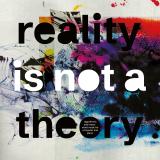
Recorded in concert at the University of Sheffield in March 2025, Reality Is Not A Theory is the first collaboration between Mark Fell and Pat Thomas. Major figures in British experimental music since the 1990s, Fell and Thomas have developed their rigorous practices from radically different backgrounds and perspectives: where Fell’s singular take on synthetic abstraction emerged from Sheffield’s electronic underground, Thomas is a virtuoso improvising pianist steeped in jazz and modernist art music who has simultaneously worked with sampler-based electronics for decades. As the record’s wonderfully academic subtitle explains, we are presented here with two sides of ‘algorithmic and improvised music for computer and piano’, exemplifying both players’ insatiable search for new (and sometimes uncomfortable) playing situations.
The performance begins with Fell’s electronics close to the timbres of acoustic percussion, attacks that suggest wood, metal or glass threaded along a rapid pulse while Thomas focuses on the lowest registers of the piano, deadening the strings. As Fell’s electronics start to ring out and occupy more harmonic space, Thomas turns to wide, repeated clusters, which slowly expand into patterns of chords. Like in his recent solo recordings and his trio work with Joel Grip and Anton Gerbal, Thomas’ playing combines extreme dissonance with a deep lyrical sense. Fell’s work gradually shifts its focus toward drum sounds, drawing on the microtemporal processes that have characterized his practice in recent decades. Heard together with Thomas’ probing piano, the computer sounds call up unexpected associations with the klangfarben antics of improv drummers like Paul Lovens or Tony Oxley. Throughout its second half, the music grows increasingly frenetic, as Thomas sounds out rapid, irregularly repeated figures and beautifully sour chords in the upper register, while Fell’s percussion develops into angular pan-pipe-like feedback and waves of glissandi.
With great confidence and patience, Fell and Thomas often let their individual contributions remain rhythmically distinct and unsynchronised, allowing unexpected correspondence and coincidence to guide the music’s development. Recorded in a hall named after Sheffield steel manufacturer and Master Cutler Mark Firth, the location might suggest a model for understanding how Fell and Thomas interact here: two workers in the same workshop, each immersed in their own part of the production process. Arriving in a striking sleeve designed by Mark Fell, with liner notes by Francis Plagne, Reality Is Not A Theory is an invigorating document of the meeting of two mavericks of contemporary music.
- A1: Off Stage—Med Dark Fade Out (Exit) (Starts Edit)
- A2: On Stage—Strike (Falls) (A) (Vinyl Edit)
- A3: Off Stage—Walk (A) (Vinyl Edit)
- A4: On Stage—Crystal
- B1: Off Stage—Pile & Surfaces (B)
- B2: Off Stage—Leaf K2
- B3: Off Stage—K2 Line (Vinyl Edit)
- B4: Strike Ftx (B) (Vinyl Edit)
- C1: On Stage—Strike Ftx (C)
- C2: Off Stage—Stick & Clap (D1)
- C3: Off Stage—Tree Transition (A)
- C4: Off Stage—Stick Walk (Crystal Approach)
- C5: On Stage—Crystal (Rush)
- D1: Reiy C & Swing Mic (B) (Vinyl Edit)
- D2: Off Stage—Surfaces (All) (Vinyl Edit)
- D3: Off Stage—Leaf K2X
- D4: Alt Stage—Drom (A) (Billy Fulcrum)
- D5: On Stage—Everybody Cycles (Vinyl Edit)
- D6: On Stage—Strike Snx (Vinyl Edit)
- D7: Med Dark Fade Out (Vinyl Edit)
Slip is Paul Abbott’s response to his 3 day residency at OTO in 2023. It’s a continued exploration of the acoustic-digital hybrid drum setup Abbott has been developing for some time, which involves drum kit and synthetic sounds combined closely—through an entanglement of limbs and cables—in an intimate but strange relationship with each other.
Paul Abbott hasn’t had any formal musical training, but has a long history of making music, having collaborated for years with Seymour Wright, Pat Thomas, Michael Speers, Cara Tolmie, Anne Gillis and many others. Eventually, led by a profound suspicion of what is fixed or limited, Abbott began finding other ways to organise sound - or what he calls ‘material’:
“I wanted a way to 'persuade' or guide the possibility of something happening - my activity or the events of an algorithmic composition - for example, but without certainty or formalism. It felt to me, during playing, that certain ideas had a particular sort of shape, but more than the form of a line. I began to write alongside (before/after) playing the drums, and ‘characters’ began to enter the scene as a more wobbly, and therefore appropriate option to notation. Working with these characters allowed me to simultaneously approach body, imagination, language and music: without dividing things up or separating these aspects from each other. It allowed me to leave things messy and entangled, whilst trying to deal with form and specificity: wanting to have some things feel or respond differently to other things at other times.”
In approaching his residency, Abbott developed a fixed cast of characters - crystal, lleaf, reiy.F, reiy.C, strike, nee, qosel, sphu and aahn. They each communicate using different kinds of movement and drum kit/s, and Abbott choreographed them as ‘dances’ based on different feelings, or outlines of behaviours suggestive of ways of moving (body, drums, sounds). He then arranged these characters into ‘compositions’: one for each performance day, with each composition featuring multi-layered activity - options for behaviours, ways to move around the rooms, play drums, develop synthetic sounds, change the lights or re-distribute the sound in the space.
After the performances, Abbott took home 9 hours of recordings split into up to 28 multitrack channels for each day, and re-organised his cast once more into a performance for 2LP, CD and digital. It’s an enormous amount of work - but Abbott is activated by the process. For him, the pleasure of unstable edges, possibilities, slippages, is the vital attraction. Like all living organisms, Abbott’s characters have malleability and responsivity. They stimulate a bundle of possible behaviours, a tendency to act a certain way, a temperament, a boundary of respective limits or affordances.
It’s an affective way of working, inclusive of Roscoe Mitchell, Sun Ra, Nathaniel Mackey and Milford Graves. In ‘Pulseology’(2022), Milford Graves reminds us, ‘Breath varies, so cardiac rhythm never has that (metronomic) tempo. It’s always changing. All the alignments of the heart are determined based on the needs of the cells, specifically tissues and organs. The heart knows if it needs to speed up.’ In Slip, to slip, in a heartbeat, is to descend not into the grid of the even metre accorded to the heartbeat, but into a play of mutability and modality. To change is the condition of the heart.
His fourth album, City Music works as a counterpart to Morby’s acclaimed 2016 release Singing Saw, an autobiographical set that reflected the solitude and landscape in which it was recorded. Saw was imagined as “an old bookshelf with a young Bob and Joni staring back at me, blank and timeless. They live here, in this left side of my brain, smoking cigarettes and playing acoustic guitars while lying on an unmade bed.” And now follows City Music, the yang to its yin, the heads to its tails. It is a collection crafted using the other side of its creator’s brain, the jumping off point perhaps best once again encapsulated by an image. “Here, Lou Reed and Patti Smith stare out at the listener,” explains Morby. “Stretched out on a living room floor they are somewhere in mid-70s Manhattan, also smoking cigarettes.” It finds Morby exploring similar themes of solitude, but this time framed by a window of an uptown apartment that looks down upon an international urban landscape “exposed like a giant bleeding wound.”