Recorded live in one session at age 18, this album helped launch Tania Maria's career as an acclaimed Brazilian jazz artist, celebrated for her virtuoso combination of piano and vocals. Produced by Romeo Nunes (Meirelles e Os Copa 5, Rio 65 Trio, Elis Regina, Elza Soares), the album features the pioneering Edison Machado, who transformed samba and was instrumental in the development of Bossa Nova through his groundbreaking "samba no prato" (samba on the cymbals) technique. His work helped shape the sounds of Jobim, Getz, and Milton Nascimento. On guitar is the legendary Neco, who played on over 500 albums. Initially self-taught, he later studied under maestros Guerra Peixe and Moacir Santos. He collaborated with icons like Elis Regina and Chico Buarque, and was a member of Os Ipanemas, Os Catedráticos, and Os Gatos. His solo work includes Velvet Bossa Nova (1966), which became an acid jazz favorite. The album features compositions by Caetano Veloso and Marcos Valle,alongside early samba classics.
Blending Brazilian rhythms with elements of samba, bossanova, and jazz fusion,it captures the early development of Tania Maria's signature style. Born in São Luís, Brazil in 1948,Tania Maria began playing piano at age seven. She learned samba, jazz, and chorinho through her father's weekend jam sessions. Leading her own band by age13, she performed across the region while collecting records from influential artists. Though she earned a law degree and started a family,her passion for musicu ltimately won out—she left law to pursue music full-time.
quête:play out music
- Gulch
- Evergreen
- Indelible
- Specific Resonance
- Cascading Crescent
- Pining For Ever
- Flickering Stillness
- Wantering Mind
Pelican has always been a band that's not just from Chicago, but distinctly of Chicago. Formed in 2000 by guitarists Trevor Shelley de Brauw and Laurent Schroeder-Lebec alongside brothers Bryan and Larry Herweg on bass and drums respectively, Pelican's foundation was built upon the rule-free, genre-agnostic scene synonymous with the Fireside Bowl. "The `90s in Chicago was a free-for-all. Everyone was just coming from a place of pure creativity," says Shelley de Brauw. With Schroeder-Lebec returning to the band following Dallas Thomas' departure in 2022, this reunified version of Pelican allowed the band to tap back into the spirit of their formative era and build something distinctly new with Flickering Resonance. While longtime Pelican fans will recognize the album as an update to the band's ethos_one that's been constantly evolving since their very first EP_their new partnership with Run For Cover Records emphasizes something that's always been implicit to the Pelican formula. These songs take as much inspiration from titanic `90s post-hardcore, space-rock, and emo as they do traditional metal, showing that though Godflesh and Goatsnake records occupied the shelves of Pelican's songwriters, so too did Quicksand, Christie Front Drive, and Hum. "A lot of people didn't hear it at first," says Schroeder-Lebec. "I was like, well, I guess the metal world is where we fit. But now, we're more willing to acknowledge all the suits we're wearing."On Flickering Resonance, Pelican doesn't attempt to reinvent itself as much as emphasize the elements that were so often overlooked. Though Pelican's thick sonic backbone remains intact, the songs on Flickering Resonance show a more humanistic side of the band. Tracks like "Evergreen" and "Indelible" tease Pelican's doom-metal roots, but these songs feel equally, ebullient and truthful, playing like Texas Is The Reason songs transmuted into a post-rock landscape. Recorded with longtime musical compatriot Sanford Parker, who recorded their first EP, Pelican begins this new chapter of their career with an album that's neither full reinvention nor back-to-roots revivalism. After so much time apart, and with so much life having been lived between the original Pelican lineup's last recording sessions together, the band approached it with renewed vigor and a more communal spirit."There was more room for openness and critique with the understanding that we're all trying to craft the best song possible and that every suggestion is valid until it's proven invalid," says Shelley de Brauw. That process allowed everyone to embrace the material with a shared vision. "We didn't move forward unless we all wanted to move forward, and that felt like real community building," says Schroeder-Lebec of this unified approach. "I went from seeing it as my art and my craft to our craft that we were shaping together."In doing so, Pelican allowed themselves to look at their music less as a means of hard-earned catharsis and more as an appreciation for the glimmers of joy that occur even in the bleakest landscapes. Songs like "Cascading Crescent" and "Indelible" don't languish in what's been lost, these tracks see the band embracing what remains in their hands instead of lamenting what's slipped through their fingers. It's a concept that's mirrored in the artwork of Christian Degn that graces the cover of Flickering Resonance. It's a piece built off the concept of flame meditation, and how the smallest flames can often bring about the biggest transformations. A song like "Flickering Stillness" exemplifies this feeling through its sonic expanse, putting the band's sonic density and hyper-focused clarity on display, but with an emphasis on the profound human connections that have kept Pelican going all these years. "When Laurent left and we were able to carry it through, there became a real sense of gratitude for the fact we still have this artistic outlet and a community of people who want to be a part of it" That feeling of deep, grounded appreciation isn't just one that's within the band members, it's expressed in every track on Flickering Resonance. Because at the very core of Pelican, are four individuals who have grown both separately and together, and always will.Like a distant light faintly glowing in the darkest night, Flickering Resonance is a reminder of all that has passed us by, but also all that is still to come.
- Purple
- Green
- Blue
- Orange
- Red
Long overdue repress of 'Acid Guru Pond', the incredible collaboration between Bardo Pond, Japanese psych-experimentalists Acid Mother's Temple and cosmic kosmische legends Guru Guru. The fruits of an incredible collaboration, Acid Mothers Temple wrap their psych rock wizardry and cosmic space noise around Isobel Sollenberger's ethereal vocals and majestic flute playing, the collective brings out the best in one another, feasting on innovation and distortion while not losing the swirling lock groove. Classic rock riffs merge and morph into the surrounding world music influences to cook up an enchanting and meditative brew. The naming of each song after a colour only further reinforces the vibe heavy proceedings. Classic black vinyl
Signing with FatCat Records in 2022, and having released four singles to date, Nottingham-based Midnight Rodeo have now delivered their debut album, “Chaos Era”.
Extensive, relentless touring (sold-out hometown shows,The Great Escape, Dot To Dot, and Kendall Calling) created a tight-knit family, their pleasure in playing as an ensemble is instantly evident on the album. When asked about this they’ll explain, “We want people to tap into why we are always smiling on stage.”
The songs are collaborative efforts. Their different musical backgrounds result in a genre criss-crossing and totally unique creative collisions. Bassist Harry says, “What we do is Dada-istic. The drums play hooks, the bass plays parts usually taken by brass, the guitar’s playing West Coast psyche over disco rhythms.”
Written over a prolonged period of time, the songs on the album can be viewed as a kind of coming-of-age “suite”, as the unit of 20-somethings wrestle with subjects such as relationships, shifting social dynamics, changing hopes and dreams. The LP’s title refers to tumultuous personal events they’ve helped each other through. Reinforcing their bonding. With no pointed political agenda, the album is about “escape”. “We want people to dance”, they say.
The band recorded the album with Samana’s Franklin Mockett. Making full use of the acclaimed duo’s residential studio, located deep in the Welsh countryside, during an Indian summer heatwave. The aim was to remove all distractions, and, with Mockett’s assistance, capture the group as live, and as analogue, as possible. For 10 days, in sometimes 16 hour sessions, music, incense, and whiskey flowed, while vintage amp valves glowed.
Just like the band’s live performances, “Chaos Era” is packed with a palpable joy. The exhilaration of creation in each others company. Its punchy production is most definitely meant to be played loud.
LTD Repress !
LIZZ is back on PlayedBy with Chapter II, a compilation of new and unreleased artifacts and other treasures from his dense catalog. Diverse and expansive, it captures his versatile musicianship and ever-evolving production style.
Broadly speaking, there are two types of tracks produced by LIZZ: on one hand rallying for the right to party, and on the other, nostalgic odysseys, sometimes lustful and sometimes wistful. Chapter II has a bit of everything. Thirteen tracks of club heat varied narrative that is worth listening to carefully.
Opener "Seamless" and its steady snare keep spirits high while the spacey keys provide a trippy, out-there vibe. On the flipside, "Clasic Dewan" uses elements we've heard before - warm pads, a percussive organ, and a looped vocal sample - but still makes for a great dancefloor track. Both tracks are a throwback to LIZZ's tried and true Terrafirma.
"Cynelmoon" unravels a labyrinthine universe twisting in and out of misty existence, with its snake-like rattles winding through a maze of synth bleeps.
Refreshing and zippy, "Dip Si M" stands out as a gritty reinterpretation of a great space and sounds like the most fun he's ever had on record. On the other hand, "Chemical Chords" is ethereal, meditative, with a hushed musicality that is almost stoic.
LIZZ takes the listener on a journey of vertiginous peaks and deep valleys as he leads "Round Around" into spiraling locked down looped club music.
Listening to "Nothing with Nothing" feels like a video-game on its own. It’s a bundle of joy and energy, peaking with a crescendo of color.
On "69" the energy builds with such careful, gradual restraint that even the most active listener might wonder how they ever got to this point. Chopped up shards of melody and vocals combine to create a kaleidoscopic funhouse with a strong Perlon-esque flavour.
"Roaki" is the dreamy track with an irresistible groove, where LIZZ combines smooth synth pads with dubby and distorted electronic drums that add a sense of cyberpunk feel, reconfirming's Playedby's fanaticism for this project.
A bubbling, percussive roller marks the beginning of "Jazzohub" and skyrockets from there. The track hits with an inviting vocal that dissolves into a fluid swirl of layered hand drums.
"No More High" is a a real banger. This one bounces hard with a bass-heavy beat and a military snare, leaving you no choice but to tip-toe with its groove all night long.
Chasing an ever-vivid muse,"Electronic World" hits with its drumming rhythms, labyrinth of synth bleeps and bold vocals reminiscent of tunneling club nights.
Closing track "I Am Cross" brings an unusual kind of dark atmosphere to the fore: it's cavernous and enveloping, almost as if the rhythm was an afterthought.
Chapter II is every bit as ambitious as its predecessor. Across thirteen tracks, LIZZ approaches the dancefloor forms of his earlier work with a fresh and voluptuous groovy attitude. Somehow, individually, we must reclaim our own experience.\5
- A1: The Kick
- A2: Beats Me
- A3: Windowsill
- A4: I Don't Give Any
- B1: Riding On A Smile
- B2: Lament
- B3: Let's Leave Here
- B4: Do What You Want To Do
You're strolling down an alley in New Orleans or Brooklyn late at night and this sound jumps out at you -- rock & roll, classic rhythm & blues, sung and played with verve, personality, and joy. The dance floor is full. You stroll in and hear sounds that wouldn't have sounded out of place on the legendary Specialty Records of the 1950s and '60s.
Indeed one of the eight cuts onWrite It Down, the new album fromJackson& The Janks, comes from the repertoire of rhythm & blues singer Mamie Perry, first recorded in 1959. The rest areJacksonLynch originals, inspired by his time living and playing music in the Crescent City. Theuniquearrangementsof the band itself have deep roots in NOLA, too, with Matt Bell (Esther Rose) on lap steel, Craig Flory (Tuba Skinny) on bass saxophone and Sam Doores (The Deslondes) sharing backing vocals while trading-off on drums and keys.
Jacksonand the Janks have performed at the Brooklyn Folk Fest, Blackpot Festival (Louisiana), and Oldtone Festival (New York) and did a video session for tastemaker series GemsOnVHS and Jackson a solo session for Paste. Its residency on Fridays in Brooklyn (when they're not on tour) packs the house week after week with fans and folks drawn in by the word-of-mouth buzz and the sound.
- 1: Godhead
- 2: Syd Sweeney
- 3: Dead Air
- 4: Waste Me
- 5: Ghosts (Cataclysm, Cover Me)
- 6: Burn Like Violet
- 7: Touch & Go
- 8: Crashing In The Coil
- 9: Spit
- 10: Sunset Hymnal
Smut is the project of lyricist Tay Roebuck, guitarists Andie Min and Sam Ruschman, drummer Aidan O’Connor, and bassist John Steiner. Roebuck, Ruschman and Min started the band a decade ago in Cincinnati, Ohio. Since then, they’ve played alongside Bully, Wavves, and Nothing. After years in the Cincinnati DIY scene, they made their Bayonet Records full-length debut, How the Light Felt. The record was a revelation. Pitchfork called it “a rigorous, decade-spanning study,” and a “well-oiled spin on late-’80s guitar pop.” Under the Radar called it “pop perfection,” that “blends subtle hooks with wistful lyrics.” It was a record that explored grief through the lens of melancholic dreampop, using drum machines and layered, intricate melodies.
Tomorrow Comes Crashing, Smut's first record with O'Connor and Steiner, sees the band re-energized and trained on the limitless potential that comes with making music with people you love. Galvanized with a new lineup, Smut focused on creating a record that possessed the same towering intensity as the records that first got them into music: Three Cheers for Sweet Revenge, Relationship of Command. The outcome is ten of their most intense, bombastic, and focused songs to date.
Catharsis bursts through the seams throughout Tomorrow Comes Crashing. “Syd Sweeney, ”inspired by the actress, is the record's centerpiece. It's about how profoundly strange it can be to be a woman, to be misunderstood by people who don’t even know you. The song is driven by chugging guitars and big, rolling drums. In other words: stadium rock about perception. Paramore meets Dookie. “She connects to the youth and the girls in the water/All she amounts to is someone’s daughter,” sings Roebuck in one particularly poetic moment. The song comes to a thrashing metal-inspired breakdown. It’s ecstatic.
To make the record, Smut recorded “as live as they could,” alongside Aron Kobayashi-Ritch(Momma) in a studio in Red Hook, Brooklyn, over the course of ten days. “We have so much energy right now,” says Roebuck. Right before they went off to New York, Roebuck and Min got married, with the rest of the band by their side. The recording was a true labor of love — driving from Chicago with all their equipment, returning from 12 hour studio days to sleep on friends' couches and floors, Roebuck completely blowing her voice by the end. Smut has always been DIY. Because they love it. Because they have to do it–there’s no other option. Tomorrow Comes Crashing is the culmination of that DIY spirit: making a record that completely encompasses the intensity, moodiness, and emotion of their journey so far.
Reissue of in-demand Italo title, with accompanying edits by Hysteric. "For the much-requested 12'' reissue of Roaring Mosquitoes, Best Record followed the hint by a die-hard German researcher and esteemed DJ of 'hidden musical treasures' Frinda Di Lanco. Further enriching this reissue - masterfully remastered by Dom Scuteri - with two of his splendid edits is the Australian DJ-producer George Hysteric, one of the world's leading authorities and a leading figure in Italo Disco. The juxtaposition of the two songs performed with grit and physicality by Agostina Casalino and her cousin Antonietta Casalino (aka Roaring Mosquitoes) highlights two aesthetically and rhythmically similar approaches, albeit with different roots and inspirations. "You Aren't With Me" has the merit of not wanting to reinvent the genre, but exploits the familiarity of pop-dance forms, obtaining an immediate catchiness. The piece stands out for its linearity while reworking melodic mechanisms typical of the 80s new wave: short instrumental intro, well-defined verse-chorus, obsessive repetition of melodic hooks that make it an immediate and "dragging" song on the dance floor. The arrangement focuses on a solid electronic drum groove, sinuous basslines, clean guitar riffs, "cutting" keyboards and the use of the chorus typical of the Italo Disco of those years. Some passages recall the melodic line and rhythmic progression of "Tonight... Crazy Night", an intriguing song that the Canadian artist Dorine Hollier created in 1984 at the Titania Studios in Rome with Pierluigi Giombini. Even with "Ah Ah Ah Ah" which features a vibrant and cheerful sound there's a playful use of citation for some idea that Diego Pepe took from a Micky & Joyce track. It evokes the "space disco" spirit of Jean-Pierre Massiera and the influence of the French scene of 1979: polyphonic synthetic strings, echo effects on electronic hi-hats and a vaguely futuristic atmosphere, but with an even more captivating sound revitalized with more scratchy modern touches and compressed basslines. A mix of vintage and contemporary that enhance its charm."
Far Out Recordings continues its reissue campaign of the late Argentinian guitarist Agustin Pereyra Lucena's work with the first-ever vinyl reissue of his singular 1988 private press album, Puertos De Alternativa, now his most sought-after LP. The album features some of Agustin’s most uniquely beautiful compositions, including “Luces de Valeria” and “Preparativos Maritimos,” alongside Baden Powell's “Pequeño Vals” and “O Cego Aderaldo (Nordeste...),” and “Tema Barroco” by his longtime collaborator, Guilhermo Reuter.
By 1988, Agustín had established himself as one of Argentina’s foremost interpreters of Brazilian music. The seventies saw success with his group Candeias, and he gained recognition in Brazil, forming friendships and collaborations with luminaries such as Vinicius de Moraes, Baden Powell, Dorival Caymmi, Toquinho, and Maria Bethania. Following the era of dictatorship in South America, Agustín spent the late seventies and early eighties, living and touring in Norway as part of his European travels with his group Agustín Pereyra Lucena quartet.
Recorded after returning to his native Buenos Aires, Agustin Peyera Lucena’s Puertos de Alternativa emerged from this confluence of diverse experiences and influences, revealing an artist deeply connected to his environment. The album's title, meaning "Alternative Harbours," reflects Agustín's particular affinity for water. He observed that much of his favourite music originated from places with rivers and seas nearby, noting, "There is a flow near water that influences guitar playing for sure."
With a profound connection to both instrument and environment, Agustín’s music is often difficult to place. The album begins rooted deeply in South American soil, drawing clear inspiration from Brazilian guitar masters like Heitor Villa Lobos, Garoto and Baden Powell. But, as it progresses, a sense of journey unfolds, evoking new landscapes and horizons – from the crystalline beauty of glacial Norway to the gentle currents of the Rio de la Plata.
The ensemble on Puertos de Alternativa features notable Argentinian musicians, including drummer Osvaldo Avena, flautist Rubén Izarrualde, and saxophonist Bernardo Baraj.
Mastered by Stuart Hawkes at Metropolis Studios from the original master tapes which had been lovingly kept by Agustin’s nephew José Lucena Perreyra
Tracklist & Credits:
A1. Luces De Valeria (Agustin Pereyra Lucena)
Guitar, Vocals – Agustin Pereyra Lucena
Piano, Bass, Drums, Vocals – Guillermo Reuter
Tamboril – Julio Said
A2. Pequeña Valsa (Baden Powell)
Arranged By Flute – Lucho González
Drums – Osvaldo Avena
Flute – Alejandro Santos
Guitar – Agustin Pereyra Lucena
Tambora – Eduardo Avena
A3. Planicie (El Llano) (Agustin Pereyra Lucena)
Arranged By Flute – Lucho González
Flute – Rubén Izarrualde
Keyboards, Acoustic Bass, Percussion, Arranged By Keyboards – Guillermo Reuter
Guitar – Agustin Pereyra Lucena
A4. Tema Barroco (Guillermo Reuter)
Guitar – Agustin Pereyra Lucena
Percussion – Guillermo Reuter
A5. O Cego Aderaldo (Nordeste...) (Baden Powell)
Guitar – Agustin Pereyra Lucena
B1. Tres Que Quedaron (Agustin Pereyra Lucena, Andrés Laprida)
Drums – Osvaldo López
Flute – Rubén Izarrualde
Piano, Keyboards, Bass, Directed By – Guillermo Reuter
Soprano Saxophone – Bernardo Baraj
Electric Piano, Arranged By – Andrés Laprida
Guitar, Electric Guitar, Vocals – Agustin Pereyra Lucena
B2. Preparativos Maritimos (Andrés Laprida, Agustin Pereyra Lucena, Guillermo Reuter)
Guitar, Vocals – Agustin Pereyra Lucena
Keyboards, Acoustic Bass, Percussion, Arranged By – Guillermo Reuter
B3. Puertos De Alternativa (Agustin Pereyra Lucena)
Guitar, Effects – Agustin Pereyra Lucena
B4. Casi-Numbe (Luis González Cárpena, Agustin Pereyra Lucena)
Bass – Lucho González
Bass Flute – Rubén Izarrrualde
Berimbau – Horacio Veros
Keyboards, Piano, Vocals, Drums, Arranged By – Guillermo Reuter
Guitar, Vocals, Arranged By – Agustin Pereyra Lucena
Following the cult success of the first 2 EPs, Common Saints presents the debut album "Cinema 3000", the theme continues, blending soul, funk, and psychedelic influences with the organic sound and rich instrumentation that Common Saints has become known for Conceived in 2020 by writer / producer Charlie J Perry the production approach for Commons Saints consists of him playing and recording real instruments in his London home studio. One mike for the drums, his beloved piano and amps up loud! The album encapsulates the old school recording approach and musicianship the discerning ear craves but with a more modern punch - a true sonic bath for all the connoisseurs out there. Think, UK"s equivalent to Tame Impala and Khruangbin.
3XL’s first new release in 2025 by Italian trio Cortex of Light is a synapse-tickling dose of classic FSOL-era world-building that takes in gloopy trance cooked down with sub-heavy, vaporous dub, mutant acid, breakbeat rave, Artificial Intelligence and a Mark Fell-style algorithmic brainmelt.
You'll know if you've spent any time following Piezo's output that the Milan-based producer and Ansia boss has a knack for lysergically enhancing any club template he sets his sights on. With releases on Idle Hands, Wisdom Teeth, Loefah's 81 and most recently Dekmantel, Luca Mucci has blottered up dubstep, hard drum, 2-step and minimal techno, here re-convening with fellow Milanese journeymen Aitch and primordial OOze/xàr num as Cortex of Light to blur those edges even further
'ILLUMINOTECNICA' isn't the trio's first release, but it's their most substantial and easily most developed. If 2024's 'Aeon Is A Child At Play With Colored Balls' showed off their aptitude for threading their luminous soundscapes into a horizontal soundtrack, then this album is a proper chance for Cortex of Light to show off their versatility in a different setting, matching dancefloor hallucinations with expertly sculpted sound design.
Psilocybin-tainted soundscapes scrape into breathy flute sounds and chest-thumping bass drops on the opener, haunted by a vision of electronic music that's been contrived in back rooms, squats and outdoor raves for decades at this point. Like so much of the rest of the 3XL catalog, there's a drive and coherence here that comes from classic dub techno and chill-out room fodder (think The Black Dog or Pentatonik), but always infused with something that dates it to the present era, be it a tactile sliver of Visible Cloaks-style neo-new age ambience, or a sort of mescaline-dipped take on Photek's bass-heavy, meticulously hazed 'Solaris' period downtempo gear, chopped 'n screwed into the uncanny.
How would you like to hear it? This project is the brainchild of Andy Baxter, a multi-talented musician and multi-instrumentalist from London. His recording career began in 2018 when he released his first album, Green, on Village Live.
Buoyed by this initial recognition by his peers, he quickly released a second self-produced opus the following year, entitled Dusk. But it was his third LP, Shapes, released by KingUnderground, that took him to the next level.
Conceived during the first period of confinement, Andy played almost every instrument on the album (a few musicians joined in here and there): drums first and foremost, his instrument of choice, but also bass, guitar, keyboards and even the flute, which he had just learnt at the time of the album's creation. Largely inspired by the library music of the 70s, including some of his mentors such as Piero Umilani, David Axelrod and Brian Bennett, the album is nonetheless resolutely modern. But there's no denying the cinematic atmosphere that emanates from his compositions.
From the opening track "We're From Nowhere", with its heavy, funky bass, you get the impression of being plunged into the Harlem blaxploitation of the heyday, and you can't help but see a musical nod to Roy Ayers' "We live in Brooklyn, baby". But you soon realise that far from being a nostalgic musician, Baxter also listens to his contemporaries like Khruangbin and BadBadNotGood, as can be heard on tracks like 'Leaves', 'Odysea' and 'Ikigai', with their atmospheric guitars and Fransesca Uberti's haunting backing vocals, which instantly invite you to travel and escape! But there are times when the mood gets a little tense, like on the more angst-ridden 'Villains', with its almost free jazz flights of fancy. Finally, his drumming also comes to the fore on the last track, 'Stay Free', with its Afrobeat rhythm reminiscent of a certain Tony Allen and evoking creative freedom as a common thread running through his values.
In nine tracks, Shapes takes us on a neo jazz journey that once again demonstrates the vitality of the English scene in this field for several years now! At the start of 2022, Robohands released their latest album, Violet, on the same label, confirming all the good things we thought about them! By allowing a number of musicians to join him on this new opus, Andy Baxter has shown a willingness to work with more accomplished collaborators.
Repress!
In the mid-1970s, a force of nature swept across the continental United States, cutting across all strata of race and class, rooting in our minds, our homes, our culture. It wasn’t The Exorcist, Goodbye Yellow Brick Road, or even bell-bottoms, but instead a book called The Secret Life of Plants. The work of occultist/former OSS agent Peter Tompkins and former CIA agent/dowsing enthusiast Christopher Bird, the books shot up the bestseller charts and spread like kudzu across the landscape, becoming a phenomenon. Seemingly overnight, the indoor plant business was in full bloom and photosynthetic eukaryotes of every genus were hanging off walls, lording over bookshelves, and basking on sunny window ledges. The science behind Secret Life was specious: plants can hear our prayers, they’re lie detectors, they’re telepathic, able to predict natural disasters and receive signals from distant galaxies. But that didn’t stop millions from buying and nurturing their new plants.
Perhaps the craziest claim of the book was that plants also dug music. And whether you purchased a snake plant, asparagus fern, peace lily, or what have you from Mother Earth on Melrose Avenue in Los Angeles (or bought a Simmons mattress from Sears), you also took home Plantasia, an album recorded especially for them. Subtitled “warm earth music for plants…and the people that love them,” it was full of bucolic, charming, stoner-friendly, decidedly unscientific tunes enacted on the new-fangled device called the Moog. Plants date back from the dawn of time, but apparently they loved the Moog, never mind that the synthesizer had been on the market for just a few years. Most of all, the plants loved the ditties made by composer Mort Garson.
Few characters in early electronic music can be both fearless pioneers and cheesy trend-chasers, but Garson embraced both extremes, and has been unheralded as a result. When one writer rhetorically asked: “How was Garson’s music so ubiquitous while the man remained so under the radar?” the answer was simple. Well before Brian Eno did it, Garson was making discreet music, both the man and his music as inconspicuous as a Chlorophytumcomosum. Julliard-educated and active as a session player in the post-war era, Garson wrote lounge hits, scored plush arrangements for Doris Day, and garlanded weeping countrypolitan strings around Glen Campbell’s “By the Time I Get to Phoenix.” He could render the Beatles and Simon & Garfunkel alike into easy listening and also dreamed up his own ditties. “An idear” as Garson himself would drawl it out. “I live with it, I walk it, I sing it.”
But as his daughter Day Darmet recalls: “When my dad found the synthesizer, he realized he didn’t want to do pop music anymore.” Garson encountered Robert Moog and his new device at the Audio Engineering Society’s West Coast convention in 1967 and immediately began tinkering with the device. With the Moog, those idears could be transformed. “He constantly had a song he was humming,” Darmet says. “At the table he was constantly tapping.” Which is to say that Mort pulled his melodies out of thin air, just like any household plant would.
The Plantae kingdom grew to its height by 1976, from DC Comics’ mossy superhero Swamp Thing to Stevie Wonder’s own herbal meditation, Journey Through the Secret Life of Plants. Nefarious manifestations of human-plant interaction also abounded, be it the grotesque pods in Invasion of the Body Snatchers or the pothead paranoia of the US Government spraying Mexican marijuana fields with the herbicide paraquat (which led to the rise in homegrown pot by the 1980s). And then there’s the warm, leafy embrace of Plantasia itself.
“My mom had a lot of plants,” Darmet says. “She didn’t believe in organized religion, she believed the earth was the best thing in the whole world. Whatever created us was incredible.” And she also knew when her husband had a good song, shouting from another room when she heard him humming a good idear. Novel as it might seem, Plantasia is simply full of good tunes.
Garson may have given the album away to new plant and bed owners, but a decade later a new generation could hear his music in another surreptitious way. Millions of kids bought The Legend of Zelda for their Nintendo Entertainment System back in 1986 and one distinct 8-bit tune bears more than a passing resemblance to album highlight “Concerto for Philodendron and Pothos.” Garson was never properly credited for it, but he nevertheless subliminally slipped into a new generations’ head, helping kids and plants alike grow.
Hearing Plantasia in the 21st century, it seems less an ode to our photosynthesizing friends by Garson and more an homage to his wife, the one with the green thumb that made everything flower around him. “My dad would be totally pleased to know that people are really interested in this music that had no popularity at the time,” Darmet says of Plantasia’snew renaissance. “He would be fascinated by the fact that people are finally understanding and appreciating this part of his musical career that he got no admiration for back then.” Garson seems to be everywhere again, even if he’s not really noticed, just like a houseplant.
Standard redefined The professional RMX-95 4+1 channel club mixer blurs the lines between analogue workflow and digital technology. The RMX-95 is a cutting-edge, extraordinarily versatile creative tool thanks to its dual-USB 2.0 interface, redesigned effects section, optional MIDI mapping of all controls and smooth integration of the djay Pro DJ software. The club mixer has a familiar and user-friendly interface, making it suitable for both professional and hobby DJs.
Surgical sound manipulation in every detail Will you go for ''Classic'' or ''Kill''? The RMX-95's 3-band EQ can be adjusted to allow maximum sound control for unique results. Echo, Reverb, Flanger, Phaser, Vinyl Brake, Loop Roll, Noise, Pitch Shift, Delay, Ping Pong Delay, Tape Delay, Bit Crusher and Transformer are just some of the many studio-quality effects included in the brand-new Beat FX unit. The dedicated FX frequency control (LPF/HPF) lets you apply the effects to a specific frequency range for a more unique sound. And that's not all: Each channel also features a bipolar filter unit (LPF and HPF) with real-time resonance adjustment. This allows for even more complex sound productions. Two digital displays show parameter changes in real time for precise control that goes beyond hearing. Connections galore The RMX-95 also excels in terms of connectivity: Four CD, two line, and two phono inputs are available on the four input channels. The separate microphone channel has two microphone connections (1 x jack, 1 x jack/XLR combination jack) and an additional AUX input. The master output offers RCA or balanced XLR cable connections. The booth output has two jack connections for stereo operation. However, it can also be used in mono mode.
A recording device can be connected to the Rec output via RCA jacks to record DJ sets regardless of the master output level. Last but not least, the DJ mixer has two jacks for headphones. Crisp cuts and smooth blending The adjustable curve of all faders provides DJs with the creative flexibility they want while mixing. Turntablists and scratch wizzards can also upgrade the crossfader with the contactless RMX innoFADER. Maximum flexibility: dual-USB audio interface Superior 24-bit sound quality is provided by the ten inputs and outputs of the high-quality dual-USB 2.0 interface. The two USB ports allow smooth transitions between DJs and maximum flexibility when using different setups in a single club night. In addition, the active USB hub enables the connection of additional USB devices. Fully digital architecture The RMX-95's digital architecture transforms the DJ mixer into an individually mappable MIDI controller. As part of this, the setup menu provides a wealth of customisable options, such as EQ frequency range, Neural Mix EQ mode, audio interface routing, and zone routing for the booth output. DVS-enabled for djay Pro & Neural Mix The RMX-95 works with Algoriddim djay Pro via plug and play. The DJ app's ground-breaking Neural Mix function lets you isolate beats, melodies, and vocals in the mix in real time. The RMX-95 supports djay Pro's advanced DVS integration with Mac, PC, iPhone and iPad.
The DJ software is also compatible with streaming services like Apple Music, Tidal, SoundCloud, Beatport and Beatsource. Indestructible design The club mixer's sleek black metal surface is not only eye-catching but also highly durable. The solid metal housing and hard-wearing metal shafts in all of the built-in potentiometers and switches provide a long service life, even with heavy club use. An internet connection and a separate Apple Music, Tidal, Beatport, Beatsource or SoundCloud subscription is required to use this service.
Professional 4+1-channel DJ club mixer - DUAL 10 In/Out USB 2.0 audio interface with superb, 24-bit sound quality
New Beat FX unit with multiple effects in studio quality: Echo, Reverb, Flanger, Phaser, Vinyl Brake, Loop Roll, Noise, Pitch Shift, Delay, Ping Pong Delay, Tape Delay, Bit Crusher,Transformer - FX frequency control (LPF/HPF) for manipulating effects in selected frequency band -
Sound filters: Bi-polar filter unit with LPF and HPF - Realtime resonance control for channel filters - Active USB hub to connect USB accessories
3-band EQ with adjustable behaviour (classic/kill) -
Two digital displays showing real-time information of parameter changes -
Digital mixer architecture with extensive adjustment options - Extensive setup menu, including:
- EQ frequency range (low, high)
- Neural Mix EQ mode
- Audio interface routing
- Booth output zone routing (matrix)
- Cue solo option
- RMX innoFADER compatible
- Adjustable linefader and crossfader curves
- MIDI-compatible control elements
- 2x High-retention USB 2.0 port, especially durable
- 2x Headphone outputs via 6.3/3.5 mm stereo jack with split cue
- 2x Mic inputs with dedicated MIC ON button
- Booth output in stereo or mono
- High-quality and hard-wearing, pure black metallic finish
- Sturdy construction in a metal housing with bolted metal shafts
- Kensington lock to secure the device
- Incl. instruction manual, power cord and USB cable
- Frequency Range: 20 Hz - 20 kHz +2/-3dB - Inputs: 7x line RCA, 2x phono RCA, 1x mic combo-XLR/jack, 1x mic 6.3mm jack (TR), 2x USB port - Outputs: master XLR (balanced), master RCA (unbalanced), booth (TRS) (balanced), rec RCA (unbalanced), 1x headphones 6.3mm jack, 1x headphones 3.5mm jack - EQ range classic at 70 Hz, 1 kHz, 13 kHz: -26 dB/+9 dB - EQ range isolator at 70 Hz, 1 kHz, 13 kHz: -90 dB (total kill)/+9 dB - EQ range mic at 100 Hz, 10 kHz: -12 dB/+ 12dB - EQ headphones at 100 Hz, 10 kHz: -29dB - Power Source: AC100-240V, 50/60Hz - Power Consumption: 29 W - Dimensions: 322(W) x 387(D) x 107.5(H) mm - Weight: 6.8 kg
dimensions (LxWxH) in mm
445x442x153
dimensions outerbox in mm
460x452x327

House music doesn’t get much funkier than Demuir’s ‘New spirit’ EP. Whether it’s the classic sampling on the title track – an homage to his mother-, or the rolling funk bass and vocal chops on ‘Ain’t no stoppin’ ‘, Demuir brings an unstoppable groove with his 2nd release on Heist.
The man behind so many great house records has kept himself rather busy with building his own fanbase, openly debating the role that big platforms play and the firm grip they have on talent. Rather than conforming to the standard route, Demuir chooses to navigate the winding road of building his own following through his production classes, engineering and music releases through artist-first channels like Patreon.
His recent move from Toronto to Chicago feels perfectly in line with the sound Demuir is bringing forward on his first record on Heist since his 2019 classic ‘Werq, feel, gruv, vogue’. Those 6 years were well worth the wait: The ‘New spirit’ EP is a perfectly-balanced mix of creativity, confidence and character. The Demuir sound is instantly audible throughout the release and he’s not afraid to make bold choices. Each track has its own identity, its own place on the record and it’s one of the things that make this record stand out in the best way possible. The forward-leaning grooves, the tight mixing and the classic use of soulful samples are a treat to listen and dance to. There’s hints of the 90s New York sound (New Spirit), soulful disco-tinged grooves his new home-town is known for (Ain’t no stoppin’), lean-back and summery melodic grooves (No minions allowed) and deep, bassheavy dubby grooves (Whatchu want is all I got) to remind everyone that Demuir is an absolute master of modern day house music.
We’ve been playing all these songs for a while and we’re happy to finally share these with you.
As always, enjoy the music and play it loud!
Lars & Maarten
2025 Repress
Growing up on the north Atlantic island of Iceland bestows one with an unusual and often intense relationship with light and colour: Summers come with endless days, Winters with scant sunlight yet increased sightings of the Aurora Borealis; the mysterious and awe-inspiring glow across the sky. Channelling these energies, Exos
comes to Tresor with his Green Light EP, a five-track collection of the sort of spectrally rich techno synonymous with the Northman’s 27-year career.
Across the EP, the five tracks fizz and pulsate driving ever forward, making the release’s title a three-way play on words referencing the continuous travelling of photons, the verdant warping of the Northern Lights, and the universal colour for Go, for forward propulsion. Smart wordplay can also be found in titles like Grátt Silfur, a term in Íslenska (literally “grey sliver”) which signifies a tension between two parties, further extending the colour metaphor and dark/light dichotomy found elsewhere.
The digital release comes with three extra tracks that continue the dynamic energy, pushed along by the same shifting, mutating force where the music often feels like voices calling out from the darkness or the shimmer of light as the sun rises across the horizon.
Green Light EP continues this year’s blazing return from an artist who, similar to his output, is never stagnant: ever changing form yet ever moving forward.
- Freedom
- Joyride
- Yippee-Ki-Yay
- Delusional
- Red Flag
- Love Forever
- The One
- Boy Crazy
Orgy Orange Vinyl[23,95 €]
Kesha’s sixth studio album, . (PERIOD) – yes, it's just a period. – is an unapologetic, unfiltered declaration of artistic freedom and fearless authenticity from the 2x GRAMMY® Award-nominated pop icon. Conceived, co-produced and co-written by Kesha, the 11-song collection transcends pop norms to create a raw, daring, and intensely personal sonic journey, a defiant act of self-expression that refuses to adhere to expectations or play it safe.
More than just a new album, . (PERIOD) is Kesha at her most powerful best, turning her experiences into vibrant, audacious art with a spiked heel at the neck of pop culture.
Among its many exhilarating highlights, . (PERIOD) includes 2024’s blockbuster hits “JOYRIDE” and “DELUSIONAL,” both available everywhere now. Currently boasting over 103M streams at Spotify alone, “JOYRIDE” proved a true sensation since its Independence Day release, reaching #6 on Billboard’s “Bubbling Under Hot 100 Singles” and “Hot Dance/Electronic Songs” along with the top 30 on “Pop Airplay” and chart success around the world from the UK to New Zealand. Produced by Zhone and co-written by Kesha, Zhone, and Madison Love, the track marked the triumphant first chapter of a milestone new era for Kesha, celebrating both her long overdue empowerment as an independent artist as well as a powerful sonic evolution following 2023’s critically acclaimed fifth studio album, Gag Order. Along with its popular achievement, “JOYRIDE” has been met by high-profile critical applause from the likes of Rolling Stone, Variety, and Vulture, to name only a few. Perhaps NYLON said it best: “Everything about ‘JOYRIDE’ is a trip…The original glitter-faced party animal of the 2010s is back with a fiery vengeance.”
“JOYRIDE” joined by an equally acclaimed official music video streaming now on YouTube.
Directed by Dimitri Basil (Kylie Minogue, Vance Joy), Cooper Roussel (Unknown Mortal Orchestra, Miami Horror), and Laura Gorun (Joywave, Kings of Leon), the high-octane visual received wide-ranging attention from major publications and top online outlets around the globe, including Billboard, Vulture, and Rolling Stone, the latter of which raved, ““Kesha is taking her foot off the brakes and going full-speed ahead on her new video for ‘JOYRIDE.’ The video sees Kesha racing through the desert in a hot red convertible while being chased by a helicopter, gun-toting assassins, and a shirtless dude hell-bent on catching up to the pop diva.”
Kink Hot Pink Vinyl[23,95 €]
Kesha’s sixth studio album, . (PERIOD) – yes, it's just a period. – is an unapologetic, unfiltered declaration of artistic freedom and fearless authenticity from the 2x GRAMMY® Award-nominated pop icon. Conceived, co-produced and co-written by Kesha, the 11-song collection transcends pop norms to create a raw, daring, and intensely personal sonic journey, a defiant act of self-expression that refuses to adhere to expectations or play it safe.
More than just a new album, . (PERIOD) is Kesha at her most powerful best, turning her experiences into vibrant, audacious art with a spiked heel at the neck of pop culture.
Among its many exhilarating highlights, . (PERIOD) includes 2024’s blockbuster hits “JOYRIDE” and “DELUSIONAL,” both available everywhere now. Currently boasting over 103M streams at Spotify alone, “JOYRIDE” proved a true sensation since its Independence Day release, reaching #6 on Billboard’s “Bubbling Under Hot 100 Singles” and “Hot Dance/Electronic Songs” along with the top 30 on “Pop Airplay” and chart success around the world from the UK to New Zealand. Produced by Zhone and co-written by Kesha, Zhone, and Madison Love, the track marked the triumphant first chapter of a milestone new era for Kesha, celebrating both her long overdue empowerment as an independent artist as well as a powerful sonic evolution following 2023’s critically acclaimed fifth studio album, Gag Order. Along with its popular achievement, “JOYRIDE” has been met by high-profile critical applause from the likes of Rolling Stone, Variety, and Vulture, to name only a few. Perhaps NYLON said it best: “Everything about ‘JOYRIDE’ is a trip…The original glitter-faced party animal of the 2010s is back with a fiery vengeance.”
“JOYRIDE” joined by an equally acclaimed official music video streaming now on YouTube.
Directed by Dimitri Basil (Kylie Minogue, Vance Joy), Cooper Roussel (Unknown Mortal Orchestra, Miami Horror), and Laura Gorun (Joywave, Kings of Leon), the high-octane visual received wide-ranging attention from major publications and top online outlets around the globe, including Billboard, Vulture, and Rolling Stone, the latter of which raved, ““Kesha is taking her foot off the brakes and going full-speed ahead on her new video for ‘JOYRIDE.’ The video sees Kesha racing through the desert in a hot red convertible while being chased by a helicopter, gun-toting assassins, and a shirtless dude hell-bent on catching up to the pop diva.”
- A1: Gregory Moore - Excursions
- A2: Talee - Makes Me Wonder
- A3: Cantor Feat New Hook - Achtung! Achtung!
- A4: World Wild Web Feat Rasp Thorne - Scavengers
- A5: H L.m. - Fronde
- A6: New Hook - Unity
- B1: Montessori Feat Vongold - Ad Libitum
- B2: Sx2 - Buttons
- B3: Cantor - Hannett’s Dream (Modular Project Rework)
- B4: Aimes - Carissima
Underground Pacific is back with a new double vinyl compilation titled ‘The Only Good Wave is a Dead One’ that confirms, once again, its uncompromising taste for bold electronic music, psychedelic textures, and raw, electrified rock ‘n roll. This release brings together a varied group of artists, each of them adding something special to the journey.
The trip begins with “Excursions” by Gregory Moore, a piece that floats into a humid sonic world, between the nostalgic tones of vintage video game soundtracks, the Fourth World atmospheres of Jon Hassell, and the shimmering calm of ’90s Japanese ambient à la Takashi Kokubo.
Next comes Talee, the Rotterdam-based regular of the label, with “Makes Me Wonder”. Here, grunge-soaked vocals meet a tight dark disco groove, pierced by crystalline guitar chords that shimmer at the track’s heart. A song with its soul in the past and its feet in the club.
Label founder Cantor teams up once again with German duo New Hook on “Achtung! Achtung!”, an homage to the eponymous track by Italian producer Black Saagan. Fueled by vintage drum machines, punk-infused vocals, and melodies echoing the krautrock minimalism of Cluster, the track channels pure Cold War disco energy.
On “Scavengers”, Berlin based World Wild Web and Rasp Thorne deliver a pure mix of electro-rock noir – Suicide by way of David Lynch. Picture a never seen before episode of the series where Martin Rev and Alan Vega are playing live at the Roadhouse in Twin Peaks, while Laura Palmer slowly moves her head to the music, with a devilish smile on her face.
All the way from Grenoble to Berlin, H.L.M. deliver a dirty bass-driven anthem called ‘Fronde’. French spoken vocals spitfire over layers of distorted drones and hypnotic rhythms. The result is rough, hypnotic, and brings to mind the grooves of Death in Vegas.
New Hook return, this time solo, with ‘Unity’: a blend of groovy downtempo percussions, melancholic guitar riffs, and their signature brand of spoken word, a style that’s quickly become their sonic fingerprint.
Then it’s the turn of mexican-wave exponents Montessori featuring Vongold on “Ad Libitum”: a techy sunrise piece with soft pads, subtle build-ups, and an ecstatic sense of endlessness. After-party music for vast, open spaces.
Next up are SX2 from Ireland with their ‘Buttons’, offering a rolling tech-house banger laced with desert guitars. Psychedelic FX’s and whispered vocals drenched in delay slow the pace in a breakdown full of tension, preparing the floor to an euphoric release.
A dream from the pandemic era reappears: Cantor’s “Hannett’s Dream”, originally released in 2020 by Modular’s Project’s imprint ‘Nothing Is Real’ together with their own reworked version present also in two very limited vinyl-collector editions released by Underground Pacific. The introspection and hypnotic structure of the original cut here is replaced by a more stripped down arrangement, with a four-to-the-floor groove that is perfectly crafted for peak-time ignition.
Closing out the release is “Carissima” by the man behind iconic label Wonder Stories, Aimes – a Moroder-esque bassline and sensual vocals play on top of a warm groove that suddenly fractures into jazz-tinged, breakbeat mood, in the style of early Warp Records, just in time to get back into its disco-ish swing.
Contrary to what the title of this release might suggest, the wave isn’t dead at all. It’s well alive in the underground, reanimated by labels like Underground Pacific who are always ready to welcome artists who aren’t afraid to crash genres together and, above all, who are driven by the desire to make free-form, inspired pieces of music.
- All I Really Want
- You Oughta Know
- Perfect
- Hand In My Pocket
- Right Through You
- Forgiven
- You Learn
- Head Over Feet
- Mary Jane
- Ironic
- Not The Doctor
- Wake Up
When Alanis Morissette took direct aim at an ex who wronged her on the eviscerating “You Oughta Know” in 1995, everything about the Top 10 song communicated it wasn’t the usual narrative about love gone south. Or the typical wounded singer wallowing in self pity. Morissette, and both the lead single from and her entire American major-label debut — the profoundly personal Jagged Little Pill — represented a sea change. They kickstarted a movement, one whose impact continues to echo throughout the mainstream nearly three decades later.
Ranked the 69th Greatest Album of All Time by Rolling Stone, included on the Rock and Roll Hall of Fame’s list of 200 Definitive Albums, and featured in several books about essential albums, Jagged Little Pill remains more than a blockbuster that has sold more than 17 million copies in the U.S. and 33 million units worldwide. It’s a statement, an attitude, a soundtrack for anyone seeking inspiration, an outlet, or permission to be themselves.
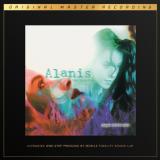
Sourced from the original master tapes, pressed at Fidelity Record Pressing on MoFi SuperVinyl, and strictly limited to 4,000 numbered copies, Mobile Fidelity’s UltraDisc One-Step 180g 45RPM 2LP box set of Jagged Little Pill presents the landmark effort in audiophile-grade sound for the first time. A key part of the record’s appeal and accessibility — Glen Ballard’s smooth production, touches that help Morissette’s exposed-nerve fare seem more accessible and melodic — comes through on this special 30th anniversary edition with an openness, presence, and dynamic explosiveness that make the vocalist’s songs that much more real and visceral.
The singer’s distinctive mezzo-soprano deliveries — the octave-rippling highs, dark-hued lows, dramatic crescendos, belted choruses, wispy reflections, occasional yodels — resonate with full-range ardor and depth. As crucial as anything on the record, Morissette’s confessional words take center stage like never before. Ditto the instrumentation and atmospherics that form the magnetic backgrounds of the songs. Key in on the contributions from Red Hot Chili Peppers Dave Navarro and Flea on “You Oughta Know” to Tom Petty & the Heartbreakers' co-founder Benmont Tench’s organ playing on six tracks.
The deluxe packaging of Mobile Fidelity’s Jagged Little Pill UD1S set underscores the work’s distinguished status. Housed in a slipcase, the LPs come in special foil-stamped jackets with faithful-to-the-original graphics that illuminate the splendor of the recording. Benefitting from an ultra-low noise floor, superior groove definition, and dead-quiet surfaces, this UD1S reissue is for listeners who prize sound quality and desire to engage themselves in everything involved with the album, including the now-iconic cover art that juxtaposes two portraits of the then-21-year-old singer-songwriter and features typewriter font.
That script — which suggests a raw, blood-on-the-floor document created without modern aids like spell check or language correction — hints at the heightened level of unvarnished intimacy, honesty, and catharsis Morissette offers throughout Jagged Little Pill. Named after a phrase uttered on the astute “You Learn,” the album explores the frank emotions, inherent contradictions, and wishful desires people feel everyday but are often too afraid to express. Morissette displays no such fear or shyness.
Akin to a woman reading from a diary, Morissette leaves nothing to the imagination as she skewers hypocrisy during the poignant “Forgiven,” seeks recompense on the vengeful “You Oughta Know,” and spills her guts on the soul-purging “All I Really Want.” For all the anger and bile ascribed to the singer and record, Jagged Little Pill is incredibly healthy and upbeat. Morissette uses the catchy pop-rock frameworks and moody ambience to suss out situations, to learn, to give hope. There’s the clever yearning of “Hand in My Pocket”; wry contrarianism of “Ironic”; kind-heartedness of “Hand over Feet”; the live-and-let-live spirit of “You Learn” – all positive and amiable.
Throughout Jagged Little Pill, the ever-approachable Morissette connects with listeners who recognize themselves in her — and has an intelligent conversation with anyone who wants to participate. It seemed almost everyone did. In addition to the mammoth sales that make the effort the 17th-best-selling album in American history, Jagged Little Pill collected four Grammy Awards, two American Music Awards, three Billboard Music Awards, and eight Juno Awards. In 2018, the record became the basis for a musical that netted 15 Tony nominations on Broadway.
Ironic? Anything but. Jagged Little Pill transcends generations, gender, and trends. As Morissette sings on the opening “All I Really Want,”, the album represents “deliverance” — “a place to find common ground.”