Offen sends out another probe.
Karamika - a studio creation from George Thompson (Black Merlin) and Gordon Pohl AKA Dussuldorfs engineer supreme(Musiccargo / Kunstkopf / The Isolators...). This their second long player is a record full of mind games. Sounds leak from fractal-like holes, and are sedately trodden back into the cosmic fabric of the album. The noise of post cruise carpet.
Поиск:player 1
Все
Following their hotly tipped 2018 debut album 'On' - Altin Gün returns with an exhilarating second album. 'Gece' firmly establishes the band as essential interpreters of the Anatolian rock and folk legacy and as a leading voice in the emergent global psych-rock scene. Explosive, funky and transcendent.
Some words from the label:
The world is rarely what it seems. A quick glance doesn't always reveal the full truth. To find that, you need to burrow deeper. Listen to Altin Gün, for example: they sound utterly Turkish, but only one of the Netherlands based band's six members was actually born there. And while their new album, Gece, is absolutely electric, filled with funk-like grooves and explosive psychedelic textures, what they play - by their own estimation - is folk music.
'It really is,' insists band founder and bass player Jasper Verhulst. 'The songs come out of a long tradition. This is music that tries to be a voice for a lot of other people.'
While most of the material here has been a familiar part of Turkish life for many years - some of it associated with the late national icon Neset Ertas - it's definitely never been heard like this before. This music is electric Turkish history, shot through with a heady buzz of 21st century intensity.
Pumping, flowing, a new and leading voice in the emergent global psych scene.
'We do have a weak spot for the music of the late '60s and '70s,' Verhulst admits. 'With all the instruments and effects that arrived then, it was an exciting time. Everything was new, and it still feels fresh. We're not trying to copy it, but these are the sounds we like and we're trying to make them our own.'
And what they create really is theirs. Altin Gün radically reimagine an entire tradition. The electric saz (a three-string Turkish lute) and voice of Erdinç Ecevit (who has Turkish roots) is urgent and immediately distinctive, while keyboards, guitar, bass, drums, and percussion power the surging rhythms and Merve Dasdemir (born and raised in Istanbul) sings with the mesmerizing power of a young Grace Slick. This isn't music that seduces the listener: it demands attention.
Altin Gün - the name translates as 'golden day' - are focused, relentless and absolutely assured in what they do. What is remarkable is the band has only existed for two years and didn't play in public until November 2017; now they have almost 200 shows under their belt. It all grew from Verhulst's obsession with Turkish music. He'd been aware of it for some time but a trip to Istanbul while playing in another band gave him the chance to discover so much more. But Verhulst wasn't content to just listen, he had a vision for what the music could be. And Altin Gün was born.
'For me, finding out about this music is crate digging,' he admits. 'None of it is widely available in the Netherlands. Of course, since our singers are Turkish, they know many of these pieces. All this is part of the country's musical past, their heritage, like 'House of The Rising Sun' is in America.'
As Verhulst delves deeper and deeper into old Turkish music, he's constantly seeking out things that grab his ear.
'I'm listening for something we can change and make into our own. You have to understand that most of these songs have had hundreds of different interpretations over the years. We need something that will make people stop and listen, as if it's the first time they've heard it.'
It's a testament to Altin Gün's work and vision that everything on Gece sounds so cohesive. They bring together music from many different Anatolian sources (the only original is the improvised piece 'Soför Bey') so that it bristles with the power and tightness of a rock band; echoing new textures and radiating a spectrum of vibrant color (ironic, as gece means 'night' in Turkish). It's the sound of a band both committed to its sources and excitedly transforming them. It's the sound of Altin Gün. Incandescent and sweltering.
Creating the band's sound is very much a collaborative process, Verhulst explains.
'Sometimes me or the singer will come in with a demo of our ideas. Sometimes an idea will just come up and we'll work on it together at rehearsals. However we start, it's always finished by the whole band. We can feel very quickly if it's going to work, if this is really our song.'
Just how Altin Gün can collectively spark and burn is evident in the YouTube concert video they made for the legendary Seattle radio station KEXP. In just under 20 minutes they set out their irresistible manifesto for an electrified, contemporary Turkish folk rock. It's utterly compelling. And with around 800,000 views, it has helped make them known around the world.
'It certainly got us a lot of attention,' Verhulst agrees. 'I think a lot of that interest originally came from Turkey, plenty of people there shared it.'
That might be how it began, but it's not the whole tale. The waves have spread far beyond the Bosphorus. What started out as a deep passion for Turkish folk and psychedelia has taken on a resonance that now travels widely. The band has played all over Europe, has ventured to Turkey and Australia and will soon bring their music to North America for the first time.
'Not a lot of other bands are doing what we do,' he says, 'playing songs in that style and seeing folk music in the same way.'
doctor umezu diva is a japanese sax player kazutoki umezu's one off project which he invited two female artists, one is a legendary marimba player midori takada and one more is a vocalist&pianist and half of japanese newwave band colored music in the end of 80's.
this album was one of the best kept secret jazz album from japan. dubby from ondas tokyo(he compiled 'va/midnight in tokyo vol.2' on studio mule) brought me this record. it was really hard to find as the amount of copies has been very limited.
this album is a unique mixture of modern classical sound and avant-garde jazz which is kind of similar with strata east or nimbus.
After expanding its roster and musical scope into jazzier terrains with Jukka Eskola Soul Trio, Timmion now introduces Sami Linna Quartet. Led by guitarist Linna, this international group of elite players paves way for their full length album with the single release "Mode For Tomorrow" b/w "Umoya".
The single hints to what's to come with a deep modal tune referencing 1970's spiritual jazz on the A-side, and groovy soul jazz on the flip. You can immediately hear that these compositions have been crafted with thorough understanding of the tradition, but with passion and capability to breath them to life in this modern age.
The lineup is truly something to write home to. Linna himself has over 20 years of experience working in the Finnish jazz scene, same as saxophonist Jussi Kannaste. Organist Mikko Helevä plays in Jukka Eskola Soul Trio as well as a host of other top jazz groups. But it is drummer Dana Hall who's is the most seasoned member of this experienced troupe. Namedropping might seen lame, but in this case we'll take it there as Hall has worked side to side with Joe Henderson, Kenny Barron, Bobby Hutcherson, Ray Charles, Horace Silver, and Benny Golson to name a few.
Both tracks get a single edit treatment here and the full length versions will be available on the coming album. This is not jazz for the faint hearted, but the real deal meant for real people.
anded Records is delighted to welcome back the legendary Norm Talley with a very special, limited edition 12″ vinyl masterpiece from one of the originators and true players of the Detroit House music scene! This release, as with all his releases, is written and produced through Norm’s fully analogue set-up. NO computers, NO digital limiters, No gimmicks. Just pure, warm, deep Detroit goodness. LTD edition 180g vinyl.
First Terrace Records is thrilled to announce that Justin Wright - the Montreal cellist & composer hand-picked for support duties by luminaries such as Colin Stetson, Hauschka, Bing & Ruth, and the late great Jóhann Jóhannsson - is gliding calmly into the spotlight with his debut long player.
With an assembled quartet of violin, viola, cello and double bass, the record was tracked in Rolston Hall at the Banff Centre, in the Canadian Rocky Mountains, and carries in its sound the location's stately beauty.
Over the duration of Music For Staying Warm, nine experimental compositions and improvisations are unwound for the listeners pleasure, each with its own gentle patience, as Justin invites you to 'relinquish your sense of anticipation' and enjoy the drift.
Announcing itself like sunshine on frost, Harmonic Loops opens the record and begins to thaw the path ahead. Throughout the album, woollen strings swell at their unforced pace and combine to swaddle the brain's pleasure sensors in frequent moments of pure hygge.
Connaisseur posthumously releases Daso's self-titled long player to create a final memento for his musical legacy.
We first came in touch with Daso when we saw him performing live at the
Dachkantine in Zurich around 2006. He really had this stage talent which
fascinated us straight from the beginning. At this party we agreed on the first release on Connaisseur, the "Adventure EP" including the strong "Sam n Max", which was a great presentiment of the many releases to come.
Daso was a unique character with a lovely sense of humour, and surprising quirks which could be like marvels to us. One moment, we would be worried just seeing him crossing a busy street and in the next, he would be rocking the stage with major self-confdence and the attitude of a real rock star.
In our history of Connaisseur, he defnitely was one of our most important
artists, and some of his best music was released with us. He played many label nights, and together we enjoyed uncountable laughs, discovered cities and countries while touring and collected invaluable memories.
It is the way of the world that we as a label eventually focussed on new artists, and Daso, too, embarked in new directions. We still stayed in touch, even though the gaps between our contacts became bigger with time. The frst time we realized that Daso was ill was in the frst quarter of 2016. We had invited him to our 10th anniversary party in Berlin, but he didn't feel well enough to be able to come. Shortly after this, he went to the doctor and was diagnosed with cancer. We were shocked. Daso was always such a positive person, it simply didn't add up for us that someone like him could get sick.
Obviously an irrational and unjust thought, but it just felt so unfair.
When he started chemo therapy I spoke to him on the phone, and my label partner Martin, who lives in Berlin, gave him a frst hospital visit early in summer of that year. A bit later we visited him together, and yes, he was optimistic, still full of humour and also motivated to pick up his career again as soon as possible. This impression was of course only from a distance, but I was delighted to see how confdently he presented himself on socials after all his treatments, and how after recovery he started playing gigs again.
At some point I realized Daso hadn't been active on his socials for a while, which concerned me. This was in the frst quarter of 2018. His last post on Facebook had been made on November 30th and I knew this couldn't bode well. After contacting some common friends I was told his prospects were not good. I was about to go on an Easter holiday but planned to visit him on my next monthly trip to Berlin. I didn't have the chance. On Easter Monday, April the 2nd, 2018 Daso passed away.
At Daso's funeral, which was on a wonderfully sunny day in late spring, his father came up to me and asked if I might be interested in releasing this album, which Daso had been able to fnalise in the last months and weeks of his life. We didn't decide on doing so lightly, knowing that the release of a post-mortem album can bring up certain issues. However, in the end, we agreed to do it, as we sincerely strive to create a fnal memento for Daso's musical legacy.
The self-titled album Daso will be released on April 5th, three days after the first anniversary of Daso's obit.
Blitzzega is the electronic project of Bjorn Eriksson. Bjorn is a famous Antwerp composer, guitar player and lead member of bands like Maxon Blewiitt, Eriksson Delcroix (together with his wife Nathalie Delcroix, better known from female folk group Laïs) and The Broken Circle Breakdown Bluegrass Band (responsible for the mighty soundtrack for the highly acclaimed movie 'The Broken Circle Breakdown"). Although Eriksson grew up with country & western he - like many others of his generation here in Belgium - fell in love with electronic music thanks to the NEW-BEAT mania in the late 80s. Chavalo, Blitzzega's very first vinyl maxi, is a groovy sing-along electro bomb. It features the fantastic voice of Nathalie Delcroix and comes in 4 variations: Original version, a remix by Bjorn Eriksson himself, a remix by Milan W (JJ Funhouse, Ekster) and a remix by acid overlord Freddie Fresh (Analog, USA).
- A1: Arranha Céu (Skyscrapers) (Eumir Deodato)
- A2: Flap (Marcos Valle & P.s. Valle)
- A3: Rodando Por Aí (Rudy\'S) (Eumir Deodato)
- A4: O Jogo (Soccer Game) (Pacifico Mascarenhas)
- A5: Atire A 1A Pedra (Ataulfo Alves & Mario Lago)
- B1: Puma Branco (The White Puma) (Marcos Valle & P.s. Valle)
- B2: Passarinho Diferente (The Byrd) (Eumir Deodato)
- B3: Extremo Norte (The Gap) (Eumir Deodato)
- B4: Tô Fazendo Nada (Down The Hill) (Eumir Deodato)
- B5: Menina (Boy Meets Girl) (Eumir Deodato)
- B6: Carlota E Carolina (Carly & Carole) (Eumir Deodato)
One of Brazil's most prolific artists, Eumir Deodato has participated in the creation of over 450 albums, racked up 16 platinum records, won a Grammy (and received two more nominations), and sold over 250 million records in the USA alone. Over the course of his career, he has written for, arranged music by and played with artists including Frank Sinatra, Tom Jobim, Kool & The Gang, Earth, Wind & Fire, Marcos Valle, Aretha Franklin and Bjork, among others.
At the height of Deodato's productivity in the early 70s, Os Catedraticos 73 was recorded between Rio de Janeiro and New York, featuring a Brazilian rhythm section comprising Azymuth drummer Ivan 'Mamão' Conti, percussion master Orlandivo, and Sergio Barroso on bass, while the horn section features some of the big apple's top players from the CTI in-house brass.
A firm favourite with rare-groove enthusiasts and fans of Latin jazz alike, Deodato melds the musical sensibility of post-bossa nova Brazilian jazz with North American soul & funk, and the explosive Latin influences of '70s New York. Os Catedraticos 73 certainly swings harder than some of Deodato's earlier releases and opening track 'Arranha Ceu' (Skyscrapers) is a euphoric dance floor classic, which has been lighting up clubs for years.
With the blessing of Deodato himself, this official Far Out reissue has been remastered and pressed to 180g vinyl, with replica original artwork from the OG Equipe release.
after The Release Of Dystopian's Very First Long Player the Untold Way Monoloc Took Some Time To Focus On His Own Label Unterland And The Cinematic Sounds The Imprint Stands For. Now He's Back On Dystopian With The drought Ep, A Heavy Four-tracker That Combines Stepping Grooves, Gloomy Soundscapes And Dance Floor Effectiveness.'
Combo Lulo returns to Names You Can Trust for their sophomore single, digging deeper into the diversified sounds of the Caribbean that helped define their debut. While the first single took a Jamaican foundation south into the neighboring continent, fusing the sensibilities of rock steady with those of classic Afro-Latin orchestras, this single goes far east. Inspired by the heady and sublime sounds of foundational ska mixed with East African influences, (think Buster's Islam, Don D's Addis Ababa or Further East), The Sieve & The Sand is a brand new composition within this natural order, albeit with the fortune of different reggae eras and studio styles to draw from. Divided into two parts (but also available seamlessly as it was played in the studio), Combo Lulo's talented players move effortlessly from the galloping shuffle of ska into a deep and dark, Roots Radics-styled instrumental. It's a lovely ode to the original styles of reggae, but also another impressive accomplishment that will surely leave listeners and new fans in anticipation of the shape of things to come for Combo Lulo.
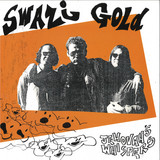
Swazi Gold have created a debut album that shimmers like the coast. There are six songs, two created by each member; through pure collaboration and participation. Swazi Gold are a true democracy.
Formed by the chief songwriters from Melbourne bands Crepes, Dreamin' Wild and Sagamore, this new band brings old friends together. Chris Jennings and Sam Cooper grew up in the Victorian coastal towns of Barwon Heads and Ocean Grove, while TimKarmouche was an inland man, hailing from Ballarat in the state's north-west
"We've been playing together for so long; in different mediums and in different bands. We've played our own key roles, but now we know what each other wants. Swazi Gold shows off our relationship from over the years, which is really cool," says guitarist and bassist Jennings.
Swazi Gold's other guitarist and bass player, Cooper, has a theory about the unifying power of their regional origins:
"It's this kind of small town thing where you strive to be different and creative. Because you're more isolated, you focus on your creativity and align yourself to similar people. I think growing up down the coast has meant I've continued to be drawn to people from other isolated places," he says.
It's this togetherness that's at the heart of Swazi Gold's debut album,Jehovah's Whispers.Recorded in a single weekend in 2017 at the Cooper's family home in Ocean Grove (affectionately termed the "Cooper Ranch")Jehovah's Whisperscaptures a musical intimacy and deep friendship between the three members.
"The bond with all the tracks on the album isn't necessarily lyrical, but it's 100% sonic. The simplicity of the instruments we use and the set-up we have is what's really rad," says Jennings.
"It's a fantasy of what we imagined Jehovah might be whispering in your ear," he adds, grinning.
Drawing from their collective love of African music, American funk, and quirky, melody-driven pop music, the album explores the space between conventional genres and styles of production.
"Using drum machines has made the song-writing process a lot quicker and opened up a whole new avenue stylistically.
Ted Scotto began his musical life as a trumpet player, but got his foot in the door of production soundtracks when he composed the theme for the 1968 French animated series 'Les Shadoks'. Soon taking on the pseudonym Yan Tregger (chosen for its nonspecific, English-sounding connotations), Scotto wrote and recorded more than thirty library records, ranging from funk and R&B tunes to deep dives into the then-prevalent Italo-Disco sound.
He also continued to record commercial music (including two albums with his disco act M.B.T. Soul and the under- water trumpet novelty hit 'Bubble Bubble'), and work on film
scores.
In 2018, Mark Grusane adapted the track 'Riff On' from Catchy LP for BBE Records, which later decided to reissue Catchy and Duck & Drakes on vinyl. For this new 12inch release,
Yan Tregger has done us the honor of reworking two unpublished tracks from the M.B.T project. You will have a bliss listening to two originals tracks, slightly transformed, and two
reworks that will make you travel through Balearic and Dub atmospheres, preserving to the maximum the soul of the original grooves.
This release announces a turning point in the production. Parisian Soul converges on an exclusive and unique dimension with a live sampler concept on stage to remix their Maxi vinyl in real time. Surrounded by pianist Alexandre Destrez (St Germain, Dimitri from Paris and Dj Yass), and percussionist Edmundo Carneiro (St. Germain, Bob Sinclar, De La Soul).
" I used to live in rue de Clignancourt, and remember as a kid going to the 14th of July West Indian ball organized by my father rue André Del Sartre in Montmartre every year. There I would meet, among others, saxophonist Robert Mavounzy. Sticking to the area, my older brother had a band and often played at the famous venue La Cigale, where even Henri Salvador joined him for a jam from time to time."Since childhood Serge Fabriano bathed in music, to-ing and fro-ing between his native Guadeloupe and Paris where he grew up. He attended the music conservatory, learnt how to play bass, met and played with many musicians and was ultimately angling for a career as a music teacher. But Serge had wanderlust; he lived to meet new people and was passionate about travel.Thus, it was in a squat located rue de Flandres in the 19th district of Paris that Serge Fabriano met by chance zarb player Djamchid Chemirami, one of Iran's greatest percussionists, who invited him to the Arts Festival of Shiraz-Persepolis. After a month-long motorcycle journey, he and his guitar teacher, Roger Bénichou, arrived in Tehran. Sadly their guitars didn't survive the journey. It was there that he met, among others, Woody Shaw, Max Roach and his wife Abbey Lincoln. Serge also formed a friendship with saxophonist Gary Bartz and stayed on a month playing with the cream of the musicians who'd attended to the Festival.During the mid-70's, he alternated between teaching classes and live gigs, and performed in Germany with a funk band comprised of ex-GIs from the US Army. He also met the members of Chick Corea's group, Return to Forever, and especially Stanley Clarke who became a great source of inspiration to him.From 1978 onwards, Serge Fabriano put aside teaching and devoted more time to music. He became a musician's musician, doing studio recordings with rock bands. He also played with members of the Caribbean diaspora, which included the great drummer Marcel Lollia (known as Velo), Patrick Jean-Marie, Guy Conquette, Winston Berkley, Mino CineluDuring the "Ayatollah Comédie" musical comedy tour organized by the Journal Liberation, Serge met actor Pierre Clémenti (Il Gattopardo, Belle De Jour, The Conformist). This was a game-changer : "I was trying to record my first record. Clémenti suggested the Studio Beaubourg in Paris. "The group Fabriano Fuzion - Fabriano Unit Zion - was born.The band brought together some of the Caribbean's most inspired musicians: Martinican-born Mario Canonge on the piano (his first appearance on an album), Alain-Jean Marie on the synthesizer, Edouard and Pierre Labor on saxophones, Claude Vamur (Kassav ') on the drums, singer/percussionists Marie-Reine Lamoureux and Marie-Céline Lafontaine, percussionists Roger Raspail, Sully Cally and Hector Ficadière (Tumblack, Vent Levé) on Ka percussions.It is precisely the Gwo Ka - this ancestral 'root' music deeply embedded in the heart of the Guadeloupe musician - which constitutes the rhythmic backbone of this first opus. The Gwo Ka, the jazz, the poetry and the spiritual vibe are gathered here to form a splendid album; one of the true masterpieces to emerge from the French West Indies.Rarely will a band have borne its name so well than Fabriano Fuzion - its music is a multiple and collective work in which each element brings its identity and its richness, conferring to this major work a truly fusional dimension.
Fifth part of the Strata-East Dolphy Series, Glass Bead Games is arguably the crown jewel of the Strata East movement, an amorphous genre that treads an unusual path between post-bop, 70's avant-garde and spiritual jazz, with a groove.
Glass Bead Games is full of revelations at many levels. First, the decade of the 1970s did produce genuinely creative, "human" new music flowing from the jazz mainstream; second, Bill Lee was more than Spike's dad: he was a superlative bassist, a team player of the first order, a powerful catalyst who, if anything, deserves to be better known than his son; third, Billy Higgins was, as so many musicians insist, a once-in-a-lifetime drummer—the bellows inspiriting the collective flame.
Most importantly, Clifford Jordan was an artist of the first order, his playing so effortless and unforced, unselfconscious and focused, mature and wise that, at a time when altissimo fury was all the rage, it's small wonder his authentic voice frequently went unheard. His musical rhetoric is so personally expressive, its substance so compelling, the listener couldn't care less about the extraordinary technique required to convey its captivating message. Compared to some of his more acclaimed peers he's a less aggressive yet paradoxically more directive and shaping influence. The climaxes, rather than spelled out, are merely suggested, registering with deep and lasting impact on the listener. It all comes down to learning the language, those precious little beads. Not every player, including Jordan or the listener, can use it like Shakespeare, but all can learn to read Shakespeare and understand its principles of arbitrariness and serendipity, of invariance and transformation.
Jordan, no less than Shakespeare, requires a like-minded cast of players—in this case four musicians of such redoubtable proficiency that each remains committed to keeping the beads in play. He's not a man content with a mere musical "dialogue" with his fellow musicians nor is he about to take the initiative in pulling his troops up to his level. Instead he begins to tell a musical story that's so compelling his three comrades are inspired equally to contribute to a collaborative narrative. This is brilliant music-making by a Coltrane- influenced successor who feels no obligation to mime the predecessor. It may be the most significant saxophone performance on record since Coltrane and, providing the listener stays with it for any length of time, the most deeply satisfying. Jordan's game—so effortless, unforced, and "level"—erases distinctions between composed and improvised, soloist and ensemble, narrator and narrative, the dancer and the dance. It seems incapable of wearing out its welcome.
By Samuel Chell/All About Jazz
This was Charles Tolliver's first album as a leader. The setting is unique only because his second Freedom-Black Lion album 'The Ringer' and all of his subsequent albums on Strata-East featured his quartet Music Inc. with pianist Stanley Cowell. Here he is surrounded in quartet and quintet formats with a truly stellar cast of the leading players on the New York jazz scene.
Charles plays the role of leader, composer and trumpeter. But it is surely that last role that deserves the most attention. The trumpet is a brass instrument that leans toward a hard sound and staccato phrasing. Yet Tolliver is the quintessence of fluidity. While it may be undeniable that he has learned from his musical heritage and past trumpet masters, a trumpeter of such flow, tone, control, lyricism and creativity is, by definition, a major musician.
Charles Tolliver first came to the professional jazz scene in the mid-sixties, when he first met Jackie McLean. Under McLean's leadership, he played on a number of Blue Note record sessions, some of which have yet to be released. He contributed original tunes to many of those sessions.
Within a couple of years, Tolliver was a well known figure in New York circles, playing and/or recording with Booker Ervin, Archie Shepp, Andrew Hill, Roy Ayers, Art Blakey, Sonny Rollins, Willie Bobo, Gerald Wilson, McCoy Tyner, Hank Mobley, and many others. His compositions were getting recorded by many artists. He gained his greatest recognition during a two year stint with the Max Roach quintet that also included Gary Bartz and Stanley Cowell.
There is also a previously unreleased bonus track of the song, "Repetition", recorded by Charles for this LP which will be included on this new release of the album. This song was originally made famous by Charlie Parker's LP With Strings.
This album is certainly an important and lasting document in light of the musicians involved and in light of its unique context for Charles Tolliver. But basically, it is just a great album to listen to. Michael Cuscuna
Following a long-player 'Orbiter' on Avenue 66 and an untitled single for Office Recordings earlier last year, mysterious producer Trux follows up with a brand new EP simply titled 'Eleven'.
Throughout the record, textures of mind-bending ambient, dreamy harmonics and crushed, lo-fi experiments are manipulated across the 8-track 12" marking Office's fifteenth release.
The record sits among a discography of artists that includes Iron Curtis, Christopher Rau and of course, label-owner Baaz.
Pushing his sound further into leftfield-leaning horizons and textured atmospheric reliefs, Pfirter highly-anticipated debut long-player 'The Empty Space' finds the Argentinian-born, Barcelona-based producer steering across shape-shifting sonic rapids with poise and panache. Inspired by a fractal of elements including physics, sci-fi and Lovecraftian flicks, amongst many other things, 'The Empty Space' is a record that revolves around the experience of the voyage itself rather than the destination, throbbing with a vital pulse that acutely transcends all categories and genres, as Pfirter adroitly recombines techno's DNA into something truly and definitely his own. From the false quiet of gloomy lakeshores and riverbanks to post-industrial cityscapes, through barren no-go zones and tiny basements packed to the rafters, welcome into Pfirter's personal "empty space".
This is MindTrip!
Brand new 7' EP from Glasgow's Vital Idles, following on from the band's well-received debut LP and a rigorous Marc Riley BBC 6 Music session from last year. Vital Idles are touring Europe in support of the EP, finishing up in the UK playing a series of UTR showcase parties in celebration of the label's 15 year history.
If there isn't yet a tradition of following a magnificent debut album with a, shoelaces-tightened, excellent mission statement of an EP (one would be forgiven to think that the debut long player was the mission statement already, breaking in on the scene/ry with such unmissable and rarely seen sensory delight, but then upon hearing the subsequently released EP one is tempted to think: "Wow! That debut was truly astonishing but now they are REALLY on a mission!"), well, if this tradition doesn't already exist - and thinking about Young Marble Giants' scene-defining "Final Day" 7", Pylon's absolutely essential "!!" 10" and Carla Dal Forno's recent-yet-already-classic "The Garden" 12" one might argue that this tradition is undoubtedly fully existent (more so: alive and well) — then this self-titled extended play from much beloved Glasgow quartet Vital Idles would surely be a striking argument for the genesis of such a tradition.
On the other hand, when taking sides with the many seasoned critics arguing that this tradition has indeed long been established, one might confidently list this effort as a bona fide example of such practice, sharing with the aforementioned not only an astute and accomplished artistic ability but also a sense of minimalist psychedelia that transcends restrictions set by redundant referencialism and grateless genre parameters such as "Post Punk" or "Minimal Pop" (on which the same critics, of course, often disagree).
That being said, ping-ponging from gritty post punk smashes to minimal pop moments and vice versa, Vital Idles' sphere of stripped-down efficiency and sharp personal observation also brings to mind crucially overseen half-chord-wonders Glorious Din as well as antipodean contemporaries like Constant Mongrel (who also had their latest release mastered by the fantastic M. Young), Primo! (who also had their latest release mastered by the fantastic M. Young) and Terry (who also had their latest release mastered by the fantastic M. Young).
The EP reveals itself as a steady, hypotenusal rise of intensity and momentum, starting with the hallucinogenic restrain of opener "Break A", building tension throughout the gothic-noise flourishes of "Seconds" and "Rustle Rustle" and culminating in "Careful Extracts", a 2 minute burst of carefree introspection that might as well be the unintentional answer to early career highlight "My Sentiments": "just me and my/ tired ire/ a a a a a a a a a a"
In conclusion: Vital Idles' debut was truly astonishing but - wow! - now they are truly on a mission.