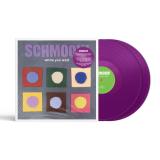
2 x LP Purple Vinyl in Picture Sleeve
Reissue of the legendary Deep House album While You Wait by Nottingham group, Schmoov! celebrating the 25th Anniversary of the release. Available for the first time since its initial release in 2001 & highly sought after on the second-hand market, with the only copies available selling for £70+. Presented here on special purple vinyl, giving a new generation of vinyl collectors an opportunity to own a piece of UK Deep House history.
Suche:playground group
- 1
An adventurous percussion playground Trio inclassable qui explore les rythmes et les sons, Spëcht a ouvert un terrain de jeu singulier autour des percussions en donnant une nouvelle dimension à des instruments acoustiques.
Darbuka, gongs, kalimbas, riqq, doholla, bendirs,... sont à la base de leur univers percussif et mélodique qui oscille entre sons organiques et textures atmosphériques, paysages sonores aux accents de transe et grooves entraînants.
Après la sortie du premier EP "Dawn" sous le nom de groupe "Hands in Motion” », letrio sort « Triptyques » et propose une expérience évolutive en trois temps progressifs.
“The trio includes three of the top percussionists in Belgium Simon Leleux, Robbe Kieckens, Célestin Massot their music is a rich world of stimulating transglobal rhythms and transfixing sounds” World Music Central It's an exciting time for music lovers and fans of innovative sounds, as the band formerly known as 'Hands in Motion' makes a refreshing re-entry into the music world under a new name: Spëcht. With their latest album, 'Triptyques', Spëcht promises an immersive listening experience that retains the deep-rooted essence of the band while exploring new musical horizons.
After a period of artistic development and introspection, Spëcht has decided that the name change is a natural step in their musical journey. The name 'Spëcht' not only reflects their renewed focus and energy but also their commitment to creating music that is both powerful and sophisticated, just like the bird of the same name.
Triptyques' is an album composed of three parts, each highlighting a unique aspect of the band. This conceptual masterpiece takes the listener on a journey through various musical landscapes, from melodic harmonies and huge percussion elements with complex rhythms to bold experimental sounds. Each 'triptych' stands alone as an individual work of art, yet together they form a cohesive and captivating story.
With 'Triptyques', Spëcht demonstrates a maturity and depth in their musical expression that will surprise and charm both loyal fans and new listeners.
- Mean Street
- Dirty Movies
- Sinners Swing!
- Hear About It Later
- Unchained
- Push Comes To Shove
- So This Is Love?
- Sunday Afternoon In The Park
- One Foot Out The Door
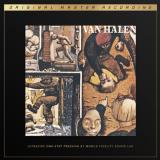
The song titles on Van Halen's aptly titled Fair Warning don't lie. The likes of "Unchained," "Mean Street," "Push Comes to Shove," "One Foot Out the Door," and more indicate the mood the band channels on its double-platinum 1981 record — the nastiest, darkest, and fiercest album of the group's storied career. For the fourth time in four years, Van Halen throws down the gauntlet to all challengers and emerges victorious.
Sourced from the original analog tapes, pressed on MoFi SuperVinyl at Fidelity Record Pressing, and strictly limited to 5,000 numbered copies, Mobile Fidelity's UltraDisc One-Step 180g 45RPM 2LP set plays with unfettered clarity, dynamics, and immediacy. Benefitting from superb groove definition, an ultra-low noise floor, and dead-quiet surfaces, this vinyl edition captures what went down in the studio with tremendous realism and involving presence.
Taking a more controlled approach in the studio and still completing everything in less than two weeks, Van Halen and producer Ted Templeman relied on studio amplifiers to direct the sound. Further diverging from the live-on-the-floor approach of its earlier albums, the ensemble also employed overdubs to great effect. The result: Dense, stacked architecture that underlines the hard-hitting tenor of the songs — and which comes alive like never before on this reference edition that looks as good as it sounds.
The premium packaging and gorgeous presentation befit the reissue's select status. Housed in a deluxe slipcase, it features special foil-stamped jackets and faithful-to-the-original graphics that illuminate the splendor of the recording. Aurally and visually, it is made for listeners who want to immerse themselves in everything involved with the album, including the iconic cover art adopted from William Kurelek's haunting painting, "The Maze."
Isolated frames from Kurelek's childhood-inspired work — including a man bashing his head into a brick wall, a guy pinning down an adversary as he delivers bare-fist blows to his face and others watch with apparent glee, a boy tied down on a conveyer belt and being sent through the equivalent of a meat saw — adorn the front and back covers. The sunnier visual disposition of Van Halen's prior efforts gives way to something sinister and tortured, traits reflective of the music within. The band members, too, are visually depicted not in glamorous shots but in a serious black-and-white portrait in which the quartet is clad in black leather jackets.
Tough, aggressive, stark: Fair Warning comes on like a series of bare-knuckled punches to the solar plexus and boasts lyrical narratives to match. Though not a concept record, the concise album revolves around themes of roughing it on the streets and struggling to survive amid dim prospects. Singer David Lee Roth reportedly penned many of the initial lyrics after traveling to Haiti and observing extreme poverty. The characters and situations populating Fair Warning reflect hardscrabble existence, last-chance desperation, and underlying danger.
Witness the crazies, poor folks, and hunters of “Mean Street”; the former prom queen turned pornographic actress on “Dirty Movies”; the menace and vice of “Sinners Swing!”; the streetwise hustle of “Unchained”; the isolation and alienation of “Push Comes to Shove”; the desire for escape on “One Foot Out the Door”: A carefree California beach party Fair Warning is not.
Having said he felt angry and frustrated during the sessions, guitarist Eddie Van Halen uses the forceful arrangements as a playground for his seemingly unlimited arsenal. Supported by a crack rhythm section and a hyped-up Roth, he performs with an almost impossible combination of punk-like intensity, technical finesse, lyrical fluidity, and unbridled emotion. The virtuoso was increasingly butting heads with Templeton and seeking a freedom in the studio he believed denied him.
No wonder he plays like a bat out of hell. Listen to the rapid-fire manner in which he slaps the high and low E strings on the 12th fret of his instrument on “Mean Street,” instilling the tune with funk flair and metal-spiked sharpness. For the pouty strut of “Dirty Movies,” Eddie Van Halen contributes slide guitar magic made possible after he sawed off the lower portion of a Gibson SG so he could reach further down the fretboard.
Related intensity, urgency, and daredevil momentum punctuate the surging “Sinner’s Swing!” A heavily flanged, delicately melodic introduction frames the attitudinal “Hear About It Later,” among the most creative arrangements of Van Halen’s career. And do riffs come any bigger or magnetic than those on the high-wire kick of “Unchained”? As for the out-of-left-field “Sunday in the Park,” an instrumental composed on an Electro-Harmonix micro-synthesizer: Who but Eddie Van Halen to supply creep factor in such an ingenious way?
Despite selling fewer quantities than Van Halen’s prior efforts, Fair Warning remains for many diehards the record that epitomizes all of the band’s immense strengths —Roth’s manic energy and tongue-wagging humor, Alex Van Halen’s rhythmic heartbeat-in-your-chest bombast, and Michael Anthony’s lucid bass lines included. Arriving when the New Wave of British Heavy Metal and new-wave movements were taking flight, it signaled a shot across the bow from a band determined to stay a step ahead and provide proof nobody could touch what it delivered.
More than four decades later, Fair Warning still sounds that alarm.
Rich in centuries of creolization*, the music of the Caribbean basin is among the most diverse in the world, and with Sono Mondiale, repertoires cross the oceans and are constantly enriched in a sonic and narrative mise en abîme.
Pambelé's debut album blends Afro-Colombian influences with the acidic, piercing sounds of the sixties psychedelic movement. This cross-fertilization is a powerful expression of the group's transatlantic and definitively Caribbean cultural universality.
Traditional percussion instruments from the north coast of Colombia intertwine and mingle with the joyful cadence of the vocals, while the chiselled words of the guitars, accompanied by the voluptuous sounds of wild organs, draw us into a torrid, exuberant atmosphere.
Pambelé's debut opus is a bewitching trance, a condensed blend of raw, composite material. A boundless playground where the culture of trance, improvisation and dance is the very essence of its strength.
Here we have the third LP by the excellent Guy Hamper Trio, featuring James Taylor on Hamond organ, and Guy Hamper on guitar (sometimes called Childish) and what a first-class LP this is! 'Instrument of Evil' in particular has a very eerie vibe. We asked the man himself what was the inspiration for it? G.H. The track is the sequel to '7% Solution', which featured on the last Guy Hamper Trio LP (with Thee Headcoats standing in as rhythm section). A 7% Solution being the amount of morphine Dr Watson administered to Sherlock Holmes. For 'Instrument of Evil' I took Sherlock Holmes' later designation of his syringe as "an Instrument of Evil". This is originally a quote from the bible- "Wicked men do at times reject God's purpose for the state, transforming the good of civil government into an instrument of evil." Point of interest: Morphine addiction happens to tie in with another aspect of the song. In the section that nods to Elmer Bernstein's main title theme to the film of the book The Man With the Golden Arm, in which the main character is also a morphine addict. Another ingredient - we added six-string bass to that section in tribute to Jet Harris - he formerly of top group The Shadows, who recorded a great version of Bernstein's classic. To top it all off the record sleeve references the fine graphics of the great Saul Bass. The track also features contributions from Tom Morley (trumpet) and Anna Jordanous (sax) . Both Were a pleasure to work with. My job at the wheel is to basically make a playground and let Jamie, Anna and Tom loose in it with very little direction, apart from pointing out the swings and location of the roundabout. I told Tom "you're a Spanish trumpeter stood on a hill in Spain." For Anna, I think we said "go low and nasty." Other titles are taken from early poetry chapbooks I made in my youth. 'The First Creature is Jealousy' and 'Dog Jaw Woman' being examples. The title 'Incense Rising From a Censer' comes from Dostoevsky's The Brothers Karamazov, a book I really recommend. Prayer rises to God on the smoke of the incense burning in the censer. I imagine this track being some kind of antidote to 'Instrument of Evil'. They are all excellent tracks. I imagine film companies will be queuing up to use many of them.
Superb 45 featuring two Hammond-led instrumentals! We caught up with Mr Guy Hamper for an insightful Q&A_ Q: What a cracking single this is! 'Instrument of Evil' in particular has a very eerie vibe. What was the inspiration for it? A: The track is the sequel to '7% Solution', which featured on the last Guy Hamper Trio LP with Thee Headcoats standing in as rhythm section. A 7% Solution being the amount of morphine Dr Watson administered to Sherlock Holmes. For 'Instrument of Evil' I took Sherlock Holmes' later designation of his syringe as "an Instrument of Evil". This is originally a quote from the bible: "Wicked men do at times reject God's purpose for the state, transforming the good of civil government into an instrument of evil." Point of interest: Morphine addiction happens to tie in with another aspect of the song. In the section that nods to Elmer Bernstein's main title theme to the film of the book The Man With the Golden Arm, in which the main character is also a morphine addict. Another ingredient - we added six-string bass to that section in tribute to Jet Harris - he formerly of top group The Shadows, who recorded a great version of Bernstein's classic. To top it all off the record sleeve references the fine graphics of the great Saul Bass. Phew! Q: The track features contributions from Tom Morley (trumpet) and Anna Jordanous (sax). What's it like working with them? A: They are great and easy to work with. I basically make a playground and let them loose in it with very little direction, apart from pointing out the swings and location of the roundabout. I told Tom "You're a Spanish trumpeter stood on a hill in Spain." For Anna, I think we said "go low and nasty." Q: On the flip side you have 'Incense Rising From a Censer'. A very evocative title for an evocative track. Do you have lyrics in mind for this for a possible later release? A: No lyrics have sprung to mind as yet - but it's always possible. The title is from The Elders observation in Dostoevsky's The Brothers Karamazov, a book I really recommend. Prayer rises to God on the smoke of the incense burning in the censer. I imagine this track being some kind of antidote to 'Instrument of Evil'. Q: This single marks your first time in the new premises of Jim Riley's Ranscombe Studio. What's the new place like? A: The studio is great - the sound - using my old Mighty Caesars drum kit, and Jim engineering, is pure, easy with a better sound than the old premises. Q: Any more Guy Hamper Trio releases in the pipeline? A third album perhaps? A: Again, anything is possible. Me and Jamie (James Taylor, Hammond organ) have talked of writing together in the future. Jamie is a truly great musician - the cherry on the cake if you will. We're just busted old eggs, sour milk, and some gunk. Q: A live Guy Hamper Trio show would be amazing. Any chance of that happening or will it remain a studio-based project? A: It could happen if someone came up with a very cunning plan.
The Dutch dance project Twenty 4 Seven scored several major hits during the Nineties. The group was founded in 1989 by producer Ruud van Rijen, who is seen as a pioneer in Eurodance. He was one of the first to put together a male rapper and female vocalist. In 1993 he gathered singer Nance Coolen and rapper Stay-C. I Wanna Show You is their third studio album, originally released in 1994. Two singles were released from this album: "Oh Baby" and "Keep on Tryin'". The group received the Dutch Export Award of 1994 for this record. In 1996, the album also received a Golden Award in South Africa. It reached its highest position at #1 in the (RiSA) South African Album Charts. I Wanna Show You is available as a 30th anniversary edition of 500 copies on translucent red coloured vinyl and includes an insert.
The Sad Clown Bad Dub series first started as a string of limited cassette tapes and CD-R's for Atmosphere to sell exclusively on tour. Since its inception in 1999, the Sad Clown series has seen over a dozen iterations in numerous formats, including rare 4-track demos, live recordings, a DVD of behind-the-scenes tour footage, a mixtape, 7” vinyl singles and more. To this day, one of the earliest volumes – Sad Clown Bad Dub 2 – still remains one of the most celebrated and coveted installments from the series.
Originally released in 2000, Sad Clown Bad Dub 2 was a rather stripped-down DIY release – a simple CD tucked behind an illustrated cover with handwritten tracklist and liner notes. The recordings were equally as rough, consisting of a dozen raw 4-track demos that hadn't been treated to any sort of mixing or mastering. Although Atmosphere initially produced only 500 copies of these CD's to sell on the road for extra cash, the buzz and the subsequent demand from fans eventually led the group to pressing more of the CD's, this time stamp- ing the cover art with the phrase "Authorized Bootleg" as a sly nod to those who'd been ripping and sharing the files. The unpolished nature of Sad Clown Bad Dub 2 was no deterrent from the appeal of its contents though.
Generally considered an underground classic in hip-hop circles, Sad Clown Bad Dub 2 is often mentioned as one of the standout releases in Atmosphere's extensive discography. It is a deeply introspective project that explores a range of complex thoughts and emotions, counter-balanced by occasional moments of darkly humorous sarcasm and wit. Slug's writing is sharp and insightful with a knack for turning his personal struggles into universal themes that listeners can relate to. Ant's production is minimalistic, moody, even eclectic in nature, full of atmospheric textures and unconventional rhythms. This release is very clearly one of the early stepping stones in developing their unique and distinctive sound together, helping to establish their reputation as one of the most innovative and boundary- pushing acts in hip-hop.
We're excited to reintroduce the legendary Sad Clown Bad Dub 2, digitally remastered from the original 4-track tapes and available on vinyl for the first time ever!
Perpetual Groove continues to conquer the jam scene with its dynamic
presence both on and off stage - The group's breakout album, Sweet
Oblivious Antidote (released in 2003) has been praised internationally
and is widely regarded as one of the most quintessential works in the
canon - To commemorate its impending milestone, Perpetual Groove
releases a remixed and remastered 20th anniversary run of Sweet
Oblivious Antidote
- A1: Petit A Petit (Feat Agnès Hélène) 4 20
- A2: Man Bo Diak (Feat Amatah Keo) 5 06
- A3: Femme Qui Danse (Feat Pat Kalla) 4 11
- A4: Bas Les Masques (Feat Charly Sanga) 4 14
- A5: Oh Ma Cherie (Petit À Petit Part 2) (Feat Agnès Hélène & Charly Sanga) 3 39
- B1: Love Is Jokin (Feat Pat Kalla) 4 35
- B2: Metissage (Feat Sana Bob) 4 24
- B3: Kinkeliba (Feat Jy Cooly) 3 33
- B4: Electro Highlife (Instrumental) 5 10
- B5: T’es Haut (Instrumental) 4 18
After Joao Selva, Dowdelin, The Bongo Hop, Underdog Records continue their exploration of the Black Atlantic with IREKE.Ecstatic brass, 70’s keyboards, elastic guitars, round bass and world percussion: from this sonic heritage, Ireke makes a unique fusion, enhanced by the audacious contribution of his dub science, and a few electronic touches
IREKE
Ireke? Sugar cane in Yoruba. Like her, the duo loves tropical climates and intoxicating rhythms, quick to liberate the bodies gathered on a dancefloor. Afrobeat urgency, funk suppleness, dub alchemy, highlife jubilation: with Tropikadelic, Ireke summons the heritage of the masters and the audacity of machines to give life to new sonic territories. At the crossroads. For the love of groove.
From the West, with their ears to the Black Atlantic, Julien Gervaix and Damien Tes- son are both children of the collective and of improvisation, playgrounds for these complete multi-instrumentalists.
The first one puts his talents of arranger-saxophonist at the service of the Nantes collective Soulshine and of numerous formations - in turn funk or rhythm’n blues - where swinging is the rule.This is notably the case of the afrobeat group Walko, in which Julien Gervaix had the honour of sharing the stage and the studio for several years with Kiala Nzavotunga, guitarist extraordinaire for Fela Kuti and Egypt 80. Meanwhile, Damien Tesson was being trained as a dubmaster-guitarist-arranger at the reggae roots school with the digital option of the Vendée collective Shi Fu Mi Temple.This initiation led Damien Tesson to join, among others, the Nantes-based group BIBA (Bingy Band) and then to collaborate with Jideh High Elements, a key figure on the international dub scene, Roberto Sanchez and the team of his Lone Ark Studio, as well as Sana Bob, a famous reggae singer from Burkina Faso.And then, life being well done, the paths of Julien Gervaix and Damien Tesson ended up crossing within the jazz-funk combo Playtime, before meeting again in the Vendée a few years later.
With an obvious tropism for Afro-Latin grooves, tropical colours, electronic tricks and furious swaying, the two musicians create Ireke like a glass of well arranged rum. Here’s to us, here’s to you! As if guided by the spirit of the plant, Ireke toasts the immense richness of these danceable rhythms, true generators of life, connection and energy.
Like Legba, the Yoruba orisha of intersections and crossroads, Ireke thrives in the between worlds.Aware of the lineage of goldsmiths who preceded them, Ireke
knows his classics and humbly draws inspiration for Tropikadelic from the musical genius of Pat Thomas, Poly-rythmo Orchestra, King Tubby,Tony Allen, Fela Kuti, Maître Gazonga, Ernesto Djédjé or the Vikings of Guadeloupe. Ecstatic brass, 70’s keyboards, elastic guitars, round bass and world percussion: from this sonic heritage, Ireke makes a unique fusion, enhanced by the audacious contribution of his dub science, and a few electronic touches patiently flushed out in the studio - which the duo considers as an instrument in its own right.
Finally, to give voice to his compositions, on Tropikadelic, Ireke calls upon an army of serious enthusiasts, each member of which has come up with his or her own lyrics. Thus, alongside Ireke, we find the groove griot Pat Kalla (“Femme qui Danse”,“Love Is Jokin”), the Franco-Laotian reggaeman Amatah Keo (“Man Bo Diak”), the Vendée- based Agnès Hélène (“Petit à Petit”,“Oh Ma Chérie”) and Charly Sanga (“Bas Les Masques”,“Oh Ma Chérie”), the Burkinabè lion Sana Bob (“Métissage”) as well as the Nantes soulman Jy Cooly (“Kinkeliba”).
For the duo, music is above all a collective practice, an active liberation, a rhythmic approach to letting go, a source of communicative joy... In short, groove is the weap- on! And Ireke knows how to use it.
Revisiting a press release for the Nightingales' last album, Four Against Fate, we recalled hesitant anticipation for the forthcoming King Rocker, a film documentary of Robert Lloyd and Nightingales, made by Michael Cumming and Stewart Lee. After forty years of activity, Robert and the band had seen hyped recordings go lost, scant commercial success. Royalties? Ha. Yet response to King Rocker was immediately positive. Fab reviews galore, a long process regaining master rights which led to a series of expanded reissues with Fire. A tour postponed three times finally took place, to fully-packed houses. It was a very good year. The band felt a degree of anxiety prior to the sessions, which took place at Valencia's Elefante Studios. With bassist Andi Schmid isolated during Covid, the band had yet begun working out individual rough sketches, typically battered into songs over a period of months. They went into a new studio blind, with a new producer, Jorge Bernabe, without rehearsals . . . and produced a top-to-bottom masterpiece. Thirty seconds in, "Sunlit Uplands", is already a classic showcasing Fliss Kitson's increased songwriting power and the core dichotomy of the groups's best songs: perverse as fuck, catchy as fuck. I � CCTV is highlighted by a fab Jim Smith astral-garage guitar riff . . . and that's a one-two punch few albums ever equal, let alone carry over to the affectionate "Frances Sokolov", Robert's ode to mentor Vi Subversa, the playground riff that underlines "Spread Yourself Out" and then "Bloody Breath", the best encapsulation of all the band's genius in developing a kind of "pop" that no other combo has ever cracked. Other highlights include the lopsided mysterious beauty of "Magical Left Foot", the courtly raver of "I Need The Money At The Time" with a wonderful motorik groove driven by bassist Andi Schmid, and the album closer, "My Sweet Friend", a rockabilly lullaby which sounds like a magical outtake from Robert's one and only solo album It's a corker, it's a marvel, it's the best Nightingales record to date. Try and deny it. Tracks: 1 Sunlight Uplands (Turn That Frown Upside Down) 2 I � CCTV 3 Frances Sokolov 4 Spread Yourself Out 5 Bloody Breath 6 Mind Of Stone 7 I Needed The Money At The Time 8 The Very Nature 9 Magical Left Foot 10 Mark Meets No Mark 11 My Sweet Friend
- A1: Quiet Force - Listen To The Music
- A2: Barry Coates - Hovercraft
- A3: Andrew Gordon - Walking The Lonely Streets
- A4: Steve Bach - Rain Dance
- B1: Angelo Vanotti - Sketches Of Anderland
- B2: Slap & Powell - Sex Drive
- B3: Jordan De La Sierra - Nimbu-Pani The Lemon-Water Song
- B4: Jessie Allen Cooper - In My Heart
As escapism from corporate banality turned the corner in the `90s, a new generation of vibrant, software generated soundscapes emerged. Communal access to the internet propagated the new hive mind of ideas online, giving way to smoother, stress-free textures. The PC revolution opened the gateway to ray-traced playgrounds of color and light, allowing for visions of utopic proportions to manifest themselves on screensavers far and wide. Boot up your machine, load the software on this floppy diskette, and drop out of a reality bounded by the physical laws of the universe. Numero 95 is the soundtrack to the screen saver fever dream we're all trying to climb back into. Eight droplets of proto-vaporwave, synthesized in vinyl (or digital) form, fresh from Numero's archive of forgotten sounds. Are you looking for that half way point between smooth jazz and new age? Mac and PC? Quantum Leap and the X-Files? This software is for you. Housed in a replica floppy diskette, Numero 95 explores an early computer music unbound by scene or region. Eight solo pioneers vibing out at home in their headphones, traveling as far as the sound card would allow. This is music that barely escaped the hard drive and yet percolates at the edges of the algorithm 30 years later. Welcome to Numero 95.
- A1: Quiet Force - Listen To The Music
- A2: Barry Coates - Hovercraft
- A3: Andrew Gordon - Walking The Lonely Streets
- A4: Steve Bach - Rain Dance
- B1: Angelo Vanotti - Sketches Of Anderland
- B2: Slap & Powell - Sex Drive
- B3: Jordan De La Sierra - Nimbu-Pani The Lemon-Water Song
- B4: Jessie Allen Cooper - In My Heart
As escapism from corporate banality turned the corner in the ’90s, a new generation of vibrant, software generated soundscapes emerged. Communal access to the internet propagated the new hive mind of ideas online, giving way to smoother, stress-free textures. The PC revolution opened the gateway to ray-traced playgrounds of color and light, allowing for visions of utopic proportions to manifest themselves on screensavers far and wide. Boot up your machine, load the software on this floppy diskette, and drop out of a reality bounded by the physical laws of the universe.
The eighth entry in Numero’s Cabinet of Curiosities series.
Herself is the moniker of multi-instrumentalist Gioele Valenti, also known as JuJu in more recent years (Fuzz Club) or as part of the psych project LAY LLAMA'S. Herself's work was described by critics as the harmonious meeting between Sparklehorse, Gravenhurst and Will Oldham. Valenti's songwriting takes inspiration from low-fidelity apocalyptic folk, crooning and pop; boasting a rather extensive discography. Well rooted in tradition, his music often ventures in the realms of subtle experimentation. His new album "Rigel Playground" prepares the listener for a journey through cosmic folk, in which traditional Brit Pop flirts with an alt vein, as if the Beatles and Sparklehorse would meet the torments of Nick Drake and the intimacy of a Mike Scott. Continuing a long list of illustrious collaborations (Amaury Cambuzat of Ulan Bator, John Fallon of The Steppes,Capra Informis of GOAT, among others), the prestigious guest on this record is Jonathan Donahue from MERCURY REV, a group of absolute prominence in the international indie panorama, which in addition to having lent his voice to the single "The Beast of Love" - as Herself says - informs the essence of the entire record. Not surprisingly Mercury Rev chose Herself to support them during their Italian tour last year.
- A1: Airto – Samba De Flora
- A2: Duke Pearson And Flora Purim – Sandalia Dela
- A3: Sérgio Mendes & Brasil '66 – Batucada (The Beat)
- A4: Deodato – Skyscrapers
- B1: Milton Nascimento – Catavento
- B2: Airto – Tombo In 7/4
- B3: Luiz Bonfá – Bahia Soul
- B4: Dom Um Romao – Braun-Blek-Blu
- C1: Moacir Santos – Kathy
- C2: João Donato – Almas Irmãs
- C3: Sivuca – Ain't No Sunshine
- C4: Milton Nascimento – Rio Vermelho
- D1: Tamba 4 – Consolation (Consolação)
- D2: Flora Purim – Moon Dreams
- D3: Dom Um Romao – Escravos De Jo
- D4: Airto – Andei (I Walked)
All of the music featured here on this new Soul Jazz Records collection was created by Brazilian
artists in the USA in the 1970s.
In the early 1970s North American jazz musicians were eager to work with upcoming Brazilian
musicians. Miles Davis invited Airto Moreira to join his new ‘electric’ band, Dom Um Romao (part of
Sérgio Mendes’ legen
dary Brazil ‘66 in the 1960s) joined the fusion group Weather Report, Flora
Purim and Airto both became a part of Chick Corea’s new project Light As A Feather, Wayne Shorter
collaborated with Milton Nascimento, George Duke recorded Brazilian Love Affair, and so on.
With all the attention placed on them from these important jazz artists, North America became the
new musical playground for a large number of these Brazilian artists – Airto Moreira, Flora Purim,
Sérgio Mendes, Luiz Bonfá, Eumir Deodato, João Donato and many others.
Most of these musicians had already experienced success through the earlier popularity of bossa
nova in the 1960s, either at home in Brazil or in the USA. But by the end of the 1960s many
Brazilian artists had left their own country, as the military dictatorship became progressively more
authoritarian and repressive. In the USA, through their critically acclaimed work for Miles Davis,
Weather Report, Lightj As A Feather etc., all of these artists were now given reign to explore new
musical terrains away from the restrictions of both a musical genre and a state censor back in Brazil.
This collection brings together some of these finest works and comes complete with extensive notes
that explains the path these musicians took from Brazil to the USA and shows the political and
musical links between Brazil and the USA that created the conditions for this unique fusion of these
two distinct cultures, North American Jazz and Brazilian music, that occurred in the 1970s.
The album comes as a deluxe gatefold double vinyl LP, complete with download code, full sleeve
notes, exclusive photography, double inner sleeves.
- A1: David Stout - The Seven Rays
- A2: Phyllyp Vernacular - The Clinging
- A3: Peter Thomas - Shimmer
- A4: Peter Kardas - Other Playgrounds
- B1: Kim Carter - Energy
- B2: Nathan Griffith - Great Moves
- B3: Joel Horwitz - Finale From A Walk Down Serenity Lane
- B4: Michael Chocholak - Skomorokhi
- C1: Derryl Parsons - Floating Landscape (Including Chase Scene)
- C2: Scott Blair - Dance Pacific
- C3: Heather Perkins - Burning Through
- C4: Carl Juarez - Self-Regulation (Ii)
- C5: Talvé - The Ride
- D1: Kevin Courcey - Fallout
- D2: Suse Millemann - Patterns
- D3: Peter Nothnagle - New Snow
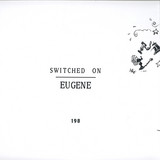
Switched-on Eugene Documents The Eugene Electronic Music Collective And Some Of The Many Synthed-out Figures In And Around Oregon's Iconic Hippie Stronghold During The 1980s. Whether Connected By Membership, Geography, Or The Tape Trading Scene, The Artists In And Around The Eemc Shared Compelling Visions Of The Future We Now Inhabit, Vividly Captured On Home-recorded Tapes And Distributed Via Zines, Classifieds, And Local Radio. Switched-on Eugene Is A Deep Dive Into A Heretofore Forgotten Sonic Microcosm Unlike Any Other.
HINOSCH are a duo of Koshiro Hino from Osaka and Stefan Schneider from Düsseldorf, they first (met and) began their collaborative work of musical interaction and exploring contrasting possibilities in 2017. After a number of concerts in the EU and in Japan a debut EP (HINOSCH EP/TAL05) was released in late 2017. Fully instrumental, their first full-length album HANDS offers a more steeply focussed approach than its largely improvised predecessor.
Encouraged by the momentum generated during a number of on-the-spot recordings in Osaka, where Schneider had held a residency in April 2017, the overall sound of the album has been honed down through meticulous studio engineering. One of the outstanding qualities of HANDS certainly is an unprejudiced approach of sound and song structures. The instrumentation is condently reduced to a small range of analogue and digital machines. Snatches of tape-loops deliver lower-pitched vocal and drum machine samples. This characteristic technical set up soon proved ideal in order to dene a tactile vocabulary of fully unsynchronized rhythm patterns. The word tactile perfectly conjures that quality which is the very essence of HANDS. It is the result of the manner in which interdependent threads of rhythm units are deliberately disconnected to form a cohesive, soulful and exible whole. Most tracks on HANDS are devoid of a central motif and examine an unpredictable dialogue. A fantasy of constant change and a search for musical suggestions is the most vital ingredient in this abstract environment.
The album title HANDS refers to physical aspects of electronic music production. Every live concert of Hinosch usually starts out with a hand shake between Hino and Schneider. The general process of collective music making, programming, button pushing, playing, recording, decision making, all demand utmost concentration. The image on the front of the abum sleeve (designed by Takashi Makabe) reects the general approach of HANDS: layers of tuckled fabrics confronting one another to articulate a form for themselves to no other end than their own orchestration.
After having emerged from the ever thrilling Osaka music scene onto the international playgrounds of electronic music just a few years ago Koshiro Hino's solo activities as YPY and his involvement with the band GOAT have already garnered him a very favourable international reception. Stefan Schneider has over the years produced and collaborated with a.o. Joachim Roedelius (Cluster), Arto Lindsay, Klaus Dinger (NEU!), Dieter Moebius (Cluster), Alexander Balanescu, John McEntire (tortoise), Katharina Grosse, Bill Wells and St.Etienne.
Dilated Pupils is a collective group of likeminded friends from the Netherlands each with their own influences and style, whom together have a distinct flavor in productionconsisting of analogue machines, tape noises, and raw one-take jam sessions. Each of them have their own solo productions as well as other collaborations, but when united as Dilated Pupils prefer to be known jointly as one entity with their own unique and distinguished sound.
Since 2014 the group has developed an interesting discography with releases on labels such as Fear of Flying, Sol Asylum, Mode of Expression, Tabla, Music is Art, Dorcas, Make Sense and Mayak.
Now, the group takes the next step and created their own playground ''DPBEATS''.
Be sharp and keep your ears open, because the beats are loaded!''
We here at L A MISSION like to whip out our politics in public. We kinda get off on it. And so we're especially excited to slip you B EANER' s first solo outing on the label . From track titles to sound samples to magazine articles to packaging, this record / magazine / performance package highlights im/migration, the brown experience, and stripped identity. La Mission knows from brown. The collective is run by a crew of devastatingly handsome deviants whose racial identity is, well...it's complicated. We've lived our lives being neither white enough nor brown enough to fit neatly into racial categories. And so we took some time out from our usual exploits (like our MultiDirectional Playground Tire Swinging' orgies and Elected Candidate/Dead Pig/HungerGames slashfic) to focus on brownness. People started talking about cultural appropriation' when Miley Cyrus started twerking. We couldn't throw shade fast enough. But cooptation and exotification runs rampant in all genres of music-including dance music. We here at La Mission feel pretty fucking awkward about it. We've seen queerofcolor culture turned into whitedudebro business ventures. And as brown folks with stripped and fragmented identities, we're never sure of what culture is ours to use and abuse, anyway. Can we honor our own roots if they're messy and broken When we're inspired' by the music of other cultural groups, is that solidarity or stealing Nothing we have is whole. We can only work with the fragments we have at hand, well aware that there's unfinished business... BLACKMOUTH is the live version of the classic soul/disco sampling house tune. Take the work o f o t h e r s w h o c a m e b e f o r e y o u a n d t u r n i t i n t o a d a n c e a b l e j a m . G O T B L U E S u s e s t h e w o r k o f a b l i n d 1930s blues bongo player to form a weirdo repetitive rhythm tool: another example of using a forgotten artist for one's own gain.
- 1