
4
También disponible
Standard Edition[27,69 €]
No en stock
Haga su pedido ahora y le encargaremos el artículo en nuestro proveedor.
9,71 €
Ültimo hace: 5 Años
Standard Edition[27,69 €]
Haga su pedido ahora y le encargaremos el artículo en nuestro proveedor.

Not to be confused with the 80s heavy rock/funk band from the US, this Living Color track was written, produced and released by Tony Kalangis on his Sophisticated Funk label in 1974. Kalangis, who sadly passed away in 2017, was a man of many talents who could not only write a great tune but also novels, poems, and film scripts.
'Plastic People' has one of those faultless grooves that goes where you want it to go and does what you want it to do. Small but perfectly formed, somewhere between mellow funk and a mid tempo 2 stepper. A great niche if ever there was one.
The clavinet riff is gently twangy and instantly funky, the horns punctuate an uplifting melody, while the backing vocals float in and out celestially. The relevant lyrics are carried off with a vocal style full of emotional urgency. Pure joy.
"Plastic people, better make some changes soon, or you'll never find a dancer for your tune". Thankfully not the case on this groove! Clavinet freaks will love the instrumental on the B side.
Haga su pedido ahora y le encargaremos el artículo en nuestro proveedor.
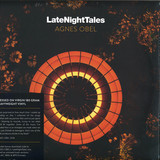
to Me, Sounds Have Always Been More Interesting Than Words,' Says Agnes Obel. i Love It When The Voice Becomes An Instrument And You Almost Forget It's A Human Voice.' Never Is This More Apt Than On This Beautifully Programmed And Bewitching Selection Of Music.
Agnes' 2010 Debut Album Philharmonics Went Platinum In France And Belgium And, Unsurprisingly, Quintuple Platinum In Her Native Denmark, Where She Also Won Five Danish Music Awards (equivalent To The Brits) In 2011. The Follow-up Aventine, Released In Late 2013, Was Imbued With The Same Measured Calmness As Her Debut. It Went Platinum In Belgium And Gold In Denmark And France.
For The Mix You Have In Your Hands It Feels Almost As If Agnes Has Scoured The World Looking For Kindred Spirits - Or Kindred Songs. There's A Quietude About It All, The Antithesis Of A Rush Hour, Like A Frozen Lake On A Sunday Morning. This Is Aided By A Veritable Cornucopia Of New Obel Material, Including A Haunting Reading Of Danish Song 'glemmer Du', Inger Christensen's 'poem About Death' Set To Original Music, And An Agnes Original, 'bee Dance'.
Among Them, There's The Enigmatic Jamaican Singer Nora Dean Who Weighs In With The Hypnotic And Slinky Duke Reid Production, 'ay Ay Ay Ay (angie-lala)' And The Sparse, Sardonic 'party Girl' By Michelle Gurevich, So Good It Inspired The Eponymous French Movie. There Are The Plangent Voices, The Bulgarian Folklore Choir, Nina Simone, Ray Davies And Agnes Herself, Ringing True. Somehow, Ms Obel Makes Even Makes The Electronic Tracks Bow To Her Needs As With Yello Whose 'great Mission' Is More Martin Denny Than Underworld And Cult Greek Composer Lena Platonos' 'bloody Shadows From A Distance' Pulses Gently Rather Than Throbs And Can's Recently Rediscovered 'obscura Primavera', Unusually Hushed.
"i Was Surprised At How Much Time I Ended Up Spending On This. I Collected All The Songs Together With My Partner Alex And We Just Spent Time Listening To Records, Trying To See What Would Fit Together. Some Of The Music I've Included Here Is On Mixtapes We Made When We Were Just Friends As Teenagers. Each One Of The Tracks Produces Stories In My Head." - Agnes Obel, February 2018
Haga su pedido ahora y le encargaremos el artículo en nuestro proveedor.

Reminiscent of the infamous quote 'There are four lights", the release kicks off with an homage to the will of resistance. From Captain Picard to Orwell - may the (referential) chain of command is not as evident as H4L's sci-fi passion, the title track's power structure couldn't be wielded more efficiently: While stomping kick drums and subtle hi-hats build up a foreplay full of suspense, the witty melody with its warped and distorted sounds grants 'Four Lights' the perfect authority. Following a similar approach, 'Fesch' with its bouncy and mantra-like groove, in which synths playing a ping-pong game, completes the swinging A-side. Deep'a & Biri, the Israeli DJ and producer duo from Tel Aviv, start the flip side with their interpretation of 'Four Lights". By using breaks and greater attention for details, the remix not only redirects the originals' energy into more hypnotic realms, Deep'a & Biri extract the melody's keys in order to create a moody and dense version. Resonating from two decades of warehouse reverberation experience, 'Disc 2 Dysnomia' finishes the release with an IDM-drenched workout, full of UK bass knowledge, unpolished electro grooves, and swirling synth poetry. Absolute freedom means absolute lawlessness.
Haga su pedido ahora y le encargaremos el artículo en nuestro proveedor.

Baiano & Os Novos Caetanos was a band formed by prolific and multi-talented Brazilian comedians Chico Anysio and Arnaud Rodrigues. Satirising Brazil's Tropicalia movement in the 1970s, the duo took a friendly crack at the likes of Caetano Veloso and psychedelic rockers Novos Baianos, with their righteous tropicalista alter-egos 'Baiano' and 'Paulinho Boca de Profeta' poetically denouncing the dictatorship while simultaneously mocking those who took themselves too seriously. Jazz funk legends Azymuth play backing band with keyboard maestro Jose Roberto Bertrami also responsible for the arrangements on the album. Azymuth's free and funky psych sounds combine with accordion, harmonica, brass and plenty of rural Brazilian rhythms, for a hugely varied album drawing on MPB, funk and soulful samba rock. The album also features Orlandivo who co-wrote many of the songs, and renowned multi-instrumentalist and producer Durval Ferreira.
Haga su pedido ahora y le encargaremos el artículo en nuestro proveedor.

Music and Poetry of the Kesh is the documentation of an invented Pacific Coast peoples from a far distant time, and the soundtrack of famed science fiction author, Ursula K. Le Guin's Always Coming Home In the novel, the story of Stone Telling, a young woman of the Kesh, is woven within a larger anthropological folklore and fantasy. The ways of the Kesh were originally presented in 1985 as a five hundred plus page book accompanied with illustrations of instruments and tools, maps, a glossary of terms, recipes, poems, an alphabet (Le Guin's conlang, so she could write non-English lyrics), and with early editions, a cassette of field recordings' and indigenous song. Le Guin wanted to hear the people she'd imagined, she embarked on an elaborate process with her friend Todd Barton to invoke their spirit and tradition.
For Music and Poetry of the Kesh, the words and lyrics are attributed to Le Guin as composed by Barton, an Oregon-based musician, composer and Buchla synthesist (the two worked together previously on public radio projects). But the cassette notes credit the sounds and voices to the world of the Kesh, making origins ambiguous. For instance, The River Song' description reads, The prominent rhythm instrument is the doubure binga, a set of nine brass bowls struck with cloth-covered wooden mallets, here played by Ready.' According to writer and long-time friend of LeGuin, Moe Bowstern (who pens the liners for the Freedom To Spend edition of Kesh), Barton built and then taught himself to play several instruments of Le Guin's design, among them the seven-foot horn known to the Kesh as the Houmbúta and the Wéosai Medoud Teyahi bone flute.' Barton's crafting of original instruments lends an other-worldly texture to the recordings of the Kesh, not unlike fellow builders Bobby Brown and Lonnie Holley. Bowstern notes, Other musician / makers have crafted their own Kesh instruments after encountering the earlier cassette recordings that accompanied some editions of the book.' Both Barton and Le Guin are sensitive to the sovereignty of indigenous Californians and were careful not to trample the traditions of the Tolowa people who lived in the valley long before the Kesh. You research deeply, and then you bring your own voice to the table,' said Barton. Within the Kesh culture, the numbers four and five shape the lives, society and rituals. Barton composed loosely around these numbers, patiently listening to the land of Napa Valley for signs and audio signals from the natural elements. Todd incorporated ambient sounds of the creek by Le Guin's house and a campfire they built together. The songs of Kesh are joyful, soothing and meditative, while the instrumental works drift far past the imaginary lands. Heron Dance' is an uplifting first track, featuring a Wéosai Medoud Teyahi (made from a deer or lamb thigh bone with a cattail reed) and the great Houmbúta (used for theatre and ceremony). A Music of the Eighth House' sends gossamer waves of the faintest sounds to float on the wind.' Like the languages invented in the vocal work of Anna Homler, Meredith Monk, and Elizabeth Fraser, the Kesh songs and poems play with the shape of voice.
The Music and Poetry of the Kesh cassette was meant to accompany and enhance the experience of reading Always Coming Home. Presented in this edition as a long-playing album, where only traces of the book linger (the jacket offers some of Le Guin's illustration, and a letterpressed bookmark featuring the the narrative modes of western civilization and the Kesh valley is included), the music alone breaking the silence of what might be. It can transport—offering a landscape for imagining a future homecoming. One in which we are balanced, peaceful, and tend to the earth and its creatures. A line from the Sun Dance poem reminds us, We are nothing much without one another.' Freedom To Spend gives new life to the recordings of the Kesh people in the first ever vinyl edition of Music and Poetry of the Kesh, out on LP, and digital formats on March 23, 2018. The LP will include a deluxe spot printed jacket with illustrations from Always Coming Home, a facsimile of the original lyric sheet, liner notes by Moe Bowstern, multi-format digital download code and a limited edition bookmark letter pressed by Stumptown Printers in Portland, OR.
This past Monday, January 22, Ursula passed from this realm to another leaving a life spent building and exploring other worlds while challenging social concepts of the real word she inhabited.
Freedom To Spend had been working under Ursula's enthusiastic endorsement and with Todd Barton, her musical collaborator on Kesh, to give the music that accompanied her 1985 epoch a new life. With the Le Guin family's encouragement to move forward with our planned release, we are humbled to play this small role in sharing Ursula's work.
As Pete Swanson, one third of Freedom To Spend, stated, Ursula's legacy is her work which transformed the world, and this is another piece of the universe that her imagination birthed becoming real.' Listen to A Teaching Poem / Heron Dance' below.
Haga su pedido ahora y le encargaremos el artículo en nuestro proveedor.

Only those who read all the credits on record liner notes will know the full details: Areski is of course Brigitte Fontaine's partner in life, but also her creative alter ego, and the composer of the music of most of her songs. Even though it was his wife Brigitte and not him who wrote the lyrics, Areski is a poet in his own right. Furthermore, he is polyvalent: composing, arranging, singing, improvising, playing every possible instrument and even acting! Areski, to sum up, is the perfect mix of the tradition of Munir Bashir with the European sophistication' of someone like Jean-Claude Vannier, one foot permanently in Versailles (where he was born) and the maghreb. Areski, is left bank French songs without the stylistic effects, revised and updated through contact with arab-andalusian music. He is a Living Theatre style happening with a dose of cosmic free jazz, surrealist poetry viewed through the prism of Kabyle culture... All that and a lot more!
Areski honed his talent observing the stars of traditional chaâbi, testing it out in bars and dives before meeting, during military service, the singer Jacques Higelin with whom he would record his first cult album, and who would present him to his wife-to-be, Brigitte Fontaine. Between 1969 and 1980, with her, Areski would contribute an essential chapter to French underground music including classics such as Comme à la radio (with the Art Ensemble of Chicago), Je ne connais pas cet homme, L'Incendie, Le Bonheur and Vous et nous. For all that, Areski has never really tried to have a career under his own name, in spite of the wonderful Un Beau matin first published in 1970, and which it is high time to de (re)discover (better late than never). Those already in the know will not be surprised to see, especially, Jean-Charles Capon, author of the inspired L'Univers-solitude, Brigitte Fontaine of course, or Daniel Vallancien, author of a no-less inspired duo with saxophonist Philippe Maté. All contributing to an acerbic poetic universe, concerned but never militant, and open to worldwide influences long before they became a fashion.
Inspired, poetic, in a word essential: Un Beau Matin is one of the best albums of the French underground produced by Pierre Barouh on his label Saravah, alongside those by Maurice Lemaître, Catharsis, Claude Yvans, Mahjun, Barney Wilen, Cohelmec Ensemble et Michel Roques.
Haga su pedido ahora y le encargaremos el artículo en nuestro proveedor.

Presenting 'Envelope'. Album written, produced & mixed by Milan W. and pressed on 180g vinyl, by Ekster. Coming out on the 6th of June 2018, with foil-stamped cover-drawing by Gerard Herman. Mastered & cut by Helmut Erler at Dubplates & Mastering.
.
Milan W (AKA Milan Warmoeskerken) is an Antwerp-based musician. In 2015 he released the Slo Mo cassette, on local label JJ Funhouse. The Intact LP a year later. Compositions constructed from gentle, yet persistent, rhythms. Intricately textured downtempo echoes. Brain-dancing, rather than four-to-the-floor raving. 2017`s split with Ekolalis, for The Hague`s BAKK, made clear the direction Milan`s headed in. His contribution being a seventeen minute float. The kick largely removed. The textures cut-up, expanded and magnified. Envelope, for Ekster, builds on this work.
The harlequin turns the handle. The contraption sucks in air, and breathes. Blows out tone poems. Wordless ballads that soundtrack enchanted scenarios. Issues forth magic. A sorcerer`s apprentice casting its spell. Animating the inanimate. To everything a life. Sets the frozen fluttering. Pirouetting in red shoes. Illuminates what was dark. Astma sings a Gamelan lullaby. Summons comforting angels to a post-Industrial landscape. Glaasjes has Jazz ghosts inhabit an empty bar room. Spirits stealing excuse-me`s under its deserted spot. In Limbo amplifies their whispers. Lead soldiers court jewellery-box ballerinas behind shuttered shop fronts. On Heraldic Snippets, a tin infantry marches. Ten thousand men up to the top, and back down again. Keys make-believing that they are massed brass and fife.
The bellows pump, and the pipes all the while wheezing. An automaton philharmonic at the bidding of a steam-punk master. Analogue and digital. Clockwork and glitch. Malady finds sounds isolated, extrapolated, mutated. Orchestral`s organ-grinder moves with urgency, and alchemy. Spinning straw into gold. Snare rolls become bubbling mercury. Metallic, yet fluid. Racing at the speed of flight and escape. Slope is the music of water chasing through crystal caves. Slow Runner, a funeral crawl. Shoved into motion by a drama of strings remembered.
Like the charismatic Rat-Catcher of Hamelin, the harlequin turns the handle, and we bang the cup.
Haga su pedido ahora y le encargaremos el artículo en nuestro proveedor.

When it comes to soulful house, Detroit native Alton Miller is about as ingrained as it gets. Peacefrog, Planet E, Moods & Grooves, Mahogani and Sound Signature have all endorsed his talents and with an album looming later in the year, Waella's Choice sow the seeds with 'All Things Good'. Club music for the sensitive souls, with some arresting spoken word poetry and even a broken beat deviation.'All Things Good' is the fourth release from London label Waella's Choice, following Hanna, RANGEr and the London on Key compilation.
Haga su pedido ahora y le encargaremos el artículo en nuestro proveedor.

As we enter the Summer months, Excursions welcomes back The Showfa, with A Gospel Excursion Volume Two. Four more dishes of hot spiritual gumbo for your mind, body & soul.
Once again The Showfa has expertly cut together a concoction of gospel, soul, disco, latin, jazz, funk, and spiritual rhythm & blues. The glorious disco rework of a track called 'Amazing' sets the tone with an infectious piano riff and powerfully uplifting vocal. 'Surely Surely' follows, with a more vigorous strut, a short, sweet slice of disco funk, no messing about. 'Praising' keeps the groove and tempo solidly in a delicious eighties boogie formation, slap bass and sax in tow. The set closes out with beautiful latin-jazz tinged vibrations sauntering through 'I'll Show You The Way', before switching to the sweetest sweet soul you ever did hear. Soul food of the highest calibre.
The previous volume was shown love last year by an assortment of selectors and tastemakers, including Tony Humphries, Horse Meat Disco, Gilles Peterson, Craig Charles, BBC 6Music, Mi-Soul, Rinse FM and Mixmag, and also saw The Showfa spinning on the airwaves on NTS with Charlie Bones, and for Wax Poetics.
Another joyously ethereal platter, and another one that will never leave the box.
Haga su pedido ahora y le encargaremos el artículo en nuestro proveedor.

For his third album for Far Out Recordings, London based multi-instrumentalist and one of Europe's finest saxophonists Sean Khan ventures to Rio de Janeiro to collaborate with iconic Brazilian polymath Hermeto Pascoal. Taking its title from the escaped slave settlement 'Palmares' in the Northeast of Brazil during the 1600s, Palmares Fantasy is Khan's utopian jazz message for the world, and features Azymuth drummer Ivan 'Mamao' Conti, bassist Paulo Russo, guitarist Jim Mullen, and guest vocals from Brazilian chanteuse Sabrina Malheiros, and Cinematic Orchestra frontwoman Heidi Vogel.
Like Hermeto Pascoal, Sean Khan is a self-taught musician. Never able to afford his original dream of studying at Berklee, and having been turned away from Guildhall School of Music for being 'too raw', he became disillusioned with what he saw as the exclusivity, elitism and dangerous institutionalisation of the jazz world. Yet Sean's love for music and the drive to create never faltered.
Hermeto Pascoal, the man Miles Davis once dubbed the most impressive musician in the world', is a similarly independent artist. A true maverick whose ingenuity and freedom from conventional restraints is so great that he has essentially conceived his own musical language, made him the dream collaboration for Sean.
Aspiring to inclusivity and equality also informs the message in Khan's music. Inspired by the 17th Century settlement of Palmares in Brazil's Alagoas region, which was free from the Portuguese crown's murderous exploitation of South America for a century, Khan notes his fascination with the fact that while majoritively made up of escaped African slaves, many deserter conquistadors also joined the settlement.
Hearing the deep-grooving title track with this history in mind, the listener is transported to a futuristic musical eden, with Mamao's insatiable 10/8 rhythm back-boning Hermeto's wild improvised vocals, rhodes and whistles, while Sean's harmonically brilliant sax and flute add more layers of moody, characterful expression. 'Moment of Collapse' is Sean's poetic study on the uncertainties of modern day western civilisation, delicately presented by the gorgeous vocals of Heidi Vogel and drenched in lugubrious strings and Alice Coltrane-esque harp. The two covers on the album are of Hermeto's own 'Montreux' (on which Hermeto plays solos on a teapot and a pint of water), and an uplifting soulful jazz-funk take on Milton Nascimento & Lo Borges MPB classic 'Tudo Que Voce Podia Ser' featuring the vocals of pioneering nu-bossa voice Sabrina Malheiros.
The recording sessions for the album were part of an intensive and hugely productive eight-week excursion to South America for Far Out boss Joe Davis in the summer of 2016, which also saw the sessions for Azymuth's Fênix and a forthcoming album from Uruguayan fusion legend Hugo Fattoruso.
Fantastic' Gilles Peterson
Loving this!' Opolopo
Thank you!' Sassy J
Proper! Great track.' Colin Dale
this is great!' Yannick Elverfeld (RBMA / Needs Records)
I've enjoyed Sean Khan's earlier releases, but this really seems like he's grown into his fairly considerable talent.' Mark Sampson (Songlines)
His last album was his best so far, but I think this one may be even better.' Laurence Pragnell (Soul Brother Records)
dope!!!' Kyri (R2 Records)
this is great - really cool vibe!' Sam Redmore
wonderful track - can't wait to hear the lp.' Simon Harrison (Basic Soul Radio)
This is very tasty indeed.' Gavin Boyd (Soul Has No Tempo)
Stunning!!!' Mark Milz (Further In Fusion)
Oi Oi' Samuel Lloyd (Balamii Radio)
PRESS / ONLINE
VINYL FACTORY (UK) News (Anton Spice) 09/03/18 online
SOUNDS & COLOURS (UK) News (Gabriel Gahan) 09/03/18 online
THE WIRE (UK) Review confirmed (Joseph Stanard) print
EVENING STANDARD (UK) Review confirmed (Jane Cornwell) print + online
ECHOES MAGAZINE (UK) Review confirmed (Laurence Pragnell) print
LIBERATION (FR) Feature confirmed (Jacques Denis) print + online
MUSIC IS MY SANCTUARY (CA) Premiere confirmed (Mike Jones) online
JAZZ MAGAZINE (FR) Review confirmed (Frederic Goaty) print
SHINDIG! (UK) Review confirmed (Grahame Bent) print
MUSICA MACONDO (UK) Premiere confirmed (Tim Garcia) online
RAWCKUS MAGAZINE (USA) News (Randy Radic) online
KIND OF JAZZ (UK) Review confirmed (Fernando Rose) online
TONART MAGAZINE (DE) Review confirmed (Michael Moehring) print
WORLD MUSIC NETWORK (USA) Review confirmed (Raul Da Gama) online
BADD PRESS BLOG (USA) Review confirmed (Kevin Press) online
ORKESTER JOURNALEN (DK) Review confirmed (Patrik Sandberg) print
LIVE
WORLDWIDE FM (UK) Sean Khan live session confirmed (Gilles Peterson)
RADIO
BBC RADIO 6 (UK) Gilles Peterson - Palmares Fantasy (24/02/18) link
OTHER
BRITISH AIRWAYS On board BA flights (June 2018)
Haga su pedido ahora y le encargaremos el artículo en nuestro proveedor.

With this new work Maurizio Abate recovers the discourse started with Loneliness, Desire and Revenge (2016) but with a different narrative sensitivity. The symbolic air that you breathe suggests a personal and universal experience in which thoughts and perceptions remain as enveloped in an eternal cosmic wheel. It's a condition that flows sincerely into an emphatic introspection and identification between the stasis of an inner soul and the flowing vitality of stagnant aquatic landscapes. In this direction the music of Abate always condenses multiple ranges of different emotional spectra evoked by profound naturalistic references. The airy openings of the strings, the distant whispers of the harmonica, cascades of phrasings more calm or more torrential can lead into the magnificent climax of the Nostalgia. The string arrangement for violin and cello by Lucia Gasti introduces in a dimension of idyll, in elegiac passages of touching poetry almost of chamber music but at the same time wet by the pastoral and bucolic moods of autumn landscapes, they are paintings imbued with different flavors and colours that recall the light and the candor of the Venetian tonalisms or the moving paintings full of meaning of Tarkoski. In the darkest and saddest moments the open chords are like suspensions of unresolved questions and torments, but the cathartic finale with a free and minimalist piano prelude to possible future glares, almost to perceiving that even where there's stasis the sun can still shine the hope for the new on the clearing of the pond. Remains the feeling with that stylistic "freedom of expression" dear to the visionaries Fahey and Basho, but also a clear interpretation of the expressive possibility of the lead guitar, absolutely lyrical and contemporary for refinement of the crystalline sound, which places this work in parallel with the basic acoustic tests of others great like Jim O'Rourke, Jack Rose or James Blackshaw.
debe ser publicado en 31.05.2018

One of the most unique albums on the Strata East label - and that's saying a heck of a lot, given the creative energies flowing through that legendary jazz outlet! Descendents Of Mike & Phoebe is a righteous little project put together by Spike Lee's father, Bill Lee, and his brothers and sisters (Cliff Lee, Grace Lee Mims, and Consuela Lee Moorhead) - working here in a group named after their slave ancestors, who are paid tribute in a beautifully flowing batch of tunes! Lee's round, warm bass tones are firmly at the head of the group on most numbers - recorded at a similar level to his excellent work with Clifford Jordan on Strata East during the same time - and other instrumentation includes piano from Consuela, flugelhorn from Cliff, and percussion from Sonny Brown and Billy Higgins - all used in a wonderfully evocative style that's even better than some of Lee's later soundtrack work. A few numbers feature vocals from Grace - singing wordlessly and with a really heavenly sort of quality - and together, the whole group have an undeniable sense of power and majesty, yet also one that's touched by a really personal sense of poetry too. Titles include a great version of Lee's "Coltrane", which was more famously recorded with Clifford Jordan.
By Drago Museveni
Haga su pedido ahora y le encargaremos el artículo en nuestro proveedor.

4 track 7" with a printed sleeve in his classic WAGON CHRIST alias style. "Throw your hands up" funky crate digging breaks, lush French horn anthems, Indian scat jazz samples, classic hip hop loops and downtempo sci-fi efx. "TURN", "BM" b/w "JJP" (feat. JEAN JACQUES PERREY) and "JUICE".
Haga su pedido ahora y le encargaremos el artículo en nuestro proveedor.

Following the U.S. Army's liberation of Munich in May 1945, the world's first Amerikahaus was inaugurated there with a library, a magazine reading room, a children's library, a record and lm department, and lecture and seminar rooms, together with a concert hall and exhibition space. Up to 80,000 people a month utilized the offerings of Amerikahaus during its early years. Beginning in 1953, the United States Information Agency (USIA), an institution founded as an instrument of the Cold War, began to finance Amerikahaus. In addition to representing the U.S., its principal task in West Germany was to democratize and denazify the postwar population. After the beginning of the Cold War, many of these re-educative measures also served as propaganda in a programmatic linking of democratic and economic principles meant to strengthen transatlantic relations against the Communist Bloc. In 1997, the U.S. government concluded its work at Amerikahaus in Munich and shipped almost all its items back to the States. However, 1,630 long-playing vinyl records from the library were left behind in cardboard boxes in the basement. When Michaela Melián looked through this forgotten collection, one of the first things she came across was Don Gillis' 1940 tone poem »Portrait of a Frontier Town«, whose second movement is entitled »Where the West Begins«. Don Gillis, a composer and radio producer, used the musical styles and genres of that decade to create an explicitly American program music. Michaela Melián's »Music from a Frontier Town« is fueled by the diverse sonic material of this extensive record collection once considered as an instrument of cultural education. This record has been produced in addition to Melián's twenty-four hour performative music installation »Music from a Frontier Town« in the garage of what is now the Bavarian Center for Transatlantic Relations at Karolinenplatz, Munich (4-5 May 2018).
Haga su pedido ahora y le encargaremos el artículo en nuestro proveedor.

"It was the most beautiful summer of my life."
Memories — places, vacancies, allusions — are fundamental characters in Mary Lattimore's evocative craft. Inside her music, wordless narratives, indenite travelogues, and braided events skew into something enchantingly new. The Los Angeles-based harpist recorded her breakout 2016 album, At The Dam, during stops along a road trip across America, letting the serene landscapes of Joshua Tree and Marfa, Texas color her compositions. In 2017, she presented Collected Pieces, a tape compiling sounds from her past life in Philadelphia: odes to the east coast, burning motels, and beach town convenience stores. In 2018, from a restorative station — a redwood barn, nestled in the hills above San Francisco's Golden Gate Bridge — emanates Hundreds of Days, her second full-length LP with Ghostly International. The record sojourns between silences and speech, between microcosmic daily scenes and macrocosmic universal understandings, between being alien in promising new places and feeling torn from old native havens. It's an expansive new chapter in Lattimore's story, and an expression of mystied gratitude. A study in how ordinary components helix together to create an extraordinary world.
Awarded a residency at the Headlands Center for the Arts, Lattimore spent two summer months living with 15 fellow artists — writers, playwrights, musicians, poets, painters, activists, curators — in a cluster of old Victorian military buildings on the Northern Pacic Coast. Days offered solitude, Lattimore set up in a spacious barn, able to arrange her instruments at will. Nights welcomed new perspectives. "Hanging out with a lot of accomplished artists with poetic ways of looking at the world was really inspiring. My heart was in a bit of a tangle after leaving Philadelphia. I was holding onto things instead of moving forward. My time there was a nostalgia detox, a way to press reset in a healthy way. Also breathing in the freshest air in America, straight off of the ocean, felt good."
Throughout the shifting locales there is one consistent companion Lattimore engages: a 47-string Lyon and Healy harp. The instrument wires directly into her psyche. Pitchfork's Marc Masters posits, "she can practically talk through it at this point, she's created a language." The space and stillness of the Headlands afforded Lattimore freedom to her expand her vocabulary, to stretch out and experiment with layers of keyboard, guitar, theremin, and grand piano. Lattimore's voice sweeps beneath the plucks and washes of opener It Feels Like Floating,' enraptured by the winding current, and reappearing in the second minute of the immense "Never Saw Him Again." The track elevates towards a shimmering apex of static and percussion before organ drone yields to signature halcyon utters. As with much of Lattimore's work, the track titles are telling, "Baltic Birch" is a somber windswept march that sways gracefully out of step, a remembrance of a recent trip to Latvia where she was struck by the abandoned resort towns along the Baltic Sea. Hello From The Edge of The Earth' is an earnest reection of Lattimore's love of the natural world, recognizing the thresholds of varying terrains.
The album's fth track borrows its name from Lattimore's favorite line in Denis Johnson's short story Emergency' from Jesus' Son. A character, lost in a blizzard, reassesses a disjointed universe, a clash between curtains of snow and angels descending out of a brilliant blue summer: it isn't an apocalypse, it is a drive-in movie, with stars hovering above the lot, off the screen, in the throes of the Midwestern storm. This mix-up is disorienting and existentially tragic, Lattimore's darkly strummed piece is a melancholic parallel, mimicking Johnson's elegant suture attaching two remarkably discontinuous spaces.
Micro-revelations, not quite as bright as torn skies but nonetheless enlightening, were everyday occurrences during Lattimore's residency. Living small days with small tasks — feeling little dramas within the arcadian universe of a national park — rendered her the sense that disjointed spaces can be interconnected no matter the enormity that divides them. It's in this elastic scale of perception that something as simultaneously simple and intricate as Hundreds of Days can ourish.
- Second solo album for Ghostly, past releases on Thrill Jockey
- Recently toured w/ Sharon Van Etten, Jarvis Cocker, Kurt Vile, Steve Gunn, Julia Holter, Iceage
- Mary Lattimore has been featured on Pitchfork, NPR, The Wire Magazine, and more
Haga su pedido ahora y le encargaremos el artículo en nuestro proveedor.

Not Long After Recording Her 10th Album, Ruins, Liz Harris Traveled To Wyoming To Work On Art And Record Music. She Found Herself Drawn Towards The Pairing Of Skeletal Piano Phrasing With Spare, Rich Bursts Of Vocal Harmony.
A Series Of Stark Songs Emerged, Minimal And Vulnerable, Woven With Emotive Silences. Inspired By the Idea That Something Is Missing Or Cold,' The Pieces Float And Fade Like Vignettes, Implying As Much As They Reveal. She Describes Them As small Texts Hanging In Space,' Impressions Of Mortality, Melody, And The Unseen - Fleeting Beauty, Interrupted. Grid Of Points Stands As A Concise And Potently Poetic Addition To The Grouper Catalog.
From Liz Harris: Grid Of Points Is A Set Of Songs For Piano And Voice. I Wrote These Songs Over A Week And A Half, They Stopped Abruptly When I Was Interrupted By A High Fever. Though Brief, It Is Complete. The Intimacy And Abbreviation Of This Music Allude To An Essence That The Songs Lyrics Speak More Directly Of. The Space Left After Matter Has Departed, A Stage After The Characters Have Gone, The Hollow Of Some Central Column, Missing.
Haga su pedido ahora y le encargaremos el artículo en nuestro proveedor.

On The 50th Anniversary Of The Band's Inception At An Event In Harlem, Ny To Commemorate Malcolm X's Birthday On 19 May 1968, Influential Spoken Word Artists, Poets And Commentators The Last Poets Are Set To Make A Glorious And Relevant Return With Their First Album In Over 20 Years, 'understand What Black Is'.
Produced By Ben Lamdin (nostaglia 77) And Brighton Legend Prince Fatty, Whose Speciality Is Traditional Reggae And Dub Production's, 'understand What Black Is' Is A Ten-track Album Which Speaks Of A Revolutionary Struggle Defined By Both Race And Identity, That Has Never Sounded More Relevant. Released On Studio Rockers, There Will Also Be An Accompanying Single Featuring Remixes Of The Title Track "understand What Black Is" By Mala (south London Collective Digital Mystikz) And Uk Dance Music Innovators Dego And Kaidi.
Since The Initial Line-up Of Dahveed Nelson, Gylan Kain And Felipe Luciano Formed In East Harlem's Marcus Garvey Park, The Last Poets Have Produced Under Various Guises Over The Subsequent Years. However, It Was Their Seminal Output, Namely 1970's 'the Last Poets' Under Both Umar Bin Hassan And Abiodun Oyewole That Secured Their Legacy, Becoming One Of The Most Important Influences In Early Hip Hop.
Throughout The Last 20 Years, The Band Have Remained Largely On Hiatus. But Their Influence Could Still Be Felt With Their Tracks Being Sampled By The Notorious B.i.g, Nwa, A Tribe Called Quest, Dr.dre And Snoop Dogg. Umar Has Recorded Various Solo Albums And Featured On Common And Kanye West's Grammy Nominated 'the Corner'. Abiodun Appeared On The Red Hot Organization's Album, Stolen Moments Which Was Named "album Of The Year" By Time. He Also Conducts Weekly Open House Poetry Readings, Where He Constructively Critiques Upcoming Poets, Helping To Nurture Them. He Has Also Conducted Classes At Columbia University, Where He Teaches Creative Writing.
The Inauguration Of Donald Trump As Us President In 2016 Inspired Hassan And Oyewole To Resurrect The Group To Create A Brand New Record, Modern And Edgy, And Deeply Relevant And Reflective Of Our Times.
Tracks On 'understand What Black Is' Include 'how Many Bullets', Which Bridles With Defiance As Oyewole Works Through A Litany Of Injustices Suffered By Black People In The Us: " You've Tried
To Blow My Brains Out With Bigotry, Chopped Off My Wings, So I Couldn't Fly Free, And Dared Me To Be Me, Took My Drum, Broke My Hands, Yanked My Roots Right Up Out Of The Land, And Riddled My Soul With Jesus" 'what I Want To See' Describes A Utopia - A Refuge From Hurt And Those Who'd Make "our Vision Blurred, And Our Faith Obscure", Whilst The Title Track 'understand What Black Is' Aims To Transcend Ethnicity: "understand What Black Is....it's The Source From Which All Things Come...black Is A Hero, Not A Villain."
The Album Even Takes Reference From Prince's 2003 Album Of Instrumentals, 'news', Which Hassan Drew Comparisons From With His Own Childhood Experiences: "that Poem Took Me About A Year To Write....i Just Kept Writing And Writing But Not Getting Too Far And Then I Heard That Album And The Musicianship Was Amazing. I Was Left Wondering If It Was Jazz, Classical, Rock Or Maybe Something New But All Those Images That I Write About Came To Me From Listening To That Album. I Loved Prince In That Movie Purple Rain Because My Father Was A Talented Musician But He Was Into Brutalising Mama At Times And In The Movie There's A Jerome And My Name Is Jerome, So It Was Like He Was Telling My Life Story As Well."
The Album Acts As A Body Of Work Between Individual Members Each Speaking Of Their Own Personal Journeys, But Feeding Into The Much Larger Narrative Of Struggle And Oppression, Alongside A Fervent Hunger For Social Change. These Are Struggles And Tests Of Personal Resolve That Have Directly Shaped And Moulded The Bands' Unique Sound Over The Course Of An Impressive 50 Years, And Their Powerful And Influential Commentary Remains As Relevant As Ever.
Haga su pedido ahora y le encargaremos el artículo en nuestro proveedor.

As the title suggests, Rejuvenate marks a rebirth for South London musician Paul White. Abandoning sampling altogether, White wrote, played and produced all of Rejuvenate's music himself, and the result is an album of playful, psychedelic pop.
It would have been far easier for White - previously described as a 21st century DJ Shadow, often compared to Madlib and best known as Danny Brown's go-to producer - to construct an album of loop-based, hip-hop-orientated beats. Instead, taking an ambitious left turn, he worked on honing his songwriting and instrument playing abilities and embarked on creating a totally original record worthy of sitting alongside those he'd usually sample.
Rejuvenate's broad sonic palette includes cosmic rock, ambient, electronic, jazz, folk and more. Retaining a groove-heavy, psychedelic aesthetic throughout, White successfully melds these various influences in to his most cohesive, fully-realised offering yet.
Paul White is joined on this sonic trip by a trio of likeminded souls; British-Jamaican singer Denai Moore adds heartwarming, crystalline vocals to the aptly named Set The Tone and See Through, Zimbabwean musician and poet Shungudzo (aka Shun) shares nuggets of wisdom on Spare Gold and dreamy, melting vocals for Ice Cream Man. White reunites with his sister, Sarah Williams White, and the pair draw on childhood memories for Laugh With Me and All Around.
Paul White's previous output includes a treasure trove of mostly instrumental solo records, plus collaborations with Charli XCX, Jehst, Homeboy Sandman, Guilty Simpson, Jamie Woon, Obongjayar, Eric Biddines (as Golden Rules) and Open Mike Eagle. More recently, White reconnected with frequent collaborator Danny Brown, producing most of the Detroit rap maverick's mind-blowing Atrocity Exhibition album.
Haga su pedido ahora y le encargaremos el artículo en nuestro proveedor.

Glyn Bigga Bush has been producing electronic and sample-based music since the early 90s when he formed Rockers Hi Fi, going on to release numerous albums. Since the turn of the century he has produced and DJ'd as BiggaBush as well as various side projects such as Lightning Head (Sonar Kollektiv), the Dandelion Set (Buried Treasure) and the Magic Drum Orchestral (Tru Thoughts).
Bigga's latest project 'Sunken Foal Stories' represents a departure from much of his other work in that it is not primarily based on beats. Instead, his working method was to go with fascinating samples, accidental juxtapositions and irregular loops - inspired by pioneers of sound such as Faust and the audio experiments of Julian House as well as early stereo test records, soundtracks and library music.
The 21 concise tracks of Sunken Foal Stories link into two 15 minute segments on the LP. Bush explores the random elements created by overlaying disparate samples, where chimes of baroque psychedelia clash with ascending classical strings, or a haunting Eastern European folk song is looped into an eternal cadence of longing. Various voices float over the speakers, lost poets, disturbing therapists, dreaming vampires, chuckling cabaret singers. Sourced almost entirely from charity shops and carboot sales, the source material speaks of a forgotten yet relatively recent period, when stereo was something new and exciting, when home entertainment first came into its own and suburban homes thrilled to the exotic sounds of home organs, primitive beatboxes, LPs bought in unusual holiday destinations and 'glamorous' soundtracks.
Haga su pedido ahora y le encargaremos el artículo en nuestro proveedor.
