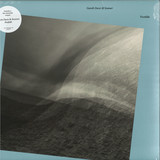
‘Rain, spit, ice, neon, plants, steam, mercury and soil. This is dream music categorised by a language of senses; visual, poetic, and abstract sound that draws on techno and dub ambient.
‘Somewhere between pastoral impressionism and cyber-noir, its surface evokes the tensions of a fluctuating, fizzing atmosphere, pictures emerging and dissolving in the mind’s eye. Thick layers of field recording flood tracks fabricated from erratic, oddly distanced rhythm.
‘The sensation whilst listening is not unlike hearing the world from a place within the body; swimming in the bloodstream, cutting through the turbulent landscape secure in a metal tube.
‘Or being over-exposed to lushly textured environments with the anatomy far receded; an out-of-body experience where subtler senses are heightened and the landscape begins to take on surreal qualities.’
quête:poet
Thousand Knives Of Ryuichi Sakamoto's Landmark First Solo Album From 1978 Issued On The Better Days Label And Featuring The Synth Classics "plastic Bamboo," "end Of Asia" & "thousand Knives" Is Reissued Outside Of Japan For The First Time In Decades.
Wewantsounds is proud to announce the release of Ryuichi Sakamoto's first solo album originally released in 1978 on the soughtafter Better Days label. Sakamoto was a member of Yellow Magic Orchestra at the time but the group hadn't released their first album yet. Featuring Sakamoto on a wide range of synthesizers and keyboards programmed by Hideki Matsutake, and accompanied by a few musicians including Haruomi Hosono and Pecker, "Thousand Knives" was a blueprint for the YMO sound and includes cult classics that were to become live favourites. Save for a small-scale release in 1982, this is the first time the album is being released on vinyl outside of Japan. Remastered from the original tapes by renowned producer and engineer Seigen Ono, the LP edition comes with original artwork including OBI and 4p insert with new introduction by Paul Bowler. 1978 was a key year for Japanese music. Haruomi Hosono, one of the country's most innovative musicians had just formed Yellow Magic Orchestra pursuing the sonic experimentation he had started with his solo album "Paraiso." The album, credited to "Harry Hosono and The Yellow Magic Band," had been recorded between December 77 and January 78 and featured both Ryuichi Sakamoto and Yukihiro Takahashi. Hosono quickly invited both musicians to form YMO but before the group could release their first album, Sakamoto entered the Nippon Columbia studios in April 1978 with a plan. Sakamoto had become an in-demand session musician after studying composition at the Tokyo University of Art and had played in many key albums of the time: Taeko Ohnuki's "Sunshower" and Tatsuro Yamashita "Spacy" to name just two famous albums. This led to an invitation by Hosono to feature on "Paraiso". A penchant for avant-garde and improvisation had gotten Sakamoto interested in Electronic Music early on and with “Thousand Knives”, he decided to get Hideki Matsutake on board as he had mastered the art of synth programming following a stint with Electronic Music pioneer Isao Tomita. “Thousand Knives” took several months to record as Sakamoto would be busy during the day with his session work and would only record at night. Named after Belgian-born poet Henri Michaux’s description of a mescaline experience, the album is a reflection on how synthesizer technology might come to change the face of music. The first side conceived as a long suite opens with the title track and a recitation of the Mao Zedong poem "Jinggang Mountain" filtered through a vocoder, before morphing into a mid-tempo synthpop instrumental. It is followed by "Island Of Woods", a ten minute track buzzing with insect-like synth sounds reminiscent of the tropical exotica of "Femme Fatale" on “Paraiso” (also featuring Sakamoto). Side one ends with "Grasshoppers," a beautiful acoustic piano melody underlined by a subtle synthesizer soundscape. Side two opens with "Das Neue Japanische Elektronische Volkslied," acknowledging the influence of the German sound spearheaded by Kraftwerk. The track features a mid-tempo metronomic beat skilfully intertwined with a Japanese folk sounding melody. The album ends with two catchy uptempo synthpop tunes in the form of "Plastic Bamboo" and "The End Of Asia," which both became staples of YMO’s and Sakamoto's live shows. Although "Thousand Knives" sold modestly upon release, it was hugely influential in setting the agenda for what was to follow. YMO's sound included various influences from its three members but there is no denying “Thousand Knives” paved the way for the group's Computer Music sound. Thousand Knives remains a fascinating insight into the making of a music revolution.
The two collaborators, known separately for contemporary electronic music & free clarinet experimentations team up to create the delirious trip, Footfalls.
Two scenes are presented here, seemingly taken from different sides of the same desolated seaside setting, loosly inspired by poet and novalist T.S Elliot and Samuel Becket. In Towards the Door, Gareth Davis´ bass clarinet breathes slow, wave-like tones that merge with the oft-rythmic electronic textures from his counterpart. A third of the way in, Robin Rimbaud´s synth erupts into a Blade Runner-esque epic harmonic section that disappears as suddenly as it arrives - leaving ripples of oscillation in its wake, slowly unfolding into the sound of waves, as it arrives back where it begun : as a full circle, drawn in echo´s of sound.
Smokefall begins with the words „Invisible choirs“, subtly spoken by a woman’s voice among a blurred distant conversation, as textural sound effects creep forwards to the point where a slow progressing but steady LFO rhythm enters. Water, metal & smoke are absorbed into a creeping tribal passage, acompanied by long clarinet tones. The piece expands further and further into a state of ecstatic harmonic noise that fulfills all parts of your body – if played loud. Both artists from here on move into full on crushing electronics, all while Rimbaud´s Kilpatrick Phenol synth drives the background with its pulses and repetative bassline. The piece has an ellipse like rotation that makes one feel a sort of blissful vertigo that reverberates in your mind after the piece has ended.
Footfalls is an euphoric trip from two artists that – although prolific - manages to arrive at the perfect meeting point to deliver two hard to shake pieces of dizzying electro-acoustic perfection.
An ode to the music of Zimbabwe past and future, representing the country’s two major cities - Bulawayo and Harare.
The Bulawayo side sees longtime township legends Bulawayo Kwela meet UK producer Danalogue (The Comet is Coming). Reverb-drenched drums and snatches of Penny whistle back the words of the poet Albert Nyathi for a leagues-deep dub Conference. “Nomalenga” stays true to the Township Kwela style that the group has been playing for over 30 years.
The Harare side sees David Tapfuma (longtime collaborator with Stella Chiweshe) deliver an ode to the ghettoes of the capital, accompanied by a solo mbira. Cape Town’s ESA delivers a subtle treatment of the original, drifting the mbira hook into 3am dancefloor territory on a cloud of synths…
Mit ihrem sechsten Album kehren die Casady-Schwestern Bianca und Sierra zum bewährten Erfolgsrezept
ihrer früheren Releases zurück. Im Gegensatz zu den mehr psychedelisch-elektronischen Erkundungen der
beiden letzten Veröffentlichungen "Tales Of A Grass Widow" (2013) und "Grey Oceans" (2010), streift
"Heartache City" wieder durch staubig-poetische Gefühlswelten längst vergangener Tage. Ihren Anfang
nahmen die zehn Tracks von "Heartache City" wie gehabt im südfranzösischen Landgut der Casadys, wo
sich die beiden Geschwister ein lauschiges Studio eingerichtet haben. Dort sammelten sie Ideen und
schrieben Songs, die sie bei Gelegenheit mit minimalem Equipment, antiken Instrumenten und Vintage-
Spielzeug vertonten und ganz nostalgisch mit einem alten 4-Spurgerät aufnahmen, nur zu zweit, rein
akustisch und ohne digitalen Firlefanz. So entstanden relativ reduzierte Songs, die ihren Weg letztlich in
Argentinien in die Händen ihres Produzenten Nicolas Kalwillwith, und um eine Prise Buenos Aires
angereichert, ihren krönenden Abschluss fanden.
“This album will be part of the everlasting impact the Tribe collective had on our culture, on our hope and possibilities.” - Herb Boyd
Strut and Art Yard present the first compilation bringing together the modern era recordings of Tribe, Detroit’s acclaimed independent jazz collective.
Tribe began as a musical ensemble in 1971 co-founded by Saxophonist Wendell Harrison and trombonist Phil Ranelin that soon expanded into a broad amalgam including a live collective and independent record label. Ignored by the mainstream, many African American jazz artists in Detroit and across the US began creating their own small imprints and Tribe emerged alongside other cultural entities to express selfdetermination goals in the city: saxophonist Ernie Rodgers with his sessions at Rapa House; John and Leni Sinclair’s Artist Workshop; Bruce Millan’s Repertory Theater; the Hastings Jazz Experience and the Strata Corporation led by Kenny Cox. Harrison’s ideas of independence, self-determination and education were central to the Tribe ethos: “I might be possessed with a drive to get the knowledge out,” explained Harrison, “because I see this as sustaining the future of the jazz diaspora, the jazz tradition.” Tribe album releases like Harrison’s ‘An Evening With The Devil’ (1972) and Harrison and Ranelin’s ‘A Message From The Tribe’ (1973) became early ‘70s milestones in Detroit jazz.
In 1977, Harrison teamed up with pianist/composer Harold McKinney to form Rebirth Inc., aided by Detroit cultural warrior John Sinclair, a continuation of the Tribe community ethos. Musically, it formed a link with radio station WDET and began an outreach program to teach children and to publish Harrison’s jazz instruction books. Harrison continue to record extensively as a leader with his own labels, WenHa and Tribe, documenting the collective through sessions led by Phil Ranelin, Harold McKinney, Pamela Wise and more.
The ‘Hometown’ compilation places the spotlight on this later era of Tribe and Rebirth Inc., with rare and previously unreleased recordings from Harrison’s WenHa / Rebirth Studios and the SereNgeti Gallery And Cultural Center. Among many highlights, Harold McKinney and his “McKinfolk” family of musicians contribute the pulsing ‘Wide And Blue’ and dance celebration ‘Juba’; Phil Ranelin re-works his classic ‘He The One We All Knew’; Poet Mbiyu Chui (Williams Moore), pianist Pamela Wise and percussionist Djallo Djakate spark on the uncompromising ‘Ode To Black Mothers’ and the rallying cry of ‘Marcus Garvey’: “If we ever get together we will astound the world.” Harrison himself evokes the power and majesty of juju on ‘Conjure Man’.
‘Hometown’ comes as a 2LP gatefold and 1CD digipak fully remastered by Technology Works from the original session recordings. Both formats include exclusive sleeve notes by journalist Herb Boyd with rare photos from Wendell Harrison’s personal archive.
The Vibe Drops (Emcee G Roc Gayle & Moar) presents Higher Frequency vinyl LP. The album features guest vocals from Rita J and Finsta (Finsta Bundy). Also live instrumentation from Remi Schnell on guitar and Jean Louis Potin on the Flute. The Vibe Drops explore with various sound vibrations, live instrumentation, turntablism, records, sampling and advance lyrical content: rhymes, word-play and poetry, blended to perfection with the beats. The Vibe Drops drops first musical offering Higher Frequency
will have the listener fulfilled, hoping the message comes across and resonates to move, elevate, in order to cope and defeat the everyday stressors of life. Higher Frequency delivers boom bap, jazz hop and soulful Hip-Hop stimulation for the mind, body and soul.
Black Truffle invite you to an evening of drunken revelry in the Batcave! After a chance meeting at a local supermarket in Poughkeepsie, New York, Joe McPhee and Graham Lambkin have performed together as a duo extensively in recent years, in addition to their joint work excavating some of the wildest tapes from McPhee’s archive for Lambkin’s now defunct Kye label. Live in the Batcave documents an evening the two friends spent together in the company of Joe’s brother Charlie and Lambkin’s son Oliver in November 2017 at Charlie’s house in Poughkeepsie. The LP captures seven increasingly drunken snapshots of the four shooting the breeze, playing flutes and whistles, drumming on anything at hand, and playing records.
Edited together in Lambkin’s distinctive style of lo-fi domestic tape collage, the multiple simultaneous cassette recordings of the shenanigans abruptly cut in and out and fall out of sync, creating disorientating, woozy echoes. Mics are bumped, stories are told, drinks are poured, text messages arrive, and AACM-esque flute jams are interrupted by violent bursts of laughter and wet-mouthed sound poetry. All the while, classic soul records play, initially in the background, but coming increasingly to the fore until the record culminates in a strangely moving free-associative singalong. Presented in a gatefold sleeve with extensive photographic documentation and liner notes from Joe McPhee, Live in the Batcave is a truly unique document that exists somewhere between free jazz, audio verité, performance art, and everyday life. File next to your copy of Das Kümmerling Trio. ‘Our music was born from the sounds of jazz, funk, soul, noise … sounds with no other reason so exist, except because they did, sounds which occurred like putting one step in front of the other to see if the way was clear to take the next step. The plan was, there is no plan, just start at the beginning, end at the end and party like it’s 1999’ – Joe McPhee
After their brilliant label debut with "Grow Yes Yes" in 2017, Professor Wouassa now returns with their brand new third album on Matasuna Records.
The Swiss band's career spans more than 15 years, where they have played at many major festivals in Switzerland and abroad. The 11 members of the band have perfected their musical qualities over the years and captivate as a well-rehearsed live band with their energetic and rousing shows. So it isn't surprising that they supported concerts of Afrobeat legends like Ebo Taylor or Seun 'Anikulapo' Kuti.
Their still exuberant creativity can also be heard on their new work entitled Yobale Ma!, which in Wolof's language can be translated as "take me" or "get me". With their new album they take the listener to their musical island to explore the borders of Afrobeat and beyond.
The song Fallou Fall opens the album in a jazzy & big band way, and quickly switches to an afrobeat theme and solo. In the middle the song breaks into an Afro-style pattern, which is performed by Thaïs Diarra in Bambara (Malian dialect) in a traditional Mandingo way of singing. The track ends with a Sabar percussion part - a traditional Senegalese drum.
Yobale Ma is the single of the album, which is inspired by the funky guitars of a Nile Rodger and some typical fast Ghanaian highlife of Ebo Taylor.
The track Thiaroye Gare is about the Tirailleurs sénégalais, a unit of the French army who fought for France in WWII. After returning from captivity they were taken in Camp Thiaroye northeast of Dakar. Corrupt and racist colonial officials led to a revolt, which was bloodily suppressed by French troops.
From the musical point of view the song shows a link between afrobeat and funky James Brown rhythms, which ends in a fast afrobeat style with baritone saxophone and trombone solos.
Beguente Len in the middle of the album is a kind of interlude that represents Wouassa's own way of interpreting traditional afro beats and rhythms.
With the two songs Djongoma and Sama Yone Professor Wouassa leaves his usual afrobeat path to explore the "sound of the islands" (Mauritius, La Réunion, Cape Verde or Cuba) and blend it with their personal and unmistakable style.
With Iba Niawoulo the professors investigate a kind of Ghanaian highlife medium tempo with a chord progression from Serge Gainsbourg's song "Initial BB". The tracks change in the middle to a fast Rhythm'n'Blues beat, which is accompanied by afro guitars. The singer "Mamadou Diagne" talks about his alter ego in Dakar.
In Djougoudja typical afro rhythms are mixed with pure Ethiopian 70's brass sounds and funk guitars. As heard several times in other songs, the track breaks into a very personal and hard to describe Wouassa beat in it's middle. At this time, Mamadou Diagne recites a big slam about the spiritual ideas and the history of the famous senegalese theologian and poet Serigne Touba (Cheikh Ahmadou Bamba). Under his flow some sabar percussions (typical senegalese percussions) build a strong and intense musical rug.
Featuring work by a group of 7 international artists, poets, scientists and designers, this record offers a look at the concept of Transparency from a variety of cultural, creative and scientific perspectives. In conversation with Research of Waves curatorial team, 6 of the contributors synthesised their interpretation of the theme within a 5 minute long audio piece, many of them working within the medium for the first time. The front and back cover of the album are designed by graphic designer and digital artist Galina Kruzhilina, creating a visual response to the 6 sound pieces.
’La Macarena’ is one of the brightest lights in Barcelona’s glimmering nightlife, and a landmark of the Spanish techno scene. 17 years in daily business brought thousands of electronic artists behind the decks and countless dancers and electronic music lovers on the floor of the legendary micro club. The new music label ’Macarena Musica’ features musical contributions by ’Macerena’ resident artists and special guests - all of them share a big love for ’La Macarena’ and Barcelona. The passionate crafted releases come as limited vinyl-editions and extended digital packages, complete with expressive black-and-white artworks, capturing the atmosphere of the club and the streets of Barna.
For the debut release, ’Macarena’ longterm-resident Patrick Zigon teamed up with his friend Paulo Olarte for ’Belleza Tropical’ - a declaration of love to the club and the heart warming vibe of Barcelona, which is strongly coloured by the latin way of life. It’s not surprising at all that this beautiful inspiration led Patrick Zigon to a tropical excursion into the deep cosmos of latin-infused Techno and House music. As in many previous collaborations, Paulo Olarte refines the productions of the Berlin-based producer with his naughty vocals, resulting in a poetic and love-driven statement for the latin familia. ’Belleza Tropical’ is the first glimpse into Zigon’s third studio album ’Between The Lines’, coming up in summer on his ’Traumraum’ imprint. Beside the Original and Instrumental versions, the single features remixes by the Spanish master of hypnotic techno, señor Eduardo De La Calle, Paulo Olarte and Blanali (digital only). Desde Barcelona con amor!
And we used to be such a nice record label .... BKV 026 swells up from the Bristol swamp in the forms of post-human industrial duo Bad Tracking. Here they have assembled variously, one spacious black metal intro (with original screams), an industrial-pop earworm not unlike Depeche Mode imploding in a feedback tunnel, two itch-tek dancefloor riddims namecheking local venue bans and I just don't know what to call 'Wellspring' really, the end of days? Well you had it coming anyway…..
Known in town for upsetting local MPs and lisencees with their live performances as 'naked technology sex slaves' think cassette-induced self harm, total nudity, blood from ears, Bad Tracking are the most visceral thing we've seen in this new wave of Avon experimental - a breath of life into the longstanding tradition of industrial performance art (and an antidote to idle BR club culture). Lyrically touching on censorship and tech // sonically they use feedback as a punishing instrument of anguish and expression.Widower EPis truly chewed nail sonics, more human than all your noise records, genuinely more scary than your edgelord power electronics nonsense, more forward than all yer government funded experimental think-records.
You may remember Bad Tracking from their remix of 90s soundsystem legends Bush Chemists on Bokeh last year. It sounded like they played the original through 1,000 knackered tape decks and added one kick drum. It was total sacrilege and we loved it. Bad Tracking is Gordon Apps aka reputed jungle/drumfunk producer Relapse (who also moonlights as Avon Terror Corp's Olivia Mutant John, buy his shit) and poet / VHS video artist Max Kelan (who has lent his visuals to MVs from Hodge, The Pop Group, OM Unit, Young Echo to name only 4). They've released on tRewdindForward family labels like Mechanical Reproductions and champions of bad taste and good music - Fuckpunk.
Director Amanda Kramer’s prompts for composer Ben Babbitt’s soundtrack to her enigmatic film Paris Window read like magnetic fridge poetry – “warped ambient bumper muzak tension” – but the results skew closer to some hypnagogic contemporary noir: lulling, low-lit, and laced with lingering dread. Electronics, strings, and percussion swoon and seethe in heady mirages of dreams and delirium, romance and menace. The narrative it accompanies is equally opaque and out of time: two eccentric siblings psychologically unravel through divergent fixations, one obsessed with the hypnotic infomercials of a mysterious self-help institute while the other falls in love with an ambiguous doppelganger.
Babbitt’s background scoring experiential video games (Kentucky Route Zero) and collaborating with exploratory songwriters (Angel Olsen, Weyes Blood, Eartheater) is evident in his versatility and finesse, flowing fluidly between minimal and maximal modes. Like all dynamic film music, the pieces weave a story of their own. Serene synthetic swells decay into murmuring television static and eerie vocal fragments; close-mic’d drones turn acidic then claustrophobic, mirroring sleep paralysis transformed into panic. Babbitt builds a window into a surreal world, seen through shadows and smeared, street-lit glass.
TROY TOWN are back with their 3rd release and itʼs another dance floor focussed EP from a South East London mainstay. El Prevost has been a fixture of the underground London dance music scene for nearly 20 years - his first label, Linx Recordings, was at the forefront of the garage and grime crossover at the turn of the millennium signing early tracks by Kano, Wiley and Pay As U Go Cartel. However, over the past decade his productions in the world of house, garage and techno have brought him widespread respect amongst discerning A&Rʼs and DJs such as Third Ear Recordings, Patrice Scott and Ricardo Villalobos whilst building his own label and party series ‘No Speakersʼ. This EP is unmistakably indebted to the sounds of London but equally doesnʼt sound like anyone else out there at the moment. ‘A Little Politicalʼ, dripping in dub effects and toughened up with the immense delivery of poet Kyla Jenee Lacey, is full throttle and combines consciousness with a determination to fill dance floors. The broken beat influence of Ladbroke Grove and the Co-Op collective is given a hefty rejuvenation on ‘Nu Jazzʼ. ‘Wheelʼ and ‘Acid Tonerʼ are heads-down, deep and dubby. Both tracks that would ramp up the temperature in dark basements like Plastic People circa 2011.
lack Truffle present In Real Life, the latest in a flurry of releases from Berlin-based guitarist and composer Julia Reidy. Having drawn acclaim for solo performances on 12-string acoustic guitar that bridge microtonality, ‘American primitive’ stylings and classic minimalism, Reidy’s recent releases have utilised an increasingly broad sonic palette, fleshing out guitar-based composition with electronics, field recordings, and – most strikingly – heavily auto-tuned vocals. On In Real Life, Reidy pushes one step further, crafting an epic LP-length suite that moves from abstracted song to lush electronics and explorations in contemporary musique concrète. Beginning with a passage of eerie electronics and creaking percussive interjections, Reidy’s heavily auto-tuned voice quickly takes centre stage. Surrounded by explosions of electric guitar and synthesised arpeggios, the auto-tuned voice delivers a melancholic ode, bringing together poetic images to reflect on the instability of experience and mutability of identity in a contemporary world saturated by digital technology. This concern with the unsettled relationship between the physical and digital is reflected musically by the constantly shifts in emphasis between Reidy’s physically demanding guitar-picking and the various forms of synthesis deployed. Similarly, the dynamic imagery of cutting, shattering, and ‘racing streams’ present in Reidy’s lyrics also serves to characterise the structure of In Real Life, which ceaselessly shifts between distinct episodes. The song-based opening, long sequences of frenetic 12-string guitar shadowed and eventually overtaken by synth tones, passages of delicate chiming harmonics, electro-acoustic cut-ups – each flows seamlessly into the next, often recurring throughout the record’s duration, which lingers over interstitial moments between these episodes.
Mixed and mastered by Joe Talia at Good Mixture, Tokyo. Vinyl cut at 45rpm for maximum fidelity by Rashad Becker at D&M, Berlin. Artwork by Suze Whaites. LP desgn by Lasse Marhaug.
Coming off last year's acclaimed electronic soul release fleet.magic on Andrew Morgan's PPU Records, Baskets of Gold highlights producer fleet.dreams' percussive exchange into the world of dance.
The nuanced artist now calls Detroit home, and the latest work evokes the spirit of the regions deep musical history. It's a little later in the night, still soulful, but the palette has shifted.
After locating the errant poet àj magic wandering the high deserts of the southern US, the longtime collaborator arrived to narrate the journey. The result is an album that sparkles.
Jatinder Singh Durhailay and David Edren released Tea Notes as a cassette back in April of 2018. London-based Jatinder Singh Durhailay is a painter and student of Indian Classical music. He has trained in both the sitar and the Hindi singing technique, Dhrupad. He also plays two traditional Sikh instruments; the bowed, stringed Dilruba and Taus. Poetic Pastel Press issued his solo debut, The Last Ballad Of Mardana, in 2017. David Edren`s expertise lies with machines and modular synthesis. His Kosmische and New Age-Inspired electronics have featured on numerous cassettes, and compilations, produced for imprints from the current Belgian underground, such as Jj Funhouse, Social Harmony, and Ultra Eczema. These recordings appearing, since the turn of the millennium, either under his own name, or the moniker DSR Lines. Jatinder and David’s collaboration, Tea Notes, is a celebration, a meditation, on both the beverage, and the communal time shared imbibing. The coming together to partake in its ritual. Each of the six tracks represents a different infusion. The opening piece is a tribute to semi-oxidised Oolong, from China`s Wuyi Mountains, with hammered dulcimer-like glissando. Gongs shimmering, gently crashing, as if signaling a change in the weather. A calm of thin, stretched synths and Ai angels introduces Tulsi from India. The Holy Basil of Hinduism, used in the worship of Vishnu, Krishna, and Rama. A traditional herb of Ayurveda and Siddha medicine. Automated arpeggiated sequences raising a vibrating wall of hallucinatory sound. Pairing swooning strings with a racing robot heart. Ceylon is a modern twist on the classical raga. Serving to tell the story of a tea smuggled into Sri Lanka in the 19th century. Plants stolen from South West China, where the brew had been enjoyed since the days of the Shang Dynasty (1766 to 1122 BC). The contraband founding fresh industry in its new home when the indigenous coffee crops failed. Muted organ and sleepy, treated sine wave microtones describe Kava, the Polynesian fireweed root, whose extract serves as both sedative and euphoriant.Shincha are the first young leaves of the season. Picked in Southern Japan and steamed to prevent oxidization, retain their flavour and green / gold colour. Their musical counterpart finds Edren establishing an ecclesiastical drone, while Durhailay`s strings chart an ancient romantic ache. Sonic stars shine. Singing out to the infinite, the universe, before dissolving into knots of Radiophonic Workshop noise.Melodies treated with subtle sustain and delay denote Pu-Ehr, from the Yunnan province. The only truly fermented black tea - made distinctive by the action of bacteria, moulds, and yeasts. Its musical themes hovering in the vapour trails, the atmospheres, they themselves create. Spiraling, soaring, reaching for the heavens, while pretty music box glitches - tiny chimes turned in on themselves. Catching, reflecting, like light at play on fresh running water. (words: Robert Harris)
- A1: Anushka Chkheidze - The Old Man And The Sea
- A2: Stia - One
- A3: Anushka Chkheidze - Only Notes
- A4: Anushka Chkheidze - +995
- B1: Katie Eristavi - Monument (Feat Dea Bezhuashvili)
- B2: Anushka Chkheidze - Sleepers, Walkers, Scientists
- B3: Eto Gelashvili - Rivers
- B4: Tamta Gwarliani - Thoughts
- C1: Ani Zakareishvili - 5 Margarets
- C2: N Chavchavadze - Queen Size
- D1: Dea Bezhuashvili - Snow Queen
- D2: Tamta Gwarliani - Failed To Open
- D3: Natalie Beridze - Girl Galaxy
SLEEPERS POETS SCIENTISTS is the compilation of 9 female Georgian artists. It showcases works by Natalie Beridze's students at the CES (Creative Education Studio), where Beridze teaches song-writing and music production. Natalie Beridze is an international well-established artist with releases on Max Ernst, Laboratory Instinct, and Monika Enterprise, through live performances, theatre and movie soundtrack works, as a member of artists collective Goslab, and collaborations with Ryuichi Sakamoto, Thomas Brinkmann, Gudrun Gut, Nikakoi – to name but a few. "This compilation is the backbone of what I try to persuade as a lecturer and as a person, who endlessly loves the music-making process. "Sleepers, Poets, Scientists " is the embodiment of intelligent, benevolent, dedicated, talented and beautiful women, who I believe have a bright future as female composers in Georgia and this album is a significant step towards it."
The retro cover is a nod to the famous group shot from the 1927 Solvay conference, which brought together physicists like Albert Einstein, Erwin Schrödinger, Marie Curie, and others. With this in mind, the name Sleepers, Poets, Scientists rings like a call to action for today's brightest minds, to wake up and save our chaotic, troubled world.
Tenesha the Wordsmith, who came to the fore on On The Corner's 2018 release 'Black Noise 2084', has delivered a hard-cutting, gut-wrenching, and extremely moving spoken word album produced by Khalab that brings together different lines of black music - folkloric, jazz, and electronic dance - into an afro-futurist narrative with thunderous results.
Originally from Oakland, California, "a place where revolutionaries are born, Tenesha the Wordsmith originally began to fuse hip hop and poetry while living in Albany, New York, where she created her first collection 'Body Of Work'. Her early influences have returned with features from beatboxers and vocalists that give the album a distinctly urban hip hop vibe.
Inner atmos and next time – rain into rivers, rivers to rain.
Sequence is subjective, irrelevant – it’s where we stand. Out of order, we dissolve and reform, coming together to come undone. There is no first, no now, no next – just precision points in the wide deep sky.
Another bang, another – it’s the reading which is important. Repeating in parallel, the natural loop is healing; repair, resonance, return. We live in a fragment; soft light and clouds drift like dreams into memory, showing movement in the mirror.
“Here the performer becomes free like the playful clouds high above the world of pain, suffering, happiness, ecstasy, disappointment, greed and ambition of human life”
In this present, we are touched to have unreleased business from Memphis. In unlocking the stoic DAT tapes we open a direct channel from 1993 to this now; three tracks which are meditative, essential rhythm with direct, organic charge. It’s Dream Night Dance Music and Osram 509, with RHK, En-Trance, and Microgravity.
More poetry in remembering our first release was also Memphis. Big complex loops and inner paths. Who’s been here before? All of us, one of us, none of us.