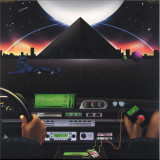
“To Model Phenomena” is a scientific concept that describes a computer’s ability to emulate, regardless of whether the emulated phenomenon exists outside its circuits or is purely imaginary.
Modeling communication platforms enables us to interact with each other or with computers. Modeling behavior patterns, nuclear fusion, or, as in the case of scientists from the Human Brain Project, a virtual human brain, allows us to simulate cognitive processes such as perception, memory, and decision-making, providing insight into the nature of human thought.
In this record, the phenomena modeled are those moments when the mind leaps into the void, confronting new paradigms. For instance, when science, art, or mass media introduces new information, propelling us into a transformed reality.
From this starting point, European musician Shifting Heigo maps a path between realities, evolving his narrative as his music unfolds. This work draws inspiration from Curtis Roads (vice chair of Media Arts and Technology at the UCSB) and his studies on granular synthesis and time scales, where each track on To Model Phenomena evokes a sense of movement, where nothing begins or ends in quite the same way.
A musician with strong ties to new technologies, Shifting Heigo has collaborated with the University of Málaga (Spain) in its PH Degree Program in video game design, composing interactive music, while also singing as part of the tenor section in the Qatar Concert Choir, affiliated with the Qatar Philharmonic Orchestra.
Currently based in Abu Dhabi, he is now part of a circle of electronic musicians surrounding the New York University Abu Dhabi, an institution that supports electronic and experimental music across the Middle East.
To Model Phenomena is the result of his search for a unique voice as a musician, where ternary rhythms, noise, and silence shape the narrative. This is a discourse from a musician’s perspective on the changes that science, technology, art, and the rapid flow of information demand of us. A direct gaze into the fear of change.
Search:point music
When SW. AKA, Stefan Wust, first established SUED in 2011, their compelling, cosmic and anonymous material struck a rare chord, emanating far beyond the freeform Berlin underground in which it was written. Unknowingly, Los Angelean Oliver Bristow had
established a parallel musical universe, founding the hyper-specific label Acid Test, inviting pioneering artists such as Donato Dozzy, Tin Man and Pepe Bradock to indulge in glorious interpretations of 303 control. Without compromise, these were records that quietly
reinvigorated electronic music.
Some years later, a new label, SWOB, unites Wust and Bristow in a very different landscape. And while it would be easy to transform the purity and integrity of this special alchemy into something like nostalgia, yearning for an alternative culture before
influencers and against algorithms, SWOB endeavours to find inspiration in arguably tougher truths.
“By the mid-90s, the techno scene had already reached a breaking point”, recalls Wust.
“Today, the scene is so highly professionalized that it barely resembles what was once called the "underground. But "underground" was never more than the simple reality that music circulated on cassettes among friends or that dubplates were played at illegal
parties... The consequence of today’s professionalization is the death of the original movement.”
Still, no one can kill an idea. Here, inspired by the “Outside Tekno” or “Outkast Techno” that emerged to subvert even back in the day, SWOB are proud to introduce the tekkNOthing trilogy, a new project from SW. beginning on cassette and culminating later
on vinyl. Some years in development, tekkNOthing first began to take shape during the 2020 global pandemic, when ‘the underground’ quickly began to mean something radically different once again.
“I noticed how everything was accelerating while simultaneously spinning in circles – existing in a kind of creative limbo on a global scale”, recalls Wust. “And that’s where true freedom lies: for artists – in any sense – to consciously engage with this necessity. In
other words, irrationality or nonsense can eventually generate meaning.” While hardly capitulating to the contemporary hammering of techno’s most recent developments, tekkNOthing’s first chapter quickly establishes a frenetic pace; tracks like ‘nuclearFALLoutX’ and ‘paslolESmess’ interlock and unfold at a tempo removed from that typically associated with SW. while ‘euroBSS’ and ‘viscousHEAT’ successfully experiment with a more guttural palette, veering far into a rejuvenating and previously uncharted leftfield.
A resolutely human endeavour, the music of SW. is nonetheless written and recorded in the looming shadow of AI, whose free-form adoption of pop culture, hip-hop and techno reminds Wust of “when photography emerged in the 19th century... painting was no
longer bound to naturalism. Similarly, music today is no longer bound to fixed standards – through AI, it can become truly free.”
If not in competition, than taking inspiration from this landscape of new opportunity, tekkNOthing diversifies further with eight unpredictable tracks across part II, taking in stuttering machine-funk on ‘crAMPDUNK’, a freeform organ jam via ‘sonicENdo’ and the
inexplicable piston-percussive, post-punk exotica heard on ‘poorTENOOR#a#01’ DJs with dual cassette decks skills might even find function in the more overtly floor-focused ‘DU ¨NEhowSE#1takeÄ’ or ‘lookLOOK’.
The times may have changed, but the promise remains simple; more music, more freedom.
For customers of the Rush Hour shop, this item ships for its may 23rd release date. Any items ordered along with this will ship then also
After five years spent largely confined to the United States, Ron Trent is set to return to global touring in 2025. To mark the occasion, he’s partnered with Rush Hour to release Lift Off, a brand-new album of music recorded at different points over the last decade.
Arriving almost 35 years since he wowed the world with his game-changing debut, the Afterlife EP, Lift Off was inspired by Trent’s desire to ‘let the imagination speak for itself’ while exploring the diverse influences that have shaped his unique musical perspective. A departure from his previous album, 2022’s downtempo masterpiece as Warm, What Do The Stars Say To You, the 10-track set features a mixture of epic instrumentals, inspired collaborations and vocal cuts whose music was written with certain singers in mind.
While it features music that ripples with the experienced producer’s familiar aural trademarks – rich rhythms, warm chords, impeccable instrumentation, inspired arrangements, and lashings of heady hand percussion – it also consciously explores a variety of sounds and tempos, in the process blurring the lines between dance music’s past, present and future. It’s a vision, in his words, of what dance music can become.
For proof, check the five impeccable cuts on part one. There’s the tactile, Wally Badarou-inspired wonder ‘Hot Ice’, the mind-soothing chords, lilting synth-strings and samba-soaked percussion of ‘Woman of Color’, the warming deep house jazziness of ‘Jazz Funk’ and the restless, far-sighted brilliance of ‘Sexstrology’, where relaxed electric piano solos dance atop an infectious, locked-in dancefloor groove.
Best of all though is Leroy Burgess collaboration ‘Let Me See You Shining’ – an inspired musical meeting of minds that cannily fuses Trent’s signature deep house sound with the soulful, vocal-driven brilliance of the New Yorker’s iconic boogie-era work. Even by the two artists’ dizzyingly high standards, it’s a very special song.
In 2020, when I had just started Future Retro London & was messaging producers I wanted to work with on tracks for the Meeting Of The Minds releases, I reached out to Worldwide Epidemic and we made "Losing Control" on Vol. 2 of Meeting Of The Minds, one of my favourites of the series.
I was quite keen on getting him back on the label at some point in the future & I can't remember exactly the chain of events that transpired during then and now (I'm sure I told him at some point to work on some music for me but I honestly can't remember how or when I did this, sorry Dan!) but around the start of 2023, he sent me Bells Of Arptazia & I knew it was perfect for the label.
Without a doubt, it's my favourite tune of his and to be honest, I'm actually a bit jealous of how lush and intricate that intro is and when I was in New Zealand on tour in March this year, he showed me the project file for it and the amount of detail that went into this tune, I'm really glad that he was willing to let me release this tune on Future Retro London.
To accompany his tune, there's remixes from Kloke, me & Dust-e-1, all taking the original into different directions to make for hopefully a well rounded release, representing a variety of styles & flavours.
Thanks to Liquid Silk for his fantastic track, to Kloke & Dust-e-1 for their remix work & to James Lacey (aka Pointless Illustrations) for the artwork.
- A1: Winter Wonderland (Feat Kansas Smitty's) (2 40)
- A2: I Believe In Father Christmas (3 51)
- A3: Man With The Bag (Feat Kansas Smitty's) (2 54)
- A4: Christmas Don't Let Me Down (3 21)
- A5: Sleigh Ride (Feat Kansas Smitty's) (2 24)
- A6: Amazing Grace (Feat The Vernon Spring) (2 53)
- B1: This Winter (Feat Lady Blackbird & Kansas Smitty's) (2 54)
- B2: Silent Night (3 50)
- B3: Jingle Bells (Feat Kansas Smitty's) (2 55)
- B4: Frosty The Snowman (Feat Kansas Smitty's) (2 09)
- B5: Have Yourself A Merry Little Christmas (5 34)
- B6: God Rest Ye Merry Gentlemen (Feat Kansas Smitty's) (2 15)
- B7: Let No Walls Divide (3 21)
- C1: It's Christmas (3 12)
- C2: Beautiful, Together (3 26)
- C3: Hang Your Lights (4 57)
- C4: The Jolly Fat Man (3 05)
- C5: The Pianoman At Christmas (4 27)
- D1: Turn On The Lights (4 16)
- D2: So Many Santas (3 28)
- D3: Christmas Never Gets Old (2 43)
- D4: How Do You Fly (5 55)
- D5: Christmas Caught Me Crying (3 17)
Multi platinum-selling musician and multi-instrumentalist Jamie Cullum today announces The Pianoman At Christmas - The Complete Edition. Due for release on 19th November via Island Records. The deluxe album completes last year’s critically acclaimed hit album The Pianoman At Christmas Part 1, with its Second Part - featuring 11 covers of classic Christmas songs, as well as two original songs, including lead single ‘Christmas Don’t Let Me Down’, out now.
Drawing from the past and inspired by the present, The Pianoman At Christmas - The Complete Edition sees Jamie team up with London jazz innovators Kansas Smitty’s, as well as composer and producer The Vernon Spring and acclaimed LA-based jazz singer Lady Blackbird to complete a piece of work that is imbued with seasonal sophistication. Alongside his two original tracks, Jamie breathes new life into classics such as ‘Winter Wonderland’, ‘Silent Night’ and ‘Frosty The Snowman’, ranging from ‘Amazing Grace’ to ‘Man With The Bag’ and ‘Sleigh Ride’. The Complete Edition will be released on double CD and double black vinyl formats, alongside a limited run of 180G Heavyweight coloured vinyl in red and gold.
Speaking on the release, Jamie said -
“I had a huge amount of fun creating part two of TPAC. Recorded live, all in the room together - it’s the party after the big show, with friends, drinks and some of the finest musicians on planet earth.”
Released almost a year to the day before The Complete Edition is due out, The Pianoman At Christmas featured 11 original songs played by 57 of Britain’s best musicians, recorded in Abbey Road’s famous Studio 2 and produced by Greg Wells whose The Greatest Showman soundtrack spent 28 weeks at number 1. The album sold over 37,000 copies, spending 6 weeks in the album chart and peaking at number 11. In December Jamie broke the Guinness World Record for the largest music lesson ever, when he held a virtual piano lesson for 2,282 people, teaching them the carol ‘In The Bleak Midwinter’ with special guests Robbie Williams, Sigrid and Dodie.
With 10 million album sales and over 890 million streams to date, Jamie is a celebrated musician the world over with loyal fans in every corner of the globe. With a career spanning over 20 years, his legendary live shows have seen him perform and work alongside artists as diverse as Herbie Hancock, Pharrell Williams, Kendrick Lamar and IDLES - Jamie writing on the latter’s album Ultra Mono. The success of Jamie’s major label breakthrough, Twentysomething in 2003 and its follow up Catching Tales saw him nominated for a BRIT, Grammy and numerous other awards around the world. In 2020 he won an Ivor Novello Award for his track ‘Age of Anxiety’, taken from his acclaimed 9th studio album Taller. In addition to his enduringly successful recording career, Jamie has also established himself as a multi-award winning music broadcaster; his BBC Radio 2 show celebrated its 11th year on air this year.
With her debut album Black Acid Soul earning critical praise, Lady Blackbird is a revelatory new talent with music that transcends the jazz scene through which the LA-based artist is rooted. Reflecting influences as varied as Billie Holiday, Gladys Knight, Tina Turner and Chaka Khan, with critics drawing comparisons to Adele, Amy and Celeste, Lady Blackbird’s distinct and beguiling voice is not one to be missed.
UK band Kansas Smitty’s have developed a musical voice wholly unique from what’s happening around them. They are led by band leader and producer Giacomo Smith who's cinematic compositions feature on their releases, most recently 2021's acclaimed Things Happened Here for Berlin based label !K7. In 2015 they launched their own east London venue and bar, of the same name, which became one of the conception points for the current UK jazz boom.
Londoner Sam Beste aka The Vernon Spring is a polymath in music who has production, writing and performance credits as eclectic as Amy Winehouse, Matthew Herbert, Kano, Joy Crookes, Beth Orton, Blood Orange, Gabriels and MF DOOM. Since 2019 he has been making waves with solo project The Vernon Spring, which foregrounds his rare capacity to hold sophistication and simplicity in the same hands through highly intimate muted-piano compositions and improvisations.
Kohei Matsunaga, a musician and illustrator born in Osaka in 1978, started drawing at an early age and went on to study architecture at university. He has been actively making music since 1992, with notable releases on labels such as Raster Noton, Wordsound, Mille Plateaux, PAN and Skam Records. Kohei has collaborated with many artists, including Mika Vainio, Sensational from the Jungle Brothers, Sean Booth from Autechre, Conrad Schnitzler, Merzbow, Asmus Tietchens and many more.
Written & Produced: Kohei Matsunaga
Marie-Pierre Rixain and David Fenech form an unexpected and captivating duo, pushing the boundaries of alternative music. Together, they embark on an unclassifiable sonic journey, blending industrial downtempo, steady kicks, cold percussion, field recordings, and electric guitar feedback. Their music, often dark, carries flashes of warmth inspired by British dub—like an imaginary collaboration between The Bug and This Heat. At times, it echoes the world of La Perversita by Hector Zazou & Co.
Their debut album, Insane Ghosts, due out in spring 2025 on the Parisian label Hublotone, was recorded in 2024 in the intimate privacy of the bedroom. Mixed by David Fenech, it also benefits from the participation of Alexandre Berly (La Mverte) on the track ‘Toi en Moi’, adding a sub and experimental touch. The mastering was handled by the legendary Noel Summerville, whose sonic signature graces iconic albums by The Clash, My Bloody Valentine, Kraftwerk, Aphex Twin, and Nick Cave and the Bad Seeds.
The album cover features a striking work by French photographer and filmmaker Antoine d’Agata (Magnum Photos). His poetic and abstract image adds another layer to Insane Ghosts, a project already shaping up to be a must-have for fans of introspective, dark and cold music. Like if Lost in Highway from David Lynch had a new soundtrack.
The indominable Russell Haswell returns! He's a restlessly forward-thinking, multi-disciplinary artist, performer and curator who calls Diagonal Records his home. His past collaborators include Aphex Twin, Gescom, Florian Hecker and Merzbrow. "DeepTime" is Russell's latest LP for the label following on from 2023's 'Reality Therapy'. Whilst "Reality Therapy" was an introverted affair, "DeepTime" is brimming with confidence and aimed squarely at the dance floor.
Russell's club friendly turns are resolutelyprogressivist. Whilst being informed by the works of Claude Young and Jeff Mills, his music feels like it was made in another dimension altogether. Title track, "DeepTime", "Unconformity" and "Atropine" all prove the point. It's techno but it's much more besides.
"Acid Floresta" is the result of a process of sonic recognition and translation. A term that has taken shape over the past few years to name a search that, in reality, began more than a decade ago: the intersection between foreign rhythms and the music that inhabits the streets, with its social dynamics and its irreducible vitality.
This album is born from the observation and listening of the everyday sounds that shape the sonic identity of the neighborhood: the corner store, the metro, the billiard hall, the street corner. Spaces where music is not a choice but a constant pulse of life. The percussion of the street, the echo of a distant radio, the spontaneous phrasing of a conversation—these become raw material. From there, the process moves to the studio, where bass, synthesizers, drum machines, and samplers serve as tools of translation: what begins as a documentation of reality transforms into a musical interpretation.
At this point, a tension emerges between what is learned and what is felt. For years, tropical music and vallenato were part of a sonic landscape that coexisted with external influences, generating both distance and affinity. But within that push and pull—between the familiar and the unknown—a common thread was revealed: sabor. Not as a genre, but as an essence, a vital and irreplace able force.
"Acid Floresta" is structured in three and the performative stage, where music returns to the streets, closing the cycle. It is in this final moment that its true nature emerges: in the shared vibration, in danceability, in what connects beyond geography and context.
The album proposes a dialogue between intimacy and collective experimentation, between latineo and electronic music, between the raw and the processed. A space where the music of the streets and the music of the floresta converge to create a new sonic memory.
The first official reissue of Dorothy Carter"s folk-music exegesis comes 46 years after its original release, 20 years after Dorothy passed, and 11 years before the centennial of her birth. Yet it seems right on time for a new celebration of her music. Appalachian folk tunes, old and ancient psalms and hymns, Scottish, Irish, French and Israeli melodies, and original tunes flow together effortlessly in hypnotic gardens of eternal world musics. A highly energized, alternately meditative and proselytic recital whose vitality has only burgeoned in the decades since it appeared. As it should be: the music of Dorothy Carter is akin to a portal, linking her and us with the eternal. This edition of Troubadour reproduces the original album package, adding an insert adorned with additional photos of Dorothy and her collection of instruments, as well as notes from Eric Demby exploring the era - his childhood - from a vantage point of some 50 years. This reissue is a long-held family dream come true, and it is dedicated in loving memory to Bob Rutman, Constance Demby, David Demby and Dorothy Carter.
Liner Notes by Martyn Pepperell
A collection of ten hypnotic guitar renditions that dive deeply into the traditional compositional musicality that underpins Harakami’s hallucinatory beatscapes before reconsidering them under a fresh, innovative and engaging new light. River: The Timbre of Guitar #2 Rei Harakami signals a new level of awareness and understanding of both Rei Harakami’s significance and Ayane Shino’s undeniable talent.
VITAL SALES POINTS:
In 1996 Tokyo-based label Sublime Records received a cassette demo from Rei Harakami, a 26-year-old Japanese experimental filmmaker, and musician. Within one year Harakami’s debut LP ‘Unrest’ was released. As the 21st century dawned, Harakami was becoming a critically acclaimed figure, and there was a feeling in Japan that Harakami would be an inevitable successor to such luminaries as Haruomi Hosono and Ryuichi Sakamoto. Sadly Harakami passed away at age 40 in 2011, leaving behind a musical legacy that seemed to deserve more recognition. A fitting tribute now comes from the incredibly gifted classical guitarist Ayane Shino. Continuing her album series ‘The Timbre of Guitar’ (the inaugural release of which was ‘Sakura’ - a cover album of Susumu Yokota's seminal album, released through the Swiss label, Mental Groove Records in 2021), she now presents ‘River ???? : The Timbre of Guitar #2 Rei Harakami’. Ayane has reworked some of Harakami’s standout tracks into an album of tranquil yet complex compositions helping to build a new level of awareness and understanding of Rei Harakami’s significance. A collection of ten hypnotic guitar renditions that dive deeply into the traditional compositional musicality that underpins Harakami’s hallucinatory beatscapes before reconsidering them under a fresh, innovative and engaging new light.
In the years that followed Harakami’s untimely passing, Sublime Records continued to sign and support new artists emerging from Japan’s rich and fertile electronic music scene. This eventually led to a meeting with gifted classical guitarist Ayane Shino in 2020. Although a new name within electronica, Shino’s classical resume is impeccable. She has performed with a range of prestigious orchestras in concert halls and at music festivals across Japan, Europe, and South America while playing classical guitar for numerous animations, movies and television commercials and holding various educational roles. These days, she also hosts the Tokyo Harmonics radio show, which is syndicated through Hyogo prefecture’s Ashiya Radio and TJS Radio in Los Angeles.
During her time completing a masters at Tokyo’s University of the Arts, Shino became fascinated by Brian Eno, Aphex Twin, Oneohtrix Point Never, Steve Reich, and, closer to home, Harakami and Susumu Yokota. ”I found myself in an environment where I was surrounded by fellow students who produced computer music, live electronics, and installations,” she explains. Following her meeting with Sublime, Hideoki Amano, the producer and owner of Musicmine, the parent company of the label, asked Shino if she would be open to transcribing and recording an album of covers of the late, great composer, producer and DJ Susumu Yokota’s music in incorporate into then-upcoming events commemorating the 5th anniversary of his death and reissues of his past works. “Yokota made music with the Roland TB-303 bass synthesizer and samplers, not in a way like a conventional instrumentalist, so I was aware it might be more of a challenge for her,” Amano explains. Fittingly, Shino was up for his suggestion, leading to ‘Sakura: The Timbre Of Guitars #1 Susumu Yokota’. Song by song, Sakura highlighted Shino’s free-flowing playing and prowess at translating electronic music into classical guitar shapes.
After considering Harakami’s background as an instrumentalist, Amano felt revisiting his catalogue should be the next step for Shino. Well-versed in how often classical versions of electronic music tend to fall flat, he asked her to examine Harakami’s songs closely, select the musical phrases suitable for guitar and create arrangements that would sound interesting to music listeners with a deep engagement with ambient, techno and electronica. In Harakami’s discography, Shino discovered “a sense of simplicity, warmth, moisture and a floating sensation.” “I was gripped by his songs, which had an array of sounds that gave me a sense of mystery but also coexisted with a sense of familiarity,” she explained. Moving beyond his official releases, Shino began digging through YouTube to find live recordings, radio appearances and obscure outtakes. Within her mind’s eye, imagining playing his songs on guitar was effortless. On her approach to the album, Ayane explains: “For this album, I succeeded in spinning some exquisite, silk thread like delicate tones, interwoven with human warmth, gentleness and simplicity. And I was also able to rework Rei Harakami's distinctive sound with a floating feel to it and transform it into a very classical guitar sound. I hope many people will be able to receive this group of sounds that I created in this album that I played with all my heart.” A record of limitless innate beauty, ‘River ???? : The Timbre of Guitar #2 Rei Harakami’ is a delicate and thoughtful body of work. A true masterclass in deconstruction and subsequent rebuilding, and an eternal lesson in how the art that we leave behind can outlive us all.
WRWTFWW Records is honored to announce the first ever vinyl release of Joe Hisaishi’s original soundtrack for the critically acclaimed and all around classic 1993 Japanese yakuza/crime/thriller movie Sonatine. The legendary album comes in a limited edition housed in a luxurious heavyweight sleeve with selective varnish printing and a special paper obi belt.
The celebrated Sonatine was directed, written and edited by Takeshi Kitano, who also takes center stage as the main protagonist of the thrilling yakuza film. Director, screenwriter, comedian, actor, tv personality and icon, 'Beat' Takeshi is also known for Boiling Point, Hana-Bi, Battle Royale, Johnny Mnemonic, Ghost in the Shell and many many more.
Considered one of the greatest ever, Joe Hisaishi is a composer, musical director, conductor and pianist behind over 100 film scores including Kitano’s A Scene at the Sea, Kikujiro, and Brother, as well as his famed work for director and animator Hayao Miyazaki’s Studio Ghibli masterpieces Castle in the Sky, My Neighbor Totoro, Princess Mononoke and the list goes on. Little known fact: his first ever produced-album is a collaboration with percussionist Midori Takada (Through the Looking Glass): MKWAJU Ensemble’s MKAWJU also released on WRWTFWW Records.
The Sonatine movie score showcases the composer’s more contemplative, minimalistic, and intimate side in a superb and deeply evocative neo-classical and ambient musical journey. The depth and emotional resonance of the compositions make for an exceptional and timeless soundtrack. It is known to be one of Hisaishi’s own favorites.
Sonatine (Original Soundtrack) by Joe Hisaishi follows the release of the soundtrack of Takeshi Kitano’s Violent Cop (1989), as well as music from another groundbreaking Japanese movie, Shin’ya Tsukamoto’s Tokyo Fist (1995). Collect them all on WRWTFWW Records!
Twenty-four years on from its original release, Monolake's seminal Gravity receives its first vinyl pressing courtesy of Field Records. Occupying its own space at the intersection of dub techno, minimal and electronica, it's an ageless album of staggering vision and technological prowess which has matured into an all-time pillar of electronic music. This edition, remastered by the album's key architect Robert Henke, follows on from the recent reissue of Monolake's first album, Hongkong.
Arriving just after the turn of the millennium, Gravity marked a turning point for Monolake. With co-founder Gerhard Behles moving on to other ventures, Henke produced most of the album solo and journeyed deeper into spatial exploration and the dub-informed principles that underpinned their project from the start. Minimalism and negative space run through the whole record, from the keen slithers of percussion pinging through lattices of delay to the hypnotising pulse of subliminal basslines anchoring the tracks. Gravity is a record which hangs on techno's linearity as a form of meditation, but the crystalline clarity of the mix allows every micro-fluctuation in rhythm and sound to cut through.
Compared to a lot of overly sterile digital music released in the early 2000s, Gravity endures thanks to the warmth and texture Henke elicited from his processes — even when leaning into none-more-digital effects like bit reduction. He described the ninth-floor view over Berlin from his studio at night as a key influence on the sound of the record, but the space Gravity shapes out feels thrillingly implacable. Unbound by the standard conventions of time and space, Gravity stands proud as a true original and finally gets the ceremonious vinyl pressing it so richly deserves.
Brussels-based artist Adja Fassa releases her debut album, two years after her well-received EP IRONEYE - and it is promising to be quite a ride.
This contemporary body of work showcases 11 stories, each telling their story of the impact our capitalistic society has on our most intimate moments: from dystopian neo-soul tales of Deliveroo-drivers being stalked by telemarketers (both of them selling/delivering literal 'hope and dreams'), to re-imagined jazz standards and classical songs about conditional friendships, based on time and money. We even get her take on the 'stick-it-to-the-man-sing-along-rock-song', which she called 'Sucking on my Emphatitties'. And then we have the title song 'Golden Retrieve Her' which is as much an accumulation of feelings as of musical curiosities
" 'Golden Retrieve Her' is a wordplay on wanting to retrieve my kindness in a violent social system. Simultaneously, it is criticizing the fact that we, the masses, are often asked to either be naive or pretend we are. All of this accumulated in a visual image of what our social system considers 'the perfect, obedient nuclear family': a kind couple with 2.4 children, a house in the suburbs and... a Golden Retriever." ~ Adja
Serious and concrete topics, wrapped up in a symbolic package, as Adja values both straightforwardness, critical thinking and, paradoxically, a bit of mysticism. For her visual artwork, she created four, self-made tarot cards, that represent the four themes on the album:
'The Wheel Of Fortune', embodies the desire to get the upper hand in a system that doesn't align with your values. 'The Mirror', represents projection and likeness within lost connections (whether with strangers or with friends), 'The Dark Wheel' embodies the turning point of the wheel of fortune, where one is completely surrendered to their own moral demise and 'The Cave' stands for the - sometimes painful, sometimes blissful - return to one's own mind and heart.
Musically, this album contains as much variety as song titles, as Adja continues to explore her own depths as an artist and musician, together with her partner-in-crime, guitarist, composer and jazz-arranger Alexis Nootens. She collaborated with music producer Adam Scrimshire, who was featured in the Guardian as UK's one of three most significant soul music producers alongside Swindle and Inflo, and renowned Belgianproducer, mixer and musician Koen Gisen, who both mentored her into deepening her own productional skills. Last but not least, she gathered 13 musicians to deliver the sound she brings to her album, among them her 5 steady band members and 8 studio musicians from all over Europe. As we said: it promises to be quite a ride.
LIVE:
09/05 : Ancienne Belgique, Brussels
11/05 : Jazz à Liège
More tba.
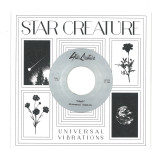
The A-side puts the fun in a funky psychedelic disco stomper complete with sing-along chants and breakbeats. Imagine an overlooked KID CREOLE garage dub cut. The B-side is a fresh take on classic Italo disco with analog percussion, vintage synths and his own guitar and bass.
At this point, Southern Italy's Giovanni Damico is basically an honorary Windy City Native. I don't think he's ever been to Chicago
but he certainly has status on all sides of the City. Damico's collaborations with Chicago's Star Creature kicked have spanned the
better part of the last decade with just as many vinyl releases during that time spanning 2 LPs, 2 EPs, a handful of 7's and an appearance on the 2020's Star Creature Vibes label compilation not to mention the over 20+ 12's and a dozen appearances on labels ranging from MCDE, Lumberjacks in Hell to Kalakuta Soul, Bordelllo A Parigi, his own White Rabbit Recordings and more.
That perfect blend of Tracky Italo Early Drum Machine, Bang the Box type of Proto House Electro Soul with adventurous and ambitious beats and melody combos pulled from a range of global influencers, mixing of electronic and acoustic instruments giving some of the most full body unique compositions in dance music, each being accomplished, evolving and truly unique.
At the start of the 1980’s X-Plode’s dad had a second-hand colour TV business in Bolton, Lancashire where he would buy, sell, repair and trade TVs. He would come back home with all kinds of things he had traded for a TV but the most memorable, to a 10 year old kid at that time, were the keyboards. He use to watch his dad play songs from the 1960’s on these keyboards and when his dad had gone out, Lee X-Plode would sneak on them and start messing about, experimenting with the drum programs and fiddling with the buttons, trying out ideas. He had to move fast though because these keyboards didn’t stay in the house for long as his dad would trade them again for something else; one time that was an old analogue echo chamber, which Lee also messed about with when his dad was out. That echo chamber was a revelation to Lee and opened up the possibilities of what was possible with sound. So by the time Lee was 16, he decided he wanted his own keyboard and started saving. When his 17th birthday came around he had saved up £200 and visited his local Argos where he bought himself a Yamaha PSS 680, an FM synthesizer with memory banks and a basic drum machine incorporated. ‘It was shit quality like, but I didn’t mind. I just wanted it for the programmable drum machine, the synth and the memory banks that came with it” Lee recalls. The year was 1987 and by this time in Lee’s life he was into reggae and hip hop, the latter he first embraced in 1983 by the way of breakdancing and listening to electro, so all he wanted to do when he got his gear was make reggae and electro sounding beats. Recalling his youth and the fun he had with the echo chamber, the next edition to his home set up was to acquire one of those, which he did via a mate of his. But by the time he got his minimal set up sorted in 1988, his musical tastes had changed. House music had landed here in UK and this was Lee’s new passion, so from that point on wards he started experimenting, trying to nail a decent house groove. ‘I wanted 808 sounds, but I didn’t know what one was!’ Lee explains.
Around late 1990 or early 1991, Lee started to improve upon his set up, purchasing an Atari STE, a Cheetah MS6 , a 6 voice polyphonic/multi-timbre analogue rack mounted synth that linked up to his Yamaha – “It wasn’t a great bit of kit, I kept getting electric shocks from it. Eventually it just blew up!” Lee had acquired a cracked copy of Cubase on floppy disk from his local computer game shop but struggled with it. “It was so complicated to understand and took me ages to get used to it. I was stoned a lot back then and I just couldn’t concentrate on anything for long” Lee laughs, continuing “I also picked up a 4 channel sampler/sequencer which plugged into the side of the Atari and that’s when I first started sampling, I think this would have been late 1991. I had the Simon Harris ‘Breaks, Beats and Scratches’ vinyl that he put out on Music for Life which were a godsend back then. I was also sampling a lot from cassette tapes, especially reggae. I would also record the Stu Allan show on Key 103FM, one of the main stations broadcasting out of Manchester. He would do a 3 hour show with hip hop and house, and then hardcore house came along. Eventually he dropped the hip hop altogether and it was just house and hardcore. I recorded the shows onto cassette most weeks and started to learn more about how house and hardcore was put together by listening to those shows.”
Before Zero Records present the Akae Beka Vocal and Version Series. This represents a turning point in the presence of Vaughn Benjamin, the voice of Akae Beka and Midnite’s presence in the sound system world, merging the vocal and version sound system culture with the deeply spiritual music and word sound of Akae Beka and Tippy I Grade.
Two of the deepest thinkers in reggae music, Vaughn Benjamin and Chronixx, trade reflections on their collaboration, ‘Black Carbon.’ Originally released on the 2021 album ‘Polarities,’ the song is available for the first time as a vinyl single, backed by its dub version. Adorned with the swirling flute of Sheldon Bernard (Beres Hammond, Harmony House) and David Pransky’s brittle, Kora-like mandolin, the twin reggae intellects, with their uniquely delicate voices, introspect on how ‘all ah we forward from the same carbon.’ The song’s message juxtaposes the unity that binds us with a critique of the prevailing narratives and structures that weaken this bond. It underscores the universal truth that we all originate from the same elemental blackness—a truth mirrored throughout humanity and the entire spectrum of creation. Yet, it pointedly highlights how this shared essence is often unrecognised or undervalued in the social and political realms, especially for nations and diasporas connected by the original human hue. The A-side vocal mix is followed by Tippy I’s lavish, questing dub, bringing the instrumentation to the fore. Produced by Vaughn and Zion I Kings.
Each 7” vinyl sleeve has the lyrics transcribed and printed on the back. This series represents more than a collection of music; it is a multifaceted, intellectual and spiritual revelation encapsulated in melody, tone and beat. The never before released dub versions complement each vocal mix with grace and innovation, creating the perfect settings for reflection and integration of the lyrics.
- A1: Mieko Hirota - Soul Lady
- A2: Shinji Maki &Amp; Black Jack - Nabeyoko Soul
- A3: Tan Tan - Happy Day
- A4: Kenji Niinuma - Airenki
- A5: Hatsumi Shibata - Furui Fuku Nanka
- B1: Strawberry Jam - Arimasen
- B2: Mieko Hirota - Anata Ga Inakute Mo
- B3: Akira Yasuda &Amp; Beat Folk - Kaeroka Kaeroka (Single Version)
- B4: Miki Hirayama - Hatachi No Koi
- B5: Masaaki Sakai - Baby, Yuki Wo Dashite
At the start of the 60s, a new wave of gospel-influenced jazz started to emerge, with hits such as Art Blakey & The Jazz Messengers' "Moanin'" and Cannonball Adderley's "Work Song" epitomizing this evolution in the genre. The terms "soul jazz" and "funky jazz" were coined as a way to describe this new sound that was making an impact in the US and also on the other sides of the Atlantic and Pacific oceans.
In 1964, Ray Charles made his first visit to Japan. Then, in 1968, Martha & The Vandellas and Stevie Wonder set foot in the country, followed by Sam & Dave in 1969, Ike & Tina Turner in 1970, and B.B. King in 1971. The TV show "Soul Train" also began airing in Japan in the early 1970s. A watershed moment happened in 1973 when Sammy Davis Jr. was cast in a TV commercial for Suntory whisky — and the influence of the US Black entertainment world had really landed, with soul, jazz, and funk artists becoming household names.
Nippon Columbia played a pivotal role during this turning point. The company had contracts with Buddah Records and Blue Thumb Records, releasing notable works by artists such as Gladys Knight & The Pips, Curtis Mayfield, The Crusaders, and The Pointer Sisters. At the same time, the label was also releasing several Japanese soul, jazz, and funk projects under the lead of music director Jiro Inagaki. Inagaki, a saxophonist who began his professional career in the early 1950s, honed his skills at U.S. military camps, where he shared his love of music with the Black servicemen. In the 1960s, he played with drummer Hideo Shiraki's band, which was widely considered to be Japan's representative group of the funky jazz movement. Later, Inagaki went on to pursue more cutting-edge sounds with his Soul Media project, including being a pioneering figure in the "jazz rock" genre. By working closely with Inagaki and his various musical projects, Nippon Columbia really placed the company at the center of an exciting and important period in Japanese music.
In 1965, Nippon Columbia opened a recording studio in Tokyo's Akasaka neighborhood. Akasaka was also home to the first ever discotheque in Japan, the legendary MUGEN, which ran from 1968 to 1987 and where many acts performed, including Con Funk Shun, the Bar-Kays, Ike & Tina Turner, B.B. King, Sam & Dave, Three Degrees, and Edwin Starr, as well as many local Japanese singers and musicians. This melting pot of creativity in the area led to the recording of many singles and albums by Japanese artists that were infused with the sounds of soul and funk. Most of these recordings were not available outside of Japan and remain rare and unknown musical gems. The selection you are holding in your hands is an explosive collection of 10 essential tracks released by the legendary Nippon Columbia label between 1969 and 1977, capturing the raw, unapparelled energy that was flowing through the air of the Akasaka streets at this electrifying time. Enjoy!
---
180GWALP07 - Manufactured and distributed by 180g.
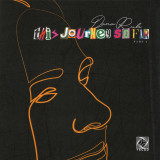
Dana Ruh offers up the aptly titled ‘This Journey So Far’ 2x12’’ project via Yecad here, comprised of eight original cuts.
As a long standing and widely respected figure in the world of underground house and techno through her releases on the likes of Slices Of Life, Ostgut Ton, Cocoon, Cave and of course her own Brouqade, Dana Ruh’s reputation stands tall as one of the finest purveyors of this sound. Amongst her releases, Dana maintains a heavy tour schedule taking her across the globe each year to many hotspots in key cities, here she marks another milestone in her career with a 2x12’’ release, entitled ‘This Journey So Far’, as a musical reflection on all that’s led to this point.
Across eight tracks Dana presents her distinctive style which often straddles the lines between house and techno, opening with the airy, swinging dub aesthetic of ‘Case Of V’, while diving into deeper, murkier realms on ‘Bruv’. The B1 ‘KMA54’ then shifts focus towards choppy breaks, textural tension and hypnotic voices before B2 ‘Babel’ lays down a true dub techno feel across ten minutes of crisp drums, spiralling echoes and expansive reverberations.
Kicking off the C-Side is ‘MF Now’, stripping things back to a shuffled, bumpy rhythm section, resonant synth chimes and billowing textures. ‘Grey With Some Light’ then leans into a more experimental glitch realm via twitchy oscillating percussion, unfurling atmospherics and drifting keys. ‘The Look’ leans back into House territory with raw stabs, sax lines, metallic chimes and vacillating low-end tones before ‘Song For The Lonely’ concludes the project, encapsulating the essence of deep house with ethereal pad swells, circling stab sequences, low-slung drums and cossetting subs.
Preparing your debut full length record is no small undertaking for any artist. The format itself deserves a certain frame of mind and approach – it’s different, and with Sarah Wild’s debut LP she embraces the idea. Expanding her artistic vision to offer something different, making use of the format and bringing new ideas and musical pathways to her established sound. Releasing on her imprint Midnight Operators in early 2025 – My Body Flows In Gravity constitutes a sophisticated homage to the early 2000s trance movement, integrating nostalgic motifs with her ultra-on point production that sits perfect in todays scene.
From the dreamy proto-house vibes of the opener, establishing a foundation with its understated beats, to the Orbital-esk serenity of the title track My Body Flows In Gravity the album works at evoking the emotive resonance of a golden era of music reborn. This trip is backed up by the Early-Balearic styled tracks such as “Fly With Me To The Moon” and “Visit To Mars” which pull you into hazy smoked filled dancefloor territory, hypnotic melodic progressions effectively capture the essence of Trance’s peak cultural moment.
At the mid point “I Don’t Wanna Go” introduces a different dimension, exploring a more Euro sound that is at the peak of the contemporary scene, but infused with Sarah’s unique edge, hyper pumping beats work alongside spoken word to really up the tempo. Following this the journey returns to a more progressive feel, “Floating Around” and ” On My Way Home” take things into deeper territory, bringing the focus’s of the record back the groove after the blurry eyed highs. Bringing the record in for a perfect landing. There is an emotional duality to this record, a movement through a juxtaposition of yearning and almost frantic emotions alongside more uplifting harmonics through to more introspective moments. The final track “Landing” gracefully closes this arc.
Sarah Wild delivers a sonic journey as much concerned with the process as with the destination itself. My Body Flows In Gravity shows Wild’s capacity to synthesize the deeply personal with the universally resonant, a set of tracks that equally speak to the introspective solitude as they do to the collective euphoria of the dancefloor.