
pre-order now27.03.2026
expected to be published on 27.03.2026
29,20 €
expected to be published on 27.03.2026

The first resonant space Zosha Warpeha played in was the Emanuel Vigeland Museum in Oslo, Norway. Built as a mausoleum, its walls reach up into a gradual archway, creating an environment where sound expands and reverberates for twelve seconds before decaying into silence. Warpeha was greeted only by dim lights when she entered, and it wasn’t until she had spent several minutes listening that she was able to make out the frescoes that covered every inch of the room: graphic depictions of the cycle of life from conception through death. As the sound of her Hardanger d’amore encountered the walls and these slowly emerging scenes, they obscured its point of origin in both time and space, augmenting its own life cycle. The experience sat in the back of her mind over the next several years as she developed her own patient style of composition and performance, one that comes into full bloom on her new album I grow accustomed to the dark.
When Warpeha was selected as an artist in residence at Brooklyn’s ISSUE Project Room in 2025, she saw it as an opportunity to more intentionally explore how her music might fill a room with ample natural reverb. I grow accustomed to the dark documents two single-take solo performances for Hardanger d’amore and voice at IPR, with both pieces composed in a unique tuning system developed to interact with the space itself. Listeners can trace resonance from the contact of the bow on gut strings into the body of the instrument, its five sympathetic strings offering another layer of refraction, before the sound is thrown about the cavity of the room. The echoes emerge like a photographic double exposure, or wisps of smoke that linger in the air, creating ghostly harmonic convergences that blur the line between what is there and not-there. Sound begins to act like light, a synesthetic alchemy that transforms drones into beams and ornamental trills into flickers.
Both side-long compositions, “filament” and “visual purple,” exemplify a duality that animates Warpeha’s music: an expressive, individualistic style that draws on extensive knowledge of her instrument’s history in folk traditions, and an austere, devotional quality maintained by focus and precision. Though very different in character and structure, both pieces evolve slowly through numerous repetitive phrases, passages of stillness, and bursts of intensity. “filament” opens with a cycle of delicate melodic fragments played and sung around a drone before blossoming into an outpouring of swooping arpeggios, harmonics flying from the strings like sparks off a bonfire. The disorienting pulsation of harmonic beating forms the core of “visual purple,” the close-tone dissonance building to a swarm of open strings ringing boldly throughout the space. After the knotty tones reach their climax, the piece collapses into studied quietude, hushed, but without any drop in intensity.
When Warpeha first visited the Vigeland Museum in 2019, she was in Oslo to deepen her relationship to the Hardanger fiddle through the study of Norwegian traditional music, which is primarily passed down aurally. The experience of learning songs by ear, not only internalizing the tune but also absorbing the techniques and tonalities by listening, was a crucial step in her development as a composer. The years since have seen her sharpen those skills as a prolific member of the New York avant-garde and improvised music communities. Warpeha’s music encourages listeners to join her in this journey, to listen closely with each repeated phrase and through each dramatic shift. Like the frescoes on Vigeland’s walls, with time and intention, the depth of I grow accustomed to the dark comes on like a revelation.
Order now and we will order the item for you at our supplier.
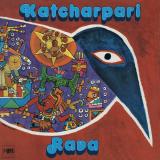
The breakthrough album. Enrico Rava's second solo record, recorded in Milan in January 1973 and released on the German BASF label, is nothing less than a cornerstone of Italian jazz-rock - the record that caught Manfred Eicher's attention and opened the doors to ECM. Rava himself has called it his breakthrough, and history proved him right.
The lineup is killer: John Abercrombie on guitar, Bruce Johnson on bass, Chip White on drums. Four musicians operating at the absolute peak of early seventies fusion energy - electric, cosmopolitan, burning with that particular fire that only existed in that brief window when jazz met rock and nobody knew the rules yet. Abercrombie, already on his way to becoming one of the most distinctive voices in electric jazz guitar, delivers some of his most ferocious early work here. White's drumming is relentless, pushing the music forward with an intensity that never lets up.
If Miles' Bitches Brew-era speaks to you, if Ian Carr's Nucleus gets you moving, if you know Sun Ra's Lanquidity and Don Cherry's Relativity Suite by heart - this is essential listening. Rava's vision was already fully formed: South American rhythms, Mediterranean warmth, free jazz ferocity, rock power - all flowing together without borders or categories. By the early seventies, Rava had absorbed everything - the New Thing, the European free scene, the electric revolution coming out of Miles' studio - and forged something entirely his own.
The seven tracks cover serious ground. "Bunny's Pie" introduces the music with an almost cosmic atmosphere of suspense, hovering in that liminal space before it trails off into the up-tempo vibrant frenzy of "Trial N. 5" - Abercrombie and Rava trading swirling solos at full intensity, the rhythm section locked in tight. "Dimenticare Stanca" moves from Rava's expressive balladic intro into pure funk, guitar and trumpet steering over the rhythmic drive with absolute confidence. The title track carries the lyrical feel and cadence of an Incan-Peruvian folksong - that cosmopolitan spirit made audible. "Fluid Connection" rides a funky bass riff into fusion heaven, with standout trumpet and guitar solos that build and release with perfect tension. "Cheerin' Cherry" pays homage to the great Don Cherry - Rava's spiritual mentor and fellow traveler in world music - exploring a North African soundscape that points toward the global jazz to come. Johnson's "Peace" closes the album with a minute and a half of serene, blissful calm - a moment of stillness after the storm.
This audiophile reissue - cut from the original masters, pressed by Pallas in Germany on 180gm vinyl, housed in a thick laminated hand-glued gatefold - does full justice to an album that remains a collector's holy grail.
Don't sleep on this one. Limited Edition.
expected to be published on 20.03.2026
Francis of Delirium is the moniker of 22-year old, Luxembourg-based Jana Bahrich. The young artist’s incredible journey up until this point has seen her release 3 critically acclaimed EPs, ‘All Change’, 'Wading’ and ‘The Funhouse’. With praise so far from the likes of Stereogum, FADER, Pitchfork, Line of Best Fit, 6 Music, Radio 1, KEXP and NPR to name but a few, Francis of Delirium is on the precipice of something extremely exciting with debut album ‘Lighthouse’.
The announcement of ‘Lighthouse’ comes following a busy year of touring with the likes of Soccer Mommy, Briston Maroney, Horsegirl, The Districts and hitting Eurosonic, Iceland Airwaves and Tree Fort Fest, as well as opening for The 1975 & Kings of Leon.
Production duties on ‘Lighthouse’ were shared by Catherine Marks (Boygenius, Wolf Alice) and Jana Bahrich/Chris Hewitt. ‘Lighthouse’ was mixed by Jolyon Thomas (U2, Royal Blood).
expected to be published on 20.03.2026
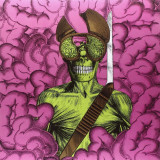
What's the first thing you think of when someone mentions Thee Oh Sees? Probably their riot-sparking live show, right? Visions of a guitar-chewing, melody-maiming John Dwyer careening across your cranium, rounded out by a wild-eyed wrecking crew that drives every last hook home like it's a nail in the coffin of what you thought it meant to make 21st-century rock 'n' roll? Yeah, that sounds about right. But it misses a more important point-how impossible Thee Oh Sees have been to pin down since Dwyer launched the project in the late '90s as a solo break from such sorely missed underground bands as Pink and Brown and Coachwhips. (While Dwyer still records songs on his own, Thee Oh Sees is now a five-piece featuring keyboardist / singer Brigid Dawson, guitarist Petey Dammit, drummer Mike Shoun and multi-instrumentalist / singer Lars Finberg.) That restlessness extends to everything from the towering, thirteen-minute title track of 2010's Warm Smile LP to the mercurial moods of 2008's The Master's Bedroom Is Worth Spending a Night In. Now, Thee Oh Sees chase the home-brewed symphonies of Castlemania with the scrappy, high-wire hooks of Carrion Crawler / The Dream. Originally envisioned as two EPs, it was cut live to tape in less than a week at Chris Woodhouse's Sacramento studio in June, reflecting the battering-ram bent of the band's live show better than any bootleg ever could. "As I'm sure most would agree," explains Dwyer, "Castlemania was more of a vocal tirade. This one's meant to pummel and throb." That it does, whether one blasts the slow, speaker-bruising build of "The Dream," the sunburnt organs and dovetailing guitars of "Crack in Your Eye" or the interstellar instrumental "Chem-Farmer," a perfect example of what happens when one takes a well-oiled machine-a gang of rabid road warriors, really-and adds a second, groove-locked drum set to the mix. To listen is to realize that Dwyer's music is as manic as the underground comic inclinations of his artwork; colorful and confusing in a way that's more than welcome. It's downright refreshing, like a slap in the face at 5:00 in the morning. Or, as Dwyer puts it, "You have to leave a mark somehow."
expected to be published on 20.03.2026
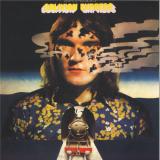
Strut Records presents a fresh look at Oblivion Express, the 1971 album that marked Brian Auger’s shift into a new musical frontier. After years spent shaping the sound of British jazz-soul with the Trinity, Auger stepped into the new decade with a leaner, electrified ensemble and a renewed sense of purpose. This record captures the moment that transformation took shape.
Oblivion Express introduced a sound that was distinctly Auger’s own. Rather than echoing the fusion emerging in the United States, Auger developed a language rooted in the UK’s jazz underground, culminating in a spaced out jazz- rock / prog-fusion album awash with larger than life drum fills and Auger’s virtuosic organ playing. Between bassist Barry Dean and drummer Robbie McIntosh the album moves effortlessly between tight, articulated phrases and broader, improvisational passages. The trio’s interplay forms the backbone of the album and sets the tone for the sound that would define the early years of the Express.
Album opener “Dragon Song” launches with a restless drive that immediately signals Auger’s new direction. Auger chose to record this version of John McLaughlin’s piece (his friend and former bandmate in 'The Niddy Griddys') after hearing McLaughlin’s album Devotion during its mix at New York’s Record Plant Studios. Auger was blown away, recalling, “Oh my god, this is amazing. I wanted to record that myself - and I did!”. Pieces like “Total Eclipse” demonstrate the Oblivion Express’ command of dynamic contrast, and title track “Oblivion Express” explores the cinematic and compositional prowess of the group through stripped back, building moments vs. explosive melodic breakdowns. Riff-heavy “The Sword” later became known through Madlib’s usage in 2014 tracks “Yeti Movie” and “Parodies”.
In retrospect, Oblivion Express stands as a jazz leaning, prog-rock masterpiece and foundational moment in Auger’s catalogue. It captures the starting point of a new sound that is more focused, more urgent, and fully committed to the possibilities of jazz-rock at the dawn of the seventies. The album remains a vivid document of a band discovering its identity and setting the stage for the further array of influential releases that would follow.
Order now and we will order the item for you at our supplier.

Shoreline’s new album Is This The Low Point Or The Moment After? is built around an unanswerable question: when you hit rock bottom, can you tell where things begin to turn? Meant to be heard front to back, the record starts in a subdued, reflective place, grows progressively heavier, and ultimately lands on a more hopeful note. Drawing from the current wave of emo and hardcore while reflecting the collision of Germany’s alternative scenes, the album shows a band with a clear musical vision focused on big melodies, heavy riffs, and an honest DIY punk foundation.
expected to be published on 13.03.2026

B. Chamber (Stratum A), by B. Close, is the first full length solo release by Los Angeles-based multi-disciplinary artist Brian Close. The first of two volumes assembled from some thirteen hours of music produced by Close while residing in Connecticut from 2021-2025, B. Chamber (Stratum A) offers a vivid, fractal afterimage of a prolific, specific time and space in the artist’s oeuvre.
After leaving New York City early in the pandemic to a farmhouse in the countryside with dedicated spaces for multiple sound stations, Close developed an intensive daily practice of melding with the machines. The vast, pastoral backdrop of rural CT provided inspiration and contrast for his ongoing investigations into dynamic, poly-rhythmic electronic music. The sounds on B. Chamber (Stratum A) range from the machine-modeling of acoustic instruments and natural environments to the utterly unhuman, spinning on the axis between crystalline, pointillist precision and shifty blown-cone distortion. Close’s atypical interpretations of rhythm, noise and other undefined musics land in a hybrid zone of their own.
Throughout B. Chamber (Stratum A), Close’s productions are in perpetual motion. Foxtrot’s shifting hi-hats and disembodied voices rise like cicadas propelled by glitching machines and tangled rhythms, Many Drive draws momentum from dubby stabs and twinkling atmospherics. Character Community’s nimble, drifting snares and erratic static are uplifted by swelling synths, and Mpan’s modular mining forgoes drums but is no less propulsive for it. Acre Voices’ seasick pads and deft drum patterns tap an energizing nerve, and closer 5D Bow’s ambush of pummeling machine gun fire spirals into the tryptamine palace and emerges completely rinsed and refreshed.
Equally powerful in the club as in the outdoors, in the headphones eyes closed or on the move, B. Chamber (Stratum A) grants an immersive temporary trip on B. Close’s unique wavelength, with Stratum B to complete the picture in the summer of 2026.
RIYL - Mark Fell, muay thai, Vladislav Delay, gaming, Errorsmith, modular synthesizer.
+++++
Brian Close (b. 1979, NYC) uses the cold logic of mathematics to trigger states of total sensory displacement. Close co-founded multiple AV studios to explore the "hypnotic"—a ritualistic practice of motional-graphism and improvisational sound. His work is a study in synesthesia and the architecture of trance, using geometric precision to dissolve the sense of time. It is a digital-visceral experience built on heavy logic, designed for large-scale immersion and timelessness.
Close is one half of Georgia who have released records on Palto Flats, Firecracker Recordings, Meakusma, Youth, OOH-Sounds and EM Records, and have a long-running residency on NTS.
B. Chamber was written, produced and mixed by Brian Close.
Mastered by Rashad Becker.
Artwork by Brian Close.
expected to be published on 12.03.2026

Joyce Manor are California pop-punk legends and I Used To Go To This Bar is this epochal band operating at the top of their game. They continue to deliver relentlessly satisfying rock music in a manner that makes it look simply effortless. The Torrance, California-hailing trio of Barry Johnson, Chase Knobbe, and Matt Ebert are at a point in their career where their position as one of the most beloved rock bands is a foregone conclusion. Their seventh album finds the group continuing to find rich new veins to tap in their short-and sweet songcraft without losing an ounce of bite that gained them such repute in the first place. I Used To Go To This Bar further situates Joyce Manor in the rich lineage of their influences and inspirations. Think AFI"s rapid-fire burn, Weezer"s indelible power-pop acumen, and the dusky emotionalism of The Smiths while further establishing them as leading lights in the current rock landscape. The fresh burst of inspiration that fuels I Used To Go To This Bar proves that Joyce Manor are far from content to rest on such laurels, moving forward with their sound and style in a way that reminds you of how they got to this point in the first place. Catch them live at Coachella 2026.
Order now and we will order the item for you at our supplier.

Daniel Lopatins (Oneohtrix Point Never) Soundtrack für Marty Supreme, gepresst auf schwarzem und transparentem Vinyl. Kommt mit japanischem Obi-Band und doppelseitigem "Koto Endo / Marty Supreme Offizieller Ball"-Poster. Der Film Marty Supreme ist eine Abenteuerkomödie von Josh Safdie aus dem Jahr 2025 und ist lose vom Leben Marty Reismans inspiriert, die in den 1950er-Jahren spielende Geschichte ist jedoch fiktiv. Die Hauptrolle des titelgebenden Tischtennisspielers übernahm Timothée Chalamet. Gwyneth Paltrow, Odessa A'zion, Kevin O'Leary, Tyler Okonma, Abel Ferrara und Fran Drescher ergänzten das Schauspielensemble. Marty Supreme ist der erste Film von Josh Safdie nach Beendigung der kreativen Zusammenarbeit mit seinem Bruder Benny. Das Werk wurde Anfang Oktober 2025 im Rahmen des New York Film Festivals uraufgeführt. Der US-Kinostart war an Weihnachten 2025. Ende Februar 2026 soll der Film in die deutschen Kinos kommen. Die Filmmusik von Daniel Lopatin wurde im Jahr 2025 für einen Hollywood Music In Media Award (HMMA) nominiert. Im Rahmen der Critics' Choice Movie Awards 2026 wurde Marty Supreme in die Shortlists für die Kategorien Casting & Ensemble", Szenenbild", Kamera", Kostüme", Filmschnitt" und Filmmusik" aufgenommen. Im Dezember 2025 gelangte der Film auf die Oscar-Shortlists für das beste Casting, die beste Kamera, das beste Makeup & Hairstyling und die beste Filmmusik. (Quelle: Wikipedia)
Order now and we will order the item for you at our supplier.

Any follower of Andrew Weatherall (a particularly fervent and erudite tribe) will be familiar with 'The Sons of Slough.' Comprising Andrew's brother Ian and Duncan Gray, they have produced music together for twenty years and throughout Andrew has been an avid supporter playing their records at his shows, helping Duncan set up his Tici Taci label and generally being a good friend.
Their mutual admiration for Factory Records made it an obvious place to seek inspiration for a tribute record. The influence of Factory on Andrew and Ian's lives is difficult to overstate. They spent a fair chunk of the 80s travelling all over the country to catch the label's artists perform.
New Order were pretty much top of the list and the Factory ethos of creativity over commercialism was to become Andrew's main drive throughout his career.
Ian and Duncan have reworked New Order's "In a Lonely Place" as a homage to Factory and the inspiration they were to a whole generation. David Holmes, Keith Tenniswood and Sean Johnston (all long time Weatherall collaborators) used the track as a jumping off point bringing Factory, New Order, their own musical perspective and most of all Andrew together in a unique tribute to shared times and fond memories.
Order now and we will order the item for you at our supplier.

expected to be published on 06.03.2026

expected to be published on 06.03.2026

2026 Repress
Another Thought was the first collection of Arthur Russell’s music to be released after his death in 1992. Released in 1993 on Point Music it marked the beginning of nearly 30 years of work to let the world hear the enormous archive of unreleased recordings Arthur left behind. Be With revisits this first compilation for a new gatefold double vinyl version and a triple-fold digipak CD reissue.
Both versions of Be With’s 2021 reissue of Another Thought have been mastered by Simon Francis and the vinyl cut by Pete Norman. The original artwork has been restored and tweaked at Be With HQ for the gatefold sleeve and the triple-fold digipak, with the essential help of Janette Beckman. Each version comes with an insert reproducing the liner notes and lyrics from the original CD release.
Together with Calling Out Of Context, Soul Jazz’s World of Arthur Russell, and much of the ongoing work of Audika, Another Thought is absolutely essential for even the most casual Arthur Russell collection. In fact we’d argue it’s essential for any fan of non-obvious pop music. This is the only place where you can hear some of Arthur’s most recognisable tunes and it’s an album that absolutely deserves to be kept in press.
We’ll assume that by now you’re all at least a little familiar with the story of Arthur Russell, the farm boy from Iowa who moved to 1970s New York. Arthur Russell the genuine musical genius who died just 40 years old, leaving behind a wealth of music that dwarfed the few 12"s and LPs that were released during his short life.
Although Arthur had been working on an album for Rough Trade during his last years, with the label no-longer operating it was Point Music (Philip Glass and Michael Riesman’s label set up together with Philips) who stepped in to help Arthur’s partner Tom Lee start working out exactly what Arthur had left behind.
Tom suggested that Arthur’s friend Mikel Rouse was the right person to make the first catalogue. Working in Tom and Arthur’s apartment he had only two weeks to go through what turned out to be around 800 tapes.
As Tom explained “at the end of each day he would generally wait for me to come home and I would, to the best of my knowledge, name and identify pieces in question from that day’s work. As he worked Mikel compiled about a dozen cassettes that he thought would present the most finished sounding songs for Don/Point to use. As Don listened he would then suggest and ask me and thus we collaborated on the choices.”
Don is Don Christensen, Another Thought’s producer. With a final selection of songs from recordings made between 1982 and 1990, including sessions with some of Arthur’s regular collaborators Peter Zummo, Steven Hall, Mustafa Ahmed, Elodie Lauten, Julius Eastman, Jennifer Warnes and Joyce Bowden, it was then Don’s job to turn these into a finished album.
Another Thought is a little different from the compilations of Arthur’s music that came out since. In our conversations with Steve Knutson (who founded Audika Records and who manages Arthur’s estate together with Tom), he explained that “more than any project released by Arthur during his lifetime or posthumously by Audika, ‘Another Thought’ is the most worked over. The material was significantly edited and rearranged from the original source tapes”.
If the aim was to release a comprehensive exploration of every facet of Arthur’s music, from the most avant-garde of his avant-garde compositions through to the most disco-not-disco of his disco-not-disco tunes then the project was a spectacular failure. But as a coherent album of non-obvious pop music Another Thought is wonderful.
Starting with the sparse voice-and-cello of the title track, A Little Lost adds some guitar along with the sneaking suspicion that we’re listening to something nowhere near as simple as it first sounds. By the time we get to This Is How We Walk On The Moon - it could be the moment you notice the congas, or the percussion that’s been building behind them, or maybe it’s that blast of trumpet and trombone - we realise we’ve gone from splashing around to being completely submerged in the musical world of Arthur Russell.
From here the album heads off on its journey around the sounds of the left-field contemporary classical music of the time, re-directed towards pop ears, with minor detours through the swirling woozy disco of the half-remembered night before on In The Light Of The Miracle and My Tiger, My Timing. Whether it’s just Arthur, his cello and some bleeps on Just A Blip, or whether he has some vocal help as he does on the bounding Keeping Up, this is difficult music made so, so easy. And through it all is Arthur’s voice and cello. Sometimes drowned in distortion and sometimes clear as a bell, but always there somewhere.
A Sudden Chill finally returns us to the calmer waters we started in and this last track closes the album with a melancholy that’s not surprising given how soon after Arthur’s death the album was put together.
Whilst Another Thought holds together with the consistency of a proper album, there’s still no getting away from the fact that this was put together from audio recorded in different ways, in different places, with different people at different times. Those with keen ears will hear traces of tape hiss, the occasional blown-out note and some digital fuzz, all fingerprints of those original recordings as well as of the 1990s digital equipment that was used to piece Another Thought together.
Add to this Arthur’s obvious pleasure in making music from the sort of sounds that can make microphones, speakers and ears uncomfortable, it’s no surprise that Another Thought isn’t glossy and pristine. Don Christensen’s productions have been careful to not scrub up those original recordings so much that they lose their original vibe, understandable given that Arthur wasn’t around as a guide. We’ve applied a similarly light touch with the mastering for these Be With versions, just working to make sure they sound like they should on both the vinyl and the CD.
Despite the Discogs rumours, Another Thought was never originally released as an LP. So when it came to the sleeve for this Be With vinyl version we took the original CD artwork as a starting point to come up with something that looks like it could have been in the record racks back in 1993.
We have to thank Janette Beckman for helping us reproduce her iconic photograph of Arthur in his newspaper boat hat. One of many photographs she took of Arthur, Janette shot this in her New York studio back in 1986 for a short article in the January ’87 issue of The Face Magazine. Those with eagle-eyes will notice we’ve used an ever-so-slightly different shot from the one that appeared in The Face and then again on the original cover of Another Thought. The original has long since been lost so we’ve worked with what is left in Janette’s archives. And we also have to thank Tom Lee for giving us permission to reproduce his liner notes from the original CD booklet, together with Arthur’s lyrics.
Order now and we will order the item for you at our supplier.

Aspen Edities is pleased to present Aerial, the third album of the experimental quartet Oker.
Whereas their album debut Husene våre er museer (2018) and its follow-up Susurrus (2021) focused on collective and individual compositions, Aerial features two longform pieces of fully improvised music, sculpted from the recognizable acoustic sound palette that the quartet has developed across a decade of extensive touring. The titles, Aerial, Equinoctial Tide and Crepuscular Rays refer to meteorological and planetary phenomena, and in Oker’s interplay we hear light, wind, clouds, and tidal cycles transpire as shimmering, roaring, rubbing, coalescing and diverging environments of sound. The sonic stoicism and minimalism in their expression is challenged by frictioning micro-chaoses, combining to create calm, winding paths of musical detail and form. Echoing our planet and its meteorological reality, Aerial yields both consistency and perpetual change.
Bringing together some of the most compelling musicians from the Norwegian improvised music scene, Oker operates as an acoustic experimental quartet devoted to the amalgamation of improvised and composed modes of expression. Their music combines fine-tuned tonalities, deconstructed grooves, acoustic noise and other sonic events, taking their rather conventional instrumentation as a point of departure. Textures in gradual change coexisting with responsive and spontaneous gestures create a varied but coherent musical ecosystem which can be airy or dense, dry or blooming. A certain minimalist or stoic approach to sound production is an overarching and recurring element in all of Oker’s music, differentiating their sound from the majority of music in the field of improvised music or free jazz.
expected to be published on 27.02.2026

Synthpop, minimal wave, post-punk, goth, new romantic - fans and critics alike have dug deeply into their vintage thesauruses to describe the beguiling work of Nation of Language. And if you can't precisely define the band, that's the point. Frontman Ian Richard Devaney has become prodigious in expanding what synthesizer-driven music can evoke, such that his output is as much an extrasensory journey as it is an all-too-human destination. With that experience in mind, he wrote the band's fourth album - the spectral, spacious Dance Called Memory - in the most humble of ways: chipping away at melancholia by sitting around and strumming his guitar. Nation of Language's first two albums, Introduction, Presence (2020), and A Way Forward (2021), came as pandemic godsends: gorgeous, relatable soundtracks to our collective doldrums. But it was their last LP, Strange Disciple (2023), that catapulted the group from cultural standouts to critical darlings, with the album being named Rough Trade's Album of the Year. With that release, Pitchfork wrote that the band "are learning what it means to get bigger and better." This is Devaney's calling: soulfully translating individual despair into a comforting, collective mourning. The single "Now That You're Gone," which radiates and reverberates with a devastating wistfulness, was inspired by witnessing his godfather's tragic death from ALS, and his parents' role as caretakers for this ailing friend. At its heart, the song is a reflection of how friends can be there for each other, and also highlights a theme throughout the record: the pain and lost promise of friendships that fall apart. On Dance Called Memory, the band once again collaborated with friend and Strange Disciple producer Nick Millhiser (LCD Soundsystem, Holy Ghost!). "What's so great about Nick is his ability to make us feel like we don't need to do what might be expected of us," says synth player Aidan Noell, who, along with bassist Alex MacKay, rounds out the Nation of Language lineup. They imbued Dance Called Memory with a shifted palette - sampling chopped-up drum breaks on "I'm Not Ready for the Change" for a touch of Loveless-era My Bloody Valentine or smashing all of the percussion of "In Another Life" through a synthesizer to cast a shade of early-2000s electronic music. Ultimately, the hope was to weave raw vulnerability and humanity into a synth-heavy album. "There is a dichotomy between the Kraftwerk school of thought and the Brian Eno school of thought, each of which I've been drawn to at different points. I've read about how Kraftwerk wanted to remove all the humanity from their music, but Eno often spoke about wanting to make synthesized music that felt distinctly human," Devaney says. "As much as Kraftwerk is a sonically foundational influence, with this record I leaned much more towards the Eno school of thought. In this era quickly being defined by the rise of AI supplanting human creators I'm focusing more on the human condition, and I need the underlying music to support that_ Instead of hopelessness, I want to leave the listener with a feeling of us really seeing one another, that our individual struggles can actually unite us in empathy."
Order now and we will order the item for you at our supplier.

Sundays is the debut full length from Oakland-based Tanukichan, aka multi-instrumentalist Hannah van Loon. At surface level, the album sounds just how the title describes: hazy, dreamy, reflective, just like a lazy Sunday afternoon. Upon second and third listens, the dreamy music unveils a deeper world: an ever present sense of longing, an endless state of summer and a period of instability that plagues us all at one point or another in our lives.
Raised in San Francisco, van Loon started out making classical, bluegrass and jazz music as well as playing in numerous bands in the area before deciding to make something more personal. What started with a few unfocused demos, with van Loon playing all the instruments herself in her house, became a studio experience and viable collection of music after her friend Anthony Ferraro of Astronauts, Etc. introduced her to Company Records founder Chaz Bear (Toro Y Moi, Les Sins). After collaborating on her 2016 EP Radiolove, van Loon and Bear set out to make a much more sonically cohesive release, with both the producer and artist playing all the instruments on the record. The result is a slice of dream pop that could only come from the combination of the laid back atmosphere of California and the nostalgic and often difficult memories that are generally associated with coming of age.
To van Loon, the tracks of Sundays are a form of contemplation and approaching life’s issues from a different and less complicated perspective. “Sometimes for me, it feels easier to write songs about things than to talk. A lot of things in life are layered and paradoxical, but with songs it always seems simpler.”
Opening track “Lazy Love” sets the stage, sonically and lyrically, for the rest of the album, combining vulnerable lyrics with gorgeous, fuzzy tones. Above pummeling synths and guitar tones, van Loon sings “you know I'd do anything/don't you know I try my best/if I could wake up when the sun is rising” showing the album’s constant theme of balancing always wanting to be the best person you can be, while also feeling a low level joy at letting life play out as it wants to. “Natural” is a track that feels perfect for a road trip, a track that hums away with a driving beat, culminating in the sheer excitement of finally having a night alone with someone you’ve loved for a while, among many highs and lows: “a window too bright/it's natural sunlight/grey fades to white lie/kiss you tonight/it's natural delight/help me feel right.” The tracks collectively address a deep rooted sense of yearning for someone, something new, while also feeling content with your life; a realization that maybe the places you’ve always belonged aren’t where you should be anymore, that suddenly you might be looking for something completely different.
“I settled on the name Sundays as the title of the record because it encapsulated how the record felt to me,“ van Loon says. “I was thinking about the laziness, and dreamy clarity that you can feel after a late night, waking up having to face the world with a new perspective.” Sundays encapsulates this feeling, a nostalgic way of looking at the world, waking up feeling like a slightly different person than before, looking back on life, not sure if you can tackle what’s next, but doing your best, day in and day out
expected to be published on 27.02.2026

World Of Echo announces the reissue of two remastered albums by Japanese guitarist and songwriter Naoki Zushi, 1988’s Paradise, and 2005’s III. Two classics of Japanese psychedelia, both Paradise and III were originally released on Org Records, the imprint of Shinji Shibayama of acid-folk group Nagisa Ni Te, with whom Zushi has guested on second guitar for decades. Both intimate and expansive, rich with revelatory songwriting and blasted, sky-scouring guitar, these reissues return these albums to print for the first time since the 2000s. It’s the first time III has been officially released on vinyl, with an extra, previously unreleased track, “Under The June Moonlight.”
Recorded in Kyoto’s Townhouse Studios in mid 1987 and released in limited-to-500 vinyl pressing in 1988, Paradise emerged from a scene in Kansai, Japan that was embracing the idiosyncracies of 1970s singer-songwriters, the soaring solos of early seventies psychedelia, and the DIY impulse of 1980s post-punk. While Zushi’s musical history stretched back to the early eighties – he was a founding member of Jojo Hiroshige’s noise outfit Hijokaidan – he found his feet with groups like Hallelujahs, whose dream-pop collection Niku O Kuraite Chikai Wo Tateyo was recently reissued by Black Editions, and Idiot O’Clock.
Paradise appeared two years after that Hallelujahs album and share much the same membership – Zushi’s backing band on several of the songs includes Shibayama on drums and Ken-Ichi Takayama (aka Idiot) on electric guitar, though just as often, Zushi plays all the instruments himself. The coordinates here are wide-reaching – you can hear the volume and intensity of Neil Young & Crazy Horse (on “Hallelujah: Left Side” and “Paradise: Midday”), the slow-motion magic of Galaxie 500, the idiosyncratic spirit of The Only Ones, all mixed up with tender guitar miniatures and stumbling garage-psych-pop moves.
Seven years later, after the transitional album Phenomenal Luciferin, Zushi released III. Perhaps his masterpiece, it’s already been bootlegged on vinyl, but this reissue is the real deal. The album was recorded at Studio Nemu over seven years, and sees Zushi backed by Shibayama (bass) and Masako Takeda (drums), his erstwhile bandmates in Nagisa Ni Te. By this stage, Zushi had started to really stretch out, and many of the songs on III swoon languorously, taking their sweet time to say what they need to say. It’s rich with lovely, melancholy songs, in a similar realm to bandmates Nagisa Ni Te, of course, but you can also hear traces of everything from Syd Barrett’s The Madcap Laughs, through seventies private press loner folk, to the slow-burn meanderings of the likes of early Low or Damon & Naomi.
When interviewed by Shibayama in the mid-nineties, Zushi said of Paradise, “it was a sort of collection of songs that had meant something to me up to that point… it was my paradise. I wanted to create paradise.” That’s something Zushi achieves on both of these albums – visionary Japanese psychedelia, en route to paradise. - Jon Dale
expected to be published on 27.02.2026

Cranes is a dream pop/shoegaze band formed by siblings Alison and Jim Shaw who rose to stardom following a world tour with the Cure in 1992. After the influential Dedicated label folded in 1998 they went on a two-year hiatus after which they se up their own label Dadaphonic. Here, they released three studio albums between 2001 and 2008, of which this record is their penultimate. This record, as any other on their label, strikes the perfect balance between their typical 90s alt rock underpinnings and modern electronica. Downtempo beats and swirling effects combined with jangly guitars and Alison Shaw's mysterious vocal presence make for a deep and subdued album, in the best way possible. Fans of the band have been requesting a vinyl release for quite a while now and to them we say: ask and you shall receive. Particles & Waves is available on vinyl for the first time as a limited edition of 1000 individually numbered copies on Crystal Clear, Blue & White Marbled vinyl.
expected to be published on 27.02.2026

After decades spent shaping the sound of southern Madagascar and becoming one of the defining voices of tsapiky, Damily returns with Fanjiry, his most intimate and focused record to date. Known for electrifying village ceremonies and carrying the fever of Toliara across continents, he takes a sharp turn — not away from trance, but deeper into its core.
Recorded in just three days at Studio Black Box with analog wizard Peter Deimel, Fanjiry strips the tsapiky band down to a single guitar and a single heartbeat. Damily plays alone, yet fills the space completely — bass, rhythm, melody, pulse, and breath merging into a dense and vibrating sound. Every riff is architecture, every harmonic a door opening onto memory, childhood landscapes, and nights where music heals, binds, and exhausts the dark.
There is no nostalgia here, no museum of tradition. Fanjiry is a new frontier for tsapiky: raw, precise, suspended between earth and sky, born from craft and necessity. The title — the last star before dawn — captures its essence: a quiet moment before the world awakens, where a single guitar can hold an entire history and still point forward.
expected to be published on 27.02.2026

After decades spent shaping the sound of southern Madagascar and becoming one of the defining voices of tsapiky, Damily returns with Fanjiry, his most intimate and focused record to date. Known for electrifying village ceremonies and carrying the fever of Toliara across continents, he takes a sharp turn - not away from trance, but deeper into its core. Recorded in just three days at Studio Black Box with analog wizard Peter Deimel, Fanjiry strips the tsapiky band down to a single guitar and a single heartbeat. Damily plays alone, yet fills the space completely - bass, rhythm, melody, pulse, and breath merging into a dense and vibrating sound. Every riff is architecture, every harmonic a door opening onto memory, childhood landscapes, and nights where music heals, binds, and exhausts the dark. There is no nostalgia here, no museum of tradition. Fanjiry is a new frontier for tsapiky: raw, precise, suspended between earth and sky, born from craft and necessity. The title - the last star before dawn - captures its essence: a quiet moment before the world awakens, where a single guitar can hold an entire history and still point forward.
expected to be published on 27.02.2026

Black Vinyl[26,01 €]
On a Sunday in the early 70s in South LA one could asily find themselves experiencing the Pan Afrikan Peoples Arkestra doing what they do for the community, performing incredible music. "Live at Widney High December 26th, 1971" is a previously unreleased PAPA recording. It finds director Horace Tapscott conducting the band at Widney Career Preparatory & Transition Center, a special-education magnet high school in Los Angeles. The band played shows here between 1970 and "72, often sharing the bill with contemporaries John Carter and Bobby Bradford"s group, and at one point the Sun-Ra Arkestra. These weekend shows were free and meant for the surrounding Black community. On this date the PAPA performed a range of compositions from the Ark"s expansive songbook, including arrangements of tunes by Pharoah Sanders and John Coltrane.
expected to be published on 27.02.2026

"On its Various 2 compilation, Altered Circuits returns with a gripping four-track selection by an equal number of distinct-voiced artists. Perrax En La Calle sees tINI merge sturdy drums, arpeggiated basslines, and ominous synth work. She knows what makes the floor tick blindfolded, and keeps the energy high here, channelling electronic body music and Italo into a contemporary club knockout. Up next is Ionic, a fusion of quirky, pointillist hooks that play call and response, driven by 909 kicks and a sub pattern underneath. Mogwaa spellbinds, and often pulls the rug only to reveal more intricate melodic needlework -- it's done so nimbly and enticingly, there's no way not to get drawn in. On the flip side, rising talent Desiree Falessi joins with the peak time Scandal. Statically-charged basslines mesh with reverb-drenched percussion salvos, and as slinky pads and subtle theme variations emerge, the intensity builds toward a tipping point. Closer Flex features a sharp arpeggiated bassline that funnels through misty, LFO-steered synths, scattered alarm-like melodies, muffled vocals, and gated-reverb snares. When classic high-pass modulation intermezzos are introduced, Monile demonstrates how sparse means, when deployed precisely, can sustain considerable tension."
Order now and we will order the item for you at our supplier.

Siavash Amini is a composer from Tehran, Iran. He Has worked with labels like Room40, Hallow Ground, Opal Tapes and Umor Rex for the better half of the past ten years. He has performed at festivals like CTM & MUTEK and many other well known international events. Apart from it Siavash is a co-founder of the “SET experimental art events” and “SETfest” in Tehran, Iran. His work ranges from fragile ambient pieces and brittle IDM (incorporating his distinctive style of atmospheric guitar playing) to noisy drones and bleak modern classical pieces. His compositions have been inspired by films such as Andrei Tarkovsky's The Mirror as well as novels by Dostoyesvky and poems by T.S. Eliot.
Saffronkeira is the Sardinian sound researcher Eugenio Caria being active in the electronic music scene since almost two decades. His most recent work - a cooperation with the Italian jazz trumpet legend Paolo Fresu - earned a lot of praise from the international music press for the pure timelessness of the album.
"Upon hearing a small snippet of sound an image is conjured, not a memory but not unfamiliar. A shell of a memory, thousand events superimposed on each other. While trying to extract points of a narrative to ease the discomfort of this recollection, I try to separate and unfold the image and with it the points of the spectrum which make up the sound, a shell of a narrative. Here is an album based upon an almost entirely imagined/ synthesized happening upon hearing a snippet of sound. It sounded like of a whole story that never happened but yet I felt myself amongst it’s participants, a sound triggering a false memory. Each sound in Eugenio’s collection of sounds and ideas guided me a to a point in the narrative and it’s construction. He had handed me a portals of some kind to a few scenes of the whole narrative. This is the soundtrack for that false memory from all the perspectives I can think of."
Order now and we will order the item for you at our supplier.
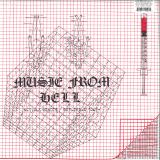
Nervous Gender’s legendary synthpunk LP Music From Hell burbles up from infernal depths to resurface on Dark Entries. Confrontational, unhinged, and unabashedly queer, Music from Hell is an unholy grail for fans of the strangest underbellies of post-punk, minimal synth, and early industrial music, and is presented here newly remastered and on expanded double LP.
Nervous Gender (de)formed in LA in 1978 at the hands of Phranc, Gerardo Velaquez, Edward Stapleton, and Michael Ochoa. Phranc, the androgynous embodiment of the band’s name, left in 1980. Following her departure, a wide cast of LA freaks would find themselves drawn into the band’s orbit, including Alice Bag of the Bags, Paul Roessler of the Screamers, the Germs’ Don Bolles, and an 8-year old drummer named Sven Pfeiffer. In 1980, Nervous Gender appeared on the seminal Live at Target compilation alongside Factrix, uns, and Flipper. With the band’s notoriety cemented, Music from Hell followed in 1981 on Subterranean Records (as no LA label would touch this material).
Side A, dubbed “Martyr Complex”, presents a more punk-forward sound with live drum salvos and slabs of aggressive synth. These twitchy, unsettling shockers ooze with the kind of snotty misanthropy that will endear them to fans of the Screamers or Crass.
Side B, known as “Beelzebub Youth”, is a live performance the band labeled "an electronic bruto-canto dissertation on the banality of spiritual transcendence." Mutant melodies cede way to synthesized clangs, whirs, bleeps, manipulated tapes, and howls of despair.
In addition to all the material from the original LP, we’re treated to a full disc of the band’s demos, the material from the Live at Target compilation, and early live recordings. Included are unrecognizable covers of Carly Simon and Lou Reed, and the Sex Pistols that are so despairingly skewed they fall into the void. This reissue of Music From Hell includes a 36 page lyric booklet, foldout poster, and gatefold sleeve with photos, flyers, and news-clippings designed by Eloise Leigh. Tackling taboo issues like sexual kinks, mental illness, drug use, and childhood molestation, Music From Hell is still surprising – even shocking - over 40 years after the album’s release. Nervous Gender stand as one of the most genuinely anti-establishment outfits in underground music, a colossal fuck you to social norms from religious strictures to gender essentialism.
Order now and we will order the item for you at our supplier.

Un-easy listening from »anti-singer« and improviser Sofia Jernberg, a celebration of the voice in its rawest, most malleable form. Jernberg was born in Ethiopia and grew up in Vietnam and Sweden, so one can only imagine these diverse languages opened up a wealth of phonetic possibilities before she entered academia to study jazz and composition. If you dive into her catalogue you’ll clock her startling range – working as a jazz soprano and as an improviser, collaborating with everyone from Stefan Schneider to Mats Gustafsson, as well as appearances on the stage and screen, most notably in Matthew Barney, Erna Ómarsdóttir, and Valdimar Jóhannsson’s »Union of the North«.
On »Voice«, Jernberg provides a ground-level entry point to her work, meticulously running through a litany of unconventional techniques (non-verbal vocalisation, split tones, toneless singing, and distortion) without any effects, just pure batshit sonics designed to show off the voice’s scope as an experimental instrument. On »Mouth Synthesizer« she purses her lips to make ratcheting pops like some analog oscillator, hoarsely mimicking the sort of blustery, Merzbow-coded distortions you might get if you patched a RAT pedal into a broken guitar amp. It isn’t an act of caricature, it’s Jernberg’s way of demonstrating that expensive modular rigs aren’t an essential tool for experimental music, before throwing a side-eye to the field recording industrial complex on »Birds«, transforming her vocal chords into a nightmare aviary. But it’s Jernberg’s startling »multiphonic« experiments that hit hardest. The album opens on »Multiphonic I«, and it’s difficult to tell that you’re listening to a human voice at first – you could just as well be on Colin Stetson’s overblown sax airstreams. Jernberg creates a captivating spiral of crooked, phased tones and hoarse, guttural croaks that she develops over three movements. On »Multiphonic II«, her voice is turned into a storm of pained shrieks, and on the third and final segment, it almost resembles Arve Henriksen or Jon Hassell’s muted brass curlicues. Each track pulls a different musical muscle, whether it’s »One Pitch« with its unsettling yodel-like quivering drones or »Gurgle«, sounding like a close mic-ed recording of a small pot gently simmering.
expected to be published on 20.02.2026

After appearances on Freakadelle’s ’44’ compilation series as well as on a Night Defined Recordings 12inch alongside Mesak, Even Tuell and Mary Yalex, Nurah presents his debut album, which will also be the last release of the Freakadelle imprint before entering new waters.
CTRL aims to point out that the world of perception is strongly guided by frequencies in music. CTRL combines modified sounds with minimal sonic structures and creates rhythms that transcend genres. From an artistic point of view, CTRL auditorily as well as visually hints at the versatility of earthly sensations.
Nurah explores electronic music in its many facets and places his ever-gro-wing, musical challenges at the forefront of his work.
Order now and we will order the item for you at our supplier.

Minority Records is releasing a unique boxset Politique du silence with three early albums from Sylvain Chauveau, French composer of minimalist neoclassical music.
“When I made my first albums as a composer, I was obsessed with minimalism, and this quote from the film director Robert Bresson summed up my state of mind. I set myself three principles: 1) Use silence as a starting point, 2) Only add sound when it's absolutely essential, 3) Don't imitate the Anglo-Saxon musicians I admired, but draw on the musical culture of my country, France which lead me to listen intensively to Satie, Debussy and Ravel.” Chauveau explains the background to his work.
The collection Politique du silence contains the recordings of Des plumes dans la tête (2004), Un autre Décembre (2003) and Nocturne impalpable (2001) on coloured 180 gram vinyls. The cover features artwork by French photographer Valéry Lorenzo.
“When I discovered the simple and powerful black and white pictures by Valéry Lorenzo, in the 90s, I immediately fell in love with them. We became good friends and since then I ask him to let me use one of his photos for most of my album covers, or to make my portrait for press shots. It has become a real collaboration, music and images, for more than 25 years. It was then logical to ask him again for the cover of this boxset, like a gentle reflection on my piano and strings era. It's a true honour for me to see my early music recollected, repackaged, remastered after all this time. Which gives me hope that this music, in which I've put all my soul and heart during the years 2001 to 2003, is maybe not forgotten yet.” Chauveau himself adds of his collaboration with Valéry Lorenzo.
Nocturne impalpable and Un autre Décembre were re-issued by Minority Records in 2014 and 2015 and both titles completely sold out. This year’s release also includes the album Des plumes dans la tête in its world premiere on vinyl.
Nocturne Impalpable is a world of minimalism, abstraction, and contemporary rendition of classical music with variations for the piano, clarinet, strings, and accordion which are often compared to the compositions of composers Harold Budd and Claude Debussy. Here, Chauveau partially reveals his versatility as a composer by connecting electronic elements, noises, and ambient planes with monumental strings and piano preludes. The
album of piano variations Un autre Décembre is interspersed with field recordings and electronic noises. The inspiration for the recording of the album and for its name was the song Jaurès by the Belgian singer and composer Jacques Brel. This song tells the story of the grandparents’ generation who toiled in the mines. “Comfort and health won’t protect our generation from sadness and discontent. We also live through winter times, even if these are slightly warmer due to the current climate.” An album of 20 short instrumental sketches with several delicate intermezzos for the piano, string quartet, and the clarinet, Des plumes dans la tête, was composed for the eponymous film by director Thomas de Thier.
Sylvain Chauveau was born in 1971 in the French town of Bayonne and currently lives in Barcelona. His extensive discography of mainly meditative neo-classical recordings for the music labels FatCat, Sub Rosa, Sonic Pieces, and Flau is enriched by several collaborations and his participation in the Ensemble 0, Arca, and On projects. Chauveau has also composed many film soundtracks as well as music for the theatre. He has presented his works in Prague several times, most recently in the spring of 2024 at the Spectaculare festival. His compositions get tens of millions of streams on streaming services, and he’s been called the French king of minimalism.
expected to be published on 19.02.2026

At the start of this summer, following a three-year hiatus for Daphni (punctuated only by his first ever collaborative Daphni track ‘Unidos’ alongside Sofia Kourtesis), he dropped ‘Sad Piano House’. The track represented something of a continuation in the Daphni catalogue, its roots growing from Cherry’s ‘Cloudy’ and its subsequent Kelbin remix, something in that song’s makeup having a profound effect when played on dancefloors by Snaith and countless others. ‘Sad Piano House’ deployed more intangibly irresistible bendy piano to equally satisfying effect and continues to achieve similarly rhapsodic dancefloor saturation.
Though a sizeable gap for Daphni releases, between Cherry and Butterfly however of course sits Honey, the latest Caribou album and one that saw the more instantaneous and dancefloor leaning traits of Daphni peaking through the cracks more than ever before. This blurring of the lines leads to an intriguing collaboration in Butterfly’s lead single ‘Waiting So Long (feat. Caribou)’. An unlikely duo - in that both artists are the same man, Dan Snaith - ‘Waiting So Long’ is not so much an identity crisis, ego trip, or the result of a chemical spill in the Snaith laboratory. It’s simply a track that Snaith felt for the first time belongs to both aliases, and might appeal to fans of both. He has never sung on a Daphni track before, and did not set out with the intention to do so this time, and yet this strange billing was born.
Daphni music has always been Snaith’s way of hitting directly to the core of the dancefloors he spends so much of his time playing to, and those dancefloors have been steadily expanding as his name grows, with the music following suit. This album however also draws from further back with a definite kinship to the very first Daphni album, the invigorating bag of ideas that was Jiaolong.
Butterfly is a showcase of the wonderful variety and surprising twists and turns that made that album such an exciting new prospect and that still to this day make Snaith such an intriguing DJ. There are more heavy hitters here, tracks that fill those dancefloors better than anyone, like ‘Clap Your Hands’ which picks up the energy of ‘Sad Piano House’ and flips it, exposing the gritty and intoxicating underbelly of Snaith’s hitmaking side, while retaining the playful urgency that runs through all of his work of late. Meanwhile ‘Hang’’s comic-strip horns are unpinned by gleeful force, unrelenting and thrillingly unshakeable. Elsewhere though comes a clutch of other tunes that might creep out somewhere more off the beaten path, a path Snaith has never stopped seeking in amongst his larger billings. ‘Lucky’ is squirmy and elusively intoxicating, ‘Invention’ skitters down meandering, inviting corridors, ‘Talk To Me’ grumbles and broods in the murk, and ‘Miles Smiles’ could roll on endlessly, so confident in its groove. There are no obvious peaks in these tracks or unifying moments, in fact many of them really have no business being on the dancefloor at all, and yet in the right setting, they could be the most fun to be had all night.
One such club is a good microcosm for the ethos of Butterfly as a whole. “Around the time I was finishing up this album I played a long set in a club called Open Ground in Wuppertal, Germany.” Snaith recalls, “It’s kind of, in one sense, the platonic ideal of the kind of club I’d want to play in. Every single decision has been taken, at great expense, with the aim of making the perfect sounding medium sized club room. But on top of it being the perfect acoustic environment it also is run by an amazing collection of people in a way that gives it a sense of community that dance music at its best provides. It is an absolute pleasure to play in that room to a crowd of people who come from all over. Playing in there you feel like you can play anything, and I played works in progress of pretty much every track on this album in my set there. Don’t get me wrong, I love playing a short set at a festival or in a more raw warehouse kind of club where you bang it out and only really functional music works but on record I guess the point of these Daphni records is to keep in mind a more expansive idea of dance music where the parameters are broad and the church is broad. I think that actually, putting really functional stuff next to weirder tracks (both on an album and in a dj set) might be the thing that’s still most interesting to me.”
This is the feeling that’s most palpable on Butterfly, and in every single time you see Snaith DJ. Right from the inception of the Daphni alias - and even before that – the thrill of trying stuff out, pushing at the boundaries has always been there and on Butterfly is present in all its twists and turns. It leaps all over the place and yet it hangs together, never feeling like a grab bag of dancefloor utilities but rather a distillation of all the strings to Snaith’s bow, exhilaratingly human and unified by one singular concept – simple and joyful exploration.
Order now and we will order the item for you at our supplier.

Malena Zavala is an Argentinian-born, London-based artist, producer, and filmmaker, known for crafting ethereal, genre-blending music that navigates the space between her Latin heritage and her British upbringing. With the forthcoming album If This Life Could Start Again set for release on 30 January 2026 on Paraná Records, Zavala presents her most intimate, cohesive, and accomplished work to date, marking a significant evolution in her artistic journey.
With her new album, Malena creates an atmospheric dream pop world, weaving singer-songwriter intimacy with synth pop, Argentine folk, indiepop, rock and experimental music, threaded together by her blissful vocals and dreamy guitar work. Gorgeously warm and vivid, If This Life Could Start Again charts the journey from pain to acceptance, mapping out the non-linear nature of healing through a sonic landscape. Each song embodies a distinct emotion within that journey, from grief and chaos to feeling lost, seeking refuge, finding confidence, and finally acceptance and letting go. Drawing on her Argentinian roots, Malena uses the Andes mountains as both a visual and thematic anchor – the difficult climb towards higher ground becomes a metaphor for healing, whilst being lost at rock bottom reflects the darkest moments of the journey.
Completely composed and performed by Malena herself, the album was recorded in Girona’s L’Empordà countryside in Spain with producer Luke Smith. As a professional producer and audio engineer, this was Malena’s first time relinquishing production control – an intimate creative shift that allowed their shared vision to shape the album’s rich, enveloping sound.
However, Zavala’s career to date has been a testament to self-sufficient artistry. Her critically acclaimed debut, Aliso (2018), was written, recorded, and produced alone in her parents’ garage, which honed her dreamy bedroom pop sound. The album, praised by The Guardian for its “gently warped and beguilingly melancholy guitar pop,” ****, immediately catapulted her from DIY beginnings to prestigious stages, supporting acts like Lord Huron at London’s Roundhouse and Men I Trust at Village Underground and subsequently continuing on their UK/EU tours. Later with standout performances at Latitude, Green Man, and All Points East. Her consistent radio support from key influencers including BBC Radio 6 Music, BBC Radio 1's Huw Stephens, and Steve Lamacq has solidified her presence on the airwaves.
Her second album, La Yarará (2020), saw Zavala delve deeper into her roots, exploring Latin traditions like Cumbia and Bolero. This exploration of identity continues powerfully on the new album, but with a newfound lyrical depth and sonic confidence. The new album, If This Life Could Start Again, is a raw and transformative eight-track journey that maps the emotional landscape of healing. Written after a period of personal upheaval, the album traverses themes of grief, hereditary trauma, and self-discovery. The record’s narrative is structured like a mountain ascent. A challenging climb through varied emotional terrain, posing the central question: “Will you join the journey?” Sonically, this journey mirrors the non-linear path to acceptance, evolving from acoustic folk and synth-pop to funk-infused rhythms and rock anthems.
As a formidable live performer, Zavala has built a robust touring profile across the UK and Europe. She will embark on an extensive tour in February and March 2026 to support the album, with dates spanning major cities from London and Glasgow to Berlin, Paris, and Barcelona.
With If This Life Could Start Again, Malena Zavala fully realizes her artistic vision as a self-taught producer to an autonomous artist commanding her career through Paraná Records whilst reflecting the vast landscapes of her heritage and affirming her place as a compelling and evolving voice in contemporary music.
Order now and we will order the item for you at our supplier.

A chance meeting in Mexico City set Points of Inaccessibility into motion. When Ibero-American composer Rafael Anton Irisarri crossed paths with Dutch media artist Jaco Schilp at MUTEK in 2024, a conversation about how technology shapes perception revealed an unexpected common ground. Schilp invited Irisarri to a spring 2025 residency at Uncloud, the Utrecht-based collective he co-founded, where Irisarri's sound began to take form amid an environment shaped by Schilp’s visual research.
The Uncloud studio was located inside the former Pieter Baan Centre, a forensic psychiatric prison where suspects of violent crimes were once confined. Its long history of silence and containment shaped the atmosphere in which the project developed. Within this setting, Irisarri coaxed long bowed-guitar tones through a network of pedals and looping systems. The raw gestures thickened into a vaporous and architectural field of sound. Schilp processed the material through a custom point-cloud software patch that produced images in continuous flux. The visuals flickered, dissolved and reformed like memories that resist coherence, functioning as a digital Rorschach that reflected the observer’s own perception.
Amid these spectral echoes, the project evolved into an examination of how the past persists within present signals. Memory endures as residue and interference, continually shaping perception even when its source has faded.
Schilp’s visual process required a continuous stream of sound in real time. Irisarri improvised throughout the residency, generating material that allowed the visuals to develop in parallel. Once back in his New York studio, he began shaping the recordings by carving pathways through the improvisations and mapping selected passages into MIDI. This process allowed him to build outward from the bowed-guitar material with minimal overdubs, adding Prophet 5 textures, Moog bass and strings that expanded the harmonic field while keeping the original performances at the center. To refine the structure, Abul Mogard provided editorial input, working with Irisarri’s stems to guide transitions and strengthen the overall pacing. The material, originally created under conditions of immediacy and constraint, evolved into a fully realized work through careful revision, patience and sustained reworking.
The title engages the geographic concept of the Poles of Inaccessibility, locations defined solely by their distance from all surrounding points. Irisarri adapts this idea to the conditions of digital life, where new forms of inaccessibility arise through the informational enclosures that structure perception. What appears to be a fully connected network often produces a deeper kind of separation, one shaped by the filtering logic of the systems that mediate experience. In this sense, the digital sphere mirrors its geographic counterpart. We inhabit spaces saturated with signals, yet the possibility of genuine contact becomes increasingly remote.
At its core, Points of Inaccessibility considers what can be understood as the new rituals of capitalist realism. Irisarri uses the term digital shamanism to describe the forms of simulated connection that organize contemporary life. These systems promise comfort through algorithms, influencers and AI interlocutors, yet they often reproduce the same conditions that generate loneliness in the first place. What appears as connection becomes the echo of connection, a sequence of gestures that imitate solidarity while withholding it. Like the geographic poles, these rituals are defined by distance. They pull us into environments where everything is illuminated, yet meaningful proximity becomes increasingly rare. In this sense, the work approaches a hauntology of the present, a reflection on futures that have stalled and intimacies that have been thinned by the algorithmic infrastructures that surround us.
This thematic tension unfolds across the album’s four movements. Faded Ghosts of Clouds introduces the work with textures that rise and dissipate in slow cycles, creating an atmosphere that resists clear definition. Breaking the Unison occupies a pivotal position in the sequence and focuses on the moment when the individual and the system fall out of alignment. Its shifting patterns trace the scattering of signals that once suggested connection, revealing the instability at the heart of contemporary perception. Signals from a Distant Afterglow forms the center of the album and features vocals by Karen Vogt, whose presence enters the sound field like a fragile transmission shaped by distance and delay. The closing piece, Memory Strands, follows motifs that appear, recede and briefly intersect before returning to quiet. Across these movements, the album outlines a landscape in which emergence and disappearance continually inform one another.
Listening to Points of Inaccessibility is an encounter with a sound field that is constantly in flux. Elements surface briefly, shift position and recede, creating a sense of motion that resists stable interpretation. The music moves between closeness and vastness, carrying traces of memory while withholding a clear point of resolution.
The album’s visual identity completes the project’s conceptual arc. In Mexico City, where Irisarri and Schilp first met, Daniel Castrejón transformed stills from Schilp’s point-cloud visuals into the cover image. The final artwork captures a single suspended frame of the digital material, a moment extracted from a field that is normally in constant motion. Its surface recalls the texture and abstraction found in the work of Catalan artist Antoni Tàpies, where material presence and erasure coexist within the same plane.
What emerges is a work that examines the tension between technological systems and human presence. Points of Inaccessibility asks whether connection is still possible within environments shaped by mediation and delay, or whether we have become isolated points within the very networks that promise proximity. What possibilities for relation persist within environments organized by algorithms and interruption? And how are we meant to understand presence when so much of it is constructed at a distance?
Points of Inaccessibility will be released on BioVinyl on February 6, 2026, with audiovisual performances planned throughout 2026.
Mastered by Stephan Mathieu
Artwork by Jaco Schilp
Design and layout by Daniel Castrejón
Artist photo by Iulia Alexandra Magheru.
Order now and we will order the item for you at our supplier.
Max In The World & Kroba is a collaboration between producer Max In The World and saxophonist Kroba.
The project began with the release of 2023’s Excursions on Bliss Point, a record that explored the space between club and home listening and became a favorite at many an early morning afters.
On Structures Of Feeling 1, the duo have conjured three cuts of dubby and expansive downtempo: dance music for dreaming, deep house for liminal states, body music awash in the feeling of living now, in these times, in these bodies.
Order now and we will order the item for you at our supplier.

A house is something that is so deeply temporary, yet it can hold so much energy. How do we carry or leave behind those energies while transitioning into new spaces? How does each space we occupy for some time shape us and how do we tear ourselves away from it and its influence once it’s time to go? These are some of the core questions behind CC Sorensen’s new album for mappa, ‘Phantom Rooms’ – it’s a record about movement, change, transformation, family, juxtapositions… but most of all, home.
CC Sorensen was reflecting a lot on their childhood home in rural Kansas, USA while working on this music. The album could be characterised by a familial, chamber feel and both of CC Sorensen’s brothers, Ryan and Nyal Ruehlen, make an appearance on ‘Phantom Rooms’, among other instrumentalists. Using a wide palette of sounds – CC Sorensen alone in charge of keyboards, software instruments, voice, electronics, percussion, trumpet, guitar and field recordings, in addition to guests on pedal steel, voice, chimes, saxophone and drumset – the American musician crafts music as mysterious as it is inviting. The idea behind it would be almost surrealist – ghostly rooms in houses where we live – if we all didn’t know exactly what CC Sorensen means. Home isn’t something concrete, but it’s also not just an abstract concept. It’s a space beyond space; home in itself is a phantom room we enter. And what enables us to enter is the object of exploration here.
CC Sorensen’s approach is playful – tracks like “Beat Bot” and “Plastic Portals” are almost fun – but also contemplative. They make thoughtful, meandering chamber music intertwined with field recordings and electronics. Reeds, strings and percussion often set the atmosphere – sometimes airy, gentle, at other points more insistent – as the music grapples with departure, instability, deep reflection and imagined future spaces. Especially in the closing “Bexar” there’s a tangible yearning for a stable home, a longing to rekindle and keep ablaze this beautiful familial connection to a physical place. It’s both music that invites to reflect and music that in itself reflects; desires, hopes and dreams.
Order now and we will order the item for you at our supplier.

Introducing Self Portrait, the latest chapter from the endlessly inventive one-man force Ryan Adams — a brand‐new, 24-track album that brings together fresh, unheard originals alongside spellbinding reinterpretations of classics by R.E.M., New Order and more.Capturing restless creativity and emotional depth across the two dozen songs, this bold collection once again proves why Ryan Adams is one of the most distinctive voices in modern music. Self Portrait shows Adams at his finest – poignant, unpredictable and sonically rich. For long-time fans, it’s another essential chapter in a prolific career, for newcomers, it is the perfect entry point into the world of Ryan Adams. This project isn’t just another album from Ryan Adams—it’s a dual‐mission: hear where he’s been, and where he’s going.
Order now and we will order the item for you at our supplier.

Quite out-of-the-blue, a stunning debut album from Movement And Soul's Nonna Fab...
An exceptional musicality permeates the cuts here, from Claussell / Trent style Deep House meditations, to tripped-out Jazz influenced electronica akin to Mills' recent Spiral Deluxe output.
We're also immersed in Minimal Vision type early 90's dream-House vibes, a dash of Broken Beat and a beautiful beatless piece to wrap it all up.
Incredibly accomplished work from this young new talent !!
Order now and we will order the item for you at our supplier.

If there is a year zero for the introduction of reggae music to Japan, you’d be forgiven for thinking it was 1979 when Bob Marley and the Wailers toured the country, trailed by an entourage of journalists, photographers and fans ready to spread the message of the music into all corners of Japanese society.
But the story of Japanese reggae is not a linear one, and the music that is collected on Tokyo Riddim 1976-1985 captures the moment J-reggae entered the broader public consciousness, merging commercial city pop style with an infectious backbeat, that has drawn comparisons with the emergence of Lovers Rock in the UK.
Rather than look directly to Jamaica, many producers and artists in Japan were inspired instead by the more approachable sounds of The Police and UB40, their reggae fix arriving pre-filtered through the lens of new wave pop from the UK. Playful and groovy, these album deep cuts have been overlooked for too long.
Among them are Miki Hirayama, the idol singer who borrowed the bassline from Bob Marley’s Natural Mystic on ‘Denshi Lenzi’, Chu Kosaka, who headed to Hawaii to cut the Jimmy Cliff-inspired ‘Music’ and Marlene, the Philippine songstress whose cover of Roberta Flack’s ‘Hittin’ Me Wear It Hurts’ owed much to her producer’s obsession with Sly & Robbie’s Compass Point sound.
Then there was Izumi “Mimi” Kobayashi, who enlisted the Babylon Warriors to perform on a dubbed-out version of her own track ‘Lazy Love’, the city pop-meets-new wave reggae sound of Miharu Koshi’s ‘Coffee Break’, Junko Yagami’s anti-apartheid deep cut ‘Johannesburg’ and Lily, whose ‘Tenkini Naare’ was produced by Ryuichi Sakamoto and closes out the compilation with a flourish.
While these stories may not always conform to neat narratives, they do provide a more accurate reflection of the indirect ways in which styles infiltrate one another and, in their naivety, have the potential to create something beautifully strange and entirely new. Previously only available in Japan, the tracks on this compilation are a testament to that curious alchemy.
Tokyo Riddim 1976-1985 is released on vinyl and as a full album download (no streaming), featuring original artwork by Japanese Fukuoka-based artist Noncheleee, whose cover pays homage to the iconic dancehall album art of Wilfred Limonious.
Released on 1st September, Tokyo Riddim 1976-1985 is part of Time Capsule's Nippon Series, a loose series of compilations exploring different musical scenes from Japan between the 1960s and 2010s.
Order now and we will order the item for you at our supplier.

The late pedal-steel guitarist Susan Alcorn leaves a final surprise hinting at new directions left underexplored on her collaboration with Nomad War Machine, the improvising metal duo of drummer Julius Masri and guitarist James Reichard. Their death-metal-influenced pummel adds new fire to her molten flow across a suite of improvised tracks that show off the vast range and simpatico of the trio. Julius Masri and James Reichard of Nomad War Machine: “An unexpected opportunity arose out of a catching-up conversation where Susan had revealed a recent fascination with death metal, confessing, ‘I’m 70 years old—I think about death!’ She had learned a couple of Arch Enemy songs on her pedal steel, particularly compelled by their frontwoman’s intensity and vigor as a performer. Voicing an appreciation for the hook-oriented sound of Swedish death metal made sense for a melodic thinker whose roots as veteran pedal steel player reached into the Texan Western swing circuit in the ’60s and ’70s. For her, ever the explorer, metal was a new, appealing point of departure into fresh musical territory. When she expressed an interest in playing with Nomad War Machine, it felt like there was a whole world of shared or complementary interests to explore.” Though known for her fluency in jazz, country, and free improvisation, Alcorn had also studied Arabic, the oud, and maqam, with all holding a deep curiosity for her. Pre-’70s country & western music had also been a lifelong presence for both members Nomad War Machine. Masri, a Lebanese free-jazz and metal drummer, and devoted fan of Texas swing legends like Speedy West, Jimmy Bryant, Leon Rhodes, and Joe Maphis, was also steeped in Arabic music traditions. James Reichard, before coming to “freely” improvised metal, xenharmonic music, and non-Western tuning systems, had grown up being subjected to countless singalongs to numerous pre-’70s country records, entranced by the pedal steel.
expected to be published on 13.02.2026

A rising and genre-defying figure in the French electronic scene, Goldie B continues her ascent with Who Says Night’s For Sleeping?, a five-track EP that asserts her distinctive signature: an instinctive blend of club energy, cinematic storytelling and UK rave influences. Conceived as the soundtrack to a night lived in full intensity, the record moves through the fire of the dancefloor, the collective trance, and those suspended moments where one floats between dream and wakefulness.
“I imagined this EP as the soundtrack to a night experienced in its entirety. From the first rush of adrenaline on the dancefloor to that floating walk home, still carried by the music. My influences range from Moby and Air to Floating Points and Joy Orbison, artists who know how to combine power and emotion. I love connecting the raw energy of the club with more dreamlike textures, because you can absolutely dream while dancing. Each track is an instinctive snapshot of my inner world.” Goldie B The EP’s opening act, “The Space Between” blends ethereal pads, organic strings and a steady crescendo, recalling the elegance of Air or Moby. It opens a suspended space, equally suited to inner drift or physical release. “I wanted it to feel like a threshold, a gentle hand pulling you into a trance state.”
On “U Make Me Feel So Good”, a sensual and narrative breakbeat track, a flowing bassline gradually tightens into trancier energy. Seductive female vocals weave through broken rhythms, creating a piece that is as tactile as it is hypnotic. “It’s about contrast, the softness and caress at the start, then a tension that rises and electrifies.”
Instagram | Youtube | TikTok | SoundCloudAt the heart of the project, “Rêve de Rave” channels 90’s breakbeat spirit with old-school samples, an euphoric central break and voices urging to move your feet. Urgent and liberating, it embodies the dreamlike essence of the rave. “It’s how I imagine the rave: a lucid dream where joy and collective energy feel almost unreal.”
Next comes the most incisive cut of the EP, “Purple FX”, driven by a grating central bassline that evolves relentlessly until its explosive drop. Minimalist yet implacable, it captures the sheer force of a peak-time track. “I wanted a track purely designed for the club, where the tension just keeps rising until it explodes.”
Closing in chiaroscuro, “Snake Waves” shifts from breakbeat into a half-house, half-techno 4/4 groove, carried by a sinuous, hypnotic bassline. The track plays on tension and release, with a rich harmonic break before fading like a suspended farewell, where the party recedes but the energy lingers. “It’s a farewell piece that keeps the intoxication alive, like a final vertigo before slipping back into the night.”
Goldie B is a multifaceted force on the French electronic scene. A producer, multi-instrumentalist, singer, MC, DJ, and co-founder of the label Omakase Recordings, her sets blend bass, jungle, UKG, and breakbeat, captivating audiences with their contagious energy. Based in Marseille, she has released music on renowned labels such as D.KO, Banoffee Pies, and YUKU, and has performed on some of the biggest French stages and festivals: Peacock Society, Astropolis, NDK, Marsatac, Delta, Le Bon Air, and even the Festival d’Avignon. In 2024, she was selected by Apple Music for its Women In Electronic series. Her new Who Says Night’s For Sleeping? EP confirms her status as an instinctive and distinctive artist to watch on the French electronic scene.
Order now and we will order the item for you at our supplier.

'Flowers', the new EP from Elizabeth Davis, finds itself at the cross-section of many factors. In part, it’s the result of Davis’ obsession with a seminal folk song. But it also coincides with her rediscovery of the voice and language as an instrument. It was recorded during an autumn residency at Sternhagen Gut, the cultural refuge run by Gudrun Gut and Thomas Fehlmann, located deep in the Uckermark countryside halfway between Berlin and the Baltic coast.
The six tracks on 'Flowers' all take Pete Seeger’s ‘60s protest-folk song 'Where Have All The Flowers Gone' as their starting point. However, they veer off in different directions, from vocal loops and deconstructed lyrics, to instrumental drones and glitchy, manipulated rhythm tracks. Like many musicians, Davis has learnt composition by a process of disassembly, analyzing musical works piece by piece, and 'Flowers' began as one such forensic exercise. “But sometimes,” says Davis, “a source is so loaded up on meaning that the studies and experiments can become worthwhile and meaningful works in their own right.” 'Flowers' began to take on a life of its own, raising renewed questions about age-old themes such as war, authorship, translation and historical structures.
Davis is no stranger to cover versions. From studying violin to playing in free jazz and punk bands, interpreting other artists’ works has long been a key part of her musical approach. And since her radio show 'Deep Puddle' recently drew to a close after seven years, her experiments with narration and sound collage have found their way into her musical work once again. For 'Flowers', she cut up the source material (with a nod to Gysin and Burroughs), and reassembled the lyrics, the musical notes, and recordings by different performers, to create uncanny new forms.
But perhaps the biggest influence on 'Flowers' was conversations about music, art and pop subcultures with Gut. These dialogues helped Davis find a balance between far-out sound design experiments and catchy melodies, combining a certain avant-garde element and modern day songcraft. And it’s this sense of conversation, this revisiting of topics and renewal of ideas, that will keep us coming back to 'Flowers' long into the future.
expected to be published on 13.02.2026
Vijan, originally released in 2003 by I Grade Records, is a seminal release from the “golden era” of St. Croix roots reggae, now available for the first time on 12” vinyl courtesy of Before Zero Records.
Produced by the legendary combination of Vaughn Benjamin and Laurent “Tippy I” Alfred, Vijan balances the raw, spiritual intensity of Vaughn’s songwriting with the sophisticated, melodic arrangements that became the hallmark of the I Grade sound.
This album features an incredible lineup of musicians who helped shape the sound of Virgin Islands reggae. The production credits boast the textured guitar layers of Tuff Lion , the deep, driving bass of Kenyatta Itola , and the rhythmic precision of Dion “Bosie” Hopkins. Uniquely, this album also showcases Vaughn Benjamin’s versatility as a multi-instrumentalist, contributing drums, bass, and keys on standout tracks like “All Ye Naashan” and “Thanks for Life”.
Akae Beka’s inimitable style of rich, deep, multi-layered songwriting and uncompromising devotion to RasTafari is on full display here. At the point of his untimely passing in 2019, Vaughn Benjamin had released over 70 albums, solidifying his place as one of the most prolific reggae artists ever known. Vijan remains
a glowing highlight in this expansive catalogue, capturing a specific moment of creative brilliance in the early 2000s.
The vinyl reissue allows listeners to engage with the album’s analogue richness and features the striking original artwork by Marcus Wilson, presented here as a 12” square masterpiece.
expected to be published on 13.02.2026