2022 REPRINT 10 years anniversary reprint of the amazing record of Piotr Kurek! As a composer and multi-instrumentalist with a penchant for vintage sound equipment, as well as the practical sense to know where their limitations are, his musical compositions –part melodic narrative, part sound collage –distil a sense of nostalgia into a romance for the present. Using a Moebius comic he had never seen (Le Monde d’Edena) and an instrument he would never have (a Mellotron) as a conceptual starting point, the Warsaw-based, Polish artist presents Edena.a hypnotic, circular motion pervades all of Edena; a cyclic life force that gives the impression of forward motion, while really folding back on itself, reflected by the infinity symbol of the cassette cover.
Cerca:point music
12"[10,71 €]
2026 Repress
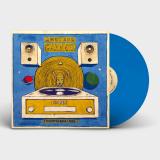
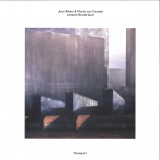
Juan Atkins and Moritz von Oswald - the two indispensable protagonists of the Electric Garden - plug back into the wilderness.
Transport' - the new full length effort of the Borderland collaborative project - brings together a new set of studio-refined sequences aimed at colonizing some of the dark energy that pulsates through those areas that are thoroughly electrified, even if not 'on the grid'.
The Detroit-Berlin axis triangulates to a third point which, like the atomic particle that lives in two places at once, flickers between a form of techno-charged ambience and a futuristic club-jazz which cannot be broken down into constitutive parts. Borderland remains caught in a state of enraptured stillness, invisibly moving between every imagined future for electronic sound making.
The result: a font from which springs serene and exhilarating musical ideas that vibrate with refined energy for sixty seconds in every minute.
Crying Outcast returns with its third release, landing close to home with legendary dub innovator The Rootsman. Bradford’s own and a true pioneering force in experimental dub since the 90s, The Rootsman’s influence runs quietly but deeply through the underground. Roots Return gathers three essential works from his catalogue, including collaborations with Celtarabia and Russ (The Disciples) as Pachakuti, alongside a light-headed reinterpretation from label head Miles J Paralysis. Spiritual and subtly psychedelic, yet deeply rooted in dub tradition throughout, drawing on influences from Pakistani devotional hymns and Celtic folk traditions. An essential modern day EP, displaying a meeting point between the heritage and the future sound of dub music.
Convertible returns to Sweet Free Association with a set of three driving house cuts!
"Sweet Free Association kicks off the year with the return of one of last-years breakout producers Convertible offering up his latest sure shot for the label.
The Free EP reflects its name - a package of cathartic music that is just asking to be played out late and loud in the club - but as always with Convertible, it has that timeless and beautiful quality - these tracks are for life!
Up until this point, Convertible has been a very mysterious figure, with very little online presence, but with this his second EP (and arguably a more upfront release), Free not only proves that he is more than a one hit wonder, but 2026 could be his year!"
All tracks written and produced by Convertible.
Mastered by Frank at The Carvery.
Comes in gradient-coloured sleeve.
2026 REPRESS
Pure, Distilled Dub. Upholding Jamaica's Legacy As Well As Germany's Unequivocally Influential Dub Techno Spirit, Moonshine Recordings Proudly Welcomes Their Next Addition To The Roster. On The Controls For The 9th Full-length Album Release, A True-to-the-roots, All-analogue Musician: Another Channel. Having Put Himself On The Map With Releases On Soukah's Blacksoil Records, Bristol's Transient Audio As Well As On Australian Imprint Modern Hypnosis, It's Now Time For The Album Release, We've All Been Waiting For. No Computer Involved As Impeccable Arrangements And Analogue Reverberations Unfold. Live And Direct In The Original Dub Mixing Fashion, The Augsburg-based Artist Uniquely Transports The Sonic Characteristics Of Rhythm & Sound Into The Present Time.
Subtle Vinyl Crackles Gently Introducing Meditative Beats, 'run Dub' Sets The Pace. Keen Listeners Find Themselves Embedded In Lively Echoes And Reverbs, Left To Bask In Smooth, Sonic Contemplation. Engineered To Soothe The Soul, Timeless Foundation Sound. Intensified Groove Meets Low-frequency Pressure In 'amir Dub' Among Haunting Melodica Fragments. '(yes!) Badness' Unsheathes Its Off-kilter Swing, Vocal And Foley Samples Musing In The Distance - Further Showcasing Another Channel's Technical Prowess. Heavy Chord Stabs And Delicate Overdrive Counterpoint The Immense Scope Of Conjured Space In 'ael Na Dub', Concluding A Beautiful A-side.
Lush Chords Lure Us To The Flip-side - 'solid' Kicks Off With A Staccato Bass-line In The Midst Of Lavish White Noise Surges And Minimal Drums. Rooted In Endless Feedback Trails, Steadily Kept In Check. Previously Teased, The Mighty 'ethiopian Dub' Steps Through In Full Glory, Carried By Militant Drum Motion And Forceful Low-end. On A More Spacious Excursion, 'uranus' Takes A Brightly Lit Stroll Through The Analogue Dub Universe, Led On By Another Channel's Signature Groove Propulsion. Pointing Back Towards A-side, Prolific Dub Proponent Babe Roots Presents His Musical Qualities In A Monumental Remix Of 'run'.
Geoglyph is the new duo project by Alohn and Khey Mysterio, a convergence of two deeply singular practices into a single subterranean signal. Their debut album arrives as the eighth reference on Organic Signs, not as a collection of tracks but as a carved artifact: six inscriptions pressed into vinyl, mapping a sonic territory where time, rhythm and texture are no longer linear, but layered like geological memory.
Through Geoglyph, Alohn and Khey Mysterio convey a message from below, or beyond. A pulse engraved from forgotten times in the basement of reality, reactivated by abyssal basses, vibrating layers and fractured textures. Exhumed from the subterranean strata where psychedelic dub, mineral techno and fractal dubstep fuse into raw energy, their music becomes a point of contact: every beat, every silence, every oscillation acting as a coordinate toward another perception. What unfolds is not simply sound design, but an invocation, rhythms as sigils, timbre as gnosis, signals that seem to arrive already charged with intention.
Across the album, Alohn’s guitar notes fall like cascades through the mix, dissolving at times into controlled feedback and crystallizing into melodic fragments that hover between tension and release. These organic gestures are interwoven with Khey Mysterio’s dense low-end architectures and rhythmic frameworks, creating a constantly shifting terrain: from weightless transmissions and ritualistic voices to moments of overwhelming propulsion where the music suddenly breaks open with tectonic force. The record moves fluidly between meditative suspension and explosive motion, never settling into a single state for long.
A strong undercurrent of what has come to be known as “druidstep” runs through the album, a term coined within the 95 Open Tabs universe to describe a form of dubstep untethered from genre convention, rooted instead in bass as ritual, in groove as invocation. Here it meets dub-techno pulse, psychedelic echoes and high-velocity 4×4 pressure, drawing subtle influence from underground bass cultures without ever becoming referential. The result is a body of work that feels both ancient and forward-leaning, cyclical rather than linear: a living geoglyph that reveals different meanings depending on how (and where) it is read.
As the final movement accelerates into its closing phase, the album releases its energy outward, with frequencies stretched toward their limits, leaving behind the trace of a completed ceremony. In this sense, Geoglyph’s debut stands as a defining moment within the Organic Signs continuum: a record that unfolds rather than explains, offering an experience to be entered, absorbed, and carried. With this release, the label continues to explore new sonic spaces, evolving and expanding while giving deeper meaning to its own essence. A message from beneath the surface, waiting for those willing to tune in.
Más de este género
Reframed is Vitess’ third album, released on his own label Retro Futura, and marks a new turning point in his artistic journey. Unlike his previous albums — the first fully exploring the Retro aesthetic, the second embodying the Futura — Reframed brings these two worlds together within a single, coherent yet eclectic body of work. The album opens with sounds inspired by 90s progressive music and gradually moves toward more futuristic textures. This album format gives Vitess complete freedom: the freedom to build a full, living musical experience, introducing for the first time a strong instrumental dimension — most notably through the use of live drums — and allowing each track to interact with others, transform, or mirror one another, while maintaining a clear narrative thread that guides the listener throughout.
The title Reframed directly reflects this approach. The album is built around tracks conceived as Recto / Verso, offering a form of double listening experience. On the one hand, electronic, club-oriented and progressive versions, designed for energy and dancefloor movement; on the other hand, more introspective, pop and instrumental counterparts, created for listening and storytelling. Starting from the same musical foundation — a vocal sample, a percussion element, or a melody — Vitess develops two distinct interpretations of the same track, generating contrasting yet deeply connected sonic worlds. This method, central to his creative process, highlights his ability to explore a single detail in depth and let a micro-element lead him toward radically different sonic dimensions, while ensuring coherence and a strong identity across the album.
For Reframed, Vitess also collaborates for the first time with other artists: Stupid Flash, ATOEM, and Lucile, selected for their ability to enrich his universe and push it toward new aesthetics. These collaborations recreate a sense of collective energy reminiscent of his early days playing in bands, while remaining true to the essence of the Vitess project: a primarily solitary approach rooted in exploration, experimentation, and embracing the unexpected paths each idea can take.
Italy's Di Saronno (can you see what he did there? Almond liqueur? No?) drops a couple of nicely raw house jams here and the first one features Parris Mitchell. 'Street Walls' has swirling melodies lopping endlessly in the midst of big, lolloping kicks and chopped up vocals bring some playful vibes. 'Out Of Control' is more tight and tech-y - constructed under Di Saronno's Mindbuster alter-ego - with a jazz-inflected but tough MAW style groove and horns up top, adding a softer, more musical counter point. Last of all is Di Saronno's On The Rocks mix of a much loved Inland Knights tune, 'Like This', which flips it into a filter-heavy house jam with swing, jazz and the sort of energy you want in cosy back rooms.
Mark Reeve starts 2026 in prime form with ‘Body Drops’, a quick-fire follow-up to his recent A-Sides contribution ‘My Mind’.The veteran artist has an inimitable touch in the studio going back over 15 years and can always be relied upon to deliver high-impact techno creations. Tracks such as ‘Run Back’, ‘Distance’ and his collaboration with Adam Beyer ‘Nine of You’ make thrilling reference points.‘Body Drops’ found its way onto Drumcode via Bart Skils. “Bart and I have a very good musical understanding and we really respect eachother. So, when he said I think this would fit to Drumcode, I was like ok let me send it. Adam came back to me with a massive yes, and it went from there.”He continues: “I can see that a new peak-time sound is evolving. Very modern and groovy sounding, which is exactly what I like. I guess all the other tracks on Drumcode that have come out recently got me very inspired.”The track is a gem. Driven by an otherworldly stomping riff, it immediately strikes you with its unique sonic character. Huge without being banging, watch this fit a variety of high-impact moments.‘Feed My Fire’ is a rolling big-bodied track that sees elements of prog,techno, psy and silky chords combine for a chugging dancefloor cut.“This is a personal favourite of mine simply because it’s so groovy andfits more intimate sessions. But I also tested it in front of bigger crowds and it really does the job.
- 1: Urn Burial
- 2: The Redness In The West
- 3: The Third Migration
- 4: They Came Like Swallows
- 5: The Living Theater
- 6: The Oceans Are Crying
- 7: Insight
Black Vinyl[30,67 €]
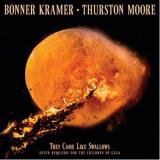
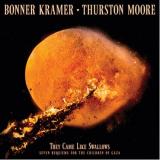
They Came Like Swallows is the first album-length collaboration between Thurston Moore and Kramer (now officially Bonner Kramer), two giants of alternative/ experimental music. The accomplishments and influence of these two artists in the world of independent music cannot be overstated and the result of their artistic union is a startlingly cohesive statement that burns through landscapes of primitive outsider rock, avant-garde composition, progressive ambient and further locales boldly and beautifully unnamable. “Kramer and I reconnected in Miami, Florida, a few years back, many many years after each of us had departed NYC on separate life adventures. It was only a matter of time before Kramer and I started making plans to record together and with his irrepressible due diligence he quickly set up a mobile recording contraption in the pad I was decamped in, the Florida sunshine flowing through the palm leaves, lithe lizards skittering across the windowsills, and we just went for it.
Kramer had the idea to cover a Joy Division tune, a left turn from the improvisations we had been tracking, though wholly in keeping with both our sensibilities of light and dark unifying in transcendent songwriting, both of us devotees of 'the song' as well as 'the freedom.’ What transpired is They Came Like Swallows, a session we immediately felt should exist as a prayer to the war-torn souls of the families of Palestine continually decimated by the brutality of genocide. We agreed beyond words to offer our music as a sonic activism and as a beneficent energy. This album is our duo exchange for human dignity, it is our soul music for any semblance of a peaceful planet.” ~ Thurston Moore “For the first time in our nearly 45 years of friendship, we had identical time windows open to make a record together,” recounts Kramer. After all this time not a moment is wasted as the duo immediately taps into the heightened core of improvisational tension across these seven offerings. Volcanic opener “Urn Burial” notches a similar historic union (John Cale and Terry Riley) to meet the circumstances of the moment, with swirling mists of organ and pounding toms over guitar that thickens the atmosphere with jagged, grimy dissonance.
Solemn strings open the second track, “The Redness In The West,” with Kramer’s cello and viola in dueling bow beneath the high tension drive and sustain of Thurston’s electric guitar, tapping out a Morse code of tension that mounts endlessly into a fog of inevitable war by the end. Moore and Kramer’s sense of experimentalism is in free and full grandeur throughout They Came Like Swallows, though the duo keep a strong and constant sideways eye on melody, composition and architecture, to the ends that any strict lines between song and improvisation are blurred beyond qualification.
As if to punctuate this point, Swallows closes with a nightwork cover of Joy Division’s “Insight,” a doleful coda that breathes out with a solemn inner grace under Thurston’s instantly stylistically recognizable guitar melodies as they weave into he and Kramer’s unison voices. As the lone vocal piece and only traditional ‘song’ form on the album, “Insight” is unique to this set and as a closing statement draws connective lines back to the kind of dynamic, electrified melodicism that wove deep, melancholy patterns into the untamed fire of Sonic Youth’s Sister and Daydream Nation. In the album’s final moments, the two voices repeat the lyric “I’m not afraid anymore” as mantra, underscoring the heavy, unsettled themes and methods that preceded it. Kramer describes the creative process of They Came Like Swallows: “I had composed and recorded a few pieces at my home studio over the course of a couple weeks. Thurston was spending the winter in South Florida, so I flew down and spent a few days recording his guitar parts in his home there. Watching him spontaneously compose his parts was pretty astonishing, to say the least. Once we'd finished working on those pieces, we began improvising and following wherever the music pointed us, and another few pieces were born. We got straight to it, without anything driving us other than the joy of finally working together.
My personal goal was to remain present and catch as many surprises as I could from Thurston's guitar work, and there were plenty during those few days. We had a fucking blast.” Thurston’s contributions here will be readily familiar to any acolytes of his other works, the through-line between his inspired playing, cradled in Kramer’s meticulous, solid arrangements. “If I had to make this record again, I'd do it all exactly the same way,” Kramer says. “It’s like jazz, you don't think about it. You just do it. It was miraculous, and you don't fuck with a miracle.”
They Came Like Swallows is the first album-length collaboration between Thurston Moore and Kramer (now officially Bonner Kramer), two giants of alternative/ experimental music. The accomplishments and influence of these two artists in the world of independent music cannot be overstated and the result of their artistic union is a startlingly cohesive statement that burns through landscapes of primitive outsider rock, avant-garde composition, progressive ambient and further locales boldly and beautifully unnamable. “Kramer and I reconnected in Miami, Florida, a few years back, many many years after each of us had departed NYC on separate life adventures. It was only a matter of time before Kramer and I started making plans to record together and with his irrepressible due diligence he quickly set up a mobile recording contraption in the pad I was decamped in, the Florida sunshine flowing through the palm leaves, lithe lizards skittering across the windowsills, and we just went for it.
Kramer had the idea to cover a Joy Division tune, a left turn from the improvisations we had been tracking, though wholly in keeping with both our sensibilities of light and dark unifying in transcendent songwriting, both of us devotees of 'the song' as well as 'the freedom.’ What transpired is They Came Like Swallows, a session we immediately felt should exist as a prayer to the war-torn souls of the families of Palestine continually decimated by the brutality of genocide. We agreed beyond words to offer our music as a sonic activism and as a beneficent energy. This album is our duo exchange for human dignity, it is our soul music for any semblance of a peaceful planet.” ~ Thurston Moore “For the first time in our nearly 45 years of friendship, we had identical time windows open to make a record together,” recounts Kramer. After all this time not a moment is wasted as the duo immediately taps into the heightened core of improvisational tension across these seven offerings. Volcanic opener “Urn Burial” notches a similar historic union (John Cale and Terry Riley) to meet the circumstances of the moment, with swirling mists of organ and pounding toms over guitar that thickens the atmosphere with jagged, grimy dissonance.
Solemn strings open the second track, “The Redness In The West,” with Kramer’s cello and viola in dueling bow beneath the high tension drive and sustain of Thurston’s electric guitar, tapping out a Morse code of tension that mounts endlessly into a fog of inevitable war by the end. Moore and Kramer’s sense of experimentalism is in free and full grandeur throughout They Came Like Swallows, though the duo keep a strong and constant sideways eye on melody, composition and architecture, to the ends that any strict lines between song and improvisation are blurred beyond qualification.
As if to punctuate this point, Swallows closes with a nightwork cover of Joy Division’s “Insight,” a doleful coda that breathes out with a solemn inner grace under Thurston’s instantly stylistically recognizable guitar melodies as they weave into he and Kramer’s unison voices. As the lone vocal piece and only traditional ‘song’ form on the album, “Insight” is unique to this set and as a closing statement draws connective lines back to the kind of dynamic, electrified melodicism that wove deep, melancholy patterns into the untamed fire of Sonic Youth’s Sister and Daydream Nation. In the album’s final moments, the two voices repeat the lyric “I’m not afraid anymore” as mantra, underscoring the heavy, unsettled themes and methods that preceded it. Kramer describes the creative process of They Came Like Swallows: “I had composed and recorded a few pieces at my home studio over the course of a couple weeks. Thurston was spending the winter in South Florida, so I flew down and spent a few days recording his guitar parts in his home there. Watching him spontaneously compose his parts was pretty astonishing, to say the least. Once we'd finished working on those pieces, we began improvising and following wherever the music pointed us, and another few pieces were born. We got straight to it, without anything driving us other than the joy of finally working together.
My personal goal was to remain present and catch as many surprises as I could from Thurston's guitar work, and there were plenty during those few days. We had a fucking blast.” Thurston’s contributions here will be readily familiar to any acolytes of his other works, the through-line between his inspired playing, cradled in Kramer’s meticulous, solid arrangements. “If I had to make this record again, I'd do it all exactly the same way,” Kramer says. “It’s like jazz, you don't think about it. You just do it. It was miraculous, and you don't fuck with a miracle.”
Detroit Techno Militia! Based in Detroit, J.Garcia has been a stalwart in Detroit’s underground music scene. DTM009 is his first release on Detroit Techno Militia. In the classic DTM tradition: all three cuts are aggressive to the core. They display harder side of the beat-down that Detroit Techno music delivers.
The Greek artist comes back with a fully realized EP this time, that goes deeper into his personal world. This is not pointless or flashy music. It has soul and character.
It is music that you can listen the personality of the artist beneath the layers and sound design.
Another strong statement from a producer who is quietly building his own language.
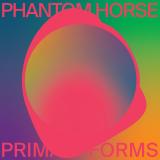
After their last album six years ago, "Primal Forms," the new album by Phantom Horse, finally arrives. The German duo of Ulf Schütte and Niklas Dommaschk have long established a reputation for expertly crafted, hypnotically slow-burning electronic music, and we do not hesitate to say that "Primal Forms" stands among the epitomes of their discography.
The sequencing of "Primal Forms" cannot be underestimated. It is an album in the classic sense. It demands to be listened to in its entirety, which also points to a closer affinity with Krautrock. Likewise, a touch of dub is perceptible, wafting around the songs, which, as usual, bear clandestine titles. It is not unreasonable to see in these compact compositions a clear statement against multitasking.
Phantom Horse are not trumpeters of dystopia. They present themselves resolutely, almost stoically, turned away from the world. This turning away is clearly a statement that can be contemplated in the Mariana Trench as well as in comet belts. In any case, it is best experienced in a space without any human beings. This does not mean that grumpy hermits are tinkering with synths behind closed shutters, armed with wooden walking sticks. This is still open minded music with a connection to current developments. The approach itself is what is audible, and with it, Phantom Horse proves once again that their main connection to time is timelessness.
In an age of all-encompassing distraction on every sensory, thematic, and semantic level, Phantom Horse explores the possibilities of reduction, searching for simplified melodic arcs without resorting to the vocabulary of classical minimalism. The overall impression is more electronic; the slowly shifting, polyrhythmic compositions repeatedly lead to a peculiar danceability. However, these are perhaps the dances of mechanical birds, undeterred by anything.
Written and produced in Hamburg, Nijmegen and Ojén by Niklas Dommaschk & Ulf Schütte
Mastering by Rafael Anton Irisarri at Black Knoll
Artwork by Daniel Castrejón
Tajemnica is a transgression—too gentle for dancing, too euphoric for standing still. Sparse, scarce, and subtle, the new album by Polish performance artist, musician, and poet Wojciech Kosma, aka spalarnia, eagerly explores modern dance genres, experimental production, and nostalgic electronics to surrender to what is truest—essential song forms, melodies, harmonic and rhythmic basics, the most resonant feelings.
Sung in spalarnia’s trademark soft, low, almost tactile voice, the eight hypnotic songs tell stories of closeness and love, and their favored companions—pain and heartbreak. In “Bliżej” he sings “I love not loving you / I want to be a part of you.” And in “Jedyna”—the album's single—he states: “You are the only one / there is no other me / only the one for whom you are the only one.”
Contrary to the meaning of its Polish title (Tajemnica translates to “secret”), the album that moves between ghostly ambient pop, languid R’n’B, and Eastern European folk doesn’t reveal anything outright—the music only points to where the secrets might lie. One can choose whether to hear them or not.
- 1: Can't Get Enough (Scorpions)
- 2: Nausea (X)
- 3: Cities On Flame With Rock And Roll (Blue Öyster Cult)
- 4: Rotten To The Core (Rudimentary Peni)
- 5: Mother Mary (Ufo)
- 6: Tragedy (Bee Gees)
- 7: Bloodstains (Agent Orange)
- 8: Beat My Head Against The Wall (Black Flag)
- 9: St. Vitus Dance (Black Sabbath)
- 10: Foreign Policy (Fear)
- 11: Rocket Ride (Kiss) (Bonus Track)
NEON GREEN VINYL[24,58 €]
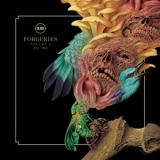
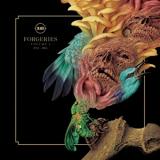
There comes a point in every bands life when originality stops being a virtue and honesty takes the wheel. On their 11th long-playing record: Forgeries (72-84)-(16)- return to the impulse that first dragged them into loud rooms and bad ideas: the urge to steal what we love and make it semi-unrecognizable through devotion. We have partnered with Heavy Psych Sounds Records to release a collection of covers that function less as homage and more as a possession to be given away. The artworkrendered by the ever-amazing Maraldcompletes the ritualiconicunsettlingand unafraid. Weve always believed that a great cover is not mimicry but revelation. Its finding a song that's already lived inside you since youth and letting it crawl outbruised and changed. From the early 90s onward-(16)- have treated covers as translations rather than as replicasacts of tribute and emulationfiltered through distortionfatigueand lived experience. These are songs that taught us how to standhow to falland how to keep going. In our collective headthis album exists because these songs demanded it. Because they screamed copy meand we listened. In the endForgeries (72-84) stands as both a thank you note and a thefta reminder that all music worth a damn is borrowedbrokenand passed on between friends. The selections on Forgeries 72-84 span eras and attitudesunified not by genre but by necessity. Each track is a document of obsessionof influence absorbed and re-expressed without permission.
- 1: Can't Get Enough (Scorpions)
- 2: Nausea (X)
- 3: Cities On Flame With Rock And Roll (Blue Öyster Cult)
- 4: Rotten To The Core (Rudimentary Peni)
- 5: Mother Mary (Ufo)
- 6: Tragedy (Bee Gees)
- 7: Bloodstains (Agent Orange)
- 8: Beat My Head Against The Wall (Black Flag)
- 9: St. Vitus Dance (Black Sabbath)
- 10: Foreign Policy (Fear)
- 11: Rocket Ride (Kiss) (Bonus Track)
Black Vinyl[21,81 €]
There comes a point in every bands life when originality stops being a virtue and honesty takes the wheel. On their 11th long-playing record: Forgeries (72-84)-(16)- return to the impulse that first dragged them into loud rooms and bad ideas: the urge to steal what we love and make it semi-unrecognizable through devotion. We have partnered with Heavy Psych Sounds Records to release a collection of covers that function less as homage and more as a possession to be given away. The artworkrendered by the ever-amazing Maraldcompletes the ritualiconicunsettlingand unafraid. Weve always believed that a great cover is not mimicry but revelation. Its finding a song that's already lived inside you since youth and letting it crawl outbruised and changed. From the early 90s onward-(16)- have treated covers as translations rather than as replicasacts of tribute and emulationfiltered through distortionfatigueand lived experience. These are songs that taught us how to standhow to falland how to keep going. In our collective headthis album exists because these songs demanded it. Because they screamed copy meand we listened. In the endForgeries (72-84) stands as both a thank you note and a thefta reminder that all music worth a damn is borrowedbrokenand passed on between friends. The selections on Forgeries 72-84 span eras and attitudesunified not by genre but by necessity. Each track is a document of obsessionof influence absorbed and re-expressed without permission.
- A1: Jackson Mico Milas - Sea, Interior
- A2: Majid Bekkas & Magic Spirit Quartet - Annabi
- A3: Jesse Bru - The Coast
- A4: Loket - Afternoon At Barenquell
- B1: Superpitcher - Yves (Exclusive Lnt Edit)
- B2: Scott Orr - Scott B3 Barry Can't Swim - Sometimes I Feel So Alone
- B4: Marigold Sun - Here Lies Love
- B5: Barry Can't Swim - Chala (My Soul Is On A Loop)
- B6: Freddy Da Stupid - Back To Pangea Part Ii (Jazzapella Version)
- C1: Factory Floor - How You Say(Daniel Avery Remix)
- C2: Ronald Langestraat - Lowdown
- C3: Lance Desardi - The Power Of Suggestion
- D1: O'flynn - Kola
- D2: Accelera Deck - This Bliss
- D3: Pépe - Goma (A-Mix)
- D4: This Mortal Coil - The Lacemaker
- D5: St Francis Hotel - Dawn
- D6: Barry Can't Swim - Ferdinand Magellan (Exclusive Felt Cover Version)
- D7: Seamus - Ultrasound (Exclusive Lnt Spoken Word Track)
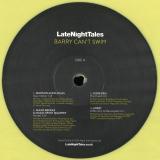
In the last two years, Barry Can’t Swim has released two albums – When Will We Land? and Loner. The debut was nominated for a Mercury Music Prize, winning 2024’s Best Dance Act on BBC Radio 1 and being nominated for Best Dance Act at the BRIT Awards in the same year. The latest album, 2025’s Loner, hit the top ten in the UK charts and was number one in the dance charts. This summer, Barry Can’t Swim cemented his position as one of the most singular new voices in electronic music with a gangbusting performance as a headliner at All Points East in London’s Victoria Park, building on his back-to-back performance with Bonobo at Coachella in 2024. Barry’s Late Night Tales mix brings together disparate styles and forms them into a coherent narrative. The powerful house tracks, like Lance DeSardi’s ‘Power of Suggestion’ and Daniel Avery’s remix of Factory Floor, intertwine with the abstract grooves of Freddie Da Stupid or Ronald Langestraat’s leftfield reading of Boz Scaggs’ ’70s smash ‘Lowdown’. There are exclusive tracks from Barry Can’t Swim himself (in the form of new single ‘Chala’ and an exclusive edit of Superpitcher’s ‘Yves’) and from friends and contemporaries, like Ninja Tune labelmate O’Flynn. Leaving aside the obvious quality of the mix, with its serpentine twists and dramatic turns, you can tell Josh is a fan of this series by bringing in his own personal poet, the brilliant Seamus, for the spoken word section right at the end. He’s a one-man Late Night Tales programmer.
Audaciously innovative sound designer/producer/live artist Enrico Sangiuliano reaches #0 in his countdown from ‘NINETOZERO’ on his eponymous ephemeral imprint, triggering its built-in autodestruct by the release of provocative 3-track EP ‘Absence’, out March 19th on vinyl & digital. The digital EP will also feature an Edit of ‘Step Into The End’.
The Italian tech maestro and artistic pioneer eschews populism, yet still storms charts & wins hearts – notably/recently in his unsettling, compelling manifesto x battle cry ‘The Techno Code’. Says Enrico of his label, ‘NINETOZERO is a cycle of listening, making, and letting go. Born from silence, shaped by space, directed by reflection, altered by change, revealed by glitch, unified through interconnection, lifted toward transcendence, refined by discipline, clarified by chaos, and finally returned to absence.’
On his ‘Absence’ EP: ‘With ‘Absence’ we come full circle, back to the womb of nothingness but charged with the echo of everything we have experienced. It is an ending, yes, but also an invitation. A new kind of silence is born, shaped by the memory of every frequency we unleashed.’ Enrico Sangiuliano can thrill listeners with his music, but dares to challenge, to trust them.
Main track ‘Step Into The End’: a full-on barrage of trustworthy techno danceability & energy, bookended by soulful violin, high horns & sirens, with spoken incantations as if summoning to a sacred rite. A ten-minute timeless dance track as ‘all we’ve learned converges into a single point where presence & silence merge.’
Title track ‘Absence’: The (Techno Code-esque) Voice speaks of sound, space, absence, trace... the track’s background noise is the almost- silence of his studio ‘through a magnifying glass’.. His breathing can just be heard in the recording. Melodic, beautiful, free-form chords in the middle section act like a breakdown in reverse. ‘A provocation, a track of silence, incidental noise. A tale of a story that just finished, but also a background for a story to be shaped. No one is intentionally performing for us. Here, the responsibility and work of listening is on you, to figure out what you can hear and what to make of it, to craft your own soundtrack based on the sounds that surround you, beyond the track. You can perform your own version yourself. Close your eyes and just listen. Engage with your environment. Be present. Expand your senses. Enjoy absence.’
‘The Aftermath’: a 40-second provocative coda. A snatch of stirring conversation signing off the EP and label alike. What will be launched post-zero by Enrico Sangiuliano? Watch this space, this absence.
2x12" Brown Marbled Vinyl 2026 Repress
A foray into deep, organic, cinematic dance music. Subterranean bass, intercepted alien transmissions, and stripped down dance-beats meld with sheets of sounds that roll over the listener like waves lapping up on the shore. Shimmering, watery, brain hemisphere synchronization tones caress and melt stress away. Dance floor friendly tracks that work equally well in one s private listening space. Immersive music with a distinctive aquatic quality. Inspired by Detroit & Berlin s dance genres, but tempered by more ambience / atmosphere than one would expect from those genres. Music without harshness or rough edges. Fuzzy, out-of-focus, soft-sounds that slip in and out of the listener's consciousness. Uniquely melds current dance rhythms with lushness and spirituality. Synesthetic sounds that trigger sensory experiences in cognitive pathways other than hearing smells of perfumes, thoughts of colours, and altered perception of time and space. Psychoacoustic, cerebral, electronic listening music for those wanting a different experience than the current harsher, darker dance trends are offering. Responsibly made gentle music designed from the ground-up to have a positive effect on the nervous system and leave the listener invigorated and recharged. Chi-building sonic balm. Timeless, exotic dance tracks for a new school of electronic music enthusiasts who are searching for beautiful sounds, crafted with a higher purpose in mind.