Comet Records presents the Tony Allen & Afrika 70 reissue series with the classic late seventies first four solo albums of Tony Allen remastered and restored: Jealousy, Progress, No Accomodation for Lagos & No Discrimination, all coming in an heavy Deluxe Tip-On Jacket.
Tony's solo album, No Discrimination, marks an important turning point in Tony Allen's musical life. Tony had recently left Fela's band, which was clearly an emotional yet necessary change as Allen sings of love and brotherhood throughout his fourth solo album. No Discrimination, both in composition and sound, is a blueprint for the future of Afrobeat, decades ahead of its time. The songs are a mixture of old and new - fusing the classic Afrobeat compositional style with modern production and ideas. Classic tunes like "No Discrimination" and "Ariya" pushed boundaries for what Afrobeat could be, which a wave of Afrobeat bands would pick up on decades later.
With No Discrimination, Tony begins to move Afrobeat into the future, which he would continue doing for the rest of his career.
Tony Allen was a musical and compositional visionary, and this album finds him beginning to explore that vision outside of Fela's immense gravitational pull. They are the start of a new era in Tony's fruitful career as a solo artist, opening the floodgates for his distinctive Afro-Funk sound and laying the foundation for the next generation of Afrobeat musicians to come.
Search:point no point
Underground rock festered and splintered as it spread through the U.S. in the mid-’90s, the alternative boom giving rise to microcosmic regional scenes singularly focused on feral powerviolence or screamo songs about breakfast. Boston’s Karate emerged as a force that could grip a national youth movement whose disparate tastes still commingled in the inky pages of fanzines overflowing with florid prose and on concert calendars for volunteer-run DIY spaces, community centers, and bowling alleys. In this world, Karate’s music was an enigma, one equally inviting to sneering punks and highfalutin indie-rock aficionados.Their 1996 self-titled debut, issued on Southern Records, set the standard.
Lasooing together white-knuckle posthardcore tension, sharply focused slowcore serenity, and resplendent jazz complexity, Karate eschewed settling in any one definiable style. But they certainly used the language of punk to get their point across; occasionally, guitarist Geoff Farina abandons his warm, hushed cadences for a hoarse shout that made him sound ragged, intensifying an aggression that burst out with every snaggletoothed guitar riff or drum snap that went off like canonfire.
Few followed their path—but who could keep up? Karate could make pensive moods blossom into feverish rollicking (“What Is Sleep?”), gracefully tip-toe around aggressive punk explosions without getting bent out of shape (“Bodies”), and stretch out
slowcore’s quietest reveries till their reflective notes sound ripped from an improvisational jazz session (“Caffeine or Me?”). Karate formally introduced the trio as a vital part of an independent U.S. punk scene stubbornly flowering in the face of the major labels’ ’90s harvest.
Priya Ragu’s story is just as fascinating as her music. She was born and raised in Switzerland following her parents' escape from the Sri Lankan civil war in the early eighties. As she grew older, the Swiss and Sri Lankan cultures began to clash. Although they are now fully supportive of their daughter, Priya’s parents were initially strict, she wasn’t encouraged to listen to Western music or hang out at the mall after school. However, her musical ambitions soon began to take root.
At the age of 16, she performed Alicia Keys’ ‘Fallin’’ to her brother, who insisted she perform at a show he was doing with his rap group. Her father discovered their plans and stopped her from performing, but Priya wasn’t deterred. She instead made her ambitions more covert, sneaking out to jam sessions and open mic nights, before decided to fully pursue her ambitions by moving to America with the help of her friend, the rapper Oddisee. Working remotely with Japhna, the pair created several tracks which would provide the launchpad for where she is today.
‘damnshestamil’ Priya Ragu’s debut mixtape is a result of her highly productive creative partnership with her producer and brother Japhna Gold, featuring all Priya’s singles to date, including the international sensation ‘Chicken Lemon Rice’, ‘Good Love 2.0’, ‘Forgot About’ as well as her most recent single ‘Kamali’ which launched with a BBC Radio 1 ‘first play’ – with Annie Mac, and most recently A-Listed with the BBC Asian Network – showing no signs of slowing down.
Priya has coined the term ‘Raguwavy’ for her vibrant sound which defies standard genre definitions. It signposts the next era of forward-thinking R&B and electro-pop by tapping into the sonic accents of her Sri Lankan roots.
The current single ‘Kamali’ was inspired by a short BAFTA nominated film of the same name. It explores the story of Suganthi a single mother living in a small village in India, who was raised in a culture in which gender roles are clearly structured and as a result she stayed at home until she was old enough to marry. Suffering through abuse– she escaped to create a better future for herself and her daughter – Kamali. Musically and visually Priya connected to the story of Kamali and brought her world to life through song, placing emphasis on the important of motherhood and the circle of life.
As the road to the mixtape approaches - Priya fulfilled a lifetime ambition when she played a sold-out show as part of the Montreux Jazz Festival in Switzerland. Later Latitude Festival in July, and scheduled to perform at All Points East in August, where she begins to peel back the layers of her first body of work, to a live audience.
She will end the year on a high by embarking upon her long awaited debut UK & European headline tour. Consisting of nine shows spanning six countries, the tour includes a London show at the Jazz Café which is now sold out and will culminate with a homecoming show in Zurich a week later.
Colkin, who is based in Wuppertal, is one of those guys who pushes things forward in the subcultural field and follows words with deeds. Together with Nico aka dont-call-him-molly and his other partners, he has been running the mauke_club in Wuppertal for several years. An ultimate melting point for dance culture, scene connoisseurs - as well as newcomers who want to be smoothly introduced into the things we love. Not to forget his considerable discography.
Besides the fact that he is a fine guy and we have been in exchange with him for a long time, we appreciate his taste in music very much. This seems to be mutual, as the ep he recorded fits us like a glove. Three what we find to be great, timeless house productions that forget the Covid circumstances for a brief moment and bring the dance floor to life with your eyes closed. These tracks will accompany us until the clubs reopen, That's for sure!
We are also pleased that Javonntte and melchiorsultana have been musical influences on these productions, which were recorded in Paris during Colkin's stay there. This obviously had a considerable influence on the naming. Whether in Paris, Wuppertal or Düsseldorf - we are actually looking forward to our fifth release with Colkin!
Emerging from the Toronto warehouse scene, Tush is a rising electronic music act powered by Kamilah Apong and Jamie Kidd. Taking inspiration from electro funk, early disco, post-punk and '90s house; their debut album 'Fantast' embodies the rawness, vulnerability, and intimacy of the dancefloor.
'Fantast' kicks off with the slow burning 'Wavy Baby', an invitation to get close, get intimate and submit to the groove: "Vulnerability is the key to us getting to that next step of intimacy". Up next is lead single 'Chrysalis', a high octane ride through a technicolour fantasy world of heady synths and driving rhythms that propel Kamilah's voice into an erotic stratosphere.
'Don't Be Afraid' is about having the courage to love defiantly, urgently, and with intention. Driven by Jamie's infectious bass lines and FX blasts, it smoothly transforms into an uplifting gospel-infused track.
Two high points of the album, 'Jessica F***' and 'Marathons', highlight Tush doing what they do best. These tracks are the sound of the warehouse scene that birthed the project in the first place and the late night jam sessions that were full of possibility pre-pandemic. Here, Tush really stretch their improvisational muscles - the interplay of raw soulful vocals, hypnotic basslines, synth pads, and heavy disco rhythms is at the core of what makes them so invigorating.
'Fantast' closes with the uplifting sunrise energy of 'My Joy', the light at the end of the tunnel. "This song is enchanted by the backing vocals of my friends and chosen family, who are my cornerstones to working through the wonderful mess that I am". Kamilah adds "The track gives me this feeling that - no matter how hard the world tries to beat it out of me - I can and I have had to work hard to cultivate my own happiness in my own sacred spaces - one of those being Tush. Ultimately, this is all I really need".
Martin Dumas Jr, Paul Coleman and Morris Browns, sublime 70s soul / 2 Step LP is IMO is some of the best sophisticated soul from the 1970s, Production, Vocals, Writing are all on point. On this 45 we are not messing around, two of the best cuts from the band 'Lover's Holiday and 'Love Ain't Easy', first time on 45 for them both. Licenced direct from the band members. You know what to do!
AUGUSTANA-LIVE (RECORDED FROM A LIVESTREAM EVENT) was recorded live in December of 2020. The concert recording was a long awaited arrival for fans of the band, who’d never released a live album until that point. In a solo performance setting, Dan Layus plays through some of the most well loved music from the groups catalogue in a chronological order. The concert is intimate and authentic, nuanced and powerful. He makes the songs feel experienced and lived in, and cements a moment into a recording that mirrors what he’s done on stages across the world for so many years. This LP marks Augustana's first vinyl release in over 10 years.
Dan Layus has fronted Augustana as it’s singer and primary songwriter since its formation in 2002. Building a dedicated following of fans off the backbone of hits like “Boston”, “Sweet and Low” and “Steal Your Heart”, Augustana have gone on to release 5 Full Length LP’s and multiple singles and EP’s. As a touring artist for over 16 years, Augustana have performed throughout North America, Europe and Asia and have opened for artists across multiple genres, including One Direction, The Chicks, Snow Patrol, OneRepublic and Counting Crows.
The most recent LP release AUGUSTANA-LIVE (RECORDED FROM A LIVESTREAM EVENT) was recorded live in December of 2020. The concert recording was a long awaited arrival for fans of the band, who’d never released a live album until that point. In a solo performance setting, Dan Layus plays through some of the most well loved music from the groups catalogue in a chronological order. The concert is intimate and authentic, nuanced and powerful. He makes the songs feel experienced and lived in, and cements a moment into a recording that mirrors what he’s done on stages across the world for so many years.
New York City 4-piece deliver a modern blues rock masterclass on their feisty debut album.
“A timeless classic rock sound that revels in lean riffs and raw emotion.” – Afropunk
In an age where artistic merit is awarded to those who shout the loudest, Dakota Jones pride themselves on an unwavering ability to leave a lasting impression. Spearheaded by Tristan Carter-Jones fierce and unashamedly uncensored songwriting, the band’s fast-growing reputation as formidable live act has stamped Dakota Jones with the hell-hath-no-fury power of Chaka Khan, the wild spontaneity of Janis Joplin, and the honey-dripping sensuality of Marvin Gaye. Their debut album’s message of proud black heritage and triumphant queerness manifests itself in Carter-Jones’ ability to challenge norms of adulthood and femininity as she takes a deep dive into some of life’s most visceral emotions.
Tristan Carter-Jones: “I’m a black, queer woman expressing myself through love and music. Some folks still find that to be a transgressive act in and of itself. I work to fight that idea. I write a lot about my
Continued over…
sexuality and the ways in which I express it. Songs about sex and love bounce back and forth between songs about heartache, hangovers and self-medication, and the pleasure and pain of truly finding yourself. I don’t think we get to hear these things from a woman’s mouth as often as we should.”
Serving as an instant tone setter, the album opens with the line "Stretch marks from growing pains" with Carter-Jones lamenting the woes of adjusting to adulthood on lead single ‘Did It To Myself’ - her husky and commanding vocal instantly asserting its place in the spotlight. The atmosphere soon turns steamy on the flirtatious title track ‘Blacklight,’ whilst fantasising over a modern-day Bonnie & Clyde love affair the funk-laden ‘We Playin Bad Games’ packs a punch with its tale of free spirits entwined in a haze of late-night revelry.
Elsewhere, stories of caustic heartache twist the knife into wounded blues guitar riffs on ‘Like That’ and ‘Black Magic (That Power)’, in which Carter-Jones’s stoical voice never once faulters as she mourns the memories of a previous flame. Personal prayer ‘Lord Please’ recites empowered words of reassurance, and solidarity in the face of injustice erupts into a rallying cry for change on the classic sounding ‘Noise’ – written as a reaction to the 2016 US election. “I woke up after the election feeling pure panic and fear in my body,” remembers Tristan. “I wanted people in a place of privilege to stand up for what I was feeling, stand up for injustice, stand up for all of the things we need to change as a country. I wanted their rage, and I wanted their noise.”
Finally, the band’s tender tropes of togetherness eventually boil into gritty, guitar-slung balladry on hidden bonus track, ‘California,’ where, knees buckling under the weight of past trials and tribulations, Carter-Jones sets out on one final journey of self-discovery, hastily pulling out from reality and leaving only a dust cloud in her wake.
Production comes courtesy of the Grammy-winning John Wooler, ex Virgin Records A+R and founder of the Blues label Pointblank who has worked with everyone from John Lee Hooker and John Hammond to Isaac Hayes and Van Morrison. The album also features a wealth of hugely talented and accomplished musicians, including backing vocalist Kudisan Kai, former backing vocalist for the likes of Elton John, Chaka Khan, Anita Baker, Natalie Cole, Beck, Sting, Mary J. Blige and Jill Scott. Also present; Grammy winning keyboardist Jon Gilutin, who has spent years working with some of the industry’s most respected and iconic artists including Linda Ronstadt, James Taylor, Lady Gaga, Willie Nelson, Aretha Franklin, Diana Ross, Jackson Browne, Celine Dion, Bonnie Rait and Carole King. You’ll also hear the talents of acclaimed guitarist Michael Toles. Most well-known for being a part of the Stax Records group The Bar Kays, and for his contributions on famous records by Issac Hayes, Al Green, BB King, Johnny Taylor, Rufus Thomas, Albert King to name just a few.
Dakota Jones are a rising funk, soul and blues rock band from Brooklyn, New York City. Comprising of Tristan Carter-Jones (vocals), Scott Kramp (bass) Steve Ross (drums), and acclaimed musician Randy Jacobs (guitar) - former member of Was(Not Was) who has recorded for Seal, Bonnie Raitt, Tears for Fears, Elton John and many others. Though Carter-Jones and Ross first met in 1999 whilst at primary school, the band formed years later following a series of home jam sessions in 2016. The band’s collective alias originates from Carter-Jones’s middle name, ‘Dakota’. Dakota Jones have since released a string of acclaimed singles and EPs as well as received international attention for their track, ‘Have Mercy’ after it featured on Netflix’s 2019 film, Always Be My Maybe starring Ali Wong and Randall Park – and now after years of hard work and determination, the band are finally set to reveal their long awaited debut album. “We’d been regularly releasing EPs, waiting for our chance to come, and wondering what that would look like,” says Carter-Jones. “We didn’t realise until we started making this record that we needed to stop waiting for some break to come along, and just do it ourselves, independently.”
“Black Light really dives into a place of funk soul and everything that comes with it. There’s joy and dancing, sleek guitar licks and funky bass slaps. There’s pain and longing, and there’s the feeling of relief when you come out of that place and find your joy and purpose again. Black Light is my story.”
“One of the vital pieces in the jigsaw puzzle of ’90s British rock music.” Pat Gilbert, Mojo magazine While his own name has yet to grace an album front cover, for more than a twenty years Gem Archer has been a key contributor to some of the UK’s highest profile guitar bands, beginning with Oasis in 2000, Beady Eye in 2009 and the touring version of Noel Gallagher’s High Flying Birds since 2015.
Before all that there was Heavy Stereo, caught up in the mid ‘90s music maelstrom where their only album ‘Déjà Voodoo’ took its place alongside Paul Weller’s ‘Stanley Road’, The Charlatans’ ‘Telling Stories’, Super Furry Animals’ ‘Fuzzy Logic’, Supergrass’s ‘I Should Coco’, The Boo Radley’s ‘Giant Steps’, Ride’s ‘Carnival Of Light’ – and, of course, ‘Definitely Maybe’ and ‘(What’s The Story) Morning Glory?’ by Oasis. It is easy to understand why any album could get overlooked in such exalted company. ‘Déjà Voodoo’ and the four singles – ‘Sleep Freak’, ‘Smiler’, ‘Chinese Burn’ and ‘Mouse In A Hole’ – all display Gem’s deeply held affection for old-school rock’n’roll values. In 1994/95, the outside world came into sync with his fondness for The Jam, Sly Stone, Hendrix, The Beatles, the Stones, The Small Faces, Motown, Stax, glam rock, punk rock and all other points on the compass of rock’n’roll cool, which coalesced into what became known as Britpop. And while those influences are in ‘Déjà Voodoo’ for all to hear, the album is far from derivative; this is a collection of well-constructed pop songs that still retain their swagger and zest.
Unavailable since it was first released on Creation Records in 1996, this new 25th anniversary 180g clear vinyl edition is a faithful recreation of the original 12-track LP.
After the release of ‘Kuarahy’ concurred with the blast of the worldwide pandemic and all the consequences it has generated, WHITE STONES - Martín Mendez’s project (OPETH’s bass player) - are ready to launch their second record.
When WHITE STONES released ‘Kuarahy’ they became the first Spanish band signed to Nuclear Blast Records, cementing their first album as an unprecedented milestone. Now, with ‘Dancing Into Oblivion’, the band returns with a more compact sound, having been hard at work ensuring the utmost attention to every detail for a result that is even better than the first record.
The topics covered on this second album draw on the feelings that Martín himself affirms he has lived through during the lockdown imposed by the covid-19 pandemic. “I started it very calmed in March when »Kuarahy« was released and the lockdown started. I wrote the new record and it just flowed so well. It’s my point of view, of the feelings I had during the lockdown period, in this weird year. I took advantage of the moment and I feel excited about it”, reveals the musician.
The most outstanding musical elements on this new record are the disparate genres that manage to co-exist. There is an element of aggression, that can be seen rearing its head in an instrumental frenzy, as well as soft and delicate intricacies that develop an atmosphere which surrounds the listener. There are distinct dynamics among the songs, with interludes allowing the listening to take a breath and appreciate what they’re hearing.
The writing process of ‘Dancing Into Oblivion’ has been pretty similar to the previous ‘Kuarahy’ but with some clear changes. Martín composed all of the instrumentals for the album but, as he says, “I’ve left sections open to the interpretation of each of the other musicians, both in the drums and in the vocals. Eloi wrote the lyrics this time and we then workshopped them together whilst working out the vocal parts to get the final result in the studio”.
WHITE STONES once again recorded at Farm Of Sounds Studios (Barcelona), owned by their singer Eloi. They were satisfied with the sound of ‘Kuarahy’ and the experience of the recording of that album and the comfort of making everything with their own tools made it all easier. “Everything has been ‘homemade’ because it’s a way of working and a philosophy I like. You have more control and you can better enforce your ideas”, Méndez explains -who also created the cover for ‘Dancing Into Oblivion’ together with Sandra, his partner for many years.
The final mix and mastering of this second album was done by Jaime Gómez Arellano at Orgone Studios (UK) because the band were more than satisfied with the work he did on ‘Kuarahy’ and they wanted to repeat that great experience. Eloi, as the singer and also the guy who recorded the music sent to Orgone Studios, acknowledges “the recording had more experience and a better sound quality because we made better decisions during the pre-production thanks to a higher level of self-awareness of ourselves as a band. Jaime knew us better too, so that simplified the process and in turn helped to make »Dancing Into Oblivion« as good as it can be”.
The line-up has been enhanced with the participation of the multifaceted Joan Carles Marí Tur on drums (who also plays in other bands like FACE THE MAYBE). The guitar solos were the job of Joao Sassetti (who was already a member of the touring line-up of WHITE STONES). Sassetti lives in Portugal and he couldn’t be in the studio in Barcelona, so he recorded his solos and digitally sent them over for integration into the final songs. The recording of the instruments has been more organic and as Boucherie says. “The original sound has been retained as much as posible in each and every element” and it has brought a natural/raw touch for ‘Dancing Into Oblivion’ just as the band had hoped and expected.
Since kicking off their production partnership during lockdown last year, UK duo Mia Mendi and musical polymath Thomas Gandey (aka Cagedbaby) have enjoyed a fruitful link up; a Beatport no.1 with ‘Cultum’ released on Mia Mendi’s new imprint hydera, a stunning cut on Stil Vor Talent’s Schneeweiß compilation followed by an impressive debut EP on Los Suruba’s Nazca Records titled ‘Paracas’.
Now they’ve stepped up for a maiden label offering on Watergate. ‘Ubi’ is a trio of aces that reinforces why this musical union is turning all the right heads. The title track is seductive and punchy, driven by a
snaking groove and an intriguing top-line melody, complimented by Gandey’s on-point vocals. ‘
Gatekeeper’ brings atmosphere in spades as an underbelly of acid and crisp rolling beats keep tempo, before the forest clears and Gandey’s yearning vox comes into focus as luscious pads swirl in the mist. ‘
Nightliner’ is the sexy closer and distinctly ‘80s in spirit, as racey synths and a plump bottom end dominate the show.
Originally released on cassette by Good Person Recordings in 2016, Impressive Almanac is the culmination of Dan Shaw's bedroom experiments making minimalist post-punk. The entire album was tracked by himself at home shortly after moving from Seattle to his hometown of Holyoke, Massachusetts. Dan did not yet have any backing band at the time. The album shines with his raw and unfettered creativity, repetitive DI'ed guitars, and disaffected yet deeply personal lyrics about the banality of modern life.
Shaw says of the record: "Sharing this tape with friends in the Western Mass DIY scene soon led to the formation of Landowner as a full band. Even though we're a real band now with a real drummer and everything, the drum machines and repetitive riffs of these songs still serve as an important reference point for the vibe we strive to attain in our music today."
The album was quite formative for Born Yesterday Records. Co-owner and now Deeper bass player Kevin Fairbairn met Dan at a show in Western Massachusetts. Dan gave him a cassette of Impressive Almanac. When Kevin returned from tour, he was eager to show it to me and I quickly became obsessed with it. A year or so later when we were discussing starting a record label, we both knew that Landowner had to be one of the bands we talked to first. This release will roughly mark the three year anniversary of Born Yesterday's first release, Landowner's Blatant.
DE’WAYNE has one goal and that is simply to take
over the world.
Starting in Houston and moving to Los Angeles,
DE’WAYNE is an alternative artist who is just as
inspired by punk acts like The Stooges as he is
hip-hop artists like Andre 3000.
DE’WAYNE’s debut album, ‘STAINS’, covers
personal topics like sex, politics and his pride and
struggles growing up as a black man in the United
States.
Recently DE’WAYNE has received airplay on radio
stations such as Sirius XM Alt Nation, KROQ,
WRFF, WNYL and more, as well as being covered
by publications like MTV, Hot Topic, Alternative
Press and NME.
DE’WAYNE has also recently been featured on
singles by Waterparks, Anti-Flag, Point North,
Masego and more.
For fans of Waterparks, Yungblud, Grandson.
LP pressed on red vinyl.
’Angelo lost his shit over it. Aaliyah’s 3rd favourite track of all time is on it. David Bowie rocked up with it to a TV interview, declaring it “the most exciting sound of contemporary soul music”.
In 1996, Lewis Taylor released his self-titled masterpiece. A true modern classic, it’s an album that was years ahead of its time. Forget 25 years ago, it could easily have been made in 2021. An effortless blend of neo-soul, sophisticated pop, smart grooves and laid-back white funk, it enjoyed rapturous reviews from critics and music legends alike. But the album never managed to make an impact and given what was likely a token vinyl release at the time, the original records have long since been near-impossible to find. Lewis Taylor’s Lewis Taylor remains a holy relic for some and criminally unknown to most.
Lewis Taylor’s impeccable influences created a dazzling sonic palette: the LP as a whole suggests the visionary brilliance of Prince; the vocal stylings evoke the yearning power of Marvin Gaye; the effortless guitar playing shares the virtuosity of Jimi Hendrix; the haunting tones conjure Tricky; the innovative production and engineering invite comparisons to studio mavericks like Todd Rundgren and Brian Eno; the multi-layered, complex harmonies flash on Pet Sounds-era Brian Wilson; the dark, drama is reminiscent of both Scott Walker and Stevie Wonder; the complex arrangements create textures and moods with the feel of Shuggie Otis on Inspiration Information; the bold experimentation is akin to progressive artists like Faust and Tangerine Dream; the atmosphere is in conversation with Jeff Buckley’s Grace… and we could go on. That might all sound like marketing hyperbole, but not as far as Be With is concerned. It is a genuine wonder how an album this good could’ve passed so many people by.
But despite all the reference points, the similarities are really only skin-deep because the album sounds truly original. It occupies its own distinct, strange universe that feels dark and brooding one moment, bright and joyous the next. Ultimately, Taylor sounds like Taylor.
Although you wouldn’t know it from the credits, the album wasn’t the work of Lewis alone. Sabina Smyth gets an executive producer credit on the original sleeve, but in fact she worked with Lewis on the production and arrangements, did a lot of the backing vocals and she co-wrote Track, Song, Lucky and Damn with Lewis.
Lewis clarified all this in a Soul Jones interview with Dan Dodds in 2016. He explains how not giving Sabina the credit she was due at the time was an unfortunate consequence of where his head was at and he’s now trying to set the record straight.
Together they created an exquisite and sensually-charged record, with a freshness to the writing that makes the songs catchy, melodic-yet-deep and sometimes even funky. The music is predominantly guitar-led and a mixture of organs and synths, live drum loops and electronic percussion make for a sort of modern soul backing orchestra.
On the surface the album is gorgeously laidback, but beneath the lush, sometimes slick, production there’s a murkiness in the seriously gritty funk/hip-hop instrumentation. Lewis Taylor can be a claustrophobic listen. Even its one-word, often seemingly throw-away track titles add to the sense of unease. In its most positive moments, there’s still a sense that things aren’t quite right. The magic comes from this compelling tension.
The languid, strutting “Lucky” is a sensational opening statement. Sinuous electric guitar winds around the shaking percussion with a killer bass line rattling your bones, and Lewis’s voice is sublime. Its six-and-a-half unhurried minutes manage to distill the work of Marvin, Al Green and Bobby Womack because yes, it’s *that* good. Up next is the tough, dusty drum and jazzy, unsettling psych-guitar workout of “Bittersweet”. Aaliyah described it the “perfect song”, which says it all. By turns loping and soaring, tightly coiled and blasting free, 25 years on its discordant, swaggering majesty still sounds like future R&B.
The swinging, blue-eyed funk of “Whoever” oozes sophisticated sunshine soul for hazy days before “Track” sweeps in. The music tries to lift us up, beyond the reach of the vocals trying to drag us back down as Taylor sings “my mood is black as the darkest cloud”. The spare, dubby electro-soul of “Song” closes out the first half of the album with barely contained dread as it creeps towards the lush, synth-heavy coda.
The smouldering “Betterlove” eases us into the second half, coming on like a languorous response to the call of “Brown Sugar”, before sliding into the shuffling, softly-rocking “How”. Somehow the remarkable “Right” manages to both warm things up and smooth things out even more. Taut yet luxurious, it’s definitely not wrong.
“Damn” was to have been the album’s title track and you might also be able to hear its influence on D’Angelo’s Voodoo, maybe most obviously in the chaotic closing moments of “Untitled (How Does It Feel)”. Building to a screeching wall of noise that suddenly cuts dead, “Damn” sounds like the natural end to the album, with the celestial a cappella “Spirit” serving as a heavenly reprise.
When it came to the sleeve, art director Cally Callomon heard Taylor’s music as “sideways off-camera glances at a plethora of influences he had” and wanted to interpret that visually: “I went off into night-time London to see if I could find his song titles in off-beam low-fidelity photographs. I even found a shop called Lewis Taylor”. With a slide for each of the album’s ten tracks, nine of them are on the inner sleeve and the slide for “Damn” makes the front cover. It should’ve been the album’s title, but concerns over distribution in the US scuppered this.
One of UK soul’s most fascinating artists, Andrew Lewis Taylor is an enigmatic figure and a hugely under-appreciated talent. A prodigious multi-instrumentalist who got his start touring with heavy blues/psych outfit the Edgar Broughton Band, he released two albums of psychedelic-rock as Sheriff Jack before Island signed him on the strength of a demo alone. But Taylor was destined to be one of those artists unable (or unwilling) to be pigeonholed and despite the best efforts of Island’s publicity department the music never sold in the quantities it needed to or deserved to. Island eventually let him go in the early 2000s and in June 2006, Lewis Taylor retired from music.
Typical for the mid-90s, this CD-length album was squeezed onto a single LP for its original vinyl release. Simon Francis’s fresh vinyl mastering now spreads out the ten tracks over a double LP so nothing is compromised. And as usual, the records have been cut by Pete Norman and pressed at Record Industry. The original artwork has been restored at Be With HQ and subtly re-worked to work as a double.
This sprawling psychedelic soul opus really is a forgotten should-be-classic. We know that there are those of you who know, and as for the rest of you, we’re a bit jealous that you’re getting to hear Lewis Taylor for the first time.
Schneider TM is the multidimensional music project of Dirk Dresselhaus which has been operating since the mid 90's. His latest opus is also his first for release for Editions Mego.
With an extensive catalogue under his belt, one may wonder where this one takes us? The 8 of Space orbits the realm of "pop" more overtly than the project has done for 14 years, residing in the line of works that temporarily ended with "Skoda Mluvit" from 2006. In the age of scattered streaming listening habits The 8 Of Space champions the classic album format with connected tracks that act like chapters adding up to what could be framed as an 'audio-movie'. The 'plot' revolves around a post-dystopian landscape which posits the make up of reality in the future.
The vessel is electronic pop music but one which takes inspiration from the spirit of a multitude of musical forms absorbed into a trans human sound world where biological & technological elements complement each other (We are NOT The Robots!). The music unifies the analog world of acoustic and electric instruments with electronic & digital possibilities that range from heavily processed acoustic & electric guitars and bass, tube organ, analog modular synth units, acoustic drums and percussion, analog & digital drum machines & effect units, hardware and software processing. Experimental & extended musical techniques build a world of musical elements that is sometimes upside down and mirrored. Electric guitar becomes rhythm machine & modular system, voice becomes sound object & synthesizer, effects are used as instruments, acoustic guitars are being modulated by voices etc. Reality and illusion are getting mixed up. One can hear short moments of longer recordings in the tracks which are snapshots of bigger musical pictures that lurk behind what's actually audible. Generative music, audio spirals like clockworks create ever changing musical combinations; thrown-in sounds, polyrhythms & cascades based on the concept of chance attributed to the service of the SONG.
The lyrics are a key component. Holistic, associative poetry acts as interactive trigger points for the mechanisms of existence in times of a paradigm shift that are open to the listeners discretion. Autobiographical elements combine with science fiction and dreams, protagonists shift where the 'I' or 'me' is not necessarily the voice of the artist, nor even the same person. Alongside a more naturalised voice another protagonist appears represented by a processed voice. This character, named iBot, evolved around the start of the millennium and has appeared on some previous Schneider TM recordings. It can be seen as a post-human, or even a trans-human character, a combination of human & technology, uncertain of the future, which lends iBot it's melancholic tone.
In the opening song "Light & Grace" iBot appears in an advanced form of AI, which managed to hack & hijack a commercial space travel program (eg, Virgin Galactic) to invite those rich, who profited most from the destruction of planet earth, for a holiday trip into space to unknowingly fly them directly into the middle of the sun. In this episode it seems to have developed higher ethics than humanity itself with ambition to save the planet with as much of its cooperative life as possible."Light & Grace" serves as an intro / opener for this album to be followed by 7 other tracks featuring different windows of consciousness represented by diverse characters & protagonists.
All the elements on The 8 of Space, the music, sounds, vocals and artwork fit together as a whole, creating a dazzling electro pop future questioning it's own certainty. This is experimental electroacoustic pop music featuring glorious melodies dancing along human/machine voices, each track is a small universe that triggers the physical mind and tickles the subconsciousness.
For Indie Stores Only. Pressed on Sea Green vinyl, packaged in a deluxe tip-on jacket, and limited to 2,000 copies worldwide. The debut album by Joan Shelley pressed on vinyl for the first time. Originally released in 2012 and long-elusive to fans, Ginko is the starting point for Shelley, now revered for her songwriting, “dazzling poetic imagery” (The Guardian) and “radiant sense of calm” (NPR Music). Standout tracks “By The Ohio” and “Siren” show what is to come, while “Sure As Night” was her first collaboration with guitarist Nathan Salsburg
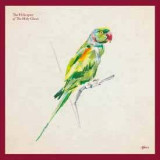
The Debut Album From The Helicopter Of The Holy Ghost - Mark Morriss
( The Bluetones ) Billy Reeves ( theaudience ) Crayola Lectern ( Lost
Horizons / Departure Lounge ) Mark Peters ( Engineers ) Co-produced by
Richard Archer of Hard-Fi Feat. Simon Raymonde ( The Cocteau Twins ) &
Thomas Anderson ( Gazpacho )
In 2001 Billy Reeves, fresh from introducing the world to Sophie Ellis-Bextor
(via their band theaudience) was smashed to bits by joyriders whilst in his Morris Minor - resulting in a two-week coma and a year in and out of hospital. In
2017 his brother gave him two mini-discs that had been saved from the wreckage, including demos of songs he had forgotten - due to crash-related amnesia.
Mark Morriss of chart-topping Hounslow janglers The Bluetones agreed to sing
them, so with the assistance of Richard Archer (Hard-Fi), along with Crayola
Lectern (Zofff / Departure Lounge), and Mark Peters (Engineers), these songs
would form the debut long player from The Helicopter of The Holy Ghost.
The original concept for the material was probably while Billy was signed to
Sony, which pointed toward a more commercial sound, however Crayola Lectern’s involvement on piano help send the recordings into a more ‘Canterbury’
direction, taking influence from Caravan, Robert Wyatt & the like.
Featuring a groovy guest line-up including Simon Raymonde of Cocteau Twins,
Dale Davis from Amy Winehouse’s band, Andy Lewis from Paul Weller’s group,
Smiley from Joe Strummer’s Mescalaros and Thomas Anderson of fellow Kscope
signees Gazpacho, the wide-ranging influence herein is evident throughout a
very sweet, gentle, calming album of originality and versatility.
The Vinyl LP edition of this album will be especially printed in an eco-friendly
manner, with no shrinkwrap being used, the record itself pressed on 100% recycled records and the board made up of FSC certified climate-friendly recycled
material. The whole package itself will be Climate neutral, having all its carbon
offset with ClimatePartner.
Compass Records is proud to announce the release of Colin Hay’s
(Men at Work) 2001 classic ‘Going Somewhere’ on LP for the first time.
The release will include a limited pressing of white vinyl. For many of his newer fans, that weren’t already familiar with Men At Work, ‘Going Somewhere’
was their point of discovery of Colin Hay and his music.
The album includes some of Colin’s best known solo work, including “Beautiful World,” “Waiting For My Real Life To Begin, and “I Just Don’t Think I’ll Ever
Get Over You,” which was featured in the hit film, Garden State. That song
has gone on to be featured in numerous television shows including Dawson’s
Creek, Judging Am and Scrubs where it was sung by the entire cast.
Writing about the song, guitarist John Mayer said: “This is without a doubt my
favorite song of the year. I’m still trying for a tune like this of my own. It’s my
favorite kind of ballad, ‘chin up’ sadness that even a cold bastard would get
swept away by - ‘And if I lived til I could no longer climb my stairs / I just don’t
think I’ll ever get over you.’ No further comments.”
Oneknowing is the debut artist album by acclaimed composer and producer Lena Raine, most recently known for her multiple award-winning soundtrack for the video game Celeste. Based in Seattle, Raine has been composing soundtracks for games and media for 12 years, her breakout momentcoming with her work on the classic PC game Guild Wars 2. Her most celebrated work, however, has come in the form of 2018’s Celeste soundtrack. A game based around themes of anxiety, self-examination and more, Celeste is considered by many to be the key indie game of 2018, and has won multiple awards for both game and soundtrack – something which Raine painstakingly developed in tandem with the game’s design since its first steps. A flagship year for Raine was capped off in December, where she performed live with soundtrack legend Hans Zimmer at The Game Awards, the video game industry’s flagship annual award show (Celeste was nominated for fourawards, and won two). Although she’s released several nonsoundtrack releases, both under her real name and her Kuraine alias, Raine considers Oneknowing her debut artist album - a 10 track set that ranges from distorted paranoia to ambient pop, brought together by the shimmering melodies that make her soundtracks so memorable. An album that draws from “personal experiences, important places, dreams and the lack of dreams”, Oneknowing’s tracks are also threaded together by Raine’s own vocals, sung in a language unique to the album and manipulated by the software Vocaloid. In Raine’s words, “I have nostalgia for my voice as it sounded when I was younger. I can't de-age my voice, but I was able to use software and tweak its settings to a point that it has a similar quality to my voice from backthen”. At times (‘Tsukuyomi’, ‘Light Rail’) her vocals lean towards traditional pop structures, while on tracks such as ‘Wake Up’, they’re repeated, chant-like, to create a hypnotic effect. As well as vocals and software, Raine plays rhodes piano, zither and various hardware synthesizers on Oneknowing, while Michaela Nachtigall contributes violin and viola to various tracks. A succinct but expansive record full of detail, Oneknowing represents Raine’s most personal and realised original material yet, while showing a different side to one of the most unique and accomplished composers of the modern era.
A recording of Samuel Beckett’s “Text for Nothing #8” read by Jack McGowan 1958 (used without permission) is burned to a CDR with 99 index points. A Sony Discman in shuffle mode attempts struggles to play the disc. Electromagnetic signals of struggling CD player mechanics are recorded, edited and collaged into two pieces.